




Abstract
Focusing on ‘chronic kidney disease of unknown origin’ (CKDu), this paper revisits ethnographic preoccupations with ‘thin’ and ‘thick’ descriptions in the context of the unexplained emergence of this unruly disease. CKDu has recently emerged in impoverished sites across the Global South as a ‘medical enigma’ that defies easy description. Despite growing research efforts from various quarters, however, the search for specific causes using conventional forms of analysis has made little progress. Taking CKDu as a residual category and a contemporary case of society–environment–body entanglements (Latimer and Gomez, 2019; Latour, 2018), we engage Heather Love’s descriptive turn as a provocation to examine what it is that is encountered in encounters with ‘the enigma of CKDu’. In doing so, we highlight the role of thick and thin descriptions (cf. Love, 2013) in terms of the political relations they make differently visible. We argue both are critical to the ‘art of noticing’ (Tsing, 2015).
Keywords
Introduction
In her essay Biography: True and False, Iris Origo, the English-born biographer, offers advice to those embarking on a career in the life-writing trade. She says: The young biographer who has upon her desk her first intriguing pile of papers will do well to arm herself with humility and let them speak for themselves. Later on, the time will come to sift, to compare, and to bring to life again; but first she should listen without interrupting. Then, as she deciphers the faded ink, a phrase may stand out which reveals the hand that wrote it. She may see – as suddenly as, at a turn of the passage, one comes upon one’s image in a mirror – a living face. (Origo cited in Nicholl, 2018: 7)
For Origo, her archives – ‘an intriguing pile of papers’ – are as much the protagonist of her literary work as the subject of her biography: The Merchant of Prato, a 14th century Florentine banker. Origo considers the relationship between the life lived, the story told and the archival materials upon which it is based as establishing points of contact through which she is shown what is relevant. This she regards as the achievement of her writing.
Origo’s message is straightforward: wherever you hope to end up, begin by paying attention to what is in front of you, easily seen but also, therefore, easily overlooked or perhaps even dismissed. This is a mode of attention key to the art of description and yet it remains a poorly reflected upon aspect of our research practices, particularly among ethnographers, where the urge is to dig deep and move beyond the surface of things. In her work, the literary critic Heather Love (2010) takes up and challenges the preference for depth over surface as a way to critically reflect on interpretive dilemmas in the humanities, principally English literature. She does this via her encounters with description in the social sciences, notably sociology but also anthropology and science and technology studies besides. In doing so, she invites us to revisit the genealogies and assumptions embedded in our own methodological practices.
Love’s invitation treats the work of description as an interdisciplinary meeting point, one that draws the humanities and social sciences into direct conversation by questioning the methodological requirement that we penetrate beneath the surface, forgoing what is superficial and thin in an effort to uncover meanings, unveil truths, and establish underlying structures, motivations and causes. This is, in part, driven by her readings of the recent wave of literary studies which emphasise ‘distant reading’ (Moretti, 2000). However, it is also motivated by Love’s take on the ethnographic sensibilities exemplified in Latour’s emphasis on actions and things (1987); Goffman’s focus on gestures, traces and interactions (1959, 1961); Garfinkel’s attention to the ‘seen but unnoticed’ world of human practice (1967); and Bateson and Birdwhistell’s descriptive experimentalism (Love, 2013). What Love seeks to expose using these methodological examples is the problematically hegemonic status accorded to depth over surface, the unexamined frameworks of inherited humanism and the privileging of the role of the interpreter as a result of both. She argues, instead, for forms of analysis that do not begin with speculations about yet-to-be-revealed interiorities and depths but bracket them (2013). Her aim in doing so is not to arbitrate between surface and depth, thin and thick, description and interpretation as such, but to unsettle sedimented methodologies in the humanities by opening up their taken-for-granted character using examples drawn from very different kinds of work, particularly work which falls within what she refers to as the ‘observation-based social sciences’ (Love, 2013: 375). The appeal, for Love, is observational social science’s practices of close but not deep description and their resistance to the metaphysical and humanist concerns of hermeneutics. In foregrounding methodological examples of these kinds, she turns description itself into a matter of concern, not only as an opportunity for reflection for humanities scholars but for the social sciences, making her work an open invitation for reflection.
For her part, Love plays with these descriptive troubles by attending to alternative descriptions in her reading of Toni Morrison’s novel Beloved. One of the book’s central episodes – an act of infanticide in the context of American slavery – has typically been interpreted from the perspective of Sethe, a mother who kills her children rather than see them subjected to a life in slavery. Morrison’s account of the killing has been treated by literary scholars as an exemplar of linguistic richness and the evocation of psychological depth, particularly in its capacity to invoke human empathy. Love, however, shifts her gaze from Sethe to the accounts provided by Sethe’s captors – the slave catcher, the schoolteacher and his nephew. She focuses on their objectifying, exteriorising gaze and flattened out descriptions of Sethe’s act of killing. In dehumanising Sethe, they strip away her depth and interiority. While this may, indeed, further deepen the reader’s repulsion and horror, to see Sethe suddenly reduced to the status of a ‘creature’, this is not the focus of Love’s interest. She, instead, directs our attention to what she refers to as the ‘documentary aesthetic of the novel’ and thus to how Toni Morrison renders dehumanisation visible as a technique, a material process, rather than an ideology as such. This shows, in turn, how acts of dehumanisation can be read outside of a humanistic framework. For Love (2010: 386), ‘dehumanization, rather than being a kind of false consciousness that can be exorcised through cultivating an inside view, is a process with real effects: it is a fact, if not a truth’.
As mentioned above, Love’s methodological intervention is not just relevant in the humanities, it is also a provocation for the social sciences. It is a challenge, in particular, to the status of ‘thick’ description, which, following Geertz, has often been granted the status of an unassailable research imperative: an uninterrogated methodological point of departure, founded on the insistence of being there and the privileged position, indeed in Love’s terms, the ‘ethical charisma’, of the ethnographic observer and the special capacity they have when it comes to determining what might really be going on. Love’s provocation is not new but it does signal unfinished business. For those schooled in the arts of ethnographic and anthropological research, it resonates with the critiques of authority, representation and epistemic privilege offered in Clifford and Marcus’ (1986) influential volume, Writing Culture. Yet these debates have yet to work themselves entirely through and Love is not alone in raising questions about description in the context of ethnography today. In looking back over the 20 years that had followed the book’s publication, George Marcus reflected on the diverse descriptive styles which emerged in its wake: self-conscious experiments in bringing out the experiential, interpretive, dialogical, and polyphonic process at work in any ethnography. There was an aura of ‘opening up’, of excess about these works, a pleasure in taking advantage of the emerging license to write into ethnography the reflexive tales of fieldwork . . . [and in doing so] creating the crucial pedagogic models, fashions, markets, and perhaps most crucially the form of knowledge for [new kinds of] ethnography (2007: 1128–1129).
The descriptive ambitions of ethnography post-Writing Culture had alerted Marcus to the importance of maintaining ethnographic principles, that is, attending to the empirical and situating ethnographic work within its networked and nested paths to knowledge. In that, however, it may be that the first part of the pair, the fostering of attention, has been less of a focus than the second. Remedying that requires an appreciation of the descriptions of others as they traverse the topographies of thin and thick, surface and depth as well as what they differentially disclose in terms of opening up and helping us attend to how worlds get made. Description is, indeed, a promiscuous and double-sided enterprise. It is not the preserve of any discipline. Rather, description is in the world. It is part of textual, social and cultural expression as much as the activities of literary critics or social scientists. For this reason, descriptions and the various ways in which they are employed might best be understood in terms of their affordances; the possibilities they present for identifying and thinking through different kinds of problems in different kinds of settings.
In this paper, we reflect on the topographies of thin and thick descriptions but stay close to the ways in which they intertwine in the production of meaning. We consider the conditions under which descriptions acquire relevance, both in terms of what they make visible and how, as well as the implications they have and for whom. We take Heather Love’s intervention as a catalyst for doing so, in particular her policy of staying close, and attending to what is already there. We do this in the context of a particular problem of and for description in our ethnographic work, that is, our study of an unruly, uncertain and unexplained variant of chronic kidney disease (CKD), namely chronic kidney disease of unknown origin (CKDu). While the condition is rapidly on the rise across the so-called Global South in particular, it frequently eludes those seeking to describe it as the necessary first step to further courses of action and intervention. We focus on this problem in the context of Mexico to ask what descriptions of different kinds add to our understanding of this yet-to-be-explained category.
Since 2016, we have been working as a small ethnographic team, mapping accounts of CKDu around Lake Chapala, Mexico’s largest lake, trying to understand the social, cultural, economic, political, historical and biophysical conditions it is emerging within and the various types of knowledge produced about it. The aim of this paper is to explore the various types of descriptions in play around this disease in its contexts so as to better understand what is being described when CKDu is invoked, how descriptions come to count and what lessons can we take from these descriptions when it comes to the ethnographic enterprise. We are particularly interested in whether, and under what conditions, it might be possible to arrive at understandings of the problem by gathering together and bringing into dialogue different descriptions of the disease, not as representations or pictures of CKDu but as ways of knowing it. This requires an attentiveness to the descriptive work of others and our own in relation to it as a critical feature of anthropological alignments (Holmes, 2013). Indeed, our own descriptions, some of which have appeared in already published work, are inevitably assembled in dialogical relation with others’ descriptive accounts. In response to Love’s provocation and the ongoing debates within anthropology, rather than oppose thin and thick, surface and depth, description and interpretation, our paper thus looks at how modes of attentiveness are fostered at the points of intersection and interplay between them.
CKDu as a problem of description
As an initial way of locating the problem of CKDu, we begin with a thicker description, which reflects how the disease makes its appearance in the life of one of those affected by it.
In a small village on the shores of Lake Chapala, five-year-old Catalina walks to nursery school. She is showing signs of kidney damage, so says a doctor from a mobile screening unit. He explains that as many as 25% of her peers are showing similar damage and no one knows why. Is it the food she eats? The lake water she bathes in? The garbage that surrounds her as she bathes? The toxins that her neighbors argue are found in the soil and drinking water? The pesticides her older siblings spray on their family’s small patch of land? No one knows. At this point in her young life, no one can be sure whether or not she will develop CKD like her oldest sister, whether or not she will need dialysis or a new kidney. We do know that Catalina is poor and that her family have no entitlements to healthcare, should her kidneys fail. The care she might one day receive, in all likelihood, will establish a trade off in which the entire wellbeing of her family will be sacrificed for the comparatively short, expensive extension to hers. (Kierans, 2019: 149)
Catalina’s condition, as this passage suggests, is ringed round with questions and contingencies and, in seeking answers to how someone so young contracted a disease she should not have, we are quickly brought into contact with doctors, the environment she lives in and the life she and her family lead within it. Catalina is not alone. As we learn from a canonically thin descriptive resource, public health monitoring data combined with social statistics in which lives and deaths are reduced to patterns of variables, the problem of CKDu is on the rise in Mexico. The country has experienced an exponential rise of both CKD and CKDu and has one of the highest death rates from the condition globally (Agudelo-Botero et al., 2020). Once considered a disease of affluence, the problem of failing kidneys has become a critical affliction of poverty and the degraded conditions of everyday life. What has made the condition particularly challenging is an unexplained change in its aetiological profile, challenging the thin descriptions of conventional CKD that have been stabilised within medical research over a century – as a gradual loss of kidney function, associated with ageing, lifestyle and comorbidities, such as diabetes and hypertension. Different to CKD, CKDu is ambiguously entangled in ‘stray details’ (Marcus et al., 2016: 11) and shifting (bio)social, cultural and environmental concerns (Latimer and Gomez, 2019). What we encounter, not only in Mexico, but across central America, South-East Asia and parts of Africa, is described as a medical enigma, a new variant of a more established condition and one without a clear referent or causal ground. As such, CKDu can be considered to be a residual category – a term we take from Talcott Parsons. For Parsons, ‘[e]very system, both including its theoretical propositions and its main relevant empirical insights, may be visualized as an illuminated spot enveloped by darkness . . . The point is, what lies outside the spot is not really ‘seen’ until the searchlight moves, and then only what lies within the area into which its beam is newly cast. The logical name for the darkness is, in general, “residual categories”’ (Parsons, 1949: 16–17). With CKDu, there is little to illuminate the darkness into which the non-diagnosable has been consigned.
Residual categories pose interesting problems of and for description, and, by extension, of and for social action and intervention. In the case of CKDu, the residual prompts us to think about what lies outside otherwise robustly constructed medical categories with their attendant capacities for explanation: the capacity to diagnose; to establish trajectories of causation; to intervene; to perform expertise; to make sick bodies and patient populations; to enact a biopolitics (Bowker and Star, 1999; Hacking, 2006). Established medical categories rely on unambiguous forms of reference to construct their object of concern, such as cancer or diabetes, and these can often be more than adequately described thinly, as Gilbert Ryle, from whom Geertz took the distinction between thick and thin, was at pains to point out (Geertz, 1973; Love, 2013). Thin descriptions can work, particularly where epistemic infrastructures are in place to support them. Here they do not. As a residual category, CKDu consequently forces us to move into new territories where description, understanding and capacities for intervention are all at stake.
What makes CKDu particularly vexing according to Mexican nephrologists is that when patients present with symptoms, their kidneys are so small and shrivelled that they are impossible to biopsy and thus provide little traction for established practices of diagnosis. Riñones chiquitos or riñones pequeños (small kidneys) have come to stand as proxy descriptions offered by Mexican doctors to their patients in the absence of any alternative explanation for their condition. They are a means of translating what is not known into something that can be said, indeed all that can be said. Riñones chiquitos is the local idiom for a residual category. It says what the doctors see even if what they see makes little sense.
Mexican patients, therefore, also come to describe themselves as simply suffering from small kidneys. There is no aetiological story to ground their sickness with riñones chiquitos too thin a description to do much else but act as an ad hoc symptomology. Making matters worse, Mexico’s fragmented health care system is one where patient data is not easily gathered or shared, and those who suffer most from CKDu tend to fall outside state systems of monitoring and social entitlement. Not only do we not know why kidneys are failing, it is often difficult to know whose kidneys are failing.
Across nations, the problem of failing kidneys is on the rise. As of 2017, approximately 1.2 million people died from the condition, an increase of 41.5% since 1990 (Bikbov et al., 2020). Yet, across national contexts, CKDu is differently encountered and experienced. For example, in the 10 years immediately before and after the millennium, the town of Chichigalpa in Nicaragua saw the condition claim close to 75 per cent its men, the majority having worked cutting sugarcane at the local Ingenio San Antonio plantation and mill, the largest in the country (Weiner et al., 2013). Their deaths brought CKDu to worldwide attention. Descriptions of what was affecting the cane cutters emerged via the efforts of activists, clinicians, epidemiologists, occupational and environmental health researchers, through richly storied accounts of labour exploitation, thin statistical descriptions of prevalence and the identification of biomarkers that would link the condition to heat and work stress.
What is now known about the Nicaraguan case is that CKDu affects a different part of the kidney (the tubules) than is described in conventional CKD (the glomerulus) (Caplin et al., 2019). Most importantly, this is a form of kidney injury which is emerging at the intersections between climate change and poor working conditions, ostensibly, arduous work, heat stress and the insufficient intake of water (Glaser et al., 2016). These partial illuminations in the darkness in our systems of knowledge of CKDu have produced some ground for re-description, at least with regard to sugarcane production. In these sites, CKDu is now referred to as chronic kidney disease of non-traditional origin (CKDnt), a re-classification that speaks to greater epistemic specification.
In Mexico, by comparison, awareness and understanding of CKDu (as we will continue to refer to it in this national context) is in its infancy. There is no corralled labour population working under the same conditions on which to concentrate investigative efforts. In Mexico, the condition shows up in more amorphous settings: among agriworkers in southern and central Mexico, among mining communities in northern Mexico, as well as in generalised sites of poverty and environmental degradation where there is concentrated exposure to pollutants, pesticides and heavy metals found in the soil, water and food. Those suffering from the condition are, as described above in Catalina’s case, poor. They also exist outside Mexico’s complex multi-tiered system of welfare and health care entitlements, and so are hard to identify, let alone help.
Whether we are referring to CKDu or indeed CKDnt, it is clear that these new problems of failing kidneys are intimately bound to the entangled relations that draw together, in various ways, our lived environments, climate change, political economy and social and cultural practice (Tsing et al., 2017). These forces shape life chances and health outcomes through, inter alia, the provision of unsafe food and water, the production of precarious, uncertain work and the unequal access to care. CKDu/CKDnt is simultaneously social and biological and despite initial gains in understanding, it remains epistemically troublesome. Perhaps because of that, CKDu is a condition where descriptions of all manner profoundly count. In the end, however, how descriptions come to count and acquire solidity is a matter of alignment; of positioning and repositioning modes of attention, ethical concerns, and political involvements around these fraught issues. Where ethnographic research has a role to play is in staying close to the descriptive troubles the condition produces and the politics those troubles are enmeshed in.
CKDu: how descriptions count
The ethnographic research that this paper discusses focuses on the rise of CKDu among three communities within the municipality of Poncitlán – situated on the northern shores of Lake Chapala, approximately 80 kilometres from the city of Guadalajara. Chapala is Mexico’s largest lake, a fresh-water lake with small towns and villages dotted around its edge and widely promoted by tourist agencies for its natural beauty, tranquillity and biodiversity (Photo 1). The area is a magnet for North American retirees and international travellers.
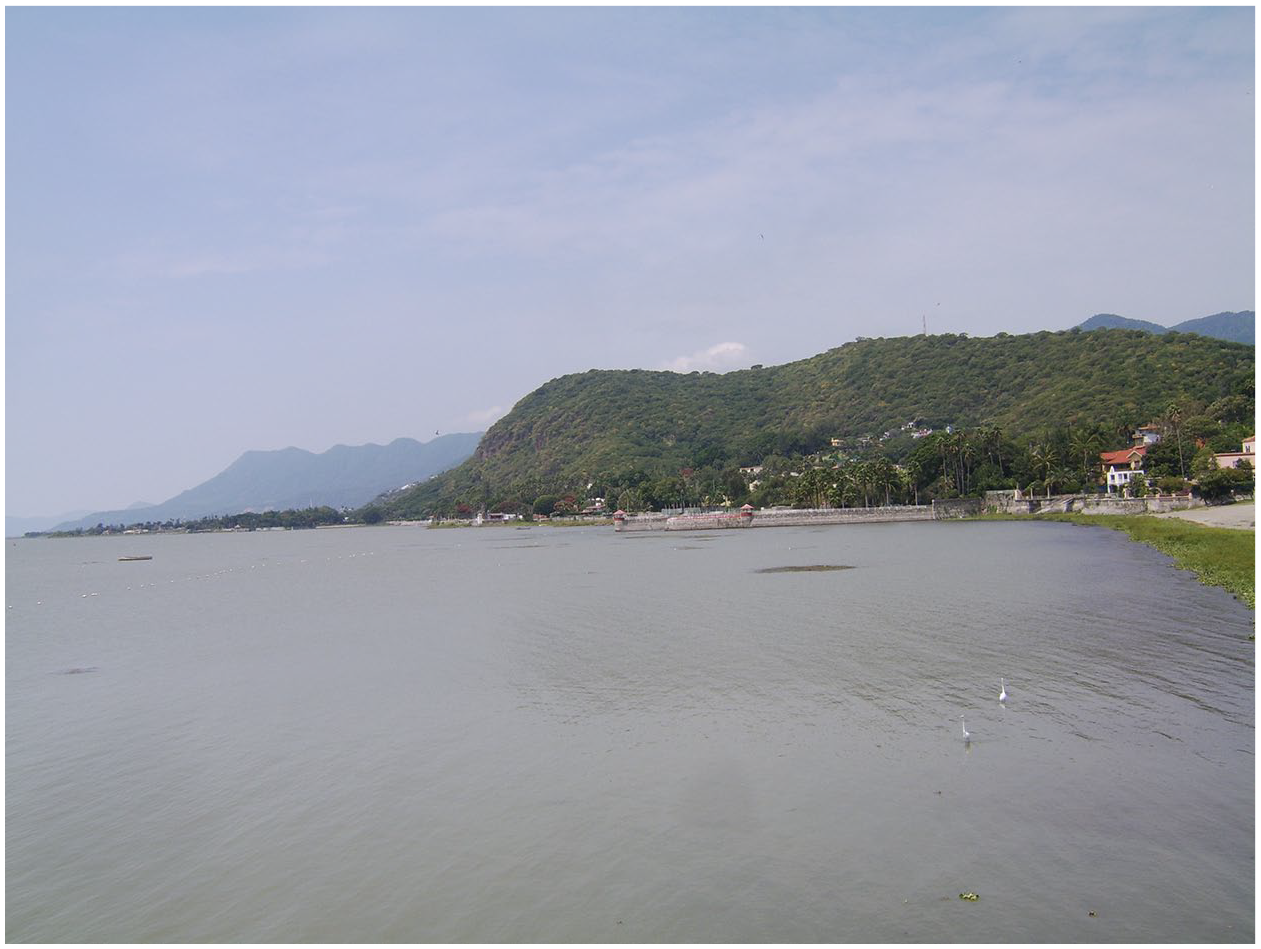
Lake Chapala.
From the perspective of environmental activists and in contrast to the tourist brochures, the lake is best seen in another guise, as one of the most polluted water systems in Latin America. It connects outwards to the heavily industrialised Mexican plateau, across the states of México, Querétaro, Guanajuato, Michoacán and Jalisco via the Lerma River basin on one side, and on the other, to the Pacific via the Río Grande de Santiago. Industrial dumping, inadequate waste water treatment and intensive irrigation for farming have been implicated in the rising concentrations of pollutants, heavy metals and toxic substances researchers and activists claim can be found in the lake and are consumed through drinking water and eating fish (Stong et al., 2016; Trasande et al., 2010).
By attending to the variegated descriptions that are woven around CKDu, we draw out how different forms of knowledge of the disease come to count and how they are brought into contact. In the context of Chapala Lake, descriptions of CKDu foreground the social and political-economic relations, which tie together a beautiful, troubled environment and the well-being and concerns of the people who live there. These descriptions constitute what Wool and Livingstone (2017: 2) have described as a ‘collateral afterworld’ – referring to an ‘insufficiency of social life across contexts tied together by a pervasive sense of precarity and relentless uncertainty that puts meaning and the social itself in question.’ In such a context, descriptions, of all kinds, become profound matters of concern.
Poncitlán is home to three communities – Mezcala, San Pedro Itzicán and the village of Agua Caliente. The number of people suffering from failing kidneys in these communities is contested. Locals claim that it amounts to several hundreds, while authorities struggle to offer a figure at all. A small study conducted by staff at a public hospital in Guadalajara, where many of those from Poncitlán present when they fall ill, have suggested that children in the municipality are 10 times more likely to experience kidney failure than the state average, and adults 4 times more likely (Garcia-Garcia et al., 2019). The problem of failing kidneys does not stand alone in Poncitlán but is conditioned by, and conditions in turn, other health problems: malnutrition, congenital physical malformations, poor cognitive development, cancers, alcoholism, violence and diabetes, among others. Taken together, these conditions compete for attention, resources, publicity and political commitment and are made all the more challenging by structural inequities in accessing doctors, pharmacies and various forms of social support and financial aid.
The small and marginalised community of Agua Caliente, located at the end of a narrow dirt road, right on the water’s edge, is the most intensely afflicted of the Poncitlán communities. Approximately 1,000 people live in the village. This is Catalina’s village. Here everyone knows someone with kidney disease and according to a small clinical study at the local primary school, a disturbingly high number of the children there are already exhibiting signs of irreversible kidney damage. In Agua Caliente, it is not unusual for multiple members of the same family to share a CKDu diagnosis (Kierans, 2019). Across three generations of the Martínez family, David, the middle child of six children, was diagnosed in 2013 and died of the condition two months later. He was 18 years old. Three years later, his older brother, Eduardo, was diagnosed. David’s and Eduardo’s mother, Lola, had been diagnosed four years before David’s death, as was her own brother – David and Eduardo’s uncle – and her niece Maria. In each of these cases, no explanation for the emergence of the condition was given.
For those suffering with a condition which has no clear referents and no certain origin story, descriptions of CKDu point outwards to a world of possible explanations onto which bodies are projected. In pointing so outwards, different members of the Martínez family draw into discussion richly described accounts of their home, the landscape which surrounds it and the various forms of labour they engage in.
The Martínez family lives in a single autoconstrucción; an incrementally built family home, extended over time as their means allow and their needs dictate. Their household is overcrowded. It is a challenge to live with kidney disease, to care for a loved one on home dialysis or recovering from transplant surgery. In the absence of welfare entitlements and access to needed treatments, the family have to collectively navigate the bureaucracy of their limited social entitlements, identify compassionate medical staff who might co-construct a path to healthcare with them as well as raise the finances to pay for this care (Kierans, 2019; Kierans et al., 2013). Like other families in the small village, everyone in this family works and much of that work is precarious and informal. Work is intimately bound to the CKDu narrative: men find employment as contract labourers on building projects in the nearby towns, on local farms, on the lake with local fishermen; women work as domestic cleaners in the same nearby towns, they cultivate crops on their own small landholdings to sell to retailers or in the local tianguis (street markets); children join the adults in gathering wood for cooking, they pick, harvest and sell fruit and vegetables and prior to that spray agrochemicals on family land.
Everyday work is described not only in the efforts it asks of them but in its implications for the appearance of CKDu. Agricultural and construction work, in particular, is hazardous and arduous. The spraying of agrochemicals (e.g., paraquat, glyphosate, 2,4-D, dimethenamid, atrazine, picloram) by adults and children without protective clothing is discussed frequently. Concerns are raised about the quality of the food they grow (corn, beans, pumpkin, chayote), as well as the quality of the soil they grow it in. Families fish for charal, tilapia and carp, but question the impact of pollution in the lake and whether the fish is safe to eat. The local supply of water, drawn from a community (and often unreliable) water pump and used for washing, cleaning, bathing and cooking, is suspected of being contaminated with arsenic due to the thermal or volcanic source of the water.
In these and other ways, talking with people about CKDu invokes articulated descriptions of the land, the lake, the soil, the hot volcanic springs (the agua caliente) from which the village takes its name, drinking water and pesticides. They are all part of its origin myths, gossip and rumour, a means by which ailing bodies can be connected to ailing environments. These accounts also describe the passage of time. The native species of catfish, pescado blanco and popoche, for instance, once a staple of their diets and have now disappeared. Stocks of charal and lamprey have diminished, partly due to over-exploitation, partly due to the introduction of exotic species or invader fish such as blue tilapia, and partly due, many believe, to environmental damage and climate change.
The retention of water in nearby Guanajuato state’s dams and excessive extraction of water for agricultural purposes from the Lerma River, as well as successive droughts, have led to lower lake water levels, while industrial, urban and agricultural dumping have generated higher concentrations of heavy metals, organic and inorganic pollutants. Families worry about contamination. Projects to clean the lake are ongoing but have contradictory effects. The municipality has been working to clear the Lirio (water hyacinth) which was introduced to the lake at the end of the 19th century. Lirio causes flooding by blocking canals, ditches and pipes, and it reduces water movement and the penetration of sunlight. It decreases the amount of dissolved oxygen in the water, endangering phytoplankton and fish stocks. Its only benefit is that it filters heavy metals from the lake water and stores them in its roots and leaves. The lake is a place to bathe, wash clothes and household items, catch fish and draw water. In the absence of a local refuse service in the Martínez’ village, the edge of the lake also serves as a site for waste disposal. The lake edge is where many household gardens end, where families grow Chayote to sell. It also functions as the preferred place to burn household rubbish, the remnants of which are carried away by the lake’s waters.
CKDu might appear at face value to be an impoverished medical category, but as a cultural category, it is rich in descriptive possibilities. Like Elaine Scarry’s (1985) now classic descriptions of pain, a phenomenon without a lexicon of its own, CKDu can only be described via other means, via a pointing outwards beyond itself, to the excesses of work, the environment and the challenges of living in poverty. It is through descriptions that work in this way that CKDu acquires content and matters of concern surface. Indeed, what efforts there have been to formally describe, account for and explain CKDu and argue its consequences have hinged on those within these affected communities connecting with people outside of them, not least health and environmental activists, public health researchers, toxicologists, journalists, government officials, as well as anthropologists. New alignments are fostered when descriptions are drawn together.
It is in recognising efforts of this kind that we turn to Jorge, a religious man turned health and environmental activist living in the city of Guadalajara, who supports those in Poncitlán living with kidney disease, regularly transporting families to and from medical appointments. Since 2016, he has been working to build a case to prove that the source of CKDu is the lake water and local springs. Buoyed by his calling to do God’s work, he has gone to extraordinary lengths to document, publicise and politicise the health problems experienced by those living around the lake. He has painstakingly gathered information on water contamination from scientific sources, creating charts to document levels of toxins and heavy metals. He has produced his own registries of patients with kidney disease in the area, his own maps localising CKDu cases and their proximities to untreated discharges into the lake. He has organised public meetings, academic workshops and public demonstrations. Jorge has gathered a panoply of scientific papers and official reports, newspaper articles, grey literature, and first-hand testimonies (and sometimes rumours) and he mobilises this archive of thin and thick accounts to provide an explanation of the ‘epidemic’ of CKDu in these communities. Armed with pages of figures, reports and studies of pollution in the lake, as well as legal documents, he deploys them to draw into conversation and enrol the work of others: doctors, researchers, journalists and politicians – anyone who he considers of relevance to the issue, who might listen and who might be able to intervene. Such is the extent of Jorge’s connections and alignments that one has only to follow his work in order to map the condition and those with a vested interest in it.
Jorge’s work was emboldened by Pope Francis’s (2015) papal encyclical Laudato Si (‘Praised Be’), where he decried climate change and environmental destruction as the moral issue of our time. Jorge’s linking of kidney disease to lake and well water has, however, had polarising effects. Many doubt the veracity of his claims, questioning his cavalier approach to data collection as well as his tendency to dismiss wider social, economic and political forces in shaping sickness. For others, he is an important route to local activists as well as to various forms of local knowledge. Like Becker’s ‘moral outsider’, Jorge is easy to dismiss, however the concerns he is raising are less so, ensuring, at least for the present, he remains significant to how descriptions of CKDu are assembled, elaborated and mobilised.
Journalists have been key to mobilising Jorge’s descriptive accounts. As early as 2007, they were invited into the municipality by locals to bear witness to the unusual disease affecting the young, in particular. Newspaper columns were devoted to challenging and encouraging the authorities to focus more attention on health, inequality and the degraded conditions of lives lived in poverty. As Jorge’s work built up momentum through multiple activist demonstrations in the lake-side communities and in the city of Guadalajara, reporters descended upon the Poncitlán in search of stories to tell about failing kidneys, bad water and environmental harm. Some media outlets have sensationalised the work of Jorge, taking his claims at face value, unambiguously portraying the condition as an outcome of environmental degradation. Despite their liberal handling of Jorge’s archive, the work of journalists has been instrumental in turning CKDu in Poncitlán into a case study, a critical matter of concern for authorities, researchers and society at large.
From the perspective of those central to the medical care of kidney patients, anxieties about a CKDu epidemic have created other dilemmas. While nephrologists, in particular, are in little doubt that they are experiencing a rise in patients presenting with unexplained and advanced forms of CKD, they lack the comprehensive prevalence and statistical evidence necessary to offer descriptions of the condition itself and the populations affected by it that would be considered reliable in their working context. Moreover, the already existing demands on health services for dialysis and transplantation have stretched hospitals and clinics to the limits of their resources. To acknowledge the existence of an epidemic that no-one understands, and without being able to respond, treat or stop it, would put an already strained health care system under even more pressure. Descriptions of CKDu, from a healthcare perspective, are necessarily modulated through the need to manage professional competences, existing resources, institutional reputations, as well as the capacity to care for patients. To know and to intervene are indeed connected concerns, but in the context of CKDu, the relationship between them has yet to be settled (Fujimura and Chou, 1994). What can and cannot be said about CKDu is ‘not only contingent on a [descriptive] politics of evidence, but on a political economy of healthcare provision that designates what can and cannot be treated’ (Kierans, 2019: 141).
CKDu, as a descriptive worksite, will continue to produce new configurations as various interested parties weigh in. Outside of the provision of medical care, a local team of epidemiological and environmental health researchers have come to Poncitlán to produce their own accounts of the condition. Their approach, in contrast to Jorge’s, has been to cast a wide net when it comes to investigating sickness in the locality. They have produced various and variable descriptions of heavy metals found in blood, urine, breastmilk and hair samples (magnesium, carbon, copper, zinc, arsenic, cadmium, tungsten, mercury, lead); the use of agrochemicals (glyphosate, picloram, 2,4-D, dimethoate, metoxuron, atrazine, molinate); nutrition and diet, as well as analyses of metals found in lake water and the local fish (cadmium, tungsten, mercury). Their approach to sickness in the context of lakeside communities has been one of ‘multiple causes–multiple effects’. As a consequence, they have avoided aligning themselves with activist research in general and Jorge in particular. At the same time, the project lead has been careful to steer his alignments carefully and does not deny water as a potential source of CKDu. Doing otherwise would be to side with the local municipality and its politicians who have vested interests in declaring the lake water safe.
The tensions that arise between patients, activists, healthcare professionals, scientists, journalists, politicians and so on help to trace CKDu as a contemporary controversy (Latour, 1987). In doing so they reveal communicative inequities, the favouring of some voices over others, which, in turn, can deepen social and health inequities, particularly where the capacity to mobilise evidence is required (Briggs and Mantini-Briggs, 2016; Nading and Lowe, 2018). These communicative inequities are keenly felt in the everyday arbitrations to settle whose descriptions of CKDu matter most. Significant as those inequities are, however, it is important not to lose sight of a parallel set of issues. Different descriptions embody different but nonetheless mutually interconnected ways of knowing CKDu. While members of Catalina’s community may find themselves at the bottom of a de facto status hierarchy of knowledge reflecting their more general socio-economic and political marginalisation, it is through their descriptions of their lives as they know and understand them that the condition shows up and acquires its visibility. Other descriptions depend on theirs and take their bearings from them. There is, therefore, more than one way in which descriptions can count.
This crude sketch of CKDu, as it has emerged around Chapala Lake, indicates some of the contingencies that frame an emergent local debate showing how different forms of description acquire relevance. As I have explained elsewhere, the subject of ‘bad water’ or any other potential cause serves as a reminder that when a problem such as CKDu is viewed from the perspective of a religious activist, a medical doctor or an epidemiologist, the foundations upon which their descriptions depend are also stake. Jorge, for instance, is not engaged in activism because he wants to construct scientific knowledge claims, unlike the researcher and the doctor; rather, he wants to fulfil his moral duty as a Christian, and that is to alleviate suffering (Kierans, 2019). As Jorge’s case shows us, descriptive work and the avenues towards explanation and action any interested party might pursue reflects commitment, professional vision and training (Goodwin, 1994), alongside engagement, experience and already existing alignments. It is through this descriptive work that the contours of CKDu can be traced and medicalised, politicised, moralised, sensationalised and anthropologised. As ethnographers, our role is not to arbitrate between descriptions nor settle their grievances but draw these unpredictable alliances into conversation and attend to the connections and associations they give rise to.
CKDu may have limited value as a category of or for medicine. Nevertheless, as a social category, it is boundless in its capacities to embody other aspects of the world. Its reach is wide and flat and in extending this reach, it anchors the body – flesh and blood – to measures of moral consideration (Scarry, 1985). Failing organs thus pull together water, soil, work, weather, politics and sickness into a biosocial assemblage via their many descriptive frames (Deleuze and Guattari, 1980). To understand CKDu means keeping these entangled elements in view, attending not just to what descriptions convey but how they are made to convey it, for whom, when and under what conditions allows us to do just that.
Descriptive topographies: neither thin nor thick, but close and relational
CKDu – a non-category – is an ardent call for description which is being addressed by the ‘work of many hands’ (Goffman, 1974). That work is made manifest in population counts, poverty indices, pathophysiological processes, biomarkers, accounts of environmental change, analyses of toxins, stories of the degraded conditions of work, the trials of everyday living and so on. CKDu stands as a reminder that in attending to the descriptions of others, problems of health, poverty, environmental degradation and inequality are problems for others long before they become problems for ethnographers. As we are all trying to make sense of the same terrain, and as no single domain holds epistemic authority over it, it is difficult to ascribe a privileged view. However, in attending to what descriptions make visible and how, this is not to say descriptions are innocent – as they support the interests and ambitions of their producers (Spivak, 2008). Rather than assume a voice for any of these producers, we draw their accounts into alignment and trace the relations between them to see how coalitions of interest and power emerge and gain force while others lose traction. Michael Burawoy (2008) referred to this drawing together of perspectives in situ or from below as part of engendering a subaltern, global sociology. Doing so has the effect, as Tim Ingold (2014) suggests, of releasing a discipline from the theatre of its own operations.
To conclude and return, in light of the above, back to Love, in refusing the primacy of the interpreter, her point is that to learn how to see, first we have to be shown. This requires close attention to the affordances of descriptive work, rather than a settling of preference in advance. For Love, the literary critic, it meant paying close attention to Toni Morrison’s shifting registers between thick and the thin. Love moves beyond accounts that privilege slavery from within, which engender empathy for the ‘dehumanised’ subject, to show how such dehumanisation is made possible at all, by rendering it a technique, a material process made available by the exterior, flattened-out gaze provided by Sethe’s captors. Love’s achievement is not to displace our humanistic tendencies but to unsettle preoccupations with interpretive depth as an unassailable analytical imperative in the context of human suffering. As we read it, this is less about her making a switch between descriptive forms, than her paying close attention to what Morrison herself makes available. We can learn a great deal from a thin description, just as we can learn little from a thick one, but the greater lesson lies in returning to our phenomena, to listen to what is being said and how it is being said. In attempting to locate CKDu, our intention was not to arbitrate between thick or thin descriptions but to argue for an understanding of CKDu that is found within the fragmentary character of its description. If our understanding of the condition is fragmented, entangled and enduringly problematic that is because it is a product of our fragmented, entangled and enduringly problematic world. In refracting its contexts, CKDu does not acquire a unified voice. Nevertheless, though it remains a darkness, an absence in medical terms, CKDu is illuminating. We hope to have shown that problems of description around it – thin, thick, inaccurate, poor and so on – need not be seen as problems to be repaired, but phenomena in their own right offering, when taken seriously, valuable ways of engaging with the lives, worlds and political struggles of others.
The lesson for ethnography is simply to pay attention to what is directly in front of us and what is presented to us. We ignore this at our peril. It is particularly critical to remain attentive in the face of profound uncertainty and, in our case, the residua which underpin the production of harm and suffering too. Doing so is not easy. It is an art! It is what Anna Tsing (2015) refers to as the ‘art of noticing’, noticing what happens at the unruly edges where nature and culture, environment and society, oppressed and oppressor cannot always be so easily be divided and made to stand apart. Said another way, and to return to Origa, it is to remain both humble and alive to things that come to matter through listening to what we are told.
Footnotes
Funding
The author(s) received no financial support for the research, authorship, and/or publication of this article.
