




Abstract
Bi24Br10+xAg x O31 nanosheets were prepared by a facile single-step co-precipitation method in the presence of 1-butyl-3-methylimidazolium bromide ionic liquid as the bromide source and template agent. The products were well characterized by X-ray powder diffraction, scanning electron microscopy, energy-dispersive X-ray analysis, diffuse reflectance spectroscopy, nitrogen adsorption–desorption isotherms using Brunauer–Emmett–Teller analysis, Fourier transform infrared spectroscopy and transmission electron microscopy. The X-ray powder diffraction pattern confirmed the presence of both Bi24O31Br10 and AgBr crystalline phases in the structure. In addition, the scanning electron microscopy micrographs and transmission electron microscopy image indicated that the sample had sheet-like morphology and the thickness of the sheets was below 100 nm. According to the photocatalytic experiments, the product was exceptionally efficient for the degradation of Acid Blue 92 solutions under visible light. Also, the results of recycling experiments indicated the high capacity of the prepared nanosheets to effect repeated treatment of the wastewater solution, which is of great importance in being introduced as a catalyst in practical applications.
Introduction
The development of visible-light active photocatalysts has become one of the most interesting topics in contemporary photocatalysis research. Owing to the valuable properties including nontoxicity, good chemical stability, low cost and easy preparation, TiO2 has attracted great attention for many years.1,2 Meanwhile, its main drawback of the lack of utilization of visible light has excluded its practical application. During recent decades, a progressively larger number of new semiconductor materials have been synthesized and tested as promising replacements of TiO2 for wastewater remediation and energy crisis issues.3–8 As a secondary strategy, the construction of ‘junctions’ with narrow band gap semiconductors is also being considered to broaden the light adsorption region and minimize the recombination of photogenerated electron–hole pairs. Among different candidates, bismuth oxyhalides (BiOXs (X = Cl, Br and I)) have been increasingly considered because of their good photocatalytic capacity under visible irradiation, unique morphology and high stability to photocorrosion.9–11 To improve the photocatalytic performance, various methods have been used to prepare BiOX nanoparticles with different morphologies.10–13 However, the relatively large band gap of some of them (e.g. BiOCl with a band gap of 3.4 eV) limits the wide application of these compounds as photocatalysts since they are activated only under ultraviolet (UV) irradiation. As with TiO2, many procedures to improve the photocatalytic performance of the BiOXs under visible light have been proposed and examined.11–13 The oxygen-rich modification and heterojunctions with three-dimensional morphology for the enhanced charge carrier separation efficiency of BiOXs, including layered Bi24O31Br10 structures, BiOBr/Bi24O31Br10, BiOCl/Bi2O3, Bi12O17Cl2/Bi24O31Br10 heterojunctions and Bi24O31Cl x Br10–x solid solution, have been reported.14–17
In this study, Bi24Br10+xAg x O31 nanoplates were synthesized by a simple co-precipitation method in the presence of a water-soluble ionic liquid (IL), and their photocatalytic activity was explored in the degradation of Acid Blue 92 (AB92) solution and a real textile wastewater.
Experimental
AgNO3 and Bi(NO3)3·5H2O were used as sources of silver and bismuth, respectively. Cetyltrimethylammonium bromide (CTAB) was used as an organic surfactant. During the synthetic procedure, 1-butyl-3 methylimidazolium bromide ([BMIM]Br) IL acted as the bromide source and template agent. All the chemicals were purchased from Merck Co. and used without further purification. Double distilled water (DDW) was used during the preparation stages.
Bi(NO3)3·5H2O (0.0005 mol) and AgNO3 (0.0005 mol) were dissolved in nitric acid (20 mL, 1.6 M) (solution 1). Solution 2 was prepared by dissolving CTAB (0.113 g) in NaOH solution (20 mL, 0.14 M) containing [BMIM]Br (0.2 g). Solution 1 was added to solution 2 under magnetic stirring at room temperature. After 30 min, the precipitate was filtered off, washed with distilled water three times and then dried at 60°C overnight. The product was calcined at 700°C for 3 h, and it was finely powdered for further applications.
In all the experiments, 0.02 g of photocatalyst was used, and the solvent used was DDW. The visible illumination source was a 160 W OSRAM lamp. Total concentrations of the dye solution were readily determined using an UV spectrophotometer set at the λmax of AB92 dye (574 nm).
Results and discussion
Physicochemical characterization
The crystalline phase of the prepared photocatalyst was explored by using the X-ray powder diffraction (XRD) pattern, which is shown in Figure 1. All the diffraction peaks at 2θ = 10.5°, 18.3°, 19.8°, 21.0°, 23.7°, 25.3°, 28.9°, 29.7°, 31.8°, 39.6°, 50.4°, 55.9° and 56.9° were indexed to the crystalline phases of Bi24O31Br10 with the lattice parameters a = 1.0130, b = 0.4008 and c = 2.9970 nm (JCPDS card no.: 75-0888). The characteristic peaks appearing at 2θ = 27.0°, 31.0°, 44.4°, 55.0°, 64.4° and 73.3° were assigned to the cubic phase of AgBr nanocrystals (JCPDS no.: 6-438). Notably, we did not observe any peaks related to the other crystalline phases of bismuth oxide in the structure. This confirmed the suitability of the precursors utilized to effect the simultaneous growth of Bi24O31Br10 and AgBr nanoparticles to form a unique homogeneous heterojunction product.
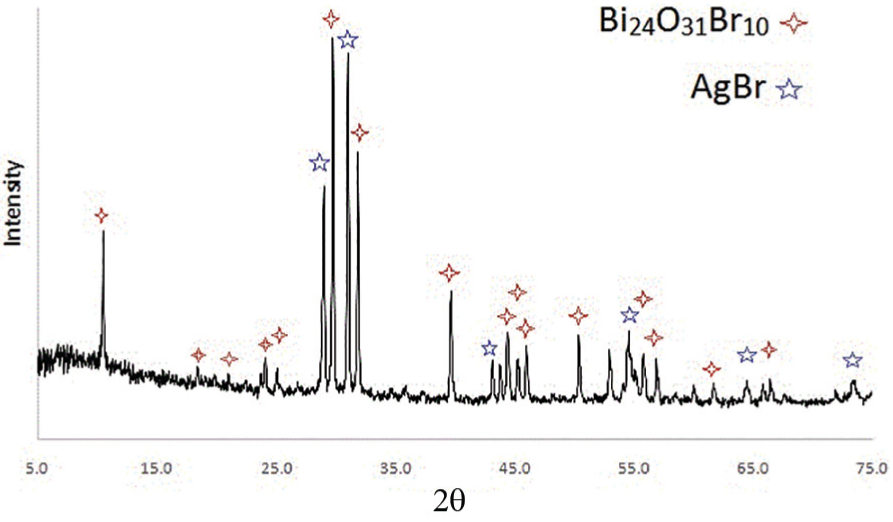
XRD pattern of the photocatalyst.
Morphological study was conducted using the scanning electron microscopy (SEM) images, and the results are shown in Figure 2. The SEM micrographs imply that the samples possessed large-scale two-dimensional (2D) sheet-like structures with the size of the nanoparticles being around 1.0–2.0 μm; also the sample exhibited uniform morphology. From Figure 2, the thickness of the sheets was evaluated to be ∼90 nm.
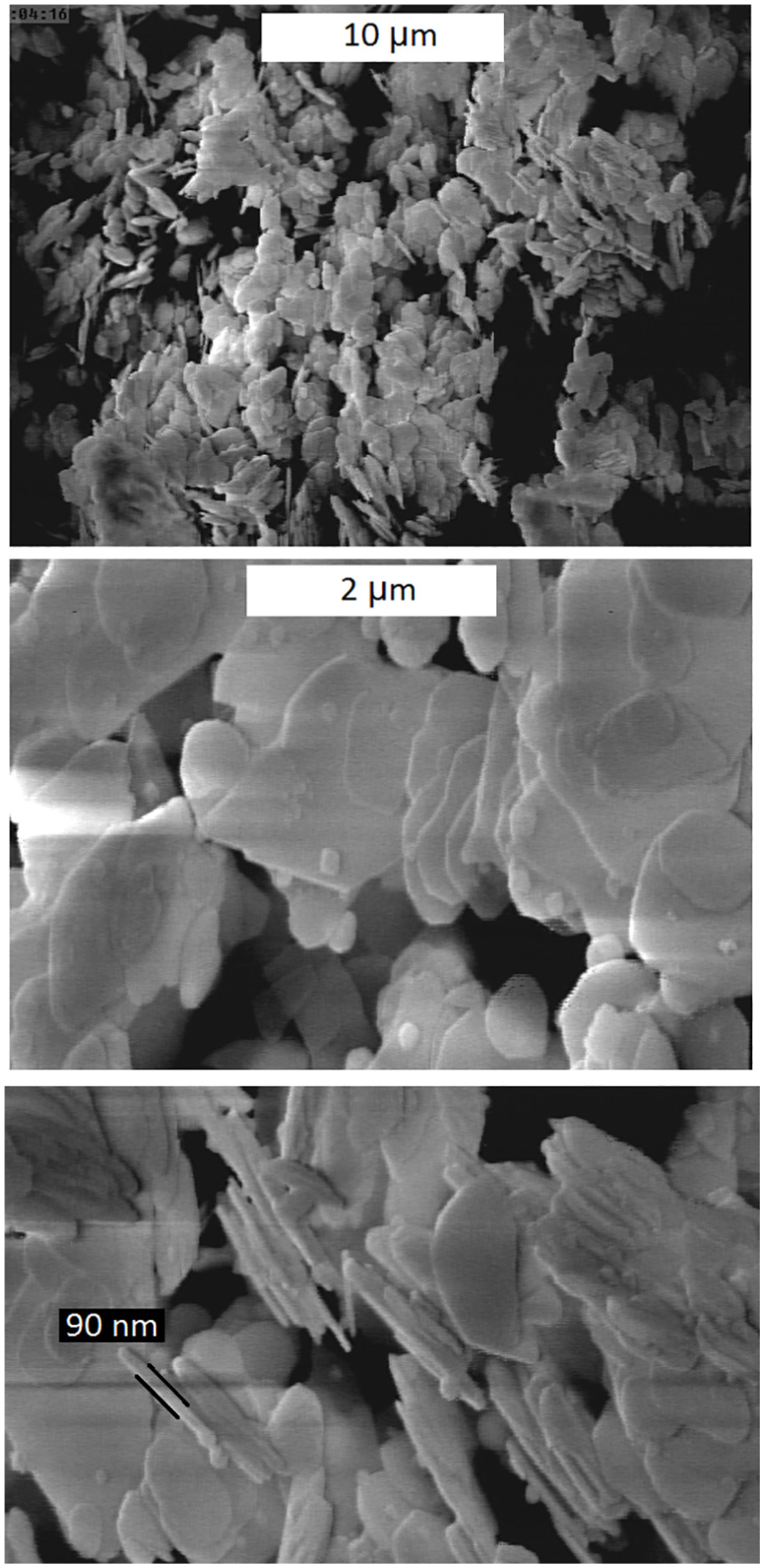
SEM images of the photocatalyst.
Transmission electron microscopy (TEM) analysis was also performed to clarify the morphology of the prepared sample in detail, and the result is indicated in Figure 3. Evidently, the TEM image clearly describes the sheet-like morphology of the product and indicates that the prepared nanosheets have a thickness of less than 100 nm. To find the elemental structure of the product, energy-dispersive X-ray (EDX) analysis was performed, and the results obtained showed that the amount of ‘x’ in the structural formula Bi24Br10+xAg x O31 is 0.08. According to the EDX analysis, the weight percentages were 36.8%, 15.5%, 0.1% and 47.5% for Bi, Br, Ag and O elements, respectively. Brunauer−Emmett−Teller analysis was carried out to explain the porosity of the prepared photocatalyst, and the recorded nitrogen adsorption–desorption isotherms indicated that the specific surface area was 32.00 m2 g−1. Moreover, the results of Barrett–Joyner–Halenda (BJH) analysis implied that the maximum distribution of the pores size in the final product was around 1.85 nm.
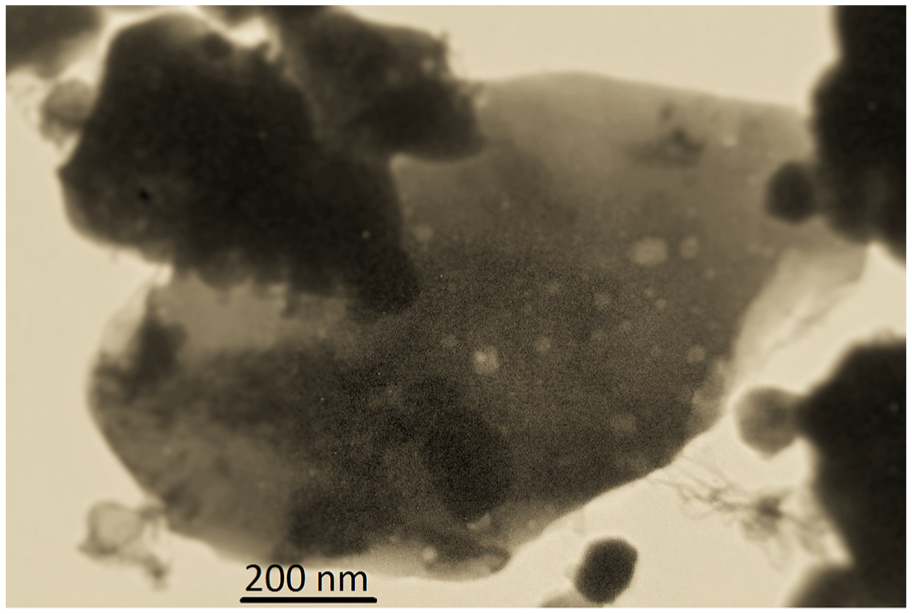
TEM image of the photocatalyst.
The BJH curve of the final product is shown in Figure 4(a). From Figure 4(b), which describes the results of the Fourier transform infrared (FTIR) analysis, the obvious bands at 510 and 522 cm−1 (noted in green) and that at 1630 cm−1 (noted in red) are assigned, respectively, to the OH and BiO stretching vibrations of the nanostructures. 18 Moreover, the characteristic peak at 640 cm−1 is attributed to the asymmetric Ag−Br stretching vibrations. Diffuse reflectance spectroscopy (DRS) was also performed to determine the band gap of the prepared photocatalyst, and the result is indicated in Figure 5. By using the Tauc method 19 and plotting a graph of (F(R) × hν)2 versus hν, where F(R) = (1 – R)2/2R and R is reflectance, the band gap was evaluated to be 2.8 eV. This value for the band gap confirmed the high activity of the sample in absorbing the low-energy photons associated with the visible region of solar energy.
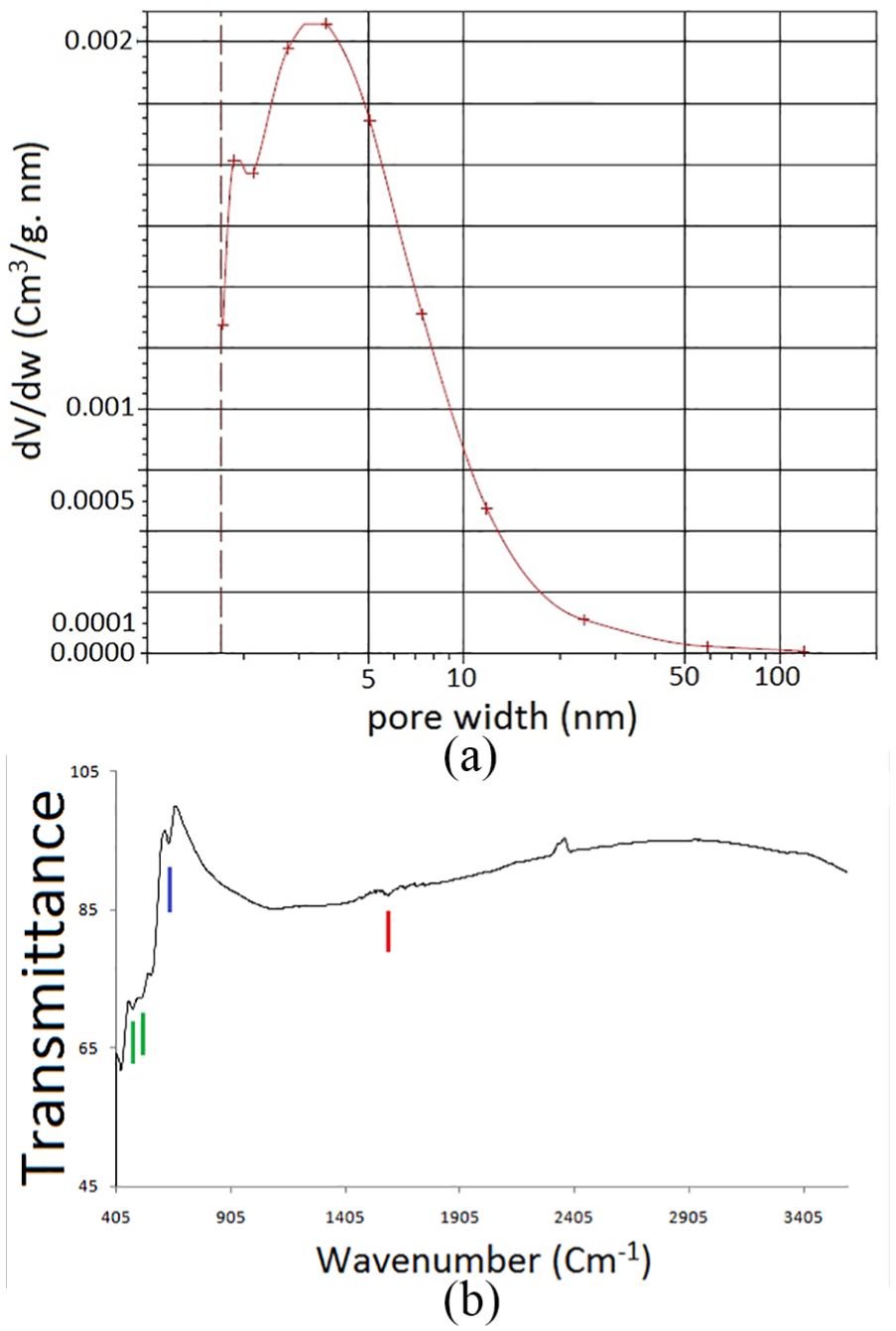
Results of (a) BJH and (b) FTIR analyses of the photocatalyst.
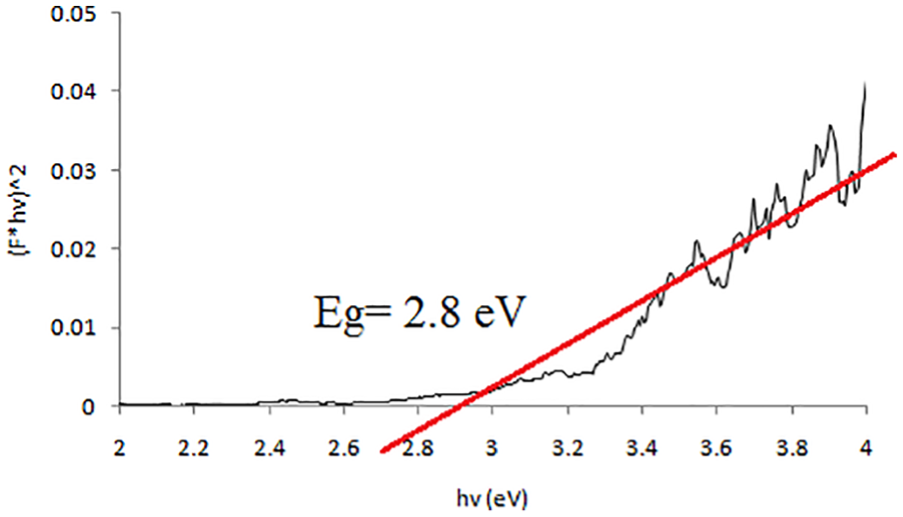
DRS spectrum of the photocatalyst according to the Tauc method.
Photocatalytic investigation
The photocatalytic activity of the product was examined by photodegradation of aqueous AB92 (30 mL, 20 ppm) in the presence of 20 mg of the catalyst powder under a 160 W OSRAM lamp as the visible light source. The results obtained for the photocatalytic tests over the Bi24Br10+xAg x O31 nanosheets are shown in Figure 6(a)–(d).
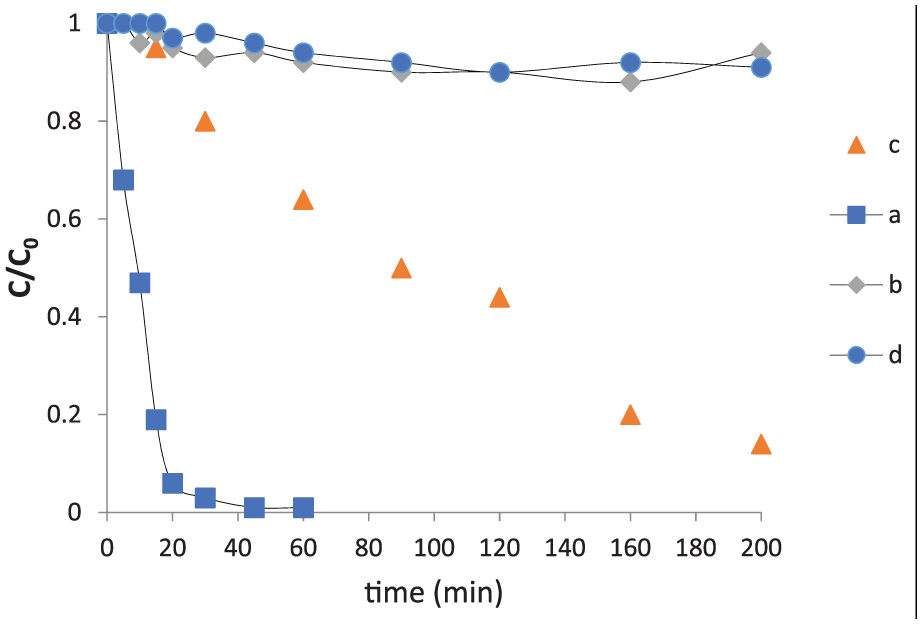
Results of photocatalytic experiments: (a) photodegradation test under visible irradiation, (b) dark test, (c) photodegradation under solar energy and (d) photolysis experiment. C and C0 are the concentration and initial concentration of AB92, respectively.
As shown in Figure 6(a), the photocatalyst was able to degrade completely the chromophoric structure of AB92 in 25 min. According to the results obtained under dark conditions (Figure 6(b)), which indicate the sorption capacity, this degradation was insignificant which was to be expected because of the small specific surface area of the photocatalyst. The photocatalytic capacity of the product was investigated under solar energy, and it was found that 200 min of reaction time was required to achieve 85% efficiency of AB92 removal from the model wastewater, which indicated the promising photocatalytic capacity of the Bi24Br10+xAg x O31 nanosheets for use in the treatment of outdoor polluted environments (Figure 6(c)). The photolysis test was also carried out in which AB92 solution was solely exposed to the illumination source, and the result (Figure 6(d)) indicated that the removal was insignificant in the absence of the photocatalyst.
Figure 7(a) and (b) shows the UV-Vis spectra of the dye solution and that of the real waste sample (provided by Chaprang Co., Tabriz, Iran) during the photocatalytic treatment, and it was found that the absorption at λmax = 574 nm (for AB92) and all the other wavelengths (for the real wastewater) decreased dramatically in the reaction time. A suitable mechanism for the degradation process is proposed as follows






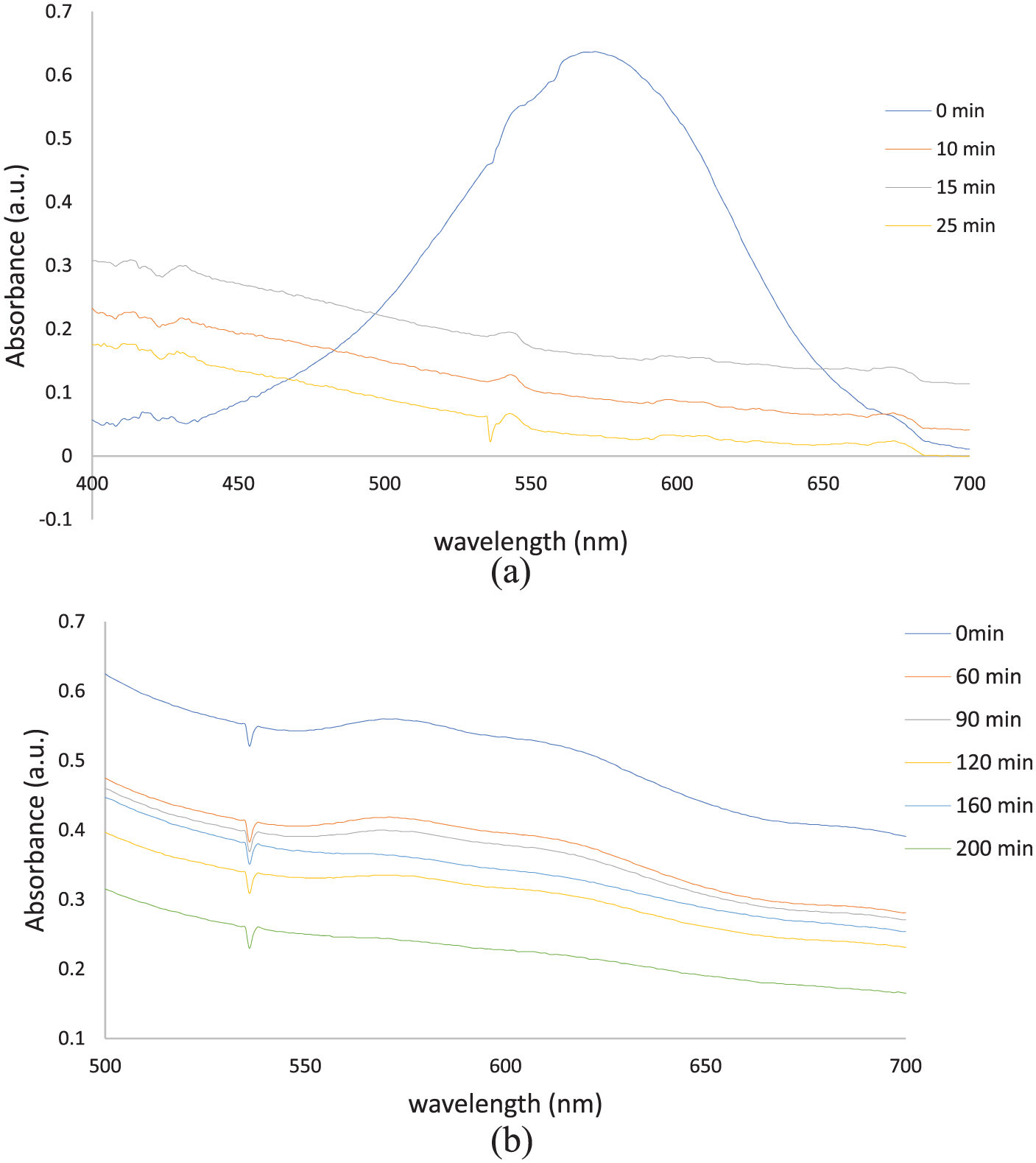
UV-Vis spectra of solutions during photocatalytic treatment: (a) AB92 and (b) real wastewater sample.
Electron–hole pairs are produced on the surface of the nanoparticles suspended in solution. Charge transfer processes include moving the photogenerated e–CB of the Bi24Br10O31 moiety towards the conduction band of AgBr and transferring the positive holes from the valence band of the AgBr crystalline phase in the opposite direction, reducing the electron–hole recombination, which guarantees the improved photocatalytic capacity of the product. We formulated this mechanism based on the electron spin resonance findings by earlier researchers, which have been performed to recognize the likely intermediates involved in the photoactivity of the Bi24Br10O31 nanoparticles. 17 The •OOH and •OH species are the main radicals promoting the photodegradation of AB92 organics in the aqueous medium. Besides, the positive holes are greatly disposed to convert the hydroxyl anions to •OH radicals, which intensifies the photodegradation process. The experimental data also demonstrated that the photodegradation reaction over the prepared sample followed pseudo first-order kinetics. From Figure 8, the rate constants were determined to be 0.109 and 0.009 min−1 for the photoreaction under a 160 W OSRAM lamp and sunlight as illumination sources, respectively.
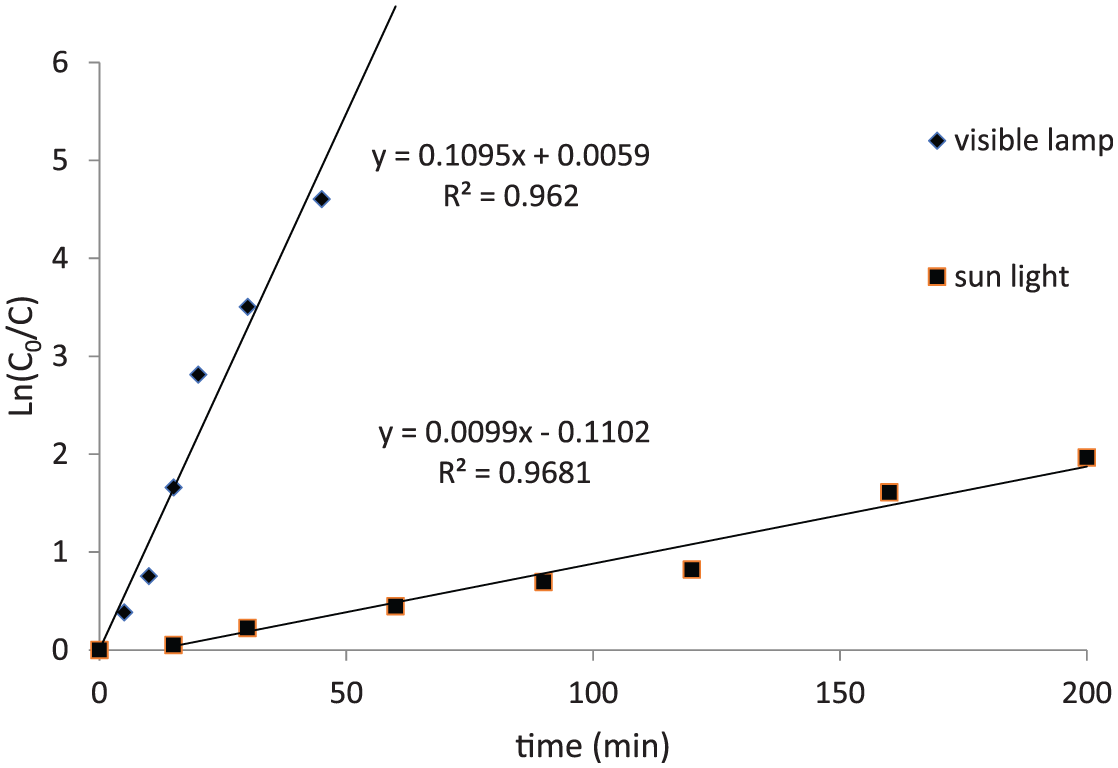
Kinetic fit for degradation of AB92 over the photocatalyst under different light sources. C and C0 are the concentration and initial concentration of AB92, respectively.
As a noticeable issue in the practical applications, the stability of the photocatalyst was evaluated by recycling experiments. As shown in Figure 9, under the aforementioned experimental conditions, the product was stable after five times of repeated use and the activity decreased from 99% (for the first time of use) to 82% (after the fifth time of use). The low sorption capacity of the sample helps the surface to remain intact during the repeated experiments. The results obtained convinced us that the prepared nanostructure could be introduced as a promising candidate to overcome environmental issues and energy-saving drawbacks.
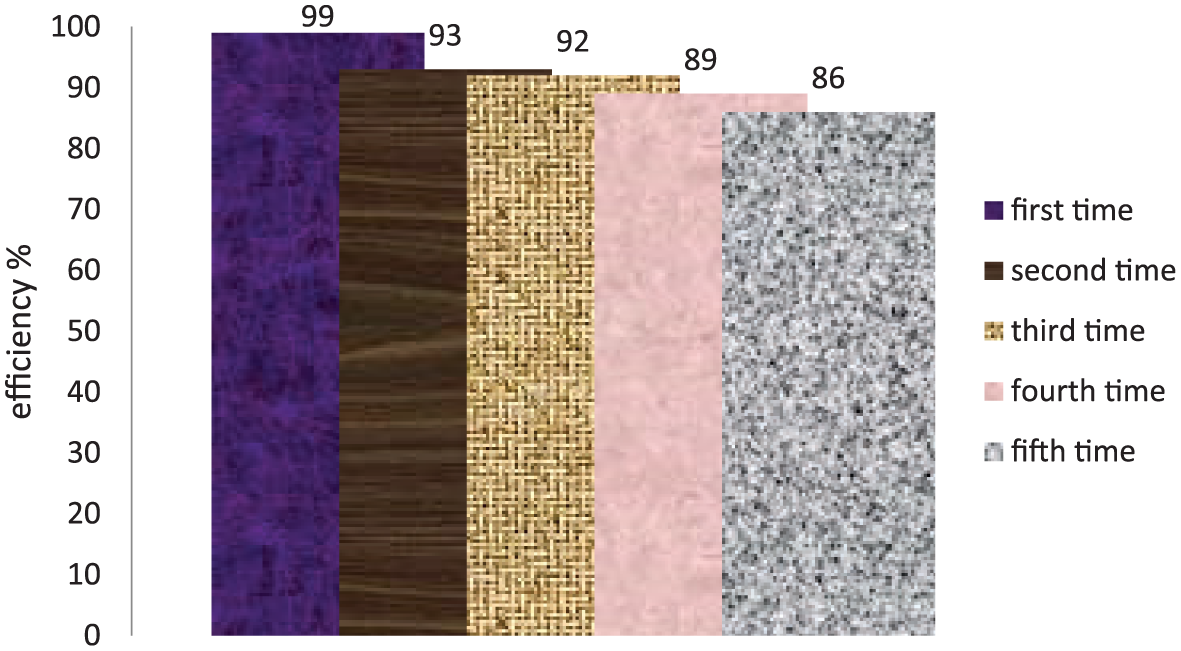
Results of recycling experiments over the photocatalyst.
Conclusion
In summary, the Bi24Br10+xAg x O31 nanomaterial as a unique heterojunction photocatalyst was synthesized homogenously by a facile co-precipitation method using [BMIM]Br both as the bromide source and the template agent. The characteristic peaks in the XRD pattern confirmed the successful homogeneous growth of the Bi24Br10O31 and AgBr nanocrystals in the nanostructure. From the DRS spectrum, using the Tauc method, the band gap energy was estimated to be 2.8 eV, which implied that the product was visible-light active. In addition, according to the results of EDX analysis, x was determined to be 0.08. The prepared nanosheets showed great ability to degrade the AB92 solution under visible irradiation in 25 min. From evaluation of the reaction rates under different conditions, a suitable mechanism was proposed, which noted the role of •OOH and •OH species during the photocatalytic treatment. Finally, recycling experiments proved the high stability and reusability of the product, which is of great importance for practical applications.
Footnotes
Declaration of conflicting interests
The author(s) declared no potential conflicts of interest with respect to the research, authorship and/or publication of this article.
Funding
The author(s) received no financial support for the research, authorship and/or publication of this article.