



Abstract
Summary
Social workers have had a pivotal role in handling the challenges faced by people dealing with the coronavirus disease 2019 (COVID-19) pandemic. Supporting clients who have undergone traumatic experiences during a global pandemic may increase the risk of experiencing secondary traumatic stress. This study examined two protective factors that may be key in the association between stress and social workers’ secondary traumatic stress: Psychological capital (internal protective factor) and satisfaction with supervision (external factor). The study sample included 104 Israeli social workers who worked in their profession during the first year of the COVID-19 pandemic. A regression-based path analysis was conducted to test the moderation model with the PROCESS software.
Findings
Self-efficacy significantly moderated the association between perceived stress and intrusion; increasing self-efficacy decreases perceived stress's effect on intrusion. Although no significant moderating effect was found for the existence of supervision, the interaction between perceived stress and satisfaction with supervision was significant in predicting secondary trauma.
Applications
Social workers’ unions must work to improve the quality of supervision and raise awareness of the importance of supervision in general and particularly during times of crisis. Manageable workloads, a reasonable balance between work and home, and verbal and financial encouragement to seek professional psychological assistance would all be to the advantage of social workers at risk for secondary trauma.
Introduction
In March 2020, the World Health Organization (WHO) declared the coronavirus disease 2019 (COVID-19) outbreak a pandemic (Ciotti et al., 2020). In addition to taking many lives, the COVID-19 pandemic and the policies of lockdowns and social distancing that were enacted to prevent the spread of the pandemic negatively affected millions of people economically, psychologically, environmentally, and educationally (Brodeur et al., 2021; Pedrosa et al., 2020).
The COVID-19 pandemic has been associated with a rise in fear, uncertainty, stress, anxiety, depression, symptoms of post-traumatic stress, and negative emotions, increased levels of negative behavior such as domestic violence, alcoholism, drug addiction, and suicide (García-Rivera et al., 2021; Pedrosa et al., 2020). COVID-19 lockdowns and social isolation have resulted in widespread financial instability and economic uncertainty (Altig et al., 2020), and subsequently higher levels of stress and anxiety (de Lima et al., 2020).
Social workers have had a pivotal role in handling the challenges faced by people dealing with the COVID-19 pandemic (Abrams & Dettlaff, 2020; Senreich et al., 2021), and may therefore experience shared traumatic reality with their clients. Shared traumatic reality refers to a situation where social workers are exposed to the same traumatic event as clients, as in the case of a collective disaster, and may experience the same trauma as their clients (Baum, 2010).
Supporting clients who have undergone traumatic experiences during a global pandemic may increase the risk of experiencing secondary traumatic stress (STS), where personal trauma is transferred from the individual to someone in prolonged contact with that individual, causing the second person to also experience PTSD symptoms (Figley, 1995).
Exploring protective factors against STS caused by a shared traumatic reality during COVID-19 may help buffer the negative impact of the stress experienced by social workers (Molnar et al., 2020). This study examined two protective factors that may be key in the association between stress and social worker's STS: psychological capital (internal protective factor) and satisfaction with supervision (external factor).
Literature review
Social workers during the COVID-19 pandemic
From the start of the COVID-19 outbreak, social workers supported clients dealing with challenges such as limited access to health care, infection with COVID-19, grief, and death (Abrams & Dettlaff, 2020). They often handled an increased work-load, unfamiliar work demands, and a decrease in resources available for clients, as they were simultaneously concerned with their own and their family's health and safety, and the challenge of balancing work and family responsibilities (Senreich et al., 2021).
Although front-line social workers showed high levels of resilience during the pandemic, they nevertheless experienced increased emotional exhaustion and depersonalization, stress, anxiety, and depression (Ho et al., 2022; Prasad et al., 2021; Seng et al., 2021). Great amounts of stress, job insecurity, and role ambiguity were connected with decreased levels of well-being (Gur et al., 2022).
In Israel, a substantial portion of the responsibility to aid populations affected by the COVID-19 pandemic fell to the Ministry of Welfare, particularly to social workers. The increased number of people needing assistance during the pandemic resulted in social workers managing unreasonable workloads (Gal & Madhala, 2020). Furthermore, budgets were cut for the care of at-risk populations (Weiss-Gal & Kromer-Nevo, 2020). Israeli social workers faced organizational and political challenges (Itzhaki-Braun, 2021). Job demands of social workers in Israel were positively associated with their psychological distress (Ben-Ezra & Hamama-Raz, 2021; Gur et al., 2022).
STS in social workers
Social workers may experience significant levels of STS (Bride, 2007) from situations such as avoidance coping, exposure to traumatic events, and exposure to clients’ traumatic events (Gil & Weinberg, 2015); burnout among social workers may also increase STS (Vîrgă et al., 2020). However, studies have shown that factors such as empathy, compassion, psychological empowerment, positive ratings of supervision, and higher income may contribute to reducing STS (Choi, 2017; Quin, 2017; Ratzon et al., 2022). More studies have revealed that the sense of professional efficacy also contributes to the reduction of STS symptoms, while the sense of helplessness increases the risk for PTSD as well as STS symptoms (Farchi et al., 2018). In a study conducted during the COVID-19 pandemic, Holmes et al. (2021) found that in the context of STS, social workers experience higher rates of PTSD symptoms than the general population. Molnar et al. (2020) contends that to prevent STS in welfare professionals, including social workers, four steps are necessary: (1) The problem must be identified, (2) the risk and protective factors must be identified, (3) policies and interventions aimed to prevent STS must be developed and applied, (4) these steps must be monitored and evaluated. In addition, the more the workplace is informed and educated on the issues of STS, the more likely that the health of welfare professionals can be improved.
Following Molnar et al.'s (2017) premise that further studies are needed to identify the risk and protective factors of STS, this study suggests two such protective factors in the association between stress and STS: Psychological capital (internal protective factor) and satisfaction with supervision (external factor).
Psychological capital in social workers
Psychological capital is defined as the positive psychological state of an individual's growth that encompasses the co-occurring development of four positive states: (1) self-efficacy; (2) optimism, (3) hope, and (4) resilience (Luthans, 2002; Luthans et al., 2007b; Luthans et al., 2010).
Self-efficacy was defined by Albert Bandura (1977) as an individual's belief in his/her own ability; this belief will affect the way the individual handles challenges in life and withstands obstacles in the pursuit of achieving goals. In the context of social work, a low sense of self-efficacy in social workers is associated with high levels of exhaustion and mental distress (Indregard et al., 2018). In addition, social workers’ job satisfaction is positively associated with self-efficacy (Kagan, 2021).
Resilience refers to the individual's ability to adjust, cope and withstand difficult life experiences (Walsh, 1996). The term in the field of physics describes the ability of a material to withstand stress by bending or bouncing rather than breaking (Norris et al., 2008). Although resilience needs to be further examined regarding social workers, the development of resilience can help social workers deal with the challenges they face as they fulfill their jobs and can help them maintain their commitment to the profession (Collins, 2017). Social workers’ emotional resilience is positively associated with stress management (Rose & Palattiyil, 2020), as are perceived social support and social exchange (Zychlinski et al., 2022).
Hope refers to a positive motivational state based on goal-directed energy and planning pathways to meet goals (Snyder, 2000). Certain occupations in the realm of social work may include elements that challenge social workers’ sense of hope, such as working with terminally ill patients and cases of domestic violence (Crain & Koehn, 2012).
Optimism refers to an individual's general belief that his/her future will be favorable (Carver et al., 2010), and may aid social workers in dealing with the challenges of their profession (Collins, 2007).
Studies on psychological capital as a unified concept showed that social workers’ psychological capital is positively associated with job satisfaction and negatively associated with physical and mental distress (Ho & Chan, 2022). Psychological capital can also protect social workers from burnout and, subsequently, from STS (Vîrgă et al., 2020). The work of social workers during the COVID-19 pandemic was found to be negatively associated with psychological capital (Ho et al., 2022).
Social worker supervision
Supervision is an external protective factor that may contribute positively to ways in which social workers handle stress and thus protect them from experiencing STS. Effective supervision can be associated with positive outcomes and serve as a protective measure against detrimental outcomes for social workers (Mor Barak et al., 2009). It has been found to have a major role in social workers’ job satisfaction and the quality of service they render to their clients (Mak, 2013). Supervision can also be a factor in preventing social workers’ stress and burnout (Mak, 2013). Its help with management oversight and accountability can enhance their well-being (Wilkins & Antonopoulou, 2019) and contribute to decreasing STS (Quin, 2017). In a time of crisis when both clients and helpers experience shared traumatic reality, supervision may create an opportunity for a platform to jointly working through issues (Baum, 2010).
Some social workers have stated that the support received from supervisors during the COVID-19 pandemic helped them face the challenges of that period. Others cited a need for more holistic supervision during the COVID-19 pandemic: More consistent sessions, guidance on managing boundaries, and encouraging social workers to obtain psychotherapeutic support to deal with their own difficulties (Senreich et al., 2021).
Methods
Participants
The study sample included 104 Israeli social workers who worked in their profession during the first year of the COVID-19 pandemic. The overwhelming majority of the participants were women (77.9%), making the cohort compatible with overall gender statistics of Israeli social workers (Knesset Information and Research Center, 2015). Ages ranged between 20 and 65 years (M = 39.89, SD = 11.69). Experience in the job varied from one year to 40 years (M = 14.9, SD = 9.59).
All participants were Jewish; half defined themselves as secular (50%), with the remainder self-defining as traditional (27.9%) and religious (22.2%). More than half of the social workers who participated in this study held a Master's degree (55%), 45% a Bachelor's degree, and one a Ph.D.
Measurements
The perceived stress scale
This scale measures an individual's self-perception of stress over the previous month, through ten questions (e.g., “In the last month, how often have you felt that you were on top of things?”). Each item is ranked on a 5-point Likert-type scale, where 0 = never and 4 = very often (Cohen et al., 1983). The score is calculated as the sum of responses to all items; A high total score implies high perceived stress. In a previous study, the reliability of the Perceived Stress Scale (PSS) score was α=.89 (Neff & Germer, 2013). In the current study, the PSS showed high reliability; α=.89.
The STS scale
The STSS measures the experience of STS in service providers (Bride et al., 2004). This scale has a total of 17 items and includes three subscales measuring Intrusion (My heart started pounding when I thought about my work with clients), Avoidance ( I felt emotionally numb), and Arousal (I had trouble sleeping). Participants report how frequently each statement is true regarding the previous seven days. Each item is ranked on a 5-point Likert-type scale, where 0 = never and 4 = very often. The score is calculated as the sum of responses to all items; A high total score implies that the participant experienced high levels of STS. In a previous study, the reliability of the STSS score was α=0.93 (Dominguez-Gomez & Rutledge, 2009). In the current study, this measurement achieved a reliability score of α=0.90. Subscale reliability scores were α=0.87 for intrusion, α=0.92 for avoidance, and α=0.89 for arousal.
Psychological capital questionnaire short form-12
The Psychological Capital Questionnaire (PCQ) measures the psychological capital of participants (Luthans et al., 2007a). Permission and instruction were asked for and granted. The PCQ has four sub-scales, self-efficacy (I feel confident presenting information to a group of colleagues), optimism (I always look on the bright side of things regarding work), hope, and resilience (I usually take stressful things at work in stride). Each item is rated on a 6-point Likert scale ranging from 1- “Strongly Disagree” to 6- “Strongly Agree.” The score is calculated as the sum of responses to all items; A high total score implies that the participant experienced high levels of psychological capital. In a previous study, the reliability of the PCQ score was α=0.87 (Baron et al., 2016). In the current study, these measurements achieved a total reliability score of α=0.97, with Cronbach values for subscales: Hope α=0.93, self-efficacy α=0.96, optimism α=0.88, and resilience α=0.86.
Measurement of supervision
This measurement was created specifically for the current study and included two questions. The first was whether supervision was provided to them (yes/no). The second question asked study participants to report their level of satisfaction with the supervision on a 5-point Likert scale ranging from 1 = Not satisfied at all and 5 = very satisfied. Satisfaction from supervision has been previously measured in a similar fashion by O’Donoghue (2019).
Procedure
Convenience sampling was employed to seek social workers who provided direct service to people during the first year of the COVID-19 pandemic. Social workers from a variety of workplaces were recruited through social media via an online link to be filled anonymously (Qualtrics software). Response rate is unavailable.
Data collection was conducted between February and May of 2021. Participants were informed that their participation was voluntary, and that they had the right to refuse to participate or withdraw from the study at any time without any form of penalty. Informed consent was also obtained from all participants.
Statistical analysis
Statistical analyses were performed by employing the software of Statistical Package for the Social Sciences (SPSS) version 25. Descriptive statistics were used to describe participants’ demographic characteristics and research variables. Pearson's correlation analysis was performed to assess associations between the research variables.
A regression-based path analysis was conducted to test the moderation model with the PROCESS software (Hayes, 2012). The research model developed in the PROCESS software was estimated with 1,000 bootstrapped samples at the 95% bias-corrected bootstrap confidence intervals for all indirect effects. A simple slope test was also performed to determine a statistically significant interaction and examine whether the effect of the independent variable on the outcome variable was significant for high versus low levels of the moderator. Furthermore, a separate analysis was conducted to gauge the individual moderating effect of each component of psychological capital, i.e., self-efficacy, optimism, hope, and resilience.
Results
Descriptive statistics
Table 1 shows the descriptive statistics (including mean and standard deviation) for the study variables.
Mean and standard deviation of the research variables (N = 104).
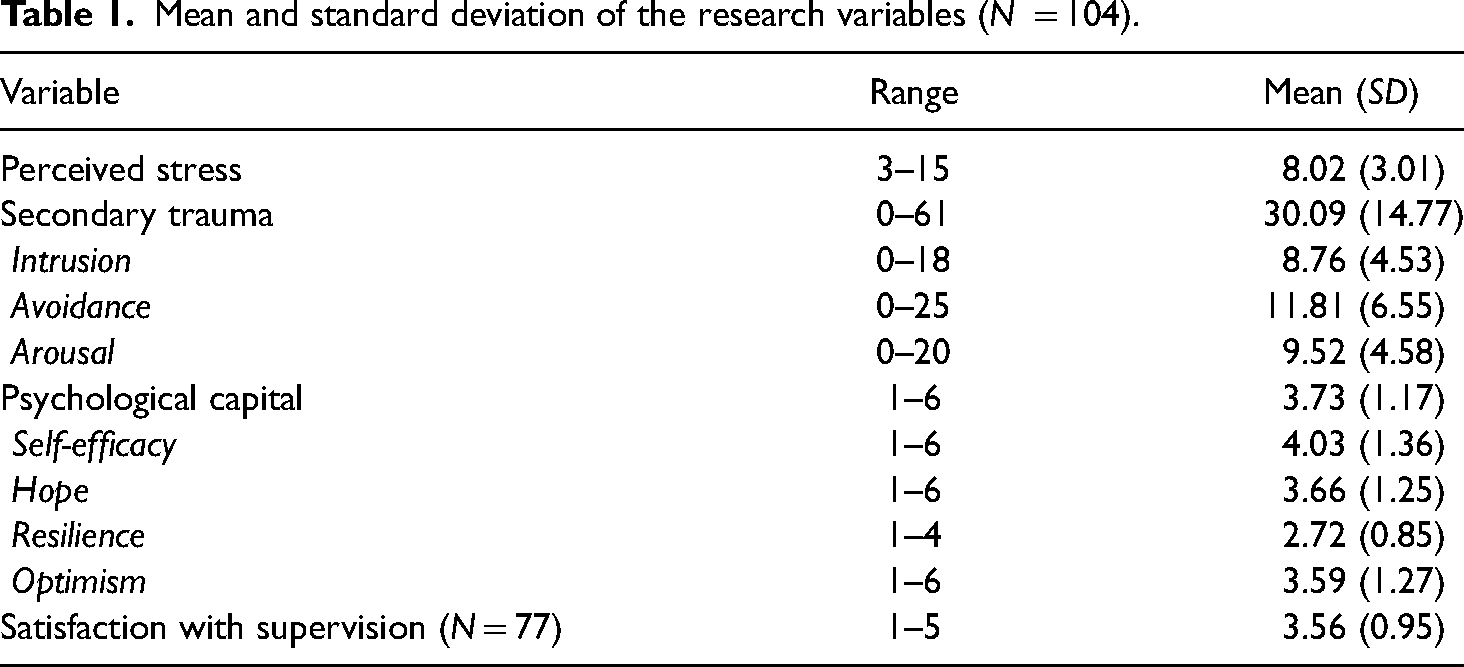
Based on Bride's (2007) classification of levels of secondary trauma, 17.3% reported mild secondary trauma, 24% reported moderate secondary trauma, and 8.7% reported high and severe secondary trauma. Half of the samples’ scores were lower than the secondary trauma cutoff.
Regarding the psychological capital subscales, self-efficacy and hope had the greatest mean, while resilience and optimism were lower, respectively.
The majority of the sample received supervision regularly (71.4%). Of those who received supervision, 11.7% reported low satisfaction, 37.7% reported moderate satisfaction, and 50.7% reported high satisfaction with the supervision.
Bivariate correlations between research variables
Stress and secondary trauma
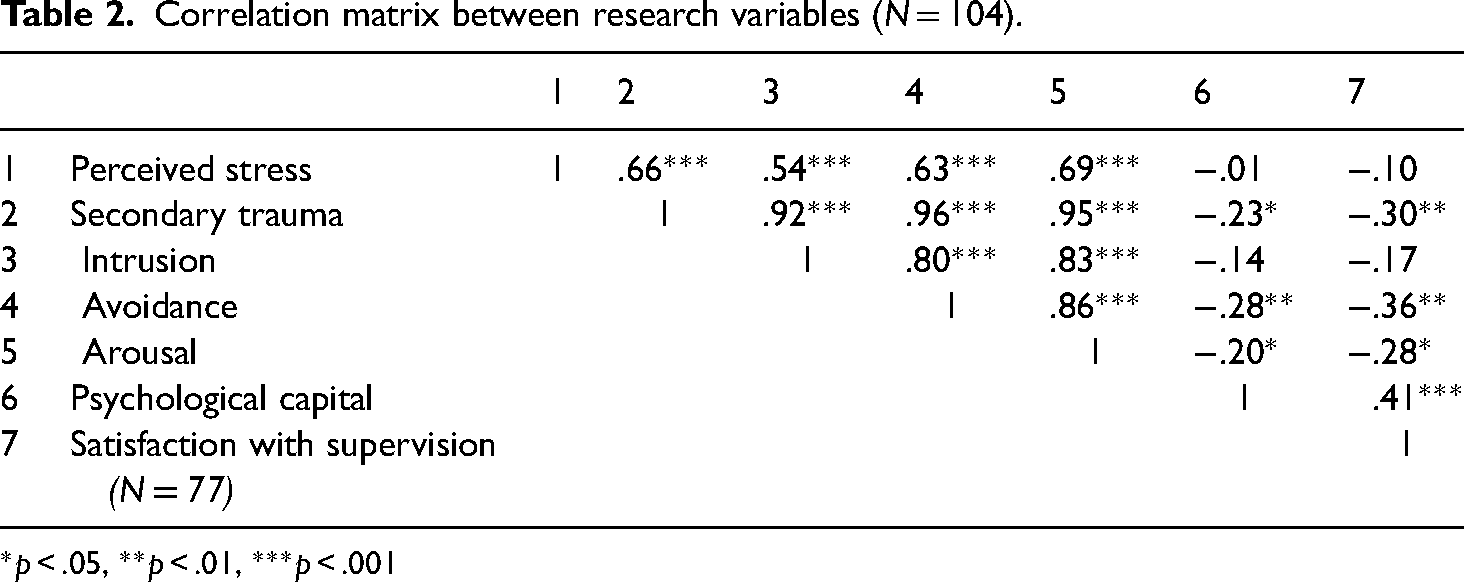
The associations between perceived stress and secondary trauma are presented in Table 2.
Correlation matrix between research variables (N = 104).
*p < .05, **p < .01, ***p < .001
Table 2 showed that higher levels of perceived stress were significantly associated with higher levels of secondary trauma.
Psychological capital
Although psychological capital did not correlate with perceived stress (r(p)=−.01, n.s.), in its four subscales, the resilience subscale significantly correlated with perceived stress (r(p)=.31, p < .01). Thus, higher resilience was associated with increased perceived stress.
A significant negative correlation was found between psychological capital and secondary trauma (r(p)=−.23, p < .05); increased psychological capital was associated with decreased secondary trauma. However, a closer look at the psychological capital subscales revealed that self-efficacy (r(p)=−.22, p < .05) and optimism (r(p)=−.23, p < .05) were negatively correlated with secondary trauma. In contrast, resilience was positively correlated with secondary trauma (r(p)=.35, p < .001).
Supervision
A t-test for independent samples examined the differences in perceived stress and secondary trauma between social workers who received supervision vs. those who did not. No significant difference was found in all research variables between the groups.
As can be seen in Table 2, among those who received supervision, higher satisfaction with supervision was associated with decreased secondary trauma. In addition, higher satisfaction with supervision was associated with higher levels of psychological capital.
Moderating effects of psychological capital
The proposed research model suggests that psychological capital, which includes self-efficacy, hope, resilience, and optimism, moderates the association between perceived stress and secondary trauma. The moderation analysis covered the moderating effect of psychological capital and all four subscales (self-efficacy, hope, resilience, and optimism) in the associations between perceived stress and secondary trauma subscales (intrusion, avoidance, and arousal).
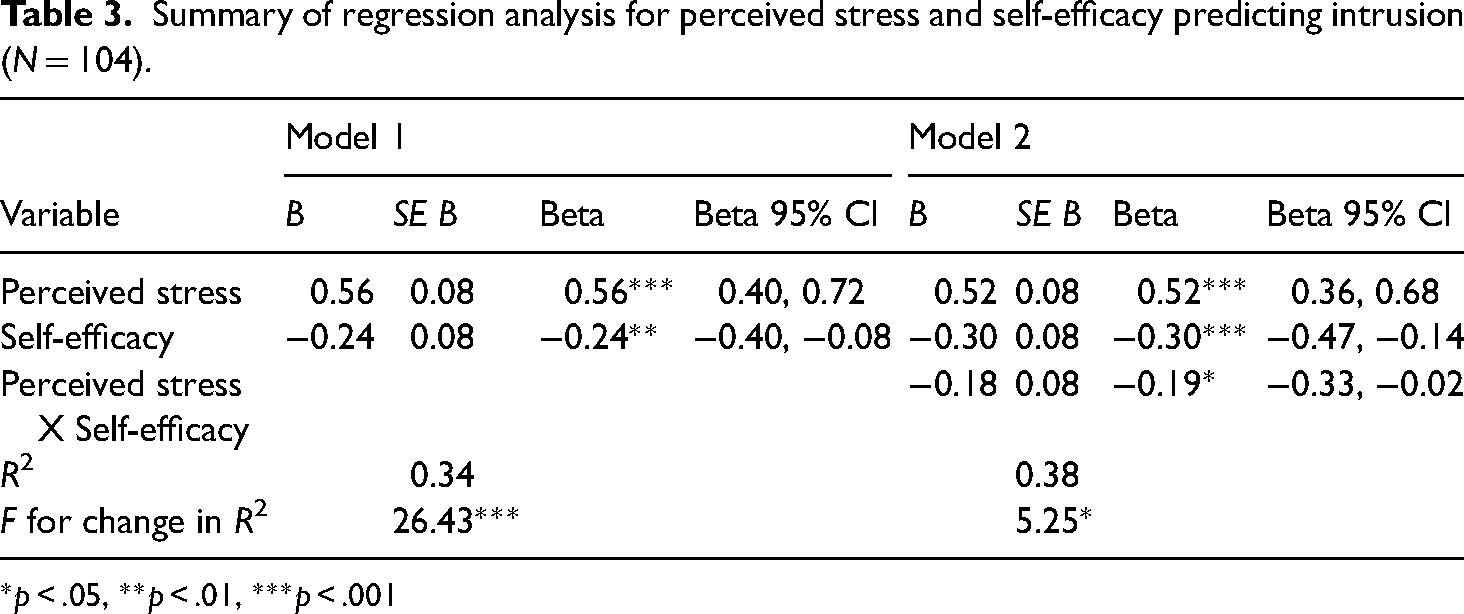
The moderation analysis revealed one moderating effect; self-efficacy moderates the association between perceived stress and intrusion. Table 3 presents the regression analysis for variables predicting intrusion.
Summary of regression analysis for perceived stress and self-efficacy predicting intrusion (N = 104).
*p < .05, **p < .01, ***p < .001
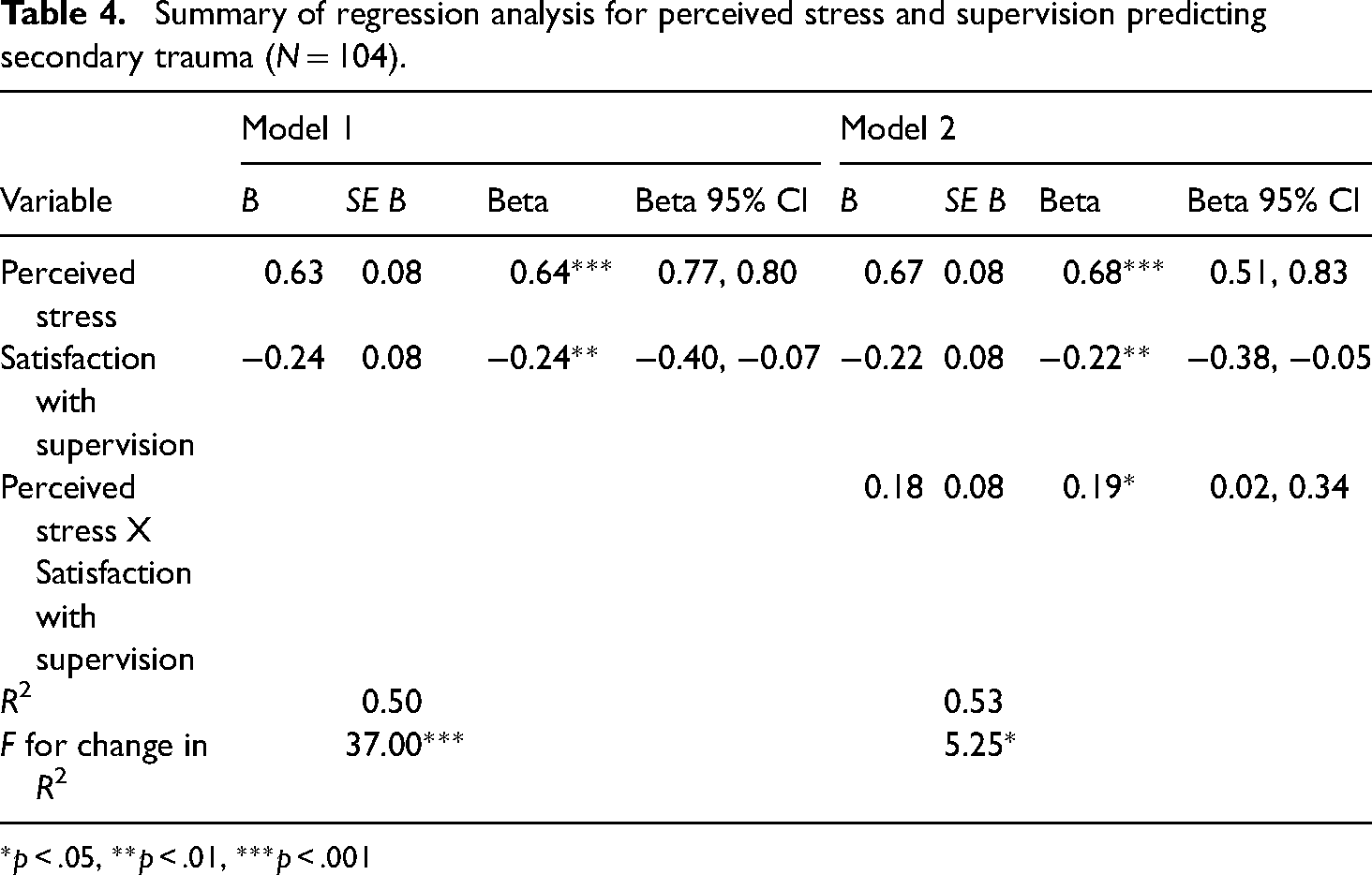
Summary of regression analysis for perceived stress and supervision predicting secondary trauma (N = 104).
*p < .05, **p < .01, ***p < .001
Results showed that self-efficacy significantly moderated the association between perceived stress and intrusion. Examination of the interaction plot (Figure 1) shows a buffering effect, where increasing self-efficacy decreases perceived stress's effect on intrusion. In social workers reporting low perceived stress, the differences between those with low, moderate, or high self-efficacy are not substantial. In contrast, in social workers with moderate and high perceived stress, self-efficacy is associated with significant differences in intrusion. In social workers with moderate and high levels of perceived stress, increasing self-efficacy is associated with decreased intrusion.
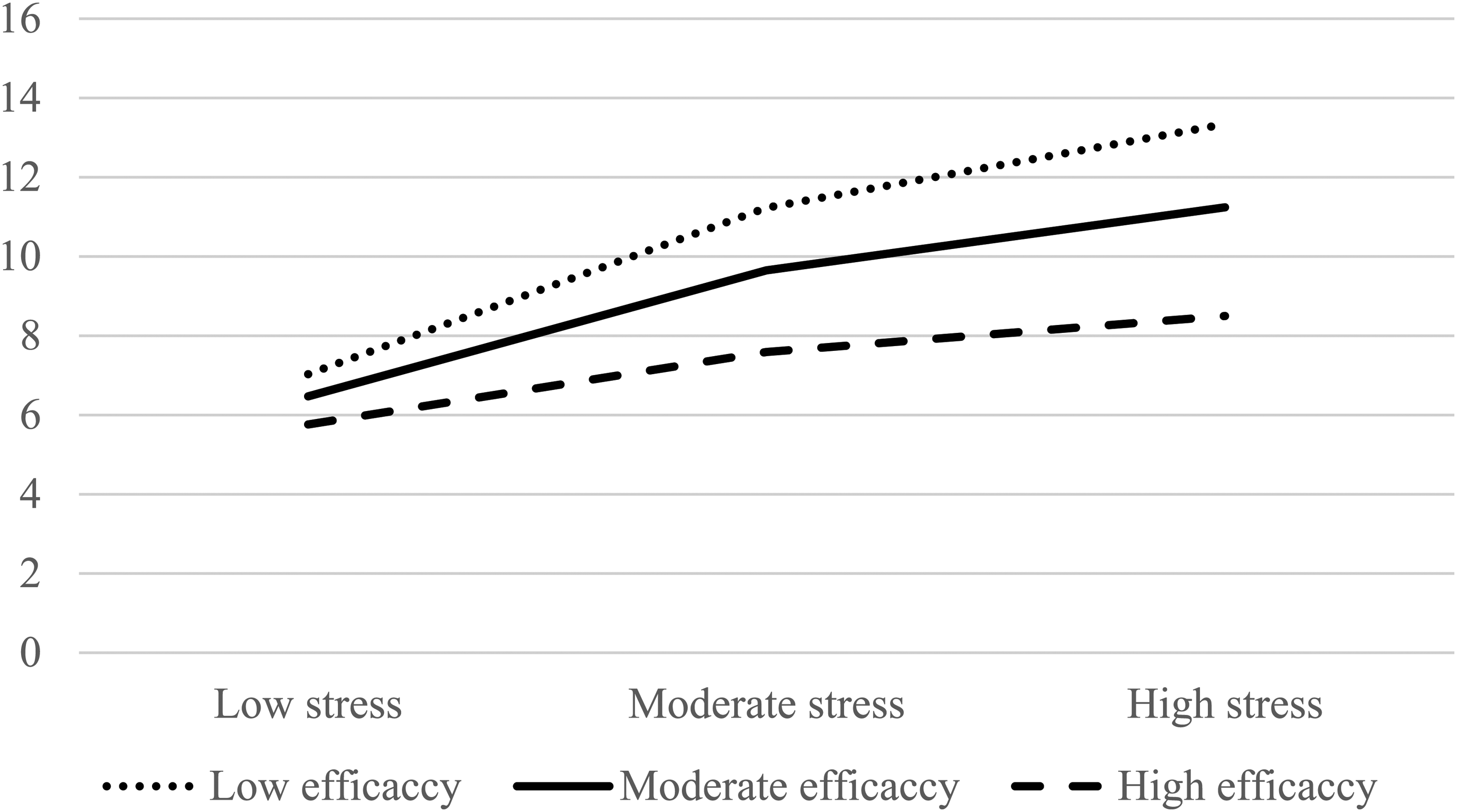
Self-efficacy moderates the association between perceived stress and intrusion (N = 104).
Moderating effects of the supervision
The proposed research model suggests that supervision moderates the association between perceived stress and secondary trauma. Two measures assessed supervision: a dichotomic item that indicates whether the participants received supervision regularly and a scale that rates participants’ satisfaction with their supervision.
Although no significant moderating effect was found for the existence of supervision, the interaction between perceived stress and satisfaction with supervision was significant in predicting secondary trauma (total score) (See Table 4).
Examination of the interaction plot (Figure 2) shows a buffering effect: In social workers with low-stress levels, significant differences in secondary trauma were found for different levels of satisfaction with supervision. Social workers with high satisfaction demonstrated lower secondary trauma than those whose satisfaction with supervision was moderate or low. However, at the moderate and high-stress levels, there was minimal variation in secondary trauma across the different levels of satisfaction with supervision.
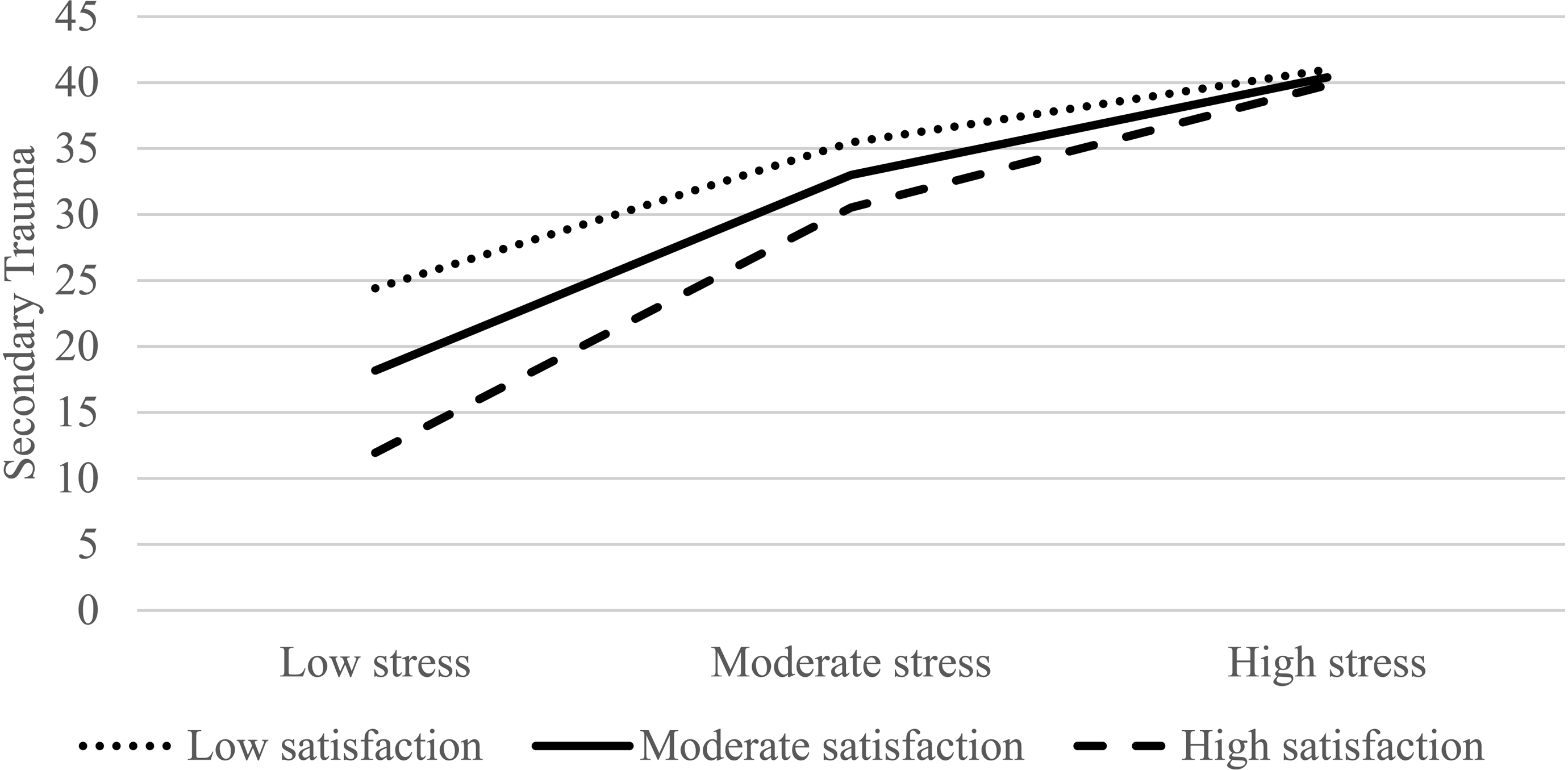
Satisfaction with supervision moderates the association between perceived stress and secondary trauma (N = 104).
Discussion
Social workers have had a crucial part in helping people cope with the adversity of COVID-19 (Abrams & Dettlaff, 2020; Ashcroft et al., 2022; Senreich et al., 2021), taking responsibility and burden upon themselves (Gal & Madhala, 2020) despite a rise in workload and reduction in funding (Weiss-Gal & Kromer-Nevo, 2020). In caring for their clients as well as for themselves and their own families, social workers experienced high-stress levels during the COVID-19 pandemic (Prasad et al., 2021; Seng et al., 2021). Therefore, there is a need to explore resources that may protect social workers from STS (Molnar et al., 2020). The current study examined the impact of two protective factors in the association between stress and STS: Psychological capital (internal protective factor) and satisfaction with supervision (external factor).
A significant proportion of participants reported experiencing mild to severe STS, supporting previous studies in which social workers affirmed experiencing high levels of STS during the COVID-19 pandemic (Holmes et al., 2021). It is worth noting that in the current study, we did not examine the associations between different social work fields and STS, nor the role that social workers’ life circumstances may have had on their experience of STS.
An alarming finding in this study was that almost 30% of social workers did not report to have received supervision. Supervision is a critical factor in the psychological health of social workers (Mak, 2013) and can decrease STS (Quin, 2017). Other studies have reported that social workers often do not receive supervision, due to reasons of employment mentality and lack of financial resources (Voicu, 2017). It is also disturbing that many social workers who did receive supervision found it unsatisfactory. Often, the supervision provided to social workers is formally offered but devoid of substance, thus depriving social workers of the support they need (Wynee, 2020). At times, supervision focuses mainly on case management rather than providing a platform for social workers to reflect on their own practice; these circumstances may be the cause for their dissatisfaction (Turner-Daly & Jack, 2017). Other studies have maintained that a working alliance between social workers and supervisors as well as supervisors’ competence are predictors of social workers’ satisfaction with the supervision they received (Crockett & Hays, 2015). Effective supervision emanates from an appreciative approach focused on social workers’ successes and strengths rather than problem-focused supervision (Cojocaru, 2010). It offers task assistance, social and emotional support and positive relationships with supervisors, and is associated with social workers’ job satisfaction and work efficacy (Carpenter et al., 2012).
Higher levels of perceived stress were significantly associated with higher levels of STS in our study, as in other studies on social workers and STS (Vagni et al., 2020). Another current finding was that increased psychological capital was associated with decreased secondary trauma, also supported by previous studies (Vîrgă et al., 2020). Components of psychological capital—self-efficacy, optimism and hope, can be negatively associated with STS and may offer a protective role (Gil & Weinberg, 2015; Passmore et al., 2020; Wright, 2020).
In the context of psychological capital, higher resilience was associated with increased stress and positively correlated with secondary trauma. Studies examining certain professionals found resilience to be a protective component from STS (Maiorano et al., 2020). Both explanations may be valid: Feeling the stress of an adverse event can lead one to build up toughness and resilience, so both stress and resilience are products of handling adversity (Seery, 2011), and social workers who are highly resilient in nature tend to find jobs that demand high resilience and perhaps pursue higher stress situations and work with clients who have experienced trauma.
In the search for an internal protective factor from STS in the context of social workers’ stress, the current study found that only self-efficacy moderated the association between perceived stress and intrusion. Increased self-efficacy decreased the effect of perceived stress on intrusion. Other studies support the concept that self-efficacy has a role in preventing the damage of secondary traumatization among rescue workers (Hantman & Farchi, 2015; Heinrichs et al., 2005; Prati et al., 2010).
Lazarus and Folkman's (1984) stress theory contends that a stressful event is appraised by its stressfulness (primary appraisal) and by the evaluation of options for coping (secondary appraisal). Thus, self-efficacy can be considered secondary appraisal. Those with higher levels of self-efficacy estimated their ability to cope better and therefore suffered less from STS. In contrast, those with low levels of self-efficacy, who estimated their ability to cope less well, experienced more symptoms, specifically intrusive symptoms.
Bandura's (1997) social cognitive theory maintains that self-efficacy is related to a person's belief in his/her own ability to sustain functioning and coping under stressful conditions through cognitive, motivational, emotional, and decision-making processes. People who do not believe in their ability to control the threats in their environment will tend to perceive the environment as rife with dangers that increase the severity of potential threat and will be preoccupied with those dangers through an ineffective “train of thought” that also affects their emotional and behavioral regulation. Failure in the ability to control thoughts makes it difficult to rid oneself of disturbing intrusive thoughts and the individual is continuously haunted by the traumatic event. Therefore, self-regulation of thoughts is crucial to emotional well-being following a traumatic event (Benight & Bandura, 2004).
Intrusion is related to rumination and suppression, two psychological phenomena that express maladaptive coping styles (Turliuc et al., 2015). Rumination is the passive, recurrent focusing of attention on the possible causes of the negative event and its results (Nolen-Hoeksema et al., 2008), while in suppression there is the tendency to avoid unwanted thoughts (Shipherd & Beck, 2005). Both these strategies have been found to be closely related to post-traumatic symptomatology (Moulds et al., 2020). Emotionally vulnerable individuals, those with lower self-efficacy, may resort to ineffective strategies such as repeatedly thinking about the causes and consequences of the traumatic event, or alternatively, trying to avoid intrusive thoughts through suppression. In either case, these strategies impair the emotional processing of the traumatic memory, preventing its integration and thus preserving the post-traumatic distress over time (Foa & Rothbaum, 1998). Professionals with low levels of self-efficacy who are constantly exposed to their clients’ traumatic events may employ maladaptive cognitive processes and be at increased risk for intrusive symptoms and subsequently poorer post-traumatic recovery.
The reason that only self-efficacy was a factor in moderating the association between stress and an element of STS may be explained by self-efficacy's association with professionalism (Song & Kim, 2020). Perhaps a social workers’ high sense of self-efficacy is evidence of a very professional attitude towards their work and their clients, preventing them from sharing the trauma with their client and protecting them from STS.
In addition, self-efficacy, optimism, and hope are protective factors associated with future-oriented positive expectations. These factors are known in the literature as associated with lower levels of post-traumatic symptomatology (Gallagher et al., 2020). However, hope and optimism are general future-oriented tendencies in the process of achieving goals, while self-efficacy is related to one's ability to perform specific actions in a specific context, such as coping with stressful or traumatic experiences.
In the current study, receiving supervision did not have a significant role in moderating the association between social workers’ perceived stress and secondary trauma. Previous studies, however, yielded different results, showing that supervision does have a role in preventing stress and STS (Quinn et al., 2019). Perhaps this discrepancy indicates the need for a more in-depth study of supervision. Our results did show that higher satisfaction with supervision was associated with decreased STS, which is consistent with previous studies’ similar results (Even-Zahav et al., 2020).
Higher satisfaction with supervision was also associated with higher levels of social workers’ psychological capital. In a previous study, social workers reported that supervision helped them build their own resilience (Beddoe et al., 2014), but to the best of our knowledge, the association between the elements of psychological capital and social workers’ satisfaction with supervision has not been examined to date. Thus, the current study has offered a novel contribution to the academic literature.
Our findings indicated that satisfaction with supervision may act as a buffer against STS in the context of stress. In other words, in low-level stress situations, satisfaction with supervision protected social workers from the negative consequences of stress; those who were highly satisfied with their supervision reported significantly lower STS. However, in cases of moderate and high stress experienced by social workers, satisfaction with supervision was not associated with decreased STS. Specific dimensions of supervision should be examined as potential moderators for the association between stress and STS, for example, the supervision alliance, the supervision approach or the amount of supervision provided and its flexibility in meeting the social workers’ needs.
Supervision in social work is designed to ensure effective service delivery to the agency's clients, and consists of three inter-related and complementary functions: Administrative, educational, and supportive (Kadushin & Harkness, 2014). Since the supervision components themselves were not tested in the current study, we cannot assert which of the three functions generated a report of high satisfaction. When the level of perceived stress was low, satisfaction with the supervision moderated the effect of the stress experienced and thus contributed to the reduction of STS. However, supervision did not halt the STS damage in situations of medium and high stress. Perhaps a change in supervision is required; studies have shown that supervision in the context of trauma requires supervisors to have specific knowledge in the field of trauma and secondary trauma as well as the required supervision skills (Berger & Quiros, 2016; Knight, 2021). Trauma-focused supervision should refer to the well-being of the social worker, alongside a focus on interventions with the clients. Furthermore, in shared and continuous trauma such as during the COVID-19 pandemic, supervisors’ skills should correspond to the different disaster phases such as prevention, preparation, response, and recovery, each of which is characterized by goals and objectives, roles, and unique dilemmas (Adamson, 2020). The complexity and uncertainty of the ongoing COVID-19 crisis to which the study participants were exposed required situation-specific adjustments; a lack of these adjustments in the supervision offered may have been the reason for its ineffectiveness in medium and high stress situations.
Limitations
Two questions were formulated to assess supervision and satisfaction with supervision, although a valid and reliable scale measuring different dimensions of social work supervision would have been beneficial.
Implications for theory and research
This study offers an in-depth model to explain the associations between stress and STS based on internal (psychological capital) and external resources (satisfaction with supervision). Future studies should examine if gender is a factor in the association between psychological capital and STS. Other personal components such as whether the social worker is in a relationship or not, and has or does not have children, may be examined for the role they may have in the association between stress and STS. The specific type of social worker occupation and the population to which the social worker provides services may also be factors in the association between psychological capital and STS.
Future studies can explore whether there is a difference between supervision provided from inter-organizational sources and those provided through external sources in the context of preventing STS. External supervision is designed to be distinct from managerial supervision, and is intended to offers a safe space for highly stressed practitioners that is free from power dynamics within their organizations (Beddoe, 2021). Interorganizational supervision tends to be more task-focused and involves higher levels of tension between supervisors and social workers than supervision provided by external sources, while external supervision tends to be more focused on the social workers’ emotions and development and involves less tension than supervision provided by interorganizational sources (Voicu, 2017).
Long (2020) suggests that to better understand the contribution of supervision in the context of trauma, future research should involve both supervisors and supervisees. Moreover, given the association between social and cultural factors and supervision and STS, long recommends exploring diverse cultures in this context. Therefore, we suggest examining diverse cultural perspectives in the study of supervision and STS needs.
Practical implications for policy
One practical implementation of this study is that the social workers’ union must work to improve the quality of supervision and raise awareness on the importance of supervision in general and particularly during times of crisis. Since even high-quality supervision does not protect social workers from STS in high stress situations there is a need to provide social workers with additional resources to deal with the risks of STS. Manageable workloads, a reasonable balance between work and home, and verbal and financial encouragement to seek professional psychological assistance would all be to the advantage of social workers at risk for STS.
Footnotes
Ethics
The study was approved by the ethics committee of Tel-Hai College (12/2020-11).
Funding
The authors received no financial support for the research, authorship, and/or publication of this article.
Declarations of Conflict of Interests
The Authors declare that there is no conflict of interest.
Authors’ contributions
AG contributed to the conceptualization, methodology, resources, formal analysis, supervision, and writing—review and editing. MPA contributed to the conceptualization and writing—review and editing. GI contributed to the project administration and investigation. SM contributed to the project administration and investigation. AR contributed to the writing—original draft. MF contributed to the supervision, conceptualization, and writing—review and editing.
