



Abstract
Summary
In Sweden, a practice has developed where the social services have started to hire private consultants in child protection investigations. This article analyses and compares the handling of child protection investigations carried out by private consultants and municipally employed social workers with regard to the reasons for the reports, the investigations, the assessments, and the decisions taken about interventions. The concepts funnel and filtering and children's participation are used in the analysis. The study has a mixed-methods design, where qualitative and quantitative data and analysis are combined and integrated. Data consists of 120 case files regarding the social service's handling of investigations as well as interviews with managers of social service departments.
Findings
The results show several differences in the handling of child protection investigations carried out by social workers and private consultants in the municipalities studied. The private consultants worked to a greater extent with investigations that were initiated due to concerns about violence. Investigations conducted by consultants contained less information and specifically concerning children's perspective. These children also received interventions to a lesser extent than children assessed by the municipal social workers.
Application
The study indicates that from a child’s perspective, it matters whether a municipally employed social worker or a private consultant performs an investigation. Consultants generally work temporarily in a workplace, and it may therefore be more difficult to establish a trusting relationship with the children, which can be a barrier to children's participation and the implementation of a child’s perspective.
Introduction
In recent years, the social services in Sweden have started to hire consultants in social work to perform child protection investigations. The practice of risk assessments for children in need has been and still is, according to legislation, the responsibility of the municipal social service organization (Mattsson, 2019). Despite this, a practice has developed in which municipalities pay private consultants to carry out investigations. The privatization in this context can partly be understood as driven by the increased workload in social services in recent years, stricter competence requirements for staff working in the child protection field, and the municipalities’ difficulties in recruiting social workers with the required competence (Järkestig Berggren et al., 2021; Sweden's Municipalities and County Councils [SKL], 2015; The National Board of Health and Welfare [NBHW], 2016).
When there are concerns that a child is at risk, or in danger of being at risk, a number of professionals are legally responsible to report to the municipal social services any suspicion of maltreatment or neglect, according to chapter 14, §1 of the Social Services Act (SSA). Other people in society as well are urged to report to the social services if they become aware of or suspect that a child is at risk (SSA, chapter 14, §1c).
The number of reports regarding children has increased. Based on a survey of the number of reports, the number of children reported, and the number of initiated investigations in the year 2010, the National Board of Health and Welfare estimated an annual level of approximately 140 000 reports, 60 000 children and 30 000 investigations initiated (NBHW, 2012). During the year 2018, social services in the 290 Swedish municipalities received 331 000 reports of concern for children. The reports dealt with about 180 000 children, which means about 8% of all children (NBHW, 2019a). Thus, the statistics indicate a large increase between the years 2010─2018. The increased reports may be due to changes in the legislation. Several professional groups are required to report concerns. If a report contains information that a child may have been exposed to violence in a close relationship, the social services are obliged to investigate the child's need for protection and support (SOFS 2014:4, chapter 6, §1). Not all reports of concern lead to an investigation. According to a survey, the social services initiated investigations in 38% of the received reports of concern during the year 2018 (NBHW, 2019a). That means a large proportion of reports do not lead to any action from the social services.
The way in which the child welfare services are organized can have significance for the quality of the investigation work, for example, available resources and services, organizational culture, and personnel are of importance (Lauritzen et al., 2018). This article is part of a study that aims to analyze and develop knowledge of how practice, organization, and outcomes of child protection assessment are affected when private actors enter the child protection field. The article analyses and compares the handling of child protection investigations carried out by private consultants and municipally employed social workers with regard to the reasons for the reports in initiated investigations, the content of the investigations, the assessments, and the decisions taken about interventions. The article focuses on the differences between investigations carried out by the employed social workers and by the private consultants, and children's participation in the processes.
Child protection and privatization
A child protection investigation is a tool for determining whether the society needs to intervene to protect a child from harm and to assess whether a child needs support. According to the Swedish SSA (chapter 5, §1), the social welfare boards in the municipalities must ensure that children and young people who are at risk receive the protection and support they need. Based on an investigation, the social workers at the social welfare board must assess whether a child needs any intervention and make a decision. Child protection investigations are part of case files, which the social workers write for different audiences, such as colleagues, other professionals, superiors, the child, and the family. Most likely, there are multiple audiences of the case files (Witte, 2020).
An investigation concerning a child can be initiated by the social services based on support needs and/or protection needs. It can be initiated following an application from a parent or a young person, following a report of concern, or after the board has otherwise become aware of any circumstances that may lead to a need for action (NBHW, 2016). The purpose of the child protection investigation is to clarify the child's situation, the child's needs, and whether it is appropriate to propose any intervention (NBHW, 2015). According to the SSA, a child protection investigation must be conducted promptly and be completed within 4 months (SSA, chapter 11, §2). The investigation period can be extended if there are special reasons (NBHW, 2015).
Previous Swedish research on the social services’ child protection investigations has focused on a historical perspective (Lundström, 1993); the child protection process (Cocozza, 2007); the social workers’ role in assessing and making decisions in child protection cases (Östberg, 2010); the legal system concerning child protection investigations (Friis, 2003; Leviner, 2011; Mattsson, 2002); the child perspective in child protection investigations (Hultman, 2013); and assessments concerning children and the compulsory care process from a social worker perspective (Ponnert, 2007). Overall, previous research has shown more interest in child protection investigations in connection with reports of concern and compulsory care (Cocozza, 2007; Friis, 2003; Hollander, 2005; Lundström, 1993; Mattsson, 2002; Ponnert, 2007) than for investigations related to the parents’ and children's own applications. Previous research shows that it is most common for investigations to be initiated after a report of concern. The reports often come from school staff, the police, or other professionals, for example, healthcare workers (Cocozza, 2007; NBHW, 2019a, 2012; Sundell et al., 2007).
In recent years, the social services in Sweden have started to hire private consultants to assist with child protection investigations (Järkestig Berggren et al., 2021; Shanks & Mejdell Bjerland, 2021). The proportion of private providers in the areas of welfare, such as healthcare and schools, has increased during recent decades (Sallnäs & Wiklund, 2015; SCB, 2016). In social services for children, there was an increase in the 1980s when the SSA was implemented, as the new law opened up for private actors (Sallnäs, 2005). February 1, 2019, about 39% of the municipalities and city districts hired private consultants in social services for children, according to comparative national data (NBHW, 2019b). The entry of private actors in this field is not a phenomenon limited to a Swedish context. For example, there are studies about England where the government has opened up the children's social work services, including child protection investigations and assessments, to the market and to the private sector (Jones, 2015, 2019).
Previous studies on the impact of new public management on social services for children have mainly focused on private actors’ interventions for children and families (Meagher et al., 2016; Sallnäs, 2005; Shanks et al., 2021), the purchaser/provider model (Wiklund, 2011), public procurement of services (Höjer & Forkby, 2011), and social workers’ professional experiences (Dellgran & Höjer, 2005). Recently published studies show that many municipalities report the use of private actors in the social work with child protection investigations (Järkestig Berggren et al., 2021; Shanks & Mejdell Bjerland, 2021). No studies have focused on the consequences of the investigative practice and the decisions about interventions for children and young people. According to Wiklund (2011), knowledge about the consequences of privatization in social services is in general limited. How the child protection system is organized is one fundamental factor that influences the decision-making process, for example, available resources and personnel are relevant (Lauritzen et al., 2018).
Theoretical framework
A child protection investigation should lead to an assessment focusing on the needs of the child and the child's best interests; therefore, the concept child perspective is relevant in this study. According to Swedish law (SFS 2018:1197) and the UN Convention on the Rights of the Child, children have the right to be involved in decisions that affect them (article 12). They have the right to be heard and taken seriously. A literature review including the perspective of children as well as the perspective of social workers shows that both children and social workers strongly agree that children's participation in the decision-making process is important (van Bijleveld et al., 2015). Previous research about children's participation in child protection proceedings shows that when participation is successful, there are beneficial health effects for children (Vis et al., 2011). Participation may improve children's safety by discovering and substantiating cases of abuse and neglect. Children's participation may increase the success of care arrangements, because their input can lead to better decisions. Participation may also increase the children's feelings of well-being, as the participation procedure itself can be therapeutic. However, children need the opportunity to participate in a way that is “child-friendly,” that is adapted to their needs and ability to express themselves. Children's participation may require a series of meetings in a process that includes consultations before and after decisions are made, rather than listening to the child in a one-off event (Vis et al., 2011). Some identified barriers to children's participation are frequent changes of social workers, high caseloads, time constraints, and a lack of vocational training that may hinder the development of a relationship between the child and the social worker (van Bijleveld et al., 2015).
In using a child perspective in the analysis, we have taken inspiration from Lundy's (2007) model for realizing children's rights to participation. The model includes four separate factors that are interrelated in a process: (1) Space—children must be given the opportunity to express their views in a place that feels safe and inclusive, where the children do not have to worry about rebuke or reprisal; (2) Voice—children must be facilitated to express their views; (3) Audience—children's views must be listened to by someone responsible for the decisions; (4) Influence—children's views must be acted upon as appropriate, and they should be told what decision was made and how their views were regarded.
In this article, we have also taken inspiration from the concepts of funnel and filtering (Parton et al., 1997). The child protection services funnel has been used in several studies to develop an understanding of the sorting process in social services for children (Miller-Perrin & Miller, 2012; Münger & Mattsson, 2020; Östberg, 2010). The funnel is a metaphor for the social services’ filtering process when sorting the incoming reports concerning children through the assessment procedure leading to a decision in the individual case. The funnel can provide an illustration of the process when children become cases, when their situation is investigated and assessed, and when they possibly receive interventions. Though the funnel can give an idea of a logical procedure, in practice it may be the case that the social services have decided on the intervention before the investigation is completed (Sundell et al., 2007). The bottom part of the funnel is narrower than the upper part, as a number of cases are sorted out by the professionals during the process and do not lead to any interventions. A study by Östberg (2010) shows that the highest probability for a report to be investigated is if it was assessed as acute, concerning abuse, came from a professional, and referred to a girl. Östberg's (2010) study shows that of the children who were investigated, 67% (n = 79) received an intervention.
In the present study, the starting point for the analysis of the funnel and filtering process is the completed investigations, meaning that we analyzed the reports which led to a child protection investigation, but not the reports which did not lead to an investigation. The analysis also includes the content of the investigations, that is, to what extent the professionals held individual meetings with the children concerned and to what extent they held family meetings that included the children. The analysis also focuses on the proportion of children that received any interventions from social services. See Figure 1 which illustrates the funnel and filtering process.
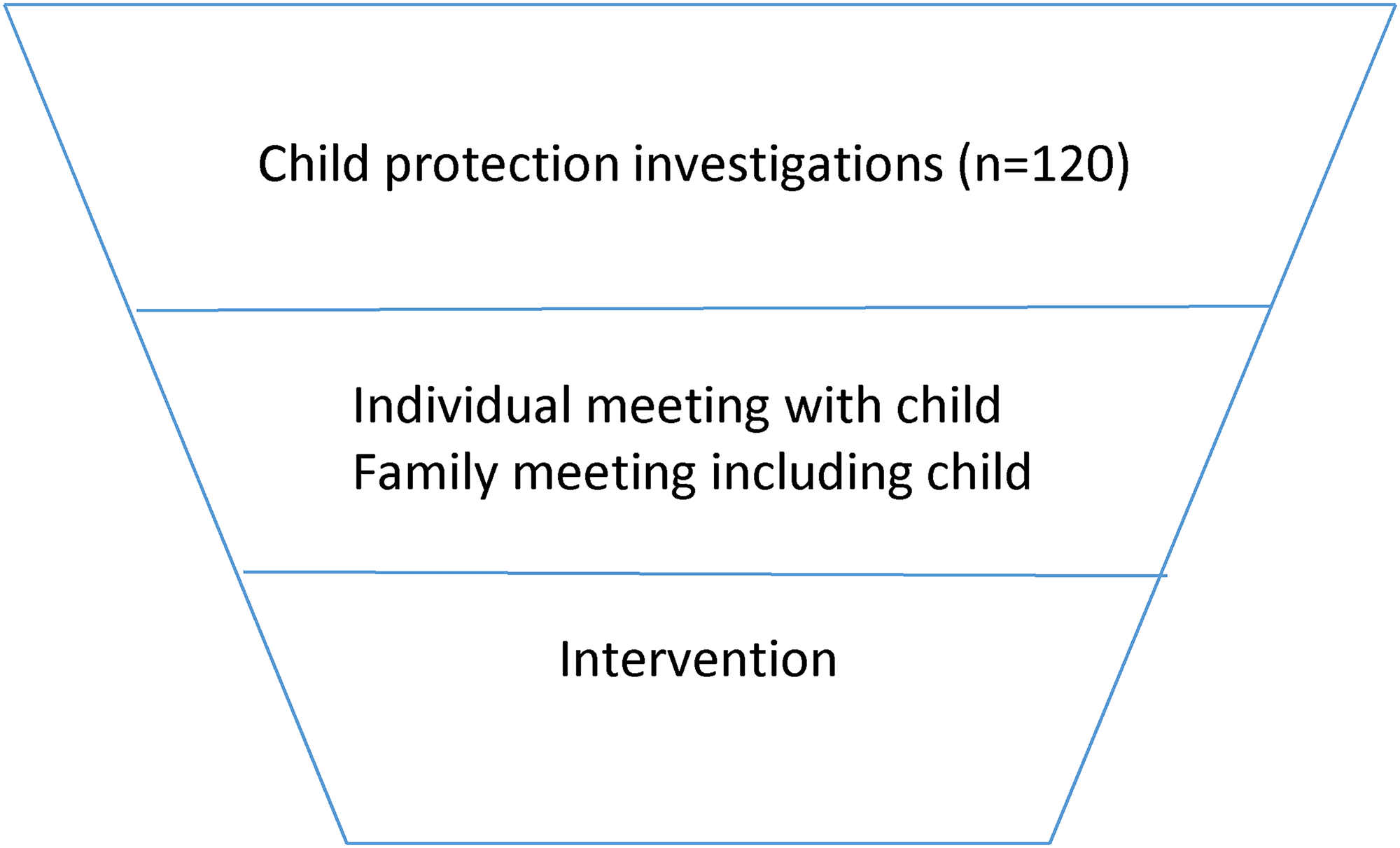
The funnel and filtering process.
Methods and material
For this article with a mixed-methods design, qualitative and quantitative data and analysis are combined and integrated for the purpose of developing a broad and deep understanding. The use of multiple methods and sources can lead to richer data. Qualitative data can help to explain and illustrate quantitative results (Johnson et al., 2007). This article is part of a larger study of privatization in child protection investigations conducted in 22 municipalities and 10 city districts in Sweden. First, a survey was conducted in all these municipalities and city districts. In the next step, six municipalities and city districts that responded that they hired consultants were selected for an in-depth study. This article makes use of a strategic selection of data from the social services’ handling of child protection investigations in the six selected municipalities and city districts. The municipalities were selected according to the following: (I) they hired private consultants who carried out child protection investigations during the period studied; (II) they represent variation with a geographical spread across the country in small municipalities, medium-sized cities, and a large city; and (III) they contain variation in socioeconomic conditions with the selection of two districts in the large city.
A total of 120 child protection investigations were examined (20 from each municipality/city district), of which half (n = 61) were carried out by municipally employed social workers and half (n = 59) by private consultants. The investigations selected were initiated due to reports of concern and were carried out during the years 2017 and 2018. The selection was based on as recent investigations as possible, that is, primarily the last completed. However, we also searched for a variation in terms of children's age and gender, and variation regarding which professionals had carried out the investigations.
Case files, which in this study are child protection investigations, are documents created within a professional context. They contain information about an individual child and the child's family. The investigative texts do not reflect the reality or the children's and parents’ own voices, but rather the perception of them “through the lens of a professional” (Witte, 2020, p. 2).
In this article, we also use data from interviews conducted in the larger study with head managers of the social service departments and senior managers of the child protection units in 22 municipalities and 10 city districts. The interviews were conducted via personal meeting, telephone, or online video call. During the interviews, we used a questionnaire and interview guide including both closed-ended and open-ended questions, inquiring about the number of child protection investigations, the number of consultants hired, the competence among employed staff as well as among hired consultants, and the reasons for and the experiences of using private consultants in child protection assessments.
The study was approved by the regional ethical review board (reference number 2018/104-31). The case files were made available by the municipal social services after the study had obtained ethical approval. The examination of child protection investigations was carried out on the social services premises to avoid bringing out sensitive data.
Analysis
The analysis is focused on comparisons between child protection investigations carried out by municipally employed social workers and investigations carried out by hired private consultants. The investigations have been analyzed according to a data analysis protocol that included both quantitative and qualitative variables, regarding the child's age, gender, family situation, reason for report of concern, the content of the investigation, the assessment, the decision, etc. Quantitative data were computed in SPSS version 26 for descriptive statistics. Qualitative data from the investigations were transcribed to a separate sheet under each research question and analyzed with a focus on the content of the investigations and the arguments of the professionals. We searched for similarities and differences between investigations conducted by municipally employed social workers and those by hired private consultants. In the qualitative analysis of data from child protection investigations, we used the concepts of child perspective and children's participation (Lundy, 2007) to analyze how the children were involved in the process and if there were differences in cases assessed by social workers or by consultants. We also used the concepts funnel and filtering (Parton et al., 1997) to analyze the sorting process of incoming child protection cases through the investigation process. Qualitative data from interviews with managers were analyzed with a focus on the argument for using private consultants in this social work practice. Quotes from managers are used to explain and illustrate the quantitative results (cf. Johnson et al., 2007).
Sample—sociodemographic data
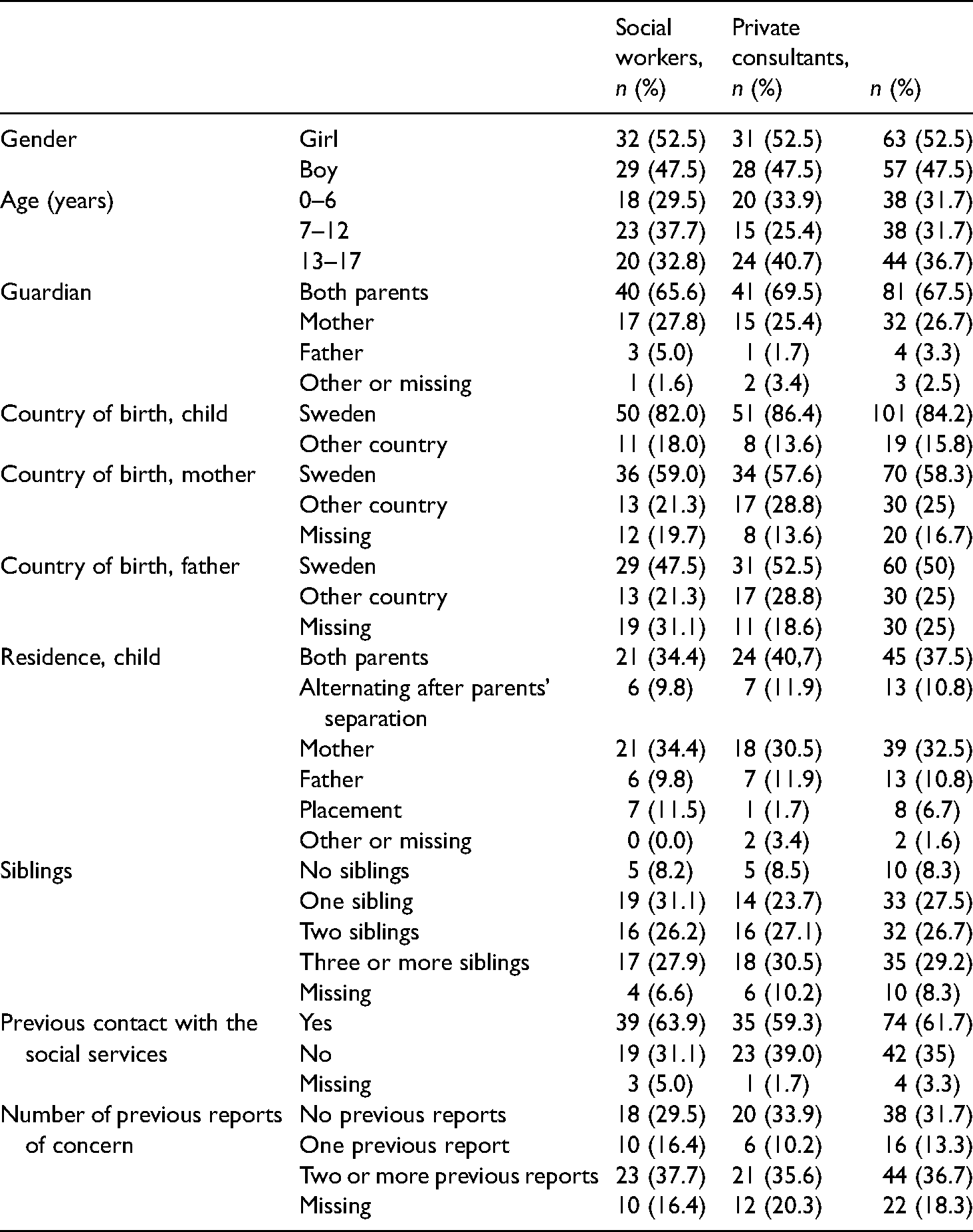
Descriptive analyses of data concerning the 120 children show that there were slightly more girls (52.5%) than boys (47.5%). The majority of children as well as their parents were born in Sweden, while about 16% of children and 25% of parents were born in another country. There may be a larger proportion of parents born in another country, as there were missing data in the files in many cases. Most children had both their parents as guardians. However, many children lived with divorced parents; about 33% had their residence with their mother, 11% with their father, and a similar proportion, about 11%, alternated between their parents’ residences. The majority of children had been in contact with the social services before the current child protection investigation. For many children (at least 37%), there were several previous reports of concern. One difference between the cases assessed by employed social workers and those by private consultants was that the consultants to a higher degree worked with the oldest (13─17 years) and the youngest (0─6 years) children, while the social workers to a higher degree worked with children in the ages 7─12 years. See Table 1. However, there was no major difference when comparing the children's mean age. The mean age of the children assessed by social workers was 9.6 years, while the mean age of children assessed by consultants was 9.9 years.
Sociodemographic data for examined child protection investigations (n = 120) carried out by municipally employed social workers (n = 61) and private consultants (n = 59).
Findings
Reasons for child protection reports
This section focuses on the differences in the reasons for reports of concern between investigations carried out by the employed social workers and the investigations carried out by the private consultants. The analysis reveals that the private consultants in the studied municipalities to a greater extent worked with child protection investigations that had been initiated due to concerns about violence, both violence against a family member (child exposed to domestic violence) and violence against the child (child experienced violence). The municipally employed social workers worked to a greater extent with cases concerning children who, according to the reports, had problems with their health or behavior, as well as cases where there were concerns that the children were exposed to lack of care/neglect. See Table 2. Other reasons for reports of concern were related to parents’ problems with abuse, health, and economy.
Reasons for reports in investigations by type of investigator (n = 120).
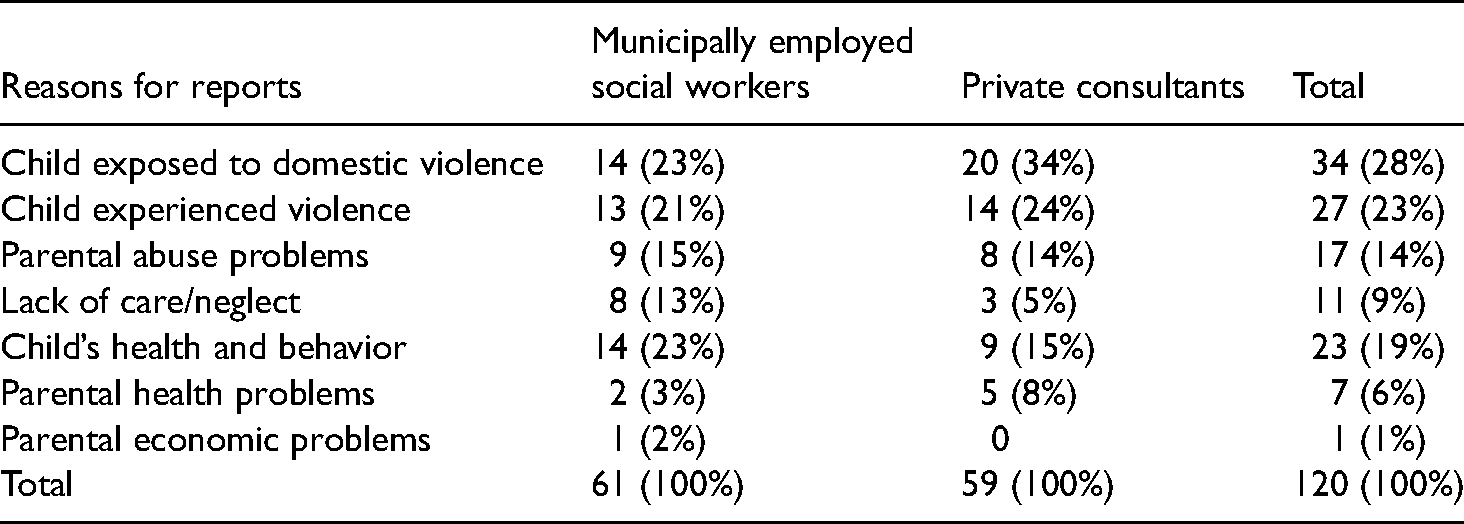
As the table shows, about half of the reports were about violence. This result can be understood in the context of the social services’ increased responsibility in recent years for children who are exposed to violence in a close relationship (SOFS 2014:4, chapter 6, 1§; SSA, chapter 5, 11§). In this situation, children are considered to be victims of crime. This has meant an increased number of child investigation cases and appears to be one reason why the social services have hired consultants, as some municipalities have difficulty recruiting staff with sufficient skills. In interviews with managers, one of them expresses that one reason for hiring consultants is the increased inflow of reports of concern regarding children exposed to violence: There is an increased inflow of cases. It is mostly due to cases of violence. Children are witnessing violence. In those cases, the social services must conduct investigations. These cases have increased. (Social service manager 1)
In interviews with managers, they do not say that they have chosen to give any specific type of case to the private consultants. One manager said that it is most appropriate to give them cases one believes will be simple. Other managers said the opposite, that the consultants received more cases and more difficult cases. In some municipalities, the consultants received cases that had been delayed; they were expected to work with “the pile”: With the help of the consultants, we were able to work through the pile of investigations we had. The consultants only worked to reduce the pile and chew through as many investigations as possible. (Social service manager 2)
One possible interpretation is that cases of violence became delayed, and the consultants worked with a high proportion of such cases while simultaneously working through “the pile.”
The children's participation in the investigation process
This section focuses on the children's participation, differences between employed social workers and private consultants in this regard, and the arguments from professionals for not talking to the children. The gathering of information is a starting point of a child protection investigation. The investigator begins by contacting family members and other persons in contact with the family. The quality of information collected depends on various aspects, for example, the amount of information provided, the extent of resources spent on gathering information, and the way interviews are conducted. Gathering information is an interactive process. If the child or parents perceive the investigator as a threat, they may not be as willing to share information (Witte, 2020).
The results show that, with respect to a municipal or a private investigator, there were differences in the content of the investigations pertaining to the children's participation during the investigation process. The analysis reveals that the private consultants held fewer individual meetings with the children. There was a larger proportion of children, who were assessed by consultants, who did not come to speak at all during their investigation, and there were fewer children who participated in a series of meetings with the investigator when s/he was a private consultant. See Table 3.
Number of individual meetings with child by type of investigator (n = 120).
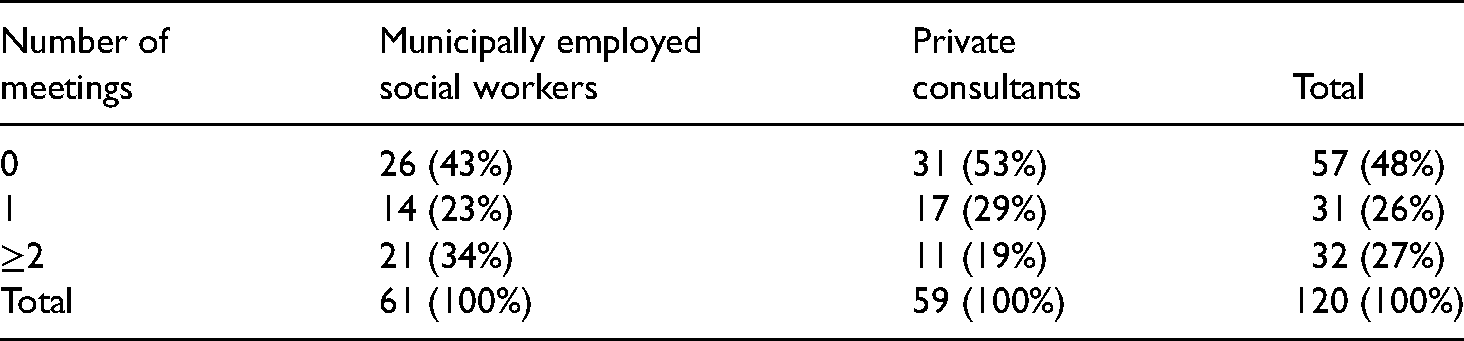
On average, the employed social workers held 1.4 individual meetings with the children (range 0–8). When the investigation included individual meetings with children, the employed social workers conducted an average of 2.5 meetings. When it comes to the private consultants, the children participated in on average 0.8 individual meetings (range 0–6). When children were involved, the consultants conducted an average of 1.7 meetings with the children.
Almost half of the children (48%) did not participate in any individual meeting at all, according to the documentation in the case files. In these cases, a larger proportion of children were assessed by private consultants (53%), than by municipally employed social workers (43%). See Table 3. Our interpretation is that this result does not depend on the child's age, as the mean age of the children assessed by social workers was 9.6 years, while the mean age of children assessed by consultants was 9.9 years. Some children were involved in family meetings, namely, 43% of children were assessed by social workers and 41% of children were assessed by private consultants. In summary, the results reveal that it was more common that the employed social workers involved the children in the investigation process.
Then why did the investigators choose not to talk to the children in individual meetings during the investigation process? What were the arguments, and were there any differences between employed social workers and private consultants regarding the argumentation to keep the child out of the process? The analysis of the documentation in the case files shows that in about half of these cases, the investigator had a meeting with the child together with a parent, most often with the mother. The reasons why a parent was present during the meeting could be that the child was at a young age, or that the parent was there to support the child. In other cases, the documented arguments for not talking to the child were related to children, parents, or investigators, as explained below.
One aspect related to the child when the investigator did not have any individual meetings was the child's young age. These children were between the ages of 0–6 years. In some cases, there was no argument for why the investigator had not seen these young children during the process. If it is not possible to talk to a young child in an individual meeting, it may be possible to see the child and make observations. Another aspect when the investigator had not talked to the child was related to the child's disability. A third aspect was that the child, according to the documentation, did not give consent to meet the investigator. In those cases, the children were between 12 and 15 years old. Other aspects when children did not come to speak during the investigation process were related to the parents, as the parents in some cases did not give consent to meetings between the child and the investigator. Finally, there were aspects related to the investigator when children did not get the chance to come and express themselves. One recurring argument from the investigators was that “meeting with the child is not considered to be in the child's best interests.” This was a more common reason among private consultants than employed social workers. In other cases, there was no argument given, and the reason could not be related to the young age of the child.
What were the investigators’ documented arguments when considering that a meeting with the child was not in the child's best interest? One argument in the case files was that there were other professionals involved in the child's life and that it did not benefit the child to have contact with several professionals: The social services have not talked to [the child] in this investigation based on the fact that [the child] had a lot of contact with BUP [the unit for child and adolescent psychiatry]. (Case file 1, Social worker 1)
A second argument in the case files was that it is sufficient to gather information only from the parents and other persons in the child's network: It has been assessed that it is not in the child's best interests to have a child interview as the information has been gathered through the parents. (Case file 2, Private consultant 1)
A third argument in the case files, based on the investigators’ conceptions, was that the child was not informed about the problem, such as in the following case of domestic violence: Conversation with the child is not compatible with the child's best interests based on the fact that [the child] is not informed of the incident or has not been present /…/ It is the social services assessment that it is not in the child's best interests to be informed about the incident in the current situation, as it would affect the [child's] health negatively. (Case file 3, Private consultant 2)
The quote shows that the professional believes that the child has not perceived the violence, as it is described as an “incident” where the child was not present. Even if a child was not present during an incident, the child is often aware of and affected by the violence or the consequences of the violence (cf. Katz, 2016).
Regarding other contacts during the investigation process, it was most common that social workers, as well as private consultants, gathered information from school staff, healthcare workers, and social services. It was more common to gather information from professionals than from persons in the child's informal network, such as relatives other than parents. The investigative files carried out by the social workers were somewhat longer (mean = 10.5 pages, range 2–34) than those carried out by the consultants (mean = 8.7 pages, range 1–22).
Decisions about interventions
This section focuses on differences regarding the proportion of investigations that led to any interventions depending on if the child protection investigation was carried out by an employed social worker or a private consultant. The analysis reveals that investigations carried out by social workers led to interventions to a higher degree (62%) than investigations carried out by consultants (41%). See Table 4. A child can have more than one intervention; therefore, the number of interventions in the table is higher than the number of children with interventions.
Decisions about interventions by type of investigator (n = 120).
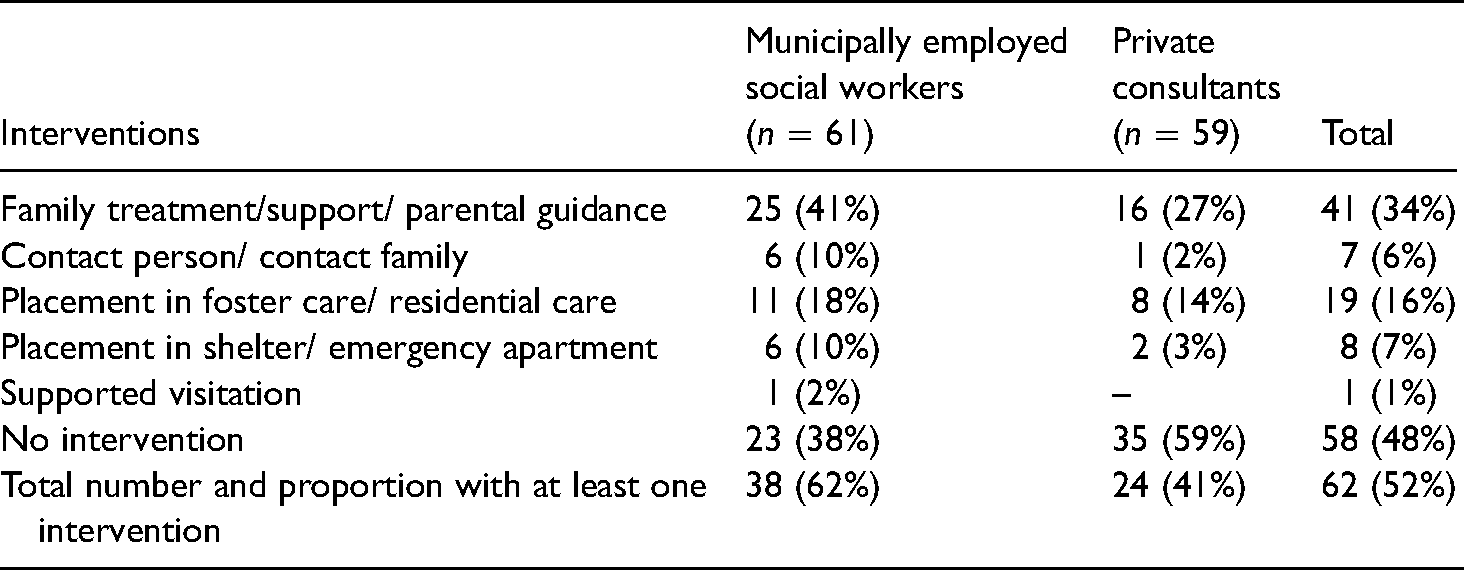
The table shows that the most common interventions were family treatment, family support, and family guidance. These are interventions directed to the whole family or to the parents when the child still lives at home. Other interventions provided to the children were contact persons, contact families, placement, and supported visitation. In many cases, the investigation did not lead to any interventions (48%), and among these cases a larger proportion were assessed by private consultants (59%) than by employed social workers (38%). One interpretation could be that the social workers’ cases were more serious as they led to more interventions. On the other hand, the consultants assessed a larger proportion of cases where violence was the primary reason for the reports of concern. Even among cases that did not lead to any interventions, there were examples of suggested interventions from social workers (n = 14) and consultants (n = 9) that the parents/guardians declined. Thus, the professionals had assessed that more children were in need of support. The reasons for reports of concern were in the majority of those cases violence.
Analysis and discussion
During recent decades, the proportion of private providers in the areas of welfare has increased. One change is that the social services have started to hire private consultants to assist with child protection investigations. The implementation of private consultants in this field took place during a period of high workload for the social services, as a means to solve a staff crisis. As private consultants usually work temporarily with short contracts, this solution challenges the need for stability and continuity in social work practice with vulnerable children (Järkestig Berggren et al., 2021; Shanks & Mejdell Bjerland, 2021). In this article, we have compared the handling of child protection investigations carried out by private consultants and municipally employed social workers. The special focus has been on the child’s perspective during the investigation process.
The results indicate that from a child’s perspective, it matters whether an employed social worker or a private consultant performs a child protection investigation. The study shows several differences between investigations carried out by the two categories of investigators. In the municipalities studied, the private consultants worked to a greater extent with investigations that were initiated due to concerns about violence. There was a larger proportion of the children assessed by consultants who did not come to speak at all in their investigation, and there were also fewer children who participated in a series of meetings. These children also received interventions to a lesser extent. In addition, the consultants’ investigations were on average shorter than those carried out by employed social workers. Figures 2 and 3 illustrate the “funnel and filtering process” (Parton et al. 1997) depending on if the investigations were performed by municipally employed social workers or private consultants.
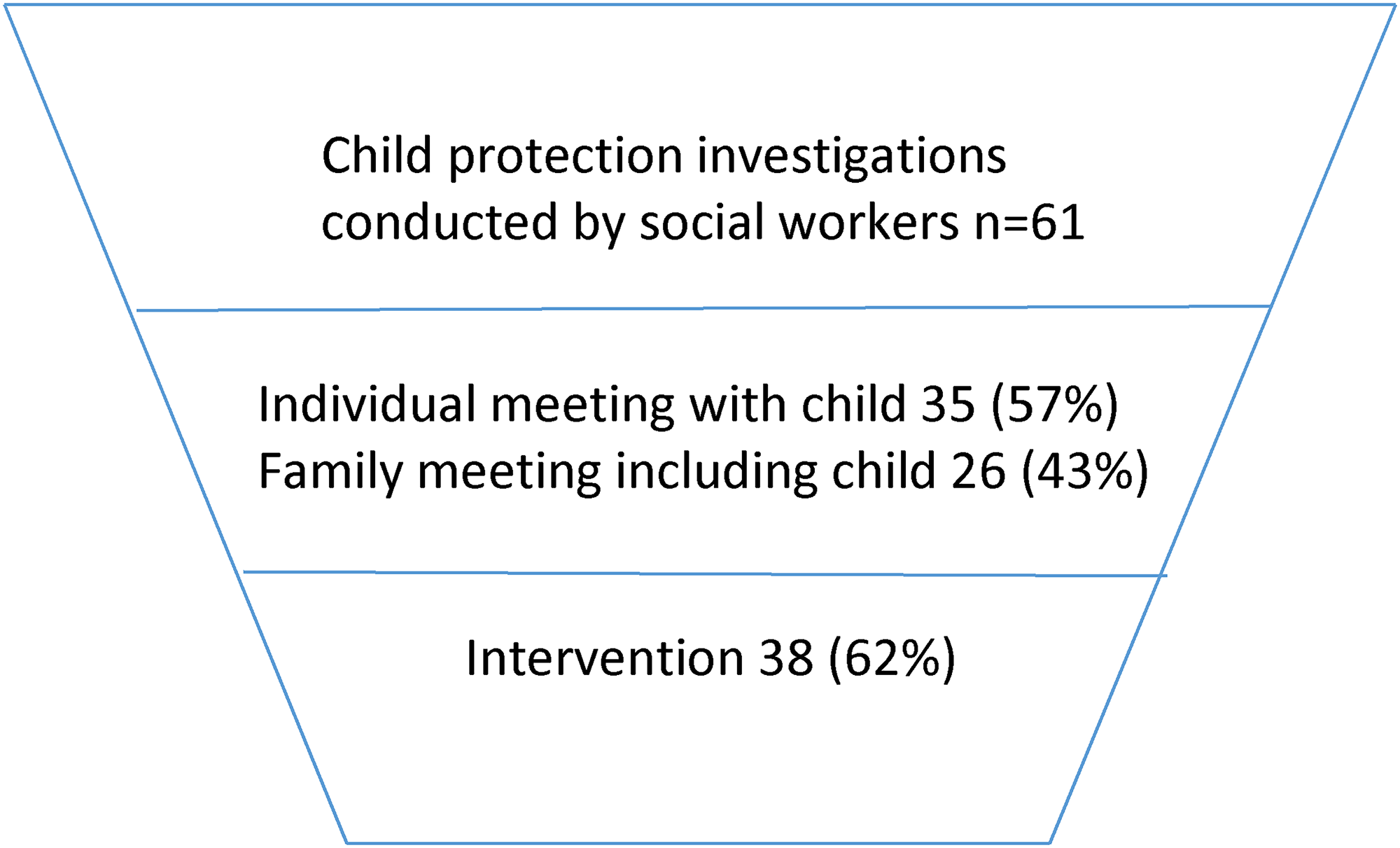
The funnel and filtering process - investigations conducted by social workers
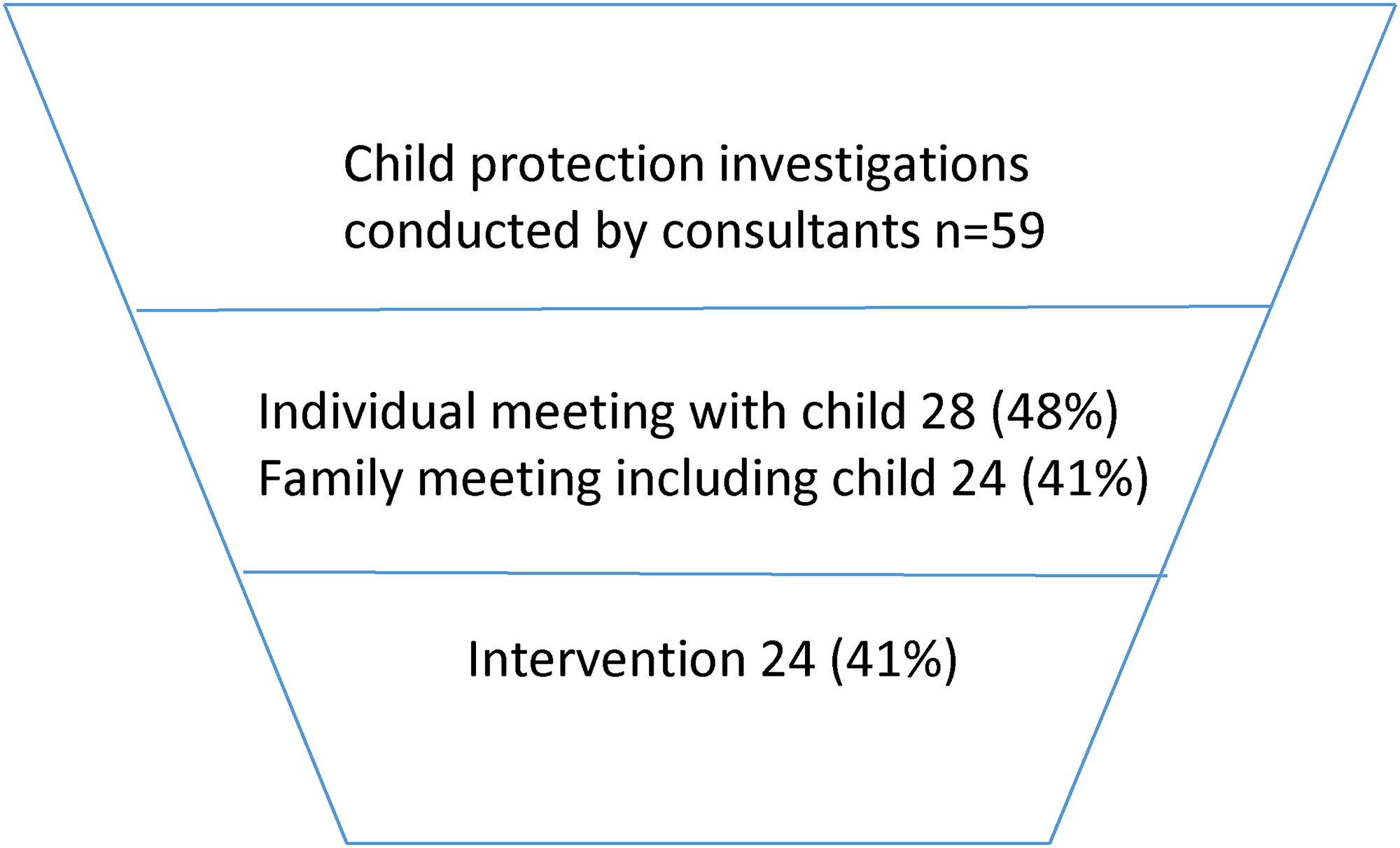
The funnel and filtering process - investigations conducted by private consultants
How can the differences in the findings be understood? The data collected in a child protection investigation is of importance for the assessment and decision. When the professionals do not talk to or even meet the children concerned, they will have less information about the individual child to rely on when making decisions. The consequences when some children are not being heard in the investigation process are that they do not receive information and that they do not have the opportunity to give their perspective on either problems or proposed interventions. According to Lundy's (2007) model for realizing children's rights to participation, children must have the opportunity to express their views in a place that feels safe and inclusive; they must be facilitated to express their views; their views must be listened to by someone responsible for the decisions; their views must be acted upon as appropriate; and they should be told what decision was made and how their views were regarded. This study shows that only 34% of the children assessed by municipally employed social workers and 19% of the children assessed by private consultants participated in more than one meeting, which means that few children had the opportunity to participate in a process and receive information about the decision and how their own views were regarded. About half of the children did not have the opportunity to express their views at all. This could be due to aspects related to the children, parents, or investigators. For example, there were parents who did not give their consent to any meetings between the child and the investigator. There were also parents who declined proposed interventions. In other cases, the investigator assessed that it was not in the child's best interest to participate. In such cases, the investigators apparently have the aim to protect the children from participation as they consider it might be harmful (cf. Vis et al., 2012).
Finally, one key factor influencing children's participation is the quality of the relationship between the child and the investigator (Kennan et al., 2018). A positive, trusting, and stable relationship is important to establish a safe space for children's participation. Private consultants generally work temporarily in a workplace; they seem to be expected to work through as many investigations as possible. It may therefore be more difficult to establish this kind of trusting relationship with the children. A frequent change of professionals forms a barrier to children's participation. As a final point, this study indicates that investigations conducted by consultants tentatively contain less information and specifically concerning children's perspectives. This is worrying in this social work practice, which should ensure the safety of children. A carefully conducted investigation can be a window of opportunity for change in a positive direction for a child who is exposed to neglect or violence.
Limitations of the study
In this study, we have strived to include a variation of municipalities. Municipalities in sparsely populated areas, medium-sized and large cities are included, as well as municipalities with different socioeconomic conditions. However, the quantitative analysis in the study is based on a limited selection of case files and therefore the results show tentative patterns. More studies are needed to understand how the investigation practice is affected when private consultants enter the child protection field.
Conclusions
This study shows differences between investigations carried out by municipally employed social workers and private consultants. The consultants worked to a greater extent with investigations that were initiated due to concerns about violence. Children assessed by consultants came to speak to a lesser extent during the investigation process. These children also received interventions to a lesser extent than children assessed by the municipal social workers. What can then be done to improve the situation for children in the investigation process so that they will be more involved? Frequent changes in social workers, high caseloads, time constraints, and lack of vocational training may be barriers to children's participation (van Bijleveld et al., 2015). Therefore, working conditions, continuity, and training are important elements for improved social work practice.
Footnotes
Ethics
This study has been approved by The Regional Ethical Review Board in Linköping (reference number 2018/104-31).
Funding
The authors disclosed receipt of the following financial support for the research, authorship, and/or publication of this article: This research project was funded by The Swedish Research Council for Health, Working Life and Welfare (grant number 2017-00105).
