




Abstract
This study investigates how stakeholder negotiations of distinctiveness and belonging manifest through experiential co-creation in community-based tourism. It aims to understand how stakeholders engage in identity work to balance cultural preservation with market appeal in rural destinations. Drawing on Optimal Distinctiveness Theory, the research adopts a mixed-methods approach, incorporating ethnographic fieldwork and focus group discussions. The study focuses on stakeholder engagement in crafting tourism experiences that are both locally authentic and globally marketable. The findings identify five experiential dimensions, health, heritage, gastronomy, mobility, and sustainability, through which tourism experiences are co-created. Key stakeholder practices include translating tacit knowledge into communicable narratives, embedding tourists in the production process, and leveraging cultural symbols to convey local identity. This study extends Optimal Distinctiveness Theory into the domain of rural and community-based tourism, offering novel insights into how co-creation processes support both cultural resilience and economic viability. It contributes to the literature by articulating strategic approaches for fostering culturally embedded, distinctive, and sustainable tourism offerings.
Keywords
Introduction
How tourism destinations navigate the competing demands of distinctiveness and belonging has become a central concern in contemporary tourism research, particularly in niche and community-based tourism contexts. In an era of global mobility and increasing tourist sophistication, rural tourism initiatives face the dual imperative of appealing to market expectations while preserving and expressing local identity (Artal-Tur et al., 2019; Raub and Mảrtin-Rios, 2019). This study addresses this tension by investigating how stakeholder negotiations of distinctiveness and belonging manifest through experiential co-creation in a community-driven rural tourism initiative.
Community-based tourism in rural settings is frequently heralded as a tool for sustainable development, providing economic diversification, cultural revitalisation, and enhanced community cohesion (Amani, 2025; Shen and Chou, 2022; Stone et al., 2022). Among various forms of niche tourism, agritourism and culinary tourism have gained traction for their immersive, locally rooted experiences (Pehn Dato Musa and Chin, 2022). These tourism models are often grounded in everyday practices and cultural resources that reflect the values and identities of host communities.
To advance the theoretical understanding of this domain, this study adopts Optimal Distinctiveness Theory (Brewer, 1991) as a guiding lens. Originating in social psychology, Optimal Distinctiveness Theory posits that individuals and groups continuously manage the tension between two fundamental identity motives: the need for differentiation (being unique) and the need for assimilation (belonging to a group). While traditionally applied to individual identity formation, the theory offers conceptual leverage in tourism studies for examining how communities, destinations, and stakeholders position themselves within increasingly competitive markets while preserving socio-cultural authenticity (Voronov et al., 2013).
In community-based tourism, the struggle to balance local embeddedness with tourist appeal is not merely a branding exercise, it is a form of collective identity work. Stakeholders must co-create experiences that are distinctive enough to attract visitors, yet familiar or accessible enough to provide a sense of connection, which guarantees the sustainability and inclusivity (Borges-Tiago and Avelar, 2025) and prevents value co-destruction (Buhalis et al., 2020). These negotiations occur not only in formal marketing strategies but also in the everyday practices of production, hospitality, local storytelling, and ritual. Despite the relevance of Optimal Distinctiveness Theory to these dynamics, few studies have applied it to tourism (Boley et al., 2018; Le et al., 2025; Zhang et al., 2024),
Most existing tourism literature tends to focus on operational or contextual dimensions: tourist motivations, marketing and branding strategies, or the economic impacts on host communities (Lin and Wen, 2018; Mondal and Samaddar, 2021). While valuable, such approaches often neglect the sociocultural negotiations underpinning experience co-creation. There is limited understanding of how local stakeholders interpret, embody, and communicate the multifaceted “values” of their destination, whether health-related, cultural, environmental, or gastronomic, as part of broader strategies to differentiate their tourism offering. This study aims to bridge that gap by theorising community-based tourism as an experiential site of identity negotiation and value co-construction.
The central research question guiding this study is: How do stakeholder negotiations of distinctiveness and belonging manifest through experiential co-creation in a community-based rural tourism setting?
This research will employ Optimal Distinctiveness Theory as the underpinning theory. Optimal Distinctiveness Theory provides the analytical framework through which stakeholder actions, narratives, and strategies are interpreted as expressions of the dual motives of differentiation and belonging.
By reframing stakeholder engagement as a form of experiential identity work, this study offers both theoretical and practical contributions. Theoretically, it expands Optimal Distinctiveness Theory from its traditional individualist orientation into the realm of tourism destination development, shedding light on how groups manage identity tensions in material, symbolic, and experiential terms. Practically, it identifies co-creation strategies, such as participatory production, tacit knowledge translation, and cultural storytelling,that can guide rural communities in building competitive yet culturally grounded tourism offerings.
In a global tourism economy where destinations increasingly compete on the basis of authenticity, emotional resonance, and narrative richness, understanding how local actors strategically manage distinctiveness and belonging becomes critical (Mohammadi et al., 2021). This study thus contributes to a deeper understanding of how rural destinations can position themselves through culturally embedded yet market-sensitive forms of community-based tourism. In doing so, it offers a roadmap for rethinking the developmental potential of community-led tourism experiences and advances a theoretical conversation about identity negotiation in place-based tourism practices.
Literature review
Optimal distinctiveness theory for tourist experience study
Optimal Distinctiveness Theory, introduced by Brewer (1991), offers a valuable framework for examining identity-related tensions in tourism. The theory proposes that individuals and groups are motivated by two opposing social needs: the need for assimilation, which reflects the desire to belong to a larger group, and the need for differentiation, which fulfils the desire to express uniqueness. This balance of inclusion and distinction informs how identities are constructed, performed, and negotiated in various social settings. While Optimal Distinctiveness Theory has been widely employed in social psychology, organisational behaviour, and consumer research (Vignoles et al., 2000; Voronov et al., 2013), its potential for unpacking the social and experiential dimensions of tourism remains underdeveloped.
In tourism, experiences are increasingly framed as co-created interactions between tourists and hosts rather than as standardised commodities (Binkhorst and Den Dekker, 2009; Kastenholz et al., 2017; Pongsakornrungsilp and Pongsakornrungsilp, 2023; Vargo &Lusch, 2016). These co-created experiences often involve shared meaning-making, emotional investment, and embodied participation, rather than passive consumption. However, much of the existing literature on co-creation tends to focus on service innovation (e.g. Carvalho and Alves, 2023; Cerdan Chiscano and Darcy, 2021) or value enhancement (e.g. Fan et al., 2025; Yang et al., 2023) from the visitor’s perspective, with limited attention to how co-creation functions as a mode of identity negotiation for host communities or local stakeholders (Doan et al., 2023; Li et al., 2024).
Optimal Distinctiveness Theory provides theoretical leverage in this area by enabling a closer examination of how destinations construct experiences that balance distinctiveness with broader appeal. Tourists are known to seek experiences that are novel yet relatable, unique yet not alienating (Cheng et al., 2012; Su and Zhang, 2020). In this light, the principle of optimal distinctiveness helps explain how destinations can simultaneously satisfy tourists’ need for new experiences and their desire to feel connected to local people, stories, and rituals. Yet the production of such experiences involves not only tourists’ perceptions but also strategic, cultural, and emotional labour by local stakeholders.
Existing research in niche tourism fields such as wine, coffee, and tea tourism has demonstrated how destinations often blend local specificity with global consumer trends to create memorable experiences (Anbalagan and Lovelock, 2014). Voronov et al. (2013), for instance, show how wine tourism in Ontario leveraged regional authenticity while aligning with cosmopolitan lifestyle branding. Similarly, Su et al. (2019) discuss how integrating tea production with tourism can support sustainable livelihoods, though their analysis stops short of theorising how these integrated experiences shape and reflect local identity work.
Despite a growing interest in cultural differentiation, tourism literature still tends to treat distinctiveness as a branding strategy rather than a socially constructed outcome of stakeholder interaction. Studies that do address cultural or community-based tourism often focus on the preservation of heritage (Jolliffe, 2007), economic impacts (Shen and Chou, 2022), or governance models (Vrontis et al., 2022), with limited attention to how distinctiveness is negotiated through everyday practices of storytelling, ritual, and product design. Tea tourism, in particular, remains under-theorised in this regard. Although existing studies have documented its potential to revitalise rural economies and preserve cultural landscapes (Davari et al., 2024; Lin and Wen, 2018; Mondal and Samaddar, 2021), they rarely interrogate the lived processes through which stakeholders decide how tea, culture, and tourism intersect in co-created experiences.
Additionally, the role of tacit knowledge in shaping tourist experiences is often overlooked. As Nonaka (1994) suggests, communities often possess rich, experiential knowledge that is difficult to articulate but vital to cultural continuity and identity. In tourism contexts, translating this tacit knowledge into forms that resonate with, such as guided narratives, rituals, or embodied, requires deliberate acts of interpretation and mediation. Yet, little research has examined how these acts of knowledge translation contribute to identity formation or differentiation strategies in rural tourism.
Furthermore, studies applying Optimal Distinctiveness Theory in tourism remain limited in scope. Where it has been used, the focus is often on understanding tourist motivations, brand perception, or destination loyalty (Liang and Lai, 2023; Vignoles et al., 2000), rather than exploring how host communities themselves navigate the pressures of distinctiveness and conformity. This is especially true in the context of tea tourism, where experiential co-creation is closely linked to cultural knowledge, traditional practices, and environmental stewardship, but where theoretical engagement with identity tensions remains sparse.
In recent years, tourism research has increasingly acknowledged the importance of differentiation in destination development, particularly in the context of place branding and cultural tourism (Su et al., 2019). Some studies called for the importance of inclusive destination branding co-creation, with local resident participation (Bowen and Sotomayor, 2022; Wassler et al., 2021) and mechanism to encourage and promote their participation (Amani, 2025), yet these studies have not examined how such differentiation, including brand identity elements like cultural identity, and sustainability (Bowen and Sotomayor, 2022; Hanna et al., 2021) is operationalised through the co-creation of experiences by local stakeholders. While co-creation has gained conceptual traction as a participatory model of tourism development (Chandler and Lusch, 2015), most empirical applications remain focused on enhancing visitor satisfaction (e.g., Sugathan & Ranjan, 2019) or service innovation (e.g., Ma et al., 2017), rather than interrogating the identity dynamics embedded in these interactions.
Taken together, these strands of literature suggest an emerging but fragmented understanding of how distinctiveness is constructed in tourism. There remains a need for more integrative research that considers co-creation not only as a tool for economic development or visitor engagement, but as a process of collective identity articulation shaped by both local knowledge and global tourism imaginaries.
Community-based tourism and Stakeholder engagement
Community-based tourism is a growing segment within sustainable tourism, emphasizing unique cultural, sensory, and educational experiences rooted in local ways of life. It offers a pathway for rural communities to diversify their economies, preserve cultural heritage, and promote environmental stewardship (Shen and Chou, 2022). Unlike mass tourism, community-based tourism targets niche markets interested in authentic experiences and deeper cultural immersion, often involving direct engagement with local communities, participation in traditional practices, and involvement in everyday rural life (Lin and Wen, 2018).
While the potential of community-based tourism is well-documented, its success depends on the active engagement and collaboration of multiple stakeholders, including local residents, community leaders, government agencies, and private sector actors (Baral and Saini, 2025). According to Vrontis et al. (2022), stakeholder engagement is critical for ensuring that tourism development aligns with the values and aspirations of host communities while contributing to long-term sustainability. In community-based tourism, the creation of compelling and culturally rich experiences relies on the capacity of stakeholders to co-develop and maintain inclusive, participatory approaches to tourism planning and delivery (Su et al., 2019).
Stakeholder engagement in community-based tourism can take various forms, ranging from formal partnerships to more informal grassroots collaborations. Models of community-based tourism that emphasize local ownership, participatory governance, and shared benefits are particularly effective in empowering communities and enhancing destination authenticity (Goodwin and Santilli, 2009). In these models, community members are not only the primary beneficiaries of tourism but also shape the tourist experience itself. This ensures that tourism remains grounded in local knowledge systems and values while fostering economic resilience. Su et al. (2019) highlight that such initiatives have enhanced community cohesion and created income-generating opportunities, particularly for women and marginalized groups.
However, stakeholder engagement in community-based tourism is not without its challenges. One of the most significant issues is balancing the competing interests of diverse stakeholder groups (Elgammal, 2022; Getz and Timur, 2012; Hassan, 2021). Government agencies may focus on infrastructure development or revenue generation, while local communities often prioritize cultural preservation and environmental protection (Hall, 2008). Private sector actors may seek to maximise profitability, which can sometimes conflict with community goals of equity and sustainability. Achieving a balance among these interests requires transparent governance, mechanisms for conflict resolution, and sustained trust-building efforts.
Another major challenge in community-based tourism is the need for capacity building (Zielinski et al., 2021) and knowledge transfer (De Bernardi et al., 2021). Many community members may lack formal training in areas such as marketing, customer service, tourism operations, or environmental management (Doan et al., 2022). Capacity-building initiatives, such as training programs, peer-learning, and mentorship schemes, are essential for empowering local actors to actively shape and benefit from tourism development. Additionally, knowledge transfer between stakeholders, such as from NGOs, government, or more experienced community-based tourism destinations, can foster innovation and improve local readiness (Wang et al., 2025).
Marketing and branding also play a critical role in the success of community-based tourism, and stakeholder collaboration is essential in this regard. Effective community-based tourism destinations often leverage their cultural and natural assets to create distinctive brand identities that appeal to values-driven and experience-seeking travelers (Mtapuri et al., 2022). Such branding efforts require alignment among stakeholders to ensure the narrative remains authentic, inclusive, and reflective of the community’s identity and aspirations.
The development and success of community-based tourism depends heavily on inclusive stakeholder engagement (Tasci et al., 2014) that supports co-created experiences, promotes community agency, and embeds sustainability into practice. By involving a wide range of local and external stakeholders in the planning, implementation, and governance of tourism initiatives (Pham et al., 2025), community-based tourism can create meaningful, place-based experiences while advancing broader development goals (e.g., Suriyankietkaew et al., 2025)
In response to the fragmented understanding of how tourism distinctiveness is collectively shaped by diverse stakeholders, and the recognised importance of their engagement in community-based tourism development, this study investigates how negotiations of distinctiveness and belonging manifest through experiential co-creation in a rural community-based tourism setting.
Methods
This section outlines the methodological approach adopted to explore the engagement of stakeholders in diversifying tourist experiences through tea-added values in La Bang, Vietnam. A triangulation approach was employed, integrating two complementary studies: an ethnographic study (Study 1) and focus group discussions (Study 2). This dual-method approach enhances the robustness of the research by combining longitudinal ethnographic insights with the breadth of perspectives gathered through focus group discussions (Creswell and Poth, 2017; Denzin, 2012). Such a mixed-method approach improves the validity of findings and allows for a more nuanced understanding of stakeholder engagement in tea tourism. Importantly, Optimal Distinctiveness Theory guided the data analysis, providing a theoretical framework to understand how stakeholders balance distinctiveness and assimilation in diversifying tourist experiences.
Study 1: Ethnographic study
Objective and scope
The ethnographic study aimed to collect preliminary and contextual data on stakeholder engagement in tea tourism at La Bang Commune. It sought to capture the social, cultural, and economic dynamics of tea-related activities while observing stakeholder interactions and community rituals (RQ1). One of the authors, in his 30s, with prior experience in ethnographic research, conducted immersive fieldwork over a period of 6 months. He engaged in participant observation, semi-structured interviews, and informal conversations with various stakeholders to gain deeper insights into their lived experiences. His positionality as an outsider with a research interest in sustainable tourism allowed him to approach the study with a balance of critical distance and empathetic engagement, facilitating a nuanced understanding of the socio-cultural and economic dynamics shaping tea tourism in La Bang Commune.
This phase focused on understanding the behaviours, beliefs, and practices related to tea production and tourism, particularly how stakeholders co-create and negotiate distinctiveness in tourist experiences (Brewer, 1991). The study was conducted across six tea estates in La Bang Tea Cooperative. Participants were selected using a purposive sampling strategy to ensure a diverse representation of perspectives, including estate managers, tea farmers, local tour operators, tourists, and local administrative representatives (Bernard, 2017). This diversity was crucial for capturing the multifaceted nature of stakeholder engagement in tea tourism.
Data collection methods
The ethnographic study was carried out in two time periods: from September to December 2023 and from May to June 2024. The ethnographic study was carried out in two time periods: from September to December 2023 and from May to June 2024. While this longitudinal design allowed for the observation of different seasonal contexts in tea production and tourism activities, the analysis revealed no substantive differences in stakeholder engagement patterns, practices, or the nature of tea-related experiences across the two periods. Instead, the themes that emerged were consistent over time, suggesting stable and enduring forms of stakeholder interaction and identity negotiation. The extended presence in the field nonetheless strengthened the credibility and authenticity of the ethnographic insights (Hammersley and Atkinson, 2019).
Data collection methods included participant observation and semi-structured interviews. Researchers immersed themselves in the daily routines of participants, observing tea production practices, social interactions, and community events such as tea-picking festivals and traditional tea ceremonies. Notes were taken on significant social phenomena, such as community rituals related to tea and interactions between tourists and local stakeholders. Participation in these events enabled researchers to gain cultural insights that might not have been accessible through interviews alone (Yin, 2018).
Field interviews were conducted in both structured and unstructured formats to capture a wide range of responses. The structured interviews provided consistency across participants, while unstructured interviews allowed for a deeper exploration of themes that emerged during observation. This combination ensured the comprehensiveness of the data collected.
Study 2: Focus group discussions
Objective and scope
The focus group discussions aimed to validate and expand upon the findings from the ethnographic study by engaging a broader set of stakeholders. The primary objective was to gather detailed insights into the challenges and opportunities for diversifying tourist experiences through tea-added values. Eight focus group discussions were conducted, involving 48 participants from the La Bang Tea Cooperative and Suoi Kem Tourism Cooperative. The diverse composition of the Focus group discussions allowed for a wide range of perspectives and experiences to be shared, enhancing the reliability of the data collected (Krueger and Casey, 2015).
Participants in the focus group discussions included estate managers, tea farmers, local tour operators, and local administrative representatives, similar to those involved in the ethnographic study. This continuity ensured the comparability of insights across the two studies while also allowing for the emergence of new themes.
Data collection methods
The focus group discussions were conducted in May and June 2024 at the La Bang Tea Cooperative factory. Each session lasted between 30 minutes and an hour and was moderated by a trained facilitator and a member of the research team. The focus group discussions followed a semi-structured format, with the moderator guiding the discussion based on key themes identified in the ethnographic study (Krueger and Casey, 2015). This format allowed for flexibility in the discussion while ensuring that key research questions were addressed. Participants were encouraged to discuss their experiences and perspectives on themes such as the economic, cultural, and environmental impacts of tea tourism. They also explored potential strategies for enhancing tourist experiences and promoting sustainable practices. Discussions were recorded and transcribed for subsequent analysis.
Data analysis
Data from both the ethnographic study and the focus group discussions were analysed using thematic analysis, a widely accepted approach in qualitative research that enables the identification of patterns and themes across data sets (Braun and Clarke, 2006). The analysis followed a six-step process: data familiarisation, generating initial codes, searching for themes, reviewing themes, defining and naming themes, and producing the final report. This iterative process ensured that the themes were grounded in the data and reflected the experiences and perspectives of the participants.
The application of Optimal Distinctiveness Theory in the data analysis provided a structured lens through which to understand the dynamics of stakeholder engagement in tea tourism. Specifically, Optimal Distinctiveness Theory guided the identification and interpretation of themes related to how stakeholders balance the dual motives of differentiation and assimilation in creating tourist experiences. For example, some stakeholders emphasised the importance of preserving traditional tea production practices to maintain cultural authenticity, while others advocated for integrating modern innovations to attract a broader range of tourists.
Themes were categorised into key areas representing stakeholder engagement and the co-creation of tea-added values. For instance, the analysis revealed that stakeholders often collaborated to design tourist experiences that blended local traditions with contemporary expectations, thereby achieving optimal distinctiveness (Brewer, 1991; Vignoles et al., 2000). The data also highlighted tensions between the desire to maintain local identity and the need to appeal to external markets, a challenge that Optimal Distinctiveness Theory helped frame and interpret.
Comparative analysis between the findings from the ethnographic study and the focus group discussions was conducted to identify convergences and divergences. This comparative approach strengthened the robustness of the study by cross-validating the findings and ensuring that the themes identified were consistent across different data sources (Yin, 2018). Divergences were closely examined, providing opportunities to explore alternative explanations and deepen the analysis.
Ensuring research quality and rigor
To ensure the reliability and validity of the findings, several strategies were employed. Triangulation was a core strategy, combining multiple data sources and methods to enhance the credibility of the findings (Flick, 2018). Prolonged engagement in the field ensured that researchers developed a deep understanding of the local context and minimized the risk of misinterpretation. Additionally, peer debriefing sessions were conducted with colleagues and local experts to review and refine the emerging themes, adding another layer of rigor to the analysis.
The study also adhered to ethical research standards. Informed consent was obtained from all participants, and confidentiality was maintained throughout the research process. Reflexivity was an integral part of the research, with researchers maintaining reflective journals to document their observations, biases, and evolving interpretations. This helped to ensure transparency and critical self-awareness throughout the study (Yin, 2018).
The integration of ethnographic research and focus group discussions, combined with the application of Optimal Distinctiveness Theory, provides a robust methodological framework for exploring stakeholder engagement in tea tourism. By adopting this approach, the study offers rich, contextually grounded insights into how stakeholders co-create and diversify tourist experiences through tea-added values in La Bang Commune.
Findings
Study 1. Stakeholders’ perceptions of tea values
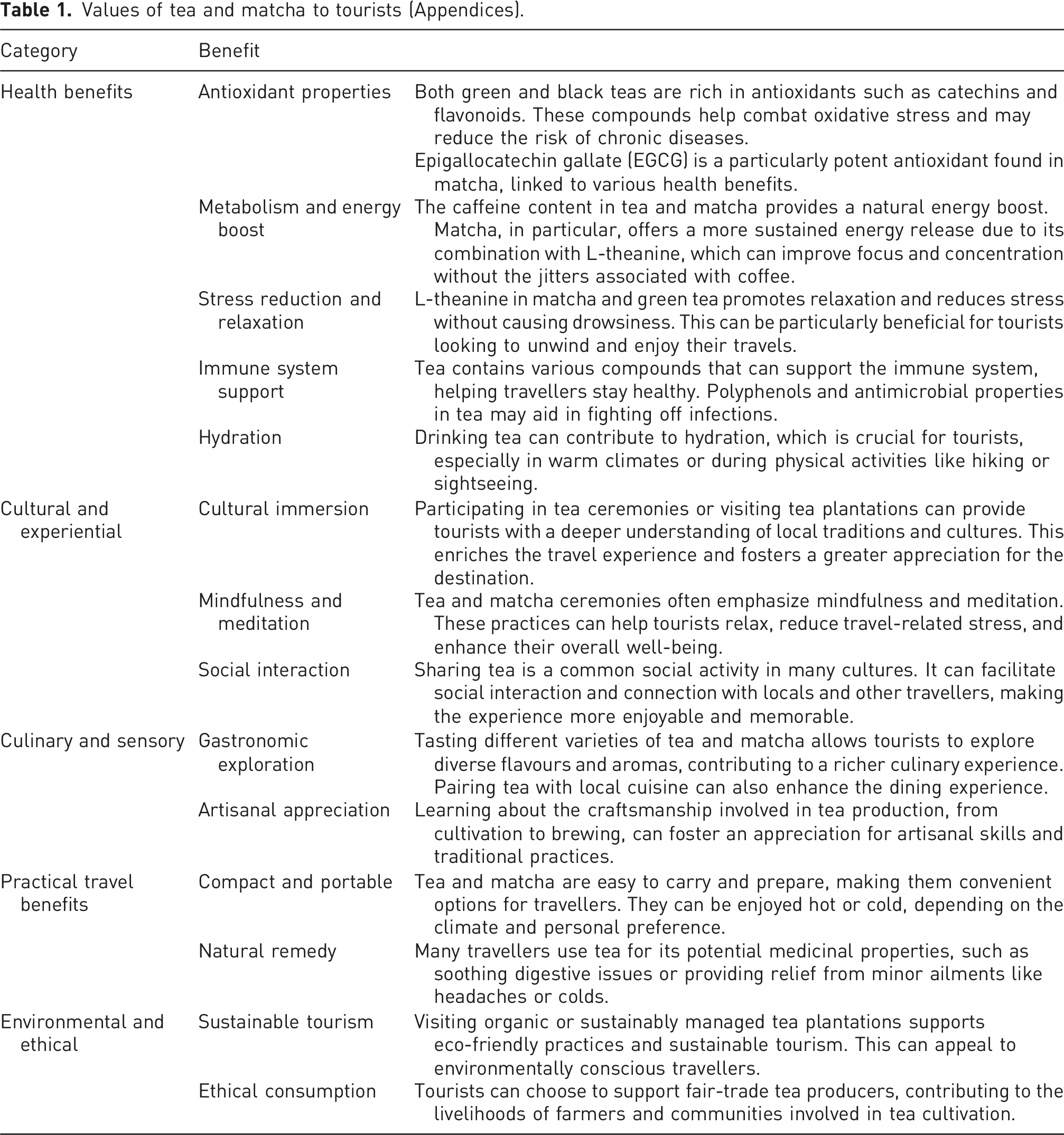
Values of tea and matcha to tourists (Appendices).
Health benefits as a key driver of tourist interest
Antioxidant properties
A significant portion of stakeholders, particularly local tea farmers and tour operators, emphasized the health-related benefits of tea and matcha as a major draw for tourists. This finding is consistent with that of Cheung et al. (2021)’s study which confirmed the importance of health value in tea beverages in ultimately driving tourists’ satisfaction and revisit intention. According to them, tourists are increasingly motivated by wellness tourism trends, seeking products and experiences that promote physical and mental health (Su and Zhang, 2022). The antioxidant properties of green and black teas were frequently cited, with catechins and flavonoids seen as key health-promoting compounds.
Metabolism and energy boost
Stakeholders noted another health benefit of tea is that matcha, in particular, has gained attention due to its high concentration of epigallocatechin gallate, an antioxidant linked to metabolism enhancement and disease prevention.
One tea farmer explained: “When tourists come to our tea farms, they are often curious about how tea can improve their health. We show them how matcha is made and explain its health benefits. Many leave with bags of matcha powder because they believe it can help them stay energetic and focused during their travels”.
This finding aligns with research that highlights tourists’ growing interest in health and wellness activities as part of their travel experience (Karagianni et al., 2025; Voigt et al., 2011). Additionally, local tour operators observed that the combination of caffeine and L-theanine in tea and matcha provides a natural energy boost without the jittery side effects commonly associated with coffee. Tourists who engaged in outdoor activities such as hiking in the nearby hills appreciated this sustained energy release.
Stress reduction and relaxation
Stakeholders recognised the stress-relieving properties of tea, particularly green tea and matcha, due to their high L-theanine content. This amino acid is known to promote relaxation and reduce stress without inducing drowsiness, making it an appealing option for tourists seeking moments of calm during their travels. Tea tourism experiences provide an opportunity for tourists to engage in a soothing ritual that enhances their overall sense of well-being. Given the increasing demand for wellness-oriented travel, these relaxation benefits position tea tourism as a valuable component of wellness tourism, catering to visitors looking to unwind and recharge. This finding aligns with research by Hinton et al. (2019), which highlights that tea consumption can significantly reduce stress and enhance relaxation.
Immune system support
Tea’s role in supporting immune health was also emphasised by stakeholders, particularly in response to growing tourist interest in natural wellness solutions. Rich in polyphenols and other bioactive compounds, tea may help the body fight infections and strengthen the immune system. Tourists, especially those engaging in outdoor activities or long-term travel, were particularly drawn to tea for its perceived ability to maintain health and resilience. This finding is supported by research from Dulloo et al. (2000), which demonstrates that polyphenols in tea possess antiviral and antibacterial properties that enhance immune function.
Hydration
Tea was also recognised by stakeholders as a beneficial hydration option for tourists, particularly in warm climates or for those engaging in physically demanding activities like hiking or sightseeing. Unlike sugary or artificially flavoured drinks, tea provides a natural and refreshing source of hydration while also offering additional health benefits. Thus, as emphasized by Blumberg (2013), tea is ranked highly as a healthy beverage of choice for hydration and explicitly recommended by the dietary guidelines in Germany and Japan. This aligns with the increasing preference for natural, functional beverages among health-conscious tourists, reinforcing the value of tea tourism in promoting hydration and overall wellness.
Cultural and experiential value: Deepening connection through traditions
Cultural immersion
The cultural and experiential value of tea was another prominent theme, with stakeholders pointing to tea-related rituals and ceremonies as vital components of the tourist experience. Participating in tea ceremonies was seen as a gateway to cultural immersion, allowing tourists to connect with local traditions and history. This result reflects those of Kuang et al. (2023), who also found that the integration of tea ceremony and cultural tourism offers tourists the opportunity to engage in tea ceremony practices while enhancing the attractiveness of the travel destinations. Further emphasized by representatives from the La Bang Tea Cooperative that these experiences contribute to a richer understanding of Vietnamese culture while fostering mindfulness and relaxation.
Mindfulness and meditation
Stakeholders emphasized the role of tea and matcha ceremonies in promoting mindfulness and meditation, making them an integral part of the tea tourism experience. Tourists who participated in these activities often described the ceremonies as moments of reflection and tranquillity. These ceremonies encourage tourists to slow down, focus on the sensory aspects of tea preparation, and engage in mindful consumption. This aligns with existing literature on tea tourism, which highlights the role of tea ceremonies in promoting mindfulness and stress reduction (Chen et al., 2021).
Social interaction
Additionally, the social nature of sharing tea was perceived as an opportunity for cultural exchange and interaction with both locals and other visitors.
One tour operator noted: “Tea ceremonies are not just about drinking tea. They are about slowing down, being present, and enjoying the company of others. Many tourists find this experience very meaningful and take it home with them.”
Culinary and sensory appeal: Gastronomic exploration
Gastronomic exploration
Stakeholders also highlighted the culinary and sensory value of tea and matcha, emphasizing how they enrich the tourist experience through diverse flavours, aromas, and gastronomic exploration. Tasting different varieties of tea allowed tourists to explore the unique terroir of Thai Nguyen Province, known for its high-quality green tea. Pairing tea with local cuisine further enhanced the sensory experience, encouraging tourists to engage with the region’s culinary heritage.
A local tea estate manager shared: “We encourage tourists to taste several tea varieties, each with its own flavour profile. We also organize tea-pairing sessions with local dishes, which help visitors appreciate how tea complements our cuisine.”
This finding is in accord with a recent study exploring tea tourism by Topczyńska and Gonia (2021) who also found that tourists travel to seek out new varieties of tea with unique flavours and exceptional properties.
Artisanal appreciation
Learning about the artisanal skills involved in tea production, from cultivation to brewing, was another point of interest. Several tourists expressed admiration for the craftsmanship behind traditional tea-making practices, which added an educational dimension to their visit. This finding resonates with research on gastronomic tourism, which underscores the importance of sensory experiences and artisanal appreciation in enhancing tourist satisfaction (Kivela and Crotts, 2006).
Practical travel benefits: Convenience and natural remedies
Compact and portable
Several stakeholders, particularly tour guides and tourists themselves, highlighted the practical benefits of tea as a travel companion. Tea’s compact and portable nature makes it easy to carry and prepare, whether hot or cold. This convenience was particularly valued by tourists engaged in outdoor activities, such as hiking or visiting rural tea plantations.
Natural remedy
Additionally, many tourists perceived tea as a natural remedy for common travel-related ailments. For instance, some mentioned drinking tea to alleviate digestive issues or reduce fatigue. The antimicrobial properties of certain teas were also cited as beneficial for maintaining health during travel. These findings align with broader trends in wellness tourism, where travellers seek natural and holistic solutions for maintaining health on the go (Lehto et al., 2006).
Environmental and ethical considerations
Sustainable tourism
The final theme that emerged from the data relates to the environmental and ethical values associated with tea tourism. Stakeholders, particularly representatives from the La Bang Tea Cooperative, emphasized the importance of promoting sustainable tourism practices. Visiting organic or sustainably managed tea plantations was positioned as an eco-friendly activity that appeals to environmentally conscious tourists.
Ethical consumption
For ethical consumption, several stakeholders also highlighted the role of fair-trade practices in supporting local communities. Tourists were encouraged to purchase tea directly from farmers, ensuring that their spending contributed to local livelihoods. This finding reflects the growing demand for responsible tourism and ethical consumption (Goodwin, 2011).
One local administrator noted: “We try to educate tourists about the impact of their choices. By supporting fair trade and organic tea, they help preserve our environment and improve the well-being of our community.”
Study 2. optimising tea values for tea tourism competitiveness
The findings from Study two illustrate how stakeholders in La Bang Commune perceive the value of tea and how they engage with these values to diversify tourist experiences and enhance competitiveness. The thematic analysis identified three key themes: (1) Sharing knowledge of tea values in developing tourist experiences, (2) Involving tourists in the tea production process, and (3) Emphasising the cultural significance of tea. These themes highlight the opportunities and challenges stakeholders face in leveraging tea values to create authentic, engaging, and competitive tea tourism experiences.
Theme 1: “We do it, but we do not know why” — Sharing knowledge of tea values in developing tourist experiences
A recurring theme in stakeholders’ narratives is their ambivalence toward their role as knowledge sharers. While most are highly skilled in traditional tea cultivation and production, many lack the ability, or confidence, to effectively communicate the broader historical, cultural, and scientific values of tea to tourists. This knowledge gap limits the potential of tea tourism, as tourists increasingly seek meaningful, informative experiences rather than passive consumption.
Stakeholders commonly expressed that although they engage in daily tea-related activities, they struggle to explain the unique aspects of their practices to visitors. One farmer explained: “We harvest tea every day, but when tourists ask about the history or what makes our tea special, we often don’t have much to tell them.”
This lack of knowledge transfer can hinder tourist engagement and reduce the perceived authenticity and value of the experience. Effective communication about the cultural, historical, and environmental significance of tea has the potential to enhance tourists’ understanding and appreciation. However, stakeholders consistently noted the need for training to help bridge this gap. “We need training to better understand the scientific values of our tea and how to communicate the unique aspects of our tea to tourists.
In some cases, tourists themselves displayed more curiosity about the production process than the hosts anticipated, prompting a recognition among stakeholders that they must better equip themselves with the knowledge to meet these expectations.
One local tea producer explained how sharing stories of traditional practices could elevate the experience: “Sharing knowledge is crucial. We have high-quality tea with indigenous tea plants. We use organic methods and hand-harvest our tea, which gives it a unique flavour. If we can explain why our tea is special, tourists will appreciate it more.
The findings align with the literature on experiential tourism, where storytelling and knowledge sharing are recognized as key elements for creating memorable and meaningful tourist experiences (Mossberg, 2008) and enhancing their perceived value of the experience (Piriyakul and Piriyakul, 2024). By addressing these gaps through targeted training and capacity building, stakeholders can create richer experiences that align with contemporary tourist preferences for educational and cultural engagement.
Theme 2: “It’s not just drinking tea” — Letting tourists Be part of the production process
The second theme underscores the importance of involving tourists in the hands-on aspects of tea production. Stakeholders expressed that those interactive experiences, such as picking tea leaves, participating in the drying process, and learning traditional brewing methods, can transform tourists’ visits from passive observation to active involvement.
This participatory approach offers multiple benefits. It deepens tourists’ appreciation for the labour and craftsmanship behind tea production, strengthens their emotional connection to the destination, and increases the likelihood that they will share their experiences with others. One tour operator highlighted the appeal of such activities: “Tourists will love to pick tea leaves themselves; it gives them a sense of connection to the land.
Despite recognising the potential of such experiences, stakeholders also noted logistical challenges. Questions about organizing these activities, such as which farms to include, who would lead the tours, and how to set pricing, remained unresolved. These challenges point to the need for coordinated efforts among farmers, tour operators, and local authorities.
Engaging tourists in the tea production process also provides an opportunity to showcase the differences in tea varieties and production techniques. One farmer explained: “When visitors participate in the drying process, they gain a new respect for the effort that goes into making tea. They will understand why different tea packs look and taste different.
Beyond the technical aspects of production, stakeholders emphasized the importance of integrating cultural elements into these activities. For example, tourists could enjoy homemade matcha-flavoured candies while listening to traditional folk music performed by local ethnic minorities. One tea grower remarked: “Hands-on activities help tourists remember their visit and share their experiences with others. We also have traditional Tay and Nung cultural performances that can entertain tourists while they visit us.
This theme aligns with the growing popularity of participatory tourism, where tourists seek to engage in local practices and learn new skills during their travels (Binkhorst and Den Dekker, 2009; Gelbman, 2021). By allowing tourists to co-create their experiences, tea tourism in La Bang can position itself as an immersive, culturally rich activity that stands out in a competitive market.
Theme 3: “Tea is our culture” — Telling the stories of how our tea is unique
The third theme highlights the cultural significance of tea and the critical role of storytelling in conveying this to tourists. For many stakeholders, tea is more than a crop or beverage, it is an integral part of their cultural identity and heritage. Sharing the unique stories associated with local tea varieties and traditional practices was seen as a powerful way to differentiate La Bang from other tea-producing regions.
One farmer articulated the importance of these stories: “Our tea has a long history that tourists find fascinating when we share it with them. We have some old tea plants that are interesting to visit and hear about. Tourists can trek to the forest, sit under the tea trees, taste our best tea, and listen to our story. That will be special.
The narratives shared by stakeholders often emphasised the connection between tea and social rituals. For instance, one farmer explained how different types of tea are associated with specific social occasions: “Pink tea is sweet and gentle, perfect for women’s gatherings, while black tea is stronger and often enjoyed by men at the end of the workday.
These cultural stories help bring depth and context to the tea tourism experience, transforming it into a meaningful journey rather than a simple tasting session. Stakeholders also shared how traditional uses of tea, such as boiling tea leaves for baths or using them in remedies for newborn care, offer additional opportunities to showcase the local culture. “Tourists love hearing about the traditional rituals and ceremonies associated with our tea. It’s not just a drink; it’s part of our cultural identity.
Integrating storytelling into the tourist experience allows stakeholders to preserve and promote their heritage while creating a competitive advantage. This finding aligns with the concept of cultural tourism, where tourists are motivated by the desire to learn about and experience local traditions (Richards, 2018). By combining storytelling with other experiential elements, La Bang Commune can offer a holistic, multi-sensory experience that appeals to diverse tourist segments.
Discussion
Theoretical implications
This study contributes to the growing body of literature on tea tourism by adopting Optimal Distinctiveness Theory (Brewer, 1991) as a conceptual framework to understand how tea-related experiences balance the need for distinctiveness and belonging. Optimal Distinctiveness Theory posits that individuals seek a balance between being similar to others and maintaining a sense of uniqueness. In addressing the research gap concerning the limited attention to how tourism distinctiveness is shaped and negotiated through daily practices such as storytelling and product design, this theory provides a useful lens for analysing how tourism destinations, like La Bang Commune, strive to differentiate themselves while aligning with broader tourist expectations for authentic and engaging experiences.
In the context of community-based tea tourism, the findings reveal how stakeholders attempt to position La Bang as a unique destination through storytelling, participatory experiences, and knowledge-sharing while ensuring that the tourist experience remains relatable and accessible. This also highlights the tension facing destinations in preserving local cultural identity and sustainability in value co-creation (Escobar-Farfán et al., 2024). For instance, the emphasis on involving tourists in hands-on tea production, such as picking and drying tea leaves, reflects an effort to balance uniqueness through distinct cultural practices with familiarity in interactive tourist activities commonly seen in experiential tourism. This finding supports prior research indicating that tourist engagement in local production processes enhances perceptions of authenticity (Binkhorst and Den Dekker, 2009; Sims, 2009).
Additionally, this study expands existing knowledge on rural tourism by highlighting the role of tea values as a cultural and economic resource. Unlike previous research on tea tourism that focuses primarily on the economic impact (Chen et al., 2021), this study emphasises the socio-cultural dimensions of tea tourism, particularly the transmission of indigenous knowledge and the preservation of cultural identity. The findings suggest that tea tourism is not just an economic strategy but also a medium for cultural preservation and community development. This aligns with research on cultural tourism, which highlights the importance of local narratives and traditions in creating meaningful tourist experiences (Richards, 2018).
The theme of “We do it, but we do not know why” highlights an important theoretical implication regarding the knowledge gaps that exist between stakeholders and tourists. This gap reflects the challenges of informal, experience-based knowledge transfer in rural tourism settings. Although the stakeholders possess rich tacit knowledge about tea production, they often lack the tools to translate this into compelling narratives for tourists. This finding reinforces Nonaka’s (1994) theory of tacit and explicit knowledge, suggesting that formal training and capacity-building initiatives could help convert stakeholders’ tacit knowledge into explicit knowledge that enhances tourist experiences.
Moreover, this study contributes to research on co-creation in tourism. Co-creation has been recognized as a key element in experiential tourism, where tourists actively participate in the creation of their experiences (Kastenholz et al., 2017). By involving tourists in the tea production process, La Bang’s stakeholders enable a co-creative experience that fosters deeper emotional connections and higher satisfaction. This study builds on existing research by showing that co-creation in tea tourism not only enriches the tourist experience but also enhances the perceived value of the destination. Furthermore, this study extends the theoretical boundaries of tourist co-creation by acknowledging and advocating for the foundational role of local stakeholders in the bottom-up co-creation process of a destination. Drawing on Leal et al.’s (2022) suggestion that local stakeholders become brand ambassadors when deeply engaged in place-branding strategies, thereby fostering a sense of ownership over their place brand, this study argues that such stakeholders establish the authentic social infrastructure necessary for tourists to engage and perceive value. In this study, therefore, tourist co-creation is not an isolated interaction between travellers and the destination, but a secondary layer of value creation that relies on the local community’s primary co-creation of the destination brand.
This study advances theoretical understanding in three key areas: applying Optimal Distinctiveness Theory to rural tourism, expanding the conceptualisation of community-based tea tourism beyond its economic value to include socio-cultural dimensions, and highlighting the importance of knowledge transfer and co-creation in optimising tourist experiences.
Practical implications
This study offers several practical implications for policymakers, local authorities, and tourism operators seeking to develop competitive tea tourism at La Bang Commune and similar rural destinations. One of the key findings is the significant knowledge gap among stakeholders regarding the cultural, historical, and scientific aspects of tea. While stakeholders possess deep experiential knowledge of tea cultivation, they often struggle to communicate this effectively to tourists. Training programs focused on knowledge transfer, storytelling, and communication skills are essential to bridge this gap. Local authorities and tourism associations could collaborate with universities and research institutions to design workshops that help stakeholders articulate the unique values of their tea in ways that resonate with tourists.
Storytelling is a particularly powerful tool for enhancing tourist experiences. By integrating personal anecdotes, cultural history, and traditional rituals into the tourist narrative, stakeholders can create memorable experiences that differentiate La Bang from other tea-producing regions. Guided storytelling tours that combine trekking to ancient tea trees with tea-tasting sessions could become a flagship attraction for the commune.
Given the lack of empirical insights into how brand differentiation is operationalised through local stakeholders’ engagement, the findings also emphasize the growing demand for interactive, hands-on experiences. Tourism operators should develop structured participatory activities that allow tourists to engage in various stages of tea production. Activities such as tea-picking, drying, and brewing workshops could be formalised into tourist packages. However, stakeholders must address key logistical challenges, such as coordinating activities across multiple farms, ensuring safety standards, and maintaining the quality of the tourist experience. Establishing a cooperative model could facilitate collaboration among tea producers, ensuring that participatory activities are well-organized and meet the expectations of both international and domestic tourists.
Tea tourism in La Bang also has the potential to serve as a platform for preserving and promoting the cultural heritage of the Tay and Nung ethnic communities. The theme “Tea is our culture” underscores the importance of integrating cultural elements such as traditional music, dance, and rituals into the tourist experience. Tourism planners should work with local cultural groups to develop performances and workshops that showcase traditional practices related to tea.
Additionally, product diversification can further enhance the tourist experience. Developing wellness products that use traditional tea-based remedies, such as herbal baths or beauty treatments, could tap into the growing wellness tourism market. Collaborations with local artisans to produce tea-related souvenirs, such as handcrafted tea sets or herbal teas, can also create new revenue streams for the community.
Effective marketing and branding are crucial for positioning La Bang as a competitive tea tourism destination. The findings suggest that emphasising the uniqueness of La Bang’s indigenous tea varieties, organic farming methods, and cultural heritage could form the basis of a strong brand identity. Social media campaigns featuring visually appealing content, such as videos of tea-picking activities, scenic landscapes, and cultural performances, can help attract a wider audience. Tourism operators should also consider partnering with influencers and travel bloggers to promote La Bang as a hidden gem for experiential tourism. Creating a dedicated website and mobile app with information on tea tours, cultural activities, and local accommodation options could further enhance the destination’s visibility and accessibility.
Limitations
Despite its contributions, this study has several limitations that must be acknowledged. The study is context-specific, focusing on La Bang Commune in northern Vietnam. While the findings offer valuable insights into tea tourism in this particular setting, they may not be directly applicable to other regions with different cultural, economic, and environmental contexts. Future research could explore similar themes in other tea-producing regions to assess the broader applicability of the findings.
The study primarily focuses on local tea producers and tourism operators. While their perspectives are critical, the exclusion of other key stakeholders, such as tourists, government officials, and external tour operators, limits the comprehensiveness of the findings. Including these groups in future research could provide a more holistic understanding of tea tourism development. For example, tourists’ perspectives on the authenticity and quality of their experiences would offer valuable insights for improving tourism offerings.
Conclusion
This study provides important insights into how tea values can be optimized to enhance the competitiveness of tea tourism at La Bang Commune. The findings highlight the need for knowledge transfer, participatory activities, and cultural storytelling as key strategies for creating meaningful tourist experiences. While the study has its limitations, it offers a valuable foundation for future research and practical initiatives aimed at developing sustainable and competitive tea tourism.
Footnotes

Funding
The authors disclosed receipt of the following financial support for the research, authorship, and/or publication of this article: This project is funded Australian Alumni Grants Fund – AAGF-R6-00137.
Declaration of conflicting interests
The authors declared no potential conflicts of interest with respect to the research, authorship, and/or publication of this article.