




Abstract
This paper analysed the role of coopetition in increasing the efficacy of regional tourism development in low-density territories to enhance social value creation, addressing research gaps related to its role in fragile regional contexts, its connection with regional development, and its link to Resource Dependence Theory. We applied a mix of quantitative methods. Partial least squares structural equation modelling (PLS-SEM) was used to test the model, the PROCESS model to verify the mediated effects, and a robustness check was performed using Necessary Condition Analysis (NCA). We collected data from tourism stakeholders in the LDT of the Douro River region of Portugal. Findings reveal that regional tourism development is a necessary but not sufficient condition for creating social value. In contrast, coopetition is a determinant and a necessary condition. Results indicated that coopetition, expressed by the level of coopetition mindset, the regional integration system or associationism and the Co-production, enhances regional tourism by reducing resource dependence and fostering inclusive growth. The regional tourism development was expressed by the connected regional sustainability, regional leveraging, territorial progress, regional innovation, and economic revitalisation. Coopetition fully mediated the relationship between regional tourism development and the social value created, influencing social change, cultural safeguards, social belonging, quality of life, and social cohesion. Implications suggest that coopetition is a drive for improving the benefits to the host society and a mechanism for reducing resource dependence. Our framework, Coopetition-based on regional development at the Low-Density Territory, advances knowledge, demonstrating that coopetition concretises key Resource Dependence Theory (RDT) concepts.
Keywords
Introduction
Coopetition implies competition and cooperation among individuals, regions or organisations to achieve a common goal (Crick and Crick, 2024). Early work portrayed collaboration between different stakeholders such as suppliers, customers, and complementors, before competing for slices of the increased value pie (Brandenburger and Nalebuff, 1996). More recently, the term refers to collaboration, cooperation, or coordination between competitors – meaning entities that sell similar products in a similar market and in similar ways to each other (Chiambaretto et al., 2022). From a sectoral or territorial point of view, coopetition can be a collective action to generate regional competitiveness through the optimized use of resources shared by competitors to create value (Chim-Miki et al., 2024a; 2024b).
Although it is recognised that coopetition can improve regional benefits for various stakeholders (Stentoft et al., 2018), studies remain scarce. Our study examines coopetition’s strategic role in enhancing regional development outcomes, particularly in regions marked by structural vulnerabilities. In doing so, it contributes to a deeper understanding of how coopetition can foster value creation and strengthen the effectiveness of regional development strategies.
Tourism is a key driver of regional development, as it can generate socioeconomic, cultural, and environmental benefits that constitute its overall value (Chim-Miki et al., 2025b; Narangajavana et al., 2016) and can be further amplified through coopetition networks (Volschenk et al., 2016). In this study, we adopted the society-centred tourism development perspective (Chim-Miki et al., 2024a) that places the generation of social value, the creation of opportunities, and the promotion of sustainable development of territories at the core of the tourism economy, especially in fragile areas, such as Low-Density Territories (LDTs) (da Costa et al., 2025).
The term ‘Low-Density Territories (LDTs)’ arises from southern European countries referring to places with development lower than the national average, recognizing the specificities and weaknesses of these areas (Keryan et al., 2025; Vaz and Nofre, 2018). Many European countries include LDTs in regional policy agenda to mitigate power imbalances (Keryan et al., 2025). Tourism is frequently a priority sector in the regional government plans that implement policies to support the sector’s development (Naipaul et al., 2009; Ruhanen, 2013).
Extant research suggests that regional networks are key in the development of touristic regions (Naipaul et al., 2009; Vieira et al., 2025; Wang et al., 2013) as they hele manage dependencies on resources, infrastructure, inter-organizational relationships, and environmental uncertainties to enhance tourism appeal, economic stability, and sustainable development (Naipaul et al., 2009). Tourism coopetition in the context of LDTs can happen at various levels. In LDTs, such networks may involve neighbouring territories collaborating to promote a region or individual stakeholders working together within one territory (Butler and Weidenfeld, 2011; Mariani, 2016; Zemla, 2014).
Considering these previous premises, our research question is: How does coopetition influence the creation of social value in tourism development strategies in Low-Density Territories? This question addressed the following literature gaps: (i) the scarcity of studies focused on the generation of social value from coopetition in fragile regional contexts and also about coopetition and regional development; (ii) the need for explanatory models that articulate coopetition, Regional Tourism development and social value in LDTs; and, (iii) the need to understand how coopetition can operationalize Resource Dependence Theory in these territories.
We applied a set of quantitative methods based on SmartPLS v.4.0.9.9 Software: the partial least squares structural equation modelling (PLS-SEM) to validate the model proposition; the PROCESS model in SmartPLS was used to confirm the mediating effects of coopetition; and a robustness check was performed through Necessary Condition Analysis (NCA). Data were collected from tourism stakeholders in the in the Douro River region of Portugal, a Low-Density territory. Our study contributes both theoretically and practically. It demonstrates that coopetition drives benefits for the host society as it promotes more interplay and inclusion. On the other hand, it is a mechanism for reducing resource dependence. The research findings advance the literature by demonstrating that coopetition concretizes key concepts of Resource Dependence Theory (RDT) in LDTs.
This article is organised into six sections: the introduction outlines the research problem and objectives; the theoretical framework supports the hypotheses connecting. The third section details the methodology and context. Section four presents the results. Section five discusses the findings. Finally, section six offers concluding remarks, acknowledges limitations, and proposes avenues for future research.
Theoretical background and hypothesis
Unlike urban centres, LDTs are socially and economically underdeveloped and often face several issues securing and managing resources crucial for development (Bento et al., 2021; Ramos and Fernandes, 2016; Vieira et al., 2024). Applying a RDT perspective on regional tourism development allows us to understand better how regions manage their resource dependencies to foster tourism (Jørgensen, 2017).
RDT focuses on the external resources necessary for organisations to survive (Pfeffer and Salancik, 1978), that is, how to manage the organisation to reduce environmental interdependence and uncertainty (Hillman et al., 2009). Variations in resource control can produce power imbalances, requiring strategies such as boundary spanning to secure stability (Ulrich and Barney, 1984). This is particularly relevant in tourism, which operates in uncertain environments and often involves the sharing of natural or cultural resources across territories (Altinay and Kozak, 2021; Kylänen and Rusko, 2011).
Coopetition is closely aligned with RDT, as it enables stakeholders to combine complementary resources and capabilities to generate multiple forms of value—economic, knowledge, and socio-environmental (Crick and Crick, 2024; Volschenk et al., 2016). However, few studies have devoted themselves to understanding the degree of overlap and complementarity between LDT and coopetition, despite RDT being a good theoretical lens to analyse regional tourism development in LDTs. Figure 1 illustrates the interconnected nature of theory discussed. Underpinning and overlaps of the theoretical framework Source: Elaborated by the authors.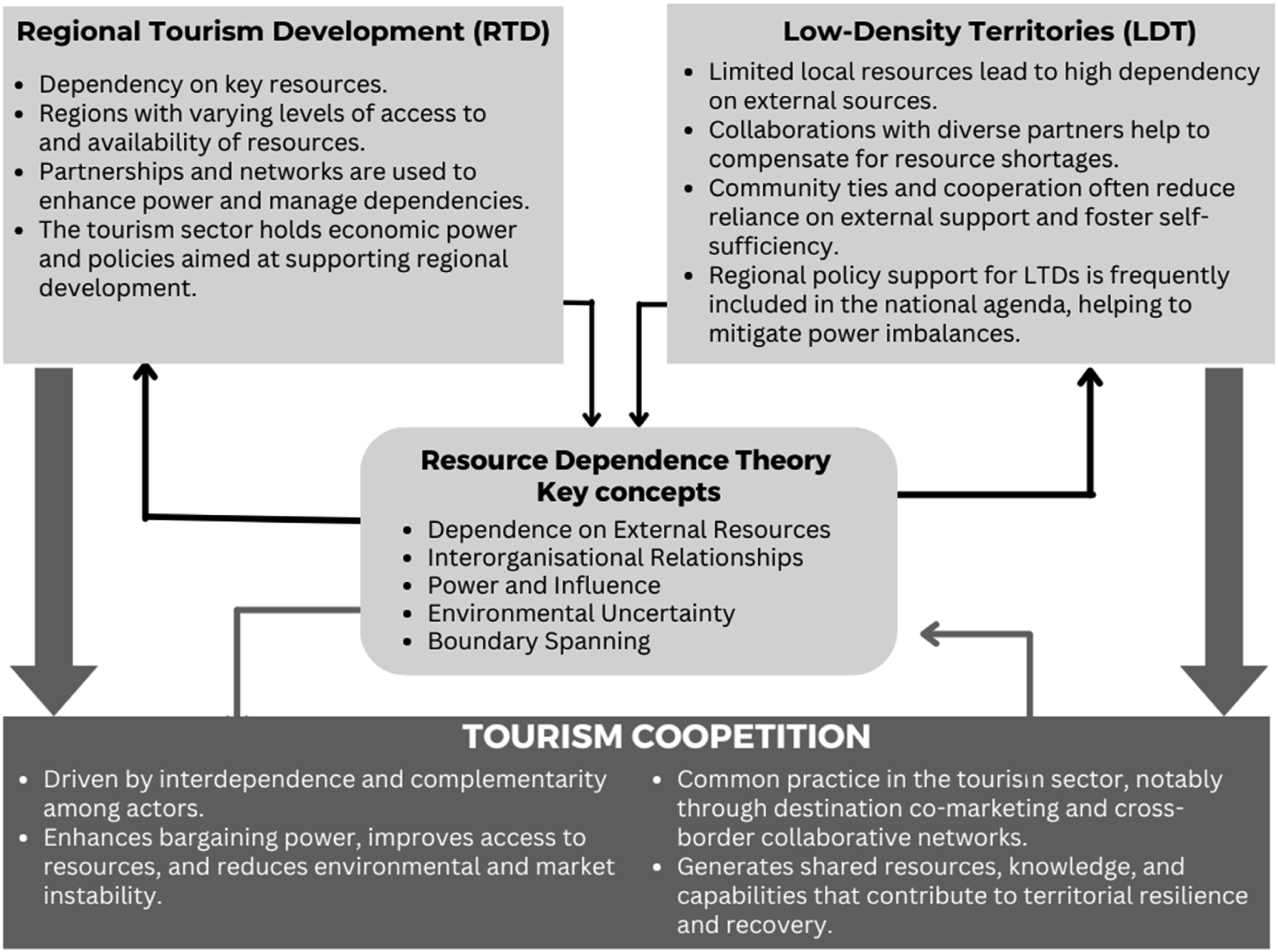
Taken together, these insights position coopetition as a mechanism through which LDTs can mitigate structural disadvantages and translate regional tourism development into broader social value. Figure 2 presents our model proposition, linking regional tourism development, coopetition, and tourism social value. Model proposition. Source: Elaborated by the authors.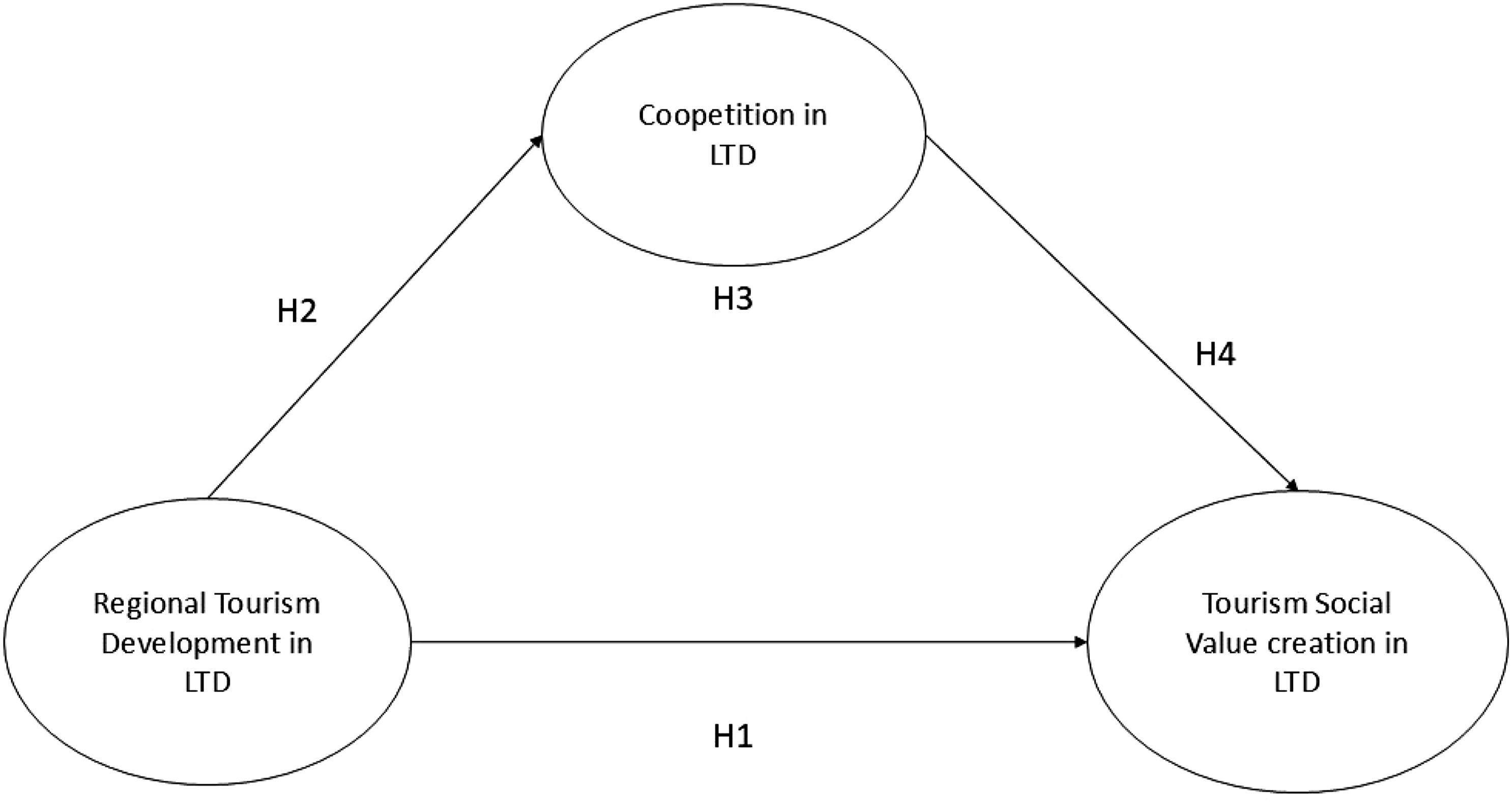
The RDT has some key concepts that Pfeffer and Salancik (1978) named the organisation’s ecology, which conditions the organisation’s behaviour. A dependence on external resources requires inter-organisational relationships to improve resources access and manage dependency. Still, the different levels of resource control produce an imbalance of power that influences organisational strategies focusing on boundary spanning as ways to interact with the external environment to ensure access to resources (Ulrich and Barney, 1984). This context occurs within an uncertain business environment that demands rapid responses and adaptability (Pfeffer and Salancik, 1978), a frequent context in the tourism sector (Altinay and Kozak, 2021). Also, many tourism destinations share natural or cultural resources that shape the development of cross-border tourism regions (Chim-Miki et al., 2020; Kylänen and Rusko, 2011).
Some of these destinations are small territories with social and economic shortcomings, the LDTs, that need to work together in the region’s best interest. LDTs and regional tourism development both present a similar organisational ecology (Figure 2) that is, at the same time, a context and motive for coopetition behaviour.
Regional tourism in low-density areas: A path dependence way to social value creation
Tourism is frequently positioned as a driver of competitiveness and territorial revitalisation (Calero and Turner, 2020; Crick and Crick, 2024). Regional tourism systems include institutions, companies and individuals with rules of the game that can drive regional and community development, especially in rural areas (Macbeth, 1996; Macbeth et al., 2004). Studies on regional development addressed different issues, such as the ability of tourism to reduce regional disparities (Zhou-Grundy and Turner, 2014), improve social value generation (Chim-Miki et al., 2024a; 2024b), job creation or factors affecting tourism and regional development (Fodranová et al., 2015). However, empirical models exploring tourism’s causal role in generating social value at the regional level remain limited (Calero and Turner, 2020).
Social value is the positive net effect in economic, social or environmental areas (Chim-Miki et al., 2025b; Dembek et al., 2023). The social value of tourism is anchored in the perspectives of societal value that represents the combination and results of processes and policies that bring positive improvements to the quality of life of individuals and to their society (Emerson et al., 2010; Fodranová et al., 2015).
Networks to develop tourism in LDTs can contribute to solving social problems (Chim-Miki et al., 2024a) providing social value devolution to the host society. These networks can be the regional tourism systems of Macbeth et al. (2004) in LDTs, being alliances toward tourism and regional development in a similar proposition to Calero and Turner (2020). LDTs are usually rich in natural resources that can be used to develop tourism (da Costa et al., 2025) but have limitations in other local resources, and thus become very dependent on external sources (Bento et al., 2021; Keryan et al., 2025). Besides, due to low economic and political leverage, the LDTs need advocacy to improve their bargaining positions (Bento et al., 2021). However, Almeida and Daniel (2025) highlighted that entrepreneurial ecosystems can catalyze the economic and social development of LTDs, stimulating regional development.
Regional collaboration in LTDs around tourism improves the use of ‘endogenous resources to create economic opportunities that reflect social and environmental benefits (Bento et al., 2021; da Costa et al., 2025). Nevertheless, LDT needs to involve local communities in tourism planning processes to ensure that initiatives align with local needs and capacities and can reduce dependence on external actors (Martins et al., 2021). The collaborative network can also create a regional identity for the tourism destination that positively impacts residents’ sense of belonging and pride and safeguards the local culture (Macbeth et al., 2004; Pasquinelli, 2013). These arguments underpin our first hypothesis:
Regional tourism development positively impacts social value creation in low-density territories.
Regional development and coopetition networks in low-density territories
The tourism sector is characterized by environmental uncertainty and resource dependence, as there is a high dependence on seasonality (da Costa et al., 2025; Duro and Turrion-Prats, 2019). Due to the LDTs’s fragility, the seasonal oscillations and market instabilities have a higher impact on the host society; therefore, they must develop the capacity to adapt to external shocks and diversify the products to survive in off-peak seasons (Ramos and Fernandes, 2016), that make them more propensity to coopetition networks. These characteristics align with recent understandings tested in different contexts, that coopetition is a context-dependent strategy (Vieira et al., 2025). However, it is necessary to confirm this assumption in the tourism sector.
Creating a regional tourism product mix comprises integrating endogenous resources to create complementarity besides dependence. Pasquinelli (2013) highlighted territorial competition and inter-territorial collaboration for promotion of places and the creation of regional competitiveness. That is a way to develop tourism in LDTs as smaller communities have a limited number of resources, and their offer is often fragmented and scattered in the territory (Naipaul et al., 2009; Wang et al., 2013¸ Almeida and Daniel (2025). Regional tourism integration boosts networks and collaborations with partners to compensate for resource shortages (Chim-Miki et al., 2024a); this integration can also rely on the community ties and cooperation that often exist to foster regional self-sufficiency (Martins et al., 2021).
Empirical studies show that regional tourism systems function as coopetition networks. For example, Crick and Crick (2024) demonstrated that regional coopetition positively impacts the performance of companies in Canadian wine regions, which are rural territories. However, the results indicated that the paradoxical forces of regional cooperativeness and competitiveness must be stabilized to avoid adverse effects. Another study by Chim-Miki et al. (2024a) demonstrated that the territorial configuration of tourism circuits creates regional destinations by covering different cities.
Nevertheless, integrative management is required to balance the competition among cities and promote cooperation toward creating positive collective value (Chim-Miki et al., 2020). Similar findings were verified by Chim-Miki and Batista-Canino (2018) in regional destinations created due to shared natural resources. Nevertheless, they need to work together due to their dependence on resources, and to create synergy, they need to cooperate despite the competition.
Coopetition behaviour can be boosted if players are interdependent and complementary (Klimas et al., 2023). In LDTs’ regional tourism destinations, the coopetition can cover all networks established to extend boundaries and improve competitive advantage and resource access. It can occur through alliances or informal structures (Zacharia et al., 2019). In tourism, coopetition is an intrinsic behaviour that can create shared resources, knowledge and capabilities that foster attractiveness and recovery (Crick and Crick, 2024). From this perspective, regional tourism destinations in LDTs promote emergent networks that create simultaneous competition and cooperation among small destinations and within them. Thus, we assume that:
Regional Tourism Development fosters coopetition in LDTs.
Coopetition as mediator of social value creation
Usually, some business or institutional associations co-promote regional tourism development and, therefore, hubs of coopetition (Chim-Miki et al., 2025a). Monticelli et al. (2022) highlighted the existence of Mediated Coopetition. Previous studies on different sectors have shown that coopetition is a mediator variable. For example, Monticelli et al. (2022) demonstrated that coopetition is a mediator variable between formal institutional arrangements and firm export performance.
In the tourism sector, the business associations, such as Convention Bureaus, allow collaboration among small neighbouring destinations with limited tourism offers to commercialize their products (Naipaul et al., 2009; Wang et al., 2013). For instance, Wang et al. (2013) demonstrate that the Convention and Visitor Bureaus of Central Florida had an essential role in the development of the regional destination as they collaborated to create partnerships to strengthen regional marketing despite the competition among them. In LDTs, besides the organizational structure, they provide a better distribution of tourism results among the regions, including regional development of cross-border tourism regions (Kylänen and Rusko, 2011). That means coopetition is a natural vector in the regional destinations as each city or community seeks better attractiveness and benefits from regional tourism. In this context, regional organizations are crucial in boundary spanning by connecting local businesses with external markets and promotional opportunities, besides strengthening the social ties among local stakeholders (Chim-Miki et al., 2024a). Accordingly, we posit that coopetition mediates the relationship between regional tourism development and the creation of social value:
The creation of tourism social value in low-density territories from regional tourism development is mediated by coopetition. A coopetition strategy enhances the ability of businesses to face external dependencies, which provides a more suitable market balance (Bouncken et al., 2020; Crick and Crick, 2024). Tourism generates different levels of resource dependency, sometimes more dependent on natural or cultural attractions, other times on infrastructure; this depends on the type of tourism. Partnerships, alliances, and networks are common in the tourism sector, significantly helping to develop tourism destinations (Kylänen and Rusko, 2011). This context is more pronounced in regional tourism development, as regions and stakeholders must collaborate to increase the region’s attractiveness (Jørgensen, 2017). Thus, small tourist destinations and the stakeholders within them work together to access resources and improve their attractiveness (Wang et al., 2013). The literature suggests shaping networks with diverse stakeholders to integrate regions, provide social inclusion, and create adequate community tourism development (Schäfer and Lunkes, 2024; Zhou-Grundy and Turner, 2014). Also, in other contexts, some studies have indicated that coopetition promotes and thus enhances the creation of social value (Leder et al., 2024; Nascimento et al., 2024; Volschenk et al., 2024). Nevertheless, coopetition does not always mean balance among the players in the LDTs, as controlling essential resources produces an inequality of power (Pfeffer and Salancik, 1978) leading to our last hypothesis:
Coopetition positively impacts the creation of social value for tourism in low-density territories.
Methodology
We confirmed our model proposition through partial least squares structural equation modelling (PLS-SEM) because of its causal predictive nature, which is recommended for testing hypothesized models and providing managerial recommendations (Becker et al., 2023). Our model proposition is also a Condition Process Analysis that follows the template Model 4 of (Hayes, 2013). Thus, we used the OLS regression-based path analysis through the PROCESS in SmartPLS (Hayes, 2018). Complementary, we performed a robustness check through the Necessary Condition Analysis (NCA) as the statistical significance test to evaluate if the evidence against the null hypothesis was a random effect (Dul, 2016). Researchers need to consider both must-have and should-have factors using the combination of PLS-SEM and NCA since causality assessment will generate theoretical advances. Thus, we test if regional development and coopetition are necessary but not sufficient conditions to create social value in tourism. When present, a necessary condition enables the outcome, but if it is missing, it constrains the outcome (Dul et al., 2023).
Context of analysis
According to Vaz and Nofre (2018), the term “low-density territories” is used to describe areas with small populations compared to national averages, and it starts to be used mainly in southern European countries such as France, Portugal, and Italy. However, the concept was being adopted by the literature and others worldwide; for example, see Simancas Cruz and Peñarrubia Zaragoza (2019) and Almeida and Daniel (2025). LDT definition covers aspects beyond demographics, encompassing broader characteristics that help explain the development level of these regions (Keryan et al., 2025). The analysis identifies four key differentiating interrelated factors: economic, institutional, demographic, and distance-related; it includes sociocultural and geographical distance (da Costa et al., 2025). Together, they create a cause-and-effect dynamic (Augusto et al., 2010), producing a “snowball effect” that leads to persistent adverse outcomes, such as widespread impoverishment and low socioeconomic attractiveness in these territories. This feedback of problems in the LDTs, Ramos (2014), named the vicious circle(s) of low territorial density.
Portugal is a small country, but it is marked by territorial diversity with regional differences in the economy and population that produce an imbalance in social development. Some metropolitan regions match the standards of developed countries, while their neighbouring regions are structurally disadvantaged. This reinforces socioeconomic problems and hinders territorial cohesion. Examples are the Lisbon and Porto metropolitan regions. This inequality is also seen in the pattern of the population and the limited extent of transport networks, which also are determinants of these inequalities. The National Programme for Territorial Cohesion (PNCT), approved in 2016, recognised the Portuguese TBDs and identified 164 measures to make the inland territory more cohesive, competitive, sustainable and collaborative. Deliberation No. 31/2023/PL presents the recent classification of low-density Municipalities and Parishes for the purposes of applying positive differentiation measures to Portuguese territories (Figure 3). Map of low-density territories in Portugal Source: Ine, PNCT (2016).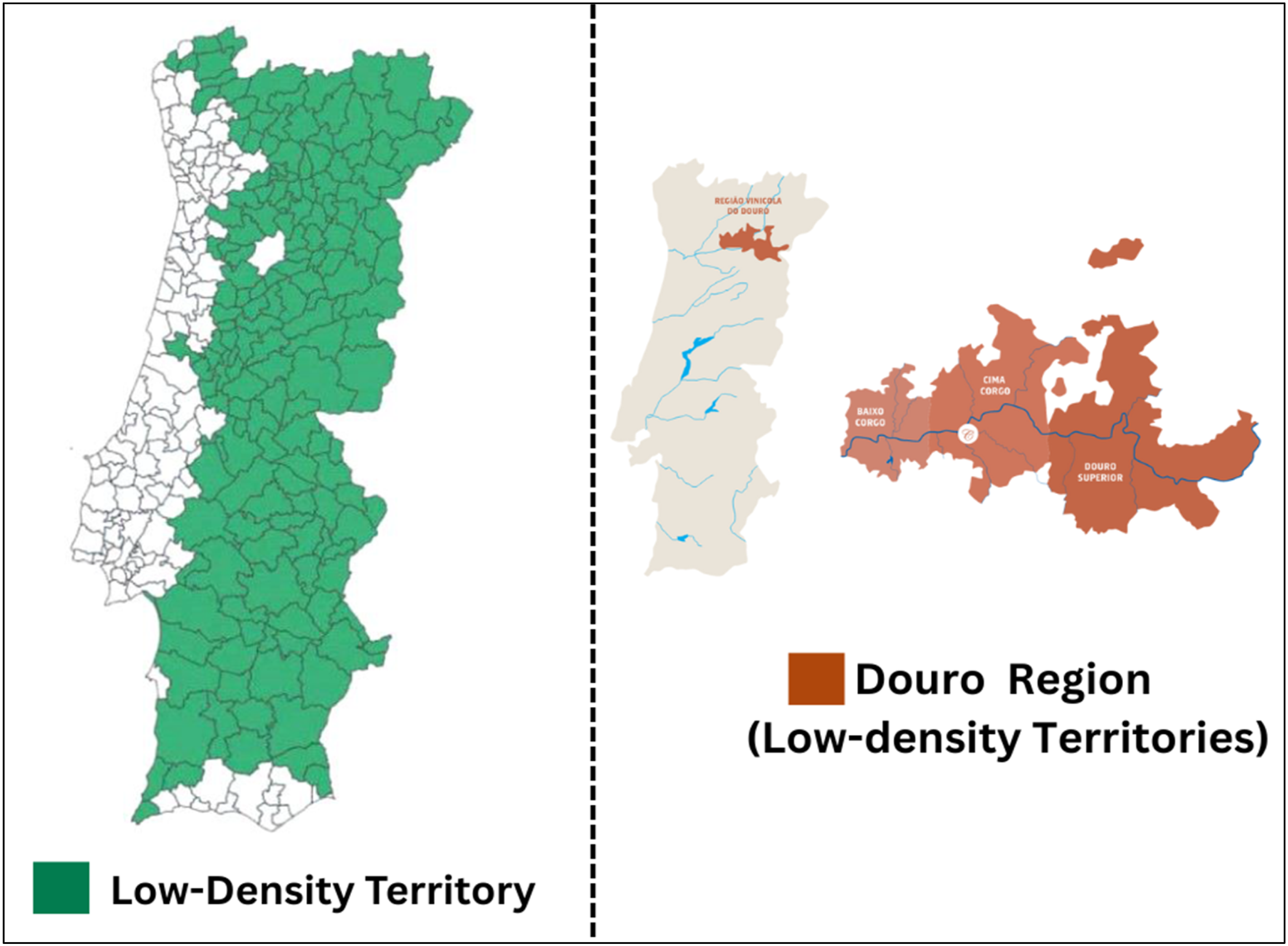
Douro, located in the northeast of the country, has an area of 4032 km2 and 183,886 inhabitants in 2021. It comprises 19 municipalities and 217 parishes. This part of Portugal corresponds to the natural region of Alto Douro, with a productive character focused on the production of wines. According to the National Program for Territorial Cohesion (PNCT), the Douro region has the following TBDs: Alijó, Armamar, Carrazeda de Ansiães, Freixo de Espada à Cinta, Lamego, Mesão Frio, Moimenta da Beira, Murça, Penedono, Peso da Régua, Sabrosa, Santa Marta de Penaguião, São João da Pesqueira, Sernancelhe, Tabuaço, Tarouca, Torre de Moncorvo, Vila Nova de Foz Côa, and Vila Real (Deliberação n.° 31/2023/PL, 2023). Based on the hierarchical system used in Europe, the Nomenclature of Territorial Units for Statistics (NUTS), that have four levels: NUTS I (national level), NUTS II (regional level), and NUTS III (subregional level), and NUT IV (municipalities). The Douro region is a NUTS III.
Data collection
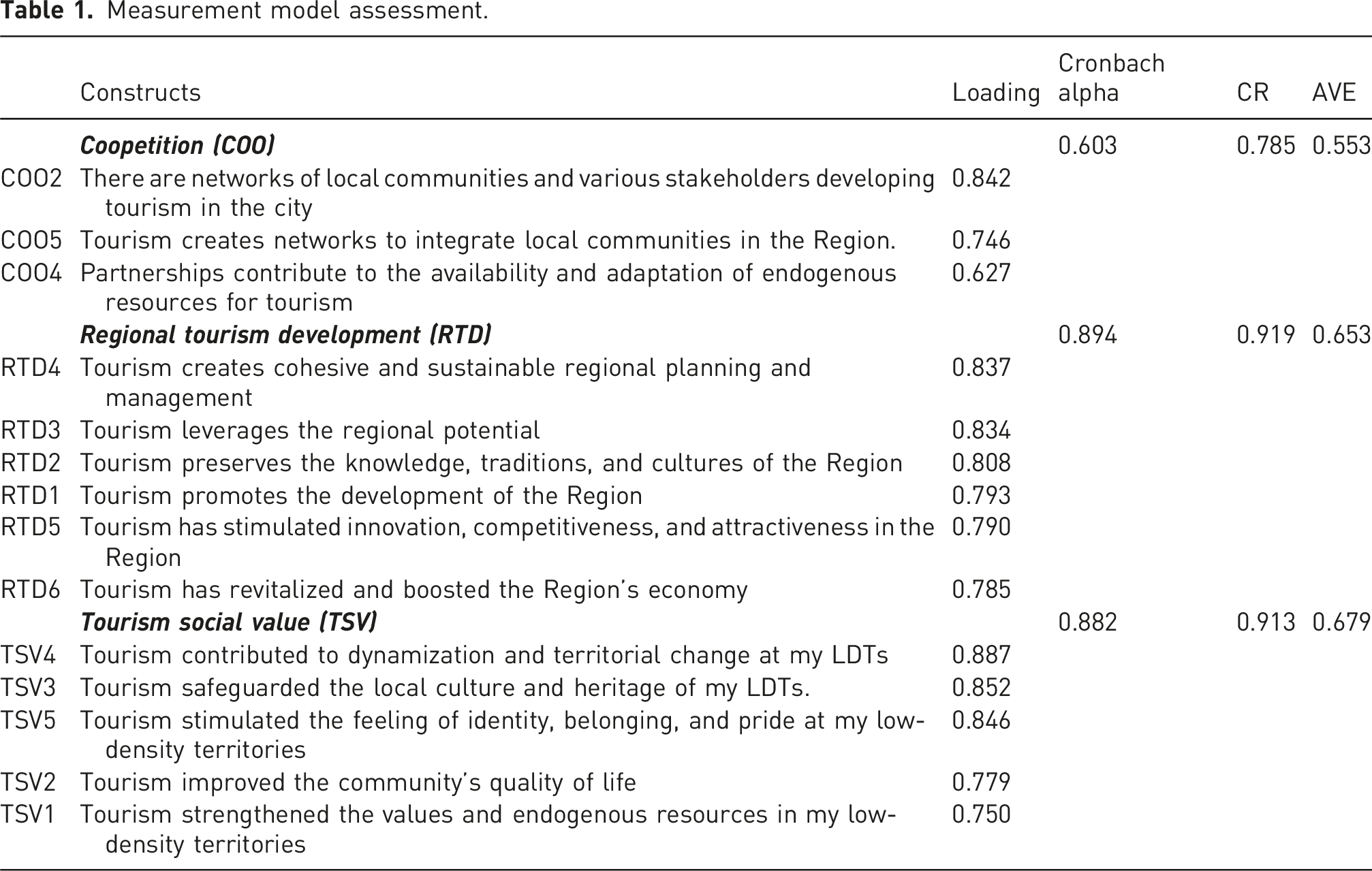
Measurement model assessment.
Despite the high tourism development in some areas of the Douro River, such as the City of Porto and the City of Vila de Gaia, the Low-Density Territories of the Douro River still need the attention of governments and regional DMOs to generate a better distribution of tourism benefits; therefore, this region is a suitable case for the verification of the hypotheses proposed in this study. The sample comprised 126 respondents. The survey and development of the database of local stakeholders, entities and organizations was carried out through the National Tourism Register, resulting in a database of 909 local stakeholders.
Considering the area of activity of the local stakeholders, the most prominent, with the majority of responses, was Accommodation (66.7%), followed by Cultural Services (13.5%), Public Entities (10.3%) and Recreational and Leisure Services (9.5%). In terms of distribution across the 19 municipalities, there is a balance in the number of responses obtained, based on the number of residents and tourism sector agents located in the Douro region. It was non-stratified but represented nine respondents per model variable per model variable, meeting the minimum conditions indicated for PLS-SEM models in exploratory studies. PLS-SEM is a Variance-Based SEM (VB-SEM) method developed based on the non-parametric approach that can guarantee reliability with small samples as the bootstrapping generates a large number of randomly drawn subsamples; also, it does not require normal distribution data (Becker et al., 2023).
The Douro region is a low-density territory with 191,574 inhabitants. By the particularities of these small municipalities, we considered the region of Douro to apply the formula for estimating proportions of finite populations, using p and q equal to 50%, with a reliability coefficient of 95.0%. Results showed that our sample has an 8.73% error margin. The Douro area is vulnerable and depopulated despite its beautiful landscape and opportunities for tourism, and it is near a consolidated tourism destination, Porto City. The main economic activity of the Douro region is agriculture, with viticulture the pillar of the region. Slowly, tourism is growing, but the region has many challenges to improve competitiveness, social development and territorial cohesion (Galvão et al., 2024).
Dimension and variables of the model proposition
Coopetition (COO)
The variable Coopetition (COO) denotes the networks created to boost tourism development within and between the Low-Density Territories of the Region. There is intrinsic competition between the cities that make up a region as they have similar products in a similar market (Chiambaretto et al., 2022). However, they must work together to develop the tourism sector (Crick and Crick, 2024). We proposed five questions to assess COO based on the literature to represent the regional intercoopetition and intracoopetition: Strategic fit and shared goal (Czakon et al., 2020) – COO1: “Tourism results from the availability and adaptation of endogenous resources by stakeholders working together”; Coopetition mindset (Chim-Miki et al., 2024a; Crick and Crick, 2024; Czakon et al., 2020) – COO2: There are networks of local communities and various stakeholders developing tourism in the city; Level of regional cooperation (Crick and Crick, 2024; Nguyen et al., 2022) – COO3: The ties of cooperation and exchange between agents from various locations in the Region enhance the use of endogenous resources for tourism; Co-production (Chim-Miki and Batista-Canino, 2018; Czakon et al., 2020) - COO4: Partnerships contribute to the availability and adaptation of endogenous resources for tourism; Regional integration system or associationism (Chim-Miki and Batista-Canino, 2018; Chim-Miki et al., 2025a; Luongo et al., 2023) – COO5: Tourism creates networks to integrate local communities in the Region.
Regional tourism development
The variable Regional Tourism Development (RTD) represents the revitalization of LDT generated by tourist activity (Calero and Turner, 2020). We used six questions to assess RTD. Territorial Progress (Bento et al., 2021; Zhou-Grundy and Turner, 2014) - RTD1: Tourism promotes the development of the Region; Heritage Conservation (Macbeth et al., 2004
Tourism social value
The Social Value of Tourism (TSV) represents the positive social, economic and cultural impacts on the host society (Chim-Miki et al., 2025b; Narangajavana et al., 2016) and was evaluated by five questions. Social cohesion (Chim-Miki et al., 2025a) - TSV1: Tourism strengthened the values and endogenous resources at my Low-Density Territories; Quality-of-life (Chim-Miki et al., 2024a) - TSV2: Tourism improved the community’s quality of life; Cultural safeguard (Volschenk et al., 2016, 2024) - TSV3: Tourism safeguarded local culture and heritage of my LDTs; Social change (Luongo et al., 2023) - TSV4: Tourism contributed to dynamization and territorial change at my LDTs; TSV5: Social belonging (Chim-Miki et al., 2024a; Luongo et al., 2023) - Tourism stimulated the feeling of identity, belonging, and pride at my Low-Density Territories.
Results
Measurement model
The factor loadings of all six variables proposed for Regional Tourism Development (RTD) and the five Social Value of Tourism (TSV) variables were above 0.7. Two of the five coopetition (COO) items were excluded due to low factor loading. Of the three items that remained to evaluate the COO, with factor loading above 0.6, one represents intra-coopetition and two inter-copetition in Low-Density Territories. The internal reliability of the measurement model was established through factor loadings, by Cronbach’s Alpha above 0.60, and by the Composite Reliability (CR) values greater than 0.7 (Table 1). In addition, the model is convergent, as AVE values were above 0.50 (Hair et al., 2011).
Composite reliability and Discriminant Validity.

Structural model
A bootstrapping resampling method tested the model. The structural model’s coefficient of determination values (R2) was 0.335 for Coopetition and 0.488 for Tourism Social Value. That means a moderate and substantial explanation capacity, according to Chin (1998). Regarding the Predictive relevance (Q2) that assesses how much each prediction is successful, we had a moderate capacity (COO = 0.319 and TSV = 0.129). According to (Urbach and Ahlemann, 2010), the model’s predictive relevance is moderate if Q2 is between 0,15 and 0.35. Figure 2 shows the path results.
Path coefficients results.

Mediation effects of Coopetition for the relationship between Regional Tourism Development and Tourism Social Value.
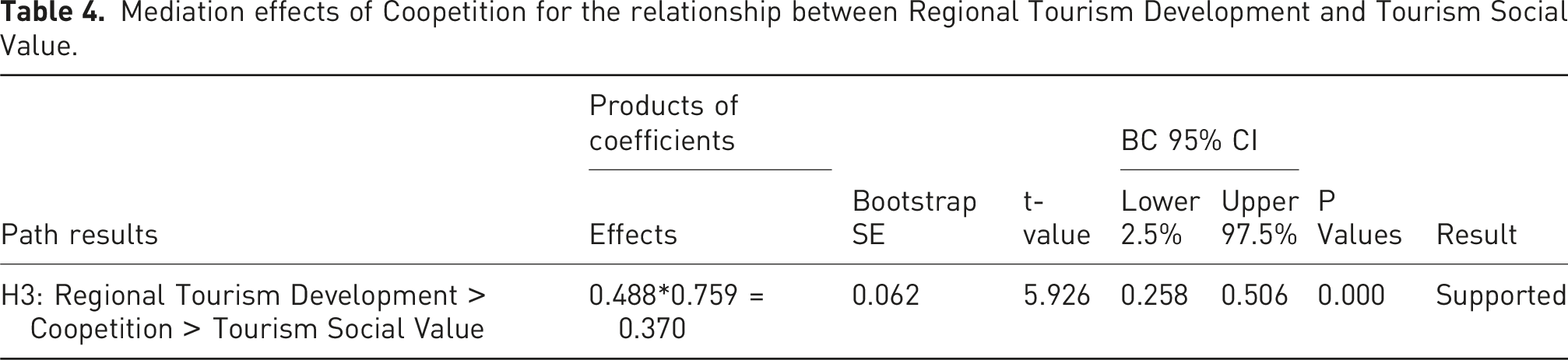
Finally, study results supported H3, that is, creating value from tourism at Low-Density Territories from Regional Tourism development is fully mediated by coopetition. The specific indirect effect of Regional Tourism Development through Coopetition on Tourism Social Value has β = 0.370, t = 5.926, p < .000. It resulted in a total effect of β = 0.389, t = 3.405, p < .001. Therefore, according to Cheung and Lau’s (2008) indications, it is not a case of suppressor effect; on the contrary, coopetition boosts the value created by regional tourism. Also, the VAF value (Variance Accounted For), the ratio of indirect effect to total effect, was 0.95, which means it is above 80%, confirming that it is a Full mediation.
Robustness check: Necessary Condition Analysis
Results of necessary condition analysis of tourism social value.
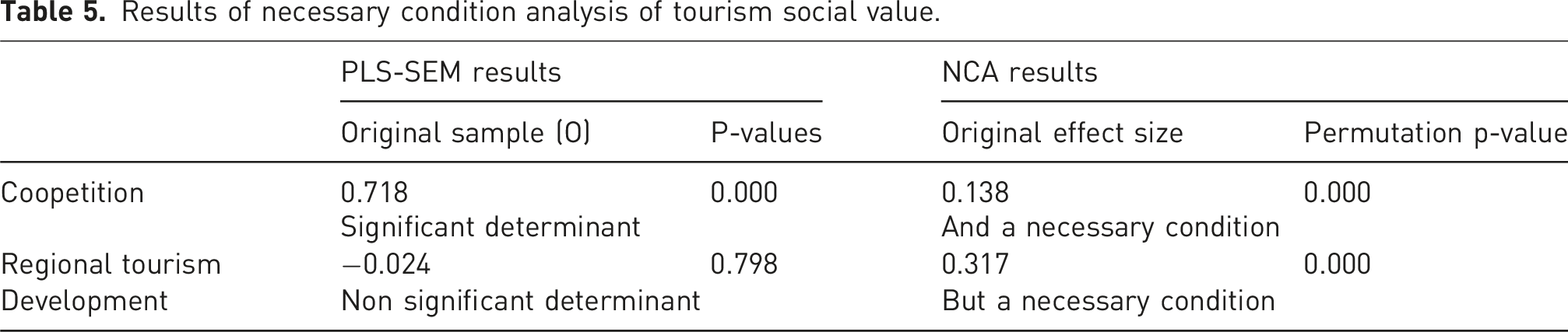
The bottleneck table highlights the minimum necessary levels of each condition required to achieve specific levels of the outcome. For low to moderate levels of regional tourism development, relatively modest levels of coopetition strategy and tourism social value are sufficient. However, as the desired outcome level increases, particularly above 80%, the minimum required level of coopetition strategy rises sharply, indicating that Coopetition becomes a critical bottleneck. Tourism social value plays a minor role at lower outcome levels but becomes more relevant near the upper threshold. These results suggest that while all three conditions contribute, the coopetition strategy is the key necessary condition for achieving high levels of regional tourism development.
NCA bottleneck table of tourism social value toward coopetition.
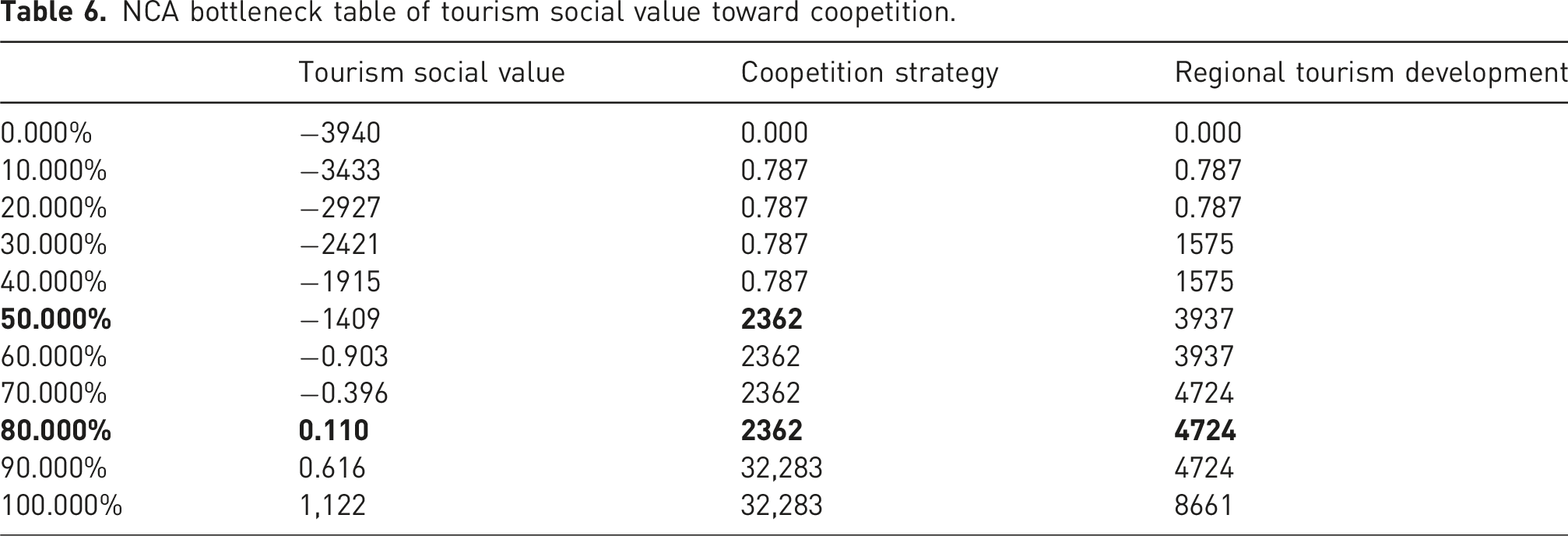
In other words, according to the Table 6, the Coopetition Strategy variable shows a significant jump in bottlenecks when it goes from 80% to 90% (it goes from 2.362 to 32.283). This result suggests that to achieve high-level performance, Coopetition becomes a critical bottleneck; that is, without Coopetition, progress cannot be made. In turn, the Regional Tourism Development variable also grows, but moderately. Meanwhile, the Tourism Social Value variable starts with negative values and only starts to contribute positively near the top (80%), indicating a non-linear and weak relationship. As observed in the model results, RTD does not directly impact tourism’s social value, as expressed in the results of the bottleneck table. The impact occurs through Coopetition.
Discussion of the results: A framework to coopetition-based on regional development at low-density territory
According to Zhou-Grundy and Turner (2014), studies on regional development indicate that tourism can reduce regional disparities. However, our results indicated that regional tourism development (RTD) alone cannot impact social value (H1). Nevertheless, it impacts the creation of coopetition networks (H2), and in turn, coopetition impacts the creation of social value (H4). Thus, the results suggest that, without coopetition networks, the wealth generated by RTD can go to only a few people and will not benefit the region’s communities, society, culture, or environment. Often, small businesses in LDTs have no access to funds, knowledge, or resources; thus, RTD is insufficient to generate social value. Coopetition minimises small businesses’ dependence on resources, allows access to knowledge and co-promotes the territory and business. The formation of regional and local networks is the way to minimise the adverse effects of competition, create a better distribution of results, promote balanced development in the region, and create mechanisms for a balance of power. Our findings suggest that coopetition can mitigate several of the problems of LDTs (See Figure 1).
The literature also suggests that LDTs’ resource dependence requires inter-organizational relationships to ensure survival and competitiveness (Bento et al., 2021). Our results confirm this assumption and go further to generate theoretical and practical inputs on regional development and tourism. Hypothesis testing demonstrated that coopetition plays a fundamental role in generating value for the region, in line with findings from previous studies (e.g. Crick and Crick, 2023; Chim-Miki et al., b). However, our results advance this perspective. We confirm that coopetition mediates the relationship between regional development and value generation in a complete manner (H3). This finding indicates that it is a necessary condition, determinant, and mediating variable that drives results. This approach was reconfirmed in the NCA results; without coopetition, regional development is a determinant but not sufficient condition to impact social value generation. The analysis resulted in a Coopetition framework based on regional development in Low-Density Territory (Figure 4). Final results of the model Coopetition-based on regional development at Low-Density Territory. Source: Elaborated by the authors.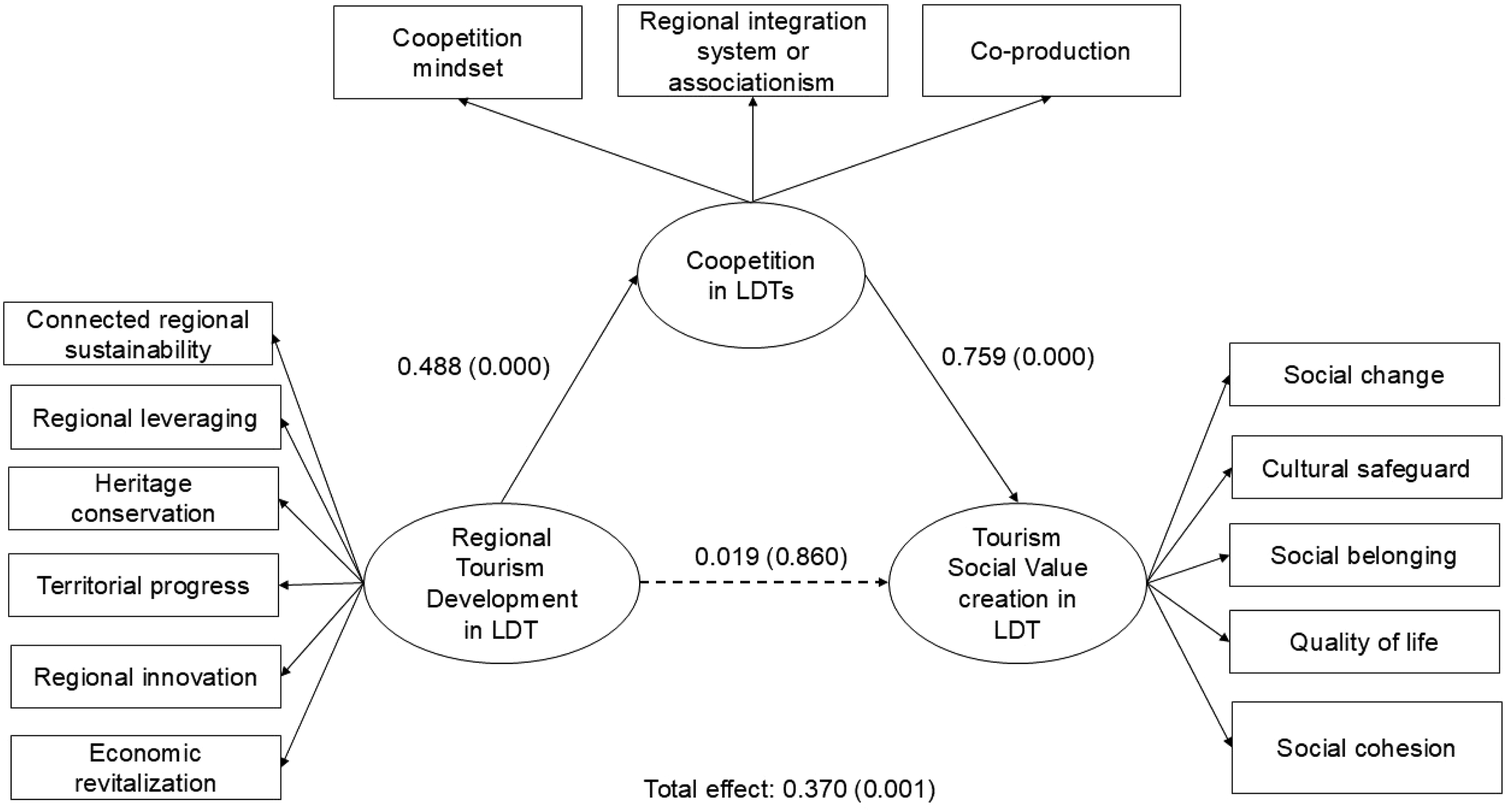
Competition between territories in a region is an intrinsic factor, even though they collaborate to some degree, and, therefore, it is coopetition. Our analysis is focused on the macro context, but the results align with what Crick and Crick (2024) found at the level of firms in rural areas; regional coopetition positively impacts performance. Crick and Crick’s (2024) results also indicate the need to balance regional competition and cooperation to avoid adverse effects that can damage value generation.
The results also demonstrate that regional coopetition comprises regional territorial competition and collaboration, as well as intra-territorial cooperation. Coopetition between cities in the same region creates a regional identity, product or brand, and is closely linked to territorial promotion (Pasquinelli, 2013; Vieira et al., 2025). For instance, creating a regional place branding, often in synergy with other industries, such as wine tourism (Vieira et al., 2025), has been a way in which regional coopetition contributes to the development of tourist regions. These configurations, which Stentoft et al. (2018) call the formation of business regions, create interdependence and complementarity. However, it is necessary to balance the degree of competition, both internal and external, with cooperation in order to generate territorial development.
Our results showed that, of the coopetition variables, the one with the most significant weight was the existence of a coopetition mindset. It is an important variable indicated by the Czakon et al. (2020) study. In our analysis, the coopetition mindset is represented by internal networks in the city’s local communities, that is, intra territorial coopetition. From them, inter-territorial networks create a Regional integration system or associationism (Luongo et al., 2023), which will consequently generate Co-production (Chim-Miki and Batista-Canino, 2018; Czakon et al., 2020), with partnerships that will promote the use of endogenous resources for tourism.
These findings indicate that regional tourism development requires an organisation of multiple intra- and inter-destination coopetition networks, confirming previous studies by Chim-Miki et al. (2024a), Pasquinelli (2013) and Vieira et al. (2025). Also, it confirms the role of business associations or Destination Management Organizations (DMOs) as coopetition hubs for touristic regions (Chim-Miki et al., 2025a; Naipaul et al., 2009; (Wang and Krakover, 2008). Our results aligned with Monticelli et al. (2022, 2024) who stated that coopetition is a mediator variable, and the formal institutions provided a typology named Mediated coopetition.
Two measurement variables were eliminated from the coopetition scale. COO1 refers to Strategic fit and shared objective, and COO3 refers to the level of regional cooperation. This result was a surprise, as the literature identified these elements as fundamental conditions of coopetition networks (Czakon et al., 2020). However, analysing the set of variables of the resulting model, we observed that the other variables partially replaced both COO1 and COO3. COO4 shows the strategic fit reflected in co-production using endogenous resources, and the level of regional cooperation is reflected in COO5, so it was a logical result to eliminate these variables from the model.
Although the findings did not indicate a direct impact of RTD on social value generation, it is important to remember that this effect occurs through coopetition networks in the territory. The NCA result shows that regional development is a necessary condition for value generation. However, it is not sufficient. It needs to be combined with public policies, governance, and associations that drive coopetition. Previously, Stentoft et al. (2018) highlighted that a business region relies on coopetition in the public sector. Our results go beyond. The region needs coopetition among city governments, within the governments and among stakeholders.
The public sector has a role in promoting coopetition, as a partner and a regulator. That means, despite the territorial competition, the city governments of the LTDs should build an integrative strategic plan for regional development in partnership between public and private stakeholders of all cities. LTD’s city governments need to be examples of how to work together through regional projects and agreements toward creating social value. On the one hand, governments should be the facilitators, and they must create mechanisms to balance regional asymmetries, which can hinder actors’ ability to capture the value generated by coopetition efforts.
On the other hand, business associations should be the hubs for regional coopetition in tourism. They can group the institutions, businesses, and communities to foster networks that develop regional tourism products and identities. Together, governments and business associations can transform the intrinsic behaviour of tourism coopetition into a strategic approach to regional development. Also, formal institution can help to minimize negative outcomes and mininise the intrinsic tensions that are typical in coopetition. As highlighted in the literature, such challenges can be mitigated through mechanisms that formalise collaborative networks and through the involvement of an external actor responsible for governance (Chim-Miki et al., 2025a). In the context of tourism and regional development, we suggest that business associations and Destination Management Organisations (DMOs) can serve as strategic hubs for coopetition, helping to coordinate efforts and reduce adverse outcomes.
Regional Development maintained all its measurement variables. The highest load was for connected regional sustainability, maintaining coherence with the main focus of regional development that should generate territorial cohesion and sustainability (Macbeth et al., 2004; Nguyen et al., 2022). This result suggests that regional development promotes integrated products and circuits that complement each other to create a tourism offer that attracts visitors to the various destinations in the region (Chim-Miki et al., 2024a), generating a multi-destination LDT offer. This factor drives regional leveraging (Bento et al., 2021; Naipaul et al., 2009).
In addition, tourism in LDT tends to have a strong association with cultural products, local events, gastronomy, and other historical-cultural resources. Thus, RTD should reflect regional leveraging (Macbeth et al., 2004), ensure territorial progress (Bento et al., 2021; Zhou-Grundy and Turner, 2014), which is complemented by regional innovation (Luongo et al., 2023) and economic revitalization (Bento et al., 2021; Ramos and Fernandes, 2016; Zhou-Grundy and Turner, 2014).
The social value generated by tourism in host society is achieved through coopetition networks in line with (Volschenk et al., 2016). This finding also confirms that coopetition in some sectors may have an extended value cycle, as proposed by Nascimento et al. (2024). Tourism coopetition can generate value devolutions for the host society in addition to the usual cycle of value creation and appropriation. In the case analysed, it is observed that the variables with the highest factor loading were social change, cultural safeguard and social belonging. In addition, the results indicated effects on quality of life and social cohesion. Our result aligns with tourism studies based on the perspective of society-centred development. It confirms previous assumptions by Chim-Miki et al. (2024a) and previous studies of Luongo et al. (2023) and Volschenk et al. (2016) on different types of value appropriation in regional coopetition. Results suggest that the social value created by tourism in a Coopetition-based regional development at a Low-Density Territory model significantly contributes to the problems of these territories and can contribute to reducing population loss and improving the economic dynamism with positive effects on society.
However, as Vieira et al. (2025) highlighted, coopetition is a context-dependent strategy. Therefore, the analysis of causal relationships is also context-dependent. Although LTDs have similar characteristics related to their social, economic and environmental deficiencies, they also have different contexts, such as public policies, local infrastructure, productive and cultural character, etc. These contextual variations influence the outcomes observed and must be considered when analysing the dynamics and effectiveness of coopetition in each region.
Conclusions
This research sought to determine whether coopetition can increase regional tourism development’s effectiveness in developing Low-Density Territories. A robust analysis using three methodologies produced reliable results. We started with an initial proposal for a model for Coopetition based on regional development in the Low-Density Territory. We validated it through PLS-SEM and the PROCESS model in SmartPLS software, but to our surprise, the model was partially validated. Thus, it was redesigned and confirmed with a robustness check performed through Necessary Condition Analysis (NCA).
Our study has theoretical and practical implications. The findings contribute to understanding the strategic role of coopetition in increasing the effects of regional tourism development. On the one hand, the research implications suggest that coopetition is a driver for improving the benefits for the host society. It promotes more interaction and inclusion and can generate a better distribution of tourism benefits. The theoretical framework generated in this study, Coopetition-based on regional development at Low-Density Territory, is a theoretical implication that advances the theory of coopetition and regional development and concretizes the main concepts of Resource Dependence Theory in LDTs.
Although the regional tourism development (RTD) can potentially reduce regional disparities, as demonstrated by Stentoft et al., 2018), our findings suggest that RTD alone is insufficient to directly generate social value. At first glance, it can be a strange result, but there are examples of developed regions with low social value generation worldwide. This situation is often because regional development plans focus more on economic benefits, and a few businesses have access to incentives. Low-Density Territories are particularly susceptible to this dynamic, as they are typically composed of numerous small businesses that face greater challenges in accessing the benefits of public policies and innovative resources (Keryan et al., 2025). That’s confirm previous results such as Martins (2021) and Ramos and Fernandes (2016). However, our results complement these viewpoints, as they indicated that in the absence of cooperative structures, the benefits of tourism tend to concentrate in the hands of a few actors, limiting broader social, cultural, and environmental gains. Coopetition networks serve as essential intermediaries to a more equitable distribution of tourism benefits. These assumptions also were previous demonstrated by Chim-Miki et al. (2024a), Nascimento et al. (2024) and Vieira et al. (2025) in other contexts.
On the other hand, this research has practical and policy implications. The results demonstrate that coopetition results from regional development and, simultaneously, a mechanism to reduce resource dependence. That means, coopetition is a necessary condition for public policies aimed at regional tourism to be more efficient. Therefore, based on this analysis, it is recommended that policymakers include some mechanism to incentivise the creation of coopetition networks. Especially in the European context, which has focused on policies for the tourism development of regions, the governance of multiple intra- and inter-destination networks under a coopetition strategy is the key point for more balanced development and the generation of value from tourism. In this sense, it is recommended that public policies combine funds for regional tourism development with projects in coopetition networks that can manage intrinsic regional competition with cooperation for integrative development to guarantee the inclusion of different regional stakeholders.
Tourism destination managers of the cities should create regional DMOs, and then stimulate the creation of regional tourism products, integrate tourism routes, and co-marketing of the region or co-branding focused on planning and formalising coopetition networks so that this intrinsic behaviour of regional development reaches strategic levels. Historic Villages of Portugal and ‘Aldeias do Xisto’ are excellent examples of how LDT’s driven by public policy, strategic cooperation and coopetition leveraged tourism development at regional and sub-regional levels. These best practices are particularly important considering their applicability in the European context. For DMOs, the following specific actions are recommended: (1) strategic territorial planning that recognises tourism as a key sector at both local and regional levels, including the inventory and articulation among the major natural and cultural tourism resources, commonly referred to as “honey pots”; (2) development of tourism support infrastructure and regional services, through investment in tourism signage, public transport and inter- and intra-destination mobility; (3) creation of incentives and financing mechanisms to support consortia of small and micro tourism enterprises, fostering the development of innovative and sustainable regional projects and attracting foreign investment; (4) promotion and communication through the creation of distinctive regional brands and joint marketing and communication campaigns, along with effective collaboration with the private sector, local communities, universities, and research centres within the regional ecosystem.
For local businesses, the main recommendation is to develop a coopetition mindset and strengthen the local business associations. Firms should understand the advantages of cooperating with competitors, but preferably in formalised networks mediated by the destination institutions and associations to reduce the tensions and risks of coopetition. Also, it is important to identify the firm’s resources and knowledge needs to choose partners that generate complementarity. For example, the networks among wineries and tourism were shaped in the Douro region. More specifically, for local businesses, it is recommended that actions be developed at the following levels: (1) improving the quality of tourism offerings, particularly by developing authentic regional experiences focused on local resources and promoting sustainable practices; (2) creating business networks by establishing partnerships between local businesses and producers and developing integrated products; (3) digitalisation, through the use of digital platforms for the promotion, communication and sale of products and services, centred on regional storytelling.
Despite the study reflecting specific context, the results have a degree of applicability to Low-Density Territories (LDTs) beyond the Portuguese and European contexts. LDTs worldwide often share common structural characteristics, such as limited infrastructure, dispersed populations, institutional fragility, and a predominance of small businesses with restricted access to resources and policy instruments. Therefore, focusing on these shared traits of LDTs rather than geographical boundaries, the insights on the strategic role of coopetition to enhance regional development can inform policy and practice in similar regions globally. That means our findings study has the potential for transferability.
In summary, our study can conclude that regional tourism development is a necessary but not sufficient condition to create social value in tourism in Low-Density Territories; thus, Coopetition strategies are a determinant and necessary condition to create social value in tourism in LDTs. However, this study had one theoretical limitation and two methodological ones. Coopetition is a multifaceted concept rooted in approximately 10 theories (Klimas et al., 2023). We chose one theoretical root, the Dependency theory, because it is more explanatory for LDT. Nevertheless, other aspects provided by theories such as the theory of transaction costs, agency theory, or the resource-based view can provide complementary angles to analyse competition in regional development. Regarding the methodological limitations, we had the sample size and the geographic context. Our study was in the context of a single European country with a small non-stratified sample, therefore the results cannot generalizable. Nevertheless, these limitations were minimised because the sample size was representative of LDT and met the method’s assumptions. Besides, it is a representative sample of the European context since Portugal has many low-density territories. Thus, the study results have transferability.
Considering these limitations, future research with samples of LDT from different countries is recommended. It may be helpful in further research to examine the coopetition and regional development patterns in different geographical and institutional contexts, with a comparative study in different countries or regions with different levels of technological uptake and tourism development. Also, the use of other theoretical roots of coopetition can provide more variables to include in the model. Large sample size and a variety of interviewees could be employed to enhance the robustness and generalisability of findings. In addition, qualitative research, such as focus groups or in-depth interviews with local stakeholders, policymakers, and service providers, may yield a more nuanced understanding of coopetition’s underlying mechanisms and situational nuances. Qualitative research is also welcome to reconfirm the relationships between the variables and to broaden the scope of the measurement variables in the model to identify other nuances that affect the relationship between RTD, coopetition, and TSV. These mixed-method designs would contribute to the quantitative results and allow a richer understanding of how coopetition influences innovation and development in various environments.
Footnotes
Acknowledgement
We acknowledge the financial support from FCT- Fundação para a Ciência e Tecnologia (Portugal) through the research grant UIDB/00685/2023 of the Centre of Applied Economics Studies of the Atlantic - School of Business and Economics | University of the Azores and from the Regional Directorate for Science, Innovation and Development; and the PRR – Plano de Recuperação e Resiliência and by the NextGenerationEU funds at Universidade de Aveiro, through the scope of the Agenda Business Innovation “ATT Agenda Mobilizadora Acelerar e Transformar o Turismo” (Project no. 47 with the application C645192610-00000060). We also thank the Productivity Grant n° 306584/2024-7 of the Brazilian National Council for Scientific and Technological Development (CNPq).

Funding
The authors disclosed receipt of the following financial support for the research, authorship, and/or publication of this article: Centre of Applied Economics Studies of the Atlantic through FCT- Fundação para a Ciência e Tecnologia (Portugal) (UIDB/00685/2023), Project ATT3- PRR – Plano de Recuperação e Resiliência and by the NextGenerationEU funds (Project no. 47 with the application C645192610-000), and Conselho Nacional de Desenvolvimento Científico e Tecnológico (Productivity Grant Number 306584/2024-7).
Declaration of conflicting interests
The authors declared no potential conflicts of interest with respect to the research, authorship, and/or publication of this article.