




Abstract
Travel live streaming has gained in popularity in recent years and has become a crucial element of the tourism sector in certain countries. The phenomenon is, however, underexplored in the tourism and hospitality field. This study explores the role of information quality and destination attractiveness in shaping consumers’ cognition assimilation and travel inspiration arousal, and how these in turn promote impulsive buying behavior when watching travel live streams. PLS-SEM-ANN was used to analyze data collected from 459 respondents of an online questionnaire. The findings showed that information completeness, information accuracy, and destination aesthetic value significantly influenced cognitive assimilation, while destination reputation, destination novelty, and destination aesthetic value all significantly influenced travel inspiration arousal. Furthermore, the results of the artificial neural network analysis indicated that travel inspiration arousal had the greatest predictive power in terms of impulsive buying, while destination aesthetic value had the greatest impact on cognitive assimilation and travel inspiration arousal. This research provides valuable marketing insights for tourism e-commerce and deepens the understanding of the consumers’ impulsive buying behavior driven by cognition and emotion during travel live streaming.
Keywords
Introduction
Digital technology has had a profound influence on the tourism and hospitality industry in the last quarter of a century (Gutierriz et al., 2023), including the development of platforms such as travel live streaming (TLS). TLS has proliferated in travel e-commerce as the media platforms on which it is hosted, such as Facebook, Instagram, TikTok, and YouTube, have also grown locally and spread globally. This has made TLS into an increasingly important tool in travel marketing (Guo et al., 2024; Liu et al., 2024), particularly in China where there are over billion of TLS viewers (Shao and Huang, 2025). Some estimates even put the number of TLS viewers in China at over 10 billion (2022 TikTok Tourism Industry Ecological Report; see Chen et al., 2025). TLS platforms enable the sharing of travel experiences, presenting them vividly and in real-time, allowing audience members to be immersed in the destination and to interact, through the presenter, with its various features and attractions. In this way, TLS provides direct and immediate consumer access to information, providing travelers with a shopping experience with powerful cognitive and emotional features (Liang et al., 2024).
The focus of TLS is on travel product sales and destination promotion (Deng et al., 2021; Lv et al., 2022). Potential travelers can purchase airline tickets, hotels, tours, and other related tourism products and services on such platforms. TLS can be said to have two significant advantages as a marketing channel. First, it facilitates real-time interaction, product display, knowledge sharing, and entertainment in a single package that is brought to potential travelers in their homes (Liu et al., 2024; Lv et al., 2022). Each TLS transmission delivers a sensory-rich, immersive audio-visual presentation, wherein consumers are likely to engage in impulsive buying, especially when they have been drawn into a positive emotional state (Liang et al., 2024; Lv et al., 2022). Second, TLS allows consumers to easily cancel any purchases they make, giving them the freedom to mitigate any regret following their impulsive purchase.
Researchers have further outlined the characteristics of TLS, stating that its defining features comprise informativity, entertainment, and interactivity (Lv et al., 2022). Researchers have also discussed TLS from a theoretical perspective. Indeed, Deng et al. (2021) have proposed a TLS framework based on affordance theory, which is composed of three important elements of travel experience, content production, and consumption (Deng et al., 2021). Researchers have also explored audience members’ motivations for participation in TLS. This includes the work of Li et al. (2022), which found that the primary motivators to participate in TLS are the easy acquisition of information and entertainment. Moreover, in terms of consumer behavior research in the context of TLS, Zhang et al.’s (2021) study found that a destination image significantly enhances trust in potential travelers, thereby increasing their travel intentions. Liu et al. (2024) have asserted that information quality positively impacts on the consumers’ behavioral intention. Based on the stimulus-organism-response framework, Liang et al. (2024) indicated that interactivity, authenticity, and entertainment can all facilitate consumers’ impulsive travel intentions under the effect of a positive emotional state driven by psychological flow and the development of trust.
Despite there being a number of studies that have addressed the topic of TLS and there being a widespread adoption of TLS as a marketing tool, particularly in China (Liang et al., 2024), it is still uncommon to see researchers exploring the impulsive buying of travel products as an outcome of TLS (Liu et al., 2022a; Lv et al., 2022). Hence, this study aims to contribute to the body of tourism research by introducing two new cognitive and emotional variables: cognitive assimilation and travel inspiration arousal (Xu et al., 2020). The former pertains to how consumers process and incorporate new information into their existing base of knowledge to understand the travel products promoted in TLS, while the latter encompasses the emotional and motivational triggers that prompt consumers to make impulsive travel-related purchases.
Furthermore, this study aims to scrutinize the antecedents and consequences of cognitive assimilation and travel inspiration arousal to extend the academic understanding of travel consumer behavior during TLS, as well as providing useful practical insights for tourism marketing practitioners. Specifically, this study examines the roles of information quality (in terms of completeness, accuracy, and currency) and destination attractiveness (in terms of reputation, novelty, and aesthetics) on cognitive assimilation and travel inspiration arousal (Fang et al., 2023; Liu et al., 2024), which are deemed as the drivers of impulsive buying behavior (Yan et al., 2022). To achieve these objectives, a conceptual framework was developed and is presented in Figure 1. Conceptual framework.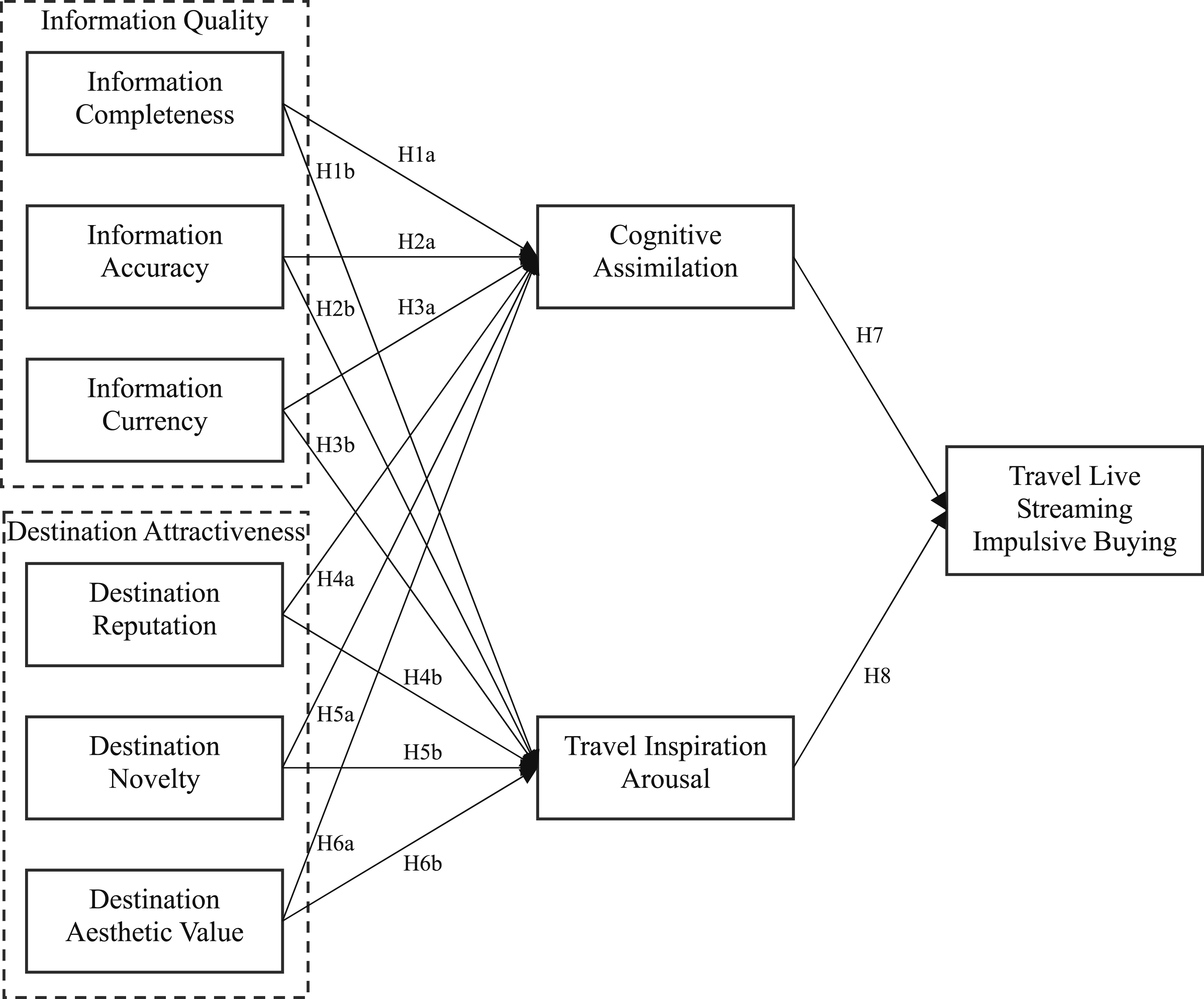
Literature review and hypothesis development
Information quality
Presenting detailed information on a travel destination (i.e., price and product attributes) with clarity, objectivity, and precision can enhance consumers’ trust and improve their satisfaction and decision-making ability (Chang et al., 2019; Gao et al., 2012). When consumers perceive the information to be helpful, they are more likely to accept it, internalize it as new knowledge, and adjust their cognition of the products concerned (Chang et al., 2019). This process is known as cognitive assimilation (Xu et al., 2020).
In the context of TLS, information quality can be measured in terms of its currency, completeness, and accuracy (Nelson et al., 2005; Shi et al., 2024; Xu et al., 2020), such features being required for it not only to be able to enhance consumers’ cognitive evaluations and emotional experiences (Liu et al., 2024) but also to facilitate its cognitive assimilation and integration (Xu et al., 2020).
Specifically, completeness helps ensure that potential consumers obtain product information that is comprehensive, thorough and broad enough to lower purchase risk and promote cognition assimilation (Filieri and McLeay, 2014). Information completeness, which indicates the breadth and depth of product information, is crucial in the online shopping environment for consumers to better ascertain the value behind the message, especially given the high information asymmetry in the online world (Ding et al., 2025). In addition, it was opined that a complete piece of information appeals to online users as their information needs are satisfied (Ng et al., 2023). The accuracy of information requires that it is correctly, clearly, and objectively presented, enhancing customers’ trust and willingness to assimilate the information (Filieri and McLeay, 2014; Nelson et al., 2005). This is very much the case in the context of live streaming, as consumers rely on accurate information to closely assess the product-related elements of the offer (Ding et al., 2025). With accurate information, live streaming consumers do no need to waste time and effort in identifying and verifying ambiguous information, allowing them to easily determine the actual value of a product (Gao et al., 2021). Therefore, it is not surprising that information accuracy is one of the critical elements of information quality that live streaming consumers carefully evaluate in making their purchase decisions (Yang et al., 2024).
The currency of information, meanwhile, ensures that it provides the latest status of travel products, allowing customers to make decisions based on the current information, thereby augmenting their perception of the credibility of the information (Cai et al., 2018). Gao et al. (2021) asserted that information currency is easily attained in live streaming as the platforms afford viewers the opportunity to interact with the presenters instantly using the bullet screen. Furthermore, as Ding et al. (2025) argue, live streaming consumers can be highly motivated to analyze a product because hosts are able to constantly update their content in terms of depth and richness of information. Information currency is therefore important in live streaming as a source of information quality (Kanchanatanee, 2024).
The completeness, accuracy, and currency of the information are all known to significantly influence consumers’ cognitive processing and their perception of the persuasive message, thereby shaping their behavioral intentions (Gao et al., 2021). Das et al. (2024) found that the quality of information on social media platforms and short-form video content can influence consumers’ destination perceptions and visit intentions. High-quality information on travel products that is complete, precise, and up to date can not only impact consumers’ cognition and formation of destination image but also positively influence their perceptions of persuasiveness and trust, which in turn impacts upon their purchasing behavior (Gao et al., 2021; Kim et al., 2017; Shi et al., 2024). High-quality information is also critical during the pre-trip information search stage, as it can inspire the consumers’ travel interest, arouse their excitement, and impact upon their information processing (Dai et al., 2022; González-Rodríguez et al., 2022).
In the TLS context, the completeness, currency, and accuracy of information have been found to enhance consumers’ judgment that the information is dependable (Gao et al., 2021), and to press them into action, turning travel ideas into actual behavior (Nguyen et al., 2023). This process is consistent with the notion of inspiration arousal, i.e., that high-quality information can boost consumers’ motivational states and drive travel-related behaviors (Choi and Lee, 2019). The completeness, currency, and accuracy of the information not only facilitates cognitive assimilation by shaping consumers’ cognition but also exerts a favorable effect on arousing their travel inspiration. Hence, the following hypotheses are proposed: H1a: Information completeness exerts a positive effect on cognitive assimilation. H2a: Information accuracy exerts a positive effect on cognitive assimilation. H3a: Information currency exerts a positive effect on cognitive assimilation. H1b: Information completeness exerts a positive effect on travel inspiration arousal. H2b: Information accuracy exerts a positive effect on travel inspiration arousal. H3b: Information currency exerts a positive effect on travel inspiration arousal.
Destination attractiveness
Studies show that destination attractiveness is determined by reputation, novelty, and aesthetic value (Fang et al., 2023) and that it can significantly affect travelers’ intentions and experiences (Dewantara et al., 2023; Ma et al., 2018).
Destination reputation refers to the popularity and brand appeal of the destination (Artigas et al., 2015; Su and Lu, 2018). Generally, tourism destinations with a positive reputation would be well-known for relevant attributes such as their safety, hospitality, culture, and visitor experience, whereas those with a negative reputation are usually associated with attributes such as political instability, infrastructure problems, and so on (Ibrahim et al., 2023). Moradi et al. (2023) thus argue that a good destination reputation helps a destination prosper by ensuring its continuous development and foreign investment. Moreover, a positive or favorable reputation not only positively influences tourists’ loyalty and the destination’s competitiveness, but also improves consumers’ satisfaction (Su and Lu, 2018).
Novelty, meanwhile, relates to the unique natural, historical, and cultural features that travelers can experience (Zhang and Xu, 2020). If a tourism destination is perceived as novel, it will tend to attract those tourists who seek novelty in their travels (Albaity and Melhem, 2017). Therefore, as argued by Zhang et al. (2020), the offers of a novel tourism experience not only makes a tourist destination attractive but also represents a critical aspect of the tourism destination that encourages potential tourists to adopt a positive attitude towards the tourism destination. Indeed, Hao et al. (2025) have noted that destination novelty has a significant role in driving tourist loyalty.
Destination aesthetic value, meanwhile, is associated with the visual appeal of the destination, which can stimulate potential travelers’ imaginations and arouse their travel inspiration (Fang et al., 2023; Liu et al., 2023). Tourists are increasingly showing a strong demand for aesthetics when they are receiving tourism marketing information (Xie et al., 2024). It was also asserted that tourism aesthetics may have a long-term effect on tourists, especially on their attitudinal and behavioral attributes such as loyalty (Kirillova et al., 2014). Hence, as proposed by Nasiri et al. (2024), aesthetics has become a source of pleasure at tourism destinations that are bound to be considered by tourists in their travel experience evaluations.
Taken as a whole, studies have shown that destination attractiveness brings positive impacts on consumers’ cognitive assimilation by enhancing their information processing, anticipatory consistency, and sensory perception. A favorable reputation may help to shape travelers’ image perception, strengthening their intention to travel to the destination (Luo et al., 2022; Zhang et al., 2021). It may also promote travelers’ destination selection, engagement, and satisfaction, as well to stimulate revisit and recommendation behavior (Saini et al., 2024). Novelty is considered a crucial factor that attracts consumers to watch TLS broadcasts (Liu et al., 2022b) and the pursuit of novelty not only reflects tourists’ psychological need for engaging in unique and diverse travel experiences but also influences their destination cognition and perceived value (Cheng and Lu, 2013; Das et al., 2024). Furthermore, visual aesthetic value is considered an important element of the experience sought by tourists, and it can influence tourist consumers’ cognitive evaluations of the destination by stimulating their visual and audial senses (Gulertekin Genc and Temizkan, 2023). Research has found that destination reputation, aesthetic value, and the novelty embodied in short-form videos can effectively enhance destination attractiveness, capture viewers’ attention, and ignite their travel inspiration (Fang et al., 2023). The following hypotheses are therefore proposed: H4a: Destination reputation exerts a positive effect on cognitive assimilation. H5a: Destination novelty exerts a positive effect on cognitive assimilation. H6a: Destination aesthetic value exerts a positive effect on cognitive assimilation. H4b: Destination reputation exerts a positive effect on travel inspiration arousal. H5b: Destination novelty exerts a positive effect on travel inspiration arousal. H6b: Destination aesthetic value exerts a positive effect on inspiration arousal.
The effect of cognitive assimilation and travel inspiration arousal
Studies have found that impulse purchases are stimulated by the consumer’s internal psychological, emotional, and cognitive states (Ahn et al., 2019). In a TLS broadcast, consumers are exposed to a range of information that can impact their judgment when purchasing the product that is being featured. Cognitive assimilation relates to their acknowledgment and understanding of the goods that are being promoted in the TLS broadcast, enhances their perceived value, and encourages consumers to consider those products worthy of being purchased (Xu et al., 2020). Furthermore, watching a TLS broadcast can bring consumers into a state of psychological flow by creating an immersive and enjoyable environment that may in turn encourage them to make a purchase (Pham et al., 2023). Studies suggest, furthermore, that consumers who are in a pleasant emotional state of flow are more inclined to exhibit impulsivity or engage in excessive expenditure (Parboteeah et al., 2009; Pham et al., 2023). The hedonic attributes of travel products can also trigger positive emotional responses in consumers, providing a pleasant atmosphere that can expedite the purchase decision-making processes (Lv et al., 2022). When the contents of the TLS broadcast ignite viewers’ travel inspiration, this increases their willingness to explore and engage further with the destination, which may in turn make them more likely to engage in impulsive buying behavior (Luo et al., 2024). The following hypotheses are therefore proposed: H7: Cognitive assimilation positively influences impulsive buying. H8: Travel inspiration arousal positively influences impulsive buying.
Research method
Data collection
This study sets out to examine the drivers of impulsive purchasing behaviors in the TLS context. Chinese consumers were considered a suitable research target because of their familiarity with live streaming. Indeed, live streaming has been growing rapidly as a technique for selling products and services in many of China’s consumer markets (Lo et al., 2024). This study adopted a quantitative methodology to generate reliable, data-driven insights into the interactions among the proposed factors, including information quality, destination attractiveness, cognitive and emotional response, and actual impulsive buying behavior.
In the absence of a suitable sampling frame, a non-probability sampling technique was employed to collect cross-sectional data from consumers who had previously made purchases through a TLS platform. The data were collected using a structured survey that consists of 36 items, as detailed in Appendix A. A self-administered questionnaire was distributed through the “www.wjx.cn” platform, one of the Chinese largest survey platforms (Darvishmotevali, 2025), to enhance the statistical robustness and representativeness of the sample. The “www.wjx.cn” platform has an established reputation as a robust and reliable means of data collection, drawing upon a pool of approximately 2.6 million registered users in China. Moreover, the platform has been widely used by tourism and hospitality studies as a source of primary data (Darvishmotevali, 2025), including some recent studies (e.g., Chan et al., 2025; Yang et al., 2025). The platform is widely regarded as being a highly credible and trustworthy survey platform. Indeed, it has serviced most of the Chinese higher learning institutions (Lin et al., 2022, 2025).
The chosen survey platform also allows screening questions to be set to filter out ineligible respondents. These features help, to an extent, to compensate for the statistical limitations of non-probability sampling (Yuan et al., 2022). Specifically, two screening questions were imposed to identify the target respondents. The first question asks if the respondents have any experience of watching TLS, whereas the second question asks if the respondents have bought any travel products when watching TLS. Only those who answered yes to both screening questions were invited to the next stage of the survey, while those who answered no were thanked and dismissed.
The total number of valid responses collected was 459, which surpassed the threshold of minimum sample size of 135 as calculated by G*Power. The respondents’ demographic traits show that the slight majority (52.5%) were male. Meanwhile, 40.1% were aged 18–29 years, while 22.4% were aged 30–39 years, suggesting the representation of participants diminished steadily with age. This aligns well with the findings of Lo et al. (2024), which found that younger consumers have driven the expansion of the travel e-marketing. Full demographic information on the sample is available in Appendix A.
Research measurement
The questionnaire was constructed using validated measurement items from existing studies. Each item was slightly adapted where necessary to reflect the context of this study. To ensure the contextual appropriateness of the adapted items, a pre-test was conducted with a small number of tourism e-commerce academics and expert practitioners in the tourism sector (Srisomwongse et al., 2025). In line with the approach of Tan and Ooi (2018), face-to-face interviews were used for the debriefing purposes. In response to the feedback, some technical terms were eliminated, and several unclear phrases were modified to improve the readability of the questionnaire.
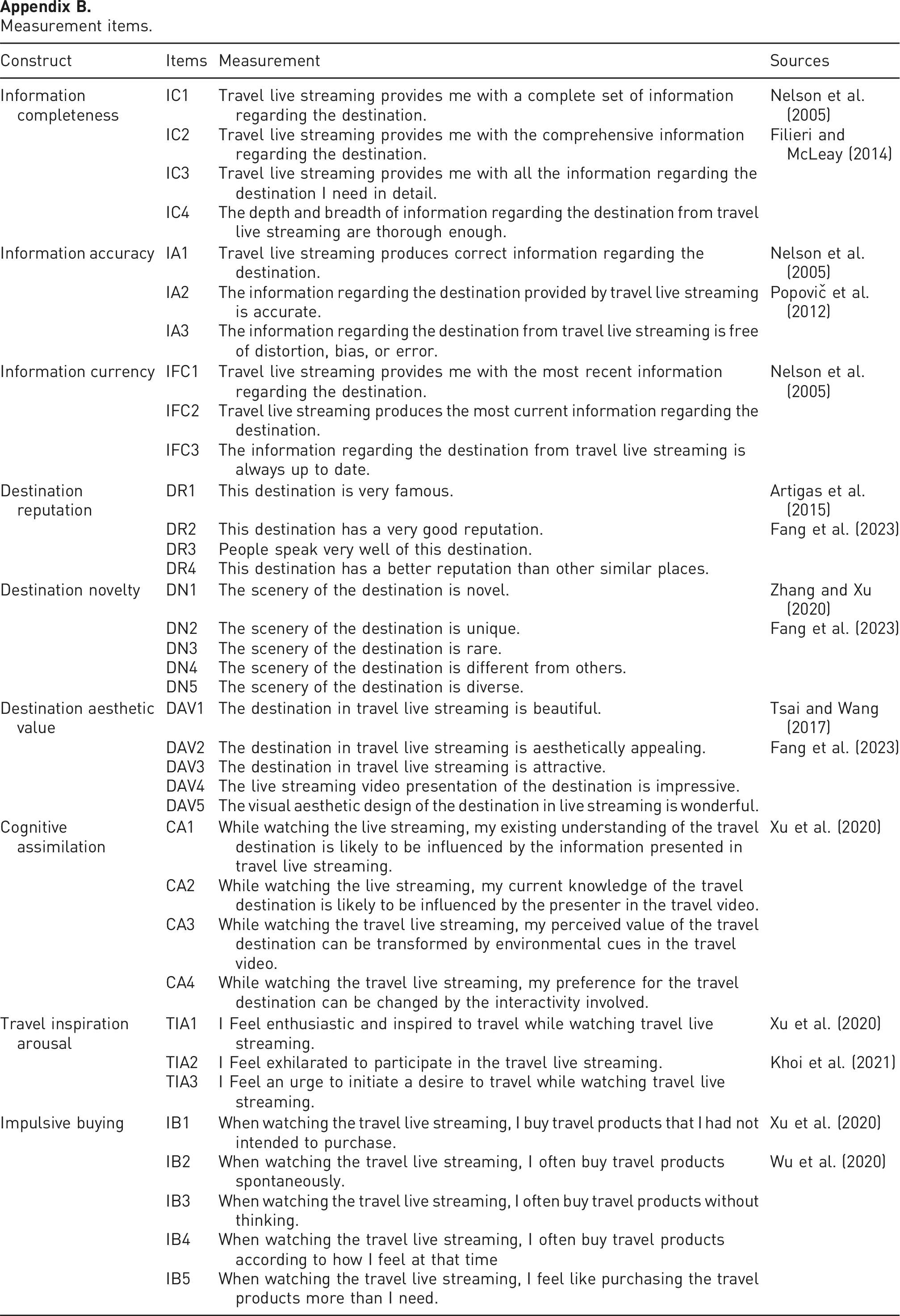
All items were measured on a five-point Likert scale, where “1” indicates strong disagreement and “5” indicates strong agreement. In terms of information quality, four items were used to measure information completeness, all of which were adapted from Nelson et al. (2005) and Filieri and McLeay (2014). Three items adapted from Nelson et al. (2005) were used to measure information accuracy, while information currency was measured using three items adapted from Popovič et al. (2012).
Four items were used to destination reputation, five to measure destination novelty, and five to measure destination aesthetic value, all adapted from Artigas et al. (2015), Fang et al. (2023), Zhang and Xu (2020), and Tsai and Wang (2017).
Four items adapted from Xu et al. (2020) were used to measure cognitive assimilation, while three from Xu et al. (2020) and Khoi et al. (2021) were used to measure travel inspiration arousal.
Finally, three items adapted from Wu et al. (2020) and Xu et al. (2020) were used to measure impulse buying. Appendix B summarizes the detailed item constructs and their sources.
Statistical analysis
The main statistical analysis was conducted using partial least-squares structural equation modeling (PLS-SEM), which is widely considered a methodologically sound approach for examining complex models in exploratory research settings. In particular, the methodology does not make any assumptions about the dataset (Hair et al., 2017), allowing for greater adaptability for small sample sizes and non-normally distributed data (Lo et al., 2024). The Kolmogorov-Smirnov test was also used to evaluate the distribution of the dataset. The one-sample KS test provided P values generated values of less than 0.05 for all 36 measurement items, indicating that the data distribution is non-normal (Hew and Kadir, 2016). This confirmed that PLS-SEM can be deemed appropriate for this research.
PLS-SEM is a statistical modeling technique that is often used in social-science, marketing, and management research (Hair et al., 2012). Two steps are involved in implementing a PLS-SEM analysis. The first assesses the reliability and validity of the outer measurement model. Subject to this being adequate, the second step analyzes the inner structural model to test the hypotheses about how the variables interact with each other, as well as to assess model fit and establish effects sizes. This study used Smart PLS (Smart PLS v.4) software to conduct the PLS-SEM analysis.
Research models estimated using PLS-SEM can, however, exhibit compensatory and non-compensatory features, along with linear and nonlinear interplays (Leong et al., 2024). Although PLS-SEM can proficiently forecast linear connections inside complicated models, the use of this approach alone is inadequate for identifying the possible non-linear relationships that interplay with one another. This carries with it the risk of oversimplifying complicated human decision-making processes, which would not, indeed, be expected to adhere to linear relationships. In those cases where non-linear correlations are found between the antecedent variables and an independent variable (i.e., CA, TIA, or IB), the use of artificial neural network (ANN) analysis can be insightful (Yuan et al., 2022). Therefore, the present study employed a hybrid PLS-SEM-ANN approach to better examine the research model.
Common methods bias
When data is collected using a self-reported questionnaire, there is potential for the validity of the results to be compromised due to common method bias. This can be a particular problem when collecting multiple-variable data is collected using a common scale from respondents with similar backgrounds. Harmon’s single-factor analysis was therefore employed. The results suggest that a single factor can only account for 38.58% of total variance explained, which is lower than the threshold of 50%. It can safely be concluded, therefore, that there are no serious issues related to common method bias in this study (Tan et al., 2017).
Results
Assessment of the outer measurement model
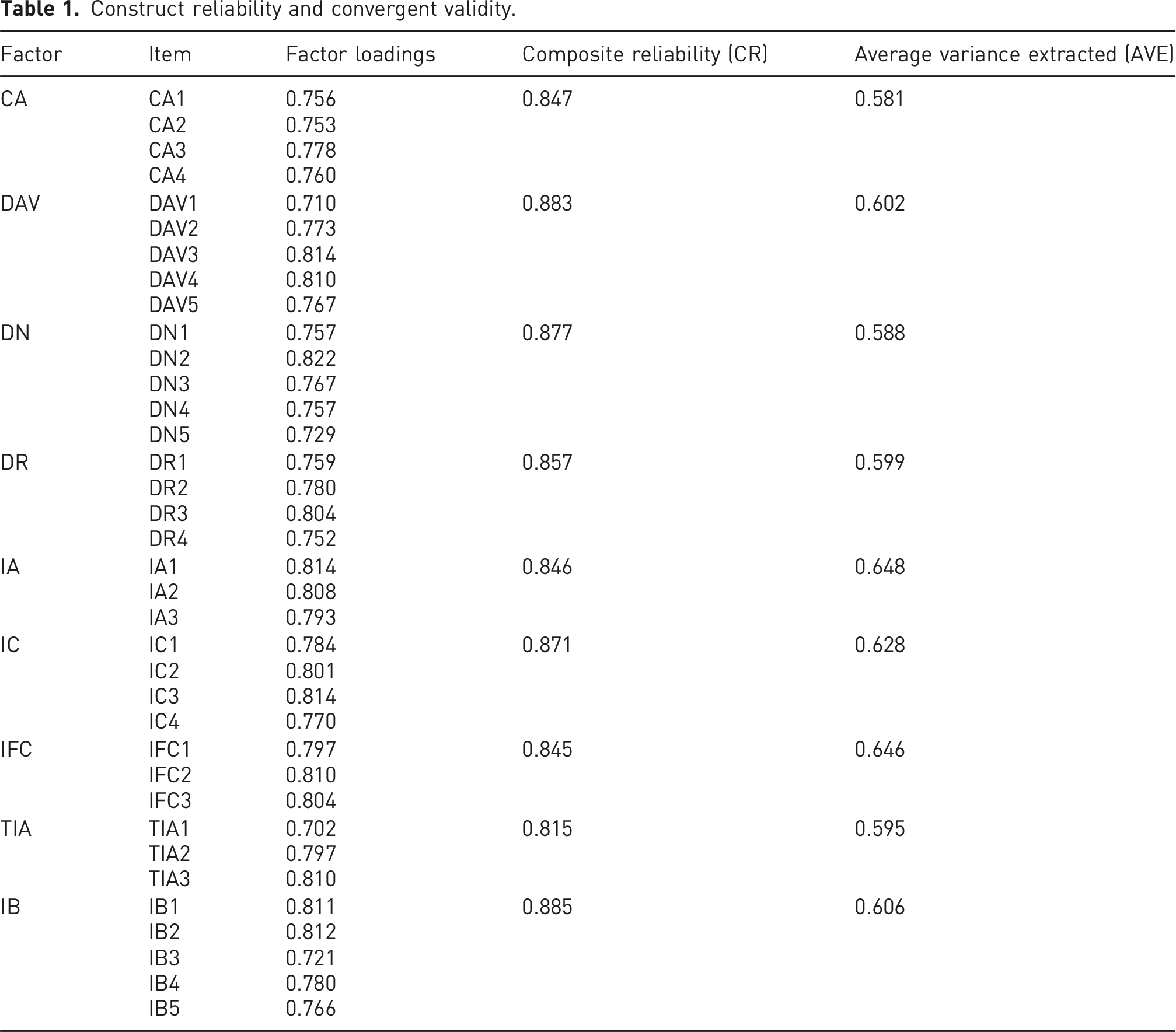
Construct reliability and convergent validity.
Fornell-Larcker criterion.
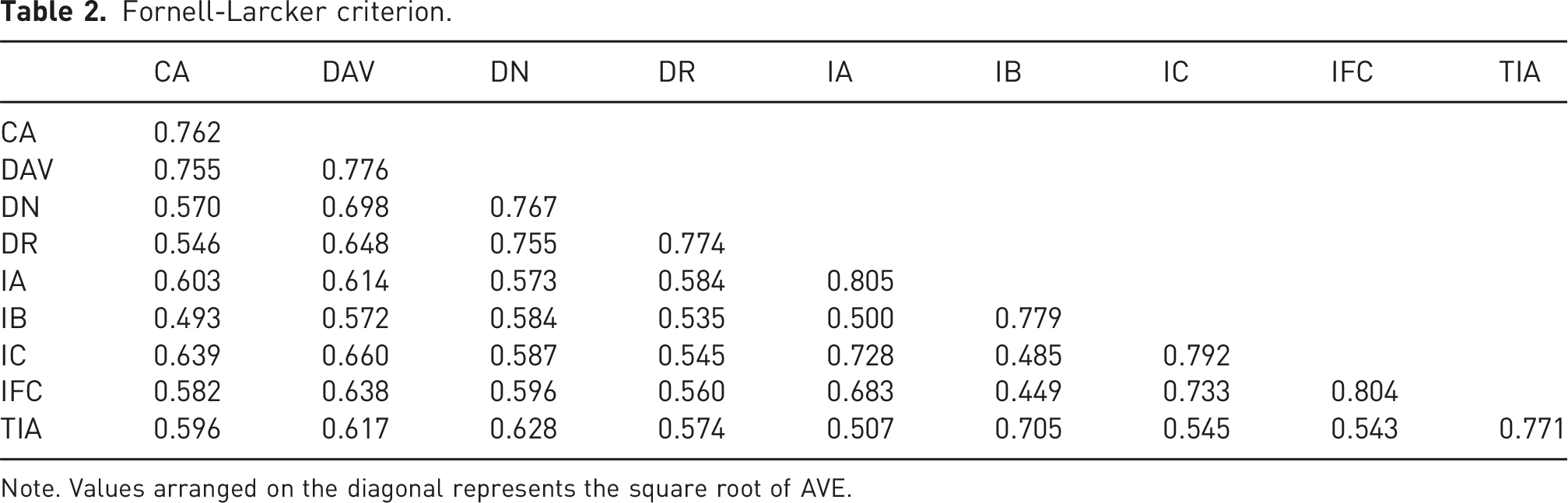
Note. Values arranged on the diagonal represents the square root of AVE.
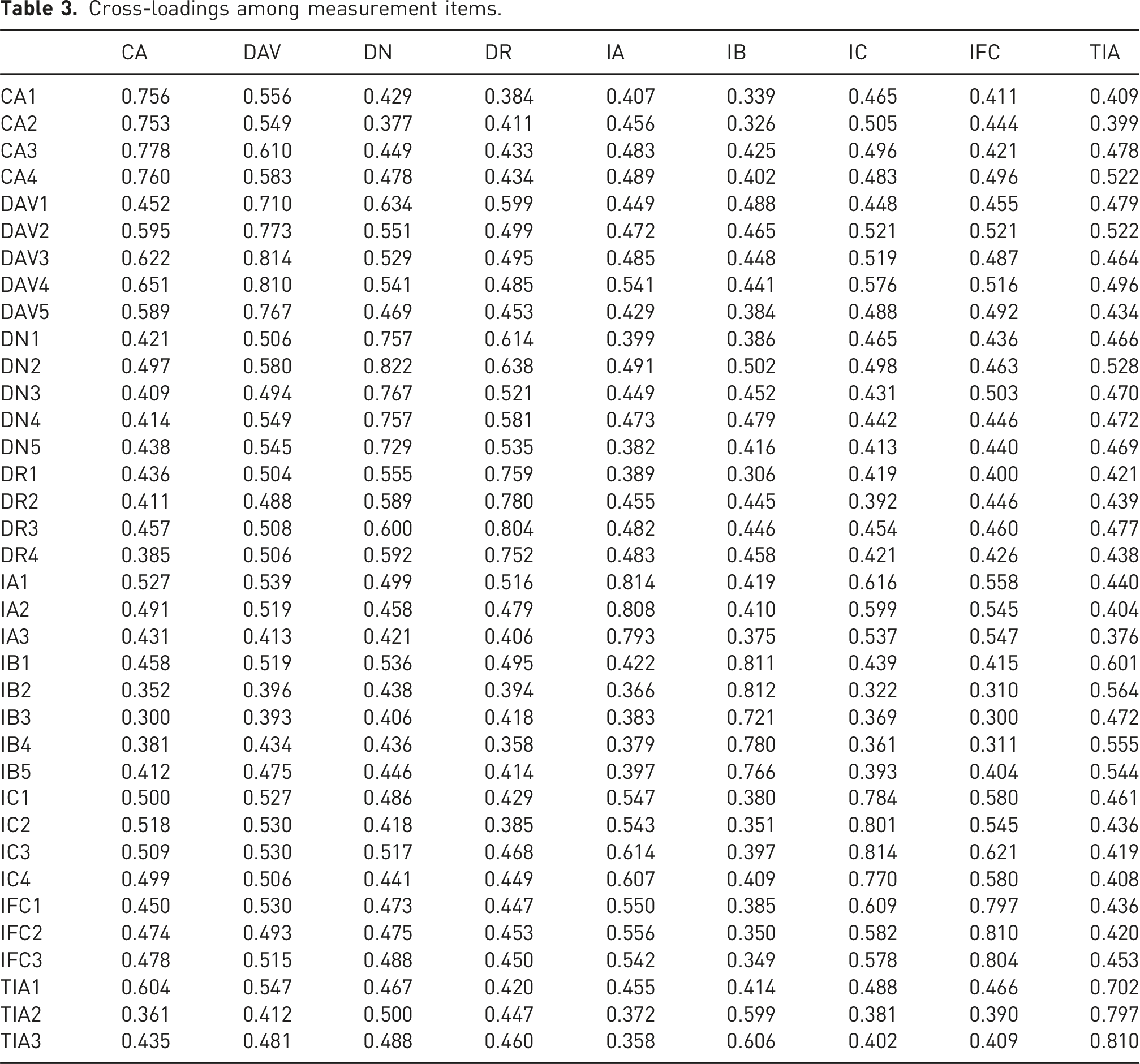
Cross-loadings among measurement items.
Measurement of the inner structural model
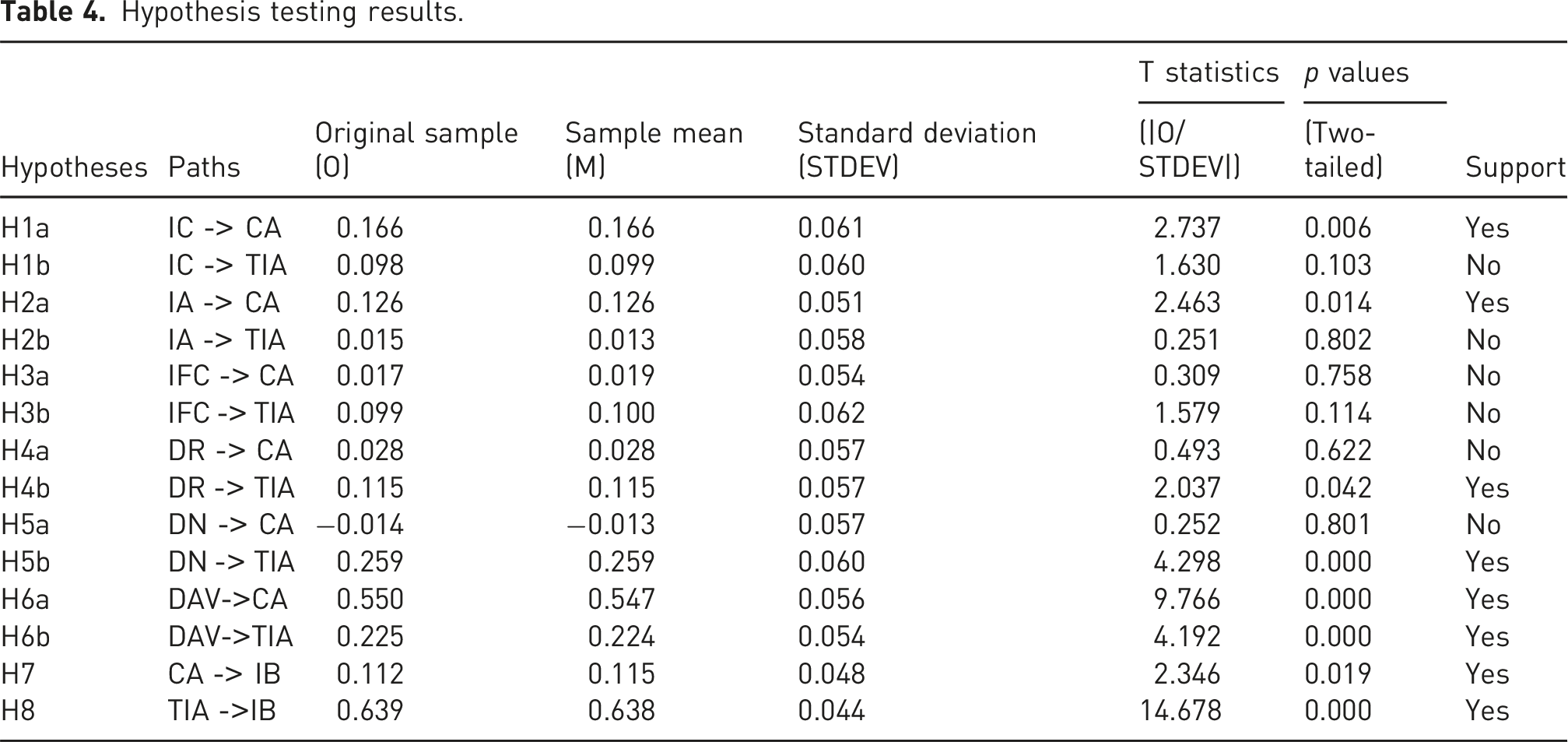
Hypothesis testing results.
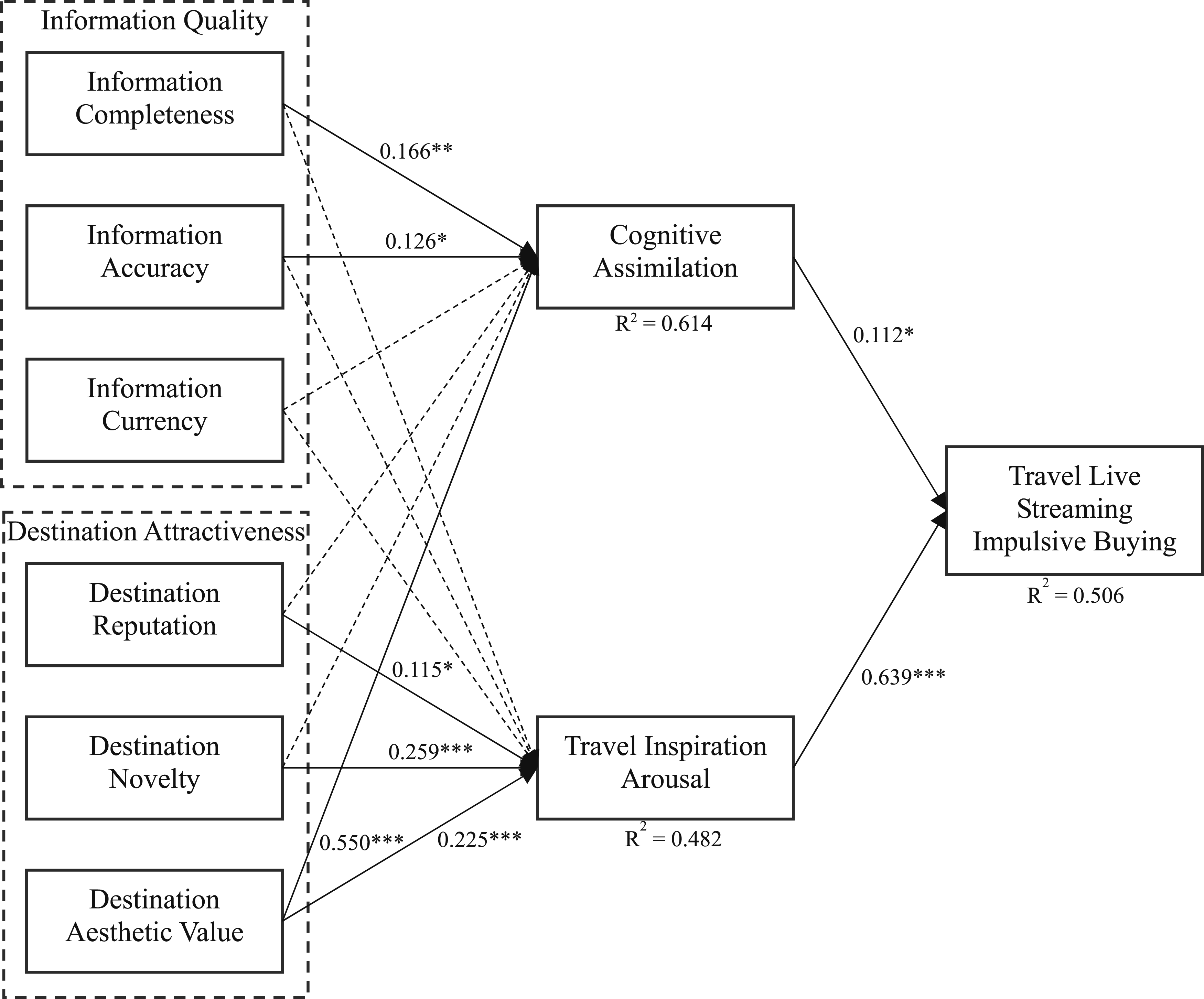
Structural model test.
The coefficient of determination (R2), predictive relevance (Q2) and model goodness-of-fit were used to assess the adequacy of the inner structural model. As all the values of R2 are near to 0.50, this indicates the explanatory power of the model to be moderate (Hair et al., 2019). Q2 reflects whether the model has the predictive ability with respect to the endogenous variables. Q2 values are all greater than 0. According to Hair et al. (2017), this implies that the model has sufficient predictive relevance. Moreover, the value of the standardized root mean square (SRMR) can be used to assess whether the model establishes a good fit with the data. In the case of this study, the SRMR value for the saturated model and the estimated model were 0.058 and 0.063 respectively, both being lower less than the recommended threshold of 0.08, thus indicating a good model fit (Hu and Bentler, 1998) (see Table 4 and Figure 2).
Artificial neural network analysis
Three ANN models were developed for IB (Figure 3), TIA (Figure 4), and CA (Figure 5) respectively. To allow a deep learning to take place within the ANN models, two hidden layers for all ANN models were specified (Lee et al., 2020). Moreover, a sigmoid non-linear activation function was chosen for the hidden and output layers and automatic computation of hidden neurons was engaged (Hew et al., 2023). To avoid the overfitting problem, a 10-fold cross-validation method was used to compute the root mean squared error (RMSE) of the ANN models, which represents its predictive accuracy (Hew et al., 2017). Such analysis found that all RMSE values exhibited acceptable prediction accuracy as they fell between 0.089 and 0.108 (Wong et al., 2022). ANN model 1. ANN model 2. ANN model 3.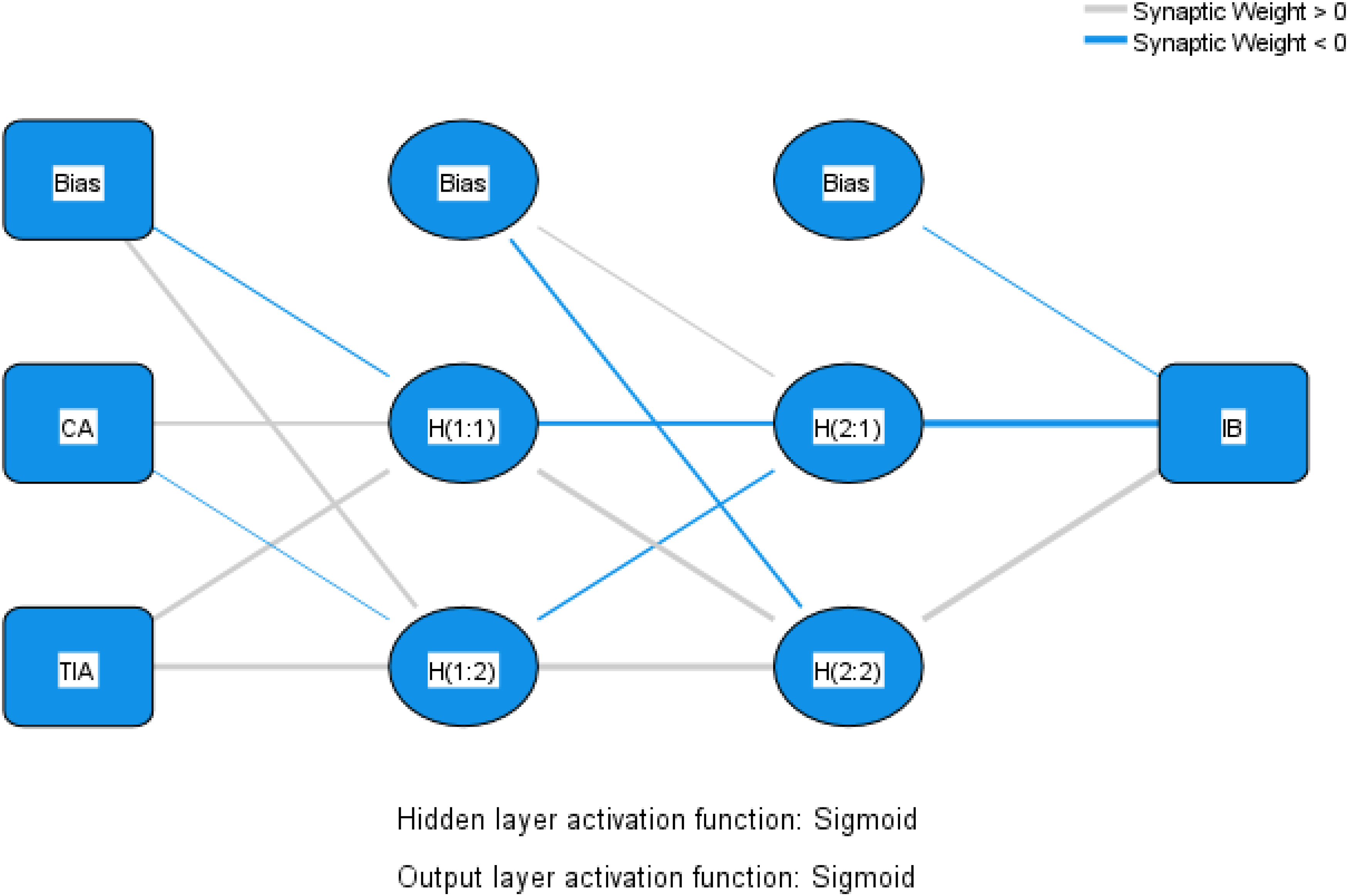
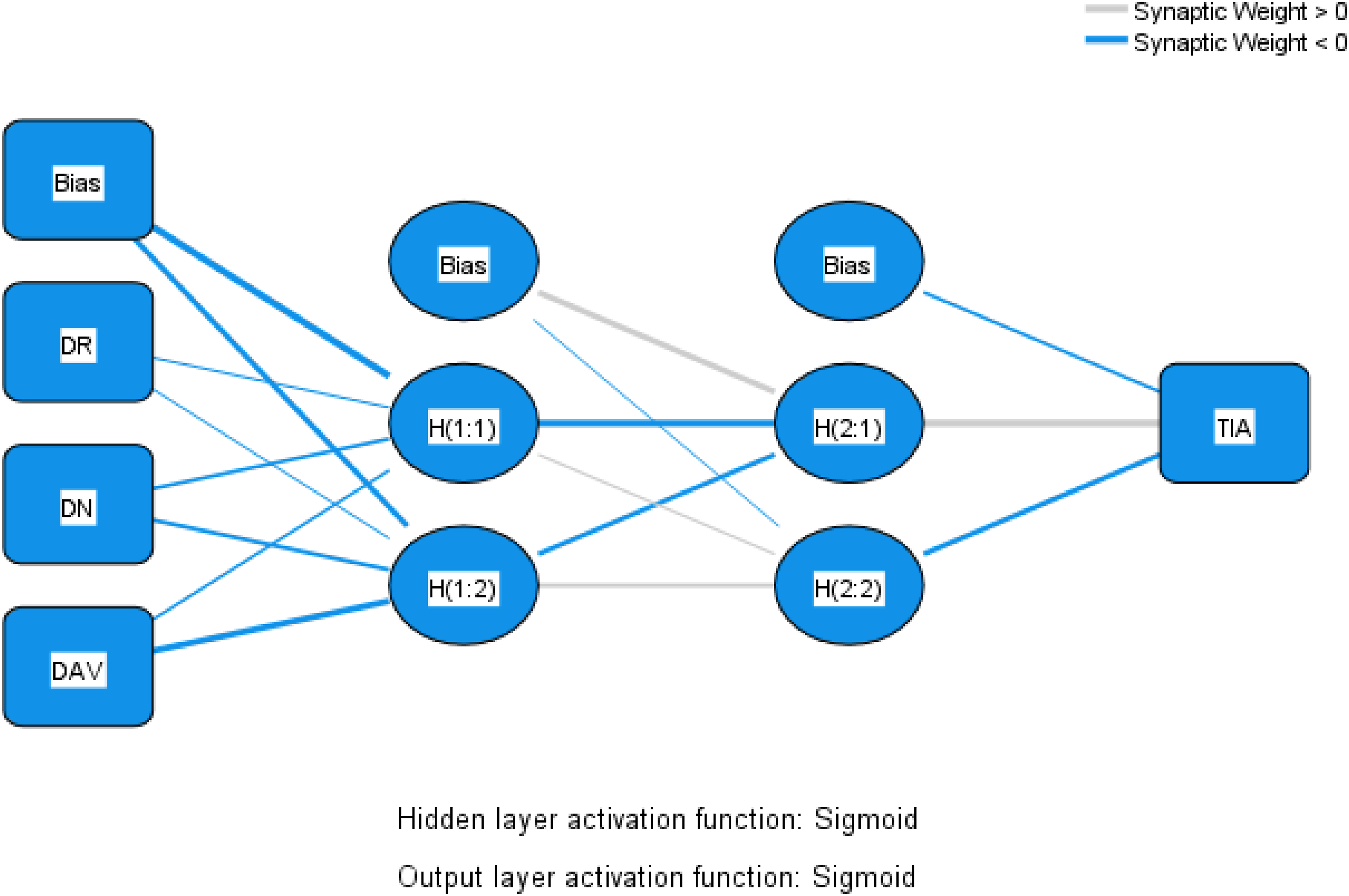
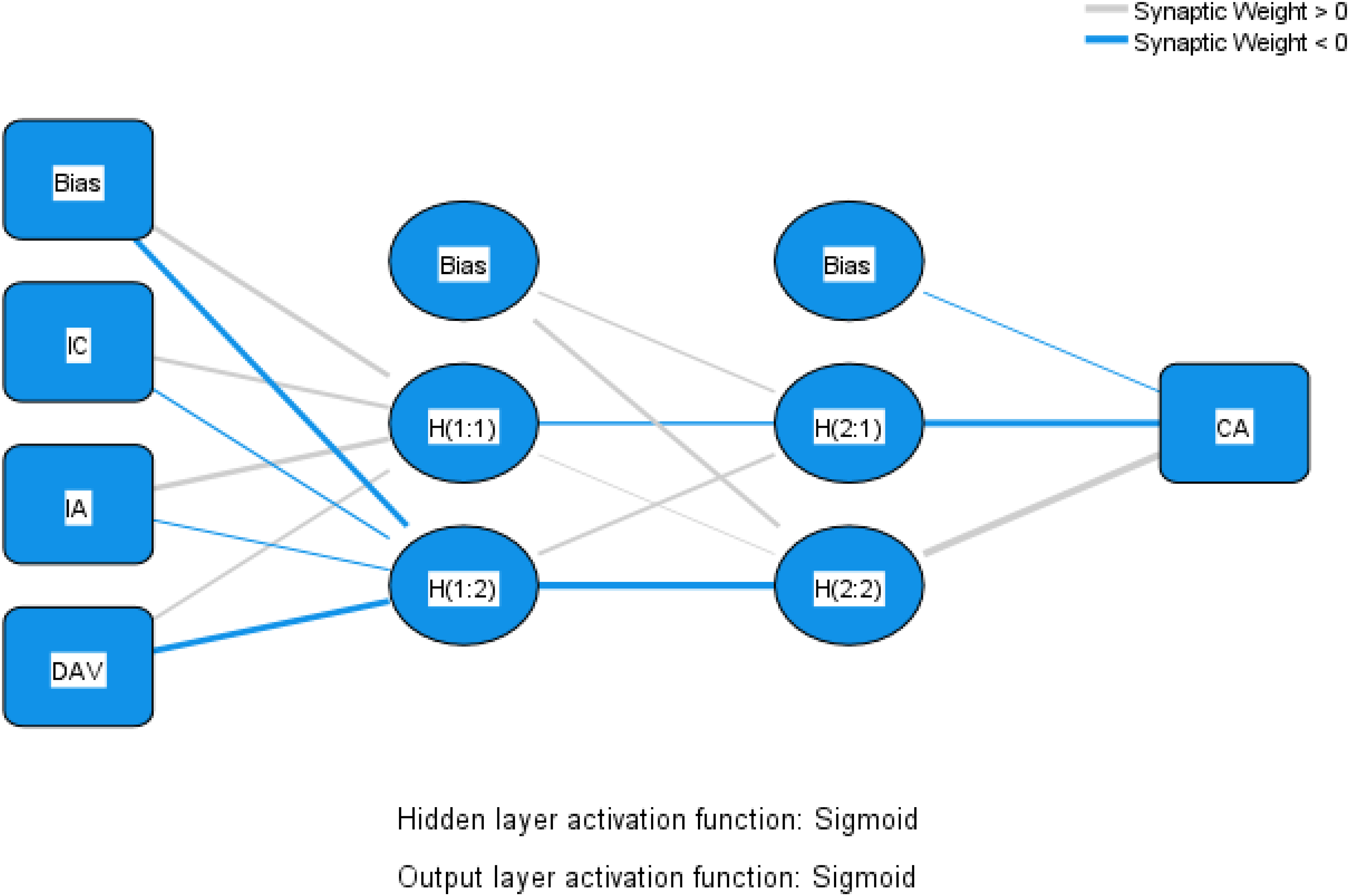
Moreover, the relative importance of all input neurons was evaluated using sensitivity analysis. The results derived from the three different ANN models found that the variable TIA (100%) has the most normalized relative importance in explaining IB than CA (30%) in Model 1. The results in Model 2 indicated that DAV (100%) had the greater normalized relative importance in explaining TIA, followed by DN (75%) and DR (47%). The results for Model 3 demonstrated that DAV (100%) had a greater normalized relative importance to predict CA than IC (21%) and IA (15%).
A comparison of the ranking of predicting power in both the PLS-SEM analysis (based on path coefficients) and the ANN analysis (based on normalized relative importance) was also conducted. The results showed that the ranking was inconsistent. The ranking of DAV, DN, and DR in Model 2 using ANN is first, second, and third, respectively, whereas their corresponding rankings in PLS-SEM were second, first, and third. This inconsistent ranking may indicate the existence of non-linear relationships between TIA and its antecedents, which are not completely explained by the PLS-SEM study (Hew et al., 2019). This illustrates the importance of using ANN analysis to complement a PLS-SEM study, as a single use of PLS-SEM would doubtless have missed this important additional insight.
Discussion
This research has explored the impact of the information quality and destination attractiveness on cognitive assimilation and travel inspiration arousal, and the effect of these variables on impulsive buying in the context of TLS marketing. Using PLS-SEM-ANN analysis, the study has examined the proposed relationship between the hypothesized variables, measured their predictive relevance, and examined how such factors influence the consumers’ impulsive purchasing behavior. The findings highlight the dual effect of cognition processing and emotional response in TLS, and underscore the key role that destination aesthetic value, information accuracy, cognition processing, and emotional resonance play in promoting consumers’ decision-making. Specifically, the study has established three crucial findings, which will now be explained.
Firstly, information completeness and information accuracy were found to have a significant impact over cognition assimilation. These findings suggest that it is more likely for consumers to become attracted by the comprehensiveness of the information to help deepen their understanding of the travel products and destinations they see on TLS shows, and that they will likely make a quicker and more impulsive decision as a result. Moreover, the accurate tourism destination information provided by TLS videos help consumers gain more understanding of the goods that are being promoted in the TLS. These results and findings supplement the findings of Wang et al. (2025), Xu et al. (2020) and Gao et al. (2021), underscoring the role of information quality in cognitive assimilation in live streaming commerce. Information currency, however, was not found to have a significant role in influencing cognitive and emotional response in the TLS context. This implies that consumers prioritize the completeness and accuracy of the content over its currency when they watch TLS shows. As Wang et al. (2011) argued, depending on the time value of information, information currency is not important in the decision-making process of consumers in every scenario. In this case, given that information on tourism destination is unlikely to change within a short time and will not lose its value easily as time passes, it can be argued that TLS viewers are unlikely to value information currency in developing their cognitive and emotional responses. This finding is similar to that of Wang et al. (2023), who found that the timeliness of online tourism information has no significant impact over cognitive and emotional resonance of tourists.
Secondly, the attractiveness of a destination – as represented by destination reputation, novelty, and aesthetic value – was found to have a significant influence over travel inspiration arousal in the TLS context. Only aesthetic value, however, had a significant effect on cognition assimilation, highlighting the pivotal role of aesthetic value in driving both cognition assimilation and travel inspiration arousal. These findings are consistent with another study on the use of travel short-form videos (Fang et al., 2023) that highlighted the importance of destination reputation, novelty, and aesthetic value in driving travel inspiration arousal. Specifically, it is believed that the pivotal aesthetic value increases viewers’ cognitive and emotional engagement, confirming previous findings by Gulertekin Genc and Temizkan (2023) and suggesting that consumers are most likely to be impressed by aesthetically appealing destination scenes or travel products, which can trigger emotional resonance or further cognitive responses. Moreover, in the TLS context, destination reputation and novelty do not significantly influence cognitive assimilation, implying that consumers evaluate the destination highly based on the destination aesthetic value and tend to prioritize visual presentation rather than the reputation-based evaluations offered in conventional tourism e-commerce. This suggests that the power of aesthetic value, which could previously only be portrayed in the forms of photo and video, is now challenging the conventional power of paper-based marketing strategies to influence consumer decision making (Seo et al., 2025; Zhu et al., 2024).
Lastly, cognitive assimilation and travel inspiration arousal can both have a positive effect on impulsive buying behavior, suggesting that consumers who quickly process and assimilate information are more likely to make impulse buying decisions in TLS (Lv et al., 2022). Furthermore, travel inspiration arousal may have a greater effect on impulsive purchase behavior than cognitive assimilation, indicating that emotional engagement plays a dominant role in motivating impulsive action in the TLS context. This supports the study by Zhang et al. (2022), highlighting that immersive experience and emotional resonance significantly promote the consumers’ impulsive purchasing in livestreamed shopping. Similarly, Liu et al. (2024) noted that cognitive processes contribute to shaping positive attitudes (e.g., trust) toward streamers, thereby increasing consumers’ impulsive buying in highly interactive environments (Li et al., 2024).
Conclusions
Theoretical and practical implications
This study broadens the theoretical framework for tourism consumer behavior by showcasing the impact of information quality and destination attractiveness on consumers’ impulsive buying behavior, which is influenced both by cognitive and affective processes. This greatly enhances the theoretical understanding of tourism e-commerce consumers’ behavior, particularly in the context of live streaming. For example, while Liang et al. (2024) discussed impulsive travel intention, their study failed to examine the role of information quality, cognitive response, and affective arousal in the psychological dynamics of consumer decision making and their subsequent actual behavior. The theoretical framework presented in the current study expands the existing literature on TLS and enhances the understanding of impulsive travel consumer behavior.
The results of this study broadly align with those of past research, demonstrating that information quality and destination attractiveness are the primary elements affecting customer decision-making behaviors in a livestreamed shopping environment (Fang et al., 2023; Xu et al., 2020). The research presented here goes further to show that information completeness elicits higher cognitive reactions than information accuracy and currency in TLS, on top of suggesting that information quality does not significantly impact the affective processes among consumers in TLS. These findings not only contribute to knowledge of the significance of information quality dimensions in consumer cognitive mechanism, but further indicate that the information quality dimensions, as opposed to the main stream of literature (Koivumaki et al., 2008; Shi et al., 2023), do not necessarily matter in shaping consumer affective mechanism.
Moreover, the research presented in this paper redefines the role of destination attractiveness, demonstrating that the destination reputation, novelty, and aesthetic value significantly influence consumers’ emotional reactions. It is also noteworthy to see destination aesthetic value to exert a much stronger and significant impact on consumers’ cognitive reactions as compared to the dimensions of information quality. This outcome indicates that, when exposed to the TLS environment, consumers are more focused on the real-time interaction with the streamer and the visual presentation of the destination, as opposed to the typical information quality. In this vein, the reputation, novelty, and aesthetic value of a destination are found to be key elements in capturing consumer attention and evoking emotions (Gulertekin Genc and Temizkan, 2023), offering fresh perspectives into the application of destination attractiveness concept within the field of TLS.
This study also expands the research scope of TLS by introducing the notions of cognitive assimilation and travel inspiration arousal. While these notions have been explored by Xu et al. (2020) in the context of general live streaming commerce, their effects are still unknown in the TLS environment because travel products and services are rather unique due to their intangibility (Kuo, 2024). The findings have successfully underscored the importance of cognitive assimilation and travel inspiration arousal in inducing consumers’ purchase impulsiveness in the TLS setting. Travel inspiration arousal significantly influences impulsive purchases more than cognitive assimilation. This emotional response serves as a crucial psychological mechanism that propels consumers’ impulsive decision-making in livestreamed context (Liang et al., 2024). Consequently, it can be argued that by creating ‘physical being there’ scenarios and inspiring emotional resonance, TLS might significantly encourage consumers to engage in impulsive purchasing. This research finding theoretically contributes to existing studies on the live streaming phenomenon by elucidating the motivations of consumers in TLS from an emotional perspective.
This research also provides significant insights for practitioners from various perspectives. By optimizing TLS content strategy, practitioners can enhance consumer participation. Firstly, the production of live content should prioritize on the improvement of information quality, particularly in terms of its accuracy and completeness. Streamers should provide comprehensive and reliable information regarding the destination throughout their explanations to more efficiently facilitate customers’ understanding of the destination and its attractions. Specifically, hosts could consider cooperating with local tour guides to feature them in the TLS, as local tour guides can be expected to have a greater level of knowledge about a tourism destination that allows them to interpret the destination’s attractions and culture in a complete and accurate manner (Ap and Wong, 2001). Moreover, it might be a good idea for streamers to interview some of the local residents, asking them to share more information about the tourism destination. These strategies shall aid consumers in the cognitive assimilation of information, thereby facilitating their decision to purchase (Xu et al., 2020).
Secondly, TLS producers should emphasize the destination’s reputation, novelty, and aesthetic value. Practitioners should highlight the uniqueness and beauty of destinations through high-definition pictures or videos, highlighting the aesthetic value of tourist attractions or the discovery of lesser-known local cultural features and landscapes, thereby sparking viewers’ interest and curiosity and encouraging them to explore further. Other than engaging local tour guides and residents to discover the potential uniqueness and beauty of tourism destinations, TLS hosts should explore the possibilities of featuring rural tourism, which exhibits unique cultural heritage and natural beauty (Pahari, 2024), in their broadcasts. Such inspirational stimulation has the potential to significantly increase customers’ likelihood of purchasing travel products and visiting the destination (Fang et al., 2023).
Thirdly, practitioners should enhance their strategies for emotional advertising. Given the significant impact of emotional arousal on impulse buying, TLS platforms should strive to stimulate consumers’ travel desires by establishing an emotional connection with viewers during the live streaming session, which can increase consumers’ spontaneous affective resonance that in turn encourages impulsive buying (Li et al., 2024). This includes live “Q&A” session with the audience, perhaps, through the bullet screen and live comments (Gao et al., 2021). Furthermore, TLS platforms could implement a real-time voice communication function between the streamers and viewers: a crucial function that is currently missing from most TLS platforms. Given that a streamer-consumer interaction is crucial in driving live streaming sales (Fan et al., 2024), it would be good to further enhance their interactions, preferably in a real-time manner. Furthermore, TLS platforms could employ AI and VR technology to improve the live watching experience. For example, platforms could leverage personalized recommendation algorithms to present consumers with the destinations that best match their interests or augmented aesthetic displays of destinations by VR technologies to further create an atmosphere that enhances consumer immersion and inspiration arousal. According to Samaddar and Mondal (2024), VR technologies afford consumers to surround themselves with immersive 360-degree experiences of a tourism destinations, hence sparking their travel inspirations eventually. With these, practitioners shall be able to impel consumers to buy travel products impulsively. With a built-in “cooling-off” period in most TLS platforms, consumers who regret their impulse purchase can easily cancel it.
Limitations and future research
No study is without its limitations. The data used in the present study represented a cross-sectional non-probability sample from a single group of Chinese TLS consumers. This makes it hard to generalize from the results of this study. Future studies are therefore required to validate the research framework introduced in this study by administering surveys and collecting longitudinal data from a variety of cultural backgrounds. Furthermore, cognitive-emotional systems are known to be highly complex, while this study only associates cognitive assimilation and travel inspiration arousal with impulsive purchases. Future studies could explore additional cognitive and emotional variables to gain a deeper understanding of the psychological processes underlying consumers’ impulsive purchases. Furthermore, the study has not considered other variables that might potentially moderate the relationships evident in the model, such as consumers’ demographic profiles or individual travel preferences. Future research could incorporate these elements to investigate their moderating effect on the consumers’ impulsive consumption behaviors. Finally, it would be interesting for future research to explore the interaction between host characteristics (Pu et al., 2025) and cognitive-emotional mechanisms, which would offer more theoretical contributions towards the existing body of knowledge.
Footnotes

Funding
The authors received no financial support for the research, authorship, and/or publication of this article.
Declaration of conflicting interests
The authors declared no potential conflicts of interest with respect to the research, authorship, and/or publication of this article.
Author biographies
Appendix
Demographic information. Measurement items.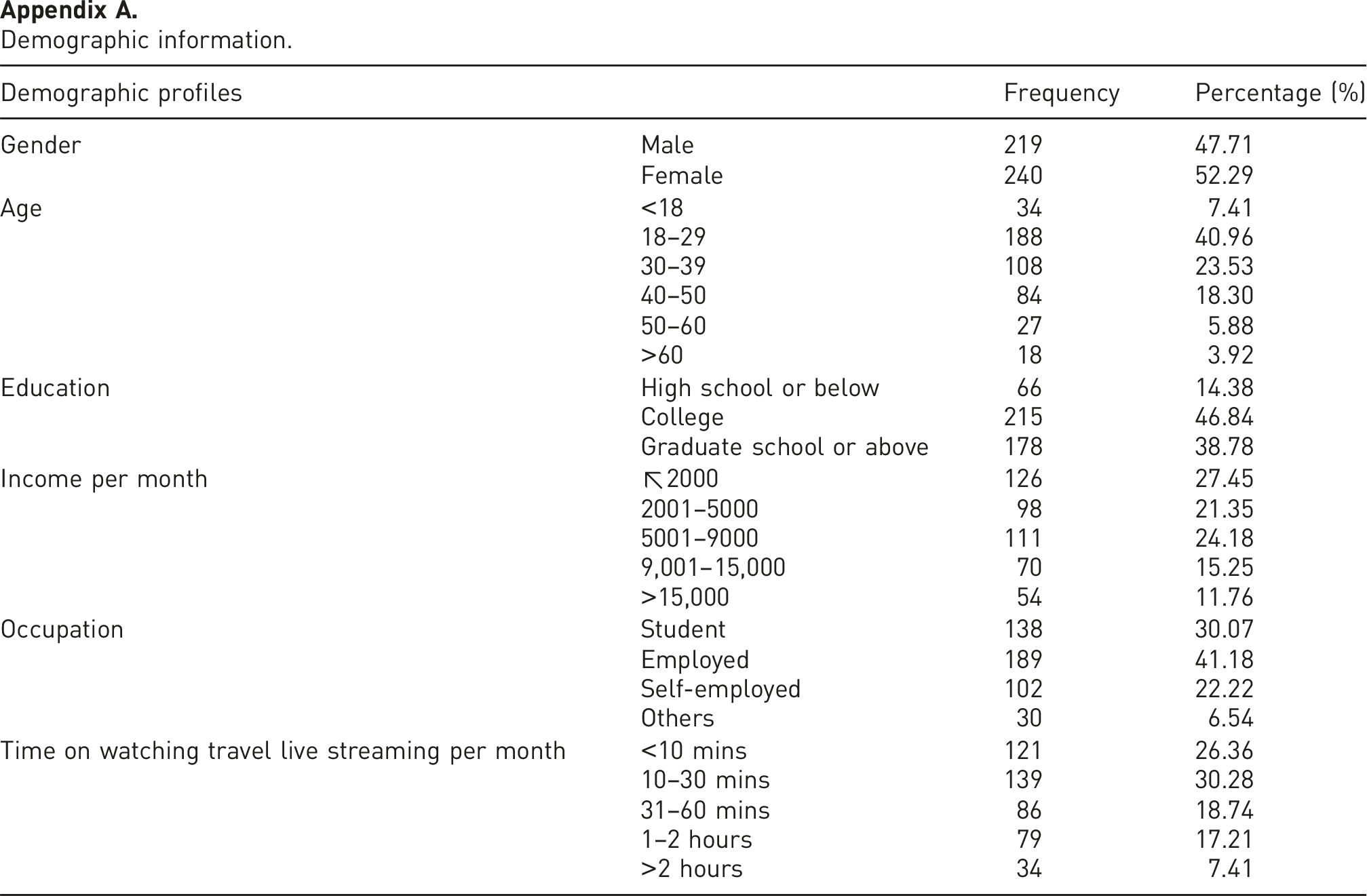
Demographic profiles
Frequency
Percentage (%)
Gender
Male
219
47.71
Female
240
52.29
Age
<18
34
7.41
18–29
188
40.96
30–39
108
23.53
40–50
84
18.30
50–60
27
5.88
>60
18
3.92
Education
High school or below
66
14.38
College
215
46.84
Graduate school or above
178
38.78
Income per month
≤2000
126
27.45
2001–5000
98
21.35
5001–9000
111
24.18
9,001–15,000
70
15.25
>15,000
54
11.76
Occupation
Student
138
30.07
Employed
189
41.18
Self-employed
102
22.22
Others
30
6.54
Time on watching travel live streaming per month
<10 mins
121
26.36
10–30 mins
139
30.28
31–60 mins
86
18.74
1–2 hours
79
17.21
>2 hours
34
7.41
Construct
Items
Measurement
Sources
Information completeness
IC1
Travel live streaming provides me with a complete set of information regarding the destination.
Nelson et al. (2005)
IC2
Travel live streaming provides me with the comprehensive information regarding the destination.
Filieri and McLeay (2014)
IC3
Travel live streaming provides me with all the information regarding the destination I need in detail.
IC4
The depth and breadth of information regarding the destination from travel live streaming are thorough enough.
Information accuracy
IA1
Travel live streaming produces correct information regarding the destination.
Nelson et al. (2005)
IA2
The information regarding the destination provided by travel live streaming is accurate.
Popovič et al. (2012)
IA3
The information regarding the destination from travel live streaming is free of distortion, bias, or error.
Information currency
IFC1
Travel live streaming provides me with the most recent information regarding the destination.
Nelson et al. (2005)
IFC2
Travel live streaming produces the most current information regarding the destination.
IFC3
The information regarding the destination from travel live streaming is always up to date.
Destination reputation
DR1
This destination is very famous.
Artigas et al. (2015)
DR2
This destination has a very good reputation.
Fang et al. (2023)
DR3
People speak very well of this destination.
DR4
This destination has a better reputation than other similar places.
Destination novelty
DN1
The scenery of the destination is novel.
Zhang and Xu (2020)
DN2
The scenery of the destination is unique.
Fang et al. (2023)
DN3
The scenery of the destination is rare.
DN4
The scenery of the destination is different from others.
DN5
The scenery of the destination is diverse.
Destination aesthetic value
DAV1
The destination in travel live streaming is beautiful.
Tsai and Wang (2017)
DAV2
The destination in travel live streaming is aesthetically appealing.
Fang et al. (2023)
DAV3
The destination in travel live streaming is attractive.
DAV4
The live streaming video presentation of the destination is impressive.
DAV5
The visual aesthetic design of the destination in live streaming is wonderful.
Cognitive assimilation
CA1
While watching the live streaming, my existing understanding of the travel destination is likely to be influenced by the information presented in travel live streaming.
Xu et al. (2020)
CA2
While watching the live streaming, my current knowledge of the travel destination is likely to be influenced by the presenter in the travel video.
CA3
While watching the travel live streaming, my perceived value of the travel destination can be transformed by environmental cues in the travel video.
CA4
While watching the travel live streaming, my preference for the travel destination can be changed by the interactivity involved.
Travel inspiration arousal
TIA1
I Feel enthusiastic and inspired to travel while watching travel live streaming.
Xu et al. (2020)
TIA2
I Feel exhilarated to participate in the travel live streaming.
Khoi et al. (2021)
TIA3
I Feel an urge to initiate a desire to travel while watching travel live streaming.
Impulsive buying
IB1
When watching the travel live streaming, I buy travel products that I had not intended to purchase.
Xu et al. (2020)
IB2
When watching the travel live streaming, I often buy travel products spontaneously.
Wu et al. (2020)
IB3
When watching the travel live streaming, I often buy travel products without thinking.
IB4
When watching the travel live streaming, I often buy travel products according to how I feel at that time
IB5
When watching the travel live streaming, I feel like purchasing the travel products more than I need.