




Abstract
Although sustainable livelihoods (SL) have received attention in academia, the understanding of their applications to tourism research remains fragmented. Therefore, the purpose of this research is to provide a holistic understanding of SL in tourism research by analysing the framing and operationalisation of SL from the perspective of its historical development. This study adopts a hybrid literature review approach and incorporates articles published in both English and Chinese for analysis. The findings reveal the dominant themes in existing research, including tourism livelihoods in response to risks, tools for growing livelihood capital, the introduction of tourism activities, and the livelihood outcomes of tourism. This review also identifies these main themes associated with opportunities and challenges to achieve SL. By incorporating proposed potential solutions to address the challenges, this review develops a new framework. This framework has five distinct advantages, expanding the applications of the SL approach in tourism settings. Six key future research areas and associated specific research questions are also proposed, serving as a significant reference for researchers interested in pursuing this area.
Keywords
Introduction
Sustainable development and its derivative, sustainable tourism, have faced criticism for their ambiguous principles and implementation challenges, despite widespread adoption by international organisations and governments (Tao and Wall, 2009b). As an alternative paradigm, sustainable livelihoods (SL) offer a more pragmatic approach. It navigates the intricacies of various survival strategies by centring on people, their resources, and their activities (Shen et al., 2008). Moreover, the concept of ‘livelihood’ is more concrete than ‘development’, making it easier to discuss, describe, and even quantify (Tao and Wall, 2009a).
SL are presented as an ‘approach’ and a ‘framework’ rather than as a method and a theory (Natarajan et al., 2022). The SL approach emerged as a response from development practitioners in developed nations to improve the effectiveness of their interventions in assisting underdeveloped countries (Morse and McNamara, 2013). Frameworks underpinned by SL serve as a diagnostic tool by delineating criteria for achieving sustainable livelihood outcomes, thereby facilitating intervention strategies (Allison and Horemans, 2006). SL are inherently interdisciplinary, spanning across the domains of research, policy, and practice boundaries (Knutsson, 2006).
In many countries and regions, tourism is often a relatively new livelihood activity. In contrast to the singular focus of sustainable tourism, the SL approach inherently embraces the multi-sectoral nature of real life (Tao and Wall, 2009b). It offers a broader perspective for examining a wide range of tourism opportunities and their consequences on people’s lives. Moreover, the SL framework, which originated in agriculture and was developed in the context of poverty alleviation, does not fully capture the distinctive characteristics of tourism activities (Liu et al., 2022; Natarajan et al., 2022). Tourism products are characterised by transience and heterogeneity, leading to requirements for livelihood elements that differ from traditional livelihoods. Therefore, a timely review of tourism livelihoods literature and the SL framework’s application in tourism research will lay the groundwork for refining the framework in tourism contexts and identifying future research directions.
China, as the largest developing country, has largely leaned on tourism as an emerging strategic pillar of industry to improve the national economy (Zhao and Liu, 2020). Intricately woven with its political and cultural environments, those dynamics have significantly impacted tourism research (Bao et al., 2018). Although research on SL is gaining traction in China, many studies appear in Chinese-language journals (Guo and Yang, 2020). To broaden understanding of SL in tourism and mitigate Western bias, Chinese-language literature should be incorporated into literature reviews to elucidate how China adapts and employs the SL approach in tourism livelihoods. Subsequently, investigations into Chinese livelihood practices can also yield valuable insights into other national contexts.
Research at the intersection of tourism and SL is expanding rapidly, yet remains dispersed across multiple disciplines, including tourism studies, rural and community development, and ecological protection (Kunjuraman, 2024). Although two English-language literature reviews on SL exist (Rahman et al., 2020; Shen et al., 2008), they focus on elucidating the SL approach itself rather than critically reviewing its application in the tourism context. To advance the use of SL approaches in the tourism sector, a coherent synthesis of the existing literature is warranted. Thus, this review aims to analyse the framing and operationalisation of SL in existing tourism research, drawing from the historical development of the SL perspective. The specific research questions include: (1) What main guiding theoretical frameworks are used in examining SL in relation to tourism? (2) Which key livelihood elements are the focus of these livelihood frameworks? (3) What opportunities and challenges for achieving SL are identified in tourism research when assessing key livelihood themes?
In this review, opportunities refer to chances, advantages, or favourable circumstances facilitating SL through tourism, while challenges refer to any barriers, issues, or insufficient capacities that may hinder this realisation. This review aims to offer a holistic picture of research into SL within tourism studies, to provide a new framework for improving the applications of SL in tourism contexts and to propose directions for future research. The adapted framework includes providing a classification scheme of tourism context and capital, integrating stakeholder governance and tourist feedback, and strengthening resilience and equity. This review also proposes six key future research directions to advance the SL studies in tourism. Besides English literature, this study also reviews Chinese literature to offer a broader perspective.
Methodology
This study is positioned as a synthesis of literature to present an overview of SL in tourism contexts. To enhance the rigour of the literature review process, this study adopted a hybrid literature review approach that incorporates both quantitative systematic and qualitative narrative analyses.
Systematic methodology
The literature search and selection process employed the systematic quantitative approach and the PRISMA flowchart suggested by Moher et al. (2009) (Figure 1) to offer a reproducible, criterion-based literature selection (Pickering and Byrne, 2014). To obtain comprehensive results, this study utilised six databases identified from prior tourism review publications, including EBSCOhost, Emerald, ProQuest, ScienceDirect, Scopus and Web of Science (Rosalina et al., 2021; Teoh et al., 2021). The research also employed China National Knowledge Infrastructure (CNKI) and Wanfang Data, as these are widely recognised as the most prominent platforms for accessing Chinese publications (Nicholas et al., 2017). In the first phase, the following terms were searched: (‘sustainable' OR ‘sustainability') AND (‘livelihood') AND (‘tourism' OR ‘travel' OR ‘tourist'), restricted to the title, abstract and/or keywords. The literature search took place in April 2023. After conducting screening for language, relevance, and peer-reviewed status, as well as eliminating duplications, a total of 95 English and 40 Chinese articles were ultimately included (for detailed process, see Figure 1). The PRISMA flowchart adapted from Moher et al. (2009).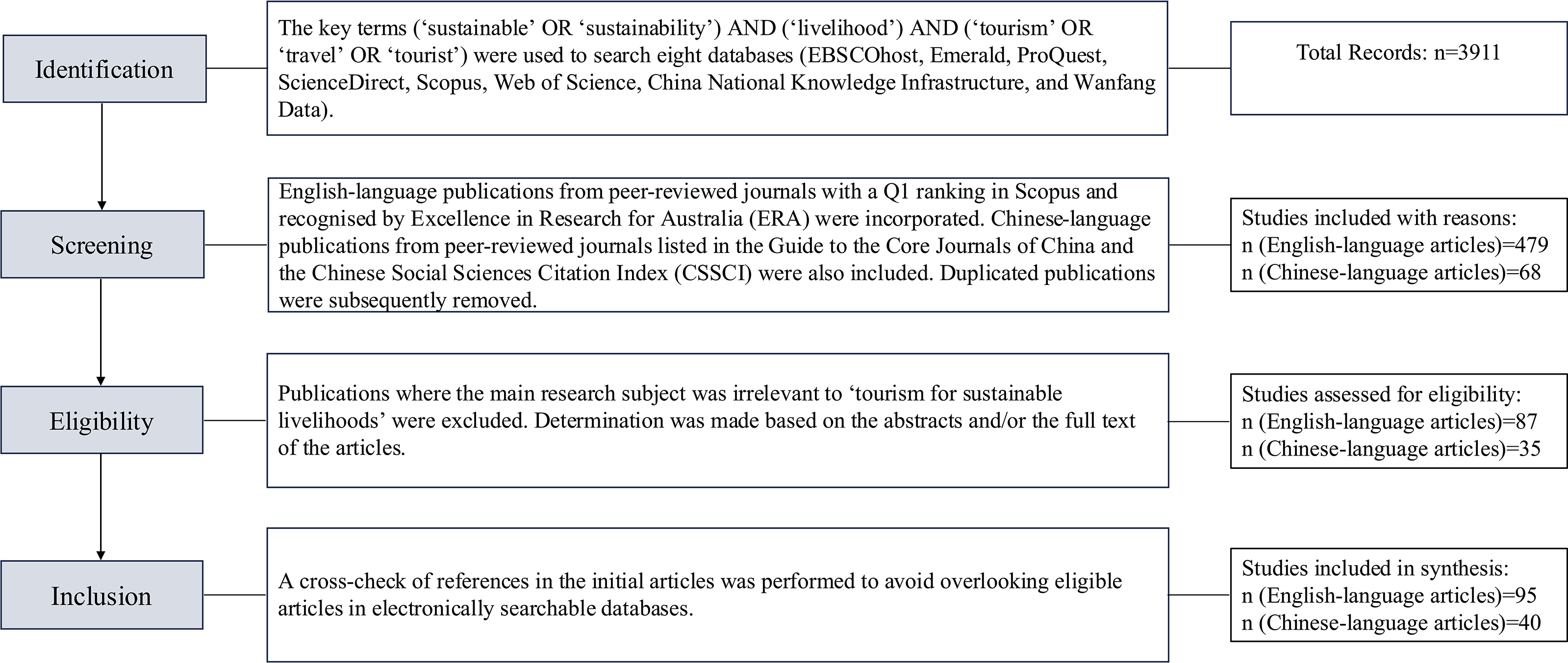
Narrative methodology
As the data collected for this review encompasses qualitative and quantitative research, a purely quantitative systematic analysis is deemed inappropriate. Consequently, a narrative approach was also employed, applying thematic analysis to scrutinise findings and interpretations from both types of literature, while keeping the data unaltered (Mair et al., 2016). In the analysis process, this study followed the four-stage narrative synthesis proposed by Popay et al. (2006). The first stage was achieved by justifying the review, and establishing research aims and objectives (Yang et al., 2017).
Stage two involved compiling the records in Microsoft Excel for the initial qualitative synthesis, aiming to create code based on the guiding frameworks of SL and key livelihood elements. Given this review aims to understand the practical operationalisation of SL in tourism contexts, empirical articles (129) were chosen for analysis. To establish the foundation for subsequent discussion, this review categorised empirical articles into three types based on locations and languages: (1) Chinese language and locations within China; (2) English language and locations within China; and (3) English language and locations outside of China (Figure 2). Intriguingly, China attracted a great deal of attention in English empirical articles, being the focus of 43 out of 91 articles. Typically, English-language articles studying China were written by at least one author from a Chinese institution, although transnational collaborations were common. In Chinese-language studies, all authors were affiliated with Chinese institutions and selected China as their research locations. The types of reviewed articles.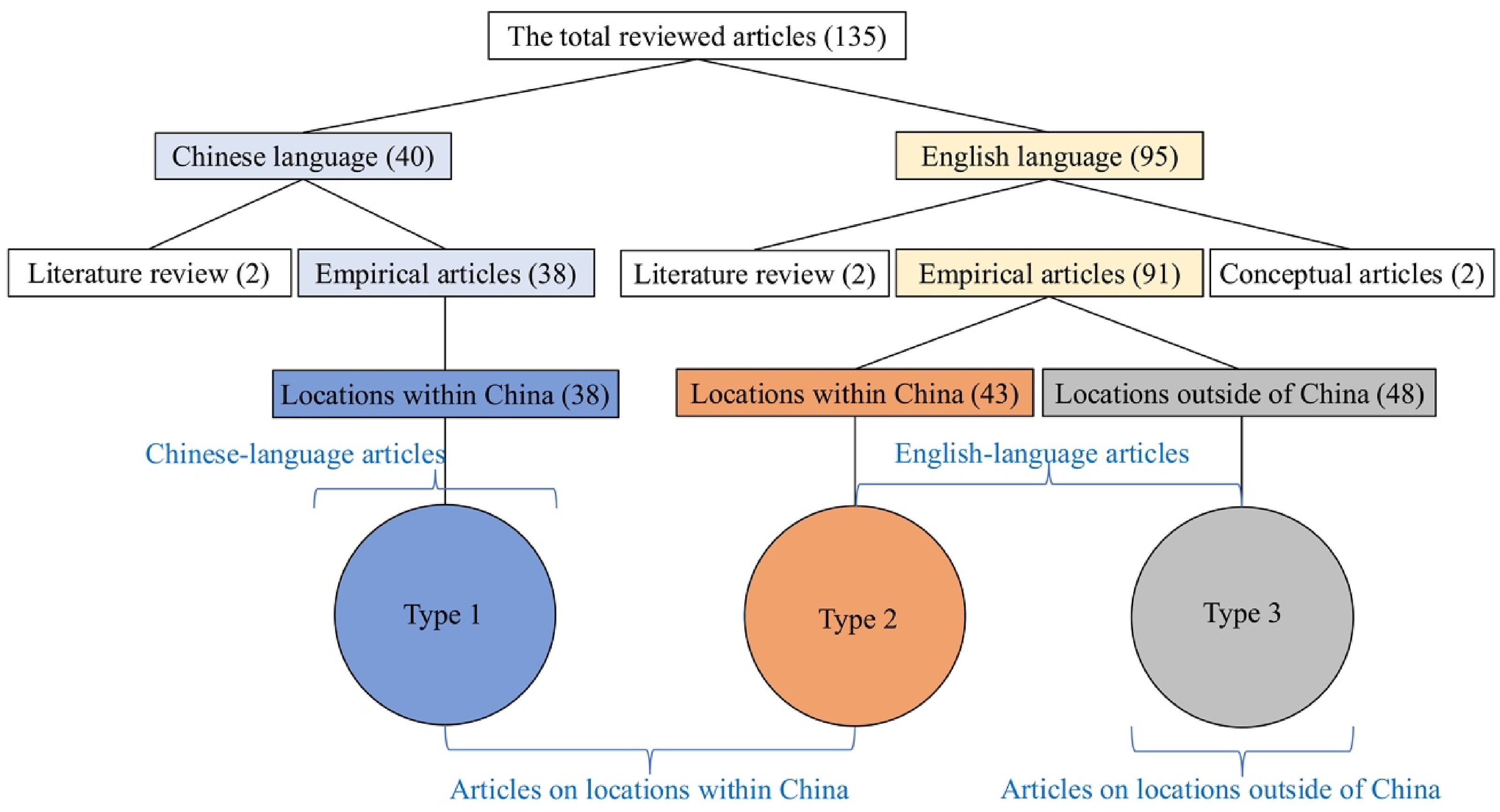
The third stage involved evaluating relationships among screened records (Mair et al., 2016). This study achieved it by exploring the opportunities and challenges associated with key livelihood themes. The first author (henceforth R1) managed the compilation of the record database and conducted the initial data analysis. After the selection of studies, quality appraisal, and data extraction occurred, the analysis was then reviewed by three additional authors, refining it until a consensus was reached.
The final stage entailed assessing the robustness of the synthesis (Popay et al., 2006). Drawing from peer-reviewed academic journal articles, this review presents a robust sample of high-quality research on SL in tourism. Triangulation with multiple investigators was employed to enhance the credibility of the study. Since qualitative analysis cannot be entirely objective, reflexivity is essential to disclose the characteristics of each author (Baxter and Eyles, 1997). R1 is Chinese, while R2 is of European ethnicity living in the United States. Although R3 and R4 were born in mainland China, they have lived in Western societies since around 2000. To mitigate biases, researchers from different backgrounds were involved in validating and shaping the interpretation of data.
Results
Sustainable livelihoods development and relevant frameworks
The concept of SL was first officially proposed by an Advisory Panel of the World Commission on Environment and Development (WCED) and the resulting Brundtland report, Our Common Future (WCED, 1987). The following definition, initially developed by Chambers and Conway (1992), predominated in the reviewed articles. A livelihood comprises the capabilities, assets (stores, resources, claims and access) and activities required for a means of living: A livelihood is sustainable which can cope with and recover from stresses and shocks, maintain or enhance its capabilities and assets, and provide sustainable livelihood opportunities for the next generation; and which contributes net benefits to other livelihoods at the local and global levels in the short and long term (p.6).
The progressive transformation of SL from a concept into a framework occurred in the late 1990s, as it was used to guide developmental interventions by governments, multilaterals, and NGOs, as well as to shape the views of scholars and practitioners on rural conditions in the Global South (Natarajan et al., 2022). In the 2000s, scholars embarked upon an exploration of the potential adaptations of SL within the context of tourism.
As shown in Figure 3, ten main frameworks have been applied in the selected articles. These fall into two main application areas: rural development and tourism development. The boxes in the middle show the key elements in different frameworks. Solid lines connect the frameworks to the livelihood elements on which they focus. The ten main frameworks for studing sustainable livelihoods.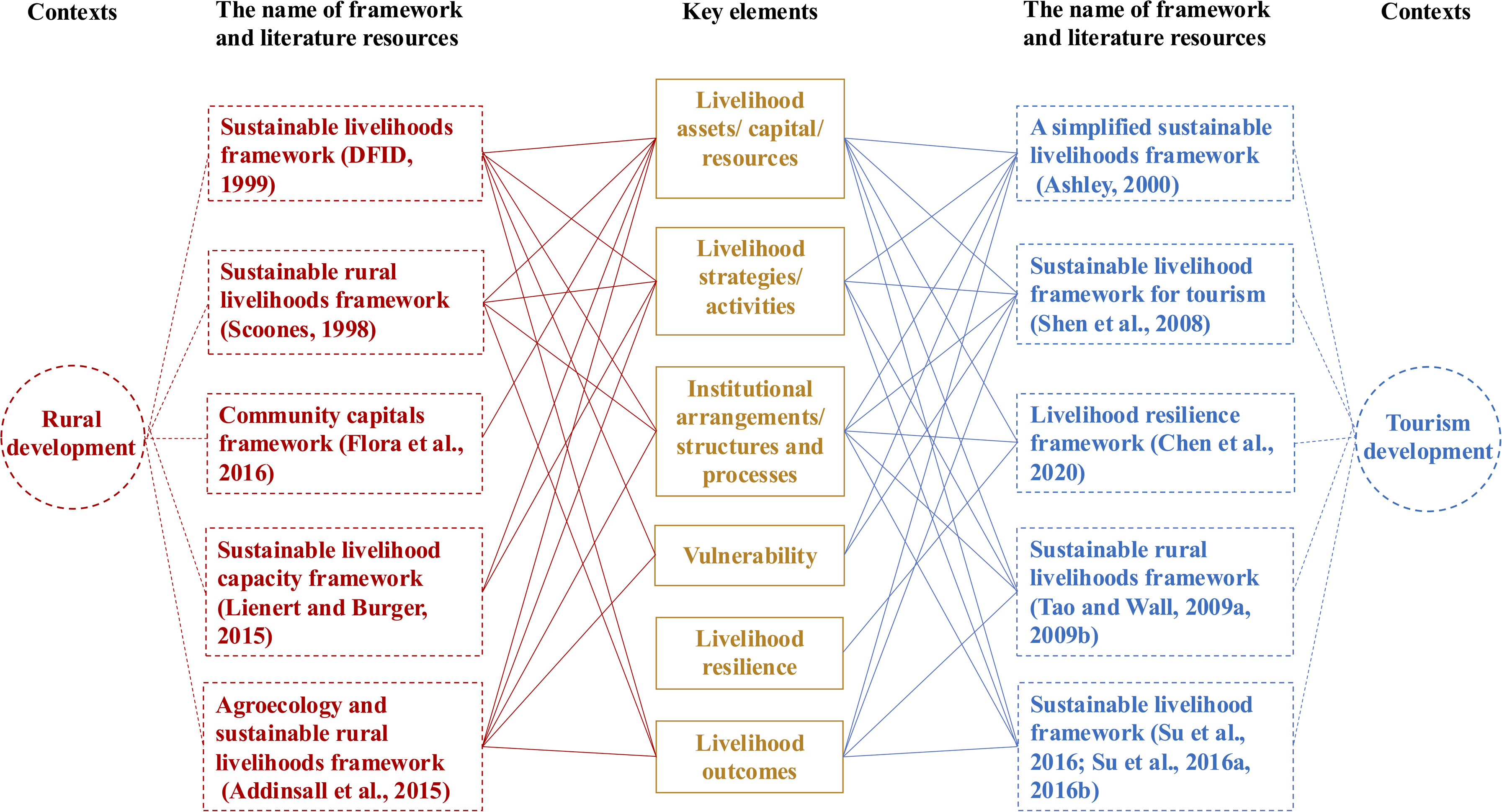
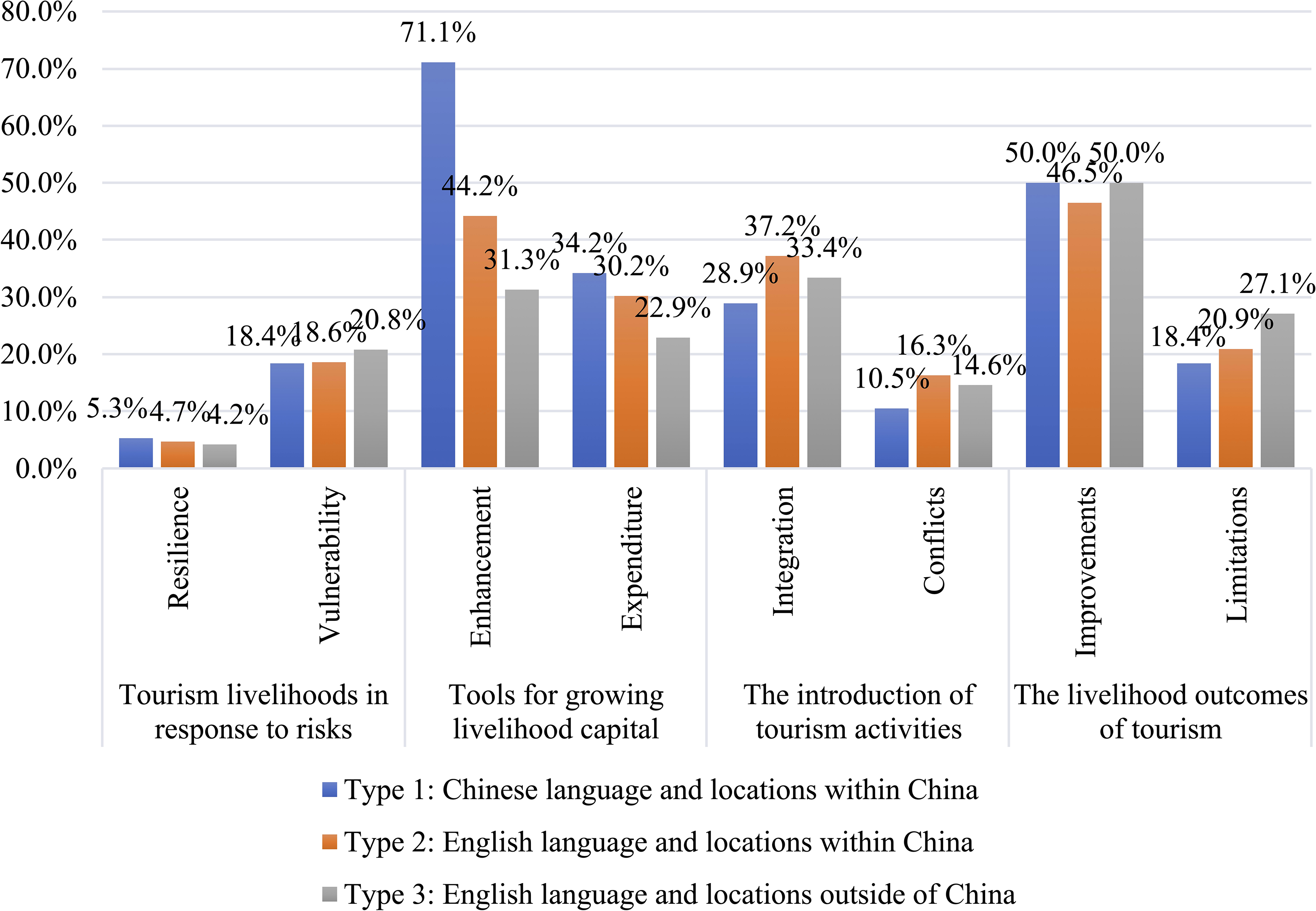
Five frameworks originated in the context of rural development. The UK Department for International Development (DFID, 1999), a pioneer in developing SL frameworks, was the most popular across all types of articles, especially Chinese-language articles (71.1%). However, English-language articles, especially those focusing on research locations besides China, tended to adopt more diverse rural SL frameworks (Figure 3). Livelihood capital is a common focus of these frameworks, as it is essential for creating new capital (Flora et al., 2016; Scoones, 1998). Social, natural, physical/built, human and economic/financial forms of resources are commonly identified as types of livelihood capital (DFID, 1999; Scoones, 1998). People with more capital usually have more options to choose multiple strategies (DFID, 1999). Contextual frameworks created to study rural development typically place traditional, natural resource-based activities (e.g., agriculture) at the centre of livelihood strategies (Addinsall et al., 2015; Lienert and Burger, 2015). Institutional arrangements (i.e., policies and legislation) of both private and public organisations mediate people’s access to livelihood capitals and support the implementation of their livelihood strategies (DFID, 1999; Scoones, 1998).
The SL frameworks in the context of tourism development have been applied more in English-language studies, particularly those conducted in China (23.3%). Compared with traditional livelihood activities, which are typically self-sufficient, the introduction of tourism activities raises issues concerning benefit-sharing, resource use and the loss of livelihoods during the off-season (Ashley, 2000; Liu et al., 2022). This concern has led to modified livelihoods frameworks in tourism contexts. These frameworks place greater emphasis on the diversification of livelihood activities, resilience to risks, and opportunities to access markets and share benefits (Chen et al., 2020; Shen et al., 2008; Tao and Wall, 2009a, 2009b).
Key livelihood themes and their associated opportunities and challenges
Although the extant frameworks focus on different livelihood elements and contexts, this review identifies six common essential elements: livelihood capital, livelihood strategies, institutional arrangements, vulnerability, livelihood resilience, and livelihood outcomes. To better understand the primary focus of existing studies, this review further examines the key themes associated with each livelihood element (Figure 4). In recognising the importance of institutional arrangements, it is essential to emphasise that their influence extends beyond standalone consideration, permeating multiple livelihood components, such as capital acquisition and outcome realisation. Accordingly, this review does not regard institutional arrangements as an isolated theme; instead, it examines their interconnectedness with other livelihood elements. Moreover, the elements of vulnerability and livelihood resilience pertain to how livelihood systems confront external risks and their capacity to respond. By grouping these two elements under one theme for analysis, we can clearly identify ‘where the risks are' and know ‘how to enhance capabilities' in response to the risks. As a result, the review delineates four key livelihood themes: (1) tourism livelihoods in response to risks (2) tools for growing livelihood capital; (3) the introduction of tourism activities; and (4) the livelihood outcomes of tourism (Figure 5). The associated opportunities and challenges in each theme, intrinsic to the achievement of sustainable tourism livelihoods, have also been analysed (for details, see Appendix A). Key livelihood elements and their associated main research topics. Key livelihood themes and their associated opportunities and challenges.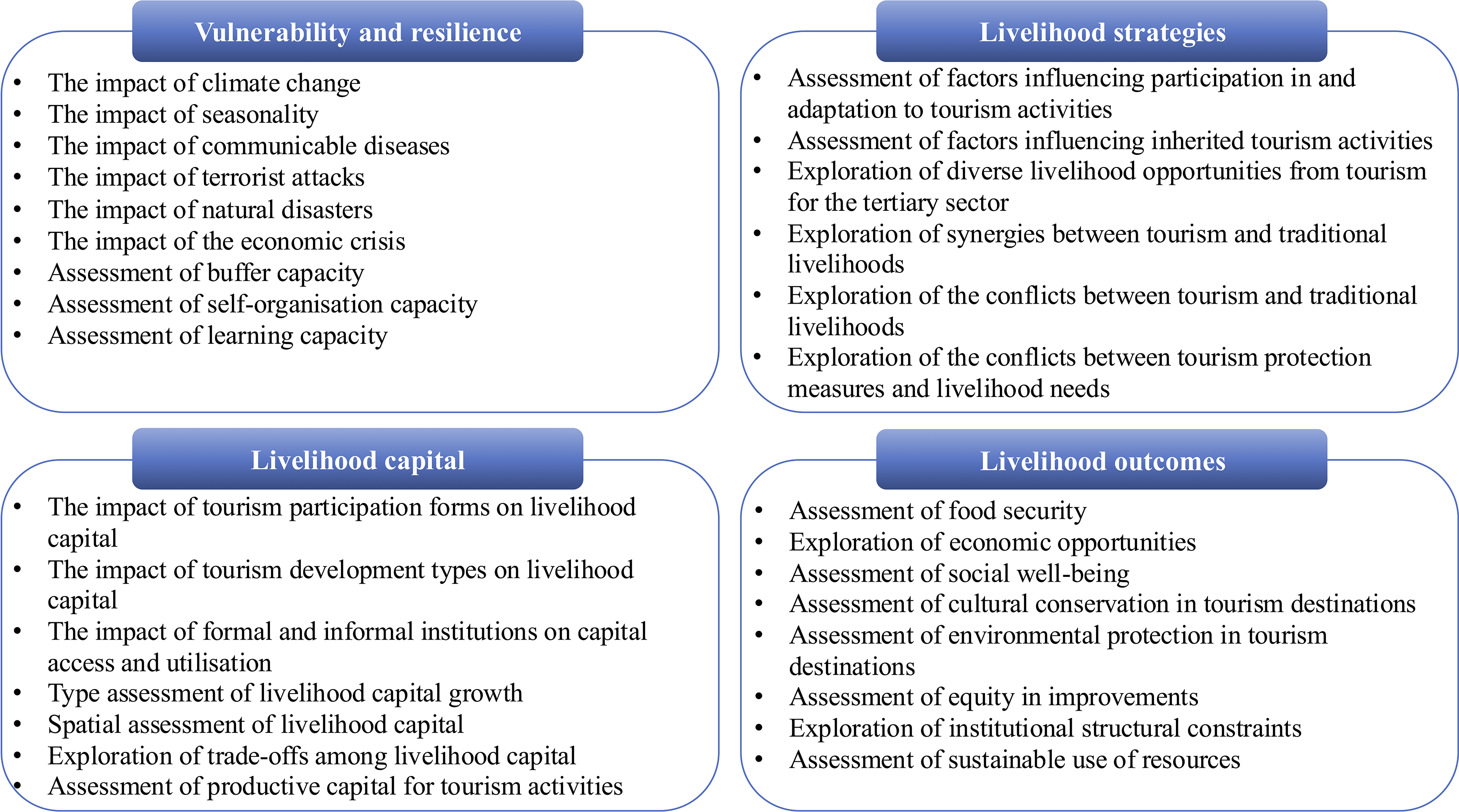
Tourism livelihoods in response to risks: Vulnerability and resilience
The concepts of vulnerability and resilience have received nearly equal attention across different types of articles. Resilience is not simply the antonym of vulnerability; rather, the two concepts are closely interconnected and potentially complementary (Miller et al., 2010), both relating to how tourism livelihoods confront risks. In current tourism livelihood research, vulnerability encompasses two important aspects. The first aspect concerns the vulnerable contexts to which people’s tourism livelihoods are exposed, which is widely accepted (Qian et al., 2017; Shen et al., 2008). Some research suggests that vulnerability also includes an intrinsic system attribute, the likelihood of harm or damage under risks, which is typically associated with an inability to respond effectively (Cui, 2018). Resilience complements vulnerability in terms of improving the capacity in response to risks. Livelihood resilience emphasises human agency and the capacity of livelihood systems to recover and regenerate under risks (Chen et al., 2020).
In existing tourism research on vulnerability, the SL framework serves as a key tool to help researchers identify the resources of risks and examine the tourism system’s susceptibility to risk (Yang et al., 2023). Some research has indicated that, similar to traditional agricultural livelihoods, tourism is susceptible to climate change trends and seasonality (Little and Blau, 2020; Su et al., 2022). However, the underlying causes are different: the main reason for tourism vulnerability is its reliance on visitor experiences and the perishability of its products, while agriculture’s susceptibility arises from the growth environment (Little and Blau, 2020). Some researchers have further investigated livelihood systems’ susceptibility to seasonality, noting outcomes such as rising unemployment and rapid declines in economic capital, particularly for those without formal jobs and savings (Su et al., 2022). Furthermore, tourism is vulnerable to shocks, which are usually large, unpredictable disturbances such as communicable diseases, terrorist attacks, natural disasters, and economic crises (Dahles and Susilowati, 2015; Qian et al., 2017; Towner and Davies, 2019). These shocks may also relate to tourism’s own characteristics, such as its heavy reliance on population mobility, destination image, and discretionary, non-essential consumption.
The development of the livelihood resilience concept offers insights into how livelihood systems adapt to uncertainty and evolve in response to risks highlighted by vulnerability (Speranza et al., 2014). It emphasises that humans are not always passive victims of disruptions, but can actively absorb external shocks, recover, and potentially transform themselves to adapt to new environments (Grove, 2014). Although the relationship between sustainability and resilience remains contested in the academic literature (Marchese et al., 2018), resilience is usually regarded as an intrinsic component of the SL concept (DFID, 1999; Speranza et al., 2014). When the concept of SL was initially proposed, Chambers and Conway (1992, p.6) emphasised that livelihood systems should “cope with and recover from stresses and shocks, maintain or enhance its capabilities and assets”. SL systems exhibit the characteristics of resilience: rebounding from shocks and pressures and preserving functionality in the face of threat (Speranza et al., 2014).
The concept of livelihood resilience has only garnered attention in tourism research in recent years, particularly since the 2020s. Research on resilience is regarded as an important tool to improve risk responses. The exploration of the dimensions of livelihood resilience is a central focus of existing tourism studies. Self-organisation capacity is an essential dimension of resilience, highlighting human agency, social connections, and collective action in responding to vulnerability (Chen et al., 2020). Buffer capacity is a significant dimension that absorbs the impacts of disturbances and leverages the dynamic use of livelihood capital, including capital exchange and allocation (Dahles and Susilowati, 2015; Liu-Lastres et al., 2020; Wei et al., 2023). Furthermore, learning capacity is crucial, as people acquire and apply their knowledge, skills, and experience to adjust to evolving environments (Wei et al., 2023). Livelihood resilience has often been analysed separately rather than integrated into a holistic SL framework, even though it is inherently included in the SL concept.
Tools for growing livelihood capital: Enhancement and expenditure
Examining tourism impacts on various types of livelihood capital is a central focus of livelihood-capital analyses. Most studies compare households with different forms of tourism engagement—tourism-specialised, part-time tourism, and non-tourism households—or span communities representing diverse tourism development models (Qian et al., 2017; Xi and Zhang, 2016). However, few studies examine how tourism transforms livelihood capital for specific groups, such as women, entrepreneurs, and small shop owners—while others investigate how formal and informal institutions affect capital access and use (Liu et al., 2017; Wu et al., 2022).
The evaluation of livelihood capital received great attention in Chinese-language articles (76.3%), which typically focus on the practical effects of policies. The strategies formulated by the Chinese national government, such as ‘rural revitalisation', ‘common prosperity', and ‘targeted poverty alleviation' are aimed at supporting tourism development in impoverished areas, especially rural areas (Yang et al., 2023). These strategies align closely with the SL approach to boost the growth of livelihood capital.
In the analysis of capital-type growth, economic capital has exhibited the greatest attention in the literature. Numerous studies indicate that participation in tourism yields higher economic returns than traditional activities such as agriculture and animal husbandry (Lasso and Dahles, 2018; Mbaiwa, 2011). Improvements in human and social capital have also garnered significant attention, as people acquire tourism-related skills such as language proficiency, marketing competencies, and service expertise (Liu et al., 2022), while youth increasingly engage locally in tourism rather than migrating to urban labour markets (Little and Blau, 2020; Su et al., 2016a). Moreover, studies have emphasised the positive impact of tourism livelihoods on cultural capital, particularly by enhancing cultural cognition and utilisation. For example, guided tours and cultural exhibitions deepen residents’ understanding of traditional architecture, festival rituals, and folk art, and enable them to integrate handcraft skills (e.g., winemaking and woodcarving) into the tourist experience (Ma et al., 2021; Wang et al., 2021). In the spatial analysis of capital, research focuses on agglomeration and spillover effects. Some research indicates that livelihood capital in core zones and along tourism corridors typically exceeds that in peripheral areas (Xi and Zhang, 2016), and tourism investment gains spill over into neighbouring regions, enhancing infrastructure and financial services (Liu et al., 2023).
Tourism does not invariably serve as a positive catalyst for the enhancement of livelihood capital. Occasionally, it entails associated expenditure. Trade-off costs are a primary expenditure concern in existing studies, since capital invested in enhancing tourism livelihoods could diminish another form of capital. Although households engaged in tourism frequently upgrade their housing conditions and acquire consumer durables to accommodate guests, these improvements in physical capital often erode their financial capital (He and Sun, 2016). Households that relied on tourism activities appeared to bear the highest level of debt (Li and Kuang, 2019). Similarly, trade-offs between natural and physical capital often arise, as the development of tourism infrastructure often involves converting agricultural land (Su et al., 2016a). Moreover, the excessive pursuit of commercial interests can undermine cultural capital. Ma et al. (2021) found that many residents made unauthorised modifications to heritage buildings, such as adding doors and windows, to create space for additional stalls selling tourism products.
Moreover, expenditure on productive capital for engaging or improving tourism livelihoods has received considerable attention. Although the SL approach emphasises expanding livelihood capital, several studies have questioned the assumption that people must amass sufficient capital before engaging in or expanding tourism activities. Existing studies have unanimously recognised the positive roles of financial, human, physical, and social capital, encompassing both family-owned capital (e.g., housing quality) and community-level capital (e.g., availability of transport infrastructure) (Liu et al., 2022). Although political capital may not be an indispensable element for engaging in tourism, it is considered to broaden livelihood options based on tourism (Wang et al., 2016). Likewise, while debates surround the positive role of natural and cultural resources, they play a crucial role when viewed as tourism capital. Otherwise, capital may have no direct impact on tourism or perhaps a negative one (Yang et al., 2018). For example, families with rich farmland tended to choose agricultural activities over tourism (Huang et al., 2021).
The introduction of tourism activities: Integration and conflicts
The SL approach offers a holistic framework for tourism research by examining its connections with other livelihood activities rather than treating tourism in isolation. The element of livelihood activities garnered the highest attention in the second type of articles (44.2%). In numerous communities, tourism represents a relatively recent livelihood activity compared to the traditional livelihoods, such as agriculture and fishing, which have existed for over a thousand years. Exploring livelihood change and adaptation is one of the important themes of tourism livelihood integration. Most studies examine first-generation tourism practitioners, analysing how policy support, livelihood capital stocks, and community participation shape their decision to transition into tourism activities (Liu et al., 2022). A smaller body of literature focuses on second-generation tourism practitioners, examining how familial culture and place attachment facilitate the inheritance and transformation of tourism livelihoods (Huang et al., 2023).
Tourism usually offers more diverse livelihood opportunities, and its synergy with traditional livelihoods constitutes a key theme of integration. Tourism creates more employment opportunities in tertiary industries, such as souvenir and handicraft shops, restaurants, and homestays (e.g., Chen et al., 2017; Liu et al., 2022). Tourism development can also entice people to return to rural areas to engage in entrepreneurship, triggering a series of changes in new technology marketing and organisational systems to promote the transformation of tourism livelihoods (Wu et al., 2022). Tourism activities present opportunities for promoting synergies between tourism and traditional activities, thereby bolstering livelihood diversity. For example, the rise of rural tourism promotes tourist participation in fruit picking, a practice that reduces labour costs in traditional fruit industries and frees up savings for reinvestment (Lee, 2008). Some studies suggest that people cyclically shift between tourism and traditional livelihoods in line with seasonal peaks to mitigate risks and prompt income stability (Wei et al., 2023).
Tourism and traditional livelihood activities are not always harmoniously integrated and may come into conflict—a theme that has attracted considerable attention in literature. Competition over the allocation of capital has been identified as a primary reason. The expansion of tourism has promoted agricultural land acquisition and the privatisation of public beaches, posing risks to the livelihood activities of farmers and fishermen (Burbano and Meredith, 2021; Su et al., 2016b; Westoby et al., 2021). Another critical factor is the excessive pursuit of economic benefits. Due to the high economic profits generated by tourism, many residents have reduced the time spent or are no longer engaged in traditional industries (Lasso and Dahles, 2018). The habits of animals are also an important reason. Although people could self-regulate how long they engaged in different livelihood activities, certain non-negotiable time demands (e.g., mare milking time) still make it difficult to diversify their livelihoods (Rongna and Sun, 2020).
Furthermore, there is a conflict between conservation and local livelihood needs. While tourism can broaden livelihood opportunities, its development often requires the designation of protected areas. This conflict is exacerbated when an excessive focus on conservation undermines local priorities and traditional conservation practices. Moreover, the conflicts manifest between conservation imperatives and local livelihood needs. Although tourism can broaden livelihood opportunities, its development often entails the designation of protected areas. Conflicts are exacerbated when there is excessive focus on conservation and a neglect of local priorities and traditional practices (Liu et al., 2022; Melubo and Lovelock, 2019). Regarding natural conservation, traditional approaches in developing countries such as Kenya may lean towards coexistence and mutual prosperity with nature (Melubo and Lovelock, 2019). If the biodiversity protected areas are established for sustainable development, people’s access to water and land would be impeded (Stone and Nyaupane, 2016). Similarly, in catering to tourists’ desire for idyllic depictions of ancient pastoral life, tourism developers often prioritise the preservation of original construction materials to achieve cultural conservation (Liu et al., 2022). However, regulatory conservation efforts might limit opportunities to renovate residential buildings and improve livelihoods (Ma et al., 2021).
The livelihood outcomes of tourism: Improvements and limitations
The impacts of tourism on livelihood outcomes have garnered attention in various articles, particularly those categorised as type 3 (56.3%). The SL approach is concerned with the security of livelihoods and the dignity of life from the people’s perspective, emphasising the individual, family and community levels (Tao and Wall, 2009a).
Tourism activities provide people with the opportunity to improve their livelihood outcomes, especially concerning basic needs such as food security, economic opportunities, and social wellbeing. The development of tourism – especially agritourism – could prompt the conversion of pastures to forests and permaculture, thereby diversifying agriculture and improving food stability (Little and Blau, 2020). Food production could be increased further since people use the earnings from tourism to purchase modern agricultural equipment (Degarege and Lovelock, 2021). The economic aspects primarily include enhancements in income, job opportunities, and business prospects (Liu, 2020; Wu et al., 2022). The enhancement of social well-being is reflected in both material (e.g., funeral assistance, pensions, insurance, and medical treatment) and non-material (e.g., happiness and travel chances) aspects (Leu et al., 2018; Qian et al., 2017).
In addition to benefiting people, tourism can also improve the culture and environment of destinations. Tourism development supports the inheritance of traditional handicrafts and enhances cultural identity (Gao and Wu, 2017). Environmental protection courses, developed by tourism entrepreneurs in collaboration with local livelihood initiatives, provide skills training for adults and educational support for local primary and secondary schools (Wu et al., 2022). These training courses have been implemented in various regions across China, demonstrating that the influence of tourism livelihoods can extend beyond the community level (Wu et al., 2022).
While there have been improvements in livelihood outcomes, many studies focus on the limitations that persist in their progression. Three areas of concern are the focus of existing studies. The first concerns inequality, with economic disparities constituting a central focus of existing studies, especially regarding the uneven distribution of benefits. These inequalities may stem from livelihood actors’ spatial location, social status, disparities in opportunities to participate in tourism management, and inequitable benefit-distribution mechanisms (Liu et al., 2022; Praptiwi et al., 2021; Qian et al., 2017). Inequality is also reflected in economic leakage, as external resort owners capture the majority of tourist spending, leaving small-scale household operators with minimal profits (Sinha et al., 2012). The second concerns institutional structural constraints, such as intensified competition arising from constrained trading space provided by government, which restricts residents who want to participate in tourism (Lasso and Dahles, 2018). Third, the unsustainable use of resources presents a significant challenge, exemplified by the tragedy of the commons in which shared natural resources are overexploited as individuals pursue personal gain. For instance, herders reinvesting their tourism-generated income in acquiring additional livestock can lead to overgrazing, thereby threatening grasslands and households primarily dependent on livestock activities (Suntikul and Dorji, 2016).
Discussions and implications
Theoretical implications
Based on the findings, this study delineates the four main challenges encountered by different types of articles, as presented in the inner layers (Figure 6). Potential solutions to address challenges and improve the application of theoretical frameworks have been proposed in the grey middle layer. The outer layer shows future research opportunities to enhance SL research in tourism contexts. Challenges and potential solutions for achieving sustainable tourism livelihoods.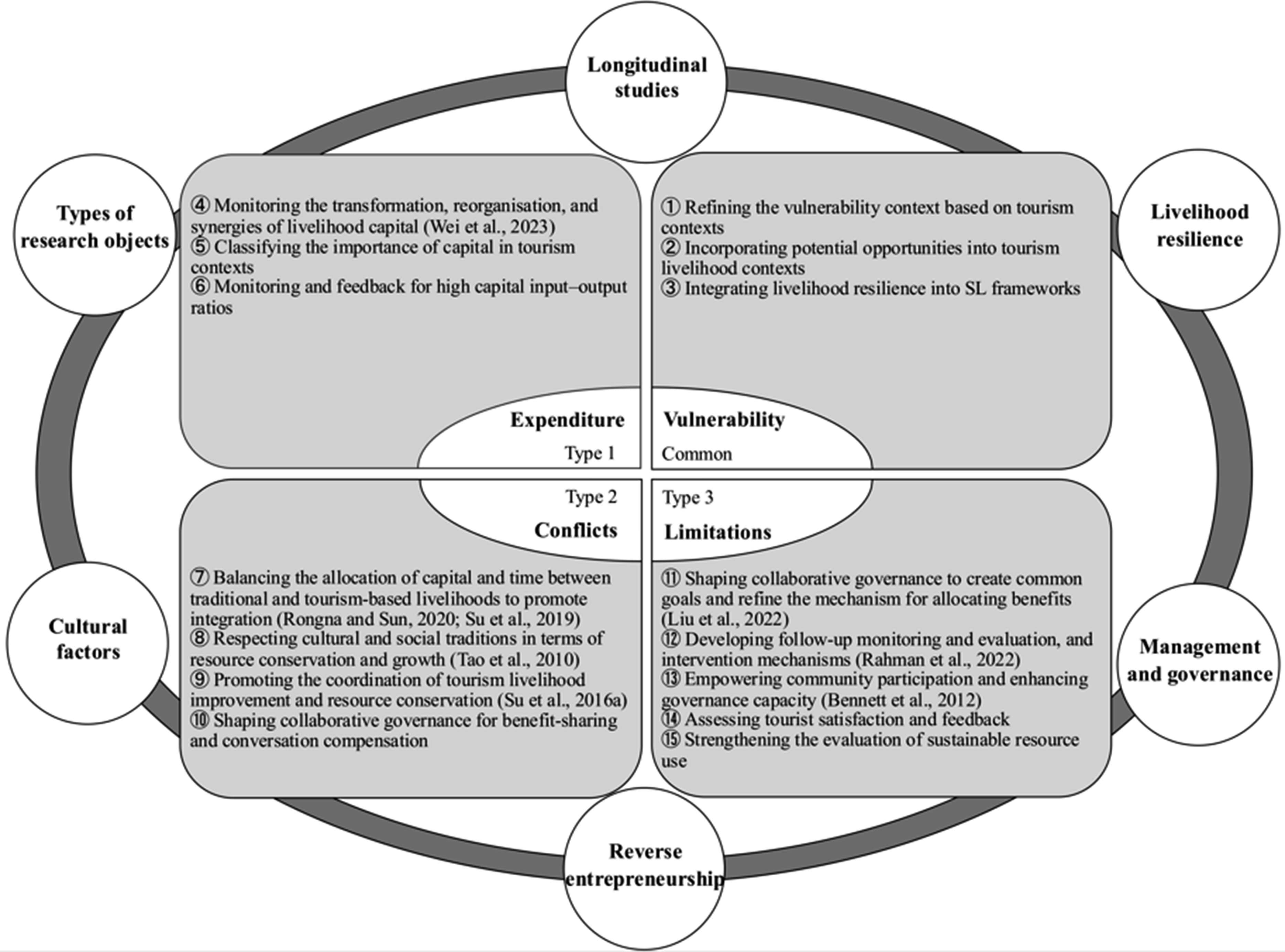
Challenges and potential solutions for achieving sustainable tourism livelihoods
As shown in Figure 6, the common challenges identified in three types of articles primarily revolve around vulnerability. Existing studies typically frame tourism livelihoods within vulnerability contexts, including seasonality, trends, and shocks (Qian et al., 2017). However, such a tripartite categorisation may oversimplify their unique attributes and overlook potential opportunities. Therefore, it is necessary to rethink the contexts of tourism livelihoods to account for both risks and the opportunities inherent in the sector’s distinctive characteristics. Furthermore, vulnerability is also depicted as an intrinsic system attribute, manifested through sensitivity to risk (Cui, 2018). Accordingly, integrating resilience into the SL framework is essential for strengthening tourism livelihoods’ capacity to respond to risks.
The focus on challenges in expenditure becomes more pronounced when comparing different categories of articles. Type 1 articles primarily concentrate on rural areas, where challenges were mainly manifested in the expenditure related to the introduction of tourism. The primary expenditure arises from the trade-offs between different types of capital. Mitigating the adverse effects of trade-offs requires not only monitoring changes in individual capital stocks but also dynamically tracking the interrelationships between types of livelihood capital (e.g., their conversion, transformation, and synergies) to optimise overall outcomes (Su et al., 2019; Wei et al., 2023). Moreover, expenditure targets the productive capital that underpins tourism livelihoods. Since capital forms vary in their capacity to support participation and improvements, classifying them by relevance and strategic fit is essential. Moreover, monitoring capital input–output ratios is crucial for adjusting capital allocation.
Type 2 articles present reflections on the conflicts, considering the introduction of tourism to existing livelihoods. Conflicts between tourism and other traditional livelihood activities often occur; it is necessary to balance livelihood capital and time allocations to effectively integrate tourism into local livelihood systems. This body of literature also reveals conflicts between tourism activities associated with the establishment of protected areas and local livelihood needs. Therefore, the cultural traditions behind livelihood practices should be further integrated into frameworks to coordinate and improve tourism livelihoods (Tao et al., 2010). Strengthening collaborative governance is essential to facilitate equitable benefit-sharing and compensate residents for conservation-induced livelihood losses.
Type 3 articles mainly centre on limitations of livelihood improvements, highlighting disparities, structural barriers, and unsustainable resource use. In response to these concerns, such as the escalating income disparity among households or communities, it is important to establish collective objectives and refine the mechanism for allocating benefits (Liu et al., 2022; Su et al., 2016). This is imperative for conducting dynamic assessments and furnishing prompt feedback to effectively resolve extant issues (Rahman et al., 2022). Potential solutions involve strategies and tactics to empower the community and bolster its governance capabilities (Bennett et al., 2012). Furthermore, as tourism depends on tourists’ perceptions and experiences, evaluating the sustainability of resource utilisation and assessing tourist satisfaction and feedback are crucial for refining strategies.
The advancement of the theoretical framework
The main theoretical implication of this study is the development of a new framework to address the theoretical limitations and practical operational barriers of the SL approach identified in this review. The proposed framework is based on the six livelihood elements and the six opportunities outlined in this review. The 15 suggested responses to the challenges identified in this study (Figure 6) are further integrated into a conceptual framework (Figure 7) to improve the applications of the SL approach in tourism settings. Resilience-enhanced sustainable livelihoods framework for tourism contexts.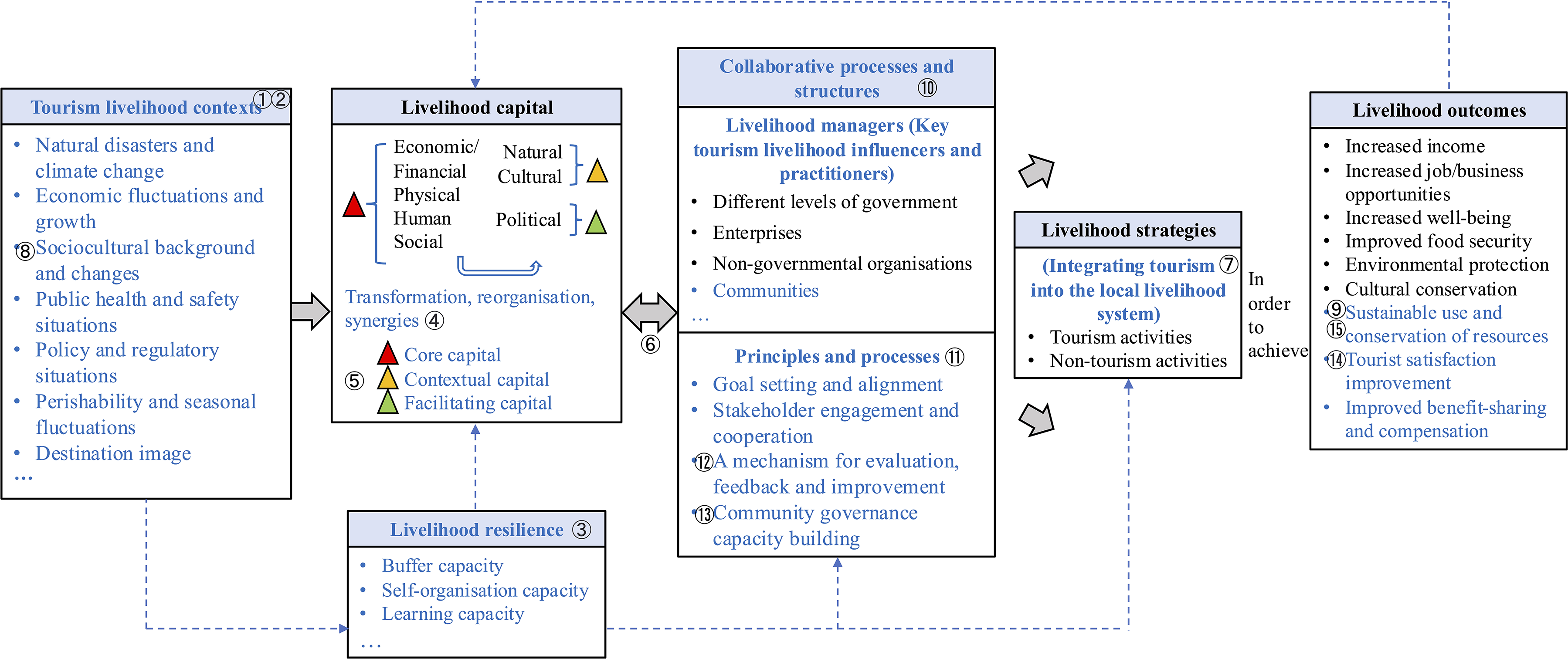
This framework offers five distinct advantages when compared to existing frameworks. Firstly, this framework reclassifies livelihood context elements according to the inherent characteristics of tourism activities. These contextual elements include external factors such as economic fluctuation and growth, natural disasters, and climate change, which often lie beyond the direct control of individual destination communities or managers. Contexts also involve internal factors, including perishable products, seasonal fluctuations, and sociocultural backgrounds that are inherent to the nature of tourism activities and destination characteristics. Moreover, this framework involves the rephrasing of ‘vulnerability' used in extant literature as ‘tourism livelihood contexts'to neutralise the original negative framing.
Secondly, this framework provides a categorical reference for assessing the productivity of livelihood capital in promoting tourism, by drawing on existing literature. The first category includes the core types of capital required to engage in tourism: economic, physical, human, and social capital (Su et al., 2022). The second category is contextual, relying on local tourism-specific capital—such as cultural and natural capital (Leu et al., 2018; Ma et al., 2021). The third category encompasses capital that broadens residents’ options for tourism livelihood strategies (e.g., political capital) (Wang et al., 2016). The classifications are flexible and rely on livelihood managers’ assessments.
Moreover, this framework incorporates collaborative governance and underscores the community’s governance capabilities throughout the process. Compared with traditional livelihoods, tourism typically involves a greater diversity of stakeholders, such as multilevel government agencies, enterprises, non-governmental organisations, and community residents. This framework integrates and highlights interaction and cooperation, the mechanism for dynamic evaluation, feedback systems, and ways to cultivate community governance capabilities as proposed in different papers (e.g., Bennett et al., 2012; Rahman et al., 2022; Su et al., 2019). Livelihood practitioners (or residents) are not merely passive recipients of regulation and management but can actively participate in managing their livelihoods (Liu et al., 2022).
Fourth, livelihood outcomes incorporate equity and tourist feedback. The livelihood outcomes encompass not only improvements but also equity, including enhanced benefit-sharing and compensation for residents whose livelihoods are harmed by tourism development. Additionally, by recognising the heterogeneity of tourism products and their dependence on tourists’ perceptions and experiences, the framework integrates sustainable resource use and enhanced tourists’ satisfaction into livelihood outcomes, thereby enabling more effective strategy adjustment. The framework also emphasises that tourism strategies should be integrated into local livelihood systems, promoting the diversification of activities.
Furthermore, this framework strengthens livelihood systems’ capacity to manage risks dynamically, thereby complementing traditional livelihoods approaches that emphasise the identification of vulnerability factors but often neglect risk management processes. Integrating livelihood resilience as a significant element into the SL framework enhances systems’ absorptive, adaptive, and transformative capabilities in the face of risk. The framework underscores that humans are not merely vulnerable but actively adapt to risks and seize opportunities in evolving tourism contexts, thereby contributing to long-term livelihoods and advancing sustainability. Additionally, livelihood resilience is closely linked with other livelihood elements: it builds buffers through dynamic use of livelihood capital, fosters self-organisation livelihood management, facilitates continuous learning, and enables strategic adjustments (Chen et al., 2020; Wei et al., 2023).
Future research opportunities
Forty-eight specific research questions (see Appendix B) and six key future areas were identified based on this review analysis and future research directions proposed in existing studies. The first area advocates for the involvement of a broader array of livelihood stakeholders as research objects. The existing studies primarily focus on first-generation tourism residents, with some focusing on government, enterprises, and non-governmental stakeholders. However, exploring the livelihoods of young people, including second-generation tourism residents, represents an additional area of research interest. This encompasses an investigation of their livelihood preferences, expectations, and attitudes towards engagement in tourism (Huang et al., 2023; Wu and Pearce, 2014). Furthermore, there is limited examination of livelihoods from a tourist standpoint. Indeed, the motivations and experiences of tourists have impacts on the tourism market and are subsequently expected to influence the livelihoods of residents (Rao et al., 2024; Su et al., 2016a).
The second area concerns cultural factors. In the existing literature, cultural factors are primarily conceptualised as components of livelihood capital, with their deployment in tourism contexts emphasised primarily through commercialisation to generate livelihood opportunities or enhanced protection to sustain tourism-based livelihoods (Ma et al., 2021). Culture is not merely a form of capital; it also shapes livelihood preferences and imbues practices with meaning. Therefore, it is necessary to explore how cultural values and religious beliefs influence people’s choices and practices in their livelihood activities (Ma et al., 2021; Wang et al., 2021), as well as their responses and recovery from the crisis (Liu-Lastres et al., 2020). In contexts like China, culture is greatly influenced by traditional schools of philosophical and religious thought such as Confucianism, Taoism, and Buddhism. Thus, investigating the impact of traditional culture, such as yin-yang and respect for authority on daily practices is vital for future research. Moreover, considering the conflict between livelihood improvements and heritage protection, what kind of heritage protection is beneficial to livelihoods needs further exploration (Srijuntrapun et al., 2018). Current research primarily centres on a specific country without incorporating cross-national or cross-cultural comparisons, leaving room for future investigations in these areas.
Thirdly, livelihood resilience remains an emerging topic and merits inclusion as a distinct livelihood element in future research, given that only seven articles addressing it were identified in the review. The current development of livelihood resilience primarily relies on capabilities, with the contributions of other livelihood factors (e.g., activities) remaining unclear. Moreover, existing research tends to be qualitative and descriptive. Therefore, future studies could endeavour to develop assessment indicators for measuring the livelihood resilience of tourism destinations. Quantitative measures of livelihood resilience can aid in detecting its relationships with vulnerability and livelihood outcomes. While some scholars have assumed that various shocks occurring at different scales and speeds may result in differences in building livelihood resilience, this assumption has not been fully tested (Chen et al., 2020). Additionally, livelihood resilience may exert distinct influences on different aspects of livelihood outcomes, such as well-being and economy (Prado et al., 2015).
Fourthly, reverse entrepreneurship is a newer research field that focuses on promoting social change and generating positive impacts through entrepreneurship, thereby offering new opportunities for SL. Scholars have advocated for a focus on how community businesses can help reduce poverty and empower residents (Lapeyre, 2010). Therefore, it is imperative to explore how to effectively utilise and integrate livelihood elements to enhance entrepreneurship and foster development (Laeis and Lemke, 2016). Some scholars suggest the need for an indicator system to be developed to measure and compare outcomes across different pathways of tourism entrepreneurship for sustainable development (Wu et al., 2022).
The fifth direction revolves around management and governance. In many developing countries such as China, tourism management is often externally dominated. Therefore, it is essential to explore the influences of leadership and tourism development planning on people’s livelihoods (Su et al., 2016). More specifically, future research can investigate the coordination of planning and management across various levels of government and how these factors influence livelihoods (Su et al., 2018). An additional crucial aspect is exploring the local perception of tourism management by government-directed companies (Qian et al., 2017).
The sixth area concerns longitudinal studies. Currently, most research in this field is carried out using cross-sectional studies. In fact, people’s livelihoods are not static; rather, they are susceptible to the influence of off-peak seasons and unexpected shocks (Su et al., 2022). Thus, many studies advocate the necessity of collecting data at multiple points in time to conduct dynamic observations on people’s livelihoods (Liu et al., 2022; Xu et al., 2022), and explore strategies for managing risk across time. This approach helps overcome limitations associated with research that relies on after-the-fact reports. The creation of a dynamic assessment database for sustainable tourism livelihoods, systematically unveiling the long-term evolution of these livelihoods and their driving mechanisms, will be a pivotal focus for future research (Li et al., 2020; Wei et al., 2023).
Practical implications
This study provides practical implications by offering valuable insights to tourism livelihood stakeholders. Firstly, this study underscores the significance of improving collaborative management. The review has indicated that conflicts often arise among stakeholders, especially regarding resource utilisation and conservation. Thus, establishing a cross-stakeholder organisation - comprising government, industry, and community representatives - is essential for inclusive destination planning and management. Divergences can be anticipated, and compensation or benefit-sharing schemes collaboratively devised to improve decision-making transparency and strengthen community governance. To safeguard residents’ interests in collaborative processes, community members should be empowered with the right to participate in monitoring and evaluation. Additionally, by integrating resources and leveraging complementary advantages, such as funding and technology, tourism products can be meaningfully enhanced.
Secondly, the study incorporates tourist feedback into the tourism livelihood system to strengthen continuous feedback loops and iterative mechanisms. By collecting tourists’ feedback and complaints, communities and households can accurately identify the most valued aspects, such as lodging comfort and meal flavour, and then adjust experiential offerings and service procedures accordingly. Such adjustments may increase income by encouraging tourists to recommend the destination and make repeat visits. Furthermore, managers can prioritise the allocation of public funding or tourism revenues to address identified shortcomings, such as inaccessible facilities, to improve resource utilisation efficiency, thereby establishing a continuous feedback loop.
Thirdly, this study classifies tourism-based livelihood contexts and integrates resilience into the SL framework, offering implications for tourism practitioners to develop crisis-management strategies. For example, communities and households can build economic buffers through savings schemes or insurance programmes to respond to external shocks such as natural disasters and economic crises. Community organisations could also facilitate workshops in which participants exchange crisis response experiences to enhance learning capacity and bolster livelihood resilience.
Furthermore, this study highlights the importance of enhancing tailored guidance. The review demonstrates that many residents lack the knowledge to manage livelihood capital for tourism participation. Due to variations in individual or household needs and circumstances, one-on-one guidance is essential, for instance, through introducing successful local entrepreneurs and seasoned industry experts as mentors. Establish mentor–mentee support relationships and provide targeted guidance so that livelihood initiatives, such as farm-picking activities, can be tailored to household resource endowments, facilitating tourism participation and ensuring feasibility. The guidance can also aid those already engaged in tourism by helping them address specific challenges and expand their professional networks and collaborative opportunities.
Conclusions and limitations
Through a rigorous hybrid literature review process, this study investigates the framing and operationalisation of SL in tourism contexts. The review finds that Chinese-language articles (type 1) are still in the preliminary stage of research, commonly relying on the same initial framework, focusing on resource growth and the potential expenditure associated with the introduction of tourism activities. In contrast, English-language articles conveyed more reflective insights and adopted more diverse frameworks for local tourism situations, although they showed different concerns regarding the implementation of SL. The articles based on China (type 2) are concerned more with the integration of tourism into existing livelihoods and the colonisation of the SL approach in indigenous communities. However, research conducted outside China (type 3) concentrated on the breadth (dimensions) and depth (qualities) of livelihood improvements. Therefore, future Chinese-language research could draw on English-language articles to explore the adaptability of SL and examine the multifaceted dimensions and quality of livelihoods. Additionally, six key research areas are presented for future research purposes.
Potential solutions for addressing challenges associated with the operationalisation of SL across various types of articles have been suggested. Those solutions have been further integrated into the new framework developed to promote the application of the SL approach in tourism contexts. The review and proposed framework are especially valuable to communities or households striving to achieve SL via tourism strategies. However, the limitations of this review need to be acknowledged. To procure peer-reviewed articles during the screening phase, this review included English articles published in journals with a Q1 ranking in Scopus and recognised by ERA. Chinese articles were selected for review from journals endorsed by GCJC and CSSCI. Thus, some relevant articles, books, and grey literature may be excluded. Future research could endeavour to refine the screening approach to encompass a broader spectrum of literature for a more thorough examination. Furthermore, this review draws exclusively on literature published in Chinese and English. Future research could broaden its scope to include studies in additional languages (e.g., Spanish, French) to capture more diverse perspectives and deepen our understanding of SL in tourism contexts.
Supplemental Material
Supplemental Material - Progress in tourism research on sustainable livelihoods: A broader perspective
Supplemental Material for Progress in tourism research on sustainable livelihoods: A broader perspective by Yalu Liu, Karine Dupre, Ying Wang, Xin Jin in Tourism and Hospitality Research
Footnotes
Acknowledgements
The authors would like to thank Griffith Institute for Tourism (GIFT) for supporting the development of the paper.

Ethical considerations
This article does not contain any studies with human or animal participants.
Funding
The authors received no financial support for the research, authorship, and/or publication of this article.
Declaration of conflicting interests
The authors declared no potential conflicts of interest with respect to the research, authorship, and/or publication of this article.
Supplemental Material
Supplemental material for this article is available online.
Author biographies
References
Supplementary Material
Please find the following supplemental material available below.
For Open Access articles published under a Creative Commons License, all supplemental material carries the same license as the article it is associated with.
For non-Open Access articles published, all supplemental material carries a non-exclusive license, and permission requests for re-use of supplemental material or any part of supplemental material shall be sent directly to the copyright owner as specified in the copyright notice associated with the article.
