



Abstract
COVID-19 pandemic has greatly impacted travel and hospitality industry. As hotels began to reopen after the initial lockdowns, many implemented new standards to reduce health risks. At the same time, travel recommender sites and accommodation booking websites introduced sustainability labelling and health and safety badges to help travellers book safe and sustainable accommodation options. This study investigates a 2,655 online hotel reviews from Costa del Sol region of Spain, collected between February 2020 and March 2021 to capture the full impact of the pandemic’s first year on tourism sector. Using a deep learning-based sentiment analysis combined with ANOVA, the study examines gest perceptions of hotels’ health and sustainability standards and explores their relationship with overall review scores. Additionally, the content of the reviews is analysed to identify emerging themes and associated sentiments. The findings indicate that although guests rarely mentioned health measures explicitly, these practices had a measurable impact on review scores. While the analysis of sustainability-related sentiments remains exploratory, preliminary results suggest that higher-category hotels (i.e., 4- or 5-star) are more likely to communicate a broader range of implemented sustainability, health, and safety practices. More research is needed to understand the evolving sentiment towards health and sustainability issues amongst hotel guests across various segments of travel and hospitality industry as wells as across cultures.
Keywords
Introduction
To cope with the related risks during the pandemic, Booking.com and TripAdvisor (two of the world’s most popular travel recommender sites (Perez-Aranda et al., 2021)) proactively incorporated labelling of accommodations’ health and safety practices to communicate to the public measures implemented by accommodations to ensure safe travel for all (Booking.com, 2020). Moreover, TripAdvisor has collaborated with the United Nations on sustainability recognition since 2013 (UNEP, 2013). However, Booking.com launched its “travel sustainable” program only after the COVID-19 pandemic (Booking Global News, 2021).
On TripAdvisor and Booking.com, labels or badges for sustainable practices and health and safety practices indicated the levels of achievement an accommodation has reached in these categories (e.g., availability of noncarbon mobility and personal distance practices, respectively) based on recommender system standards. Ensuring excellent service quality and customer satisfaction (SQCS) is another top priority in the hospitality industry (Shyju et al., 2023). Numerous factors influence customer satisfaction, with many accommodation attributes playing a role (Gasbarro and Bonera, 2021). Sentiment analysis has become a widely adopted method in contemporary research for examining consumer reviews across various industries, including the beverage alcohol industry (Hartman et al., 2025), energy-efficient products (Na et al., 2024), and technology (Ray and Singh, 2025). Existing literature of sentiment analysis of hotel experiences primarily focuses on market intelligence (Mehraliyev et al., 2022), encompassing subtopics such as consumer feelings and emotions (D’Acunto et al., 2020; Lee et al., 2020; Orea-Giner et al., 2022; Serrano et al., 2021), shifts in customer attitudes and changes related to satisfaction (Barbierato et al., 2022; Chen et al., 2021; Kirilenko and Stepchenkova, 2017).
Despite the importance of online comments and reviews for tourism industry (Li et al., 2025), existing literature on sentiment analysis of hotels insufficiently addresses the impact of health-related or sustainable practices on consumer emotions. As travelers become increasingly conscious of environmental (Trabandt et al., 2024) and health issues (Bonfanti et al., 2021), their expectations for hotel practices have evolved (Gheibdoust et al., 2024). At the same time, customer-oriented organisations are demonstrating increasing interest in the communication and implementation of the highest standards of sustainability practices within the hotel industry (Booking.com, 2024). Addressing this gap is essential to better understand the role of these practices in shaping travellers’ experience and satisfaction. Travel recommender sites (a.k.a electronic word-of-mouth or eWOM platforms) provide an opportunity for such analysis (Filieri et al., 2021; Gerdt et al., 2019; Hadisumarto, 2021).
Health and safety labels have rarely been investigated thus far, despite their potential contribution to knowledge (Sigala, 2020). The few existing studies on health and safety practices and eWOM have focused on responses to a survey (Hadisumarto, 2021) rather than examining actual reviews. There is a lack of studies that examine sustainability and health and safety labels on travel recommender platforms, their contribution to customer satisfaction, and how sustainability, health and safety are manifested in travellers’ reviews. If accommodations are not informed about the competitive advantages of implementing best practices in sustainability and health and safety communication (e.g., their contribution to customer satisfaction), they may be less likely to adopt them.
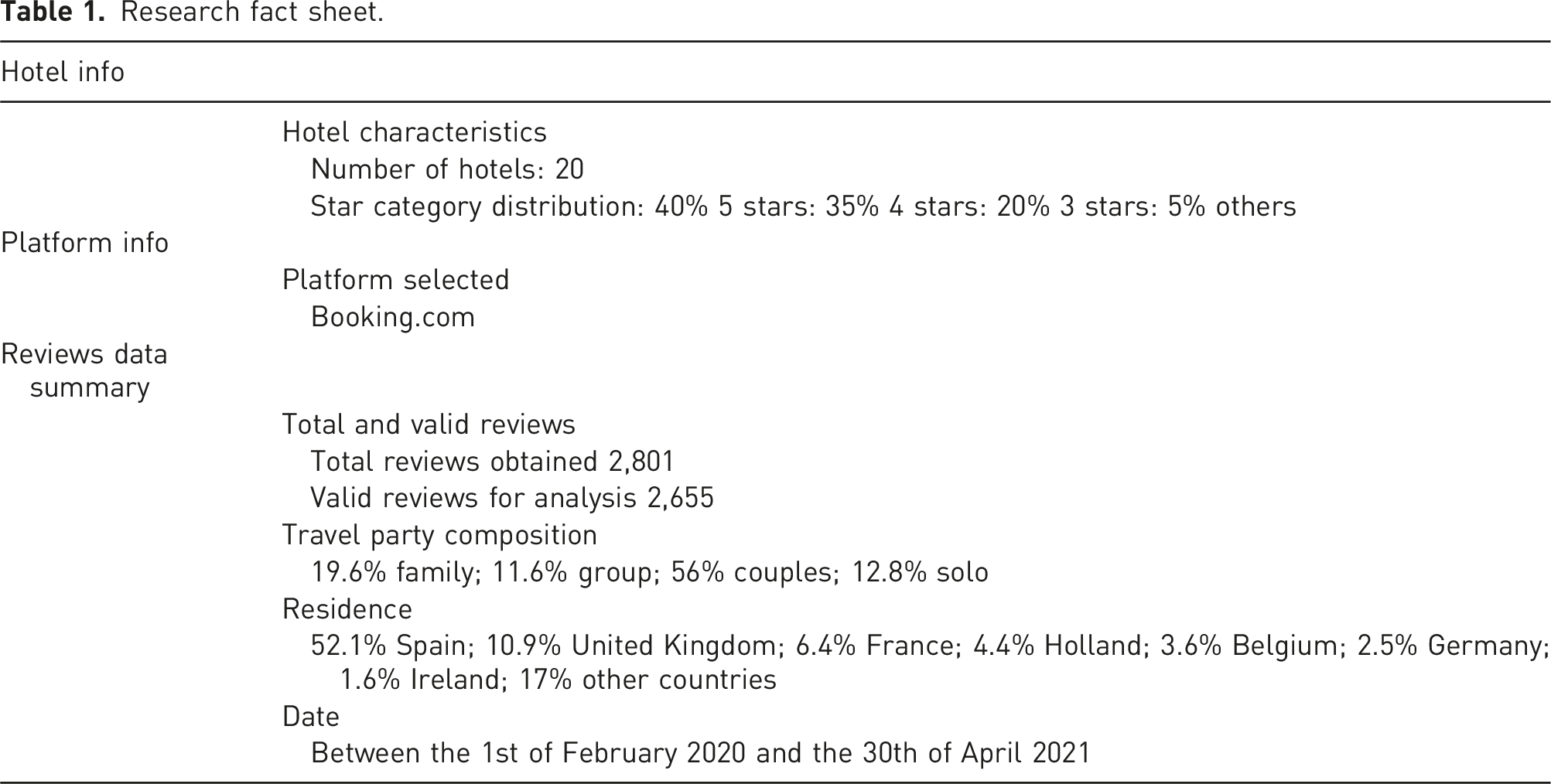
This study fills the abovementioned research gap by applying thematic analysis, sentiment analysis and analysis of variance to 2,655 valid reviews, i.e. those online Booking.com reviews from La Costa del Sol (Spain) that are accompanied by a numerical rating to ensure consistency and comparability within the sample from February 2020 to March 2021 to capture the entire first year of the pandemic’s impact on the tourism sector. The study investigates the reviews’ themes and hotel guests’ sentiments included in their online reviews in relation to hotels’ communicated sustainability and health practices. In particular, this study seeks to address the following research questions: - - - - - -
Given that the literature on tourists’ sentiments toward hotel health-related and sustainable practices is in its early stages, conducting research that explores new perspectives on the determinants of sentiments provoked by accommodation practices can significantly contribute to the advancement of the field. The theoretical contribution of this study to the fields of hospitality and tourism is found in the examination of tourists' attitudes and behaviours in relation to communicated hotels’ sustainable and health-related practices. Practically, this study expands on previous research on tourists’ perceptions of sustainable and health-related practices in their online reviews. The analysis of review content was conducted to uncover the underlying conveyed sentiment (ranging from very negative to very positive) and emotion (including joy, neutrality, sadness, surprise, anger, fear, and disgust). This approach allows for the derivation of insights that extend beyond review ratings. In addition, the study contributes to the tourism literature by examining communicated sustainable and health-related practices from a consumer perspective, an area that remains underexplored. The findings also confirm that not all themes related to communicated sustainability and health and safety practices hold equal significance for tourists.
Literature review
Automated sentiment analysis
Sentiment analysis, also referred to as opinion mining, involves the computational examination of individuals’ opinions, evaluations, attitudes, and emotions concerning various topics, issues, entities, people, events, and related attributes (Liu and Zhang 2012). This discipline is conceptually anchored in the analysis of evaluative judgments and emotional responses to textual stimuli (Heise, 1970). Typically, sentiment analysis focuses on determining valence, which indicates where a sentiment falls on the positive-negative spectrum (Pang and Lee, 2008).
Automated sentiment analysis of online content is a growing field of enquiry with focus on both valence and emotions (Mohammad, 2015). Emotions like joy and anger are associated with positive and negative sentiments, respectively. The strength of a sentiment is gauged by its distance from a neutral point on the positive-negative scale. This foundation of automated sentiment analysis is supported by assigning scores to various concepts, descriptors, and affective states or emotions on this positive-negative dimension (Pang and Lee, 2008).
Emotions represent complex and stable evaluations and experiences consistent with inherent feelings and intentions in attitudes. Ekman et al. (1969) identified six basic emotions: happiness, sadness, fear, surprise, anger, and disgust. This classification has become the most widely accepted (Ekman, 1999). When dealing with consumer emotions, understanding the user’s emotional tendency at a certain time (positive/neutral/negative) is useful (Ortigosa et al., 2014). Emotional tendency reflects emotions and an inherent evaluation tendency, showing real feelings of a subject for an object, and can be categorised as positive, neutral, or negative.
The study utilises sentiment analysis methods (SAM) for emotions detection, developing automatic and efficient ways to identify sentiments. These methods are designed to process various types of texts, ranging from tweets with hashtags and emojis to longer reviews of movies, restaurants, or hotels. Numerous studies have examined the performance of different SAMs across various texts, categorising them into lexicon dictionary-based methods, machine learning-based methods, and deep learning-based methods (Hassan et al., 2023; Valdivia et al., 2019).
In this study, the deep learning-based method is employed. This approach involves a variety of techniques that leverage neural network architectures to analyse and interpret sentiment in text data. These methods typically involve the use of deep neural networks, such as recurrent neural networks (RNNs), convolutional neural networks (CNNs), or transformer-based models like BERT, to capture the semantic meaning and context of text input. By using this method, the study aims to efficiently and accurately analyse sentiment polarity in the context of tourism and e-WOM, providing insights into how tourists’ emotions influence their rating behaviour.
E-WOM and the hospitality industry: How online reviews describe guest experiences
eWOM has revolutionised the hospitality industry, providing guests with a platform to share detailed feedback on their hotel experiences. Word-of-mouth (WOM) and eWOM play crucial roles in influencing travel decisions. When WOM is mediated electronically, it spreads through social networks, instant messaging, news feeds, and travel recommender sites (Liu and Park, 2015). These online reviews play a pivotal role in influencing travel decisions, offering insights into various aspects of a hotel stay, from service quality to overall guest satisfaction. Due to the unknown quality of hotel services before consumption, consumers rely more on peer feedback than corporate sources (Filieri et al., 2015).
Key features of consumer reviews are ratings and content. Ratings indicate overall satisfaction levels, while detailed review content provides nuanced insights that influence anticipated consumer demand and financial performance (Xie et al., 2014). Review text, rich with affective words conveying emotions, strengthens the intent and impact of the review. Emotional tone in reviews significantly affects their perceived usefulness, readers’ purchase intentions, and conversion rates (D’Acunto et al., 2020). Narrative analyses of reviews offer in-depth understanding of consumer experiences, highlighting service features deemed important (Villarroel Ordenes et al., 2019).
Assessing health, safety, and sustainability practices from hotel reviews
Research identifies several attributes affecting customer satisfaction in hotel reviews, including room facilities, general hotel amenities, food quality and dining environment, price, location, and service quality (Zhou et al., 2014). The social and physical dimensions of the servicescape also drive customer satisfaction, with green practices reflecting emotional rather than functional needs (Zeithaml et al., 2006). Historically, online reviews often focused on topics such as hotel amenities, location, transactional mechanics, value for money, and overall experience (Mankad et al., 2016). However, fewer investigations consider the impact of hotel health, safety, and sustainable practices on customer sentiments.
Regarding health-related practices, while electronic word-of-mouth (eWOM) on health social networking sites (SNSs) has long been recognised as a source of information (Liang et al., 2011), literature on hotel reviews as a source of health practices information is still in its early stages (Pauli et al., 2023). Social media contributions were recognised as crucial in improving travelers’ awareness of health and safety practices (Nilashi et al., 2021) since the COVID-19 outbreak marked a pivotal moment in tourism history.
Recent research on health practices and eWOM in the hotel industry suggests that the perceived health risk of the COVID-19 pandemic significantly moderates the relationship between eWOM (pre-travel) and eWOM intentions (Goyal and Taneja, 2023). This suggests that tourists read online reviews from other travellers before their trips, and, due to the risk of contracting COVID-19, they also plan to share their opinions online to reach a broader audience. According to Rita et al. (2022), the pandemic adversely affected the average customer satisfaction of airlines, with 85.5% of reviews suggesting passengers’ experiences of online service and refunds being negative (Rita et al., 2022). Petruzzi and Marques (2024) examined tourists’ safety perceptions and identified key hygiene, physical safety, and management measures that influence traveler confidence in P2P accommodations. Using a two-phase methodology involving Multiple Correspondence Analysis (MCA) and K-means cluster analysis on a sample of 864 prospective tourists, they segmented consumer expectations regarding safety communication and practices. The research also highlighted the importance of proactive information-sharing by P2P platforms, recommending the use of digital tools such as pop-ups during the booking process and QR codes at the property to provide real-time hygiene and safety information. In a similar study, Arica et al., (2023) analyzed 1,119 Tripadvisor reviews of 109 hotels in Alanya that held a Safe Hotel Management Certificate. The researchers employed a binary coding system in SPSS to categorize each review according to positive or negative comments regarding pandemic-related safety measures. To investigate the relationship between these safety perceptions and tourist evaluations, multiple linear regression analyses with dummy variables and Chi-square tests were conducted. The findings demonstrated that tourists’ perceptions of pandemic safety measures significantly influenced the ratings they assigned to hotels. However, research on the impact of health-related practices on customer sentiments in hotel reviews is still lacking.
In contrast, the impact of sustainable practices on customer satisfaction in hotel reviews has been more thoroughly documented in tourism literature (Dolnicar et al., 2015; Gasbarro and Bonera, 2021; Miao and Wei, 2013). For example, recent research has confirmed the influence of sustainable tourism development on eWOM (Aimon and Zulvianti, 2023). Mariani and Borghi (2023) conducted a large-scale study analyzing over 2.7 million hotel reviews from Tripadvisor and Booking.com, using big data analytics, text mining, and multivariate regression techniques. Their findings show that both the presence and depth of environmental discourse in online reviews positively influence customer satisfaction, as proxied by higher review ratings. Brazytė et al. (2017) analyzed fewer than 2,500 reviews of Costa Rican hotels and found that explicit mentions of sustainability were associated with significantly higher satisfaction ratings. Huang et al. (2025), applied structural equation modelling to 715 American travellers, they found that a green marketing orientation is positively associated with consumer trust and engagement in the platform, though they did not directly link this to rating scores. A connection has also been established between review scores and sustainability management (Gerdt et al., 2019). These findings suggest that sustainability is significant to hotel guests, despite the review content not always explicitly demonstrating this relationship. Furthermore, travellers who specifically mention environmental topics in their reviews are more likely to write reviews deemed helpful by other consumers (Mariani and Borghi, 2021). However, further large-scale studies investigating the link between customer sentiments and sustainability measures are required (Gerdt et al., 2019).
The majority of existing sentiment analysis literature on leisure and tourism experiences was published in the last 10 years (Mehraliyev et al., 2022). It can be divided into five main topics: market intelligence, methodological issues, social media management, destination management, and strategic management. Among these categories, market intelligence has been investigated the most (Mehraliyev et al., 2022), including consumer feelings and emotions (D’Acunto et al., 2020; Lee et al., 2020; Li et al., 2020a, 2020b, 2020c; Orea-Giner et al., 2022; Serrano et al., 2021; Vallone and Veglio, 2019), and changes in consumer attitudes and satisfaction (Barbierato et al., 2022; Chen et al., 2021; Kirilenko and Stepchenkova, 2017).
Despite many studies focusing on online reviews sentiment analysis in the hospitality literature (Mehraliyev et al., 2022), there is still little analysis of how sustainable and health-related content in these reviews relates to customer sentiments. As these aspects gain importance (Bonfanti et al., 2021; Booking.com, 2024; Trabandt et al., 2024), comprehending their impact on guest experiences and satisfaction is essential for future research and industry practices.
Methods
The study’s methodology was divided into five phases (see Figure 1). Methodological approach.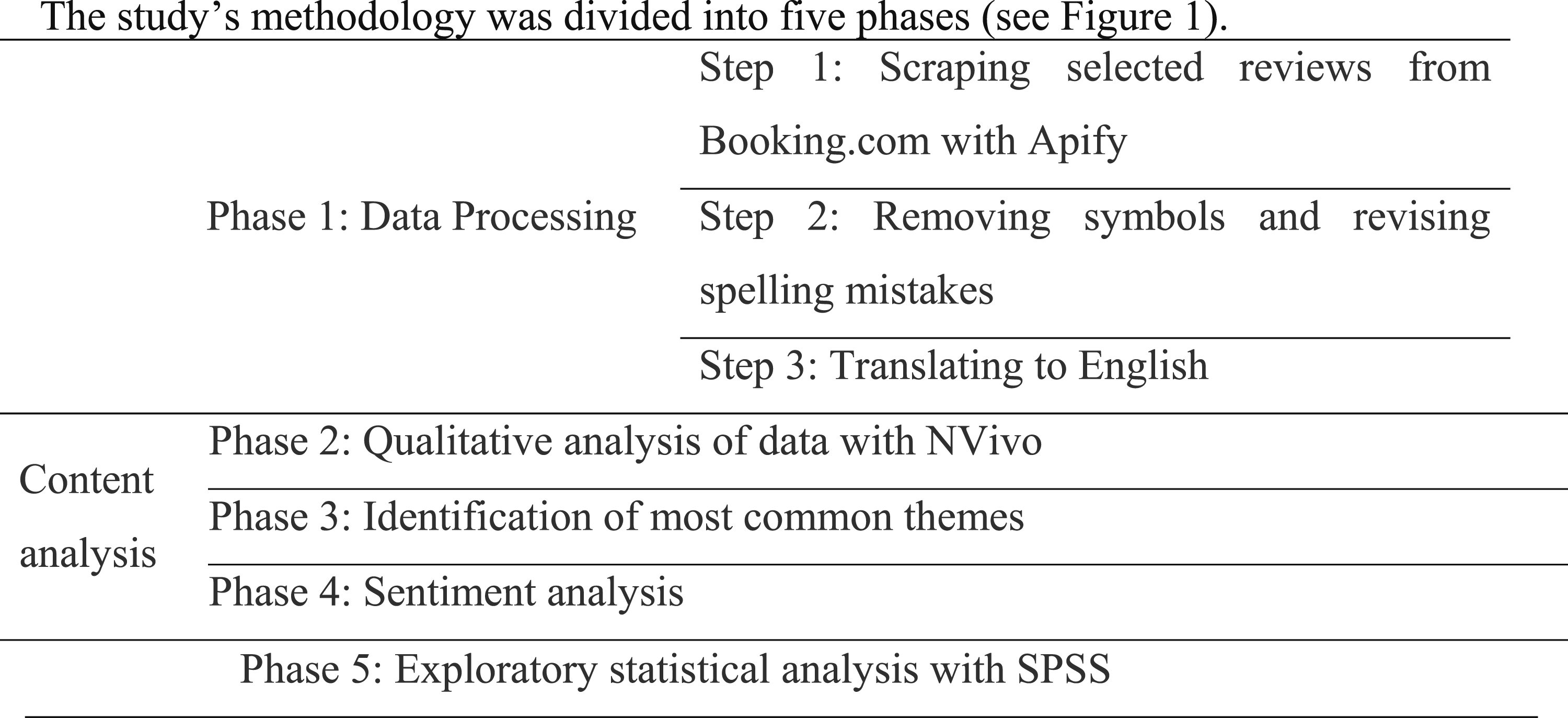
Research fact sheet.
The review dataset was revised to eliminate symbols and nonsense text. During this stage, spelling mistakes were also proofread. Furthermore, all blank information regarding hotels’ sustainable and health-related practices was assumed to indicate that no practices were reported. The final step is the translation of all collected reviews to English using the Google Translate function in a Google spreadsheet. The translation was checked for accuracy by a bilingual researcher.
In the second phase, the data was imported into Nvivo v.1.7.1 to undertake the content analysis. The dataset was imported into Nvivo, and only valid comments -those accompanied by a numerical rating- were included in the analysis, resulting in a final sample of 2,655 reviews. Booking.com enables reviewers to comment separately on aspects of their stay they liked, and they did not like. Both were analysed. First, the text was autocoded. Subsequently, the codes were checked, modified and recategorised by one of the researchers. A keyword search was undertaken to identify additional codes and comments related to COVID-19, health and safety practices and sustainability. A total of 260 codes on aspects of the stay the reviewers did not like were assigned. Content analysis of text with regard to aspects of stay reviewers liked resulted in 207 codes. The co-occurrence of sentiments with specific themes was analysed. The sentiment of some comments could not be established using this technique.
Identification of themes was the main activity in the third phase of analysis. Based on content analysis, once all the reviews were compiled, the third phase identified common themes across comments. The themes were devised based on themes identified in previous research (e.g., Bodet et al., 2017; Tolkach and Tse, 2016), as well as by pulling together similar codes. Finally, two themes were identified due to their importance to this paper even though they do not necessarily appear in previous research: COVID-19 and sustainability. Generally, the content analysis in this study followed procedures previously used within the discipline (Fuentes-Moraleda et al., 2020).
The fourth phase involved the application of sentiment analysis. Sentiment analysis is a method used to analyse sentiments within a sample, usually gathered from digital sources like social networks and online platforms. This approach allows for the exploration of diverse opinions using various methodological approaches (Mehraliyev et al., 2022). Automatic sentiment analysis was carried out using NVivo v.1.7.1 to answer research questions 2 and 3 and the natural language processing (NLP) model BERT (Liu et al., 2019), which stands for bidirectional encoder representations from transformers, to answer research questions 5 and 6. BERT has been successfully used for many language understanding tasks, such as emotion classification (Ameer et al., 2023). The analysis to answer research questions 2 and 3 aimed to determine whether the reviews were (a) very negative, (b) moderately negative, (c) moderately positive or (d) very positive. For research questions 5 and 6, the analysis distinguishes between the following emotions: (1) sadness, (2) anger, (3) neutral, (4) joy, (5) disgust, (6) surprise and (7) fear.
In the fifth phase, the analysis focused on examining correlations between hotel categories and sustainable or health-related practices to address research question 4. Additionally, to respond to research questions 5 and 6, the study investigated the connections between the emotions conveyed in online reviews and the corresponding ratings. ANOVA was applied when sufficient data were available. This investigation involved a thorough statistical examination of a dataset comprising 2,655 valid reviews, including 23 reviews related to sustainable practices and 157 reviews related to health and safety practices. All reviews included in the analysis had numerical ratings and comments. Before the analysis, the distribution of the dataset’s ratings was assessed for normality by examining skewness and kurtosis (Kim, 2013).
Results
Changes in hotel review themes at the peak of the COVID-19 pandemic era
Booking.com allows reviewers to post comments about what they liked about a hotel and what they did not like. Of a total of 2,655 valid reviews, 1,477 were comments about what reviewers liked and 1,178 comments about aspects of the stay that reviewers did not like. NVivo was used to analyse the text. The previous literature was consulted to further group categories into broader themes representing traditional categories of accommodation attributes. In addition, sustainability and COVID-19 themes were defined to address the research aims of this study. Sentiment analysis of the text was performed in NVivo to distinguish comments ranging from very negative to very positive. Figure 2 presents a summary of the sentiment analysis. Comments sentiment analysis.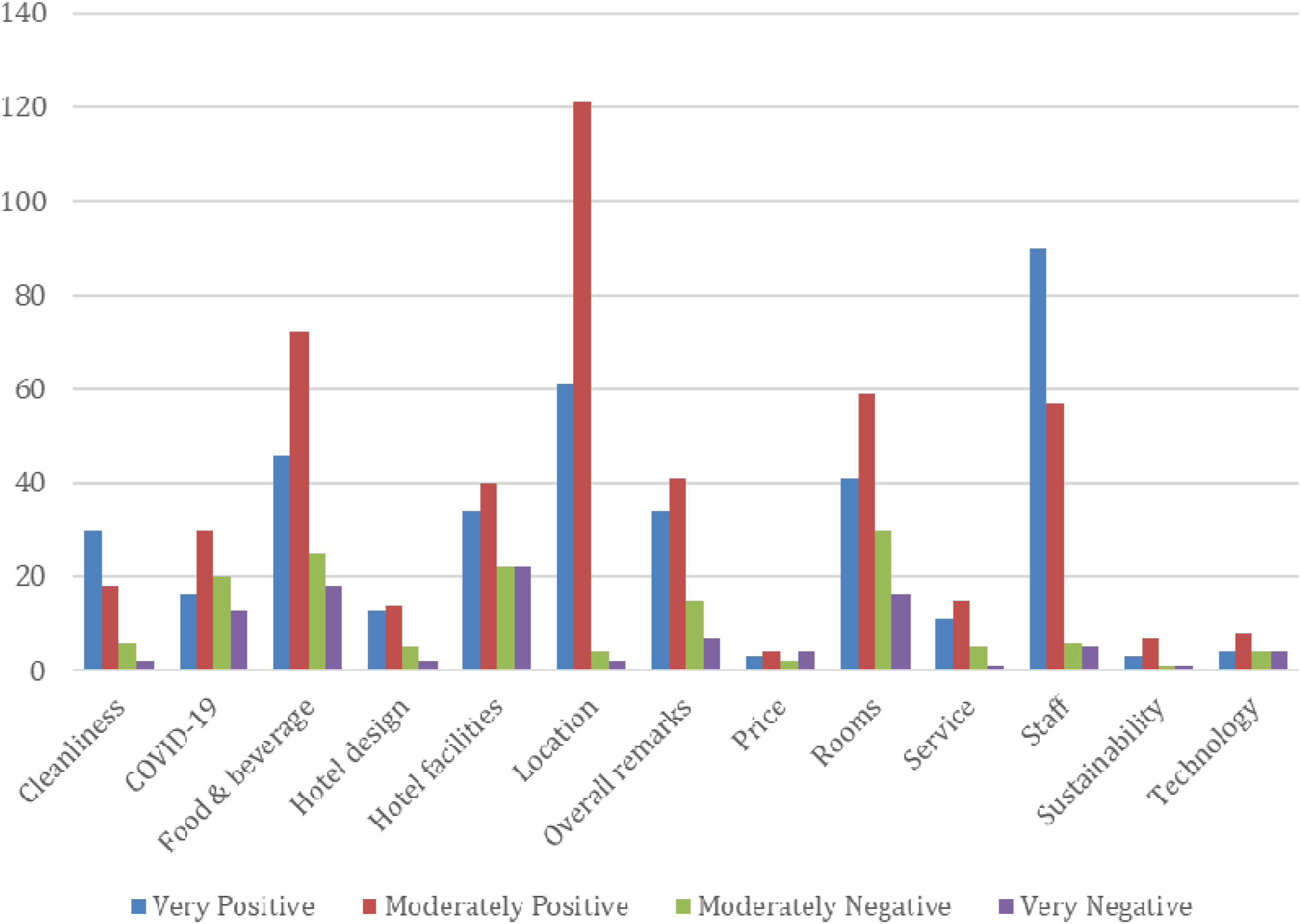
Evidently, despite the COVID-19 theme, which raised a similar number of customer mentions as cleanliness, most themes emerging from the reviewer comments are similar to findings of pre-COVID studies (e.g., Bodet et al., 2017; Tolkach and Tse, 2016). A total of 2,020 coded references were derived from comments made in the “Didn’t Like” section of the review, while 2,836 coded references were derived from the “Liked” section of the review. Location was the most common positive theme in the comments; however, staff members had more very positive comments than moderately positive comments. Rooms, hotel facilities and food and beverages were seen more negatively.
Prominence of sustainability content in reviews in the peak of the COVID-19 pandemic era
Despite Booking.com implementing a Travel Sustainable Recognition Programme, sustainability comments are rather limited. In the sample of 2,655 valid reviews, only 13 sustainability comments were identified in the “Liked” reviews section, and 10 were identified in the “Did not Like” section. Nevertheless, the sustainability-related comments referred to diverse topics. Guests appreciated well-maintained natural areas, parks and beaches, hotels located in well-preserved historical buildings, availability of electric vehicle charging stations, and food prepared with local produce and with vegan or vegetarian options. Most of the negative comments related to sustainability were about the use of plastic at the hotels, especially plastic bottles. Two comments were about towels not being changed daily; thus, hotels may expect some backlash related to resource-saving sustainability measures. Evidently, the range of concerns covered in the comments is much narrower than industry (e.g., GSTC, 2016) or Booking.com (2023a) standards.
Prominence of health and safety content in reviews in the peak of the COVID-19 pandemic era
Remarkably, despite the collected data occurring during the COVID-19 restrictions period (2020–2021), COVID-19-related comments were not among the five main themes. However, this theme was cited 7 times more often than sustainability, representing 4.5% of the total sample. The COVID-19 comments were rather negative: 69 COVID-19 comments were in the “Liked” section, 88 were in the “Did not Like” section, 46 were associated with positive sentiment, and 33 were negative. The most common negative comment regarding COVID-19 was a lack of enforcement of COVID-19 measures, especially social distancing. Some negative comments were related to the reduced services at hotels, e.g., no buffets. In contrast, hotel guests praised hotels for implementing sound COVID-19 measures. Srivastava & Kumar (2021) reported similar results for US hotels.
Relationships between the hotel category and communicated sustainable and health-related practices in the peak of the COVID-19 pandemic era
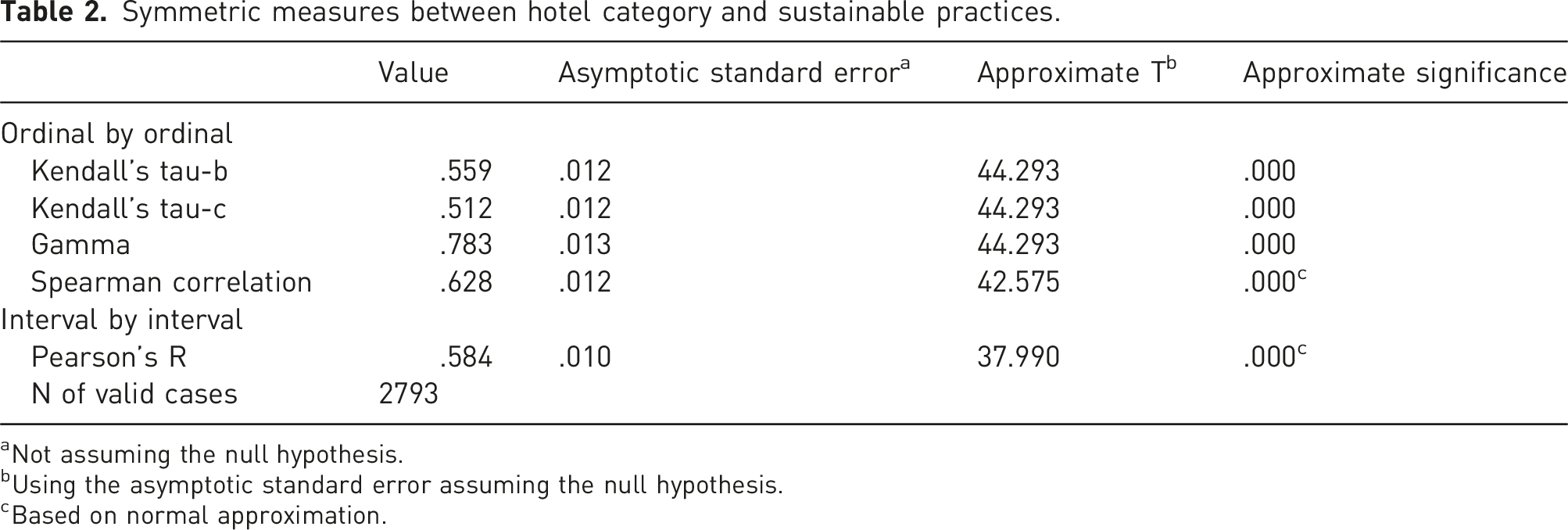
Symmetric measures between hotel category and sustainable practices.
aNot assuming the null hypothesis.
bUsing the asymptotic standard error assuming the null hypothesis.
cBased on normal approximation.
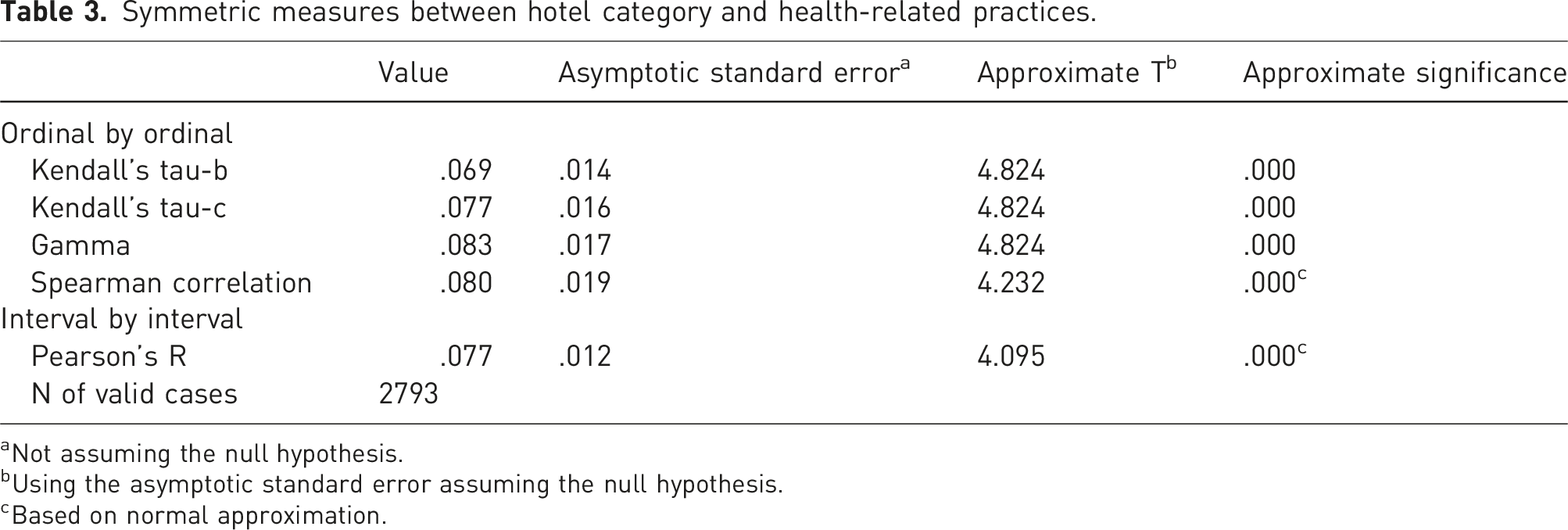
Symmetric measures between hotel category and health-related practices.
aNot assuming the null hypothesis.
bUsing the asymptotic standard error assuming the null hypothesis.
cBased on normal approximation.
The symmetric measures of concordance between hotel category and sustainable practices suggest a moderate and positive association (see Table 2). The Spearman correlation coefficient, which is the most commonly used concordance measure with ordinal data, is 0.628 with an asymptotic standard error of 0.012; thus, it significantly differs from 0 at any level of significance.
In the case of symmetric measures of concordance between hotel category and health-related practices, the results suggest a weak and positive association (see Table 3). The Spearman correlation coefficient is 0.080 with an asymptotic standard error of 0.019; thus, it significantly differs from 0 at any level of significance.
The results suggest that hotels in the higher category (i.e., 4- or 5-star) are more likely to communicate a greater range of implemented sustainability, health, and safety measures.
Relationship between emotions in sustainability-related reviews and review scores in the peak of the COVID-19 pandemic era
Review score and emotion crosstabulation for sustainability-related reviews.
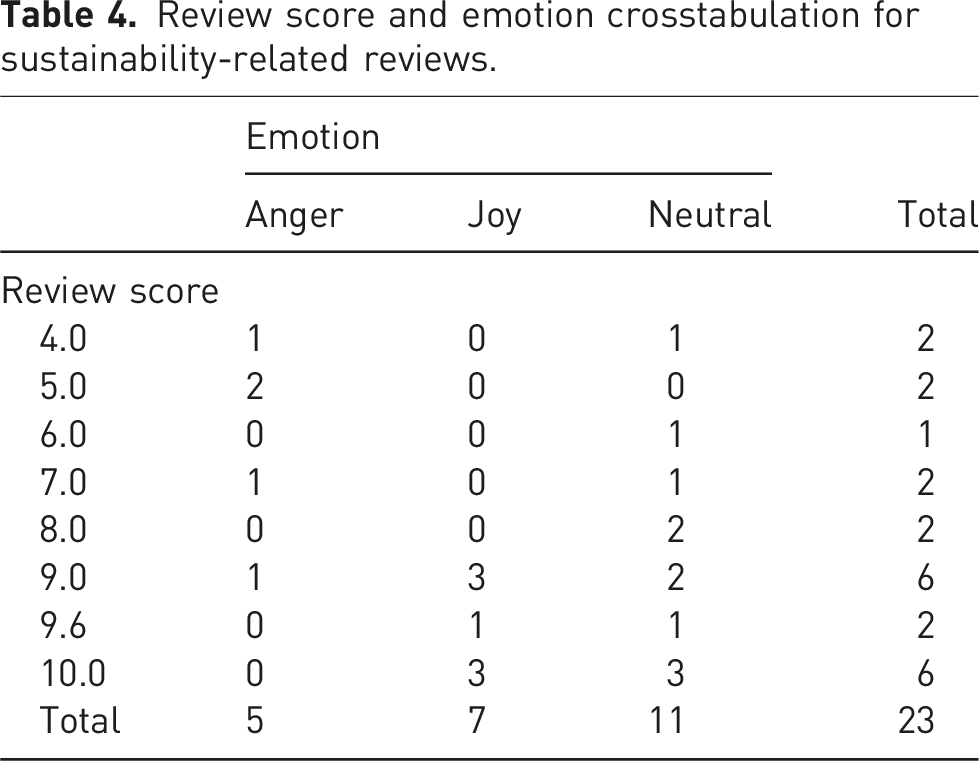
Among the sustainability-related reviews, only three emotions—anger, joy, and neutral—were identified. Reviews expressing joy and neutrality tended to receive higher review scores, while those conveying anger received lower review scores.
Relationship between emotions in health-related reviews and review scores in the peak of the COVID-19 pandemic era
ANOVA of emotions and review scores of health-related reviews.

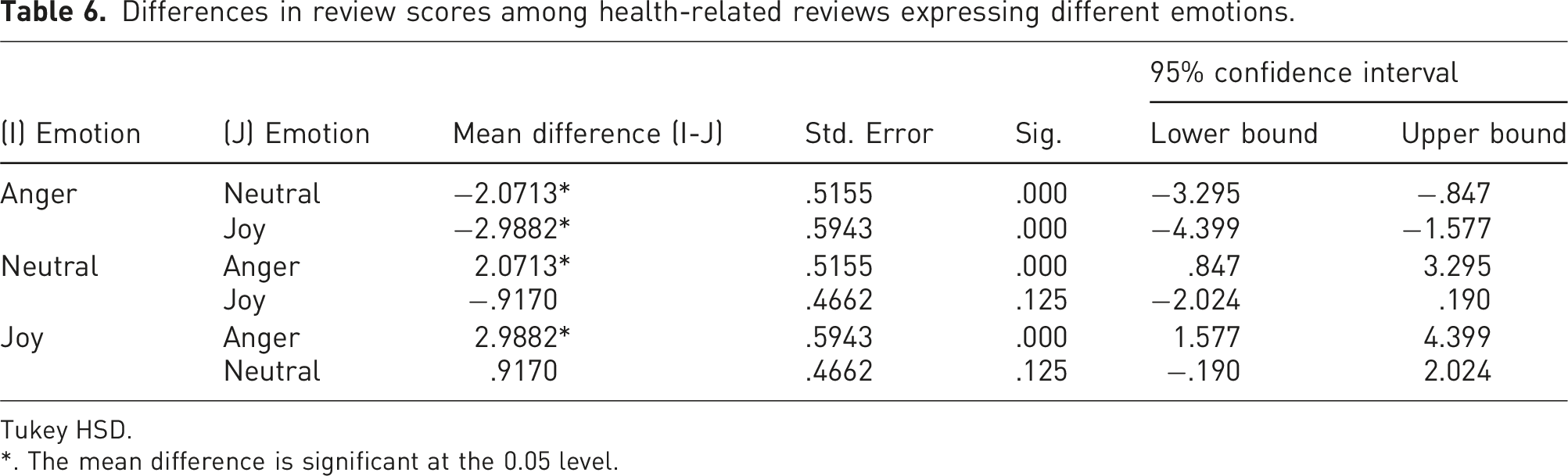
Differences in review scores among health-related reviews expressing different emotions.
Tukey HSD.
*. The mean difference is significant at the 0.05 level.
According to the mean differences among anger, neutral, and joy emotions in health-related reviews, those expressing anger tend to receive lower scores than those expressing neutral or joy emotions. A health-related review conveying a neutral emotion is likely to receive a higher score than one expressing anger, while a review expressing joy is also expected to receive a higher score than one expressing anger. For the remaining mean differences related to emotions, no statistically significant differences were detected. However, upon closer examination, it was found that only the emotion of anger exhibited significant differences among the three analysed groups. Interestingly, no significant mean differences were identified between joy and neutral emotions. This suggests that negative emotions expressed in health-related reviews, particularly anger, may lead to less favourable guest review scores.
Discussion
The following section first discusses theoretical implications of this study in view of the research questions. It then provides a number of managerial implications.
Theoretical implications
This study addresses a research gap by analysing electronic word-of-mouth (eWOM) related to sustainability and health practices in the hospitality industry during the pandemic. By assigning codes in Nvivo, we ensured a consistent and precise process. The results provide insights into the role of sustainability and health-related practices in guest satisfaction. -
The results of this study underscore the significance of four specific topics in accommodation reviews: location, staff, room, and food and beverage. This is in line with previous research (Bodet et al., 2017; Tolkach and Tse, 2016). This indicates that what customers shared about their experiences was not highly impacted by COVID-19 health measures, despite the accommodations implementing various operations measures to address the pandemic. However, mentions of health-related measures and sustainable practices reached 157 (4.5% of the sample) and 23 (less than 1% of the sample) respectively, demonstrating that only some hotel guests were mindful of COVID-19 and sustainable measures. -
The study identified a small number of the sustainability related comments (i.e. 23 out of 2,655 reviews) and their narrow scope (i.e. limited to use of plastics). These findings echo Gerdt et al. (2019) suggesting a generally low number of reviews on the topic of sustainability. This is an issue of concern that merits further research. While generally, studies demonstrate tourist concerns about sustainability (D’Acunto et al., 2020), these concerns are not generally reflected in online reviews of hotels (Gerdt et al., 2019). Reasons for the discrepancy are currently not fully addressed in the literature. -
A total of 157 comments out of 2,655 reviews were made about health-related practices. For health-related practices, our deep learning-based method and ANOVA analysis revealed an explanatory power of sentiments on the review scores. These findings suggest that health-related practices influence hotel guests’ satisfaction, even if the reviews’ content does not explicitly state this. Previous hotel attributes studies focus on issues other than health. Thus, through this study, we contribute to a new line of research in hospitality and tourism literature regarding health issues (Bonfanti et al., 2021). -
Similar to Gerdt et al. (2019), results of this study suggest a connection between a hotel’s star category and its sustainable measures. Our results indicate that both hotel sustainable practices and hotel health-related practices are at a higher level at hotels with higher star category. Guests staying in upscale hotels tend to have elevated expectations for their hotel experience, thereby correlating with more extensive adoption of sustainable practices and health-related measures in these establishments. -
Sentiment analysis rose to prominence in tourism and hospitality research in recent years (Mehraliyev et al., 2022). However, such analyses commonly only use positive-negative dichotomy. One of the methodological contributions of this study is the employment of natural language processing BERT model to demonstrate opportunity for a more refined identification of emotions associated with specific comments in reviews. Comments that were positive and expressed joy or neutral emotions tended to also provide higher review scores. -
Out of seven emotions in the model, i.e. joy, neutral, anger, sadness, disgust, surprise, and fear, only joy neutral and anger had a sufficient number of mentions for further analysis. The sentiment and ANOVA analyses demonstrated that there was a substantial number of negative and angry comments associated with health issues, particularly enforcement of COVID-19 regulations. Conversely, some comments displaying anger were about the reduced services hotels were able to provide in response to COVID-19 measures. In both cases, health-related reviews can be described in terms of service failures to either provide safe environment on deliver on expected services (Mehta et al., 2023).
The study has several theoretical and managerial implication.
Managerial implications
This study provides valuable insights for practitioners and researchers in the field of online consumer behaviour. The findings suggest multifaceted managerial implications for the tourism industry, emphasising the importance of health-related and sustainability practices in enhancing customer satisfaction and brand differentiation.
First, hotel managers and online review platforms are encouraged to take proactive steps to implement and communicate health and sustainability initiatives more effectively. For example, collaborating with independent organisations to certify and publicly validate hotels’ hygiene and sustainability standards can build greater trust with potential guests. These third-party endorsements can serve as powerful tools to demonstrate a commitment to guest well-being and responsible practices.
Second, in the wake of COVID-19, the regulations have expanded significantly to include specific hygiene protocols, social distancing measures, and mandatory health certification requirements (Ebrahimi et al., 2023). At the same time, OTAs like Booking have moved to a more independent system to classify hotel sustainable practices (Perez-Aranda et al., 2024).
Understanding the shift between pre-COVID and post-COVID regulations is vital for hotels aiming to meet modern traveller expectations, which increasingly prioritise transparency and visible compliance with health and safety standards. This study provides evidence that clearly communicating these practices has a direct influence on customer satisfaction and loyalty. Practitioners can use these insights to tailor marketing messages, train staff, and update listing content to reflect compliance and commitment to guest safety and sustainability.
Finally, this study extends the theoretical framework of sentiment analysis by analysing how health related and sustainability comments manifests differently. Negative comments about COVID-19 practices often signal dissatisfaction and highlight perceived health risks, serving as early warnings for both potential guests and hotel management. The lack of positive comments about COVID-19 measures suggests consumers see lack of enforcement of health regulations as a risk to their stay, rather than rigid enforcement of health and hygiene practices contributing to the higher quality of their stay.
Unlike sustainability measures, health and safety measures are more likely to be associated with potential service failures and reputational risks rather than actively contributing to customer satisfaction.
Twenty-three comments (0.87% of the total) pertained to sustainability. For comparison, Serrano et al. (2021) found that only 0.079% of comments on Airbnb expressed a preference for sustainability. The COVID-19 pandemic abruptly impacted the travel and hospitality industries, introducing new latent dimensions in review themes, as evidenced by the focus on health and safety practices in this study. However, sustainability remained a significant topic within the tourism and hospitality industries during the pandemic. Evidence from various organisations, including Booking.com (2023b), suggests that sustainability is of high and growing importance to travellers. Therefore, accommodations should not only maintain but actively promote their sustainability practices—such as reducing waste, conserving energy, and supporting local communities—to remain competitive and relevant in a changing market.
Conclusion
This study investigates 2,655 valid review comments about accommodations in Costa del Sol, Spain, from the Booking.com platform to identify latent dimensions and sentiments in accommodation reviews during the peak of the COVID-19 pandemic. It focuses particularly on examining sustainability, health, and safety concerns in the reviews. This is highly relevant given the heightened concerns about sustainability (Trabandt et al., 2024) and health crises (Bonfanti et al., 2021; Srivastava & Kumar, 2021) since the outbreak of the COVID-19 pandemic, yet sustainability and health and safety labels implemented by travel recommender platforms remain under-investigated.
This study contributes to our understanding of customer satisfaction in the hospitality and tourism domains by unravelling latent dimensions in online reviews of accommodations and expanding our knowledge of sentiment distribution in health-related and sustainable reviews during the peak of COVID-19. It also investigates the connection between hotel category levels and hotel health-related and sustainable practices. Finally, the study reveals a new dimension of customer experience by confirming that sentiments in health-related reviews are related to their scores.
Limitations
This study is set in a specific context in terms of both time and place. The sample of online reviews was obtained from Costa del Sol, Spain, between February 2020 and April 2021. Longitudinal studies of online reviews are needed to understand trends in consumer sentiments. Moreover, cross-cultural studies should be conducted to understand variations in the preferences of travellers in different regions. There are potentially differences across cultures in terms of willingness to leave a review and the content of the review based on reviewers’ cultural backgrounds (Leon, 2019). These differences may have been exacerbated by COVID-19 pandemic. Finally, studies need to consider the type of social network site used to collect the data, the product analysed and the type of destination that is reviewed in the comment, as accommodation, experience or destination attributes may vary depending on the context.
Another important limitation concerns the preprocessing of the textual data. In this study, the dataset was cleaned to remove symbols and non-standard text, which included emoticons and emojis. However, prior research highlights that these visual elements are not trivial noise but function as key emotional amplifiers in digital communication (Aldunate and González-Ibáñez, 2017). Therefore, the exclusion of such symbols may lead to the loss of emotionally significant information that could enrich sentiment analysis, particularly in consumer-generated content such as tourism and hospitality reviews. Future studies might consider incorporating emoji and emoticon analysis to capture a more nuanced understanding of consumer sentiments in online reviews.
Further investigation is required regarding changes in the importance of health and safety when COVID-19 concerns are receding and no new global health emergencies are present. Such research may assist in understanding postcrisis business recovery and complement studies such as those related to crisis-communication practices (Geber, 2023) and crisis-resistant tourists (Hajibaba et al., 2015). Further sentiment analysis studies are needed to identify how various aspects of hotel stays contribute to customer satisfaction (Mehraliyev et al., 2022). Also, increasing the number of reviews analysed or adopting a longitudinal approach to compare pre-COVID, during COVID, and present times could provide valuable insights into changing trends related to consumer behaviour, consumer sentiments and perceptions of service quality in tourism and hospitality.
Footnotes
Declaration of conflicting interests
The authors declared no potential conflicts of interest with respect to the research, authorship, and/or publication of this article.
Funding
The authors received no financial support for the research, authorship, and/or publication of this article.
