



Abstract
This study systematically reviewed studies on artificial intelligence (AI) technology and hotel employees’ service performance through bibliometric analysis and content analysis based on the ADO-TCM framework. 72 relevant literature included in the Scopus database between 2017 and 2024 were selected for the study. R Studio and VOSviewer software were used to analyze the data. This study also examines four major thematic clusters in the research area over the last 5 years: (1) the impact of automation on hotel personnel: Employment and training perspectives; (2) technology adoption in the hospitality industry: The interrelationship of customer perceptions, artificial intelligence, and employee roles; (3) employee outcomes related to AI adoption in the hospitality industry; (4) automating decision-making from the hotelier’s perspective. In addition, this study constructs an integrative ADO-TCM conceptual framework that systematically links antecedents, decisions, outcomes, theoretical foundations, contexts, and methods pathways. Based on the findings, the study proposes a research agenda covering aspects such as AI design, culture, ethics, tourism employment, and employees’ psychological responses.
Keywords
Introduction
The rapid convergence of artificial intelligence (AI) is fundamentally changing the hospitality industry. From the automation of service processes to the realization of personalized customer experiences, AI technology is reshaping the operational model and competitiveness of hotels (Lv et al., 2022; Qiu et al., 2020). These technological innovations have not only improved service efficiency and reduced operational costs but also led to revenue growth (Lee et al., 2023). However, despite its growing technological advantages, the popularity of AI has also triggered growing academic interest in the impact of changing employee roles, work experiences, and service performance, particularly among frontline hotel employees (Xu et al., 2023).
While more research has been conducted to understand the use of AI in the hospitality industry, the existing literature continues to be dominated by customer perspectives and technology acceptance. Most studies focus on how AI can optimize service processes, drive touchless experiences, and enhance strategic operational performance (Bulchand-Gidumal, 2022; Chen et al., 2021; Dwivedi et al., 2024; Mariani and Borghi, 2024). Some studies have addressed factors influencing technology adoption, such as organizational readiness or technology availability (Bhuiyan et al., 2024; Jayawardena et al., 2023). However, there is still a dearth of research on systematic overviews of how AI specifically affects employee service performance. This gap cannot be ignored because employees are not passive recipients of AI technology deployments but rather key actors who influence their success or failure in practice. Particularly, their adaptations, attitudes, and competencies directly determine the effectiveness of AI applications. A systematic overview of how AI technology affects employee service performance is needed to identify issues in the research field and promote effective collaboration between AI and hospitality employees.
The current review of the field focuses on the following three areas: First, several reviews have explored the general implementation of AI in the hospitality sector and highlighted the potential benefits of AI technology. Lv et al. (2022) summarized the research on big data and AI in hospitality and tourism, identifying the main research themes explored in existing studies. Chi et al. (2020) systematically reviewed the significant impact of AI on the hospitality industry, identifying seven themes in current research and suggesting key directions to guide subsequent research on AI interactions and AI technology adoption. Iranmanesh et al. (2022) provided a comprehensive overview of the impact of various digital technologies on different performance dimensions (e.g., the financial, competitiveness, service quality, resource utilization, flexibility, and innovation dimensions) in the hospitality industry. Fouad et al. (2024) synthesized the contribution of generative AI in the integration of tourism and hospitality, as well as the advantages and constraints. However, they overlooked the important role of employees in terms of the impact of applying AI systems to improve their service performance.
Second, some reviews focused on the impact of service robot utilization on employee satisfaction and turnover in the hospitality sector. Xu et al. (2023) systematically articulated hospitality employees’ perspectives on service robot adoption in the hospitality sector and presented a conceptual framework that includes service robot adoption antecedents, mediators, outcomes, and moderation. Although these reviews mentioned the impact of technology adoption on employees’ experiences, there is no in-depth research on the specific impact of AI technology on employee service performance.
Overview of current reviews in the study.
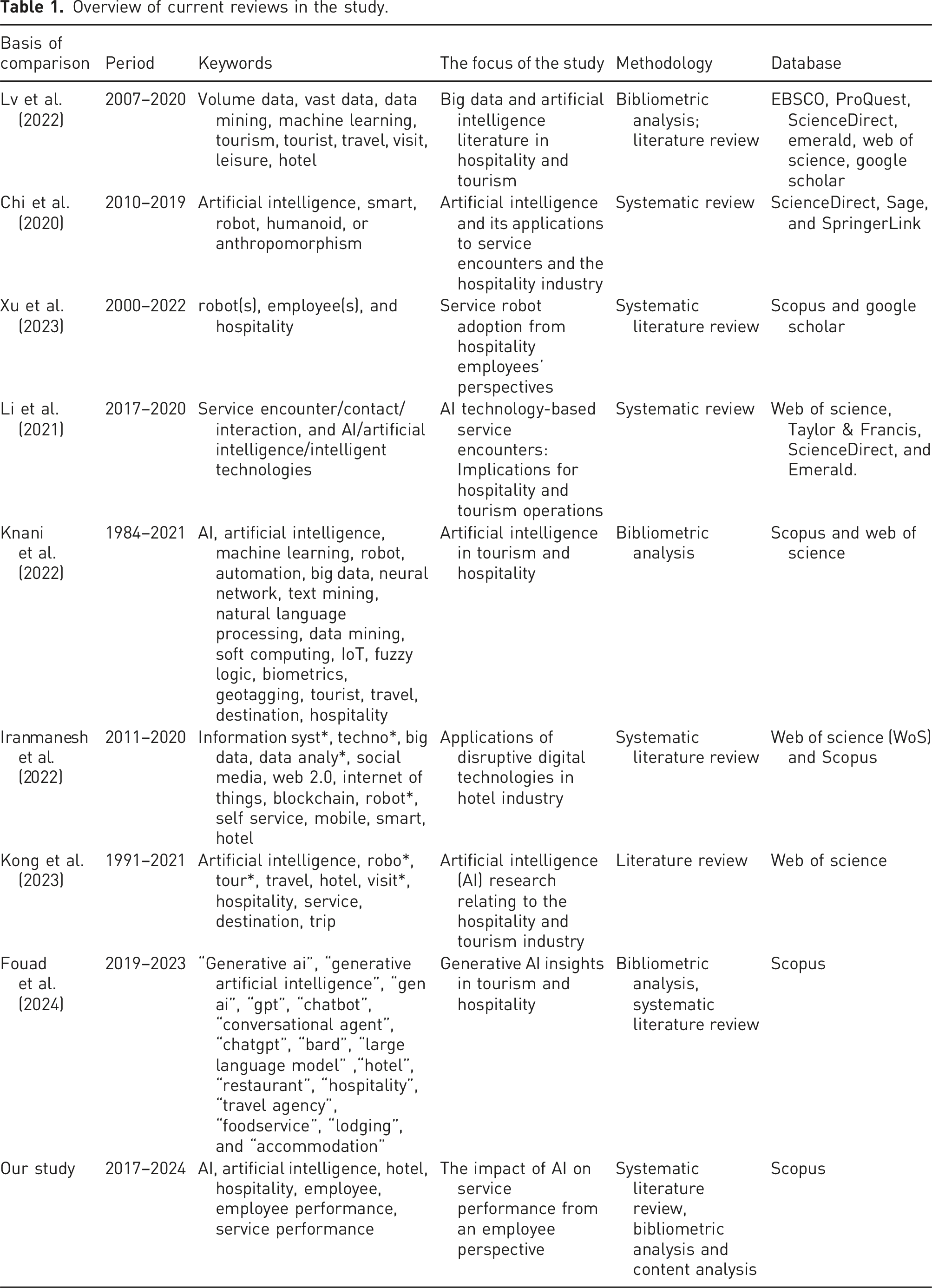
The review studies on AI technology in the hospitality industry have revealed two significant gaps. First, there is an absence of focus on the interactions between employees and AI technologies. The lack of a comprehensive literature review in this area has hindered a clear understanding of general trends and key themes, thus impacting the provision of a meaningful direction for future research and development in the field. Second, few studies have employed a combined approach using both bibliometric analysis and systematic literature review (SLR) methodologies. This leads to an insufficiently comprehensive and systematic understanding of the evolutionary path, core themes, and future trends of research in the field, as well as an insufficiently in-depth excavation of the overall structure and developmental lineage of the literature.
To fill this gap, this research synthesizes the application of bibliometric analysis with a systematic literature review. The study seeks to answer the following research questions:
What are the publishing trends, journal outlets, influential contributors, geographical distributions, and keyword-driven thematic clusters within the existing literature on how AI influences employee service performance?
What are the antecedents, decision-making processes, and outcomes associated with the influence of AI on employee service performance?
What are the theories, contexts, and methods of existing field research?
What are the gaps in existing research, and what new research directions do these gaps lead to?
By systematically responding to the above questions, this paper makes three important contributions. First, the paper adopts a dual approach combining bibliometric analysis and systematic literature review. The bibliometric analysis helps to identify key authors, core journals, and topic clusters, providing a macro-academic pulse for this study. The systematic literature review enabled a more comprehensive understanding of the relationship between AI adoption and hotel employee service performance. It was also combined with content analysis to enable the systematic identification of research themes, theoretical strands, and conceptual models. The review breaks through the simple keyword frequency analysis and digs out the core idea evolution and inner connection in the literature, which makes this study more rigorous and systematic. Second, this study utilizes the ADO-TCM framework to structure the antecedents, decisions, and outcomes of existing research and integrate them with theoretical, contextual, and methodological perspectives. This can provide more relevant and actionable theoretical support for business management practices. Finally, this paper proposes a future research agenda to advance the field towards theoretical deepening, methodological innovation, and people-centeredness.
Literature review
AI applications in the hospitality industry
The current research field on the application of AI technology in the hospitality industry focuses on the following aspects. First, existing research focused on the application of automation technologies in the front desk registration, room booking, check-in, and check-out processes, and it shows that these applications have significantly improved service efficiency and customer satisfaction in the hospitality industry (Gupta et al., 2022; Lee et al., 2024). Second, another stream of research examined how personalized services can enhance customer experience (Wang, 2024). By analyzing customer preferences and behavioral data through AI, hotels can achieve personalized recommendations, customized services, and dynamic pricing strategies. In addition, service robots are gradually being integrated into actual operation, replacing some of the manual positions in the processes of greeting, delivering, and cleaning, and related studies showed that this not only reduces the burden on employees but also optimizes the service process (Mejia et al., 2024; Mingotto et al., 2021). More recent research probed into the opportunities that the rapid development of generative AI presents for the hospitality industry (Dogru et al., 2023; Dwivedi et al., 2024; Fouad et al., 2024). Functions such as intelligent customer service, content generation and marketing creative support further enhance the hotel’s digital management level and customer interaction experience.
Employee-centric perspectives in AI integration
Employee-centered AI integration research perspectives highlight the impact of AI on employee job satisfaction, performance, adaptability, resistance, emotional labor, and training needs. The introduction of AI technology helps to reduce repetitive labor and improve the work efficiency of employees, thus enhancing their job satisfaction and performance (Gursoy, 2025; Nguyen and Malik, 2022a). On the contrary, it has also been pointed out that employees may develop occupational insecurity and technological anxiety in the face of AI replacing part of their job content, which may lead to adaptation problems and technological resistance (Tan et al., 2024). Furthermore, frontline service personnel still need to endure a significant amount of emotional labour while interacting with customers. The assistance of artificial intelligence has not entirely reduced the pressure of their emotional regulation. Instead, in some cases, it has worsened the conflict between their emotional performance and technical cooperation (Becker et al., 2022; Do et al., 2023). Therefore, effectively designing the AI-related training system to enhance the technical literacy and psychological adaptability of employees has become a significant issue that cannot be overlooked in the process of promoting AI integration in enterprises.
Theoretical lenses applied in existing research
In understanding the impact of AI on employees in the hospitality industry, researchers have adopted different theoretical perspectives to explain the behavioral responses and psychological mechanisms of employees under this emerging technological change. Kong et al. (2024a) applied self-determination theory to explore the question of how employees’ perceived autonomy of AI support affects hotel employees’ innovative performance. It has been shown that employee-perceived autonomy in AI application enhances employee innovative performance, subject to the boundary condition of employee AI trust and employee proactive personality. Teng et al. (2024) employed resource conservation theory and found that hotel employees’ AI awareness affects employee performance through negative work contemplation and emotional depletion. Wong et al. (2023) utilized cognitive appraisal theory to highlight the need for employee service presence in the context of AI technology adoption in the hospitality industry. These theories provide a multidimensional perspective for understanding the psychological mechanisms and behavioral responses of hotel employees in the course of AI integration.
Gaps in the existing literature
Most studies primarily examine the immediate effects of AI technology introduction (Chung and Tan, 2025; Kong et al., 2024a; Liu and Cheng, 2025), overlooking a thorough investigation of its long-term implications on employees’ career growth, skill development, and psychological adaptation. Second, most of the current literature lacks a cross-cultural comparative perspective and has yet to reveal how cultural differences affect employees’ acceptance of AI, their adaptability, and the effectiveness of related management mechanisms. In addition, the ethical issues brought about by AI applications have not received sufficient attention, and topics such as employee privacy protection, algorithmic bias, and the division of power and responsibility remain a blind spot in the context of the hospitality industry. Finally, from a methodological point of view, although a large number of bibliometric results related to AI and human resource management have emerged in recent years (Bankins et al., 2024; Budhwar et al., 2022; Li et al., 2023a), the knowledge structures and hot trends revealed by these quantitative studies have not yet been fully integrated into the theoretical construction and conceptual development of AI affecting employee behavior. Therefore, this study aims to systematically review this research gap to deepen the theory and improve the practice.
Method
Research design
This study used a combination of systematic literature review and bibliometric analysis. The systematic literature analysis approach aims to identify research gaps in relevant fields through topic definition, literature screening, and data extraction and to develop a systematic analysis report (Paul et al., 2021). Content analysis guided by the ADO-TCM framework enhances the systematic and structured nature of literature reviews by organizing and interpreting specific units of analysis (Kraus et al., 2022). In contrast, bibliometric analysis emphasizes a quantitative approach, focusing on measurable aspects of the literature, such as publication trends, citation counts, and co-authorship patterns (Donthu et al., 2021). The combination of the two methods enables a more systematic analysis of dynamic changes in the field of study and the prediction of future trends, which helps to enhance the objectivity and comprehensiveness of the literature study (Ali et al., 2023). The PRISMA protocol was applied in this study.
Search strategy
The Scopus database was selected for this study (Harzing and Alakangas, 2016; Mongeon and Paul-Hus, 2016). Firstly, the Scopus database covers decent research resources in the field of this study, including high-impact journals and peer-reviewed papers from around the world (Arici et al., 2024; Saydam et al., 2022). Secondly, the database involves extensive coverage of the intersection of hospitality management and AI disciplines (Raman et al., 2024), which can provide a richer research perspective for this study. Finally, Scopus can provide the latest literature, which enables this study to keep abreast of cutting-edge research progress, thus ensuring the timeliness and academic value of the review (Chaturvedi et al., 2024).
Data screening
The search was conducted using the following advanced query: TITLEABS-KEY “AI” OR “artificial intelligence” AND “hotel” OR “hospitality” AND “employee” OR “employee performance” OR “service performance”. These keyword groups were able to cover hotels and the wider hospitality industry while keeping the search results focused on employee service performance. This ensured that the search was comprehensive and targeted, reducing the interference of extraneous literature. A total of 106 papers were screened by searching for keywords (Figure 1). Flow chart showing identification of individual studies for inclusion.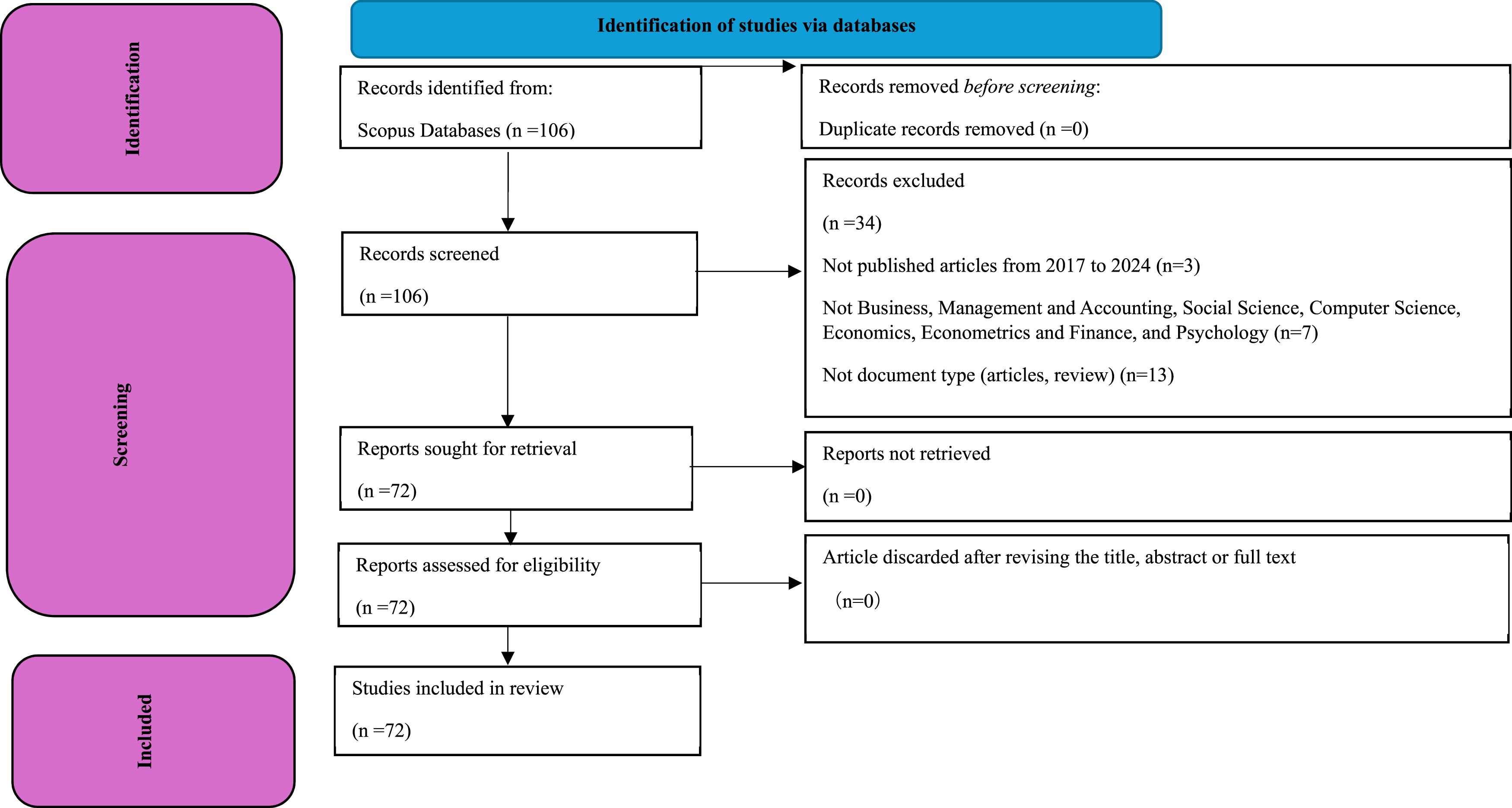
The publication period was limited to 2017–2024. The application of AI technology in the hospitality industry has grown rapidly in recent years, and the impact on employee service performance has evolved. Especially after 2017, there has been a rapid increase in the research literature in the related field (Li et al., 2021). The last year (2025) was not included as it has not yet concluded. The cutoff date for the literature search for this study was 2024. Therefore, limiting the timeframe to 2017–2024 and excluding literature from earlier periods ensures that the review focuses on the most recent and relevant research findings.
This study limited the types of articles to peer-reviewed journal articles and review articles to ensure the quality of the selected sample articles (Polat and Köseoglu, 2024; Shin and Kang, 2023; Strandberg et al., 2018). This study excluded book chapters, conference papers, or unofficial publications to reduce the interference of low-quality or uncritically reviewed studies. In terms of disciplinary scope, this study is limited to the fields of Business, Management and Accounting, Social Sciences, Computer Science, Economics, Econometrics and Finance, and Psychology. Cross-disciplinary domain search enabled this study to focus on multidimensional perspectives of hotel management, employee behavior, and economic impacts in the context of AI technology adoption and integration (Fouad et al., 2024).
Only publications written in English were included. This language restriction ensures access to a broad spectrum of international scholarship, minimizing the risk of overlooking key research due to language limitations (Jain et al., 2023). Finally, to ensure the relevance of the selected sample, the authors carefully reviewed each article’s title, abstract, keywords, research objectives, and stated contributions. This screening process excluded studies that did not align with the research scope (Jain et al., 2023; Li et al., 2021).
All publications were assigned identification numbers. For each article, the author’s name, title, year, source, and DOI were recorded in Excel. Then, the researchers extracted information about antecedents, decisions, consequences, theories, contexts, and methods of the selected publications based on the ADO-TCM framework using axial coding. The adoption of the ADO-TCM framework helped to systematically sort out the key elements and logical structure of the study and enhance the organization and transparency of the analysis. During the coding process, the research elements were categorized into six dimensions, which facilitated the identification of the relationships between antecedents, decisions, and outcomes, and the integration of the research context and methodology.
To reach an agreement in the data extraction procedure, this study used a cross-validation mechanism (Belur et al., 2021). Each of the three researchers analyzed the articles and extracted the data independently. After extracting the data, the researchers examined the discrepancies that existed in the extracted results and discussed and finalized these discrepancies, which made the results more credible.
Data analysis and synthesis
This study employed both the Bibliometrix package in RStudio and VOSviewer software to conduct bibliometric analysis. Bibliometrix mainly emphasizes data processing and quantitative analysis functions, while VOSviewer focuses on the visualization and presentation of relational networks. Bibliometrix facilitates quantitative assessment of research trends, co-authorship networks, journal distribution, and citation patterns, enabling a structured and data-driven exploration of scholarly contributions in the field (Arici et al., 2024). Its robust data processing and statistical capabilities allow for efficient organization and analysis of large volumes of bibliographic data, uncovering patterns and internal relationships across the literature.
VOSviewer, on the other hand, was employed to visualize the relationships among key bibliometric elements, with a particular focus on collaborative research networks across countries and keyword co-occurrence analysis. These visualizations support the identification of core research themes related to the impact of AI on hotel employee service performance. By constructing knowledge maps, VOSviewer provides a clear graphical representation of the intellectual and conceptual structure of the field (Fouad et al., 2024).
Findings
Publication trends by years
This study analyzed the publication trends in literature published between 2017 and 2024. The volume of literature in this field has shown an upward trend since 2017. The number of publications reached its peak in 2023, with research intensity remaining high thereafter. This growth pattern indicates an increasing academic interest in topics related to AI and hotel employee service performance. Further analysis revealed that the average annual citation count for the literature in our dataset peaked in 2019 at 26.83 citations per publication. In more recent years, there has been a declining trend in citation numbers. However, this decrease should be interpreted cautiously due to the time lag inherent in citation accumulation. This pattern can be attributed to two reasons. First, seminal works published earlier have continued to garner citations due to their foundational importance in the field. Second, there is a natural delay between a paper’s publication and its subsequent citation by other researchers.
Publication distributions by journals
This study used Bibliometrix R studio analysis to list the top 15 journals based on the h-index. The top three journals were the Journal of Hospitality Marketing and Management with an h-index of 5, the International Journal of Contemporary Hospitality Management with an h-index of 4, and the Journal of Hospitality and Tourism Management with an h-index of 3. In terms of total citations, the Journal of Hospitality Marketing and Management emerged as the leading source, with 307 citations. Journal of Hospitality Marketing and Management (6) and the Journal of Tourism Futures (3) had the highest number of relevant publications.
Drawing on the Bibliometrix RStudio analysis, this study further examined the annual publication trends of the top five journals in the field. Since 2017, there has been a gradual and consistent increase in relevant publications, with a notable acceleration in growth from 2021 onward. Since then, the Journal of Hospitality Marketing and Management and the International Journal of Contemporary Hospitality Management have emerged as key contributors to the literature on AI in hospitality.
Next, this study summarizes the highly cited literature in the field of AI and hotel employee service performance. The most highly cited study, with a total of 299 citations, is by Li et al. (2019), which explored the impact of hotel employees’ awareness of artificial intelligence on their willingness to leave. This is followed by Belanche et al. (2020), which examined service collaboration between hotel robots and frontline employees; their paper received a total of 147 citations. The study by Carvalho and Ivanov (2024), which addressed the benefits and risks of AI technologies such as ChatGPT in tourism applications, recorded the highest annual average number of citations at 73. The standardized citation count, which adjusts for both the number of citations and the year of publication, reflects the relative influence of a study within the field. The highest standardized citation counts were observed for Carvalho and Ivanov (2024) and Li et al. (2021), at 8.54 and 2.60, respectively.
Publication distributions by authors
S. Ivanov of Varna University of Management (Bulgaria) and C. Prentice of the University of Southern Queensland demonstrated the highest h-indices, each with four publications cited at least four times, reflecting a strong academic impact within the field. Notably, C. Prentice published four papers in 2020 that collectively garnered 405 citations, resulting in a g-index of 4. Similarly, D. Belanche from Universidad de Zaragoza and I. Carvalho from Universidade Europeia, despite contributing only two papers each, achieved total citation counts of 192 and 77, respectively, indicating significant visibility and research interest in their work.
Figure 2 presents the publication timelines of the top 15 authors based on their h-indices. Larger bubbles represent a greater number of publications per author, while darker shades indicate higher citation counts. The figure shows that S. Ivanov and C. Webster were among the earliest contributors in this area and have been published consistently over time. The majority of authors’ publications are concentrated in the period between 2020 and 2024. Author’s production over time.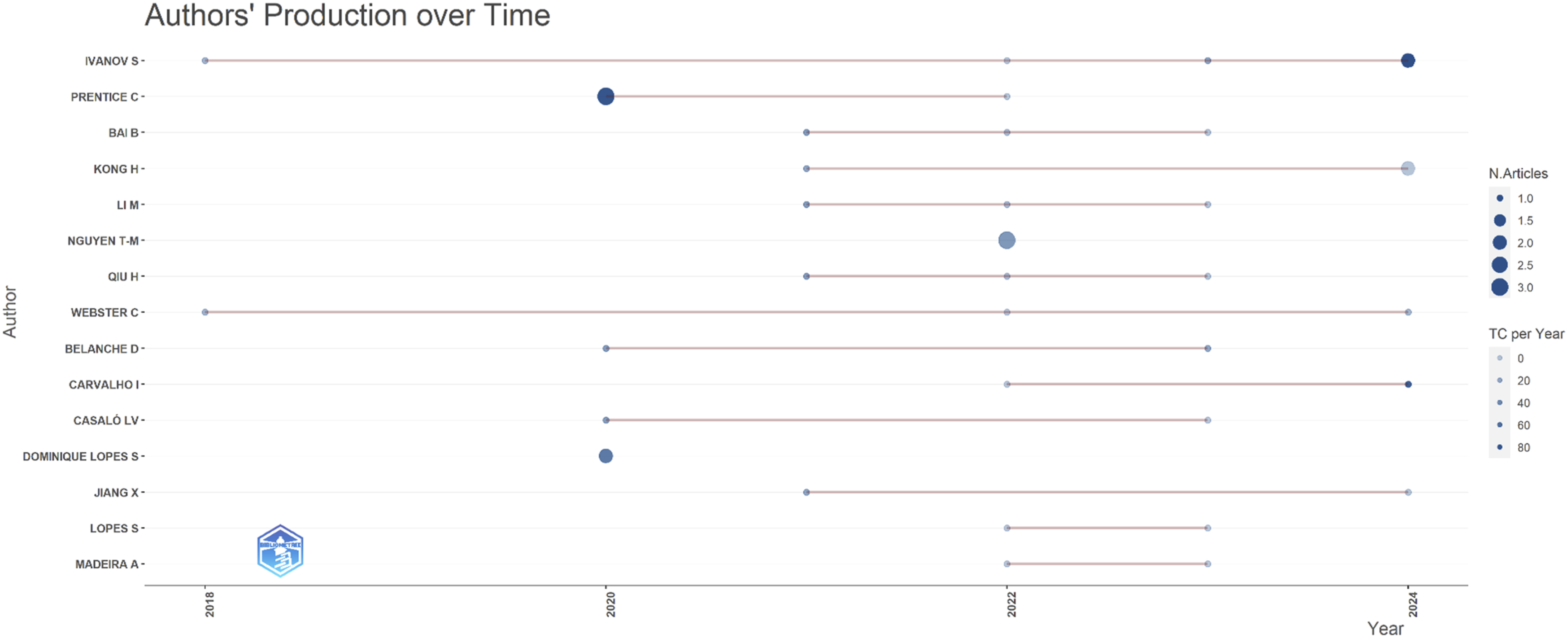
Publication distributions by geographical region
United States and China are the countries with the highest total number of citations, with 565 and 504 citations, respectively. These two countries have very active research activities in the field of AI and employee service performance. Portugal and Japan followed, with 311 and 151 citations, respectively. In terms of the number of publications, China and Australia both ranked first, each contributing 113 documents.
For the VOSviewer analysis, a minimum threshold of three publications per country was set. Based on this criterion, 13 out of 31 countries qualified for inclusion. The collaboration network diagram (Figure 3) reveals that research activity in this area is largely concentrated in China and the United States, which also exhibit the strongest international research partnerships. The thickness of the lines radiating from China and the USA indicates the intensity of their collaborations with other countries. In addition, countries such as the United Kingdom, Australia, and Thailand are involved in collaborative research in this domain, though to a lesser extent. Collaboration network of countries on the research.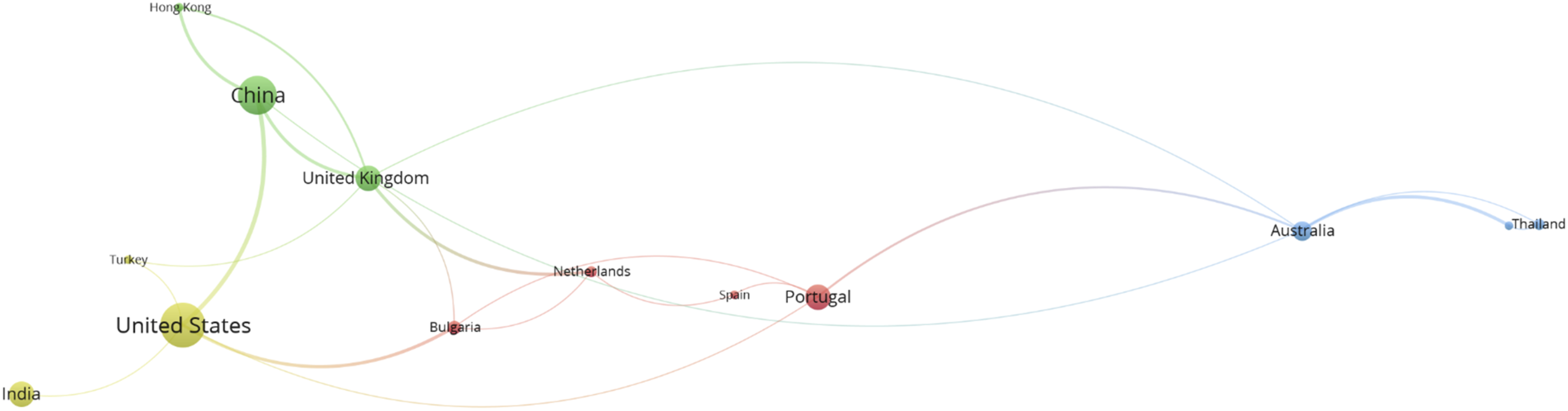
Publication distribution by keywords
A total of 367 keywords were identified in 72 documents by VOSviewer. According to the high-frequency keywords, the most frequently occurring keyword was “artificial intelligence,” with 34 occurrences and a link strength of 70. The frequency counts for “hospitality industry” and “hotel industry” were 10 and 5 times, respectively, and the link strengths were 35 and 18, respectively. “Robotics” and “robots” had a frequency of 7 and 5 times, respectively, and a total link strength of 26 and 13, respectively. “Emotional intelligence” also received a degree of attention in studies focusing on AI. The total link strengths for “emotional intelligence” and “AI” were 15 and 6. In addition, the employment and employee aspects received some attention in the high-frequency keyword messages. Although the frequency was not high, the total link strengths for “employment,” “employee”, and “personnel” were 23, 8, and 8, respectively.
Figure 4 illustrates four keyword clusters generated by VOSviewer from the literature data. Node size represents keyword frequency, while line thickness indicates keyword co-occurrence. The red cluster (7 keywords) focuses on AI’s impact on hospitality employment, with “artificial intelligence,” “employee,” and “employment” showing the highest co-occurrence. This cluster explores the balance between technological advancement and employee concerns in the industry (Kumar et al., 2024; Tian, 2024). The green cluster (6 keywords) emphasizes the relationship between AI awareness and emotional intelligence in hospitality, highlighting the role of psychology (Pelau et al., 2021). Key terms include “AI awareness,” “emotional intelligence,” and “hotel industry.” The yellow cluster (4 keywords) concentrates on service robot applications in hospitality, featuring “artificial intelligence (AI),” “intelligent robots,” “robotics,” and “service robots.” It examines how advanced robotics transform hotel operations and customer experiences (Choi et al., 2021). The blue cluster (5 keywords) addresses hospitality industry adaptations during COVID-19, with “COVID-19” and “customer satisfaction” showing the highest co-occurrence. It explores service redesign under new health standards (Buhalis et al., 2023), focusing on customer satisfaction (Nilashi et al., 2021) and service quality (Liang and Wu, 2022). Specifically, the crisis has accelerated digital transformation and the adoption of contactless services (Qiu et al., 2024). Network of keyword co-occurrence in the research.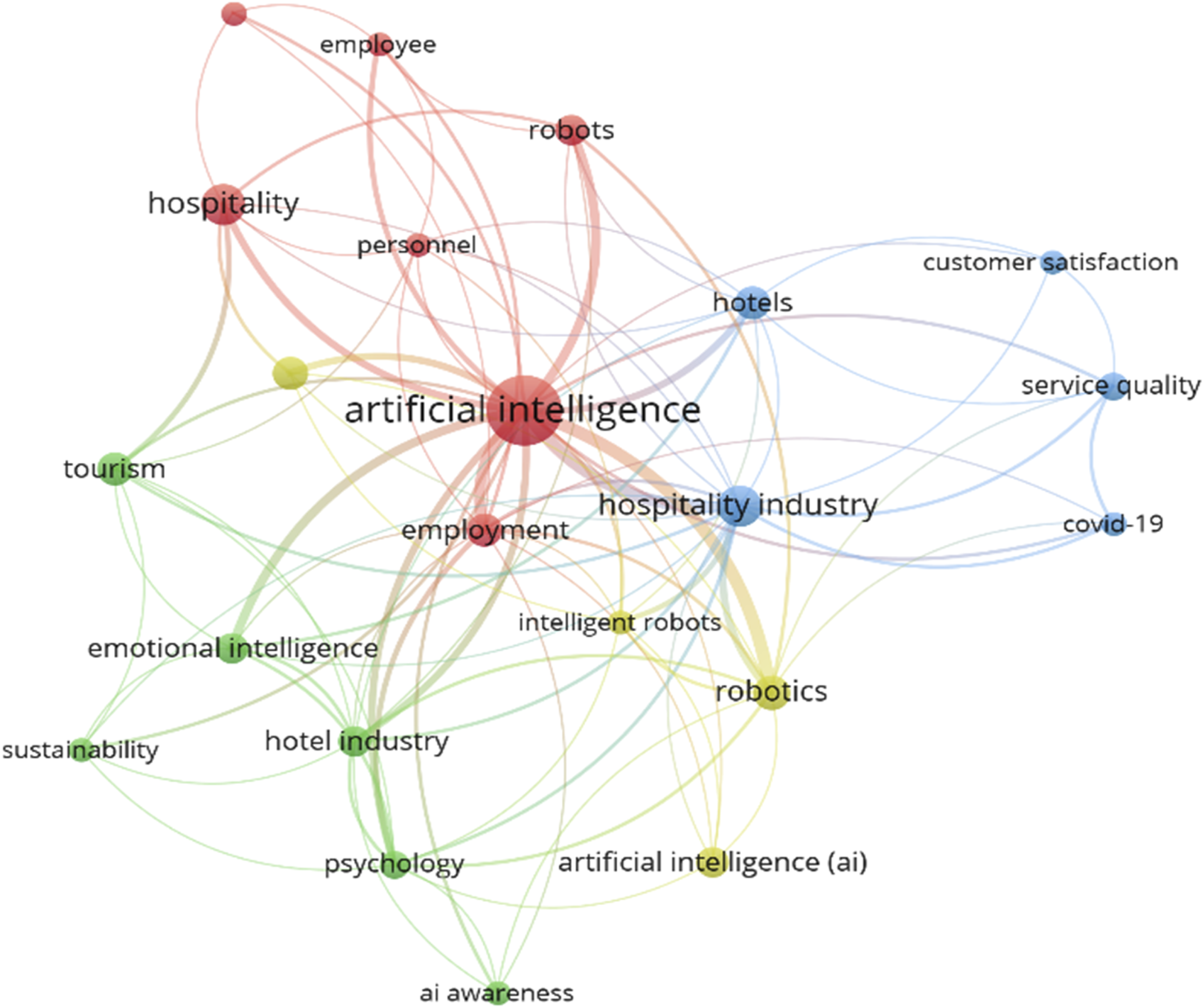
Content analysis based on the ADO-TCM framework
This study used the ADO-TCM framework to perform a detailed content analysis. The ADO framework focuses on antecedents, decisions, and outcomes. It helps explain the key variables and relationships in a research field, answering the question of “what we know” (Akhmedova et al., 2021; Lim and Rasul, 2022). However, it does not fully connect these variables to the broader research base, which limits its depth. In contrast, the TCM framework emphasizes the theoretical foundation, context, and methodology of a study. It addresses “how we know” by providing a strong base for understanding the research (Choudhary et al., 2025). Still, it lacks clear guidance for applying these ideas to specific topics.
By combining ADO and TCM, this study gains a more complete approach that overcomes the weaknesses of each framework (Paul et al., 2024). The ADO framework brings structure and clarity to the analysis, while the TCM framework adds theoretical strength and methodological rigor (Vasil et al., 2024). Together, they answer both “what we know” and “how we know” in a way that avoids the risks of a narrow or unfocused review. This makes the ADO-TCM framework a reliable and effective tool for advancing knowledge in this area.
Cluster 1: Antecedents of AI influencing employee service performance
The factors that influence whether AI can optimize employee service performance in the hospitality industry fall into three main areas, which are environmental, technological, and organizational.
Regarding environmental factors, McCartney and McCartney (2020) developed a conceptual research framework for service robots in the hospitality industry. They included factors such as consumer preferences and policy compliance, examining their influence from the perspectives of employees, customers, and public policy. This framework lays a foundation for future studies on how service robots can add value in hospitality settings. Gupta et al. (2022) analyzed evolving trends in the hospitality industry, focusing on three key dynamics: the automation of repetitive tasks, the growing need for information collection, and the rising demand for personalized services. These shifts highlight the changing role of technology in the sector. Similarly, investigated technology-driven hospitality service environments, identifying environmental intelligence as a critical element in creating smart service landscapes. They emphasized how artificial intelligence supports both physical and social service settings in this context.
In terms of technological factors, the main focus of the aspect is on AI quality (Prentice et al., 2020a), perceived benefits of AI (Ivanov and Webster, 2024), dehumanization effect of AI (Ivanov and Webster, 2024), perceived AI-supported autonomy (Kong et al., 2024a), digital skills (Carlisle et al., 2023), technological self-efficacy (Liu, 2024). Murphy et al. (2019) examined the marketing strategies required to promote robotic services, emphasising the importance of anthropomorphism in increasing customer acceptance and satisfaction. Gupta et al. (2022) focused on automation, information gathering, personalization, and seamless aspects to analyse the quality of AI systems and their impact on hospitality services. Wei and Prentice (2022) explored the impact of AI services on hotel employee services in terms of reliability, flexibility, and responsiveness.
In terms of organizational factors, organizational commitment (Kong et al., 2021), competitive climate (Khaliq et al., 2022), organizational AI adoption (Lin et al., 2024), and supervisor support (Zhao et al., 2023) have received attention in existing studies. Li et al. (2019) focused on organizational factors and explored how employees’ perceived organizational support and the psychologically competitive atmosphere within the organization can influence their awareness of AI and robotics, which in turn affects their turnover intentions. Alipour et al. (2021) found that the organizational ambiance surrounding AI technology adoption can impact employee service sabotage.
Cluster 2: Employee decision-making in response to AI in hospitality
Hotel employees made specific behavioural decisions in response to AI technologies-related antecedents. From the perspective of work engagement, Koo et al. (2021) found that employees experienced feelings of insecurity stemming from AI applications. This insecurity negatively affected their enthusiasm for work and overall engagement, including physical, emotional, and cognitive dimensions.
In terms of specific decision-making behaviours, Kong et al. (2024a) found that the autonomy experienced by employees through AI-enabled technologies stimulated positive exploratory behaviours in the workplace. Similarly, Nguyen and Malik (2022a), focusing on technological antecedents, explored how the quality of the information provided by AI systems influenced employees’ knowledge-sharing behaviours within organisations. They observed that higher information quality led to a greater willingness to share knowledge among employees.
Building on this, Wang et al. (2022) demonstrated that employees’ awareness of AI and robotics positively influenced proactive behaviours such as active learning and task crafting. These behaviours served as strategies for employees to maintain or enhance their competitiveness in response to perceived threats from AI implementation. Kong et al. (2024b) also noted that employees’ perceptions of AI influenced their informal learning behaviours, suggesting that perceptions played a key role in shaping how individuals adapted to technological change.
On the other hand, the literature also evidenced negative behavioural responses. Zhou et al. (2024) argued that AI applications could provoke negative emotions in the workplace, leading to counterproductive work behaviours directed at customers. This highlighted the potential for adverse organisational outcomes when negative antecedents remained unaddressed.
Cluster 3: Outcomes of AI influence on employee performance
Employee behavioral responses to AI adoption have been shown to produce a range of outcomes. Positive decision-making contributed to the optimization of hotel employee service performance. Kong et al. (2024b) suggested that the application of AI technologies encouraged employees to explore their work more actively, place greater trust in AI, and display more proactive personality traits. These responses enhanced the innovative service performance of employees. Prentice et al. (2020b) also noted that positive decision-making tended to increase employee engagement and improve the quality of services delivered, which in turn enhanced customer satisfaction and loyalty. In addition, Qiu et al. (2022) found that AI adoption could foster greater enthusiasm among employees, which was an important element in optimizing service performance.
Conversely, negative decision-making was associated with a decline in hotel employee service performance. This was often reflected in increased job insecurity and mobility (Zhang and Jin, 2023), higher turnover intention (Koo et al., 2021), reduced career competency, and elevated levels of job burnout (Kong et al., 2021). Alipour et al. (2021) confirmed that the implementation of AI could result in emotional dissonance among hotel employees, which in some cases led to service sabotage. Furthermore, Singh et al. (2021) argued that the feelings of eeriness and identity threat experienced by employees during interactions with AI systems triggered negative behavioral responses, ultimately reducing job satisfaction.
Cluster 4: Theoretical foundations of existing research
The research field of AI technology application in the hospitality industry has adopted various theoretical models that guide the process of how AI technology can optimize the service performance of hotel employees. The following theories are more widely used and provide a strong explanatory framework for research in related fields.
The stimulus–organism–response (S-O-R) framework explains how environmental variables influence the internal states of hotel employees during service work, which in turn shape their behaviors (Mehrabian and Russell, 1974). This framework effectively illustrates the pathway through which AI technology applications impact employee service performance (Li et al., 2023b). Grounded in the S-O-R framework, Zhang and Jin (2023) examined how employees’ awareness of smart technologies, including AI, automation, robotics, and algorithms, influenced their career perceptions.
Cognitive appraisal theory helps to explain employees’ emotional reactions to the introduction of AI technologies (Ding, 2021; Lazarus and Alfert, 1964). These reactions may be either positive or negative. The theory has been widely applied in the field of technology acceptance to explore the factors influencing employees’ willingness to adopt AI in order to enhance service performance (Wong et al., 2023). Building on this framework, Zheng and Montargot (2022) examined how negative emotions affected hotel employees’ adoption of new technologies.
The conservation of resources theory explains how individuals strive to acquire, protect, and develop their resources and how the loss or threat of these resources leads to stress (Hobfoll, 1989; Xu et al., 2023). This theory helps to clarify how employees’ positive or negative perceptions of AI technology can lead to differing effects on service performance. Specifically, when hotel employees view AI technology as a supportive ‘colleague’ that helps preserve their resources, they are more likely to engage with it actively to enhance service performance (Qiu et al., 2022). In contrast, if employees perceive AI as a threat to their resources, they are more likely to resist its use, resulting in decreased service performance (Khaliq et al., 2022).
Self-determination theory (SDT) emphasizes the role of intrinsic and extrinsic motivation in driving individual behavior (Deci and Ryan, 1980; Koo et al., 2021). This theory provides a useful lens for exploring how AI technology influences employee performance by affecting their basic psychological needs and motivation. Koo et al. (2021) applied SDT to conceptualize hotel employees’ job insecurity in response to AI implementation and examined its impact on turnover intentions. Similarly, Kong et al. (2024b) found that employees’ perceived AI-supported autonomy had a significant positive effect on their innovation performance, as explained through the framework of self-determination theory.
Cluster 5: Contexts of existing research
From the perspective of the research subjects, most of the studies were conducted from the perspective of frontline employees of star-rated hotels. This is attributed to the fact that extant literature aims to explore the core needs of employees and how AI technology affects employee behavior and performance and to optimize the human-computer collaboration model in the hospitality industry (Koo et al., 2021; Zhang and Jin, 2023). There were also studies from the perspectives of AI, employees, and consumers that aimed to explore how AI influenced hotel employee service performance, consumer experience, and the synergistic optimisation of the overall service system (Belanche et al., 2020; Prentice et al., 2020b). In addition, some studies addressed the perceptions of hoteliers. For instance, Ivanov and Webster (2024) examined whether hotel managers’ perceived advantages of AI technology in supporting automated decision-making led to a preference for its application to enhance service performance. Their findings provided a foundation for decisions related to hotel management, talent development, and performance evaluation systems.
Cluster 6: Methods employed in existing research
Research concerning the impact of AI on employee service performance in the hospitality industry has applied conceptual, quantitative, qualitative, and mixed-method approaches. The conceptual approach attempts to construct a theoretical framework for research in this area by theorizing the impact of AI technology on employee service performance (Yin et al., 2023). Quantitative research methods, on the other hand, use questionnaires to quantify the impact of AI technologies on employee performance (e.g., service quality and innovation performance) by establishing correlation or causation (Nguyen and Malik, 2022b). The qualitative research method was typically used to obtain subjective insights from hotel employees, managers, and other subjects concerning their application of AI technology in daily operations. The method uses interviews or case studies to understand their acceptance, adaptation, and changes in their work experience with AI technologies (Carlisle et al., 2023). Mixed methods, on the other hand, provide both quantitative statistical evidence and deep insights into employees’ subjective behaviors and perceptions. Zhao et al. (2023) applied a mixed-method research approach by first investigating employees’ fear of AI surveillance and the psychological impact of this fear through a questionnaire with a time-lag design, followed by a qualitative research approach through a series of semi-structured post hoc interviews to validate the findings further.
According to the content analysis based on the ADO-TCM framework, an integrated ADO-TCM framework is presented in Figure 5. The framework provides a holistic view for exploring the antecedents, decisions, consequences, theories, contexts, and methods of AI’s impact on hotel employee service performance. Integrated ADO-TCM framework.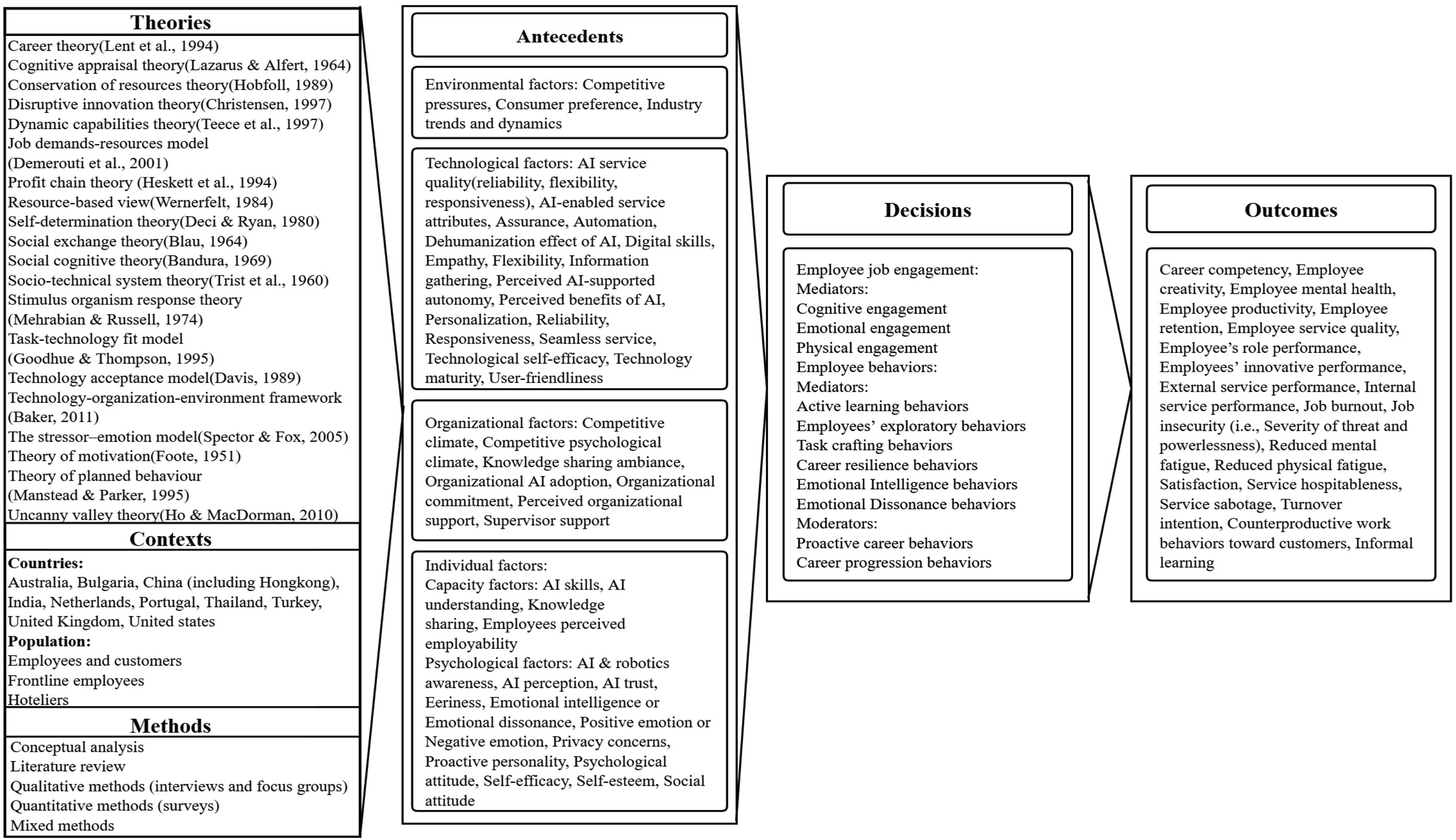
Developments in the subject over the last 5 years
The co-citation analysis focused on highly cited publications (Donthu et al., 2021), while this section focuses on the thematic study of the literature in the last 5 years to complement the cluster analysis in the earlier section. Figure 6 shows the topical thematic terms formed based on a summary of the literature published in the field from 2020 to 2024. Progression of themes (2020–2024).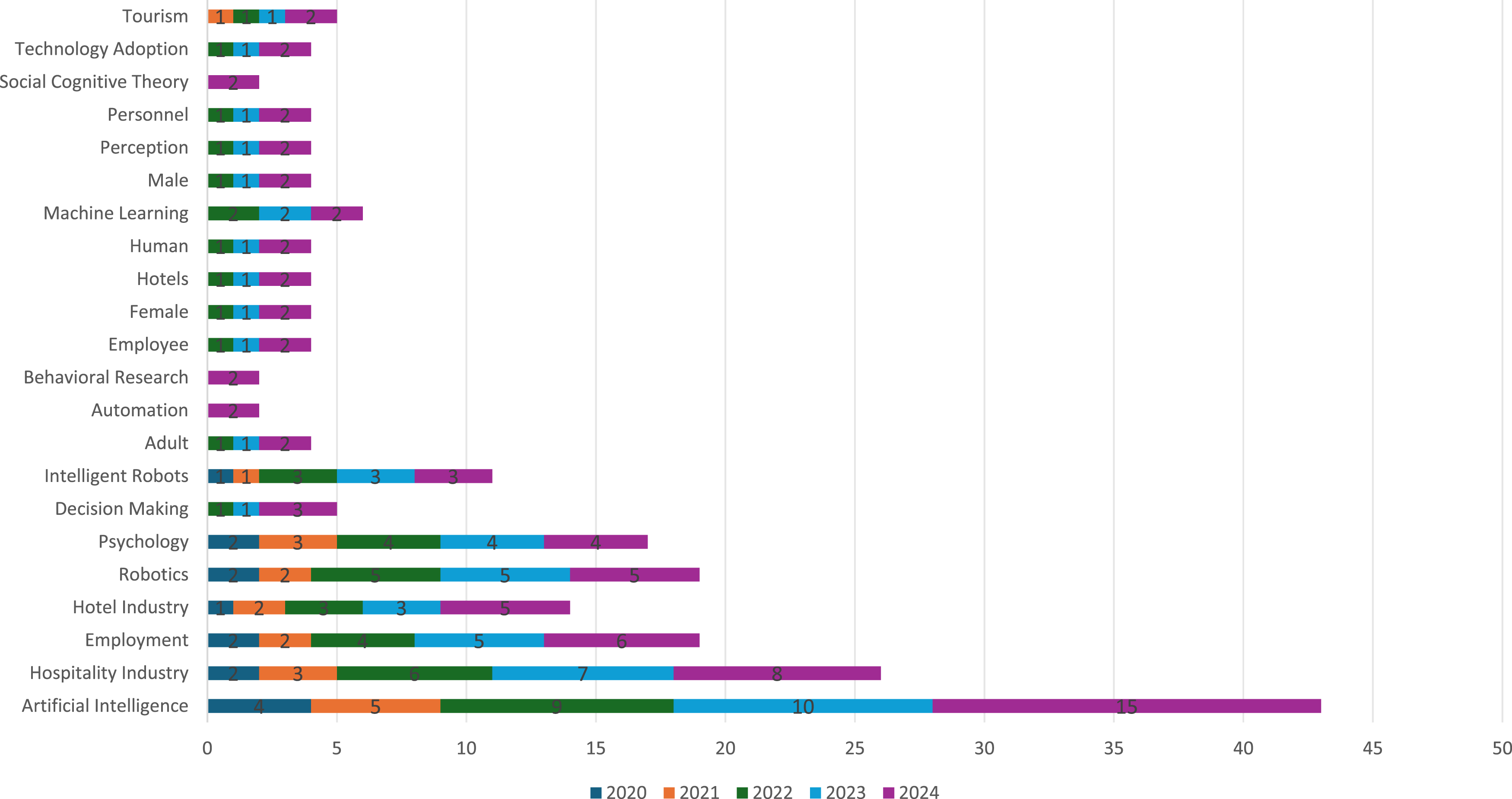
The impact of automation on hotel personnel: Employment and training perspectives
In the last 5 years, a growing body of studies has focused on the influence of increased automation in the hospitality industry on hotel personnel, particularly the employment and training of employees because of the adoption of AI. The application of automation technology has led to the disappearance of some traditional jobs in hotels (Rydzik and Kissoon, 2022), such as reception and room cleaning. However, automation has also resulted in new jobs in the hospitality industry (Manthiou et al., 2021), such as robot operators and technical support staff. Howcroft and Taylor (2023) pointed out the reshaping of hotel employees’ job content by automation technology. This not only requires employees to learn more technology and data analysis skills but also to focus on customer experience and service quality. Arslan et al. (2022) further emphasised the importance of employee AI skills training.
Technology adoption in the hospitality industry: The interrelationship of customer perceptions, artificial intelligence, and employee roles
Research on technology adoption in the hospitality industry based on the three-way interaction between consumers, AI, and employees has gained attention in the last 5 years. Akdim et al. (2023) showed that although AI applications in the hospitality industry bolster positive customer experiences, they typically lack flexibility and empathy and have a higher risk of malfunctioning. On this note, frontline human employees remain irreplaceable in delivering the empathetic, responsive, and personalized service that is essential to hospitality experiences (Prentice and Nguyen, 2020). Studies on tripartite interactions among consumers, employees, and AI have highlighted the importance of human staff possessing non-cognitive skills (e.g., emotional, social, and personal competencies) that AI currently lacks (Belanche et al., 2020; Yin et al., 2023). Nevertheless, some research has highlighted the threat that AI technology poses to hospitality employees’ jobs. Kim et al. (2021) showed that consumers prefer non-contact robotic services by comparing consumer preferences with robotic and employee services, which differs from the findings from before COVID-19. Certainly, COVID-19 led to an increase in consumer preferences for service robots. However, the hospitality industry should be more aware of how AI is transforming the work of its employees and think about how to develop employee–AI interaction strategies to enhance the customer experience (Tian, 2024).
Employee outcomes related to AI adoption in the hospitality industry
Psychological factors mainly include individuals’ attitudes, perceptions, and behaviors, and the connection among these factors is vital to AI adoption and integration in the hospitality industry (Kelly et al., 2023). Liang et al. (2022) explored the double-edged sword impact of AI awareness on employees’ service innovation behavior. This research argued that employees’ awareness of the perception that AI will replace their work could bring about emotional and psychological resource fatigue, hindering employee innovation in hotel services. However, with future orientation moderation, this awareness can also promote intrinsic motivation and stimulate service innovation in employee human-computer interaction. Song et al. (2022) constructed a three-stage model of sense, think, act, which showed that employee perceived risk and perceived playfulness are important drivers of employee success in collaborating with AI robots, emphasizing the importance of understanding employees’ feelings and thoughts in the process of collaborating with AI in the hospitality industry. However, research in related fields has also pointed out some negative impacts. These include employee concerns and resistance to job insecurity that the application of AI technology may trigger (Koo et al., 2021).
Automating decision-making from the hotelier’s perspective
Recent literature has explored hotel operations managers’ perspectives on automated decision-making. Ivanov and Webster (2024) found that most hoteliers positively view AI technology for decision-making. Managers prefer AI for tasks requiring less emotional intelligence and minimal customer interaction, while complex decisions require human-computer collaboration. Yağmur et al. (2024) explored hotel managers’ perceptions of smart technologies. The results showed that managers’ efficient application of smart technologies can enhance hotel market competitiveness, increase consumer satisfaction and loyalty, and reduce costs. Ruel and Njoku (2021) developed a role service chain analytics tool based on AI technology. The study showed that hotel managers can apply the analytics tool to optimize talent decision-making and improve talent management practices, which in turn improve hotel service quality and consumer satisfaction.
Research gaps and future research agenda
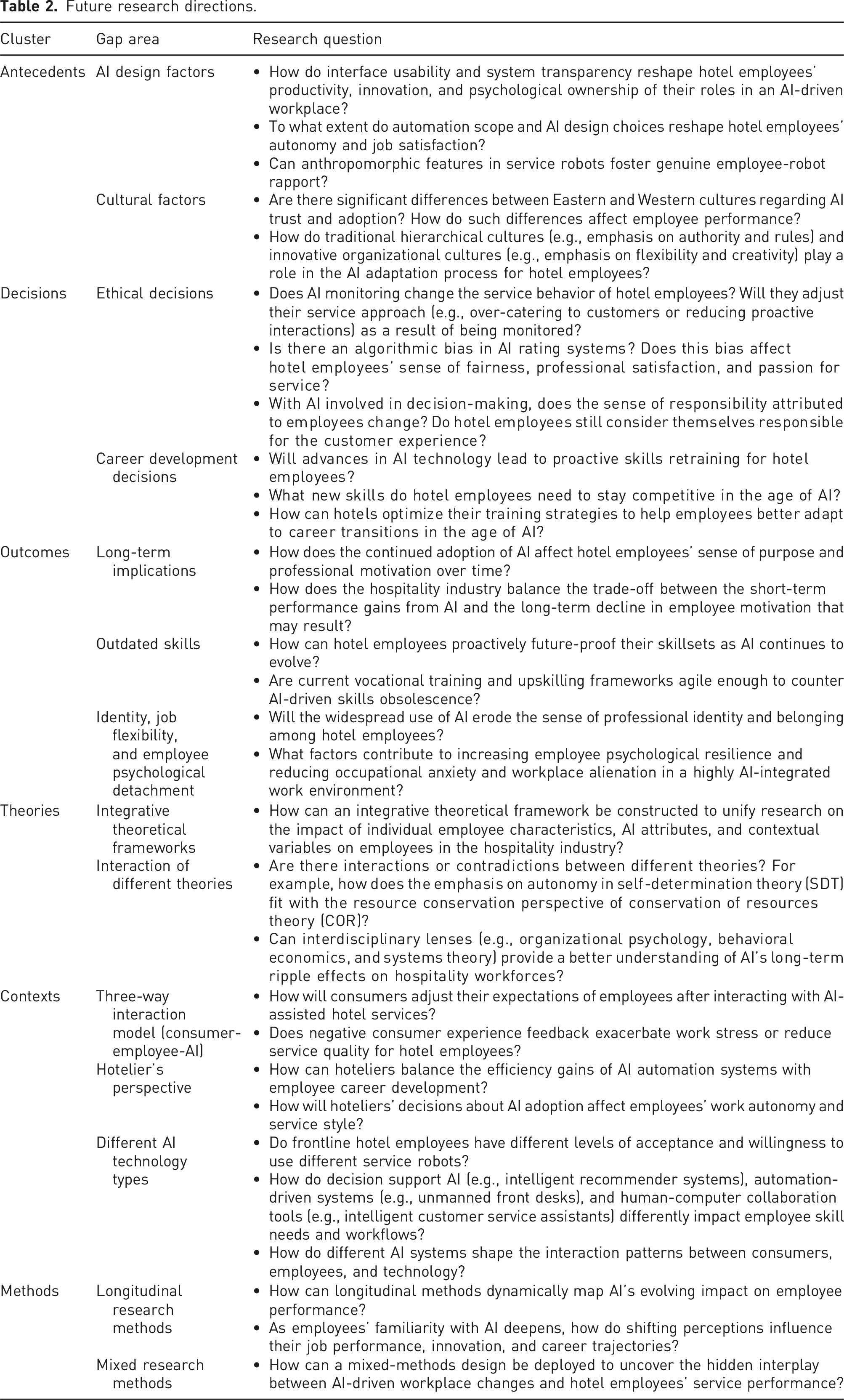
Regarding the antecedents of the impact of AI technology on the service performance of hotel employees, existing studies tend to focus on three dimensions of influencing factors. The environmental dimension explores the impact of market competition and changing customer demands on the psychology of hotel employees (Gupta et al., 2022; McCartney and McCartney, 2020), the technological dimension analyses the impact of the quality of the AI system on employees’ skill requirements and work styles (Prentice et al., 2020a), and the organizational dimension explores the role that organizational commitment and support play in employee acceptance of AI technologies (Zhao et al., 2023). One key oversight is the limited attention to how AI design influences employees’ service performance. Although AI adoption in hospitality is increasing, there remains a limited understanding of how interface usability and system transparency influence hotel employees’ productivity, innovativeness, and psychological ownership of their roles. Existing studies often overlook the mechanism by which AI design features interact with human cognition and behavior in the workplace. Furthermore, the boundary conditions under which automation scope and AI design choices affect employee autonomy and job satisfaction remain unclear. In addition, while service robots are increasingly anthropomorphized, research has not yet fully examined whether and how these features promote emotional connection or rapport between employees and robots. Additionally, existing research largely neglects the role of national and organizational cultures in this adaptation process. For instance, differences between Eastern and Western cultural attitudes toward trusting and adopting AI are rarely addressed. Similarly, the influence of traditional hierarchical cultures versus innovative organizational cultures on AI acceptance lacks investigation. These unexplored areas hinder the understanding of AI’s impact across diverse contexts.
In terms of decisions, existing research tends to categorize the impact of AI on employee decision-making into two areas, namely employee engagement (e.g., physical engagement, emotional engagement, cognitive engagement) and employee behavior (e.g., exploratory behavior and knowledge-sharing behavior) (Kong et al., 2024b; Nguyen and Malik, 2022a). Also, different antecedents may produce good and bad employee behaviors (counterproductive work behaviors toward customers) (Zhou et al., 2024). However, existing research on employees’ ethical decisions under the influence of AI is still insufficient. The introduction of AI technology in the hospitality industry may change employees’ ethical decisions. First, in AI-monitored service environments, how do employees alter their service behaviours in response to data surveillance? Second, to what extent might employees face unfair treatment due to algorithmic bias in AI-driven scoring or management systems, potentially affecting their motivation and engagement? Third, the issue of responsibility attribution arises. When AI is involved in decision-making, do employees still perceive themselves as accountable for the customer experience? These ethical questions related to the integration of AI in service settings remain insufficiently addressed. Additionally, the impact of AI on employees’ career development and transition decisions is an area that requires further exploration. For instance, does the presence of AI encourage employees to reskill or pivot their careers? What competencies are essential for employees to thrive in AI-augmented workplaces, and how should training and development programs adapt? These questions remain underexplored and present rich opportunities for future research.
Current research largely emphasizes the immediate effects of AI technology on outcomes like employees’ innovativeness, turnover rates, and service quality (Qiu et al., 2022; Zhou et al., 2024). Moreover, the temporal consideration of existing research outcomes is limited. Most studies fixate on short-term outcomes, neglecting the long-term consequences of AI integration. While AI may boost performance in the short term, its prolonged reliance on automation could erode employees’ sense of purpose or agency over time. This potential trade-off between immediate benefits and enduring drawbacks remains largely uncharted. Another area that has received insufficient attention is skill obsolescence. As AI continues to evolve, employees may struggle to keep pace, potentially leading to a mismatch between their existing skills and the demands of the job. We argue that researching overlooked dimensions such as identity, resilience, skill relevance, and workplace alienation is important for developing a more forward-looking understanding of AI’s effects on the hospitality workforce.
In terms of theories, the more widely used theories in existing research are the stimulus-organism-response (S-O-R) framework (Mehrabian and Russell, 1974), cognitive appraisal theory (Lazarus and Alfert, 1964), conservation of resources theory (Hobfoll, 1989), and self-determination theory (SDT) (Deci and Ryan, 1980). In addition, there are theories such as, profit chain theory (Heskett et al., 1994), resource-based view (Wernerfelt, 1984), socio-technical system theory (Trist et al., 1960), technology acceptance model (Davis, 1989), technology-organization-environment framework (Baker, 2011), theory of motivation (Foote, 1951), career theory (Lent et al., 1994), disruptive innovation theory (Christensen, 1997), dynamic capabilities theory (Teece et al., 1997), job demands-resources model (Demerouti et al., 2001), social exchange theory (Blau, 1964), social cognitive theory (Bandura, 1969), task-technology fit model (Goodhue and Thompson, 1995), the stressor–emotion model (Spector and Fox, 2005), theory of planned behaviour (Manstead and Parker, 1995), uncanny valley theory (Ho and MacDorman, 2010). There is a notable absence of a unified theoretical framework that integrates key dimensions such as individual employee characteristics (e.g., cognitive capacity, adaptability to technology), AI-specific attributes (e.g., system complexity, level of automation), and contextual factors (e.g., cultural norms, industry structures). In addition, the existing literature offers limited engagement with multi-theoretical or interdisciplinary perspectives, which restricts the integration of insights from diverse fields relevant to this research area. The interplay between theoretical frameworks. For example, how SDT’s emphasis on autonomy may align or conflict with Conservation of Resources Theory in highly automated environments remains largely unexplored.
Existing research contexts are more often explored based on frontline employees in the hospitality industry. Only a few studies have focused on the three-way interaction between AI technology services, employee services, and consumers (Gonzalez et al., 2022; Prentice and Nguyen, 2020). Even fewer studies have focused on the perceptions and influences of hoteliers (Ivanov and Webster, 2024). Importantly, the consumer experience in AI-assisted service encounters remains underexplored, particularly in terms of how consumer feedback, shaped by AI-influenced interactions, may unintentionally impact employee performance or morale. This gap highlights the need for a more holistic understanding of the AI–employee–consumer dynamic in hospitality settings. Decision-support AI, automation-driven systems, and human-computer collaboration tools likely exert unique pressures on employee service performance, from shifting skill demands to altering workflow autonomy. These variations are not trivial. They are expected to redefine how employees adapt to AI-enhanced environments. Despite their significance, such distinctions remain largely uncharted. To move the field forward, future studies must expand the perspective to rigorously probe consumer-employee-AI dynamics and examine the effects of diverse AI technologies.
Existing studies have more often used quantitative or qualitative research methods. Quantitative studies have mainly used questionnaires and regression analysis to measure employees’ attitudes toward AI and service performance (Guan et al., 2024). Qualitative methods, on the other hand, mainly used interviews and case studies to explain employees’ perceptions towards AI (Ivanov and Webster, 2024). Quantitative methods provide robust statistical insights but struggle to reflect individual experiences. In contrast, qualitative research methods, though limited in external validity, excel at uncovering specific behavioral and cognitive patterns in employees facing AI-related challenges. It is worth noting that the application of mixed research methods in this field is very limited. Current studies have yet to extensively leverage mixed-method approaches in examining AI-driven changes in the workplace. Meanwhile, existing studies lack a longitudinal research design. As employees become more familiar with AI systems, the evolution of individual perceptions and the specific mechanisms of their influence on job performance, innovative behaviors, and career path shaping have not been clarified.
Future research directions.
Conclusions and implications
Discussion
Through a systematic literature review and bibliometric analysis of the impact of Artificial Intelligence (AI) on employee service performance in the hospitality industry, this study not only presents a holistic overview of the research field but also offers a comprehensive conceptual framework (RQ1). This study utilized the ADO-TCM framework to categorise the primary antecedents- environmental, technological, organizational, and personal factors- along with decision-making processes, including work engagement and decision-making behaviors, and outcomes such as performance enhancement and innovativeness that affect the impact of AI on employee service performance (RQ2). This study also summarizes the theories (e.g., cognitive appraisal theory, the conservation of resources theory), contexts (mostly focusing on frontline employees in star-rated hotels), and methods (mainly quantitative research) commonly used in existing studies (RQ3). This study identifies research gaps such as AI design and usability, employee skill development and training, and proposes an ADO-TCM-based framework to guide future in-depth exploration of the mechanisms and impacts of AI-human collaboration from a multidimensional perspective (RQ4).
This study shows that AI technology is not simply replacing service jobs, but reshaping the competency structures and organizational systems required in service jobs. This change requires the hospitality industry to redefine its human resource strategies, including employee skills retraining, adaptive leadership development, and more inclusive technology governance mechanisms. Meanwhile, the finding also encourages us to reconsider the existing organizational design principles, ensuring that AI is genuinely integrated into the service ecosystem and serves as a collaborator for human interaction rather than functioning as an isolated tool. Collaboration between AI and humans will redefine the nature of hotel service work. Subsequent research should pay more attention to the evolution mechanism and management of this collaborative relationship and its significant impact on future workforce structure, service quality, and consumer experience.
Theoretical implications
This study stands as one of the first to systematically map the research landscape on AI technology’s impact on employee service performance. By analyzing trends, journal distributions, authorship, geographical origins, and keyword patterns, it pinpointed influential and authoritative works in the field. Keywords such as “emotional intelligence,” “AI awareness,” and “employment” emerged as central, revealing thematic clusters that define current scholarship. Unlike previous studies that have primarily examined the technological applications of AI in the hospitality industry or focused on consumer-related outcomes (Chi et al., 2020; , this study shifts the focus toward the impact of AI on hotel employees’ service performance. By doing so, it refines the research lens to address a critical but underexplored dimension of AI integration. This approach offers a more holistic understanding of AI’s role in hospitality, bridging the gap between technology, employee behavior, and organizational performance, thereby enriching the theoretical discourse in this evolving field.
Another key theoretical implication lies in its development of a content analysis grounded in the ADO-TCM framework. By demonstrating the antecedents, decisions, and outcomes of AI’s influence on hotel employees’ service performance, the study uncovered recurring patterns and extended the theoretical interplay between AI technology and service management. It showcased how AI shapes employee decision-making, thereby enriching the conceptual framework of technology integration in hospitality service contexts. This cross-disciplinary synthesis not only bridges AI research and hotel service management but also provides a structured understanding of employee performance in an AI-enhanced workplace.
Most notably, this study pioneered the integration of SLR and bibliometric analysis within this field. This methodological integration results in a robust, multi-dimensional perspective on AI’s role in employee service performance. More specifically, the SLR provided a qualitative synthesis of existing theories and findings, while bibliometric analysis mapped the field’s quantitative structure by revealing influential works, keyword networks, and research trajectories. Drawing on these findings, the study proposed research models and directions that chart the pathways for the field.
Practical implications
This study provides specific management recommendations for the hotel industry to address the impact of AI on employee service performance effectively. Regarding human resource management, hotels should reorganize job responsibilities and prioritize the recruitment of talents with technology adaptability and cross-functional capabilities. In terms of technology deployment, AI should be used as an assistive tool for employees’ work and introduced in phases according to the size of the hotel and the maturity of AI. For employee training, the training should focus on improving employees’ ability to work with AI and introduce employee participation and feedback mechanisms. In terms of organizational management, a culture of “AI empowerment rather than replacement” should be shaped through positive communication to enhance employees’ sense of belonging and motivation. In addition, industry policymakers should promote the development of AI adaptability standards and knowledge-sharing platforms to guide the hospitality industry to realize the dual enhancement of human-machine collaboration and service innovation.
Limitations
This study has several limitations. Firstly, it is based solely on the Scopus database for literature search and analysis. Although this database includes a significant number of high-quality academic journals, it may still overlook pertinent studies in other databases (e.g., Web of Science and Google Scholar), which affects the study’s comprehensiveness and representativeness. Secondly, the analysis hinges on conceptual organization, primarily relying on summarizing existing literature and constructing theoretical frameworks. While this method facilitates a systematic overview of the current state of research, it may also oversimplify complex relationships and fail to fully elucidate contradictory points or contextual differences in the literature.
Future research
To address the above limitations, future studies should integrate literature resources from multiple databases to enhance the coverage of information and the robustness of findings. In addition, it is recommended that subsequent studies adopt more advanced and comprehensive analytical methods, such as meta-analysis or mixed-methods review, to quantitatively assess the strength, consistency, and directionality of variable relationships in existing studies. In turn, a more systematic empirical test of the conceptual framework proposed in this study can be realized to further promote the theoretical integration and deepening of AI and employee collaboration research.
Footnotes
Declaration of conflicting interests
The authors declared no potential conflicts of interest with respect to the research, authorship, and/or publication of this article.
Funding
The authors received no financial support for the research, authorship, and/or publication of this article.
