




Abstract
Given that hygiene remains a prominent concern for tourists, this study aims to examine the impact of hygiene-related messages on individual tourists’ attitudes toward tourism advertising. To achieve this objective, Study 1 and Study 2 employed video and print advertisements alongside an eye tracking system to examine the influence of timing and appearance location of hygiene messages. Subsequently, a survey targeting Australian tourists (Study 3) was conducted to explore how process-focused versus outcome-focused thoughts impact attitude toward advertising, with age and risk aversion tested as moderators. Findings from the eye tracking studies show that hygiene messages appearing at the end as compared to the beginning of the video advertising as well as those positioned in the top rather than lower regions of print advertisements, are more effective in capturing attention. Survey results further revealed that process-focused thoughts are more influential in developing attitude than outcome-focused thoughts. A list of implications is discussed at the end.
Introduction
Hygiene messages have become integral to the tourism and hospitality industry (Bhati et al., 2021), in particular, as health and hygiene are primary concerns for tourists after the COVID-19 pandemic. Tourists are still conscious of health-related risk and place significant importance on preserving their personal hygiene and physical well-being. These factors remain an ongoing issue in the post- pandemic era (Soliman et al., 2024), affecting tourists’ choices of tourism products or services. As a result, visual materials (i.e., photo images and video) have received increasing interest (Huang et al., 2022; Li et al., 2016) for their use as mitigation measures to reduce tourists’ fears (Bhati et al., 2021). The pandemic, in fact, has increased the digitalisation process (Elkhwesky et al., 2024), with a crucial role played by tourism advertising featuring hygiene messages. A relevant theory for understanding viewers’ behaviour is the theory of visual attention capacity (Luck and Vogel, 1997), which claims that individuals like to narrow down viewing time when receiving overwhelming information due to their limited visual attention span (Li et al., 2016). This is supported by past studies indicating that individuals, due to their selective attention, do not notice or do not fully understand video advertisements (Li and Lo, 2015). However, there is the limited understanding of how viewers apply their selective attention to tourism advertisements that highlight hygiene messages
Previous studies examine the effects of visual and textual features on an individuals’ perceptions of brand advertisements, their visual attention, or their purchase decisions (Li et al., 2016). However, the literature on hygiene messages still lacks a clear understanding of how the specific advertising features such as timing of the hygiene message’s appearance (at the beginning or end of a video advertisement) or its location (at the top or bottom of an image-based advertisement) influence tourists’ perceptions. Given the growing importance of hygiene messages in today’s travelling world, the design of videos or print advertisement needs thorough investigation of the timing and placement of the hygiene message, as well as the presence or absence of tourists in the advertisement. However, the literature remains insufficient in addressing the specific effects of these variables on tourists’ attitudes toward hygiene-related advertising.
Tourists’ mental stimulation plays a key role in shaping their attitudes, as they actively seek authenticity and credibility in tourism advertising (Nunes et al., 2021). Such perceptions foster a sense of trustworthiness and expertise, which in turn leads to the development of positive attitudes toward the advertisement (Schouten et al., 2020). Unfortunately, when addressing this type of inquiry, self-reported results often fail to fully align with eye-tracking results, with distortion or non-representativeness (Li et al., 2018) due to cognitive biases (Nan, 2013). Thus, a comprehensive investigation should be conducted using both an eye-tracking monitoring study with tourism advertising images and videos as stimuli, as well as self-reported survey data for a more holistic understanding. The current research, therefore, employs three different studies to address the following research questions (RQs):
The paper is structured as follows: descriptions of Study 1: an eye-tracking study focused on video advertising stimuli; Study 2: an eye-tracking study using image-based print advertising stimuli; and, finally, Study 3: a survey-based study. These sections are followed by the conclusion, which summarises the overall discussion and presents the research contribution to the literature and its implications for managerial practice.
Literature review
This research draws on the theory of visual attention capacity (Luck and Vogel, 1997) as the theoretical platform for hypothesis development, recognising that viewers have a limited attention span to process tourism advertisements highlighting hygiene messages. The study is further informed by the principle of ‘cognitive economy’ (Wyer and Srull, 1986), which suggests that individuals tend to minimize information processing activities and make a decision with least possible effort. By combining these two theoretical perspectives, it is inevitable that viewers may exhibit a usual pattern when exposed to tourism advertisements that feature hygiene messages placed in different locations with the presence or absence of the tourist image.
Study 1: Video advertising stimuli-focused eye-tracking study
Procedure and participants
Study 1 applied a 2 × 2 design (presence or absence of tourists [2] x appearance of hygiene message at the beginning or end of the video advertising [2]). The eye-tracking experiment was conducted in one of the researchers’ offices. Tourist participants (n = 33) viewed the video stimuli, while their eye movements were recorded using a SensoMotoric Instruments (SMI) Remote Eye Tracking (RED) device with a sampling rate of 30 hertz (Hz), which captured eye positions every 33 milliseconds [ms]). After watching a series of videos with a mean duration of 18.4 ± 6.9 seconds (s), participants (n = 33) completed a short questionnaire. To minimise bias, each participant watched a subset of the stimuli, with the stimulus presentation order counterbalanced across participants to minimise order effects. Most participants were aged between 18 and 45 years, with only a few (approximately 6.25%) above 45 years. In terms of gender, approximately 31.25% of participants were male. Most participants were travelling with family (approximately 78.13%) compared to those travelling alone or with others. Studies 1 and 2 used the stimuli presented in Online Appendix A. All visual materials used for the experiment stimuli were sourced from a publicly published copyright-free website, Pexels at <pexels.com>.
Results
Eye fixation duration details.
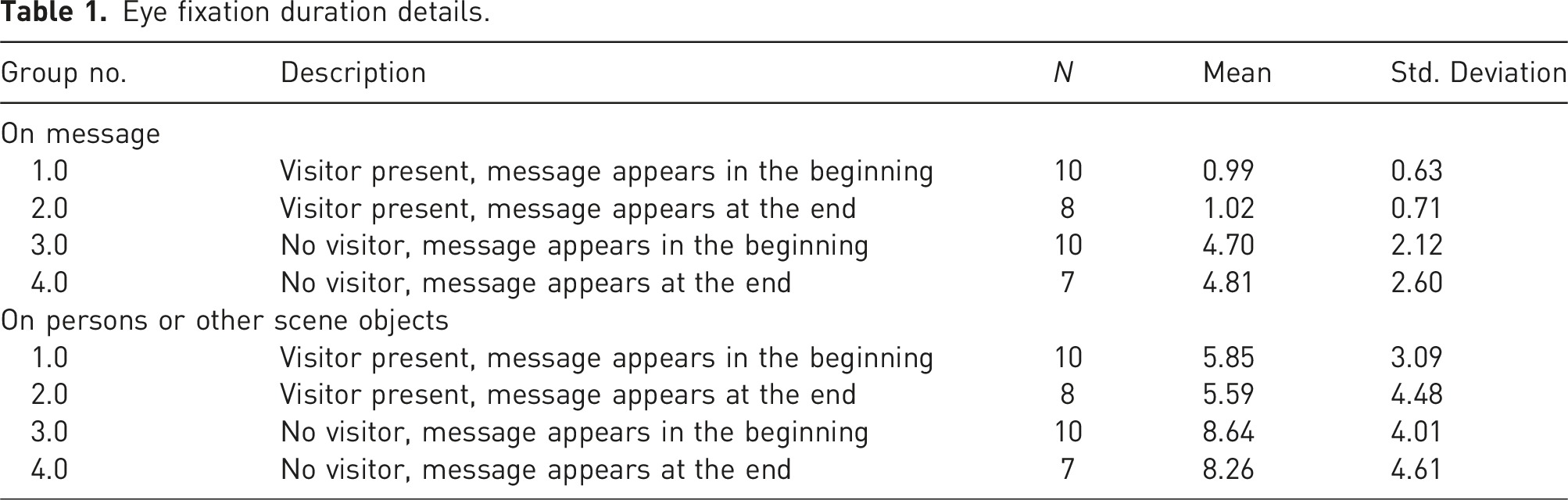
Results from self-reported data
Using the same factorial design, participants completed self-reported questions on their attitude toward advertising after the eye-tracking experiment. Attitude toward advertising was measured by asking ‘Overall, I consider this advertising as a good thing’ (1 = strongly disagree and 5 = strongly agree).
Study 1 details with self-reported question.
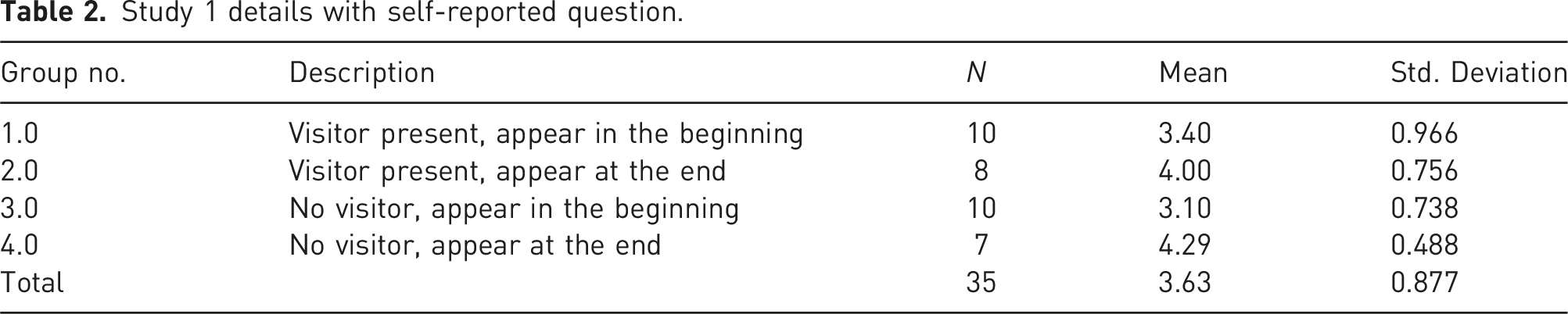
Study 2: Image-based print advertising
Procedure and participants
Following a similar procedure and with the same participants as in Study 1, eye fixation statistics were obtained for the four types of images arising from the 2 × 2 design (presence or absence of tourists [2] x hygiene message at top or bottom of the advertising [2]), as presented in Table 2. After watching the photo stimuli, participants were asked to rate their attitude toward the advertisement using the statement ‘I like this advertising’ on a five-point Likert scale (1 = strongly disagree and 5 = strongly agree).
Results
Eye fixation duration details.
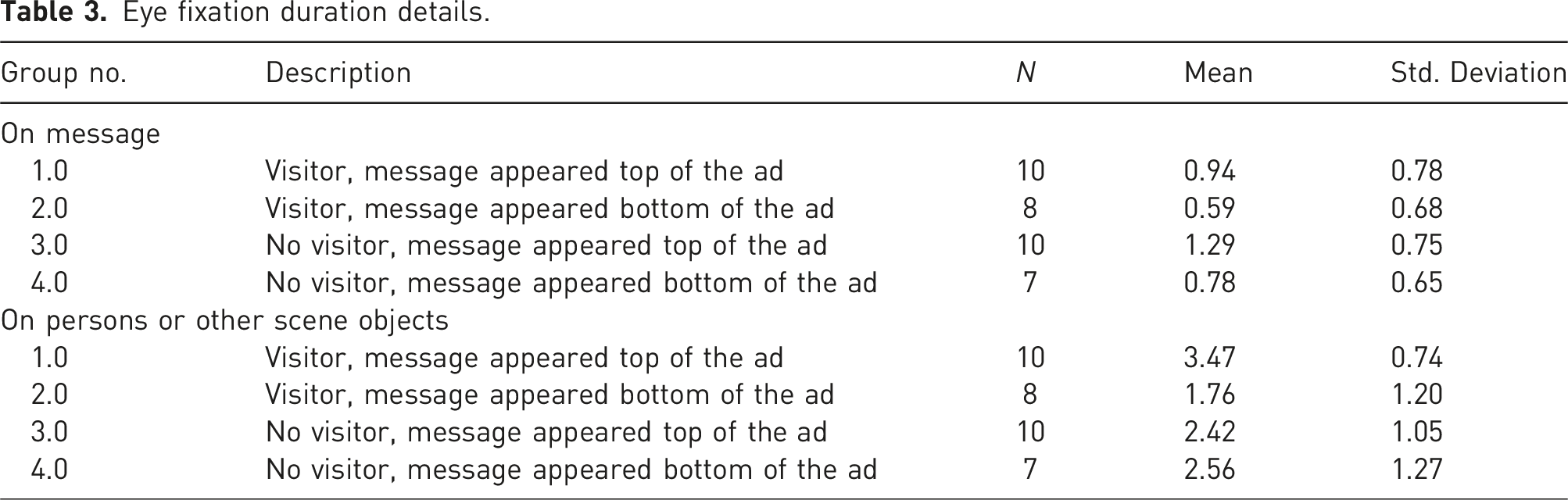
Results from self-reported data
Study 2 details with self-reported data.

Discussion
Correlations between (implicit) fixation duration patterns and (explicit) self-reported responses showed higher preference scores for advertisements with the hygiene message at the top and the presence of tourists. Overall, the presence or absence of tourists and the relative location of the hygiene message in the advertising substantially altered the extent of visual attention to the hygiene message, validating RQ2 through both the eye-tracking experiment and self-reported data.
Study 3: Survey-based study
Advertising credibility and authenticity
In the advertising literature, the word ‘credibility’ refers to consumers’ perception of the extent of truthfulness (Becker et al., 2019). As perceptions of hygiene measures can significantly decrease perceived risks (Volgger et al., 2021), hygiene messages can enhance the credibility of advertisements. Accordingly, previous studies have examined advertising messages and credibility as closely related constructs (Lee and Kim, 2020). When advertising message is perceived as highly credible and genuine, it not only enhances consumer persuasion (Becker et al., 2019) but also leads to various other positive advertising outcomes (Schouten et al., 2020).
Advertising credibility is a research domain that mainly focuses on mass communication while highlights information exchange, trustworthiness, expertise, and persuasion (Lee, 2020; Lee and Eastin, 2021). On the other hand, authenticity is largely understood as a combination of perceived realism and parasocial interaction (Lee, 2020; Lee and Eastin, 2021), which often depends on how individuals perceive the credibility of the advertising. Hence, it was hypothesised in this study that:
A hygiene message positively influences the perceived credibility of advertising.
The perceived credibility of advertising positively influences the perceived advertising authenticity.
Attitude toward advertising
Previous literature argues that individuals with a higher psychological need for security tend to seek more authenticity (Liang et al., 2018), as authenticity offers a sense of perceived control and decreases perceived uncertainty- both of which were particularly important during and after the COVID-19 pandemic (Liang et al., 2018; Park et al., 2022). Accordingly, authenticity in advertising (Atkin and Beltramini, 2007) has been shown to enhance individuals’ attitudes toward the advertising (Morhart et al., 2015) and positively affect both process- and outcome-focused thoughts. Process-focused thoughts are when individuals focus on the process of using a product or service, whereas outcome-focused thoughts are when individuals focus on the end-benefit of using a product or service (Brechman and Purvis, 2015). Given that authenticity is considered a ‘composite formative construct’ representing all relevant dimensions of interest (Nunes et al., 2021), this study proposed that it affects both process- and outcome-focused thoughts about the advertising featuring hygiene messages. Thus, we propose the following hypotheses:
Perceived advertising authenticity positively influences process-focused thoughts.
Perceived advertising authenticity positively influences outcome-focused thoughts.
Perceived advertising authenticity positively influences attitude toward an advertisement.
Process- and outcome-focused thoughts
While process- and outcome-focused thoughts are examined in different contexts (Brechman and Purvis, 2015; Wu et al., 2019), only limited research investigates the role of these two types of thought in individuals’ attitudes toward hygiene-focused tourism advertising. Considering that both process- and outcome-focused thoughts are known to shape viewers’ attitudes toward advertising (Wu et al., 2019), this study proposed that both types of thought impact individuals’ attitudes toward advertising containing hygiene messages. Therefore, we hypothesise that:
Process-focused thoughts positively influence attitude toward an advertisement.
Outcome-focused thoughts positively influence attitude toward an advertisement.
The moderation impacts of age and risk aversion
Age has been widely used as a moderator in past tourism studies (Kim and Kim, 2021; Sawaftah et al., 2020) owing to its inherent influence on individuals’ cognition and behaviour. Thus, this study proposed that age moderates the relationship between both process- and outcome-focused thoughts and attitude toward advertising. Supporting this, Kim and Song (2020) found that age significantly impacts individuals’ perceptions of authenticity in advertising.
The relationships between perceived advertising authenticity and (a) process-focused thoughts; (b) outcome-focused thoughts; and (c) attitude toward advertising are moderated by age. Risk aversion, on the other hand, indicates the extent to which an individual is willing to avoid a situation perceived as highly risky (Kim and Pomirleanu, 2021). Individuals with high risk aversion focus more on potential loss compared to their low risk aversion counterparts, who focus more on potential gains (Pizam et al., 2004). Given its significant influence on attitudes, tourists’ decision making (Williams and Baláž, 2015) and cognitive processing, risk aversion has been used as a moderator in previous studies (Kim and Pomirleanu, 2021; Prince and Kim, 2021) Thus, we propose the following hypothesis:
The relationships between perceived advertising authenticity and (a) process-focused thoughts; (b) outcome-focused thoughts; and (c) attitude toward advertising are moderated by risk aversion. See conceptual model in Figure 1.
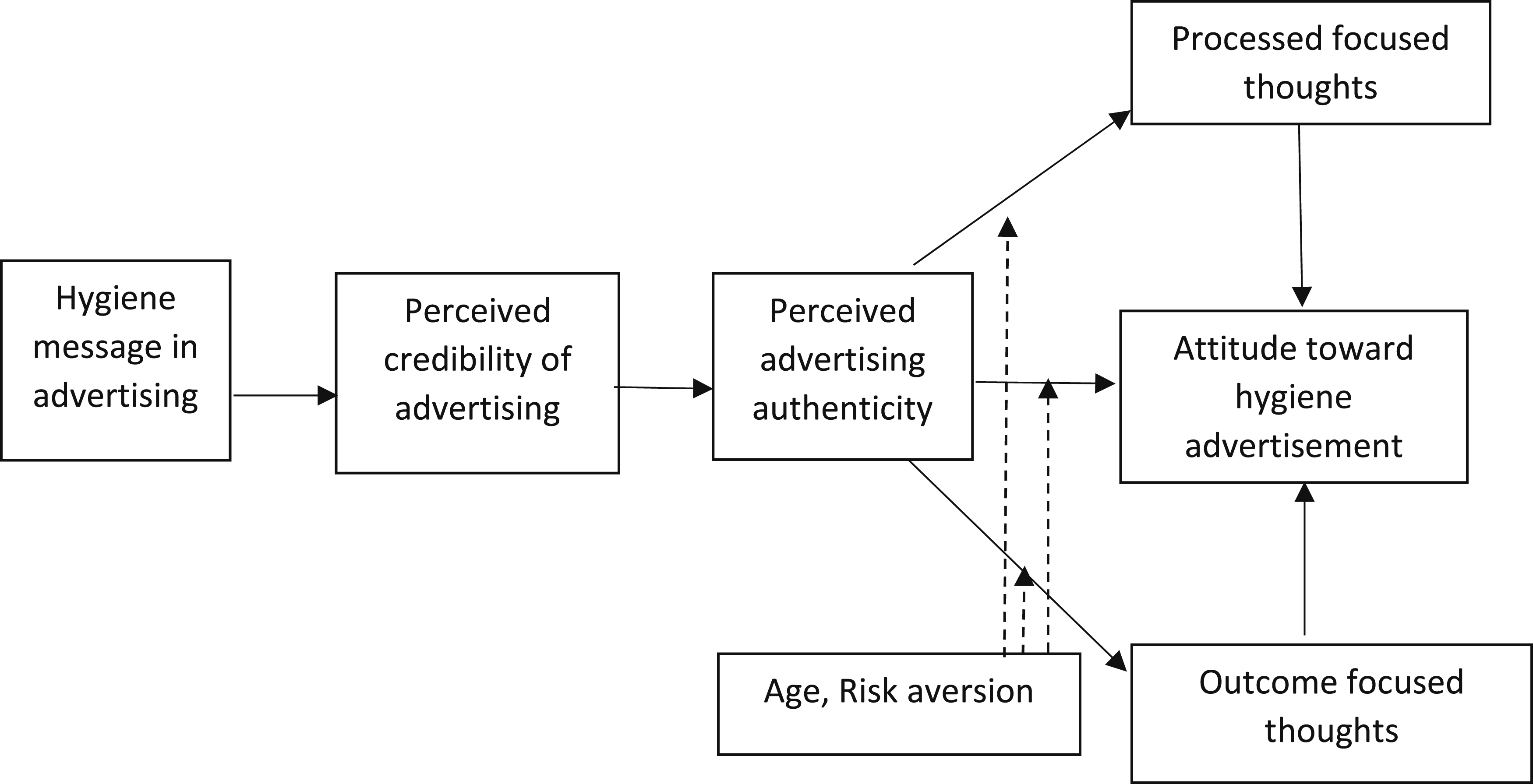
Conceptual model for study 3.
Method
Scale details.
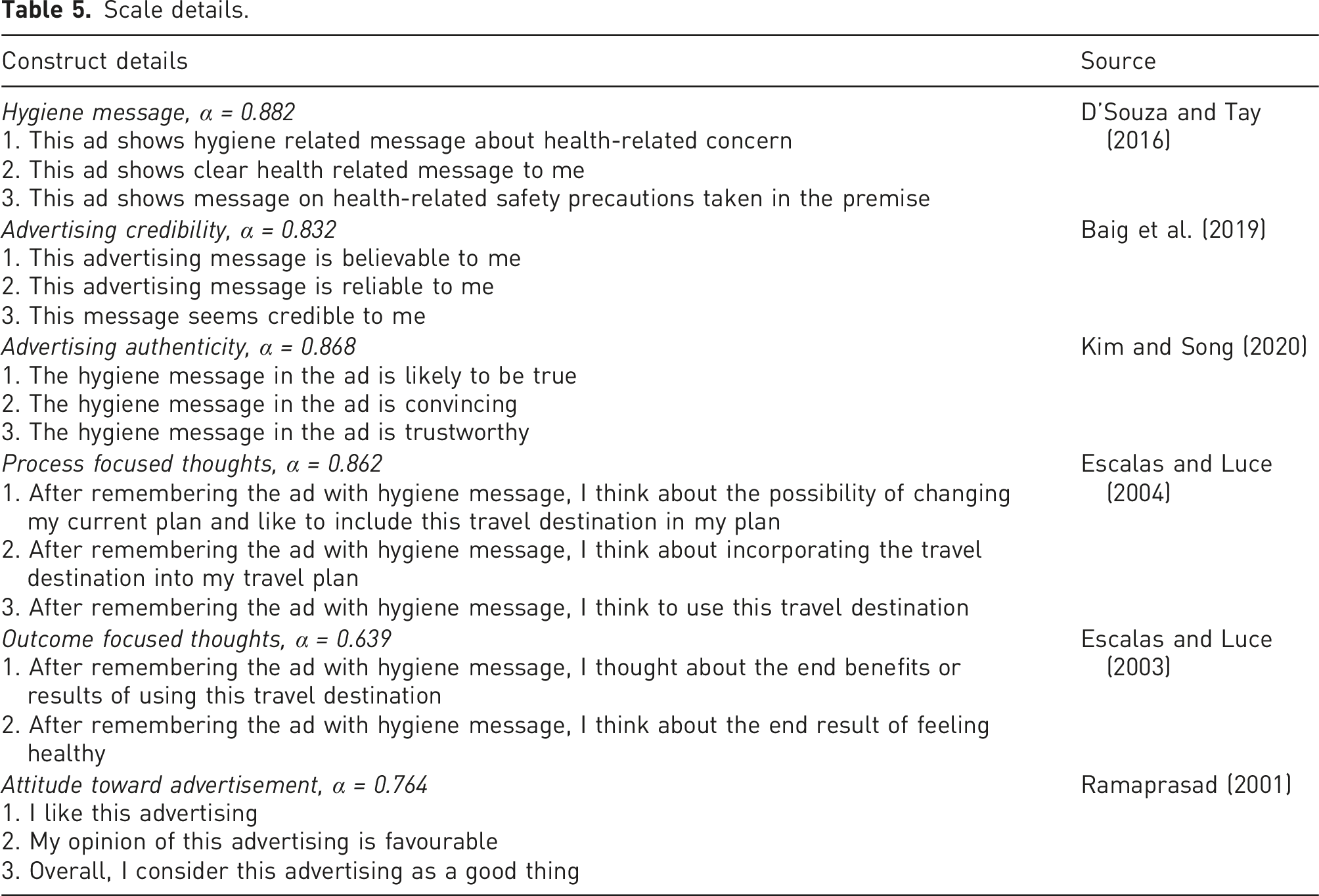
Results and discussion on direct effects
Reliability and validity measures.
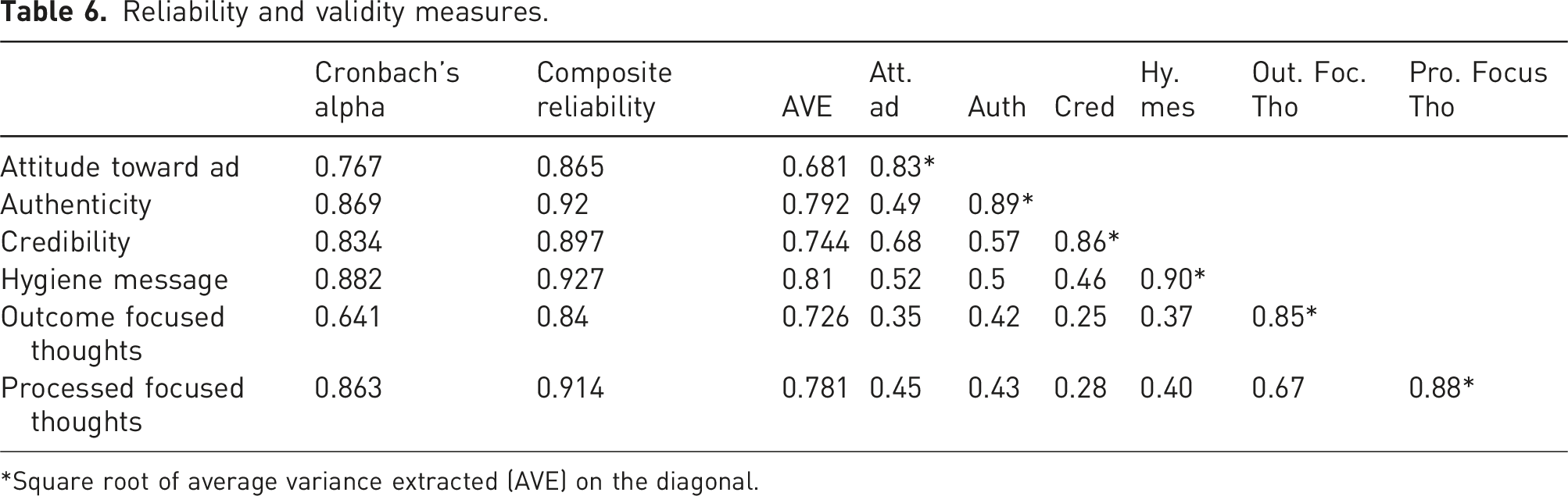
*Square root of average variance extracted (AVE) on the diagonal.
PLS output.
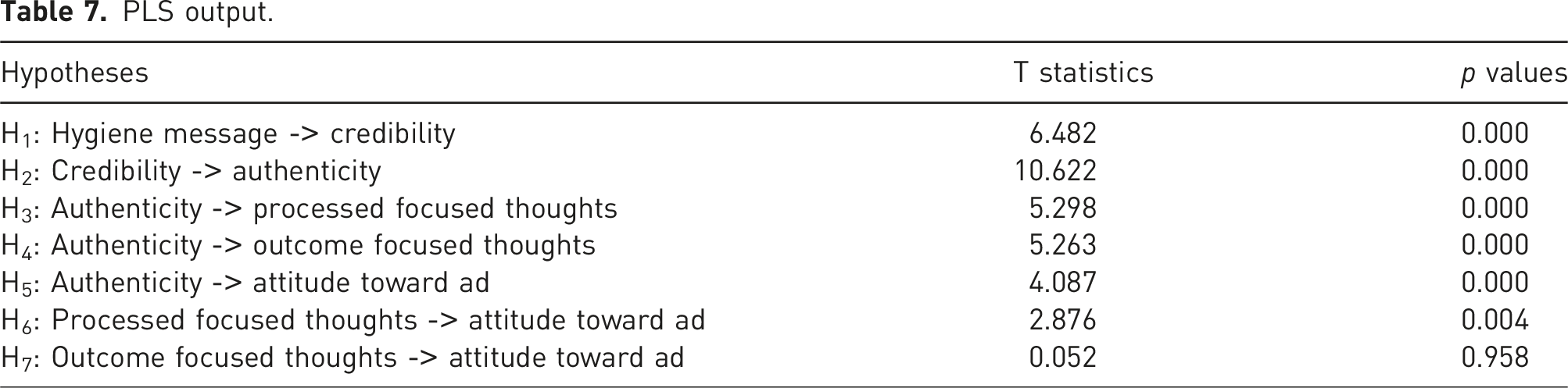
Results and discussion on the moderating impacts of age and risk aversion
Moderation output (H7 and H8).
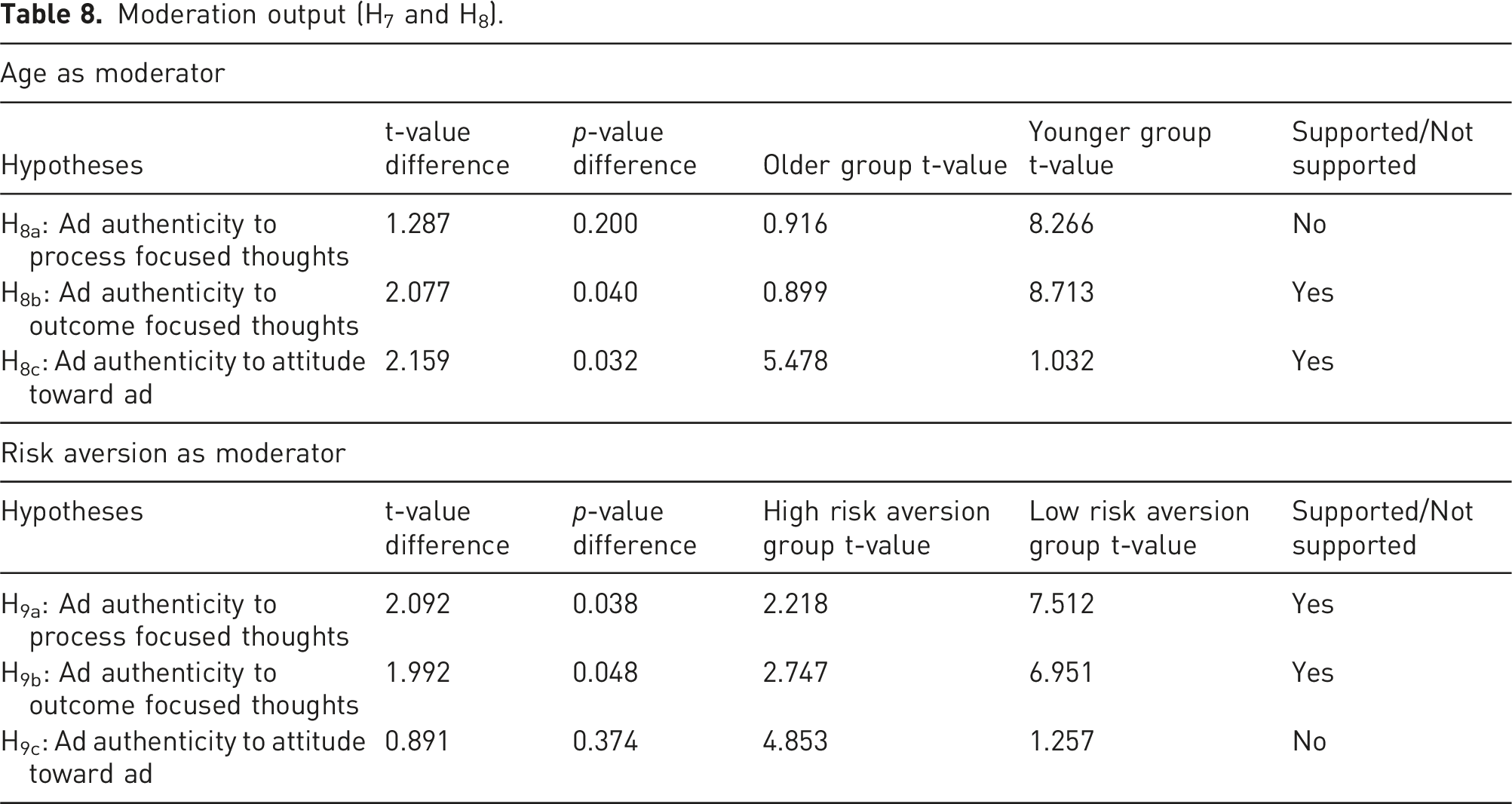
Additional mediation analysis and discussion
Mediation output.

Conclusion
The study aimed to explore the impact of a hygiene message in advertising on attitude toward tourism advertising, utilising a multi-methods approach comprising eye-tracking monitoring (Shukla et al., 2018; Subramanian et al., 2014), a self-reported questionnaire, and a survey among the broader community. Findings of the eye-tracking study as well as self-reported data on video stimuli (Study 1) revealed that a hygiene message appearing at the end of the video had a lasting impact on viewers, thus supporting previous advertising literature with its focus on the role of persuasive arguments in viewers’ attitude development (Meyer et al., 2023). This addresses the study RQ1 by concluding that tourists’ attitudes become more positive toward the advertisements that include a hygiene message at the end, regardless of the presence or absence of visitors. Similarly, Study 2 findings indicated that print advertisements with a hygiene message appearing at the top of the advertisement with a tourist presence had a significant positive impact on tourists’ attitude toward the tourism advertising. This result is consistent with previous research highlighting the significance of displaying a hygiene message (Yu and Margolin, 2024). Thus, in response to the RQ2, it can be confirmed that print advertisements with a hygiene message at the top, along with an image of visitor (s), generate more positive attitudes among tourists. Additionally, Study 3, in line with previous knowledge in the literature on process- and outcome-focused thoughts (Brechman and Purvis, 2015), reported that advertising authenticity had an almost similar effect on process- and outcome-focused thoughts. However, process-focused thoughts had a greater impact on developing positive attitudes toward advertising compared to outcome-focused thoughts, with a hygiene message playing a significant role in making a tourism advertisement more credible to viewers. These findings support previous arguments that advertising with content relevant to viewers is more favourably perceived (Joa et al., 2018), with hygiene messages continuing to influence tourists’ minds. Finally, following previous arguments (Kim and Song, 2020; Portal et al., 2019), a strong relationship was found between advertising credibility and advertising authenticity Therefore, in response to the RQ3, the study findings confirm that message credibility and authenticity are the most crucial factors in developing positive tourist attitudes toward advertising.
This research makes several contributions to the literature. Firstly, as a multi-methods research attempt aimed at verification, this study contributes to the existing body of literature by highlighting how a hygiene message plays a role in developing positive attitudes toward tourism advertising in the post-pandemic era. Findings from this multi-methods approach provide a more rigorous addition to the literature (Fatima, 2023), with calls having been made previously arguing about the drawbacks of using only self-reported surveys (Bauhoff, 2024). Secondly, the study contributes to the application of the theory of visual attention capacity (Luck and Vogel, 1997) and to the field of selective attention literature (Li and Lo, 2015) by conducting eye-tracking monitoring experiments using video and image advertising. The findings of this study enhance the conceptualisation of visual attention (Li et al., 2016) in hygiene-related tourism advertising and shed light on the existing literature regarding message, strategy, and cue effectiveness (De Kerpel et al., 2024; Hatzithomas et al., 2023; Zhu et al., 2022). Finally, this study extends the hygiene-focused tourism advertising literature by examining the impact of process- and outcome-focused thoughts, authenticity, and the moderating effect of the age and risk-aversion behaviour of tourists (Amaro et al., 2019; Kim and Kim, 2021).
The study offers several managerial contributions. As identification with one’s organisation is crucial in decision making (Di Mascio and Fatima, 2018) in today’s competitive world (Khan, 2008), the finding highlights the importance of displaying hygiene messages in tourism advertising in the post-COVID era to develop positive attitudes. This supports the recommended protocols for hygiene measures of the World Travel and Tourism Council (WTTC) (Volgger et al., 2021). In the post-COVID context, research studies found that tourists remain highly conscious and particularly concerned about health and safety risk (Islam et al., 2024) compared to the pre-COVID time. Thus, the tourism advertising industry must align with current tourists’ concerns and should take necessary steps to communicate hygiene messages through appropriate and effective channels. Based on findings from the eye-tracking monitoring and self-reported questionnaire, the study suggests that advertising practitioners place hygiene messages at the end of video advertising and show these messages at the top of image-based advertising (often used in print or social media) to capture the highest level of viewers’ attention. These approaches will increase brand-customer interactions, thus fostering positive word of mouth (Wako et al., 2025) and helping organisations achieve their desired outcomes (Ibrahim, 2023). With the growing popularity of omni-channel marketing (Sharma et al., 2024), viewers tend to use multiple devices, such as laptops, mobile phones, or print materials (Sharma et al., 2024) seamlessly before making any purchasing decision. This multi-device engagement further highlights the importance of ensuring that the content of advertising remains relevant and is strategically placed across all communication channels to maximise its effect on viewers’ attitudes.
This study also offers important social implications by emphasising the use of hygiene messages in tourism advertising, which will not only benefit individuals concerned about COVID-19 but will also enhance the well-being of society in the post-COVID context by promoting health awareness. Recognising social interaction and customer involvement as crucial factors (Fatima, 2023; Fatima and Razzaque, 2010), the study findings encourage the promotion of hygiene messages through both frontline staff and frontline technologies, allowing customers to make informed decisions. As the study also considers age and risk aversion as moderators in shaping authenticity perceptions and positive attitudes, its findings contribute to building a more inclusive society with a special focus on the older customers’ needs and those with a higher level of psychological insecurity. Customers with higher psychological insecurity can often be identified through their frequent questions about cleanliness, general security, etc. In such cases, it is important that frontline staffs are well trained to respond to their inquiries with patience. Finally, organisations need to encourage co-creation with customers and conduct effective internal marketing (Asif et al., 2022; Bangun et al., 2023) for better implementation of customer-inclusive strategies. The organization’s core commitment to hygiene and its implications on profit generation should be clearly explained to the employees through internal marketing.
This study has some limitations, which offer opportunities for future research. Firstly, the stimuli used in the eye-tracking study did not have any sound or background music, which would have made the stimuli free of bias for participants. However, the inclusion of sound or background music may have influenced participants differently by increasing the advertisement’s persuasive capability. Thus, future research may investigate the impact of hygiene messages that incorporate sound or background music on participants’ attention and persuasion. A broader spectrum of moderators (e.g., personality traits, culture, etc.) could also be considered in future studies. Finally, as all three studies were conducted only within the Australian context, considering a broader and more culturally diverse geographic region would provide more generalised findings.
Supplemental Material
Supplemental Material - Did eyes lie? Examining a hygiene message’s dominance in post-pandemic tourism advertising with an eye-tracking monitoring approach
Supplemental Material for Did eyes lie? Examining a hygiene message’s dominance in post-pandemic tourism advertising with an eye-tracking monitoring approach by Johra Kayeser Fatima, Ram Subramanian, Somayeh Bahmannia in Tourism and Hospitality Research
Footnotes

Declaration of conflicting interests
The author(s) declared no potential conflicts of interest with respect to the research, authorship, and/or publication of this article.
Funding
The author(s) received no financial support for the research, authorship, and/or publication of this article.
Supplemental Material
Supplemental material for this article is available online.
Author Biographies
References
Supplementary Material
Please find the following supplemental material available below.
For Open Access articles published under a Creative Commons License, all supplemental material carries the same license as the article it is associated with.
For non-Open Access articles published, all supplemental material carries a non-exclusive license, and permission requests for re-use of supplemental material or any part of supplemental material shall be sent directly to the copyright owner as specified in the copyright notice associated with the article.
