



Abstract
In the fast-paced and competitive world of the hospitality industry, strategies have an inseparable role in unlocking the full potential of the hotels in this industry. The current study examined how strategy differentiation (SD) and strategy social responsibility (SSR) influence corporate identity (CI), organizational commitment (OC), and organizational citizenship behavior (OCB) of independent hotel employees across various national cultures. Additionally, it investigated the role of servant leadership (SL) in shaping these strategies. Data were gathered through questionnaires from 840 hotel employees in the USA and Portugal, representing two distinct GLOBE cultural clusters. The results indicated that the two cultural groups were significantly different. The main hypothesis proposed a positive link between SL and OCB, which was found to be significant only in the Portugal cluster. The USA cluster did not show this relationship. Four other hypotheses acted as mediators for the main hypothesis. The second and third hypotheses focused on the mediating effects of SD and CI between SL and OCB, showing significance in Portugal but not in the USA. The fourth hypothesis regarding SSR as a mediator was insignificant for both groups, while the fifth hypothesis about SSR and OC as mediators was supported only in the USA. This research sheds more light on servant leadership and strategy in the hotel industry within two distinct GLOBE clusters. It illustrates how cultural differences within these clusters influence relationships between servant leadership, different strategies and their impact on different organisational variables.
Keywords
Introduction
The hospitality industry is a multifaceted and ever-changing sector with high staff turnover which requires effective leadership and organizational strategies to thrive (Ho et al., 2023; Huertas-Valdivia et al., 2019). Selecting and executing suitable and efficient strategies are crucial in the hospitality field as they directly impact employees’ behaviors. Additionally, the literature has shown that various leadership approaches can affect how employees behave, especially in terms of their organizational citizenship behavior (OCB), which is critical for customer service and the success of businesses in independent hotels (Bavik, 2020; Nazarian et al., 2022). However, selecting the appropriate strategies and leadership style can be challenging as cultural differences may affect strategies and leadership styles in different ways due to their unique values and beliefs (Dickson et al., 2003; García-Rodríguez et al., 2020).
Differentiation and social responsibility strategies are among the crucial strategies the hospitality industry employs to achieve success (Fraj et al., 2015). Differentiation strategies can significantly influence the reputation and performance of hotels (Gorondutse and Hilman, 2017; Semuel et al., 2017), especially independent hotels, because they have greater flexibility in establishing their norms (standards) and possess distinct attributes (Ranjbaran et al., 2022). Strategic social responsibility (SSR) encompasses a dedication to the enduring advancement of the economy while simultaneously enhancing the well-being of workers, their families, communities, and society as a whole (Farmaki et al., 2023; Song and Kang, 2019). It has been shown to positively impact brand equity and credibility, improve employee retention rates, and help maintain good relationships with employees and stakeholders (Song and Kang, 2019; Wu et al., 2023). Hospitality enterprises demonstrate a substantial commitment to SSR owing to their notable exposure to risk, significant financial leverage, intense competition, labor-intensive operations, and social demands (Font and Lynes, 2018; Wu et al., 2023). Much research has been carried out to examine how culture affects social responsibility in various domains such as accounting and marketing (Minoja et al., 2022; Song and Kang, 2019). However, the tourism and hospitality sector has not yet received significant attention, particularly in independent hotels.
Servant leadership is widely considered a highly advantageous leadership style within the hospitality industry owing to its emphasis on serving the greater welfare and placing the utmost importance on the health of both employees and customers (Al-Azab and Al-Romeedy, 2024; Hannay, 2009). Implementing servant leadership effectively in hospitality businesses can boost employees’ work engagement and job satisfaction (Ozturk et al., 2021). However, cultural differences can affect how employees perceive or respond to servant leadership behaviors (McCune Stein et al., 2020; Mittal and Dorfman, 2012) due to their understanding of the phenomena. For example, in some national cultures, employees may not feel comfortable expressing their opinions or ideas to their superiors, which can hinder their personal growth and development. Studies have indicated that servant leadership is integral in decreasing stress and depression levels among employees (Ruiz-Palomino et al., 2022), increasing their job satisfaction and work engagement (Ozturk et al., 2021), and enhancing their cognitive development (Siyal et al., 2023). Servant leadership has also been shown to boost self-efficacy, hope, and optimism in employees by prioritizing, helping, supporting, and encouraging them (Bavik, 2020; Ja’afaru Bambale, 2014).
Although numerous studies have focused on servant leadership in different countries, more research is warranted to ascertain whether employees’ perceptions vary across diverse cultures, and contextual elements (Hale and Fields, 2007; Van Dierendonck et al., 2017; Wang et al., 2022). Previous cross-cultural studies have shown that situational factors can influence servant leadership (McCune Stein et al., 2020; Zhang et al., 2021). While certain attributes of servant leadership are widely supported in the field of management literature, additional cross-cultural investigation is required to comprehend the functions of various servant leadership approaches within the realm of the hospitality industry (Bavik, 2020).
The majority of research in the hospitality industry regarding strategy differentiation and social responsibility strategy has focused on their impact on customer behaviors, the environment, and society (Farrington et al., 2017; He et al., 2019; Kim and Kim, 2016; Mohammad Shafiee and Tabaeeian, 2022; Su et al., 2017). However, no attention has been paid to how these strategies affect employees’ behaviors, especially in terms of commitment, corporate identity, and OCB from a cross-cultural standpoint. Furthermore, the effects of servant leadership on organizational strategies and employee behaviors in the hospitality industry across different cultural backgrounds have remained underrepresented. To bridge these gaps, the current study seeks to explore how differentiation and social responsibility strategies impact the corporate identity, organizational commitment, and organizational citizenship behavior of independent hotel employees in diverse national cultures. It also seeks to answer this research question: how servant leadership can serve as a significant antecedent to organizational strategies in independent hotels and impact OCB through corporate identity and commitment among employees with diverse cultural backgrounds? In doing so, it builds on the GLOBE theory (House et al., 2004), which suggests that servant leadership behaviors may influence organizational strategies and employees’ behaviors differently based on employees’ cultural backgrounds.
To accomplish this, hotel staff in the USA and Portugal were surveyed. The selection of these countries was in line with the GLOBE theory (House et al., 2004), which categorizes the USA as part of the Anglo cluster and Portugal as part of the Latin Europe cultural cluster. These two nations are prominent in the tourism sector worldwide and possess numerous independent hotels, making them an appropriate context for this study. This research has various significant contributions. Firstly, it expands the current knowledge and literature in the hospitality sector, particularly for independent hotels. Secondly, it enriches the existing literature on differentiation and social responsibility strategies in this field. Additionally, it advances the understanding of servant leadership by investigating its effects on organizational strategies. Moreover, it sheds light on how servant leadership and organizational strategies affect corporate identity, commitment, and OCB in diverse cultural settings. Lastly, it offers valuable perspectives on the universal relevance of servant leadership theory and different strategies in independent hotels across cultures.
Literature review
GLOBE project
The GLOBE project represents a notable investigation within the domain of organizations that seeks to ascertain the cultural facets of a society in relation to leadership (Nazarian et al., 2022). Conducted over two decades ago, it provides a useful methodology for identifying the outstanding aspects of a society’s culture. The project proposes nine cultural dimensions, including assertiveness, performance orientation, uncertainty avoidance, gender egalitarianism, future orientation, institutional collectivism, power distance, in-group collectivism, and humane orientation (House et al., 2004). The GLOBE project encompasses a comprehensive examination of two distinct categories of cultural expressions: modal practices and values (House et al., 2004). Modal practices concentrate on customary behaviors within a given society and its institutional frameworks, whereas values encapsulate the ideals that ought to prevail. These values are intricately intertwined with specific contexts and diverge from abstract principles such as fairness, autonomy, liberty, and peace. In addition, the GLOBE project aims to pinpoint the cultural traits of different societies and identify the cultural dimensions unique to each of them (House et al., 2004).
The present study zooms in on the two clusters of Anglo and Latin Europe. According to the GLOBE project, Anglo cluster comprises countries including England, Canada, Australia, Ireland, New Zealand, South Africa, and the USA, all of which are renowned for their strong adherence to performance orientation cultural practices. These societies highly value competitiveness and reward individuals who exhibit exceptional performance. In terms of in-group collectivism, this cluster displays a lesser inclination towards collective behavior compared to others, suggesting a preference for individualism. However, their score in institutional collectivism is moderate, indicating a somewhat collective approach to the distribution of resources and group cohesion. Other cultural dimensions such as assertiveness, future orientation, uncertainty avoidance, and humane orientation fall within average ranges. Power distance is also moderate but lower compared to other clusters, reflecting a reluctance to accept authority and social inequality. Traditionally, Anglo societies have been oriented towards performance with average levels of male dominance and limited cohesiveness. They express a desire for greater emphasis on future, performance, and humane orientations, gender egalitarianism, and in-group collectivism, indicating a wish for increased gender equality and reduced power stratification. On the other hand, the Latin Europe cluster, which encompasses nations such as Israel, France, Italy, Portugal, French-speaking Switzerland, and Spain, exhibits moderate scores on most cultural dimensions, with notable emphasis on high power distance and low humane orientation. Power distance measures the degree of acceptance of authority and social inequality within these societies, wherein equal power distribution and kindness are not favored. In this cluster, gender egalitarianism receives the lowest score but remains average in comparison to other clusters, all of which demonstrate a certain level of male dominance. Future orientation and in-group and institutional collectivism are significantly lower in this cluster when compared to others. In-group collectivism surpasses institutional collectivism, thus highlighting a preference for family orientation over collective resource distribution. Societal values within this cluster emphasize the desire for enhanced performance, future orientation, humane behavior, and gender equality, which sharply contrasts with the low power distance scores. A slight discrepancy between cultural practices and values is apparent in Uncertainty Avoidance and assertiveness, indicating a level of acceptance towards current norms. This cluster aims for modest improvements in in-group and institutional collectivism to foster greater loyalty and support within organizations and families.
While the GLOBE theory explains the cultural dimensions influencing servant leadership and OCB, this study also incorporates Social Exchange Theory (SET) to provide a more comprehensive framework. SET posits that individuals form relationships based on reciprocal exchanges, where positive actions from one party create an obligation for the other to reciprocate (Blau, 1964). In the context of servant leadership, this theory explains how leaders’ supportive behaviors can foster trust and commitment among employees, which in turn motivates them to engage in OCB (Cropanzano and Mitchell, 2005). By integrating the GLOBE theory and SET, this study bridges cultural and behavioral dimensions to explain how servant leadership impacts OCB across diverse contexts.
Theory and hypothesis development
Direct effect of servant leadership on organizational citizenship behavior
Servant leadership (Greenleaf, 1970) emphasizes serving the needs of organizations and followers over personal gain, and involves ethical behavior, empowering subordinates, and inspiring them to grow and succeed (Bavik, 2020). Leaders who adopt the approach of servant leadership prioritize addressing the needs of their employees and empowering them to fully utilize their capabilities. This, in turn, motivates employees to perform their duties more effectively in the realm of service provision (Greenleaf, 1970). Extensive research has shown that servant leadership not only enhances employee service performance (Sertel et al., 2022), but also contributes to an increase in OCB (Elche et al., 2020), while simultaneously reducing deviant behaviors and turnover intentions (Karatepe et al., 2019; Searle and Barbuto, 2011). OCB refers to the discretionary actions that employees engage in to benefit their organization and colleagues beyond their formal job requirements (Organ, 1988). It is an important aspect of organizational behavior because it enhances the efficiency of organizations (Chen et al., 2018). Employees who engage in OCB contribute to the smooth functioning of the organization, improve the work environment, and promote positive relationships among employees (Santos et al., 2023). For example, a servant leader who listens to their employees’ concerns, facilitates their growth and development, and recognizes their contributions is more likely to inspire OCB such as volunteering for additional tasks, helping colleagues, or promoting a positive work environment. This relationship can be further explained using SET, which posits that when employees perceive their leaders as supportive and empowering, they feel an obligation to reciprocate through positive discretionary behaviors such as OCB (Blau, 1964; Cropanzano and Mitchell, 2005).
Servant leadership can be particularly effective in the service industry, such as the hospitality sector, and affect employees’ OCB (Elche et al., 2020). In the hospitality industry, OCB is of utmost importance, because it can significantly impact customer satisfaction, thus increasing revenue and enhancing reputation (Chen et al., 2018; Ma et al., 2023). Employees who participate in OCB in this particular industry are more inclined to deliver outstanding service to customers, exceed the requirements of their job roles, and establish a favorable reputation for the organizations they work for. Furthermore, employees who engage in OCB within the organization by suggesting enhancements to the processes or systems can significantly contribute to the overall success and growth of the organization (Hanaysha, 2023). Additionally, the hospitality industry employs a higher number of international employees with different cultures compared to other industries, making it important to foster OCB. Hospitality leaders who prioritize the needs of their employees and empower them to provide exceptional service are more likely to create a positive social exchange between employees and guests (Chon and Zoltan, 2019; Elche et al., 2020). Therefore, in this study, servant leadership is considered a precursor to organizational strategies as it offers better explanations for outcomes than other leadership styles.
It is also important to consider the role of cultural background in the interplay between servant leadership and OCB in the hospitality industry (Whitfield, 2014). Different cultures may have different expectations and norms when it comes to leadership styles and social exchanges. In certain cultural contexts, the preference for a hierarchical leadership style may be more pronounced, while in others, a more egalitarian approach may be favored. Therefore, hospitality leaders should be aware of cultural differences and adapt their leadership style accordingly. According to the GLOBE theory (House et al., 2004), cultural dimensions such as power distance, collectivism, and uncertainty avoidance significantly influence how leadership styles are perceived and how employees respond. Previous research examining the correlation between servant leadership and OCB has consistently demonstrated a positive and significant connection between the two constructs (Chon and Zoltan, 2019; Elche et al., 2020). This connection has yet to be investigated more deeply from a cross-cultural standpoint. Therefore, the following hypothesis has been generated for the present study:
Servant leadership positively affects organizational citizenship behavior
Mediating effect of differentiation strategies in the relationship between servant leadership and organizational citizenship behavior
Differentiation strategies are widely used in market economies to gain competitive advantages (Becerra et al., 2013). Differentiation involves establishing significant differences between a company’s products and those of its rivals (Li et al., 2019). The power of differentiation lies in its scarcity and high cost of imitation, making it a source of sustainable competitive advantage (Porter, 1998; Semuel et al., 2017). Empirical indicators of differentiation include the introduction of new products/services quickly, offering different products/services, a broad range of offerings, increased availability, high quality, customization, and after-sales service and support (Gorondutse and Hilman, 2017; Porter, 1998). Porter (1998) indicated that competitive advantage can be attained by a company through cost advantage or differentiation advantage. Cost advantage is achieved by offering products and services at a lower cost than competitors, while differentiation appeals to customers valuing uniqueness and quality. Previous findings suggest that independent hotels need to adopt a strategy differentiation and have a unique approach to stand out in the highly competitive hospitality industry (Ranjbaran et al., 2022). This can be achieved by providing personalized experiences, creating a strong brand identity, and building guest loyalty. By doing so, independent hotels can gain a competitive edge over other players in the market and attract more guests.
Servant leadership prioritizes employees’ needs, which, according to SET, fosters a reciprocal relationship where employees feel obligated to reciprocate the support and trust they receive, increasing their satisfaction and motivation and leading to better implementation of strategy differentiation through higher-quality customer service. In the hospitality industry, servant leadership can be implemented to enhance service differentiation strategies (Ruiz-Palomino et al., 2021). Previous research suggests that hotel CEOs who adopt servant leadership are likely to be successful in implementing service-based differentiation (Eva et al., 2018). This is because servant leaders are naturally inclined towards differentiation as a strategic choice, since it aligns with their aspirations for their employees and customers (Ruiz-Palomino et al., 2021). Servant leaders, in particular, prioritize the career development of their employees, recognizing its significance in providing the specialized human capital necessary for delivering differentiated customer service. Furthermore, these leaders strive to provide customers with high-quality, differentiated service, thereby creating memorable experiences that are sought after by customers.
However, adopting a strategy of differentiation can further bolster the relationship between OCB and servant leadership. This is achieved by providing the necessary tools and resources to employees to excel in their roles, thus increasing their sense of job satisfaction and motivation to go above and beyond. Morsy et al. (2016) and Suhag (2017) found that hotels that offer specialized training programs or unique benefit packages may attract and retain top talent, which can lead to increased OCB and overall organizational success. Moreover, strategy differentiation can mediate the relationship between OCB and servant leadership by promoting employees’ creativity and innovation. When organizations adopt differentiation strategies, they offer unique and customized products or services, which requires employees to be creative and innovative in their work. According to Kloutsiniotis and Mihail (2020), high-performance work systems in the hospitality industry create a positive exchange between employees and employers, resulting in engaged employees who are motivated to solve problems, support their colleagues, generate creative ideas, and exhibit service-oriented OCB. This, in turn, enhances their sense of job satisfaction and motivation to engage in extra-role behaviors. When combined with differentiation strategies, servant leadership can further enhance employees’ creativity and innovation, and organizational commitment and identity, thus promoting OCB. Based on these discussions, it can be argued that when organizations combine servant leadership with differentiation strategies, they create a powerful combination that promotes OCB. Based on what was mentioned the following hypothesis has been proposed:
Strategy differentiation mediated the relationship between servant leadership and organizational citizenship behavior
Sequential mediating effect of strategy differentiation and corporate identity in the relationship between servant leadership and organizational citizenship behavior
The effective management of corporate identity (CI) is very pivotal for the success of organizations (Schultz and Kitchen, 1997). Melewar (2003) posits that CI represents a combination of attributes that a company embodies, encompassing both visual and non-visual methods employed by the company to present itself to employees and relevant target audiences, all following a CI plan. This includes values and communication, which are conveyed through a unique image or brand (Balmer, 1998). When employees develop a strong sense of connection to the company’s identity and values, they are more likely to involve in behaviors that surpass their official job responsibilities (Dutton et al., 1994). This may include assisting colleagues, volunteering for additional tasks, and promoting the company in a positive light to customers. Their actions are driven by a sense of pride and ownership in the company’s achievements, motivating them to contribute to its overarching goals (Ashforth and Mael, 1989). Previous research indicates that CI significantly influences employees’ attitudes and behaviors, impacting their willingness to engage in OCB (Melewar et al., 2017; Özçelik and Fındıklı, 2014). In the hospitality industry, the CI of a hotel can be centered on providing exceptional customer service and creating a welcoming and comfortable environment for guests to differentiate itself from competitors.
Servant leadership can facilitate the development of a strong CI by promoting a culture of respect, trust, and collaboration among employees. This can, in turn, enhance employees’ sense of commitment and loyalty towards the organization, leading to increased OCB (Eva et al., 2019). A servant leadership approach can reinforce this identity by encouraging hotel staff to prioritize the needs and preferences of guests above their own (Ruiz-Palomino et al., 2011). This could include empowering employees to make decisions that benefit guests, actively listening to guest feedback and addressing concerns, and fostering a culture of teamwork and collaboration among staff (Al-Azab and Al-Romeedy, 2024; Luu, 2019). As a result, employees may be more likely to engage in OCBs such as going above and beyond to ensure guest satisfaction, assisting colleagues with tasks outside of their job responsibilities, and taking initiative to improve the overall guest experience (Wu et al., 2013). Therefore, both strategy differentiation and corporate identity can act as mediators between servant leadership and OCB by influencing employees' attitudes, behaviors, and values towards their organization. Therefore, the following hypothesis was suggested:
Strategy differentiation and corporate identity sequentially mediate the effect of servant leadership on organizational citizenship behavior
Single mediating effect of strategy social responsibility in the relationship between servant leadership and organizational citizenship behavior
Many companies prioritize strategy social responsibility (SSR) in their strategies, as it positively impacts brand equity and credibility, and helps maintain good relationships with stakeholders (Alsheyab et al., 2023; Lin et al., 2021). The World Business Council for Sustainable Development defines SSR as a commitment to sustainable economic development and enhancing the quality of life for employees, their families, communities, and society. SSR activities can lead to a positive brand reputation, which can improve the performance and success of a firm in domestic and international markets (Song and Kang, 2019; Wu et al., 2023). The hospitality and tourism industry has a strong need for SSR due to their high risk, competition and social expectations (Font and Lynes, 2018; Wu et al., 2023). Besides, SSR is important for the hospitality industry as it improves the quality of services, enhances customers’ satisfaction and loyalty, attracts and retains employees, creates a positive image of the industry, mitigates negative impacts, and benefits businesses in societal, economic, and environmental ways (Font and Lynes, 2018; Luu, 2019; Wells et al., 2016; Wu et al., 2023). However, the impact of culture on SSR has not been extensively studied in the hospitality industry, particularly in independent hotels.
The cultural values and norms of an organization can influence its perception of SSR and its willingness to adopt sustainable practices. For example, in some cultures, there may be a greater emphasis on social responsibility and environmental sustainability, while in others, economic growth and profitability may be prioritized over social and environmental concerns. Various studies have shown that cultural factors can influence corporate social responsibility (Song and Kang, 2019). Ringov and Zollo (2007) found that national culture could influence a company’s social and environmental performance. In the marketing context, Vitell and Paolillo (2004) discovered that corporate ethical values, idealism, and relativism exhibit variation across different countries, influencing the perceived significance of ethics and social responsibility. Therefore, understanding the cultural context in which an organization operates is essential to developing effective social responsibility strategies that align with the cultural values and norms of the organization and its stakeholders.
The way leaders lead their organizations can affect their decisions to act in socially responsible ways (Zieba and Lee-Chuvala, 2020). Jones Christensen et al. (2014) emphasized that leadership styles and characteristics play a significant role in promoting SSR. Servant leadership is characterized by selflessness and a focus on community interests, which can encourage employees to prioritize community services (Ying et al., 2020). This approach also emphasizes sustainability and SSR by prioritizing creating a positive workplace environment over maximizing profits (Mallen Broch et al., 2020; Van Dierendonck and Nuijten, 2011). In other words, these strategies are often aligned with the values of servant leadership, which emphasizes the importance of serving others and contributing to society. The servant leadership style also promotes social responsibility by encouraging employees to engage in socially responsible behaviors (Liden et al., 2015). Leaders who exhibit servant leadership qualities, such as recognizing their responsibility to society, being honest and trustworthy, valuing employee growth and development, and promoting diversity and equal opportunities, are more likely to foster responsible behavior within their organizations. In the hospitality sector, a servant leader can prioritize employees’ needs by offering training, fair compensation, a safe work environment, and development opportunities (Bavik, 2020). They could also implement sustainable practices and promote diversity and inclusivity, resulting in better service and experiences for both employees and customers.
When an organization has a strong commitment to social responsibility, it may attract and retain employees who share those values. These employees may be more likely to exhibit OCB because they feel a sense of purpose and alignment with the organization’s mission (Kunz, 2020). Glavas (2016) found that SSR creates opportunities for employees to engage in meaningful work that contributes to society. This can increase their sense of fulfillment and motivation, leading them to exhibit more OCB. Implementing social responsibility strategies can enhance the organization’s reputation, resulting in higher levels of trust and loyalty from employees. This, in turn, cultivates a culture of reciprocity where employees feel appreciated and backed by the company, leading them to engage in OCB (Glavas, 2016). As a result, social responsibility strategies can serve as a mechanism for translating servant leadership values into tangible actions that promote OCB. For instance, a hotel that prioritizes reducing its carbon footprint and promoting eco-friendly initiatives can foster a culture of social responsibility among its employees. Consequently, this heightened sense of connection and dedication to the organization, along with a feeling of satisfaction in contributing to a larger purpose, can emerge. Moreover, these actions can draw socially conscious customers to the hotel, ultimately boosting its image and financial performance. The cultural background of the employees, such as their values and beliefs regarding environmentalism, can also play a role in shaping their attitudes towards social responsibility and OCB. For instance, employees from cultures that prioritize environmentalism are likely to exhibit more socially responsible behavior and engage in OCB activities that promote sustainable practices. Therefore, it was hypothesized that:
Strategy social responsibility mediates the relationship between servant leadership and organizational citizenship behavior
Sequential mediating effect of strategy social responsibility, organizational commitment in the relationship between servant leadership and organizational citizenship behavior
Organizational commitment (OC) refers to allegiance to a social group, such as an organization, and involves a willingness to exert maximum effort for its success (Ambali et al., 2011). It also involves positive identification with the values of an organization and a desire to remain affiliated with it (Stinglhamber et al., 2015). OC encompasses a variety of behaviors, including emotions, attitudes, values, practices, and ideas that employees voluntarily contribute to support the organization’s interests (Ambali et al., 2011; Awamleh, 1996). This reflects the level of attachment and dedication of the staff to the organization, as well as their intention to actively contribute to the achievement of its objectives and goals, regardless of the circumstances (Herrera and De Las Heras-Rosas, 2021). Previous studies have demonstrated that employees who possess a high level of commitment to the organization are more inclined to engage in OCB due to their perception of ownership and responsibility towards the organization’s success (Grego-Planer, 2019; Herrera and De Las Heras-Rosas, 2021; Li and Xie, 2022).
The impact of servant leadership on OCB could be strengthened through the implementation of an SSR. By prioritizing societal and environmental needs, companies can create a culture that values the well-being of all stakeholders, including employees. This can lead to an increase in organizational commitment, as employees perceive their organization as acting in their best interests and contributing to the greater good, ultimately resulting in higher levels of OCB. Employees who are dedicated to their organization are more likely to go beyond their job requirements, engage in behaviors that benefit others, and offer support to their colleagues. By fostering a culture of social responsibility and organizational commitment, companies can create an environment that not only promotes OCB but also aligns with the principles of servant leadership. In the context of hospitality, SSR and OC are presented as mediators in the relationship between servant leadership and OCB, as suggested by the following hypothesis:
Strategy social responsibility and organizational commitment sequentially mediate the effect of servant leadership on organizational citizenship behavior The above hypotheses are presented in Figure 1.
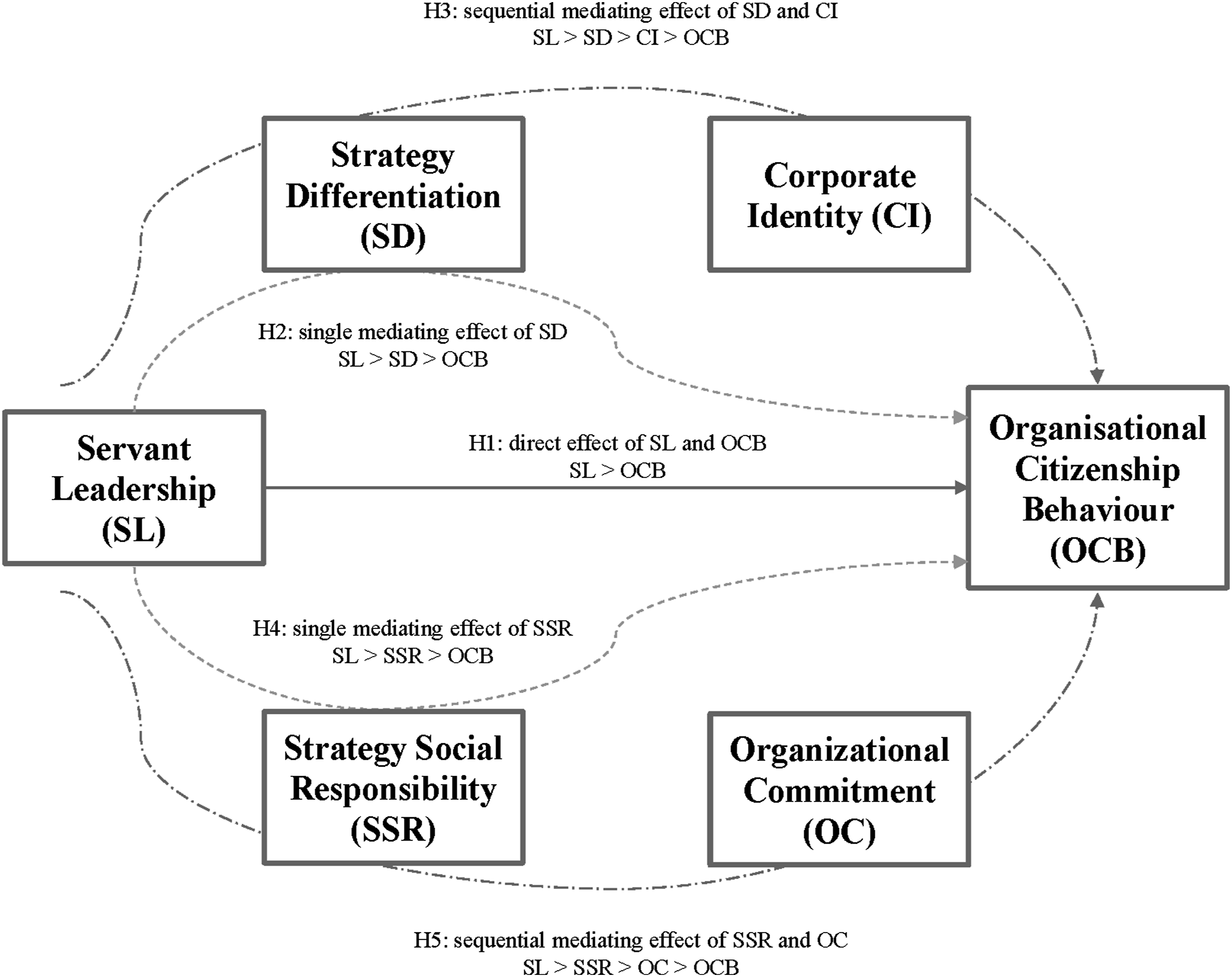
The research conceptual model.
Methodology
Data collection
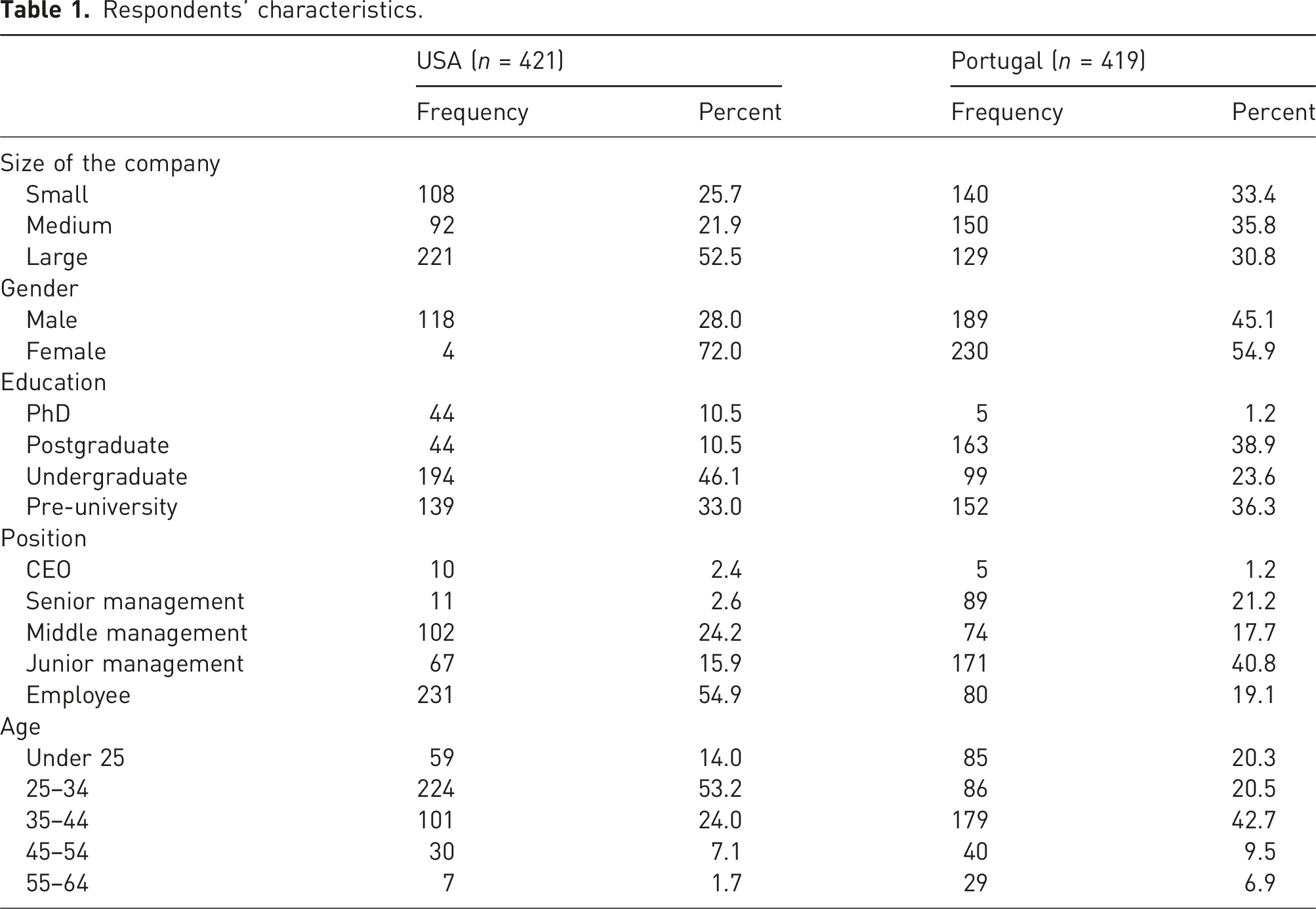
The data for the present study came from a sample of hotel employees and managers from the USA and Portugal chosen through convenience sampling (McDaniel and Gates, 1998) expanded through a non-probability ‘snowballing’ distribution method as outlined by Goodman (1961). This approach involved initial informants recommending additional, highly knowledgeable individuals to augment the sample size and enrich the study with valuable insights. The data were collected through face-to-face interactions between May 2023 and July 2023. A total of 1650 printed questionnaires were distributed among employees and manager participants in both samples, resulting in 421 usable questionnaires from the USA and 419 from Portugal. The survey encompassed questions addressing managers’ and employees’ perceptions of the impact of servant leadership, strategy, identity, and OCB.
This study also considered non-response bias assuming that individuals with a stronger interest in the questionnaire’s subject matter are more likely to respond, which could affect their responses. Participants were guaranteed the highest level of confidentiality to minimize non-response rates (Sekaran and Bougie, 2016). Furthermore, following Lambert and Harrington (1990) suggestion, a Mann-Whitney U-test was used to compare early and late respondents’ means across all research variables to evaluate non-response bias. Early participants consisted of the first 50 observations, while late participants comprised the last 50. The result revealed no significant disparity between early and late respondents, suggesting that concerns regarding questionnaire and non-response bias were not substantial.
Respondents’ characteristics.
Measures
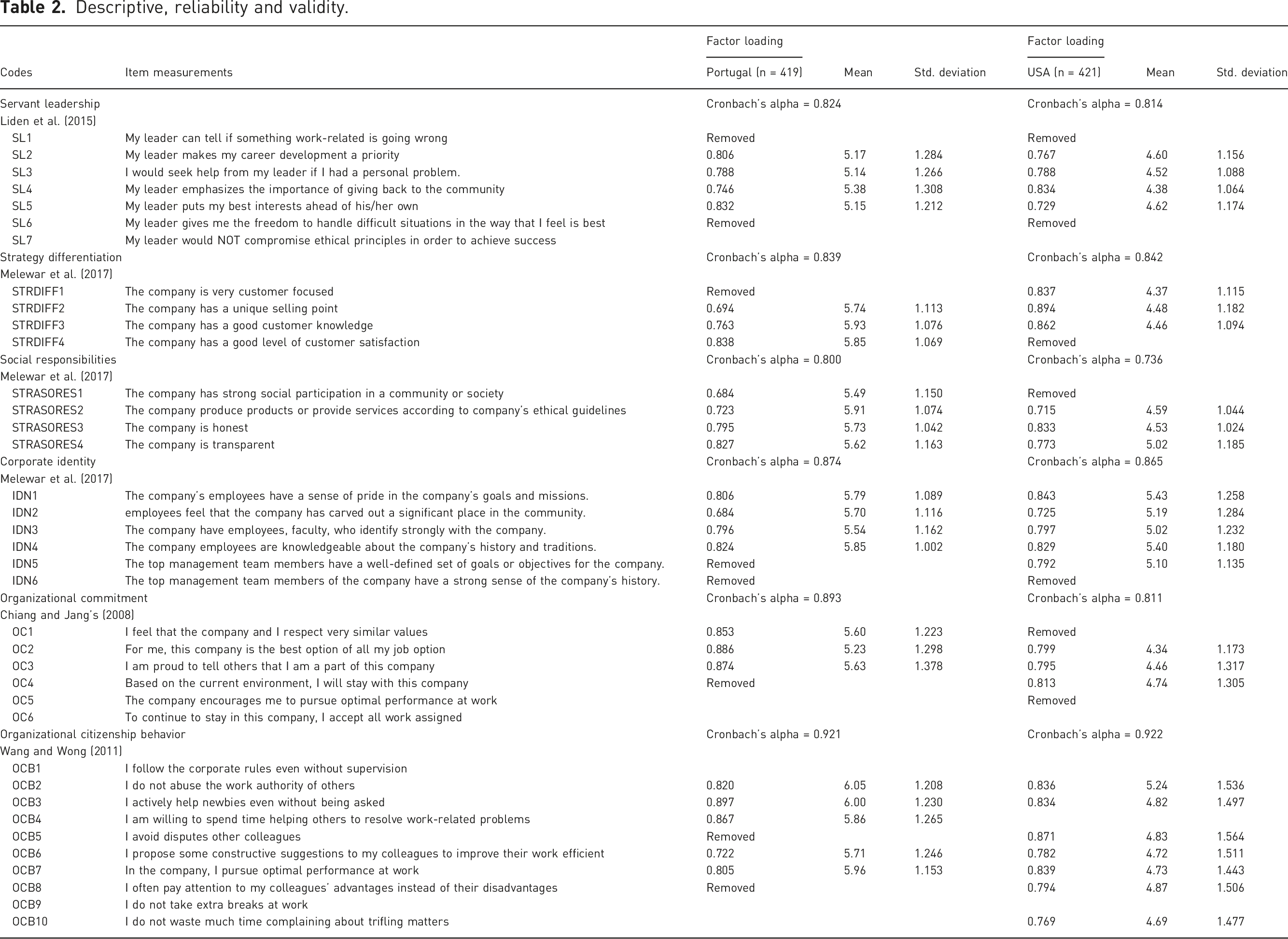
Descriptive, reliability and validity.
Analysis and results
Assessment of measures
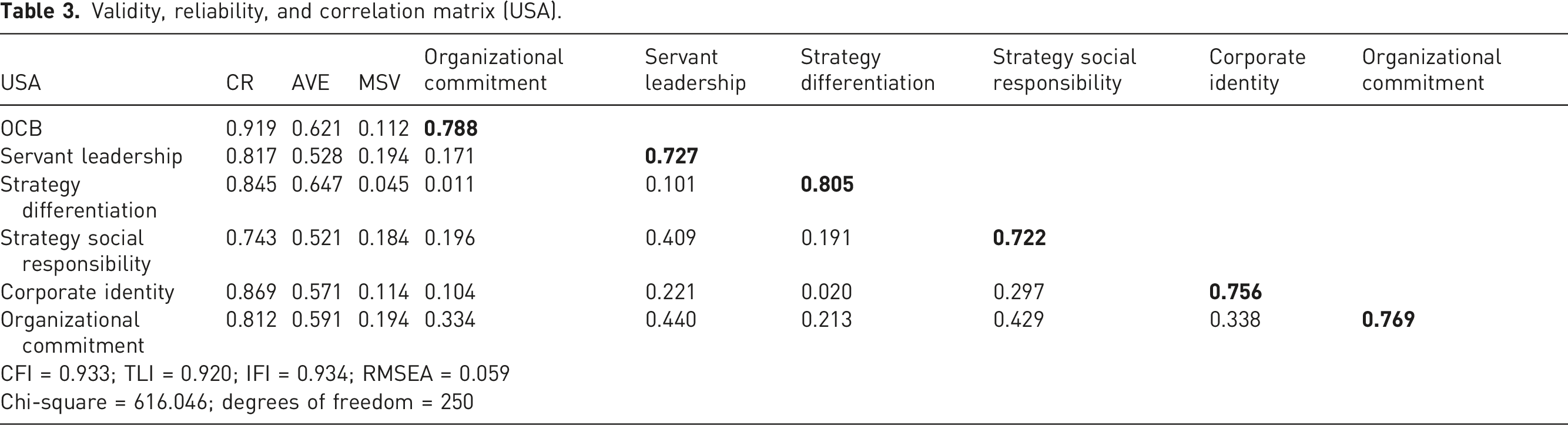
To ensure the reliability and validity of our reflective scales for all multi-item measures, excluding the formative measurement of the desire for status, we strictly adhered to established protocols (Hair, 2009). The Cronbach’s alpha coefficients ranged from 0.736 to 0.922 (Table 2). The Average Variance Extracted (AVE) for each construct either met the suggested threshold of 0.50 (Fornell and Larcker, 1981).
Validity, reliability, and correlation matrix (USA).
Validity, reliability, and correlation matrix (Portugal).
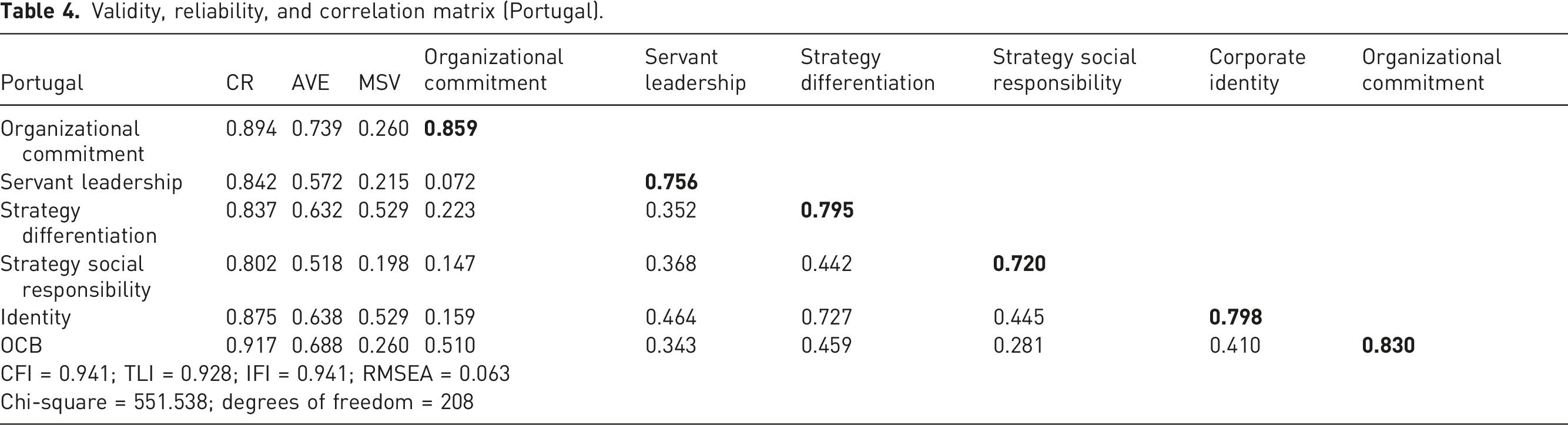
To explore the potential presence of common method bias (CMB), Harman’s one-factor test and common latent factor analysis were conducted. This involved a comparison between the original model and a fully constrained model using a chi-square difference (Lindell and Whitney, 2001). The results indicated that the outcomes of the two models were statistically distinct, sharing minimal variance. Consequently, no compelling evidence of method biases was found in the data. Precautionary measures were taken to ensure that participants possessed a clear comprehension of the subject matter and provided assurances of their anonymity. The survey questions were meticulously designed to be clear and included both positively and negatively phrased items. In evaluating the presence of CMB, the correlation-based marker variable approach was adopted following the procedure outlined by Lindell and Whitney (2001). For this approach, we selected a marker variable that was expected to exhibit no associations with any of the study constructs. The analysis revealed minimal shared variance between the marker variable and the unrelated construct. Consequently, an adjusted matrix was computed to account for CMB, and a measurement model was constructed based on this adjusted matrix. Comparing the initial measurement model with the marker-based model showed no significant decline in model fit (p < .05), affirming that CMB does not pose a significant concern in this research.
Hypothesis testing
Hypotheses results.
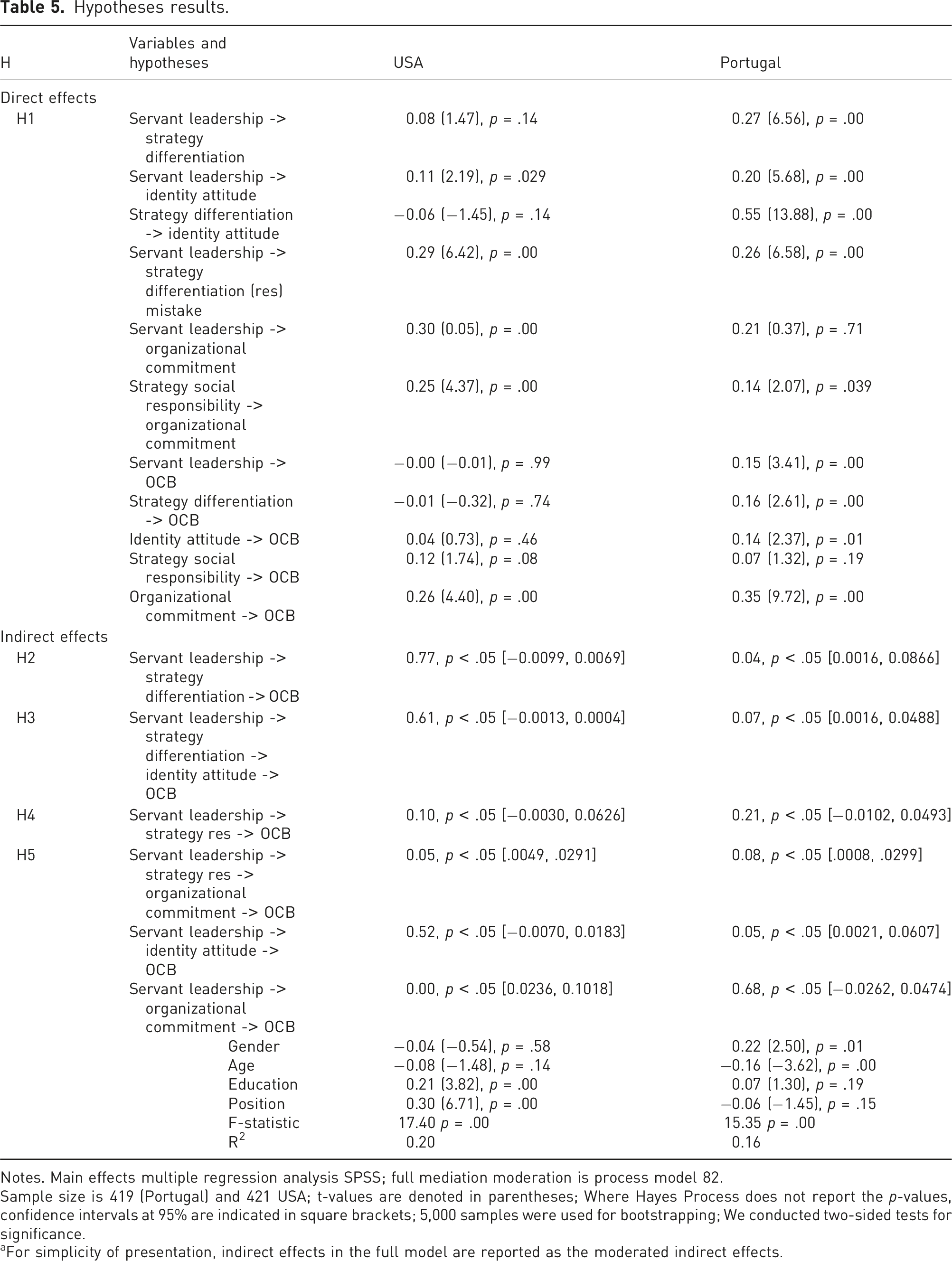
Notes. Main effects multiple regression analysis SPSS; full mediation moderation is process model 82.
Sample size is 419 (Portugal) and 421 USA; t-values are denoted in parentheses; Where Hayes Process does not report the p-values, confidence intervals at 95% are indicated in square brackets; 5,000 samples were used for bootstrapping; We conducted two-sided tests for significance.
aFor simplicity of presentation, indirect effects in the full model are reported as the moderated indirect effects.
We utilized Hayes PROCESS Model 82 to compute the confidence interval (CI) for the indirect effect of servant leadership on OCB through strategy differentiation (SD) (H2: SL > SD > OCB). In the USA’s data, the results indicated that the effect was not statistically significant (b = 0.77, p < .05, 95% bootstrap CI = [−0.0099, 0.0069]). However, in Portugal’s data, the results showed a significant mediation (b = 0.04, p < .05, 95% bootstrap CI = [0.0016, 0.0866]). It is important to note that PROCESS does not provide t- or p-values for indirect effects. In line with our mediation hypothesis (H3: SL > SD > CI > OCB), we examined whether servant leadership could affect OCB through strategy differentiation and identity attitude. The findings revealed that for participants from the USA, the effect was statistically insignificant (b = 0.61, p < .05, 95% bootstrap CI = [−0.0013, 0.0004]). Conversely, for participants from Portugal, the results were positive and statistically significant (b = 0.07, p < .05, 95% bootstrap CI = [0.0016, 0.0488]).
According to H4, it appears that SSR does not mediate the relationship between servant leadership and OCB (SL > SSR > OCB). In the USA’s dataset, the mediation effect was .10, which is statistically insignificance (p < .05, 95% bootstrap CI = [−0.0030, 0.0626]). In Portugal’s dataset, the mediation effect was 0.21, that is also statistically insignificant (p < .05, 95% bootstrap CI = [−0.0102, 0.0493]). H5 demonstrates a sequential mediating effect involving SSR and OC in the relationship between servant leadership and OCB (SL > SSR > OC > OCB). The results indicated significant main effects for participants from the USA (b = 0.05, p < .05, 95% bootstrap CI = [0.0049, 0.0291]). However, there was no significant effect observed in Portugal’s dataset (b = 0.08, p < .05, 95% bootstrap CI = [0.0008, 0.0299]).
Discussion and conclusions
The present study explored the influence of cultural distinctions and employees’ perceptions of various strategies on the connection between servant leadership and diverse organizational aspects like CI, commitment, and OCB in independent hotels. The study adopted the GLOBE theory, focusing primarily on the USA (Anglo cluster) and Portugal (Latin Europe cluster), which have unique and distinct cultural backgrounds. To achieve the research goals, five hypotheses were developed. The findings indicated a significant positive association between servant leadership and OCB in Portugal, which is consistent with the existing literature. However, the relationship was not statistically significant in the USA. This finding can be attributed to the cultural differences between Portugal and the USA. According to GLOBE project, Portugal is a representative of the Latin European cluster, which values collectivism and power distance, focusing on personal relationships over organizational structures. Consequently, the behavior and leadership approach of a manager holds significant weight in this culture, directly influencing employees’ behavior. This highlights the potential impact of SL in enhancing OCB in independent hotels within Latin European cultures. The USA, however, belongs to the Anglo-Saxon cultural cluster which is characterized by high individualism and achievement orientation, prioritizing assertiveness, competition, and performance regardless of the type of leadership style adopted by leaders.
Four other hypotheses tested the mediating effects of strategies, corporate identity and commitment between servant leadership and OCB. The second and third hypotheses examined the single mediating effect of SD between SL and OCB, and the sequential mediating effect of SD and CI between SL and OCB. The results showed that both hypotheses are supported in Portugal, which is aligned with the literature, highlighting that differentiation strategy requires creativity and innovation and also leadership style can directly influence employees’ creativity and innovation (Huertas-Valdivia et al., 2019; Wang et al., 2021). Since differentiation strategies require creativity and innovation, this aligns with the previous studies that have demonstrated that leadership style can directly influence employees’ creativity and innovation (Bavik, 2020; Semuel et al., 2017). However, H2 and H3 were not confirmed in the USA. This finding confirms that although strategy type plays a crucial role in any organization regardless of their context for the Anglo cluster, SD or CI (or their sequential effect) does not mediate the relationship between SL and OCB. This can be due to the nature of this cluster where individualism and high performance orientations are valued. Success takes precedence for this cluster, making strategy effects on OCB behaviors less significant. On the other hand, in the Latin Europe cluster, SD and CI play mediating roles in the SL-OCB relationship. This suggests that independent hotels in Portugal put their trust in the person and not the system and as a result, prioritize strategy differentiation due to their collectivist traits and high power distance, influencing their OCB behaviors. In clusters with high power distance and collectivism, trust is established through individual relationships, where a leader implementing SL and SD can enhance CI and foster OCB behaviors effectively.
The fourth hypothesis indicated that SSR is the single mediator between SL and OCB, but the findings are insignificant for both groups. This could be justified in light of the influence of Anglo cluster cultural characteristics, specifically those related to achievement and individualism. On the other hand, the fifth hypothesis suggested that both SSR and OC mediate between SL and OCB, which was supported only in the USA group. This finding supports earlier research that indicated SL has a beneficial impact on SSR, OC, and OCB (Grego-Planer, 2019; Mallen Broch et al., 2020; Zieba and Lee-Chuvala, 2020).
In general, the results of this study suggest that the connections studied in two distinct cultural groups, where one adheres to individualistic beliefs (i.e., the USA) and the other to collectivistic values (i.e., Portugal), are entirely dissimilar, and this variance may be attributed to cultural backgrounds, and requires further exploration. As previously discussed, the Latin European cluster exhibits a significant power distance and a collectivist perspective. In this cultural context, trust is primarily placed in individuals rather than the system. When trust in the organization is lacking, it leads to diminished OC, subsequently impacting OCB. Moreover, the emphasis on personal relationships and individual trust dynamics within this cluster further influences the relationship between trust, commitment, and OCB.
Implications
Theoretical implications
Our study contributes to existing research in the hospitality industry, particularly regarding independent hotels, in multiple aspects. First, this research is an initial investigation to evaluate the influence of two significant strategies in the hospitality industry in two culturally diverse countries, and has demonstrated that the approach of servant leadership has distinct impacts on SD and SSR in different cultures. Therefore, this study contributes to the current body of knowledge on leadership, organizational strategies (i.e., SSR, SD), and OCB in the hospitality industry (Bavik, 2020; Elche et al., 2020; Font and Lynes, 2018; Ma et al., 2023; Semuel et al., 2017) and cross-cultural studies in this field (Bavik, 2020; McCune Stein et al., 2020; Mittal and Dorfman, 2012).
Second, two distinct cultural clusters were examined based on the GLOBE theory. The findings of this study demonstrate that various new and previous relationships between variables vary across different cultures. Therefore, this research contributes to the existing studies on the GLOBE theory (Nazarian et al., 2023; Ranjbaran et al., 2022). Finally, the research was conducted within the independent hotel sector, which is a crucial aspect of the hospitality industry. The study revealed that employees’ behavior towards organizational strategies in these kinds of hotels varies between two distinct cultural groups and indicates how these strategies impact employees’ organizational commitment and identity, ultimately affecting their OCB. Therefore, this research contributes to the current knowledge of the independent hotels (Nazarian et al., 2022, 2023; Ranjbaran et al., 2022).
Practical implications
The findings of this research have significant practical contributions for independent hotel managers. First, it highlights the importance of servant leadership in promoting OCB in independent hotels, particularly in Portugal as the representative of Latin Europe. This suggests that hotel managers (leaders) who work in an environment with similar cultural background (Latin Europe) should consider a servant leadership approach to enhance employees’ engagement and promote positive workplace behaviors, such as going beyond job requirements and helping colleagues. Secondly, leaders and managers in similar cultural backgrounds should also focus on developing a strong corporate identity and differentiated strategies to enhance OCB among employees. This study suggests that a strong corporate identity and differentiated strategies can positively influence OCB, which is important for organizational success. Therefore, to enhance OCB, managers should invest in developing a clear corporate identity and strategies that differentiate their organization from competitors in the market. Moreover, hotel leaders and managers who are working in the Anglo culture background environment should consider adopting servant leadership as a suitable leadership style that prioritizes social responsibility and organizational commitment. By doing so, they can increase the likelihood of their employees’ exhibiting OCB, which can improve their job performance and satisfaction, and overall organizational success.
Directions for further research
This study possesses certain limitations that can be addressed in future research. The data for this study was collected from two cultural clusters, as defined by the GLOBE theory (House et al., 2004), and it is suggested that future studies collect data from other cultural clusters like German Europe, South Asia, etc., and compare the results. Additionally, the study considered servant leadership style as an antecedent of social responsibility and differentiation strategies, and the results varied in the two clusters. Future studies can explore other leadership styles such as transformational, transactional, etc., in the same or different cultural clusters and measure their impact on these strategies. Furthermore, this study focused on independent hotels, and it is recommended that future research apply the same model to chain hotels from a cross-cultural perspective and compare the results with those of the present study.
Footnotes
Acknowledgements
The authors convey their deepest and most sincere appreciation to the editor and the anonymous reviewers for their constructive and thoughtful feedback.
Declaration of conflicting interests
The authors declared no potential conflicts of interest with respect to the research, authorship, and/or publication of this article.
Funding
The authors received no financial support for the research, authorship, and/or publication of this article.
