




Abstract
This research paper presents the core findings of a study on the impact of stringency of government policies on online travel search behaviour between 2020 and 2022, and how these measures were perceived by potential travellers concerning different destinations. This study also includes isolated effects, deaths, and vaccinations, which are representative of the level of risk of COVID-19. Results show that online travel searches do not cease during a health crisis, but fluctuate in response to perceived risks and travel friction factors until the recovery phase. It highlights the influence of online search engines as liminal systems that provide travel consumers with a transient means of contact with destinations in an unstable market environment, but which can materialize into consumption at any given moment perceived by consumers as viable. Findings also reveal that risk factors and stringency of policies among destinations were perceived unevenly by potential tourists.
Introduction
One of the biggest challenges of globalization is the sharp increase in international travel, which encourages the emergence and spread of infectious diseases (Richter, 2003). For this reason, tourists’ concern about health risks has been increasing. The analysis in the wider field of tourist health and safety has revealed that visitors alter their travel plans due to concerns about the perceived physical and health risks (Björk and Kauppinen-Räisänen, 2011; Quinta et al., 2010; Wilks and Page, 2003). Risk has, therefore, been analysed as one of the main concerns of international tourism (Kozak et al., 2007; Niklas et al., 2022), given that an individual can be influenced by security issues when considering travel and choosing international destinations in circumstances of uncertain risk (Beirman, 2002).
During the last two decades, there have been four viral outbreaks, the last one being COVID-19, with different intensities. In all four cases, they revealed complex epidemic patterns (Chowell et al., 2022; Faulkner, 2001; Page et al., 2006), including waves characterized by multiple peaks of different sizes, stable phases, and epidemic resurgences. Despite this knowledge, research has focused primarily on the overall impact of epidemics on tourism (Haque and Haque, 2018) and scant evidence has been published on how different stimuli and levels of perceived risks throughout the complex epidemic (and pandemic) process generate dissimilar behaviours in terms of travel information searches. In the specific case of COVID-19, despite the previously unseen harsh public health measures, its intensity was calibrated according to the varying degrees of the pandemic (Cameron-Blake et al., 2023). This allowed the relief of some mobility restrictions during the receding phases, which stimulated some sort of tourism activity (Marques et al., 2022).
We are, therefore, missing an understanding of the non-linear continuum of the crisis with its fluctuation in various indicators (e.g., cases and deaths), as well as the restrictive measures imposed by governments, which are also non-linear and dissimilar, with different intensities and stimuli that affect the consumer´s risk perception and behaviour. During the worst stages of COVID-19, there was a growing recognition that the world would never completely return to the old ways of doing things and that the “new normal” would have to encompass new and existing ways of keeping travellers safe (Wilks et al., 2021). The perception of an imminent “new normal” as a legacy of COVID-19 was due to the massive number of cases of infections and deaths caused by the pandemic, as well as the lack of immunization, which prompted an unobserved wave of rigorous restrictions on people’s freedom, dubbed the “Great Lockdown” (Gopinath, 2020). The levels of stringency of government measures had an unprecedented impact on people’s ability to connect physically and many forms of social interaction moved online (Tibbetts et al., 2021). Despite this early vision of a “new normal”, in early 2022 we saw the emergence of new political rhetoric calling for COVID-19 to be handled as an endemic infection (CNBC, Jan 12, 2022). The effects of various governments’ statements and interventions towards less stringent actions were clear. Tourism enjoyed a strong start to 2022 while facing new uncertainties (UNWTO, 2022). Therefore, the nature of government responses to COVID-19 from 2020 to 2022 changed from imposed regulatory prevention and prophylactic controls to citizen self-management, allowing tourism to re-open.
Recently, a few contributions to the literature have focused on the influence of the COVID-19 pandemic on travel behaviour (Ren et al., 2022), on how effective forecasting can moderate risk perceptions and travel decision-making during a pandemic (Karl et al., 2021), and on the impact of government policies on the tourism industry (Koçak et al., 2023). However, the effect of stringency of government policies and perceived risk factors (e.g., deaths and vaccinations) on online travel search behaviour throughout the pandemic and the transition to endemicity remain unexplored. During this period, consumers’ online travel search behaviour might have shifted in response to fluctuating conditions and, notably, to an expected transition to the endemic phase in 2022. To fill this gap in the literature, this research aims to study the influence of stringency of government policies on online travel search behaviour between January 1, 2020, and December 27, 2022, and how these measures were perceived by potential travellers concerning different destinations. This study also includes isolated effects, deaths and vaccinations, which are representative of the level of risk of COVID-19. Given the present uptick in COVID-19 during the summer of 2023 and reports by the US Centers for Disease Control and Infection (CDC) that a new COVID wave may have started (NPR, 2023), these findings remain as relevant today as they were during the data collection period, with the CDC recommending that everyone 6 months and older get an updated COVID-19 vaccine to protect against the potentially serious outcomes of COVID-19 illness during the fall and winter of 2023 (CDC, 2023).
This paper begins with a review of the literature, followed by methodology and results. A discussion of the results is ensued by both theoretical and managerial implications. Finally, this paper concludes with limitations and suggestions for future research.
Literature review
Online information search as a means to reduce functional risks
The perception of a high or intolerable level of risk can lead tourists to avoid a particular destination or decide to cancel their trip (Rittichainuwat and Chakraborty, 2009). In particular, the perceived risk to health is one of the most impactful in the decision-making process of tourists (Huanga et al., 2020) and accessing and researching information can reduce the level of uncertainty associated with the outcome of purchasing (Bettman, 1979; Taylor, 1974), namely reducing perceived health risks.
The ubiquity and accessibility of the Internet also means that websites are fundamental sources for researching information about destinations (Lin and Huang, 2006; Xiang and Gretzel 2010), and one of the most used sources of information in decision-making (Björk and Kauppinen-Räisänen, 2011). Consumers need more information in times of uncertainty and the perception of risk has led to an increase in the search for information in online environments (Balladares et al., 2016).
In the particular case of COVID-19, people began by searching for information about the “new coronavirus” and “COVID-19” through search engines. The information sought focused not only on symptoms and prevention (Bento et al., 2020), but also on COVID-related restriction measures and warnings for travellers. Despite the importance of traditional media (e.g. television) in providing daily information on the state of the pandemic (Soroya et al., 2021), online media, particularly online travel booking platforms (Online Travel Agencies), have been one of the preferred means of booking flights (Deane, 2021; as cited in Alhemimah, 2023). In response to the surge in online searches for travel information on COVID-19 restrictions and other travel-related risks during and after the pandemic, Google has increased its online tools (e.g., Travel Analytics Center) to help the travel industry recover from the effects of the COVID-19 pandemic and travel restrictions by providing a variety of information about the industry and the impact of the pandemic on destinations (e.g., updated airline policies; public health data on current infection rates in destination countries) (Holden, 2021).
Therefore, the influence of perceived health threats and government-imposed restrictions arising from the COVID-19 pandemic on tourist online search behaviour and engagement is a vital subject that needs further empirical research.
Factors affecting tourism during a health crisis
Given the impact of perceived health risks (in this case COVID-19) on online information-seeking behaviour for travel, it is important to investigate factors that could interfere with and impact the tourism sector during the pandemic and the recovery phase.
One of the factors with a potential impact on the recovery of tourism highlighted in the literature is the level of immunization resulting from the degree of vaccination. Research in the early stages of the pandemic predicted that the recovery would depend largely on the launch of a vaccine against COVID-19 (Wilks et al., 2021). Following the development and rollout of COVID-19 vaccines, several studies have concluded that vaccination was more likely to reduce the risk of exposure to COVID-19 and, in turn, could help regenerate the tourism industry (Harris, 2021). Despite these results, other studies suggested an ambiguous role associated with vaccination´s effect on recovery, concluding that vaccination coverage alone is not enough for the tourism sector to rebound from the pandemic (Okafor and Yan, 2022). The asymmetric distribution of vaccines, especially in less developed countries (Trotsenburg, 2021), and the level of effectiveness of different vaccines (Rotshild et al., 2021) have been identified as factors that hinder global immunization. Despite this ambiguity, and in general terms, the level of vaccination in a tourism-receiving country is expected to have a positive effect on online information-seeking behaviour.
The number of deaths is also a critical health indicator that can monitor the pandemic´s progress and verify if governmental measures are being successful in controlling the pandemic-causing pathogen (World Health Organization, 2012). Research has concluded that the number of deaths tends to negatively influence the choice of tourist services and destinations when the COVID-19 mortality rate is high (Koçak et al., 2023; Okafor and Yan, 2022) and, therefore, is anticipated to exert a negative effect on online travel search behaviour.
Additionally, the severe level of infection and risk of death is conducive to more rigour and stringency of governmental measures to regulate and limit virus transmission (OECD, 2020). Until the outbreak of the COVID-19 pandemic, government intervention in epidemic (and pandemic) conditions was mainly instructive and educational, limiting its intervention to public warnings. However, COVID-19 significantly transformed how governments intervene, having introduced much more active and aggressive measures which involved banning international travel for medical risk reasons (Beirman, 2021). However, the intervention of governments with the introduction of lockdown and mobility restrictions (e.g., stay-at-home requirements; restrictions on internal movements; and international travel controls) may have antagonistic consequences by hindering tourism resumption, which accelerates the decline of performance of the tourism industry (Koçak et el., 2023). This led to a drastic drop in socio-economic activities in both developing and developed countries (Kawohl and Nordt, 2020), which might have affected consumers’ online destination choices. Thus, there is, some ambiguity in the effectiveness of government measures given that a high level of strict procedures has the potential to reduce the number of COVID-19 cases, infection rates and mortality (Violato et al., 2021), but hampers the recovery of tourism.
The range and intensity of measures implemented by governments echo the degree of severity of the pandemic and available immunization means. Once it is possible to moderate the risks of the virus spreading through the use of vaccination, other complementary control governmental measures were put in place by issuing vaccination certificates (Wilks, et al., 2021). Consequently, online travel search behaviour may depend on shifting governmental measures that initially have an impact on people’s mobility, evolving later to massive vaccination programmes that promote a lower-risk environment, up to the introduction of control policies through certificates that allow restrictive measures to be lifted.
The level of economic dependence of countries on tourism is also a central factor in the management of the pandemic, since in these cases there may be a tendency to ease restriction measures earlier and therefore take the lead in the opening-up process. In the case of COVID-19, many governments have advised against “non-essential” international travel, but several popular destinations have relaxed their COVID-19-related border restrictions and promptly started opening up to tourists (CNN, 2020). This decision may have enhanced tourist awareness of these destinations, emphasising the asymmetry of government measures around the world, which may induce a greater propensity to consume certain destinations and affect the intensity of online information searches on specific travel destinations.
Hypotheses, data and methodology
Given the previous analysis, it is clear that the question of whether vaccination coverage, the number of deaths by COVID-19 and the stringency of government measures influence consumer information-seeking behaviour after the pandemic has not been explored. To fill these gaps in the literature this study proposes the following hypotheses:
H1: The influence of stringency of policies, deaths, and vaccinations on online travel search behaviour exhibits structural shifts between January 1, 2020, and December 27, 2022.
H2: Stringency of policies, deaths, and vaccinations have a different effect on online travel search behaviour during the pandemic and the recovery phase.
H3: Stringency of policies, deaths, and vaccinations have a dissimilar effect on online travel searches regarding different destinations classified according to their level of international tourism dependence. The variable used to measure online travel search behaviour was retrieved from Google Trends by applying search queries using the country´s name in English as a search term without any combination with other search terms (e.g., “Sweden”) and filtering our results on the drop-down menus by choosing “Worldwide” for all data, customizing our time range, selecting our search category as “Travel” and choosing “Web search” as our search type to obtain the highest number of searches. The results, according to Google, will reflect searches for the category “Travel”, which can be viewed as an umbrella of topics that allows for a much broader examination than using the search term (keyword) “Travel”. Thus, the extracted results correspond to the number of normalized searches carried out worldwide on the “Travel” category for a given country in our study. All the results obtained for the specified timeframe, for each country, were added to build a panel database. For each country, Google Trends normalizes the search regarding the month with the highest volume of searches for that country, setting that month equal to 100. To investigate the influence of stringency of government interventions on online travel search behaviour, we apply the Oxford COVID-19 Government Response Tracker´s Stringency Index, which records closure policy indicators. The Stringency Index was developed as part of the Oxford Coronavirus Government Response Tracker (OxCGRT) project. It is a composite indicator that grades the stringency of government policies and is calculated on a given day as an average score of nine metrics, each with a value between 0 and 100. These metrics include school closures; workplace closures; cancellation of public events; restrictions on public meetings; public transport closures; stay-at-home requirements; public information campaigns; restrictions on internal movements; and international travel controls. Additionally, we assume two COVID-19 risk factors, i.e., the number of deaths (per million) and vaccinations (per hundred), which were retrieved from Johns Hopkins University CSSE COVID-19 Data and Our World in Data, respectively. Deaths and vaccination were calculated as the normalization of the absolute variation of the respective variables. In the case of deaths, for example, the calculation resulted from the application of the equation (1), with This paper is based on a balanced panel data set for 36 OECD countries
1
from January 1, 2020, to December 27, 2022, totalizing 156 weeks, and 5,616 observations
2
. We used the Hausman test to assess the appropriateness of the random-effects estimator relative to the fixed-effects estimator. The empirical results suggest that the hypothesis difference in coefficients is not systematically rejected in some estimations, which means that the random model is inconsistent in those cases. Methodologically, this study uses a fixed effects model
3
(Table 2). The fixed effects model allows for the estimation of the relationship between the explanatory variables and the dependent variable while controlling for unobserved heterogeneity among individual units that remain constant over time, also known as fixed effects. Additionally, the fixed effects model addresses potential endogeneity issues that may arise from omitted variables that are constant over time. Our baseline regression model is presented in the following equation (2): We additionally consider a lagged model on the average of deaths, vaccinations, and stringency index in the previous 4 weeks (from t-1 to t-4) to investigate the possibility that these variables have a lagged effect on the dependent variable.


Results
Results indicate that online travel search behaviour dynamics during the study period were significantly affected by perceived risk factors, i.e., deaths and vaccinations, as well as stringency of policies. Generally, and as expected, online travel search behaviour was negatively affected by the stringency of policies and deaths and positively affected by vaccinations.
Despite the model´s covariates’ overall significant influence on the dependent variable, they displayed a fluctuating behaviour (Figure 1). It is worth noting that online travel search behaviour until the beginning of 2021 seems to exhibit distortion in seasonal variations, which readjust in 2021 and 2022, exhibiting symmetric weighting pattern cycles. Weekly averages. Note. In the case of deaths and vaccinations, the normalization of the absolute variation of the respective variables is considered. SB: Structural Break; SB1: June 7, 2020; SB2: December 27, 2020; SB3: June 7, 2021; SB4: May 24, 2022.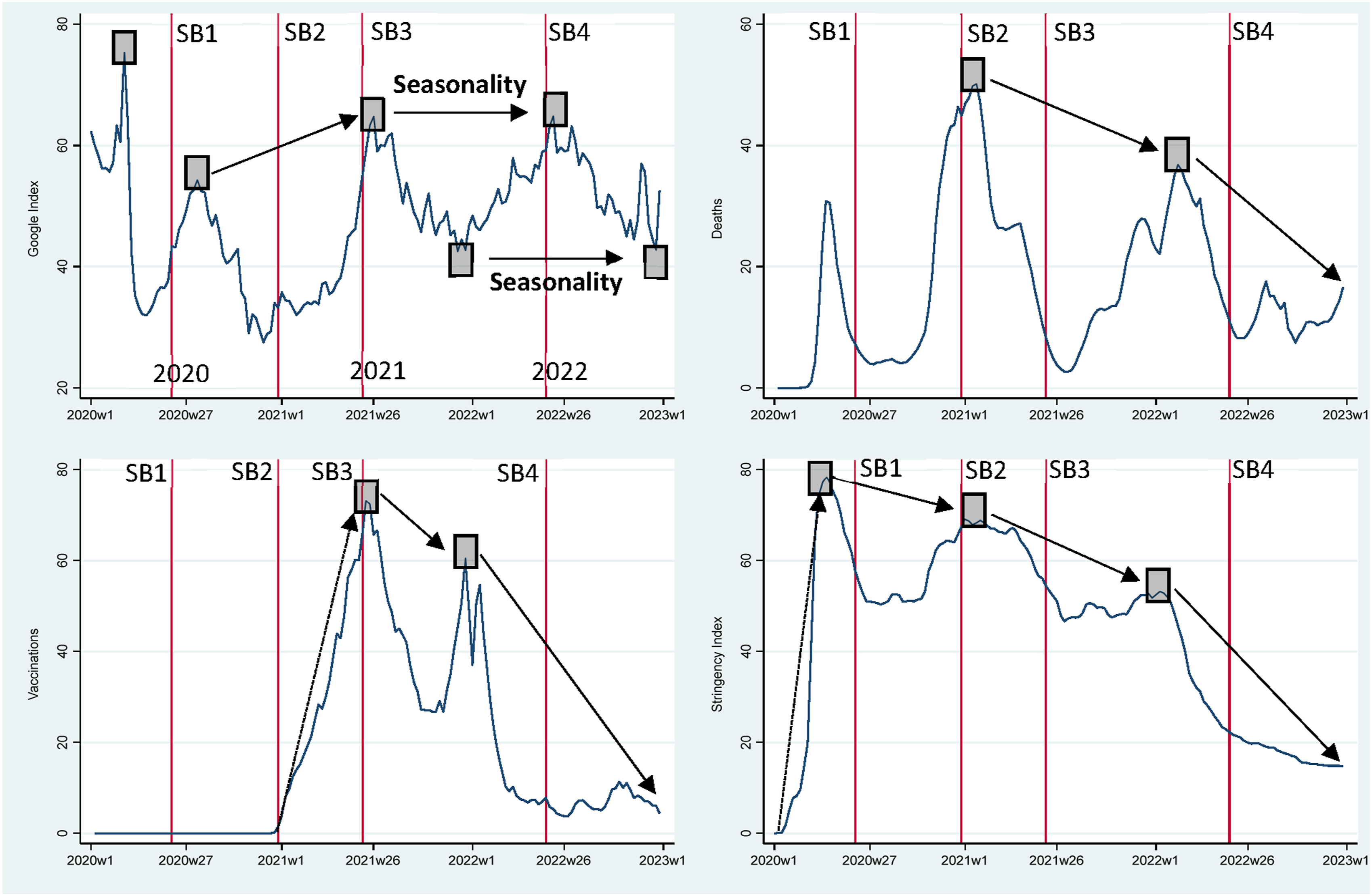
Averages of main variables by phases.

During phase 2, the vaccination process took place in only three of the groups of countries that were analyzed: the US, Israel and Canada. The online travel search average (Google Index) was lower in phase 3 (between December 2020 and June 2021), which coincides with the highest death average, the start of the vaccination process in most countries and the highest average of the SI. In the following phases, 4 and 5, the variables Google Index, Deaths and SI evolved favourably, with the vaccination process intensifying in phase 4 and reducing considerably in phase 5.
Base model with structural breaks.
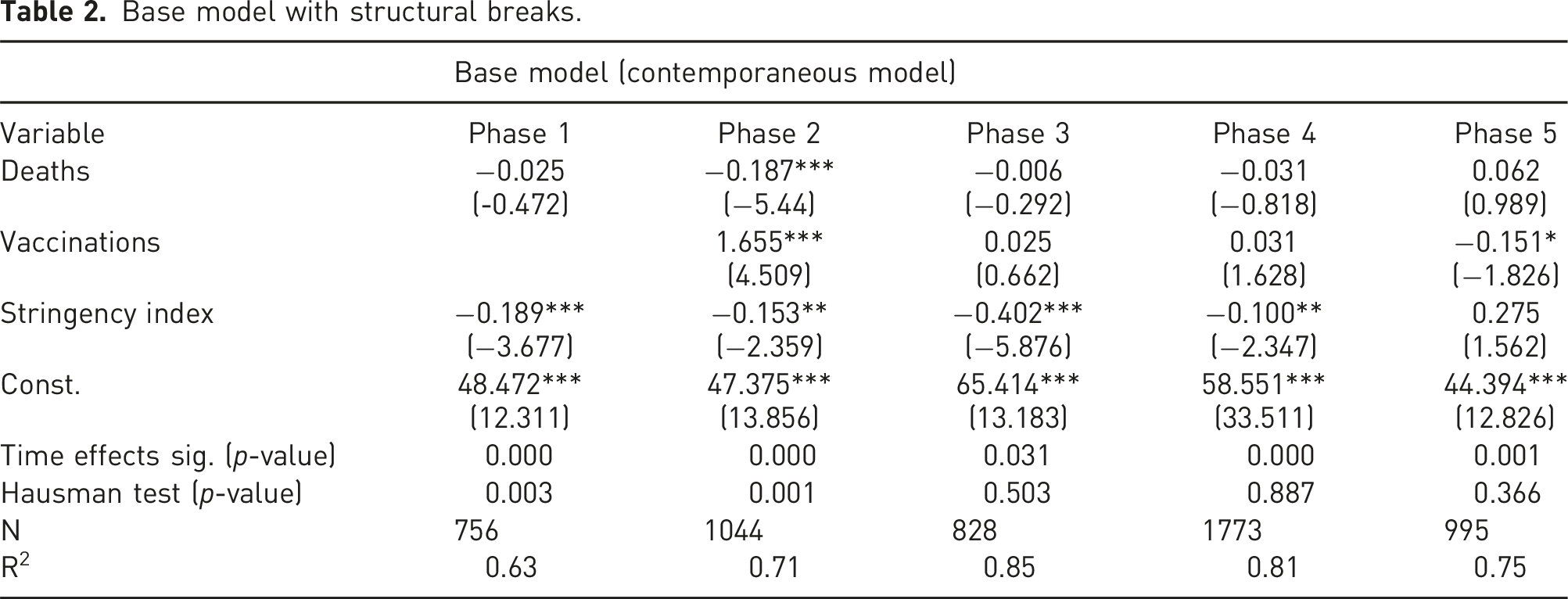
Deaths significantly reduced online travel searches only in phase 2 and had no significant influence on online travel search behaviour following the second structural break, despite their surge during the first weeks of 2022 (Figure 1). The change in the influence of deaths on consumer behaviour seems to be related to several reasons, namely, the sudden reduction of deaths after the second structural break, as a result of the first vaccination phase which ensured greater protection against COVID-19. Furthermore, the attainment of a health and safety-conscious approach by people and all sectors of the tourism industry (Beirman, 2021) and the gradual easing of the restrictive measures imposed by governments just after the second structural break might have also explained the non-significance of the influence of deaths on online travel search behaviour.
Vaccinations had a positive effect on online travel searches in phase 2, up until the peak of the first vaccination stage (1st dose), mainly due to the vaccination process implemented in the US, Israel and Canada, but presented a negative and significant impact in the last phase. These results confirm the ambiguous effect of vaccines on online consumer behavior given that, despite their immediate positive influence after the second structural break, vaccinations had no significant positive effect on online travel information search behaviour. This change may be related to the immediate mental health benefit of vaccination, namely in allowing people to carry on with major life events (Chaudhuri and Howley, 2022) and return to normality. From that moment on, vaccines were no longer relevant in changing consumer behaviour up until the last phase of our study when they exerted a negative significant effect, penalizing countries that were most behind in their vaccination process, which emphasized the ambiguity of vaccines as mentioned by Okafor and Yan (2022), namely due to asymmetric distribution. Therefore, the modification of the coefficient sign might be interpreted as a new behavioural pattern with fewer vaccinations occurring during the recovery phase and, simultaneously, a greater thrust towards online travel search given a tendency to alleviate stringency measures, which was enhanced starting from January 2022. Thus, estimated coefficients regarding deaths and vaccination may suggest that the SI variable captured the effect of these variables. The SI variable is positive and significantly correlated with deaths in the three initial phases (between 0.4 and 0.5), while there is a significant correlation coefficient with vaccines (0.42) in phase 4.
Given the potential influence of deaths and vaccinations on online travel searches with a certain delay, we opted to employ a lagged model. In this model, instead of the contemporaneous normalization of the absolute variation of deaths and vaccinations (equation (2)), we utilized the averages of the normalization of the absolute variation of these variables over the previous 4 weeks (from t-1 to t-4). Similar to our previous approach, we employed a fixed effects model. Results in Table A2 (appendix) show that the empirical results are robust about deaths and the SI, both in terms of size and statistical significance of the estimated coefficients. The high coefficient of vaccination in phase 2 is mostly related to the US because it is the only country that has an average of vaccinations different from zero in this phase. Vaccination variables also have a positive and significant coefficient in phase four, which coincides with a higher average of lagged vaccinations.
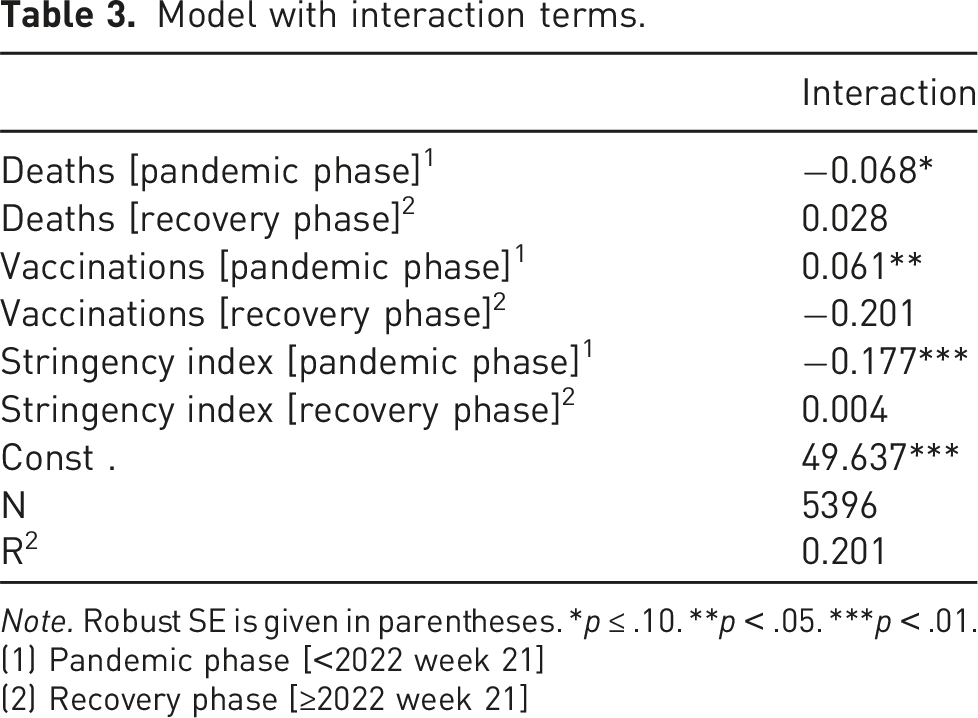
To validate that the latest stage of our model coincides with a recovery phase (after May 24, 2022), we consider two dummy variables to represent the pandemic (pan) and recovery (rec) periods, respectively. We used interaction terms with the model’s parameters (deaths, vaccinations, and stringency index) to test hypothesis H2, as outlined in equation (3).
Model with interaction terms.
Note. Robust SE is given in parentheses. *p ≤ .10. **p < .05. ***p < .01.
(1) Pandemic phase [<2022 week 21]
(2) Recovery phase [≥2022 week 21]
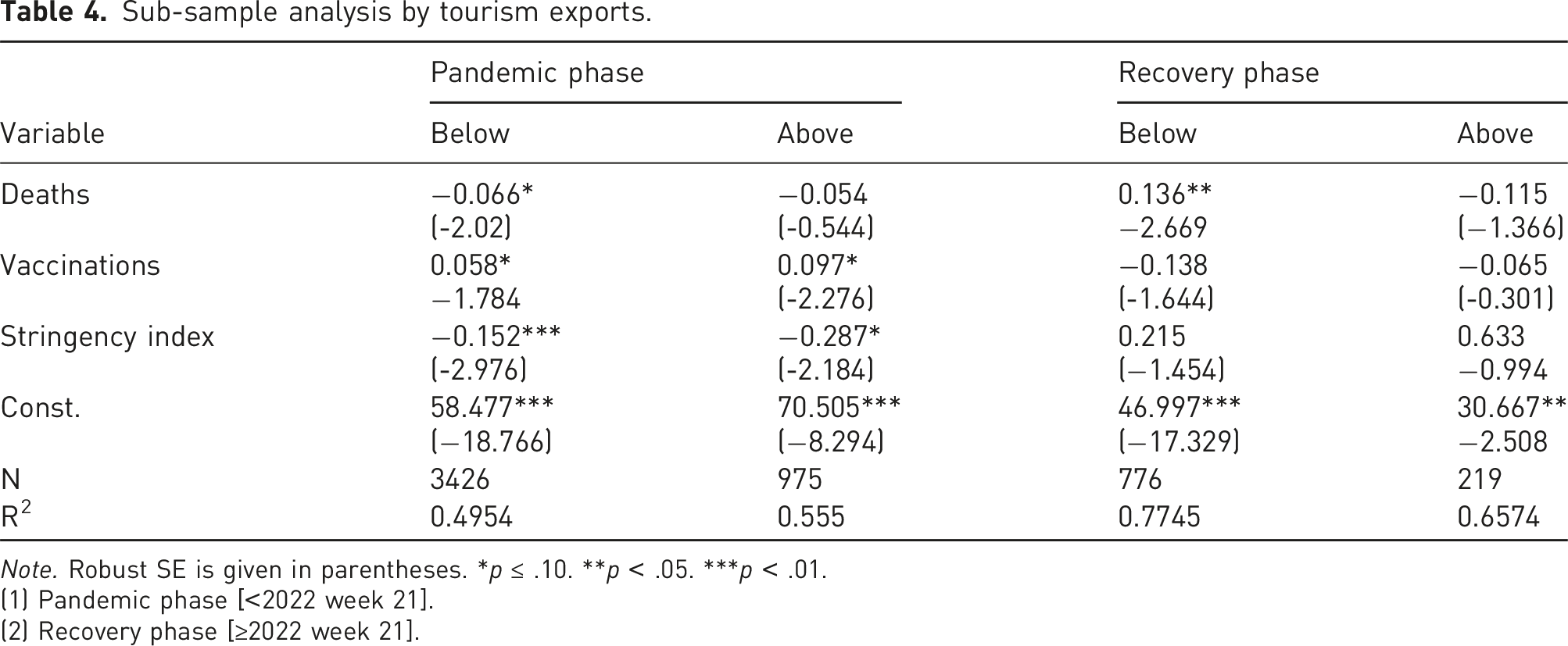
Sub-sample analysis by tourism exports.
Note. Robust SE is given in parentheses. *p ≤ .10. **p < .05. ***p < .01.
(1) Pandemic phase [<2022 week 21].
(2) Recovery phase [≥2022 week 21].
During the pandemic phase, deaths significantly and negatively influenced online travel searches concerning countries with lower average tourism exports, unlike countries with above-average tourism exports where this indicator had no influence at all. However, in contrast, vaccinations and the stringency of measures present higher significant coefficients in the case of countries with above average tourism exports, emphasizing the level of exposure of these countries to restrictive measures and immunization levels, taking into account their greater propensity to receive international tourists.
Results also illustrate that online travel searches regarding either group of countries in the recovery phase were not significantly impacted by the stringency of policies or vaccination, which is a consequence of the generalized absence of restrictive measures, namely for international travel, and the universalization of the COVID-19 vaccine by late 2022 (Our World in Data, 2022). At that time, people had also engaged in COVID-safe behaviours, taking into account the overall policy led by the World Health Organization highlighting the importance of adopting a range of COVID-safe behaviours (WHO, 2023), which contributed to preventing and reducing transmission of the virus.
Conclusions
The results of this research lend support to tourism literature on health crisis management and tourists’ search behaviour, particularly during the pandemic crisis. It identifies extensive behavioural changes in online travel search behaviour between 2020 and 2022, namely in response to destinations´ adjustments in regulatory deterrence approaches and prophylactic measures, which have not been explored in the extant literature.
Bearing in mind the inherent complexity of travel decisions and travel search behaviour, this study examines online travel search behaviour specifically and demonstrates that it does not cease during a health crisis, but fluctuates in response to perceived risks and travel friction factors until the recovery phase. It then initiates a new stage by reversing the perception of risk and returning to pre-existing normality, relieved of travel restriction measures. Our findings also reveal that risk factors and stringency of policies among destinations were perceived unevenly by potential tourists, which suggests a selective search behaviour rather than cancelling out the intent to travel, as well as an earlier response by some destinations to be perceived as safer. Furthermore, the estimated coefficients associated with deaths and vaccination variables indicate that the SI variable encapsulated the influence of these variables. Hence, countries should exercise caution in managing the SI variable during future health crises.
These findings inform both public and private stakeholders regarding the influence of digital and online search engines as liminal systems that provide travel consumers with a transient means of contact with destinations in an unstable market environment, but which can materialize into consumption (travel) at any given moment perceived by consumers as viable. Also, the last phase shows us that there are other factors affecting demand´s decision, namely citizen self-management and safe behaviours, given that despite deaths being high during the first weeks of the last phase, they did not manifest a lagged effect.
Whether potential travellers accept the World Health Organization’s (WHO) declaration of May 11, 2023, of the end of the COVID-19 public health emergency (CDC, May 11, 2023) or heed the warnings of a new variant on the rise with a corresponding increase in hospitalizations (CNN, Aug. 9, 2023), it is clear that the COVID-19 is still active with a possibility of causing future disruptions to travel. Future research, therefore, should continue to investigate the effects of increases and decreases in the spread and severity of this or other viruses on online travel searches, taking into account the adoption of safety behaviours of citizens in destinations.
Footnotes
Declaration of conflicting interests
The author(s) declared no potential conflicts of interest with respect to the research, authorship, and/or publication of this article.
Funding
The author(s) disclosed receipt of the following financial support for the research, authorship, and/or publication of this article: This work is supported by national funds, through the FCT – Portuguese Foundation for Science and Technology under the project UIDB/04011/2020 and CEECINST/00127/2018/CP1501/CT0001.

Notes
Appendix
Descriptive statistics.
Variable
Obs.
Mean
Std. Dev.
Min.
Max.
Google search
5616
47.66
23.22
0
100
Deaths
5580
16.90
22.46
0
100
Vaccinations
5396
17.11
24.63
0
100
Stringency index
5616
43.62
24.40
0
96.3
Lagged model with structural breaks.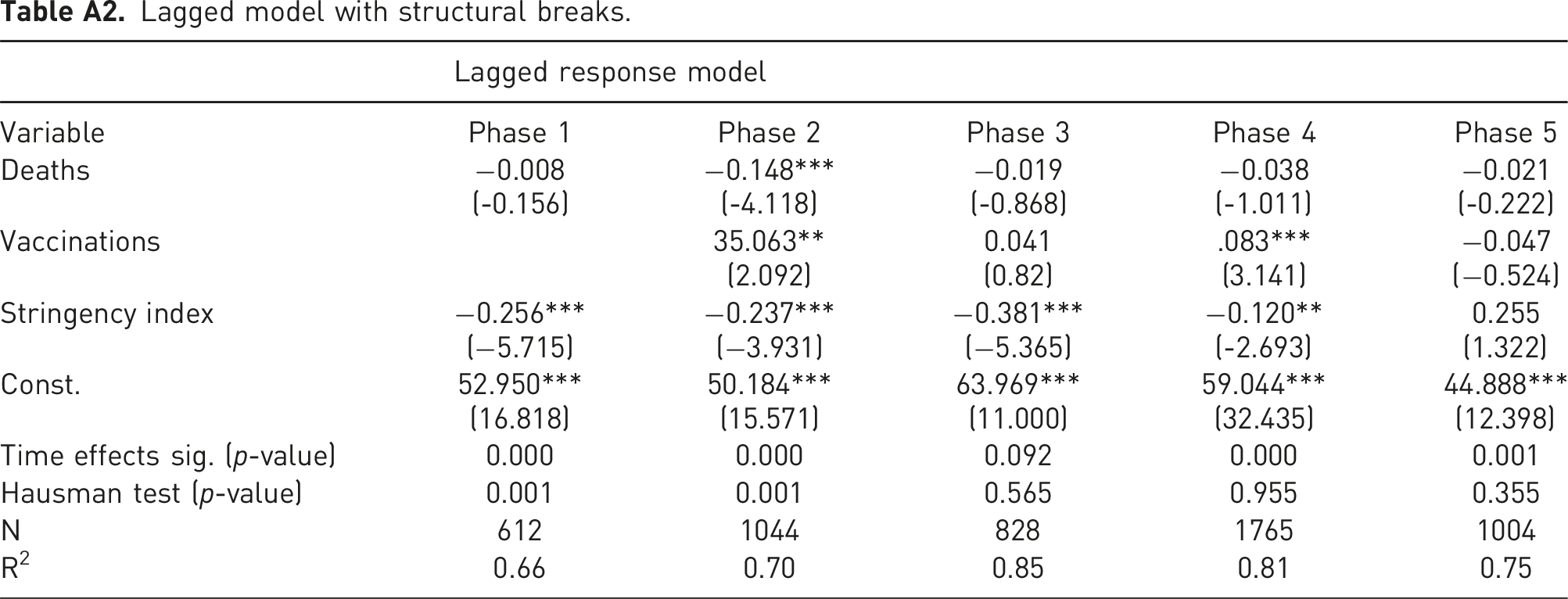
Lagged response model
Variable
Phase 1
Phase 2
Phase 3
Phase 4
Phase 5
Deaths
−0.008
−0.148***
−0.019
−0.038
−0.021
(-0.156)
(-4.118)
(-0.868)
(-1.011)
(-0.222)
Vaccinations
35.063**
0.041
.083***
−0.047
(2.092)
(0.82)
(3.141)
(−0.524)
Stringency index
−0.256***
−0.237***
−0.381***
−0.120**
0.255
(−5.715)
(−3.931)
(−5.365)
(-2.693)
(1.322)
Const.
52.950***
50.184***
63.969***
59.044***
44.888***
(16.818)
(15.571)
(11.000)
(32.435)
(12.398)
Time effects sig. (p-value)
0.000
0.000
0.092
0.000
0.001
Hausman test (p-value)
0.001
0.001
0.565
0.955
0.355
N
612
1044
828
1765
1004
R2
0.66
0.70
0.85
0.81
0.75
Model with interaction terms. Note. Robust SE is given in parentheses. *p ≤ .10. **p < .05. ***p < .01. (1) Pandemic phase [<2022 week 21] (2) Recovery phase [>2022 week 21]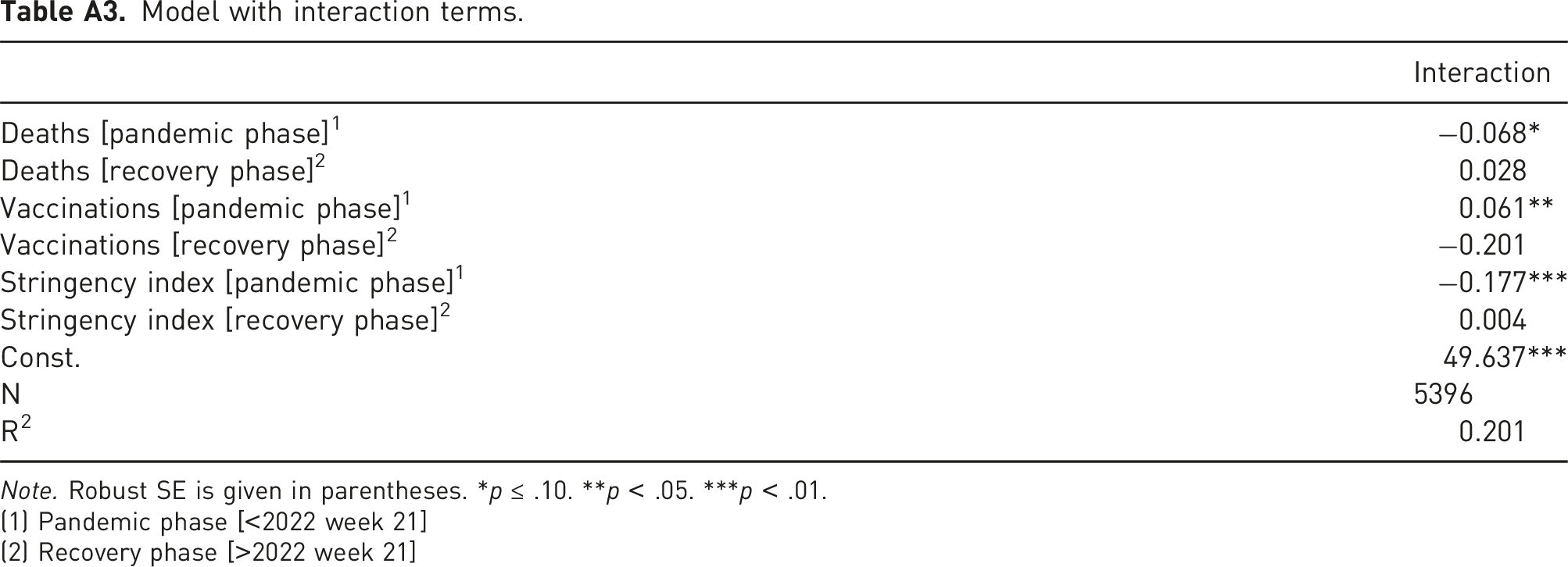
Interaction
Deaths [pandemic phase]1
−0.068*
Deaths [recovery phase]2
0.028
Vaccinations [pandemic phase]1
0.061**
Vaccinations [recovery phase]2
−0.201
Stringency index [pandemic phase]1
−0.177***
Stringency index [recovery phase]2
0.004
Const.
49.637***
N
5396
R2
0.201
Sub-sample analysis by the level of tourism exports (base model). Note. Robust SE is given in parentheses. *p ≤ .10. **p < .05. ***p < .01. (1) Pandemic phase [<2022 week 21] (2) Recovery phase [>2022 week 21]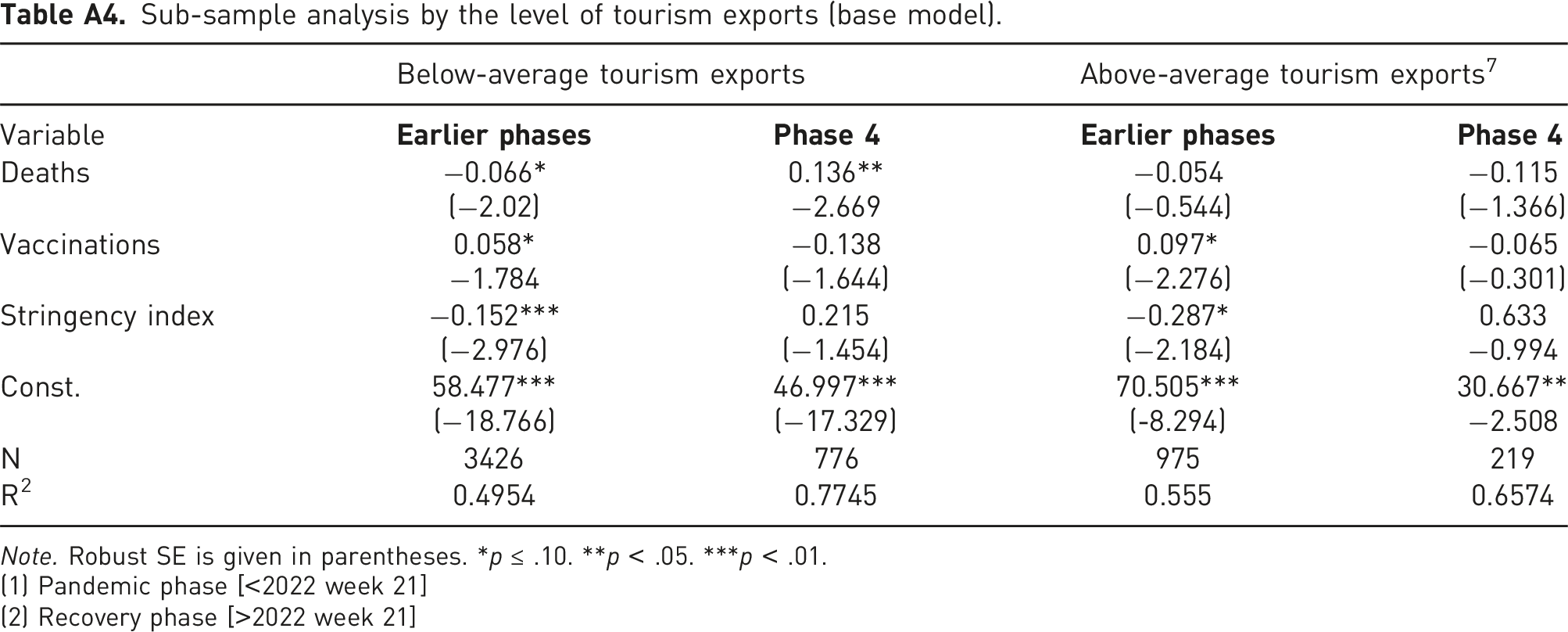
Below-average tourism exports
Above-average tourism exports
7
Variable
Deaths
−0.066*
0.136**
−0.054
−0.115
(−2.02)
−2.669
(−0.544)
(−1.366)
Vaccinations
0.058*
−0.138
0.097*
−0.065
−1.784
(−1.644)
(−2.276)
(−0.301)
Stringency index
−0.152***
0.215
−0.287*
0.633
(−2.976)
(−1.454)
(−2.184)
−0.994
Const.
58.477***
46.997***
70.505***
30.667**
(−18.766)
(−17.329)
(-8.294)
−2.508
N
3426
776
975
219
R2
0.4954
0.7745
0.555
0.6574