




Abstract
This study aims to prepare a comprehensive self-service technology model that incorporates the hygiene and health issues throughout the restaurant industry amid pandemics. To this end, this study explores psychological responses to the environmental threat caused by COVID-19, which impacts attitudes toward self-service kiosks in the restaurant industry in terms of the theory of anxiety. This study utilizes a mixed-method sequential exploratory design. The qualitative phase found four psychological attributes associated with respondents’ attitudes towards kiosks: anxiety towards COVID-19, timidity, perceived control, and intolerance for tardy service. Among the psychological attribute factors, anxiety towards COVID-19 was identified as the strongest predictor of customers’ attitudes towards kiosks in the quantitative phase. This study attests that the anxiety mechanism works in explaining restaurant customers’ attitudes towards kiosks in the restaurant industry. The comprehensive research model explains in a timely manner the value of kiosk service in rapid social and market changes.
Keywords
Introduction
For the past decade, various self-service technologies (SSTs) have become part of consumers’ everyday lives as well as a source of competitive advantage for service providers (Vakulenko et al., 2019). Among the variety of SSTs, the size of the global kiosk market is expected to increase by $41.88 billion by 2025 with an 8.9% growth of CAGR (i.e. the compound average growth rate) since 2019 (Grand View Research Inc., 2019). Retail and grocery stores have led this trend, providing kiosk self-services for customers to scan, pay, and leave with purchased items without assistance or interaction with cashiers. Consequently, the prospective growth of the world kiosk market indicates the likelihood of the eventual domination of self-services in various service sectors (Grand View Research Inc., 2019; Lee and Lee, 2020).
In the COVID-19 era, SSTs are regarded as an emergent strategy for sustainable business operations (Fox, 2020; Hao et al., 2020). According to recent reports, customers rekindled their preference for contactless self-service based on SSTs’ protective mechanisms as SSTs increase customers’ feelings of safety and minimize the spread of infection during service encounters (Fox, 2020; Zietz, 2020). In the restaurant industry, where bars and restaurants are primary sites of COVID outbreaks (Chang et al., 2020), SSTs are replacing direct customer-employee encounters with indirect service transactions in a safer and more convenient manner. For example, in South Korea, a country that has successfully incorporated world-leading digital technology at various levels and scales, many restaurants have adapted rapidly to the changing market environments due to the COVID-19 dissemination by transforming their service encounters from in-person to self-service. According to a 2019 report conducted by Samsung Securities Co. Ltd (2019), up to 94% of fast-food restaurants in South Korea were equipped with kiosk ordering services. The same report reveals that 74% of customers preferred ordering using kiosks over in-person encounters. Especially casual dining restaurants have swiftly incorporated the kiosk model from fast-food restaurants into their service as an emergent strategy for conducting business while ensuring the safety of customers and employees in the COVID era (Genovese, 2020; Zietz, 2020). Therefore, there is a need to examine the newly created demand for SSTs as a protective mechanism caused by COVID-19 in the changing restaurant industry environment. In this sense, this study raises the two following research questions: • How do restaurant customers perceive and value self-service kiosks during the pandemic? • Are individual users’ levels of anxiety towards COVID-19 associated with their attitudes towards self-service kiosks?
To address the research questions, this study looks through the possibility of expanding on existing SST models by incorporating the theory of anxiety. To this end, relevant literature covering existing theories of SSTs, anxieties, and the newly explored concepts of COVID-19 are reviewed in this study.
This study utilizes a mixed-method sequential exploratory design to evaluate psychological attributes affecting users’ attitudes towards SSTs in the restaurant industry, including their psychological responses to the environmental threat caused by COVID-19 using the case of casual dining restaurants in South Korea. As stated earlier, South Korea is at the forefront of incorporating world-leading digital technology at all levels of South Korean society, and this case study will be a good forecaster of the spread of SSTs in the global restaurant industry.
This study expects to contribute to field practices by supporting managers in operating kiosk services as a new service model at casual dining restaurants, thereby meeting growing demands for self-service solutions. Additionally, it aims to add to the body of knowledge on existing theories explaining technology acceptance by including users’ psychological attributes. The conclusions of this study will provide an example of how to rethink, reshape, and improve existing theoretical frameworks when faced with dramatic social shifts or disasters to close the gap between academia and reality.
Literature review
Customer attributes in self-service contexts
SSTs enable customers to receive services without direct employee involvement via technological interfaces, such as touch screens (Kim et al., 2013). In the restaurant industry, a kiosk provides customers with visualized information on its screen, such as ingredients, calories, prices, source options, etc. Once customers are done ordering, they are able to see the order details and make their payment by card, cash, or NFC (i.e. Near-field communication) (Figure 1). Kiosks at casual restaurants in South Korea.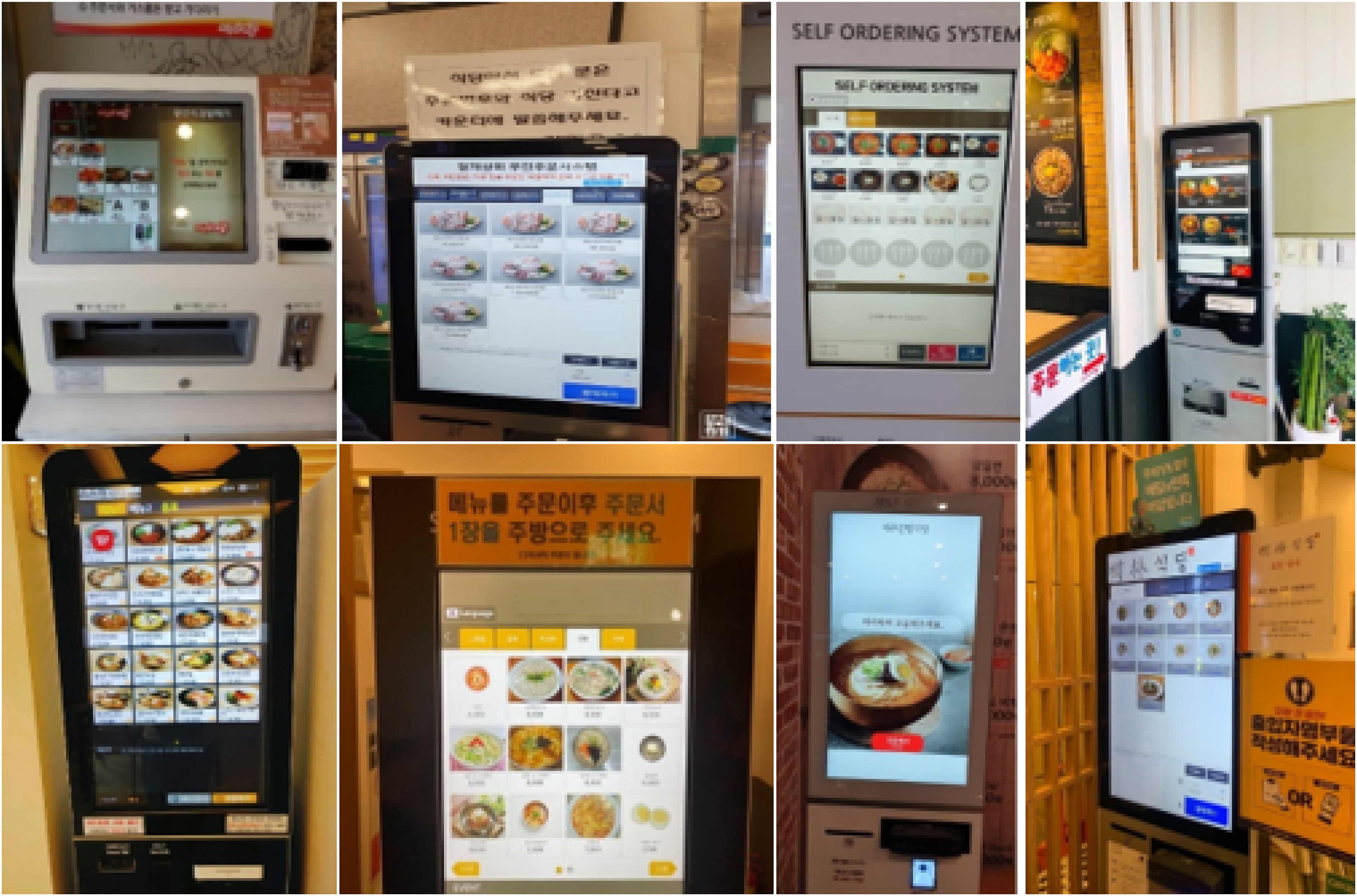
Understanding the way customers perceive self-service is critical in establishing a favorable customer-business relationship because the degree of customer satisfaction is directly determined by service encounters (Meuter et al., 2000). Therefore, businesses should be able to meet customers’ desires via pleasant experiences and a positive image of service to improve customers’ intentions to use or reuse the service in the future. Many studies have emphasized the importance of users’ traits such as readiness for new technology (e.g. Gelbrich and Sattler, 2014), tendency to avoid tardy services (e.g. Taufik and Hanafiah, 2019), and personality (e.g. Lee, 2017) as predictors of customer satisfaction with and their intention to use SSTs. In this same regard, Lee and Lee (2020) speculate that self-service can be preferred by customers who exhibit three attributes. Firstly, self-service can be ideal for customers who do not enjoy face-to-face encounters with service employees. They argue that psychological characteristics such as an extrovert or introvert tendency are strong determinants in the type of preferred service interactions. Secondly, the technology-based service environment could be seen as more welcoming to tech-savvy customers who might feel more comfortable with new technology. Finally, customers who want prompt service would be satisfied with the self-service that reduces waiting time by avoiding miscommunications and long queues.
Anxiety theory
There is a need to explore and examine the value of SSTs in increasing customers’ feelings of safety and minimizing the spread of infection during service encounters during the unprecedented pandemic (Fox, 2020; Zietz, 2020). To create a comprehensive SST model that can reflect in a timely manner the rapid social and market changes, this research incorporates the theory of anxiety and the recent arguments on COVID-19.
Anxiety is generally defined as an emotional state caused by uncertainty about some event or state that possibly brings any form of danger (Miceli and Castelfranchi, 2005). However, anxiety per se is not a negative thing; it is an adaptive response that triggers the need for control of the uncertainty (Nadel, 2005). In the behavioral sciences, anxiety is generally explained in terms of serving as a defense and coping mechanism (Miceli and Castelfranchi, 2005). In evolutionary terms, the appropriate fear response to a threatening situation enhances the likelihood of taking an action that would promote survival (Nadel, 2005). The theory of anxiety explains that control appears as epistemic emotion in a tense situation. The ability to foresee what happens greatly reduces uncertainty (Miceli and Castelfranchi, 2005). Therefore, when people expect a certain degree of danger, they tend to choose an option that limits the possibility of facing the worst. Many psychology researchers have figured out that the anxiety mechanism often overwhelms other psychological conditions and significantly influences decision-making process (e.g. Hunter and Barsky, 2019; Hurvich, 1963). That is because most people prefer to have uncertainty resolved immediately, and they are more likely to employ simplified strategies, or heuristics, when making a decision in anxiety-inducing situations (Hartley and Phelps, 2012; Wu, 1999). According to the theory of anxiety, it is easily expected that the anxiety of COVID-19 would dominate their decision-making process regarding food ordering rather than other psychological factors in a health-threatened situation by the infectious virus.
People often regard SSTs as a safe and practical method to reduce interpersonal contact and avoid the risk of cross-infection when getting service (Hao et al., 2020). It helps the service industry follow current health guidelines that recommend keeping social distance to diminish the risk of COVID contamination as well as allay customers’ anxiety by reducing their exposure to infection (Gasmi et al., 2020). Within the theory of anxiety, SSTs are an option that restaurant customers can take as a defense mechanism to minimize the anxiety of health risks amidst the pandemic.
Methodology
To address the suggested research questions, this study utilizes a mixed-method approach using the case of South Korea. Specifically, a sequential exploratory design was adopted as Creswell and Plano Clark (2007) suggested, since psychological attributes associated with SSTs in the restaurant industry during the pandemic are unknown. This approach is generally used for studies exploring and identifying research constructs by helping researchers gain a more complete and holistic understanding of research backgrounds and contexts through the use of two different lenses (i.e. qualitative and quantitative) (Hesse-Biber, 2014). Thus, in the qualitative phase, researchers explored customer perception of self-service kiosks during the pandemic and how the perceptions were associated with their attitude toward self-service kiosks through in-depth interviews. Then, the validity and reliability of the measurement model and hypotheses based on the qualitative results were crosschecked in the quantitative phase.
The qualitative phase is first carried out where researchers conduct a series of in-depth semi-structured interviews with respondents, who have had experiences with self-service kiosks at restaurants, to identify the psychological attributes influencing their attitude toward self-service kiosks during the pandemic. Under the assumption that individuals' feelings and meanings toward SSTs are socially constructed, complex, and ever-changing, researchers tried to understand and interpret information obtained from interviewees in the context of the pandemic. Findings from the semi-structured interviews are examined with relevant literature to develop and inform the questionnaire, which will be used during the quantitative phase. This approach, which diversifies the source of questions, helps minimize common method bias and improve the validity of research results (Jakobsen and Jensen, 2015; Kock et al., 2021). In the quantitative phase, variables found in the qualitative phase are tested with numerical data to examine and confirm the effects of attribute variables on the attitude towards self-service (i.e. service satisfaction and intention to use).
Phase one: Qualitative phase
Qualitative data was collected via semi-structured in-depth interviews in Seoul, South Korea, in May 2020. Purposive and snowball sampling was used to recruit interview participants who used a kiosk within the last three months at casual dining restaurants and were representative of the research population (Creswell and Plano Clark, 2017).
To ascertain participants’ psychological attributes, attitudes, and experiences with kiosks at casual dining restaurants, thirteen interviews were conducted in Korean for 40-60 minutes, respectively. The interviewee’s age was well distributed from the 20s to the 70s (two 20s, four 30s, two 40s, two 50s, two 60s, and one 70s). Of the thirteen interviewees, six were male, and seven were female. The participants' occupations included: realtor, farmer, office worker, engineer, teacher, businessman, graphic designer, photographer, professor, student, accountant, retailer, and housewife. The respondents were asked to express their recent experience with kiosks at casual dining restaurants. The interviewer used a script to guide the interview and asked follow-up questions about responses such as: What would be the good or bad thing about kiosk service at a restaurant during the pandemic? Which one do you prefer between ordering in person and using a kiosk? The nature of the semi-structured interviews allowed participants to freely express additional opinions in order to collect broader and deeper data. The primary researcher first translated and transcribed the interview results into English, then two peer reviewers who speak both Korean and English crosschecked the data. The translated script was managed using NVivo 12 software and processed through content analysis and thematic analysis. An initial inductive open coding was conducted to get a general sense of the emerging data from the interviews. The researcher considered phrases that were similar and, thus, could be merged into a single code. Then, thematic analysis was carried out during the selective coding stage (or theoretical coding). That is, patterns identified within codes were considered conceptual themes (or nodes) representing individual attributes with regard to contactless service through kiosks. In the theoretical coding phase, 346 codes were categorized into seven nodes (i.e. contagion, hygiene, social interaction, shyness, ease of use, convenience, and quick service). The seven nodes were reduced to four nodes in the second round of theoretical coding: anxiety towards COVID-19 (n = 108; 31.2%); timidity (n = 82; 23.7%); perceived control (n = 96; 27.7%); and intolerance for tardy service (n = 60; 17.3%) and these four themes were confirmed in the final round of coding.
Phase two: Quantitative phase
Survey items for testing during the quantitative phase were selected based on the findings from the semi-structured in-depth interviews. All items were measured on a seven-point Likert-type scale (1 = strongly disagree to 7 = strongly agree). To improve response accuracy and reduce the potential for common method bias, the researchers provided survey respondents with clear questionnaire instructions (Jakobsen and Jensen, 2015; Kock et al., 2021). For example, the instruction included a notice indicating that they were asked to provide their opinion based on subjective perception, and there was no correct answer. In addition, a consent letter that explains the procedure for protecting their privacy and that they can stop taking part at any time had been given before the survey started.
The data collection was conducted in July 2020 using the Korean version of the questionnaire. The population of this study is those who had experiences with kiosks at casual dining restaurants within the last three months of the data collection phase. The participants were recruited across South Korea by using a research company’s database, and they were asked to answer questions about their recent experiences with casual dining restaurant kiosks. Out of 350 completed responses, 303 respondents were used for the final analysis after a series of data screenings. Power analysis was carried out using G∗Power software to see if the sample size had enough power to detect the effects of hypothesis tests (Faul et al., 2009). The power analysis indicated that 138 participants would have 95% power to detect a medium-sized effect (i.e. 0.15) with a 5% false-positive rate. Therefore, the sample size of 303 was regarded as appropriate for analysis. Using the data set, exploratory factor analysis (EFA) was conducted using SPSS 23. Then, confirmatory factor analysis (CFA) and structural equation modeling (SEM) were carried out to examine the proposed hypotheses in EQS 6.4 Program.
Results
Qualitative findings
Based on the findings of the thirteen semi-structured interviews, the following four psychological attributes—anxiety towards COVID-19, timidity, perceived control, and intolerance for tardy service—were associated with respondents’ attitudes toward kiosks at casual dining restaurants. The four attributes were designated as parent nodes, which consist of a series of related codes describing conceptual themes. In this phase, timidity, perceived control, and intolerance for tardy service confirm that the psychological attributes of SST users were consistent with those of existing models associated with SSTs (e.g. Lee and Lee, 2020; Taufik and Hanafiah, 2019). Anxiety towards COVID-19 shows that users’ desire for hygiene has emerged as one of the most important considerations when they use SSTs.
Anxiety towards COVID-19
While discussing their experiences with kiosks, all participants spent a good deal of time discussing the recent pandemic of COVID-19. A total of 108 codes were included in the parent node of anxiety towards COVID-19 (e.g. “coronavirus on hands,” “without masks,” “risks of contagion,” “too many coronics,” “infection through the air”). In particular, Participant J stated: “because coronavirus transmits through contact with others, it is worrisome every time I encounter anyone…I feel very satisfied with a kiosk as it is a way to minimize the encounters.” Participant M also mentioned: “the more severe the pandemic, the more I feel I should use kiosks.” Another interviewee (G) said: “actually, hands are the dirtiest parts…using kiosks could be safer rather than having in-person service.”
However, some participants were concerned with contagion while using touchscreens. For example, participant G said: “even though it (the touchscreen) is better than receiving something that touched others’ hands… it is also worrisome, really it is. I think the touchscreen must be replaced by any other technology that allows food ordering without physical contact.” Another participant (M) also said: “I am happy that I can avoid facing a person, but I still worry about the risks of contagion through kiosks. I even push elevator buttons using other stuff.”
As shown in the interview results, COVID-19 intensifies individuals’ anxieties and worries over their health (Cao et al., 2020; Wang et al., 2020), and their worries about service encounters have become a crucial variable that can predict the change in service environment in the post corona era. Customers consciously or unconsciously evaluate the status of sanitation in a service space. In this regard, this study defines anxiety towards COVID-19 as individual customers’ worries and anxieties about being infected by the coronavirus.
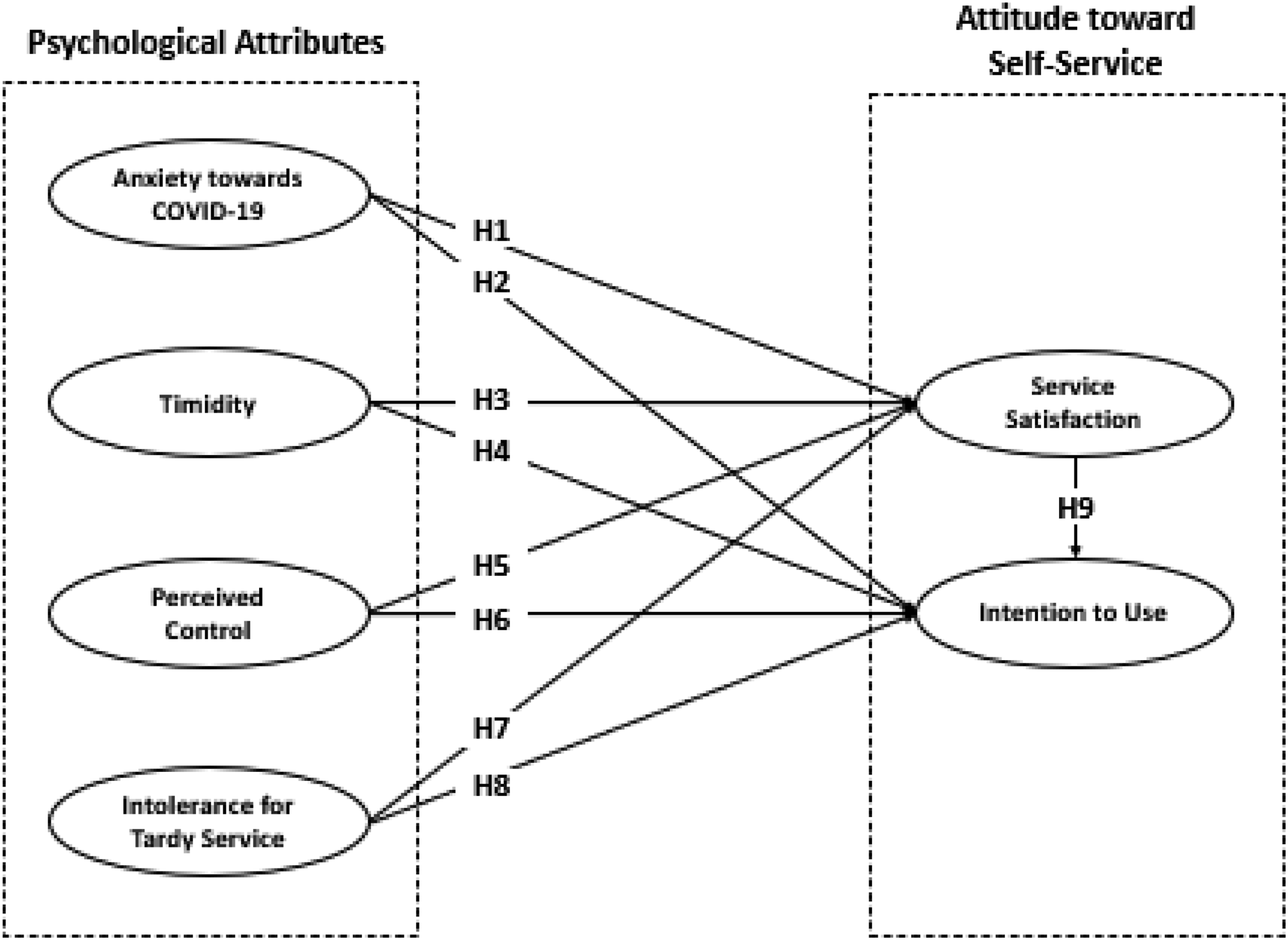
Rational customers who desire to minimize health risks may prefer self-service during the pandemic. If customers experience anxiety about their health safety in service environments, this emotion will negatively influence their overall service experience and lead to less satisfaction with the service (Johnson and Grier, 2013). Considering that a kiosk provides a solution to reduce the risk of customer infection from employee encounters, it can be theorized that the level of customer anxiety can improve customers’ satisfaction with kiosk services at restaurants. In particular, given that people cannot know who is a coronavirus carrier and that the carrier may not know if they are infected before becoming symptomatic, people’s response to COVID-19 should be examined in terms of proactive processes of pathogen avoidance (Makhanova and Shepherd, 2020; McKay et al., 2020). The theory of anxiety explains that people depend on their sense of anxiety sensitivity, which appraises specific infection risks, when exposed to any kind of risk (McKay et al., 2020). This physiological reaction consequently triggers their actions to protect themselves against potential infection (i.e. cautious decision-making) (Olivera-La Rosa et al., 2020). However, given that individual customers’ tolerance level to risk varies (Cao et al., 2020; Wang et al., 2020), their expectations of kiosk services could be different (Vakulenko et al., 2019). Hence, this study proposes hypotheses 1 and 2.
Timidity
Eighty-two codes were found to be associated with the parent node of timidity, showing that a person’s introvert tendency is an important determining factor for a favorable attitude towards kiosk services (e.g. “nervous in front of them [employees],” “hard to say the details of what I want,” “so shy”). Interviewee B stated: “Of course, it (using kiosks) is good for me since I don’t need to encounter clerks and I just choose what I want and then pay…it is especially good when I feel embarrassed because of the many foods (I ordered) for myself.” Another participant (H) stated: “Sometimes servers ask questions about me when ordering, like ‘where are you living?’ So I prefer kiosks. I just want to order food based on the information on the screen.”
Some respondents described themselves as an extrovert (e.g. “enjoy talking to them [clerks],” “like chatting”). For example, Participant D said: “I like being among people. There is such a “jeong” (or fellowship) between people. So, I prefer humans to machines (kiosks).” This result is consistent with the presumption of Lee and Lee (2020), which stated that customers’ psychological characteristics, such as extrovert and introvert tendencies, are associated with their preferences for service interactions. It assumes that every individual has different mental attributes that distinguish them from others, and this uniqueness represents “personality,” which determines an individual’s thoughts and behaviors (Mishra and Vaithianathan, 2015). In order to explain this, this study focuses on timidity as a variable that leads to favorable attitudes toward kiosks and defines it as “tension, concern, feelings of awkwardness and discomfort” in terms of one’s reaction to being with strangers, based on the definition of Cheek and Buss (1981, p. 330).
The extraversion–introversion traits have attracted the attention of marketers who desire to prepare customized services that can satisfy different types of customers (Itani et al., 2020; Matzler et al., 2005). For example, Matzler et al. (2005) found that the psychological trait of extroversion can contribute to generating positive emotions and satisfaction with customers’ participation in the service process. Likewise, personality attributes can be understood in terms of a conceptual framework for understanding consumers’ behavioral intentions (Azzadina et al., 2012; Barkhi and Wallace, 2007). Regarding this, Barkhi and Wallace (2007) state that customer personality has an impact on their choice of media and communication with service providers, such as online shopping. Based on these arguments as well as the semi-structured interview results, this study assumes that a customer’s timidity determines his or her satisfaction (H3) and intention to use kiosks (H4).
Perceived control
The parent node of perceived control included 96 codes that indicate customers’ difficulties or proficiencies in using kiosks (e.g. “struggle in using,” “hard to control,” “need assistance,” “too complicated,” “easy to find items,” “got used to the system”). Some participants stated that they are not confident with operating kiosks. Participant K said: “Ordering in person seems to be more convenient. I understand they have recently set up the kiosks due to the coronavirus, but there are no instructions, so I always struggle to find the food I want.” Participant M mentioned: “I don’t know how to use kiosks well, and it is also hard to see items properly on the screen…I often feel frustrated when there is no assistance.”
At the other end of the spectrum, some participants stated that they are proficient in operating kiosks. For example, Participant L mentioned: “I have no problem using kiosks at restaurants because most of the information provided on the screen is so simple to choose from. I have never had any difficulties.” According to Shamdasani et al. (2008), perceived control in the self-service context is generally defined as “the amount of control that a customer feels he/she has over the service process or outcome” (p. 121). In explaining the technology-based service environment, Lee and Lee (2020) discussed that customers’ knowledge and confidence in the new technology should be considered.
In a service context, customers’ perceived control has been considered a factor that enhances customers’ positive emotions, i.e. their satisfaction (Meuter et al., 2000; Wang, 2012). For example, Meuter et al. (2000) outline that if a customer does not get used to using kiosks at various service settings, this can decrease satisfaction with the overall service. Regarding the relationship between customers’ perceived control and their intention to use, Ajzen (1991) explains that people who perceive higher control tend to be more motivated to perform a particular behavior than those with less perceived control. Similarly, in their research on technology-enabled services in the airline and hotel industry, Wang and Sparks (2014) found that services based on technology are good options to facilitate customers’ purchase decisions for those who are more technologically prepared. Based on these discussions, this study proposes hypotheses 5 and 6.
Intolerance for tardy service
The node of intolerance for tardy service included 60 codes (e.g. “speedy service,” “quickly choose,” “delayed service,” “waiting in queue”). Some participants felt that they received quicker service when using kiosks. Participant C stated: “Sometimes I want to have food immediately, especially when I am in a hurry. Kiosks are faster than clerks.” Another participant (J) also said: “I don’t need to wait for a waiter. It is very satisfying that I can order and pay by myself without any delay.” These results reveal that “saving time” is one of the pivotal determinants of satisfaction with self-service (Beldona et al., 2014). Lee and Lee (2020) explain that saving time is why both business owners and customers prefer SSTs. From the business owners’ point of view, self-service is regarded as a managerial tactic to increase sale volumes per unit of time by accelerating the service pace. On the customer side, service through SSTs is preferred as it can reduce a queue and avoid miscommunication.
Interestingly, some interview participants mentioned that they feel that SSTs do not always guarantee prompt service. For example, Participant L stated: “They (clerks) are much quicker. Even when I just order a cup of coffee, they find it out much quicker as they know where it is on the POS (or Point-of-Sale system) than I do (on a kiosk).” Participant A also expressed a similar opinion: “I have to push each icon step by step and then pay. But I don’t need to do that if I order from a person, I just need to say “please this, this, and this. Done in just five seconds!” These ideas are supported by prior research. For example, Vakulenko et al. (2019) argue that quickness of service cannot be an adequate value measurement for all types of self-service since each technology focuses on different purposes and targets different customers.
Nonetheless, an individual customer’s intolerance for tardy service is still worthy of being examined since it could be one of an individual’s psychological attributes affecting his or her attitude towards self-service, as the interview results reveal. That is, a person’s desire to have prompt service will impact what service they like. Defining the intolerance for tardy service as a person’s unwillingness to wait for time-consuming service, this study suggests hypotheses 7 and 8.
Service satisfaction and intention to use
Satisfaction is frequently regarded as a primary variable that directly impacts behavioral intention, especially in selecting appropriate service methods (Kang et al., 2018; Shamdasani et al., 2008). Previous self-service research demonstrates that businesses should provide customers with an opportunity to have a pleasant experience and a positive image of self-service. This can result in increased customer intention to reuse the service in the future (e.g. Kang et al., 2018; Lee and Lee, 2020). With this in mind, the researchers paid attention to the relationship between user satisfaction and the intention to use kiosks in the future. Throughout the interview analysis, the following results were observed. Participant C stated: “I don’t care much about it (whether in-person or kiosks), but I would be slightly more likely to use kiosks …as I feel a bit more comfortable with the self-service.” Participant E mentioned: “Kiosk service is much better than in-person service. I usually use kiosks at restaurants expecting more simple and comfortable service.” Based on these discussions, this study tests hypothesis 9 (Figure 2). Research model.
Quantitative findings
Demographics
Demographics.
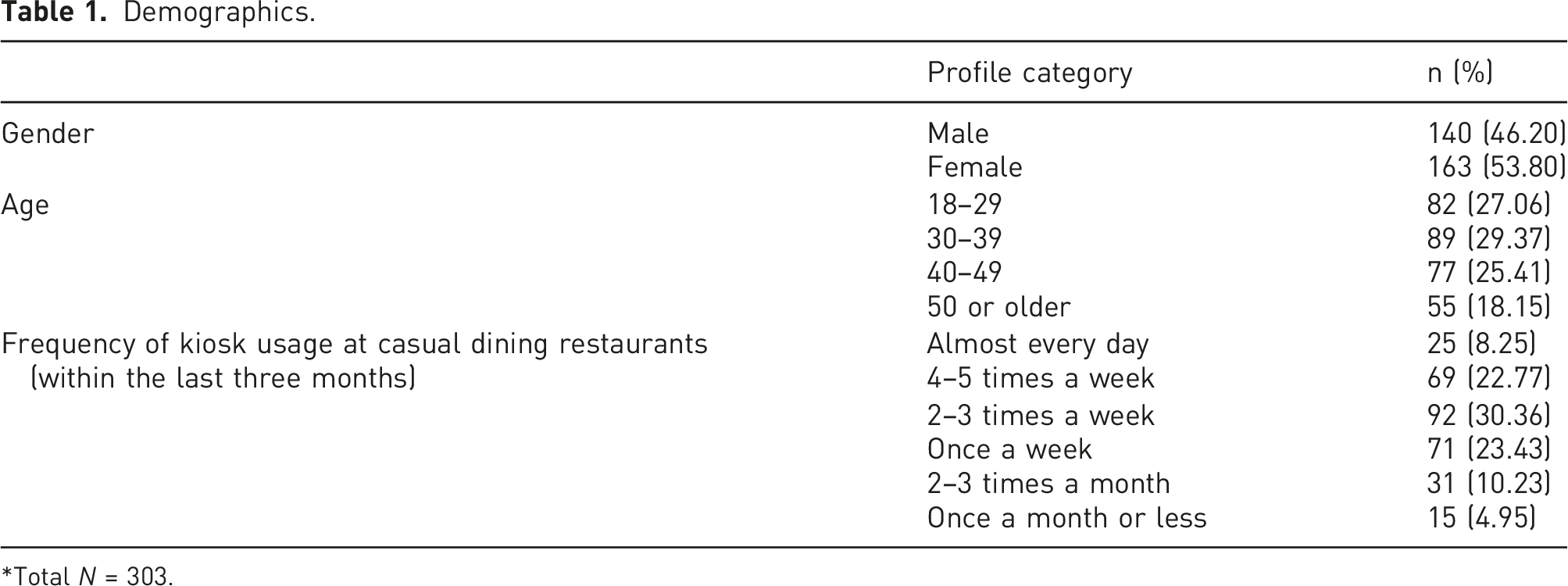
*Total N = 303.
Measurement model
The findings from the qualitative phase informed the items selected for testing during the quantitative phase. In terms of psychological attributes, items for the four conceptual themes (i.e. timidity, perceived control, anxiety towards COVID-19, and intolerance for tardy service) were developed based on the interview results and literature review. Timidity was measured using five items that were created based on the information from the timidity codes and which were found to be existing items from studies by Cheek and Buss (1981) and Hong et al. (2019). In the same way, perceived control was measured by five items based on the perceived control codes and items from studies by Zhou et al. (2010) and Kang et al. (2018). Seven items for anxiety towards COVID-19 were developed based on the COVID-19 codes and items from the research by Roy et al. (2020). Five items for intolerance for tardy service were created based on the intolerance for tardy service codes and items from studies by Landy et al. (1991) and Oyedele and Simpson (2007). In terms of attitude towards self-service, items for service satisfaction and intention to use were developed based on the existing literature: five items for service satisfaction from the research by Kang et al. (2018) and Wang (2012); three items for intention to use from studies by Kim and Qu (2014) and Jeon et al. (2020).
Measurement items.
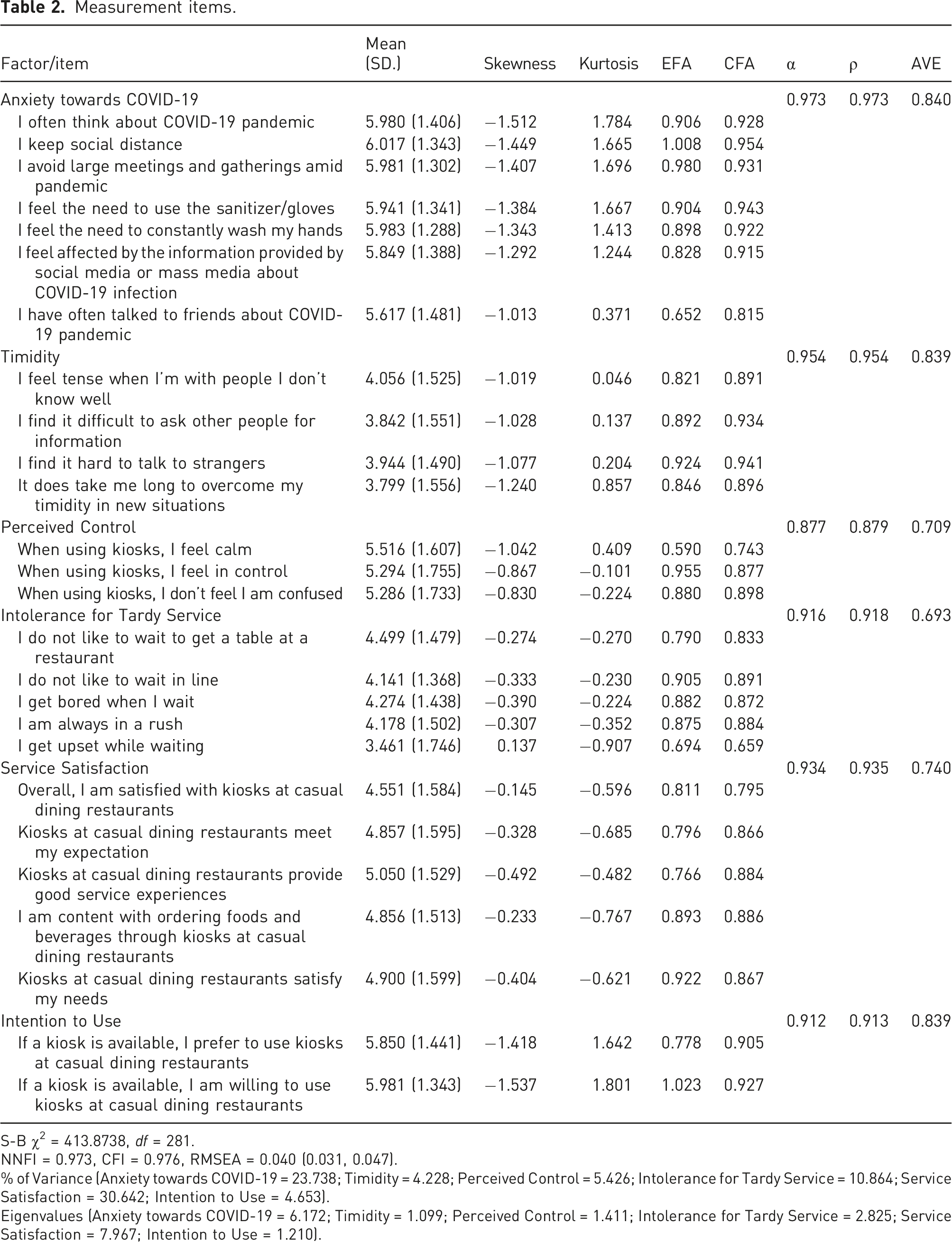
S-B χ2 = 413.8738, df = 281.
NNFI = 0.973, CFI = 0.976, RMSEA = 0.040 (0.031, 0.047).
% of Variance (Anxiety towards COVID-19 = 23.738; Timidity = 4.228; Perceived Control = 5.426; Intolerance for Tardy Service = 10.864; Service Satisfaction = 30.642; Intention to Use = 4.653).
Eigenvalues (Anxiety towards COVID-19 = 6.172; Timidity = 1.099; Perceived Control = 1.411; Intolerance for Tardy Service = 2.825; Service Satisfaction = 7.967; Intention to Use = 1.210).
Correlation matrix between constructs.
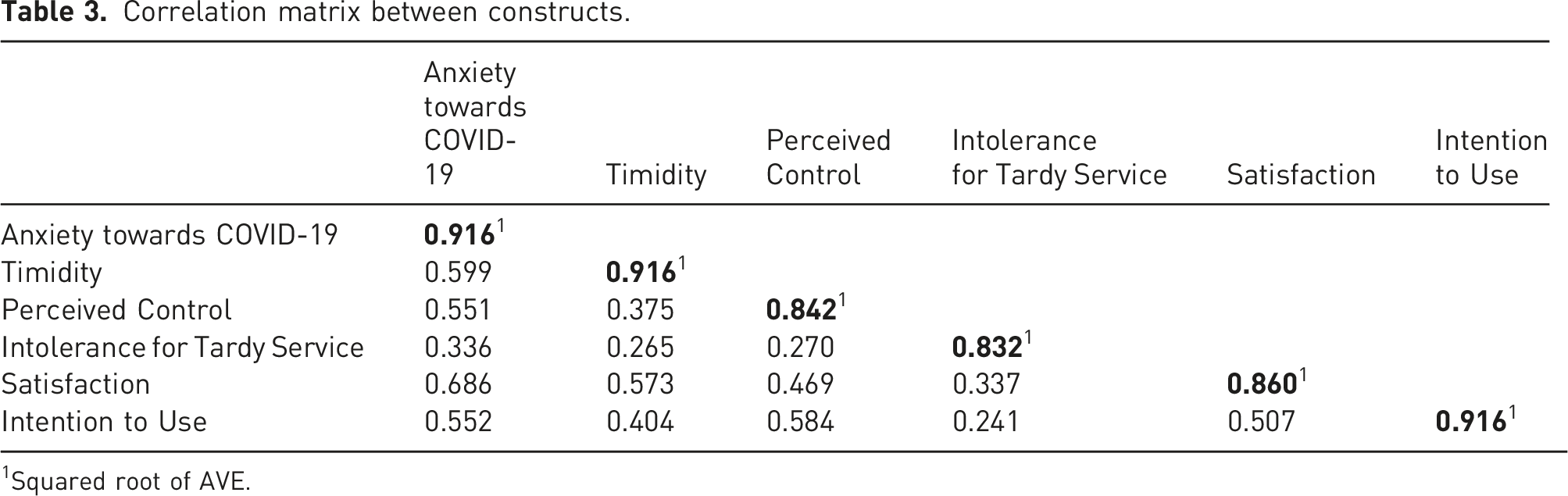
1Squared root of AVE.
Hypothesis tests
Based on the measurement model, the structural model was established. The model revealed good fit indices (S-B χ
2
= 561.0651,
Hypothesis tests.
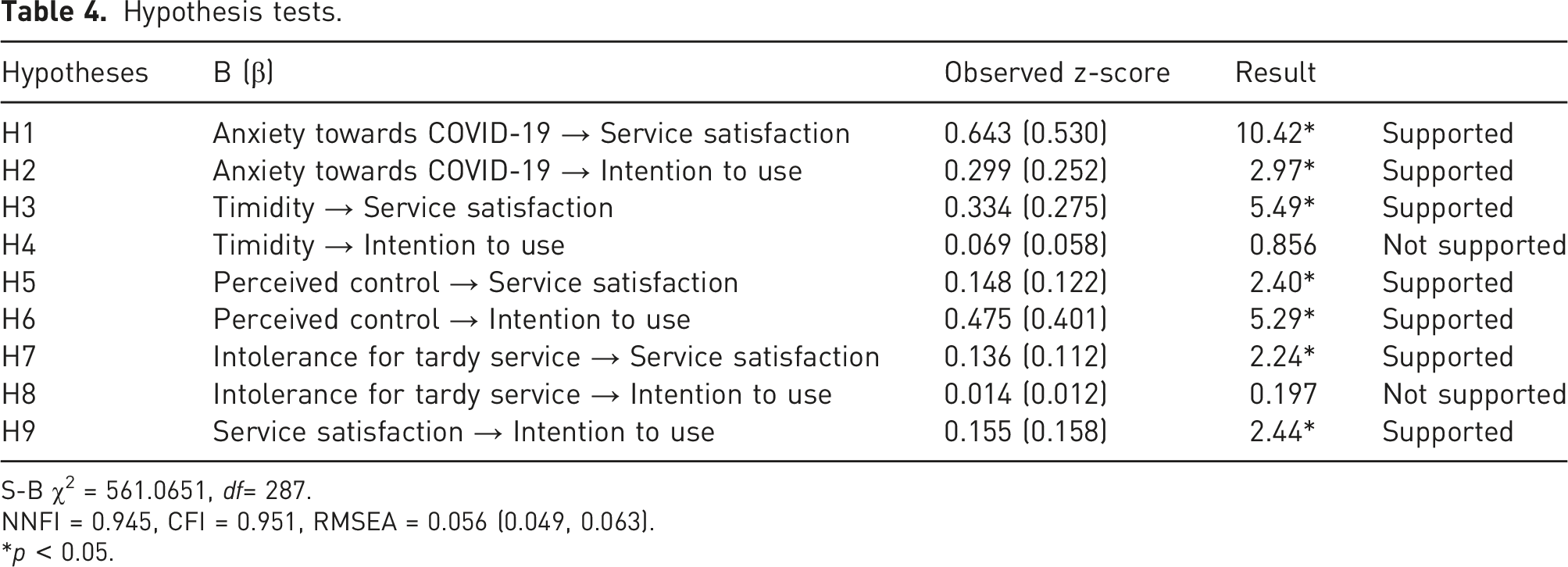
S-B χ2 = 561.0651, df= 287.
NNFI = 0.945, CFI = 0.951, RMSEA = 0.056 (0.049, 0.063).
*p < 0.05.
Along with the hypothesis tests, an additional moderation test was conducted to control age in the relationship between kiosk users’ psychological attributes and attitudes towards kiosks. To examine the effect of age statistically, the sample was divided into Group 1 (18–39 years, n =171) and Group 2 (40 or older, n = 132), and then the moderation test was carried out. The test found that the moderation effect of age was not significant, indicating age is well controlled in the hypothesis analysis. 1 The result presents that individual kiosk users’ attitudes towards kiosks are influenced at a similar level by their psychological attributes regardless of generation.
Discussions
This study explored and identified psychological attributes that influence restaurant customers’ attitudes toward kiosks during the COVID-19 pandemic to address the two research questions: How do restaurant customers perceive and value self-service kiosks during the pandemic? Are individual users’ levels of anxiety towards COVID-19 associated with their attitudes towards self-service kiosks?
In the qualitative phase, four psychological attributes associated with respondents’ attitudes towards kiosks were discovered: anxiety towards COVID-19, timidity, perceived control, and intolerance for tardy service. The finding of timidity, perceived control, and intolerance for tardy service is consistent with the psychological attributes of SST users in existing arguments associated with SSTs. For example, Lee and Lee (2020) demonstrate that customers’ preferences for types of interactions in a service environment tend to be determined by individual customers’ abilities, needs, and/or psychological characteristics. Based on their suggestion, perceived control, which refers to customers’ degree of skills in using SSTs (i.e. kiosks), can represent individual customers’ abilities. Intolerance for tardy service could be explained in light of customers’ needs since the interview results indicate that some respondents who want to have prompt service tend to use kiosks. Timidity can be understood in terms of the psychological characteristics of customers. On the other hand, anxiety towards COVID-19 was newly found, showing that users’ desire for hygiene is one of the most important considerations when they use SSTs.
The quantitative phase provided an empirical test about the impacts of the psychological attributes (i.e. anxiety towards COVID-19, timidity, perceived control, and intolerance for tardy service) on customers’ attitudes towards kiosk services (i.e. service satisfaction and intention to use). To this end, measurement items and hypotheses were established using the qualitative findings and relevant literature. Then, the hypotheses were tested in SEM. The quantitative result shows that all psychological attribute factors had significant impacts on service satisfaction indicating that customers who are timid, familiar with kiosks, and/or impatient with long service times are more likely to be satisfied with kiosk service. Above all, anxiety towards COVID-19 was identified as the strongest predictor of satisfaction with kiosk service among the psychological attributes. Additionally, perceived control and anxiety towards COVID-19 have significant impacts on the intention to use kiosks. This result indicates that customers with a good ability to operate kiosks and those with high anxiety are more likely to use kiosks at restaurants. Based on these results, anxiety towards COVID-19 is regarded as a primary factor for predicting customers’ engagement with kiosk services during the pandemic. It indicates how the theory of anxiety appropriately explains the newly emerged customer demand for SSTs in the restaurant industry, confirming that the anxiety of COVID-19 dominates restaurant customers’ decision-making processes regarding food ordering as a defense mechanism (Hunter and Barsky, 2019; Hurvich, 1963). Simultaneously, the results show that kiosks serve as an emergent strategy for sustainable business operations in the COVID-19 era by providing safe and convenient service environments (Fox, 2020; Hao et al., 2020).
Conclusion
The findings from this study provide academic and practical implications. The four psychological attribute factors obtained via the mixed methods allow for a deeper and broader understanding of the market willing to accept kiosk services. That is, anxiety toward COVID-19, timidity, perceived control, and intolerance for tardy service not only explain customers’ needs or motivation for SSTs in the market, but also help in understanding the value of new technology in responding to the changes in the market. Primarily by including the discussion about anxiety towards COVID-19 as one of the psychological attributes predicting customers’ service satisfaction and intention to use kiosks at restaurants, this study contributes to establishing a comprehensive research model that can explain in a timely manner the value of kiosk service in rapid social and market changes. In doing so, this study can raise academic awareness of hygiene and health issues within the service context. In addition, it can heighten attention to the usefulness of SSTs throughout the restaurant industry amid pandemics. Doing so suggests expanding existing theories that focus on psychological issues related to SSTs (e.g. Gelbrich and Sattler, 2014; Lee, 2017; Lee and Lee, 2020; Taufik and Hanafiah, 2019) by incorporating the theory of anxiety.
This study also offers information for field practices in operating kiosk services as a new service model at casual dining restaurants, which can simultaneously meet the growing demands for self-service solutions and satisfy customers’ expectations of safe dining facilities. The newly recognized value of kiosk services indicates that they can be an essential solution for customers hesitating to use restaurants due to fear of cross-infections from in-person interactions during the pandemic. The increased public concerns about hygiene will remain after the COVID-19 pandemic. As well, the customer experience of SSTs will accelerate the diffusion of new technology in many forms across the industry. Therefore, managers should utilize contactless kiosk services to ease customers’ concerns about health safety, making the service environments more comfortable and convenient. In this sense, the information from the analysis can add a rationale to extend SSTs beyond fast food and casual restaurants.
Study findings showcase that there are still customers who prefer direct interactions with employees and/or who need assistance with using SSTs. Restaurant managers should explore ways to assist these clients such as providing them with two options: kiosks or in-person service. It indicates that restaurant employees would remain securely employed, although their roles might somewhat change. Furthermore, using the information attained, restaurant managers can design a new system or improve the service quality of kiosks. For example, as one of the interview participants mentioned, the restaurant industry can drive the invention of a touchless service solution for customers who worry about cross-infection from touchscreens.
Although this study revealed interesting findings, it has a few limitations. First, the study population of this research is those who had experiences with kiosks at casual dining restaurants during the recent COVID-19 pandemic. The unavoidability of skewed demographic information in the target population during the pandemic limits a fully representative sample. It suggests that future research should further discuss the population based on the market data. Second, the measurement tool could be more rigorously examined by adopting additional techniques, such as CFA Marker Technique, for identifying common method bias (Bozionelos and Simmering, 2021). Third, South Korea serves as an excellent laboratory to study SSTs because the country has a world-leading digital technology diffusion rate, but findings on customers’ preferences and abilities could vary according to cultural, social, and economic differences. Therefore, similar studies in different circumstances will generalize the output. Additionally, this study collected the data during the pandemic, meaning that results might change as customers’ perceptions of health risks change. Supplementary studies tracking changing customers’ perceptions of health risks should be carried out.
Footnotes
Declaration of conflicting interests
The author(s) declared no potential conflicts of interest with respect to the research, authorship, and/or publication of this article.
Funding
The author(s) received no financial support for the research, authorship, and/or publication of this article.
