




Abstract
The aim of this study is to investigate the relationships between destination attachment, tourists’ experiences of historical guesthouses, satisfaction and revisit intention. Historical guesthouses of Kinmen County, Taiwan were the setting for the investigation. A total of 346 questionnaires were collected and analyzed. Results showed that accommodation experiences can significantly mediate the relationships between destination attachment and the evaluations of historical guesthouses. Perceptions of human interactions between tourists and the service providers at historical guesthouses were critical for creating a highly favorable accommodation experience. The physical environment, human interactions, and satisfaction all had significant positive effects on revisit intention, with the perceptions of human interactions greatly influencing revisit intention. This study provides meaningful management implications for both the hospitality and tourism industries.
Keywords
Introduction
When investigating how individuals evaluate accommodation, most studies focus on the influence of the services and experiential aspects of accommodation on decision making (Lai et al., 2018; Li et al., 2020). There has been little attention given to factors related to a specific destination in which the accommodation is located, which may influence consumers’ decision-making processes (i.e. Fang et al., 2019; Li and Ryan, 2020). Mussalam and Tajeddini (2016) analyzed customers’ online reviews and comments and found that customer satisfaction and revisit intention were affected not only by services or attributes of accommodation, but also by destination attributes such as culture or natural resources. Some scholars (e.g. Bulchand-Gidumal et al., 2013; Radojevic et al., 2017; Soler et al., 2019) noted that customers’ accommodation experiences are influenced by destination-related factors such as residents or service productivity. In addition, Jensen (2018) indicated that the antecedents of tourists’ experiences include their attachment to the site or to the site theme, which can be regarded as one of the destination-related factors. In other words, destination attachment could influence tourists’ experiences, such as accommodation experience.
Specialist forms of accommodation (Morrison et al., 1996), such as bed and breakfasts, guesthouses, or country inns, are located mostly in small towns, rural areas, or historical settings (Mcintosh and Siggs, 2005). Studies have indicated that specialist accommodation establishments that utilize historical features may attract tourists’ attention and influence their decision to choose accommodation or may shape tourists’ experiences (e.g. Mcintosh, and Siggs, 2005; Minca and Ong, 2016; Presenza et al., 2019). In this regards, historical accommodation is one of the specialist forms of accommodation. As historical accommodation is often associated with the unique attributes of the destination. It is assumed that an accommodation establishment with historical features may affect tourists’ experiences. Thus, it is essential to explore destination-related factors when investigating tourists’ decision-making process in selecting historical accommodation.
The landscapes and buildings that served as the historical heritage of a destination are a source of attachment (e.g. Alrawadieh et al., 2019; Scarpi et al., 2019). Many studies discuss how individuals develop attachment to destinations after visiting, or after long-term engagement with a particular place (Yuksel et al., 2010). However, some studies have argued that individuals may develop a bond with unvisited places (Hosany et al., 2020) or places being visited for the first time (e.g. Aro et al., 2018; Wildish et al., 2016). Although tourism studies have investigated the importance of destination attachment, the question of how the extent of destination attachment may influence the evaluations of tourism offerings or services (such as accommodations) has not been fully addressed. Accordingly, it is likely that destination-related factors may affect customers’ accommodation experiences and purchase behavior. Particularly, individuals may develop an attachment to a specific destination with a historical type of accommodation. It is unclear whether and how accommodation experiences can be influenced by individuals’ attachment to a particular destination. Thus, the purpose of this study is to investigate the relationships between destination attachment, accommodation experiences, satisfaction, and revisit intention.
Literature review
Destination attachment
The concept of place attachment refers to positive feelings toward a certain place when that place makes sense to people (Halpenny, 2010). Thus, the emotional bonding that person feels with a place is known as place attachment (Rosenbaum and Montoya, 2007). Place attachment also refers to the feelings an individual generates toward a certain place, which may include symbolic and emotional representations (Budruk and Stanis, 2013). It is regarded as a multifaceted concept (Kyle et al., 2003; Williams et al., 1992), including place identity, place dependence, affective attachment, and social bonding (Ramkissoon et al., 2013).
In the field of tourism, place attachment is known as destination attachment. Destination attachment can be regarded as ‘a set of positive beliefs and emotional linkages of an individual to a particular tourism destination’ (Veasna et al., 2013, p. 513). Destination attachment not only influences tourists during their travels, but it is also a key factor in predicting tourists’ preferences and behavioral intentions (Yuksel et al., 2010). Previous literature illustrate that destination management originations (DMOs) enhance tourists’ sense of belonging and attachment by using landscape, historical sites, culture, and unique services (Williams and Allen, 2015). Destination Management Organizations (DMOs) include public and private destination stakeholders that directly or indirectly support tourism development in destinations over the long term (Blain et al., 2005). For example, DMOs could use historical buildings as destination attractions; and those cultural attributes of historical buildings could be one of the main sources of destination attachment (e.g. Alrawadieh et al., 2019; Scarpi et al., 2019).
The term “sense of place” is synonymous with “place attachment” (Ram et al., 2016; Abou-Shouk et al., 2018). Some studies state that a sense of place includes place attachment, place dependence, and place identity and that these terms are interrelated (Abou-Shouk et al., 2018). Sense of place refers to an emotional bond between an individual and a particular place resulting from the individual’s personal affective responses the physical and social attributes of that place (Williams and Allen, 2015). The role of sense of place in destination branding has been investigated by utilizing distinctive landscapes or destination attributes to create a desired impression in people’s minds (Falahatkar and Aminzadeh, 2020; François Lecompte et al., 2017). The affective bonding to a place may have a significant impact on individuals’ engagement and commitment to the place, which may encourage individuals’ actions to behave in relation to that place, such as staying at a place (Pretty et al., 2003; Tan et al., 2018). Thus, it is possible for DMOs to create a sense of place that provides competitive strength because when tourists generate an attachment to a particular destination, they are unlikely to change their destination selections in the future (Yuksel et al., 2010).
Accommodation experience
Tourism experience has drawn the attention of academia because it is an essential part of the tourism and hospitality industries (Zhang et al., 2018). The experience economy perspective was proposed by Pine and Gilmore (1998), who suggested that businesses should create experiences for customers in relation to products and services to increase the competitive strength. Walls et al. (2011) developed a framework that divides consumer experience into four dimensions using a two-dimensional quadrant: ordinary, extraordinary, cognitive/objective, and emotive/subjective. Walls et al. also indicated that the tourism and hospitality consumer experience varies from person to person and is related to perceived physical experience elements, perceived human interaction elements, individual characteristics and situational factors. Each element can influence consumer experience.
Walls (2013) went on to examine the relationships between accommodation experiences (physical environment and human interaction) and perceived values based on three market segments (select-service, mid-scale, and upscale/luxury hotels). Results of Walls’s (2013) study showed that the physical environment (hotel design, asset maintenance, and atmosphere) of accommodation experiences had significant positive effects on perceived, social, and emotional value. Human interactions (staff members’ care, reliability, professionality and interaction with other tourists) had significant positive effects on perceived and emotional values, but no significant impact on social value. Thus, accommodation experiences are unique and personal and that it is highly influenced by individuals’ value and feelings (Walls, 2013).
Several studies further investigated customer experiences of different types of accommodations. A study of bed and breakfast venues showed that customer experience and customer value were affected by the atmosphere (Chen, 2015), while with budget hotels, customers paid more attention to human interactions (warm communication and care rather than high-level professional service) than cheap prices (Ren et al., 2016). In boutique accommodation, warm social interactions between tourists and service providers were considered as important factors that can increase tourists’ positive evaluations and enhance the authenticity of the experience of the local lifestyle (Rogerson, 2010). A favorable environment for social interactions in hostels were found to be enhanced by staff, social activities, facilities, location, atmosphere, guests’ interactions, cleanliness, design and decoration, value for money, and safety (Veríssimo and Costa, 2019). Similarly, salient customer experiences of home-sharing accommodations were associated with human interactions, including social presence, knowledge sharing, activity sharing, host interaction, guest interaction, and space presence (Shi et al., 2019). Tourists’ memorable Airbnb hospitality experiences were related to social interactions with the host (Sthapit and Jiménez-Barreto, 2018).
In sum, accommodation experiences can be classified in two dimensions: human interactions and the physical environment, based on the framework of Walls (2013). Hence, this study investigates how tourists’ accommodation experiences can be influenced by human interactions and the physical environment of historical guesthouses in Kinmen, Taiwan. Kinmen is an island located in the west of Taiwan and close to mainland China. It has many buildings with historical and cultural characteristics, which were later converted into guesthouses to provide accommodation. More detailed information on the selection of Kinmen as the scope of the study, including the background of Kinmen and the development of historical guesthouses, is explained in the Research Methodology section.
Accommodation satisfaction
Satisfaction is an important indicator for measuring tourists’ evaluation of a destination. The expectation-disconfirmation model, a feature of expectation disconfirmation theory (Oliver, 1980), states that consumers generate expectations before consumption. Thus, when perceived performance is less than expected, negative expectation disconfirmation, or dissatisfaction, will be produced; conversely, positive expectation disconfirmation, or satisfaction, will be produced. Accordingly, satisfaction is an important indicator for investigating tourists’ perceptions of accommodation. Moreover, a satisfaction survey is one of the most common ways for accommodation managers to learn about the needs of customers and to improve the level of accommodation service quality level.
During service encounters, customers may interact with various aspects of accommodation, including the physical environment and human interactions (Walls, 2013). Kang et al. (2004) compared tourists’ satisfaction between contemporary and traditional Japanese hotels and found that human interaction was the most important factor influencing satisfaction, followed by the physical environment. Similarly, several studies indicated that customers interactions with service providers and other customers would greatly influence satisfaction with accommodation (e.g. Chen et al., 2013; Shi et al., 2019; Sthapit and Jiménez-Barreto, 2018; Veríssimo and Costa, 2019).
Revisit intention to historical guesthouse
Revisit intention is the key factor for assessing loyalty in tourism and hospitality research. Repurchase intention refers to the possibility that consumers will purchase a certain product or service again (Han et al., 2009) or the chance that a consumer will use the same product continuously (Davidow, 2003). In the marketing field, repurchase and recommendation intentions are usually used to measure loyalty (Zeithaml et al., 1996), while in the relation to accommodation, revisit intention refers to the likelihood that customers intend to stay in the same accommodation again in the future (Han and Kim, 2010), if they are satisfied with products or services.
Overall, revisit intention is regarded as one of key factors for measuring customers’ behavior intentions (Kuhzady et al., 2020). Several studies reveal that a favorable experience can have a significantly positive effect on individuals’ revisit intention (Coudounaris and Sthapit, 2017; Zhang et al., 2018). In other words, creating a preferable evaluation of an experience could increase customers’ revisit intentions, which is essential for being successful in the competitive hospitality industry (Liu and Jo, 2020; Meng and Cui, 2020; Kuhzady et al., 2020; Tanford et al., 2012). If customers experience a high level of hospitality from their hosts, they are highly likely to revisit the accommodations (Tajeddini et al., 2021).
The relationship between destination attachment, accommodation experiences, accommodation satisfaction and revisit intention
Some recent studies (e.g. Bulchand-Gidumal et al., 2013; Radojevic, et al., 2017) have analyzed online information data and found that customers evaluate accommodation, including satisfaction and revisit intention, based not only on service quality and accommodation experiences, but also on factors related to destination characteristics, such as public services and facilities, tourism hotspots, or weather, while destination attributes such as culture or natural resources were investigated by Mussalam and Tajeddini (2016). These are not only important factors for attracting tourists to visit the destination, but they also have effects on accommodation evaluation (Soler et al., 2019). Based on these findings, it is believed that accommodation experiences can be affected by destination-related factors. It is assumed that such factors may not only enhance customers’ satisfaction with accommodation, but it may also influence their revisit intention or future purchase behavior.
Conversely, it is known that specialist accommodation, such as historical establishments, can be a source of destination attachment because of the association with a particular destination (e.g. Alrawadieh et al., 2019; Scarpi et al., 2019). Moreover, the person-place bonds with such establishments have a significant impact on individual actions, such as staying at a given place (Pretty et al., 2003; Tan et al., 2018). Ramkissoon and Uyasl (2018) argue it is necessary to understand the relationships between tourists’ emotional attachment, state of mind, and authentic experiences, which related to tourist sites. Accordingly, in this study, tourists’ experiences of the historical guesthouses of Kinmen could be entwined with the extent of attachment of the destination. In other words, the extent of attachment to a destination could influence the individuals’ experiences and evaluations of historical forms of accommodation. On this basis, the following hypotheses are presented:
H1: Destination attachment has a significant positive effect on perceptions of the physical environment where an accommodation experience takes place.
H2: Destination attachment has a significant positive effect on perceptions of human interactions where an accommodation experience takes place.
Ryu et al. (2012) emphasized the importance of the physical environment, suggesting that tangible clues enable consumers to measure service quality thereby forming service experience. Moreover, consumers assess service experience according to staff members’ attitude, behavior, kindness and timeliness. Herjanto et al. (2017) investigated business tourists’ comments and feedback posted on TripAdvisor. Results indicated that hotel hardware, rooms, other types of facilities, and quality of staff members were all factors that influenced satisfaction. Ali et al. (2018) established similar findings that continual interactions between tourists and the physical and social environment generate satisfaction and revisit intention. Several studies also showed that the interactions between hosts and customers would have a positive effect on guests’ revisit intention (Tajeddini et al., 2021).
In sum, it is inferred in this study that when guesthouses are designed with a good accommodation experience comprising both the physical environment and human interactions, tourists’ responses will be positively influenced. More specifically, Kinmen historical guesthouses feature the physical environment of ethnic Minnan culture and the home culture of overseas Chinese together with positive interaction between tourists and staff members, all of which may enhance tourists’ satisfaction and revisit intention.
H3: Perceptions of the physical environment of accommodation experiences have a significant positive effect on accommodation satisfaction.
H4: Perceptions of human interactions within accommodation experiences have a positive effect on accommodation satisfaction.
H5: Perceptions of the physical environment of accommodation experiences have a positive effect on revisit intention.
H6: Perceptions of human interactions within accommodation experiences have a positive effect on revisit intention.
Jani and Han (2014) investigated the relationship between tourist personality, satisfaction, hotel atmosphere and image. Results indicated that satisfaction had significant positive effects on hotel image and loyalty. In addition, satisfaction influenced revisit behavior. Basically, consumers who are satisfied with products or services are more likely to repeatedly purchase those products or services, demonstrating their loyalty (Han et al., 2009).
H7: Accommodation satisfaction has a significant positive effect on revisit intention.
Based on previous research and the hypotheses of the present study, a research framework was proposed (Figure 1). Research framework.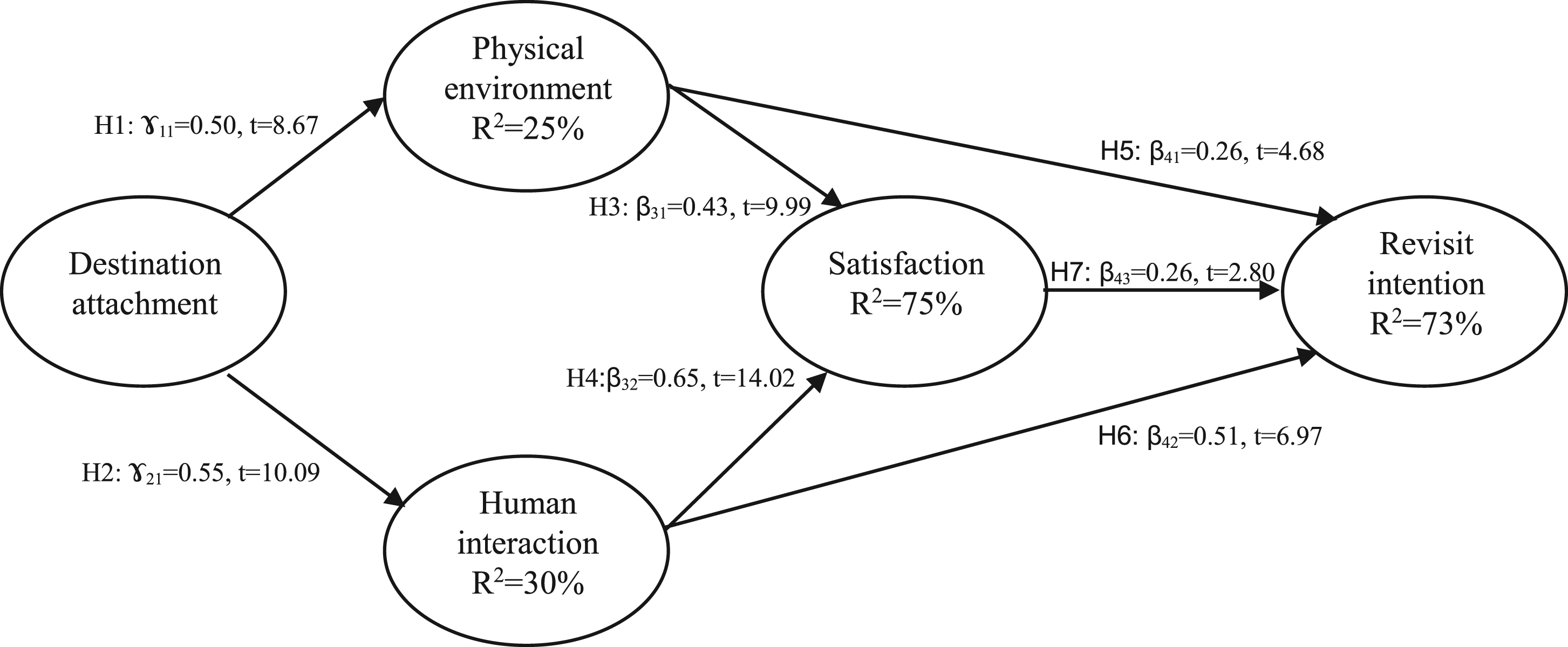
Research methodology
Research site
In this study, the sample site is Kinmen County, an island territory governed by Taiwan. In 1949, Kinmen was the site of intense battles, for example the Battle of Guningtou, as part of the Chinese Civil War. Later in 1958, approximately 480,000 shells that landed on Kinmen in the 823 Battle of Artillery. Years after experiencing many battles, the local government took the positive step of transforming Kinmen into a historic national park (Kinmen Nation Park, 2020). Thus, Kinmen has become a destination with cultural and archaeological resources. The Kinmen government took advantage of local historical architectural settlements, which include ancestral halls, temples, Minnan-style private houses and western-style houses with two or more stories, to preserve and transform buildings as guesthouses. Historical guesthouses are located in every settlement of the Kinmen county. Many settlements are single surname villages. Every guesthouse has a different clan culture and set of customs. These historical guesthouse architectures (Figure 2) are characterized by ethnic Minnan (a.k.a. Southern Min) and overseas Chinese culture, considered as specialist accommodation. Map of Kinmen location. https://commons.wikimedia.org/wiki/File:ROC_Quemoy.png. *From the top right to bottom in order: Memorial of 823 Battle of Artillery, Spiritual fortress of Kinmen, and historical guesthouse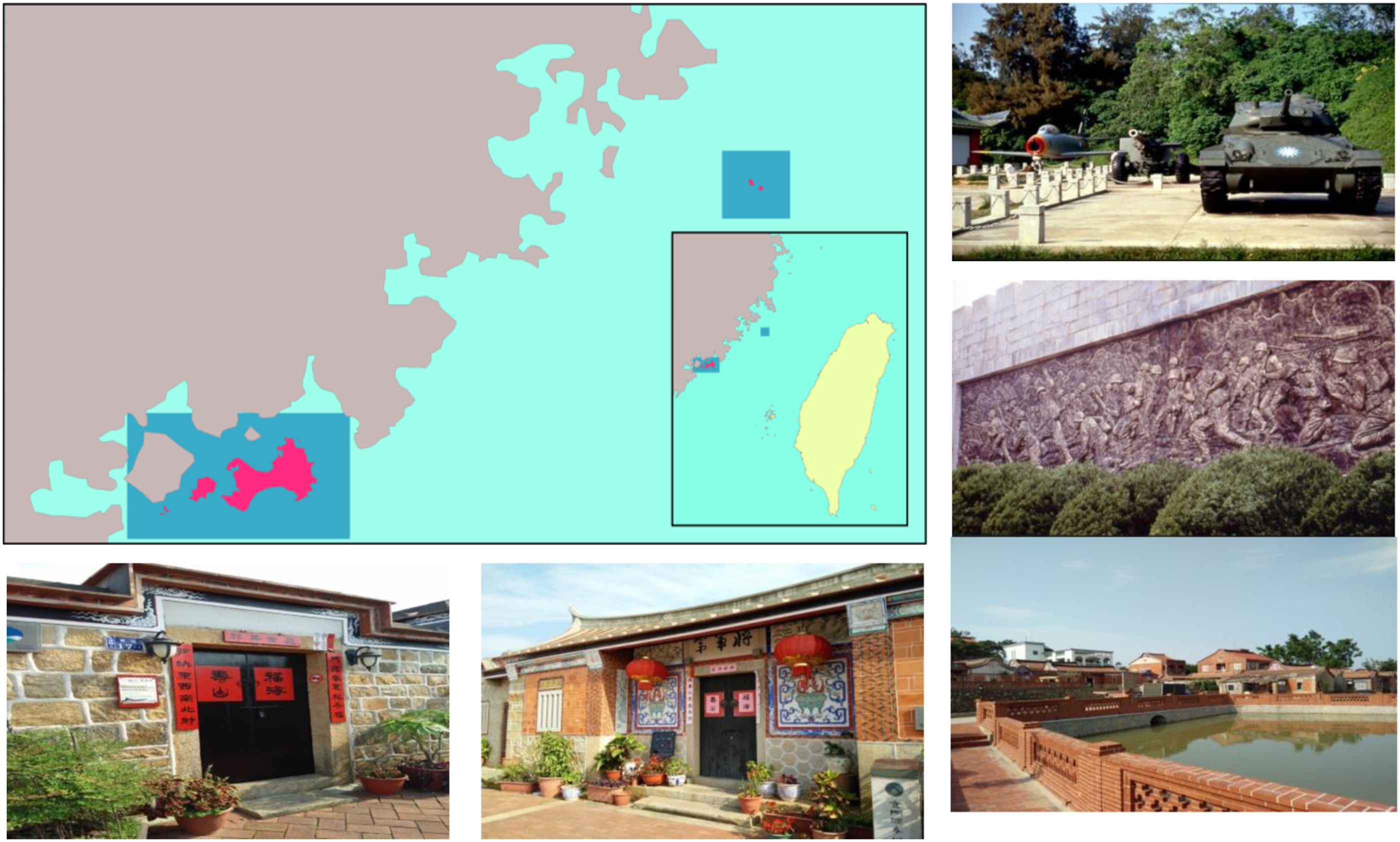
Research instrument
The study instrument utilized in this study (applied to the context of Kinmen historical guesthouses) comprised five sections: destination attachment, accommodation experiences, accommodation satisfaction, revisit intention, and demographics. The operational definition for destination attachment was about a bond or link between a tourist and a specific destination, which consists of destination identity, destination affective attachment, and destination dependency. The assessment of destination attachment, which included 12 items, were based on Williams and Vaske’s (2003) and Yuksel’s et al. (2010) studies. The operational definition of accommodation experience of a historical guesthouse was the extent to which a tourist experiences the physical environment and human interactions while staying at a historical guesthouse. The measurement of the accommodation experiences was adopted and modified from Walls (2013), which included 22 items for measuring tourists’ accommodation experiences of historical guesthouses.
The section dealing with satisfaction comprised three items modified from Davidow (2003) and Kang et al. (2004) to assess overall evaluation after tourists had checked out. Revisit intention consisted of four items to measure the preference intention for the same guesthouse, which was adopted from Han and Kim (2010). These items were all measured on a 7-point Likert scale (1 = strongly disagree to 7 = strongly agree). The questionnaire also included items about demographic variables and tourist characteristics.
A pilot study was conducted whereby questionnaires were distributed to 35 tourists who had visited Kinmen for sightseeing to check the clarity and feasibility of the study. One scholar in the tourism and hospitality field, one supervisor of the local tourism bureau, and one businessman of a local historical guesthouse were asked to assess content validity of items. The total of 41 items were revised and adapted to the Kinmen historical guesthouse context. Rigorous scientific principles were applied to the measurement development process, based on previous research (e.g. Yu et al., 2019).
Data collection
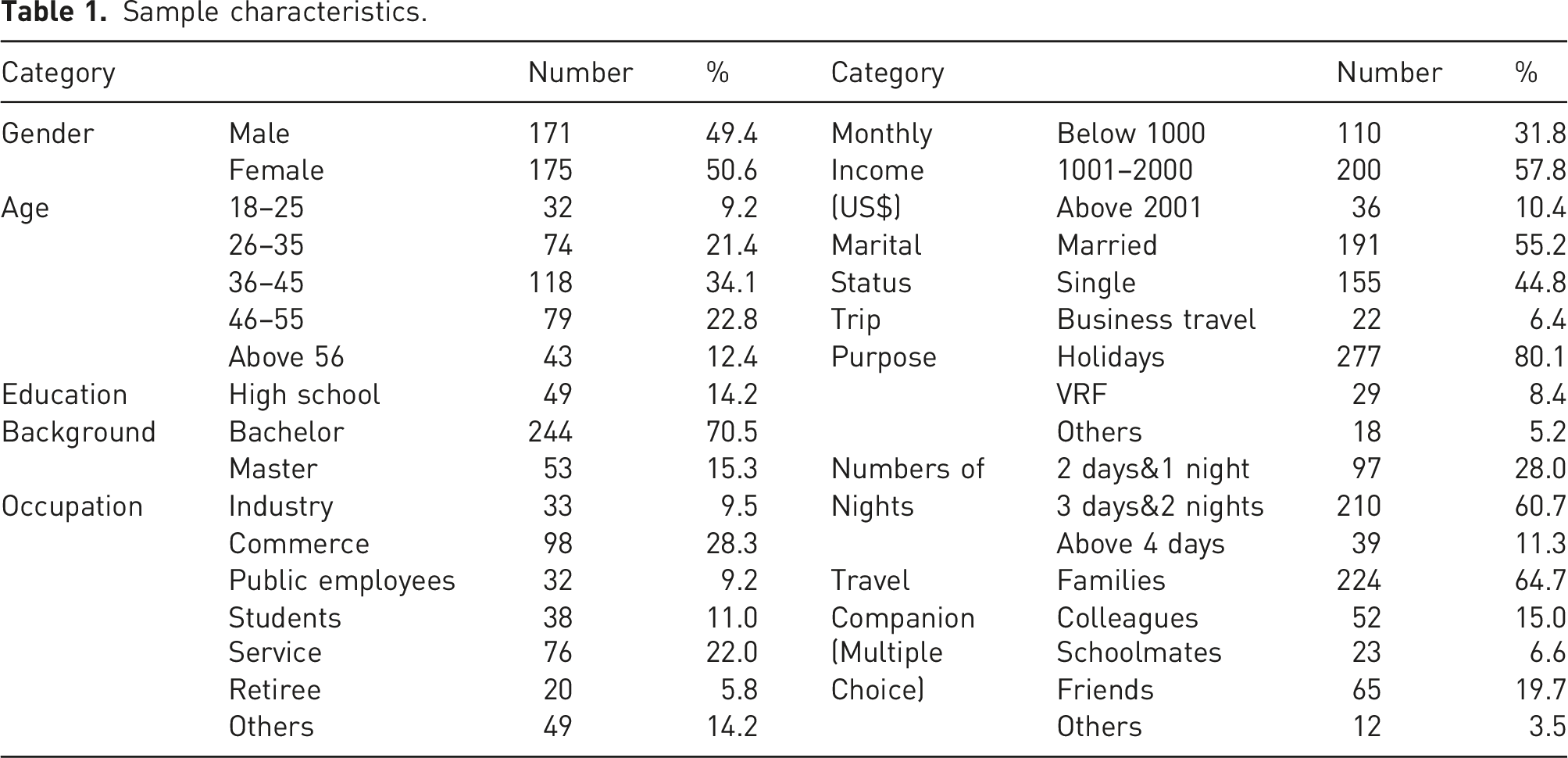
The participants in this study were tourists who stayed at historical guesthouses in Kinmen. Residents of Kinmen and tourists staying at other types of accommodation (such as hotels or general homestays) were excluded from the study. All participants were Taiwanese tourists over 18 years old. Questionnaires were distributed from March to April 2017. A purposive sampling technique was employed to recruit participants, and the questionnaire was self-administered. Because historical guesthouses are scattered across villages and towns in Kinmen, tourism agencies and historical guesthouse businesspeople were asked to assist in the distribution of questionnaires to tourists who had checked out from historical guesthouses. Tourists filled out the questionnaires independently and of their own will without interruption. Researchers provided envelopes for tourists so that the questionnaires could be returned. It was hoped that this would reduce response bias and enhance the willingness to fill out questionnaires (e.g. Liu et al., 2020). Finally, a total of 502 questionnaires were issued and 386 were retrieved. After eliminating invalid data resulting from such problems as questions not clearly answered or missed, 346 valid questionnaires were collected, yielding a response rate of 68.9%.
Online reviews
This study followed up with reviews from Google and TripAdvisor tourists after staying at historical guesthouse of Kinmen. In total, 12 historical guesthouses were selected. Based on the number of reviews in Google being above 100, and TripAdvisor selecting at least 30 reviews or more due to the low number of overall tourist reviews, the overall average score of these selected historical guesthouses was between 4.7 points and 5 points.
Results
Sample characteristics.
Confirmatory factor analysis for each construct.
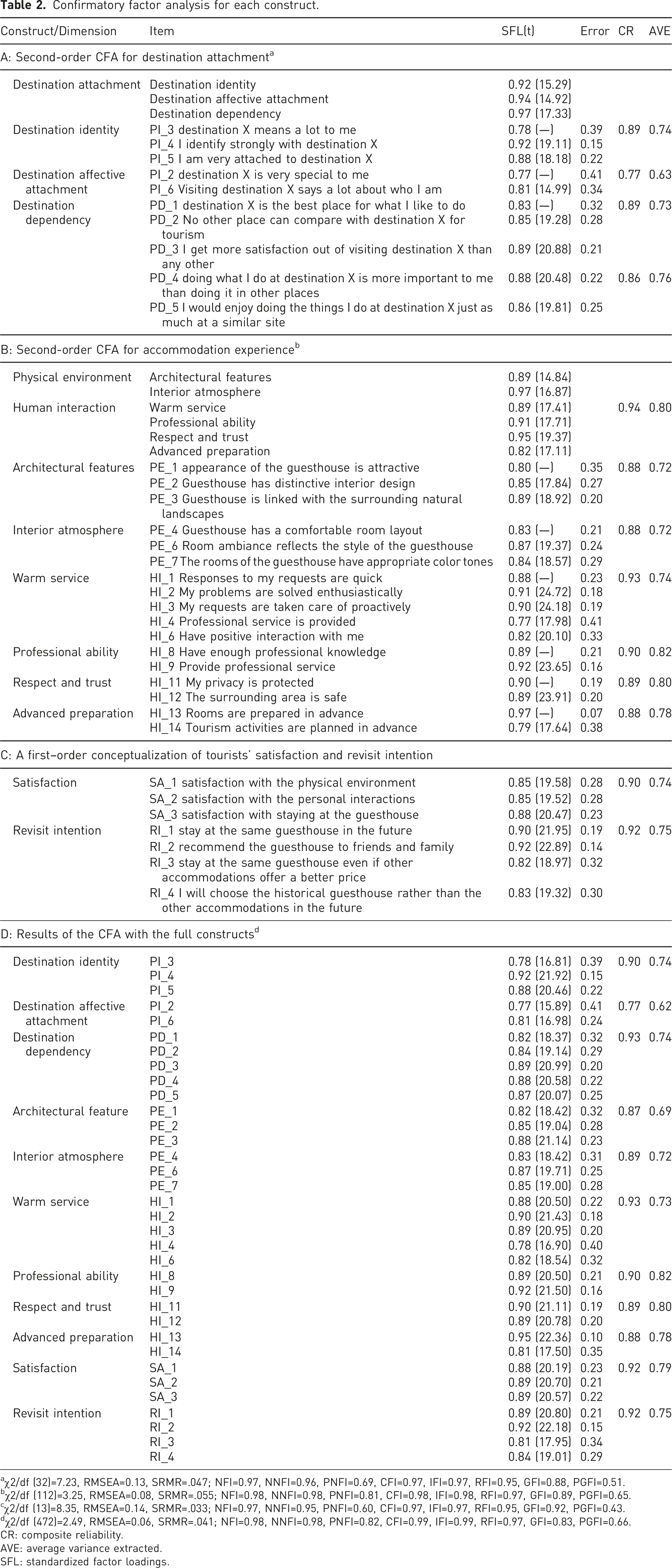
aχ2/df (32)=7.23, RMSEA=0.13, SRMR=.047; NFI=0.97, NNFI=0.96, PNFI=0.69, CFI=0.97, IFI=0.97, RFI=0.95, GFI=0.88, PGFI=0.51.
bχ2/df (112)=3.25, RMSEA=0.08, SRMR=.055; NFI=0.98, NNFI=0.98, PNFI=0.81, CFI=0.98, IFI=0.98, RFI=0.97, GFI=0.89, PGFI=0.65.
cχ2/df (13)=8.35, RMSEA=0.14, SRMR=.033; NFI=0.97, NNFI=0.95, PNFI=0.60, CFI=0.97, IFI=0.97, RFI=0.95, GFI=0.92, PGFI=0.43.
dχ2/df (472)=2.49, RMSEA=0.06, SRMR=.041; NFI=0.98, NNFI=0.98, PNFI=0.82, CFI=0.99, IFI=0.99, RFI=0.97, GFI=0.83, PGFI=0.66.
CR: composite reliability.
AVE: average variance extracted.
SFL: standardized factor loadings.
The five constructs include 11 latent factors, as follows: destination attachment (destination identity, destination affective attachment, and destination dependency), the physical environment of accommodation experience (architectural features and interior atmosphere), human interaction of accommodation experience (warm service, professional ability, respect and trust, advanced preparation), satisfaction, and revisit intention.
Results of a second-order CFA for destination attachment in Table 2A showed that the multiple imputation (MI) of “I feel that Kinmen is a part of my life” (PI_1) was greater than 10. The analysis of a second-order CFA for the accommodation experience in Table 2B showed that the MI of the following were all greater than 10: “I feel the temperature of this historical guesthouse is comfortable” (PE_5); “I feel that the courtyard of this historical guesthouse is quiet and beautiful” (PE_8); “I feel that the facilities that service staff members provided meet my requirement” (HI_5); and “I feel that the service provided by staff members of the Kinmen package tour of historical guesthouse is substantial” (HI_10); therefore, these items were deleted. The model fit demonstrated by standard root mean squared residual (SRMR), normed fit index (NFI), non-NFI (NNFI), and goodness of fit indices (GFI) was confirmed based on previous research (Bentler and Wu, 1993). The MI for items of satisfaction and revisit intention in Table 2C were all below 10, meaning no items were deleted, and model fit was also confirmed based on the above-mentioned criteria. Finally, using the same suggestions, the model fit for the combined measurement model was confirmed, and the relationships between each of the items and dimensions were all significant (15.89 < t < 22.86). In addition, the composite reliability (CR) of each dimension was required to be greater than 0.6, and the average variance extracted (AVE) had to be greater than 0.5 (AVE = 0.62–0.82). Standard loading and error was applied for analysis, and results showed that CR and AVE of every dimension met the standard. Thus, the convergence validity of each dimension was acceptable. The questionnaire dimensions had construct validity and were suitable for path analysis between variables.
Dimension correlation coefficient matrix.
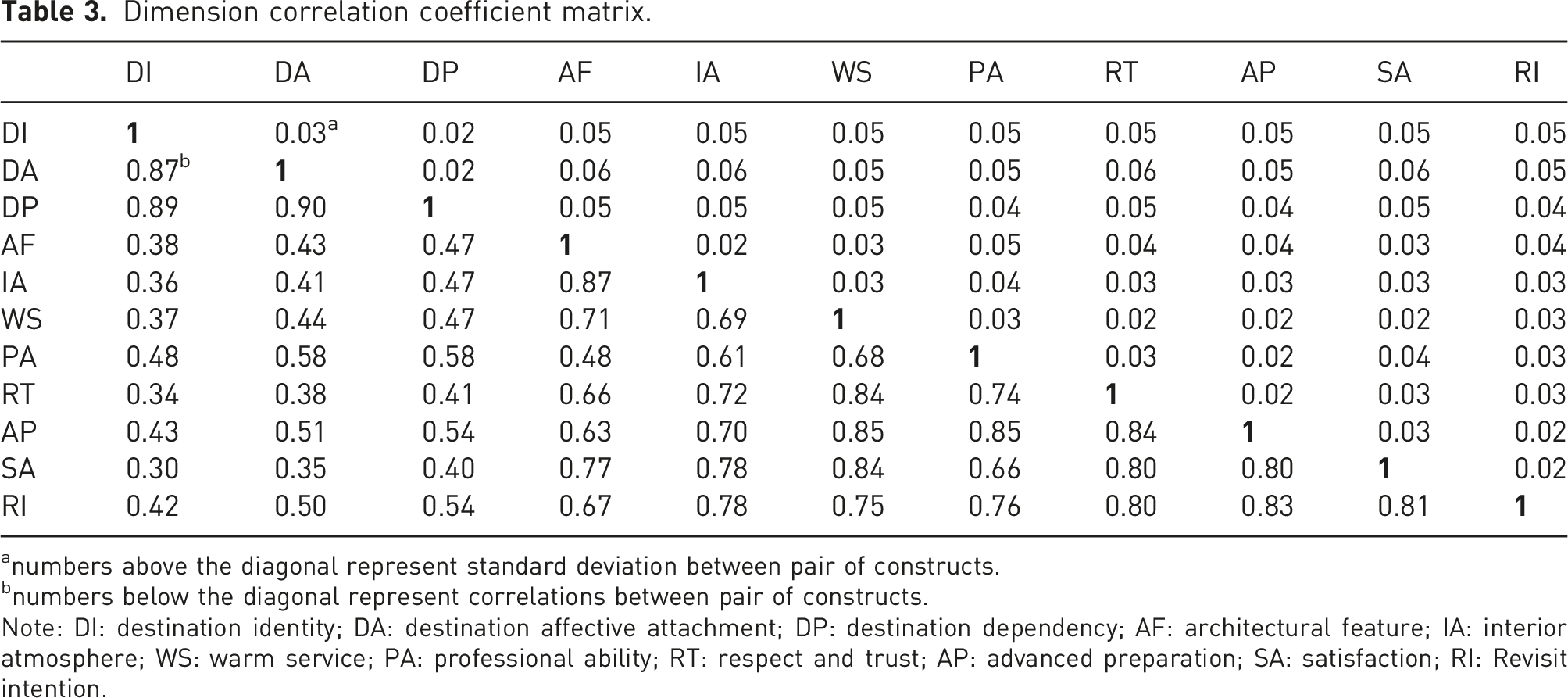
anumbers above the diagonal represent standard deviation between pair of constructs.
bnumbers below the diagonal represent correlations between pair of constructs.
Note: DI: destination identity; DA: destination affective attachment; DP: destination dependency; AF: architectural feature; IA: interior atmosphere; WS: warm service; PA: professional ability; RT: respect and trust; AP: advanced preparation; SA: satisfaction; RI: Revisit intention.
Structural path analysis result.
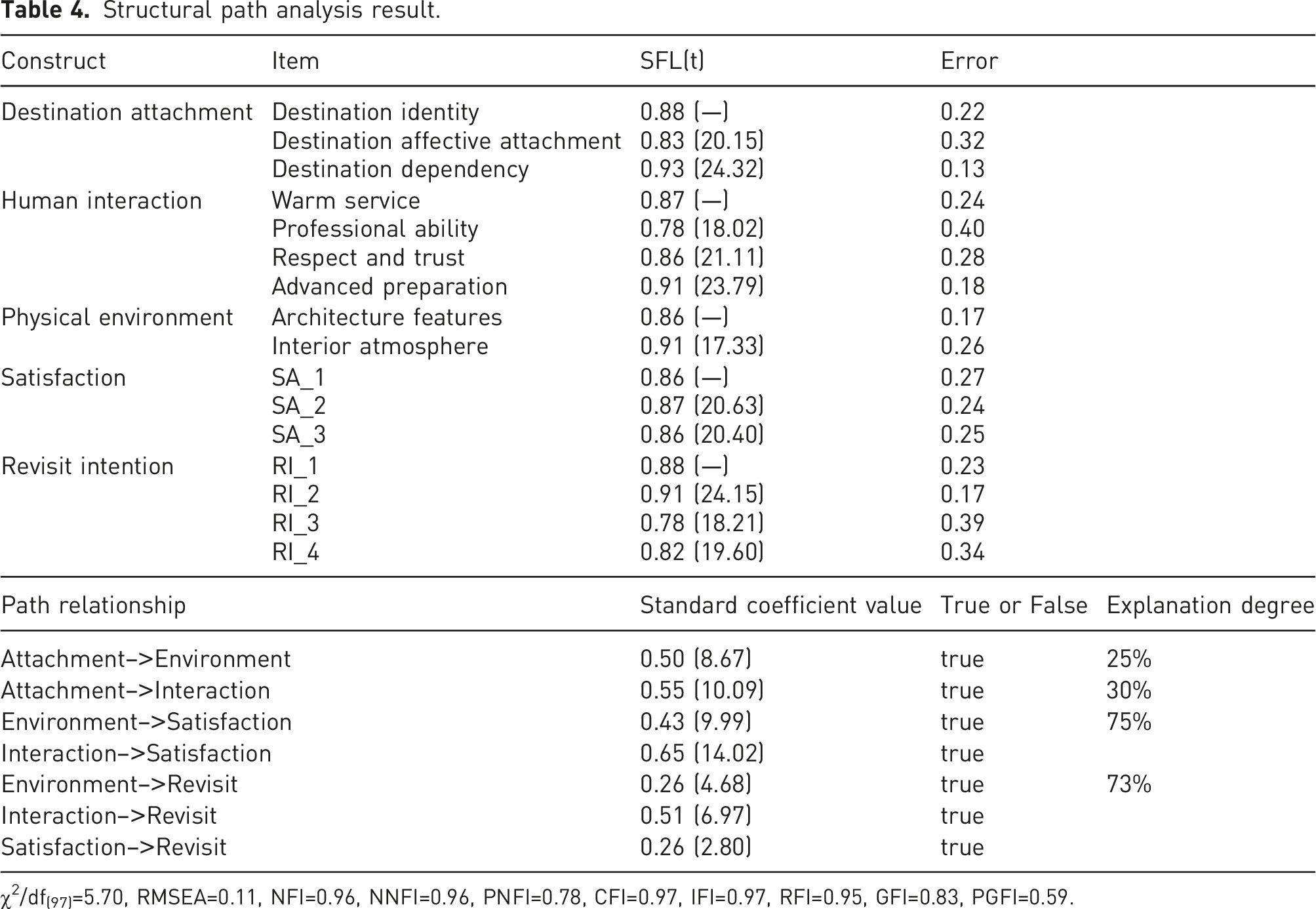
χ2/df(97)=5.70, RMSEA=0.11, NFI=0.96, NNFI=0.96, PNFI=0.78, CFI=0.97, IFI=0.97, RFI=0.95, GFI=0.83, PGFI=0.59.
Mediation outcome.
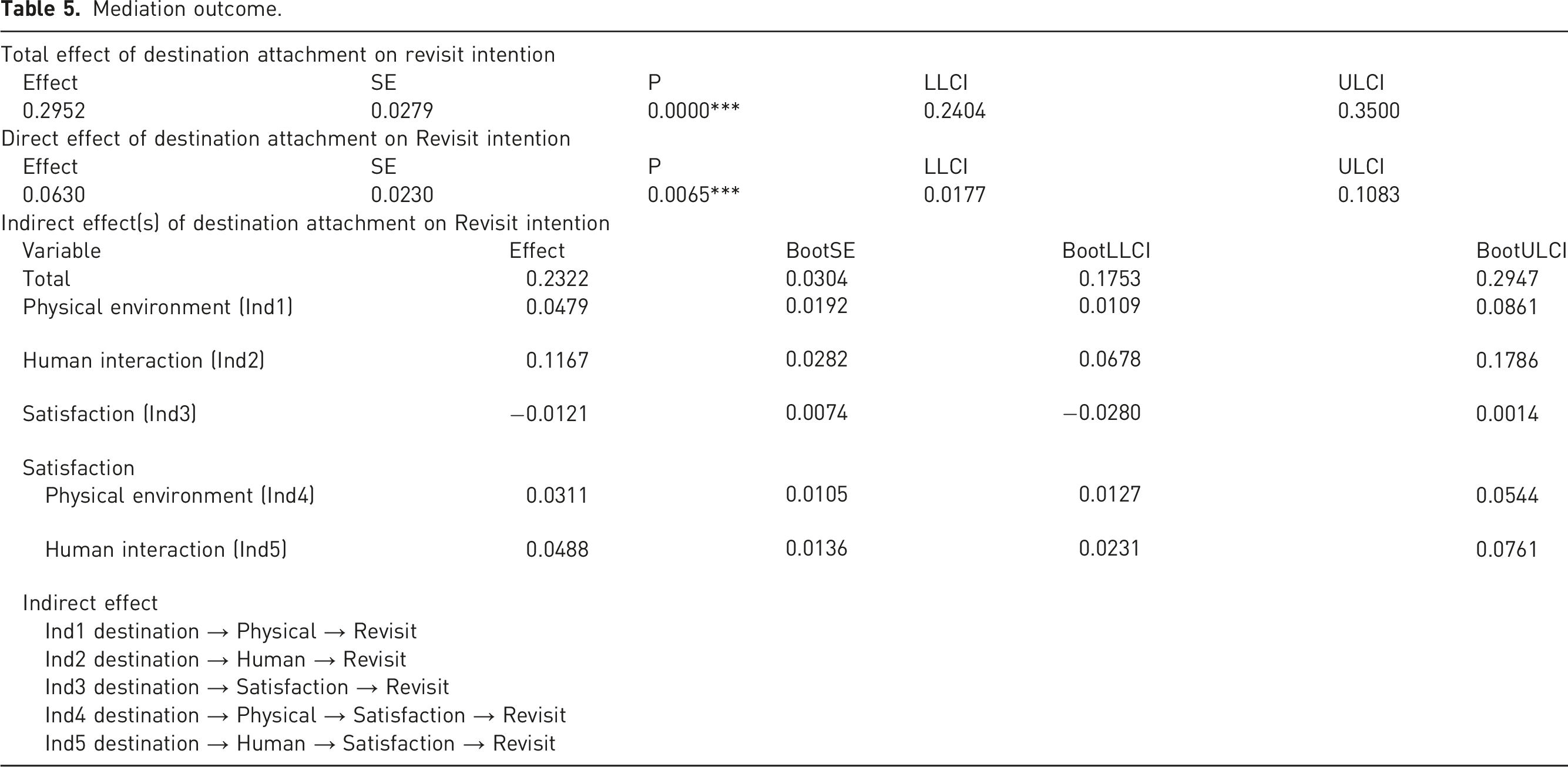
Furthermore, SPSS Process Macro, developed by Hayes (2013), is used to analyze the complicated models, including multiple mediators or moderators, to avoid the errors in assessing the relationships between several variables. To test the proposed model of this study, the model with multiple mediators developed by Hayes (2017) was used. When the bias-corrected 95% confidence interval does not contain zero, the mediating effect is significant. Results indicated that the physical environment had a full mediating role in the relationships between destination attachment, satisfaction, and revisit intention. Moreover, human interaction exercises a full mediating effect on the relationships between destination attachment, satisfaction, and revisit intention (Table 5.).
Furthermore, summarizing and analyzing findings based on online review data, the main items favored by tourists were, in order, the overall service, architectural features, guesthouses atmosphere, environmental cleanliness, and others such as meals or tour guides providing by the hosts. For example, one of the reviews indicated that “Living in a traditional Minnan style building is like going back to the simple era decades ago. Every corner is a surprise of time,”; while another review stated that “This is our three sisters revisiting Kinmen again. They have always loved the Fujian (Minnan) style architecture of Kinmen, so they still choose to stay in the homestay. …… It is the most beautiful representative building in the entire Z settlement. It is also very clean and tidy, and comfortable to live. The host also guided the settlement, and left a deep impression on the history, architecture and humanities of the entire settlement”. Additionally, one of the tourists said “It is unforgettable accommodation experience for us to live this hostel during my family trip. Full of authentic rural style buildings, cheerful and passionate hostess and rich breakfast combined with local elements...... Next time, I will come again.”
Hypotheses testing and discussion
Regarding H1 and H2, results of path analysis indicated that destination attachment had significant positive effect on the physical environment (γ11 = 0.50) and human interactions (γ21 = 0.55). Destination attachment had an even greater effect on human interactions. Kinmen historical guesthouses have a strong link with Kinmen’s history and culture, and are not merely accommodation but are also a place where individuals can build relationships with the hosts. Tourists who have an increased sense of identity with Kinmen will be more likely to identify with the physical environment of the guesthouse and will also be more likely to give positive comments for warm service, professional ability, and advanced preparation.
According to the findings of this study, destination attachment (the bonding between person and place) can influence tourists’ experience of historical accommodation. Previous studies used mainly online data to study factors that affect customer evaluation of accommodation and found that destination characteristics/attributes are one of the important factors (e.g. Radojevic, et al., 2017; Soler et al., 2019). In addition, some studies utilized qualitative methods to investigate tourists’ experiences of historical forms of accommodation, revealing that their experiences are related to the level of attachment in relation to the destination (e.g. Presenza et al., 2019). This study extended this line of research and further confirms that the emotional bonding and the identity generated from destination attachment can influence accommodation experience. Therefore, accommodation experience can be regarded as an extension of the tourism experience (Mcintosh and Siggs, 2005; Wight, 1998).
In terms of H3 and H4, both the physical environment (β31 = 0.43) and human interactions (β32 = 0.65) had significant positive effects on satisfaction with the effect of human interactions being greater. This conclusion corresponds with Chen et al.'s (2013) study. Chen et al. indicated that the physical environment (design, facilities, furnishings) and human interactions (professional service, ability to solve problems) positively influenced satisfaction. Results also revealed that tourists’ satisfaction of historical accommodations derived mainly from human interactions, echoing the findings of several studies (e.g. Rogerson, 2010; Ren et al., 2016; Sthapit and Jiménez-Barreto, 2018; Veríssimo and Costa, 2019). Overall, hospitality interactions between customers and service providers can greatly enhance accommodation experiences and increase positive evaluations of accommodation. The quality of interaction between tourists and service providers influences accommodation experiences.
Consequently, a valuable accommodation experience comes mainly from a warm and personal touch with guesthouse owners and staff members. Humanistic care is more important than the physical environment. For tourists, interaction with service providers is more important than the physical environment of a guesthouse because warm service and face-to-face reception will bring a memorable accommodation experience.
For hypotheses H5, H6, and H7, the physical environment (β41 = 0.26), human interactions (β42 = 0.51), and satisfaction (β43 = 0.26) all had significant positive effects on revisit intention, with human interactions having the greatest effect. If tourists have a high satisfaction for historical guesthouses, they will be more willing to revisit and recommend the guesthouse to others. Furthermore, this study found that the physical environment had less influence than human interactions on revisit intention. More specifically, higher tourist evaluations of human interactions lead to higher accommodation satisfaction, which in turn affected tourists’ responses, including being willing to choose the same guesthouse, making recommendations to others, tolerating price, and preferring historical guesthouses over regular accommodation.
Kinmen historical guesthouses as specialist accommodation establishments are different from regular accommodation establishments. Guesthouse owners should maintain the facilities well and avoid imitating the architectural appearance and interior design of other guesthouses. More importantly, guesthouse service providers should provide warm hospitality to create superior accommodation experiences, which will enhance tourists’ satisfaction and loyalty. Sincere and friendly interactions between tourists and service providers is a critical factor to influence tourist loyalty.
Conclusions
Academic implications
This study provides important contributions to the hospitality and tourism literature based on the empirically findings of this study. First, it examined the impact of destination attachment on tourists’ experiences of Kinmen historical guesthouse and its consequences. Most of the previous studies investigated the impacts of destination attachment on destination satisfaction and revisit intention and found that destination attachment has a significantly positive effect on satisfaction and future behavioral intention (e.g. Gross and Brown, 2008; Io, 2018; Kil et al., 2012; Yuksel et al., 2010). However, the importance of destination attachment has greater implications for destination management than merely predicting individuals’ behavior toward a specific destination. The main difference between this study and previous studies is that destination attachment can be used as a stimulus to enhance tourists’ accommodation experience. In past studies, destination attachment was mainly used as a key factor in predicting destination revisit intention or destination loyalty. Therefore, operators can take advantage of people’s nostalgic feelings for a specific destination, use buildings with historical or cultural characteristics as accommodation, and then explain the historical and cultural background of the accommodation to tourists, thereby enhancing the accommodation experience of tourists.
Kinmen historical guesthouses as specialist accommodation are not only a source of destination attachment but also provide valuable experiences for tourists. Results illustrate that accommodation experiences can be greatly affected by destination attachment. In this regard, Kinmen historical guesthouses contribute to destination attractiveness, resulting in the affective bonding generated from destination attachment, which influences tourists’ accommodation experiences and future behavior. Moreover, accommodation experiences can fully mediate the relationship between destination attachment and the evaluation of accommodation, including satisfaction and revisit intention. In other words, these findings offer new insight on the influence of destination-related factors on tourists’ experiences of accommodation and on future behavior. Specifically, destination attachment has a greater impact on human interactions than on the physical environment, with the effects of the perceptions of human interactions on satisfaction being greater than the physical environment. In line with previous studies that address different types of accommodation experiences (e.g. Rogerson, 2010; Ren et al., 2016; Shi et al., 2019; Sthapit and Jiménez-Barreto, 2018; Veríssimo and Costa, 2019), the quality of human interactions between tourists and services providers was the significant factor in determining accommodation experiences and future behavior such as revisit intention and positive word-of-mouth recommendation. Accordingly, the perceptions of human interactions of accommodation experiences is an important factor in determining the evaluations of historical guesthouses.
Destination attachment can be a key factor to shape accommodation experiences. According to the results of this study, it was found that destination attachment can activate and positively influence the experience of staying in a historical guesthouse. This is because accommodation experiences can be regarded as an extension of tourism experiences, even though accommodation may not be the main purpose or primary motivation for travel (Mcintosh and Siggs, 2005; Wight, 1998). Moreover, tourists’ experiences of historical guesthouses, a form of specialist accommodations and a type of destination attraction, can be affected by the extent of destination attachment and can fully mediate the relationship between destination attachment and the evaluations of accommodations, including satisfaction and revisit intention. Thus, destination attachment can be an antecedent variable that affects tourists’ accommodation experiences and future behavioral intention.
Overall, this study provides a new way of understanding how accommodation experiences of historical guesthouses can be influenced by destination attachment, affecting both accommodation satisfaction and revisit intention. More importantly, the perceptions of human interactions between tourists and the service providers plays an important role in shaping tourists’ experiences of historical guesthouses.
Management implications
Combining the survey data of this study and subsequent analysis of online reviews, Taiwanese tourists have a special feeling for the traditional Minnan architecture, which can be described as a nostalgic plot, because it is not easy to see well-preserved buildings and settlements on the island of Taiwan. Through the experience of historical guesthouses, the atmosphere and services provided by the hosts are deeply loved by tourists, including guided tours explaining the history of the buildings, tasting the breakfast, snacks, and Kinmen’s unique sorghum wine provided by the hosts, all of which impress tourists deeply. In addition, many online commenters mentioned that they revisited Kinmen and chose to stay at historical guesthouses again, which shows that the experience of Kinmen’s specialist accommodations has a significant impact on tourists’ willingness to visit again.
Overall, this study showed that destination attachment can greatly influence tourists’ experiences of historical guesthouse, indicating that Kinmen historical guesthouses are one of the most important experience activities for tourists, and the extension of tourism experiences. Because Kinmen historical guesthouses are different from regular accommodations, they should do more than simply maintaining the architectural appearance and facilities. They could integrate the culture of each local settlement into its physical environment and make historical guesthouses the most attractive tourism resource, which is important for the formation of destination attachment (Reitsamer et al., 2016; Truong et al., 2018). In particular, Kinmen historical guesthouse managers could preserve Kinmen local cultural hospitality and integrate clan settlement culture to allow tourists to have a memorable accommodation experience. With an excellent accommodation experience, tourists’ satisfaction and revisit intention will be increased.
For DMOs, they could take up the creation of destination attachment as a prominent issue not only to promote the specific destination, but also to shape accommodation experiences and to attract tourists to stay at historical accommodations. Kinmen DMOs may consider historical guesthouses as a tourism resource platform and could promote existing historical guesthouse services and could help historical guesthouse businesspeople to cooperate with tourism industries to design activities to create valuable accommodation experiences related to local settlement history and culture.
Sense of place, which aids in the attachment to a particular destination (Ram et al., 2016; Abou-Shouk et al., 2018), is also an important factor in branding a destination because it helps to create the preferred image in individuals’ minds by using destination attributes or landscapes (Falahatkar and Aminzadeh, 2020; François Lecompte et al., 2017). For instance, hutongtels in Beijing historic districts (Wu et al., 2015) or heritage lodgings in Ceylon (Sri Lanka) (Aslam and Jolliffe, 2015). As tourists develop an emotional link to a destination, they become more engaged and are more likely to stay at that particular place (Pretty et al., 2003; Tan et al., 2018).
By increasing interactions between tourists, local people, and the destination, tourists’ affection for the destination could be increased, which may enhance the bonding between tourists and the destination. This may result in tourists being more willing to recommend visiting Kinmen to others and staying in historical guesthouses. Consequently, it would benefit the tourism and hospitality industries.
Research limitations and future research
There are several limitations with the study. By applying purposive sampling, it is difficult to cover all of the historical guesthouse tourists. Subjects of this study were mainly domestic tourists. Another limitation concerning the process of data collection was that tourists were asked to fill out the questionnaire after checking out, so the results may be a little biased as they might have worried that guesthouse owners would learn about their comments. It was impossible for frontline helpers to answer tourists’ questions if they were confused about the items. In addition, it is suggested that future research can collect data during the low and peak tourist seasons to compare whether the responses of tourists are different in different periods.
Based on the research design, results and limitations of this study, there are some suggestions for future studies. Regarding destination marketing, future studies could interview owners or service providers of historical guesthouses (e.g. Hanna et al., 2018) to gain a better understanding of the purpose of helping local historical guesthouse owners solve their management or marketing problems. It can also investigate the perceptions of Kinmen historical guesthouses from a local community perspective, in terms of operating and managing guesthouses and providing services to tourists as the hosts of the guesthouses. Moreover, future research can analyze and compare the differences between specialist and regular accommodation establishments to gain insight into the impact of destination attachment on accommodation experience.
As for research subjects, future researchers could expand the sampling scope. Researchers could focus on leisure activity groups, such as birds watching or cycling groups who are regular repeat visitors to Kinmen. Family tourists and independent travellers with friends could also be sampled. This would enable future studies to make comparisons of destination attachment and feelings or opinions about accommodation experiences of historical guesthouses in different types of tourists. In terms of the relationships between variables, this study only examined destination attachment, accommodation experiences, and tourists’ accommodation responses. Future studies could conduct multiple group analyses to compare differences in the model by tourists’ characteristics (e.g. family or independent tourists, number of nights, first-time or repeat tourists). Moreover, variables related to individuals’ feelings or value, such as perceived value, experience quality, and happiness, can be further included in the model to explore their impact on accommodation experiences. In addition to interactions with hosts, service staff, and other people, future research could also investigate whether tourists wish to be accompanied by pets during their stay in order to obtain a better accommodation experience. This will assist operators have a deeper understanding of tourists’ accommodation needs and can provide better services to tourists.
Other variables related to destination attachment could be added to investigate relationships with accommodation experiences. Namely, the emerging concept of tourist engagement may be of particular interest as it involves a deep connection and interactive participation with the destination (So and Kim, 2020; Taheri et al., 2019) and has implications for purchasing accommodations (e.g. Tan et al., 2018) or revisiting a destination (Rasoolimanesh et al., 2019; Vivek et al., 2012). Recent studies showed that tourist engagement could have a significant influence on satisfaction and revisit behavioral intentions (Bryce et al., 2015; So et al., 2014). It is recommended that future research investigate the interrelationship between destination attachment and tourist engagement to examine the impact of theses variables on accommodation experiences and future behavior.
Footnotes
Declaration of conflicting interests
The author(s) declared no potential conflicts of interest with respect to the research, authorship, and/or publication of this article.
Funding
The author(s) received no financial support for the research, authorship, and/or publication of this article.

