



Abstract
Previous scholarship on waste has identified lack of public knowledge as one of the greatest barriers to the success of any recycling initiative. However, informational influencing has proven insufficient, as it tends to ignore the messy, ambiguous, bodily relations that people have with waste. Waste is prone to evoke visceral affective responses, and those affects matter for how we relate to waste. In this article, we examine the role of affects in the practices of Finnish trash activists followed by means of ethnographic fieldwork both on trash walks and on social media. We show that while negative emotions like disgust were for trash activists a key impetus to take action, the encounters and entanglements with waste also sparked such positive affects as joy, pleasure and inspiration. Our analysis also shows affects to be crucial in and for the formation of ethical ways of relating to waste.
Introduction
Previous literature on waste has identified lack of public knowledge as one of the most significant barriers to the success of any recycling initiative and municipal solid waste management scheme (De Feo and De Gisi, 2010; Ma and Hipel, 2016; Read, 1999). Not surprisingly, great emphasis has therefore been placed on education and information campaigns to improve the recycling performance of households (Knickmeyer, 2020). However, informational influencing has proven somewhat insufficient, not least since it tends to ignore and leave out of the picture the messy, ambiguous, bodily relations with waste which are often accompanied by different kinds of affects (Hawkins, 2006: 12). The responses to recycling initiatives tend to be varying and complex. Woolgar and Neyland (2013: 27–28) argue that household waste disposal activities cannot be accounted for merely by a taken for granted compliance of householders with the initiatives and their recycling ethos; such a schema tends to perceive the actors as nothing more than ‘cultural dopes’ and leave hardly any space for reflexivity, ambiguity, resistance, or irony. In reality, by contrast, waste is prone to evoke a large variety of affective responses from disgust to annoyance, guilt and fascination, and those affects matter for how we relate to waste.
In this article, we examine the role of affects in the practices of Finnish trash activists whom we followed by means of multi-sited ethnographic fieldwork. The trash activists studied do not comprise a unified group but come from diverse educational, socio-economical and cultural backgrounds – from low-wage workers to highly educated experts; from the middle class to those preferring alternative lifestyles; from atheists to devout Christians – and are of different ages. Yet, what they have in common is the practice of collecting, photographing and organising litter in their free time while also creating content about these activities for social media. Like voluntary dumpster diving, trash activism could be understood as a ‘critical practice’ (see Lehtonen and Pyyhtinen, 2021) insofar as it challenges normalised habits and collective wastefulness. What nevertheless distinguishes it from the dumpster diving and equally from litter picking as a hobby is that trash activists wish to influence their audiences and have a public effect by making their actions visible through their social media posts. The posts typically contain pictures of litter together with captions expressing the troublesome reality the activists encounter in their litter-picking activities. Trash activism is thereby a combination of physical engagement with litter and social media activism. 1 In addition to littering related content, many trash activists also post about other ecological issues, taking a critical stand on overconsumption, which suggests that their environmental concerns are not limited to waste alone. Even though littering is admittedly only a small part of the larger waste problem connected to the hegemonic idea of continuous economic growth and fast-paced consumption culture, for individual citizens it is often the most visible and tangible manifestation of the problem in their everyday lives. As it requires minimal equipment and can be practised basically anywhere, it is easy to see the attraction of picking up litter: one can do something concrete to one’s surroundings and thereby gain a sense of agency.
Unlike, say, toxic waste activists (Brown and Masterson-Allen, 1994), trash activists do not comprise any organised social movement, and therefore it is close to impossible to tell the exact amount of trash activists in Finland. Based on our long-term observations on social media, it is, however, safe to say that the number of trash activists in the country actively utilising social media to promote their cause is less than 100. There are a few fairly popular trash activism accounts on Instagram, along with numerous less popular ones. The most followed account has almost 13,000 followers, while others typically have several hundred, some just a handful. Trash activism is not of course an exclusively Finnish phenomenon, but somewhat similar practices are carried out around the world (see also e.g. Dauverghne, 2023; Keshavarzi et al., 2023). Popular hashtags related to trash activism on Instagram include #beatplasticpollution (357k posts), #plogging (346k posts), #trashchallenge (32.3k posts) and #litteract (over 5000 posts).
Picking up litter in public places breaches and renegotiates normative expectations of how one is supposed to act and move about in public space. It also critically confronts conventional ways of relating to waste that are based on exclusion and challenges social rules applying to hygiene, prompting thereby reflection on deeply embedded norms and feelings and their influence on one’s actions and perceptions. In the article, we are particularly interested in how affects participate in shaping a more ethical way of relating to waste. While waste may be a ‘provocation to action’ (Hawkins, 2006: 4), we argue that it is largely through the different kinds of affects evoked by it that it may get people to act and change their habitual ways of doing things. Waste is affectively ‘sticky’ (Ahmed, 2014) in that negative affects such as disgust tend to stick to it more ‘naturally’, as it were, than to other objects and materials. However, rather than waste matter being inherently disgusting, we hold that the affects evoked by waste emerge and come to be in relations. Here we follow Sara Ahmed (2010, 2014) in her insistence on the ‘in-betweenness’ of affects, paying attention to how they tend to stick to objects and subsequently circulate among subjects and also accumulate affective value. In general, we understand the notion of affect in line with Seigworth and Gregg (2010, 1–2), who describe it as a capacity to ‘act and be acted upon’. However, while they consider affects as ‘vital forces insisting beyond emotion’ (Seigworth and Gregg, 2010: 1), in what follows we use the two notions more or less synonymously in the manner of Ahmed (2010: 231), who suggests that although affects and emotions can be theoretically distinguished from each other, in practice they often occur simultaneously. Equally important for our take is Ahmed’s (2014: 10) emphasis on the contextual and social nature of affects and on their capacity to create ‘surfaces and boundaries’ which mold social life, 2 as is evident for example in how the disgust evoked by waste is manifested as a sought separation of oneself from the sordid matter. However, we will also show how the affects attached to waste are not exclusively negative, but encounters and entanglements with waste may also spark such positive affects as joy, pleasure and inspiration.
Our argument in the article is structured as follows. After briefly describing the multi-sited ethnographic approach of our study and how we analyse our research materials, we outline the theoretical framework of the article. Drawing from discard studies and affect theory, we address waste and affects as shaped in relations while also participating in shaping relations. After that, we look more closely into the role that affects play in the practices of trash activists studied. The empirical analysis is organised into three sub-sections. First, we focus on the bodily and affective encounters with waste in the context of trash activism and reflect on the ‘trash-power’ effective in these encounters. Then we analyse the affective intensities of trash activists’ Instagram content and the politicisation of trash it gives rise to. After that, we examine how affects may pave the way for a more ethical relationship with waste. Finally, we conclude the article by summing up its main contributions.
Multi-sited ethnography: studying trash activists on trash walks and on social media
The article is based on multi-sited ethnography (Falzon, 2009; Marcus, 1995), the participant observation taking place not only in different geographical sites where the first author met with trash activists, talked with them, and took part in their trash picking activities, but also in the digital world, where the activists publish posts on their practice. The ‘field’ of our research thus consists primarily of these two dimensions: of the physical reality and the digital world, as well as the space in-between them (see also Luhtakallio and Meriluoto, 2022). Rather than being a bounded, passive space appearing as a given, the field was dynamic, relatively open and porous, constructed in and through the research process in the entanglements of the researcher and the phenomenon studied (Massey, 2003: 84–86). For the purposes of exploring the affects attached to waste, as complementary materials we also use a small survey (12 respondents) collected in collaboration with the national broadcasting company YLE (in Oct–Nov 2022). The survey consisted of 5 open-ended questions, asking the respondents to tell in their own words for example what emotions waste evokes in them, what kind of things they have thrown in the bin, and how they feel about current consumption culture and the ethos of disposability.
The face-to-face meetings with the informants took place in the form of trash walks between May and October 2023, conducted mostly in urban settings with the exception of few walks also on forest trails and coastal beaches with one informant in Southern Finland. The first author accompanied a total of 5 trash activists on their walks (one of them twice, and the others once), and the walks lasted between just over an hour and a bit over 2 hours. All participants were contacted and recruited through Instagram, which in itself reflects the characteristic networking dynamics of social media today, especially when it comes to niche practices that relatively few people engage in. We are aware that the number of informants met face-to-face is small, but given the marginality of the phenomenon, we believe that our study nevertheless provides a valid account of it. In addition, as our study is explorative by nature, we do not strive for the generalisability of our results – to cover the entire Finnish population or even all trash activists, for that matter – but offer insights on a relatively new and unexplored phenomenon and thereby shed light on the affectivity of waste and on alternative, ethical ways of relating to waste.
The trash walks were not something imposed or suggested by the ethnographer, but they are an integral part of what trash activists do: it is on foot that they go around in the urban landscape, picking litter. The ethnographer merely accompanied the informants on their regular walks. During the walks, the ethnographer walked alongside the participants asking questions, having informal discussions with them and making observations. While she picked up some individual pieces of litter herself too, her participation in the actual trash picking was quite limited, as her hands were mostly occupied with jotting down notes. Walking turned out to be a fruitful method of gaining knowledge, as it not only made possible a bodily, sensory engagement with the littered space where the trash activists go about collecting rejectamenta, but the encounters with trash during the walks also evoked several affective responses (see also Ingold and Vergunst, 2008; Luhtakallio and Meriluoto, 2022; Pink, 2007; Urquijo, 2023). Like previous studies on freeganism (Barnard, 2011, 2016) and dumpster diving (Lehtonen and Pyyhtinen, 2020) have discovered, finding trash in urban areas requires profound bodily engagement with one’s environment. To develop a scavenger gaze, it is crucial to become familiar with the material and temporal flows of the city as well as to have appropriate equipment (Lehtonen and Pyyhtinen, 2020: 207–208, 210) – such as litter pickers (or barbecue tongs) and garbage bags in the context of litter-picking.
The walk-alongs with trash activists also highlighted the diverse motivations and practices of the activists, while underscoring significant similarities among them. Our informants had, for example, developed varying levels of thoroughness regarding how carefully they pick up litter: while some of them settled for picking only ‘the most of it’, others considered it important to carefully pick up and count every single piece encountered. Many of them also had certain types of litter they paid special attention to – such as cigarette butts or take-away coffee cups – that they never ignored or left behind. The attitudes towards food items found during trash walks also differed among our informants. Most of them treated still-edible food items like any other waste that belongs in the trash, but a few sometimes picked it up to eat it as well, whereby on those occasions trash activism coincides with dumpster diving.
The virtual dimension of the data collection took place by following the Instagram accounts of trash activists from the beginning of the research process to the end (from Jan 2023 to Feb 2024) and making observations of them, which again redirected the analytical focus of the research to some extent. During the research process, we actively followed around 15 accounts by trash activists, of which ultimately 5 gave their permission to use the content produced by them in the research. At the time of the data collection, those 5 accounts had over 2000 Instagram posts altogether. Even though not being explicitly cited here in this article, the other accounts are nevertheless to some extent part of the research, since they too have informed and shaped our understanding of the phenomenon. We ended up excluding from the data not only all commercial collaborations and video posts but also images where the person’s face is both recognisable and in a more central role than the trash, as we were interested more in the practices of trash activists and their relationship with waste than in the activists themselves as subjects.
As is typical of ethnography, the analysis of the data was intertwined with the research process from the very beginning (Hammersley and Atkinson, 2019: 205; Pink, 2015: 141–142). After conducting all the trash walks, the transcribed field diary based on the jottings made during the walks was 15 pages long. The compactness of the field diary is due to the fact that the notes were hand-written during the walks which forced the ethnographer to use a very compressed expression. In addition to the field diary, an equally important part of the research data were the social media posts made by the trash activists (i.e., the pictures and captions of the five trash activists who gave their consent to the use of their content for research purposes). The analysis of the field diary was a combination of abductive content analysis (Graneheim et al., 2017; Timmermans and Tavory, 2012) and affective reading (Eliasoph, 2011). The analysis of the field diary proceeded as follows. First, the text was read through in entirety to gain an overview of the material. Then the material was read through again, this time paying special attention to affectively intense parts that, following the principles of affective reading (Eliasoph, 2011: 243–245), would possibly be worth revisiting later. At the same time, excerpts from the diary that seemed fruitful from the perspective of the study’s theoretical framework were highlighted and noted down for further elaboration. After that, sub-themes were abstracted from the significant parts that were marked, which were then integrated into more focused discussions with the literature. Like that, the analysis continued as a movement between deductive and inductive reasoning (Graneheim et al., 2017), emphasising affective intensities and their epistemic value (Eliasoph, 2011; MacLure, 2013) throughout the process. The social media dimension of the research field was analysed as part of the ethnographic analysis. Observations of the images and captions were written down in the field diary to deepen the understanding of the phenomenon. The images and captions were collected into a Word document, which made their browsing easier. The analysis of the social media material focused on typical content and repeated themes in the images and captions as well as the visual representation of trash in the Instagram posts.
The ethical implementation of the research was guided by informing the participants and ensuring their consent to take part in it. All research informants were informed about the study’s goals and phases, after which they signed a consent form. Also, in the survey data collected in collaboration with the national broadcasting company YLE, the respondents gave their consent for the research use of the material. To avoid the collection of sensitive information, no unnecessary personal data was gathered from the informants. Ethical consideration was also applied in reflecting on the researchers’ position and its impact on the research, which is especially crucial in ethnographic fieldwork, where the role of the researcher may be blurred during long periods of shared time and personal conversations (Gilmore and Kenny, 2015; Guillemin and Gillam, 2004). We have pseudonymised the field diary written during trash walks to protect the anonymity of the participants, and in the survey data, the respondents have answered with pseudonyms made up by themselves. We are aware that, despite the pseudonymisation, there is a minor risk that our informants may be identified from the text, since there are so few Finnish trash activists active on social media. We have taken this into account and ensured the validity of their consent by providing an opportunity for them to read the analysis based on their involvement and propose changes before publishing it. In the social media content used in the analysis, the usernames of trash activists are left visible. That exception on the anonymity is based on their own request that they made when we asked for permission to use their Instagram pictures and captions in our research. This request can also be interpreted as reflecting their relaxed attitude towards the publicity of their activities, which became apparent during the fieldwork as well. The fact that trash activism is based on intentional publicity removes some of the ethical concerns regarding the minor risk of someone identifying them from this article.
Theoretical framework: waste matter and affects in relations
With its focus on the senses, feelings and bodily experiences, affect theory is part of a wider movement in the social sciences and cultural studies that has emerged to challenge the primacy given to discursivity, meaning and signification. Broadly defined, the notion of affect refers to the capacity of entities to affect and be affected in various encounters (Spinoza, 1992/1677). The exact meaning of the concept is, however, somewhat contested in the literature. One much discussed disagreement concerns the relationship between affect and emotion. While some authors understand affect and emotion as more or less synonymous with each other, others draw a clear distinction between pre-linguistic affect and culturally understood emotion (Cvetkovich, 2012: 4). Sedgwick and Frank (1995) and Brian Massumi (1995) famously address affect as a vital force beyond emotion and cognition, though with the first drawing on Silvan Tomkins’ psychobiological view, and the latter on Gilles Deleuze’s Spinozist inspired ethology of bodily capacities. More recently, the division between these opposite strands of affect theory has been challenged by Ahmed, who in her highly influential work has sought to reconcile the perspectives of Tomkins and Deleuze (Ahmed, 2014). Ahmed emphasises the social and cultural construction of emotions (see also Wetherell, 2014) and insists that although an analytical distinction can be made between affects and emotions, in practice the two are constantly intertwined, as ‘emotions involve forms of intensity, bodily orientation, and direction that are not simply about “subjective content” or qualification of intensity’ (Ahmed, 2010: 230). Hence, Ahmed (2014: 4) does not consider the distinction between the two concepts very interesting or important. All in all, instead of pondering what affects are, she finds it more interesting to examine what it is that they do (Ahmed, 2014: 4). Drawing on Marxist economical models, she illuminates how affects stick to objects, subsequently circulating among subjects and accumulating affective value, while at the same time emphasising the in-between-ness of affects: instead of residing in the subject or in the object, affects arise in the space in-between (Ahmed, 2014: 10–11; Seigworth and Gregg, 2010: 1).
While the affective dimension of waste is not entirely unexplored in discard studies (see e.g. Hawkins, 2006; Lau, 2023), the so-called ‘affective turn’ of the social sciences and cultural studies (Blackman and Venn, 2010; Clough and Halley, 2007; Wetherell, 2012) has not quite yet reached the scholarship on waste. This is somewhat surprising, given the well-established idea in the literature that ‘it is our affective relationship to an object that makes it “waste” in the first place’ (Thill, 2015: 29); an object once desired is discarded because it has become unwanted (e.g. Hawkins, 2006; Scanlan, 2005; Strasser, 1999; Thompson, 2017/1979). The object might even still be usable, but its negative affective charge nonetheless renders it waste in the eyes of its owner. Something that the pseudonym ‘Jenna’, aged 36, wrote in the survey data illustrates this well. She described how, after her ‘divorce, I threw the wedding dress and veil in the trash’; they had become repugnant for her, tarnished, possibly even painful symbols and mementos of a broken marriage.
The abject nature of waste is most famously coined by Julia Kristeva in her pioneering book Powers of Horror (1982). Kristeva’s theory of abjection examines how things like filth, waste, excrements, corpses or rotting food evoke powerful visceral responses, such as horror and disgust, in humans. She defines abject as the ‘jettisoned object, […] radically excluded’ (Kristeva, 1982: 2). For Kristeva, abject matter threatens to break down the barrier between self and other, inside and outside, order and disorder, and culture and nature, and is therefore expulsed. Drawing on anthropologist Mary Douglas’s (2003/1966: 2, 5, 44) famous idea that dirt is not an inherent and essential characteristic of things but designates disorder produced by means of establishing an order through demarcation, separation and purification, Kristeva (1982: 69) suggests that ‘filth is not a quality in itself, but it applies only to what relates to a boundary and, more particularly, represents the object’. Echoing Douglas, she writes: ‘It is […] not lack of cleanliness or health that causes abjection but what disturbs identity, system, order’ (Kristeva, 1982: 4). For Kristeva (1982: 2), the gesture of exclusion and the feelings of loathing, the spasms and violent reactions such as vomiting are meant to protect the self from the abject matter or thing: ‘Loathing an item of food, a piece of filth, waste, or dung. The spasms and vomiting that protect me. The repugnance, the retching that thrusts me to the side and turns me away from defilement, sewage, and muck.’
Beyond such theoretical engagements, empirical studies on the affectivity of waste have so far remained somewhat scarce. The contexts of the relatively few existing previous works vary, for example, from bokashi composting and robotic vacuum cleaners (Kinnunen and Duque, 2022) to landfill scavenging (Reno, 2009), voluntary dumpster diving (Lehtonen and Pyyhtinen, 2021) and reducing food waste. Kinnunen and Duque (2022: 150) draw on Maria Puig de la Bellacasa’s (2017) theorising of more-than-human ethics of care in their efforts to outline infra-ecologies of waste management as an analytical tool to address the complex care relationships involved in everyday waste practices. Their ethnographic study demonstrates how alternative infra-ecologies of waste can create affective relationships with it. The participants’ descriptions of the affective dimensions experienced in their alternative waste practices resonate with political theorist Jane Bennett’s (2010) description of thing-power: the ability of inanimate things to act and produce dramatic effects around them.
Joshua Reno (2009) notes of landfill scavenging that while it provides a means of livelihood for many, it also enables a range of emotions: scavengers report a sense of open possibilities and power, as well as feelings of freedom and luck when making discoveries at a landfill. Similarly, voluntary dumpster diving has been found to be a multi-faceted activity for its practitioners: while it is a form of hands-on critique of the contemporary consumer society and its wasteful practices, it is also fun, social and enjoyable activity (Lehtonen and Pyyhtinen, 2021). The simultaneous rationality and affectivity make dumpster diving an entangled practice (Lehtonen and Pyyhtinen, 2021: 447).
The majority of previous research on the affectivity of waste has, however, focused on the role of emotions in avoiding or reducing food wastage; throwing away food has been found to cause feelings of guilt and shame in particular (e.g. Evans, 2011; Watson and Meah, 2012; Graham-Rowe et al., 2014; Russell et al., 2017; Lehtokunnas et al., 2022; Jabeen et al., 2023; Prestes Floriano, 2024). While previous studies have discovered a connection between feelings of guilt and environmentally sustainable behaviour (see e.g. Grob, 1995), the study by Russell and others (2017) on food waste behaviour comes to a different conclusion, arguing that negative emotions like guilt related to food waste are actually associated with greater food wastage. This rather surprising result may be due to the fact that intentions to act in a certain way do not always lead to ideal actions (Russell et al., 2017: 111–112). Research on energy-saving practices has suggested that positive emotions influence environmentally sustainable actions, with a correlation found between the anticipation of positive emotions and intentions to engage in energy-saving practices (Webb et al., 2013). Therefore, Russell et al. (2017) state that more attention should be paid to the positive non-cognitive determinants in research and educational campaigns than they have received so far, as relying on guilt-based appeals may not be the most effective way to change people’s wasteful practices (see also Hawkins, 2006).
Experiencing waste as abject matter not only renders it disgusting but also morally ‘bad’. Such assessment is manifest in education and information campaigns launched to improve recycling and raise the eco-consciousness of citizens. In those campaigns, waste is typically framed as something to be avoided and the citizens are made responsible for reducing it: ‘The main thing is that recycling should be improved […] Recycling containers in the yards don’t help, if people don’t put their garbage in the right containers’, an official of the Ministry of Environment in Finland states in a newspaper article on recycling (Uusitalo, 2023). However, such framing fails to capture the ambiguity of waste materials, which are never simply either good or bad. While for example biowaste may be harmful and contaminating, it may also be turned into fertilisers or energy. Moreover, as they tend to render waste matter an object of moral condemnation provoking judgment and guilt, the campaigns educating and informing the citizens, as we suggested above, easily neglect ambiguity and disregard our bodily, messy and affective relationship with waste (Woolgar and Neyland, 2013: 27–28). The problem with this, as Gay Hawkins (2006: 38) suggests, is that ‘[g]uilt, resentment, and anxiety are not politically productive. Sure, they may have mobilised people to change their habits, but they inhibit other responses and possibilities, other ways of being with waste’.
Hawkins (2006: 9–10) also states that emphasising the hazardousness of waste places the notion of ‘bad’ in the object itself rather than seeing it emerge in the relationship between the affected subject and the affecting object. Additionally, treating waste merely as an abject object easily overlooks the social and political contexts of waste and reinforces the dualistic understanding of nature and culture, unnecessarily narrowing down how their relationship is configured (Hawkins, 2006: 4, 8). This kind of framing also fails to recognise the relational nature of waste and the dynamic relationship between people and things (Brown, 2003; Hawkins, 2006) based on the view of habits and bodily practices as not only shaping the world for the subject but also constituting the self. On the other hand, managing the material reality of waste is a way to maintain order and ‘cultivate sensibilities and sensual relations with the world’ (Hawkins, 2006: 4–5).
Following a relational understanding of waste, we wish to overcome the morally charged perceptions of waste as either good or bad in itself and instead focus on affective human-waste encounters and dis/entanglements. Drawing on Ahmed (2010, 2014), we hold that the affects evoked by waste are not located in the waste objects or materials themselves but are formed and sustained in the relationships between people and waste as well as in those between waste and other objects. In the context of trash activism, the driving force for action is not the trash itself but the affects attached to it. Based on our empirical data, in the remaining sections of our article we aim to shed light on how affects stick to waste matter, circulate between objects and prompt actions of care and ethical sensibilities around them.
Analysis
Affective encounters with trash-power
By and large, expulsion tends to appear as the ‘truth’ of waste. Rather than seeking to get in touch with waste or pursuing intimate relations with it, people try to avoid contact with it and keep their distance from it (Pyyhtinen et al., 2025). The same also goes for their private litter which people more or less unthinkingly or carelessly drop on the ground in public space, as a space deemed ‘public’ appears to be under no one’s responsibility in particular. Such a space, it seems, can therefore be freely littered. The expulsion of waste is intimately connected with the will to separate oneself from waste and with the disgust evoked by it. From the perspective of the subject, especially biowaste appears as something disgusting that ‘threatens the integrity of one’s “own and clean self”’ (Kristeva, 1982: 53). To prevent such contamination, the subject expels the waste object. ‘Disgust’, as Paul Rozin et al. (1993: 577) suggest, is thus ‘manifested as a distancing from some object, event, or situation, and can be characterized as a rejection’.
Indeed, waste is prone to evoke very intense physical reactions in people – this is a culturally widespread bodily experience (Kristeva, 1982). As the pseudonym ‘Wonderer’, aged 25, describes their feelings in the survey data: The word waste makes me automatically think of biowaste. Biowaste [...] evokes disgust but also fascination. There are fascinating processes involved, for example when a sweet potato has been in the fridge for too long and has mould on it. Waste also brings to mind life skills and what it takes to be a good citizen. I feel like a bad person if I don’t sort my waste. Sometimes I get annoyed with how the plastic containers need to be clean before being disposed in the bin, but the detergent just doesn’t seem to vanish [even after one has washed them]. But the biggest reaction is usually disgust. When I arrived in my hometown in the summer, a garbage truck passed me by. The smell was awful, I couldn't help it. It was pure disgust. (Waste survey with YLE, 2022)
Due to the strong visceral reaction evoked, disgust easily tends to be experienced as a necessary consequence of the nature of the object itself. We describe that intensity here with the notion of trash-power, inspired by Bennett’s (2010: xvi, 3) concept of ‘thing-power’. With it, we refer to the affective force of trash: how it may affect bodies, weakening or enhancing their power and capacities to act. Instead of being reducible to ‘an effect of human action and classification’, trash may also be a ‘provocation to action’, making people act (Hawkins, 2006: 4). Importantly, however, trash power is not an inherent quality of the object or matter itself, but it comes to be in relations, through the contacts of the thing or materials not only with human subjects but also with other things and materials. We also argue that it is largely through the different kinds of affects that it evokes that waste may make human subjects act and possibly also change their habitual ways of doing and seeing things.
During the ethnographic fieldwork with trash activists, the affectivity of their entanglements with waste was noticeably present. Interestingly, while many of the affects evoked by waste were negative, with trash activists this did not result in the act of expulsion, but the negative emotions were an impetus for engagement and positive action, to start doing something about the waste encountered. When discussing the initial catalyst of their activism, the state of being disturbed by the littered environment was a common trigger for the trash activists studied to take action for the environment. This kind of environmentally ethical awakening could perhaps be thought in terms Bruno Latour’s (2004: 205–206) idea of ‘learning to be affected’ by which he means ‘[becoming] “effectuated”, moved, put into motion by other entities, whether humans or non-humans. If you are not engaged in this learning, you become insensitive, dumb, and you drop dead.’ Learning to be affected by the world therefore means to become more sensitised to a world which also results in the world becoming more highly differentiated. This learning is a co-transformative process that may increase the capacity for action (Roelvink, 2010: 112).
Negative affects thus played an important role in our data already in ensuring that trash becomes noticed in the first place. The on-going littering of the environment implies that not everyone is equally disturbed by waste – at least not enough for it to lead to a critical examination of and change in their own actions. Most of the time, trash is passed by without a visceral affective response, just being ignored (Hawkins, 2006: 3). Trash picking involves a particular orientation to the environment which one passes through and moves about as one goes along on foot. It cultivates an ‘art of noticing’ (Tsing, 2015) or a ‘scavenger gaze’ (Lehtonen and Pyyhtinen, 2020), which entails increased attentiveness to what is there in the public space, scanning the ground (streets, squares, ditches, flowerbeds, lawns in parks, etc.) for litter left behind by people. In addition, it amounts to a reverse activity of how people usually act and move about in public space: instead of more or less carelessly and mindlessly leaving litter, trash activists clean the ground by erasing the smudgy traces left by others. If littering can be seen as a way of invading and taking possession of space through dirt (Serres, 2011), waste picking undoes such appropriation of space; purity implies the absence of carefully specified relations of ownership. What is more, while sometimes the informants deliberately went hunting for litter, typically trash picking was interwoven with other mundane activities. In the latter case, as one notices litter and starts to collect items, the action that was going on until then is disrupted; trash picking may make the activist for example stop on their way to somewhere and pause doing what it was they were doing.
However, disgust or other negative feelings were by far not the only emotions that the informants expressed waste having evoked in them: Aino drives me around a coastal town, showing me places significant to her where she has collected trash. In the car we discuss the kinds of emotions that witnessing the littered beaches evokes in her. She describes that seeing the trash is saddening, but the feeling can be turned positive through cleaning. However, cleaning beach litter has the challenge of the tides continuously bringing more trash to the shores. A cleaned beach can quickly become littered again, which Aino describes frustrating. (Field notes)
The short passage showcases very different kinds of emotions, from the sadness evoked by witnessing littered beaches to the ‘positive’ feeling of empowerment provoked by taking action to fight the litteredness and to the frustration resulting from the never-ending nature of the battle against trash. Beyond empowerment, Aino also describes the joy she feels whenever she finds something useful on the littered beaches. Unpredictable and surprising discoveries during litter picking seem to bring joy and satisfaction as a counterbalance to unpleasant trash, as illustrated also in the Instagram caption written by a trash activist with the pseudonym ‘roskalenkilla’ (‘trash jogging’): There are still plenty of snow poles around, who knows what breaks them. I felt a bit disgusted by a syringe my friend found, with some fresh-looking blood in it. After that, I started watching more carefully where I step. A more delightful find was a tennis racket with a retro vibe!
Interestingly, close contact does not only give rise to feelings of disgust, as analysed by Ahmed (2014: 87), but in our data it also seemed to reduce, mitigate and dispel negative emotions towards waste, especially over time. Our informants, who spend hours and hours in bodily contact with litter do not find it particularly repulsive or disgusting anymore. Instead, they most of the time tend to approach it rather neutrally or with positive curiosity. In the survey data, ‘positive’ feelings related to waste were primarily expressed through the satisfaction, pleasure and pride given by careful recycling. As pseudonym ‘Komorebi’, aged 39, describes: ‘I even feel a sense of pride when the mixed waste bin isn’t full even after 2 weeks. I examine everything that would go to waste and think about whether it could still be used or if parts of it could be utilised elsewhere.’ Also, pseudonym ‘Friend of trash’ writes how in their opinion ‘recycling is satisfying and brings joy’ and ‘increases respect towards waste material’ as well as ‘reduces feelings of disgust towards trash’.
Careful recycling and voluntary trash picking require significantly closer physical contact with waste compared to offloading everything on the ground or into the same bin. Therefore, it seems that the physical handling of waste matters paves the way for more diverse affects towards it, as familiarity diminishes fear. According to Ahmed (2010: 22), affects are never autonomous but part of the ‘messiness of the experiential’, where bodies unfold in relation to the surrounding worlds. Based on our data, it can be interpreted that the affects associated with waste – such as disgust, annoyance and anxiety – attract some people while push away others. Ahmed’s (2014, 10–11) theorising of affective economy argues that the ‘objects of emotion’ circulate accumulating affective value, resulting for them to become saturated with affect and therefore become sites of individual or social tension. Reflecting on our data, the stickiness of interacting with affectively saturated waste matter leads to the accumulation of affective value and also to new affects sticking to waste objects. Once an association between an object and an affect is formed, it can be maintained and strengthened through repeated habits (Ahmed, 2010: 38), which helps explain why people who engage in voluntary trash picking or feel passionate about recycling may perceive and relate to waste differently than those who stubbornly exclude waste from their lives.
Evoking sticky emotions via images
Walking in the park with Oiva, I pick up a bottle cap from the ground. This sparks a conversation about ‘trash art’ that he along with many other trash activists create and publish on Instagram. Oiva shows me pictures on his phone of the pieces made by himself and other activists. These art works typically consist of large quantities of a particular type of litter, such as a giant cigarette made from hundreds of cigarette butts. (Field notes)
The social media content created by trash activists usually consists mainly of images of litter found during their walks or runs. Typical images portray trash hauls, particularly interesting pieces of litter, such as rare and striking finds. Images of temporary trash art installations such as those mentioned in the cited passage above or shown in Figure 1 are a dramatic visual means to attract the attention of the audience in the digital world and provoke thoughts and emotions in people about littering and their relationship with it. The litter collected were more than just ‘decorative embellishments or illustrations’ (Offenhuber, 2024: 28). For example, in its enormity and consisting of what it represented, the giant cigarette visualised in a striking concrete, physical manner the amount of cigarette butts carelessly dropped by people on the ground. Instagram post by trash activist ‘roskapaiva’ (‘trashday’).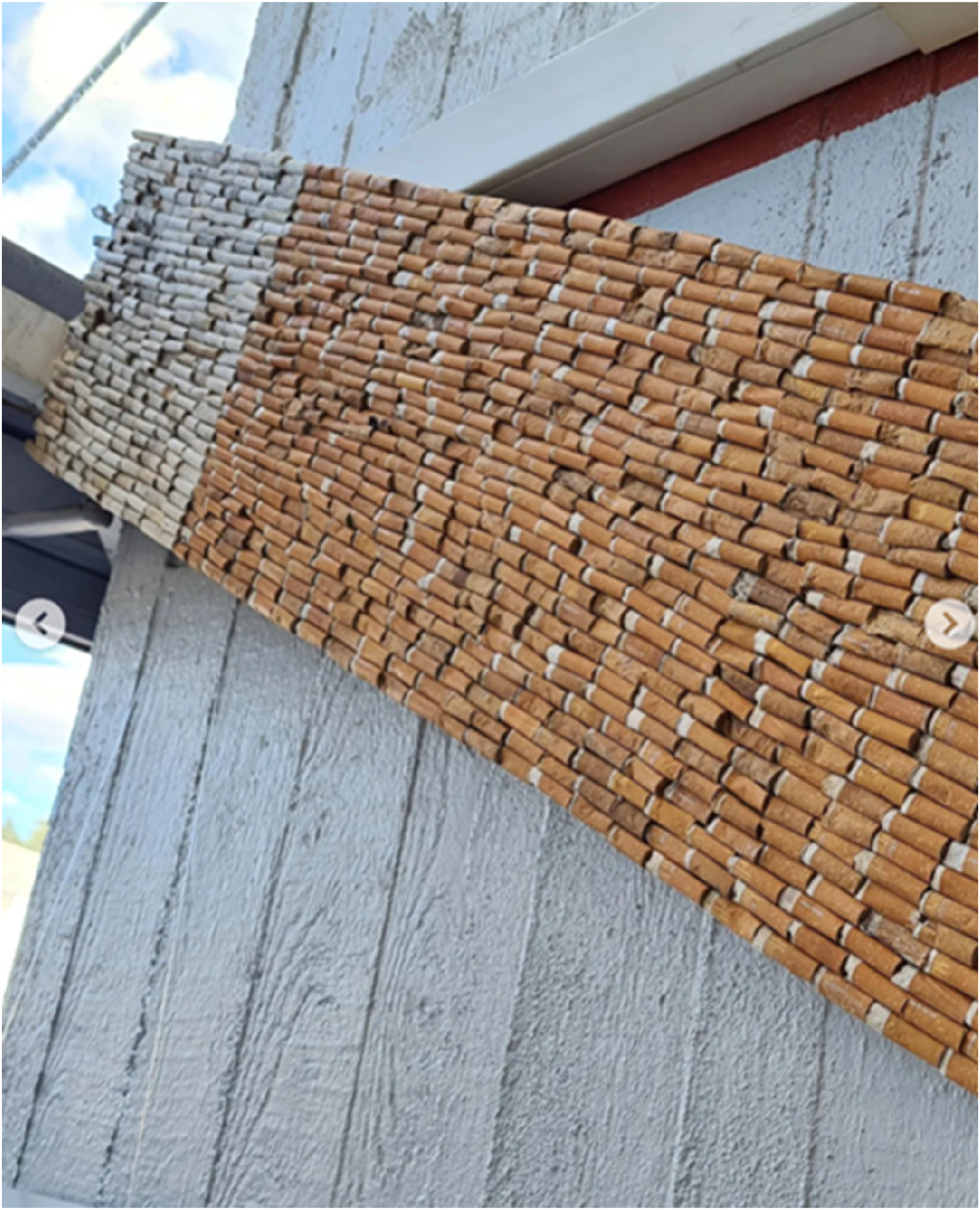
Such artistic visualisations were, however, not the only means used by our informants to illustrate the quality and quantity of litter lying on the ground in a public place. All our informants also had for example formed the habit of counting and reporting on Instagram the number of bags or pieces of trash they had collected or of arranging them by shape or colour and then taking a picture. The items picked thus acted as a form of material data, that is, ‘data in physical form’ (Offenhuber, 2024: 11; emphasis in original).
The visualisation of litter on Instagram places and presents litter in a sensual and affective reality (see Hawkins, 2006: 22). In the era of social media, political action has diversified from traditional methods like demonstrations towards more performative forms, and the power of visual social media in the politicisation of emerging issues such as gender representations and climate crisis has become evident (Luhtakallio and Meriluoto, 2022). Especially unconventional, norm-defiant or even shocking and emotionally distressing images are commonly used to politicise issues calling for political action (Luhtakallio and Meriluoto, 2022; Niemelä-Nyrhinen and Uusitalo, 2021: 165). Our own analysis supports this. By making litter visible through social media, trash activists politicise contemporary wasting in general and littering as one of its most obvious, concrete manifestations in particular. By collecting litter and posting images of the discarded items found, trash activists not only question and disrupt the common careless and ignorant offloading of private litter in public space but also try to influence and encourage their audience to consider whether it could be possible to think about and live with waste more mindfully and with care.
The role of affects in the politicisation processes has been found to be crucial in previous studies on affective publics and mediality (Paasonen and Pajala, 2010; Papacharissi, 2014). Affects participate in creating networks that merge and separate through expressions of sentiment, which on social media largely rely on the likes, comments and shares of posts (Papacharissi 2014: 125). Thus, these indicators can also provide insights into the affective stickiness of pictures or other content posted on social media platforms. For example, in the context of trash activism, a photograph of a dead swan entangled in ropes (Figure 2) gathered dozens of crying emojis expressing sorrow, as well as comments like ‘a striking sight’, ‘such a powerful image’ and ‘I wouldn’t want to comment, but it’s good that you bring this to light’. According to our analysis, these reactions are part of the affective dynamics of social media, making trash activists’ Instagram pages sites of political agency. Instagram post by trash activist ‘roskapostia_hangosta’ (‘trashmail from Hanko’).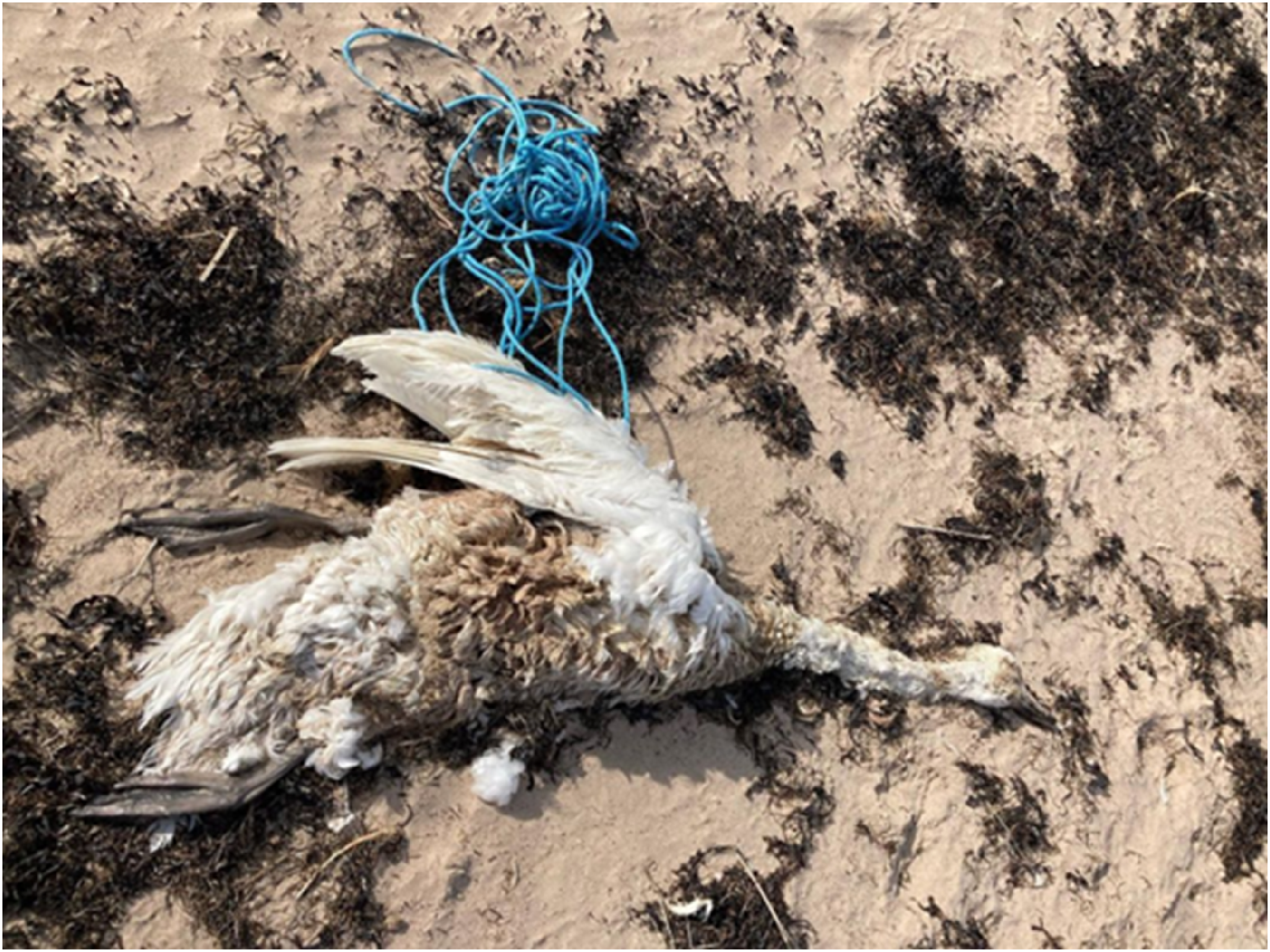
It is, however, not only negative affects that may be sticky, but during fieldwork also the trash activists’ curious and enthusiastic attitude towards litter proved to be somewhat contagious. This attitude is fostered not only within the trash activist community but also in passers-by observing the practices of trash activists, often stopping to discuss littering and, in some cases, even joining them in the picking activities. Picking up littered items may transform them from objects symbolising powerlessness and despair in the face of environmental destruction into means of becoming an active agent, who makes a tangible impact on the surrounding world. Additionally, the way trash activists proudly stand as ‘affect aliens’ when it comes to, for example, fireworks, 3 makes them part of the rising critique towards objects that are un-ecological and harmful to vulnerable groups (such as animals and war veterans), but have nevertheless been circulating and accumulating affective value as ‘happy objects’ in our culture for a long time (Ahmed, 2010: 41). As trash activist ‘roskapostia_hangosta’ (‘trashmail from Hanko’) states in her post about fireworks and the resulting litter: ‘Short joy in the sky is an endless grief in the sea. The waves are washing ashore plastic waste from fireworks all year around. I’m picking up these endlessly on our shorelines.’
Overall, many of the images posted by trash activists on social media seem to aim at influencing their audience through evoking such negative emotions as guilt, disgust or shame. They do this for example by showing unembellished scenes of litter and its impact on animals and nature. In this sense, trash activism is not entirely distinct from the hegemonic waste morality in the West that is based on guilt and a sense of duty (see Hawkins, 2006). However, while many informational campaigns and environmental organisations frame waste in the context of sorrow and despair, the visual content published by trash activists displays a much greater diversity: among the sad, disgusting and anger-inducing images there also lie creative arrangements, delightful moments of discovery, humor and surprising beauty. That the found litter may act as an inspiration for artistic visualisations stands in stark contrast to the prevailing moralising perception of waste as inherently bad or repulsive and therefore in need of being expelled and kept at a distance. Such creative engagement with litter could ultimately be seen as a manifestation of a more intimate, reciprocal entanglement with trash, in which trash activists surrender to the affects elicited by the waste matter. This kind of reciprocity, arising not from rule-based morality but from bodily and affective encounters, holds great ethical potential (Deleuze, 1999; Diprose, 2002; Ettinger, 2006; Haraway, 2016; Hawkins, 2006), as we try to flesh out in the next section.
The ethical potential of waste affects
As Aino and I walk along the long sandy beaches of the coastal town, she quizzes me about various vague pieces of plastic that peek out from the sand here and there. After admitting that I’m unable to identify them, she tells me what they are: a shotgun shell, a piece of a firework, a seal… Then she stops and asks me to look at the sand and see if I can find anything in it. I crouch down to examine the sand and at first, I don’t notice anything until my eyes focus on small, translucent plastic pellets, only slightly bigger than grains of sand. Aino seems pleased and begins to tell the story behind these pieces of plastic, which have become very familiar to her after years of cleaning beaches. (Field notes)
Our ethnographic observations, both in the physical realm and in the digital world of social media, suggest that the trash activists’ practice of collecting litter may embody an alternative ethical orientation to waste. Affective physical encounters with things in all their materiality, like on the occasion depicted in the quoted field note above, may inspire, give rise to and nourish a more mindful and care-ful relationship with one’s material surroundings and residuals. Rosalyn Diprose (2002: 132), for example, has portrayed particularly disturbing and uncomfortable situations as opportunities to recognise the limits of one’s experiential world. Such situations may evoke visceral feelings and prompt questions. In an Instagram caption, trash activist ‘roskapaiva’ (‘trashday’) writes about questions that a found beer cap made him ponder: ‘I drank a beer and, while I was saving the cap, I discovered a similar one that had probably been lying on the ground for about a year. It made me wonder: why was it thrown away, and what is the story behind the cap?’ Such affective encounters with waste can be interpreted as expressions of the aforementioned trash-power, that is, of the ability of discarded objects to ‘animate, to act, to produce effects dramatic and subtle’ around them (Bennett, 2010: 6).
The art of noticing that the affective encounters with the troubling materiality of litter may cultivate deviates from the common more or less indifferent attitude towards waste in affluent Western countries. Bennett (2010) has argued that in the Western culture, often labelled as ‘materialistic’, matter itself has paradoxically become increasingly invisible. By and large, the same goes for waste; most of the trash, as was suggested above, just seems to go unnoticed without evoking any visceral affective reaction (Hawkins, 2006: 3). And, noticing ‘unloved’ and disregarded others (Bird Rose and van Dooren, 2011), sometimes in such odd and unexpected places as a hollow stump violently turned into a rubbish bin by careless littering when the opportunity has risen (Figure 3), is also a precondition for assuming responsibility for them, for new sensibilities and for more responsible ways of relating to waste. Whereas waste-making ‘follows on a withdrawal of our direct participation with things’ (Kennedy, 2007: 5), trash activism involves a close bodily and affective engagement with them. Instagram post by trash activist ‘trailplogg3r’.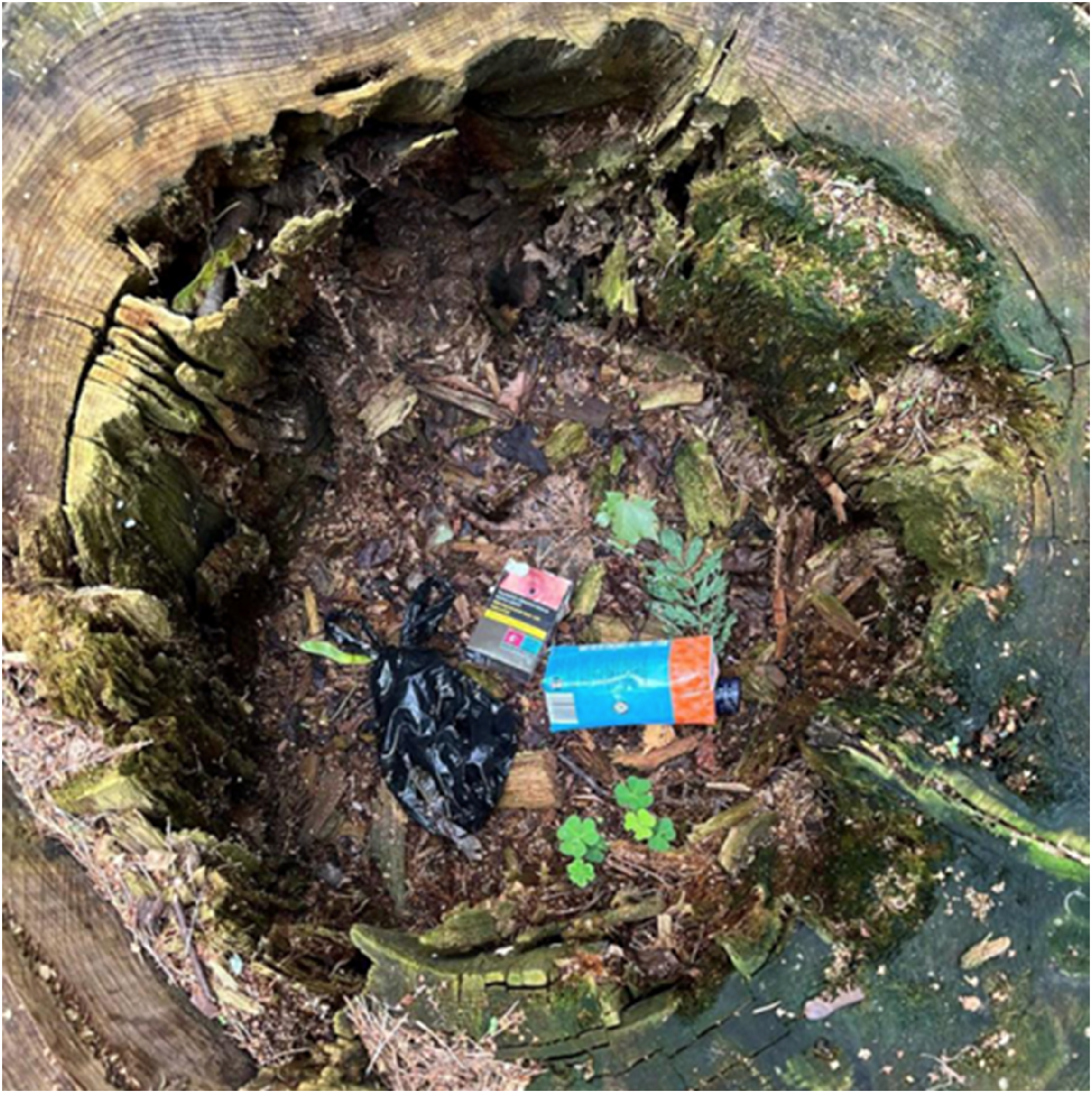
Typically, ethics is considered in terms of self-conscious emotions that guide individuals to behave in accordance with their personal or social standards (Fischer and Tangney, 1995; Tracy and Robins, 2004). In contemporary Western culture, how individuals act in relation to waste is conditioned by advanced waste management infrastructures and a sought exclusion of waste materials out of people’s living space. The externalisation of the concerns over rubbish to waste management infrastructures makes it possible to keep the disturbing material at a distance from one’s daily life (Reno, 2014: 17). Hawkins (2006: 13) claims that current waste politics is based on the assumption that information combined with self-disciplined citizens will solve the problem, and its weakness is the risk of slipping into moralism, which may divert attention from the continuous presence of waste and the ethical work related to it. In contrast to this, by drawing from Deleuze (1988) and his reading of Spinoza’s affect, Hawkins (2006: 115) has strived to formulate an alternative ethics of waste not based on individual self-improvement but openness for experimentation and novel waste practices.
Trash activism entails a way of engaging with waste that greatly differs from the politics of exploitation and resource mobilisation inscribed in the conception of waste as a resource and property, just as much as from the politics of exclusion and subjugation implied in the conception of waste as a risk (see Lau, 2023 for more on these politics). The practices of trash activists can be viewed through the analytic lens of care (see Kinnunen and Duque, 2022; Lau, 2023; Puig de la Bellacasa, 2017). In their much-cited definition, Berenice Fisher and Joan Tronto (1990: 103) define care as ‘everything that we do to maintain, continue and repair “our world” so that we can live in it as well as possible. That world includes our bodies, ourselves, and our environment, all of which we seek to interweave in a complex, life-sustaining web’. With their actions of searching, picking, sorting and photographing litter, the trash activists take care of our world by trying to maintain our public places clean and liveable not only for humans but for nonhuman animals too.
In its critical stance toward normalised collective littering, trash activism can be conceived as a minoritarian practice that attempts to destabilise prevailing norms. According to Gilles Deleuze and Félix Guattari, minoritarian politics often focuses on neglected phenomena, people and relations that create new ways of becoming (Deleuze and Guattari, 1986, 1987; Dennis et al., 2023: 734). The concept of minoritarian politics may help put into words how even somewhat marginal practices can be effective in challenging and disrupting hegemonic practices. As trash is an inevitable consequence of the fast-paced consumer culture and habitual disposal of things, making its consequences visible via Instagram images and captions is in itself a powerful statement, with effects extending far beyond the physical environments cleaned.
Conclusion
In this article, we have explored the ethical potential of affects to incite new, more sustainable ways of living with waste. The ethnographic fieldwork that we conducted among Finnish trash activists, both by accompanying them on their trash walks and observing their Instagram content in the digital realm, has enabled us to follow closely how trash activists disrupt habitual disposal. 4 To us, how they voluntarily collect litter in their spare time and make it public through social media serves as an example of an alternative way of relating to waste and living with it. Challenging and problematising the prevailing manner of withdrawal of direct engagement with waste through externalising the concern over it to the official waste management infrastructure, trash activists assume responsibility for the litter left behind by other people. They spend a great amount of time and energy not only to care-fully clear up and order littered public places by picking up trash and putting it in its rightful place, but also to accomplish a change in the attitudes and actions of others by making their activities public and persistently promoting the issue of littering on their social media platforms.
Our fieldwork and subsequent analysis also brought into view the corporeal and affective ways in which trash activists engage with waste. Their willful surrendering to the affects evoked by the trash that people typically prefer just to ignore, resonates on our reading with Bennett’s (2010) well-known concept of ‘thing-power’, which led us to develop the concept of trash-power over the course of our analysis. While Bennett describes thing-power as the ability of inanimate matter to produce significant effects in its surroundings, litter in our analysis seems to operate in a fairly similar way, when it is encountered and approached with the kind of openness and curiosity that trash activists exemplify. In that sense, waste may have the capacity to provoke into action (Hawkins, 2006), yet we suggested that it does not do this owing to any assumedly inherent properties but through the affective force that it comes to have in relation to people and other entities.
Instead of being neutral, waste is affectively saturated and sticky and, as such, it is fertile ground for affective intensities and processes of politicisation. Based on our data, it seems that negative affects, such as disgust, anxiety and annoyance, are crucial for waste to become politicised and even get noticed at all. Those affects also served as a key impetus for trash activists to take action and do something about the littered places that they observed around them. Yet again, based on our informants’ accounts, when close, bodily engagements with waste become habitual over time, a wider array of waste-related affects emerge; the way trash activists engage with waste in a highly creative manner gives support to this view.
Despite the seeds of an alternative, ethical manner of relating to waste present in trash activism, it is obvious that in itself the activity of cleaning up parks and beaches from litter does not succeed in providing a solution to the crisis of waste or to the ecological problems of our time caused by overproduction as well as normalised and institutionalised wasting. What is more, the practices of trash activists are in themselves highly dependent on an efficiently functioning waste infrastructure; like any other citizen, they too rely on the fact that salaried waste pickers come to collect the trash from the bins and transport it away. What is urgently needed to solve the societally most pressing existential issues such as climate change and biodiversity loss, is a rapid, radical reduction in carbon dioxide and methane emissions as well as changes in land use (IPCC, 2023; Mantyka-Pringle et al., 2015). Such major systemic shifts demand robust international action.
However, making a sharp distinction between the system level and the individual level may ultimately prove unhelpful given that global environmental problems are highly entangled not only with each other (e.g. how waste spreads out into natural environments affects climate change and vice versa [European Environment Agency, 2010]) but also with local practices and relations. And, when it comes to the reliance of trash activists on a well-functioning waste management system, previous research has shown that the latter is also dependent on a range of voluntary non-governmental organisations and actions (see e.g., Doron and Jeffrey, 2018; Gutberlet, 2012; Lau, 2023). In the Global South this is more evident, given how waste pickers who collect waste to make a living contribute to environmental sustainability and local economies (Carenzo, 2016a, 2016b). However, in the Global North too unconventional practices like trash activism – where trash picking is more often driven by ethical, not economic, motivations – may despite their marginality nevertheless inspire more mainstream movements and ideas of how to live with waste more care-fully. 5 Even though it remains unclear to what extent trash activism has the political potential to truly accomplish a change in our unsustainable wasteful practices on a large scale, all major transformations have nevertheless begun with the renewal of the political imagination (Cooper, 2014; Eskelinen, 2020; Salmenniemi and Ylöstalo, 2023), of the ability to rethink how we could act and live differently. And that is what trash activism tries to achieve in how we relate to waste and littered public places.
Footnotes
Declaration of conflicting interests
The author(s) declared no potential conflicts of interest with respect to the research, authorship, and/or publication of this article.
Funding
The author(s) disclosed receipt of the following financial support for the research, authorship, and/or publication of this article: This work was supported by H2020 European Research Council (grant no. 101043572) and Research Council of Finland (grant no. 350191). Views and opinions expressed are those of the authors only and do not necessarily reflect those of the European Union, the European Research Council Agency or any other funder named. Neither the European Union nor the granting authorities can be held responsible for them.
