




Abstract
This article combines ethnographic and netnographic data to explore the relationships between body techniques and a sense of belonging through the contemporary Mexican martial art of Xilam. This art, founded by a female Mexican martial arts veteran, is slowly developing as a hand-to-hand sport, and has attracted critics for its supposed use of East Asian fighting techniques. Netnographic data reveal online debates on the origins and ‘true belonging’ of specific techniques while ethnographic fieldwork in a Xilam school demonstrates how the art is made ‘Mexican’ through specific accompanying practices and philosophy surrounding the movements. The movements of sitting, punching and standing are selected as key examples as understood through Mauss’s classic thesis. I conclude that Xilam follows a philosophical pedagogy that associates these techniques with a sense of Mexicanness – Mexicanidad.
Martial Body Techniques
A punch has no paternity! Neither Chinese, nor Japanese nor Korean…what we’ve researched on our ancestors is the vision of being human – the entire vision. In Mexico, it’s important to recover the true vision of pre-Hispanic world. The four Tezcatlipocas. That’s the basis of the human being, of development, of a business. (Marisela Ugalde, interview)
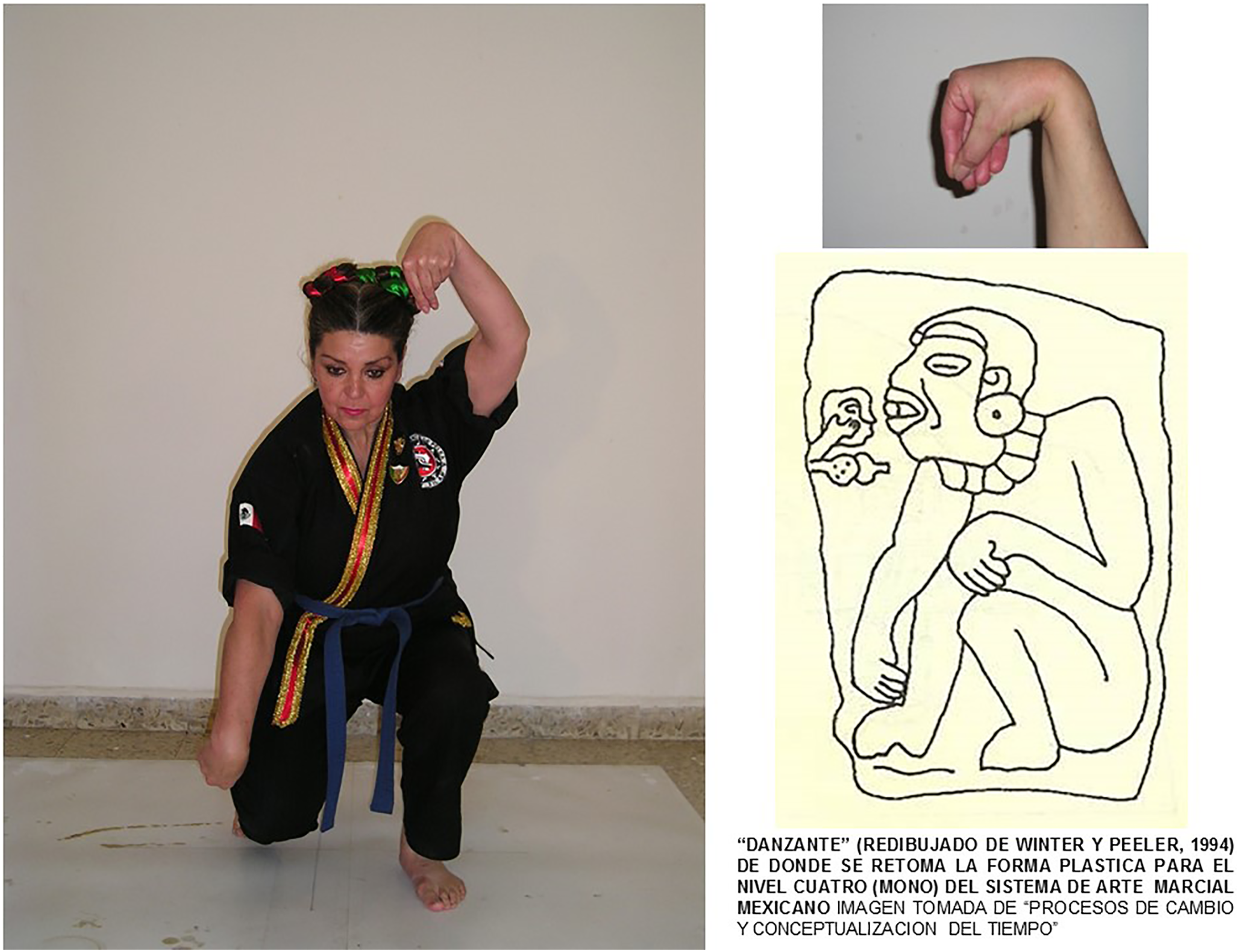
This controversial claim from the founder of the Mexican martial art Xilam highlights the debates over the real belonging of fighting techniques, and how techniques might be made suitable for a culture – – perhaps become more ‘Mexican’ in this case. Remarkably, Ugalde stated, ‘A punch, a kick, has no paternity’, when interviewed by martial arts journalists on their YouTube channel Karatekeando (4:44–5:13) in reference to questions about the resemblance of various Xilam techniques with East Asian ones. Instead, Ugalde argued that such strikes are natural human movements be honed through training (Figures 1 and 2). Kneeling with the collective oral mantra. The monkey posture.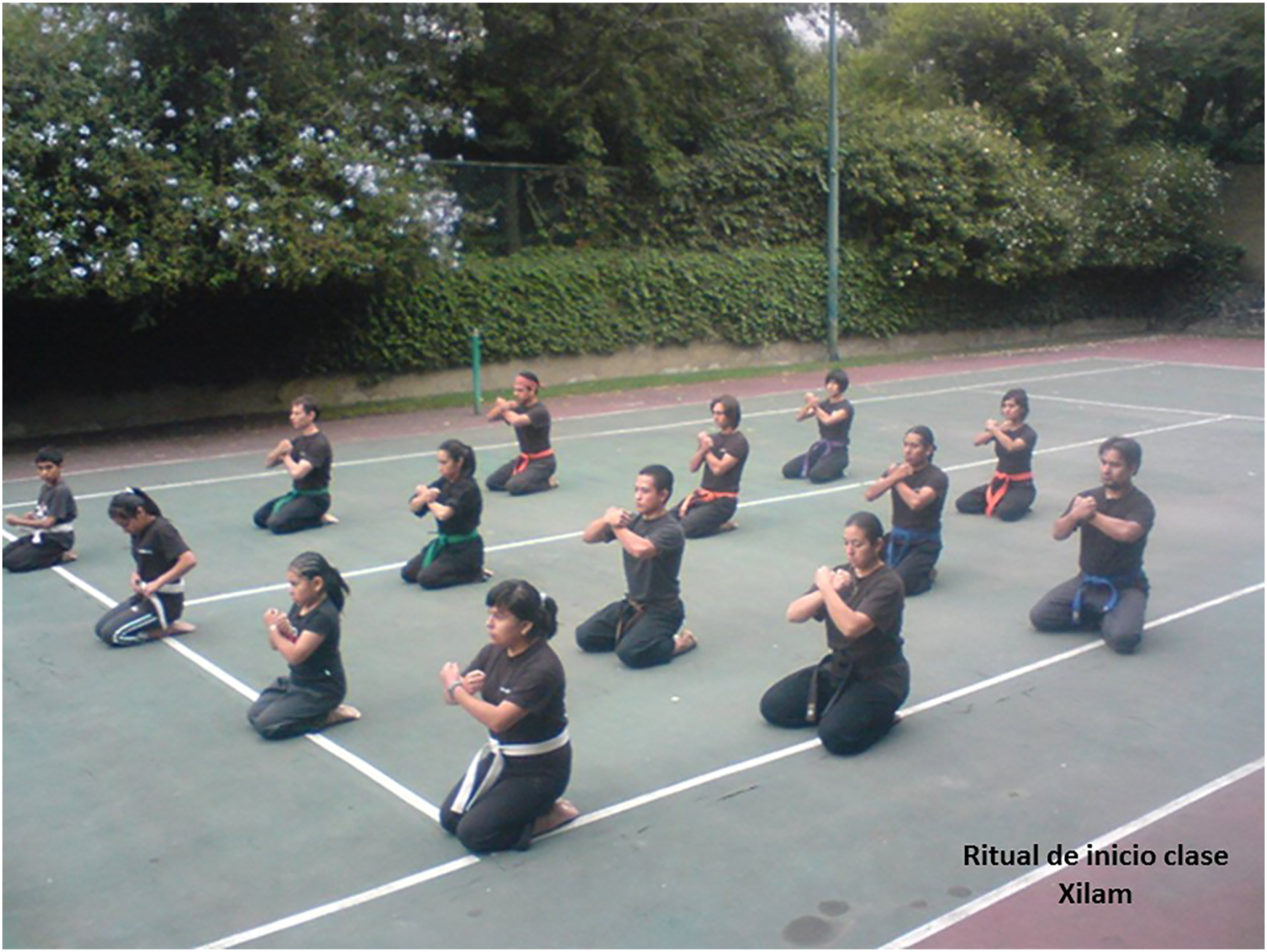
Marcel Mauss’s techniques of the body provide a fertile starting point for such an analysis of technical plurality and debated bodily knowledge: I deliberately say techniques of the body in the plural because it is possible to produce a theory of the technique of the body in the singular on the basis of a study, an exposition, a description pure and simple of techniques of the body in the plural. By this expression I mean the ways in which from society to society men [sic] know how to use their bodies. (Mauss, 1970, p. 70).
Within a given society, there are alternative ways to do a similar technique or movement in different cultures. The martial arts include a broad repertoire of hand-to-hand techniques for survival, self-defence, military training, sporting combat and other objectives. Meanwhile, the techniques are open to revision and scrutiny. As new generations emerge, they can develop ways of moving, such as punching an opponent through twisting the torso and arms. The advent of mixed martial arts (MMA) in the 1990s and the growth of social scientific and ethnographic research on this phenomenon demonstrate such revisions of technique for efficiency and individualised excellence (Spencer, 2009), but also for safety regulations (Downey, 2014) and the civilising process in broader Western society (Sánchez-García and Malcolm, 2010).
For Mauss (1970), body techniques are acquired over certain stages in one’s biography. In martial arts, some techniques are still taught from generation to generation in male-dominated groups, such as Venezuelan Juego de Garrotte stick and machete fighting among rural communities (Ryan, 2011). Many fighting arts are abundant in cities, where their validity as fighting and self-defence systems are questioned through the efficiency of their body techniques. However, some martial arts are less concerned with the ‘reality’ of the ‘street’ so often conflated with fighting (Bowman, 2014), but are instead directed towards cultural transmission, ritual and even historical and contemporary preparation for actor training such as in Keralan Kalarippayattu (De Roza and Miller, 2018) or cultural and musical expression seen in Chinese lion dance (McGuire, 2015). It is as Mauss (1970) pondered, “Technical action, physical action, magico-religious action are confused for the actor’ (p. 74). This emphasises that body techniques are both effective and traditional as forms of transmitted physical (and oral) knowledge. Techniques are often more aesthetic and symbolic than efficient, as seen in the few martial arts techniques employed in conditions in MMA.
Body techniques are learned and refined within the context of specific micro-practices that constitute the overall martial art. Kata is one pedagogical model for solo and collective learning that constitutes the philosophical and technical essence of Budo (Dodd and Brown, 2016). The pad and bag work of contact sports helps develop the techniques with correct distance, power and accuracy, while the slow motion practice of Taijiquan forms helps to establish correct body structures and relaxation necessary to enact the principles of the art (Frank, 2006). Sparring is key to developing excellence in boxing in which basic punching and defensive techniques are tested within the ring (Wacquant, 2007).
Martial arts can be seen as elements of physical, material and musical culture that are influenced by Asian (Judo, Karate, Kung Fu, etc.), African (Capoeira) and ‘Anglo-Saxon’ cultures (wrestling and boxing). Body techniques might have an origin in a very different culture, with body lineage stemming back to medieval China (in terms of Kung Fu) or Marseilles (in terms of Savate). In these arts and their specific techniques, one can note the sense of belonging to a place (such as a dojo or training hall), a family or lineage, a clan or ethnic group and even an imagined belonging to a far-away culture (Joseph, 2008). Over time and through the collective learning and socialisation into a martial arts group and association, the practitioner can develop strong feelings towards their art – even as a secular religion (Jennings et al., 2010). They can develop an affinity for certain religious or philosophical concepts, as martial arts are underpinned by core philosophies. Contemporary Taijiquan is understood through a Daoist perspective (Mroz, 2008), while Jeet Kune Do is driven by the writings and thoughts of Bruce Lee (1975). The philosophies are often political. The specific codified approach to boxing in the Italian boxe populare practised within unlicensed gyms is driven by a leftist philosophy (Pedrini, 2018). Moreover, for those arts practised in their native land, their leaders and instructors might promote the system in a nationalistic sense, through government-driven agendas in Japan prior to the Second World War (Sakaue, 2018).
Grass-roots movements like Xilam are an example of more recently created, little-known Mexican martial arts of Pok-at-Tok, Tae Lama and SUCEM (Jennings, 2017) tied to ancestry, ethnicity, nation and race. This article explores the relationships between body techniques and belonging through Xilam. In particular, it aims to uncover how Xilam practitioners develop a deep sense of belonging to Mexico and Mesoamerica through their regular training of specific bodily techniques and philosophically informed ritualistic practices. My argument is twofold. Firstly, I contend that specific body techniques in Xilam have disputed origins due to their visible resemblance to certain East Asian martial arts techniques. Their sense of belonging is therefore questioned. Secondly, I argue that regardless of their origin, these techniques have been made ‘Mexican’ through the philosophical pedagogy of Xilam, allowing practitioners a sense of belonging to a deeper or profound sense of being Mexican – Mexicanidad. I next provide an overview of Xilam and my dual ethnographic/netnographic study since 2011. I then select three characteristic techniques (sitting, punching and standing) to explore the relationships between technique and a sense of belonging to a specific time and place. I approach this by situating Xilam as a ‘philosophical art of self-defence’ (to borrow Lee’s 1963 term) and human development system composed of 1000 techniques.
The Mexicanidad of Xilam
From the first to the seventh level, the system includes theory, technique, practice and grading ceremony. It includes 36 basic forms that incorporate more than 1000 bodily movements and their variations, as many on the left and the right sides as there are applications. A warrior is someone who creates harmony between their thoughts, feelings and actions, an art; following this way of life, results in knowledge and the exercise of physical, mental and emotional techniques marked by virtuous values.
These extracts from the official public-facing Xilam website show the main objective of this martial art is to develop modern warriors through a long-term devotion to techniques with mental, physical and emotional components. Xilam is a prime example of what Hobsbawm and Ranger (1983) termed invented traditions: ethnic and national traditions that appear to be ancient but were created for pragmatic and often nationalist purposes. Xilam contains invented traditions within its objects and practices in order to be recognised as a contemporary, philosophical martial art. These efforts include coloured belts seen in many Asian martial arts, and recently created oral creeds akin to the codes of conduct seen in other traditionalist martial arts (see Brown et al., 2009). Yet, it is also a reinvented and resurrected tradition inspired by the Mesoamerican fighting arts of the Mexica, Maya and Zapotec, which aims to instigate a renaissance of Mexican martial arts and warrior cultures (Jennings, 2016). Created in the early 1990s by a Mexican woman, Marisela Ugalde, it is taught in industrialised areas of central Mexico – with its hub being in the State of Mexico and Mexico City. Beyond weekly classes, there are regular, nationwide seminars and demonstrations aiming to disseminate the art across the republic and worldwide, but it remains, as advertised on its website, ‘a very Mexican martial art’. Both these classes and demonstrations are drawn on in this article.
‘Mexicanness’ is an emic concept that emerged following the Mexican Revolution. Broadly conceived, this Mexicanidad is the quintessential set of characteristics of being Mexican, which might include being joyful, tactile, friendly, spontaneous, innovative and humorous. This has changed over time and is increasingly associated with indigenous culture such as the Day of the Dead or specific pre-Hispanic inspired practices such as the Conchero dances, which embodies Mesoamerican beliefs (Rostas, 2002, 2009). Similarly, the ‘Mexican’ aspect of Xilam is grounded in ‘Aztec’ (Mexica) philosophy (cf. León Portilla, 1990; Maffie, 2014) as the basis of its human development system. Rejecting the common assumption that the Mexica had a polytheist religion, the Xilam organisation posits that these deities (the four aforementioned Tezcatlipocas of Huitzilopochtli, Quetzalcoatl, Xipetote and Tezcatlipoca) are instead qualities that can be cultivated through training, harnessing the four elements of willpower, emotions, intelligence and awareness across the four ages of humans (childhood, youth, maturity and old age). The Mexica philosophy is even expressed in the four colours of the Xilam logo and t-shirts (black, white, blue and red – also colours of the four Tezcatlipocas) and the four levels of the basic ‘dance’, (linear dance, complex dance and applications) – as seen in the solo forms and their utilisation in combat. These four levels are developed across each stage of Xilam, taught from white to black belt according to seven indigenous Mesoamerican animals deemed important in the Mexican calendar and to other ethnic groups: Snake, eagle, ocelote, monkey, deer, iguana and armadillo.
Xilam encompasses a plurality of body cultures (Eichberg, 1998; Jennings, 2018); it is inspired by ancient Mesoamerican ball game (juego de pelota) in terms of the four-way movement in alignment with the Mexican calendar, as well as the fluidity of the pre-Hispanic dance (and its contemporary expression, the Concheros). Xilam also incorporates modern warm-ups and physical conditioning exercises along with imaginative games and shamanistic meditation. Like Asian martial arts, it involves some interesting paradoxes and aesthetic considerations (Allen, 2013). It involves play and games, but is not a sport. It involves rigorous discipline, but is not a military training exercise. It involves solo and partner drills, including fighting applications in what can also be described as a self-defence martial art (Brown and Johnson, 2000). It is registered as an asocación civil (civil association), which is a non-profit, grass-roots enterprise rather than a business or a government initiative. Nevertheless, Marisela recently shared her plans to help other Xilam instructors earn a living and thus make the art more sustainable. Now emerging as a ‘local business’, as stated on Facebook, Xilam has a copyrighted logo, forms and core structure since its registration in 1992. Media attention has continued over the decades, with frequent TV spots on national regional news, as well as more informal recordings on YouTube. In sum, Xilam uniquely expresses the rich and complex culture of Mexico: re-educating people about their deep, underlying indigenous past and identity through physical movement. As explained in Jennings (2016), Xilam is one project for a deep Mexico, the México Profundo proposed by Bonfil Batalla (1992) – the surviving Mesoamerican civilisation overlooked in the continued Westernisation project (the imaginary Mexico).
The study
In 2011, I spotted a large banner showing Marisela Ugalde performing a low stance in a native Mexican headdress. As a ‘fighting scholar’ (Sánchez-García and Spencer, 2013) experienced a variety of martial arts and combat sports, I began to explore the embodied pedagogy of Xilam under the tutelage of Tonatiuh (pseudonym), my gatekeeper to this social world. I was (and remain) a white British, able-bodied male academic. With my then limited Spanish and understanding of Mexican history and politics, this study began as an apprenticeship into the art for 12 months (2011–12), using my body and senses are my major instruments. This followed the approach taken by Wacquant (2004) and coincides with recent work by Downey et al. (2014) in native physical cultures.
Over time, with changing personal circumstances and abilities, I analysed the key print and online documents of the Xilam community. Later, with the closure of Tonatiuh’s branch school, I conducted a series of interviews with Marisela Ugalde to explore the creation of Xilam and its philosophy (Jennings, 2015). I also interviewed other Xilam instructors in an effort to explore specific themes from the ethnography as aligned with the imagined pre-Hispanic past, the colonial period and the post-colonial present. This was accompanied by the third, ongoing stage of the research: the netnography. With my return to Britain for an academic post, this research entailed digital research examining the official Xilam website, Facebook and YouTube sites to understand the main objectives and mission of the organisation: to recover and spread a Mesoamerican warrior tradition (Jennings, 2016). This is becoming an increasingly useful strategy in martial arts research extending data sets from field notes and interviews (e.g. Spencer, 2014). For this article, I turned to the archive videos from periods before my fieldwork (from the late 1980s to 2011), several demonstrations in which I was unable to assist (between 2011 and 2016) and recent uploads including the association’s tour to China and demonstration for Korean delegates. The majority of these were posted in 2012 after a period of change with the social media and website and are uploaded on a regular basis.
Taking an active and empathetic role, I listened to what was said about the art of Xilam. I also viewed the practices and movements to see the correspondence between what was said and what was done. From the two main types of videos (journalistic interviews and recorded public exhibitions), the most apparent form of discourse was on the exact practices that constitute Xilam. The animal-inspired dances, the mantra and creed, the tying of the belts and the weapons were of particular significance in the dozens of videos I transcribed, translated and analysed. I connected these numerous themes to three repeated categories of techniques: sitting (in a kneeling position akin to the Japanese seiza), standing in animal-inspired stances and twist punching from the hip. This was not a deductive strategy informed by previous literature on specific martial arts techniques (as this is sadly lacking), but a result of my direct observations, embodied experiences and ongoing analysis on online material. My content and thematic analysis revealed that sitting, standing and punching were the three most common body techniques performed in the Xilam classes and archive videos of demonstrations; they are also the most controversial, as indicated by my further analysis of public comments and Internet troll’s criticisms on YouTube and other social media platforms.
Following Back (2007), I have endeavoured to treat their stories and the public accounts on YouTube with the values of humility and respect, as these values are crucial to the Xilam oral creed. My analysis and representation of the data, which although in realist form, try to show the art, the community, the organization and its practices in a dignified fashion as seen in their own words and using theories that are influential in their own nation and culture. I obtained ethical permission to continue my research after registering the study at a Mexican university, and have kept in contact with my key informants who have also sought my advice as a writer and scholar. In this sense, I remain a distant part of the Xilam community as a critical friend for some of their ideas.
In what follows, I describe the practices for readers who might wish to access the direct video sources via the hyperlinks provided. This follows an embodied and increasingly video-based approach as seen in works of interdisciplinary scholars (e.g. De Roza and Miller, 2018). I also highlight the meanings behind the practices so that they can ‘listen’ to the voices of Marisela and other members of the Xilam community who provide verbal commentary to the demonstrations. Contextualised for those unfamiliar to the scene, I hope this approach is useful to draw further conclusions on the public, open-access data intended for the wider community. As comments are open on YouTube for debate, I leave the reader to join my exploration of Xilam and its engagement with ideas on belonging to the imagination and potential realization of Mexicanidad through the techniques of Xilam. The speech is transcribed in English with the exact minute and seconds where discussion on the technique appears. As the indigenous Nahuatl is used in Xilam, and as many of the students take on Nahuatl names in their public identities and online profiles, all pseudonyms are in this language.
Mexicanised Body Techniques
Many common body techniques used for interpersonal combat and general human movement have been refined within numerous East Asian martial arts including Karate and various forms of Kung Fu – systems that Marisela Ugalde herself studied for years before creating Xilam. This adds to the controversy around the Xilam techniques. Nonetheless, in my analysis, I reveal how students of Xilam develop a sense of belonging to a deep Mexico – particularly, a close connection with ancient pre-Hispanic Mexico and the Mesoamerican cultures that inspire the philosophy of Xilam. This philosophy, paired with its corresponding practices, is revealed to add a sense of Mexicanidad to otherwise commonplace technical movements. The techniques embed a layer of embodied cultural knowledge as they are imbued with deeper meanings linking to ancient pre-Hispanic Mexico. We begin with sitting, the foundation of all Xilam classes through their opening and closing rituals.
Ritualistic sitting
Some Japanese martial arts such as Kendo involve kneeling in seiza for prolonged, painful periods on one’s lower legs and feet – with the torso erect and the feet folded backwards (Bennett, 2015). In Xilam, such a form of sitting coincides with the rituals of the classes, including the tying of the belt and the oral creed called out as a collective. Archive videos show the posture as a mainstay of Xilam practice in public demonstrations and news reports. However, with the similarity of this technique with the well-known seiza, critical comments abound on YouTube – claiming that such a seated posture is neither Mexican nor pre-Hispanic, but East Asian. My first Xilam class enabled me to directly compare it with other martial arts while learning the meaning behind this physically gruelling practice: The maestro called us to line up, and he introduced some of the basic opening movements. We began with a sitting stance, which was much like the seiza I had experienced in my training in Kendo in my hometown. ‘This form of sitting is widely used in other martial arts styles, particularly the Japanese and Chinese’. He claimed. I could certainly see how this position linked to the Japanese martial arts, but my experience of Chinese martial arts showed a far more informal approach to sitting, if sitting was done at all. We sat there for several minutes, and I noticed my fellow students shifting uncomfortably, even the couple who had been learning the art for the last three months. I felt content over the course of these minutes, and we then moved up to kneel with the right leg leading. It felt more uncomfortable and I had to totally focus on the maestro Tonatiuh’s movements as it took me a while to translate his Spanish into my native English. We then took two short steps back to return to a normal standing position in our bare feet. We initiated the session with an oration about us being practitioners of Xilam, and then sat down into the often uncomfortable position. I felt a pang of cramp seize the muscles of my left foot, and I quickly adjusted and resumed the position. Tonatiuh emphasised a straight posture and alertness. We then unfolded our crossed forearms (in a position much like a corpse in a coffin) and placed our knuckles on the floor, and bowed to the ground. Then the right foot was placed forward and we took two steps back.
Xilam has other practices common in martial arts such as formulaic sequences of forms or kata in Budo (see Dodd and Brown, 2016), which are sometimes imbued with nationalist and religious meaning, as in Kendo (Sakaue, 2018) and Taekwondo (Martínez Guirao, 2018). The Xilam practitioners have added a pre-Hispanic philosophical and historical meaning to their practice. This connects with Marisela’s background in pre-Hispanic dance and its relationship to the Mexicacoyotl movement, as seen in an open-access Visual Anthropos film where Marisela is involved in a ritual – unrelated to the martial arts – upon Xinantecatl, a volcano once important to the Mexica. In a public demonstration of the rituals and hand-to-hand techniques, recorded in 2013, Marisela explained from the outset that ‘Mexico has ritual, so to begin, we will begin with a ritual’ (0:03–0:14). One of the fundamental practices of the oral creed uttered by all Xilam practitioners at the beginning (0:52–1:12) and at the end of each class and what they wish to bring ‘to this sacred place known as Mexico’ (11:54): I accept with honour with pride and honour. To know myself. And the valuable distinction of honesty and truth. To have consideration, and to be aware of the needs of others as well as my own. For that, with these convictions, of faith, of hope, and confidence in my ability to defend myself. And prepare my present, which is part of my future. I promise, in front of my teacher, to respect my instructors, my school, my grade, my god, who is my creator, and my parents, who are my essence. In the name of my integrity, so be it. (12:00–12:52)
Despite this public and verbal explanation, YouTube viewers’ comments on this video focused on the visual element of technique, joking about the similarity with Kung Fu and the apparently poor choreography of Karate and Kung Fu through the sequences of techniques. The true belonging of Xilam to Mexico was therefore called into question through its techniques, which were critiqued for being poorly choreographed. Some viewers even claimed that Xilam was a ‘fraud’ and useless for self-defence, belittling the efficiency of the techniques. However, some people defended the organisation, arguing repeatedly that ‘if Bruce Lee mixed styles to create his own martial art, why would a Mexican woman not be able to do so?’ Other people congratulated the group for blending culture and philosophy with the martial art.
The explicit philosophy of Xilam focuses on ancestral belonging to ancient pre-Hispanic cultures, and the ‘ancestors’ and ‘grandparents’ are often mentioned in classes and demonstrations. Belts were clear in archives videos from the 1990s, but in the first few months of my training in the Coyoacan branch of the Xilam organisation, we had no belts or uniform – just comfortable clothing. However, these materials were eventually important for the formalisation of the school, with the black uniform and rituals began through the tying of coloured belts (initially the white belt) from the sitting position. It was explained to us that ‘this belt is your life’ – with one end being our birth and the other our death. Moreover, the four folds of the belt, as laid down on the ground in front of us in the sitting position, were meant to signify the four stages of life: childhood, youth, maturity and old age. Furthermore, Tonatiuh justified the use of belts with a comment pointing to archaeological evidence of statues depicting the ancient Olmecs of pre-Hispanic Mesoamerica wearing belts around their midriffs. Statues, murals and codices were used to help formulate the philosophy of Xilam and are regularly used to explain and justify the body techniques similar to those in the Asian styles Marisela studied. The symbolism of Xilam became more apparent in each step, salute and greeting beyond the patterns made on the floor as in Taekwondo poomse sequence (see Martínez Guirao, 2018). A more obvious martial hand-to-hand technique is the punch, which was explored next.
Playful punching
Many more fighting systems spend significant time and effort in honing effective punching skills, and Xilam is no exception. In my 12 months’ fieldwork, students trained the punch on a weekly basis through some very innovate methods. The basic Xilam punch is launched from the hip, twisting to reach the target with a horizontal fist and straight arm while pulling back the other hand to the opposite hip. Although this appears to be identical to punching in most Karate or Taekwondo schools, the related games and practices allow Xilam to demonstrate affinity to pre-Hispanic ideas and contemporary ‘touchy’ Latin culture seen in forms of modern dance (see Varea et al., 2018). Field notes demonstrate the parallels to Asian martial arts whole revealing a sense of Mexican culture in the way that it was taught in a tactile, fun and rhythmic manner (as in contemporary Mexico) while continuing with the embodiment of specific elements of Mesoamerican philosophy: Tonatiuh demonstrated the basic stance. He told us that the core movements from the snake, as humans move like snakes. I could see the connections to Wing Chun’s circling biu ma stance as the back foot moved inwards to cover the groin as it replaced the other leg as the lead. I had to overcome my inbuilt flat-footed approach from Wing Chun, as the back foot was poised and ready on the ball of the foot, which was made even more apparent without my shoes and socks. Yet the guard was very similar – a triangle, with one hand in front of the other. There was only the small difference with the finger positions as this guard was more relaxed, with the thumb protruding like the other fingers. We were given a very interesting learning method: As we learned a new move, we preceded this with a clap. So it was punch, clap, kick, clap, land back to guard. Once we became familiarised with this method, Tonatiuh asked us to change the stance each time, with a double clap in the middle. It was fine until we were each asked to demonstrate! After my brief demonstration, I got confused with all the clapping, as for some reason, I immediately kicked from the back leg. Tonatiuh laughed, and I joined in chuckling, too. It seemed to be a very light-hearted, yet focused, class. A further partner exercise involved the basic forwards movement with a twisting punch. I had worked on the more complex sequence of a double punch followed by a kick, so this was simple, although I felt very exposed when faced with an opponent as I wanted to keep a back hand up as a guard. I faced the experienced student, Coyotl, and found him to be very explosive and disciplined. I also took a moment to check on the students’ guard positions. Some, like Quahtli and Cuauhtemoc, indicated their previous training in martial arts from their initial guard position. I noticed that Coyotl kinked his wrists much like many Wing Chun practitioners did. Instinctively, I was in a triangle guard position, but I managed to focus on my feet. Against Quetzalli, I accidently clashed fists, and I heard a mighty crunch, but after she quickly winced, a smile moved to her face as we both laughed.
The punch is not highlighted in the archive and continued footage of Xilam, so it deserves some special attention from my fieldnotes. Much like in other hand-to-hand sports and martial arts (cf. Spencer, 2009), body toughening and callusing were important in Xilam. This ranged from slow stepping upon specific parts of the feet used for kicking to the conditioning of the abdomen to give and take blows. Quite often, bare fists struck onto stomachs, while on occasions, modern equipment (such as focus mitts) was utilised by students in the bare studio: Cuauhtemoc had brought the pads with him, including focus mitts and one large kick shield. First, we were to do some punching from the serpent stance. Tonatiuh ordered me to sink into eagle stance, and I received some powerful blows as a demonstration. However, I had to brace for Cuauhtemoc’s ferocity, and I struggled to keep straight as he hammered into my chest. It felt as if someone was performing CPR when I was still conscious! I then adjusted the pad for the little girl, Xoco, so it was resting upon my thigh, and I was sure to give her encouraging feedback, as I did with the newcomer, Anci. Cuauhtemoc was ordered to brace for my punches, and I sank into serpent stance. I blasted away, but the pace of the punches soon led to fatigue. At home, I had focused on endurance with the stances and control with the kicks, but here was another matter: Speed endurance. This was coupled with my habit of raising into my stance as in Wing Chun, which enabled me to feel more mobile. However, Tonatiuh was quick to spot this, and he placed a hand on the top of my head and pressed me down again. He kept his hand hovering above me so that I couldn’t raise any further. After a while I was very tired, and I was panting for breath. I re-joined the small queue behind Anci, and we compared grazed knuckles. Hers were just small marks, but I had two large gaping wounds on my right hand, and a small one on my left.
Such creative partner drills revealed the individual embodiment of the Xilam techniques according to size, strength, speed and even hand size or the length of fingernails. The snake punch involved an open-handed strike using the finger tips as weapons rather than the knuckles, which showed a development of the technique that was distinct to the ‘traditional’ technique of punching in the modern art of Taekwondo. These differences were highlighted by Tonatiuh, but also celebrated as students laughed at each other’s mistakes and characteristic quirks. Alongside the physical severity of the training, Tonatiuh and his students retained a deep sense of humour and playfulness in training that is indicative of Mexican culture of working hard and playing hard – Mexicanidad in motion. For instance, I once brought laughter to my peers when I commented (and mimicked) that the twisting techniques were akin to opening a bottle of wine. The punch itself is tied to prolonged stance training, which leads to complex stepping exercises forming the foundation of Xilam footwork.
Animalistic standing
Standing postures are not only the foundation of several Asian martial arts but also to European systems such as several historical fencing styles. Chinese ‘internal’ martial arts typically advocate long periods of time to difficult postures to develop a strong ‘root’ for technique and power development as well as sensory awareness (Allen Collinson et al., 2016). These postures can also be used as the basis for standing meditation and health exercises (Dudeja, 2019). Xilam follows this approach, creatively drilling standing postures of the seven Mesoamerican animals of the snake, eagle, ocelotl, monkey, deer, iguana and armadillo. The students not only learn the physical postures and their application but also their symbolic meaning according to the philosophy of Xilam. Below, in the first month of training, I rehearsed all the animal postures together with my classmates, counting in the Nahuatl language we were learning while enduring difficult and painful positions for the legs and core: We were called into a circle, where we would learn the animal movements. The foundation position was the serpent, which was accompanied by the eagle, which provided harmony, according to Tonatiuh. He demonstrated the serpent stance, and asked us to follow suit. We then counted from one to twenty. If my stammering Nahuatl didn’t irritate my fellow students, it surely did then, as I kept on confusing seven, eight and nine, and had to repeat myself. The eagle was next, and Tonatiuh pushed my head down. I noticed that he waited for the next person to finish counting – which in this case was Itzel – and then walked around to check on the students. I was happy that I wasn’t pushed down so far as before. Obviously, my home training had paid off, as Tonatiuh was now pushing my down an inch rather than three inches. However, he did adjust my back foot position so that it was wider. I had thought that the eagle stance was like walking on a tightrope, but he placed his foot in the correct position and asked me to move it there. The next position was the jaguar stance. Again, we pressed our hands into a praying position, which Tonatiuh explained was a spiritual pose. I noticed to my left that Cuauhtemoc was doing well with the postures, as this must be quite similar to those found in Kempo. I noticed Tonatiuh correct Itzel’s front foot position, and he then approached me. ‘What do you think of when you think of the jaguar?’ Asked Tonatiuh, wishing to add some theory to this physically challenging session. Students answered with some physical dispositions, and I added: ‘The warrior!’ This was because of the Mexica use of the jaguar as one devision of their warrior elite. Tonatiuh laughed: ‘Yes, that as well!’ The final position within the circle was the monkey, which I had deliberately avoided practising at home due to its difficulty. I had practised different sets of exercises at home, but with each week we seemed to be working on new things. It was interesting to note how my left side (left foot leading) was far more stable than my right side, which resulting in me adjusting my position with my hands. On the left side, I could sink into the stance and maintain a straight back. I noticed other people wobble, and thought that I was doing very well. However, when I switched to the right side I was also wobbling, and focused my attention to my own body position, rather than that of others. Tonatiuh asked us how monkeys moved, and what their character was like. We responded with our thoughts, and he smiled, gaving a lively demonstration much like an animated child. He had no qualms about jumping up and down like a monkey, which immediately demonstrated his immense agility.
Beyond the sessions led by our athletic and charismatic teacher, the class involved a guest session from Marisela Ugalde, who introduced new partner training exercises to transform the stances from an individual mind–body exercise to a collective and tactile one: The Profesora requested us to work in partners, and I was paired up with Tenoch, the young man unusually tall for a Mexican. We put hands on each other’s shoulders, and crouched low as we switched from deer stance. We had to maintain a low position whilst drawing one foot in to advance or retreat. Other group exercises were also introduced. We formed a line of five men that resembled a scrummage position in rugby. The teacher demonstrated with her assistant Huitzilli, as watched them move forward and backward in eagle stance: Two steps in advance and two in retreat. We were then told to repeat this, and move in a circle to make a lap of the studio. It was a gruelling exercise, and we had to maintain a grasp on the arms of the man in front of us, and keep the correct distance. It was hard as we were of different sizes and builds. At my front was Cuauhtemoc, bulky and muscular, whilst Tonatiuh was behind me. Even he made a mistake as he first grasped my shoulders, rather than my arms, only to be corrected by his teacher.
Each student of Xilam embodied its principles in different ways, and the animal postures revealed different degrees of core strength, flexibility and also old injuries and postural issues. Students worked as a learning community to help each other overcome problems, encouraging each other through shouting and congratulating each other with hugs at the end of class. This resonates with the Brazilian ambience seen in classes of Capoeira – the embraces, kisses on cheeks and general cheerfulness (Delamont et al., 2017) seen in such a Latin body culture involving gestures and emotional expression (Eichberg, 1998). This can be understood as a representation of both the wider culture of deep Mexico and important elements from its Mesoamerican past.
Conclusion
This article has explored the complex relationship between technique and belonging through the philosophical pedagogy of Xilam. On one hand, the belonging of specific techniques and their presentation has been questioned by newcomers and outsiders to Xilam. Meanwhile, these very techniques are reinterpreted as being Mexican through the philosophical pedagogy combining elements of ancient Mesoamerica with a culturally sensitive learning environment full of laughter, smiles, touch and ingenuity that are often summarised by public discussions on Mexicanidad. Some closing words from Marisela reinforce the organisation’s message, as seen in an interview with a Mexican news channel in the 1990s: To have a martial art, it isn’t enough to have the physical movements. We have to have the philosophical rescue. Xilam always initiates and finishes with the exact same movement. Philosophically speaking, all men are born the same, all men die the same. Because throughout their life, people develop different energies, different activities. Life and death. The first and last act of life for everyone is equal. In Xilam, we try to ensure that people are in harmony with themselves, with their environment, with their nature. Nowadays, we’ve lost this concept. We’re losing our Mother Earth. We’re ending the harmony, we’re ending ourselves. We have thousands of youngsters stuck in [video] games, in things that won’t give them any benefit. We’re using the great philosophy to know oneself as oneself. Respect yourself as you are. Be in harmony with your own harmony. Xilam is not just a series of movements. Xilam is a total rescue of all of a culture – of all the concepts (https://www.youtube.com/watch?v=l9xSjA8dD4o 3:35–4:50).
Through the exploration of online and offline ethnographic data on Xilam, this article has added the local emic concept of Mexicanidad to the wider debate around popular theories such as body techniques (Mauss, 1970) in hand-to-hand sports and martial arts. With its pre-Hispanic philosophy, and influence from Marisela Ugalde’s spiritual guide, the dance leader Andrés Segura Granados, Xilam most certainly has strong connections to the Conchero dance culture (cf. Rostas, 2002, 2009). Comparative ethnographic work between the two body cultures would be fruitful in the future. This particular study has added to the further lacuna of research on the Mexican martial arts to add to the global and interdisciplinary studies of hand-to-hand sports. In particular, in terms of the etic categorisation of body techniques, it reveals a two-sided debate on technique, belonging and Mexicanidad. On one side of this public debate, it is important to note that Xilam has its critics, as through digital media, comments openly berate the seemingly ineffectiveness of the flamboyant techniques and their similarity with those from East Asian styles.
The other side of the debate is the argument of universal human movement coupled with cultural sensitivity. Notwithstanding the presentation of Xilam as a Mexican martial art inspired by Mesoamerican philosophy, for Marisela and the advocates of Xilam, the body techniques are universal human ones rather than actions unique to one culture or ethnicity. Marisela contends that Xilam practitioners use overt objects seen in the better-known Asian martial arts (such as belts) in order to present it as a recognisable martial art in the twenty-first century. Despite many images of Marisela and others in indigenous costumes including headdresses (which include the aforementioned poster) utilised during ceremonies and public demonstrations, in the regular classes, the Xilam practitioners normally wear black t-shirts and trousers with coloured belts denoting their rank. In fact, Marisela was critical of calls suggesting that the Xilam community should use feathers and headdresses. The emphasis of the art is therefore on the essence of Mesoamerican philosophy as embodied through these strong, agile and dynamic movements expressed in the animalistic stances and forms of Xilam.
Beyond the human-centric aspects of martial arts, there is scope to examine the animal-based forms and animal-inspired games in conjunction with an ecologically sensitive viewpoint on the Xilam philosophy. The capacity to wriggle like a snake, grasp like a jaguar and jump like a monkey is common to many other martial arts, which would make an interesting comparative ethnographic analysis with existing literature as in Chinese lion dancing (McGuire, 2015) and Mantis Kung Fu (Farrer, 2013). The selection of certain Mesoamerican animals and their belonging to the pre-Hispanic calendar, folklore and religion make this a particularly pertinent follow-up study. Meanwhile, the controversial topic of the ownership and extraction of punches, kicks and throws would add to such a cross-cultural and multi-modal study of hand-to-hand sports such as wrestling: one of the most universal physical cultures in the world, which includes the indigenous Mexican styles of Zhupaporrazo and Lucha Tarahumara.
Due to the focus for the special issue, this article has focused on the unarmed aspects of Xilam and widely practised human movements of sitting, punching and standing. The reinvention of objects such as clubs and shields in Xilam is also an important aspect of martial arts cultures that take these primarily hand-to-hand martial arts into the realm of weapon-based training expressing unique warrior identities. Research examining the body techniques through such objects and materials (following Domaneschi, 2018) and the development of specific ethnic, national and warrior identities are highly pertinent projects. Future research on such reconstruction of martial arts and their practitioners within wider era of reinvention (Elliot, 2012) might consider historical studies on the transmission and evolution of technique – exploring how and why techniques change from society to society and from generation to generation. Following Spatz (2015), such studies might explore how martial arts founders’ practice acts as their mode of research into embodied knowledge.
Footnotes
Declaration of conflicting interests
The author declared no potential conflicts of interest with respect to the research, authorship, and/or publication of this article.
Funding
The author received no financial support for the research, authorship, and/or publication of this article.