



Abstract
The electrical and thermal conductivities as well as Lorenz number of polyvinyl alcohol (PVA) composites have been investigated at different concentrations of the copper chloride II (0, 1, 3, 5, 7 and 12 wt-%). The powder of copper chloride II (CuCl2) was casted with the PVA polymer1. The electrical conductivity was measured by using the impedance technique, and it was studied as functions of the CuCl2 concentrations, applied frequency range of 100–7000 kHz, and temperature range of 30–100 °C. The activation energy (Ea) was also determined for all the studied samples at applied frequency of 1000 kHz. It was found that the Ea decreased with increasing the CuCl2 concentration. Moreover, the thermal conductivity of the samples was studied as functions of the CuCl2 concentration and temperature. It was found that the thermal conductivity increased with increasing the CuCl2 concentrations and temperature. Using the measured values of the thermal and electrical conductivities of the studied samples, the relationship between the Lorenz number (L) of the PVA and CuCl2 concentrations with constant temperature was also studied based on the Wiedemann–Franz law. The results showed that the L number increased with CuCl2 concentrations increase at constant temperature.
Introduction
Generally, polymers are inactive electrical insulators; the existence of impurities enables them to be electric conductors because of the free movement of the ions of impurities through them. In the recent years, studies of the electrical and thermal properties of polymers have attracted much attention in view of their applications in electronic and thermal devices. 1 However, the electrical conduction in polymers has been studied, in order to understand the nature of the charge transport prevalent in these materials while the thermal properties are aimed at achieving better thermal conductivity and thermal diffusion.
One of the important classes of polymer electrolytes is the polar polymer such as polyethylene oxide (PEO), polypropylene oxide (PPO) and polyvinyl alcohol (PVA). The PVA is a polymer that has been studied intensively due to its several interesting physical properties such as high dielectric strength, good charge storage capacity and damping dependent electrical properties in both forms pure and composite. The PVA has been widely used as a solid polymer electrolyte (SPE) as a stabiliser for producing conducting polymer dispersions. It is observed that doping a polymer with metal salts has significant effect on their structural, optical, thermal, and electrical properties.2,3 These effects on the physical properties of the polymers depend on the chemical nature of the dopant materials and on the way in which they interact with the host polymer. As a result, inorganic additives such as CuCl2 have considerable effect on the structural, electrical, and thermal properties when it is doped with a polymer. 4
The thermal conduction in the solid polymers is produced by phonon, ions transport (as major contributors), electrons and impurities existing in their bulk structure. Measurements of the thermal conductivity of polymeric materials is difficult since its value is relatively small which is in the range of 0.1–0.4 W·m−1·K−1. In addition to, the thermal conductivity is so sensitive to the measuring conditions, physical, and chemical structure of the polymer composite. Thus, the growing needs for materials to be used in thermal applications leads to the design of a new composite material with the appropriate combination of selected polymeric matrices and suitable fillers. 5
In this paper, we used the PVA as a host polymer because the PVA is a semi-crystalline polymer, and it has very important applications due to the role of OH group and hydrogen bonds. 6 The present study could be contributed to understand the effect of different concentrations of copper chloride II (0, 1, 3, 5, 7 and 12 wt-%) on the electrical and thermal properties of the PVA films such as AC conductivity (σAC), thermal conductivity (κ) as well as on the Lorenz number (L).
Experimental work
Sample preparation
The polyvinyl alcohol composite doped with copper chloride (PVA/CuCl2) films were prepared at room temperature by solution casting method. The PVA composite was dissolved in distilled water and heated gently in water bath to prevent thermal decomposition of polymer. The PVA was stirred by magnetic stirrer for completely dissolved. Whereas the copper chloride with different concentrations (0, 1, 3, 5, 7 and 12 wt-%) were dissolved in distilled water and added to the polymer solution, they were heated until they were completely dissolved. Then the solution poured onto a glass plate and left to dry for 24 h to remove any residual solvent. By using the electronic micrometer, the thickness range of the PVA/CuCl2 films was found to be 60–70 μm.
Impedance measurements
The AC electrical measurements were measured in the frequency range of 100–7000 kHz at different temperatures. The AC measurements were performed using an LF impedance analyser (IA) manufactured by HP model 4192. The IA was a fully automatic, high-performance test instrument designed to measure a wide range of impedance related parameters, such as phase angle, real and imaginary components of the impedance, admittance, conductance and capacitance. 7 The LFIA gave the impedance and phase angle of the specimen by varying the applied frequency which was necessary to measure the electrical conductivity (σAC).
Thermal conductivity measurements
Measurements of the thermal conductivity (κ) of the PVA/CuCl2 films were measured using the heat pulsed method, which is based on sending an electrical pulse to transmit across double test specimens separated by a current coil placed in a sample holder connected to thermocouples for temperature measurements. The cell assembly surrounded by insulating jacket to minimise the heat loss was placed in an oven. Temperature readings were taken every half hour to reach the steady state of thermal equilibrium. The quasi-steady-state temperature difference (ΔT) was found to be identical for the thermocouple pairs on one side, and to those on the other side. This gives support to the assumption of symmetry on both sides of the heat flux.
Results and discussion
The measurements of the AC conductivity of the PVA/CuCl2 films were calculated by using the equation:
8

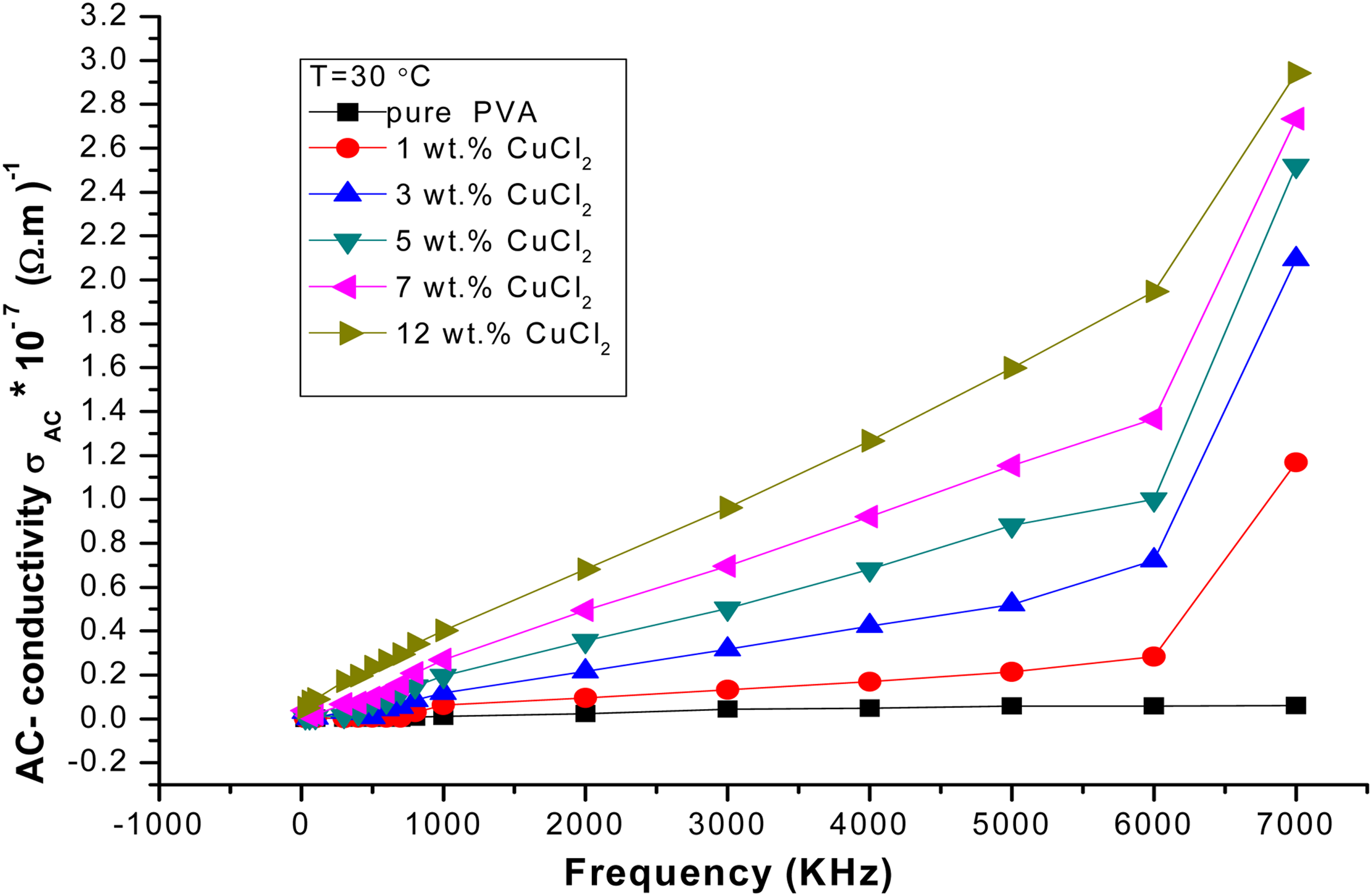
The AC conductivity of PVA/CuCl2 films as a function of frequency.
Figure 2 shows the electrical conductivity (σAC) of the PVA/CuCl2 films as a function of the CuCl2 concentration at 30 °C. As shown in the figure the values of the σAC increase as a function of filler content at different frequencies (200, 400, 600, 800 and 1000 kHz). Also, the figure shows that the electrical conductivity slightly increases with the increasing of the concentration of CuCl2 up to 5 wt-%. Whereas the increasing of concentration more than that, the electrical conductivity increases to the large value up to 0.42 × 10⁻⁷ (Ω m)−1 at the concentration of 12 wt-% of CuCl2 at 1000 kHz. The increasing of the electrical conductivity of the films with the increasing of the CuCl2 concentration is caused by the increasing of the charge carriers ions in which they increased with increasing filler content. Thus, at higher concentrations of the CuCl2, the network of the PVA/CuCl2 films are connected to each other and hence they produce the overlapping paths to allow the charge carriers to pass through, where the charge carriers with routes through which the electrical resistance is less. 11
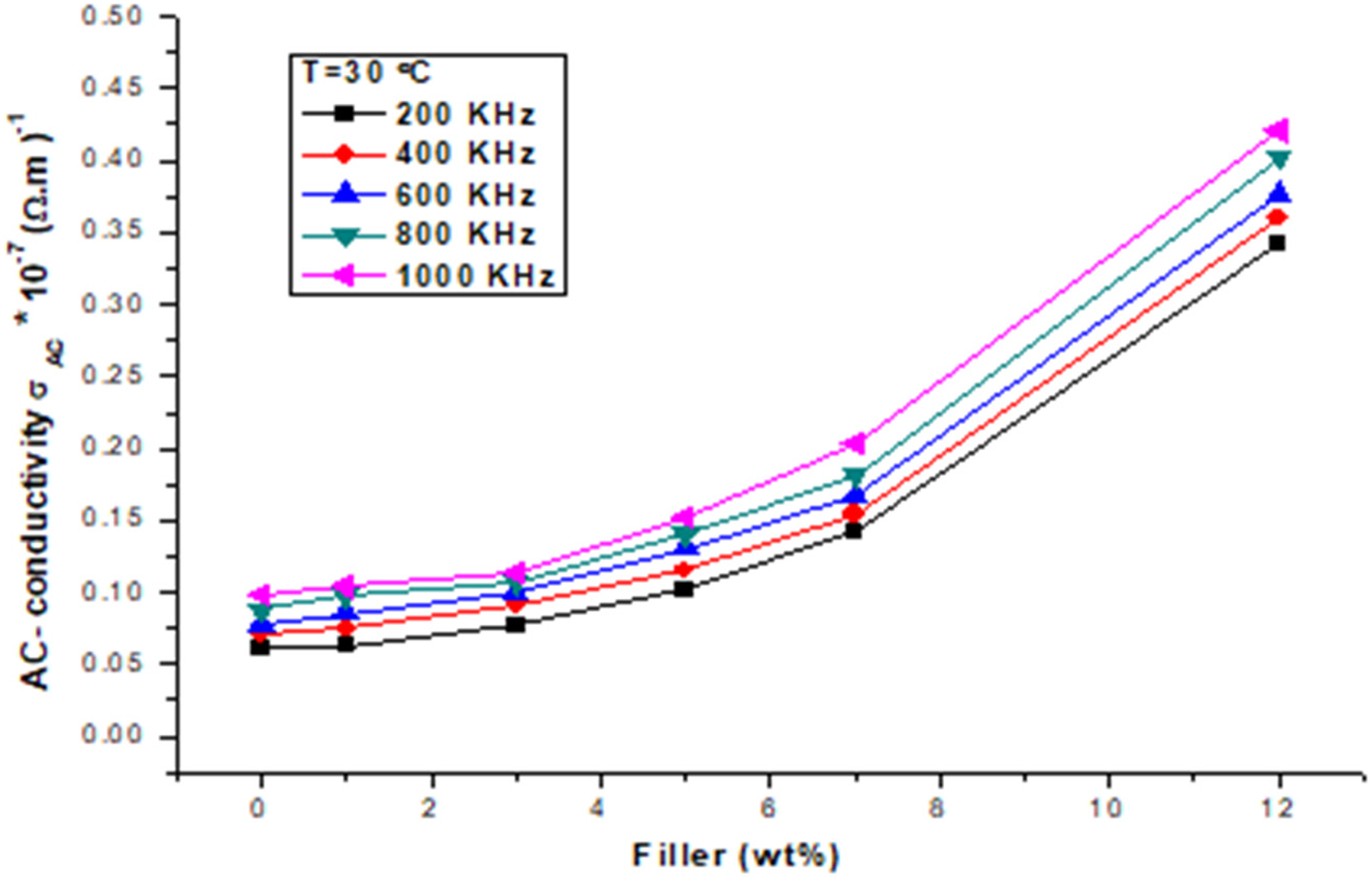
Variation of AC conductivity of the PVA/CuCl2 films with CuCl2 concentrations.
Figure 3 shows the measurements of the AC-conductivity (σAC) of the PVA/CuCl2 films as functions of temperature (30–90 °C) and CuCl2 concentrations (0, 1, 3, 5, 7 and 12 wt-%) at 1000 kHz. The results show that the σAC increases with increasing the temperature. This result can be attributed to the fact that the polymeric chains and CuCl2 concentration could act as traps for the charge carriers, which transited by hopping process. By increasing the temperature, segments of the polymer begin to move, releasing the trapped charges. The released of trapped charges is intimately associated with molecular mobility. The mobility depends on the structure and the temperature. 12
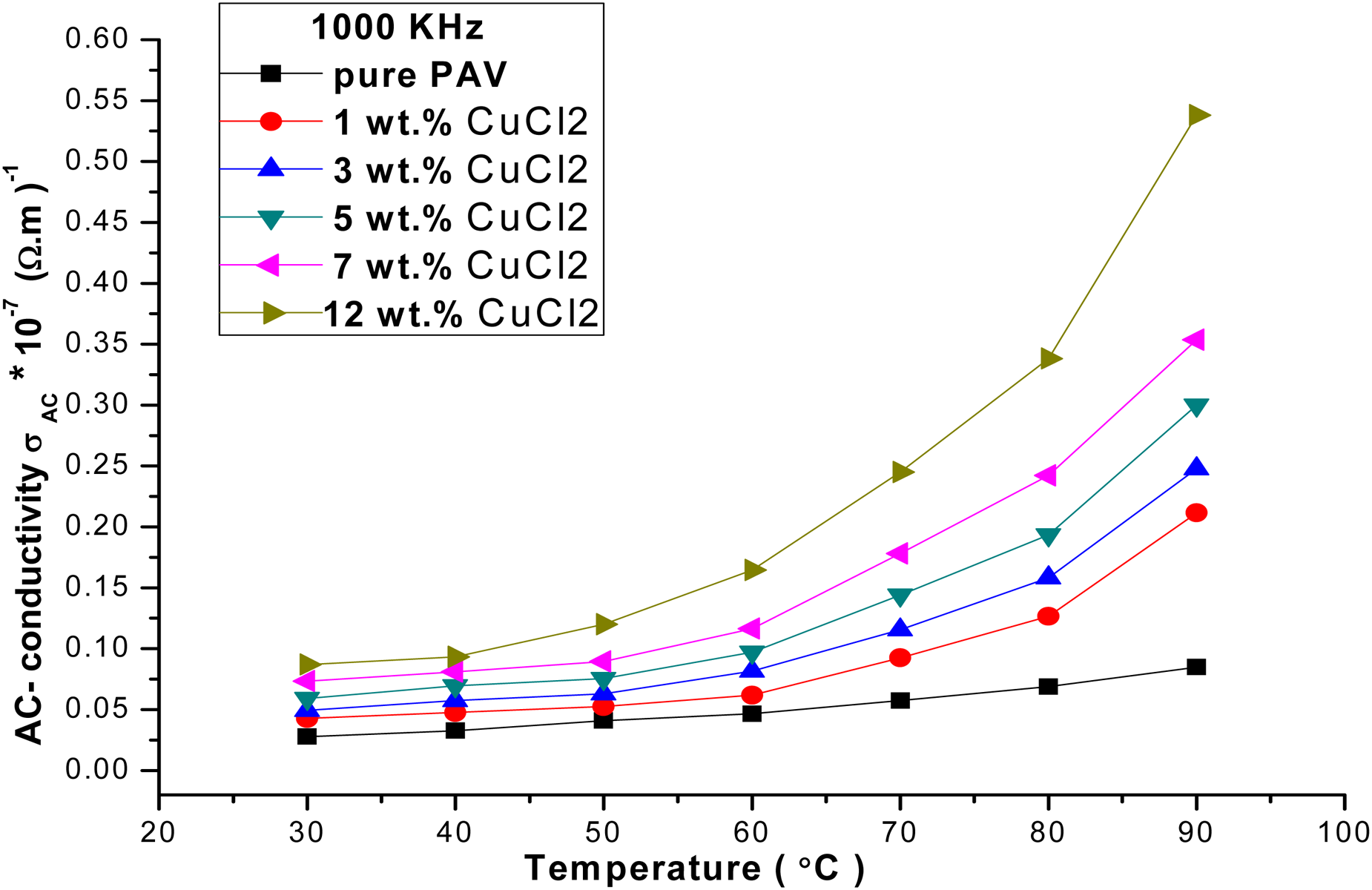
AC-conductivity of the PVA/CuCl2 films as a function of temperature at 1000 kHz.
To fully understand the electrical properties of the PVA/CuCl2 films, the activation energy (Ea) of films has been investigated at different CuCl2 concentrations. The Ea is defined as the minimum amount of thermal energy that is required to activate ions, atoms, and molecules to conduction in which they can undergo physical transport. The activation energy Ea of the conduction process is calculated by Arrhenius equation:
13

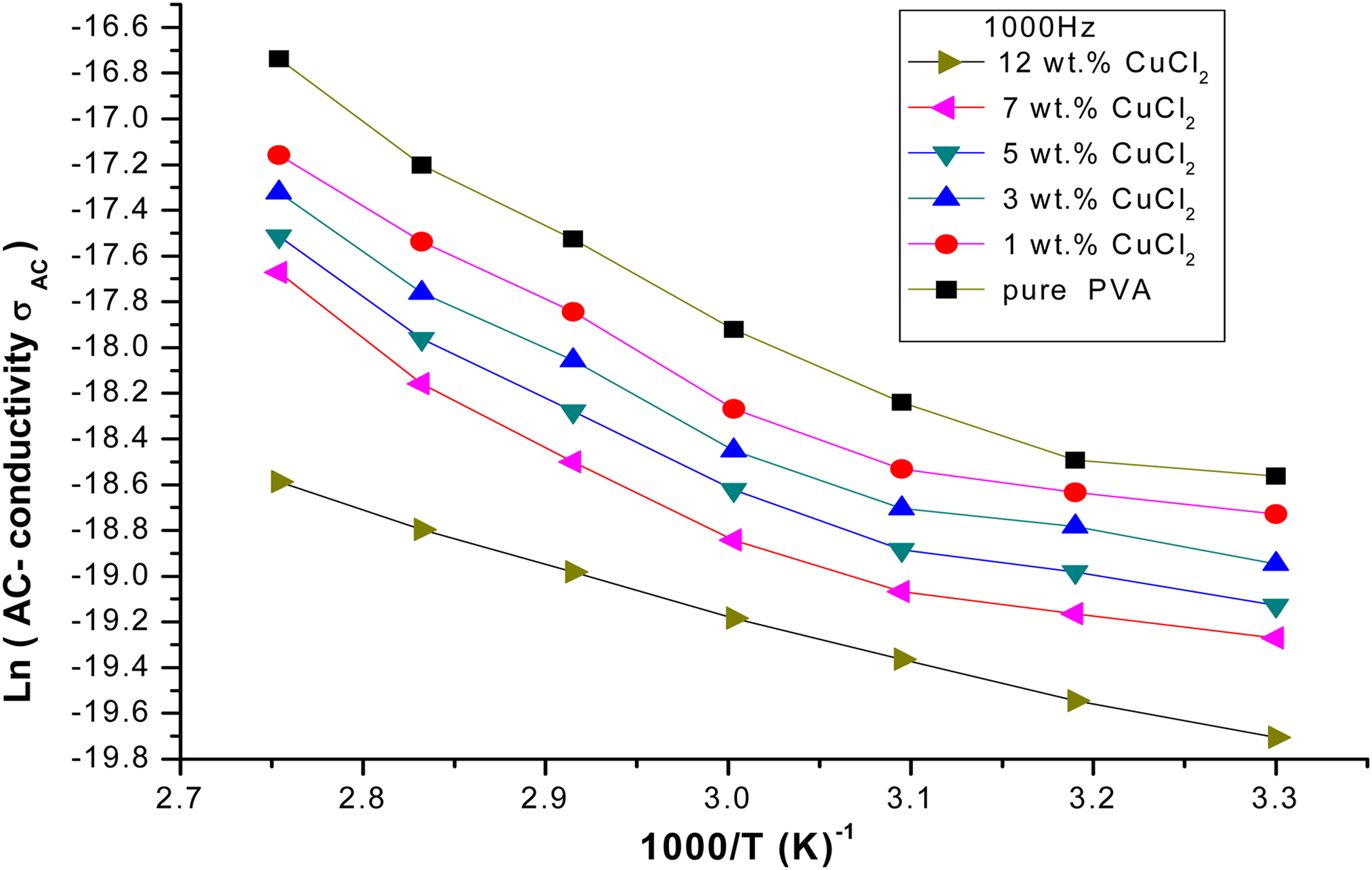
Variation of the Ln (AC-conductivity) of the PVA/CuCl2 films with (1000/T).
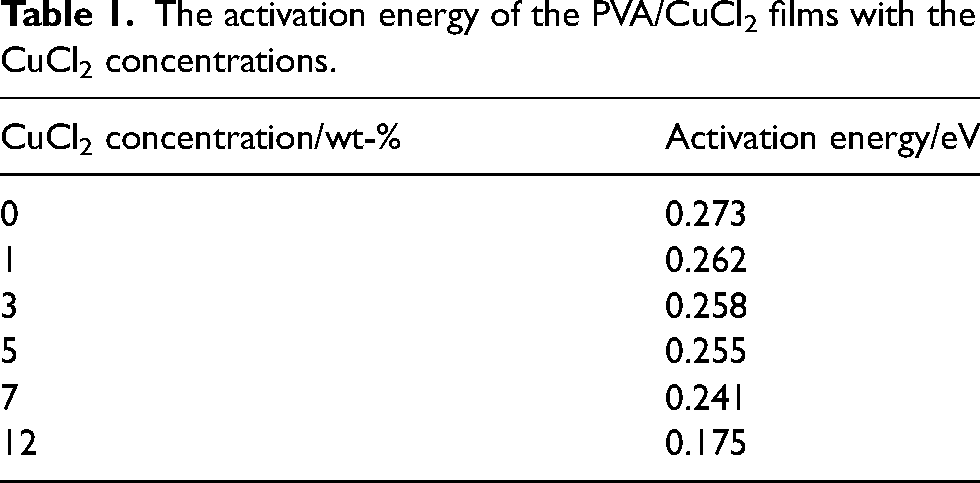
By using equation (2) and the data of Figure 4, the Ea values were determined and inserted in Table 1. The table shows the dependence of Ea on CuCl2 concentrations. From the table, we can see that the activation energy values decrease with increasing the CuCl2 concentration in a thermally activated process, the composites become more conductive as shown in Figure 2. The decreasing in the Ea values implies that the energy of the PVA/CuCl2 films becomes narrower due to creation of localised energy states by heating which enhances the ion mobility and ability of the electron to tunnel or hop easily from the valence band to conduction band. Related results were reported by Salman et al. 14 who studied the AC conductivity of the PVA complexes with cobalt chloride. They attributed the increasing of the AC conductivity to some structural transitions from crystalline phase of the polymer to amorphous phase which increased the amorphous region in the polymer PVA and produced more active segmental motion that stimulated the electron hopping mechanism and thus the AC conductivity becomes high. In our study, the observed increasing and decreasing in the AC conductivity and the activation energy values, respectively with increasing the CuCl2 content or temperature can be dominated by the mobility in the localised states bridged by the doped CuCl2 molecules in the amorphous regions existing in the SPE. The low activation energy for copper ion transport is due to the completely amorphous nature of polymer electrolyte that facilitates the fast Cu+2 ions motions in the polymer network. Also, the chloride ions complexes contribute to the ionic conduction process takes place in the solid electrolyte composite. 15
The activation energy of the PVA/CuCl2 films with the CuCl2 concentrations.
The thermal conductivity (κ) of the PVA/CuCl2 films has been studied at temperature range of 30–90 °C. The values of the κ at each temperature can be calculated from following relation:
16

Figure 5 shows the variation of the thermal conductivity with temperature, the κ increases slightly with increasing the temperature. In case of raising the temperature, phonons, ions, electron, and impurities are activated and thus enhancement in the thermal conductivity is produced. 17
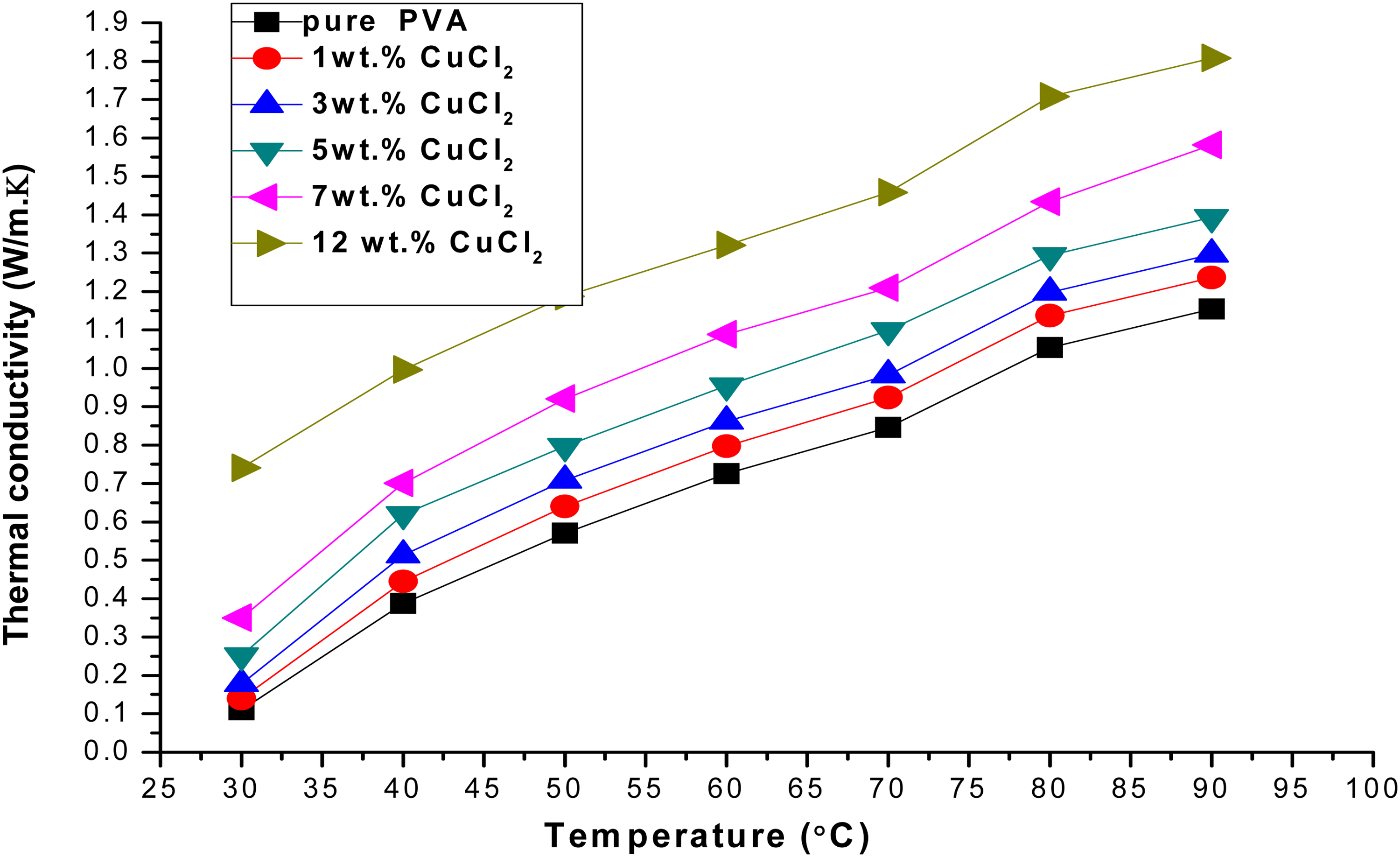
The variation of the thermal conductivity of the PVA/CuCl2 films with temperature.
Figure 6 shows the variation of thermal conductivity of the PVA/CuCl2 with CuCl2 concentrations. It can be seen that the thermal conductivity increases with increasing the concentration of the CuCl2 filler content. Thus, the dispersing CuCl2 phase in the PVA matrix enhances the electrolyte thermal conductivity and reduces its thermal resistance, which may be useful to the thermal performance applications. This result may be due to compactness provided by increase in dopants concentration which increase the heat transfer through phonons diffusion. 18
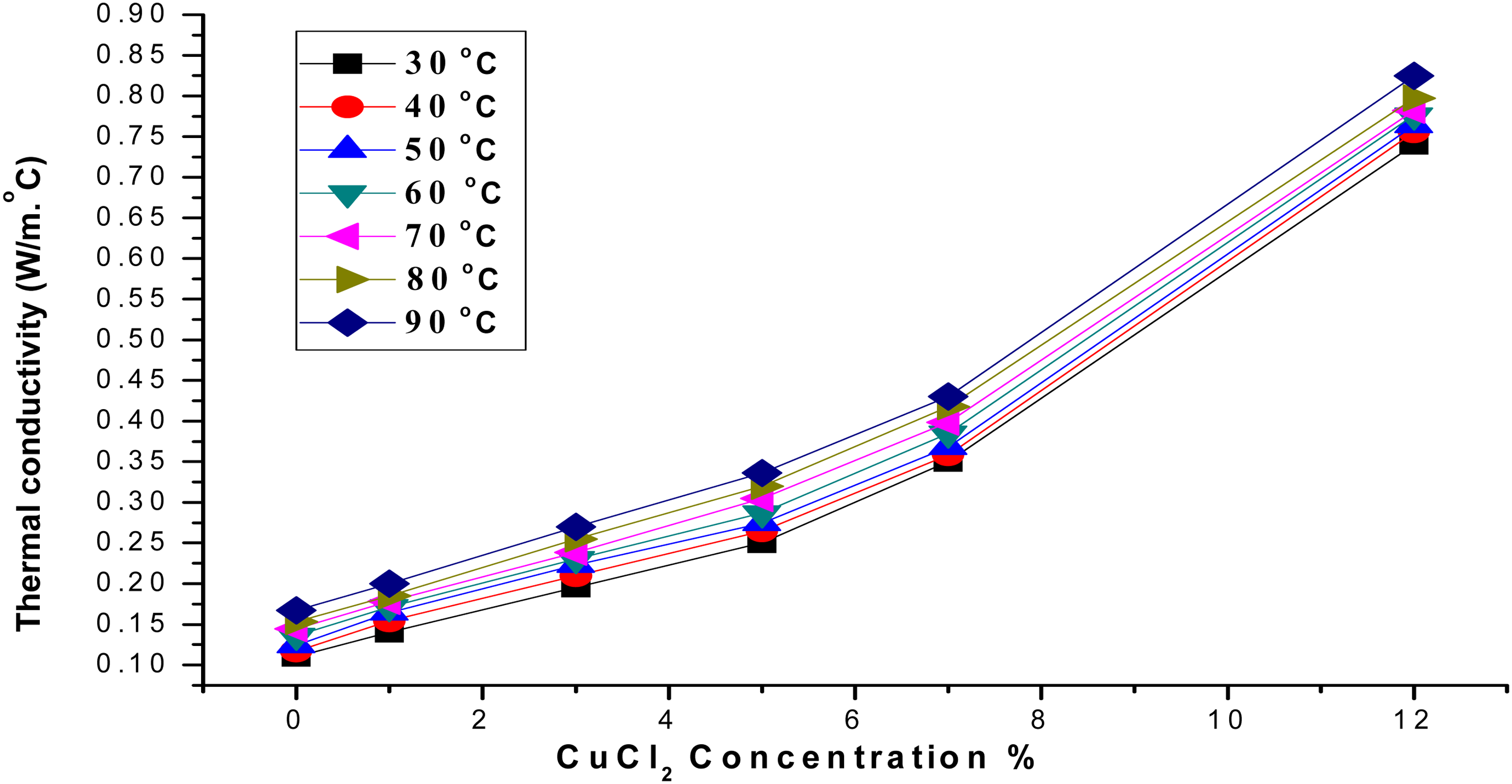
The variation of the thermal conductivity of the PVA/CuCl2 with CuCl2 concentration.
The Lorenz number is a thermoelectrical parameter characterising the effect of temperature on both the thermal and electrical conductivities of a solid material. Knowledge of the Lorenz number is important in the design of the thermoelectric materials and in the experimental determination of the lattice thermal conductivity. The Lorenz number is determined by using the Wiedemann–Franz law:19,20
According to the data shown on the Figures 2 and 6, Table 2 shows a comparison between the electrical and thermal conductivities behaviour of the PVA/CuCl2 films at 30 °C. Both the electrical conductivity and thermal conductivity increase with increasing the dispersed CuCl2 phase in the PVA matrix.
The electrical and thermal conductivities of the PVA/CuCl2 films.
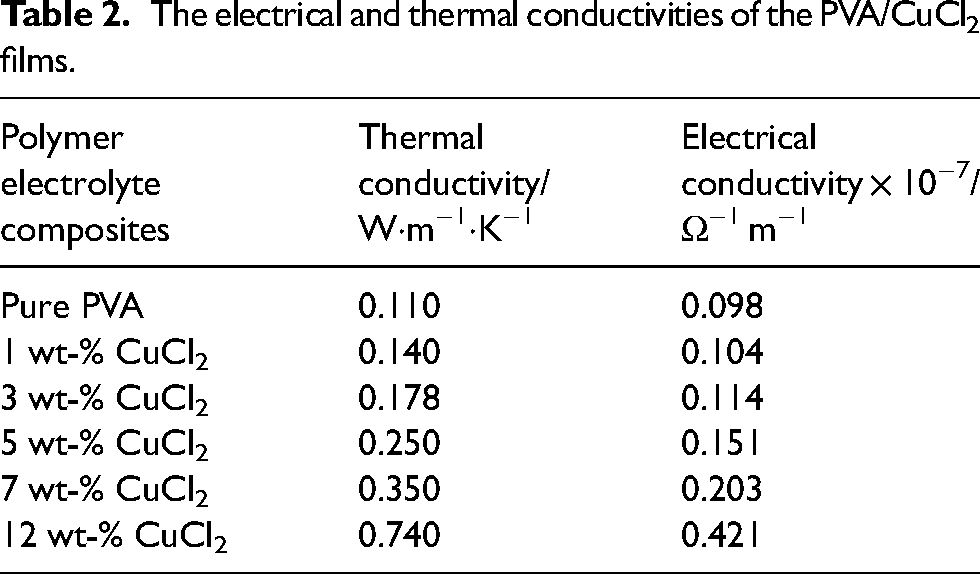
Figure 7 shows the variation of Lorenz number of the PVA/CuCl2 films with CuCl2 concentration at 303 K. It is clearly observed that the Lorenz number increases with increasing CuCl2 concentrations. This can be attributed to the difference in the rate of increasing of the σAC and the enhancement of the thermal conductivity (κ) with the filler content as shown in the Figures 2 and 6.
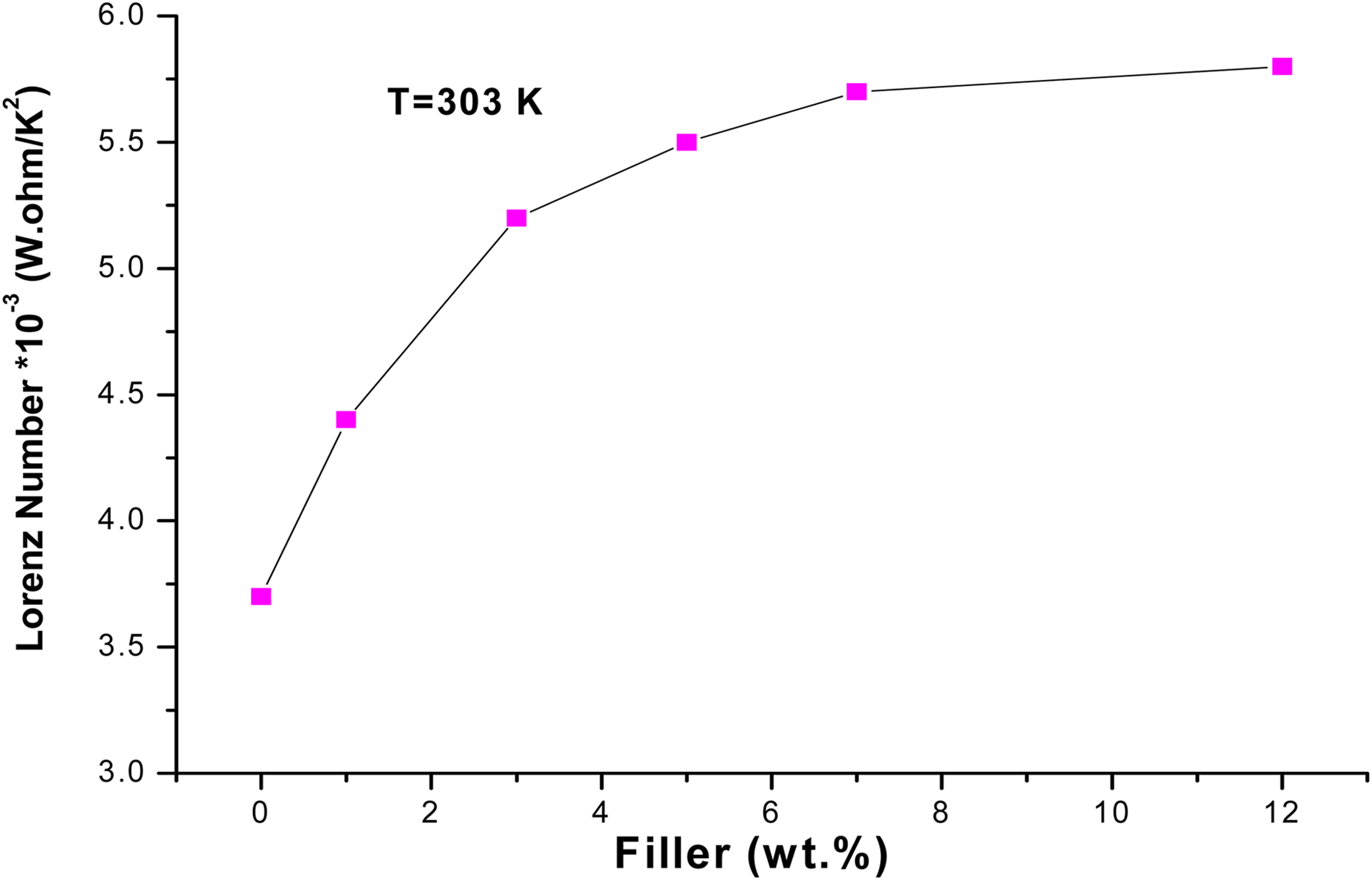
Variation of Lorenz number of the PVA/CuCl2 films with CuCl2 concentration at 303 K.
Conclusions
The electrical, thermal conductivities, activation energy and Lorenz number of composite films based on copper chloride(II) in PVA matrix have been investigated as functions of the filler concentrations, applied frequency and temperature. The AC conductivity increased with frequency, CuCl2 concentration and temperature. Whereas the thermal conductivity increased only with both temperature and CuCl2 concentration in the studied films. The values of the activation energy (Ea) were decreasing for PVA/CuCl2 films with increasing of the temperature and the CuCl2 concentrations. The decreasing in the Ea values implied that the energy of the prepared PVA/CuCl2 films become narrower due to creation of localised energy states by heating which enhanced the ion mobility and ability of the electron to tunnel or hop easily from the valence band to conduction band. The Lorenz number at 303 K increased with increasing CuCl2 concentrations. This is due to the enhancement in thermal conductivity compared to electrical conductivity for the composites, which attributed to phonon propagation and electron hopping increasing.
Footnotes
Declaration of conflicting interests
The authors declared no potential conflicts of interest with respect to the research, authorship and/or publication of this article.
Funding
The authors received no financial support for the research, authorship and/or publication of this article.