



Abstract
This study investigates organizational mechanisms that enable academic entrepreneurship and Knowledge Transfer (KT) in universities. As universities increasingly engage in industry collaboration—their “third mission”—KT plays a key role in research commercialization and fostering entrepreneurial ecosystems. Using a grounded theory approach, the study develops a process model emphasizing infrastructure, enabling mechanisms, and valorization. Data were gathered through interviews with university leaders, Knowledge Transfer Office (KTO) staff, and company representatives across Europe. Findings highlight the importance of talent profiles, administrative support, and industry engagement. KTOs emerge as vital connectors between research and market opportunities, supported by leadership, policy, and funding structures. The proposed model explains how universities can systematize KT and entrepreneurship internally. By emphasizing the often-overlooked role of administrative staff and structured organizational processes, the research offers practical and theoretical insights for building more effective university–industry collaborations.
Keywords
Introduction
Modern universities increasingly extend beyond teaching and research to embrace third-mission activities, particularly collaboration with industry (Flores et al., 2024; Rocha et al., 2023). This expanded role positions universities as key drivers of economic development within complex regional ecosystems (Audretsch and Belitski, 2021). Knowledge Transfer (KT) from academia to industry is central to the commercialization and valorization of research outcomes (Adamides and Karfaki, 2022; Flores et al., 2024) and underpins the development of entrepreneurial universities (Clark, 1998). Effective commercialization requires robust networks and partnerships involving firms, startups, nonprofit organizations, universities, and public authorities across governance levels (Belitski, 2019), reflecting KT as a transformative, relational process within networks (Inkpen and Tsang, 2005). Prior studies show that organizations proficient in networked KT achieve higher productivity and innovation outcomes, while efficient valorization mechanisms enable universities to stimulate organizational change and secure additional funding streams (Inkpen and Tsang, 2005).
This paper aims to explore the complex dynamics of partnerships between universities and industry through the development of a KT framework. By examining the barriers, facilitating factors, and outcomes of KT, this research seeks to contribute to the broader discourse on the evolving role of universities’ contribution to modern societies. Hence, our paper aims to shed light on the following research question: What are the mechanisms that facilitate the successful KT process at the university from the organization's perspective? While prior research has addressed the strategic role of Knowledge Transfer Offices (KTOs), there remains a gap in understanding how these offices function internally and interact with broader institutional frameworks. In particular, the role of administrative staff and the micro-level practices that underpin KTO operations are insufficiently theorized. This paper addresses that gap by offering an empirically grounded model of organizational-level KT that highlights the enabling infrastructure and hidden institutional labor that support academic entrepreneurship. In line with the broader interpretations of academic entrepreneurship, as discussed by Siegel and Wright (2015), we define academic entrepreneurship in this study as the organizational and systemic efforts by universities to translate research knowledge into socio-economic value. This includes not only the creation of spin-offs or commercialization of patents but also the development of internal processes, administrative infrastructures, and stakeholder collaborations that enable knowledge valorization.
To address the research objective, a Grounded Theory (GT) approach was applied across European companies and universities, resulting in a theory centered on the Virtual Talents Pool framework. Data were collected through semi-structured interviews with CEOs experienced in academia–industry collaboration, university leaders, KTO staff, and professors engaged in KT activities. The sample comprised 22 participants—10 employees from six companies and 12 employees from seven universities. Data collection, analysis, and theory development followed the GT principles of Glaser and Strauss (1967). While KTOs are treated as the central organizational unit, we acknowledge that not all institutions have formally established KTOs; similar functions are often performed by research and enterprise offices, innovation hubs, or faculty-level coordinators. Accordingly, the proposed model applies broadly to institutional contexts where KT functions are embedded, regardless of formal structure. The focus on KTOs reflects their increasing role as key intermediaries within entrepreneurial ecosystems, bridging academic and industrial domains (Chen et al., 2025; Huyghe et al., 2014).
Literature review
Knowledge transfer offices
The study of KTOs has been informed by multiple theoretical perspectives seeking to explain their role, positioning, and effectiveness within universities. Institutional theory highlights the complex and often contradictory environment in which KTOs operate, emphasizing their need to balance competing institutional logics associated with academic knowledge production and commercial valorization (Alexander et al., 2020; O’Kane et al., 2015). From this perspective, KTOs are embedded within organizational structures that constrain their autonomy while simultaneously demanding legitimacy from internal stakeholders (e.g., faculty, university leadership) and external actors (e.g., firms, public authorities).
Boundary-spanning theory offers a complementary and foundational lens for understanding KTOs as mechanisms that connect heterogeneous domains characterized by distinct knowledge bases, norms, and evaluative criteria. Early work on boundary spanning conceptualized boundaries as obstacles to coordination arising from differences in expertise and interpretation (Carlile, 2002). Subsequent research demonstrated that effective boundary spanning involves not only information exchange but also translation, negotiation, and transformation of knowledge across professional and institutional domains (Bechky, 2003; Levina and Vaast, 2005). More recent contributions emphasize boundary spanning as a form of organizational work occurring in pluralistic and hybrid contexts, where actors must navigate multiple institutional logics and power asymmetries (Hill, 2020).
Within this broader theoretical tradition, KTOs can be understood as organizational embodiments of boundary-spanning activity in universities. Prior research has predominantly framed KTOs as intermediaries that broker relationships between researchers, university leadership, and industry partners, facilitating the flow of information, knowledge, and resources necessary for commercialization (Huyghe et al., 2014). However, much of this work treats boundary spanning as an attribute or function of KTOs rather than examining how boundary-spanning activities are structured, routinized, and sustained through organizational infrastructure and administrative practices.
Recent literature has begun to enrich this perspective. Chen et al. (2025), for example, argue that KTOs are evolving from passive facilitators into strategic “playmakers” that shape research valorization by controlling access to relational, financial, and informational resources. In parallel, the knowledge-based view has been applied to examine how KTOs manage, codify, and deploy internal knowledge assets across institutional and market contexts. Resource orchestration and organizational design theories further contribute by emphasizing how KTOs structure resources, incentives, and capabilities to support entrepreneurial objectives (Baert et al., 2016). Together, these perspectives highlight KTOs as strategically positioned organizational units whose effectiveness depends not only on external brokerage but also on internal coordination and governance.
Existing models and frameworks for KTO functionality
A range of conceptual models and typologies have emerged to describe the structure and operations of KTOs. Early work, such as Siegel et al. (2003a), focused on performance metrics like licensing income and spin-off creation, often drawing from organizational effectiveness theory. More recent models move beyond outputs to consider internal configurations and contextual fit.
While recent frameworks emphasize strategic roles and infrastructural mechanisms of KTOs (Baglieri et al., 2018; Flores et al., 2024), other studies call attention to the varying levels of institutional readiness and stakeholder awareness. For example, Pickernell et al. (2010) found that many SMEs lack awareness of university enterprise support, underscoring the need for tailored, regionally responsive engagement strategies. These findings complement our study by highlighting the demand-side limitations that must be addressed through proactive outreach and transparency such as talent databases which our model operationalizes.
Critically, Cunningham et al. (2025) offer a text-mining synthesis of nearly 2000 UTT papers, showing that while themes like spin-offs and third mission processes are gaining traction, the role of KTOs and institutional units is losing momentum. This signals an opportunity to revisit the internal dynamics of KTOs, especially those often overlooked—such as administrative staff, resource infrastructures, and internal policy implementation. These findings suggest that while macro-level models are well-developed, finer-grained organizational process models remain underexplored.
Beyond theoretical perspectives, a growing body of work has developed models and frameworks to explain how KTOs operate and succeed. Early studies focused on performance measures, emphasizing licensing revenues, patent outputs, and spin-off creation as indicators of effectiveness (Siegel et al., 2003a). More recent research critiques these narrow metrics, calling instead for models that reflect the complex, multi-stakeholder environments in which KTOs function (O’Kane et al., 2020).
Baglieri et al. (2018) proposed a typology of KTO business models, demonstrating that “one size does not fit all” when it comes to technology transfer practices. Flores et al. (2024) introduced a process model of intrapreneurial universities, emphasizing how enabling mechanisms and organizational infrastructures support KT. Together, these studies reveal that effective KTOs must align internal processes, administrative support, and stakeholder engagement with external demands and funding opportunities.
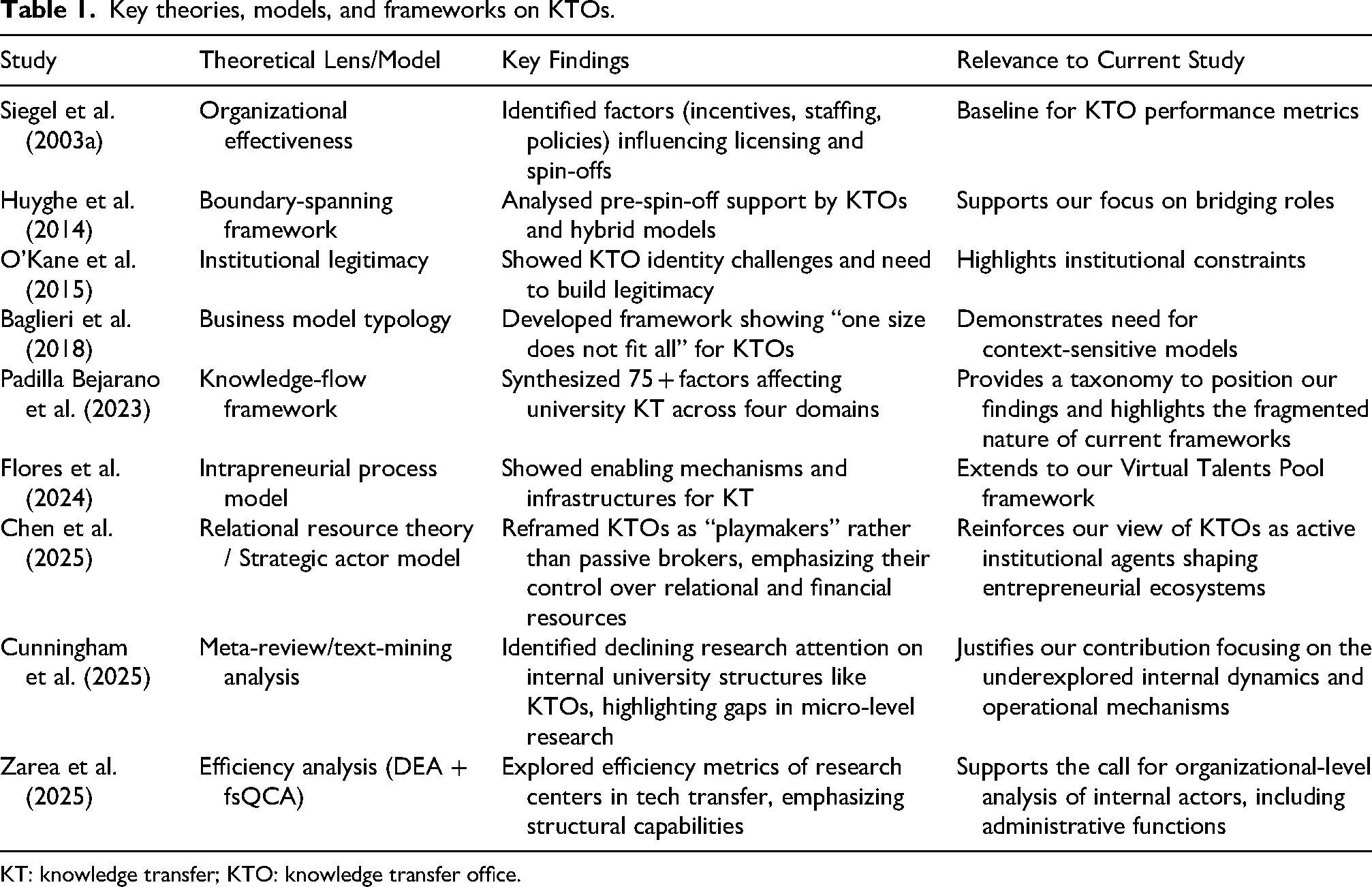
Table 1 consolidates key studies, their theoretical underpinnings, and primary contributions to KTO scholarship. This synthesis highlights both the progress in understanding KTOs and the gap that our study addresses: The underexplored role of administrative staff and organizational-level processes in enabling successful KT.
Key theories, models, and frameworks on KTOs.
KT: knowledge transfer; KTO: knowledge transfer office.
The studies and frameworks reviewed above collectively emphasize the complexity of KTO operations and their evolving roles within universities. However, they often stop short of unpacking the internal mechanisms, staff practices, and processual routines that underpin these dynamics. Considering this, our study responds to the following research question: What are the mechanisms that facilitate the successful KT process at the university from the organization's perspective? We approach this by focusing on organizational enablers—such as administrative processes, digital platforms, policy supports, and institutional relationships—that enable KTOs to function as active agents of academic entrepreneurship. This alignment ensures that our theoretical review provides both context and conceptual grounding for the study's empirical model.
Identified gaps and the need for an organizational-level perspective
Despite advances in theoretical and model-based research on KTOs, several critical gaps remain. First, existing studies predominantly emphasize strategic positioning, external engagement, and performance outcomes, while largely overlooking the micro-level processes and internal administrative work that enable these outcomes. As shown by Zarea et al. (2025) and Padilla Bejarano et al. (2023), efficiency and factor-based analyses typically operate at institutional or ecosystem levels, leaving intra-organizational mechanisms underexplored.
Second, although boundary-spanning and institutional legitimacy perspectives highlight KTOs’ external-facing roles, their internal operational infrastructure—such as databases, policies, administrative routines, and enabling tools—remains conceptually and empirically underdeveloped. Practical challenges in higher education KT systems are frequently rooted in these unexamined internal dynamics (Compagnucci and Spigarelli, 2024).
Third, while numerous influencing factors have been identified (Padilla Bejarano et al., 2023), limited attention has been paid to how these factors are enacted through structured processes involving non-academic personnel. This study addresses these gaps by proposing an organizational-level, process-oriented model of academic entrepreneurship grounded in empirical data from European KTOs, thereby extending prior frameworks and refocusing attention on infrastructural and operational conditions underpinning KT.
Although research on entrepreneurial universities and intrapreneurship has expanded, organizational factors supporting intrapreneurial development remain insufficiently examined (Flores et al., 2024; Pohle et al., 2022). KTOs occupy a structurally complex position within universities, balancing multiple institutional logics while navigating bureaucratic rigidity and stakeholder pluralism (Alexander et al., 2020; O’Kane et al., 2015). This positioning generates internal tensions between academic and commercialization goals and necessitates continuous legitimacy-building across internal and external audiences (Huyghe et al., 2014; Siegel et al., 2003a).
KTOs are central to university entrepreneurial strategies, particularly as facilitators of patents, licensing, and spin-off creation (Audretsch and Belitski, 2021; Siegel et al., 2003b). Their effectiveness depends on organizational design, including resource orchestration, incentive systems, and internal coordination (Baert et al., 2016; Guerrero and Urbano, 2012). Organizational climate further shapes engagement in academic entrepreneurship, as institutional support increases individual participation in technology transfer activities (Bercovitz and Feldman, 2008).
Operating within bureaucratic and regulated environments, KTOs must balance competing stakeholder interests while acting as internal boundary spanners who connect governance, researchers, and external partners (Alexander et al., 2020; Huyghe et al., 2014; O’Kane et al., 2015). From an organizational perspective, successful KT is influenced by KTO structure, size, and resource endowment (Baglieri et al., 2018), as well as agile decision-making processes that enable responsiveness to industry needs (Flores et al., 2024). Finally, the competencies and industry experience of KTO personnel significantly affect commercialization outcomes, while strong local ecosystem partnerships provide essential external support (Bercovitz and Feldman, 2008).
Prior research has identified numerous determinants of effective KT (e.g., organizational climate, incentives, structure, and personnel competencies) but these insights remain largely fragmented and factor-based. Existing studies typically isolate variables or focus on performance outcomes without explaining how these elements are integrated and enacted in practice within KTOs. Thus, while we know what matters, we know far less about how these components are sequenced and coordinated as an organizational process. This creates a gap at the process level. Current frameworks do not sufficiently explain how infrastructural conditions, enabling mechanisms, and administrative routines interact to produce valorization outcomes. Our study addresses this gap by shifting the focus from isolated determinants to the processual orchestration of KT. Using a GT approach, we develop a process model that maps how organizational elements are activated and aligned, offering a dynamic, organizational-level understanding of academic entrepreneurship.
Methodology
This empirical study follows the classic GT method (Glaser and Strauss, 1967), which generates theory directly from data. GT systematically develops integrated conceptual hypotheses around a core category to explain a substantive area (Charmaz, 2006; Tomini et al., 2025). It is particularly useful for answering questions like “What is going on in this area?” and for generating new theories, especially when there is no predefined hypothesis (Glaser, 2008). GT was chosen for this study to explore KT method adoption at the university, leading to a well-integrated and robust theory.
Data collection
In the GT method, data are collected continuously until theoretical saturation is reached, that is, when no new concepts emerge (Glaser and Holton, 2004). Primary data were collected through semi-structured interviews using open-ended questions, while participation in university management meetings and observation activities provided secondary data. Three researchers—two from universities and one from a private company—were involved in data collection. The principal researcher participated in all activities, while the other two contributed based on task relevance. Two researchers independently reviewed the data and resolved discrepancies collaboratively, enhancing objectivity in data collection, conceptualization, and analysis.
A kick-off meeting was held prior to data collection, during which the CEO and two professors agreed on voluntary participation, including universities with and without KT practices and companies experienced in receiving university knowledge services. Data were collected between September 2023 and October 2024. Throughout the process, we iteratively moved between data and theory (Glaser and Strauss, 1967) to identify intrapreneurial characteristics, supported by relevant literature. The collected data were subsequently analyzed using instrumental bracketing to map the phases of KT formation (Langley, 1999).
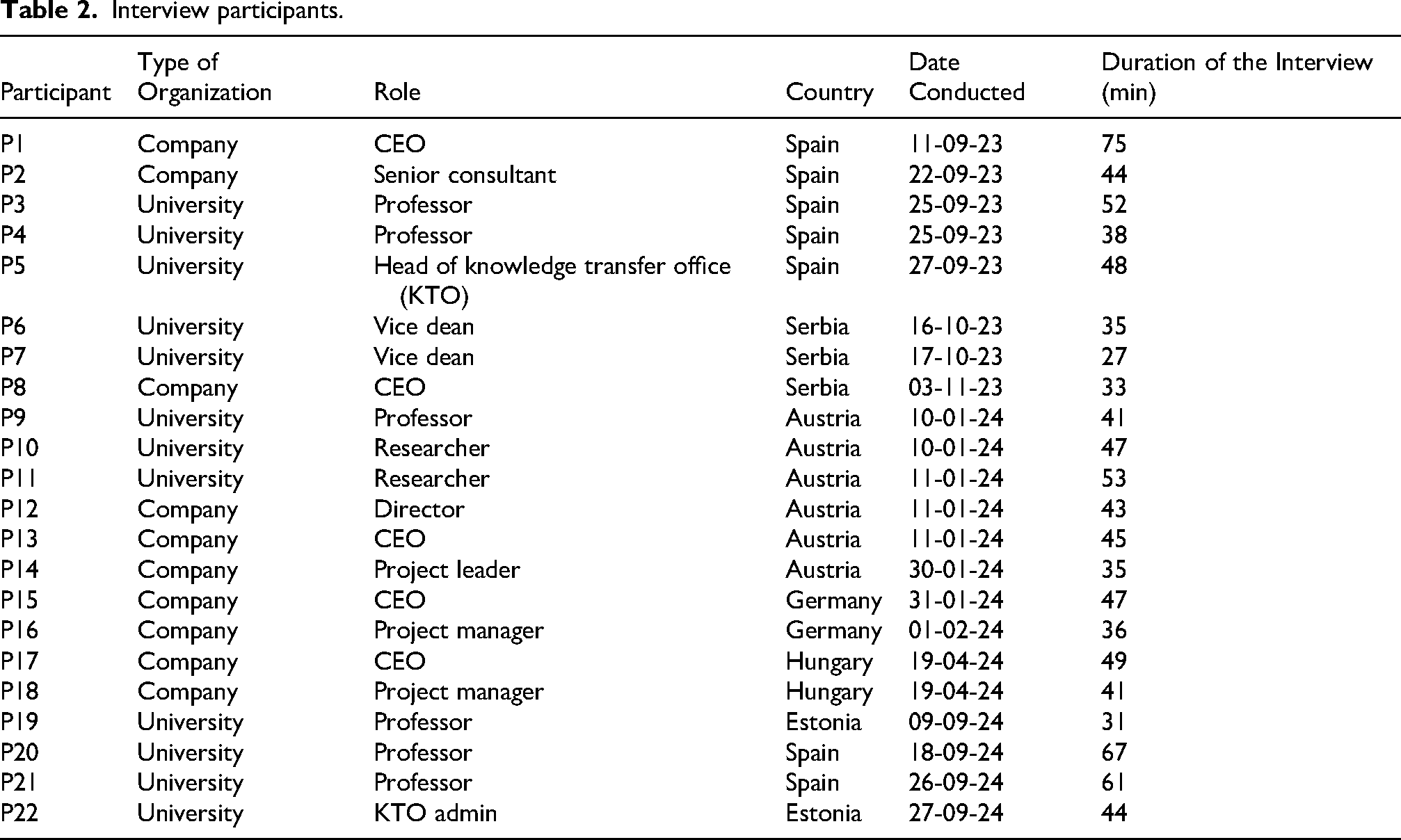
A minor literature review was conducted to identify key actors in each phase of the KT process and was complemented by interviews with university and company representatives. Using a snowball sampling technique, additional participants, including administrative staff, were identified. We also interviewed an employee from the national office in Austria, whose role in developing the Virtual Talents Pool framework was emphasized by other participants despite her limited direct involvement. In total, 22 interviews (992 min) were conducted, enabling triangulation of the timeline from the framework's initial conceptualization in September 2023 to its impact on the university in 2024, with particular attention to participation dynamics, expectations, roles, capabilities, and perceived outcomes. Table 2 depicts the details of 22 interview participants.
Interview participants.
After completing the interviews in September 2024, a final meeting was held in which initial results were presented to the project team and selected representatives from companies and universities. The purpose was not to validate participants’ views but to obtain additional perspectives to refine and structure the emerging theory.
In addition to interviews, the researchers conducted 20 h of observation activities. Two researchers observed six two-hour university management meetings in which the head of the KTO discussed ongoing issues and innovations. Although researchers were allowed to ask clarifying questions, they did not actively participate. These observations provided insights into team dynamics and incremental improvements, complementing the interview data. Furthermore, eight hours of observations were conducted during regular KTO activities, including daily meetings. Observations were aligned with employees’ routines, and relevant documents (e.g., meeting minutes, project proposals, and contracts) were reviewed. All collected data were used to enrich codes, concepts, and categories, thereby strengthening the overall analysis.
Data analysis
We conducted a GT analysis (Charmaz, 2006) to identify emerging patterns in interview and observational data. Coding began immediately after initial data collection and continued until the emergence of theory (Glaser and Strauss, 1967). The analysis started with open coding (Van Maanen, 1979), during which data were broken down into first-order concepts, then grouped into second-order codes and higher-level categories to trace the evolution of the KT process across phases.
After reaching data saturation, with no new first-order codes emerging, we iteratively moved between the data and existing literature to refine higher-level abstraction codes. This process resulted in 16 s-order codes and five aggregate dimensions forming the basis of the theoretical model (Gioia et al., 2013). The GT coding followed three phases: (1) Open coding, leading to the identification of the core category; (2) selective coding, completed upon data saturation; and (3) sorting and theoretical integration, culminating in the final theory (Glaser and Holton, 2004).
Open (substantive) coding was conducted using a line-by-line approach to identify key concepts (Glaser and Holton, 2004). While word-by-word coding was possible, line-by-line coding was chosen for efficiency and conceptual clarity. In-vivo codes (Strauss and Corbin, 1990) or first-order codes (Van Maanen, 1979) were used when feasible; otherwise, descriptive labels were applied. Two researchers jointly coded the data, reached consensus, and shared initial codes with the third co-author for further discussion and theorizing. As analysis progressed, axial coding was used to identify relationships among categories and higher-order themes through iterative movement between data and literature, ultimately producing the aggregate dimensions underpinning the theoretical model (Gioia et al., 2013).
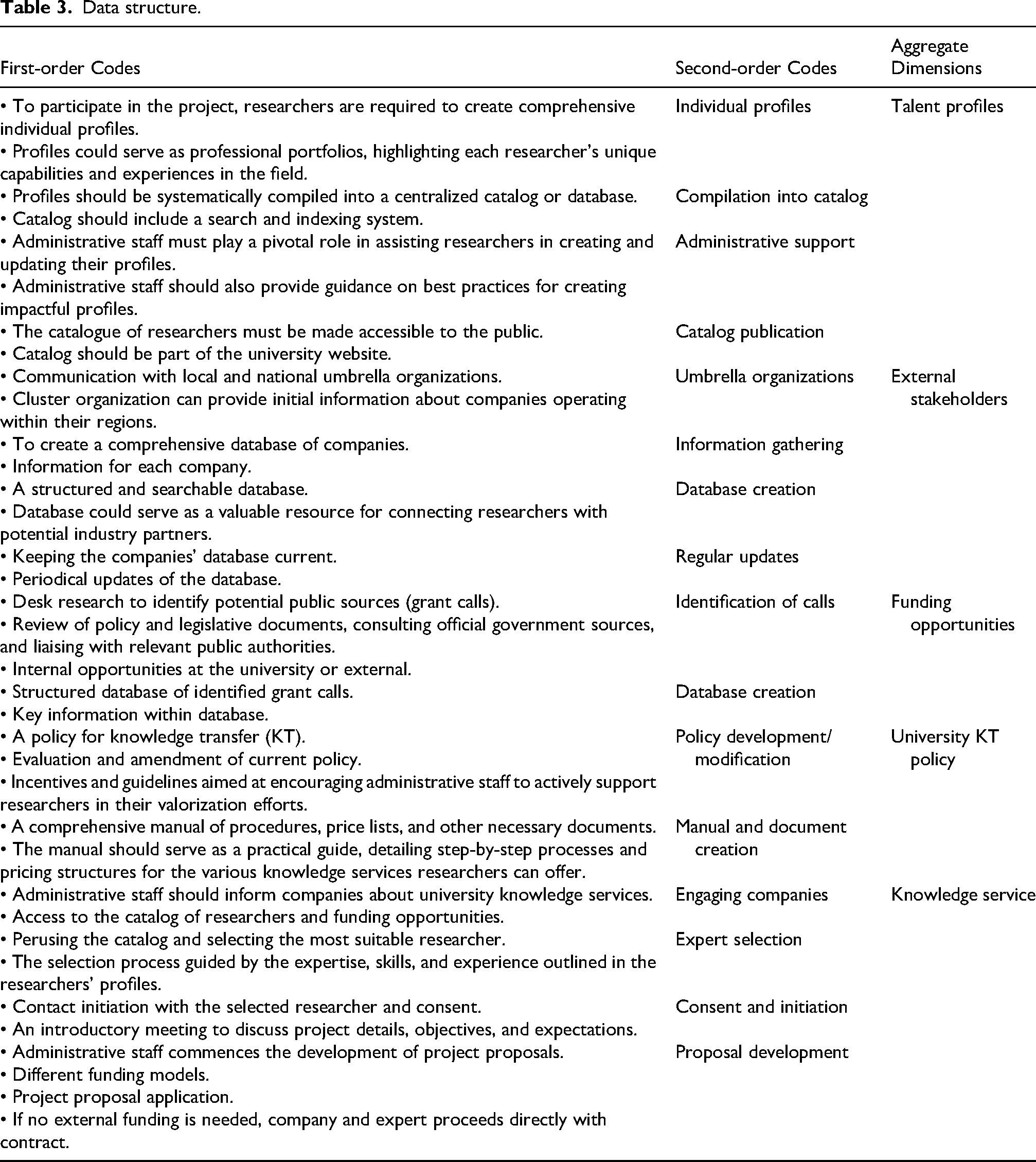
Table 3 summarizes the data structure, illustrating the progression from first-order codes to aggregate dimensions. We present the detailed relationships between these dimensions in Figures 1 and 2.
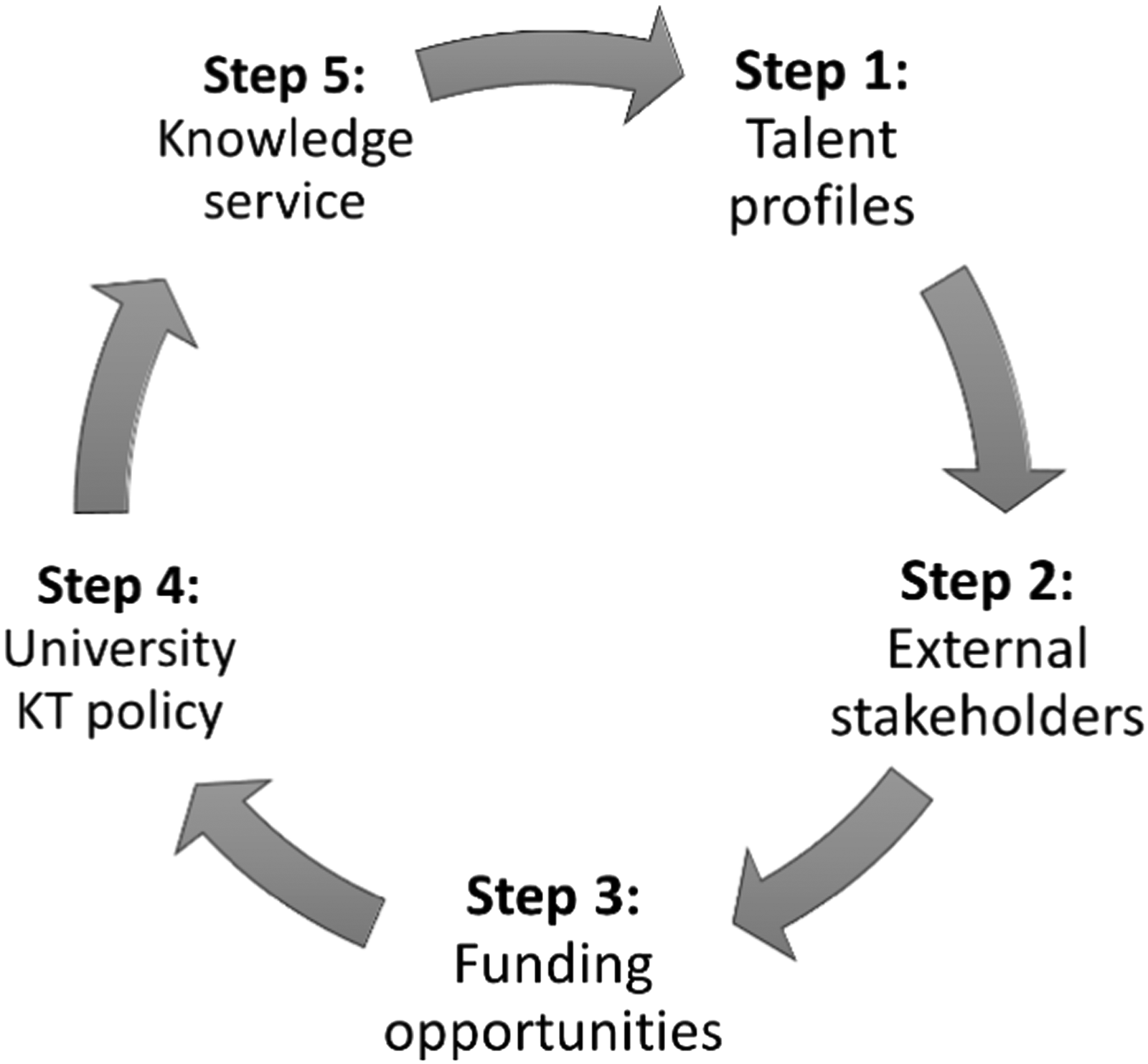
Steps in a knowledge transfer (KT) process.
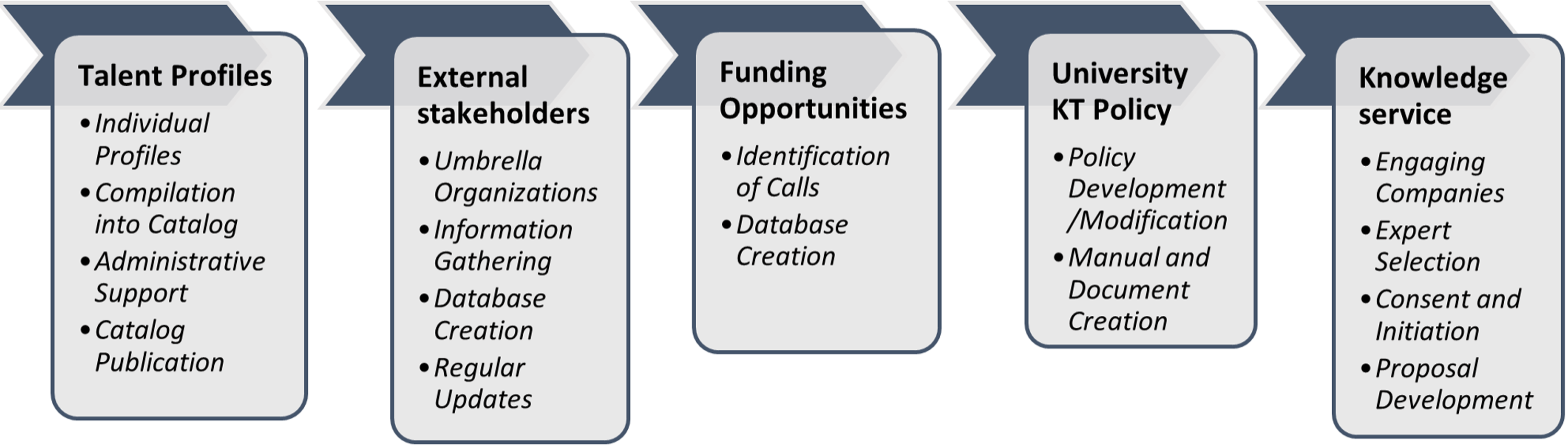
A process model for achieving academic entrepreneurship.
Data structure.
Results
Infrastructural foundations
The infrastructure refers to pre-existing conditions that must be in place before KT can begin. These conditions represent latent organizational capabilities that enable universities to foster intrapreneurial capacity and culture. They reflect core characteristics—such as talent profiles, engagement with external actors, and access to funding—that position certain universities for success both before and after the initiation of KT activities.
Talent profiles
Individuals, including scientists, researchers, students, and KTO personnel, are central to university innovation and entrepreneurship through their competencies, networks, and ability to generate and connect knowledge (Fitzgerald and Cunningham, 2016; Flores et al., 2024). A key challenge lies in identifying and engaging experts with the skills needed to support new product or service development. To address this, public platforms such as LinkedIn, national databases (e.g., Estonian ETIS: www.etis.ee; Serbian eScience: https://enauka.gov.rs/), and university information systems are used to signal researchers’ expertise to industry partners. While these platforms facilitate visibility and connections, their effectiveness varies: LinkedIn, in particular, often lacks the depth and specificity required to capture industry-relevant academic and practical expertise, a limitation also highlighted by the interviewed company representatives. When I go to the LinkedIn profile or university site and look for an expert, I can only see its title, short bio, most popular articles and their H-index. But what I really need is how they can solve my problem—CEO, P1. I would like to see hourly rate of an expert and duration of commitment for the service that I need to hire him/her”—Senior consultant, P2.
National research databases provide a more comprehensive view of researchers’ academic outputs but are often insufficiently user-friendly or visible beyond specialized communities. Institutional university databases offer detailed and regularly updated information, yet they remain difficult for non-academic professionals to access or navigate. As one interviewee noted: When I need to hire a professor from the university, I am usually seeking help from friends or business partners who have had positive collaboration with academy. I am not familiar with the fact that the university has a database of experts. These sources are usually closed for public, at least most of the information—CEO, P8.
These challenges highlighted the need for researchers to present their skills and clearly defined areas of expertise in a concise, transparent, and industry-accessible manner. Two interviewees specifically noted difficulties related to the continuous updating of profiles and the absence of a centralized, searchable catalog. We have a database of all our researchers and professors. However, they profiles are limited with the information, and most of the information is not accessible externally—KTO admin, P22. We do not update the profiles of our professors. They are responsible for that. Usually, they will create a profile and update it when they join our university. After that we just have updates regarding their title—Vice-dean, P6.
Collaborations with external stakeholders
University KTOs routinely interact with external actors—such as companies, business incubators, science parks, and financing institutions—seeking entrepreneurial ideas and technologies with commercial potential (Pohle et al., 2022). While these stakeholders bring valuable opportunities, their diverse agendas complicate KTO coordination and create tensions between external demands and institutional missions. Interviewees expressed satisfaction with existing collaboration in research programs but highlighted a lack of easily accessible information on relevant external partners for targeted funding calls. Company representatives further emphasized the importance of universities proactively sharing KT opportunities through systematic information exchange. I think that a key challenge that universities face is establishing close collaboration with local or regional Chambers of Commerce or cluster organizations. These entities must be willing to exchange information with universities and show interest when potential calls for collaboration are announced. For instance, European EdTech Alliance can provide information from all its members to a university when they need a partner from the industry to apply for an EU Call.—Project leader, P14.
University participants noted that KTOs typically maintain internal databases of ecosystem stakeholders, underscoring the importance of close collaboration with key partners. Engaging local industry and understanding sector-specific needs is strategically important for building meaningful academia–industry linkages (Pohle et al., 2022). Interview evidence further indicates that some companies seek formal recognition as KTO partners and proactively express interest in knowledge-based services, highlighting the need for KTOs to systematically collect and update information from major firms interested in collaboration. As one professor explained: This information includes the company's official name, physical address (including post code), contact information such as phone numbers and email addresses, and the company's official website.—Professor, P9.
Some university KTOs reported that a simple online database, embedded in the university website, helped centralize information on external actors. Typically developed by the IT department and maintained by KTO administrative staff, such databases support the formation of a shared community of external stakeholders and researchers, thereby creating added value and strengthening the university's entrepreneurial potential. As the following quotes illustrate: At our university, based on the collected data, admin staff develops and maintains a structured and searchable database. This database serves as a valuable resource for connecting researchers with potential industry partners.—Professor, P3. Keeping the companies’ database current is crucial. Our admin staff periodically updates the database to account for changes in company status, contact details, or other relevant information. Sometimes, you know, we have a company that is out of business. And you do not want it anymore to be a part of the database—Head of KTO, P5.
Leveraging funding opportunities
Across European universities, KTOs face persistent challenges, including bureaucratic constraints, weak industry engagement, limited incentives for staff commercialization, and, most critically, scarce funding opportunities (Belitski, 2019). Together, these barriers significantly impede KT activities (Siegel et al., 2003a), underscoring the need for stronger university support in identifying and mobilizing local, national, and regional funding resources for researchers. Two scientists reported in the interview: It would be nice if, for example, administrative staff from my university could conduct desk research to identify potential public sources (grant calls). This research should involve reviewing policy and legislative documents, consulting official government sources, and liaising with relevant public authorities—Researcher, P10. […] calls can be internal at the university or at national and international levels, providing diverse funding opportunities—Professor, P4.
It is essential for university KTOs to maintain a comprehensive database of funding opportunities spanning internal university grants, national programs (e.g., Science Fund and Ministry of Science), and international sources, including EU funding schemes. Such a database would facilitate access to financial resources for researchers and innovators, supporting technology commercialization and collaborative projects. Interviewees further emphasized the role of university administrative staff in conducting systematic desk research—drawing on official sources and competent authorities—to identify and regularly update internal, national, and international funding calls. The project team will compile the identified grant calls into a structured database—Vice-dean, P7. The database will include key information such as title of the call, implementing body, status—is it implemented or announced, application deadlines, and general description such as objectives, key features, budget, and weblink—Professor, P19.
University KT policy
University KT policy comprises the procedural and policy conditions necessary for developing an entrepreneurial university, including clear guidelines for researchers and administrative staff supported by leadership at all levels. The introduction of dedicated KT policies is essential to equip administrative staff to support expanding entrepreneurial activities. Interview evidence further indicates that, without explicit policies incentivizing industry collaboration, scaling KT processes remains unfeasible. As they said: A specialized policy for KT should be developed by the university management. This policy should incorporate incentives and guidelines aimed at encouraging administrative staff to actively support researchers in their valorization efforts—Professor, P9. To facilitate the seamless engagement of researchers with companies and the successful valorization of their services, a comprehensive manual of procedures, price lists, and other necessary documents should be developed—Researcher, P11.
Policy recommendations should clearly outline the incentives and benefits for administrative staff engaged in the KT process. Their support is essential, and without it, the initiative risks failure. As one professor involved in the KT process noted: To ensure the success of KT initiatives, it is vital that policy recommendations explicitly highlight the incentives and benefits for administrative staff. Their involvement and support are indispensable, as the absence of such engagement could jeopardize the initiative's effectiveness—Professor, P3.
Knowledge service process
This phase corresponds directly to the “knowledge service” stage in the process model (Figure 2), where infrastructural and policy mechanisms are activated through a structured sequence of organizational steps leading to project implementation. Knowledge service process at universities encompasses key stages, from engaging external stakeholders to initiating collaboration and developing project proposals. This process relies on coordinated interaction among administrative staff, companies, and researchers to commercialize research outcomes and support academic entrepreneurship. Interview respondents highlighted that the first step is proactive outreach to companies to communicate available university knowledge services. Administrative staff play a central role in this phase by promoting institutional capabilities through tools such as talent catalogs and by sharing information on relevant funding opportunities. Administrative staff will proactively reach out to companies to inform them about knowledge services available at the university by providing access to the talents catalog and informing them regarding funding opportunities—Professor, P20. I think that this initial engagement aims to establish a connection between researchers and companies interested in collaborative projects. You know, I used work in the academia and now I am in the private company who often collaborate with university—Director, P12.
Proactive outreach facilitates connections between researchers and companies interested in collaboration, enabling firms to engage with academic experts who address their specific needs. Following initial engagement, companies are granted access to the university's talent catalog, which provides detailed researcher profiles and supports the selection of suitable experts based on relevant expertise, skills, and experience. It would be nice that I have the opportunity to peruse the catalog of talents and select the most suitable researcher from the pool based on our company's specific project requirements—CEO, P15. […] the selection process is guided by the expertise, skills, and experience outlined in the researchers’ profiles—CEO, P13.
Guided by detailed researcher profiles, the selection process enables companies to identify experts with competencies aligned to their specific challenges. Following expert selection, administrative staff facilitate initial contact by seeking the researcher's consent to participate, formally initiating the collaboration. An introductory meeting is then arranged to align on project scope, objectives, and expectations, establishing the foundation for effective cooperation. Once we select the expert we reach out to the administrative staff who then initiate contact with the selected researcher to request consent to provide knowledge services to our company—Project manager, P18. […] this phase marks the beginning of the collaboration, with an introductory meeting scheduled to discuss project details, objectives, and expectations—Project manager, P18.
With consent from the researcher, administrative staff work in collaboration with both the expert and the company to develop a project proposal. This involves aligning the goals of the company with the objectives of the researcher, as well as identifying potential funding sources. Administrative staff, in collaboration with the chosen expert and representative from the company, will commence the development of project proposals—KTO admin, P22. Depending on the availability of the funds company could seek funding opportunities internally at the university, finance the knowledge service from its own budget, seek support from external investor, or apply jointly with expert for public source—CEO, P17.
Depending on the financial needs of the project, companies may seek funding opportunities through internal university grants, external investors, or public calls. If no external funding is required, the company and expert can proceed directly to a contract for the specific knowledge service. The administrative staff will also manage the completion of the necessary call applications, ensuring that all required documentation is submitted accurately and on time.—KTO admin, P22. If no external funding is needed company and expert could proceed directly with contract for the particular knowledge service.—Head of KTO, P5.
Discussion
Theoretical implications
This study advances the entrepreneurship and innovation literature by developing an organizational-level understanding of KT and academic entrepreneurship. By positioning our findings within established theoretical perspectives, we extend existing models and offer new insights into how entrepreneurial activity is enacted within universities through administrative routines and infrastructural mechanisms.
First, the study reconceptualizes the role of administrative staff within KTOs. Boundary-spanning theory has traditionally framed KTOs as intermediary units that broker relationships between academia and industry (Huyghe et al., 2014). Our findings extend this perspective by showing that administrative staff act as intrapreneurs who actively structure organizational processes rather than merely facilitating exchanges. Through the orchestration of internal resources and coordination of activities, these actors align organizational practices with external demands, thereby contributing to entrepreneurial value creation. This insight aligns with and extends resource orchestration theory (Baert et al., 2016) by foregrounding the entrepreneurial agency of non-academic actors within universities.
Second, this study contributes a process-oriented, organizational-level synthesis of academic entrepreneurship. While prior research has emphasized leadership, faculty engagement, and spin-off outcomes (Flores et al., 2024; Siegel et al., 2003a), our model highlights the importance of procedural and infrastructural mechanisms—such as catalog development, funding databases, and policy manuals—that translate entrepreneurial intent into operational practice. By shifting the unit of analysis from individuals to organizational routines, we complement dominant individual-centric and macro-institutional approaches and demonstrate how entrepreneurship is embedded in everyday administrative work.
Third, the study advances capability-based perspectives on academic entrepreneurship by conceptualizing these organizational mechanisms as dynamic capabilities (Teece, 2007). Our findings illustrate how universities develop the capacity to sense, seize, and reconfigure KT opportunities through structured administrative routines. This contribution links micro-level operational practices to institutional adaptability and sustained entrepreneurial performance, extending resource-based views that have primarily focused on faculty-driven or strategic-level capabilities.
Fourth, the study enriches theorization of valorization and university–industry collaboration by unpacking how structured networks are operationalized within university organizations. While prior research underscores the importance of networks for KT (Inkpen and Tsang, 2005), our findings provide a granular account of how such networks are enacted through processes of talent identification, stakeholder engagement, and funding navigation. This organizational-level perspective advances understanding of how universities systematically translate research outputs into economic and societal value. Nevertheless, our model responds to Fogg's (2012) call for capacity alignment by creating administrative structures—such as the talent catalog and curated company engagement process—that facilitate informed partner selection and capability matching.
Fifth, the study highlights the importance of enabling mechanisms—such as supportive policies, incentives for administrative staff, and leadership commitment—in fostering entrepreneurial cultures within universities. These findings extend prior research on organizational climate and entrepreneurship (Bercovitz and Feldman, 2008) by specifying the internal conditions that legitimize and empower administrative actors to engage in entrepreneurial action. Consistent with Baglieri et al. (2018), standardized yet flexible policies are shown to be central to KTO effectiveness; however, our study further demonstrates that such codification enables procedural autonomy and reinforces legitimacy in pluralistic institutional contexts (O’Kane et al., 2015). Furthermore, Conway (2010) and Martin and Turner (2010) highlighted the challenges faced by those working in business engagement roles, reinforcing our finding that KTO staff are central to managing expectations and legitimizing commercialization practices.
Finally, this research contributes methodologically by employing a GT approach (Glaser and Strauss, 1967) to develop a data-driven and replicable model of KT. The emergence of the Virtual Talents Pool framework illustrates how inductive methods can generate novel conceptual insights into the organizational foundations of academic entrepreneurship, offering a robust platform for future comparative and longitudinal studies across institutional and regional settings.
Practical implications
This study offers several practical implications for strengthening KT processes within universities, with relevance for university leadership, researchers, and administrative staff.
University leadership should invest in a centralized, accessible KT system—such as a searchable researcher database and supportive policy framework—with incentives for both researchers and administrative staff. Long-term, trust-based partnerships with industry and intermediaries should be actively fostered, as these are often more effective than one-way KT (Ulhøi et al., 2012). Management should also ensure KTOs maintain updated databases of funding opportunities across internal, national, and EU levels to support collaborative initiatives.
Researchers should actively engage with KT structures by maintaining clear, up-to-date talent profiles and collaborating with KTOs throughout the proposal and funding process. This improves visibility and alignment with industry needs, increasing the impact and success of collaborative projects.
Administrative staff play a critical role as operational enablers of KT. Their tasks include managing talent and funding systems, coordinating with external partners, and guiding projects from initiation to funding and implementation. Proactive communication is essential to reducing barriers and advancing commercialization.
These insights reflect the European higher education context, where administrative staff often serve as intrapreneurial actors navigating public funding systems and regional innovation networks. While many practices are transferable, applying them in other contexts—such as American or Asian institutions—may require careful adaptation to different governance and funding structures.
Conclusions
This study offers an organizational-level analysis of the mechanisms that enable KT and academic entrepreneurship within universities. By developing a process model centered on infrastructure, enabling mechanisms, and valorization, the research explains how universities can systematically commercialize research outputs and build sustained collaborations with industry. The findings underscore the importance of talent profiling, external stakeholder engagement, and administrative staff as key drivers of effective KT, supported by leadership commitment, clear policies, and accessible funding opportunities.
The study's contributions are grounded in established theoretical frameworks. The identification of administrative staff as active intrapreneurs extends boundary-spanning theory by demonstrating how non-academic actors bridge and actively shape interactions across organizational domains (Huyghe et al., 2014). The proposed process model aligns with dynamic capabilities theory, illustrating how universities sense, seize, and reconfigure KT opportunities through organizational routines and infrastructure (Teece, 2007). Situated within an institutional perspective, the findings further show how KTOs navigate competing academic and commercial logics through formalized procedures and administrative coordination (O’Kane et al., 2015). In contrast to prior research emphasizing leadership and strategic orientation (e.g., Cunningham et al., 2025; Flores et al., 2024), this study advances the literature by unpacking the procedural and administrative foundations of entrepreneurial universities.
Several limitations suggest directions for future research. First, the study focuses on a limited number of universities and companies within the European context, which may constrain the generalizability of the findings. KT practices are shaped by regional governance structures, funding regimes, and cultural norms. Future studies could replicate and extend this research in other geographical contexts, particularly in American and Asian universities, to examine how different institutional environments influence organizational KT processes. Second, while this study provides in-depth insights into the role of KTOs, it pays less attention to other university units that may contribute to academic entrepreneurship, such as technology commercialization offices, research and innovation centers, or faculty-level entrepreneurship hubs. Future research could explore how these units interact with KTOs and with each other to provide a more holistic view of entrepreneurial university ecosystems. Finally, this study does not explicitly examine broader environmental influences on KTO activities. Incorporating a quintuple helix perspective could deepen understanding of how societal, environmental, and policy-level factors shape KT and entrepreneurial engagement (Chen et al., 2025).
Footnotes

Funding
The authors disclosed receipt of the following financial support for the research, authorship, and/or publication of this article: This work was supported by the European Commission (grant number Horizon Europe 101119689).
Declaration of conflicting interests
The authors declared no potential conflicts of interest with respect to the research, authorship, and/or publication of this article.