



Abstract
The concept of Entrepreneurial Ecosystems (EE) has gained traction both in academic and policy circles over recent years. Despite this, many questions still exist especially regarding micro-level aspects of EEs, particularly the role of support organisations, and how local actors contribute to and shape a cohesive ecosystem. This study aims to garner an in depth understanding of the role of a local ecosystem leader/facilitator organisation in furthering the well-being agenda of their region. This is critical given the current preoccupation within the EE literature on high growth ecosystems. Through an in-depth case study of an ecosystem facilitator in South West Wales, the findings highlight the critical yet often overlooked role played by less common types of organisations within local ecosystems in contributing to and furthering the sustainable development goal and well-being agenda. The facilitator develops a cohesive ecosystem through the collective action of actors in a vibrant and engaged ecosystem.
Keywords
Introduction
Discussions of entrepreneurial ecosystems (EE) began to emerge in the 1980s and 1990s (Stam and Van de Ven, 2021) and have since received extensive attention in business, policy and academic circles (Cantner et al., 2021), becoming one of the most popular entrepreneurship research subjects of the second decade of the twenty-first century (Harima et al., 2021; Cho et al., 2022). EEs describe ‘a set of interconnected entrepreneurial actors, entrepreneurial organizations, institutions and entrepreneurial processes which formally and informally coalesce to connect, mediate and govern the performance within the local entrepreneurial environment’ (Mason & Brown, 2014: 5), although there is no universally accepted definition (Stam & Ven de Ven, 2021). Within this description is a focus on ‘entrepreneurial actors’ and there is debate regarding which, if any, of these actors are best placed to guide and develop the EEs (Purbasari et al., 2020). When considering the recognised importance of place and context (Jones et al., 2019), it may be that this contributes to the determination of who is best positioned to act as an ‘ecosystem leader or facilitator’, suggesting that context may be key.
Alongside this current interest in the EE concept is an increasing focus on concepts such as the sustainable development goals (SDGs) and well-being. However, the EE literature tends to focus on the achievement of high growth, which by definition focuses on growth in revenue or employee numbers (OECD, 2008), as opposed to also focusing on sustainability and well-being. Thus, exploration is needed of the role of EE actors in guiding and developing the ecosystem towards these goals.
The existing literature has primarily focused on macro-level aspects of entrepreneurial ecosystems (EEs), leaving micro-level aspects relatively unexplored (Cunningham et al., 2019). Specifically, the interactions among various EE actors have received limited attention (Tabas et al., 2023). While research has delved into the concept of ‘anchors’ – typically large private or public employers who play a role in attracting talent to a region (Spigel, 2017) – it has overlooked the more subtle micro-level actors. Entrepreneurial Support Organisations (ESOs), such as incubators, accelerators and co-working spaces, remain the main focus of the research in this area, however it is acknowledged that the range of ESOs are broad and varied (Hruskova et al., 2022). Yet, it is precisely within these support organisations that the intricate dynamics of EEs could be better comprehended.
When considering the recognised importance of place and context (Jones et al., 2019) it may be that this contributes to the determination of who is best positioned to act as an ‘ecosystem leader or enabler’. In particular Roundy (2017) argues that small towns and urban/rural contexts require further investigation. This paper adds to this emerging literature base through its analysis of an ecosystem enabler or facilitator within the urban and rural area of the Swansea Bay city region, which covers west Wales in the UK. Specifically, this paper investigates the role played by a regional actor and ecosystem facilitator within the Swansea Bay City Region, analysing their leadership and symbiotic relationship with the ecosystem and place specific context in which they are located. The aim is to develop an understanding of the role of ecosystem actors in leading, shaping and facilitating ecosystems, and how they shape the ecosystem towards well-being goals. This paper argues that the case study organisation is an ecosystem facilitator, aiming to bring together ecosystem actors under a common aim as opposed to an ecosystem support organisation (ESO). ESO's aim is to support entrepreneurs and start-ups within an organisation to thrive and grow, with research pointing to their ability to help entrepreneurs transform ideas into new ventures (Busch & Barkema, 2020; Hallen et al., 2020). Hanlon and Saunders (2007) define ESOs as the ‘provision of valuable resources to entrepreneurs by individuals or organizations, which carry structured activities to facilitate the imminent establishment of a new independent firm, increase survival chances, or promote long-term growth’ (2020: 2) whilst Bergman and McMullen (2022) define them as ‘an organization whose primary purpose is to support individuals and collectives, through (in)direct and (im)material assistance, as they seek to initiate and progress through the stages of the entrepreneurial process’ (p. 690). However this paper argues that the case study under investigation is an ecosystem facilitator aiming to facilitate collective action and collaboration between ecosystem actors, drive ecosystem actors towards contributing to the well-being and sustainability agenda of the region and to contribute to it themselves. Thus, their aim is more to shape, guide and enable collective action within the ecosystem than to support individual organisations to achieve growth.
Contributions to research on entrepreneurship and regional development are made through expanding on existing debates on entrepreneurial ecosystems and ecosystem leadership by exploring differing ecosystem contexts, and emerging research on sustainability and well-being (cf. Volkmann et al., 2021). This paper analyses this through the lens of institutional proximity which refers to the ‘social and cultural norms that regulate business and non-business relationships in a specific context’ (Letaifa & Rabeau, 2013: 2073). This is particularly important as this paper analyses the role of the ecosystem facilitator in impacting the social and cultural norms of its ecosystem. The main research questions of this research are: RQ1. To what extent does a specific ecosystem facilitator shape the local ecosystem? RQ2. How important are the local place characteristics in the context of the ecosystem?
Literature review
This section presents a review of the growing body of literature that discusses the importance of entrepreneurial ecosystems, focussing on emerging discussions of ecosystems in differing contexts, and the role of regional actors.
Entrepreneurial ecosystems (EEs): A changing focus
Entrepreneurial ecosystems are a highly popular entrepreneurship research topic (Harima et al., 2021; Cho et al., 2022), based on ‘a set of interconnected entrepreneurial actors, entrepreneurial organizations, institutions and entrepreneurial processes which formally and informally coalesce to connect, mediate and govern the performance within the local entrepreneurial environment’ (Mason & Brown, 2014: 5). Entrepreneurial ecosystems traditionally focus on high growth firms and the best environment in which to support them (Mason and Brown, 2014; Spigel and Vinodrai, 2021; Stam, 2015), as well as on new firm creation (Cantner et al., 2021). Stam and Ven de Ven (2021), for instance, find that the existence of high growth firms is strongly related to the quality of its entrepreneurial ecosystem. Stemming from this, there is a focus on providing policy blueprints based around developing entrepreneurship and small business growth at the local and regional level. However, it is as yet somewhat unclear how applicable the ecosystem concept is outside of the high-tech urban clusters in Europe and North America in which it has been developed: how it applies to weaker, post-industrial, peripheral regions, and to other sectors other than high tech and science-based is unclear. Research is starting to investigate the concept in different geographical and sectoral contexts, such as rural areas in emerging markets (Kyriakopoulos, 2024), including low income rural areas in Bangladesh (McKague et al., 2017). However gaps remain in knowledge, which this research aims to address.
Recently the literature has also argued that regional development policies focused on supporting and enabling a small subset of so-called high growth, high technology firms is misplaced and based upon attempting to replicate Silicon Valley type approaches (Litan and Hathaway, 2017). This attention on high growth is problematic if you consider the fact that most firms are not high growth firms. Therefore, the majority of firms who contribute to the development of regions are neither high tech nor high growth and yet contribute well to employment and economic prosperity of regions. This bias in both the academic literature and in policy development means that there is a lack of research on regional development focused on grassroots development and different types of organisations (Neumeyer and Santos, 2018: 4566).
Ultimately the EE literature tends to emphasise the achievement of high growth, which by definition relates to growth in revenue or employee numbers (OECD, 2008) as opposed to also considering SDGs or well-being. It is only recently that attention within ecosystem literature has begun to turn to the importance of building sustainable entrepreneurial ecosystems (DiVito and Ingen-Housz, 2021), and it has been argued that the EE literature would benefit from integration with other objectives such as the SDGs (Volkmann et al., 2021).
Linked to this focus on the SDGs is well-being legislation, such as the Well-being of Future Generations (Wales) Act 2015. The Act focuses on communal well-being aimed at actively improving the social, economic, environmental and cultural well-being of Wales, complimenting many of the SDGs. In order to achieve the aims of SDGs and well-being, various actors must work together (Stam and Van de Ven, 2021) suggesting there is a key role that EEs must play in this endeavour. However, there is a lack of understanding of the role of ecosystem actors in driving these agendas. This paper ultimately aims to understand the role played by specific ecosystem actors in this regard.
Regional actors within entrepreneurial ecosystems
It is argued that ecosystems require certain cultural traits, particular actors, research universities, dense social networks, sufficient investment capital and supportive public policies (Nicotra et al., 2018). EE models depict various actors or stakeholders within the ecosystem, such as governments, universities, industry associations, support organisations, financial institutions and other local and regional actors (Isenberg, 2011). However, there is debate as to which, if any, are the most crucial in directing the ecosystem. A bottom-up approach to ecosystem thinking argues that entrepreneurs should lead ecosystems. Spigel (2017), for instance, argues that start-ups are key and it is the entrepreneur who builds and sustains an ecosystem. Alternatively, Harima et al. (2021) found that it was crucial that ecosystems are anchored through top-down approaches, whilst Spigel and Vinodrai (2021) posit that it is large private or public employers that act as anchors. Therefore, it is argued that a mixed methods approach looking at both the bottom-up and top-down approaches is what is needed to further understand ecosystems and to aid policy development (Spigel and Harrison 2018). Isenberg (2011) argues that there should be a combination of different actors acting as entrepreneurship enablers. This debate within the literature could stem from the fact that there is also a lack of empirical research on EEs (Tabas et al., 2020).
There is now a growing body of research exploring the concept of collective action as opposed to the lone entrepreneur (Ben-Hafaïedh et al., 2024; Preller et al., 2020; Castellanza, 2022), arguing for the collective action of individuals pursuing a common aim for social change (Ben-Hafaïedh et al., 2024). This paper adds to this growing body of research on the concept of collective action through its conceptualization of the case as an ecosystem facilitator aiming to facilitate this collective action between ecosystem actors, drive ecosystem actors towards contributing to the well-being and sustainability agenda of the region and to contribute to it themselves. Thus, acting as a ‘collective action facilitator’.
It has also been argued that examination and understanding of the micro-level aspects of EEs (as opposed to broader macro level aspects) has been underexplored within the literature, especially relating to the interactions of various EE actors (Tabas et al., 2023). Research has been undertaken on ‘anchors’ within EEs which are commonly large private or public employers who act to draw talent to a region (Spigel, 2017), yet this neglects the more micro-level actors. The role of support organisations in particular or those that aim to bring together actors within an ecosystem under a common aim are far less researched in the literature than the more prominent ‘anchors’, such as universities (Spigel and Vinodrai, 2021), yet arguably this is where the intricacies and depth of knowledge regarding EE dynamics could be understood. Even when support organisations are researched these tend to be under the umbrella of financier, dealmakers or professional associations (O’Connor et al., 2018), thus neglecting other less common types.
This paper analyses ecosystem facilitation and leadership through the lens of institutional proximity which refers to the ‘social and cultural norms that regulate business and non-business relationships in a specific context’ (Letaifa and Rabeau, 2013: 2073) and social proximity. Institutional proximity also refers to the shared formal and informal rules within the ecosystem (Zimmermann et al., 2022) which is particularly relevant in this context due to the unique legislation impacting this region – the well-being of future generations act. This is particularly important as this paper analyses the role of the ecosystem facilitator in impacting the social and cultural norms of its ecosystem, that is, in the movement towards a focus on well-being and sustainability. Social proximity is also of importance to ecosystem facilitation and leadership and can be defined as the trust based relationships embedded in social networks (Boschma, 2005). This linkage between institutional and social proximity in the context of ecosystem facilitation and leadership has not been adequately researched in the EE literature.
According to Bischoff and Volkmann (2018), stakeholder support and collaboration are critical to the development of sustainable entrepreneurial ecosystems, suggesting that actors must work together and collaborate for EEs to be successful. Supporting this, Bacq and Aguilera (2022) argue that there is a lack of understanding of how to handle the diverse social and economic value created by different stakeholders. This suggests that further research is needed looking at different types of ecosystem enablers and facilitators. When considering the recognised importance of place and context (Jones et al., 2019) it may be that this contributes to the determination of who is best positioned to act as an ‘ecosystem leader or enabler’. In particular, Roundy (2017) argues that small towns and urban/rural contexts require further investigation. Thus, this paper contributes to this emerging literature through the analysis of an ecosystem facilitator in the urban and rural area of Swansea Bay (RQ1).
Materials and methods
The methodology of this research is qualitative, involving an exploratory case study of a community interest company (CIC) called 4theRegion based in the Swansea Bay city region in Wales. This methodology was chosen to gain in-depth insight into the role of this organisation as an ecosystem facilitator. This is an interesting region for exploration due to its varied regional bases, covering both urban and rural areas. This area has lagged behind other regions in the post-industrial economy despite significant investment in the area, and in Wales in general. Historically, policy has focussed on foreign direct investment, but more recently has shifted to entrepreneurship, regional development and region-specific schemes, such as City Deals.
The case study: 4theRegion
4theRegion is a membership organisation of regional businesses, community groups and regional stakeholders aimed at achieving local development across the Swansea Bay City Region. Founded in 2019, 4theRegion unites local businesses, community groups, policymakers, and relevant stakeholders aimed at promoting local development within the region. 4theRegion has over 200 members varying in size from individuals, to micro, small and large organisations. The ethos of the organisation is underpinned by a social purpose of well-being. This approach is investigated as it offers a place-based method that focusses on local assets, and how engagement with a wide range of stakeholders can generate opportunities for ecosystem facilitation and development (RQ2). 4theRegion is underpinned by a focus on well-being and changemaking. This corresponds to the Well-being of Future Generations (Wales) Act 2015, and its seven well-being goals, including prosperity, resilience, health, equality, cohesive communities, vibrant culture and Welsh language, and global responsibility (Welsh Government, 2021).
The regional context – south west Wales
The work of 4theRegion covers the Swansea Bay city region area (see Figure 1), which is centred around the post-industrial urban areas of Swansea and Neath Port Talbot, but also includes peripheral rural areas of Carmarthenshire and Pembrokeshire (using definitions from Tödtling and Trippl (2005). The city region was established in 2017 through investment from each local authority, as well as the Welsh and UK governments. The case study is comprised of multiple research methods aimed at developing a holistic understanding of 4theRegion and their role in the ecosystem development of the region. 4theRegion was specifically chosen as the focus of this research due to its unique business model, its clear focus on well-being and sustainability, and due to the fact that it brings together various stakeholder groups from all areas of the region under a common aim. The methodology aims to draw on a wealth of data relating to the ecosystem actors and the socio-cultural specificities of the region, aligning with calls from Giazitzoglu et al. (2024) for EE research to account for the impact of past ethnohistories linked to ‘their’ place on current entrepreneurial action.
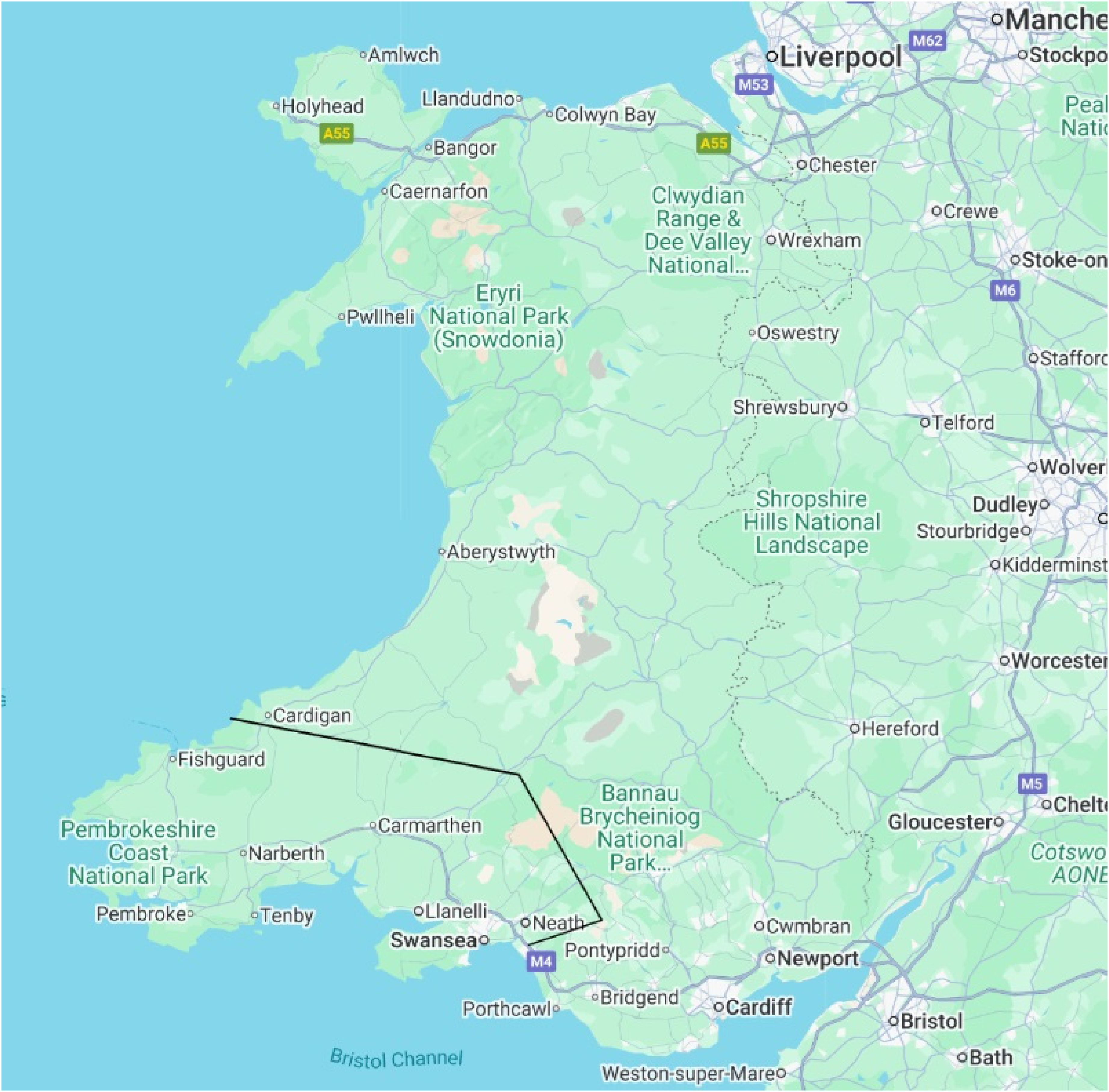
Swansea Bay map.
Research design
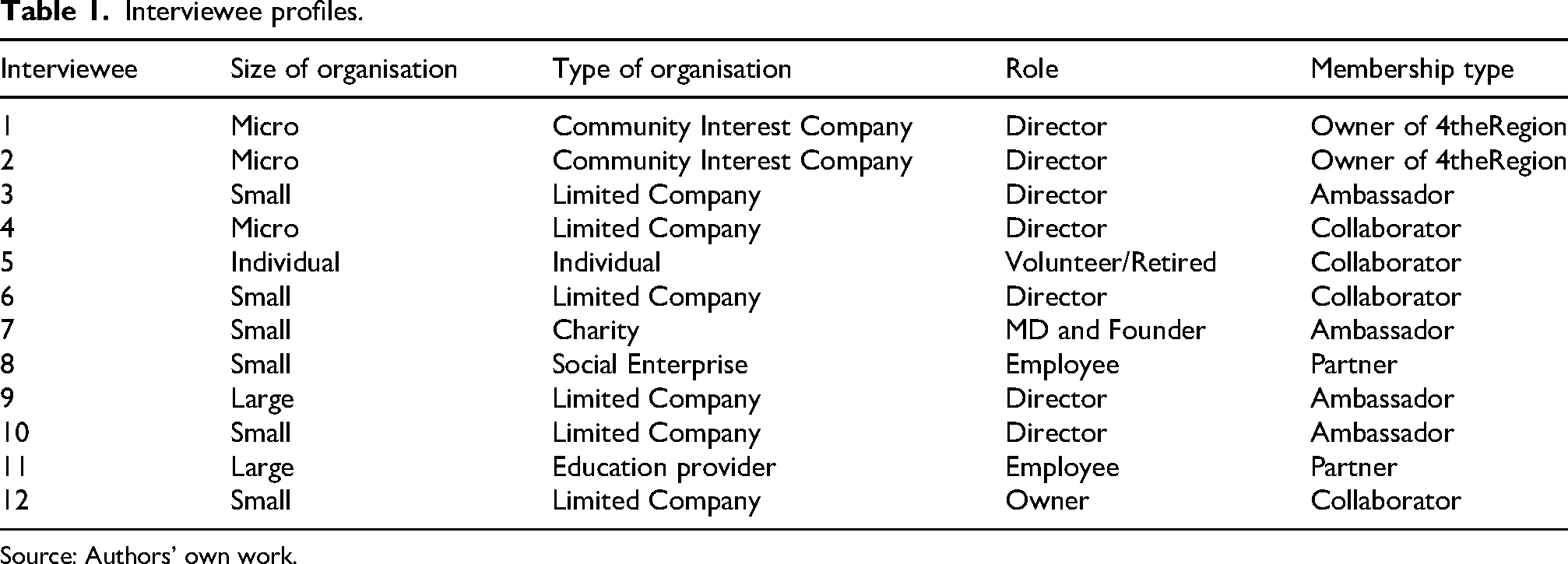
Three independent research phases were conducted in a sequential design, with data collected and analysed separately, before being triangulated for further interpretation. Two interview phases were conducted to investigate the activities of 4theRegion and how they impact the regional ecosystem. Interviews were conducted remotely using Zoom. Firstly, semi-structured interviews were conducted with the two directors of 4theRegion to understand the aims, values and activities of the organisation. Secondly, 10 interviews were conducted with representatives of members of 4theRegion, to add further depth to knowledge about the contributions of 4theRegion and its impact on the regional ecosystem. Interviews were conducted with each membership type that 4theRegion has – from individuals to small businesses to large organisations. Given the range of stakeholders involved with the organisation, maximum variation sampling was used to ensure that interview respondents were representative of public, private and third sector organisations, as well as covering the geographical area (see Table 1). Data was analysed in stages to identify themes and insights. After the first six interviews, several recurring issues began to emerge, including leadership, action, ethos (well-being), actors, network relationships, place, opportunities challenges, resource availability and regional-specific events. As the analysis progressed these became increasingly consistent across the participants. By the 10th interview no new data was evident. The consistency in the insights with no new codes being generated indicated data saturation had been reached (Ahmed, 2025). Additionally, secondary data was gathered on 4theRegion's policies and practice through a document analysis. Data was sourced from the 4theRegion website, 28 videos and 25 articles relating to the organisation. The aim of this phase is to provide context on 4theRegion and develop a detailed understanding of its activities.
Interviewee profiles.
Source: Authors’ own work.
The data was analysed manually using Braun and Clarke's (2006) six-step thematic analysis framework. This process involved coding the interview transcripts, reviewing and refining the codes and then grouping them into themes to represent the data. Thematic analysis was selected for its suitability in capturing the nuanced perspectives of the diverse ecosystem participants. The use of semi-structured interviews allowed for an in-depth exploration of the key topics, generating rich insights that informed the final thematic structure. Findings of the thematic analysis process are outlined in the subsequent section.
Results
This section presents the findings of this research. A profile of interview respondents is presented in Table 1.
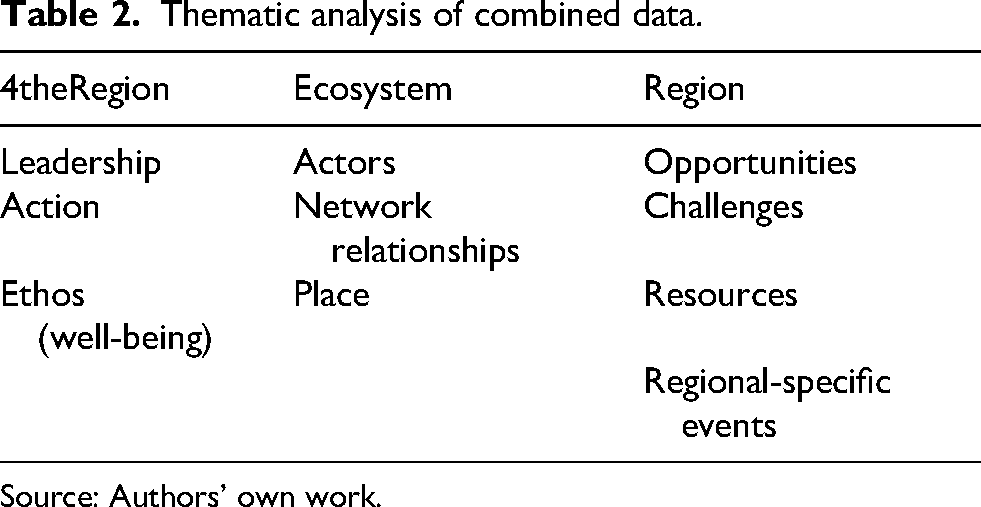
Table 2 outlines the three overarching themes that have been developed from the thematic analysis process: 4theRegion, the Ecosystem, and the Region; as well as the sub-themes that relate to these. The 4theRegion theme relates to the leadership of the organisation within the ecosystem, the actions that it leads in regional development, and the influence of the organisation's ethos, which is based on well-being and purposeful business. The Ecosystem theme relates to the characteristics of the ecosystem, including the various actors across the ecosystem, the network relationships that exist among these, and place-specific aspects of the ecosystem. The Region theme relates to the specificities and unique characteristics of the region, including the opportunities that exist within the region, as well as the challenges, the resources that the region possesses, and the place-specific issues that exist in the region. Each theme is discussed in detail hereafter.
Thematic analysis of combined data.
Source: Authors’ own work.
Figure 2 outlines a thematic map of the analysed data, presenting the three themes, their sub-themes and codes, including the relationships between these. The map shows that the leadership activities of 4theRegion revolve around their community-led approach, taking a whole system focus on the ecosystem, which involves all relevant actors. The action taken by 4theRegion stems from their leadership and focus on co-creation within the ecosystem, as well as their ethos of well-being, sustainability, ‘holistic flourishing’ and asset-based community development, which draws on opportunities that exist within the region. The ecosystem draws on place aspects of the region, including local resources, and a notable aspect of the ecosystem is the engagement with the various actors, which stems from the leadership of 4theRegion, and the development of network relationships, which revolves around trust between various actors.
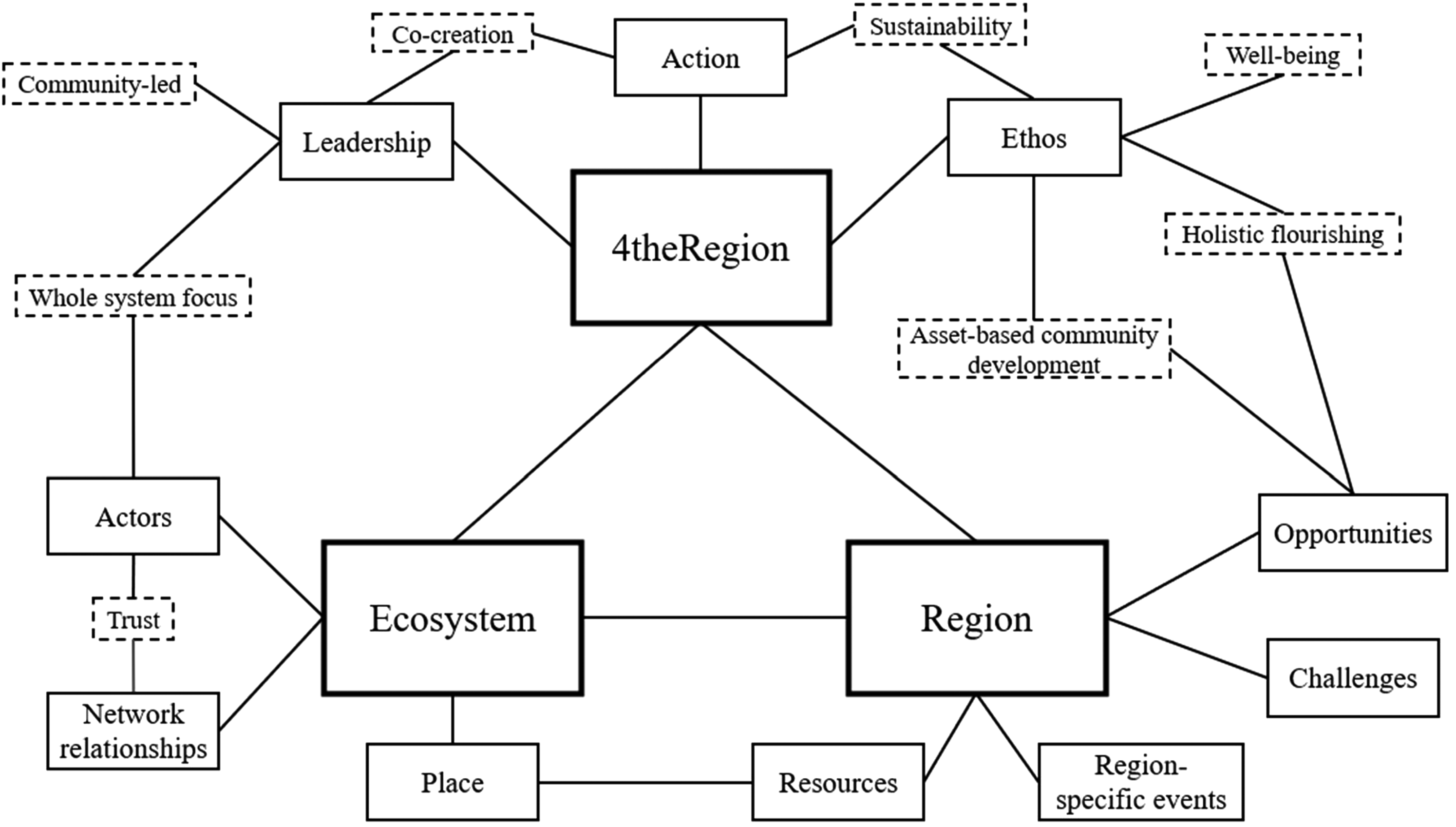
Thematic map.
4theRegion
The 4theRegion theme points to the role of the organisation in providing leadership and facilitation in the regional development activities across the Swansea Bay City Region. Interview participants spoke extremely positively about 4theRegion, and the two entrepreneurs who lead the organization, particularly their passion for creating change, and their ability to link people who may not otherwise come together, ‘providing space for cross fertilisation’ (Interviewee 5). Collaboration between these actors was highlighted especially between public, private and third sector organisations, as well as the multi-stakeholder involvement that 4theRegion brings to their organisation, facilitating the engagement of stakeholders in their events: ‘they're linking up and educating people in the region to connect effectively and to also inspire collaboration’ (Interviewee 5). Many members spoke about the platform that 4theRegion provides for them, enabling everyone to have a voice within the region, which enables a collective voice to sound out. Interviewee 4 described the work of 4theRegion as a ‘force for good’, pointing to their independence from local governance as an advantage in facilitating the ecosystem, as well as the social purpose of the organisation. Indeed, the directors of 4theRegion themselves pointed to their role in changing the approach to development within the ecosystem, moving away from the ‘old paradigm of important people deciding things and … having all the influence … top-down … it stifles creativity and entrepreneurship … it doesn't give that sense of empowerment … and ownership to others’ (Interviewee 1). This move towards developing more collective action, rather than following a top-down approach is manifested in the actions of the organisation from the secondary data, notably through numerous community projects on local procurement, circular economy, and community energy; as well as engaging ecosystem actors in the annual conference, and a conference on a green economy.
The ethos of 4theRegion, especially the social purpose based on well-being, was apparent within the data, both through interview responses and the secondary data. This relates to the desire to create change, which is underpinned by the principles of well-being, specifically through the legislation of the Well-being of Future Generations Act in Wales. Secondary data from 4theRegion underlines the strong focus on a range of well-being issues, including cohesive communities, sustainability, empowering young people, circular economy activities, renewable energy, and resilience. These point to the aims of 4theRegion in promoting social purpose across the ecosystem.
Many interview participants referred to their focus on balancing profit with purpose, and the need for this to be a focus for all organisations on ‘ethical business and more purpose-driven business’ (Interviewee 4). Interviewees spoke extensively about the ‘purpose-led’ approach of 4theRegion in leading change in the region. Much of the purpose-led work that respondents referred to involved participation by multiple stakeholders from the ecosystem. Social purpose was a term that was used widely throughout the interviews to refer to both official work undertaken by the companies and to refer to projects undertaken outside of the scope of the business. Critically, some participants were highly focused on evaluating the impact of their social purpose work whilst it was apparent that this was something that others had not considered. Many of the members also discussed ways in which they had helped 4theRegion through providing advice or by helping with events and this was something that was important to them. Members play a crucial role in supporting the local area with many of the businesses providing training opportunities to people within the region and ensuring that they take care of their employees. One of the members particularly emphasised wanting to ‘leave a positive legacy’ (Interviewee 7), while others noted generating sustainable jobs, empowering future generations and giving back to the community. This indicates the impact that is sought from the actions across the ecosystem.
Ecosystem
Within the ecosystem theme, the main interview discussions centred around the structure and management of the ecosystem. The context of the region meant that the ecosystem should incorporate relevant actors from all parts of the region, from the urban areas of the core city of Swansea, to peripheral farming areas of Carmarthenshire, and more remote parts of the Pembrokeshire coast. Interview data underlines the range of actors that are involved in the ecosystem, pointing to specific people, businesses, the universities, and 4theRegion as notable actors within the data, underlining the key role played by these actors, particularly 4theRegion as facilitators of the ecosystem. Furthermore, secondary data from 4theRegion highlights the involvement of a broad range of stakeholders from across the region, and from various actors, including government representatives, community groups, small businesses, universities, and charities. This points to the cohesive nature of the ecosystem, which has been initiated by 4theRegion as the ecosystem facilitators, which aims to develop collective well-being across the ecosystem.
Interview data pointed to 4theRegion as bringing the whole system together by organising events and creating conversations with various ecosystem actors, thus enabling holistic discussions. The directors were described as facilitators of this process as opposed to knowing all the answers to local issues, aligning with the ‘whole system focus’ (Director 2) that 4theRegion have in leading the ecosystem. Interview respondents spoke of the issues of silo working within the region with a lack of communication and collaboration occurring. However, the work of 4theRegion was looking to overcome this by building a more coherent ecosystem and uniting the relevant actors to build regional resilience to protect against macro environmental impacts such as the effects of the Covid-19 pandemic. Interviewee 4 pointed to the ‘purpose driven’ role of 4theRegion, acting as a ‘force for good’ in the ecosystem. There was a clear feeling that the region needs to have confidence in itself and the resources that it has at its disposal ‘understanding the assets, the resources that we have, so that we can work together better’ (Interviewee 2). Indeed, both directors spoke of their aim for ‘holistic flourishing’ across the ecosystem, in which ‘everyone having access to the things we need for our own wellbeing’ (Interviewee 1). Empowerment was a significant part of this, and interviews with members of 4theRegion underlined the collaborative role played by all: ‘we feel a sense of ownership, like the future of our region is in all our hands and what can we do to make a difference’ (Interviewee 11). This notion of ‘holistic flourishing’ promoted by the ecosystem facilitators is indicative of the aims of 4theRegion at developing better collective well-being across the ecosystem as a whole.
Region
The region and place-specific issues were prominent within the research data. Interview respondents spoke extensively about the region, its resources and notable issues that exist across the Swansea Bay City Region. A recurring message that was apparent in the interview data was the idea of ‘asset-based community development’ (Interviewee 7), and an emphasis on using the resources available in the region to develop more cohesive communities. This was particularly true for natural resources, which could lend themselves to supporting renewable energy project, such as those discussed in the secondary data. According to Interviewee 2, the region possessed sufficient assets to support regional development: ‘we have everything we need here already; we shouldn't be always looking outside of our region for the solutions’. One of the directors of 4theRegion pointed to this asset-based focus on developing the local economy as a notable strategy: ‘understanding what we've already got and sort of mapping resources to understand what's already here and then what we're missing’ (Interviewee 1).
With regard to what participants felt were the region's greatest assets, people and community consistently emerged as key responses. Interviewee 5 spoke of ‘… a passion for community’ throughout the region. It also became apparent that many of the social purpose initiatives throughout the region would not be able to take place without the volunteers that gave up their time to be involved in them. It was widely felt that the region is resource rich, but one respondent noted that community skills are often underutilised: ‘… we haven't got enough high-tech opportunities. People are training for high tech roles and going everywhere else in the world, we can't keep them here’ (Interviewee 10). Indeed, investing in young people's skills, digital skills and empowering young people were topics that were prominent in the secondary data. Aside from people and the community, Welsh nature and Welsh culture were also prominent notions that enable Wales to stand out, with the need for the region and its people to have more confidence in itself.
The context of the region is important to consider, as this influences the ecosystem and the regional development activities that occur within it. The Swansea Bay City Region encompasses 4 local authorities across west Wales, two of which are post-industrial urban areas, and two are peripheral rural areas, with the city region being formed on a geographical basis, rather than being a longstanding region based on economic links. Consequently, a challenge in this context is uniting the various actors across all parts of the region. Interviewee 2 pointed to these challenges, as well as the difficult economic situation of the region: ‘… we are an underdog region, and I want to figure out how to turn that around…and share that with other underdog regions around the world …’. In this context, it was observed that networks were in place across the region, but that they needed to be used effectively to improve regional development: ‘… networks are already there … we have to learn how to exploit them … there are very capable people … we've got great natural resources …’ (Interviewee 3). Given the breadth of the ecosystem and its various actors across the different parts of the region, the leadership of 4theRegion was noted as being crucial in tying everything together: ‘… 4theRegion gave us an opportunity to be involved in discussions … influencing how things might happen in the West Wales context’ (Interviewee 9). The context of the differing parts of the region underline the role of 4theRegion in creating a more cohesive ecosystem in which ‘holistic flourishing’ is promoted through the well-being principles, to ensure that all parts of the ecosystem can benefit from collective action.
Discussion
Findings from the research point to the unique approach of 4theRegion to the development of the ecosystem. The themes developed through this research underline the importance of 4theRegion as the facilitators of the ecosystem and their values-driven approach based on well-being, the specific nature of the ecosystem, which is influenced by place-based attributes and issues, and the context of the region as a gerrymandered city region made up of two post-industrial local authorities and two peripheral areas.
Findings across the analysis point to the prominence of a variety of entrepreneurial actors, organisations and institutions, which are in line with the Isenberg (2011) model of entrepreneurial ecosystems, and are drawn together by the work of 4theRegion, as the facilitators of the ecosystem. The inclusion of various regional actors in the ecosystem is therefore important, as supported within the literature (Purbasari et al., 2020), in ensuring that the needs are met across all communities within the region. However, a notable difference within this model is the move away from more established high growth, high technology Silicon Valley approaches, towards a specific emphasis on purpose and well-being.
Addressing RQ1, a notable outcome of this research is the role of 4theRegion as facilitators of the Swansea Bay ecosystem. Interview participants spoke positively about their role in leading the ecosystem, particularly in bringing together and uniting the various stakeholders from across the region, which is a difficult undertaking given the contextual complexities of the region. The leadership taken by 4theRegion follows a community-led approach as the two directors of the organisation are local entrepreneurs who have succeeded in uniting local stakeholders to co-create initiatives for change in the region. This approach aligns with Spigel's (2017) notion that startups are important in the ecosystem and the entrepreneurs are the ones who build and sustain the ecosystem. This is true in the Swansea Bay ecosystem, which has grown organically through the connection of 4theRegion, who have been able to unite small and larger scale stakeholders. This is an important aspect of 4theRegion and the way in which they have managed to build the ecosystem aligns with debates in the literature about top-down and bottom-up approaches to leadership within ecosystems (Harima et al., 2021; Spigel and Vinodrai, 2021). This research aligns with the findings of Thompson et al. (2018) who point to the formation of ecosystems as a network of participants united by a shared logic, who are also engaged in collective value creation. This is the case for the Swansea Bay ecosystem given the community-led approach and ethos of well-being, which leads to the notion of ‘holistic flourishing’ and the aims of seeing all actors benefiting from the collective action of the ecosystem. The nature of the Swansea Bay ecosystem is notable in this context, as it aligns with Isenberg's (2011) notion that ecosystems should be comprised of a combination of different actors acting as entrepreneurship enablers. This is true in Swansea Bay, as the ecosystem facilitators are local entrepreneurs who have succeeded in uniting a range of stakeholders from across the region, including community groups, small businesses, local authorities and universities, with the aim of developing entrepreneurial activity to develop the local economy. A notable aspect of the findings is the role of micro-level actors, led by the two entrepreneurs of 4theRegion, but drawing on local actors from across the region to develop the ecosystem. This is an under-researched aspect of ecosystem research (Cunningham et al., 2019; Tabas et al., 2023) but highlighted in this research in the context of a peripheral ecosystem. The role of larger institutions, notably the local universities, have been anchors in the ecosystem in promoting entrepreneurial activity (Spigel and Vinodrai, 2021), but this has been seen in supporting the work of 4theRegion.
The leadership role of 4theRegion in facilitating the Swansea Bay ecosystem underlines the community-led approach, as the organisation is driven by two local entrepreneurs who have a deep understanding of the region, its geographic complexities, and its place-specific issues. This is important because of the varied nature of the region, with post-industrial urban areas and peripheral rural areas, and a lack of larger organisations, meaning that smaller organisations and community groups need to be united within the ecosystem. Their local knowledge and connections allows 4theRegion to build the local network, lock in stakeholder support and develop collaborative work, which is important in creating a sustainable entrepreneurial ecosystem (Bischoff and Volkmann, 2018). This is also important ensuring that trust is established between the various ecosystem stakeholders. This is pronounced in the research findings through an emphasis of co-creation, as discussed in the stakeholder interviews, and observed in the activities of 4theRegion from the secondary data. This is driven by a shared interest among ecosystem actors in a values driven-approach based on ‘asset-based community development’ (Interviewee 7). This, along with the emphasis on ‘holistic flourishing’ (Interviewee 1), underlines the engagement of ecosystem actors in the 4theRegion approach, creating a vibrant and coherent ecosystem across the region, based on trust and unity in the strategy of the facilitators. These findings point to the importance of the co-creation and stakeholder engagement that is promoted by 4theRegion, as the varied nature of the region means that a more coherent approach to the ecosystem is needed to ensure that positive outcomes are achieved across the ecosystem. This is enhanced by the common focus on well-being and purposeful business, which stems from the ethos of the ecosystem facilitators, but is also underpinned by the Well-being of Future Generations Act in Wales. The community-led approach undertaken by 4theRegion in facilitating the ecosystem aligns with the notions of Thompson et al. (2018) that ecosystems are formed through uniting actors with a shared logic and an aim for collective value creation. This is the case as the facilitators are local entrepreneurs, who engage with the ecosystem actors to drive the collective action among the ecosystem.
The place-based context of this case study adds to discussions by Bacq and Aguilera (2022) around a lack of understanding of how to manage diverse social and economic value created by different stakeholders across an ecosystem, and Roundy's (2017) calls for more research on the specificities of urban/rural contexts. Furthermore, the role of 4theRegion as an organisation led by local entrepreneurs addresses issues by Jones et al. (2019) around who is best placed to undertake the role of ecosystem leader or enabler. In this case, the connections of 4theRegion and their ability to unite the varied stakeholders across the region through a community-led values-based co-creation approach are seen to be effective within the context of the region. In the interviews, the directors of the organisation spoke of their frustrations with the ‘old paradigm’ of top-down regional development across the region, therefore their community-led approach is derived from their perceived need for better collaboration and cohesion from stakeholders across the ecosystem. This is manifested in the secondary data through the conferences and various events organised by 4theRegion which engages ecosystem stakeholders on local issues.
Addressing RQ2 the place-specific context of the region is important here as the city region is comprised of a smaller-sized city (Swansea) with a rural hinterland, with not all parts of this hinterland being economically linked to the city. Based on Tödtling and Trippl's (2005) characterisations, the region contains post-industrial urban areas and peripheral rural areas, which bring economic challenges. The regional-specific focus is therefore important for consideration, as the ecosystem contains various actors situated across different parts of the region, with regional actors more constrained by limited resources and poor connectivity. Consequently, the conditions in which this ecosystem operates are different to those in which previous research on entrepreneurial ecosystems has occurred, as much of the research on this topic tends to focus on high growth firms and how the ecosystem can support them (Mason and Brown, 2014; Spigel and Vinodrai, 2021; Stam, 2015), as well as on new firm creation (Cantner et al., 2021). Indeed, some research acknowledges that a focus on ecosystems with high growth, high technology firms, which aims to replicate the Silicon Valley approach, is misplaced (Litan and Hathaway, 2017). The context of the Swansea Bay ecosystem supports this notion, and adds weight to discussions of the importance of place-based approaches to regional development activities to take into consideration the socio-economic factors that exist in the region, access to relevant infrastructure, and the resource allocation. This context supports discussions in the literature that the majority of firms that contribute to the development of a region are neither high growth nor high technology firms, yet still play an important role in local employment and the prosperity of the region. This is the case in Swansea Bay, as there are fewer examples of high growth high technology firms, but more prominence of service-based SMEs, or social enterprises, such as B-Corps. Thus, the findings of this research diversify the focus of research on entrepreneurial ecosystems by exploring a grassroots development approach that is based on social networks, and how they lead to the development of opportunities for entrepreneurial ventures (Neumeyer and Santos, 2018). The 4theRegion case study evidences a way in which regional EE actors can contribute to and direct the focus of an ecosystem away from a purely high growth focus to that of a focus on sustainability and well-being. They do this through ecosystem facilitation, collaboration and positivity.
Viewed through the lens of social proximity, the work of 4theRegion in facilitating the ecosystem is important as it develops trust-based relationships among the various actors, which are embedded in social networks in the ecosystem (Boschma, 2005). As entrepreneurs who are close to the ecosystem actors, 4theRegion are well-placed to be able to develop these relationships on a micro level. However, the ethos of ‘holistic flourishing’ and the focus on well-being are also important aspects of institutional proximity that underline the social and cultural norms of the ecosystem (Letaifa and Rabeau, 2013), which correspond with the formal and informal rules of the ecosystem (Zimmermann et al., 2022). Drawing on the findings of this research, Figure 3 identifies the characteristics for a cohesive local ecosystem. The figure presents the ecosystem, with local actors and the ecosystem facilitators influenced by place specific characteristics, as well as characteristics of a cohesive ecosystem, identified from the findings of this research. Place-specific characteristics relate to historical, cultural and social aspects that are specific to the local area. In this research, this equated to the dynamics of the urban centre of the region around Swansea, and its rural hinterlands. Factors that lead to a cohesive ecosystem include trust among actors; the notion of holistic flourishing, and all actors working together for mutual benefit; a sense of community and desire to develop cohesion; a clear strategy for the development of the region; a focus on well-being and the benefits to all actors; clear engagement among actors and involvement in ecosystem activities; and vibrancy, through a series of events and activities that unite ecosystem actors.
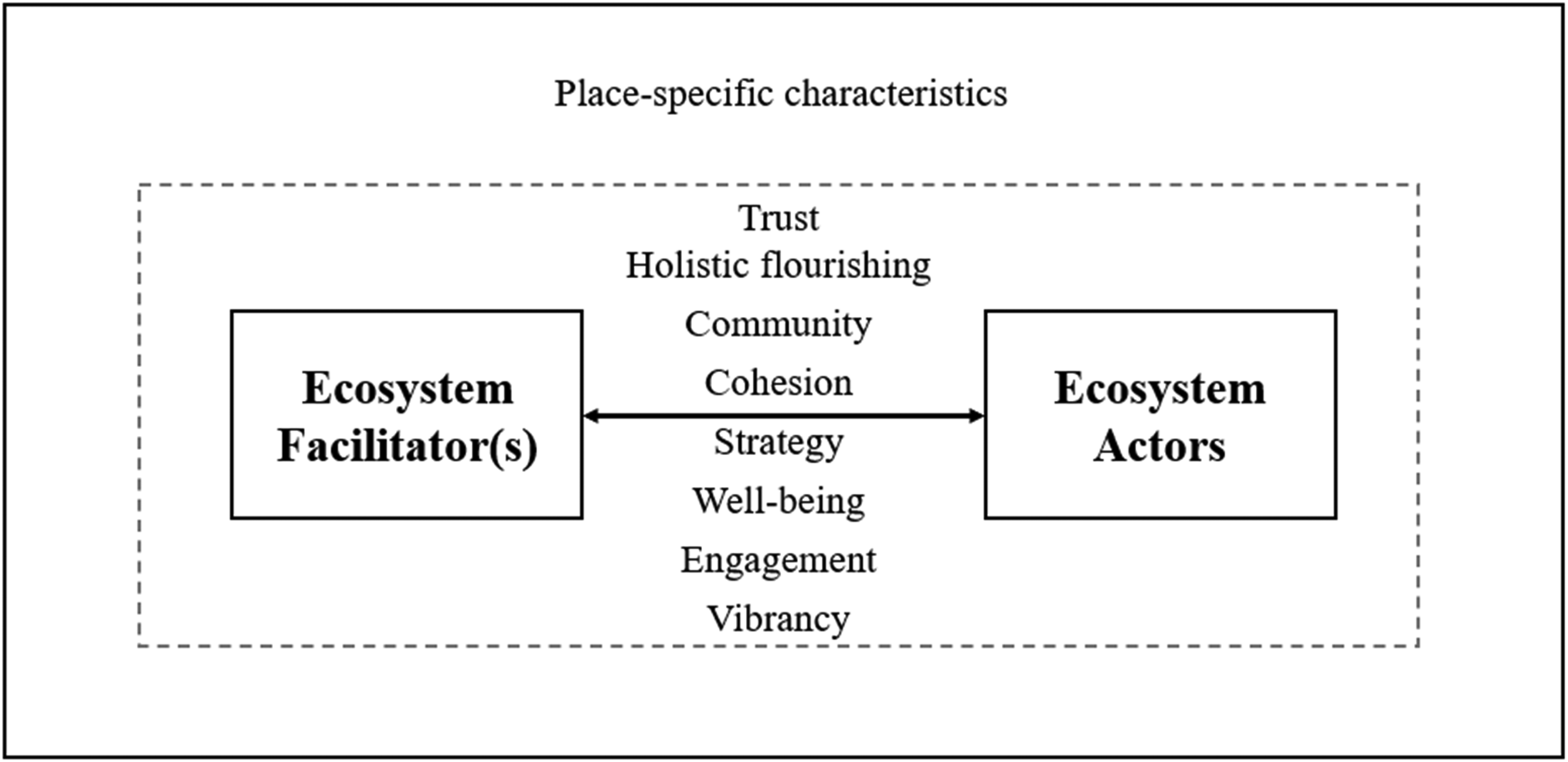
Creating a cohesive ecosystem of various actors.
Conclusion
This paper contributes to the growing body of research on EEs by underlining the role of 4theRegion as the facilitator in developing a vibrant, cohesive, values-driven ecosystem of engaged actors across the Swansea Bay City Region. Their role is notable as they are an organisation led by local entrepreneurs who are close to community actors and promote a purposeful community-led approach to ecosystem development. The paper also emphasises the place-specific context in which ecosystems exist, which is an essential factor in understanding the nature of an ecosystem. This has a bearing on how the ecosystem could best support development, as each ecosystem is comprised specific actors, and possesses specific issues. Indeed, the context of the Swansea Bay city region outlines how the ecosystem draws on a wide range of actors from across different geographical parts of the region, including urban and rural areas which are not well connected. This moves away from some discussions in EE literature on the high growth, high technology focus, with not all ecosystems possessing the same resources.
The case study of 4theRegion evidences a way in which regional actors can contribute to and direct the focus of an ecosystem in supporting regional development activities. The 4theRegion approach is based on the values of well-being and sustainable development, which is achieved through ecosystem facilitation, co-creation and creating a positive and supportive community. Indeed, the role of local ecosystem actors is vital in shaping local society. The research also adds weight to debates on leading ecosystems, with the case of 4theRegion being led by two local female entrepreneurs, who sought to move away from out-dated male-dominated top-down approaches to assuming a role of facilitation of uniting relevant ecosystem actors in collaborating on addressing specific local issues. Theoretically, this case confirms arguments made by Isenberg (2011) that ecosystems can be led and developed by ecosystem enablers, and supports work by Spigel (2017) who argues for the importance of entrepreneurs driving an ecosystem. Furthermore, it supports notions of ecosystems forming around the unity of actors with a shared logical who seek collective value creation (Thompson et al., 2018) due to the collective action taken by the ecosystem facilitators in engaging with the varied actors across the ecosystem. This underlines the importance of micro-level engagement across the ecosystem, an aspect that is often overlooked in the EE research (Cunningham et al., 2019; Tabas et al., 2023). This paper therefore highlights a different type of EE support organisation to those traditionally found in the literature, which normally focus on government support organisations, local authorities or finance providers. This research draws attention to the role of local ecosystem actors in shaping the ecosystem and moving away from local authorities. Here the role of 4theRegion underpins the community-led place-based approach which supports a more united and coherent ecosystem that is comprised of varied actors across urban and rural areas of the region. This is presented in Figure 3, which captures the nature of a coherent ecosystem of various actors. This differs from traditional top-down approaches, presenting a more hybrid approach of an ecosystem of local actors, facilitated by 4theRegion. The context of this region is also important in this research as the ecosystem covers a gerrymandered region comprised on post-industrial urban areas and peripheral rural areas, a context in which the literature calls for more attention. Furthermore, the research draws attention to the role of smaller ecosystem facilitators in shaping entrepreneurial activity by providing insight into the more micro level aspects of EEs as opposed to larger anchor organisations.
Practical implications of this research could support a place-based focus on supporting ecosystem facilitators, as the context of the ecosystem should have a bearing on who facilitates the ecosystem. While previous research on EEs has focussed on high growth, this research underlines that smaller rurally-focussed regions may veer towards sustainable growth, which may be better enabled by local entrepreneurs who have a deeper understanding of local issues, and a better manner of connecting local stakeholders. Policy implications could underline how governments should look to support local ecosystem enablers to effectively lead the ecosystem. The findings also support the increased focus within organisations and people on challenges such as the sustainable development goals and ‘purpose’ more generally, as this was the main focus of 4theRegion and their members. However, the research also furthers the literature on SDGs and purpose through its linkage with the EE concept. This also aligns with an increasing focus on well-being legislation, which is gaining increasing traction. Future research would be relevant in exploring the role of well-being legislation and purposeful approaches to sustainable development.
Limitations and future research
Limitations of this research are acknowledged, notably the small sample size and a focus on a single case study. The 12 interviews conducted in this research represents a small sample considering that over 200 members exist in the ecosystem, however the use of maximum variation sampling ensures that different types of actors from different parts of the region are represented, and provides valuable initial insights which could be explored in more depth in future research. While this research is limited in its focus on one ecosystem influenced by purposeful business, the case study of 4theRegion sheds valuable light on the specificities of entrepreneurial ecosystems in different contexts. Future research should continue to explore EEs in different contexts, as this research has underlined the specificities of the Swansea Bay city region and the place-based issues that relate to the post-industrial areas and peripheral rural areas of the region. Future research should also explore the notion of purposeful ecosystems, as proposed in this research. The findings of this research outlined the purposeful approach undertaken in the Swansea Bay region, facilitated by 4theRegion and underpinned by well-being legislation in Wales. Given an increasing focus on sustainability and global responsibility, such as through the SDGs, as well as a growing prominence of well-being legislation, there is a need to better understand how places can apply regional development activities through purposeful ecosystems.
Footnotes

Ethical considerations
Ethical approval has been obtained from the authors’ institutions at the time of conducting the research.
Consent to participate
All participants provided consent to participate in this research, according to the ethical guidelines from the authors’ research institution
Consent for publication
The organisation named in this research has provided consent for their name to be made public in this research.
Author contributions
All authors have contributed to this research as part of a project team.
Funding
Funding for this research was provided from a grant from the Higher Education Funding Council for Wales.
Declaration of conflicting interests
The authors declared no potential conflicts of interest with respect to the research, authorship and/or publication of this article.