




Abstract
Little is known about the geography of firm survival during COVID-19. We investigated the effect heterogeneity of the pandemic itself and of business support funding by the Finnish government with respect to rural and urban business closures. To do so, we utilised regional data on firm survival, detailed business support funding data and a rural–urban typology for Finland. Results from panel regressions showed that the pandemic had an overall negative impact on businesses in terms of an increased closure rate of about 20–30% during the period 2020q2–2022q4, which was generally higher in urban than rural areas. While the bulk of business support funding from the Finnish government during the pandemic went to urban businesses, COVID-19 funding mitigated the effects of the pandemic on business closures equally across the different rural–urban categories. Counterfactual simulations show that the average closure rate would have been about 10–12% higher during the pandemic if no business support funding schemes would have been implemented.
Introduction
After the outbreak of COVID-19 in late 2019, the pandemic rapidly swept across the globe. In an attempt to contain the spread of the virus, most national governments swiftly devised public health measures. These included, for example, travel restrictions, border measures, restrictions on mass gatherings, social distancing measures, etc. The implemented public health interventions were generally effective in mitigating the spread of COVID-19, although their individual impact has varied (Kosfeld et al., 2021). At the same time, however, the outbreak of COVID-19 and the resultant health measures by national governments to contain its spread have had extensive negative effects on regional, particularly rural, economies across the world (Phillipson et al., 2020), one visible impact being the strain that the pandemic caused for entrepreneurs and businesses (Pattinson and Cunningham, 2022).
To alleviate the detrimental effects of the pandemic and subsequent restrictions on businesses, most national governments introduced business support funding schemes to help them survive the crisis (Watson and Buckingham, 2023). In the Finnish context, these funding schemes included business and fixed cost support, compensation for the cost incurred due to restrictions in the operating hours of businesses, temporary lockdowns, and cancelled events as well as business development and innovation funding. Many of the funding schemes were designed for service industries or innovative businesses. Thus, the funding schemes were (unintentionally) designed in a way that potentially directed financial support to service-oriented and more innovative urban areas but left many important sectors of rural economies, such as agriculture, largely outside the list of supported businesses. This issue is of significant relevance to Finns, as over 25% of the Finnish population live in rural regions, which cover roughly 95% of the total area of Finland. Crucially, rural areas are also home to circa 40% of Finnish enterprises (Kujala et al., 2021). To compensate for the potential shortcoming in the geographical and sectoral coverage of the COVID-19 business support schemes, at the beginning of 2021, the Finnish government launched a funding instrument specifically targeted at firms associated with farming or selling agricultural products.
The effectiveness of the various business support schemes has been debated both in Finland and internationally. Debated issues relate to aspects such as: were the ‘right’ businesses targeted for receiving support? (Bruhn et al., 2023); did funding create ‘zombie firms’ that were generally uncompetitive and only survived because of business support funding but are likely to default in the future when COVID-19 funding phases out? (Hoshi et al., 2023); and did governments select the most appropriate business support instruments? (Piva and Guerini, 2023).
The pandemic was expected to lead to permanent business closures (Watson and Buckingham, 2023). The evidence on the matter is, however, mixed: whereas some studies point towards extraordinarily high rates of business closures (Li and Stoler, 2023), others report lower than expected business closure rates during COVID-19 (Crane et al., 2022). Also, the role and effectiveness of businesses support funding during the pandemic is still largely unexplored. In a cross-country study of EU countries, Gourinchas et al. (2023) found that the absence of business support funding would have increased SME failures by 6.15 percentage points. Chit et al. (2023) also found positive crisis-mitigating effects of business support funding schemes on SMEs’ short-term outcomes, including business closure in EU countries.
Despite the growing body of literature on the impacts of COVID-19 on businesses, little is known about the geography of firm survival during the pandemic in terms of potential rural–urban differences as well as the potentially geographically varying impacts of business support funding. Since entrepreneurship plays a key role in maintaining and developing communities in rural areas (Newbery et al., 2017), there is a significant research gap in our understanding of the resilience of rural businesses, and more widely, rural economies, which this study aimed to tackle with the following research questions:
Did the COVID-19 pandemic significantly affect business closure rates and did these rates differ across geographical contexts, that is, in rural versus urban areas? To what extent did business support funding mitigate the economic consequences of the COVID-19 pandemic for businesses, and did these effects vary across business support instruments and geographical contexts, that is, in rural versus urban areas?
To empirically answer these research questions, this study utilised comprehensive data collected for Finland, which was chosen as a suitable case study context due to the rapid deployment of its extensive business support funding schemes (Mitze and Makkonen, 2023). Moreover, the availability of timely and geographically fine-grained data in Finland facilitates the analysis of a (still) very recent crisis. A main novelty of this study is to provide a complete financial account of the relevant instruments used by the Finnish government to support businesses during the pandemic across different geographical contexts. Given the ad hoc nature of most business support instruments and the mix of funding institutions and funding recipients, mapping the financial flows of COVID-19 funding proved to be a time-consuming detective undertaking.
Business resilience and firm survival in times of crisis
Business resilience can be defined as the ability of a firm to adapt and continue operations even in the face of high-impact disturbances such as COVID-19 (Zakaria et al., 2023). It is affected by a multitude of internal attributes as well as external factors (Zighan et al., 2022). Empirically, considering all the potential ‘ingredients’ of business resilience is thus notoriously difficult (Winnard et al., 2014). A straightforward solution to this dilemma is to use firm survival as an ex-post measure for business resilience (Hadjielias et al., 2022). Nonetheless, the analysis of business resilience requires an understanding that businesses are embedded in their respective regions within a broader society (Soroka et al., 2020). While business-specific factors, such as innovative capacity, institutional connectedness, and management experience (Chit et al., 2023), naturally matter, the surrounding business environment also affects how businesses cope with crises (Makkonen and Mitze, 2024). As such, regional socio-economic and demographic structural factors affect their survival (Giannakis and Bruggeman, 2017). The impact that the location can have on businesses in times of crisis is commonly discussed through the concept of regional (economic) resilience: that is, the ability of regions to resist, recover from and renew themselves in the face of a shock, typically induced through an exogenous crisis (Martin and Sunley, 2015).
A decisive role in shaping regional resilience has been given to the distinction between rural and urban areas: generally, it is seen that businesses located in urban regions are supported by more resilient operational environments, whereas rural regions have a lower capacity for resilience (Giannakis and Bruggeman, 2020). However, the story becomes more complicated once the analysis moves beyond a strict rural–urban dichotomy and includes different types of urban and rural areas. For example, Dijkstra et al. (2015) have shown that rural regions close to a city are more resilient than remote rural areas or cities. Faggian et al. (2018) have later reported similar findings. Further, the different facets of agglomeration economies (workforce, cooperation partners, competition, etc.), or the lack thereof, seem to have varying impacts on business resilience in rural areas. For example, whereas Bosworth and Gray (2012) surveyed that a lack of skilled workers hinders rural businesses’ recovery from a crisis, Anderson et al. (2010) have shown that a lack of competition gives rural businesses an advantage over their urban counterparts during a crisis. At least in some specific aspects of business performance, such as success in applying for public research, development and innovation funding (Makkonen and Mitze, 2024), businesses in rural regions have been shown to have caught up with their urban counterparts during the pandemic.
Most of the literature on regional (economic) resilience has dealt with the financial crisis of 2008/2009. However, Gajewski (2022) has shown tentative evidence that in terms of production growth, regions with a modernised agricultural sector, commonly rural areas, were more resistant to the shocks caused by both the financial crisis of 2008/2009 and COVID-19 than regions dominated by services, commonly urban areas. The responses to COVID-19 were, nonetheless, very different from those related to the financial crisis. Thus, in times of a pandemic, the applicability of policy recommendations made based on lessons learned from economic crises might be limited.
A clear example of differing rural–urban dynamics in times crises comes from migration data. Whereas rural regions have typically suffered from depopulation and associated shrinkage of their local economies that have been reinforced by economic slowdowns (Makkonen et al., 2022), a side effect of the pandemic was a ‘rural revival’ driven by out-migration from urban areas (Wolff and Mykhnenko, 2023). This was due to the higher initial numbers of COVID-19 infections in urban areas (Cuadros et al., 2021) and the subsequent (temporary) shift in migration patterns towards rural rather than urban locations during the pandemic (González-Leonardo et al., 2022). While the rural–urban migration patterns have returned to resemble the pre-pandemic dynamics (Nelson and Frost, 2023), they nonetheless showed the possibility to attract new entrepreneurs as (return) migrants to rural areas (Low et al., 2023). Thus, also in Finland COVID-19 was envisioned to challenge the attractiveness and position of large cities. However, there is still a lack of evidence whether COVID-19 reinforced the competitiveness of rural areas or not. Rather, the largely spatially blind nature of the support mechanisms launched by the Finnish government raised concerns that the economic crisis caused by the pandemic and particularly the ‘remedies’ to address it might reinforce the existing structural inequalities between urban and rural regions (Moisio, 2020). However, the geographically differentiated outcomes of COVID-19 and related business support on firm survival in rural and urban areas have, thus far, received very little systematic attention.
Data and methods
Data
For the empirical analysis, we utilised rich panel data for all 309 Finnish municipalities (LAU-2). Data collection included information on regional entrepreneurial dynamics, business support funding, a typology of rural–urban regions as well as supplementary municipal data. Due to changes in the statistical source, there is a break in the time series concerning data on firm survival. As a result, there were no data available on business closures for 2017q2–2017q4. Therefore, our quarterly panel data set for Finnish municipalities covered the period between 2018q1 and 2022q4.
Entrepreneurial dynamics and firm survival
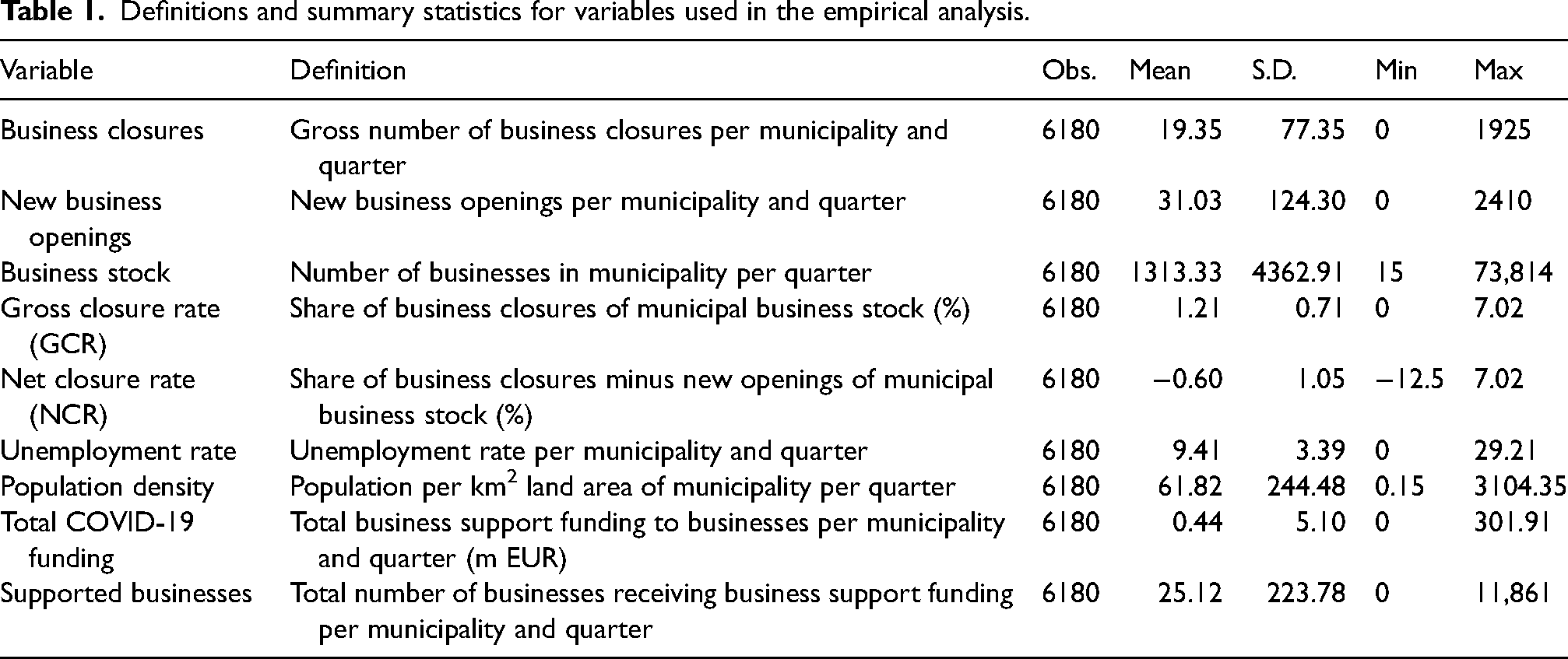
While we understand the retrospective scope and limitations of utilising such data, we used firm survival as the main outcome variable measuring business resilience (Winnard et al., 2014). Therefore, quarterly data on business stock (number of businesses operating at the time), as well as business closures (registration of businesses that voluntarily or involuntarily closed their operations) and new openings (registration of new businesses) at the regional (municipal) level per sector
1
were gathered from the Stat.Fin database maintained by Statistics Finland. To describe changes in Finland's stock of businesses, business closure rates were calculated both as gross and net rates:


Definitions and summary statistics for variables used in the empirical analysis.
Rural–urban typology
We utilised the rural–urban typology of the Finnish Environment Institute to account for the underlying structural heterogeneity in local business environments. The typology is used both as the basis for rural policy as well as in academic research on rural–urban differences (Makkonen and Mitze, 2024). It divides Finnish regions into urban (URB) and rural areas. Rural areas are furthermore divided into subgroups as rural areas close to urban areas (RAC), rural heartland areas (RHA) and sparsely populated areas (SPA) (Figure A1). The typology is based on a detailed analysis of several socio-economic and demographic variables (Helminen et al., 2020).
Regional covariates
Municipal data (population density and unemployment rate) per month were gathered from the Stat.Fin database to control for the ‘size’ and ‘performance’ of the local economy. These data were aggregated into our dataset as quarterly averages. The unemployment rate was measured as the share of jobseekers from the total workforce and population density as the population per land area of the municipality. The latter information was downloaded from the National Land Survey of Finland. In addition, we calculated sectoral shares for each municipality as the number of businesses per sector in the total business stock per municipality.
Business support instruments
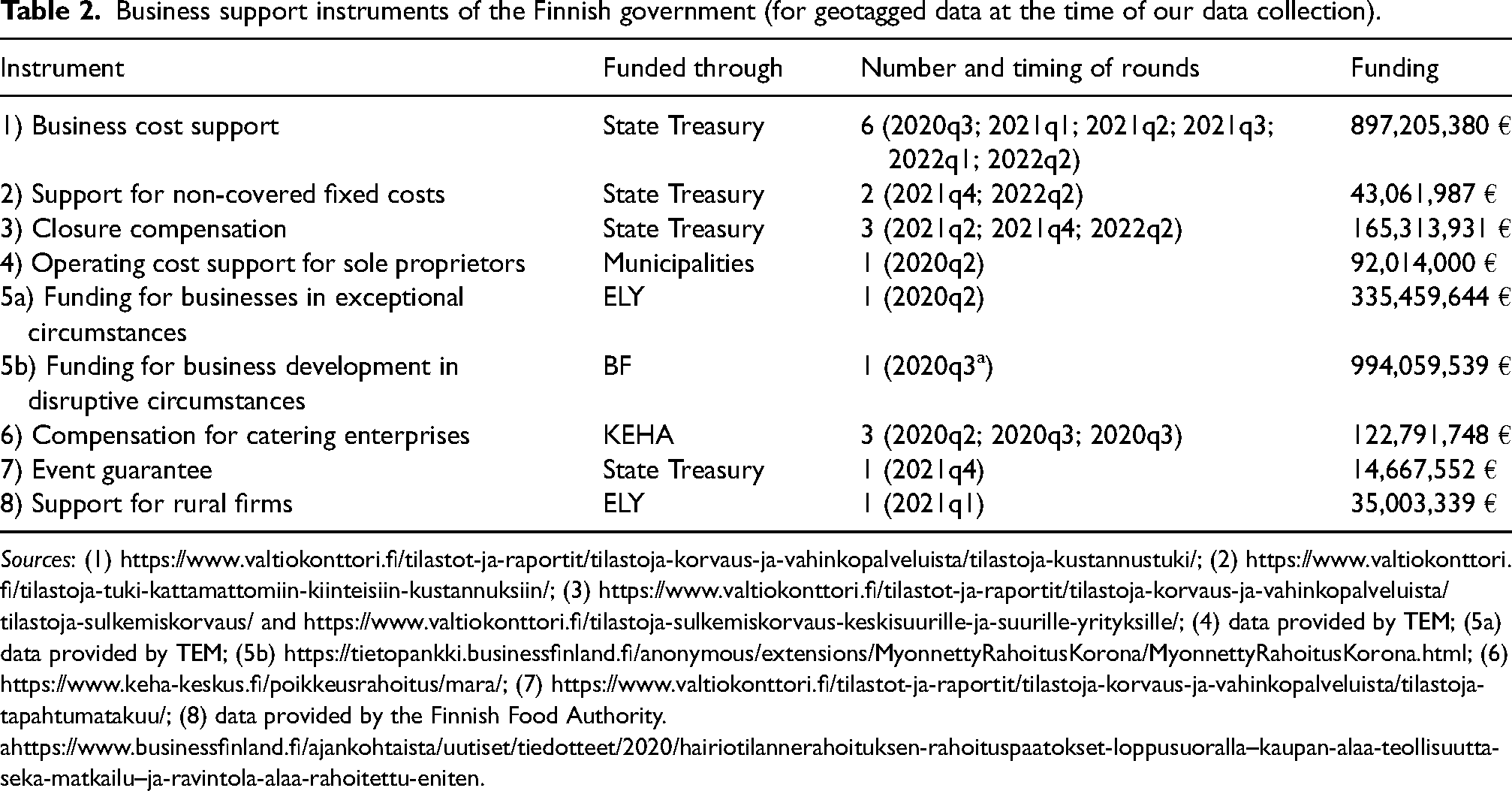
The Finnish government supported businesses through several different instruments to tackle the detrimental effects of the pandemic. These likely had a significant impact on business performance during COVID-19 and are thus important factors to consider when analysing the effects of the pandemic on firm survival. The business support funding was allocated through municipalities and several different governmental organisations: the State Treasury, Business Finland (BF), the Finnish government organisation for innovation funding and trade, tourism and investment promotion, operating under the Finnish Ministry of Employment and the Economy (TEM) and, the Centres for Economic Development, Transport, and the Environment (ELY), responsible for regional implementation of government policies, and their Development and Administration Centre (KEHA). The business support instruments considered in our analysis, of which most had several funding rounds, include (Table 2; Figure A4):
Business cost support (business cost) for enterprises whose turnover fell significantly due to the pandemic and that therefore struggled to pay inflexible costs and payroll costs (up to 1,000,000 € based on businesses’ turnover and payroll- and inflexible fixed costs pre- and during COVID-19) (six rounds) Support for non-covered fixed costs (fixed cost) covering 70% of operating losses for medium-sized and large enterprises whose turnover fell significantly and whose previous support ceiling, defined by the EU, was already full (two rounds) Closure compensation (lockdown), covering 70% of inflexible costs and 100% of payroll costs, for enterprises whose business suffered from the lockdown measures and prohibition or significant restriction of public gatherings (three rounds: rounds one and three for small enterprises; round two for larger enterprises) Operating cost support (sole proprietor) for sole proprietors (2000€) during the pandemic allocated by municipalities with funding from TEM Funding for business development
Enterprises employing up to five persons: ELYs ‘funding for businesses in exceptional circumstances’ (ELY) for enterprises negatively impacted by market and production disturbances caused by the pandemic that seek to renew and strengthen their expertise and innovative capacities (up to 10,000 € for situational analyses and 100,000 € for development funding) Enterprises employing more than five persons: BFs ‘funding for business development in disruptive circumstances’ (BF) for enterprises with innovative ideas on tackling the detrimental effects of the pandemic on their businesses (up to 10,000 € for preliminary investigations and 100,000 € for development funding) Compensation for catering enterprises (KEHA) for the costs incurred due to lockdown measures (three rounds: round one for all catering enterprises that had submitted a VAT declaration to the tax officials; round two based on applications for those catering enterprises that had not sent a VAT declaration; round three for supporting the readiness and ability of catering enterprises to re-employ employees after the lockdown period) Event guarantee (event) for enterprises whose business suffered from the cancellation or significant downsizing of a planned event with at least 200 expected attendees/spectators covering 85% of the incurred costs Temporary support for rural firms (rural) employing less than ten persons carrying out activities in connection with farming or processing and selling agricultural products including fishing and fisheries (up to 10,000 €) and for primary agricultural production (up to 80,000 €)
Business support instruments of the Finnish government (for geotagged data at the time of our data collection).
Sources: (1) https://www.valtiokonttori.fi/tilastot-ja-raportit/tilastoja-korvaus-ja-vahinkopalveluista/tilastoja-kustannustuki/; (2) https://www.valtiokonttori.fi/tilastoja-tuki-kattamattomiin-kiinteisiin-kustannuksiin/; (3) https://www.valtiokonttori.fi/tilastot-ja-raportit/tilastoja-korvaus-ja-vahinkopalveluista/tilastoja-sulkemiskorvaus/ and https://www.valtiokonttori.fi/tilastoja-sulkemiskorvaus-keskisuurille-ja-suurille-yrityksille/; (4) data provided by TEM; (5a) data provided by TEM; (5b) https://tietopankki.businessfinland.fi/anonymous/extensions/MyonnettyRahoitusKorona/MyonnettyRahoitusKorona.html; (6) https://www.keha-keskus.fi/poikkeusrahoitus/mara/; (7) https://www.valtiokonttori.fi/tilastot-ja-raportit/tilastoja-korvaus-ja-vahinkopalveluista/tilastoja-tapahtumatakuu/; (8) data provided by the Finnish Food Authority.
Our data covered all relevant business support instruments of the Finnish government deployed during COVID-19. The data gathering and processing required an extensive effort. To the best of our knowledge, the analysis is based on, thus far, the most comprehensive dataset on business support instruments of the Finnish government. The data is scattered between different organisations and, thus, their reporting practices are inconsistent. For the State Treasury, BF and KEHA, the raw data is relatively easily accessible and in most cases includes locational information (geotagged data) of the supported businesses, and was used for aggregating the business support instrument data at a regional (municipal) level. In cases of missing locational information, this was attained by linking the reported business IDs to Finnish firm register data. The remaining raw data were provided by TEM and the Finnish Food Authority (operating under the Ministry of Agriculture and Forestry) and further processed to derive the municipal aggregates. The data include the number of businesses that received support for each COVID-19 instrument and the aggregated sum of the received support per municipality and business support instrument.
Timing of funding rounds and the outbreak of COVID-19
Since deriving the exact dates of when support was received would require a different approach utilising micro-level data for individual businesses, this eluded our analysis with a regional focus. However, we can reach a reasonable compromise by taking advantage of the reported decision dates for most of the utilised data. That is, we used the average date of decisions to allocate the different instruments’ funding rounds to a specific quarter as reported in Table 2. We further imposed a lag of one quarter in our empirical analysis to take into account that the effect of the support is unlikely to be felt instantaneously. This specified pre-determinedness of business support funding with regard to regional business development measured through business closure rates also reduces the risk of endogeneity bias in the regressions, which may stem from a situation in which a worsening local business climate, and hence higher business closure rates, increase the demand for business support funding.
However, the imposed lag structure and resulting pre-determinedness in the transmission from business support funding to firm survival is very likely still too weak to robustly identify causal effects. Hence, we limited the interpretation of our findings to a conditional correlation analysis in order to explore rural–urban patterns of entrepreneurial dynamics and firm survival during the pandemic, subject to business support funding paid out to the businesses. Another complicating factor for the regression analysis shown in Table 2 is that funding rounds have highly discrete time patterns, which significantly vary over the different instruments. To smoothen financial flows to municipalities we therefore also calculated the overall business support funding to each municipality by summing the financial flows over the different instruments (total COVID-19 funding).
As for the timing of the outbreak of COVID-19 in Finland, the Finnish government, in cooperation with the President of the republic, declared a state of emergency in Finland due to the pandemic on 16 March 2020. Some time was naturally needed for the associated public health measures to impact business closures. Therefore, we allocated the effects of the pandemic on businesses to start in 2020q2.
Methods
Previous studies on firm survival and business support during the COVID-19 pandemic, see Gourinchas et al. (2023) and Chit et al. (2023), have mainly relied on aggregate country-level approaches without considering potential regional differences within a country. As a point of departure, we provide insights into the regional development of business closure rates and the regional allocation of business support during COVID-19 and their rural–urban dimensions by using a mix of descriptive statistics, data visualisations and panel regressions. The latter approach allowed us to formally test for the role of government business support funding schemes for businesses to mitigate the negative consequences of the pandemic and the associated public health restrictions. At the heart of the panel regressions was the identification of two (potentially opposing) key effects: the effect of the pandemic and associated public health measures on aggregate, region- and sector-specific business closure rates and the mitigating effect of the business support instruments paid out by the Finnish government on these business closure rates. The baseline model for the GCR was specified as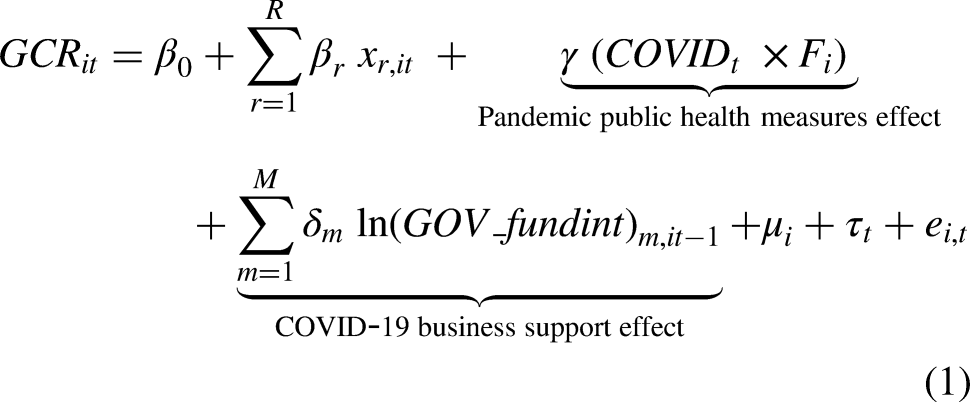
Our focus was on the interpretation of coefficient vector
As our second focus was on estimating the association between business closure rates and business support funding, we included
As already outlined above, we imposed a one period lag structure to ensure that COVID-19 support is temporally pre-determined, which reduced the risk of an endogeneity bias in the estimations. Robustness tests for alternative lag structures were carried out to assess the sensitivity of the estimated transmission channel from COVID-19 funding to business closure rates. In addition to the baseline specification shown in Equation (1), which either estimates the response of business closure rates for the overall financial support intensity or separately by instruments, we additionally also interacted the COVID-19 funding intensity with the set of region-type dummies
Empirical analysis and results
The impact of COVID-19 and business support instruments on firm survival
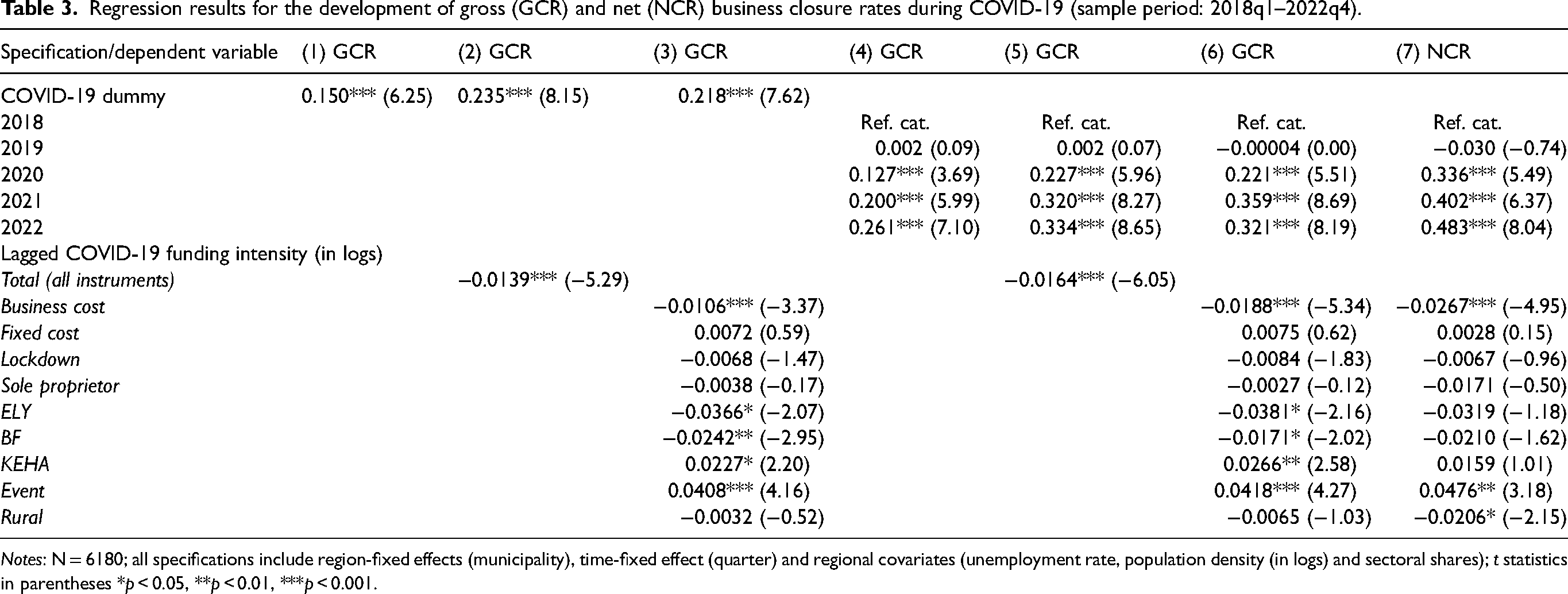
Table 3 shows the results of the conducted regression analysis on the impact of COVID-19 and business support instruments on firm survival. The upper part of the table demonstrates that the outbreak of COVID-19 in Finland coincides with a significant increase in GCR (specifications 1–3). On average, the regression specifications point to an increase in GCR of between 0.150 and 0.235%-points. Evaluated against the pre-COVID sample average of regional GCR of 1.17%, a 0.235%-point increase translates into an approximate 20% rise in GCR during the pandemic compared to the pre-COVID period.
Regression results for the development of gross (GCR) and net (NCR) business closure rates during COVID-19 (sample period: 2018q1–2022q4).
Notes: N = 6180; all specifications include region-fixed effects (municipality), time-fixed effect (quarter) and regional covariates (unemployment rate, population density (in logs) and sectoral shares); t statistics in parentheses *p < 0.05, **p < 0.01, ***p < 0.001.
When using the year 2018 as a reference category, we can further see that the timing of the increase in GCR coincides with 2020, when COVID-19 ‘reached’ Finland, and that its negative impact on business closures becomes even more marked in 2021 and 2022 (specifications 4–7) translating into an increase in the GCR rate of up to 30% compared to the pre-COVID period. The firm survival data of the latter year are, however, potentially also affected by the negative consequences of the war launched by the Russian Federation against Ukraine. It seems that the uncertainty created by Russian aggression has impacted new business openings more than business closures: while the estimated add-on time effect on GCR moderately declined in 2022 relative to 2021, the lack of new business openings resulted in a further increase in NCR, as shown in Figure 1.
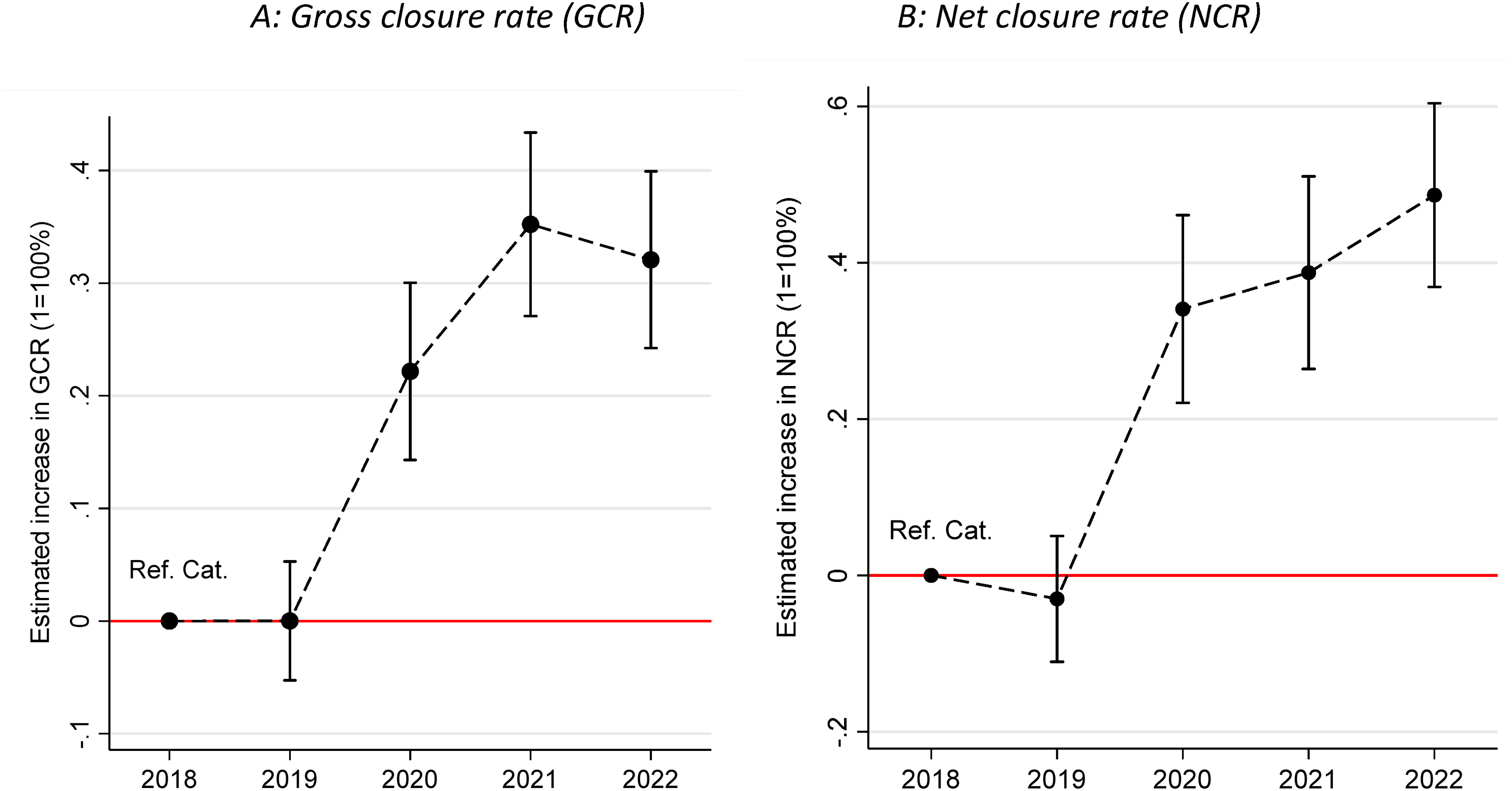
Estimated development of business closure rates by year. (a) GCR, (b) NCR.
The lower part of Table 3 shows the conditional correlation between the different business support instruments and business closure rates. Overall (specifications 2 and 5), total COVID-19 funding seems to have reduced GCR and, thus, it seems that these schemes had a mitigating effect on business closure rates during the pandemic. The results are further illustrated in Figure 2. The figure shows two counterfactual scenarios based on the regression results from column 2 in Table 3, namely: no pandemic is present and the pandemic is present, but no business support instruments were deployed after the outbreak of COVID-19. The figure shows that without the pandemic GCR would have been at a lower level relative to the observed development in GCR, whereas in the presence of the pandemic GCR would have been higher by up to approximately 0.15%-points without business support funding from the Finnish government. Evaluated against a post-treatment sample average GCR after the start of the COVID-19 pandemic of 1.25%, this implies that business support funding helped to reduce business closure rates by up to 12%.
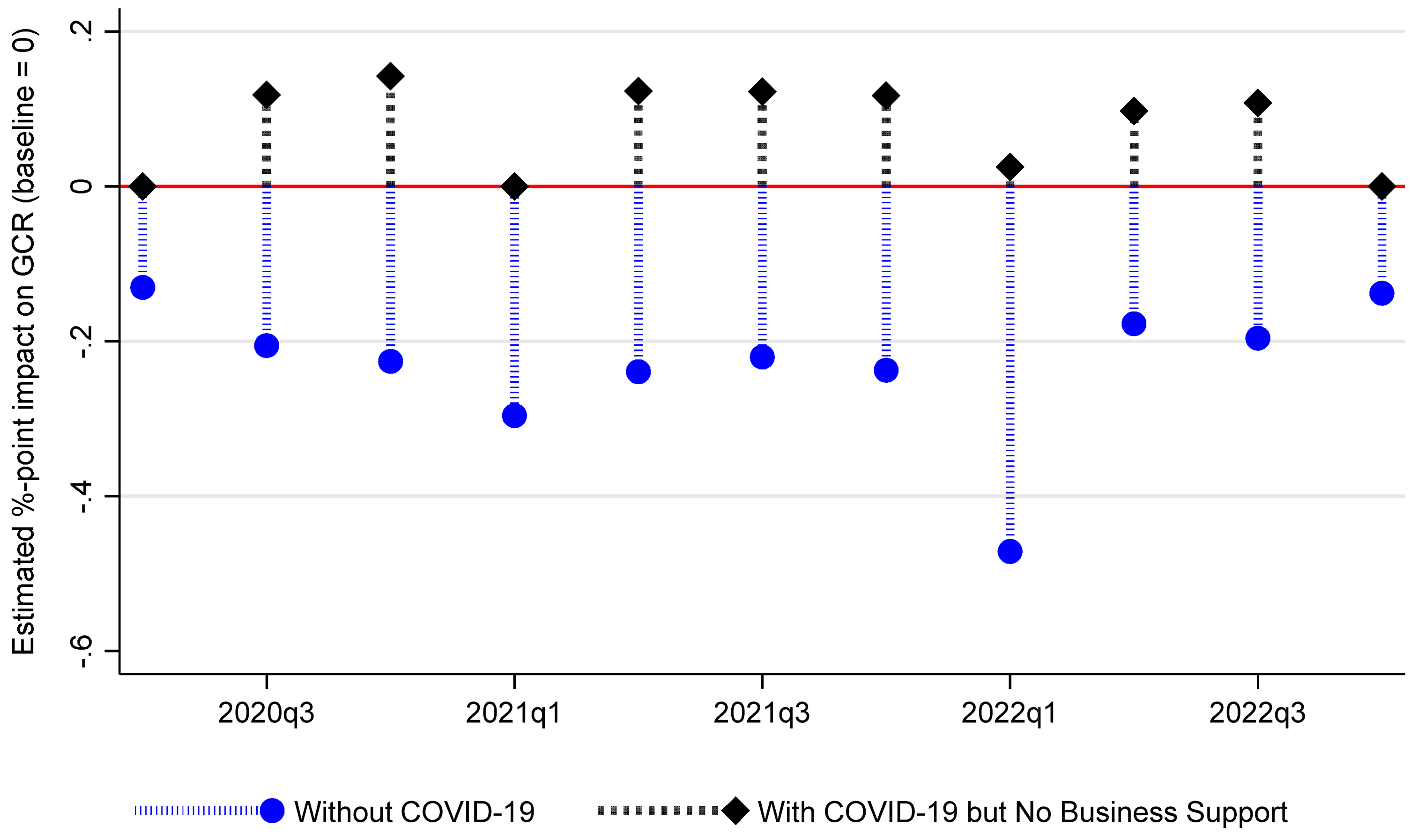
Estimated mean change in GCR for alternative counterfactual scenarios.
A closer look at the different business support instruments (specifications 3 and 6–7) reveals that this connection is determined by business cost, ELY and BF funding, whereas KEHA and event funding show a positive correlation with GCR. The former result is likely driven by the large financial size of the instruments: business cost, ELY and BF funding together covered 82.5% (over 2.225 billion euros) of the total business support funding of the Finnish government. The latter result is likely an outcome of the instruments themselves, as KEHA and event funding were mostly directed at businesses in the ‘tourism sector’: as typical sectors in cities, the result might already capture rural–urban differences in business closures, as discussed in greater detail in the next section. Finally, Figure A3 presents robustness tests for the sensitivity of the results for alternative lag structures of the total COVID-19 funding intensity. Key points from these sensitivity checks are that the mitigating effect of business support funding builds up from the time of implementation of the instruments, resulting in an effect lag of one quarter, and thereafter turns out to be statistically insignificant. While further research on the temporal transmission channel of business support funding on firm survival is needed, this lends support to the argumentation that it mainly had a short-run consolidation effect on businesses through cash flow payments.
Rural–urban difference in firm survival
Figure 3 shows that the peak in total COVID-19 financial support from the Finnish government occurred already in 2020, while the subsequent years have witnessed a gradual decline in funding intensities. Figure 3 also shows that businesses in urban areas have, on average, been more ‘successful’ at receiving business support and have also received higher amounts of business support funding compared to their rural counterparts. This applies to most of the different support instruments, the only clear exception being the funding instrument for rural firms (Table 4; Figure A2). The figures are even more pronounced in absolute terms: around 81.2% of business support funding from the Finnish government was directed to businesses in urban areas (Table 4; Figure 3 and Figure A4).
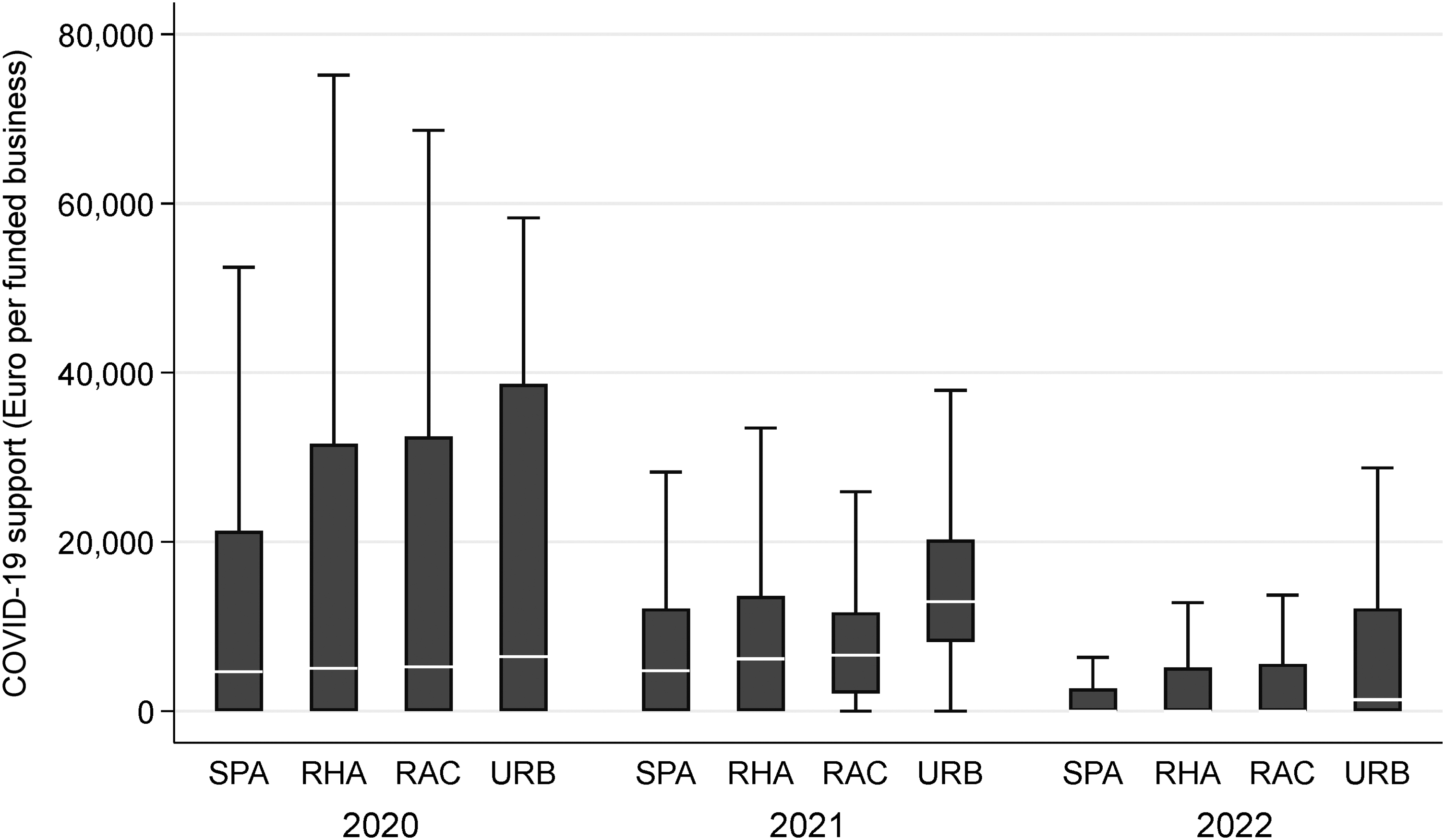
The distribution of total COVID-19 funding by regional category and year. Note: Box plots exclude outliers.
Cumulative business support funding during COVID-19 by regional category.
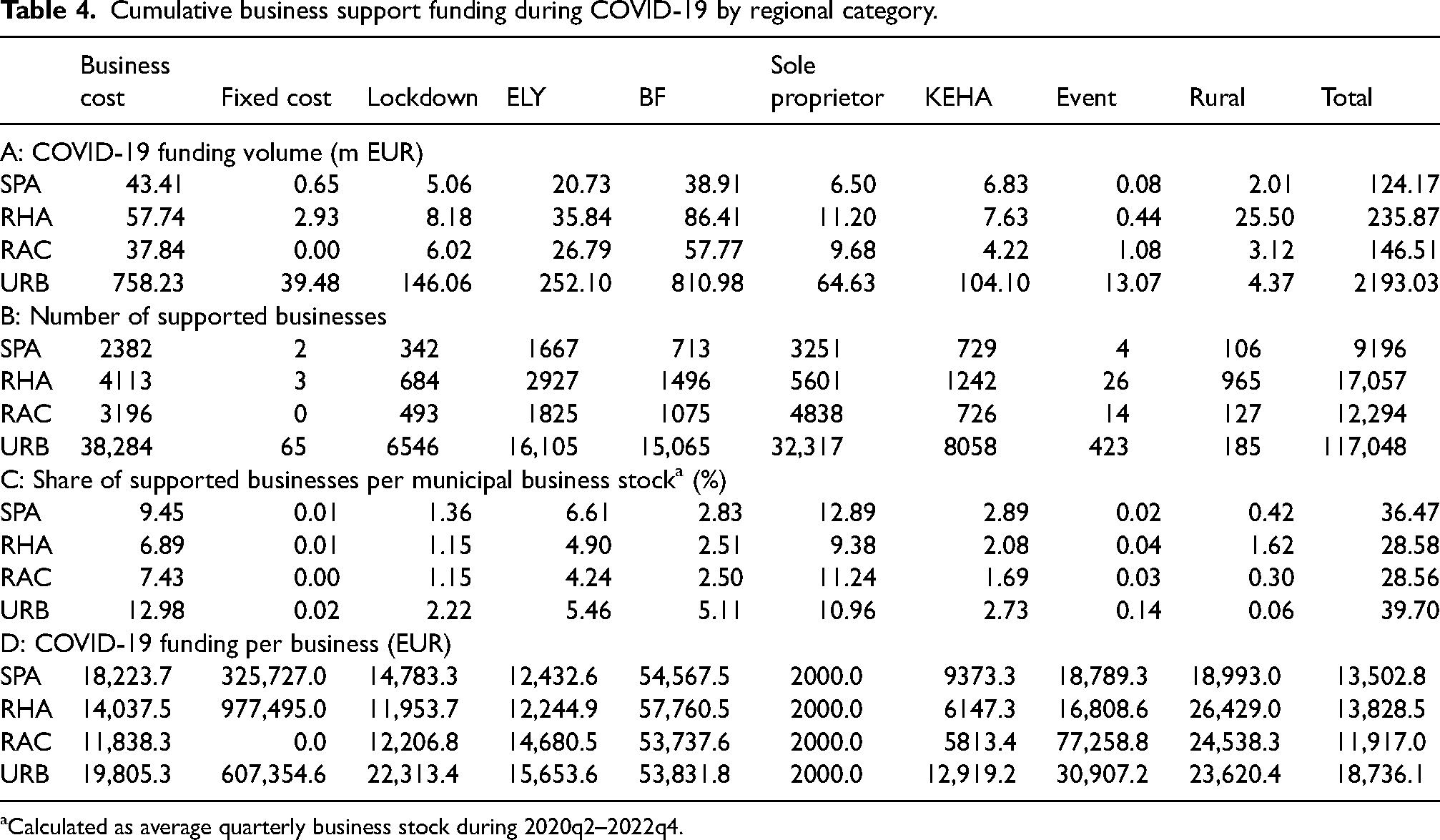
Calculated as average quarterly business stock during 2020q2–2022q4.
Both GCR and NCR increased during the pandemic despite the huge amount of business support funding directed to alleviate the distress caused by COVID-19 to businesses, but were the business closure rates equally affected across the different regional categories? To this end, Figure 4 plots the distribution of GCR per regional rural–urban category. The figure indicates that businesses in the different regional categories were similarly affected by the pandemic: GCR is higher in all regional categories after the outbreak of COVID-19 in Finland than before the start of the pandemic.
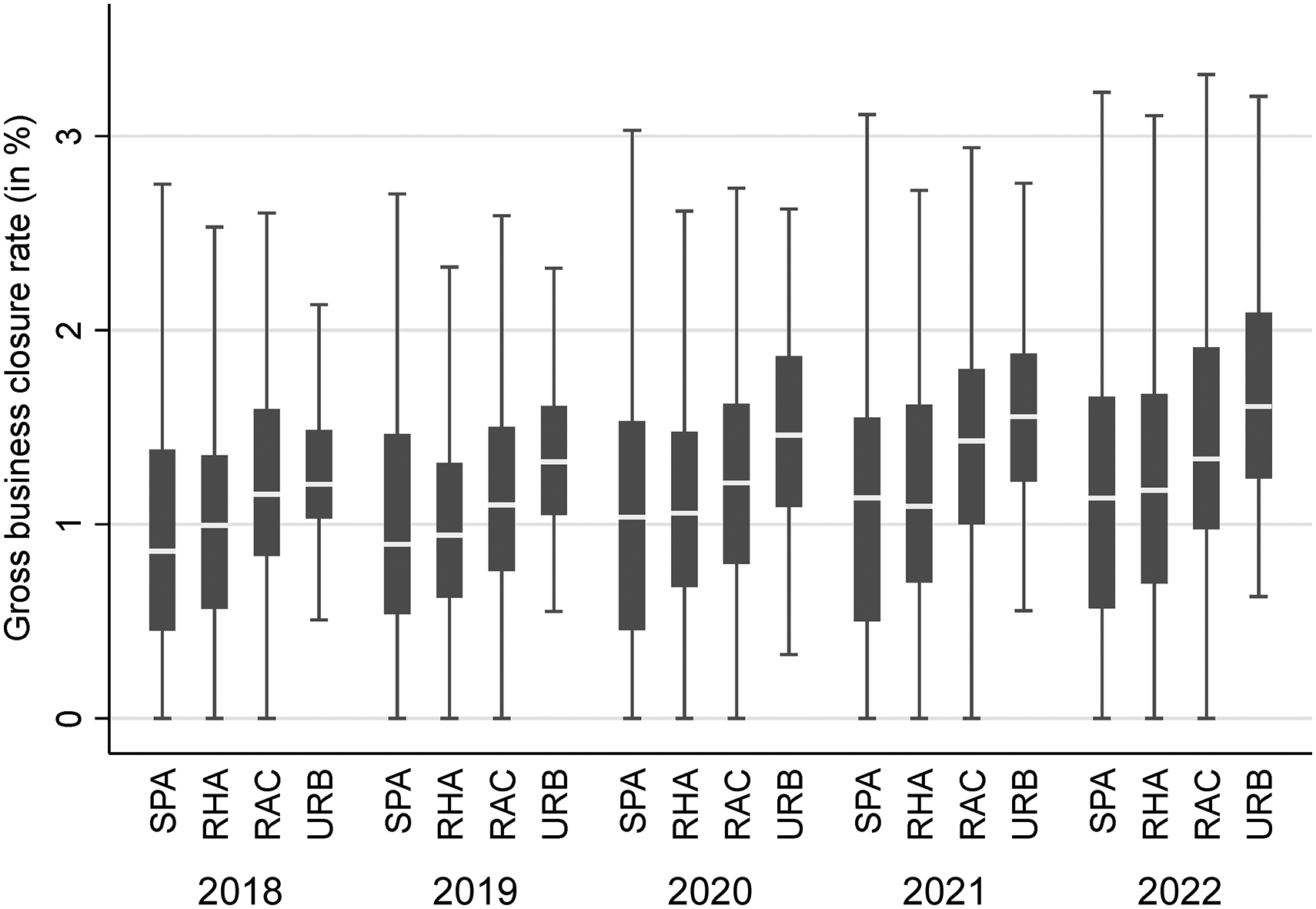
The distribution of business closure rates by regional category and year. Note: Box plots exclude outliers.
When we control for regional and temporal confounding factors in the regression analysis, Figure 5 reveals that in terms of the marginal COVID-19 effect on GCR over time, the pandemic particularly affected business closures in urban areas. Moreover, businesses in the sparsely populated rural areas were the least affected in terms of percentage point increase in business closures. This result lends support to the thesis that rural businesses were no less resilient (or even slightly more resilient) to the negative consequences of the pandemic than their urban counterparts. Evaluated against the (different) pre-pandemic sample averages of GCR in rural and urban areas, 2 the estimated marginal effects translate into an increase in business closure rate of approx. 17–19% in rural areas and 21% in urban areas. Figure 5 also shows that the business support funding of the Finnish government mitigated GCR during the pandemic in all of the different regional categories relatively equally, despite the majority of funding being received by urban businesses. The results of the analysis carried out using NCR are very similar to those of GCR (Figure A5).
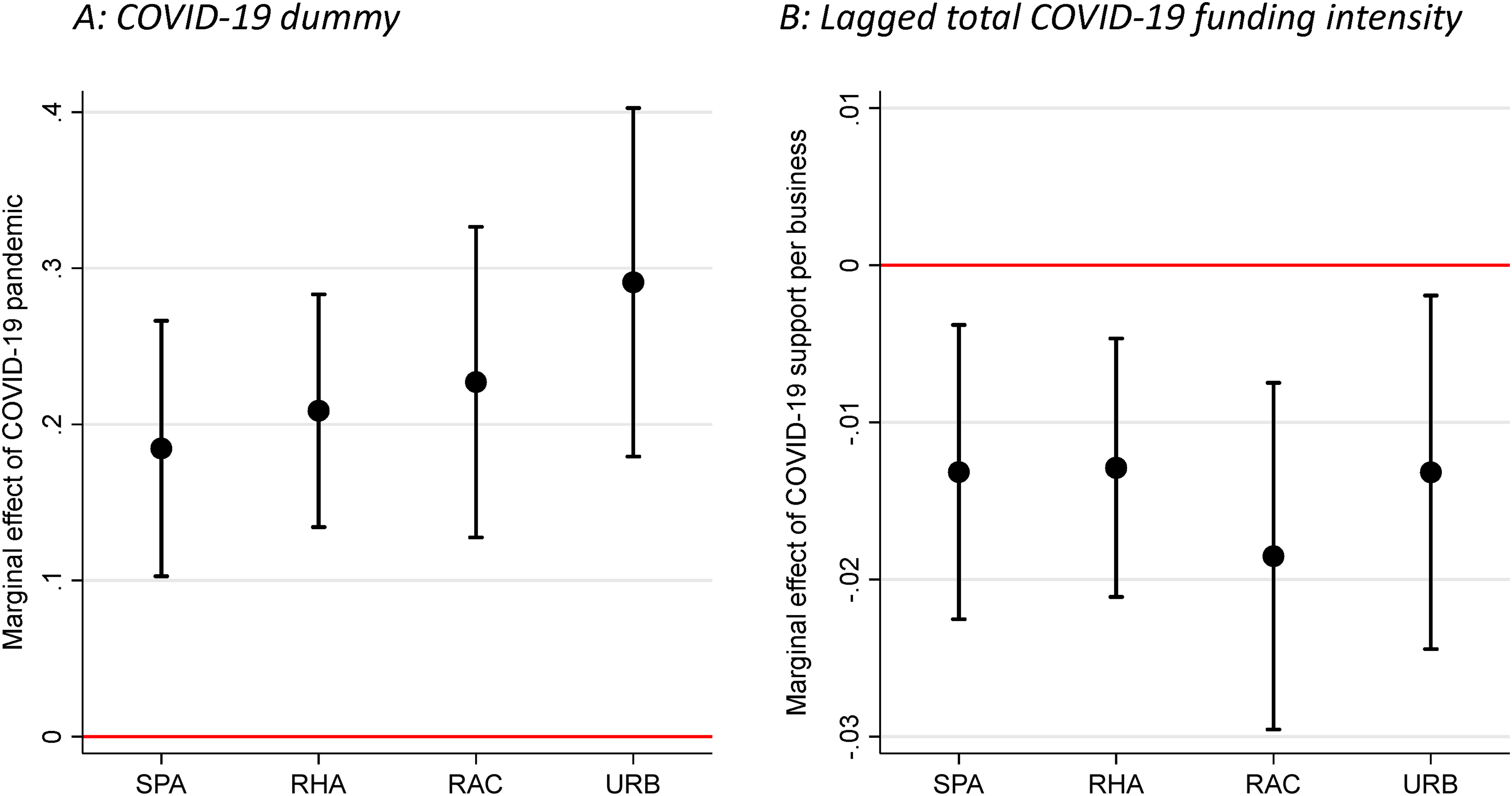
Regressions results for GCR by regional category. (a) COVID-19 dummy, (b) Lagged total COVID-19 funding intensity. Notes: Estimations are based on the baseline regression specification as shown in column 2 in Table 3 augmented by separate interaction terms between binary dummies for each regional category and the COVID-19 dummy as well as the lagged total COVID-19 funding intensity, respectively. The estimated coefficients are plotted together with 95% confidence intervals.
As for the sectoral effects of the COVID-19 pandemic, there are marked differences (Table A2; Figure A6): some sectors witnessed an increase in their GCR after the outbreak of COVID-19, whereas other sectors were not affected or even saw a decline in GCR. This raises the question: did the business support funding create ‘zombie firms’ in certain sectors? Further, the results also vary between the different regional categories. In similar veins, Figure A7 plots the marginal effect of the total COVID-19 funding intensity on sectoral GCR by regional category. Here the tentative results, that need to be treated with caution, point to relatively larger mitigating effects of business support funding in urban areas.
Conclusions
Regarding the first research question of this study, we found that the pandemic led to a significant rise in business closure rates during the period 2020q2 to 2022q4. Our regressions results indicate that the increase in GCR was between 0.2 and 0.3%-points across Finnish region types. Urban regions were more affected than rural ones: a back-of-the-envelope calculation based on average pre-pandemic GCR levels of between 1.1 and 1.4% indicates that the COVID-19 pandemic led to a closure rate increase of approx. 17–18% in rural areas and 21% in urban areas. The result is in line with recent evidence underlining the resilience of rural regions during the COVID-19 pandemic (Gajewski, 2022). Contrarily, the results oppose the findings reported in Dijkstra et al. (2015) and Faggian et al. (2018) by showing that rural areas close to urban areas were not particularly resilient. In fact, with respect to the magnitude of the impact of the pandemic, businesses in sparsely populated rural areas were the ones least affected by COVID-19 in terms of business closures. It thus seems that rural businesses are no less resilient than their urban counterparts or are, in fact, even slightly more resilient (at least in Finland). It is important to note, however, that there are marked sectoral differences both in the negative impact of the COVID-19 pandemic as well as in the mitigating effect of business support funding on firm survival rates in different types of regions. This result suggests that in certain geographical and sectoral contexts the funding might have created ‘zombie firms’. That is, businesses that survived only because of the business support funding, but are likely to default in the future (Hoshi et al., 2023).
In relation to the second research question of this study, our results show that the business support funding from the Finnish government mitigated the detrimental impact of the pandemic on business closure rates by approx. 10–12%. In other words, our results suggest that while the pandemic had dire consequences for firm survival despite massive business support funding from the Finnish government, without it business closure rates would have been even higher. In absolute terms around 81.2% of business support funding from the Finnish government was directed to businesses in urban areas. While the majority of the business support funding went to businesses in urban areas, the mitigating effects of the support funding were equally felt both in urban and rural regions. That is, it seems that the Finnish government's business support funding mitigated business closure rates during the pandemic in all of the different regional categories relatively equally, despite the huge differences in the amounts of received funding.
This result has a two-way interpretation. On one hand, it shows that funding effectiveness was slightly higher in rural areas, since a 1% increase in business funding support led to an equal %-point reduction in business closure rate across all regions, which translates as a higher percentage effect on GCR in rural areas. On the other hand, we found no evidence for decreasing marginal effects of business support funding in urban areas despite significantly higher absolute funding volumes. Since our analysis is not an impact assessment or a cost-effectiveness analysis, we remain wary of picking sides on whether the funding would have been better concentrated in rural or urban areas compared to spatially blind policies (Brown and Cowling, 2021). The results nonetheless suggest that the business support funding schemes launched by the Finnish government did, at the very minimum, what they were supposed to do: they mitigated the negative impacts of the pandemic on firm survival (and did so equally in both rural and urban locations).
Finally, in terms of the differentiated impacts of the individual business support instruments, size seems to be the decisive factor from a regional perspective: the largest instruments (business cost, BF and ELY funding, which covered 82.5% of total COVID-19 funding by the Finnish Government) were shown to mitigate pandemic-induced business closures the most. The results on the importance of BF and ELY business development funding lend support to earlier notions on the importance of funding business development and innovation in times of crisis for regional and firm-level recovery (see e.g., Acemoglu, 2009). It is, however, important to keep in mind that our approach is a regional one and, as such, cannot dig into the individual business-level consequences of business support funding that might offer a contrasting view on the ‘cost-effectiveness’ of the individual instruments. Thus, we are not indicating that the smaller business support instruments had no impact. We are only saying that individually they are not significant enough to show through our data relying on regional aggregates as clearly as business cost, BF and ELY funding.
Limitations and future research directions
Our study has several limitations that inhibit us from making confident causal interpretations. These limitations stem partly from our approach to investigating rural–urban differences. That is, in our study, we were interested in the structural heterogeneity between rural and urban areas and less focused on individual businesses and sectors. Therefore, the most obvious step for further research would be to ‘repeat’ the analysis conducted here with business-level data together with more precise information on the sectoral composition of the businesses that received support as well as on the exact timing of this support. This would allow a deeper investigation into how many of the businesses receiving support closed during or immediately after the pandemic and how many of them survived by sector and funding instrument. Carrying out such research would require an extensive effort in terms of data management (linking the business support data to firm register data) but is nonetheless within the realm of possibility as the data does exist.
Finally, our approach to measure business resilience based on official statistics for firm survival is a conventional one. Such measurement is suited for ex-post analyses and, therefore, less helpful in providing guidance for policymakers how to direct business support during a crisis. Alternative non-traditional data sources (such as pay-check issuance and phone-tracking data) to measure business activity and closures (Crane et al., 2022) might produce valuable complementary insights on improving the timeliness and fit of government reactions to future crises.
Supplemental Material
sj-docx-1-iei-10.1177_14657503241248284 - Supplemental material for Resilience of rural businesses in times of crisis: Firm survival during the COVID-19 pandemic in Finland
Supplemental material, sj-docx-1-iei-10.1177_14657503241248284 for Resilience of rural businesses in times of crisis: Firm survival during the COVID-19 pandemic in Finland by Timo Mitze and Teemu Makkonen in The International Journal of Entrepreneurship and Innovation
Footnotes
Acknowledgements
We are grateful to Dr Arja Jolkkonen for her help with regional data.
Declaration of conflicting interests
The authors declared no potential conflicts of interest with respect to the research, authorship, and/or publication of this article.
Funding
The authors disclosed receipt of the following financial support for the research, authorship, and/or publication of this article: This work was supported by the Rural Policy Council from the Development Fund for Agriculture and Forestry of the Ministry of Agriculture and Forestry of Finland (Grant number: VN/6136/2022).

Supplemental material
Supplemental material for this article is available online.
Notes
References
Supplementary Material
Please find the following supplemental material available below.
For Open Access articles published under a Creative Commons License, all supplemental material carries the same license as the article it is associated with.
For non-Open Access articles published, all supplemental material carries a non-exclusive license, and permission requests for re-use of supplemental material or any part of supplemental material shall be sent directly to the copyright owner as specified in the copyright notice associated with the article.
