




Abstract
A field study involving 35 institutionally constrained small and medium enterprises (SMEs) was conducted to investigate how entrepreneurs operating in developing economies draw on norms in the absence of formal institutional support. Employing a qualitative approach, our findings revealed that the institutional logics perspective, which presupposes an understanding of entrepreneurial behaviour, provided insights into many of the decisions observed within the SMEs. Our interview data revealed how a variety of culturally specific norms, including those influenced by kinship, religion and trade associations, played a pivotal role in structuring market-oriented economic activities. Central to our contribution is the concept that norms play a crucial role in enforcing trade agreements. This suggests that in situations where actors cannot rely on formal institutional arrangements, norms not only limit opportunistic behaviour but also foster trust within networks. Our paper makes a significant contribution to the field of entrepreneurship by addressing issues related to norms and SMEs within economic-institutional contexts that have been largely overlooked.
Introduction
Key insights into the structure of African entrepreneurship emphasise the significant role of social networks within the context of small and medium enterprises (SMEs) (Aluko et al., 2019; Udry and Conley, 2004; Wellalage and Locke, 2016). This includes how these enterprises rely on informal network relationships such as family and kinship (Amoako and Matlay, 2015; Drakopoulou-Dodd, 2011; Granovetter, 1985), religion (Dana, 2010; Omeihe, 2019), and credit associations (Amoako, 2018; Lyon and Porter, 2007) to leverage trade opportunities. Within the West African context, Nigeria's market system offers an intriguing case study. It predominantly operates within environments characterised by imperfect credit markets (Nyarku and Oduro, 2017; Smith and Luttrell, 1994) and is influenced by fragile state-backed institutional frameworks (Abor and Quartey, 2010; Amoako, 2018; Lyon and Porter, 2007; Omeihe et al., 2021). Nevertheless, it becomes increasingly apparent that beneath this surface lies a diverse array of indigenous economic and social institutions supported by various norms, which significantly shape entrepreneurial behaviour.
There is no consensus in the literature on how norms are generated. While some scholars strongly emphasise the relevance of norms (e.g. Faulkner, 2010; Sardan, 2013; Omeihe, 2019), others point out that norms function to hold people accountable to each other (Brennan et al., 2013; Bicchieri et al., 2018), particularly in terms of adherence to certain principles (Coleman, 1990). Understanding why and how norms shape social action provides explanations for how they enhance economic performance and facilitate transactions between economic actors (Amoako and Matlay, 2015; Lyon, 2000; Meek et al., 2010).
Norms, broadly conceived, are embedded within social institutions operating at different levels of jurisdiction. This is because institutional arrangements vary across societies, thereby providing varying degrees of cooperation (Lane, 1998). In most African economies, norms exert a more significant influence on entrepreneurial behaviour than scholars have readily recognised. In this context, norms play a decisive role in shaping entrepreneurial behaviour by defining the boundaries of acceptable actions and the institutional framework within which entrepreneurs operate (Nee, 1998). This is particularly evident in many parts of West Africa where entrepreneurs rely on norms as alternatives to weak formal institutional arrangements (Amoako, 2018; Omeihe et al., 2021).
In fact, this further emphasises the importance of understanding entrepreneurial behaviour within its institutional and social contexts. This encompasses the political, economic and socio-cultural settings in which entrepreneurs operate (Refai et al., 2018; Smallbone and Welter, 2015; Welter, 2011). Such recognition holds the promise of providing insights into the influence of context on African entrepreneurship.
In this article, we draw attention to a variety of indigenous norms and their role in governing entrepreneurial actions. By using the term ‘indigenous norms,’ we aim to emphasise that these norms, in addition to providing instructions on how to act, have contextual interpretations that go beyond the current understanding in academic discourse. The assertion put forth here is that indigenous norms lead to the development of predictable responses that are common among specific groups of people embedded within cultural contexts (Heide and John, 1992; Hodgson, 2006; Omeihe, 2022). This includes norms related to religion, trade associations and family, with a focus on how they shape entrepreneurial relationships (Amoako and Matlay, 2015; Bicchieri et al., 2018; Lyon and Porter, 2007). Rarely are these indigenous norms described in parallel. We demonstrate how these norms are associated with reputation and a range of enforcement mechanisms that influence entrepreneurial activities. We argue that the relative importance of indigenous norms lies in their ability to mitigate opportunism in one-off transactions, especially when prior interactions are non-existent and there are no expectations for future transactions. This raises the question of how different SMEs hold varying perceptions of how norms serve to organise economic behaviour. Recognising this significance, we aim to establish an understanding of how indigenous norms shape the activities of Nigerian SMEs.
From a theoretical perspective, we theorise by drawing on the institutional logics perspective to emphasise how actors, actions and contexts converge within institutional settings (Thornton and Ocasio, 1999). Guided by this theoretical framework, we aim to illustrate how various practices, beliefs and values influence different aspects of entrepreneurial actions. In summary, our objective is to understand how culturally specific norms situated within social and institutional contexts shape the behaviour of SMEs.
Building on this perspective, this paper takes an exploratory approach to facilitate an understanding of the processes through which entrepreneurs draw on norms in contexts characterised by inadequate formal institutions. The study focuses on the entrepreneur, who in this research is the SME owner-manager, as the unit of analysis. The original study relies on in-depth fieldwork conducted over a one-year period, with data collected through interviews and observations of entrepreneurs operating across Nigerian markets. To examine how entrepreneurial relationships are shaped by norms, our data collection is guided by one crucial sub-question: what types of norms influence SME relationships?
Here, our empirical evidence reveals a significant finding. In compensating for the weaknesses of inadequate formal institutions, such as weak courts and legal structures, entrepreneurs were compelled to rely on culturally specific norms, such as religion, family, kinship and trade associations, to establish the rules governing their business activities. These norms, in the form of institutional structures, demonstrate the unique context in which they emerge and how they, in turn, provide alternatives to formal institutional arrangements. We present evidence that the role of these norms varies in terms of their nature and scope of functions, with inclusion often being determined by reputation and moral judgments. The qualitative importance of these norms is evaluated in the findings section of this article as part of a broader interpretation concerning sanctions and enforcement of SME agreements within markets.
To systematically address the research question mentioned above, this article is divided into six sections. Following the introduction, we selectively review the evidence showing how institutions offer incentives for human exchange, whether social or economic. Second, we proceed to conduct a review of studies on norms before justifying our chosen methodology. The results yield a series of novel findings that highlight the significance of norms in SME relationships in Nigeria. Overall, we identify several areas where interventions would be highly beneficial.
Theory: institutional logics
What are institutions precisely? North (1990: 3) provides the following definition: ‘Institutions are the rules of the game in a society or, more formally, are the humanly devised constraints that shape human interaction’. This initial statement emphasises that institutions structure incentives in human exchange, whether social or economic. Institutions play a significant role in fostering economic growth because they influence the behaviour of key economic actors in society (Acemoglu et al., 2005; Omeihe, 2023). Therefore, actors rely on them as they provide legitimate courses of action. However, there is no certainty that actors will resort to the same set of institutions, as contextual factors such as culture also impact economic performance.
Certainly, one of the most enduring divides in the social sciences exists among scholars associated with institutions. For these scholars, institutional theory has proven to be a distinctive theoretical framework for exploring a wide range of issues. Since its emergence decades ago, its application has continued to generate significant interest across different domains. Seminal studies conducted by scholars like Meyer and Rowan (1977), Zucker (1977), and DiMaggio and Powell (1983) place culture within the framework of institutional analysis. For Meyer and Rowan, the role of the actor is seen as isolated from the institutional and societal levels, thus forming the basis for neglecting phenomenological insights—a stance commonly adopted by neo-institutionalists. A major advancement in new institutionalism by DiMaggio and Powell (1983) drew attention to the coercive, mimetic and normative components. Their contributions focused on the thoughtless nature of behaviour in response to cultural rationalisation but overlooked the role of institutions and their various forms.
The studies by Friedland and Alford (1991), Scott et al. (2000), and Thornton and Ocasio (1999) have provided greater precision by positioning institutional logics as a means of defining institutions. For these scholars, the focus has been on the role of culture as a critical determinant of institutional analysis. Building on this, Thornton and Ocasio (1999: 804) define institutional logics as ‘the socially constructed, historical patterns of material practices, assumptions, values, beliefs and rules by which individuals produce and reproduce their material subsistence, organise their time and space, and give meaning to their social reality’. The conceptualisation of institutional logics, in principle, offers a flexible and adaptable explanation for how actors, actions and contexts converge within institutional settings. This manifestation of institutional theory recognises that the identities, practices, beliefs and values of actors are embedded within prevailing institutional logics. In short, institutional logics presuppose an understanding of entrepreneurial behaviour situated within social and institutional contexts that regulate social behaviour (Thornton and Ocasio, 1999; Thornton et al., 2012).
Clearly, explanations that reference institutional logics are incomplete without considering the interplay between formal and informal constraints. As evident from Nee's (1998) analysis, it becomes apparent that informal rules, which are rooted in norms and operate in the shadow of formal institutions, can either constrain or limit economic actions. This explanation stems from the uncertainty surrounding whether informal rules within specific institutional settings will align or conflict with formal rules.
When it comes to Africa, the economic analysis of its institutions has often followed blueprints shaped by Westernised assumptions that bear little reflection of its current context. Consequently, its economic actors have been observed to rely on norms to facilitate economic action (Amoako and Matlay, 2015; Omeihe et al., 2020). It is worth emphasising that African SMEs are influenced by the logics of various social norms. These norms define what social behaviour is considered right or wrong, and their creation is influenced by the cultural background of relationships, especially within a socio-economic context. This suggests that cultural norms establish the boundaries of legitimate action that shape entrepreneurial interactions.
In sum, the idea that norms operate in opposition to formal institutional arrangements when they contradict social interests is appropriate. This is because norms encourage actors to avoid resorting to inadequate formal institutional arrangements and instead, rely on culturally specific arrangements to pursue their objectives. When applied to SMEs, the logic of norms largely reduces the costs associated with enforcement and monitoring. Such circumstances result in lower transaction costs, enabling entrepreneurs to realize their economic potential.
Norms
The most common yet crucial question is: What are norms? According to Faulkner (2010), norms are the explicit or implicit rules of behaviour that embody the preferences and interests of close-knit groups. They lie at the heart of a set of behavioural expectations shared by a group of people, providing instructions that guide their actions. The attitudinal hallmark of norms suggests feelings of guilt, embarrassment and shame that accompany violations of these norms (Elster, 1989; Faulkner, 2010). A notable feature common to various definitions of norms is the recognition that they play a vital role in the development of specific types of concrete relationships (Amoako and Matlay, 2015; Bruton et al., 2010; Porter et al., 2007). In simple terms, the concept of norms invokes an image of actions that are considered either desirable or undesirable, as they form the foundation for establishing and maintaining personalised trust (Lyon, 2000; Omeihe, 2019).
Indeed, the primary advantage of relying on norms is that they mitigate opportunism in one-off transactions, especially in cases where previous interactions are non-existent, with no expectations for possible future transactions. Varied discussions on the nature of norms have led to a significant number of debates regarding their formation. For example, while norms have been conceptualised to include aspects of social habits that shape cognitive actions (Hodgson, 2007; Levi, 1996), there is evidence suggesting that norms are formed through socialisation within schools, families and religious institutions (Lyon, 2000; Lyon and Porter, 2007). Many of these interpretations reveal that norms emerge from networks and are reinforced through ongoing relationships. This implies that norms lead to the development of predictable responses common among specific groups of people (Hodgson, 2007; Omeihe, 2019).
The fundamental assumption that norms embody a range of interests and preferences achievable through collective action provides a straightforward rationale for why people adhere to norms (Nee, 1998). This basic explanation is grounded in the idea that norms are followed because they prescribe what should be done. In doing so, norms are internalised by individuals who possess the moral sensibility to avoid the shame and guilt that come with sanctions (Elster, 1989; Hodgson, 2007). This cost gives rise to threats to one's reputation, shaming and exclusion from communal and economic activities (Amoako, 2019; Brennan and Pettit, 2004; Porter and Lyon, 2006).
For this reason, and within the context of SMEs, scholars such as Blomqvist et al. (2008) indicate that norms reduce the risk of transaction costs related to monitoring and negotiations. Other scholars support this view by stating that norm-based relationships provide market information and protection against the liability of newness for SMEs (Amoako, 2019; Amoako and Matlay, 2015; Brunetto and Farr-Wharton, 2007; Rodriguez and Sanchez, 2012). It is no wonder that norms enable SMEs to economise on decisions regarding market opportunities.
In a related study, Amoako and Lyon (2014) show how norms of kinship and ethnicity in Ghana were useful for SME exporting. Combining this with the contributions by Omeihe et al. (2020) further amplifies the idea that family norms provide the framework within which transnational relationships operate. From our perspective, the complexities through which culturally specific norms shape exporting SMEs, particularly in a developing market economy, remain strikingly underexplored and under-theorised in entrepreneurship research (Amoako and Matlay, 2015; Amoako et al., 2018; Lyon and Porter, 2007; Omeihe, 2022). Our focus in this article is to explore new avenues by uncovering the types of norms that affect entrepreneurial behaviour.
Methodology
To explore the research question about the types of norms influencing SME relationships, this study primarily relies on qualitative research conducted in Bokkos market in 2017. It also builds upon additional research conducted by the authors in this region and elsewhere (see Omeihe, 2019; Omeihe et al., 2020). Bokkos market in North Central Nigeria received the most attention due to its significance in the marketing systems of manufacturing and agricultural produce, particularly tomatoes, vegetables, potatoes and fertiliser.
We opted against adopting a quantitative analysis of norms and their role in governing entrepreneurial action. Such an analysis is challenging to capture through surveys and statistical methods (; Jenssen and Kristiansen, 2004; Omeihe et al., 2020). In response to calls for qualitative approaches that embrace a process perspective to provide a rich understanding of actual entrepreneurial experiences and the embeddedness of relationships under investigation (Crotty, 1998; Colman and Rouzies, 2019; Hack-Polay et al., 2020; Möllering, 2006), we placed emphasis on qualitative methodological analysis. This approach allowed for the emergence of new knowledge within socio-economic relations that had not been previously identified in the literature. However, it is important to note that explanations based on the above methodology are challenging without acknowledging the scarcity of studies that focus on the diversity of norms within African entrepreneurship.
We employed the purposive sampling technique (e.g. Omeihe, 2019) to select 35 entrepreneurs operating within the manufacturing and agricultural sectors. The choice of both sectors facilitated comparisons across markets. We gained access to participants through interactions with key informants, involving visits to open marketplaces, trade meetings, export forums and trade fairs. This approach provided the advantage of accessing a wide range of entrepreneurs operating within the market. We conducted approximately five visits to various market sites and recorded field notes after each visit. Additionally, we conducted 35 semi-structured interviews with the entrepreneurs, which were audio-recorded and transcribed.
In our investigation of the role of norms, we maintained an open-minded approach to uncovering the information we needed. Each interview lasted approximately 35 min, and the questions were designed to probe into what norms meant to the entrepreneurs. During our analysis, we initiated the process of generating initial codes from the data and then proceeded to identify patterns within our dataset (Boyatzis, 1998; Braun and Clarke, 2008). With the research question in mind (Braun and Clarke, 2008; Miles and Huberman, 1994; Saunders et al., 2019), we systematically examined the entire dataset, identifying interesting aspects of the data that gave rise to recurring patterns (themes). Following the initial coding, we were presented with an extensive list of codes, which required us to categorise these codes into various themes (refer to Figure 1).
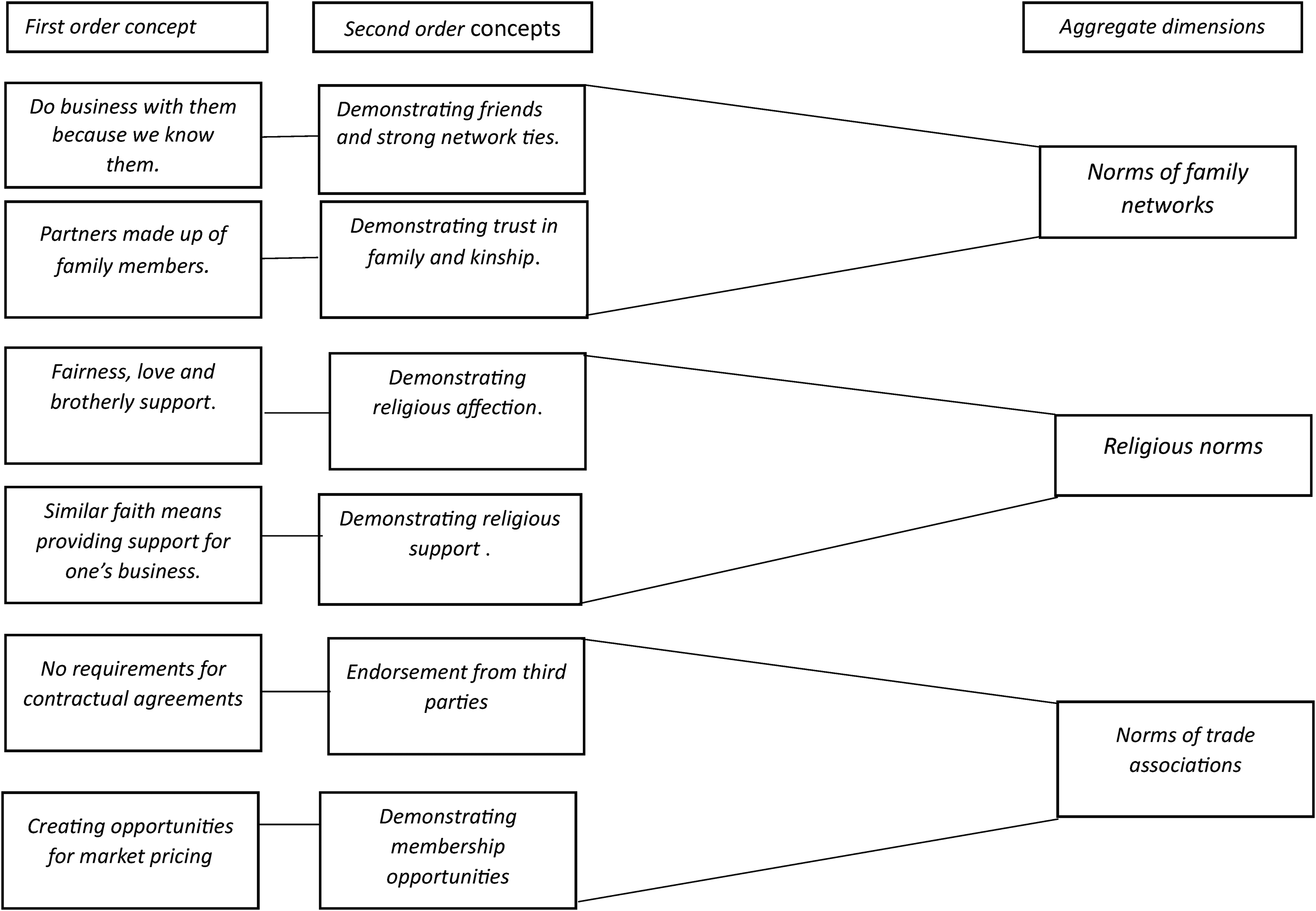
Sample data structure illustration.
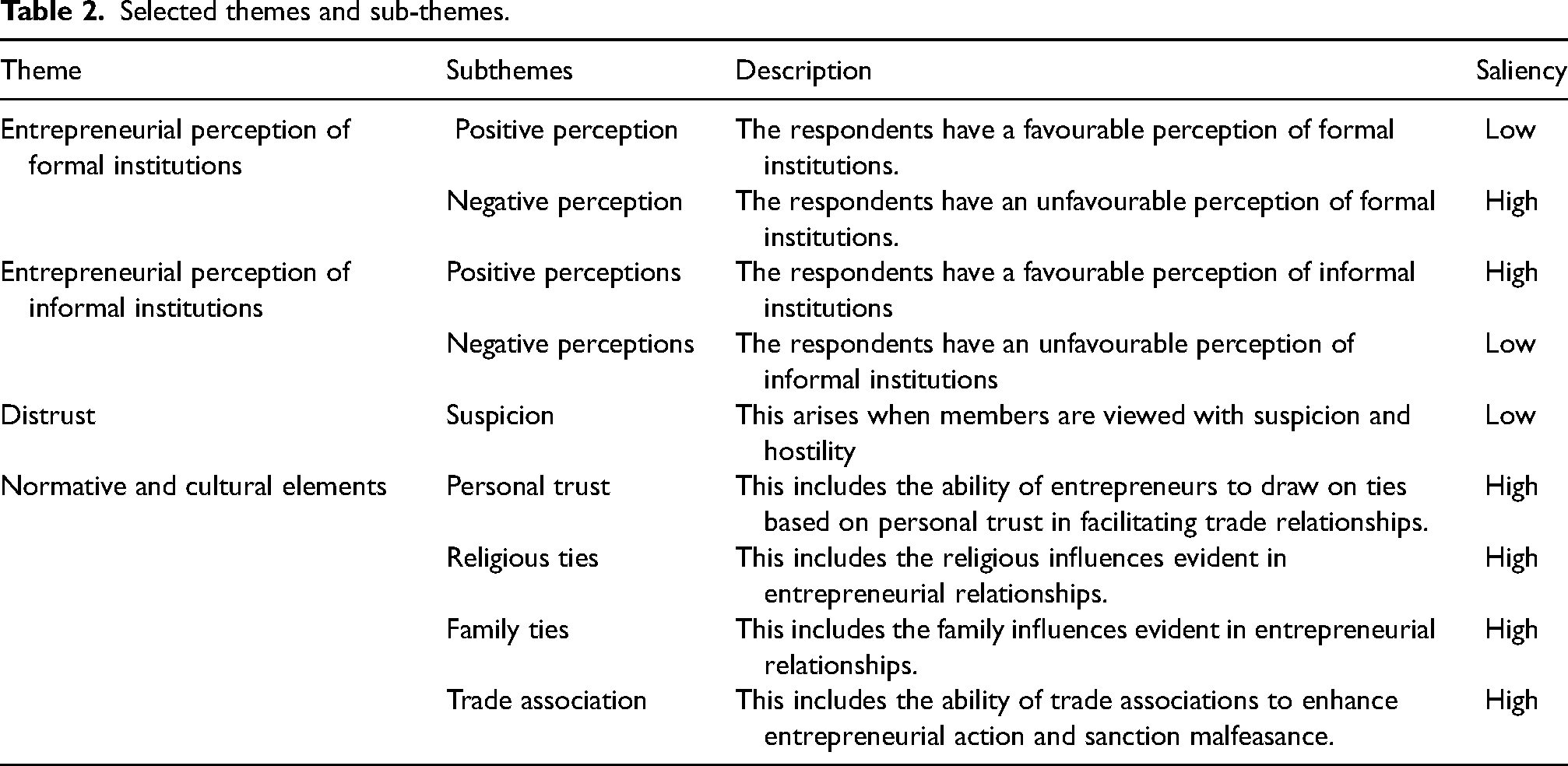
We began the analysis of our data by considering how different codes could be combined to develop overarching themes. This process led to the identification of a collection of candidate themes and sub-themes, providing us with a preliminary understanding of these individual themes. Subsequently, we initiated the refinement of these themes to ensure that the data within them conveyed meaningful insights, revealing the richness of the phenomenon under study. This refinement involved two levels of scrutiny. Firstly, all the compiled themes were reviewed to unveil coherent patterns, while the second level assessed the validity of each theme in relation to the dataset. This step also ensured that any additional themes that may have been missed during the initial coding process were re-examined and incorporated as necessary (Table 1). Through this process, we revealed the themes that had emerged within the dataset. The final stage entailed naming and defining these themes. Thus, each theme was accompanied by a sub-theme, a typical description of the main theme, and illustrative quotes (refer to Table 2). Our objective was to provide readers with a clear understanding of the essence of each theme (Braun and Clarke, 2008).
Population demographics.
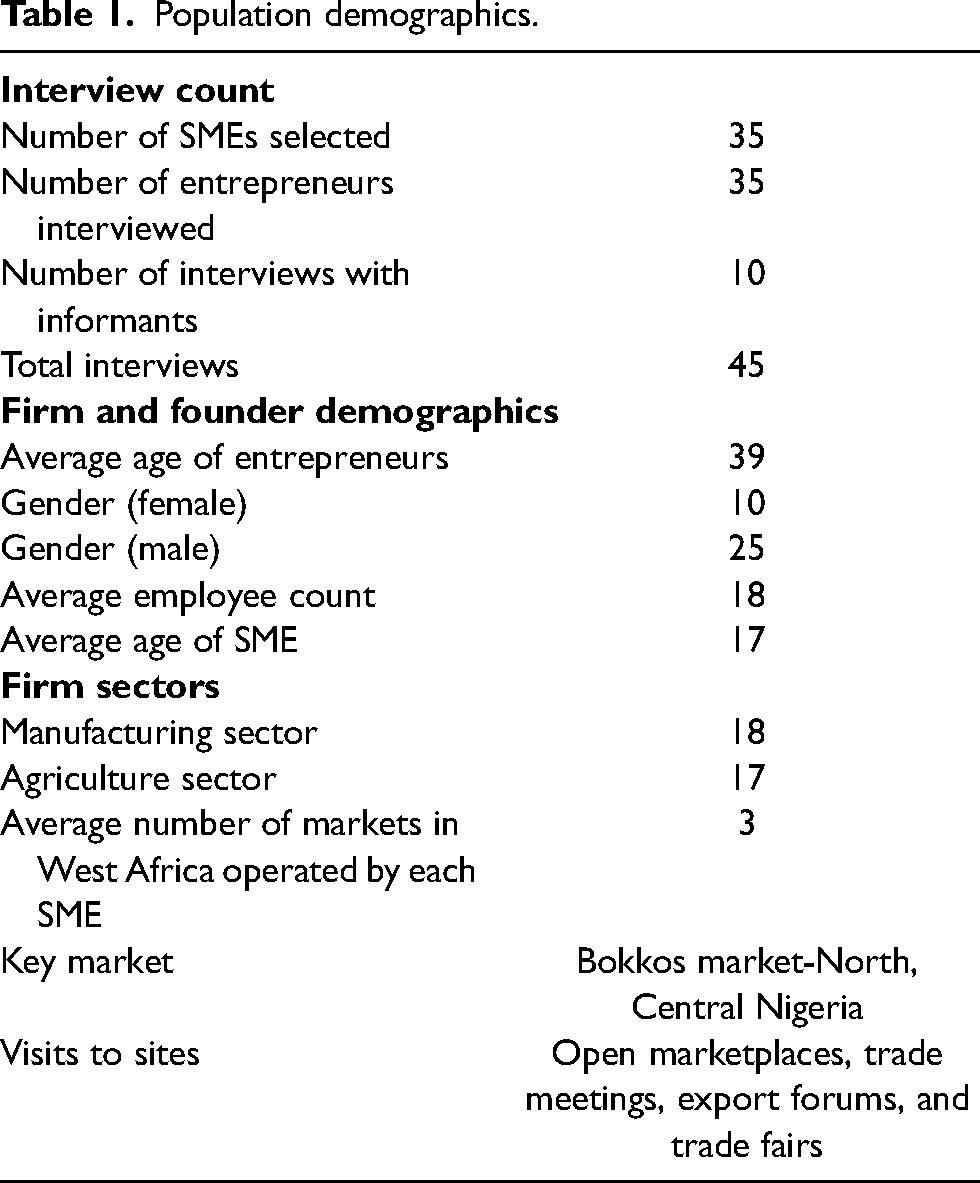
Selected themes and sub-themes.
Throughout the iterative process of scrutinising our data, themes such as family and kinship norms, personal trust, trade associations and religion gradually emerged. Some of these findings had been presented in a prior presentation of our studies (Omeihe et al., 2021). A more systematic qualitative analysis was conducted after collecting all the data. We observed that norms were contingent upon several factors: (1) the reputation of the entrepreneurs, (2) their affiliations with existing trade associations and religious groups, (3) family and kinship connections and (4) the potential consequences of sanctions and trade ostracism. Through this analysis, we were able to highlight that norms were perceived as integral to the social structure, guiding instinctive actions and enabling entrepreneurs to mitigate risks (refer to Figure 2).
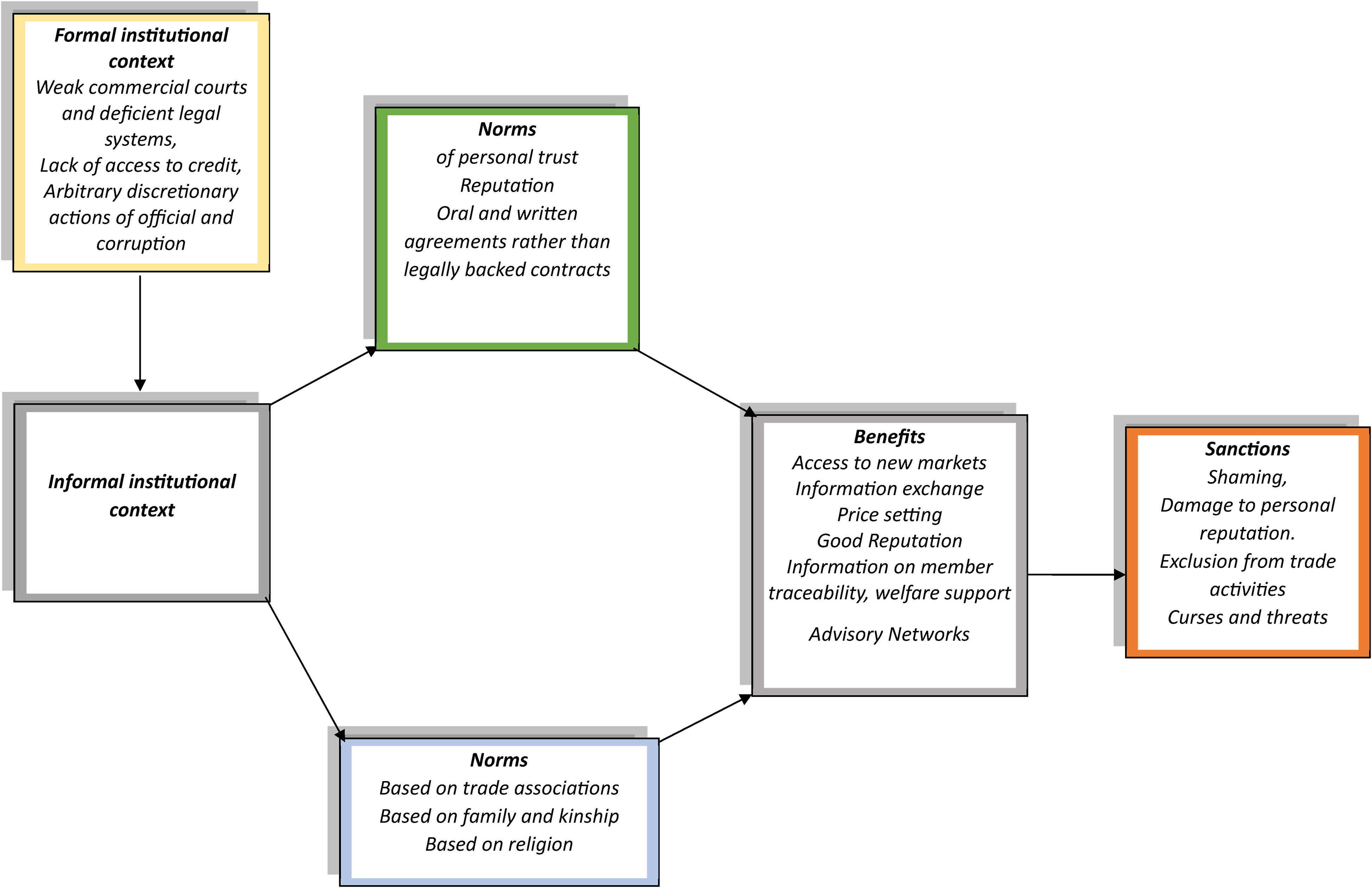
Norms and institutional context.
In presenting our findings, we have used a combination of quotes and illustrative examples to convey the insights derived from our data. When introducing sample excerpts, we have maintained respondent anonymity by assigning them alphabetical indices. The findings regarding how respondents relied on norms to influence SME relationships are comprehensively presented and discussed in the following section.
Context: Bokkos market
Situated in Plateau State in North Central Nigeria, Bokkos market is renowned for its substantial community of entrepreneurs specialising in manufacturing and agricultural production. The market's robustness has attracted entrepreneurs from across West Africa. Entrepreneurs based in Bokkos contend with a lack of government institutions, limited access to bank credit and inadequate transportation infrastructure. One notable aspect of Bokkos market is that the majority of entrepreneurs, both male and female, engage in long-distance trade. Despite the considerable volume of long-distance trade conducted, we observed the absence of formal banking institutions. The core of trade activities was financed through alternative arrangements. This aligns with Chamlee-Wright's (1993) argument that informal banking procedures in West Africa have developed to fill the void left by Western institutions, which have failed to accommodate the specific needs of indigenous entrepreneurs.
Findings
The primary objective of this paper is to identify a range of culturally specific norms that underlie SME relationships. The substantive findings have unveiled the novelty and diversity of narratives reflected in the nature of SMEs. Regardless of personal characteristics, industry or markets, entrepreneurs followed a similar set of actions as the foundation for relying on norms. Due to the entrepreneurs’ reliance on various norms, the robustness of our sampling allowed us to access multiple entrepreneurial networks, expanding the scope of our inquiry. Our engagement process facilitated the exchange of knowledge, which was central to understanding how SMEs operated. Overall, the emerging findings from our interactions revealed that SME relationships were shaped by norms related to family/kinship, personal trust, trade associations and religion.
Norms of family and kinship
Considering the central premise that family and kinship constitute rich and valuable resources for Nigerian entrepreneurs, we examined the role of family and kinship norms in SME relationships. Evidence from our findings highlights that within Nigeria, and by extension Africa, a family often consists of a husband, his wife (or wives), children and numerous relatives with kinship or blood ties. Consequently, the concept of family implies a form of social security where members can support each other. Responses from our participants indicated that many entrepreneurs tended to rely on trust established through family and kinship connections in their business activities. These ties were often used to address grievances and problems.
For example, participants were questioned about the benefits of working closely with family members. Out of the 35 entrepreneurs, 26 stated that they trusted their family members and chose to work with them. This trust was attributed to the understanding that family and kinship bonds, along with emotional ties, fostered trust-based relationships. Excerpts from their narratives are highlighted as follows: This business is a family business. I have my sisters, nieces, husband, kids, and in-laws involved in this business with me. So, I would say that trust contributes to our business's success. (Case B) When it comes to international trade, our partners are mostly from within the family. They belong to my mother's family, and they are all involved in trading. We do business with them because we know them and trust them. (Case L) You know, in African society, regardless of how we describe it, it's a family-oriented society. Most of the retailers, including the transporters and exporters, are familiar with you. They know your warehouses, they know your family, and they are acquainted with the nature of your business. So, in that sense, there are no problems because if you happen to miss a payment, we know how to reach you. (Case N)
The evidence presented above underscores the significance of family ties in the level of support extended to family members’ businesses. Traditionally, it is customary for family members to support the businesses of their kin, as a family member's wealth is seen as the collective property of all. This support is not only expected but also considered obligatory. Given their specific support requirements, kinship connections played a particularly vital role in bridging the ‘psychic distance’. Many participants revealed how they relied on the strength of family ties to overcome geographical, economic and socio-cultural differences during their international expansion efforts. They mentioned that they received market information from family and kinship members, and these connections heavily influenced their choices regarding entrepreneurial opportunities. Conversations revealed that many of their relatives, who also acted as intermediaries, played a central role in bridging the gap between domestic and foreign markets.
Our findings highlight a distinctive feature of African SME activities, namely the extensive family networks cultivated over generations. Comparing cases, it becomes evident that most entrepreneurs relied on connections with their emigrant family networks across the West African border markets. An illustration of such connections is described below: I have brothers who have been living in Ghana for a long time. They initially introduce me and my product samples, and later they trade on my behalf. They ask me to send products that customers demand, and I forward them. That's how I conduct my business. (Case C) We have connections outside Nigeria, and they are our family members there. I trust them, so I send my business to them. In return, they assist me in selling to customers and then return the money to me. (Case H)
Overall, it is evident that the entrepreneurs widely recognised the positive impact of family and kinship ties. They frequently relied on these networks to overcome trade barriers.
Norms of personal trust
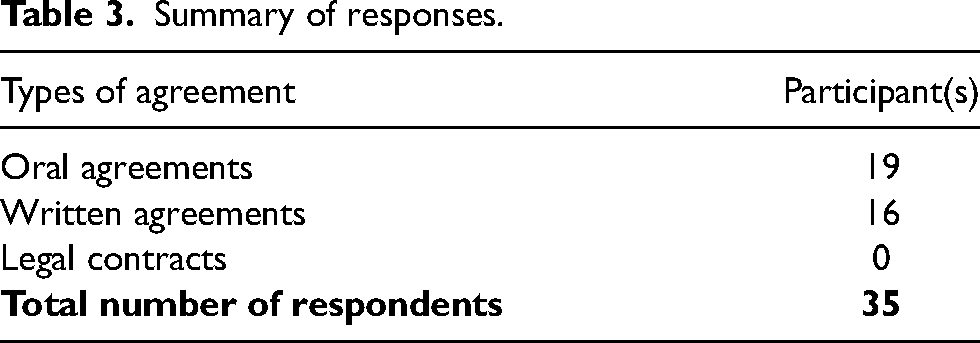
Considering West Africa's challenging institutional context, characterised by inefficient legal systems and minimal banking infrastructure, the activities of SMEs stand as a remarkable display of ingenuity. Specifically, the existing dysfunctional formal institutional structures indicate a limited use of legally binding commercial trade contracts for enforcing commercial trade agreements. The empirical findings revealed that all the entrepreneurs relied on personal trust-based relationships to facilitate both their domestic and international trade dealings. It was evident that the inclination to employ written contracts, as commonly seen in well-established market economies, was sparingly used by the selected participants. Due to the shortcomings of the existing formal institutional arrangements, norms of personal trust emerged as a critical resource for entrepreneurs. In further elaboration on these issues, the entrepreneurs expressed consistent negative views regarding the court system's ability to resolve disputes between them and their partners in West African markets (see Table 2). It is unequivocal that the entrepreneurs had built relationships over a series of past interactions. This explains why all the respondents were found to rely on oral agreements rather than written legal contracts.
When the topic of court systems and contract enforcement arose, all participants acknowledged the impracticality of depending on commercial contracts, as pursuing legal remedies for commercial disputes was perceived as a futile endeavour. Out of the 35 responses, 30 participants cited concerns regarding corrupt and expensive court systems, while 5 participants admitted to viewing the courts as accessible primarily to the affluent. These apprehensions led them to place their reliance on oral and written agreements.
To be specific, 19 of the respondents stated that they relied on oral contracts established through face-to-face interactions and telephone communications, while only 16 indicated their reliance on written agreements. It is worth emphasising that these written agreements, typically in the form of memoranda of understanding, were not crafted with legal assistance and should not be mistaken for legally binding contracts. Instead, they serve as adaptable arrangements between parties.
Beyond the weak courts, each entrepreneur conducted trade based on the personal trust they had developed with their partners. The relational and trusting nature of these transactions appealed to the entrepreneurs because it enhanced the prospects of honoured obligations. Oral and written agreements revealed that the entrepreneurs relied on personalised trust relationships to address the limitations of weak legal arrangements. Case evidence of the use of written agreements is clearly reflected in the below excerpt: We transact our business based on trust. Without trust, I should have been out of business. I have been in this business for 10 years; no one has ever cheated me; it is all about trust. No contracts, we just write agreements on paper. (Case A)
Interestingly, two women entrepreneurs indicated how they related to their business partners in West African markets without relying on legally backed contracts. In the respective cases, we sought to allow the actors to recount their unique narratives: We don't write on paper or sign any contracts. I don't even understand how to read contracts. Really, it is just phone calls most times, and I see my partners twice a year. During those times when I get to meet with them, we make our discussions and agreements for the year. (Case L) There is an understanding that we agree verbally. There is nothing to write. There is no formal agreement; it is just through word of mouth. Yes, we agree, we sit down, we discuss it, and we move on. (Case M)
The picture that emerges from the above responses reveals that, on one hand, personalised relational agreements with partners were built on norms of personal trust. Conversely, even though these agreements, both oral and written, lacked formal legal backing, they held substantial respect among the parties involved. It is noteworthy that all entrepreneurs emphasised that trust played a pivotal role in fostering these agreements, allowing them to share complementary interests, and thereby strengthening their trade relationships.
Overall, the compelling evidence underscores the significance of norms of personal trust in the success of entrepreneurs. In all the cases examined, the presence of personalised trust relationships played a crucial role in resolving trade disputes and upholding agreements. This, in turn, contributed to the support and enhancement of their trade activities.
Norms of trade associations
Arguably, trade associations are a particularly prevalent feature of the SMEs analyzed in this study. The evidence presented in the cases enabled an understanding of the functioning of trade associations. In fact, the uniqueness of trade associations in Nigeria and West Africa relates to their specific function as alternatives to the dysfunctional features of the formal environment constraining the entrepreneurs. Viewed in this perspective, trade associations enabled the exchange of trade information between members and ensured that certain market rules are followed. They also provided dispute mediation between members and their partners.
Most of the entrepreneurs (33 out of 35) belonged to trade associations. All the responses uncovered the associations’ unique capacity to bestow trust on its members. Specifically, their regulatory role is explicable when placed within the broader context of SMEs. For instance, trade associations were found to exercise regulatory capacity by sanctioning members who go contrary to the existing norms governing trade activities. The below extract from one of the entrepreneurs describes the associations’ regulatory influence:
Our associations are very important as they provide business referrals within and across different markets. However, once you abuse the trust that exists within the association, the chances are high that you will be blacklisted, and your reputation will be tainted. Members are warned not to trade with you. This signals an end to business for you. No one wants this!. (Case P)
Similarly, the point that trust is sustained when members are particularly wary of sanctions such as reputation damage and ostracisation is further illustrated by Case O who stated:
The application of trade sanctions is dependent on the gravity of the offense. Defaulters can be suspended or expelled from the association, and other members will be mandated to desist from transacting with you across the markets. (Case O)
Furthermore, the interviewees reiterated that associations created arenas for price settings by ensuring that agreed market prices were followed. The reflection of one of the entrepreneurs during the interviews expands on this point:
There is no disadvantage in belonging to our association. Our association helps in fixing the prices of the goods which we sell. It also provides information about which markets to invest in and details about our members in those markets. The association decides the pricing, and we all stick to the price as it benefits all of us. (Case L)
In view of the entrepreneurs’ perception of the norms of trade associations, general case evidence enables an understanding of culturally specific norms used in enhancing trade. This demonstrates that norms are quite effective when working within specific contexts. Yet, the damage in adopting a glamorised stance of norms of trade associations lies in the constraint that it presents for non-members. While it is accepted that norms of associations generally have positive benefits, in looking at our data, we found that norms were also used to foster trade cartels. Although this was recognised to be beneficial to members and those with whom they cooperated, it was found to restrict trade opportunities and market access for non-members.
Norms of religion
Despite its multi-ethnic composition, one of the key features of the Nigerian context is the significant influence of religion. Beyond family and kinship structures, a significant part of Nigeria's indigenous structure is founded on religious beliefs. In fact, religion is considered very important, more than how it is accorded in more advanced societies. Many aspects of Nigeria's social structure are reinforced by religious norms, since economic exchange is often related to religion. Given the context of SMEs, the reasons given above support the view that religious solidarity is demonstrated in the building of economic relations with people of similar faith. From our interpretations, we captured that commitment decisions were underpinned by religious norms. The extent of this influence is reflected in the significant number of entrepreneurs (35/35) who relied on religious norms in fostering trade relationships. Owing to the historically religious origins of Nigerian trade, we found that religious norms enjoy a high degree of acceptance and authority. And this knowledge is widespread among entrepreneurs.
Given that a relative number of Nigerians believe in traditional worship, it was no surprise to find that 5 of the 35 respondents expressed their belief in ancestral deities. One of the entrepreneurs explained the role of traditional religious norms: In making our decisions, we are more disposed to trading with people who are of the same traditional beliefs. Differences in belief imply that it will be possible for one to be cheated. This belief in our traditional religion enhances our business exchange. (Case F)
The relevance of the above excerpt is profound as religious ties were judged as advantageous for the development of trade relationships. It is evident that the respondent was more obliged to deal with members of similar religious beliefs. This overt expression of such economic choices, whether the entrepreneurs are fully aware of their inclination or not, appears to indicate the entrepreneurs’ trust in religious norms. Furthermore, evidence from similar responses indicates that being bound by shared religious norms reduces the chances of malfeasance. Admittedly, the use of oaths as sanctioning mechanism portends great dangers in the event of default. For example, in certain cases, partners are warned about incurring the wrath of the traditional deities, as curses may be invoked as punishment. This finding was emergent from the statement below: In keeping with our custom, we are traditionalists, and we believe in ancestral deities. If you deceive us in business, there will be divine implications that are not usually favourable. This instills trust in our trade interactions. (Case L)
Interestingly, one of the cases represented their views on how strong Islamic beliefs enforced trust with his partners in neighbouring markets of Chad and Niger Republic: To be competitive, we ensure that we work well together and do not cheat each other. So, we would cite specific passages in the Holy book and take an oath that is binding on our agreement. Through this, we have trust that the other partner would not cheat us, and this would reduce the fear of cheating. (Case A)
Similarly, the influence of religious norms on entrepreneurs serves to illustrate the excerpt stated below. One of the respondents provided evidence of how religious norms were useful in strengthening exporting relationships between his partners in Mali and Niger: Doing business with people of similar religions can be easier. We don’t cheat people in our business. This act is simple and reciprocal. So, it makes life simple and easy. In most cases, we are more confident doing transactions with brothers with similar beliefs. (Case Q)
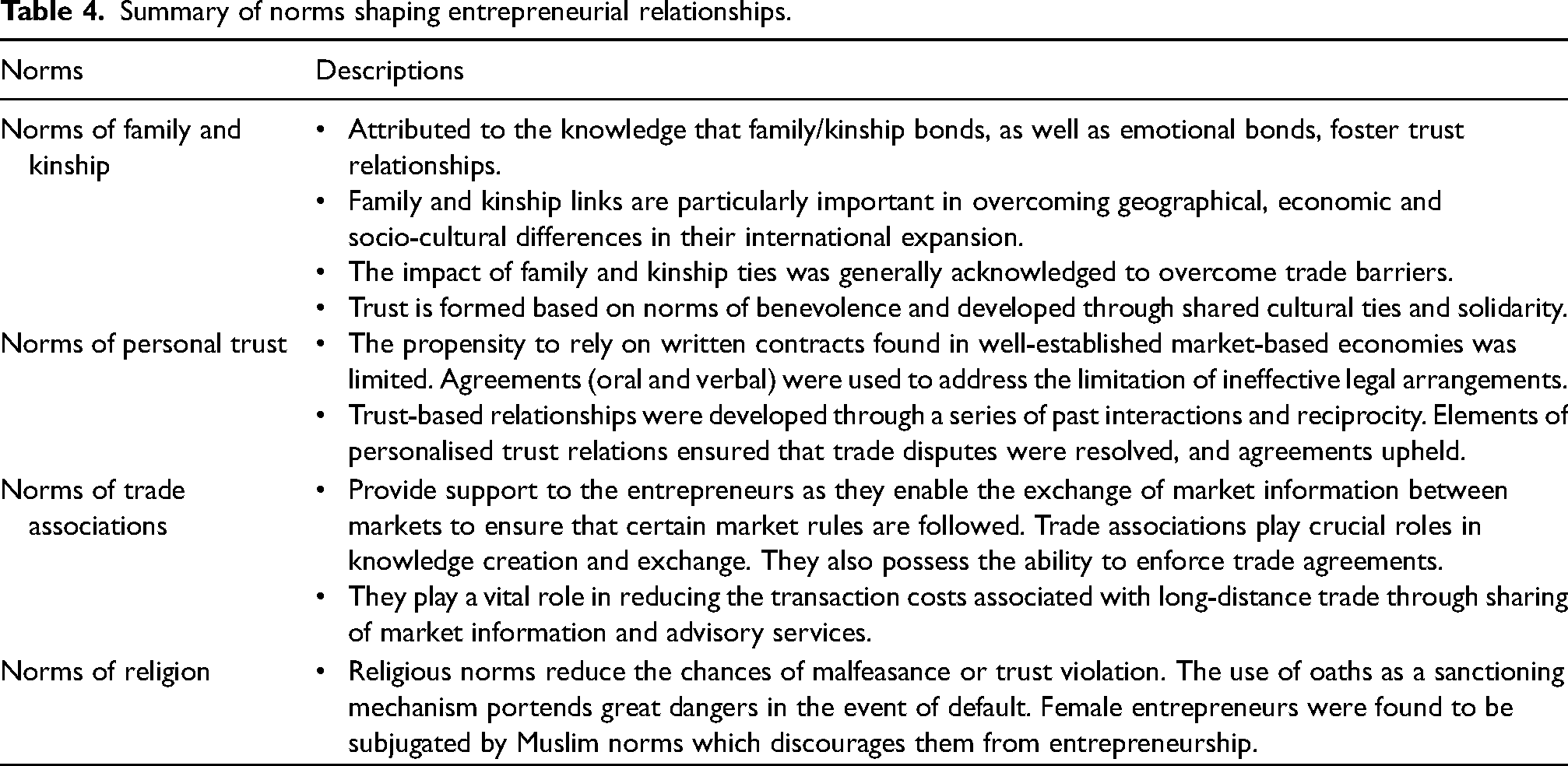
The views expressed above cogently show how religious norms shape the process of trust building (Table 3). It is conceivable that religious norms play an important role in establishing transnational relationships with partners whom the respondents may not know very well. Through shared beliefs, it is recognised that parties would not act opportunistically. Our findings leave scope for further reflections on the role of norms (see Table 4). We further established that despite the importance of religious norms, women entrepreneurs were constrained by varied circumstances simply for the reasons of gender.
Summary of responses.
Summary of norms shaping entrepreneurial relationships.
Discussion
To sum up, the point of departure for this article is the unresolved issue of how norms form the basis for entrepreneurial relations (Amoako, 2018). Perspectives investigating norms tend to focus primarily on the emergence of norms while giving scant explicit attention to the functions they perform. This article has specifically analysed how entrepreneurs rely on a range of norms to enhance entrepreneurial exchange in contexts with deficient institutional arrangements. It draws attention to an understanding of a range of indigenous norms such as religion, trade associations and family/kinship which define the rules of SME activities. We have also attempted to analyse the conditions under which norms come into being by exploring the instances by which one is required to draw on or maintain normative bases of entrepreneurial exchange.
We find that while prior studies have underscored the relevance of context for entrepreneurship (Kalantaridis and Fletcher, 2012; Vershinina and Rodgers, 2019; Welter, 2011; Welter and Baker, 2021), the findings of this study extend such work to show that there is much more to the role of norms in shaping how entrepreneurs operate. Furthermore, we discover that contracts taken for granted in more mature economies are not widely regarded in Nigeria. No evidence demonstrating recourse to legal contracts or arrangements was found. In the absence of formal structures, we find that entrepreneurs preferred to rely on norms of personalised-trust relationships to address the limitations of weak legal arrangements. This is consistent with Rotter's (1971) definition that trust is the generalised expectation of the reliability of one's promise. The broader knowledge of relying on norms of personal trust was generally acknowledged as a powerful incentive for business continuity. This subsequently enables entrepreneurs to secure a pattern of reciprocity that mitigates the likelihood of opportunism in entrepreneurial exchange (Alexander, 2007; Bicchieri et al., 2018).
With reference to the findings, we must understand that entrepreneurial relationships within the Nigerian context are dependent on the extent of information about a member's reputation. This perspective unwittingly shared implies that the nature of information on one's reputation is likely to determine the chance for trade interactions. In this way, we would do well to be reminded that such information cannot only guide the development of potential trade exchange but can move us far beyond knowing what to expect. This affirms the notion that norms are based on the embedded structures of network relations (Anderson and Jack, 2002; Granovetter, 1985; Nee and Ingram, 1998).
While we highlight how religious solidarity (Christianity, Islam and tradition) is demonstrated in the building of economic relations with people of similar faith (Amoako, 2019; Lyon and Porter, 2007), our findings, which are consistent with Omeihe's (2019; 2023) observation of three main Nigerian cultural blocs, reveal that women entrepreneurs were subjugated by the sheer power of certain Islamic norms. In particular, we find that such norms discourage female entrepreneurs from engaging in venture creation. We outline how it is indicative that certain religious norms serve as constraints to female entrepreneurship. Women who defied these norms were bound to be ostracised from trade relations. Yet, such enforcement mechanisms have evolved to become accepted religious norms limiting the development of women-led SMEs. As such, norms can be viewed as constraining as well as enabling for Nigerian entrepreneurs.
In this article, we have uncovered how norms, in a range of forms, play an important role in enabling entrepreneurial behaviour. Rather than making a broad assumption that norms can be transplanted across contexts, we demonstrate how norms underpin the activities of entrepreneurs by assuming regulatory roles that allow confidence in entrepreneurial relationships. These include norms of trade associations, family/kinship, religion and personal trust which allow enforcement of sanctions when agreements are not honoured. Thus, we proffer a more nuanced understanding of how norms become alternative institutions to weak state institutions perceived to be dysfunctional and inefficient (Amoako and Matlay, 2015; Lyon and Porter, 2007; Omeihe and Omeihe, 2020).
Conclusion
The empirical findings from this study demonstrate that indigenous norms are particularly important for African SMEs. The paper has presented an analysis of norms to establish that written contracts are not relied upon by African SMEs; rather, they rely considerably on a range of norms to enhance their entrepreneurial activities. In this context, the prevalence of dysfunctional institutions, together with weak courts and legal structures, forced entrepreneurs to rely on culturally specific norms that defined the rules for entrepreneurship. By specifying the mechanism that links norms to building entrepreneurial relationships, our findings provide the missing link that furthers the understanding of African entrepreneurship.
Four types of indigenous norms were identified, each distinguished by the way in which they enhance entrepreneurial activity. The production and maintenance of (1) norms of family/kinship, (2) personal trust, (3) trade associations and (4) religion represent reliable resources for the selected SMEs. All 35 respondents were found to subscribe to these norms in their entrepreneurial activities. This view establishes that norms play an essential role in defining acceptable and non-acceptable practices, thus serving as a basis for trust development. A major finding of the research can be interpreted in terms of the norms working as constraints on women entrepreneurs. This contributes to a rich store of knowledge. Such particularistic standards were enforced with ostracism and damage to reputation.
Conversely, a salient finding clearly demonstrates the entrepreneurs’ propensity to rely on traditional beliefs in building trust with business partners. Perceived ties to similar religious beliefs were vital in selecting one's partners. We note a certain profoundness in this finding, suggesting that norms governing religious beliefs are advantageous for the development of business relationships. In other words, this preference was found to constrain opportunism in economic exchange.
In summary, we have advanced the institutional logics perspective (Thornton and Ocasio, 1999) by providing a foundation for understanding how the socio-cultural dimensions of African institutions enable and constrain social behaviour. In advancing theory, we situated the entrepreneurs in a network of relationships supported by culturally specific norms, through which they are rewarded or sanctioned. We drew attention to the role of context as a critical determinant of institutional analysis and sought to describe how socially constructed norms provide meaning to the participants. Our approach here is guided by the belief that the advancement of institutional analysis requires an analytic, not a descriptive, approach that best explains the observed relationship between entrepreneurs and their context. For future research, it will be interesting to examine, through a requisite, multi-dimensional framework, the means by which one can better understand the institutional logics construct.
A fruitful research agenda would involve conducting a cross-cultural comparison of SMEs across the West African contexts. Such an attempt should aim to promote the development of favourable institutions (cultural, economic, religious and political) that enhance African entrepreneurship. This will be expedient in complementing the activities of trade associations, religious, cultural and family networks as they aid the entrepreneurial strategy of African SMEs. As a result of our empirical study, some relevant implications were identified and underlined. Our findings reveal that within Nigeria and, by extension, Africa, indigenous norms play an important role in SME relationships, but to a large extent, they have been largely ignored. An extension of this finding can lead to interventionist strategies where policy approaches could seek to boost concrete regional relationships.
We are also of the view that interventions may provide the necessary development for indigenous trade associations as their welfare implications hold valid promise for the development of SMEs. Such interventions would stimulate the development of existing social arrangements and contribute to the development of a broader African society. It, therefore, becomes pertinent to consider such policy initiatives when implementing future trade initiatives.
Notwithstanding, it is obvious that this study has some limitations in its empirical data. It is our opinion that while the multiple case studies yielded more results than would have been obtained from a single case, they lack the basis for generalisation (Yin, 2014). Nonetheless, our findings are more suitable for particularisations and the advancement of theory rather than generalisations. Lastly, our results contribute to the growing discourse on the role of norms in African entrepreneurship. Empirically, we demonstrate the types of culturally specific norms and the means through which these norms shape entrepreneurship. It is our core belief that our study would enhance the understanding of indigenous norms vital for African SMEs.
Footnotes
Declaration of conflicting interests
The authors declared no potential conflicts of interest with respect to the research, authorship, and/or publication of this article.
Funding
The authors received no financial support for the research, authorship, and/or publication of this article.
