




Abstract
Objective:
To assess the content accuracy of orthodontic treatment information in patient-focused apps.
Design:
A cross-sectional review study.
Setting:
Orthodontic apps available on the UK Android and Apple App Stores.
Methods:
Apps identified in a previous research study and those identified via a questionnaire of specialist orthodontists were assessed for accuracy of content utilising an evidence-based checklist. The checklist covered five main orthodontically relevant themes and 32 codes with respective items.
Results:
The accuracy of information content for 16 patient-focused apps was assessed. Eight apps provided information related to orthodontic treatment and handling emergencies. Five apps were reminder apps and a small number (n = 3) contained games and timers for toothbrushing and aligners. With regard to the accuracy of information content, only two apps contained information across all five themes of the evidence-based checklist. Only one app received a score of ‘fair - excellent’ under the oral hygiene theme; interestingly, this app was the most commonly used patient-focused app. Eight apps containing orthodontic treatment information scored poorly as they had inaccurate information on handling emergency situations. None of the apps were deemed excellent with regard to accuracy of information content.
Conclusion:
The orthodontic mobile apps assessed in this study mostly contained information of poor accuracy. Therefore, there is a need for high-quality apps with credible information supported by evidence to be developed.
Background
In recent years, there has been a proliferation of mobile apps and orthodontic patients have expressed their willingness to use an orthodontic app that would aid in treatment (Gupta and Vaid, 2017; Sharif et al., 2019). Patient-focused apps are those that may help improve the patient experience with regard to accessing health information, clinician-to-patient communication, feedback and monitoring. This in turn may aid effective compliance and behaviour modifications, as these approaches address the various components of the COM-B model of the Behaviour Change Wheel, as described by Michie et al. (2011). In orthodontics, clinicians often want to generate a behaviour change in their patients in order to improve compliance, and provision of information and improvement of knowledge is integral to this. However, an individual’s Capability, Opportunity and Motivation may also need to be altered to generate a behaviour change. The interplay of these factors is summarized in the COM-B model.
Previous research has highlighted that the information content of dental and orthodontic apps is unsatisfactory (Sharif and Alkadhimi, 2019; Siddiqui et al., 2021; Tiffany et al., 2018). An assessment of the quality of orthodontic apps using the Mobile App Rating Scale (MARS) and behaviour change techniques by Siddiqui et al. (2021) found that there was currently a very limited number of orthodontic apps of sufficient quality to recommend to patients. This study mainly focused on assessing the functionality of apps using the MARS tool. A study by Sharif and Alkadhimi (2019) assessed the quality of oral hygiene instructions in apps using an evidence-based checklist and highlighted the need for improvement in information content. Currently, there appears to be a limited number of studies that have assessed the content accuracy of apps including a wider range of orthodontic themes (Rao et al., 2018; Singh, 2013). However, the pool of available apps is constantly evolving, and it is important that professionals keep abreast of the latest developments and app releases.
For healthcare professionals, mobile apps may help to simplify practice administration, including patient records and communication, alongside practice development and continuing professional development (Ventola, 2014). A recent scoping review of consumer-facing apps found that the content of many apps was not based on the available evidence or indeed may have contained information that contradicted the best available evidence (Akbar et al., 2019).
The aim of the present study was to analyse the content accuracy of generic information provided on these apps to ensure safe clinical practice.
Methods
This study was part of a broader research project that took part in two stages.
Stage 1: Questionnaire development and distribution (via University College London [UCL] OPINIO software) to consultant orthodontist and specialist orthodontist groups of the British Orthodontic Society (BOS). The questionnaire aimed to assess the awareness and use of mobile apps for patient information and practice development (Prithiviraj et al., 2022).
Stage 2: Identification of patient-focused apps. Those apps identified in a previous research study by Siddiqui et al. (2019) and those identified via Stage 1 available on the UK Android and Apple App Stores were assessed for accuracy of content, which forms the basis of this paper.
Ethical considerations
Ethical approval was granted by the UCL Research Ethics Committee on 7 November 2019 (Project ID/Title: 16177/001). Clinical governance approval from the BOS was also requested to allow questionnaire distribution; this was granted on 16 January 2020.
Development of an evidence-based checklist
An evidence-based checklist was created to help with content analysis. This was derived from peer-reviewed resources including the BOS advice sheets and information leaflets (British Orthodontic Society, 2012, 2014a–g), National Institute of Clinical Excellence guidelines, Public Health England’s ‘Delivering Better Oral Health: An evidence-based toolkit for prevention’ (Public Health England, 2017) and Cochrane reviews. Most of the information was obtained from the ‘Delivering Better Oral Health’ toolkit and BOS leaflets as they matched the information regularly given to orthodontic patients. Some information in the checklist, especially on handling emergency situations, was purely based on clinical practice and was denoted by an asterisk (*). The checklist covered five main orthodontically relevant themes and 32 codes with respective items (Table 1). The themes included were: oral hygiene; dietary advice; fixed appliances; orthodontic retention; and emergency situations.
Evidence-based checklist for content analysis.
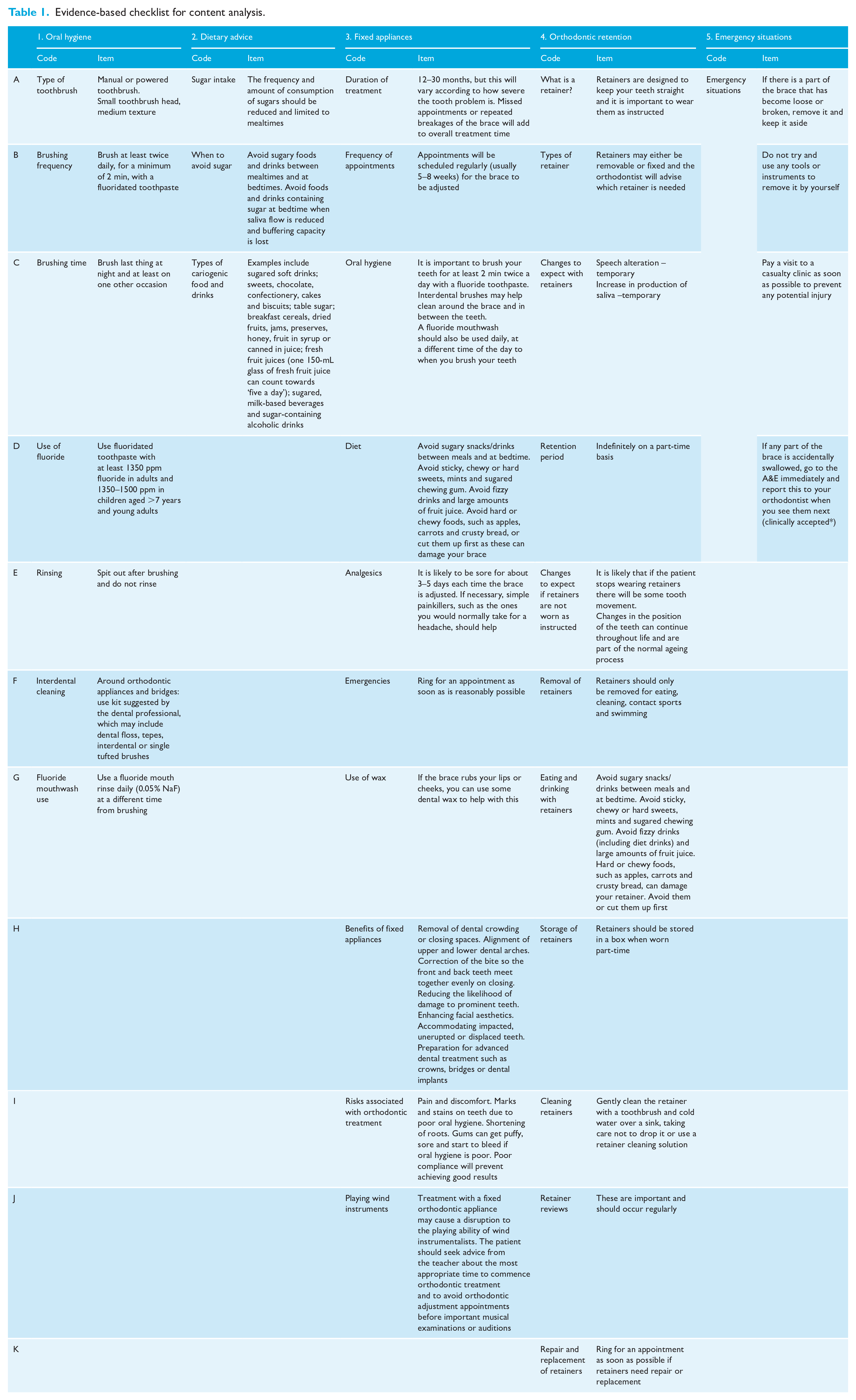
The apps were given a score on a 4-point Likert-type scale in each category, based on the content available within them. The scoring system was as follows: 1 = information not present; 2 = information present, not accurate; 3 = information present, incomplete (i.e. no inaccurate information, but the information present was incomplete, for example, stating that retainers should be worn, but failing to provide the recommended wear period); 4 = information present and accurate; and N/A = apps that were not designed to hold information for a particular theme were scored as N/A.
The checklist was piloted by members of the research team. Five mobile apps were initially reviewed and scored using the checklist to assess feasibility. Results were interpreted in the form of tables and graphs and discussed by the research team. The checklist was updated based on the feedback received and changes were made to the scoring scheme, taking into consideration that some of the apps were not designed to provide information on any of the relevant themes from the checklist. These were coded as not applicable (N/A) to differentiate the score from information that should have been present and correct but which was not included. One author (MOS) has experience of developing checklists similar to the one included in this paper and has published related research in the past (Sharif and Alkadhimi, 2019; Smyth et al., 2019).
An average score per app was subsequently calculated using eligible themes. The following scoring scale was subsequently used to correlate with accuracy of content: 1 and 2 = poor; 3 = fair; and 4 = excellent.
Identification of apps
A total of 18 apps were previously identified and were obtained from the Apple and Android App stores (Siddiqui et al., 2019). The apps were downloaded for content analysis where possible, but it was noted that some of the apps (n = 4) were removed and no longer accessible. Therefore, only 14 out of those 18 apps were used for this study.
A number of additional apps were also identified from the questionnaire detailed in Stage 1 (n = 24) and they were classified into patient-focused and profession-focused apps. Four apps were excluded as they were not available at the time of the study and five apps were not accessible as they required a log in. Therefore, the total number of apps from the questionnaire that were investigated was 15. From these 15 apps, two apps were finally included for content analysis after excluding apps that were profession-focused, needed logins, unavailability on the app store and repetitions from those already identified. Figure 1 shows that 16 apps in total were included in this study, which included 14 apps identified in previous research and two apps from the questionnaire (Siddiqui et al., 2019).
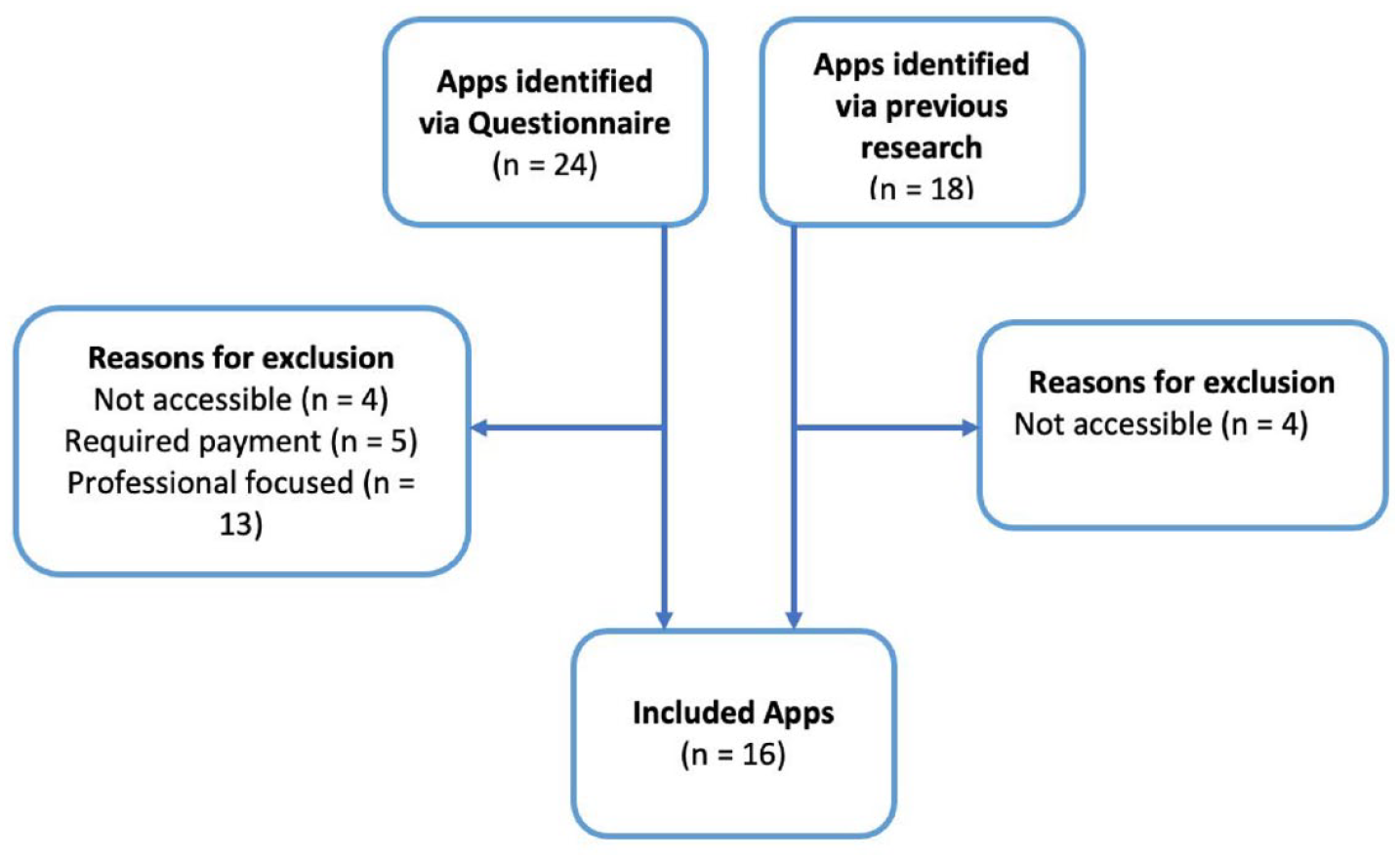
Flow chart of included apps.
A content analysis of all included apps was carried out using the developed evidence-based checklist to assess their accuracy and validity. Descriptive statistics are presented.
Results
Assessment of generic knowledge content of apps
The accuracy of information content for the 16 patient-focused apps was assessed. Eight apps provided generic information on orthodontic treatment and handling emergencies. Five apps were reminder apps and the remainder (n = 3) contained games and timers for toothbrushing and aligners.
Mean scores per app
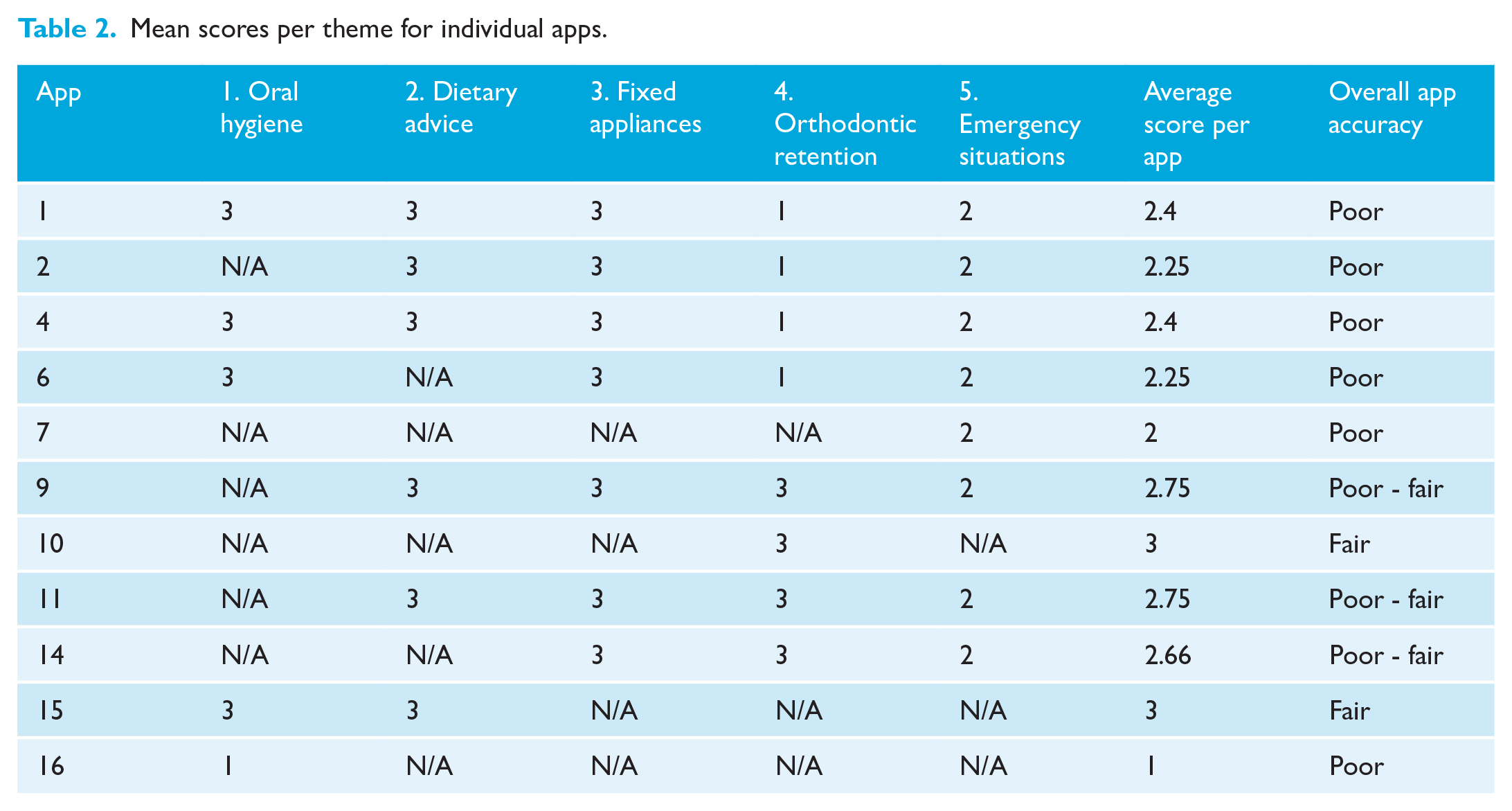
Table 2 shows the mean accuracy score of the apps assessed. Apps that scored N/A for all themes were not included in the table (apps 3, 5, 8, 12 and 13). Apps 10 and 15 received a ‘fair’ average score across that particular app’s included themes. Apps 9, 11 and 14 received an average score that was in the range of ‘poor - fair’. All remaining apps (n = 6) obtained a ‘poor’ average score across all the included themes.
Mean scores per theme for individual apps.
Mean scores of apps across each theme
Table 3 shows the mean scores for the apps assessed per theme. The dietary advice and fixed appliance themes obtained a ‘fair’ accuracy score when all the apps were considered. The oral hygiene theme received a mean score which was in the range of ‘poor - fair’. The remaining themes obtained a ‘poor’ mean score.
Mean scores and overall accuracy per theme.

App scores per theme
Oral hygiene
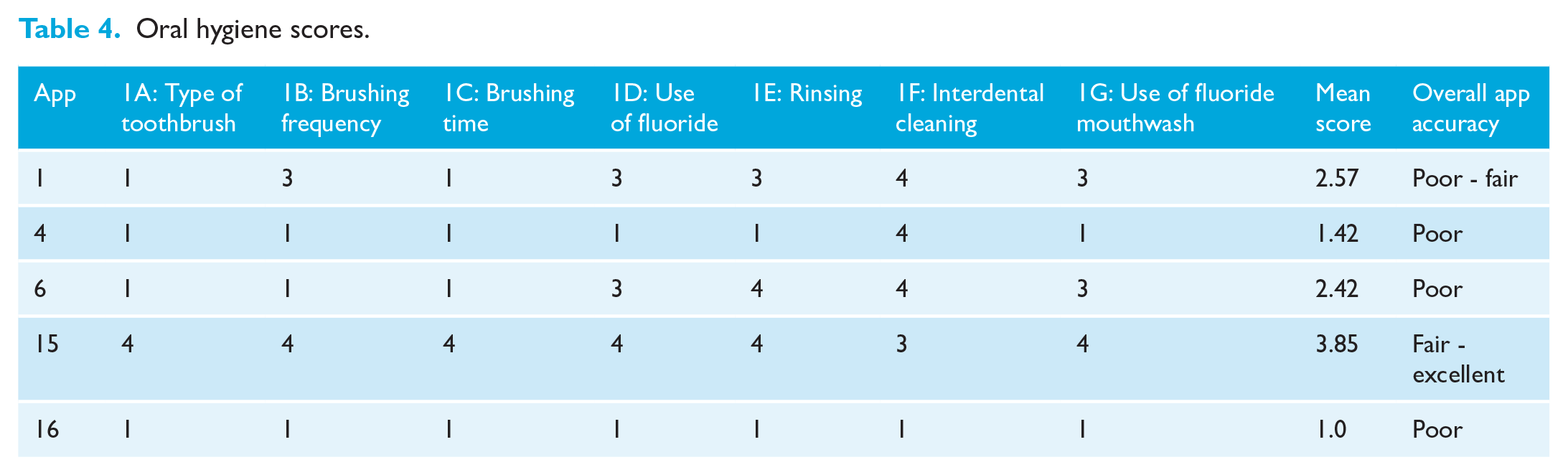
Table 4 shows that out of 16 apps, only five contained an oral hygiene section (apps 1, 4, 6, 15 and 16). App 1 obtained a score that was in the range of ‘poor - fair’. App 4 was deemed to have ‘poor’ accuracy of content for most of the items in this section, as it had no information on types of toothbrush, brushing frequency and time, use of fluoride and rinsing instructions; however, it obtained an ‘excellent’ score for one item as it had accurate information on interdental cleaning. App 6 was deemed ‘excellent’ for two items (rinsing and interdental cleaning) and ‘fair’ for two items as it had some information on the use of fluoride mouthwash and toothpaste. However, it obtained a ‘poor’ score for the remaining three items in this theme. App 15 performed the best under this theme by scoring ‘excellent’ for all items except for one item, which was interdental cleaning, where it received a ‘fair’ score. App 16 scored ‘poor’ for each of the items. Apps 2, 3, 5 and 7–14 were scored as N/A on all items.
Oral hygiene scores.
Dietary advice
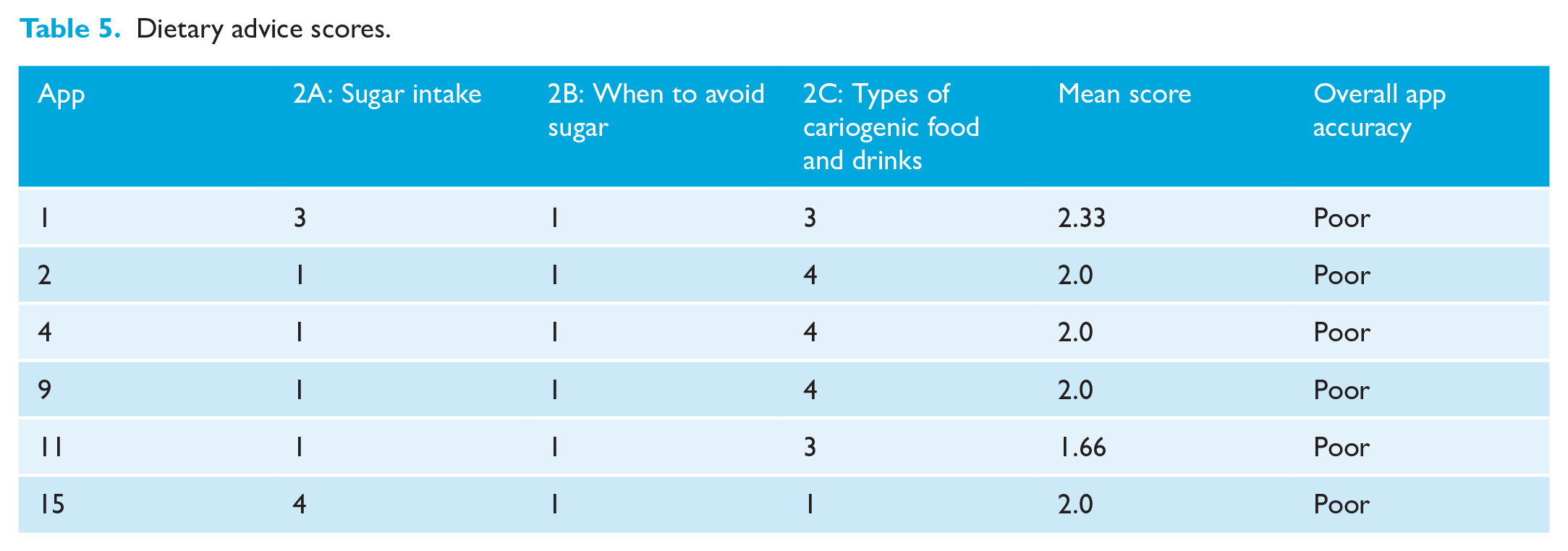
Table 5 shows six out of 16 apps contained dietary advice (apps 1, 2, 4, 9, 11 and 15), with three apps (2, 4 and 9) being deemed ‘excellent’ for one item (present and accurate information on types of cariogenic food and drinks). App 15 was deemed ‘excellent’ for one item (present and accurate information on frequency of sugar intake). Apps 3, 5–8, 10, 12–14 and 16 were scored as N/A.
Dietary advice scores.
Fixed appliances
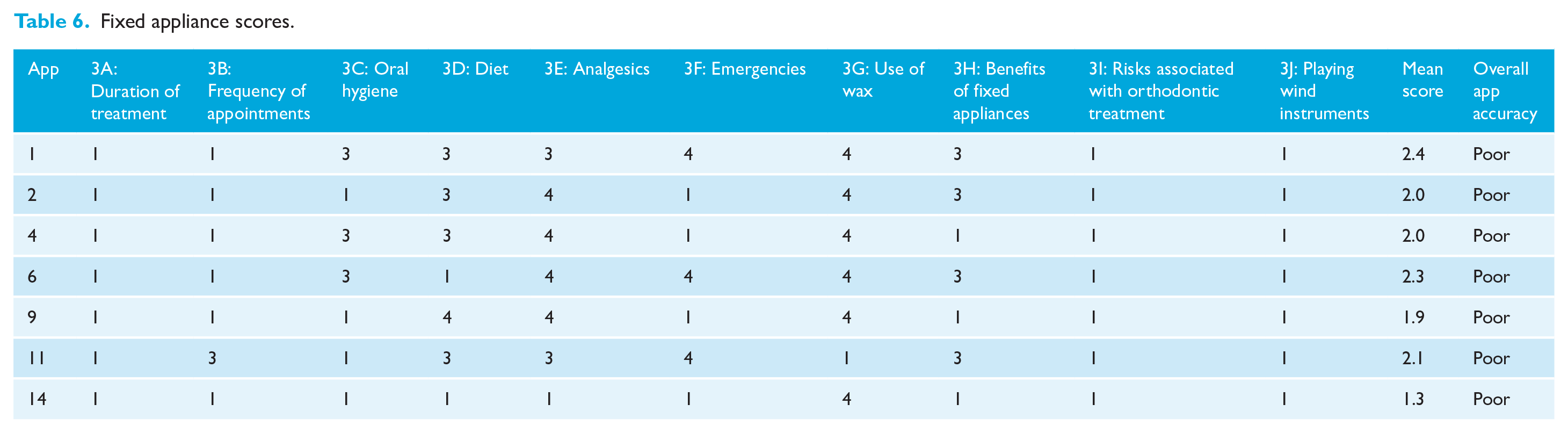
Out of 16 apps, seven contained advice relating to fixed appliances (Table 6). App 1 scored ‘excellent’ for two items (accurate information on emergencies and use of dental wax). A ‘fair’ score was given for another four items as the app touched upon some information on oral hygiene, diet for fixed appliance patients, use of analgesics and benefits of treatment. It scored poorly for the remaining items due to lack of information on treatment duration, appointment frequencies, risks and instructions on wind instruments. Apps 2, 4, 6, 9 and 11 had a similar spread of scores with a slightly different profile of information. App number 14 was deemed ‘excellent’ for only one item and scored poorly for all other items in this theme. None of the apps had information on duration of treatment, risks and wind instruments. Apps 3, 5, 7, 8, 10, 12, 13, 15 and 16 were scored as N/A on all items.
Fixed appliance scores.
Orthodontic retention
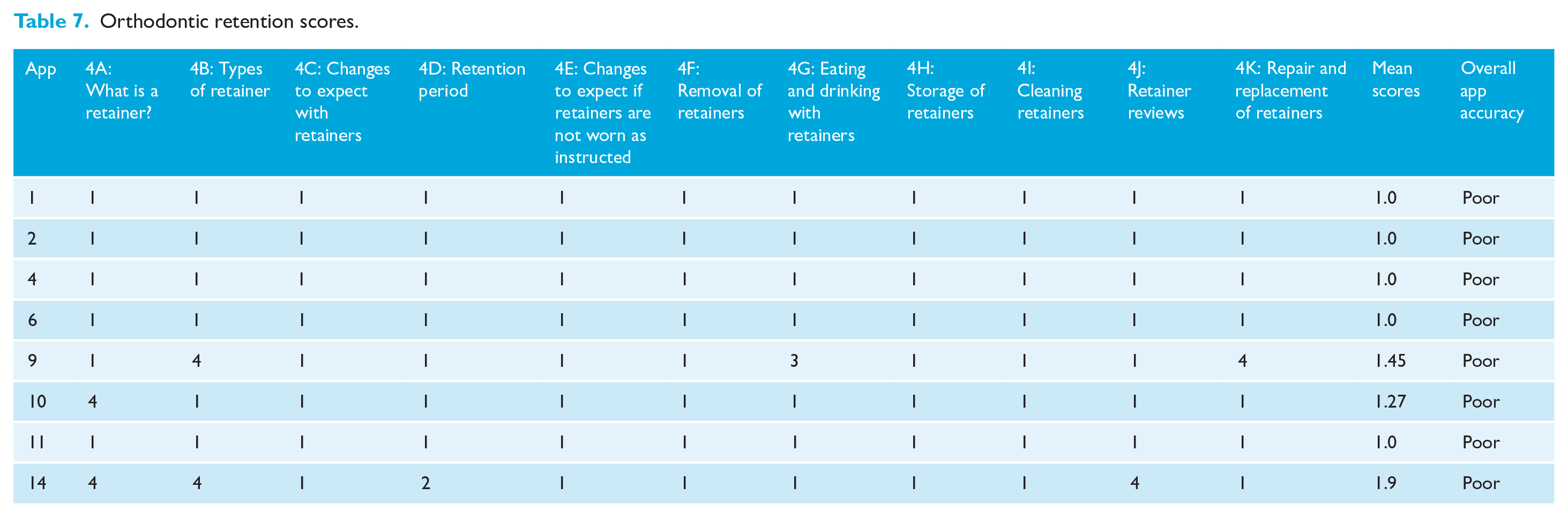
Eight apps (Table 7) were scored for retention content. App 9 obtained an ‘excellent’ score for having information on types of retainers and repairs and a ‘fair’ score for 1 item, which was on diet advice but had no other information on any of the other items such as changes to expect, retention period, cleaning, storage, reviews, etc. Similarly, app 10 received an ‘excellent’ score for having information on what retainers are but scored poorly for all other items due to lack of information. App 14 received the highest score as it was deemed excellent for having information on retainers, retainer types and the importance of retainer reviews but scored poorly for the other items due to inaccurate information on retainer wear and lack of generic information. Five apps had no information on orthodontic retention and scored poorly for all items.
Orthodontic retention scores.
Emergency situations
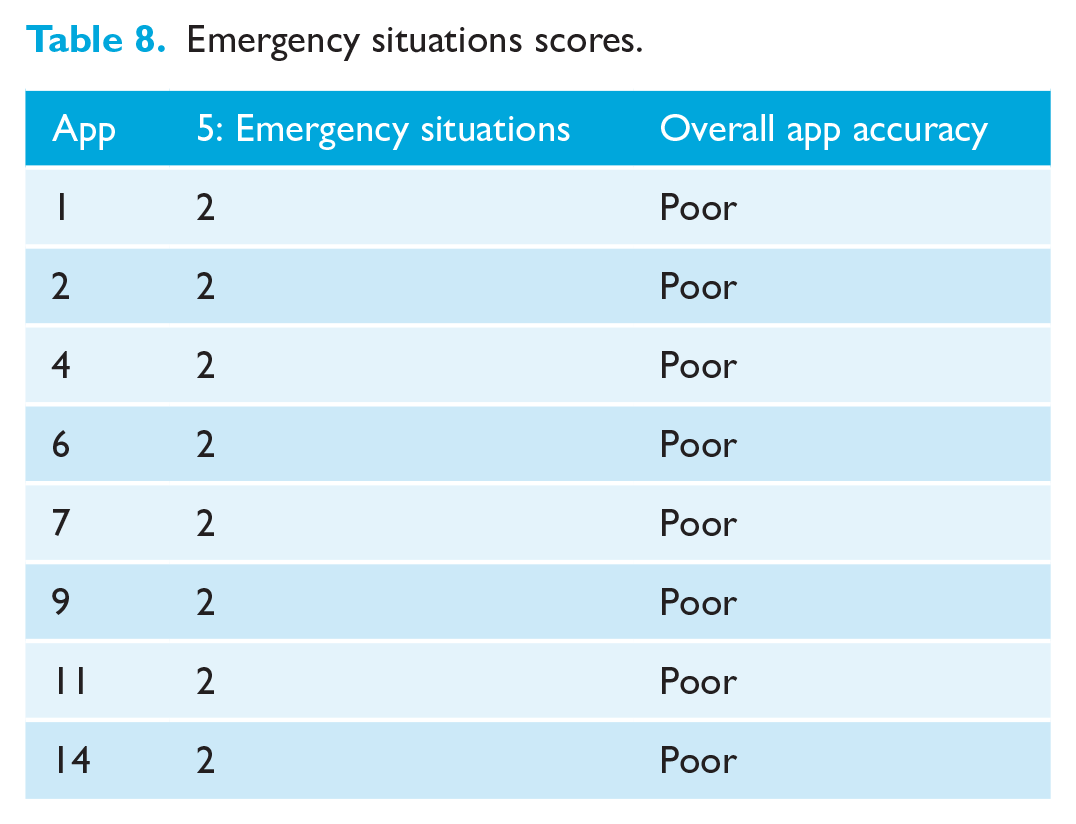
Table 8 shows that 50% of the apps (n = 8) contained information relating to emergency situations and obtained a ‘poor’ score, indicating that information was provided but was not entirely accurate. All other apps (apps 3, 5, 8, 10, 12, 13, 15 and 16) scored N/A on all items.
Emergency situations scores.
Discussion
Assessing the quality of apps
The content analysis of apps in this study was carried out using an all-inclusive evidence-based checklist. The checklist covered five major themes that are significant and relevant to orthodontic patients in terms of knowledge content. The themes included oral hygiene, dietary advice, fixed appliances, orthodontic retention and emergency situations, which are the main areas patients are advised on when undergoing orthodontic treatment. The checklist was created after referring to peer-reviewed resources such as BOS advice sheets and leaflets and Public Health England’s ‘Delivering Better Oral Health: An evidence-based toolkit for prevention’ (British Orthodontic Society, 2012, 2014a –g; Public Health England, 2017). The majority of information was obtained from these sources as it was similar to the information that is routinely given to orthodontic patients in an NHS practice. The evidence-based checklist explored all significant areas of orthodontic treatment and highlighted important information that apps should contain to support orthodontic patients throughout their treatment process and to also educate them on dental health and appliance care and as such was a robust method of assessing the content accuracy of apps.
From the results obtained, it was evident that only a very small number of apps (n = 2) had information relating to all themes. Both apps 1 and 4 had some information on all themes but scored ‘poor’ overall due to the inaccuracy of information provided. The dietary advice and fixed appliances themes obtained a ‘fair’ mean score by all the apps that scored under them. The oral hygiene theme received a mean score which was in the range of ‘poor - fair’. The remaining themes received a mean score of ‘poor’ by all the apps that scored under them.
Assessment of the methodology
The methodology used in this study was compared to that used by Sharif and Alkadhimi (2019), who conducted a study on the assessment of quality and knowledge content of patient-focused oral hygiene apps. The quality assessment was performed using the MARS tool and knowledge content of apps was assessed using an eight-item evidence-based checklist for oral hygiene. Apart from information quality, the apps were also assessed for engagement, functionality and aesthetics. A total of 20 apps were assessed from both the Apple and Google Play stores. In comparison, the checklist used in this study was a more extensive checklist that included five different themes such as oral hygiene, dietary advice, fixed appliances, orthodontic retention and emergency situations, with several codes and items pertaining to each theme. This allowed for a more thorough analysis of content but may also have led to poor scoring of some apps for not holding information for each item under a particular theme. Another study by Meade et al. (2020) looked at the quality of information provided by dental professionals on orthodontic retention and retainers on YouTube. The study used a similar methodology where a 4-point scoring system was used to score the quality of information in 10 predetermined domains. The domains were selected from evidence-based resources. A total of 62 YouTube videos were finally included in the study. The study concluded that the quality of information on orthodontic retention and retainers provided by dental professionals on YouTube was poor. As the checklist used in this study was meant for only orthodontic retention, the final scores of the videos gave a clearer understanding of the content quality pertaining to one particular theme.
Commonly used apps
App 15 received an ‘excellent’ score for six items and a ‘fair’ score for one item in the oral hygiene theme, which meant it had an overall score of ‘fair - excellent’. This app was purely an oral hygiene app and was not expected to contain any orthodontic advice except for the oral hygiene aspect of it. The app helps patients set reminders for toothbrushing and appointments. Patients are able to listen to their favourite song while brushing to help keep them engaged. The app is also supplemented with animated videos on toothbrushing, interdental cleaning and flossing, making it an app with good functionality and aesthetics. A small amount of dietary advice is also included in this app. This could be the reason why this app was mentioned by 39% of the respondents as the commonly used patient-focused app in the questionnaire aspect of Stage 1 of this study (Prithiviraj et al., 2022).
Lack of information available in apps
Apps that contained information on fixed appliances had no content on the potential duration of treatment and risks involved. This is important to incorporate into future apps as it is a significant part of treatment that patients should be aware of and consented for. The lack of information on orthodontic retention is concerning as apps on fixed appliances are expected to also have content on retention. This is especially important as patients are likely to forget about retainers and the importance of retention by the end of their orthodontic treatment. Apps may allow patients to understand retention better with the help of pictures and illustrations.
Of the apps, 50% (n = 8) scored poorly under the emergency situations theme as they provided inaccurate information (e.g. using a nail clipper to cut a long arch wire). This can lead to soft tissue injuries, risk of ingesting loose objects and further damage to the appliance, which may be detrimental or harmful to patients. Six apps also had features that allowed patients to send pictures to their clinicians in case of emergencies. This may be beneficial for getting instant advice but may not be the case for every situation. It would be helpful to have further research on patients’ and clinicians’ perceptions on using this feature to handle emergency situations.
Implications for future research
The quality of the patient-focused apps currently available appears to be very low, highlighting the need for more credible, evidence-based apps that can be recommended for patients. This was also evident in a study by Tiffany et al. (2018). The authors assessed the content and usability of some popular and highly rated oral health promotion apps. The study showed that out of 33 apps that were reviewed, 67% were generated for the general public and not just dental patients. Of the apps, 58% were sponsored by software developers and not oral health experts, thereby lacking any theoretical basis for the content and were not validated. Of the apps, 58% also contained some educational content to encourage better oral health behaviour such as reminders for brushing and appointments, but overall the apps performed poorly in terms of content and also usability. It is apparent that there is a need for high-quality, evidence-based orthodontic apps to be developed with the objective that these may be utilised to improve patients’ compliance with treatment.
Implications for practice
While there are clearly apps available that are good for certain aspects of a patient’s treatment journey, clinicians will ultimately have to consider recommending several different apps, YouTube videos and traditional paper leaflets for information delivery to improve compliance. Previous research has shown that there is a lack of high-quality YouTube videos relating to oral hygiene instruction and caution should be given in recommending these to patients (Smyth et al., 2019). It is apparent, however, that there is a need for high-quality, evidence-based orthodontic apps to be developed with the objective that these may be utilised to improve patients’ compliance with treatment alongside other methods of information delivery.
Study limitations
In this study on mobile apps, the apps were only assessed for knowledge content and not usability. All the apps included were directed only to orthodontic patients and not the general public. As some of the apps contained information that lacked evidence or a strong theoretical basis, it is possible that they may have also been developed by software developers and not oral health experts. Several apps did appear to serve as good reminder apps. In terms of overall knowledge content, none of the apps were deemed excellent with regards to accuracy.
Conclusion
A content analysis of 16 apps that were identified previously by members of the research team and patient-focused apps identified from the questionnaire was carried out. Only two out of 16 apps contained information across all five themes of an evidence-based checklist. Eight apps scored poorly for containing inaccurate information on handling emergency situations. None of the apps were deemed excellent in terms of accuracy of content. There is therefore a need for high-quality and evidence-based orthodontic apps to be created, which may be utilised to improve patients’ compliance with treatment.
Footnotes
Declaration of conflicting interests
The author(s) declared no potential conflicts of interest with respect to the research, authorship, and/or publication of this article.
Funding
The author(s) received no financial support for the research, authorship, and/or publication of this article.
