



Abstract
Much of empirical research on public opinion is dominated by a focus on individual-level determinants of support for, or opposition to, the European Union, missing the heterogeneity that lies within and between societies. Our article aims to understand whether national publics are increasingly heterogeneous in their opinions towards Europe, and if so, how this heterogeneity manifests itself. To do so, we rely on a Eurobarometer trend file containing data on the 28 member states between 1994 and 2019. The results show that the degree of popular dissensus over European Union integration has gone deeper since the Maastricht Treaty and reached a peak during the years of the Great Recession (2010 to 2013). The study also demonstrates that the public opinion dynamics triggering heterogeneity vary across clusters of European Union member states.
Introduction
Scholars have been interested in public opinion towards European Union (EU) for several decades. Since the early 1990s, empirical research on public opinion is dominated by a focus on individual-level determinants of support for or opposition to the EU (De Vries, 2020), employing multivariate regression models, as well as non-linear alternatives, such as multilevel models and longitudinal analyses, which emphasize averages, missing the heterogeneity that lies within and between societies. 1 Conceptually, public opinion is relevant in scholarly debates on politicization of EU issues (De Vries et al., 2021; De Wilde et al., 2016; Hutter and Kriesi, 2019) and electoral polarization (Hoerner and Hobolt, 2020), and of course, in scholarship on Euroscepticism (see e.g. De Vries, 2018; Hakhverdian et al., 2013; Hooghe, 2007; Leconte, 2010). 2 Still, this line of research provides us with only half of the story. Typically, research on Euroscepticism focuses on the determinants for the changing number of individuals who have a negative opinion about the EU. Still this line of research does not pay sufficient attention to the extent to which Eurosceptic citizens are indeed part of a larger society and what their presence does to the degree to which a society is heterogeneous in its opinion about the EU. While an increase in Eurosceptic sentiments has the potential to affect the degree of heterogeneity of a society, it is not yet clear how then this heterogeneity manifests itself empirically. The extreme cases, although being an unlikely scenario and more like a Weberian ideal type, can be expected to be relatively straightforward. A society completely devoid of Eurosceptic sentiments or completely dominated by them would be perfectly homogenous. Yet, we know that Eurosceptic sentiments can be expected to be somewhere between these two extremes, thus leading to varying degrees of heterogeneity. How does heterogeneity then within and across societies in Europe today manifest itself?
Methodologically, the study of public opinion towards the EU has evolved over time. In the past decades, empirical studies of support or opposition to the EU measured public opinion as a single latent variable of fixed attitudes towards the EU (Anderson and Hecht, 2018; Hobolt and De Vries, 2016), employing quantitative methods such as simple and multivariate regression modelling, as well as non-linear alternatives such as multilevel models and longitudinal analyses, which account for the joint explanatory power of the determinants accounting for the individual level characteristics within the context citizens live in (for exceptions, see De Vries and Steenbergen, 2013; Stöckel, 2013). Meanwhile, it has been recognized that this research agenda overlooks the innate heterogeneity within and between societies of the member states (De Vries, 2022). As De Vries (2013: 437) points out, it ‘does not suffice to establish merely the central tendency of support, may it be Eurosceptic or not; one should also establish the variance in support’.
Contrary to most of the existing literature, we will investigate in this article the cross-national and cross-temporal variations of public opinion on the EU at the level of society. As Anderson (2005) underlines, by focusing exclusively on cross-individual variation in mean differences, recent literature has overlooked the significance of collective public opinion for potentially important aspects of policy-making and political representation. It can be expected that a society with either a high level of support – and hence, a high degree of (positive) popular consensus – or a low level of support – and a high (negative) consensus – would give a much stronger mandate to national representatives than a society that is split relatively evenly between both a somewhat high and a somewhat low level of support for EU integration. With such a distribution, a society would confer relatively weak guidance to political leaders about the political preferences of voters in the aggregate. Knowing the extent to which society in a country is united or divided in its opinions towards the EU is of crucial relevance for the democratic quality both on the national and supranational level as well as for future dynamics of EU integration.
The only study, to our knowledge, addressing the change in the distribution of public opinion towards the EU – rather than simply its mean – was carried out by Down and Wilson (2008), who showed empirically that there was a significantly higher disagreement over the EU in the period after the Maastricht Treaty in almost every member state. Since then, however, no further study has empirically addressed divisions in societies and more importantly, what the causes of such divisions are. Building on Down and Wilson’s (2008) work, this article seeks to further empirically investigate the ‘constraining dissensus’ (Hooghe and Marks, 2009) of citizens towards the EU. The main aim is to analyse the cross-national and over-time variation in public opinion heterogeneity towards the EU in the 28 member states. If, as shown by Down and Wilson (2008), there has been a higher division on the EU since Maastricht, why has popular dissensus grown, and which factors help us understand these outcomes? Why is it higher in some countries than in others? At a time of apparently increasing divisions over the EU, increased politicization of EU issues, and rising Euroscepticism, understanding the nature and drivers of heterogeneity is more important than ever.
Overall, the findings of our study contribute to debates about public opinion trends regarding EU integration. We demonstrate that the EU is in the midst of growing public opinion heterogeneity, while a rejection across the board does not seem to be taking place. Our data shows that, in fact in recent years, heterogeneity has indeed slightly decreased thanks to rising positive public opinion trends on the EU. At the same time, the presence of Eurosceptic parties has so far not turned out to be critical to furthering heterogeneity across EU member states.
Attitudes on European integration: Interest, institutions, identity, and party competition
Previous research on public opinion towards the EU provides four broad perspectives (see e.g. De Vries, 2020; Hooghe and Marks, 2005), namely (a) interest explanations, largely focusing on economic benefits; (b) benchmarking explanations, focusing on attitudes towards national and supranational institutions; (c) identity explanations; and (d) cues explanations, focusing on the dynamics of national parties competition. The following sub-sections briefly review these perspectives in turn.
Economic benefits
National economic conditions have been regarded as one of the most relevant predictors of public opinion towards Europe. Previous research has shown that the perception of economic costs and benefits generated by the integration process at the country level has a significant impact on public support for the EU (e.g. Kanthak and Spies, 2018; Rohrschneider and Loveless, 2010). Citizens have been found to increasingly hold the EU responsible for the fate of their national economies (Hobolt and Tilley, 2014), being more supportive of the EU when the economy goes well and less supportive when the situation is adverse (Eichenberg and Dalton, 2007). Conversely, recent research arrives at a more nuanced assessment and suggests that citizens’ view of the EU is intrinsically linked to the national context in which they find themselves (De Vries, 2018). When citizens perceive national economic conditions to be good, a sceptical attitude towards the EU likely develops and, conversely, when the conditions are bad, support for the EU is the likely outcome, since citizens may see the EU as the most viable alternative to tackle their problems. Also, while research suggests that national governments engage in efforts to shift the blame for poor economic performance to the EU (Armingeon and Ceka, 2014; Hobolt and Tilley, 2014), other findings suggest that citizens still hold their incumbents accountable (Hellwig, 2015), although these governments may be perceived as less efficient (Le Gall and Devine, 2022). A third group of researchers suggests that with the blurring of responsibility between the government and the EU for economic policy (Lewis-Beck and Costa Lobo, 2017), citizens tend to hold both their national government and the EU politically accountable (Steinbach, 2019). In line with these findings, we expect that the variation in economic conditions in a country over time will contribute to a change in the degree of heterogeneity in society when it comes to the question of support for the EU.
Another relevant aspect of the cost–benefit balance of EU integration is how the EU's system of contributions and subsidies is distributed among member states. The difference between the money each member state sends and receives from the EU budget results in a net balance that signals whether countries are net recipients of EU funds or net contributors to the EU budget. Several studies have demonstrated that the net financial contribution of a member state to the EU budget is a relevant explanation for citizens’ attitudes towards the EU (Ares et al., 2017; Armingeon and Ceka, 2014; Hix, 2008). There are hence good reasons to expect that this will influence the degree of heterogeneity in society.
Attitudes towards national and supranational institutions
Previous studies have demonstrated that institutional performance, both at the national and the EU levels, matters for structuring public opinion towards the EU. Given that citizens usually have low awareness about EU institutions, which they feel are far away from their day-to-day concerns, attitudes towards the EU tend to reflect individuals’ more firmly held political beliefs resulting from their experiences with the domestic political reality (Anderson, 1998: 574–575). In other words, citizens use the national context as a proxy to form their opinions on the EU. While the literature has traditionally discussed whether (dis)satisfaction with national institutions affects positively or negatively opinions on the EU, recent evidence has shown that there is a positive spillover effect from satisfaction/confidence in national institutions to the EU level, in the sense that positive evaluations of the domestic institutions tend to transform into positive evaluations of the EU (Ares et al., 2017; Armingeon and Ceka, 2014; Hobolt, 2012). Conversely, other research suggests that the higher the citizens’ assessment of the functioning of supranational institutions and the lower that of national institutions, the greater the support for the EU (De Vries, 2018; Sánchez-Cuenca, 2000). From this, we expect that the difference between the (dis)satisfaction with the performance of democracy at the two levels of government – national and supranational – will matter for generating further divisions within society on the EU issue.
Cultural identity
It is well established that EU integration entails a transfer of policy authority from national to European institutions which has deeply curtailed member states’ sovereignty in important areas of decision making. In line with this, several studies have found that individuals who strongly identify with their national community tend to be less supportive of European integration (Carey, 2002; Hooghe and Marks, 2005; McLaren, 2007). Thus, opposition to the EU is linked to ‘fears of a symbolic threat to the national community’ (McLaren, 2004: 5). At the same time, others have shown that this might depend on the country involved and whether conceptions of national identity are inclusionary or exclusionary (Díez Medrano, 2010). It is hence reasonable to expect that national identity will influence the degree of heterogeneity in a society.
Party competition
In the last decade, much research has covered the effects that domestic political competition has on attitudes towards the EU. The evidence provided by studies suggests that the Great Recession has significantly impacted the role of European integration for the national party spaces (Hernandez and Kriesi, 2016), mainly by increasing the number of Eurosceptic and populist parties (Hobolt and Tilley, 2014) and the politicization of the EU issue (Hutter and Kriesi, 2019). While EU issues have been traditionally portrayed as secondary to national elections (Reif and Schmitt, 1980) and mainstream political parties have tended to hold a positive position towards the EU, the emergence of Eurosceptic and populist parties has mobilized feelings of discontent towards the EU among the electorate (Hobolt and De Vries, 2016). This group of parties has entered domestic politics by mobilizing more people and contesting the EU issue more intensively, and thus channelling underlying public discontent towards the supranational project. This has profoundly transformed national political competition around the European integration. In this sense, when Eurosceptic parties are electorally successful, this can be taken as a symptom of higher public confrontation and dissensus towards European integration in the national political arena (De Vries and Edwards, 2009).
In parallel to the rise of Eurosceptic parties, the literature has also observed an increase in politicization around the EU issue (Hutter and Kriesi, 2019; Turnbull-Dugarte, 2020). By bringing the EU to the front of the domestic public debate, Eurosceptic parties have paradoxically contributed to increasing the saliency and the number of actors engaged in political interest around this issue, but also the polarization of views in relation to the EU. Therefore, it is likely that the politicization of the EU issue will influence changes in the heterogeneity of public opinion towards Europe.
Data, operationalization, and methods
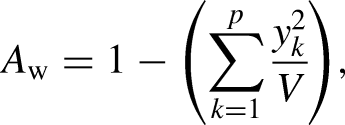
The objective of this article is to explore what makes a society more divided in its opinion about European integration. Divergence in aggregate public opinion is approached here by an index of heterogeneity based on Lieberson (1969) and extended by Sullivan (1973). Recently, this index has also been applied by Anderson (2005) and Esteve-González et al. (2021). This indicator of heterogeneity represents the degree of opinion diversity within a population regarding a specific issue, and it is particularly suitable to assess variation in domestic public opinion for survey questions containing a limited number of answer categories (polytomous variables). As Sullivan describes: [this measure] is nicely interpretable in probability terms, since it represents the proportion of characteristics upon which a randomly- selected pair of individuals will differ (…). That is, if an infinite number of pairs were selected randomly from a finite population, the average proportion of unshared characteristics of these pairs would be Aw. (Sullivan, 1973: 70)
Given this probabilistic interpretation, Aw is useful for measuring heterogeneity in public opinion by country. Thus, the calculated index indicates the probability that two people randomly selected from the same country would have a different opinion of the EU. By calculating the index by country and year, the differences between space and time can be similarly interpreted in probability terms (Sullivan, 1973: 70).
The heterogeneity indicator is calculated as
We are interested in ascertaining the extent to which the public's attitudes towards national and supranational institutions, the fear of losing cultural identity, the economic context, and the party supply and competition on the EU issue are relevant predictors of our measure of heterogeneity of opinions over European integration at the national level. To this end, we have created a Eurobarometer data trend file from 1994 to 2019 containing a series of relevant dependent and independent variables. Our core dependent variable is measured with a question tapping into citizens evaluations of whether EU membership is good or bad for their respective countries, which reads as follows: Generally speaking, do you think that (your country's) membership of the European Community is… (1) a good thing, (2) neither good nor bad, (3) a bad thing.
This question has been used to capture ‘affective or diffuse support’ for the EU (Armingeon and Ceka, 2014; Hix, 2008). Furthermore, as Down and Wilson state, this item taps into ‘instrumental perceptions of the EU’ (Down and Wilson, 2008: 43).
Our independent variables come from three main sources: (a) public opinion data from our Eurobarometer trend file; (b) economic macro-level data from several international indices; and (c) party-level data from the Chapel Hill Expert Survey (CHES). The independent variables at the public opinion level gauge the public's relative satisfaction with the EU vis-à-vis national democracy, and the fear of losing national cultural identity. The first variable is an indicator computed by subtracting the average national satisfaction with the national democracy from the satisfaction with the EU democracy. The level of satisfaction with the national and EU democracies is measured with the traditional indicator on specific support for democracy, which taps the individuals’ evaluations of the democratic system's daily performance (its authorities and institutions). The items read as follows: On the whole, are you (1) very satisfied, (2) fairly satisfied, (3) not very satisfied, or (4) not at all satisfied with the way democracy works in (your country/ the EU)?
In our relative (dis)satisfaction indicator, negative values indicate higher dissatisfaction with EU democracy, while positive values demonstrate higher dissatisfaction with national democracy.
The second individual-level indicator, the fear of cultural identity loss, is measured with a question that presents different formulations in our selected Eurobarometer surveys. The most common formulation asks: Which of the following statements best describe(s) what the European Union means to you personally?… The risk of losing our cultural diversity (0) Not mentioned, (1) Mentioned. Some people may have fears about the building of Europe, the European Union. Here is a list of things which some people say they are afraid of. For each one, please tell me if you - personally – are currently afraid of it, or not? … The loss of our national identity and culture. (1) Currently afraid of it, (2) Not currently afraid of it.
Reversing the order of the answer categories, this latter question has been merged with the former one in our Eurobarometer data trend file to create a single indicator of the extent to which citizens feel that European integration may pose a threat to their national identity containing two answer categories: (1) not afraid, (2) afraid. 3 To account for domestic trends in public opinion, we have aggregated the two public opinion-level variables (the relative (dis)satisfaction with the EU vis-à-vis the national democracy, and the fear of losing cultural identity) by averaging them for all respondents in each country and year. The resulting measures are indices of the average citizens’ opinion on these issues, which are expected to have an impact on the intra-national heterogeneity of preferences regarding the EU. That is, all our individual-level independent variables work in the analyses as continuous indices. 4
As predictors of the economic situation, we employ three macro-level indicators, namely unemployment, national debt, 5 and GDP per capita growth rates for each year and country, all taken from the World Development Indicators of the World Bank. In addition, we use an indicator that measures whether countries are net recipients or net contributors of EU funds. 6
To measure the effect of party competition on heterogeneity, we use data at the party-level coming from six rounds (1999, 2002, 2006, 2010, 2014 and 2019) of the CHES (Bakker et al., 2020). 7 The first variable is a measure of the institutionalization of Eurosceptic parties in the national parliament, which takes the value of the total seat share that the parties classified under this label won in the most recent national election prior to the CHES’ data collection. We have operationalized Eurosceptic parties as those which have a value lower than 3 in their overall position towards European integration – that is, they are ‘somewhat opposed’, ‘opposed’, or ‘strongly opposed’ to European integration. Also from this data source, we use two indicators to create a measure of politicization of the issue of European integration in a given country. The first indicator taps into the relative salience of European integration in the parties’ public stances. The second indicator measures the degree of polarization around the EU issue and is measured as the standard deviation of the overall position of the parties towards European integration in a given country and year. Following Ares et al. (2017: 1100), our index of politicization corresponds to the product of the average salience and the degree of polarization of this issue in a given party system. As we have proceeded with the rest of the indicators, all the variables at the party level have been averaged by country-year.
The unit of analysis is the country-year, comprising our sample 598 observations consisting of 28 countries and 26 time points in total. Years have been grouped into six categories reflecting critical moments of the EU integration process: the before-Maastricht period (1994), post-Maastricht (1995 to 1999), the adoption of the single currency (2000 to 2004), the period of rejection of the constitutional treaty by some national constituencies and the accession of the new Eastern and Central European member states (2005 to 2009), the economic and financial crisis (2010 to 2013), and a last period characterized by the confluence of several crises that affected severely the EU such as the refugee crisis and the Brexit (2014 to 2019). Next to this, we have classified countries by the main three membership groups that can be identified from the successive waves of enlargement over the course of the EU integration process. The first group is composed of the six founding members – namely Belgium, France, Germany, Italy, Luxembourg, and the Netherlands. The second group involves all those members that joined the EU between the 1970s and the mid-1990s – that is, the countries of the first enlargement wave (Britain, Denmark, and Ireland), the Mediterranean enlargement in the 1980s (Greece, Portugal, and Spain) and the Post-Cold War enlargement (Austria, Sweden, and Finland). The third group represents the expansion to Central and Eastern Europe (CEE) initiated in 2004 and finalized in 2013 (Bulgaria, Croatia, Cyprus, Czech Republic, Estonia, Hungary, Lithuania, Latvia, Malta, Poland, Romania, Slovakia, and Slovenia).
Is heterogeneity increasing in the EU?
As a first step, we begin our analysis by asking whether public division about the EU is indeed on the rise, or whether we are rather witnessing a higher public rejection of the EU. To this end, we first examine the aggregate trends of public opinion perceptions about the benefits of EU membership since the availability of this indicator in the Eurobarometer data trends to the present (i.e. 1973 to 2019), and we then assess how heterogeneity has developed across membership regions in Europe.
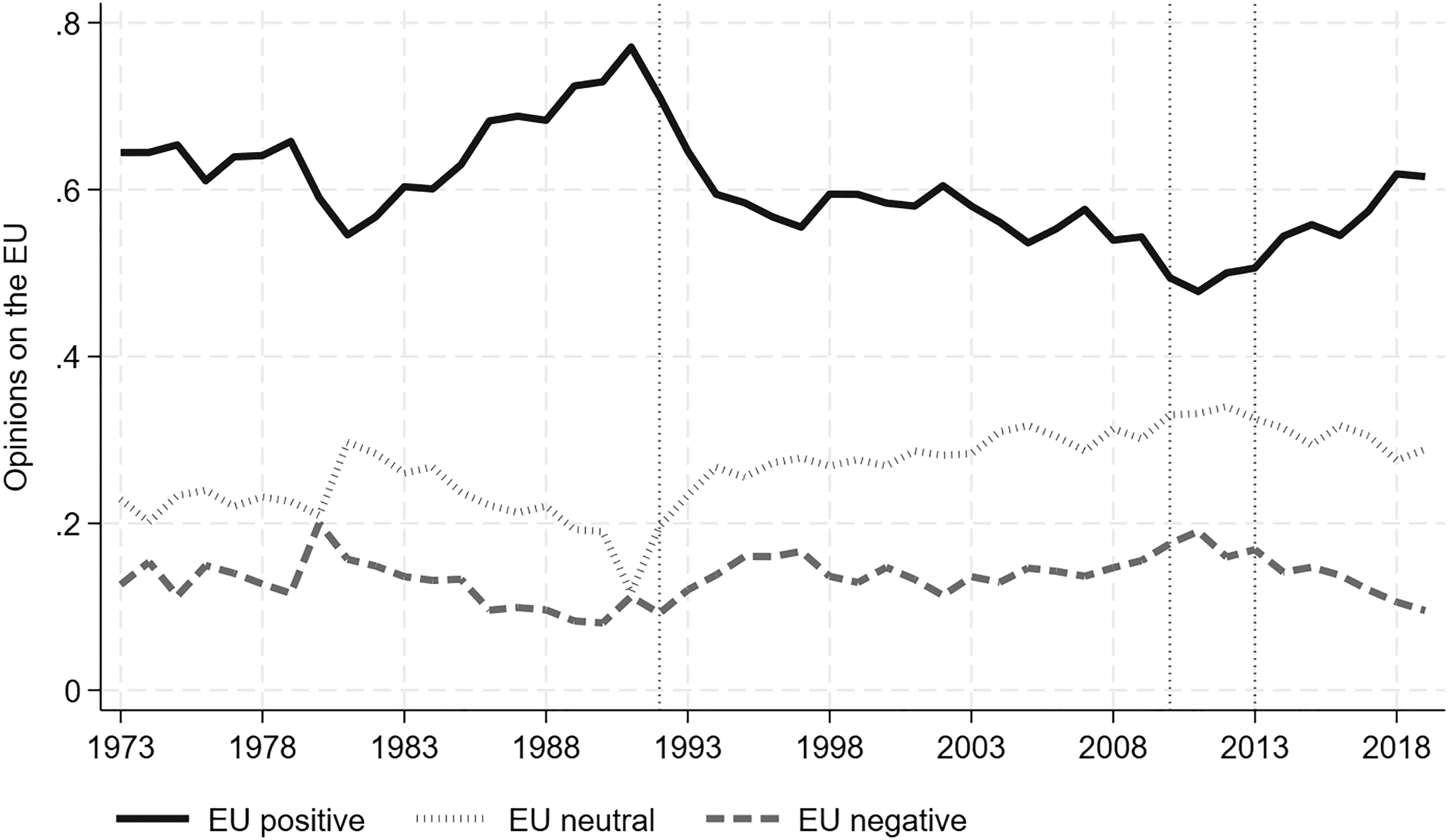
Figure 1 graphically depicts the aggregate percentage of opinions that the EU membership represents ‘a good thing’ (the solid line), ‘neither a good nor bad thing’ (the dotted line) and ‘a bad thing’ (the dashed line) for the country, computed for the total sample of EU member states by year. Our data indicates that public support for the EU has broadly developed through four periods. The first can be identified as the pre-Maastricht phase of European integration, from the beginning of the integration process to the years preceding the adoption of the Maastricht Treaty (1993–1994). Although the new members who joined in the second and third waves of enlargement displayed levels of support below those of the founding six – which helps explain the slight decrease in the average level of support identified in the early 1980s – EU enthusiasm grew rapidly among them, so that this initial period was mainly characterized by a steady upward trajectory in public support for the EU, paired with declining levels of rejection or ambivalent opinions towards the EU.
Public opinion on the EU, 1973 to 2019.
However, as the data show, the Maastricht Treaty (1995) signalled a turning point in public supportive consensus on European integration. As Down and Wilson (2008: 31) discuss, the prolonged debates that preceded the Maastricht Treaty underlined for the first time for the public both the political character of European integration and the increase in supranational authority it involved, turning thus the EU issue into an increasingly contentious one among national electorates. The second phase is hence the post-Maastricht period, which initiates a new trend of (fluctuating) declining support and rising rejection and ambivalence to the EU project among member states.
The third phase of public opinion trends towards EU membership is marked by the economic crisis in 2010. This phase is mainly characterized by a further decline in support for the EU – which reached indeed its lowest point in 2011 – paralleled by a slight increase both in apathy and ambivalence towards EU membership. This phase of economic crisis, however, experienced a quick turn in 2013, reflected in a boost to positive aggregate support for the EU project and a decline in public rejection, although ambivalent support remained relatively unchanged. Although it is difficult to provide a univocal explanation for this unexpected change, possibly the confluence of the first signs of recovery from the economic and financial crises and the results of the Brexit referendum in the United Kingdom (UK) (Walter, 2021) might contribute to explaining such a revitalized public faith in the EU project of the latest period.
The key insight from Figure 1 is that both the Maastricht Treaty and, to a larger extent, the Great Recession seem to have played a critical effect in narrowing the gap between positive, ambivalent, and negative public opinion perceptions of the benefits of EU membership. The question arises as to whether, and how, these two critical movements in public opinion are reflected in our heterogeneity measure. In other words, to what extent has the European public become more divided over the EU issue as the data seem to indicate, and how has such heterogeneity developed in the three membership regions and the 28 EU member states?
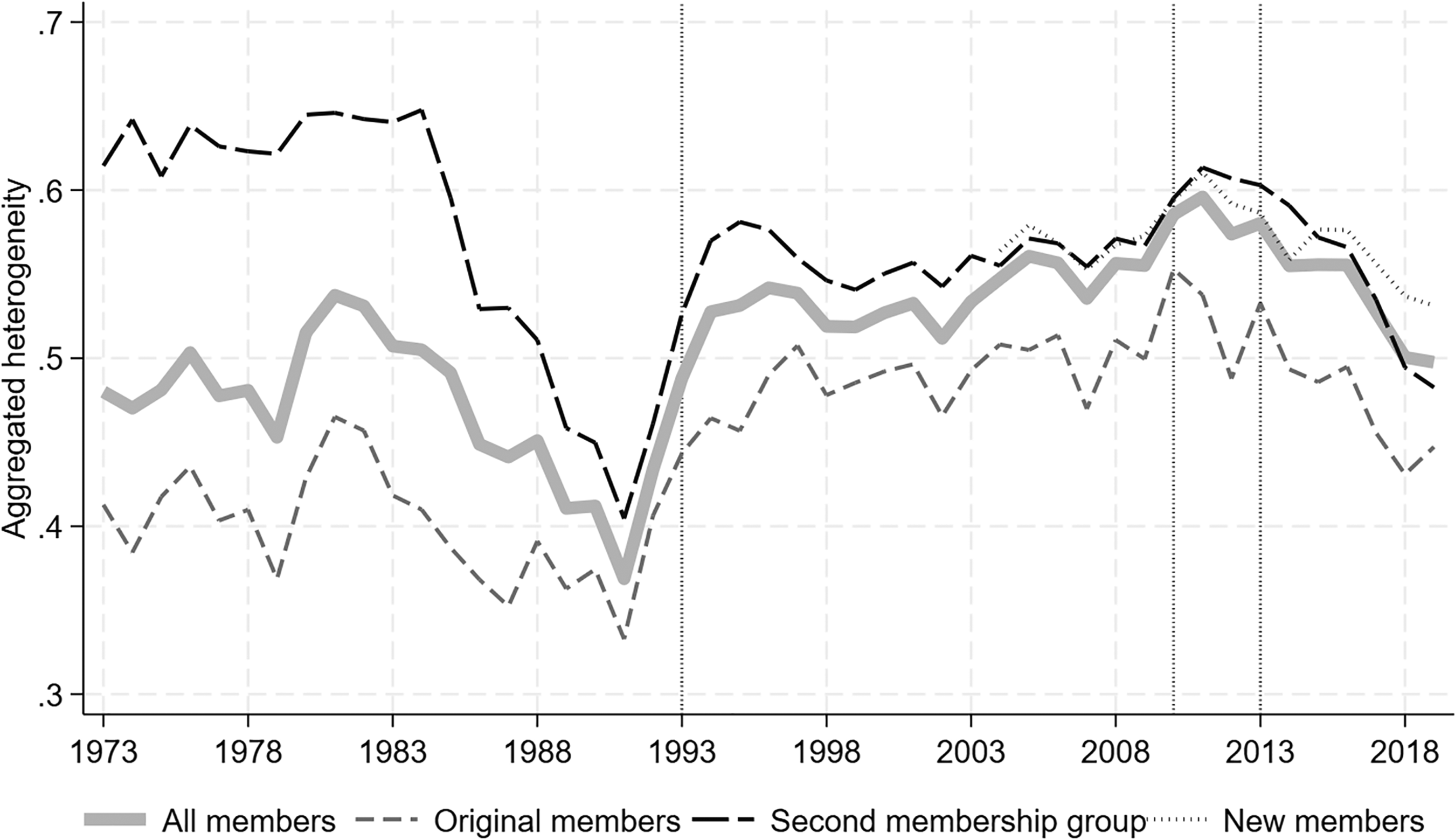
The second step in our descriptive analysis thus focuses on exploring how EU-wide heterogeneity has evolved through the years and whether such heterogeneity has varied significantly across regions and countries. Figure 2 displays our heterogeneity index for the full sample of EU member states (the grey solid line) and the three membership regions – namely the founding six member states (the grey dashed line), the group encompassing the countries that joined in the first, second, and third waves of enlargement (the dark dashed line), and the CEE new member states (the dashed–dotted line).
Public opinion heterogeneity in the 28 member states and by membership regions, 1973 to 2019.
In line with Figure 1, the graph suggests four periods in the development of public opinion heterogeneity towards Europe. The first, pre-Maastricht phase, is identified by a steadily declining division in public opinion, confirming the notion of a ‘permissive consensus’ identified by Lindberg and Scheingold (1970). The second period was initiated in 1993, when heterogeneity became significant for societies, giving rise to the notion of ‘constraining dissensus’ that characterized the post-Maastricht era. Heterogeneity reached its highest peak during the economic crisis, running from 2010 to 2013, which has been followed by a new period of steady decline in public division – though still above pre-Maastricht levels.
The dashed lines in Figure 2 indicate how heterogeneity has evolved in the four time periods identified above in the three membership groups, although only in the first two groups the time trends are comparable across the entire period. It is important to note that the extraordinarily high levels of division displayed by the second membership group in the years between 1973 and 1984 can be explained by the high national division of the three countries that joined the EU in 1973 – namely Denmark, Ireland, and the UK – plus Greece, who joined in 1981. Thus, for instance, while the average level of heterogeneity of these four countries between 1973 and 1984 was 0.63 (in a scale from 0 to 1), within the six original member states heterogeneity scored 0.42 in the same years. In those years, heterogeneity was particularly high in the UK (0.65), Denmark (0.66), and Greece (0.63), while the highest score among the founding six was reached by France (0.51).
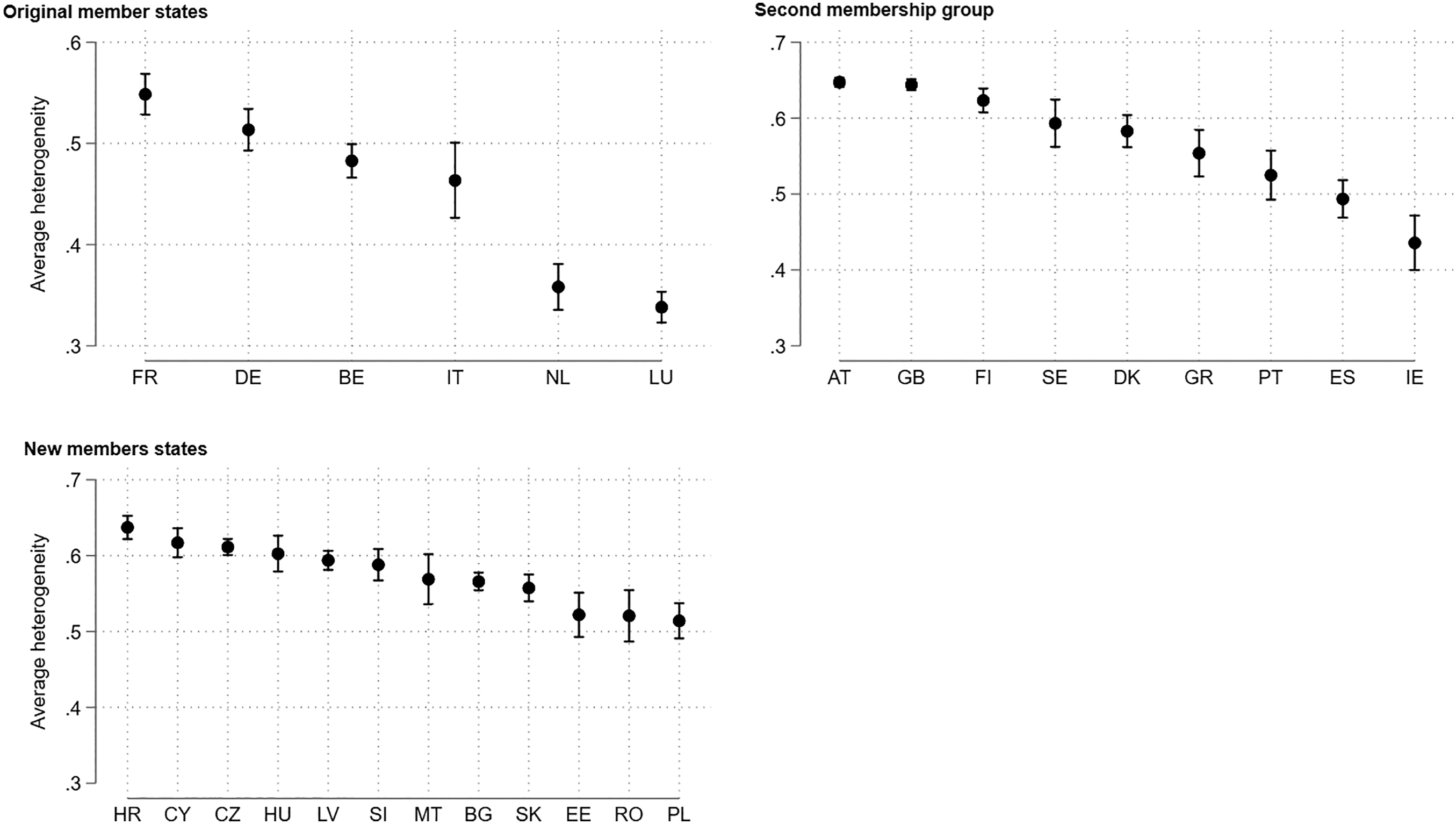
To finish, Figure 3 displays the average score of heterogeneity in each of the 28 member states in the period from 1973 to 2019, sorted by the three membership country groups. The graph shows that the newest member states (bottom panel) tend to display levels of aggregated heterogeneity that are fairly high and similar among each other, followed by the countries of the second membership group (upper left-hand panel). Among this group, only the three countries with the lowest levels of heterogeneity – namely Ireland, Spain, and Portugal – are close to those displaying the highest scores within the original member states group (France, Germany, and Belgium). The 95% confidence intervals displayed over the mean values demonstrate that within-country variation (i.e. variation in country-scores over time) is also quite noticeable, being especially large in one original member state (Italy) and in three countries from the second membership group (Greece, Portugal, and Ireland). On the opposite side, we find Austria and the UK, which both display the lowest deviation in heterogeneity across the period, meaning that high levels of heterogeneity have been quite stable within the two countries.
Average levels of public opinion heterogeneity in the 28 member states by membership region (mean values and 95% confidence intervals), 1973 to 2019.
Results
Now that we have established that public opinion heterogeneity has become a more significant phenomenon than in earlier decades and that it displays significant cross-region and -country variation, it is important to establish what causes that increase and variability. Thus, in this section, we focus on understanding what drives the different levels of public opinion heterogeneity between countries and time within the three membership regions. To identify whether there is meaningful cross-national and over time variation within membership regions, we estimate a series of panel models employing ordinary least-square regression analysis (OLS) with time periods fixed-effects 8 in each membership region. As we have seen in Figures 1 and 2, aggregate levels of heterogeneity have gone through several identifiable time periods, so that we control in our analyses for the effect of such periods.
All the analyses focus on the time span running between 1994 and 2019, that is, the two decades and a half in which heterogeneity has become a significant phenomenon. To control for the effect of the differential record that the states of the second and third membership groups have as EU members, the models on these two groups also include the variable ‘time since accession’, which is a time trend variable coded as the year of analysis minus the year in which the particular country joined the EU. This variable is not included in the models on the original member states, as all of them acceded the EU in the same year. The time period fixed-effect estimator includes the six aforementioned groups of years and omits years 1994 (for the analyses of the two first membership groups) and 2004 (for the new member states), which are taken as the reference categories. To follow, we conduct a split sample analysis in each membership group.
Heterogeneity in original member states
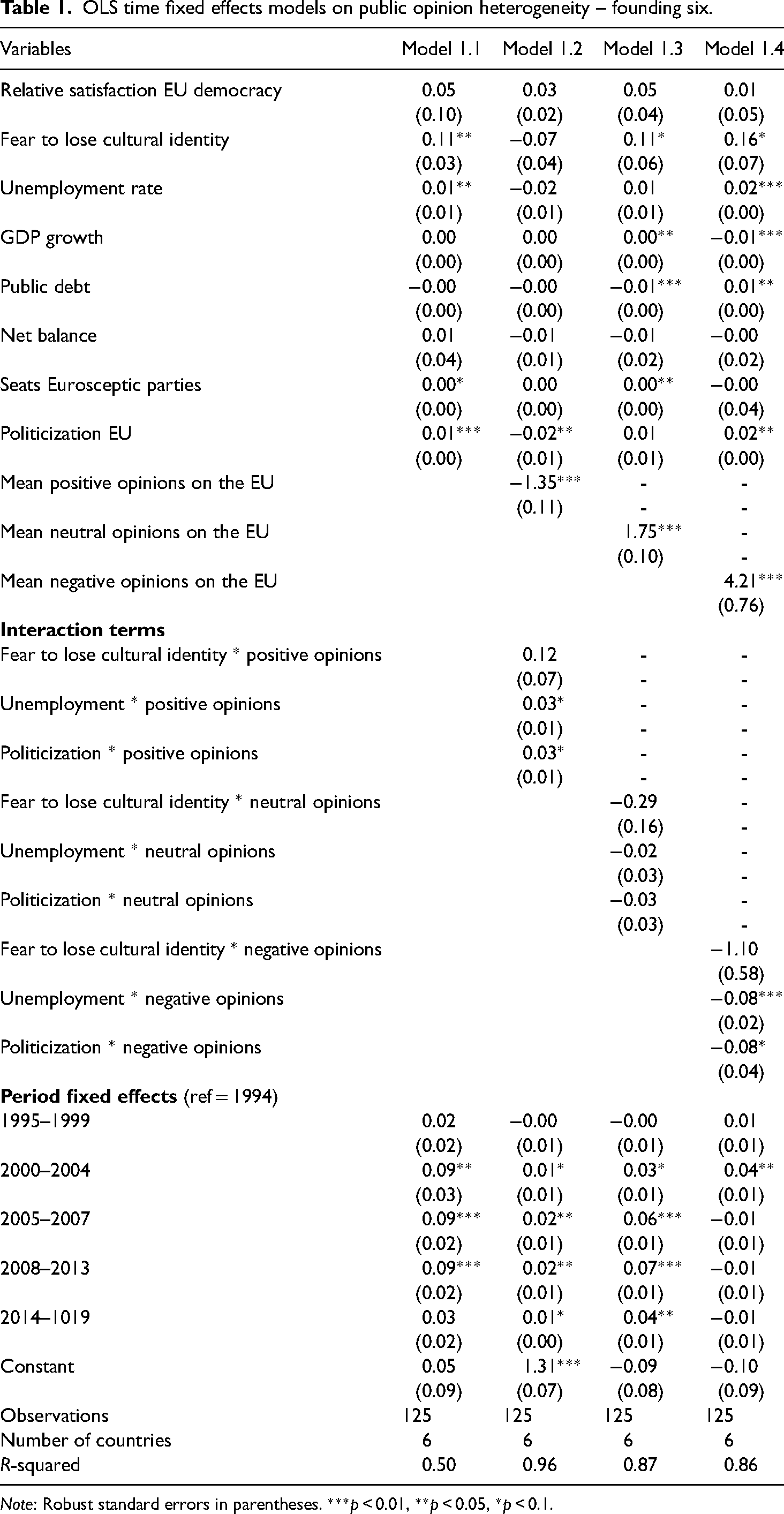
Table 1 shows the regression coefficients of four OLS fixed effects models for the group of original member states. The results in Model 1.1 show that heterogeneity in this membership group can be mainly explained by the confluence of three types of factors: the fear of losing national cultural identity, the unemployment rate, and the politicization of the EU issue. Thus, among the founding six, those members whose citizens have been on average more concerned about the threat that the EU poses to their national cultural identity, those confronting higher unemployment rates, and those in which the EU issue has been more politicized, heterogeneity in public opinion towards EU integration tends to be higher. 9 As for the effect of time, the time-fixed effects coefficients confirm that heterogeneity was significantly higher in the periods running from 2000 to 2013, while in the post-Brexit period (2014 to 2019) heterogeneity has not been, on average, significantly different from the pre-Maastricht period.
OLS time fixed effects models on public opinion heterogeneity – founding six.
Note: Robust standard errors in parentheses. ***p < 0.01, **p < 0.05, *p < 0.1.
Substantively, while the effect of the three statistically significant variables works as expected, it remains unclear whether their effect in mean levels of heterogeneity can be broadly explained by the rise they produce in positive, neutral, or negative opinions on the EU among the population of this membership group. To this end, we run three new models testing an interaction between each one of the three statistically significant variables and the mean level of positive (Model 1.2), neutral (Model 1.3), and negative (Model 1.4) opinions on the EU issue by country. The coefficients of the interaction terms in Model 1.3 indicate that none of the effects are indeed connected to the rise in mean levels of neutral opinions (i.e. neither positive nor negative opinions) about EU integration among the population of the original member states. By contrast, Models 1.2 and 1.4 show that the rise in heterogeneity caused by the increasing politicization of the EU issue and the rising unemployment rates can be interpreted mainly as a function of swings in positive (rather than negative) opinions on EU membership. 10 Thus, as can be seen from Figure 4, the slope of the variable on the politicization of the EU issue tends to be positive across the values of the mean level of positive opinions on the EU, but negative across the values of the variable on the negative opinions on the EU. This means that the average level of positive opinions on the EU tends to increase (and that of negative opinions to decrease) as the public debates around the EU issue in a given country get more politicized, resulting thus in public opinion on the EU being more divided. In a similar vein, the right-hand panel in Figure 4 shows that the slope of the variable on a country's unemployment rate grows positively across the values of the mean level of positive opinions on the EU issue, and negatively across the values on the negative opinions on the EU. Thus, as the economic conditions in a given country worsen, a considerable part of the electorate tends to turn their opinions on the EU more positive, and thus heterogeneity increases.
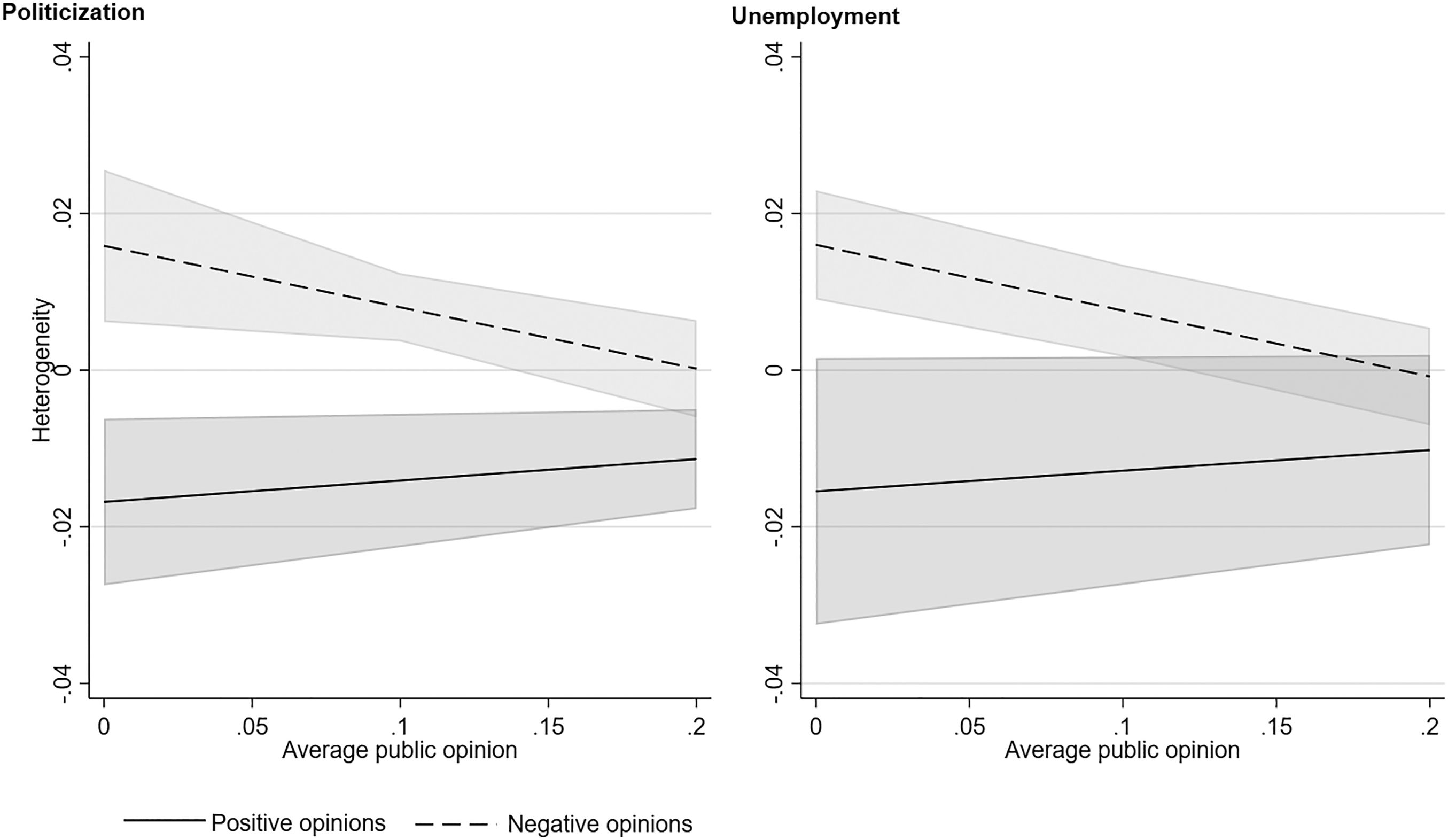
Average marginal effects (AMEs) of public opinion heterogeneity contingent on the degree of politicization and the unemployment rate by positive and negative levels of public opinion – original member states.
Heterogeneity in the second membership group
The second membership group is probably the most heterogeneous in composition as it encompasses countries that joined the EU in the 1973 first enlargement (Denmark, Ireland, and the UK), the Mediterranean enlargement in the early- and mid-1980s (Greece, Portugal, and Spain) and the 1995 enlargement (Austria, Finland, and Sweden). Several of these members share the fact that their electorates rejected in public referendums some relevant EU issues or treaties (Denmark, Ireland, Greece, and the UK), which might indicate in principle higher levels of public division on the EU. Next to this, two countries of this group – Austria and the UK – display indeed the highest levels of heterogeneity among all member states. As known, the drastic outcome of such high levels of heterogeneity in the UK has been the exit from the EU.
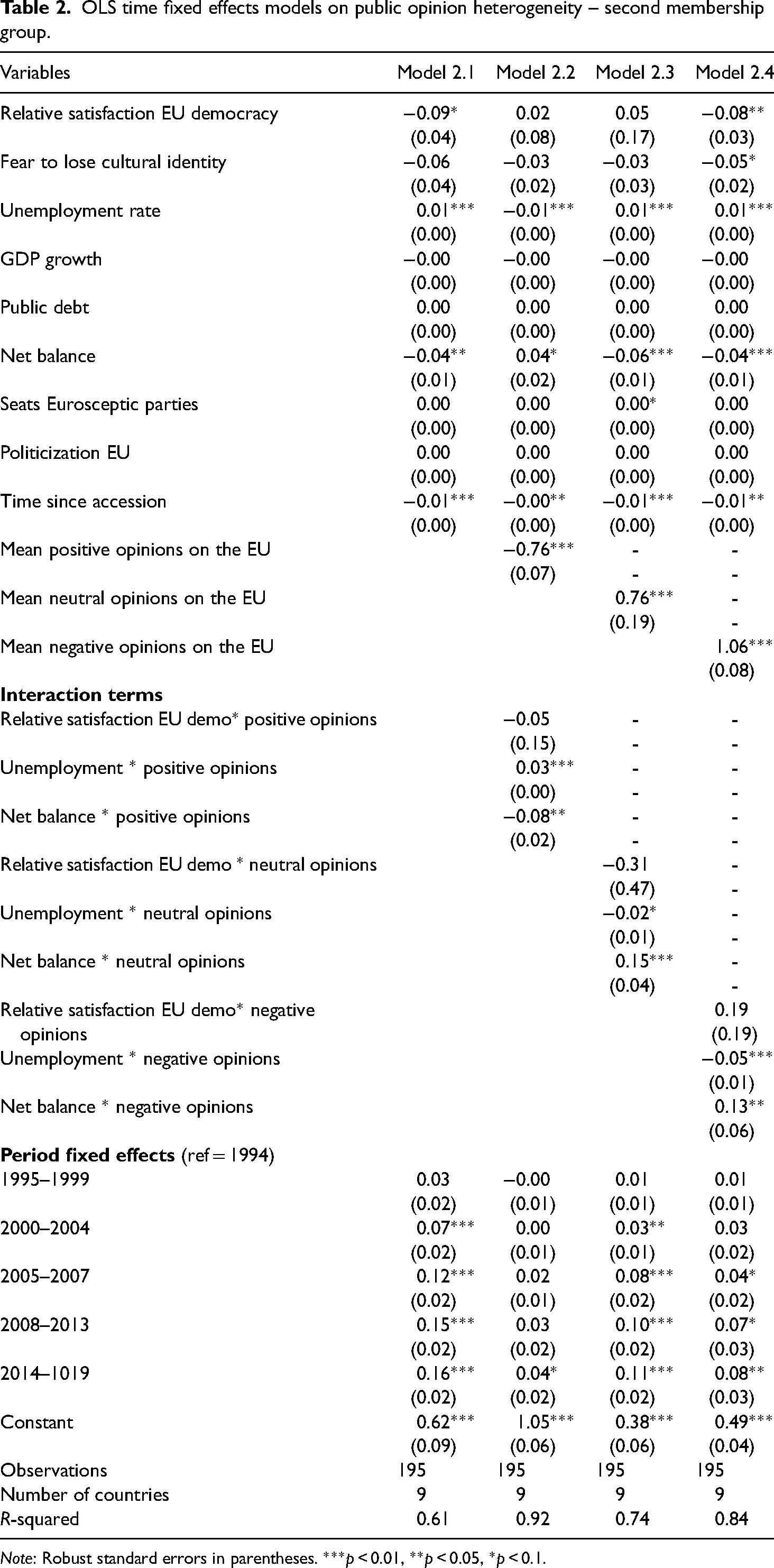
Table 2 collects the results of four OLS fixed effects models on public opinion heterogeneity for the second membership group. The results in Model 2.1 indicate that higher levels of heterogeneity in public opinion perceptions towards EU integration among the countries of this membership group are mainly associated with a higher relative dissatisfaction with EU democracy vis-à-vis national democracy, higher unemployment rates, and negative net contribution to the EU funds – namely a net contribution to EU funds higher than what the country receives. The ‘time since accession’ variable indicates a (statistically significant) negative effect, meaning that, overall, heterogeneity tends to be higher in those countries that have been members of the EU for a longer time than those that joined later. Furthermore, heterogeneity has been, on average, a rising phenomenon within this membership group, as all the time periods fixed estimators from the 2000s onward indicate a statistically significant and positive effect of time on heterogeneity as compared to the reference category – i.e. the pre-Maastricht period.
OLS time fixed effects models on public opinion heterogeneity – second membership group.
Note: Robust standard errors in parentheses. ***p < 0.01, **p < 0.05, *p < 0.1.
Models 2.2 to 2.4 assess the extent to which the three determinants of heterogeneity in the second membership group are indeed associated with the rise of positive, neutral, or negative opinions on EU integration. Focusing first on the effect of the variable on net balance to the EU funds, the results of the interaction terms in the three regression models demonstrate that heterogeneity in ‘contributor’ countries has been mainly a function of rising negative and neutral opinions on the EU but decreases in positive ones. These effects can be more clearly discerned in Figure 5, which graphs the average marginal effect of the variable on the net balance to the EU funds on public opinion heterogeneity across the full range of values on the positive, neutral, and negative public opinion trends on EU membership. As the graph shows, the slope of the independent variable is positive across the values of the neutral and negative opinions on the EU.
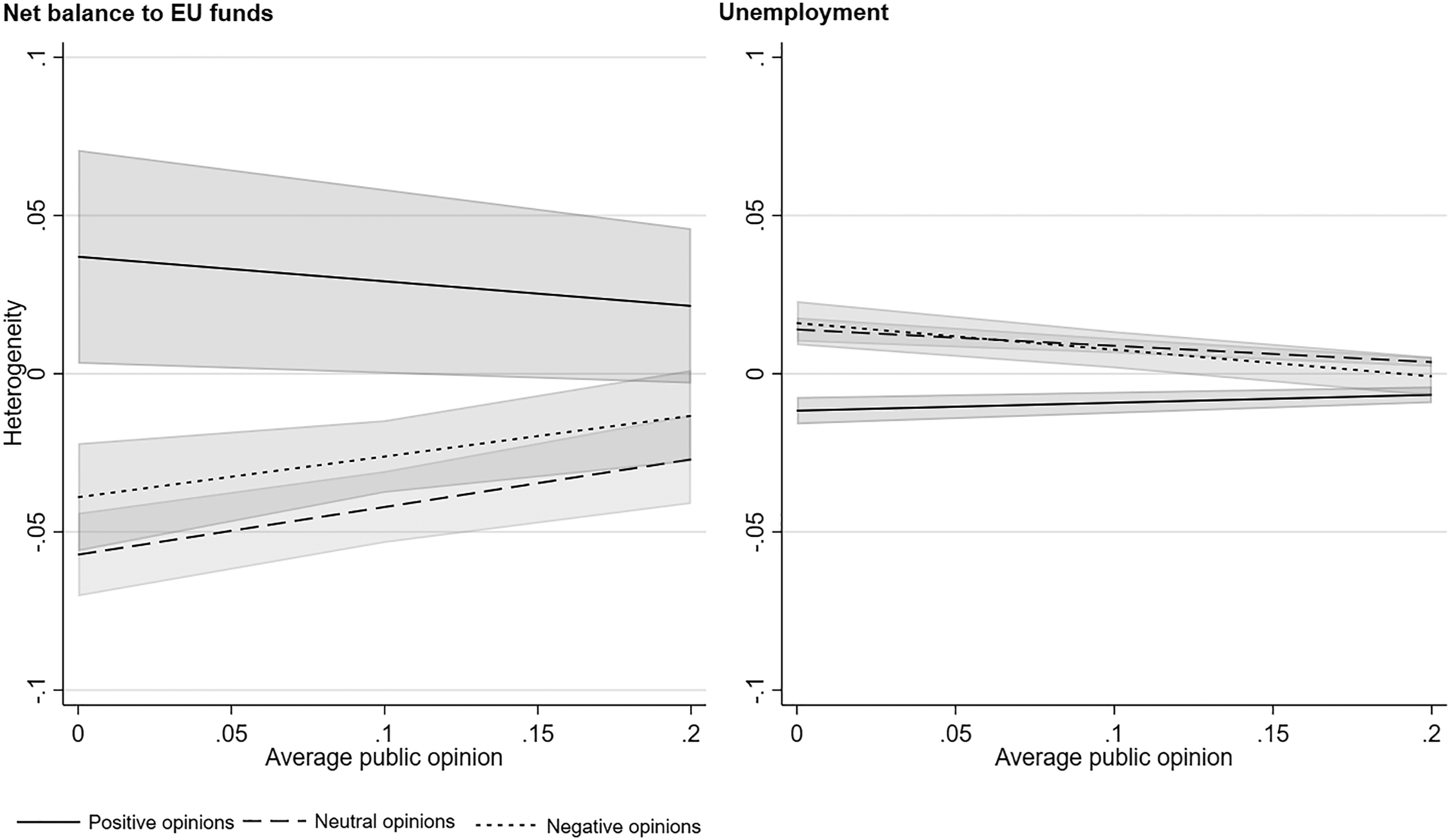
Average marginal effects (AMEs) of public opinion heterogeneity contingent on the net balance and the unemployment rate by positive, neutral, and negative levels of public opinion – second membership group.
By contrast, and in the same line as in the first membership group, the effect of the unemployment rate on the rise in heterogeneity can be mainly attributed to the changes in levels of positive opinions on the EU, as shown by the positive slope of the unemployment rate across the values of the trend in positive opinions (Figure 5). To finish, it is worth noting that although the variable on relative dissatisfaction with EU democracy vis-à-vis national democracy is statistically significant to explain cross-national and over time variation in heterogeneity within this membership group, it is not associated with the rise in either positive, neutral, or negative opinions on the EU in a consistent way across the countries, as demonstrated by the fact that none of the interaction terms including this variable in Models 2.2 to 2.4 are statistically significant.
Heterogeneity in CEE new member states
The last step in our analysis tests the drivers of public opinion heterogeneity in the sample of CEE new member states, using again time periods fixed-effects and the ‘time since accession’ trend variable as controls. Given that most of the countries in this membership group joined the EU in 2004, the time periods included in the model as fixed effects start from 2004 (period 1), and subsequently.
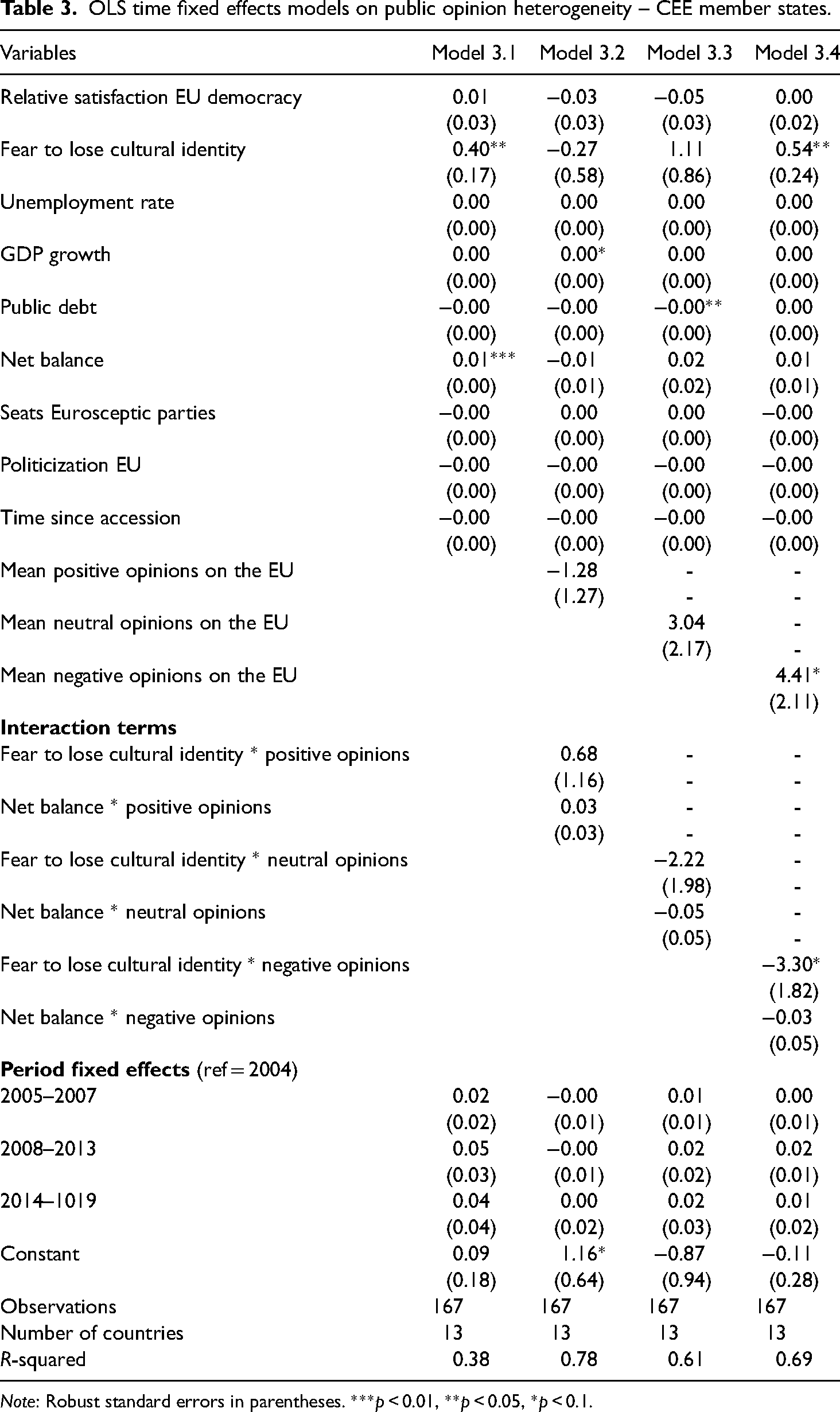
The results of the baseline model (Model 3.1) in Table 3 yield two significant variables to explain different levels of heterogeneity across countries in the region: the fear of losing national cultural identity and the net balance to the EU funds. Thus, at the public opinion level, a higher average national fear of losing cultural identity contributes to generating a more divided society towards European integration, and the same goes for having contributed, on average, more to the EU funds than what the country has received. Another point of note in Model 3.1 is that none of the fixed effects estimators are statistically significant, meaning that there is no relevant over time variation in heterogeneity in this membership group. All in all, as shown in Figure 3 above, between-country differences in heterogeneity within this membership group are rather small.
OLS time fixed effects models on public opinion heterogeneity – CEE member states.
Note: Robust standard errors in parentheses. ***p < 0.01, **p < 0.05, *p < 0.1.
When we move on to test whether the fear of losing cultural identity and the net balance have affected national heterogeneity by means of increasing the positive, neutral, or negative opinions on the EU, we find that none of the interaction terms in Models 3.2 to 3.4 are statistically significant. This means that the effect of the two indicator variables cannot be systematically associated with the rise in either positive, neutral, or negative opinions on the EU across the countries of this group, but they have different effects in different countries and over time.
Conclusion
We started this article by asking how heterogeneity within and between societies in Europe manifests itself. We have analysed the extent to which there is growing public opinion heterogeneity over the EU issue in member states and which factors contribute to explaining the cross-national and longitudinal dynamics. While scholarly literature has traditionally paid attention to the notion of Euroscepticism, in this article we have seen that the individual-level decline in public support has not resulted in a massive rejection of the EU among European citizens. Ever since the availability of Eurobarometer trend series in 1973, the proportion of citizens supporting European integration has been much higher than those opposing it. Yet, the gap between supporters and detractors of the EU today is closer than ever. If citizens in a country are not able to formulate a clear assessment in how far European integration is appreciated, they can be expected to fail to provide their national representatives with a clear mandate when it comes to specific policy decisions regarding the EU. With public opinion being highly divided, there is a risk of further polarization around the EU issue and a continuation of the democratic crises affecting both the national and European levels.
To understand what makes some countries more divided around the issue of EU integration than others and why public opinion heterogeneity has increased over time, we have tested a series of expectations at the public opinion, economic, and party levels. A main finding of our paper is that the phase of ‘constraining dissensus’ which the EU entered with the rejection of the Maastricht Treaty by several member states, has gone deeper over time and reached a peak during the years of the Great Recession (2010 to 2013). However, the overcoming of the economic crisis and possibly also Brexit have contributed to decreasing heterogeneity across most member states, mostly as a function of higher positive levels of public opinion on the EU.
The examination demonstrates that the public opinion dynamics triggering heterogeneity are different in the three membership groups. Starting with the group of original member states, we have seen that heterogeneity is mainly driven by the perceived threat that integration poses for national identity, the politicization of the debates on the EU, and the rise in unemployment rates. The effect that the two latter factors have on heterogeneity can be associated indeed with swings in aggregate levels of positive opinions on the EU, indicating thus that two of the factors commonly associated with the rise in Euroscepticism have produced the opposite outcome within the nations of the founding six. As for the second membership group, we find that the higher dissatisfaction with EU democracy vis-à-vis national democracy, the net contribution to the EU funds, and the unemployment rate are the most relevant predictors of heterogeneity in public opinion. To finish, heterogeneity in the group of new member states is mainly affected by the fear of losing cultural identity and the net balance.
Overall, our study contributes to debates about public opinion trends regarding EU integration. It moves beyond most work on public opinion dynamics by exploring and analysing the heterogeneity that lies within and between societies. As such, it addresses the question of whether we are witnessing a massive public rejection of European integration or, rather, a more divided public. Our examination has demonstrated that the EU is in the midst of growing public opinion heterogeneity, while a rejection across the board does not seem to be taking place. Our data show that, in recent years, heterogeneity has indeed slightly decreased thanks to rising positive public opinion on the EU (Figure 1). At the same time, the presence of Eurosceptic parties has so far not turned out to be critical to furthering heterogeneity. Time will tell in how far national electorates will deviate from the current trends and in how far parties winning the next European Parliament elections in 2024 will do their part in changing the course of these trends.
Supplemental Material
sj-zip-2-eup-10.1177_14651165241274830 - Supplemental material for The divided public: Dynamics of heterogeneity of European public opinion towards European integration
Supplemental material, sj-zip-2-eup-10.1177_14651165241274830 for The divided public: Dynamics of heterogeneity of European public opinion towards European integration by Irene Palacios and Christine Arnold in European Union Politics
Supplemental Material
sj-docx-3-eup-10.1177_14651165241274830 - Supplemental material for The divided public: Dynamics of heterogeneity of European public opinion towards European integration
Supplemental material, sj-docx-3-eup-10.1177_14651165241274830 for The divided public: Dynamics of heterogeneity of European public opinion towards European integration by Irene Palacios and Christine Arnold in European Union Politics
Footnotes
Acknowledgements
We would like to thank the participants of the research colloquia ‘Politics and Culture in Europe’ and ‘Politics and Society in Numbers’ held at the Faculty of Arts and Social Sciences, Maastricht University. We also thank three anonymous reviewers for their thorough and thoughtful feedback on a previous draft of this article.
Author contributions
The authors contributed equally to the article.
Declaration of conflicting interests
The authors declared no potential conflicts of interest with respect to the research, authorship, and/or publication of this article.
Funding
The authors disclosed receipt of the following financial support for the research, authorship, and/or publication of this article: The data collection has benefitted from work that was carried out as part of the PolicyVotes project funded by the Netherlands Organisation for Scientific Research (NWO, grant number: 480-10-016); which is accessible at the following link:  . Research carried out for this article has benefitted from funding for the Jean Monnet Module “EU: Democracy” (grant number 101127429), which is funded by the European Union.
Data availability statement
Data sharing not applicable to this article as no datasets were generated or analyzed during the current study.
Supplemental material
Supplemental material for this article is available online.
Notes
References
Supplementary Material
Please find the following supplemental material available below.
For Open Access articles published under a Creative Commons License, all supplemental material carries the same license as the article it is associated with.
For non-Open Access articles published, all supplemental material carries a non-exclusive license, and permission requests for re-use of supplemental material or any part of supplemental material shall be sent directly to the copyright owner as specified in the copyright notice associated with the article.
