



Abstract
Experience and loyalty have been identified as major explanations for why Members of the European Parliament (MEPs) are selected as committee rapporteurs in the European Parliament. Yet, existing research implicitly assumes that these explanations operate in isolation of what the report is about. In this article, we hypothesize that the effects of experience and loyalty on MEPs’ chances to become rapporteurs should be conditioned by the complexity of the Commission's legislative proposal. We show that party group coordinators indeed distribute the most complex legislative tasks to highly experienced MEPs but cannot confirm such a conditional relationship for the effect of loyalty. Our study contributes to the literature on the legislative organization in the European Parliament by highlighting the role of proposal complexity for the report allocation process.
Introduction
The rapporteurs of the European Parliament (EP) have repeatedly been highlighted as key figures in the legislative process of the European Union (EU), as they draft the legislature's position and negotiate on its behalf with the European Commission and the Council of the European Union. As a consequence, they are broadly considered the linchpins of intra- and inter-institutional decision-making and have important procedural privileges. In addition to their relevance for the EP's legislative organization, several studies have demonstrated that rapporteurs tend to be quite successful in shaping legislative outcomes in their favor (Costello and Thomson, 2010; Costello and Thomson, 2011). Especially in the informal setting of inter-institutional trilogues, rapporteurs are often able to wield substantial policy influence (Brandsma and Hoppe, 2021; Haag, 2022). Moreover, even though their draft reports are subject to an open amendment rule at the committee level of the EP, the rapporteur position is only rarely challenged successfully by competing amendments (Hurka, 2013).
Given their important role in the legislative process, the question of who becomes rapporteur has repeatedly been addressed in scholarship on the legislative organization of the EP. This literature has offered several explanations as to why some MEPs accrue more reports than others, but all of these explanations either focus on attributes of the MEPs themselves (e.g., seniority, education, ideological extremeness, national origin) or of their respective political parties (e.g., size, ideology). However, EP reports are typically drawn up in response to a legislative proposal by the European Commission, which owns the right of legislative initiative. 1 So far, however, the existing literature implicitly assumes that characteristics of these proposals do not matter much for the selection of the EP rapporteur, although we know that individual Commission proposals often vary widely in terms of their scope and complexity (Hurka et al., 2022).
In this article, we depart from the assumption that party group coordinators, who are ultimately responsible for the decision over who becomes rapporteur, are interested in maximizing the efficiency of the legislative process. In order to ensure that the party group and the committee receive high-quality reports, we expect party group coordinators to distribute the most complex legislative tasks to highly experienced and loyal legislators, while they reserve less complex proposals for the less experienced and less loyal colleagues. We combine replication data from a recent study on report allocation (Chiou et al., 2020) with information on the complexity of Commission proposals (Hurka et al., 2022) to test our hypotheses. Based on the analysis of 937 legislative reports distributed between 1999 and 2014 (EP5-EP7), we show that the effect of legislator experience on the probability to become rapporteur is indeed conditioned by the complexity of the underlying Commission proposal. Party group coordinators thus aim to match the complexity of the legislative task with the legislative experience of the MEP. However, we cannot confirm that party group coordinators also seek to limit agency loss by distributing highly complex legislation to their most loyal MEPs.
Who becomes rapporteur and why? What we (do not) know
In representative democracies, elected parliamentarians typically vary substantially on multiple dimensions like experience/seniority, education, professional backgrounds, interest group affiliations, and ideology. All of these factors have repeatedly been analyzed as potential explanations for varying success in obtaining committee reports in the EP (Daniel, 2013; Hausemer, 2006; Hermansen, 2018; Høyland, 2006; Hurka et al., 2015; Mamadouh and Raunio, 2003; Obholzer et al., 2019; Schädler and Brandsma, 2021; Yordanova, 2011; Yoshinaka et al., 2010). While nuances exist, most of these studies generally aim at explaining the number of reports individual MEPs accrue over a given timeframe and predict these numbers using count models. The factors highlighted as most relevant for a successful accumulation of legislative reports vary across these studies. Some studies emphasize the role of education and seniority (Daniel, 2013), others highlight the role of national origins (Hurka et al., 2015; Schädler and Brandsma, 2021), ideology (Obholzer et al., 2019; Yoshinaka et al., 2010), expertise and interest group ties (Yordanova, 2011), or government participation of MEPs’ national parties (Høyland, 2006). Across several studies, however, we find agreement that two factors play a central role: experience at the committee level and loyalty to the party group (Chiou et al., 2020; Hermansen, 2018; Obholzer et al., 2019; Yordanova, 2011).
Most recently, Chiou et al. (2020) adopted an innovative perspective on the report allocation process by explicitly taking into account that rapporteurs are generally not selected from the entirety of the EP and not even from the entirety of the responsible committee but from the committee contingent of the transnational party group that successfully auctioned the right to prepare the draft report. Chiou et al. (2020) argue that loyalty has a monotonic linear effect on the probability to serve as rapporteur, whereas the positive effect of committee experience is non-monotonic and reverses for MEPs with a lot of experience.
What often is not considered in existing research on report allocation, however, is that except for the EP's own-initiative reports, committee reports are not drawn up in a vacuum, but relate directly to a legislative proposal previously adopted by the European Commission. Yet, the role of the content of these proposals for who gets selected as rapporteur has never been examined. This neglect is surprising as the content of the initial Commission proposal can be regarded as an important exogenous source of variation in the report allocation process. While the assessment of the precise role of the European Commission in EU agenda-setting varies (Kreppel and Oztas, 2017; Rauh, 2021), it is widely acknowledged that the Commission has significant leeway in the formulation of the initial draft proposal (Hurka, 2022). Accordingly, the EP typically needs to play the hand it has been dealt with by the Commission in all legislative procedures. By leaving out the content of the Commission proposal in models of report allocation, the existing literature thus makes the implicit (and strong) assumption that all the factors cited above operate independently of what we find in the policy proposal to which the committee report pertains. The only proposal-level characteristic that has received attention in the report allocation literature is the legislative procedure under which the proposal has been adopted, typically as a proxy for report salience (e.g., Hermansen, 2018; Obholzer et al., 2019; Yordanova, 2011).
Yet, both within and across legislative procedures, legislative texts often vary quite substantially in terms of complexity (Katz and Bommarito II, 2014; Senninger, 2020; Waltl and Matthes, 2014). For instance, while some pieces of legislation are very long and detailed, others are rather short and general. Complementary to these structural features, also the semantic and syntactic characteristics of legislative texts can vary, implying different levels of readability and terminological diversity (Hurka, 2022; Rauh, 2021; Senninger, 2020). Finally, legal texts can vary in the extent to which they are connected to other legal texts and in the extent to which the individual legal provisions they contain are interconnected (Fjelstul, 2019; Koniaris et al., 2018). Recent research has demonstrated that also the legislative proposals of the European Commission display varying degrees of complexity (Hurka et al., 2022). Yet, we know only very little about the impact of this complexity on legislative processes in the EU.
Thus, while we have already gained some knowledge on who becomes rapporteur in the EP, we know much less about the question of who becomes rapporteur for what. Are experienced and loyal MEPs generally more likely to receive legislative reports, or are their chances to become rapporteur conditioned by the complexity of the Commission proposal to which the respective legislative report pertains? To answer this question, we first need to develop a conceptual understanding of what exactly makes a Commission proposal complex in the first place.
Sources of proposal complexity
While the excessive complexity of public policies is often criticized by political commentators, politicians, and citizens alike, the concept is hardly ever clearly specified and the diffuse notion that policies are complex has almost become a truism. Yet, how exactly can we distinguish complex from less complex policies both conceptually and empirically? In this article, we argue that the complexity of a policy results from structural, linguistic, and relational features of a policy text, all of which increase the costs for engaging with the policy for different types of “end-users” (Katz and Bommarito II, 2014), for example, decision-makers, implementers, or ordinary citizens. In our particular case, the actor who is faced with the costs of a complex policy proposal is the rapporteur of the EP.
First, the main structural sources of policy complexity lie in the size and depth of the policy proposal, that is, the amount and specificity of its provisions. The costs generated by structural policy complexity are thus maximized if rapporteurs are confronted with a Commission proposal that contains a large amount of very detailed provisions. In this scenario, the rapporteur's costs of dealing with the Commission proposal primarily result from an enhanced workload. As previous research has shown, these structural features of Commission proposals strongly prolong the duration of legislative negotiations (Hurka and Haag, 2020), and accordingly, size and depth are key elements that drive the structural complexity of a Commission proposal.
Second, the perceived complexity of a policy is also tightly linked to the complexity of the language in which the policy is communicated (Senninger, 2020; Tolochko and Boomgaarden, 2019; Tolochko et al., 2019). These linguistic sources of policy complexity lie in the syntactic and semantic properties of the policy text. A set of rules in a policy proposal can be expressed in different terms depending on the subject matter. We argue that the level of linguistic complexity in a policy text contributes to the rapporteur's transaction costs and can be captured by examining its signal uniformity and its readability. While the former concept refers to the variety of terminology employed in a given text, readability is related to a text's syntactic properties, such as the word and sentence length.
Finally, policy complexity can be enhanced by relational features. When policies are formulated, they need to be embedded into the existing legal landscape, which is typically the product of a long, evolutionary process (Fjelstul, 2019; Mettler, 2016). When the provisions contained in a policy text are strongly linked with other, already existing laws, this raises the transaction costs for those engaging with the policy, as more external legislation needs to be consulted and potential policy interactions need to be evaluated. In addition, policies can also display high degrees of internal relational complexity, when the policy's individual provisions are strongly interlinked. Accordingly, relational policy complexity is maximized when a policy has strong interlinkages with the existing legal order and when there is a high degree of interdependence between its provisions.
In conclusion, we expect the policy complexity of Commission proposals to vary along with their structural, linguistic, and relation features. As such, they influence the transaction costs of MEPs, particularly the responsible rapporteur, when they engage with the proposal. Figure 1 summarizes the conceptual components of policy complexity outlined above.
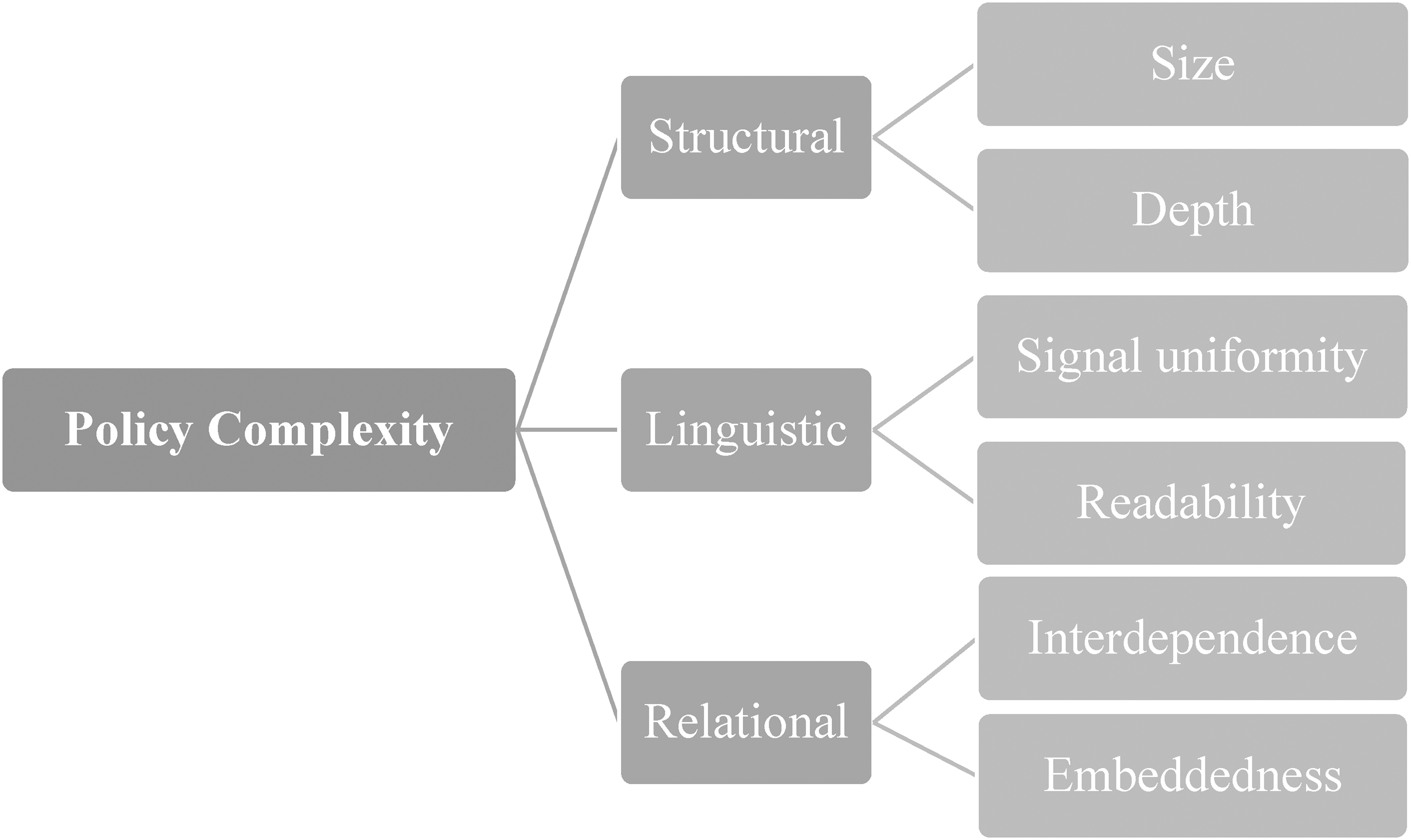
Conceptual components of policy complexity.
Theorizing the conditional nature of legislative report allocation
In this section, we develop two hypotheses on how we expect the complexity of the Commission proposal to condition the role of MEP experience and loyalty in the legislative report allocation process. Two preliminary remarks are in order. First, while we have established that policy complexity feeds from various sources (structural, linguistic, and relational), we do not have any reason to assume a priori that any of those sources should be considered more relevant than the other. Therefore, the following theoretical considerations do not refer to individual types of policy complexity, but the aggregate concept. Second, since we ascribe explanatory power to the complexity of the underlying Commission proposal, our theoretical expectations necessarily only pertain to legislative reports, not to non-legislative ones like own-initiative reports.
The role of experience
It is well established in the literature that the seniority of parliamentarians affects their legislative behavior. For example, the probability of defecting from the party group line in roll-call votes is related to an MEP's age (Meserve et al., 2009). More senior MEPs are also more likely to get into leadership positions at the committee level (Beauvallet and Michon, 2010; Chiru, 2019; Treib and Schlipphak, 2019). While age and EP experience are not systematically related to membership in certain committees (Bowler and Farrell, 1995; Yordanova, 2009), MEPs are very often re-appointed to committees they have served on before (McElroy, 2006; Whitaker, 2019) and committee-based seniority also strongly affects an MEP's chances to get into leadership positions in the party group (Daniel and Thierse, 2018). Recent research has also demonstrated that own-initiative reports by the EP are more likely to be taken up by the European Commission in its working program if they are drafted by experienced rapporteurs (Webb and Kreppel, 2020). These patterns underline that experience and seniority are beneficial for MEPs seeking to advance their careers (Whitaker, 2014), but also highly valuable assets for the EP as a whole.
The ability of a parliament to rely on the practical knowledge of experienced legislators is of particular importance when the policy substance under scrutiny is extremely complex. In such situations, we should expect experienced law-makers to enjoy a comparative advantage vis-à-vis their less experienced colleagues in several respects. First, senior legislators have accumulated years of policy-relevant knowledge which makes them specialists in the subject area their committee deals with (Yordanova, 2009). When the committee is confronted with a highly complex policy proposal, we should therefore expect the committee to have a collective interest in appointing an experienced rapporteur (Krehbiel, 1991). Second, experienced legislators are likely to have established personal networks within parliament, with other institutions, and with relevant policy stakeholders during their time in office (Strøm, 1998). From an institutional perspective, such networks are a very valuable resource, as they likely facilitate the gathering of policy-relevant information, which is one of the key tasks rapporteurs are entrusted with. The role of these personal networks should be particularly pronounced when the costs of information acquisition are enhanced in the context of a highly complex Commission proposal. Third, selecting an experienced rapporteur could also be beneficial from a partisan perspective. Party group coordinators could value experienced legislators, not just for their accumulated expertise, but might also expect them to be more assertive in legislative negotiations due to the political capital these experienced MEPs have accumulated over the years. When distributing rapporteurships, party group coordinators should feel inclined to spend this political capital where it promises the largest returns: when the policy substance under negotiation is highly complex. According to this logic, party group coordinators try to match the complexity of the proposal to the experience of the rapporteur to reap the largest efficiency gains. Finally, the EP is generally at a disadvantage vis-à-vis the other institutions in terms of resources and this implies that the value of appointing an experienced rapporteur should increase with the complexity of the policy proposal. When Commission proposals are highly complex, the nominated rapporteur's experience can compensate for the EP's lack of resources.
Based on these considerations, we expect that the effect of experience on the probability to become committee rapporteur should be most pronounced when the underlying policy proposal is highly complex:
H1: The impact of committee experience on the probability to become a rapporteur is conditional on the complexity of the Commission proposal.
The role of loyalty
Loyalty has been identified as another central aspect valued by party group coordinators when they decide on the distribution of rapporteurships (Chiou et al., 2020; Obholzer et al., 2019). The causal mechanism that connects loyalty and the successful allocation of committee reports is generally suspected in the goal of coordinators to reward loyal peers and punish party group rebels. As we know from extant research, MEPs serve both their national party and their transnational group and since the former is key to their re-election, they often side with their national party when intra-group conflict arises (Hix, 2002). In this situation, the distribution of rapporteurships is often portrayed as an important tool of party group coordinators to maintain party group discipline.
Yet, the causal mechanism that links loyalty to legislative report allocation could also operate very differently. Information about their MEPs’ loyalty could serve as an important informational shortcut for party group coordinators, helping them to decrease the uncertainty associated with the delegation of legislative power (see also Chiou et al., 2020). We can assume that party group coordinators have a strong interest in selecting rapporteurs that are most likely to formulate draft reports that are acceptable to the party group median (Obholzer et al., 2019). At the same time, however, coordinators cannot always select the same rapporteur and need to ensure that all members of the party group's committee delegation are taken into consideration to some extent. The complexity of the Commission proposal can serve as a guideline for coordinators when making the decision over which report is distributed to whom. When proposals are straightforward, the inevitable principle-agent problem that arises in any rapporteur selection situation should be easier to address for coordinators than when a policy proposal is very complex. In the former scenario, coordinators’ costs of monitoring their agents are relatively low and uncertainty is manageable. In contrast, when complexity is high, principals need to be able to trust their rapporteurs due to prohibitively high monitoring costs. This implies that we should expect coordinators to entrust the most loyal MEPs to draft the most complex reports, whereas we should expect them to give the least complex reports to the least loyal MEPs, as monitoring is less costly for these reports. Accordingly, also the effect of loyalty should be conditional on the complexity of the Commission's initial policy proposal.
H2: The impact of MEP loyalty on the probability to become a rapporteur is conditional on the complexity of the Commission proposal.
Data and methods
To test our hypotheses, we merge data on the complexity of the European Commission's legislative proposals collected in the EUPLEX project (Hurka et al., 2022) with the replication data on rapporteurs and their backgrounds provided by Chiou et al. (2020). In particular, we matched the two datasets based on the procedure reference of the legislative file. In total, we have full data on 1313 MEPs in 937 legislative report allocation processes between 13 October 1999 and 4 April 2014. This figure is much lower than the 5065 MEPs and 11,075 reports analyzed by Chiou et al. (2020). The reasons for this difference are quite straightforward. First, textual data on Commission proposals are available for a much shorter period than data on rapporteurs. Second, proposal texts often suffer from bad formatting. We decided to exclude these badly formatted cases from the analysis to make sure that our complexity measures are valid and reliable for all proposals in the dataset. 2 Finally, we only focused on legislation that introduced a new law and disregarded proposals that only amended existing laws as well as second or third reading reports, recasts, and codifications. 3 This latter rule ensures that the complexity of the proposal texts can be evaluated on a common basis, as the complexity of amending legislation is difficult to evaluate without contextual knowledge of the law that gets amended. Proposals that repeal existing laws are included in the analysis.
In our drastically reduced sample, we can replicate the major findings presented by Chiou et al. (2020) in terms of their direction and the relation of effect sizes but do not obtain coefficients on the same credibility level. The corresponding results are presented in the Online appendix. The reduced sample also leads to some caveats with regard to the interpretation of our results. Apart from the obvious limitation that our findings only cover the reduced time period under investigation, the necessity to exclude badly formatted proposal texts from the analysis implies that the composition of the resulting sample could be biased. With regard to this latter problem, however, two aspects need to be kept in mind. First, the sample contains cases from all 20 standing committees of the EP and from various periods (mostly EP5-EP7) and there is no indication of any systematic selection bias. Most importantly, the fact that we could replicate the major findings presented by Chiou et al. (2020) gives us confidence that our sample is appropriate. Second, we consider the exclusion of badly formatted proposals more appropriate than risking invalid complexity measures by keeping them in the sample.
Operationalization and measurement of key variables
As explained previously, we argue that the complexity of a legislative proposal can result from structural, linguistic, and relational factors. Structural complexity primarily results from a legislative text's size and depth. While we measure proposal size by counting the number of “policy elements” in the text (i.e., recitals, paragraphs, points, and indents), we assess detailedness by calculating the average hierarchical level on which information is located in the text's enacting terms. To that end, we distinguish articles with one single paragraph on level 1, numbered paragraphs in an article on level 2, and points within a paragraph on level 3. The variable thus has a minimum value of 1, if the enacting terms only consist of single-paragraph articles, and asymptotically approaches 3 as more information is located at deeper levels of the policy text.
Linguistic complexity is associated with the text's syntactic and semantic properties that can be operationalized in terms of readability and the diversity of the employed language. We measure readability by the LIX score, which is based on average sentence and word lengths (Björnsson, 1968). It is calculated as
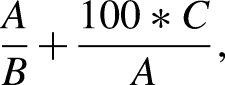
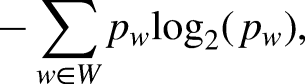
Finally, relational complexity increases with the extent to which a proposal is embedded in the existing legal order and the interconnectedness of the individual legal provisions contained in the proposal. Both relational features can be assessed by counting the number of cross-references, either to external legislation or to internal policy elements, in the policy text. To make sure that our measures are not a mere reflection of the policy text's length, we calculate the average number of external and internal cross-references per article in the Commission proposal. These measures give us an idea of how strongly the policy substance contained in a Commission proposal interacts with the existing legal order and the extent to which individual provisions in the text are interdependent.
Accordingly, our complexity measure is based on six indicators, which capture different aspects of policy complexity. To combine those indicators into a single measure of policy complexity, we first standardize each indicator and then calculate the mean across the six indicators for each policy proposal. For easier interpretation, we standardize the retrieved mean again across all policy proposals. Accordingly, our dependent variable assumes a value of 0 for policy proposals of average complexity, whereas higher (lower) values indicate higher (lower) complexity than on average. For example, a value of 1 (−1) implies that the respective proposal's complexity is one standard deviation more (less) complex than an average policy proposal. While we use this aggregate complexity score for the main analysis, the Online appendix contains the analyses for the score's individual components.
We follow the approach advocated by Chiou et al. (2020) and use the number of days a given MEP had served on the responsible committee before the day the report was distributed to measure committee experience. Yet, unlike Chiou et al. (2020), we do not equate experience and expertise on a conceptual level. While we do agree that committee-level experience likely increases policy-specific expertise, we are not sure whether the relationship is linear over time or whether the marginal effect of experience on expertise is the same for MEPs of different professional or educational backgrounds. In other words, while long committee experience likely leads to high levels of expertise, expertise does not necessarily require long committee experience, but can be acquired through alternative routes. Therefore, unlike Chiou et al. (2020), we prefer to use the term experience instead of expertise.
Finally, loyalty is measured as the share of roll-call votes in which the respective MEP voted in line with their group majority until the day the report was distributed (see Chiou et al., 2020: 239 for more details). We concur with the view of Chiou et al. (2020) that this measure best approximates the information on an MEP's loyalty available to the party group coordinator when the allocation decision is made.
The dependent variable takes on a value of 1 for the MEP who got selected as rapporteur and 0 for all other MEPs of the respective choice set.
Control variables
To replicate the model provided by Chiou et al. (2020) as closely as possible, we include the same set of control variables. 5 Thus, the models contain controls for the MEPs’ age (and age squared), the MEPs’ general experience in the EP (and experience squared), and the MEPs’ participation rates in roll-call votes. In addition, we control for whether an MEP occupies a leading role in their committee, party group, or the EP in general. The models also account for MEPs who switched their political group and for those that serve their final year in the EP when the respective report gets distributed. Finally, we also control for the lead committee in which the report was distributed to account for the fact that proposals in different policy areas have different baseline complexity, and for the party group in which the report is being distributed. All of these controls are part of the original dataset by Chiou et al. (2020). Please consult the Online appendix for descriptive statistics.
Methodological approach
Replicating the approach adopted by Chiou et al. (2020), we estimate hierarchical conditional logit regression models with random intercepts for individual committee members and countries to test our hypotheses. Using a conditional logit model allows us to estimate the relative probability of a member within a choice set being selected as rapporteur dependent on a set of covariates. These models do not have a baseline intercept and accordingly, the sum of the probabilities within a choice set is one. We fit one model with an interaction term between the (squared) committee experience and proposal complexity (H1), and one model with an interaction term between loyalty and proposal complexity (H2). The conditional logit model only allows us to include proposal complexity as an interaction term since this variable is not an alternative specific covariate, but nested at the level of the choice set.
Following Chiou et al. (2020), we estimate the effects using a Bayesian hierarchical conditional logit model that is implemented in the rstanarm package in R (Goodrich et al., 2020). We use a t-distribution with seven degrees of freedom as priors (Gelman et al., 2013). Replicating Chiou et al. (2020), we first estimate starting values using frequentist conditional logit models without random intercepts and then add random noise by drawing from a normal distribution with the frequentist estimates as mean and a standard deviation of .1. For the covariance, we use the default values recommended by the rstanarm package.
Results
Table 1 contains the estimates of the conditional logit regression. The 95% credible intervals for the coefficients of committee experience, squared committee experience and the interaction between the committee experience terms and proposal complexity do not include 0. The 95% credible intervals of the coefficients for loyalty and its interaction with proposal complexity, on the other hand, include 0. Accordingly, the results suggest that, as hypothesized in H1, the effect of committee experience on becoming rapporteur is indeed conditioned by the complexity of the Commission proposal the report relates to. Yet, the regression models do not suggest that the same conditional relationship holds for MEP loyalty, as hypothesized in H2. 6
Hierarchical conditional logit model.
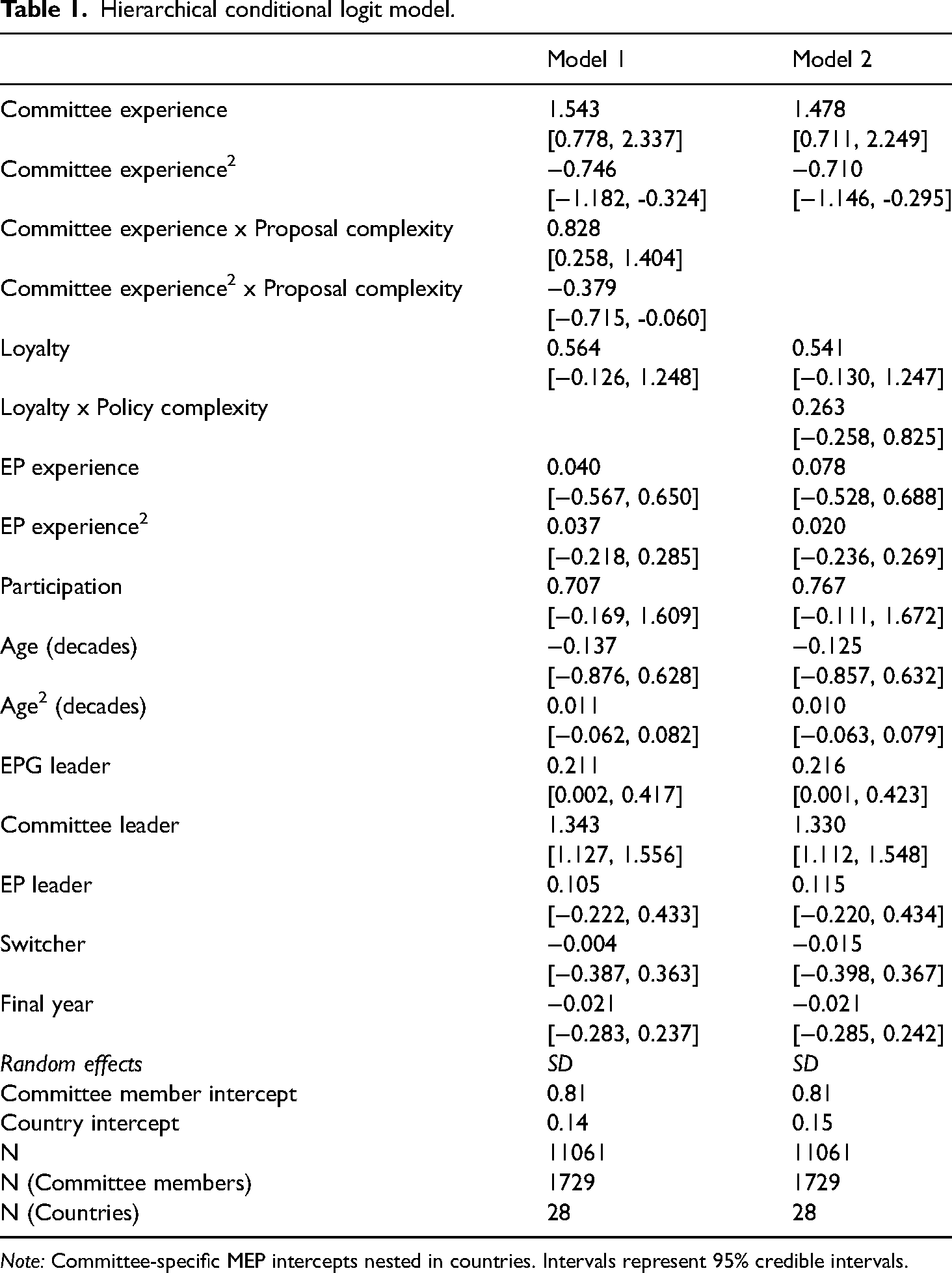
Note: Committee-specific MEP intercepts nested in countries. Intervals represent 95% credible intervals.
To further investigate the regression results presented in Model 1 (Table 1) and to illustrate the dependency between proposal complexity and experience, we predict the probabilities of an MEP with varying levels of experience being selected as rapporteur in a choice set of five MEPs, where the other four MEPs are fixed at the median level of committee experience at different levels of proposal complexity. The results are displayed in Figure 2. Figure 2 (a) depicts the probability of an MEP being selected as rapporteur for a proposal that is two standard deviations less complex than the average proposal. We observe that the probability tightly wraps around the random base probability of 0.2 ( = 1/5) marked with a red line in the figure, with wide credibility intervals. 7 Hence, for proposals of low complexity, committee experience does not seem to matter when rapporteurs are selected. Moving to scenarios where the proposal is of mean or high complexity, as depicted in Figure 2 (b) and (c), we see a lower-than-random probability of being selected up until around the median committee experience of roughly 3.4 years and a higher than random probability above until the effect tapers off above the cut-off of roughly 13 years of experience. Since we fix the experience of the other MEPs in the set at the median, this can be interpreted as having a lower than base probability up to the point where the experience of an MEP is greater than the experience of the other MEPs in the choice set.
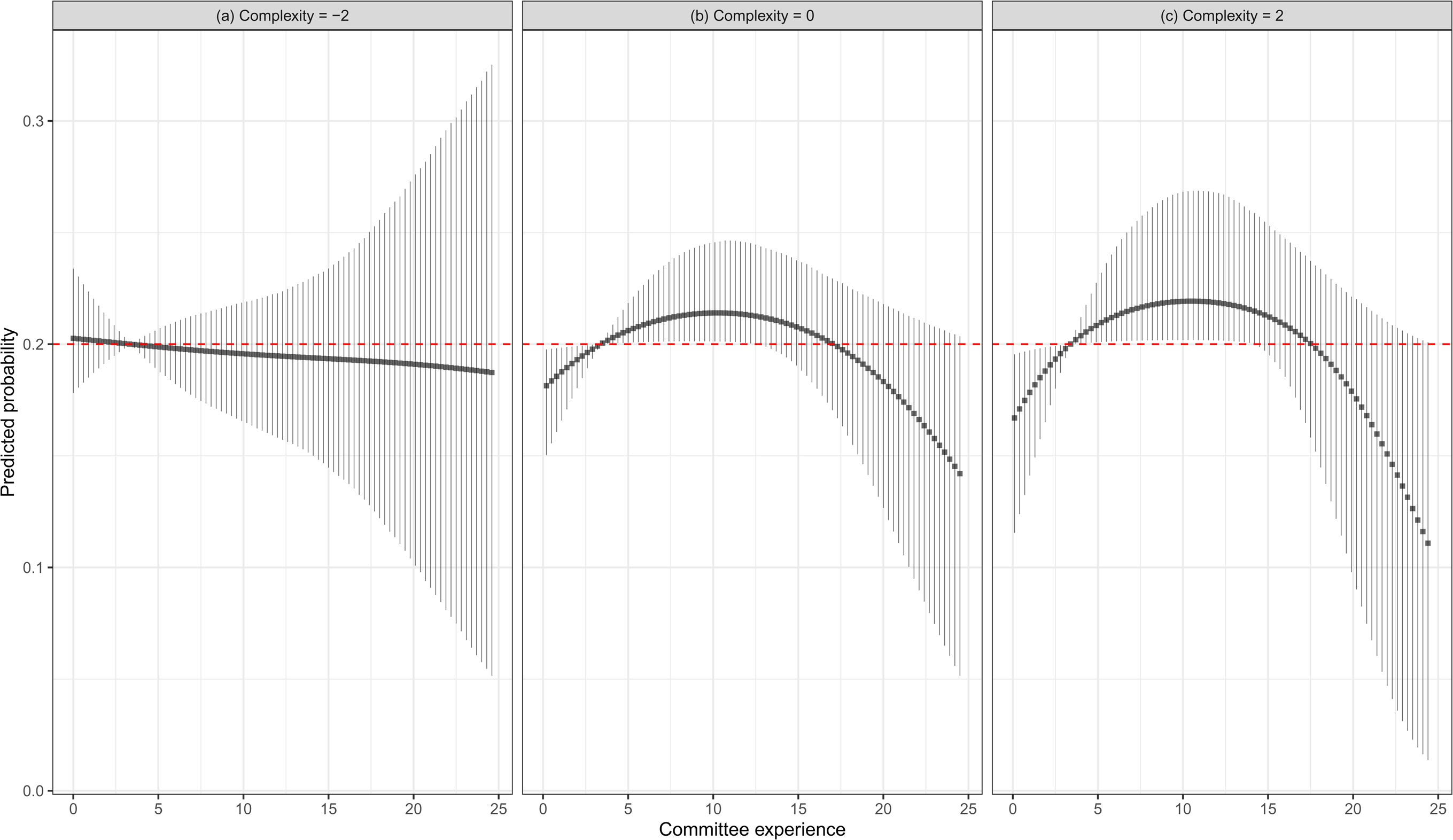
Predicted probability of an MEP obtaining rapporteurship by MEP committee experience for different levels of proposal complexity (choice set of five MEPs): (a) low; (b) medium; (c) high. Note: Vertical lines represent 95 percent credible intervals. Red line indicates random chance of 0.2. (a) low: Complexity = −2SD; (b) medium: Complexity = 0; (b) high: Complexity = 2SD.
Comparing the mean and the high complexity proposal scenario, the drop-off in credibility of the experience effect occurs at higher experience levels. This indicates that, in line with the above propositions, a MEP's committee experience becomes more relevant as a selection criterion as the complexity of the Commission proposal increases. For a proposal that is two standard deviations more complex than the average proposal, an MEP with ten years of committee experience, on average, has a 0.044 (with a [0.153, 0.007] 95% credible interval) higher probability to be selected than an MEP with no committee experience, when both respectively are in a choice set with four other MEPs of median experience. While these differences may appear small at first sight, we need to keep in mind that they must be assessed in relation to the baseline selection probability of .2 and the fact that with a probability of roughly 80%, one of the MEPs’ four competitors is selected. Overall, our estimated effect sizes are comparable to those reported by Chiou et al. (2020).
The 3D plot depicted in Figure 3 further illustrates the findings for H1 by providing an overview of how MEP experience, proposal complexity and the predicted probability to become rapporteur are related over the full ranges of the three variables. In the plot, predicted probabilities are located on the Y-axis, proposal complexity on the X-axis, and, finally, committee experience on the Z-axis. Higher probabilities are highlighted by lighter colors, while darker colors indicate lower probabilities. We can observe that as we move from low to high proposal complexity, the predicted probability to become rapporteur begins to vary more strongly across committee experience. In particular, we find that the inverted U-shaped relationship between committee experience and report allocation identified by Chiou et al. (2020) materializes ever more clearly as the complexity of the Commission proposal increases.
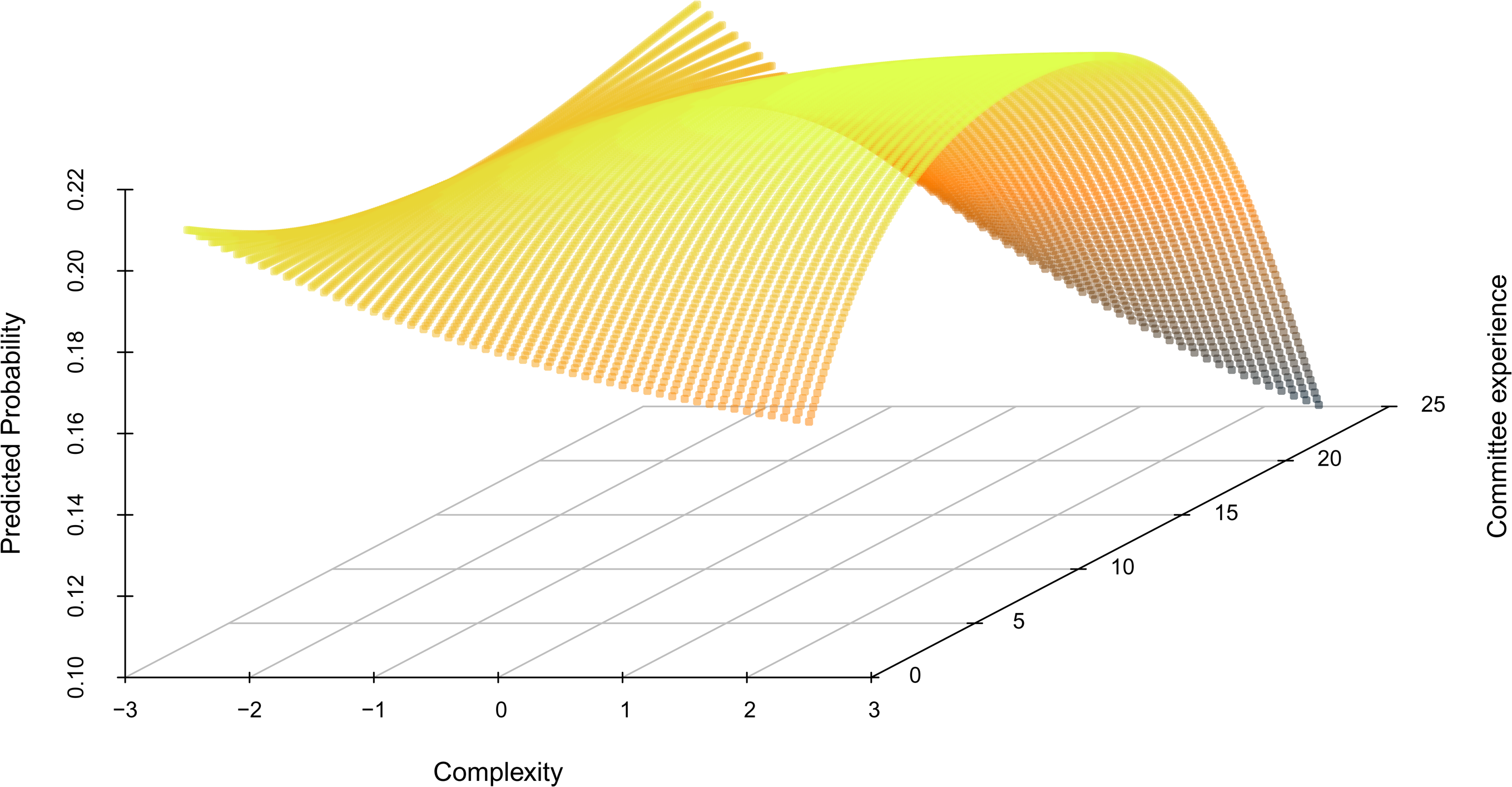
Predicted probability of an MEP obtaining rapporteurship by MEP committee experience and proposal complexity (choice set of five MEPs).
Turning to H2, Figure 4 shows the predicted probabilities of varying levels of loyalty given different scenarios of proposal complexity based on Model 2 (Table 1). As before, we use a choice set of five MEPs, where the other four alternatives are fixed at the median value of loyalty and create three scenarios of low (−2 SD), medium (0), and high ( + 2 SD) proposal complexity. Contrary to Figure 2, we do not see a significant difference in the predicted values of loyalty for different scenarios of complexity. For all three scenarios, we see a mildly positive effect of higher values of loyalty—with rather large confidence intervals—on the predicted probability of being assigned rapporteur. Yet, the effect is relatively constant across the scenarios and is therefore not conditioned by complexity. Given the limitation of our reduced sample, we cannot rule out that the effect might be present under different conditions. Still, given the scope of our sample, we cannot reject the null hypothesis for H2.
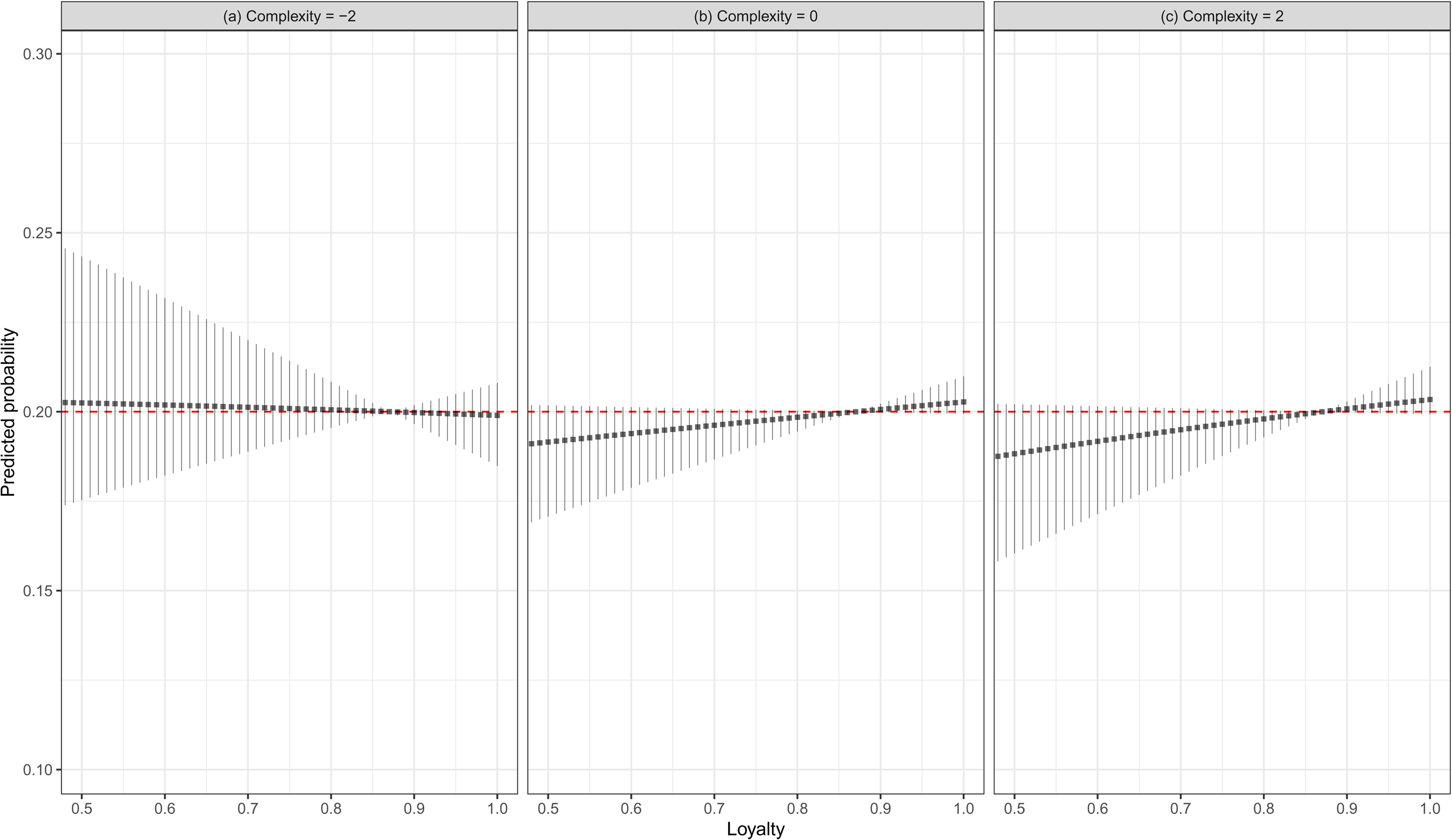
Predicted probability of an MEP obtaining rapporteurship by MEP loyalty for different levels of proposal complexity (choice set of five MEPs): (a) low, (b) medium, (c) high. Note: Vertical lines represent 95 percent credible intervals. Red line indicates random chance of 0.2. (a) low: Complexity = −2SD; (b) medium: Complexity = 0; (b) high: Complexity = 2SD.
Based on these general findings, we conducted an additional analysis in which we split the sample according to the legislative procedure under which a Commission proposal was made (consultation vs. co-decision). The results are provided in the Online appendix. We find that the conditional effect of experience is particularly strong under consultation. Under co-decision, this coefficient is still positive, but it comes with greater uncertainty. At first sight, this appears counterintuitive, because one should assume that when the stakes for the EP are higher under co-decision and the proposal is highly complex, the benefit of sending an experienced rapporteur into the negotiations should be particularly high. And while we find a clear, direct positive effect of experience under co-decision, the conditional effect is less clear than under consultation. In our view, those results might indicate that when the EP is endowed with less power under consultation, it might try to compensate for this lack of procedural power by appointing more experienced rapporteurs, who might be able to secure EP influence even in a scenario in which the EP has no formal powers of veto and amendment. And this need to compensate for a lack of procedural power by installing an experienced rapporteur might be particularly pronounced when the legislative substance under negotiation is of high complexity.
Conclusion
Existing research on report allocation in the EP implicitly assumes that who becomes rapporteur is independent of what the report is about. In this article, we argued that this assumption is very strong and needs to be tested empirically. We hypothesized that party group coordinators in the EP should have a rational interest in matching their most experienced and most loyal MEPs with the most complex legislative tasks. Accordingly, we expected to find that highly experienced and loyal MEPs are entrusted with the most demanding legislative tasks, whereas experience and loyalty should play a lesser role when the policy substance under scrutiny is of lower complexity. Combining data on the complexity of 937 Commission proposals (Hurka et al., 2022) with data on the experience and loyalty of MEPs (Chiou et al., 2020), we put these hypotheses to an empirical test
Our analysis revealed that party group coordinators in the EP indeed aim to make sure that the complexity of the legislative task matches the experience of the rapporteur. While simple proposals are distributed rather evenly within the committee contingents of the EP's party groups, coordinators are significantly more selective when they need to find a rapporteur for highly complex Commission proposals. Accordingly, the effect of MEP committee experience is conditional on the complexity of the policy substance of the underlying legislative dossier and the supplementary analyses in the Online appendix suggest that this effect is particularly important when the EP lacks formal power to veto and amend Commission proposals under the consultation procedure. Against the background of increasingly complex legislative proposals adopted by the European Commission (Hurka et al., 2022), these results highlight that high turnover rates within the EP can hurt the parliament's legislative efficiency considerably. Reports of declining membership turnover over time (Daniel, 2015; Whitaker, 2014) therefore constitute good news for the EP's party group coordinators, who would otherwise be confronted with the task of distributing increasingly complex legislative tasks to increasingly inexperienced legislators. This, in turn, could detrimentally affect the EP's influence in the legislative process. On a general level, this finding suggests that the EP and its political groups try to organize their legislative business in the most efficient manner possible by making sure that the most qualified MEPs are entrusted with the most difficult legislative tasks. This resonates with earlier studies that have highlighted the evolution of the EP into a “normal parliament” throughout its existence (Hausemer, 2006; Hix et al., 2007).
Contrary to our findings on MEP experience, we could not confirm our hypothesis that party group coordinators try to reduce uncertainty over legislative outcomes by distributing the most complex reports to MEPs they can trust and reserve the files with lower monitoring costs for their less trustworthy colleagues. When confronted with highly complex legislation, party group coordinators thus seem to value experience more than loyalty when they select the committee rapporteur.
The findings create a range of interesting follow-up questions. First, it is unclear whether the patterns established in this article also have implications for the success of the EP in inter-institutional bargaining. It might be the case that the success of the EP not only depends on the characteristics of the rapporteur (Costello and Thomson, 2011), but on how well the rapporteur matches the complexity of the legislative task. Second, the patterns we identified in this study might vary both across policy areas. For instance, we might find that effects of policy complexity are particularly severe in EP committees with a particularly high workload or in committees less representative of the plenum (Hurka and Kaplaner, 2020). Similarly, given the increase in the complexity of the Commission's legislative proposals over time, also the strengths of the effects we identified here might have increased over time. Finally, also the authority of the rapporteur in intra-committee decision-making procedures might be affected by how well their experience matches the complexity of the report. Empirically, this could materialize in varying chances of shadow rapporteurs and regular committee members to challenge the rapporteur's position during the drafting process or the open amendment phase. Accordingly, the question of whether experience also translates into influence and whether this relationship varies depending on the complexity of the legislative task at hand is another intriguing avenue for future research.
Supplemental Material
sj-pdf-1-eup-10.1177_14651165221144888 - Supplemental material for Proposal complexity and report allocation in the European Parliament
Supplemental material, sj-pdf-1-eup-10.1177_14651165221144888 for Proposal complexity and report allocation in the European Parliament by Steffen Hurka, Maximilian Haag and Constantin Kaplaner in European Union Politics
Supplemental Material
sj-zip-2-eup-10.1177_14651165221144888 - Supplemental material for Proposal complexity and report allocation in the European Parliament
Supplemental material, sj-zip-2-eup-10.1177_14651165221144888 for Proposal complexity and report allocation in the European Parliament by Steffen Hurka, Maximilian Haag and Constantin Kaplaner in European Union Politics
Footnotes
Acknowledgments
We thank our reviewers for their constructive and helpful comments.
Authors contributions
Steffen Hurka contributed the idea for the article and drafted the initial manuscript, which was based on a frequentist empirical approach. Maximilian Haag and Constantin Kaplaner improved the empirical analysis, replicating the Bayesian approach used by  and wrote the methodological and results sections.
Funding
The author(s) disclosed receipt of the following financial support for the research, authorship, and/or publication of this article: This research was funded by the Deutsche Forschungsgemeinschaft (DFG, German Research Foundation)—grant number 407514878.
Supplemental material
Supplemental material for this article is available online.
Notes
References
Supplementary Material
Please find the following supplemental material available below.
For Open Access articles published under a Creative Commons License, all supplemental material carries the same license as the article it is associated with.
For non-Open Access articles published, all supplemental material carries a non-exclusive license, and permission requests for re-use of supplemental material or any part of supplemental material shall be sent directly to the copyright owner as specified in the copyright notice associated with the article.
