




Abstract
An increasing body of literature suggests that agriculture is ‘feminizing’ in many low- and middle-income countries. Definitions of the feminization of agriculture vary, as do interpretations of what drives the expansion of women’s roles in agriculture over time. Understanding whether, how, and why the feminization of agriculture is occurring requires effective research methodologies capable of producing nuanced data. This article builds on six research projects that set out to deepen narratives of feminization of agriculture by empirically exploring the dynamics and impacts of diverse processes of feminization of agriculture. The researchers working on these projects reflect on how their methodological innovations enabled them to obtain new, or more nuanced, insights into the processes of feminization of agriculture. A first insight is that the way ‘feminization of agriculture’ is defined and operationalized plays a decisive role in the evidence we produce on the process. Second, bias in data on feminization can arise unless researchers examine well-recognized gender norms that mediate whether women are acknowledged by wider society as legitimate farmers. Third, the feminization of agriculture should be understood as a non-linear continuum. Research methodologies need to be capable of capturing dynamics, complexity, as well as multiple and diverse context- and time-specific drivers. Researchers need to exercise critical awareness of such biases when they are constructing data to measure or proxy aspects of feminization to avoid significantly underestimating women
I. Introduction
The ‘feminization of agriculture’ is generally understood to refer to an expansion of women’s roles in agriculture. Feminization cannot be viewed independently from processes of structural transformation, urbanization and changes in the agricultural sector (Doss et al., 2021; Kawarazuka et al., 2022). Drivers of change in the agricultural sector include the commercialization of large- and small-scale agriculture, the increase of wage employment in agriculture, the introduction of new technologies, climate change, conflict and migration. Those processes affect men and women and their roles and labour patterns in agriculture differently (Doss et al., 2021).
Two opposing interpretations of feminization of agriculture dominate the literature. One interpretation is of ‘women being left behind’ to work in agriculture. This scenario posits women as non-agentic victims as a result of men disengaging from agricultural work to move into non-agricultural employment; women’s workloads increase while their capability for empowerment does not (Doss et al., 2021). The review by Slavchevska et al. (2016) indicates that research following this interpretation has generally fallen into one of two categories: (a) inquiries into (gendered) demographic changes in the agricultural workforce and, in some cases, the drivers behind them or (b) studies on the outcomes for ‘women left behind’ (Slavchevska et al., 2016). Domains of enquiry are often tied to the outmigration of adult men from their homestead and their potential effects on women’s autonomy and labour burdens in farming (de Brauw et al., 2021; Gartaula et al., 2010; Radel et al., 2012; World Bank, 2015). A second take on the feminization of agriculture focuses on new opportunities for women’s empowerment arising from such changes in household arrangements or other agrarian, demographic or economic changes (Doss et al., 2021). Evidence shows that women may be involved in strategic decisions about the outmigration of a household member, may take on new roles and assume more decision-making power in the household and in farming following men’s outmigration or may adapt livelihood strategies to deal with the decreased labour supply (Kawarazuka et al., 2022).
However, several authors have addressed problems with theories of feminization and how they are applied to agricultural contexts and have proposed alternative methodologies. Chant (2008) underlines the importance of employing an intersectional approach in feminization studies and urges moving beyond economic and numerical indicators to understand women’s empowerment. She highlights that there has been excessive focus on the ostensibly homogeneous nature of women’s household headship and its relation to poverty in feminization studies, despite the lack of empirical foundation. Klasen et al. (2015) found that studying female-headed households in their heterogeneity is crucial to understanding economic inequality between female-headed and male-headed households. Bieri (2014) similarly explicates how the feminization concept can function in an overgeneralizing way; in particular, it insufficiently captures changes in gender relations in the context of rural transformation. Finally, drawing from theories of feminization in other fields, Gustavsson (2020) developed an insightful review on women’s changing tasks and activities in fishing families that takes a more critical approach to feminization within this context. Such an approach, she argues, is necessary to understand how changes in women’s tasks relate to changes in gender norms and identities. Taken together, these articles emphasize the importance of abandoning essentialist views on gender in the theorization of feminization (Chant, 2008; Gustavsson, 2020).
Moving beyond the dichotomies and generalized understandings of feminization of agriculture requires good data to obtain a more complex, nuanced picture on whether and how feminization is occurring. The production of good data relies, in turn, on effective research methodologies. The purpose of this article is threefold: first, to deepen reflection upon the research methods adopted or developed for studying feminization of agriculture; second, to consider the relationship between the methods used and the findings they produced; and third, to explore how methodological innovations can provide new, or more nuanced, insights into the feminization of agriculture.
To contribute to the development of effective research methodologies for studying the feminization of agriculture, this article builds on six studies from five research projects that were part of a large research programme titled ‘Feminization of Agriculture: Building Evidence to Debunk Myths on Current Challenges and Opportunities.’ In this article, of which an earlier version was published as an International Food Policy Research Institute (IFPRI) discussion paper (Farnworth et al., 2021), researchers working on these projects relate the insights they have derived from their empirical research to the methodologies they have used. They reflect on how their methodological innovations enabled them to obtain new, or more nuanced, insights into the processes of feminization of agriculture. As such, this article does not only provide examples of innovative methods for studying the feminization of agriculture but also aims to stimulate discussion by exploring the role research methodologies play in developing our critical assessment and understanding of feminization of agriculture.
Three themes are distinguished. Theme one examines changes in women’s participation in, and control over, agricultural production processes at the household level. It discusses challenges in identifying changes in women’s participation in labour and decision-making in agriculture when gender norms about women’s work and role in agriculture—and thus the responses to researchers—hinder the ability to uncover such changes. The second theme challenges the concept of feminization of agriculture as a linear trajectory linked to processes of male outmigration and women’s increasing participation in agricultural labour and decision-making. Mixed methods and longitudinal analyses of migration patterns and women’s and men’s participation in agriculture suggest that the engagement of rural women and men in agricultural and non-agricultural livelihoods changes throughout their lives and is accentuated by intersecting social variables. The third theme embraces a more proactive research approach. It discusses the development of a model that forecasts women’s and men’s participation in agricultural labour on the basis of gender norms and dynamics and identifies potential ways to enable women to enhance their wellbeing and empowerment in processes that increase their participation in agriculture, both of which can inform the design of policy to promote gender equality in processes of agrarian change.
We start with a brief review of the literature to provide context for these studies. We then describe the methods, after which we present insights according to theme. In the discussion, we reflect on the significance of the insights for further research on feminization of agriculture, which is followed by a conclusion.
II. State of the Literature
A widely held concern about the methodologies for studying the feminization of agriculture is the persistent undercounting of women’s labour. Deere (2005) studied census data across Latin America and found systemic flaws in census design. These include a tendency to measure the socially appropriate gender division of labour (women as housewives and mothers) rather than capturing women´s actual economic activities. An emphasis on income generation means that women´s economic role in subsistence production is poorly captured (Deere, 2005). Beyond this, census questions usually focus on fieldwork, thereby failing to capture women´s work in livestock care, post-harvest processing and kitchen gardens. Fox and Pimhidzai (2013) examined census data from 1992 to 1993 in Uganda and found that women’s labour force participation rate was systemically underestimated by about eight percentage points. They ascribe this to the framing of labour as work conducted outside the home, whereas women often conduct economic tasks within the homestead. Furthermore, prevailing cultural norms typically lead women to identify motherhood as their primary activity. The consequence is that women´s economic activities, regardless of how substantial they are, are not equally valued (Fox and Pimhidzai, 2013). Pattnaik et al. (2018) use census data to examine changes in women’s employment in India between 1981 and 2011. They argue that while census data is powerful due to its spatially comprehensive and longitudinal qualities, its design is still likely to result in an underestimation of women’s labour. Tumbe (2015) illustrates this point by pointing out that time-use surveys suggest much higher levels of participation in agriculture than National Sample Survey data.
In response to these problems, researchers are working with census data in innovative ways, often through enriching and cross-checking census data with other forms of data to elicit broad patterns. de Brauw et al. (2008) conclude that feminization of agriculture is not occurring in China on the basis of four data sets: (a) (almost) nationally representative data focused on a random sample of 60 villages (1,199 households) conducted in 2000; (b) questionnaires to elicit the work of every household member over the past 20 years; (c) the China Health and Nutrition Survey (1991–2006) to measure labour inputs on vegetable plots, farms and livestock and (d) quantitative data on who sells produce and who controls income. They found that older women and men are involved in farming at relatively equal rates, whereas younger women and men are outmigrating and probably leaving farming permanently (de Brauw et al., 2008).
Descriptive statistics are frequently used to provide context for small-scale qualitative studies. For example, Gartaula and Niehof (2018) applied quantitative surveys to 227 households in Nepal to understand patterns of male outmigration and developed 26 in-depth qualitative case studies using focus group discussions (FGDs), semi-structured interviews and participant observations to ascertain how men’s absence influenced the ways land, and farming, are valued. Their in-depth work highlighted significant differences in the agency of wives living with fathers-in-law and wives living independently. A feminist political ecology study (Spangler and Christie, 2020) likewise engaged in fine-grained fieldwork by developing tools to understand decision-making processes in households affected by male outmigration. In Nepal, they found considerable renegotiation of gender roles in farming and the household due to men’s outmigration. At the same time, their tools demonstrated high heterogeneity in power dynamics in diverse households. Spangler and Christie (2020) reflect that this makes it difficult to draw broad conclusions about the degree to which women’s empowerment is occurring due to feminization.
Literature reviews also motivate methodology selection; they help to identify which data already exists and which data is missing. Tamang et al. (2014) used a literature review to identify key trends in the feminization of agriculture, then developed a qualitative case study methodology to explore selected trends in more depth. Baada and Najjar (2020) found, through their literature review of women’s work in drylands, that women are increasingly involved in agricultural labour due to men’s outmigration, and that their labour is becoming more visible as a direct consequence of research on feminization processes. At the same time, they note the limited remit of much research in drylands, which focuses on women’s work in the agricultural sector alone. Very little research has been conducted on migration-related feminization of agriculture and its impact on food security or productivity. Consequently, it is difficult to develop a fuller picture of how women are responding to male outmigration in such contexts (Baada and Najjar, 2020).
Finally, some researchers are developing innovative methods, or adapting methods from other disciplines, to understand the implications of feminization of agriculture. For instance, Crossland et al. (2021) describe their employment of aspirational narratives in an area experiencing high outmigration in Kenya. SenseMaker→ is a narrative-based survey tool. Women and men respondents tell a short story in response to an initial question and then explore their narrative using predefined self-assessment questions. The researchers used FGDs and semi-structured interviews to provide context to help them understand the aspirational narratives (Crossland et al., 2021).
Our literature review indicates continuing concern among researchers that the extent and types of women’s work in agriculture are inadequately captured through existing quantitative research tools. Qualitative research methods, mixed methods and methods based on the combination of different data sources, highlight the complexities of understanding women’s changing roles in agriculture. Moreover, there seems to be a lack of interaction between the methods used and the researcher’s reflection on how the methods contributed to their insights into feminization processes and which insights may not have been obtained had different methods been employed.
III. Methods
This article builds on six empirical studies derive from five research projects (part of a collection of projects in a larger research study) that analysed how gender roles and responsibilities in agriculture are changing, drawing on both qualitative and quantitative data (see Table 1). The research programme was funded by the International Development Research Centre (IDRC) and the CGIAR Collaborative Platform for Gender Research. It used a broad understanding of agriculture that includes agroforestry, fish agrifood systems and other natural resource domains.
Themes Discussed and Studies Used.
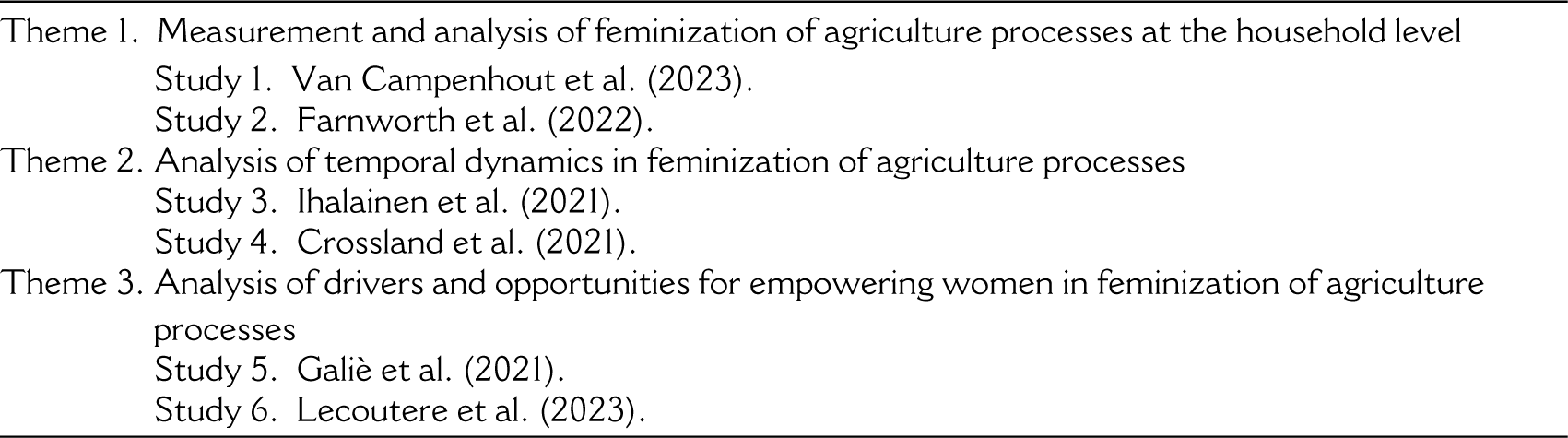
To help contextualize the research presented in this article, a literature review was conducted. This review focused on feminization of agriculture articles with sufficient details and reflection on their research methodology. Potential articles were identified through a search of Google Scholar using the following search terms: feminization (feminisation), agriculture, Sub-Saharan Africa, Asia, Latin America (and specific countries), rural, empower, decision-making and gender transformative. The section above on the state of the literature presents relevant key insights from this review.
We organize the six studies by themes, which we identified inductively based on the studies’ research focus. We distinguish three themes. A first theme looks into changes in women’s participation in, and control over, agricultural production processes at the household level. It discusses challenges in identifying changes in women’s participation in labour and decision-making over agriculture when gender norms about women’s work and role in agriculture—and thus the responses to researchers—hinder the ability to understand such changes. The second theme challenges the concept of feminization of agriculture as a linear trajectory linked to processes of male outmigration and increasing women’s participation in agricultural labour and decision-making. Mixed-methods and longitudinal analyses of migration patterns and women’s and men’s participation in agriculture suggest that the engagement of rural women and men in agricultural and non-agricultural livelihoods changes over the course of a lifetime and is accentuated by intersecting social variables. The third theme embraces a more proactive research approach. It discusses the development of a model forecasting women’s and men’s participation in agricultural labour on the basis of gender norms and dynamics as well as an assessment of possible ways to equip women such that processes of increasing women’s participation in agriculture can contribute to their well-being and empowerment, both of which can inform the design of policy to promote gender equality in agrarian change processes.
Each of the six studies in this article builds on prior literature and evidence. For this reason, each of the six studies is also situated within its own assessment of the literature. The six studies use different research methodologies to investigate the processes of feminization of agriculture and various aspects thereof. These are discussed in detail in the text. Note that the concept of feminization of agriculture is interpreted and operationalized in diverse ways across the studies. Hence, we refer broadly to processes of feminization of agriculture and, for each of the studies, we define the process that was examined (in italics).
For the analysis, the researchers involved in the studies reflected on how, and to what extent, the specific methodologies of their studies contributed to a better, more nuanced or novel understanding of the processes of feminization of agriculture. Questions that guided these reflections included: How did we innovate methods or their application to gain the knowledge we were seeking? What are the key or novel insights into feminization processes that we obtained through these methods? How did our methods allow us to gain these insights? Why did the findings we obtained depend on these innovations? And finally, what are the implications of our reflections for further research?
IV. Methodologies for Researching Feminization of Agriculture: Innovations from Six Studies
Theme 1. Measurement and Analysis of Feminization of Agriculture Processes at the Household Level
Research into feminization of agriculture often seeks to examine processes of change in women’s participation in, and control over, agricultural production processes at the household level. It can be difficult for women and men farmers to perceive and accurately report on these processes because they can be subtle and gradual. Cultural norms may also conceal changes; the gendered division of labour and decision-making is often central to rural masculinities and femininities. Accepting change can be tricky for both women and men; either may wish to model culturally appropriate gendered behaviour through a façade to the wider community and to researchers, even if the reality of decision-making in the home is very different (Galiè and Farnworth, 2019).
Normative biases among researchers themselves may impede recognition of these change processes. Researchers’ assumptions about stereotypically gendered divisions of labour, and who allocates them, can hamper the development of effective research instruments able to capture multidimensional change. For instance, Oya (2013) let go of some of these assumptions and, combining ex-ante and ex-post in-depth qualitative research with quantitative surveys, demonstrated the presence of context-specific and complex rural (wage) labour dynamics and patterns of participation shaped by gender and intersectional characteristics, such as marital, socioeconomic or migration status.
Studies on changes in women’s participation in agricultural labour in their households that use survey data often put substantial emphasis on the labour module. Important data to collect from individuals in the household are time spent on various agricultural-related activities, the nature of these tasks (e.g., their drudgery; see Khatri-Chhetri et al. [2020]) and time spent on alternative or simultaneously performed activities, such as childcare or collecting firewood. Questions about these details are often organized in elaborate household rosters where a household’s primary respondent, often an adult man considered the head of household, is asked about their own behaviour and the behaviour of all other family members. Each reported activity leads to several follow-up questions, resulting in a repetitive structure. This way of measuring labour time may be subject to measurement error related to proxy reporting (Bardasi et al., 2011), recall bias or cognitive challenges in identifying or remembering the activities in question (Arthi et al., 2018; Seymour et al., 2020), all of which can vary by gender of the respondent. Ambler et al. (2021b) demonstrated that as the interview progresses and the respondent who reports on all household members’ activities gets tired (or bored), he or she reports fewer new activities to finish the interview faster. This may lead to patterns in the data that may bias conclusions related to the position of the woman (and evolution of it) within the household, which is directly related to the feminization of agriculture. Socially desirable responses can be another source of measurement error in surveys that measure the time women and men spend on agricultural activities, the extent to which can vary by the relative social power of the group the respondent identifies with (Johnson and Van de Vijver, 2003).
Instead of household rosters administered to the primary respondent, more and more surveys now ask at least part of the questions to women and men co-heads separately. However, it has also been observed that men and women often provide substantially different answers to the same set of questions. An emerging empirical literature is trying to unpack this disagreement. For instance, some of this disagreement seems to be simply random noise, but responses may also differ due to cognitive bias or differences in interpretations of the same event. Some studies claim disagreement is the result of spouses deliberately hiding information from each other, while others note that the cultural context may also affect how respondents respond to certain questions (Acosta et al., 2020; Ambler et al., 2021a).
Building on this literature, Study 1 under theme 1 by Van Campenhout et al. (2023) shows that cultural context—gender norms and customs about men’s and women’s roles in agriculture in particular—affects the responses of spouses about the extent of their labour participation, decision-making and income from agricultural production and leads to discord. The authors observed significant discord in the data provided by the women’s and men’s spouses in rural Ugandan maize-growing households, who were interviewed about their own and their spouse’s behaviour (cross-reporting). To test the hypothesis that spousal disagreement is caused by spouses responding in line with gender norms and cultural expectations about men’s and women’s roles in agriculture, Van Campenhout et al. (2023) set up a field experiment aimed at challenging the view that maize growing is predominantly a man’s domain.
While it is challenging to create random variation in norms to study causal mechanisms, recent research has shown that the use of videos featuring role models and success stories can be effective in challenging norm-driven stereotypes (Bernard et al., 2015; Porter and Serra, 2020; Riley, 2022). To identify the impact of norms and customs about gender roles on survey responses, the field experiment by Van Campenhout et al. (2023) showed a random selection of households an engaging video that encourages spouses in monogamous households to think about maize farming as a family business, whereby each spouse has shared responsibility and voice. To do so, the video showed a couple involved in maize farming, with both spouses having an equal role in decision-making, labour and marketing. After one agronomic season, outcomes and behaviour in these households were then compared to the outcomes and behaviour in households that had been randomly selected to view the video portraying a male farmer engaging in maize farming, framing maize farming as a man’s responsibility, which is the prevailing norm. The experiment was innovative by simulating the process of evolving gender roles. The video portraying maize farming as an equitable family business encouraged farmers to think for themselves about their actual activities and household dynamics instead of reporting according to cultural norms. 1
Van Campenhout et al. (2023) show that individuals, prior to the field experiment and without exposure to new norms, respond in line with gender norms and expectations. In societies characterized by strong gender norms, such as the study context of rural Uganda, men overestimate their role or position to make it appear that they are acting in accordance with prevailing expectations in society, while women downplay their contribution in roles ascribed to men. For instance, ploughing may be a typical male activity; even if men ask for help from their wives in such a task, the woman may conceal their involvement from society. Following the experiment, men in households shown the video framing maize farming as an equitable family business were less likely to overstate their role in decision-making on issues such as timing of planting and weeding. The likelihood of and degree to which women spouses understated their sales of maize (i.e., reporting lower sales than what the other spouse assumed) also reduced. These findings, which are externally valid for maize-farming households in Uganda and likely transferable to similar farming communities in comparable contexts, have implications for assessing the role of women in agricultural decision-making processes. For instance, gender roles and norms may gradually evolve towards a greater recognition of women’s participation in decision-making, labour and marketing of maize. Consequently, rather than conform to norms assigning such roles to men, women in these communities may start taking credit for their involvement and work (and men may start giving them credit) regardless of whether the extent of their involvement or work changed in maize farming. It may therefore be challenging to distinguish if the apparent feminization of agriculture is due to a (material) change in women’s role and extent of labour contributions or a change in the acknowledgement of women’s role and labour contributions.
The importance of cultural context and intersectional identities in research on feminization of agriculture is echoed in the second study from theme 1. The study adopts a more actor-oriented action research approach to exploring changes in women’s and men’s participation in agricultural labour and decision-making in their households (Chant, 2008; Farnworth et al., 2022; Gustavsson, 2020). Research in Jamari (a pseudonym), a wheat-growing community in Madhya Pradesh, India, aimed to facilitate empowering, open-ended discussion processes during which research questions were explored with respondents. The study team considered probable power dynamics related to caste and gender ahead of fieldwork to create enabling discussion spaces. Marginalized groups belonging to the Scheduled Caste and Scheduled Tribes were interviewed together in sex-disaggregated groups. Non-marginalized groups belonging to the General (Brahmin) caste and the lower-placed Other Backward Castes were likewise interviewed together in sex-disaggregated groups. This allowed deeper discussions of how caste and gender identities influenced women’s and men’s engagement in agricultural labour and decision-making processes.
The interactive and explorative discussion processes in this study empowered the women respondents to come to a new understanding about their identities. Initially, women denied they were farmers, following cultural norms that strongly associated men with the term kisan or farmer. However, by listing all the tasks women do in the field, through consideration of their participation in intrahousehold discussions about agriculture, and by discussing trends in women’s agricultural participation since 2006, women reflected together and agreed they were indeed farmers. This was a particularly important insight for non-marginalized women since cultural norms tend to look more harshly upon women in these castes for engaging in agricultural labour and decision-making. While, across cases, married women saw their engagement in farm work—whether paid or unpaid—as agentic in pursuit of their expanding aspirations, this was not always so for young unmarried women living at home. Thus, the extent to which women’s (self-designated) expanding role in agriculture reflects their self-determined aspirations and actions to be more involved varies by age and marital status.
The in-depth discussions also revealed that men provided less differentiated inputs into discussion processes than women and reached ‘consensus’ more quickly. One reason that men appeared more likely to provide normative responses may be intracaste and, especially, intercaste power dynamics—with higher caste men dominating lower caste men and ridiculing, even aggressively challenging, them when they attempted to speak to their realities. Subcaste tensions existed between women too, yet women seemed more accepting of diverse opinions. Men’s ‘consensus’, regardless of caste, was a categorical denial that women took part in agricultural decision-making and a reluctance to admit women were engaged in agricultural tasks or hired labour. In the case of men, therefore, the interactive, open-ended research methodology did not inspire men to reconsider their perceived realities. Perhaps, given that, in this context, men are generally considered guardians of women’s honour and breadwinners, it is likely that men wanted to maintain the normative gender façade and feared being mocked by the community if women were seen as contributing to breadwinning too (Galiè and Farnworth, 2019). The implication for studies seeking to understand changes in women’s participation in agricultural labour and decision-making in their households in similar contexts is that information provided by men—at least in group discussions—may be more a reiteration of caste-based masculinities and less a reflection of who really ‘decides’, who engages in and who really ‘does’ fieldwork. The fact that, in contrast, women themselves feel able to acknowledge their role in agriculture in defiance of prevailing norms is in line with the findings related to spousal disagreement in Van Campenhout et al. (2023).
In sum, the studies in this theme dealing with ‘measurement and analysis of feminization of agriculture processes at the household level’ showed how gender norms about men’s and women’s work and role in agriculture can influence responses to researchers and, as such, raise challenges in identifying and understanding changes in women’s participation in labour and decision-making over agriculture.
Theme 2. Analysis of Temporal Dynamics in Feminization of Agriculture Processes
Feminization of agriculture studies often posit that processes of change towards more extensive and intensive participation of women in agriculture are linear, often driven by male exit from agriculture. Yet rural households’ engagement with agricultural and non-agricultural livelihoods is often much more dynamic, varies over time and what stage of their life cycle people are in, and is influenced by intersecting social variables. Some of the methods and tools commonly used in past explorations of feminization of agriculture tended to have important limitations for capturing the temporal and socially heterogeneous processes of households engaging with agricultural and non-agricultural livelihoods. Temporal dynamics linked to the seasonality of agricultural tasks or household life cycles are not necessarily captured with census or survey data, which has implications for understanding the effects of seasonal migration and life cycle patterns (e.g., Pattnaik et al., 2018). Studies using mixed (e.g., quantitative and various qualitative) methods can help overcome these limitations and offer a more complex and holistic view of the link between those processes driving transformation and how they influence women’s participation in agricultural labour. However, these studies generally focus on thematic findings, such as migration, without providing critical learnings from their methodology to inform subsequent research efforts for more nuanced insights into non-linear, socially heterogeneous dynamics (e.g., Gartaula and Niehof, 2018; Gustavsson, 2020). As a result, narratives that portray a linear progression towards women’s more extensive and intensive participation in agriculture due to men’s outmigration or exit from agriculture may be overly simplistic, flattening what is often a much more dynamic process.
In this section, two different and complementary methodologies are discussed—one quantitative and longitudinal, the other partly qualitative and based on recall—which allow us to grapple with complex, temporal and socially heterogeneous effects and dynamics of migration on gender relations in agricultural households (theme 2).
The first (quantitative and longitudinal) methodology was used to examine how men’s exit from agriculture influences women’s agricultural labour force participation at the household level over time by analysing data spanning 21 years (Ihalainen et al., 2021, the first study under theme 2). In particular, the study explored how a husband’s exit from farming activities affected his wife’s participation in agriculture by following a subset of the Rural Spouses Dataset from the Indonesia Family Life Survey, spanning from 1993 to 2014, with a focus on 1993, 2000, 2007 and 2014 for an equal spread between the years of analysis (BPS-Statistics Indonesia, 2008, 2018). In terms of feminization of agriculture, the study focuses on ‘labour allocated to agriculture, non-agricultural work, and housekeeping’ by men and women in married or co-habiting couples ‘in the face of men’s migratory patterns’.
A longitudinal analysis of these individuals’ movements between agriculture, non-agricultural work and housekeeping over the specified period was used to characterize women’s and men’s agricultural work overtime. Emerging patterns were then cross-checked with cross-sectional and longitudinal age cohort analyses, relating these movements to various life cycle effects. A panel dataset was constructed by pairing the reported work categories of women found at two consecutive data points and analysing these against several socioeconomic variables including wealth, education, age and household type (husband present, husband absent and no husband) in order to address social heterogeneity and understand ‘who’ stays, leaves or enters into agriculture.
At a smaller scale, the study looked at possible household-level changes in the gender distribution of agricultural and non-agricultural work by matching and cross-tabulating husband and wife according to their respective work categories at each data point. This innovative dyadic analysis allowed for a close examination of the gendered division of agricultural and non-agricultural labour over time by illuminating changes in the relative distribution of households in each occupation category (e.g., both spouses in agriculture, husband in agriculture and wife in non-agricultural sector). An additional breakdown of agricultural work by employment category (e.g., self-employed, family worker and casual worker) further demonstrated the influence of the husband’s presence on women’s agricultural labour. Combinations of the husband’s status (present, absent or separated from household) and household wealth status were also used to predict women’s likelihood of moving into one of these employment categories.
Data analysis showed that men and women move in and out of agriculture, highlighting several aspects of the gendered dynamics of agricultural work. Notably, there was no demonstrable increase in the share of households with the wife working in agriculture and the husband working in the non-agricultural sector. Furthermore, an absent husband did not correlate with a higher likelihood of women entering or remaining in agriculture. Hence, the ongoing processes of men’s outmigration and exit from agriculture are not driving a feminization of agriculture in rural Indonesia. However, there are significant degrees of movement by rural women and men between work categories over time. For instance, while agriculture accounts for roughly 40% of rural married women’s labour in any given year, 71% of women worked in agriculture at least once during the survey period. Conversely, out of the men working in agriculture in 1993 (the study’s baseline), 40% switched to non-agricultural jobs over time, with more than half eventually returning to agriculture as they aged. While younger women were increasingly likely to find non-agricultural jobs, older women who had been working in agriculture were more likely than their male counterparts to move into housekeeping.
These findings illustrate the importance of making space for temporal nuance in inquiries into feminization of agriculture to understand the flexible role that agriculture plays in rural households’ livelihood strategies over time and to critically examine the social dynamics. Our methodology was well-suited for enabling such analyses. While aggregate data points to a decline in agriculture represented in men’s total labour, a significant share of those leaving return to agriculture as they get older. Long-term panel data was crucial for observing these life cycle dynamics.
The study identified significant differences between the labour activities of women with a husband at home, those with an absent husband and those with no husband (i.e., divorced or widowed). For instance, women whose husbands are present are likeliest to work in family labour. Farming women with absent spouses (i.e., de facto women heads-of-households) tend to be self-employed with household helpers, with this likelihood increasing with wealth. Even if casual agricultural work is significantly more common among poorer women with no husband (divorced or widowed women, de jure women heads-of-households), having no husband is significantly and positively correlated with moving to non-agricultural work, suggesting that the non-agricultural sector may offer more attainable opportunities. Therefore, to study the changing nature of women’s engagement with agriculture, stratified sampling may thus be needed to ensure sufficient representation of various household types and different groups of women at different stages of their lives.
A second mixed-methods comparative study of migration in Burkina Faso and Kenya offered a different view into the dynamic nature of intrahousehold gender relations and participation in agriculture among households experiencing migration (Crossland et al., 2021, the second study under theme 2). This study focuses on ‘women’s and men’s involvement in agricultural tasks and decision-making relative to the migratory patterns of household members’. It examines whether feminization of agriculture is occurring on the family farm, with feminization of agriculture understood as ‘an increase in women’s involvement in the above (labour and decision-making) processes relative to men’s involvement’. The study adopted several complementary methods to examine these processes, and how these changes influence household investments in agricultural production.
The novel methodology used to understand these processes included sequential development of several data collection instruments that examined the temporal dynamics and social heterogeneity of migration and its effects on gendered labour, skills and decision-making patterns. Each instrument was informed by data collected using the previous method. First, community profiles conducted with key informants provided a general sense of migration patterns over the past decade and expected trends, of the key events and gender norms that drove these patterns and of changes in the agricultural landscape at the community scale. The subsequent survey, conducted with respondents from migrant households, inventoried the number and personal characteristics of migrants, including which months of the year they were away from the homestead, when temporary migrants returned to the homestead and the gendered effects of these patterns on production. In both countries, the survey helped identify the diversity of social positions of the migrants (i.e., male household heads versus sons or daughters). The third set of data collection instruments—sex-segregated FGDs and semi-structured in-depth interviews with women from households with migrant members—then delved more deeply into issues that arose in the survey, such as whether or how migration affected the household division of agricultural labour, skills and decision-making.
Developing protocols sequentially allowed each to be tailored to the specific context of the study sites and to ask more relevant questions. This approach enabled the detection of context-specific temporal dynamics in, and relationships between, migration and household division of agricultural labour and decision-making. Combining methods produced nuanced interpretations and painted a more diversified, dynamic and sophisticated picture of migration and its effects on household production than would have been possible with any one method alone.
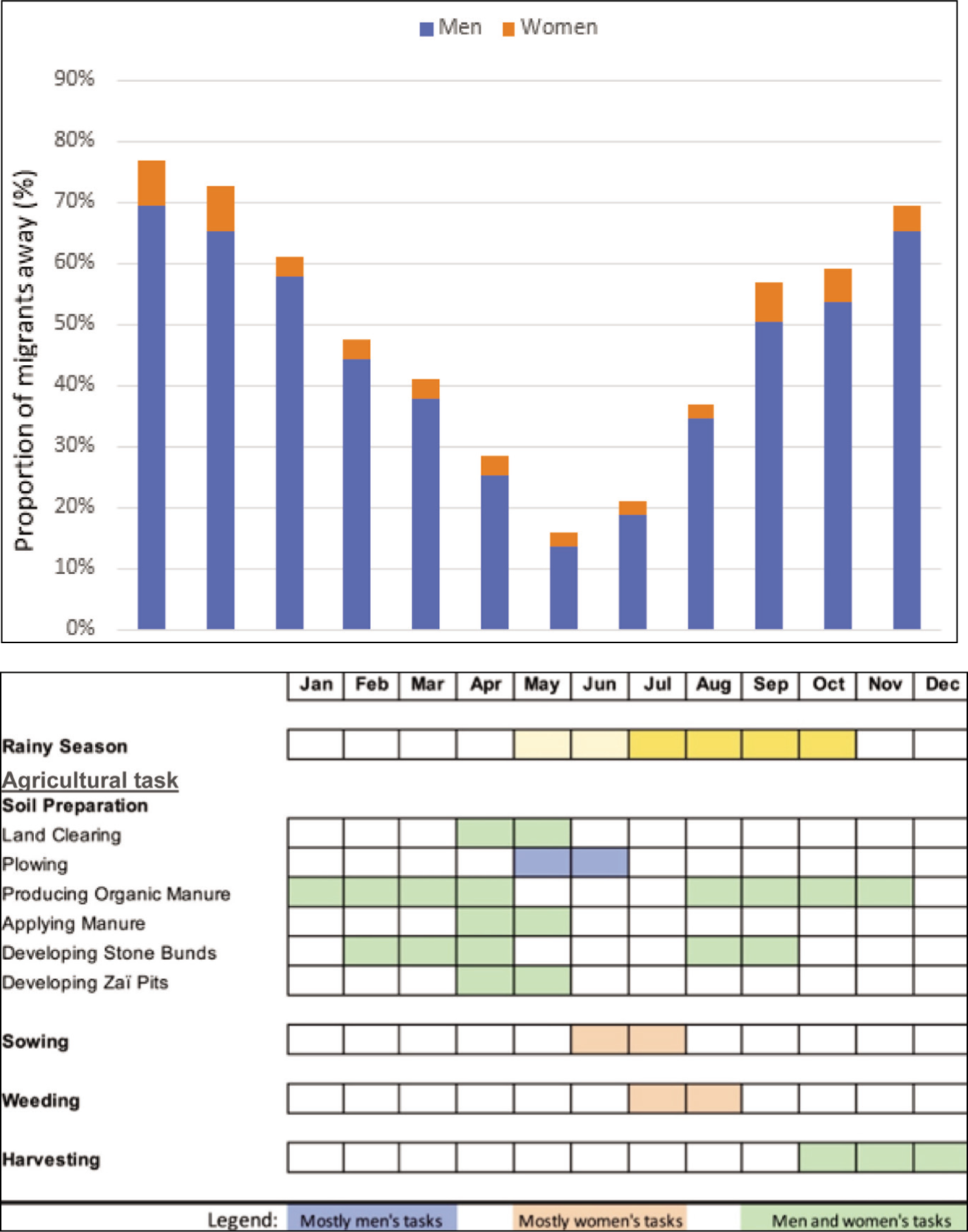
In Burkina Faso, the community profile allowed the researchers to quickly grasp that migration at the study sites was temporary and non-linear. FGD participants were then asked to create a seasonal agricultural calendar listing the tasks conducted by women, by men and by both. Juxtaposing these seasonal calendars with a histogram of the months of temporary migration identified through the survey (Figure 1) revealed the months during which a reorganization of agricultural labour, skills or decision-making possibly occurred, and the agricultural tasks that could thus be affected.
Perspectives on the effects of migration, which were explored in the survey and the FGDs, were at times contradictory. The researchers did not view these differences as problematic but rather as a cause to explore the reasons behind differing perceptions. For instance, survey respondents predominantly stated that outmigration did not affect their household’s agricultural labour, whereas FGDs showed that although men’s outmigration does at times affect labour availability, households can cope with this change by reducing the cultivated area to suit available labour. Combining seasonal agricultural calendars with the calendar of migration (Figure 1) showed that the proportion of men who are absent drops sharply when ‘men’s’ agricultural tasks, such as field clearance and ploughing, are performed. The fact that nearly half of migrants return to their farms at this time explains in part why opinions about labour shortages are split. Combining methods allowed for more informed interpretations of the data by accounting for these subtleties.
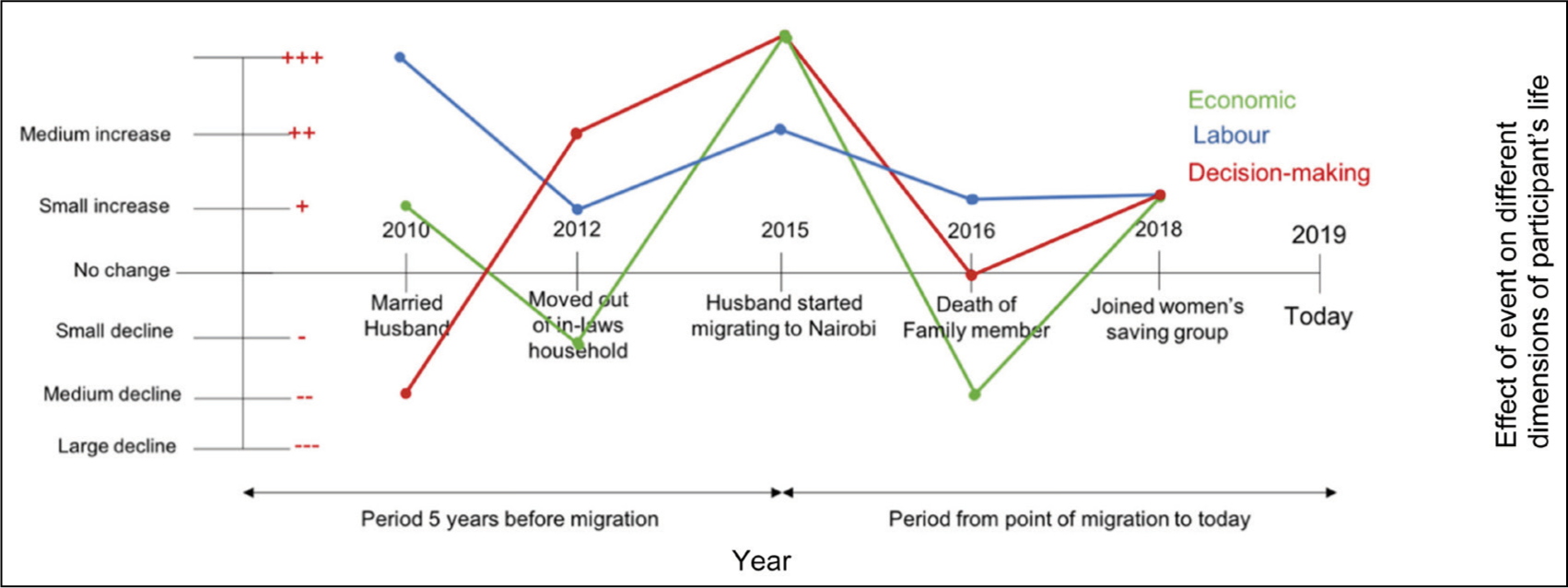
In Kenya, the survey revealed that migration was more permanent compared to the Burkinabè study, with male migrants leaving the homestead for an average of 10 months of the year to work in urban centres. FGDs indicated that this absence of men often caused a redefinition of agricultural household responsibilities, whereby women gained more control over farming decisions but also experienced increased workloads, emotional stress and loneliness. Drawing on the methodology from the global comparative study ‘GENNOVATE’ (Badstue et al., 2018), semi-structured interviews were conducted with women from households with migrant members to contextualize migration temporally and in relation to other important life events. Women participants were asked to construct timelines of their lives, including significant events from 5 years prior to their husband’s or child’s migration until the present day. For each significant event, including the departure of their spouse/son/daughter, women discussed its effects on their capacity to participate in agricultural decision-making, their labour and their economic outcomes (Figure 2). The use of timelines in the Kenyan study captured the dynamic nature of migration processes (e.g., temporary returns due to unemployment or illness and permanent returns following retirement) and the impacts of migration due to a complex combination of factors, including the household’s situation before migration and the relationship between the migrant and their sending household. Such insights could have been missed had the interviews focused on migration as a one-off, isolated event. Similarly, FGDs and interviews revealed mobilities on a smaller scale (e.g., husbands who return weekly or once a month) that were not captured by broader survey questions. These qualitative methods also captured the strong connections migrants maintain with their rural homes and nuanced intrahousehold dynamics, which are more difficult to explore via a survey.
In sum, by analysing temporal dynamics in relation to migration, the two studies in this theme add nuance to understanding the feminization of agricultural processes. The studies show that rural women’s and men’s agricultural and non-agricultural livelihoods and roles change over the course of a lifetime, across seasons, and in response to the migration of a household member.
Theme 3. Analysis of Drivers and Opportunities for Empowering Women in Feminization of Agriculture Processes
Rather than characterizing feminization of agriculture as ‘women being left behind’, feminization narratives might instead focus on the opportunities for women’s empowerment arising from changes in household arrangements or other agrarian, demographic or economic changes. The two studies under theme 3 engaged with the latter narrative.
The first study by Galiè et al. (2021) starts from the premise that ‘processes of increased participation of women (or men) in agricultural work—as feminization and masculinization of agriculture are subsequently defined’—are the outcome of complex gender dynamics and norms at the intrahousehold level. Gender dynamics are the complex relationships and interactions between and among boys, girls, women and men that are strongly affected by norms. Gender norms are the formal and informal rules that define acceptable and appropriate identities, roles and actions for women and men in a social group or society, dependent on other social markers (e.g., marital status, caste, religion and ethnicity). Gender dynamics and norms change over time, despite the persistence of some forms of discrimination. Gender dynamics and norms influence individuals’ opportunities, choices and actions, which in turn affect who in the household engages in agriculture and who works in non-agricultural activities. For example, how do gender norms about who should be the breadwinner, who needs an education and who should be responsible for mobility, parenthood and care for the elderly, among others, affect decision-making on who looks for work elsewhere and who stays in the house and engages with agricultural work? When gender dynamics and norms produce similar outcomes for households in a given region, trends can emerge that may materialize as increased participation of women in agricultural work (feminization of agriculture); or increased participation of men (masculinization of agriculture).
Monitoring and forecasting such changes in the agricultural labour force is key to understanding who will manage agrifood systems in the future and can assist policymakers, rural advisory services and other stakeholders in responding to foster efficient and equitable food systems. Forecasting agricultural labour force composition is usually done by a linear aggregation of past trends projected into the future, assuming that the trends will continue. But if the feminization or masculinization of agriculture is strongly affected by changing gender norms and intrahousehold gender dynamics, as discussed, then forecasting needs to engage with the drivers behind these phenomena (and how they affect the agricultural labour force) rather than making predictions based on general past trends. An analysis of such drivers will allow a more accurate forecasting of the future agricultural labour force. Forecasting is used by governments, for instance, to develop policies and investment plans for rural development. If such forecasting is inaccurate and gender-blind, then gendered constraints and opportunities of the new workforce—and other complexities associated with such change—will be missed. Moreover, acknowledging the drivers that shape the agricultural labour force provides opportunities to address the existing gender-discriminating dynamics in drivers that may increase future gender inequality.
The Livestock Master Plans (LMPs) are one example of a forecasting model based on identified drivers put into practice. The International Livestock Research Institute is developing LMPs for several Sub-Saharan African countries. LMPs provide governments with investment scenarios in various livestock value chains and relative ex-ante impact scenarios on selected national development goals. The scenarios are developed through a linear future projection of current statistics on, for example, gendered provision of labour, access to inputs or markets. The forecasting model developed by Galiè et al. (2021) identifies the key drivers behind future rural population composition, which could help improve the accuracy of LMP scenarios. Hypothetically, this could look as follows: In the next 5 years, an increase in women’s individual capabilities (through expanding education) coupled with an expansion of market opportunities (through new employment opportunities as teachers) may decrease their contribution to livestock rearing and, consequently, the availability of unpaid labour and overall profitability of the livestock enterprise. Identifying such key gender drivers could also be key to government action to pre-emptively enhancing gender equality. In this example, by enhancing access to education for both rural girls and boys while also supporting the market linkages between urban and rural areas, livestock production can become more efficient, lucrative and equitable, thereby supporting the nutrition of the population while contributing to women’s empowerment.
This study, therefore, developed a methodology to identify the key gender dynamics and norms that drive processes, which increase women’s and men’s participation in agricultural work in Sub-Saharan Africa, to better forecast future agricultural labour force composition. Both an inductive and deductive approach were applied to identify these drivers. The methodology comprised five steps: First, a conceptual framework of all possible gender dynamics and norms driving increased participation of women in agricultural work was developed, inductively based on a literature review and key informant interviews. The results were distilled into three main ‘umbrella drivers’: ‘individual capabilities’ (e.g., education and age), ‘market opportunities’ (e.g., nearby factory or park) and ‘formal and informal institutions’ (policies, laws and norms). Second, Sub-Saharan African countries characterized by increased participation of women and men in agricultural work were identified based on the difference between the number of women and the number of men working in agriculture at two different data points in Standard Demographic and Health Surveys (DHS). Third, proxy indicators were identified for each of the three umbrella drivers using two datasets, the World Bank Indicators (WDI) and Social Institutions and Gender Index (OECD-SIGI). Fourth, proxy drivers associated with increased participation of women or men in agricultural work were determined using standard statistical analysis and machine learning. Unlike statistical analysis, machine learning assigned a greater role to household and individual characteristics than overall national social/economic context in explaining feminization or masculinization outcomes. The last step of the methodology was planned to validate the identified drivers with select communities, contextualized by their lived experience of such processes and, if needed, update the forecasting model accordingly. However, the COVID-19 pandemic delayed this fieldwork.
The pilot results showed that no Sub-Saharan African country was characterized by a stable number of women or men in agriculture; all countries showed an overall decrease in engagement in agriculture regardless of gender, and countries either feminized or masculinized during the time our data was collected. It was found that a country’s agricultural labour force may masculinize as a result of economic recession and may later feminize due to economic growth. Civil unrest may be a driver of both feminization in one country (Egypt) and masculinization in another (Congo)—possibly depending on other dynamics, such as men joining fighting forces or returning home from working in cities. We can hypothesize that a country with broadly feminized agriculture may switch to more masculinized agriculture when a pandemic such as COVID-19 forces men to return to their rural homes. Machine learning showed nuances in intrahousehold patterns driving feminization/masculinization, such as, for example, that both the poorest and the richest households in the pilot analysis of Sub-Saharan African countries masculinize.
The second study in theme 3 by Lecoutere et al. (2023) engages with these very gender dynamics and norms by focusing on how some of the intrahousehold constraints to women effectively participating in, exercising agency in and benefiting from agriculture can be addressed, such that women can turn ‘processes that expand their scope for greater engagement in agriculture—which can be processes of feminization of agriculture resulting from being left behind or seizing opportunity’—to their advantage.
The study tests the potential for increasing participation, benefits and agency of women in agriculture by addressing four key constraints faced by women. It is based on the same field experiment as the first study in this article by Van Campenhout et al. (2023). A first treatment in this experiment was to recognize women’s role as important agricultural producers by portraying women role models in maize farming. This addresses a lack of role models, which is likely to cause fewer women to aspire to do agricultural work because there is a disconnect between understandings of ‘women’s attributes’ and the attributes of farmers (Beaman et al., 2012; Meinzen-Dick et al., 2011; Porter and Serra, 2020; Riley, 2022). Besides, a treatment promoting farming as a family business may facilitate efficiency and welfare gains from increasing cooperation between spouses (Doss and Quisumbing, 2020). A second treatment in the field experiment aimed to reduce women’s information disadvantage—about productivity-enhancing technologies and maize farming practices—which normally constrains women’s effective participation in strategic agricultural decisions (Doss, 2001; Doss and Morris, 2000; Fisher and Carr, 2015; Lambrecht et al., 2016; Magnan et al., 2015). If the preferences of the women and men co-heads are not aligned and there is information asymmetry between co-heads, the co-head with better access to information may choose not to share this information in order to allocate household resources to his or her preference (Fletschner and Mesbah, 2011). This can engender inefficiency and intrahousehold inequalities.
The field experiment used a factorial design in which randomly assigned treatment groups were exposed to a combination of treatments. This design enabled the researchers to compare various subsets of the sample and efficiently test all hypotheses about reducing intrahousehold constraints on women’s, men’s and joint spousal outcomes in a single experiment.
We randomized the gender of the messenger in the informational video to proxy varying the gender of the role mode. By doing so, we were able to uncover the effect of challenging gender roles, which followed from varying the gender of the role model farmer, all else being equal. The results show that including women and couples as farming role models in the videos had little impact on outcomes for women, like women’s unilateral or joint decision-making, but reduced men’s unilateral agricultural decision-making. This supports the thesis that involving women as role models can challenge men’s stereotypical beliefs about women’s roles in agriculture.
By randomizing the person in the household who was shown the video (male or female co-head or both together), we were able to examine the empowering effect of information in our study (Lecoutere et al., 2023). For example, giving women a unilateral information advantage with the agronomic information videos increased women’s knowledge, decision-making and adoption of good maize farming practices, thereby increasing maize yields on the plots they managed. The results show that reducing information asymmetry between spouses, by providing both co-heads with the information, promoted joint decision-making on adoption of practices and reduced men’s unilateral decision-making.
The factorial design also allowed the researchers to test some interesting interactions, comparing, for instance, men who got information from a man with women who got information from a woman to test gender-related homophily effects. For instance, the researchers found that women were more likely to adopt practices when they alone received the extension information and when it was demonstrated by a woman in the video. This suggests that women’s role models, peer and/or gender homophily effects have a positive impact on women’s participation in decision-making on adoption of practices.
Field experiments, as used by Lecoutere et al. (2023), can demonstrate the potential of specific interventions to empower women in their households, while examining the implications for men’s and joint outcomes, for transforming gender roles and norms. Insights from such assessments can benefit and inform policies that promote gender equality in change processes in agriculture and food systems. Field experiments not only produce convincing evidence of the potential for change through gender-transformative treatments but, if effective, also empower women and promote gender transformation within the experiment population.
The studies included in this theme analysed drivers and opportunities for empowering women in the feminization of agriculture processes. Galiè et al. (2021) piloted a model to forecast feminization and masculinization not just by projecting past trends but by taking cross-country data on gender norms and dynamics into account. Such forecasting models are expected to better inform policy on future needs for agricultural and livestock production and increase gender equality in those sectors. In the face of feminization of agriculture, Lecoutere et al. (2023) show that women can be empowered in agriculture by providing them directly with video-based agronomic information and that including women as role model farmers in such videos can inspire men to monopolize agricultural decision-making less, possibly creating more opportunities for women’s agency.
V. Discussion
We opened this article by noting that there is a broad consensus that the feminization of agriculture processes, as they are broadly defined, is occurring. However, we also noted that there appear to be strong variations in the degree of feminization of agriculture occurring globally and that in any one location, intersectional identities cause some groups to be more engaged in or influenced by feminization processes than others. Moreover, we highlighted the ways in which the methodologies used can influence the type of data that are produced. Following up on these starting points, our discussion below moves beyond presenting data from our six studies on processes of feminization of agriculture to reflecting on the methodologies by which these insights were produced. Here, we discuss cross-cutting methodological considerations to help inform future research into the feminization of agricultural processes.
We start by discussing how different conceptualizations of feminization also lead to different measurement and data requirements and conclude that, in addition to complementary qualitative data collection, surveys can benefit from increased frequency, more attention to intrahousehold dynamics and better tracking of migrants within the household. We then turn it around and discuss what can be learned from data about processes of feminization in contexts characterized by strong gender norms. We conclude our discussion by underscoring the need for feminization of agriculture research to meaningfully engage with the complexities of rural livelihoods, including intersectional identities, and with broader processes of rural transformation.
Aspects of Feminization and Its Measurement
The definition of feminization of agriculture is a decisive factor for the evidence we produce on the process. As such, the way feminization is defined, and the underlying theoretical framework has implications for the data researchers collect. We consider the implications of three different kinds of definitions below.
First, defining feminization of agriculture to mean an increase in the number of women involved in agriculture in relation to men over time, in a given location, has implications for data requirements: Datasets need to have at least two surveys asking the same questions in the same location at different points in time, each being representative of the population in that location, which may significantly increase the cost of data collection. Using an existing secondary panel or repeated cross-section data such as DHS may be a solution, provided suitable proxies for the accepted definition of feminization can be found (Galiè et al., 2021). In future surveys, questions that elicit exact data to measure a broadly agreed upon definition of feminization (or masculinization) of agriculture may be included to represent wider populations, reducing the approximation of such measurements based on ‘best proxies’.
Second, definitions of the feminization of agriculture that focus on women’s increased participation in agriculture rely on data collection within the household. Such definitions consider not only the changes in women’s participation in agricultural labour or activities of the household over time but also changes in participation in agricultural decision-making, production or income. However, secondary panel datasets required for quantitative longitudinal methods spanning longer time periods, as conducted by Ihalainen et al. (2021), do not necessarily offer such detail. Moreover, panel datasets based on primary data collection, where there is more scope to include such detail, typically cover shorter time periods and cross-sectional quantitative or qualitative data collection that resorts to recall questions suffers from the associated risks of recall bias and response fatigue. These difficulties could be resolved by higher-frequency panel (or repeated cross-sectional) data, which could also provide important complementary insights into household allocation of labour by gender over shorter time periods (e.g., between seasons) or in response to significant shocks and events.
Third, the migration of male members of the household is often a central piece in theories of feminization, with obvious repercussions on measurement. Collecting data on migration of household members adds an extra layer of complexity to survey data collection (Beegle et al., 2011). The studies in theme two (Crossland et al., 2021; Ihalainen et al., 2021) demonstrated the diversity in movement patterns, length of absence from the household and social positions of the migrants in their households and a variety of other things that often go unmeasured in conventional surveys.
While quantitative data collection is imperative for studying feminization at more aggregate levels, the above solutions may not always be applicable. In these cases, qualitative methods may be necessary to complement and interpret survey data.
What Can We Learn from Data?
Our studies also show that researchers sometimes need to be careful when interpreting the data in a particular way when using it for studying processes of feminization of agriculture. Researchers need to understand how response fatigue may lead to over- or under-estimation of particular household members’ involvement in agricultural activities (Ambler et al., 2021b). Gender norms also produce biases that mediate whether women are acknowledged by wider society as legitimate farmers. Women themselves, as well as their spouses and other institutional stakeholders, may identify women as ‘helpers’ rather than farmers, or overlook preparatory farming tasks performed by women (Pattnaik and Lahiri-Dutt, 2020). Considerations also extend to the impact of gender norms on other self-reported data, such as who is perceived to make decisions about resources, who has access to opportunities or who holds knowledge. In this regard, interviewing both spouses separately rather than obtaining data on women through their husbands is unlikely to solve this problem, as both spouses are affected by the same norms, which bias responses in the same direction (Van Campenhout et al., 2023).
Taken together, these reflections call for a critical awareness that the data used to measure or proxy aspects of feminization of agriculture reflects these biases and is sensitive to choices in the research process. To the extent possible, data collection tools should be designed to minimize bias caused by response fatigue, and address biases that produce normative responses. Interviewing spouses separately in a private setting to minimize social pressure is one way, including cross-reporting in the questionnaire is another. Yet, as mentioned, this does not completely solve the problem, as spouses frequently disagree and respond more or less according to expectations. Ideally, the data collection tools should be designed to allow for exogenous variation in the extent to which responses adhere to gender norms, for instance, using priming, vignettes (Bernard et al., 2019) or list experiments (Peterman et al., 2018).
Feminization of Agriculture as a Non-Linear Continuum
The feminization and masculinization of agricultural processes should be understood—and researched—as a non-linear continuum. Rather than being opposites, such processes are fluid, complementary and may coexist over time and space. They are affected by context and the interaction of time-specific drivers. Complex and shifting phenomena constantly shape and transform agricultural labour arrangements along this continuum. The studies discussed here (in particular Crossland et al., 2021; Galiè et al., 2021; Ihalainen et al., 2021) also revealed that migration is not necessarily a driver, or the only driver, of processes labelled as the feminization—or masculinization—of agriculture. Research methodologies that are capable of capturing a variety of drivers at various levels to forecast the direction and depth of processes of feminization and masculinization of agriculture over time, therefore, are highly valuable for policymaking purposes.
Taken together, our case studies reveal that what we can learn about processes of feminization critically depends on our ability to collect and correctly interpret appropriate data about the process. At the same time, our conceptualization of feminization also guides what data is collected and how this is interpreted. Choosing the appropriate research methodology for the particular context is thus assumed to lead to a virtuous cycle where we learn more about the process, which in turn leads us to collect better data—or indeed, the other way around. It is thus important to continue developing quantitative and qualitative methodologies capable of grappling with increasingly diverse, flexible and multi-local rural livelihoods, as well as social heterogeneity.
VI. Conclusion
This article builds on six empirical studies that applied different methodologies to examine the feminization of agriculture. It showed that the feminization of agriculture is complex and nuanced, time and context specific and interwoven with gender norms, identities and other rural dynamics such as migration.
Our analysis casts further doubt on a conceptualization of feminization where women are depicted as passive victims and where women’s work burdens increase with little change in their empowerment (e.g., Asadullah and Kambhampati, 2021). Indeed, we argued that a narrow conceptualization of feminization occurring where men migrate and women are left behind cannot be generalized (de Brauw et al., 2021). In contrast, we proposed that the feminization of agriculture is a natural process emerging from a variety of drivers of change in the agricultural sector, and that migration is only one of them (Doss et al., 2021). Furthermore, we suggested that women are often able to turn feminization to their advantage and increase their bargaining power within the household. In this context, women’s empowerment in agriculture may become a positive driver for the feminization of agriculture.
We underlined the importance of methodological innovation to uncover this complexity, nuance and diversity. We conclude that methodological fine-tuning and innovation, and the use of a variety of methods, can give nuance to the story of gendered processes of agricultural transition and, thus, contribute to appropriate and more conducive development interventions and policy measures.
Footnotes
Acknowledgements
We would like to thank David J. Spielman (IFPRI); Cheryl Doss, Catherine Pfeifer, Stephen Oloo and Dolapo Enahoro (ILRI); Kartika Juniwaty (CIFOR) and Alain Traoré and Daouda Traoré (Association tiipaalga). We are also grateful to the editor-in-chief and three reviewers of Progress in Development Studies.
Declaration of Conflicting Interests
The authors declared no potential conflicts of interest with respect to the research, authorship and/or publication of this article.
Funding
This study was carried out with financial support from the CGIAR Research Programs on Policies, Institutions and Markets, the International Food Policy Research Institute (IFPRI), the CGIAR Research Program on Forests, Trees and Agroforestry and the International Development Research Centre, Ottawa, Canada (grant no. 109177-001), through the CGIAR Collaborative Platform for Gender Research. The CGIAR GENDER Impact Platform provided copyediting support. The CGIAR Research Programs and platforms, in turn, are supported by the Trust Fund Donors (