




Abstract
There is a burgeoning body of research on the role of ‘shame’ and ‘honour’ in decisions regarding early marriage in different parts of the world. Conceptualizing shame and honour as idioms through which gendered socio-economic inequalities are created and maintained, we examine early marriage decisions in Bangladesh, Nepal, Pakistan, Ghana, Burkina Faso and Senegal. While we acknowledge the existence of important differences between countries in terms of the nature and manifestations of shame and honour, we argue that regardless of setting, neither shame and honour, nor female sexuality and chastity can be separated from the socio-economic hierarchies and inequalities. Thus, in this article we seek to identify the cross-cutting dynamic of marriage as a means to overcome the shame associated with young single women’s sexuality, protecting family honour and social standing, and/or securing young women’s social-economic future. Building on our data and available scholarship, we question the potential of emphasizing ‘choice’ as a means of reducing early marriage and advancing women’s emancipation in international development efforts. Instead, we argue in favour of initiatives that engage with young people and caregivers on the ways in which, at grassroot levels, communities may revise narratives of respectability, marriageability and social standing.
Contrary to what has long been assumed, family honour is a more decisive factor than money. […] [P]regnancy outside of marriage typically brings shame on a girl and her family. Virginity is highly regarded and fuels the belief that girls should marry early. (Kane, 2017) 1
[W]hen faced with early pregnancies, child marriage is perceived to be the only solution to avoid the shame of having a child out of wedlock, to legitimize the relationship, and allegedly to protect the future of the bride. (UNICEF, 2018a) 2
Introduction
Recent years have seen growing investments by international development actors in ending child marriages, with a focus on young women in the Global South. Girls in the Global South have constituted a focus of concern for a longer period of time (Miedema and Oduro, 2017; Chant, 2016; Cobbett, 2014). Testimony to this growing interest in child marriage—and ‘girl brides’ in particular—is the expanding global Girls not Brides (GnB) network, which currently brings together over 1,300 civil society organizations in 100 countries (GnB, 2002). ‘Child marriage’, which is often used interchangeably with early marriage, is defined as a marriage when one or both parties is under the age of 18 years. In this article, we draw on the internationally recognized benchmark age of 18 years, but use the term early marriage to avoid the emotive connotations of ‘child marriage’.
Early marriage is generally considered to have negative effects on young people’s health and well-being, educational attainment and futures, especially that of girls (Hicks and Hicks, 2019; Hodgkinson et al., 2016; Hombrados, 2017; Sekine and Hodgkin, 2017; Svanemyr et al., 2015). Existing research on the drivers of early marriage has tended to focus on the (combined) effect of factors such as poverty, lack of good quality education and absence of alternatives, particularly among young women (Glinski et al., 2015; GnB, 2019). Gender inequality is broadly acknowledged to be a key driver, with UNICEF (2018b) noting that child marriage is ‘a manifestation of social norms reflecting gender inequality’ (p. 14, emphasis added). The mixed-method and qualitative studies that this article builds on confirms the important linkages between the occurrence of early marriage, and the interconnected issues mentioned above (Koster et al., 2019; Koster et al., 2019; Bowe, 2017; Marsh, 2019; Juanola van Keizerswaard, 2017). International development programmes have mostly geared their responses to these drivers, often focusing on the promotion of girls’ education, supporting families to keep their daughters in school, offering (more) comprehensive sexuality education, and concentrating on the ‘empowerment’ of young women to choose to delay or refuse marriage. Additionally, reference is often made to the need to shift to gender equitable social norms and values (Her Choice, 2019; Karim, 2016; UNICEF, 2018a).
As the quotes above indicate, this article engages with notions of shame and honour in relation to early marriage, which international organizations and networks recognize as important dimensions of the inequitable gendered norms and relations that drive early marriage (GnB, ud; IWHC et al., 2015; UNFPA, 2020; UNICEF, 2018a). We examine these notions in light of their frequent mention by young women and men, and caregivers involved in our impact evaluation studies in South Asia and Sub-Saharan Africa. 3 Our data indicate that concerns regarding young women’s chastity and premarital pregnancy—both associated with shame and (loss of) honour—can indeed weigh heavily in caregivers’ decisions to marry their daughter or ward at an early age and in girls’ decision to marry early, and that as Kane (2017) observes, family honour may be a more important driver than ‘money’ in itself. However, we argue that efforts to reduce the occurrence of child marriage need to move beyond the observation that shame and honour play a role in decision-making regarding child marriage. Existing literature allows for more careful analyses of the functions and meanings of these narratives, and shed light on the different ways in which shame and honour ‘operate’ depending on time and place.
Shame and honour have been relatively well theorized and researched, across multiple disciplines, including anthropology, biology, psychology, queer and feminist studies. Drawing on existing scholarship, we conceptualize shame as a socio-culturally embedded, interpersonal affect that performs an important role in policing women’s sexuality. We build on the work of feminist authors such as Lindisfarne (2016) and Probyn (2005) to attend to the ways in which the shame/ honour complex serves to create and entrench gendered, classed and raced inequalities. Conceptualizing women’s marriageability as fundamental to ensuring families’ socio-economic and political position in a community, this article examines data concerning the idioms of shame and honour gathered in 6 of the 10 countries included in the impact evaluation studies: Bangladesh, Nepal, Pakistan, Ghana, Burkina Faso and Senegal. We seek to contribute to the understanding of the workings of shame and honour by more closely examining who invokes these idioms, when, where, to what apparent end and what the possible implications might be for programmatic interventions.
In what follows, we set out the theoretical premises underpinning this article and clarify the methodology that was adopted to gather and analyse the data that are presented in this article and provide brief overviews of research contexts. These sections are followed by a discussion of data gathered in the six countries mentioned above, and a final concluding section in which we offer further engagement with key findings and reflect on directions for future research and interventions.
Shame and Honour
The work of scholars such as Tomkins (1995) and Sedgwick (2003) has contributed to the broad consensus that currently exists with regard to the relational nature of shame, Kuzniar (2009, p. 500) defining shame as ‘the most interpersonal of the affects’. Recognition of its deeply interpersonal nature has illuminated the critical role shame plays in the development of identity at the intersections of gender, class, race and individuals’ fundamental dependence on social recognition and, by extension, their vulnerability to social exclusion (Murray, 2016; Power et al., 2011; Probyn, 2005). Honour may be understood as the counterpart to shame, referring to the public recognition of a person’s social standing, which has either been acquired and/or is derived from family membership (Moxnes, 1993). ‘Acquired’ honour can be gained and lost in what Moxnes (1993, p. 20) refers to as the ‘perpetual struggle for public recognition’. Shame and honour are thus understood in relation to processes of social policing and regulation, including along gendered, raced and classed lines. As Power and colleagues (2011) argue, shame is a submissive emotion that may be used to appease more powerful others, and expectations as to who can express which kinds of emotions are intimately connected to where a person is located in a particular social hierarchy (see also Brickell and Chant, 2010; Feldman, 2010; Parkes and Heslop, 2013; Sherman and Steyn, 2009; Siegmann, 2010).
Research has also shown that honour and perceived threats to family honour, in particular, are key factors in decision-making processes leading to early marriage (Alston et al., 2014; Morgan, 2016; Payton, 2015; Sabbe et al., 2015; UNICEF, 2018b). For example, as Alston and colleagues (2014) argue, in the context of Bangladesh, the perceived risks to family honour of having an unmarried daughter form a strong impulse to marry daughters relatively early. The threat of premarital sex—whether consensual or forced—can affect a girl’s marriageability and, in contexts such as Bangladesh, the higher dowry her family might be expected to pay (Alston et al., 2014). Marriage is thus seen as a protective measure for girls and families, in terms of social standing and potential economic implications.
While systems of honour and shame can play a pivotal role in decision-making processes on early marriage, understanding the role these systems play requires going beyond tidy narratives of dominant male caregivers and their submissive daughters. The messier character of social reality is apparent in Lindisfarne’s (2016) analysis of the ideal of female virginity and hegemonic masculinity in the Middle East and Mediterranean. Hegemonic masculinity is defined as the broad-based legitimization of men’s dominance in society, and concomitant subordination of women and men who represent certain ‘marginalized’ ways of being a man (Connell and Messerschmidt, 2005). Lindisfarne (2016) argues that when gender is defined as biologically given and stable, gendered differences can be unproblematically located in what she refers to as ‘quasi-physical’ characteristics, such as ‘the virgin’s unbroken hymen’ and female chastity that, treated as ‘things’, can be ranked, valued and traded (p. 83).
When attention is paid to the everyday, the limitations of these binary constructions of men and women, and winners and losers, become apparent. Lindisfarne illustrates this more complex reality by examining strategies used to sustain the illusion of virginity in various settings—a trickery that can require involvement of brides and grooms, with or without practical support of other actors. The public recognition of a woman’s ‘deflowering’ within the sanctioned space of a marriage cements both the young man and woman’s status as adults in the community, each acquiring particular forms of social and cultural capital that are associated with this new position (see also Bowe, 2017).
Cognizance of these kinds of ‘everyday’ negotiations allows us to ask more instructive questions as to who, in this case, deploys ‘the rhetoric and rituals of virginity in political contests with whom’ (Lindisfarne, 2016, p. 93). Concerning the latter, women’s actions, the decisions they take or that are taken with regard to their bodies and sexuality, are treated as indicators of men’s ability ‘to compete politically [and] provide economically’ (Lindisfarne, 2016, p. 81; Sherman and Steyn, 2009). Regardless of setting, neither honour and shame, nor female virginity can thus be separated from socio-economic and political structures and hierarchies (see also Schlegel, 1991). Reiterating the argument made above, shame and honour need to be understood as idioms through which social hierarchies and inequalities are created and maintained, including between different men.
In this article, we make use of the work of scholars discussed above to engage with participant narratives pertaining to shame and honour in six different country contexts. It is important to note that while these contexts vary considerably and shame/honour are likely to manifest in diverging ways, we argue that the areas of similarity that emerged from our data from these very different contexts merit attention. We examine how and when idioms of shame and honour may be deployed in decisions regarding early marriage—albeit potentially below the surface. In the conclusion, we reflect on the ways in which our findings can offer direction to programmes and policies aimed at reducing the incidence of child marriage. In doing so, we divert from the notion underpinning many child marriage programmes that young women’s ‘choice’ as to if, when, and who to marry is an individual act, and entails overt forms of agency.
Research Context
To reduce the incidence of child marriage, ‘Her Choice’ (HC) deploys six inter-linked strategies, that are common to other initiatives aimed at decreasing early marriage (GnB, 2019), including strengthening young women’s sexual and reproductive health and rights (SRHR)-related knowledge and skills, improving girls’ school retention and participation, and access to youth-friendly SRHR services, and strengthening families’ economic security, and creating an ‘enabling’ normative, legal, and policy environment (e.g., IPPF, 2005, p. 3). Table 1 presents data on national early marriage rates and religion, and on poverty rates in our study countries. Early marriage rates among women in Bangladesh, Nepal and Burkina Faso are comparatively higher than in other countries. Almost all people in Bangladesh, Pakistan and Senegal are Muslim, whereas in Nepal and Ghana the majority of the population is Hindu and Christian, respectively. In Burkina Faso, two-thirds of the population is Muslim. Target programme communities are located in relatively poor rural areas.
Country Data on Early Marriage and Religion, and Information on Poverty in Research Settings
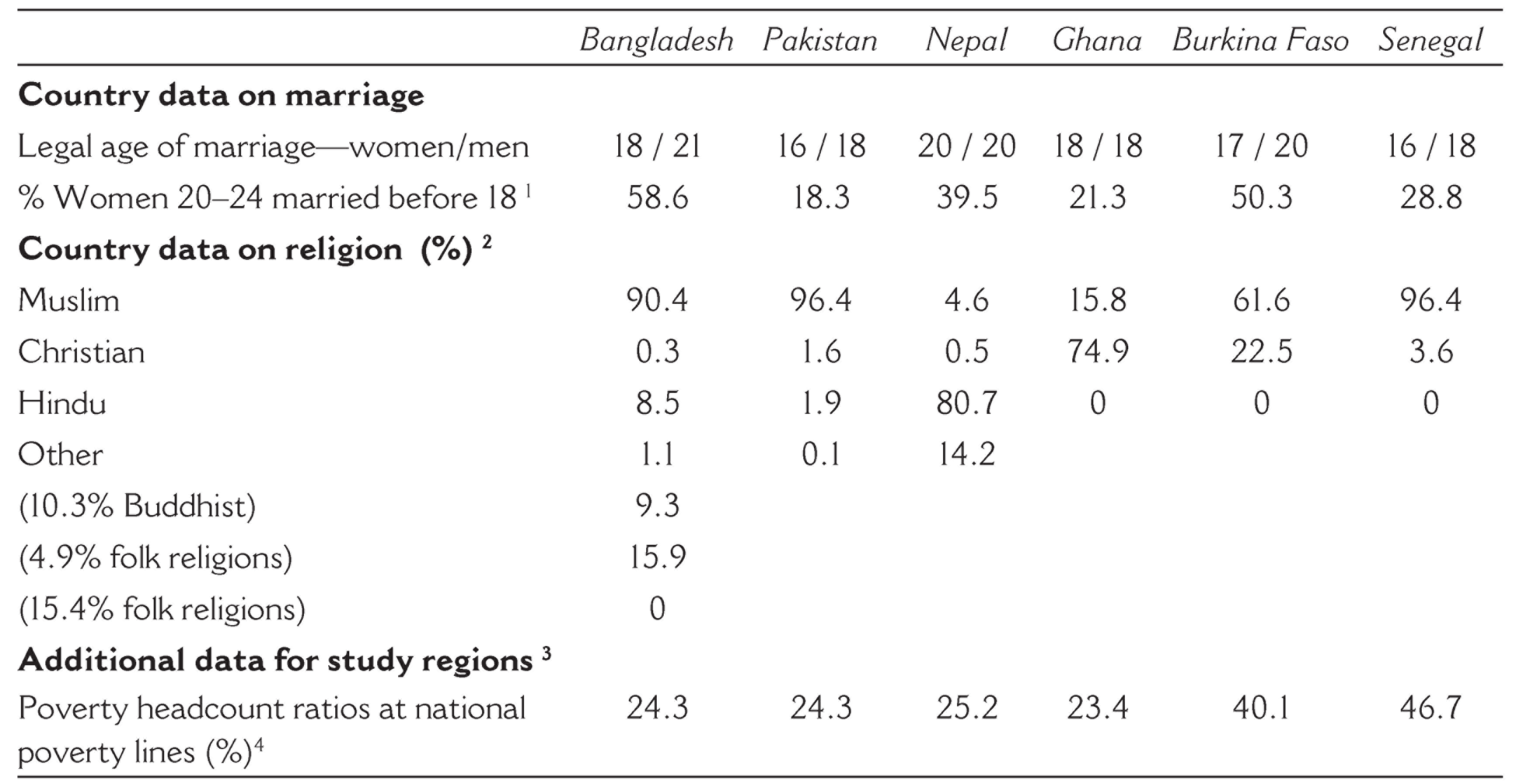
Country Data on Early Marriage and Religion, and Information on Poverty in Research Settings
2
3Bangladesh: Dhaka, Khulna Regions: Nepal: Central, Eastern and Mid Development Regions; Pakistan: Punjab State; Burkina Faso: Central, Eastern, Haut Bassin, Boucle du Mouhoun, Centre Nord, Nord, Centre Sud, Centre Ouest Provinces; Senegal: Kolda; Tambacounda, Sedhiou Region.
4The years of the reported headcount poverty ratios by country are: Bangladesh (2016); Nepal (2010); Pakistan (2015); Ghana (2016); Burkina Faso (2014); Senegal (2011) (World Bank, 2019).
This article draws on data that were gathered in the framework of the impact evaluation studies of the HC alliance (Koster et al., 2019; Koster et al., 2019). The impact evaluation uses a difference-in-difference design. Base- and midline data were gathered in 2016 and 2018, respectively (endline data were gathered in 2020 and are currently being analysed). The study deploys both qualitative and quantitative methods, including semi-structured questionnaires, focus group discussions (FGDs) and non-participatory observation. Each of the total of 30 local HC partners identified two-four study villages in their target areas, selecting villages that were located in the same district and at some distance from one another (to avoid spill-over effects) and had not yet been exposed to activities aimed at reducing early marriage. Village-level study populations include: village leaders; heads of households with daughters or daughters in-law between 12 and 17 years old; all girls aged 12–17 in these households; principals and teachers of nearest schools; male and female students between 12 and 17 years old in these schools; in-charge and staff of the nearest health facility. At district level, relevant district staff formed an additional study population.
Following a participatory process, whereby draft generic tools were carefully reviewed and adapted to local contexts with local HC partner organizations and research coordinators, English and French language version questionnaires, FGD topic guides and observation checklists were developed. These tools were subsequently translated into local languages by the country research teams and professional translators. During the midline (and endline), data were gathered using the digital platform SurveyCTO. Data collection and analysis were done in close collaboration with local research teams, composed of local HC partners and led by local researchers 4 (For more detail on the research methodology: Koster et al., 2019; 2019).
The data presented here are derived from FGDs carried out during the midline study, supplemented with midline data obtained through questionnaires with 2718 young women (12–17 years) and with 1,791 household heads, and PhD and MSc research conducted within the framework of the HC research programme in five of the six countries (Ajaz, 2020; Bowe, 2017; Haga, 2018; Juanola van Keizerswaard, 2017; Marsh, 2019; Shakya, 2019; Vreugdenhil, 2020).
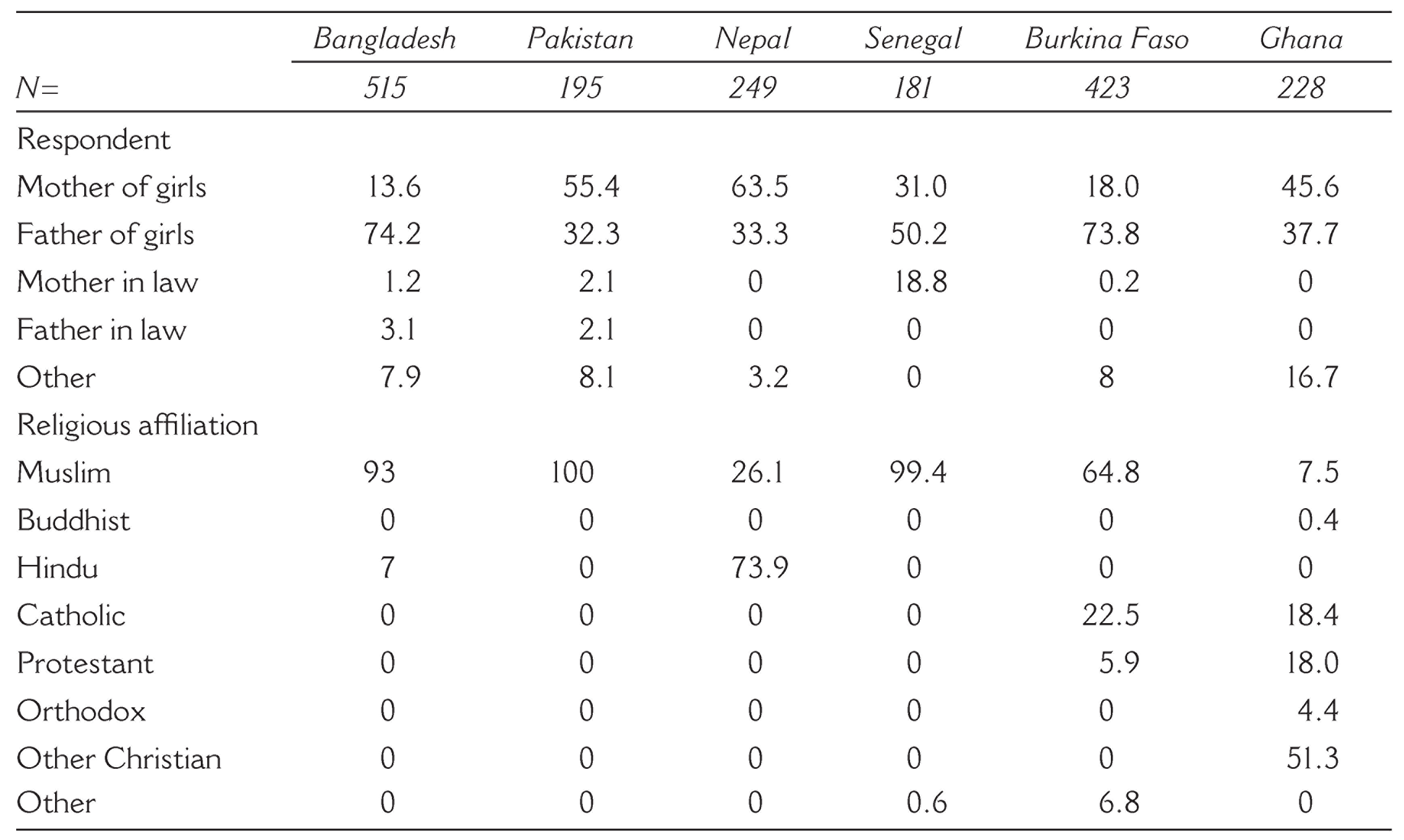
Separate FGDs were held with school-going young men (35 FGDs) and women (35 FGDs) in the age group 12–17. FGD participants were recruited with the help of teachers of the schools included in the study. FGDs with young women and men were conducted by female and male moderators, respectively. Verbal consent was requested for audio recording of the discussions. Topics discussed during FGDs included reasons for, and effects of, early marriage, actors involved in decision-making on marriage, and young people’s involvement in, and questions regarding, SRHR-related education. The questionnaire data this article draws on are responses to questions regarding (a) girls’ experiences with verbal or physical sexual harassment, and marriage decisions (girls’ questionnaire), and (b) who within the household made decisions regarding marriage, and the reasons for involving daughters in these decisions or not (household questionnaire). Table 2 presents the tools relevant for this article, and Table 3 offers country-level background information on households. Household respondents were mostly girls’ parents or guardians, although in Bangladesh, Pakistan, Senegal and Burkina Faso some of these respondents were the girls’ in-laws. Concerning families’ religion, these were in line with national patterns (see Table 1).
Number of Tools Administered per Study Population, by Country
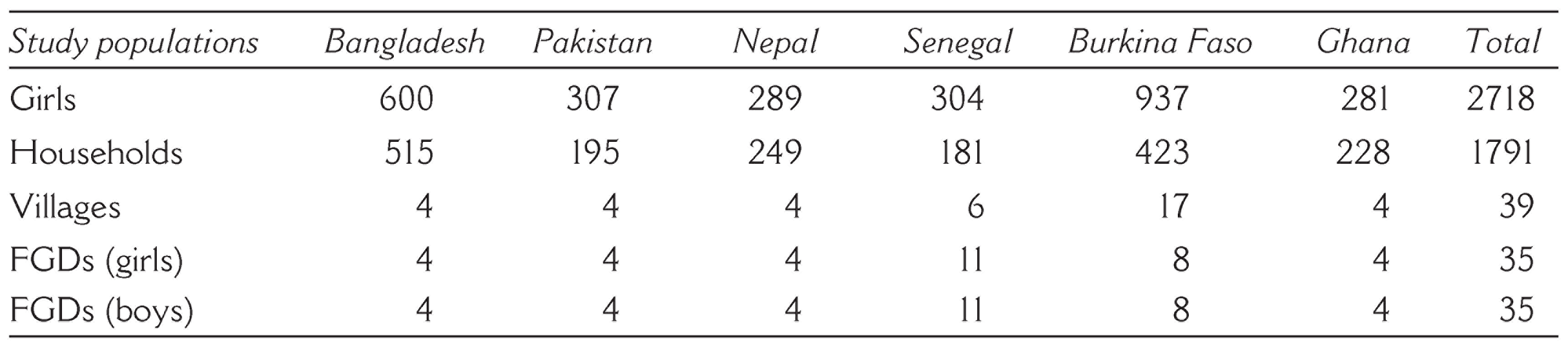
Number of Tools Administered per Study Population, by Country
Background Information of Households (%)
Concerning quantitative data, once data collection was completed, data files were transferred to SPSS for data analysis. Regarding qualitative data, verbatim transcripts were developed for a third of the total of 70 FGDs, and summaries were developed of the remaining FGD audio recordings. As explained in the introduction, during the analysis of qualitative midline data, the research team noted the frequent mention of notions of shame and honour across different countries. Closer inspection of the qualitative data yielded additional closely related terms, including humiliation, defamation, family ‘prestige’, reputation, embarrass, shameful/less and dignity. We examined when these terms were used and, where possible, who used these terms and where, that is in which settings. Analysis of the data indicated that notions of shame and honour were used in three strongly interrelated narratives relating to (a) sex, (b) responsibility and (c) family standing. Below we discuss data pertaining to questions who uses notions of shame and honour, when and where in relation to the three interconnected narratives indicated here.
Ethical approval for the impact study was obtained from the AISSR/UvA Ethics Committee, and from (local) authorities in the programme countries. The research teams were trained in research ethics, including participants’ safety, informed consent and confidentiality. Informed consent from potential study participants was requested after data collectors had given information on the aim of the study, and assured them of confidentiality and anonymity in analysis and reporting.
The main study limitation derives from the sources of data, which were one time-interviews and FGDs conducted for purposes of the midline evaluation, and not longer-term ethnographic studies. Honour and shame did not constitute central topics in the impact evaluation—the significance of these notions across different countries only became apparent at the stage of data analysis. In addition, it is possible that study participants gave socially desirable answers. We acknowledge these shortcomings, and recognize that some of the findings presented here highlight the need for more in-depth research, rather than provide conclusive answers. We are also aware that caution is required when making generalizations. However, given the striking similarities between narratives of different study participants in the six countries, we argue the data are valuable and merit attention, particularly given the considerable investment by development actors to reduce child marriage prevalence.
Shame and Honour Related to Sexuality and Early Marriage
In what follows, we engage with three strongly interlinked narratives pertaining to shame and honour that emerged in interviews and discussions regarding early marriage. In examining these narratives, we seek to identify who deployed idioms of shame and honour, when, where and to what end. Before proceeding, it is important to note that none of young people involved in the studies openly questioned the desirability of marriage in and of itself, but rather when and with whom one married (Koster et al., 2019; 2019; Haga, 2018; Juanola van Keizerswaard, 2017; Marsh, 2019).
The Shame of Sex
The perceived shameful nature of sex, and particularly young women’s sexuality, formed a recurring topic in discussions with young people. Young people often spoke of their reluctance to talk about sex and sexual relationships, particularly with adults. While particularly young women’s ‘timidity’ to engage in these kinds of discussions is not a novel finding in itself (see, e.g., Evelo and Miedema, 2019; Pound et al., 2016), they illustrate the broader context of shame in which early marriage decisions are taken. The following excerpt from an FGD with young women in Bangladesh is illustrative of young people’s reluctance to engage with adults on questions with regard to sexuality. Asking if they knew whether schools could support students to access health services or with questions regarding SRHR, two participants gave the following response:
P1: School does not help [students to access health services]. Nobody seeks help. P2: Many people [students] do not share [talk about issues related to sexuality] for [fear of] defamation. They try themselves to solve [the issue].
The statement made by the first participant above can be interpreted in several ways. That is, the quote could be indicative of two separate issues: an experience of (this participant’s) school not helping students and nobody seeking help, or an interaction between the former (schools not helping) contributing to the latter (students not seeking support). What remains is that ‘nobody seeks help’, and the second participant’s remarks help clarify that not seeking help is driven by a fear of ‘defamation’. The second participant goes on to speak of young people (instead) trying to resolve problems themselves. While the reference made to ‘themselves’ need not mean that young people solve the problem alone, what remains is an apparent lack of trust that concerns shared about SRHR-related issues in the context of the school will (a) be treated confidentially and (b) not lead to loss of social standing.
In a similar fashion, when asked what they believed young women of their age would like to know about SRHR-related issues, female FGD participants in Pakistan indicated that although they ‘really wanted to learn’ about SRHR, it was ‘a taboo subject in their communities’. The young women spoke of ‘elder women’ of their household and community discouraging them to talk about SRHR-related issues as ‘they [the elder women] think that only shameless girls talk about these things’. Additionally, boys taking part in an FGD in Pakistan, indicated that there was no one they could speak to as SRHR within their school as it was ‘not considered an honourable’ subject to discuss, their female colleagues confirming this lack within schools, and adding that they ‘fear[ed] that their parents might prohibit them from going to school if these issues were discussed’, and their parents found out about it. These quotes thus suggest that the deployment of notions of shame/honour act as a powerful check on young people’s perceptions of the space available to enquire about SRHR-related questions in but also outside the school setting. The young women make explicit reference to ‘elder women’ and parents invoking these narratives, while the ‘who’ remains implicit in the quote from the FGD with young Pakistani men. However, all speak to the idea that young people talking about sexuality is inappropriate (see also Let Mat et al., 2019; Plan International, 2019).
Quantitative data support the findings detailed above. Girls were asked about their experiences with regard to verbal and physical sexual harassment. If girls indicated that they had been sexually coerced (which was reported in all countries bar Nepal, ranging from 0,7% in Pakistan to 14% in Ghana), they were then asked what they had done subsequent to the event(s). The majority of girls clarified they had not spoken to anyone about their experience, the main reason being their feeling ashamed about what had taken place, and/or because they did not think anyone would listen to their account of what had taken place (Koster et al., 2019). Both reasons given resonate with existing literature on this topic (e.g., Parkes and Heslop, 2013).
Fear of ‘defamation’, the perception that only shameless girls talk about SRHR-related issues and the shame associated with being sexually harassed speak to notions of female sexuality as shameful territory. As feminist scholars have long argued, while female bodies and female sexuality are widely regarded as sources of shame, critical differences exist in terms of which female bodies are deemed shameful, when and where (e.g., Brooks Bouson, 2009; Grosz, 1994; Murray, 2016). For example, Murray (2016) reminds us that shame remains as topical an issue in contemporary women’s lives as ever, particularly in those of women of colour (see also O’Keefe, 2014). While our data are not sufficient to draw firm conclusions, young Pakistani men’s references to honour suggests men are expected to protect a positive ‘good’ (honour), while young women are to prevent a negative ‘good’ (shame). Recent qualitative research conducted in the context of the HC programme in Bangladesh supports and adds to this analysis (Vreugdenhil, 2020). Vreugdenhil describes a male villager telling her that men knew honour, whilst women knew shame, observing that this notion was reflective of a more broadly-held view among female and male participants that although men might feel or ‘suffer’ shame, their shame was the product of women’s actions. These different sets of data illustrate Lindisfarne’s (2016) argument that women’s decisions regarding their bodies and sexualities, and enactment of decisions of others regarding these ‘domains’ are indicative of men’s ability to safeguard (and advance) their social standing.
Worth noting is that while young women referred to ‘shame’ more often than young men, as highlighted earlier, young men also spoke of the lack of adults with whom they could speak about SRHR-related matters, and their hesitancy in speaking to adults about sexuality. Data gathered in the context of Ghana sheds further light on young men’s concerns. Asked whether they could turn to any school staff members if and when they had any questions with regard to SRHR, for example, about condoms or other contraceptives, a young man stated that: ‘No, we are shy so we cannot’. After a little further probing whether there was anyone they could turn to, this young man explained that:
The opportunity is there but we do not [use] it. The teachers have asked us to do so, but we do not ask because if we tell the teachers, the students will see us as bad children. (FGD, Ghana)
Another young man confirmed the latter point later on in the same FGD, observing that ‘if you tell a teacher, he or she might tell other students and you will be made fun of’. ‘Shyness’ was thus not necessarily linked to notions of family honour or boys’ reputation in the broader community, but instead their standing in the school setting. Our research thus suggest that peers too deploy the idioms of shame and honour, the label of the ‘bad child’ by peers seemingly acting as a policing mechanism. Contrary to stereotypes of male sex roles, these data thus show that in certain contexts, single young men’s sexuality may be considered problematic. Our findings resonate with Bowe’s (2017) study on the social and cultural capital that young married men derived from their marital status, and how location defined whether this capital was understood in positive or negative terms (e.g., school versus family context). Similar to Bowe’s young married men in Nepal, sexual activity of (single) young men in Ghana may be frowned upon within the school context, yet be regarded as an asset in other settings. What forms the ‘stuff’ of the ‘perpetual struggle for public recognition’ that Moxnes refers to (1993, p. 20) is thus also constituted by the particular site in which this struggle takes place (see also Power et al., 2011).
Responsibilities in Preventing Shame
The sections above highlighted that young women were held responsible for preventing shame. In what follows, we explore this responsibility in more detail. Given young women’s sexual activity was deemed particularly shameful, young women in Burkina Faso speaking of wanting to learn ‘how a girl should behave so she doesn’t become pregnant’ does not come as a surprise. Noteworthy in relation to the present discussion is the positioning of young women as those who need to know how to ‘behave’ or abstain from sex to avoid pregnancy and in doing so safeguard their respectability (on this subject, also see Morgan, 2016).
While the onus of responsibility was placed on them, young women were also often framed as incapable of fulfilling this responsibility. As boys remarked during an FGD in Ghana, ‘girls get pregnant because parents [do] not control them after puberty’, suggesting that when left to their own devices, girls became pregnant. The boys went on to explain that ‘They get pregnant and this leads to marriage’. In a similar fashion, young Ghanaian women indicated that ‘when their daughter is promiscuous, [parents] marry her to prevent shame’. While it is not clear when precisely a young woman is deemed to be ‘promiscuous’, what is evident is that marriage is regarded as preventive measure that may be deployed when a girl is regarded as unable of preventing shame and safeguarding her respectability. The apparent causal relationship between sexual activity, shame and marriage also emerged in an FGD with young women in Senegal. Asked why girls married early, a young woman explained:
Because girls do not abstain. Because a girl goes out of her house late at night. She does not come back when her parents go looking for her. This brings ‘hersa’. The parent will decide to give the child a wedding to ‘reeno’. Because a girl must have a child only with her husband.
Within the Senegalese context, hersa in Peul language refers to shame. By going out at night, a girl knows she can bring shame on her and her family ‘[b]ecause a girl must have a child only with her husband’. Reeno refers to avoiding of, and guarding against, problems, in this case reeno taking the concrete form of a marriage to prevent shame of an out-of-wedlock pregnancy. The young woman above did not explain why ‘girls do not abstain’, but the remainder of the excerpt speaks to the idea of misbehaviour. Other times, the reasons for not abstaining were made more explicit, these often relating to economic circumstances. For instance, the same group of boys in Ghana referred to above spoke of girls ‘from poor families sleep with men, who entice them with money, […] to get basic needs, like school materials that their parents cannot or do not provide, but also to have things they like to have and see from other girls’. Other participants in the same group elaborated on this latter point, stating that: ‘Some girls also like money and […] always follow men who have money. They get pregnant and this leads to marriage’. The data regarding the reasons why girls ‘follow’ men with money support Lindisfarne’s (2016, p. 81) argument that the decisions women take with respect to their bodies and sexuality may be understood as indicative of men’s abilities ‘to compete politically [and] provide economically’, the men in question being either the main household breadwinner (the vast majority of which were male caregivers), or the men whom the girls follow. However, while following men with money may mean a girl accrues capital in economic terms, if a marriage does not follow, it is likely she will lose her social standing and thus endanger her future prospects.
It is important to note that in South Asian countries young people spoke less about pregnancy as a central driver for early marriage but rather about caregivers’ concerns regarding sexual harassment. Young people in Bangladesh in particular frequently spoke of eve teasing and ‘stalkers’ who ‘bothered’ girls. Quantitative data show that verbal sexual harassment is considerably higher in Bangladesh compared to the other countries, with one-third of the interviewed Bangladeshi girls reporting such harassment and ranging from 5.3% (Nepal) to 13% (Pakistan) in other countries (Koster et al., 2019). It is difficult for young women to talk about being harassed because, as a young woman in Pakistan clarified: ‘If someone gets sexually harassed they do not talk about it with anyone because at the end the girl is charged guilty’. Here too the onus of responsibility for avoiding shame is placed on the young woman. The idea that ‘she is charged guilty’ speaks to the idea that she should have better protected her honour, and by extension, that of her family (on this topic in context of Bangladesh and Ethiopia, respectively (see Oduro and Miedema, 2020; Vreugdenhil, 2020).
Yet here it is important to recall that the risk such harassment is seen to pose in terms of a premarital sexual debut and the importance attached to the ideal of virginity constitute critical impetuses for caregivers to arrange for a young woman’s marriage (see also ACPF, 2014). In the case of sexual harassment, an unmarried girl thus also constitutes a risk for the family, her movement in public spaces bringing her beyond her family’s protection and control. While the data suggest that participants drew on the binary of good (chaste, obedient) girls versus bad (‘promiscuous’, disobedient) girls, it is crucial to remember that in contexts where there is little legal protection for survivors of sexual violence and victim blaming is common, where there are limited job or work opportunities, and few social safety nets for single mothers, a girl and her family do well to protect her ‘marriageable reputation’. Here too it is apparent that the idioms of shame and honour need to be understood in relation to broader socio-economic and political questions.
Protecting Family Honour
Part and parcel of the issues discussed above is the need to protect family honour. Across the different countries, participants taking part in the study agreed that the arrangement of a young woman’s marriage was a means to ‘protect’ or ‘save’ family ‘prestige’ and ‘reputation’. As one young man in Nepal commented, a ‘good side’ of early marriage was that a ‘family’s reputation [was] maintained; if girl elopes then it brings disgrace to family’. It is important to note that elopement formed a central concern for caregivers in countries such as Bangladesh and Nepal, with girls and boys reportedly initiating their own ‘love marriages’. Salient in this regard is the finding that elopement and ‘love marriages’ were said to largely be driven by young people’s desire to create the necessary circumstances, that is, a marriage, for a ‘sanctioned’—shame-free—sexual relationship.
The young man cited just above, spoke of reasons why boys were married early in rather different terms, clarifying that:
[Boys] get married because of pressure from family members. Some [families] worry what kind of daughter-in-law their son will bring, so they get their child to marry someone they know when they are still young.
Here too caregivers seemed concerned about a child choosing their partner themselves, albeit in this scenario the boy brings a potentially less desirable daughter-in-law home, whilst in the previous, the girl ‘elopes’. Young women enacting their own choice—as opposed to young men—generally poses a greater threat to family honour given the value of a young woman’s ‘purity’ (see also Schlegel, 1991; White, 2017). These data illustrate the gendered structuring of young people’s leverage to negotiate their choice of partner. However, in the case of Nepal and Pakistan, it is crucial to take into account inter-caste dynamics. 5 Ajaz (2020), for example, found that in the context of Punjab, Pakistan, upper-caste women may have less of a say in marriage-related decision-making than lower-caste women. Shakya’s (2019) research in Nepal elucidates how a lower caste man eloping with an upper caste woman can simultaneously cast considerable shame upon the family of the latter while bringing honour to the family of former. One family’s shame may thus be another family’s honour, suggesting that the ongoing struggle for public recognition (Moxnes, 1993) not only produces and maintains political and economic inequalities, but can also challenge and upend these.
The quotations above highlight that family ‘reputation’ or ‘prestige’ hinges on the emblem of the ‘good girl’, therefore. The following three examples from FGD data from three different countries illuminate the pressure placed on girls to acquiesce to their caregivers to protect family honour—or, in the words of a young man in Nepal: ‘[to make] their parents happy, [girls] will think about saving family’s reputation’. First, during an FGD with girls in Bangladesh, when asked whether they believed young women in their community could influence decisions as to who to marry, the response from the young female participants was overwhelmingly negative. One young woman clarified that ‘girls cannot take decision in this regard. Caregivers emotionally blackmail them, they [tell] their daughter that, if you do not marry it may hamper our family honour’ (FGD, girls, Bangladesh). Second, during an FGD in Burkina Faso, a young woman, reflecting on possible advantages of an early marriage, observed: ‘I think there is a bit of advantage. It [early marriage] is for the honour of your parents, obedience’. Third, young women in Ghana identified pregnancy as the principal reason for early marriage—in such a case, participants observed, marriage was the ‘honourable’ thing to do.
The extracts illustrate that a good daughter obeys her parents and in so doing, fulfils a critical role in protecting their honour and that of the broader family. These data suggest that caregivers deploy the idioms of shame and honour, in some cases actively so, as illustrated by the remarks concerning emotional blackmail by caregivers. Quantitative data support this analysis and show a notable difference between South Asian and West African study countries in terms of who decided on girls’ marriages: relatively fewer married girls in Asian countries reported deciding on their marriage themselves, compared with those in African study countries. Table 4 presents data for the four countries with considerable number of married girls (South Asia, Senegal). The Senegal data echo findings regarding the few married girls in Burkina Faso and Ghana where five out of eight and all three married girls decided on their own on their marriage, respectively. The majority of girls agreed with the decisions made by others, with only in Bangladesh and Nepal the majority of girls who did not agree expressing their disagreement. However, also the girls who reportedly expressed disagreement were still married as per their family’s wish (Koster et al., 2019).
Decision Making on Their Marriage, Reported by Married Girls in Four Countries (%)
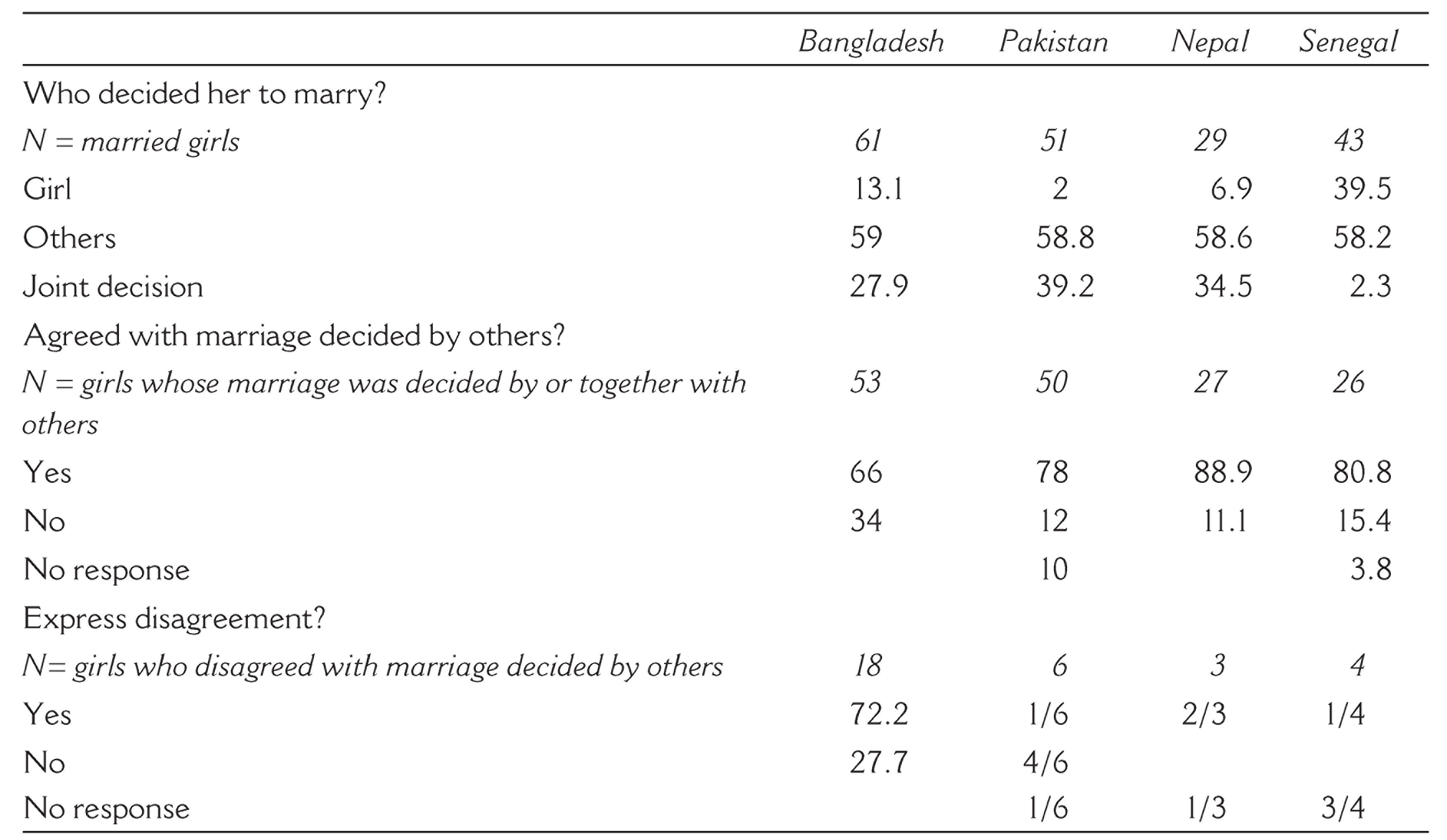
Decision Making on Their Marriage, Reported by Married Girls in Four Countries (%)
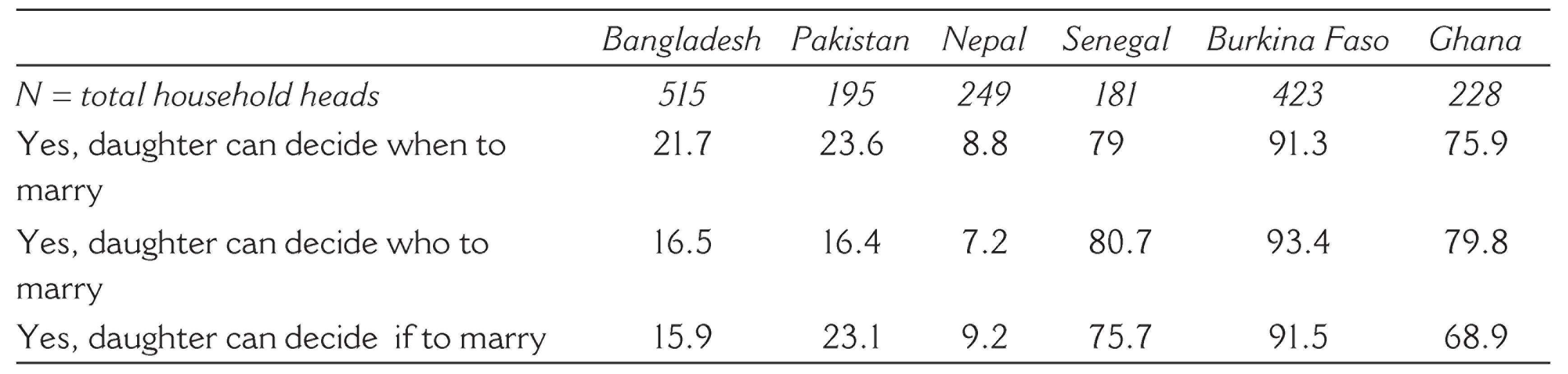
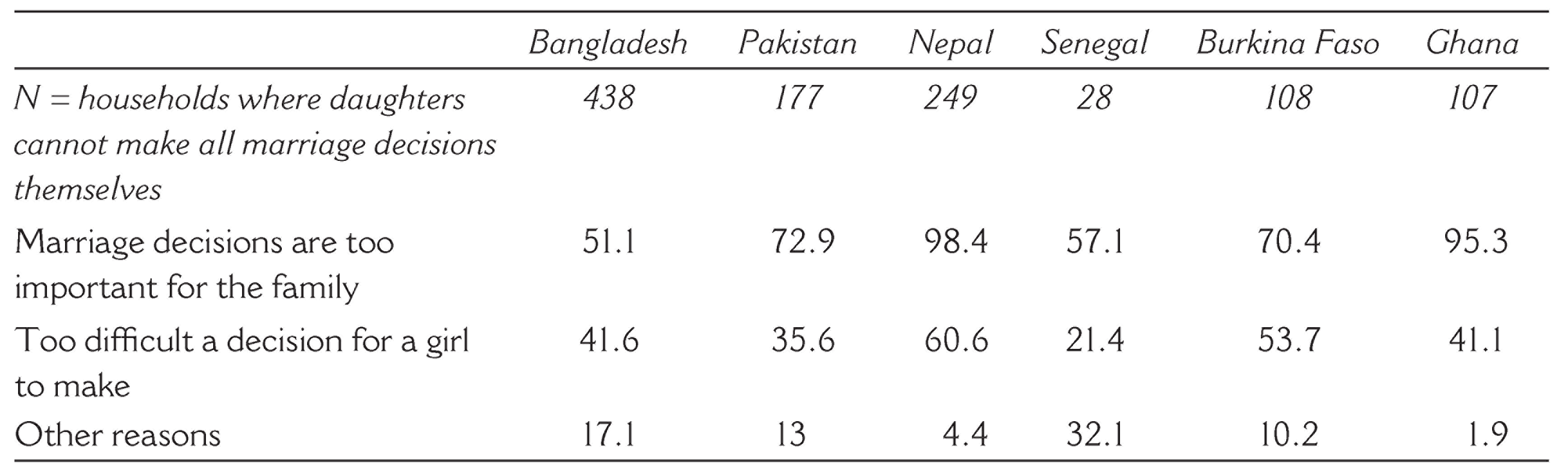
Reports by household heads on whether they allowed their daughters to make decisions on their marriage were confirmed by statements on the same issue by married girls involved in the study. The difference between household heads’ opinions in Asian and African countries was striking, household heads in Asian countries appearing to afford their daughters much less space in decision-making (Table 5). In all six countries, the main reason for not allowing daughters to decide on their marriage related to caregivers’ views that their daughters’ marriage was too important for the family for the decision to be left to the girl alone (Table 6). Asked about the reasons, caregivers explained their desire to ensure their daughter got a good husband and that marriage formed a means to pre-empt loss of family honour should their daughter engage in premarital sex, get pregnant and/or marry a man deemed unsuitable. Concerns regarding unplanned pregnancies were mostly mentioned in Ghana and Burkina Faso where, relative to other countries, our qualitative data show that more single girls and young women became pregnant before marriage (see also Haga, 2018, for Ghana). However, these findings on decision-making do need to be treated with some caution, since other studies have found that girls make more decisions about their life than is openly spoken about or than they may divulge to an interviewer (see, e.g., Grabska, de Regt and Del Franco, 2019).
Household Heads Agreeing that Daughters can Decide, When, Who and If They Marry (%)
Reasons Given by Household Heads Why Their Daughters Cannot Alone Make All Decisions on Their Marriage (Multiple Response) (%)
As Lindisfarne (2016) argues, the narratives of male hegemony and female virginity are underpinned by, and depend on, the stereotypical portrayal of women as needing protection, and female chastity as highly valuable but also requiring constant vigilance. The ‘good girl’ appears to acquiesce to these narratives. However, as noted earlier, the institute of marriage itself was rarely questioned by participants, that is, whether one would marry did not appear to be in doubt, merely when and with whom. Other qualitative data gathered in the framework of the project highlight the advantages marriage can bring young women in particular, offering them standing in the community and a sense of freedom from their parents and from the attention of other men (Juanola van Keizerswaard, 2017; Marsh, 2019). Marriage confirms the fundamental female virtue of moral respectability, cementing a young woman’s position within her community. Thus, while a premarital pregnancy may bring shame, marriage can bring honour.
To understand the practice of early marriage, it is important to be cognizant of these benefits. That is, while a young woman may forego her own ‘dreams about [her] future’ (FGD boys, Nepal), and primarily those in relation to formal education, as Lindisfarne (2016) reminds us, marriage establishes the young man and woman’s status as adults in the community. The rights (and duties) that are associated with this new position may outweigh the dreams the young woman will need to renounce. Thus, whilst maintaining family honour may, in critical ways, constitute a social straightjacket, it simultaneously needs to be understood as a means to protect the young woman’s own interests within the community. As mentioned before, our data demonstrate that women’s respectability is indeed seen as a measure of men’s political and economic success, and thereby their ability to secure ‘public recognition’. However, while securing this public recognition may serve to perpetuate existing inequalities, it is critical to recognize the benefits that women may simultaneously accrue, however limited these appear.
The central aim of our article was to examine the ways in which the honour/shame complex drives early marriage, and specifically, when and where shame and honour are invoked, by whom and to what end. We drew on existing literature that goes beyond tidy narratives of women as victims and men as perpetrators, and conceptualizes shame/honour as intimately connected with socio-economic location, and specifically as experienced at the intersections of gender, class, race and other social categories. In keeping with this literature, here we take a final closer look at how shame and honour emerged in our data and how we might better engage with these idioms in efforts to reduce the prevalence of early marriage.
The data presented highlight that concerns—voiced by both young people and caregivers—regarding young women’s chastity and premarital pregnancy constituted critical drivers of decision-making on early marriage across the studied contexts. The data reveal the apparent pressure families experience to safeguard family honour and prevent shame, and the familial and community pressures on young people to enter into wedlock in the case of pregnancy, as well as growing tendencies among young people to marry early to have a ‘sanctioned’ sexual relationship. Our data thus confirm the central role of marriage as a means to protect family honour by preventing or overcoming the shame of young unmarried women’s sexual activity, whether imagined or otherwise. However, while these appear to be cross-cutting factors across the six countries, we expect important differences exist in manifestations and experiences of shame and honour, as a function of, among other issues, marital status, age, class, caste and ethnicity. The most notable differences we encountered in our data related to the centrality of concerns regarding on the one hand, pregnancy in Ghana, Burkina Faso and Senegal, and on the other hand, sexual harassment in Bangladesh. Additionally, in the context of Nepal and Pakistan, early marriage decisions and shame/honour were found to be structured along caste lines. Teasing out these differences and their implications for early marriage interventions requires further in-depth research.
The data also clearly indicate that marriage was deemed a given, and to be of particular importance for young women and their position in the community. Reflecting on the ‘predicaments of the patriarch’, Archambault (2011) notes the difficulties parents experience in deciding on ‘the “best” path to secure the future well-being of their daughters’ (p. 636). Parental decisions to marry girls early thus also need to be understood in relation to concerns regarding daughters’ livelihoods, and a young woman’s ‘purity’ as her key bargaining chip. The data showcase that young women are acutely aware of expectations as to female chastity, generally acquiescing to caregivers’ decisions regarding their marriage and establishment as honourable women. As noted, awareness of the fundamentally interpersonal nature of shame has increased understanding of our dependence on social recognition and equally, our vulnerability to social exclusion. Existing research has amply demonstrated that social recognition and exclusion are structured along intersecting lines of gender, class, caste and race, as well as additional social categories (Lindisfarne, 2016; Murray, 2016). Our data illustrate the particular relationship between marriageability, marital status and public recognition of a young woman and her family.
Many international development efforts tend to emphasize women’s choice, whereby ‘choice’ becomes indicative of women’s emancipation and gender equality. However, in contexts where premarital sexual activity is frowned upon and teenage pregnancy generally produces adverse socio-economic consequences, early marriage is often considered the better choice. This logic applies to both young women living in contexts of poverty, where respectability may constitute a means to obtain a more secure future for young women and their families, and to young women from, for example, higher caste families, where respectability enables a girl and her family to safeguard their existing social and cultural capital. To paraphrase Kane (2017), family honour may indeed be more decisive than ‘money’ in itself. However, in practice it may be less a question whether family honour or economic concerns take precedence in decisions for girls to marry early, and more a question as to what honour means in the communities and sites that families and young women inhabit.
Rather than emphasize young women’s choice if, whom and when to marry, we argue it would be more productive to identify alternatives to early marriage that serve as a means to safeguard a girl and her family’s standing in a given community. Beyond seeking alternative means to protect this social standing, there is a need to for collective engagement with the gendered and socio-economic inequalities (re)produced by these idioms within different communities, including those constituted by caste. Examining if and how organizations engage with the idioms of shame and honour in their engagement with communities, families and young people can offer insight into ways in which at grassroot levels, communities may be revising narratives of respectability, marriageability, and social standing. Finally, we need further cross-cultural ethnographic research to identify differences in degrees and manifestations of shame/honour, and the context-specific ramifications of a potential loss of honour for differentially located young women, different members of their families and their broader community.
Footnotes
Acknowledgements
We thank the following local HC partner organizations who played a crucial role in the process of data collection: DALIT and THP Bangladesh (Bangladesh), Maia, AFDP, ADEP Kaya and ADEP Koudougou, AJBF, AZLY, Association Dembagnouma de Tougan and THP Burkina Faso (Burkina Faso), THP Ghana (Ghana), CWIN (Nepal), Bedari (Pakistan) and ENDA Jeunesse Action (Senegal). We are also grateful to the following local researchers who were responsible for training of interviewers, and analysis and write-ups of country level data: Meraz Ahmed, Anindya Barai and Mamun Rashid (Bangladesh), Dr Lydia Rouamba and Eric Kalmogo (Burkina Faso), Anita Djandoh (Ghana), Anand Tamang and Aagya Khanal (Nepal), Shabana Arif and Ismail Khan (Pakistan) and Papa Fall (Senegal).
Declaration of Conflicting Interests
The authors declared no potential conflicts of interest with respect to the research, authorship and/or publication of this article.
Funding
The authors disclosed receipt of the following financial support for the research, authorship and/or publication of this article: This study was funded by the Netherlands Ministry of Foreign Affairs within the framework of the SRHR Partnership Fund.