



Abstract
Through the lens of the Coping Circumplex Model (CCM) and the phenomenological research approach, this study explores how Ghanaian journalists deal with trauma experienced in the line of duty. Participants reported experiencing a variety of traumas, including psychological, emotional, and physical. The data also revealed that the coping techniques adopted by participants fell within both the problem-coping and the emotion-coping dimensions. Some employed avoidance as an emotion-coping strategy and got triggered when they saw culprits, pointing to emotion-coping’s ineffectiveness in healing trauma. The trauma journalists experience also sometimes extends to the victims’ relations, calling for an exploration of coping strategies for victims of the cascading effects of trauma experienced by others in future studies.
Introduction
Trauma amongst journalists, which may be a result of the violence encountered in news work, can cause emotional, mental and psychological difficulties for journalists (Soto-Sanfiel and Salojärvi, 2024). The traumatic risks that journalists encounter sometimes force them to leave the profession or abandon their careers completely (Aoki et al., 2013). These threats can also cause journalists to self-censor and avoid covering politics, conflicts, and election reporting as a way of controlling their exposure to violence and other traumatic risks (Hughes and Márquez Ramírez, 2017). For example, at the peak of the COVID-19 pandemic, many Ghanaian newsrooms put in place strategic measures to protect their staff; however, some frontline staff contracted the virus and reported being afraid and anxious, and this impacted their well-being psychologically. Hence, some of the journalists who contracted the CoronaVirus, upon their return to news work, decided not to visit hospitals to cover stories related to the COVID-19 pandemic (Boateng and Buatsi, 2022). Elsewhere, the Media Institute of Southern Africa reports increased safety concerns for journalists covering elections in Zimbabwe and other countries, as more journalists have become prone to violence from politicians and their supporters (Bartlett, 2023). Journalists also lack trust in their employers’ concern for their well-being and are discontent with workplace safety provisions (Adjin-Tettey et al., 2023).
Although previous studies have sought to explain and analyse mental health and trauma amongst journalists (Shah et al., 2022; Williams and Cartwright, 2021), this study is unique as it presents new perspectives to the literature by focusing entirely on Ghana, a region understudied in the literature. Researching the experiences of Ghanaian journalists’ trauma encountered in the line of duty is important because of the unique characteristics surrounding media practice and ownership in the country. Ghana is one of the most stable democracies in Africa, with a vibrant media landscape, while most of the private media, which make up over 80% of media in the country, are owned and operated by politicians or politically exposed persons (Danso, 2025).
Further, journalists in Ghana encounter various stressful and traumatic circumstances, some of which arise from exercising their right to information (Adjin-Tettey, 2023). This is despite Ghana’s statutory Right to Information Act (Act 989), which empowers journalists and other public members to access information on the activities of central and local governments, as well as all their subordinate government agencies (Gawu and Mensah, 2022). Also, a simple Google search of the phrase “Ghana Journalist Association condemns” brings up multiple instances of violent attacks meted out to Ghanaian journalists, from politicians, their supporters, or the state security apparatus an occurrence considered normal in fragile and undemocratic jurisdictions like Zimbabwe (Ndlovu and Khupe, 2023) and not multi-party democracies like Ghana. Nonetheless, some recent studies on how Ghanaian journalists cope with trauma were linked mainly to the COVID-19 pandemic (Boateng and Buatsi, 2022). Also, most of the African-focused research that analysed journalists, violence and trauma, such as Talabi et al. (2024), Radoli (2024), and Ndlovu and Khupe (2023), has been done in other parts of the African continent, making it imperative for a study like this in Ghana.
Besides, a study that analysed local Journalism, violence and trauma in Colombia argued that research focused on trauma in journalism studies tends to prioritize war reporters and international correspondents who usually report for the international dominant news conglomerates. According to the writer, journalists who live and work locally and may experience other localised forms of violence and trauma are largely ignored (Charles, 2022). Therefore, a study that prioritises local journalists contributes significantly to the literature.
This study, hence, fills the knowledge gap by exploring what happens beyond the attacks that journalists face by delving into trauma experiences, coping mechanisms, and resources available to journalists. The objective of this study is, thus, to understand how journalists in Ghana, who have experienced violence while doing news work, have managed the trauma associated with the violence they encountered. The study adopts the purposive sampling technique to select Ghanaian journalists who are publicly known to have suffered violence or physical attacks while going about their duties as journalists. Through interviews, the study explores the following research questions: What kinds of trauma do Ghanaian journalists experience while doing newswork? How does trauma experienced in the line of duty affect journalists? How do journalists cope with the trauma they experience while doing newswork? What resources are provided by media organisations to help journalists cope with the trauma they experience in the line of duty? Who are the key sources of support in helping journalists deal with the trauma experienced in the line of duty?
Literature review
Mental health and coping after trauma
Poor mental health and the suppression of emotions can affect journalistic output (Šimunjak, 2022). Prioritising the mental wellbeing of journalists is beneficial because it promotes the development of better support systems, which can promote healthy wellbeing amongst journalists (Thomson, 2021). The lack of emotional support and neglect of mental health have driven many journalists out of the profession and have increased the workload on current journalists (Bodine, 2022).
The rise of the gig economy and the casualization of newswork are also reasons why emotional support and mental health should be a priority for media owners and journalists (Wahl-Jorgensen, 2024). Radoli (2024) reported that exposure to violence and violent images is essential for journalists to perform their responsibility to society and the public interest. It is for this reason that Wahl-Jorgensen (2024) argues that maintaining healthy mental health in journalism is crucial to journalistic labour, as journalism as a profession often requires significant sacrifices, which may include encountering trauma. However, Radoli (2024) found that journalists usually experience trauma long after their stories are done.
While online gender-based violence against Namibian female journalists is relatively infrequent when compared to other contexts (Zviyita and Mare, 2024), some studies in Africa have documented instances of online harassment among female journalists in South Africa (Msimanga et al., 2023), Nigeria, Kenya, Ethiopia, Rwanda, Ghana, and Tanzania in the course of their work, some of which include body-shaming, trolling, sextortion, non-consensual sharing of intimate images, name-calling, cyberstalking, hacking, and inappropriate advances on social media platforms (Daniels and Douglas, 2024). Journalists in Nigeria reported emotional stress, which causes job dissatisfaction and mental health challenges, and a lack of organisational and institutional support in the face (Talabi et al., 2024). Further, research on emotional and mental health in newsrooms reveals that most journalists are also not trained to deal with trauma in the line of duty (Flannery, 2022).
In Journalism, trauma can originate from various circumstances, including aggression, harassment and violence from political authorities, the state security apparatus and the public (Waisbord, 2024a). During the COVID-19 pandemic, journalists reported a high level of anxiety, trauma and frustration due to the online harassment they faced (Ndlovu and Khupe, 2023; Sîmunjak, 2022). The trauma journalists face can also emanate from online harassment (Ndlovu and Khupe, 2024; Waisbord, 2024b), mob censorship, and intimidation (Waisbord, 2024b).
When coping with on-the-job trauma, journalists may adopt mechanisms such as physical activity, picking up a new hobby, and involving themselves in new social activities (Hughes et al., 2024). As a cultural institution, religion also helps create a social network that serves as a support system for people who have faced trauma and violence (Cherewick et al., 2015).
Changes in behaviour are another way of coping with the psychological and mental turmoil associated with trauma. These changes in behaviour coping strategies are presented as self-help strategies like making artwork, meditating and focusing on family (Iesue et al., 2021). Further, journalists sometimes adopt maladaptive coping strategies like smoking and excessive alcoholism as a way of coping (Hughes et al., 2021).
Journalists can change the way they perform their jobs by adopting self-censorship as a way of coping, as was found in Mexico and Brazil (Iesue et al., 2021). This happens when journalists blame themselves and believe their employers are unaccountable for their safety (Iesue et al., 2021). It also becomes the norm when media owners and organisations rarely provide formal aid for journalists to cope with trauma (Soto-Sanfiel and Salojärvi, 2024).
Pineles et al. (2010) also found that avoidance, through disengagement, is one of the coping strategies for people who have or are likely to experience trauma and violence in their professions. Furthermore, Brousse et al. (2011) argue that victims of psychological and physical trauma who choose disengagement as a coping strategy are more likely to experience acute Post Traumatic Stress Disorder (PTSD) in the future. Without proper and adequate coping strategies to remedy trauma, it can escalate and affect general health and productivity (Monteiro et al., 2016).
In Latin America, González (2021) and Hughes et al. (2021) suggest the creation of reporter networks that can enable journalists to form alliances that can help build emotional fortitude. This form of peer support can provide professional education, grief counselling and companionship, all of which can help journalists cope with trauma and stress on the job (Hughes et al., 2021).
Existing literature shows that men and women often experience and cope with traumatic events differently. Søegaard et al. (2021) found that while men are relatively more affected by victimization trauma, women are more affected by accidental trauma, and the largest differences were in symptoms of disturbances in self-organization. Specifically, in post-traumatic stress disorder Olff (2017) also found that women have a two to three times higher risk of developing post-traumatic stress disorder (PTSD) compared to men.
Theoretical framework: The Coping Circumplex Model (CCM)
MacDonald et al., 2023 argue that mental health research on journalists has tended to focus on trauma exposure and subsequent symptoms of posttraumatic stress disorder, ignoring the occupational factors that may be linked to depressive symptoms. Their consequent systematic review of past studies yielded that journalists had greater exposure to work-related and personal trauma. Journalists also tended to have little family and peer support, social acknowledgment, and education, without which journalists may not cope well.
Stanisławski (2019) incorporates various coping distinctions, taking a cue from the psychological circumplex model tradition, to develop the Coping Circumplex Model (CCM). The CCM assumes that people in stressful situations have two tasks: (1) they must solve the problem and (2) they have to control their emotions. These tasks are referred to as the “problem coping dimension” and the “emotion coping dimension” (bipolar dimensions). The model contains a total of eight coping styles forming a circumplex as found in Figure 1 below: The CCM (source: Stanisławski, 2019).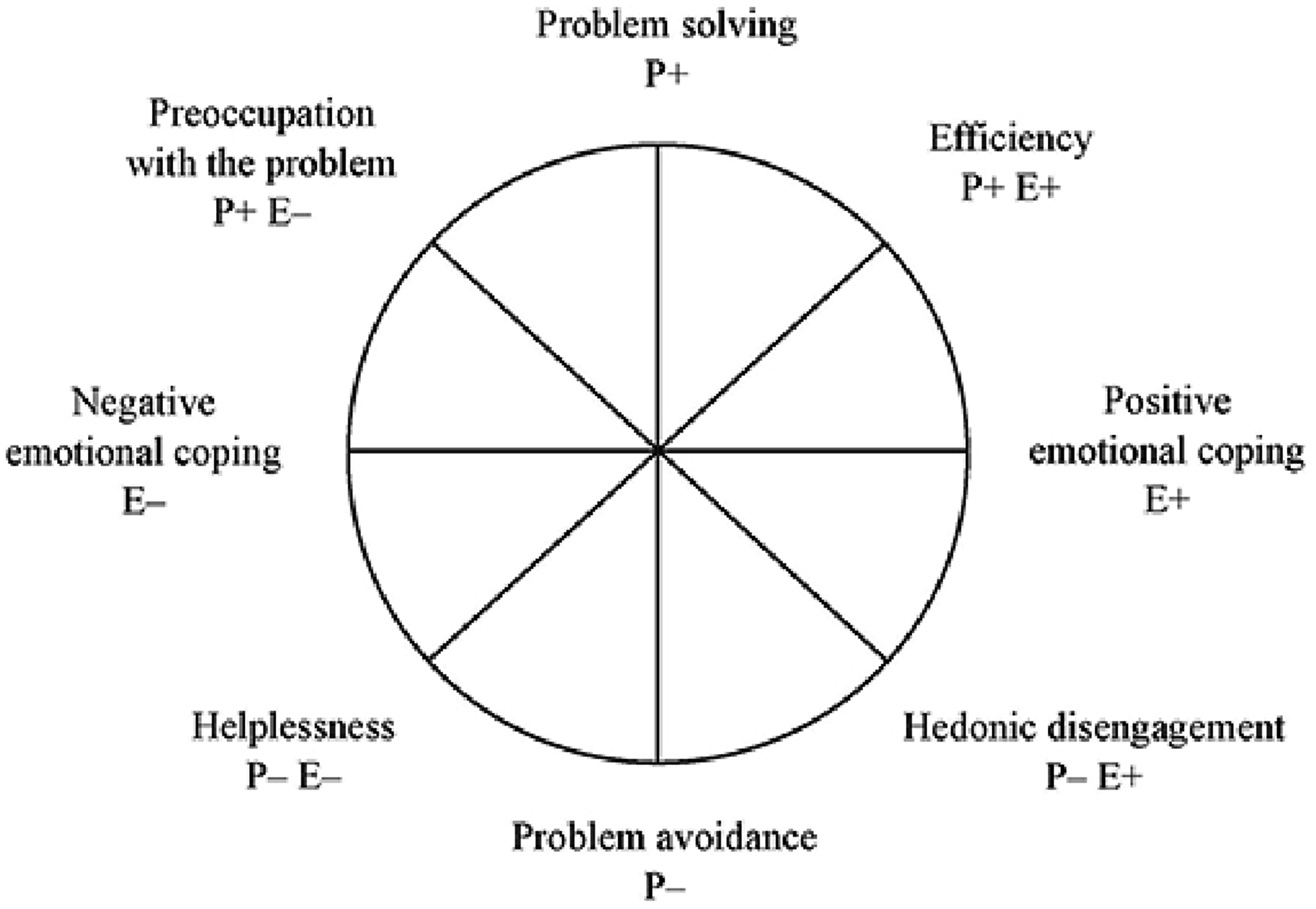
Based on the CCM, positive problem coping leads to solutions to the problem; negative problem coping leads to avoidance of the problem. Negative emotional coping focuses attention on the negative side of stressful situations, including self-criticism when handling problems, whereas positive emotional coping emphasizes self-kindness and understanding to handle the issue. The support systems that journalists have access to may help with positive emotional coping. Therefore, our examination of the resources at journalists’ disposal is useful in understanding how journalists cope with trauma.
In the model, eight coping styles are paired, making up a total of four bipolar dimensions. Each coping style is marked with a symbol derived from the names of the two structuring dimensions: P+ and P– for high and low problem coping, while E+ and E–for high and low emotion coping, respectively. The positive problem-coping mechanisms, according to the model, are: problem-solving, efficiency, and preoccupation with the problem, while the negative problem-coping mechanisms are: Hedonic disengagement, problem avoidance, and helplessness. On the emotional side, hedonic disengagement and efficiency are positive emotional coping strategies, whereas preoccupation with the problem and helplessness are negative emotional coping mechanisms.
Cross-border cooperation benefits international journalists by providing protection, support, and a sense of belonging. These, we believe, enable journalists to cope with the pressure of the job. However, de Jong and Kotišová (2025) discovered that the disregard for the mental health of cross-border investigative journalists might be especially difficult for freelancers, as there aren’t enough safety precautions that go beyond physical protection. Additionally, different legislative restrictions and differences in institutional support and protection among nations present unique difficulties for journalists. With these challenges, journalists experiencing emotions and psychological trauma may not have the positive problem-coping mechanisms and positive emotional coping strategies to handle the trauma.
The CCM was chosen because it assisted us in interrogating individual problem-coping mechanisms and positive emotional coping strategies employed by journalists who have suffered trauma in the line of duty, while highlighting other coping mechanisms employed, as the data shows. Also, this current study adds to the literature by exploring how trauma experienced by journalists is extended to their families and what it means to the CCM, and the kind of support and from whom journalists receive support after the experience of trauma in the line of duty. Using the CCM also provided a framework to understand how support received helped with both problem coping and positive emotional coping.
Materials and methods
The phenomenological approach served as the study’s foundation. The approach aims to capture the core of a phenomenon by examining it from the viewpoint of individuals who have encountered it (Teherani et al., 2015). Phenomenology is grounded in the significance of human experience (Neubauer et al., 2019), considering both the content and the mode of the experience (Teherani et al., 2015). In this instance, the phenomenon experienced, which we wanted to understand from the lens of victims, was trauma experienced in the line of journalistic duties.
This study adopted Husserl’s philosophical approach, which values both objective and subjective experiences (Laverty, 2003). Husserl (1970) maintained that the focus of scientific inquiry should be on phenomena as they are experienced by the individual’s consciousness.
Trauma has been defined as extreme stress that overwhelms a person’s ability to cope (Giller, 2004: 14). Trauma can take both objective and subjective manifestations (Allen, 1995). Since it is an individual’s subjective experience that determines whether an event is or is not traumatic (Giller, 2004), in addition to widely-reported media evidence of their potentially traumatic experiences, we relied on participants’ self-expression of the trauma they encountered and delved further into it to determine how it affected them and how they coped. The phenomenological approach allowed us to study participants’ experiences in detail and obtain a far deeper knowledge of how the unfortunate occurrences affected them and how they dealt with them, which other approaches would not have permitted.
Selection of participants
We purposively sampled journalists who had suffered and admitted to suffering some form of trauma in the line of duty and were willing to share their experiences with us.
After contacting 10 potential participants, six journalists who met the inclusion criteria agreed to take part in the study. Noteworthily, four other journalists who satisfied the study’s inclusion requirements declined to participate. Some of them said they were no longer working as journalists, while others just wanted to keep the incidents and how they affected them private. While the literature shows that men and women often experience and cope with traumatic events differently, including post-traumatic stress disorder (Olff, 2017), this challenge resulted in gender imbalance and did not allow us to explore the gender dimension of the trauma experienced by participants.
The homogeneity or heterogeneity of sample composition determines the size of a sample for particular qualitative research (Bekele and Ago, 2022) and is frequently sacrificed for larger sample sizes (Kindsiko and Poltimäe, 2019). Thus, except when one is conducting interviews among participants with diverse characteristics and experiences, one may go for a smaller sample size. Since our key criteria for selecting our participants was that they should have all suffered trauma, they were considered largely homogenous. Besides, Kuzel (1992) argues that 6-8 interviews are enough for a homogeneous sample. Also, although we preferred a much larger sample size, it was difficult to realise that, as most participants publicly known to have suffered some form of trauma in their line of duty were hesitant to take part in the study. Hence, we had to go with the six since we considered their stories/experiences would equally be valuable to the literature.
Profile of participants.
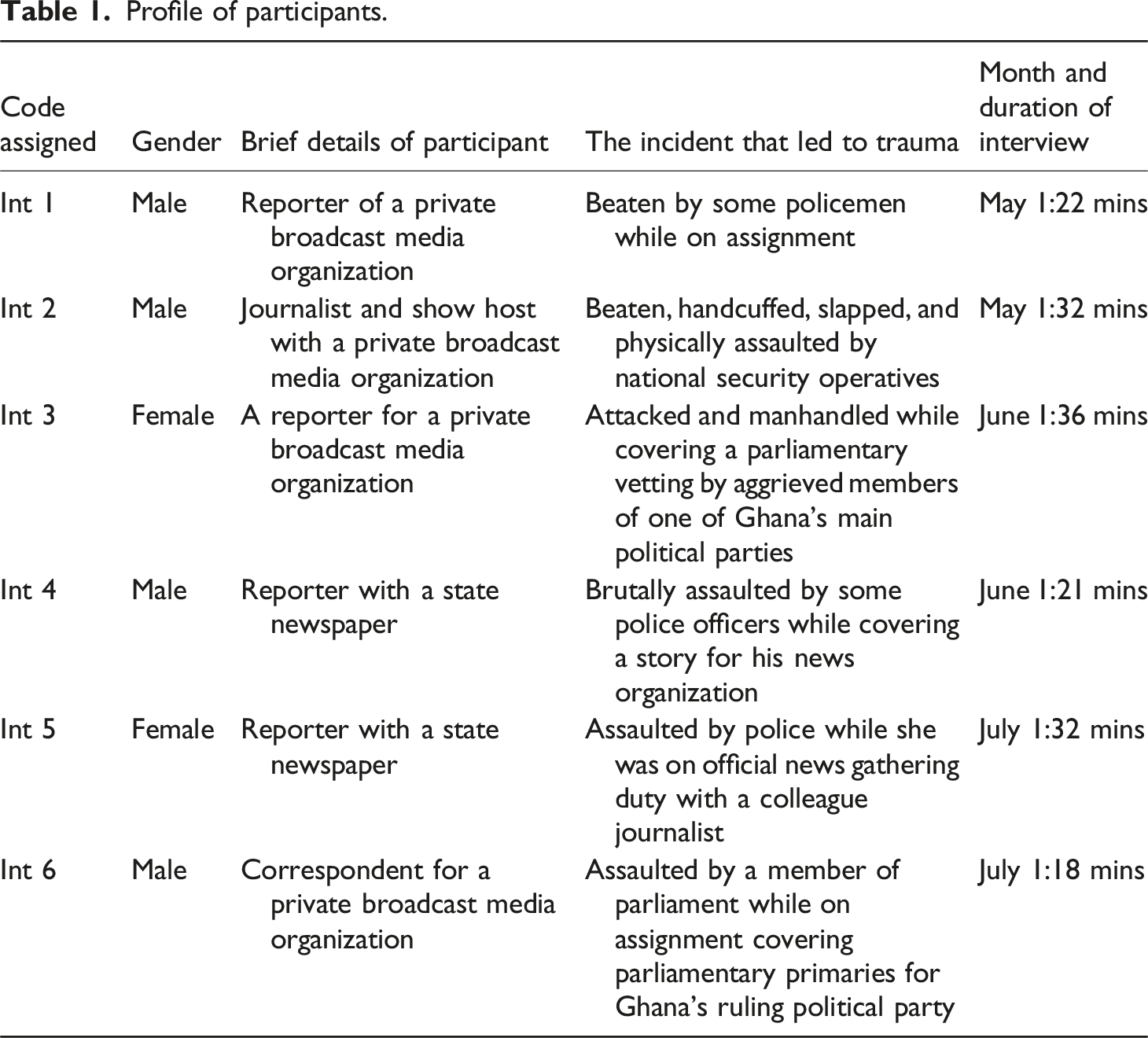
The table below gives an overview of the participants who took part in the study:
Data collection instrument
Guided by a semi-structured interview guide, interviews were held over the telephone, according to the preference of participants. Interview protocols were designed from scratch, guided by the research questions. The interview guide contained 12 questions which covered the kind of trauma experienced; how it affected them and those close to them; the kind of support they received and from whom; the coping strategies adopted and how helpful they have been; the kind of professional support received and how helpful they were. Interviews were conducted between May and July 2024. Interviews lasted an average of 1 hour, 25 minutes. All interview data were transcribed. Interviews reached the point of saturation when collecting more data no longer yielded new or relevant information.
Data analysis
The transcripts and notes taken during interviews formed the unit of data analysis. We employed narrative analysis, which is a research tool used to understand how research participants construct stories and narratives from their personal experiences (Riessman, 2008, 2015). In this instance, we derived the narratives from participants’ accounts of their experiences with trauma while carrying out their duties as journalists through interviews.
Our choice for phenomenology as the core research approach and the narrative as the data analytical tool is based on the fact that while phenomenology as a core research approach focused on participants’ lived experience of trauma, the narrative analysis helped us interpret the stories participants told us about those experiences, giving us a thorough understanding of their significance (Bekele and Ago, 2022). This is unlike thematic analysis, which focuses on a broader perspective by identifying patterns and recurring themes across datasets (Braun and Clarke, 2021). Also grounded in phenomenology, we used the pre-reflective meaning-making as a tool for exploring the universal experience of trauma in-depth (Kimberley, 2022), as well as to contextualise each experience, enabling the sharing of knowledge about participants’ experiences (Bekele and Ago, 2022).
Narrative analysis may focus on the thematic content of the story or the structural components of the story (Figgou and Pavlopoulos, 2015). In compliance with how structural narrative analysis is conducted as proposed by Riessman (2008), we used inductive coding to organize the narrative blocks by the experiences of the trauma of the participants. The next step was reading through each of the coded narratives and grouping them based on similarities of the life event. We then created a nested story structure by using codes to break down the narrative into pieces that can be analyzed together. Lastly, we delved into the story structure and compared it to tell the core narratives.
Alase (2017) advises phenomenological research to ensure that quality is paramount in the methods. This included the researcher ascertaining that the selection process of participants was done with the utmost ‘carefulness’ and integrity, and based on the ‘lived experiences’ that the participants have purported to have experienced (Alase, 2017). In this study, participants were selected based on the laid-down criteria earlier discussed.
Furthermore, rigorous data analysis protocols were followed to ensure that the study’s conclusions could be verified and applied elsewhere. Every step of the data collection and analysis process has been covered to guarantee this.
Ethical considerations
The study was conducted per the Ethics Declaration of Helsinki. Ethical Clearance was sought from the Research Ethics Committee of the Durban University of Technology. Approval was given under research protocol number: IREC 026/24. The researchers complied with all ethical requirements for the study, including taking several steps to ensure that the participants did not re-live the pain associated with the traumatic events they experienced. Although the violence that the participants suffered made national news and their stories well known nationally and internationally, the research participants were granted anonymity to allow for true, unfiltered responses from them.
All participants signed a letter of information and consent and were assured of confidentiality at the start of the interviews. To anonymise interview data, all participants were given pseudonyms. All transcriptions also bore those pseudonyms. The audio recordings and transcribed data were saved in password-protected folders accessible only to the researchers. In the presentation of findings, identifiers like addresses and indirect identifiers like workplaces have also been removed.
Findings
The findings of the study are presented based on the narrative blocks developed.
Forms of trauma participants suffered
All participants experienced physical trauma that resulted in other forms of trauma. Thus, while the physical attacks experienced in themselves were traumatic, there were other ripple effects, ranging from emotional to psychological trauma. Below is a more detailed discussion.
Physical trauma
The physical trauma experienced by participants spanned being shoved, slapped, kicked, handcuffed, and manhandled. Some perpetrators used physical objects, like the butt of a gun, to assault victims. In certain instances, some of the victims were attacked by what could be considered a mob. Sometimes in the course of events, other physical objects, like cameras, were taken from victims or destroyed.
In the attack Int 6 suffered, his phone was taken away, his shirt was held to his neck and the crowd pounced on him and beat him. At the time of the study, he was still in pain and suffering from this on a physical level. “I went to Yendi Hospital and the medical superintendent at the hospital examined me. I still feel pain in my neck and chest and a headache”, said Int 6.
In the case of Int 1, he was slapped by a police officer while on assignment for his news organization. I had a fractured skull, and that has derailed my career, and everything and I have been in and out of the hospital since 2018. That is why I am undergoing treatment, I have had therapy. (Int 1).
Int 5, recounted that until she visited the hospital and the doctor’s report indicated that there was no cause for alarm, she was “both physically and psychologically disturbed”. I resumed work on Monday and the incident occurred on a Thursday. And I was really in pain because I went through a caesarean section to deliver my child. (Int 5).
Emotional and psychological trauma
The victims’ psychological and emotional trauma seems to have blurred boundaries. Besides, both emotional and psychological traumas were sometimes borne out of how the incident has impacted their careers, how people react when they are in public, the thought of other colleagues suffering similar attacks, and the emotions felt when they sometimes see the perpetrators, among others.
For Int 2, the fact that his name was mentioned on radio and television discussions about police brutality and on social media spaces and internet feeds was very traumatizing for him. Years after the incident, people point fingers at him in public places such as restaurants, and on social media, about the beatings he received. For those who had issues with you, they use that to spite you. So those who cared were deeply worried, and frustrated and those who wanted to be mischievous exerted their resentment (Int 2).
Int 1 occasionally has paranoia and worries about other journalists who wish to cover sensitive stories. For Int 3, the justification that some people gave to the harm perpetrated on her made things worse for her. People from that same political party defending what happened was even more traumatizing for me. (Int 3)
Int 4 still lives with the memory, and this makes him wonder what would have happened if he had lost his eyes or died in the process. Sometimes you feel like when you are doing a story you may encounter something of that nature. [...] So, even when you are doing a story that does not involve the police, it puts perpetual fear in you. (Int 4).
Impact of trauma suffered
While some interviewees reported experiencing immediate effects from their trauma, others experienced the rippling effects somewhat later. The trauma that the interviewees experienced had detrimental effects on their physical, psychological, social, and emotional well-being. However, it is important to note that some of the traumatic incidents may have had good effects as well, primarily yielding potentially positive outcomes that enhance the work of journalists. The next sub-sections throw more light on these.
Potential for relapse
One long-lasting consequence of Int 1 ′s physical and psychological trauma is his propensity to relapse under little stress. This has not allowed him to recuperate well, although he has made several attempts to get back to work and readjust to the old routines that he was used to. “I go to work. I work a little bit, and relapses set in. I sit at home; then I go to the hospital. That is how it has been for the past five to 6 years”, Int one recounted.
Missed opportunities
The other is that due to his inconsistent work, he has missed out on opportunities for a promotion and pay increase at work. They [participant’s organization] have spent a lot of money on my treatment, and so yes, I get paid, but I have not had a pay raise because the organization feels that they are spending so much money on me (Int 1).
Aversion toward perpetrators
For Int 5, she started to harbour animosity toward the police because of how they treated her. She still has misgivings of the police, especially when word spreads that they have taken the lives of armed robbers. Int 5 believes that how she and her colleague were handled by the police could have resulted in their death, and the police would have labelled them as criminals to cover up their crime.
Loss of interest in journalism
It was also clear that when journalists experience trauma in their line of work, they could lose interest in their jobs. Int 5 had such thoughts in the early stages of the incident. Int 5 said, “Honestly, I just lost interest in my job because the police didn’t exhibit any form of empathy. They didn’t treat us like humans. They saw us as animals.”
Impact on close relations and associates
The trauma experienced also impacted close relations and associates.
Family members and other relatives of journalists were affected by the trauma, causing their relations to feel hopeless and concerned about what would happen to them. Just like Int 2 and other victims of assault, Int 6’s family members who were watching his report live on TV remotely suffered some of the trauma. My father was watching it live. He saw all that was happening. [...] Then family started calling me, and because my phone was off, they didn’t know what was happening to me as of then (Int 2).
This is a form of emotional trauma that could extend to close relations.
Apart from his family, it could be argued that Int 1’s employers have also lost out on the value and the substantial contribution he used to bring to his organization. He is unable to take on additional jobs to supplement his income as he used to, which puts him in a state of despair. This is a three-sided effect – on the victim, his family, and the organization that he works for. It has taken a lot out of the organization, it has taken a lot out of my immediate family, and my extended family. I mean, because I was doing a lot that was fetching me money on the side. And so yeah, it has affected every aspect of my life (Int 1).
Int 2 thought that the extension of the emotional, and maybe psychological trauma, to his family and loved ones complicated matters for him. It was quite difficult dealing with it because especially my dad was worried, and my siblings were scared. (Int 2).
Trauma-inspired-positive ventures
On a positive note, the trauma Int one endured has inspired him to found an organisation, which advocates for the physical protection of journalists and news reporters. We advocate for journalism, protection for journalists, and press freedom, but our trump card is that we are providing protective gear to media organizations [...] We provide bulletproof vests and helmets, and pepper spray to media organizations and journalists across Africa (Int 1).
According to Int 3, one of the positive impacts of the incident is that it has given her a broader and in-depth perspective to comment on issues of violence against journalists from personal experience. Second, it has increased her visibility to the political party leadership, granting her greater access to them. Int 3 stated, “Now it has become easier to interview them, and I can recount the number of times I have gotten a call from a media house about this party because now they know me.”
Coping strategies employed
Some of the affected journalists did not seek psychological support after their traumatic experiences. In hindsight, the journalists admitted the need to have access to professional psychological support when faced with traumatic situations, the cost of which should be borne by employers.
Participants employed various coping techniques and specific precautions to safeguard their mental and physical well-being, such as prioritizing personal security, avoiding public places, putting matters into their own hands, and refraining from working. Some of these coping strategies can be categorized as avoidance which has been found to have negative consequences when it is overly dependent upon. No story is worth dying for, especially when it is likely to affect you negatively or cost you your life. So, wherever I find myself, I don’t show my face so much, especially when I know that my life is being threatened because of a case I pursued in court. […] So I am careful, I am meticulous […](Int 4).
Despite using avoidance of public places as a coping mechanism, Int 5 found that this strategy did not work effectively for her because she still needed to work. Right after the incident, I started avoiding public places and it was very difficult; as a reporter, we always cover public events. So, if I get scared of going to public places then it means I would not be able to discharge my duties satisfactorily.
Int 3’s company lawyers and management handled the emergent issues and served as her spokesperson. This hastened her recovery and gave her the much-needed respite. I didn’t make any official comments on social media. Even after I had recovered, I didn’t come on social media where I was very active, to say anything about the incident (Int 3).
Sources and forms of support
We found that the primary support participants received from their employers was in the form of paid days off work to recuperate and financial compensation for medical expenses. In rare instances, as in the case of Int 2 and Int 1, some were offered therapy. Int one receives psychological support from the Korle Bu Teaching Hospital in Ghana in addition to the comprehensive treatment he has been receiving in the United States.
Some participants expected financial compensation from their employers and culprits, which had yet to come through at the time of the study. One of the victims in which certain police personnel were involved was checked on by police leadership for a while. I remember, the Director of Operations for Ghana Police, called me. He did very well. He kept checking on me for close to two weeks; every morning and evening, he would call. […]. I really appreciate it (Int 5).
However, at the time of the study, the Ghana Police Service had not extended any compensation to her. “I thought that they would compensate me. But nobody has done that”, Int 5 said.
Sometimes, employers seek redress from the National Media Commission (NMC) on behalf of victims as in the case of Int 2. However, the story is different for many others, even in instances when there is a company lawyer, as Int 5 alluded to: We have a lawyer, at least let the company lawyer sue the Ghana Police Service. [...] Nobody has even called me to ask me (Int 2).
Int 6 expressed relief that the Northern Chapter of the GJA was proposing to offer mental health literacy for its members, given the dearth of assistance that journalists facing similar situations usually receive.
Based on the support lapses identified, participants made some recommendations, one of which was that the Ghana Police Service should take a more systematic approach to handling some of the brutalities committed by its members. Participants also thought that political parties and the public should regard journalism as legitimately intrusive and be more receptive and supportive of journalists, bearing in mind the important role they play in society. Furthermore, they thought that both media organizations and journalists themselves had a significant part to play in preventing trauma to journalists. Therefore, even though they advised journalists to put their safety first and also be alert and measured in their conduct, particularly when they cover stories that could potentially put them in harm’s way, some argued that it was equally crucial that every media organization put their journalists’ physical safety, emotional and psychological health first, as well as providing them with legal counsel, medical support, inter alia, to obtain the necessary remedies to lessen the varied burden that comes with seeking remedies.
Discussion
Drawing on the lived experiences of Ghanaian journalists who encountered violence or similar events in their line of duty, this study analyses how the selected journalists navigate trauma. Our study confirms the earlier reports that found that politicians and the security forces are some of the perpetrators of violence against journalists and news reporters (Adjin-Tettey and Braimah, 2023). In line with observations by previous researchers (Charles, 2022; Hughes et al., 2021, 2024) our study reports that emotional and psychological trauma, which is as a result of the violence encountered while during news work, can lead to instances of journalist losing interest in the profession and sometimes leaving it for good.
Findings also prove that the trauma associated with journalism and news work in Ghana is not limited to the victim but can extend to other members of the victims’ families. This is in agreement with earlier conclusions drawn by MacDonald et al. (2023), who asserted that the psychological symptoms and trauma experienced by journalists in their line of work are usually diverse and can extend beyond the victim. While this does not necessarily imply that the family members of victims also experience the same level of trauma, it shows how the failure of news organizations to provide substantial psychological support to their employees who experience trauma can affect other people who may not necessarily be connected professionally to the news organization. This provides an important perspective to the literature on journalists and trauma and makes a case for more studies into the extended impact of trauma among journalists. It also means news organisations and relevant actors must be minded to extend support to victims of the cascading effects of trauma experienced by journalists. This leads us into our first implication for theory, and provides the basis for us to argue for an extension of the CCM, to account for how secondary victims cope with trauma, as they are currently ignored by the model and literature surrounding it.
We found that within the environment of limited professional support and psychological help, some journalists who experience trauma in their line of work adopt behavioural changes, such as avoiding public interaction as a coping mechanism, a direct reflection of the conclusions made by Cherewick et al. (2015). While our study did not look at the gender angle of trauma, the literature shows that men and women often experience and cope with traumatic events differently, including the development of PTSD (Olff, 2017; Søegaard et al., 2021). Hence, with the literature pointing to women journalists experiencing chronic and escalatory forms of harassment (Holton et al., 2024), and being at a higher risk of developing PTSD compared to men (Olff, 2017), our finding of limited professional support for victims of trauma points to the need for more effort by news organisations in supporting victims of trauma. It also suggests that media organisations must particularly put women who have been exposed to or experienced trauma in the line of duty at the forefront.
Linking Stanisławski’s (2019) CCM to our findings, we realise that the strategies adopted by journalists for coping after trauma usually fall within both the problem-coping and emotion-coping dimensions. Emotion-coping mechanisms such as avoidance are not effective in healing trauma, and this is the reason certain victims of trauma, as our study found, are triggered when they see or come in contact with perpetrators (Radoli, 2024). It is also worth noting that one of the victims who employed avoidance was the one who indicated that she was no longer interested in practicing as a journalist. None of the participants expressed helplessness (P- E−), a sign that they were at least somewhat strategically directed in solving the issue through problem- or emotion-coping be it through the two broad segments as Stanislawski (2019) put forth – coping strategies that can be controlled by the victim (intentional, and behavioural coping strategies) and coping mechanisms which cannot be controlled by the victim (unintentional, cognitive and emotional coping strategies). And similar to our study, American journalists who experienced online harassment felt a lack of organisational support, leaving them to find proactive and palliative (personal) coping mechanisms on their own (Holton et al., 2024).
We also submit that those who sought professional help or got some support coped better with the problem, meaning they engaged with it, categorized as a “preoccupation with the problem” in the CCM. This is considered a positive problem-coping mechanism (P+). However, it needs to be noted that those who were preoccupied with the problem also tended to have some support system, such as employers seeking redress for them, and supporting them with medical treatment or psychological care, authenticating Chung et al. (2011)’s assertion that those with resources seek professional help when they encounter trauma. Moreover, despite the support received to cope with trauma, one of the victims reported relapsing anytime he made attempts to get back to work. This means that while engaging with work (rather than avoiding work) is considered a positive problem-solving strategy for solving trauma, in the case of serious physical trauma, it may not necessarily work as it can trigger trauma while a person stretches the brain.
Another implication of our findings for theory is that our study introduces new angles to the use of the CCM. We argue for the inclusion of the positive impacts of trauma in the model. As seen from our findings, trauma may sometimes lead to new and positive outcomes currently not catered for in the model.
Limitations and future research
Whereas our study provides evidence for how some Ghanaian journalists cope with trauma experienced on the job, it is not without limitations. The findings of this study cannot be generalized because our sample is not representative of all journalists and news workers in Ghana as we sampled only journalists who are publicly known to have encountered violence while doing news work. Also, despite our desire for a bigger sample size, some participants opted out of the study because they did not want to talk about their experience, while others considered themselves unfit for the study as they had quit journalism. Nonetheless, being a phenomenological study, despite the small sample size, we believed that participants’ experiences, stories and the depth achieved are relevant to the literature. We do, however, recognize this as a research drawback. Therefore, we advise that bigger sample sizes be taken into consideration in similar future studies. Hence, adopting a more generalizable research design, such as the quantitative approach, will provide a broad perspective of the kind of violence and trauma journalists face on the job and how they navigate them.
Also, the phenomenological research design, through its focus on individual experiences, can place research participants in the limelight. This situation can influence their responses, making them exaggerate or under-represent their experiences.
While the CCM provided a solid framework for the study, we acknowledge that there is no universally agreed-upon standard for coping across the literature. Given the same circumstances across different research projects, every research participant may have a different coping mechanism, a situation that affects the possibility of the CCM being used for studies with larger sample sizes. However, the richness of our qualitative data allows us to report on the unique, individual experiences of our research participants. This enables us to contribute knowledge and lay the foundation for a bigger future study on how journalists in Ghana cope with trauma.
For future research, we will recommend the inclusion of journalists who no longer practice after they were exposed to trauma. This will allow for an investigation of the connection between experienced trauma or violence and whether that trauma influences interest in a career in journalism. Furthermore, given the evidence that the trauma journalists suffer in their line of work affects their relations and associates, it would be helpful to understand how they manage the trauma’s knock-on effects.
Finally, although gender was not a key factor in the analysis, we consider the non-inclusion of gender in the analysis a gap in the study that could be explored by future research.
Footnotes
Acknowledgements
The authors would like to thank all participants who volunteered their time for the study.
Author Contributions
Theodora and Manfred: Conceptualisation, methodology, formal analysis, validation, writing—review and editing. Theodora: Project administration and supervision. Mary: Interviewing.
Declaration of conflicting interests
The author(s) declared no potential conflicts of interest with respect to the research, authorship, and/or publication of this article.
Funding
The author(s) received no financial support for the research, authorship, and/or publication of this article.
Ethical statement
The study was conducted per the Ethics Declaration of Helsinki. Ethical Clearance was sought from the Research Ethics Committee of the Durban University of Technology. Approval was given under research protocol number: IREC 026/24.

Interview guide
Navigating Trauma: Analyzing the Lived Experiences of Journalists Who Suffered Violence in The Line of Duty (1) Can you tell us a bit about the violence you suffered? (2) How traumatic was the incident? (3) How did the incident affect you? (4) How did it affect those close to you (friends, family)? (5) Did you think of quitting journalism and why? (Probe) (6) What kind of support did you receive after the attack and when you were faced with trauma? From whom? (Probe) (7) What was the nature of the support you received? (Probe) (8) What are your views about professional psychological support/therapy for journalists who suffer trauma? (9) Did you seek psychological (professional) support? (10) What formal psychological support did your company offer? (11) What are some coping strategies you adopted? (Probe) (12) How helpful have the coping strategies been? (Probe)