




Abstract
Exposure to media reporting on suicide can be both a risk and a protective factor, as (ir)responsible reporting on suicide can have different effects on vulnerable people. Since online media are increasingly important in everyday life, this study aimed to examine how the three most widely read Slovenian online media report on suicide. 114 online media articles published between 1 January and 31 December 2017 were included in the study and assessed for compliance with recommendations on responsible media reporting on suicide, and inclusion of harmful and protective characteristics. Different articles included or adhered to different recommendations, and harmful and protective characteristics. The correlation between compliance with recommendations, and the inclusion of protective and harmful characteristics suggests that although articles comply with recommendations, they do not necessarily contain enough protective information. The study confirms patterns observed in other studies while providing a first insight into Slovenian online media reporting on suicide. Further research is needed to confirm our findings while considering different online media. Additionally, future studies should focus on other aspects of reporting on suicide, e.g., comments under online media articles, which might also impact readers.
Introduction
Reporting on suicide in the traditional media can increase or decrease the risk of suicidal behavior since (ir)responsible reporting of suicide can have different effects on vulnerable individuals (Niederkrotenthaler et al., 2010; Phillips, 1974). Exposure to problematic articles, highlighting harmful characteristics, can lead to an increased risk for imitative behavior, an effect known as Werther’s effect. Named after the protagonist in Goethe’s novel “The Sorrows of Young Werther,” who dies by suicide, this effect describes how exposure to problematic media coverage of suicide can lead to similar actions among vulnerable individuals (Phillips, 1974). Exposure to protectively written articles can encourage vulnerable individuals to seek help and adopt constructive coping strategies (WHO, 2017), thereby empowering them and preventing further suicide deaths. This positive effect is known as the Papageno effect, named after a character in Mozart’s opera “The Magic Flute,” who is thinking about suicide, but ultimately decides to use constructive solutions to his problems (Niederkrotenthaler et al., 2010). Careful and sensible reporting on suicide is promoted in various local and international recommendations for responsible reporting on suicide, with numerous studies confirming its effect on changes in media reporting on suicide (Fu and Yip, 2008).
Although there is currently a limited number of studies that have examined reporting on suicide in online media (e.g., Balázs et al., 2013; Sisask et al., 2005), the findings are similar: these can have a protective or harmful effect on an individual (Etzersdorfer and Sonneck, 1998) too. Still, many aspects, such as characteristics of online reporting on suicide in different countries (Maloney et al., 2013) and unique challenges, such as multimedia, rapid dissemination of information in a difficult-to-control domain (Hodkinson, 2011) remain under-researched despite the increasing importance of online media in everyday life. The latter is evident from various data (Cacciatore et al., 2012). In Slovenia, the number of online media increased by 153% between 2007 and 2013. Although “online media” generally includes all digital content delivered from servers to users via the Internet or other digital networks (Schweiger, 2009), the 153% increase specifically refers to mass media outlets that publish news either exclusively or additionally online. Although the number of print media has also increased between 2007 and 2013, their readership has decreased, while the readership of online media has increased significantly (Ministry of Culture, Media Directorate, 2014). These differences can be attributed to several factors, the most important being ease of access. When individuals have access to new technologies, online media and the vast amount of content can be accessed anytime, anywhere (Hodkinson, 2011; Ministry of Culture, Media Directorate, 2014), adding to the challenges of media reporting on suicide. For example, journalists often face pressure to report news quickly, even when little information is available due to an ongoing investigation. This urgency can lead to the spread of presumptions and half-truths, which are only corrected later, after misinformation has already circulated. Additionally, unmonitored online comments can be harmful, as user anonymity often encourages problematic comments that negatively impact vulnerable individuals.
Research from Europe, America, and Canada delves into responsible reporting on suicide across mixed media, including print, online, and broadcast media, such as television. Some studies focused on media adherence to guidelines for responsible reporting, while others examined how exposure to media reporting on suicide impacted subsequent suicide rates. The findings regarding the latter suggest that while the style of media coverage can be associated with higher suicide rates, the quality and content of reporting play crucial roles in either exacerbating or mitigating these effects, confirming the Werther and Papageno effect. Niederkrotenthaler et al. (2020) conducted a comprehensive systematic review and meta-analysis, revealing that articles reporting on the suicide of a celebrity were associated with an increase in the number of suicides as well as suicides using the same method. Similarly, a study from Canada associated the style of reporting with subsequent changes in suicide rates. Articles describing methods with higher lethality or emphasizing the inevitability of suicide were linked to an increase in the number of suicides, while stories of individuals overcoming suicidal thoughts were linked to fewer suicides (Sinyor et al., 2018).
Studies focusing on adherence to media guidelines for responsible reporting reveal varying compliance across online, print, and broadcast media, highlighting both problematic and protective patterns. In general, sensationalistic reporting and explicit details about suicide methods remain common issues, while preventive and supportive information is often lacking. In the UK and Canada, over half of the articles sensationalize suicide, with many including explicit method details and omitting sources of help, despite the latter being crucial in encouraging readers to seek support when in distress (Duncan and Luce, 2022; Sinyor et al., 2024). In the US, while stigmatizing language and explicit details are less common, only about 20% of articles include suicide prevention information and resources (Niederkrotenthaler et al., 2023). Across all these studies, a notable connection is the low presence of protective characteristics, such as information on sources of help and stories of individuals overcoming suicidal thoughts. This consistent lack of protective information underscores the need for improved adherence to guidelines to mitigate the Werther effect and promote the Papageno effect.
Research focusing specifically on online media reporting of suicide reveals similar and significant issues in adherence to guidelines and the presence of harmful and protective characteristics. The available research on online media reporting of suicide from Europe and Asia can be categorized into three areas: (i) general characteristics of articles on suicide (e.g., Nisa et al., 2020), (ii) adherence to existing recommendations for responsible reporting of suicide (e.g., Utterson et al., 2017), and (iii) reporting of a specific (high-profile) suicide case (e.g., Ganesh et al., 2020). Studies examining general characteristics, such as those by Abdulai (2020) and Arafat et al. (2018), focused on gender, age, occupation, suicide method, and common reasons for suicide. Nisa et al. (2020) extended this analysis to include compliance with WHO recommendations, concluding that Indonesian online media often exaggerate news about suicide and fail to adhere to guidelines. Similarly, Arafat et al. (2020) and Utterson et al. (2017) found that many articles include potentially harmful details, such as the name of the deceased and the suicide method. Utterson et al. (2017) specifically noted that 87% of UK articles violated at least one recommendation, averaging two violations per article, with most failing to mention support resources or describe methods in too much detail. An Italian study found that 91% of articles included the word “suicide” in the title, with the majority reporting the name of the person as well as the method and location of the suicide, and none reporting on resources for help (Scaioli et al., 2023). Research on specific suicide cases also highlights significant issues. Studies by Balász et al. (2013) and Sisask et al. (2005) found that Hungarian and Estonian online media frequently used sensationalistic reporting styles and rarely included preventive information. Marthoenis et al. (2021) and Van Leeuwen and Bommelé (2020) confirmed these patterns, observing a high prevalence of harmful characteristics and a low inclusion of protective elements. Harmful characteristics ranged from 18% for photos of individuals to 100% for detailed methods, while protective characteristics were significantly lower, with resources mentioned in 0% to 17% of articles and coping strategies rarely included. These findings suggest that online media often violate recommendations, favouring sensationalism over supportive content.
Slovenia has an above-average suicide rate (Roškar et al., 2010), which makes prevention measures all the more important. National recommendations for responsible reporting on suicide were developed and implemented in 2010 in cooperation between media representatives and professionals working on suicide prevention in Slovenia (Roškar et al., 2010). In 2024, Slovenian suicidologists are updating guidelines for responsible reporting on suicide, following the example of the World Health Organization’s updated recommendations (WHO, 2023). Most of the items in previous recommendations, which are still in use until the Slovenian update is finalized, relate to print, television, radio, and online media, some specifically to print media (Roškar et al., 2010). Adherence to the recommendations was assessed in a study (Roškar et al., 2017) using a pre-post research design that compared articles before and after the implementation of the recommendations, with articles in the latter period being less sensationalist in content and headlines and more focused on educating the public about the issue and providing information about support services. Despite the optimistic results, Roškar et al. (2017) emphasized the importance of continued collaboration between media representatives and professionals in reporting on suicide, including monitoring media coverage of suicide.
However, according to our data, no other study has systematically analyzed Slovenian print or online media reporting on suicide or adapted the recommendations to the specificities of online media. Since media changes rapidly, regular reviews and updates of recommendations are essential to remain relevant (McTernan et al., 2018). As observed in UK study, online articles often do not comply with existing recommendations, although they are accessible to everyone, including vulnerable individuals, who are at higher risk of copycat behavior (Utterson et al., 2017). It is imperative to gain a deeper understanding of online media reporting on suicide, especially in a country with a higher than international average suicide rate. The present study was conducted in response, aiming to (i) examine Slovenian online media reporting on suicide based on compliance with the recommendations for responsible reporting and the inclusion of harmful and protective characteristics, and (ii) give a better understanding of the relationship between these characteristics.
Materials and methods
Sample and procedure
The research included 114 online media articles published between 1 January and 31 December 2017. The year 2017 was chosen because the study commenced in 2018. Selecting the entire year of 2017 provided a complete and relevant set of articles, ensuring comprehensive and up-to-date information.
Similar to previous studies (e.g., Arafat et al., 2018; Fu and Yip, 2008), the three most-read online media outlets in Slovenia at that time, according to MOSS (n.d.), were selected for an in-depth analysis of reporting on suicide. This provides the most comparable results and the opportunity to examine the media with the largest readership, i.e. with the greatest potential to reach the highest number of people.
The articles were obtained from 21 February to 29 March 2018 using the keyword “samomor”, which is a Slovenian term for the word suicide. The search and retrieval process were comparable to that reported elsewhere (e.g., Abdulai, 2020). The search was conducted in different browsers (Mozilla Firefox, Google Chrome, Internet Explorer) in both incognito and normal search modes, and directly on news websites as well as search engines (Google, Bing, and Slovenian search engine najdi. si) to enhance the reliability of the search. Some editors disclosed (personal communication with VG) that their websites do not always yield relevant articles, making searching on their websites and using search engines a more reliable option. Following the editors’ recommendations, we specified each news website and the year of publication when using search engines to gather only news articles from the websites included in this study. The identical searches were repeated over several days on the advice of the online media editors to increase the reliability of the search and the likelihood of finding all relevant articles. Searching on different days yielded slightly different articles. The number of articles not relevant to the study (e.g., using suicide in a figurative sense) differed, while the number of relevant articles remained the same. Of the total of 3,263 articles obtained, duplicates were eliminated. The relevance of the remaining articles to this study was assessed using the inclusion and exclusion criteria described elsewhere (Niederkrotenthaler et al., 2010) with slight adaptations to the needs of this study. Based on the inclusion criteria mentioned in Niederkrotenthaler et al. (2010), we specified in detail that all articles meeting the following conditions were included in the study: articles that reported a case of suicide, a specific event involving suicidal behavior, provided information about suicide in general, used the word ‘suicide' in the title and discussed the topic in the main text or speculated on the cause of death by suicide. Similar to Niederkrotenthaler et al. (2010), we excluded articles depicting suicide in contexts like terrorism, murder, metaphorical use, art, entertainment (humour or crossword puzzles), or if they only marginally dealt with suicidality. Additionally, we excluded articles that described unrelated phenomena such as accidents or euthanasia. The process of obtaining articles and the composition of the final sample are shown in Figure 1. Graphical flow of formation of the final research sample.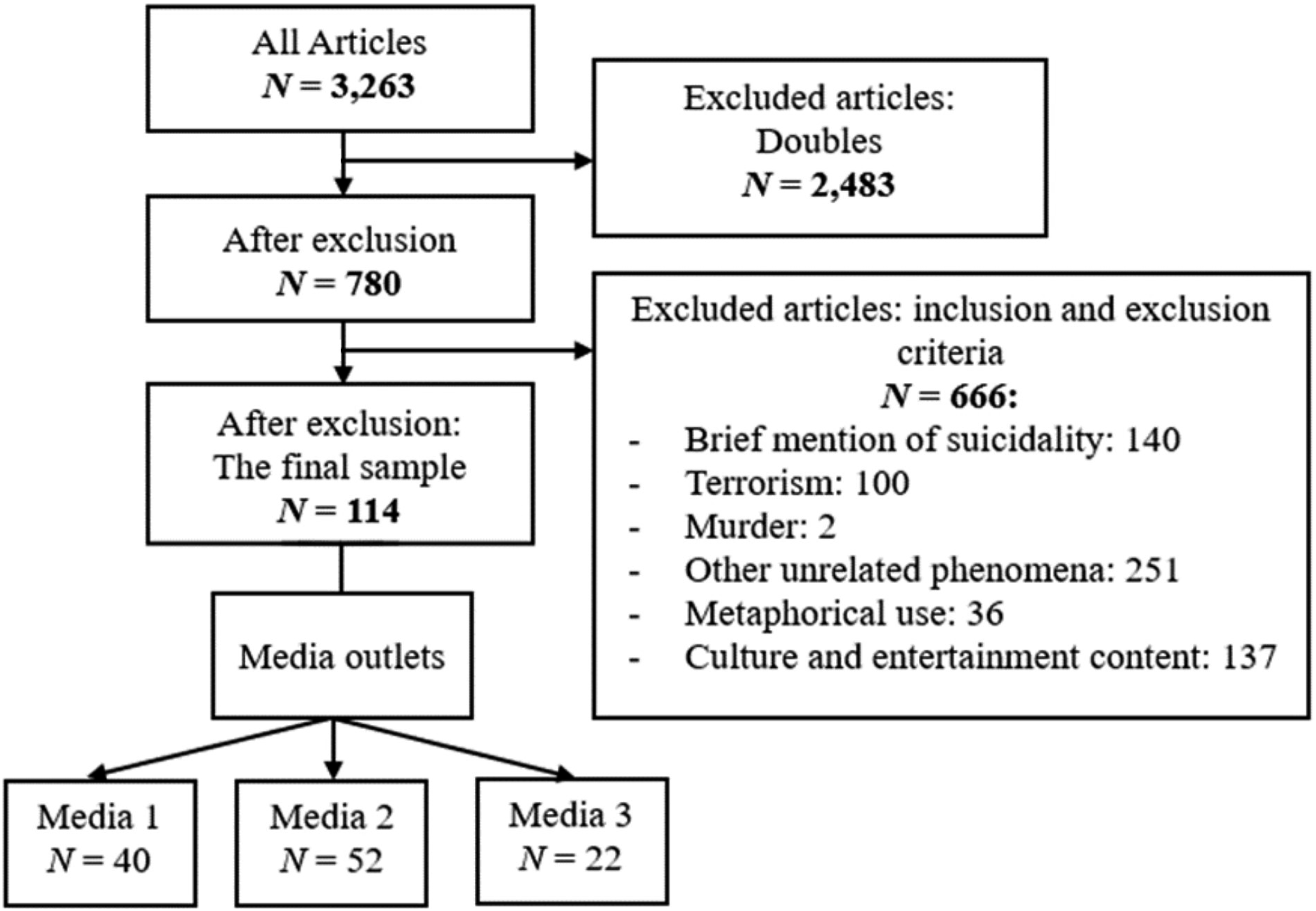
Each article was assessed based on several criteria, including the length of the article and the headline, the average sentence complexity, calculated as the number of words divided by the number of sentences, and the percentage of sensational words, i.e. the number of different Slovenian synonyms for “suicide” or “suicide attempt” divided by the total number of words. Other factors evaluated were the number of photos, videos, and links to other sources or articles, the number of user comments, and the characteristics of the story, such as who and what the article is about. Each article was additionally evaluated for compliance with Slovenian recommendations (documented in Roškar et al., 2010) and harmful and protective characteristics (as listed and used in study by Niederkrotenthaler et al., 2010) by indicating whether each item was present, absent, or not applicable. We hypothesized that assessing adherence to the Slovenian recommendations for reporting on suicide, along with the list of protective and harmful characteristics from Niederkrotenthaler et al. (2010), would provide a deeper understanding of how suicide was reported in Slovenian online media. Based on previous findings (e.g., Michel et al., 1995; Samaritans, 2013) and the need to adapt the criteria to the specificities of the articles, such as the simultaneous inclusion of appropriate and inappropriate photos in an article, some recommendations and characteristics were adapted or added (see Table 2 and Table 3).
The study investigator (VG) and an independent investigator (UMK) separately rated 11% (N = 12) of the randomly selected articles to determine interrater reliability. To assess this, percent agreement (Hayes and Krippendorff, 2007), Krippendorff’s alpha (Krippendorff, 2011), and Cohen’s kappa (Hruschka et al., 2004) were calculated. Most items showed satisfactory (above 0.7) or a good agreement (above 0.8) between raters for Krippendorff’s alpha and Cohen’s kappa and even higher values for percent agreement. The researchers (VG, UMK, and VP) discussed some items with slightly lower scores and after solving the dilemma, VG evaluated the remaining articles (supervised by VP).
The editors of all three online media were informed about the study before it began. As all articles were in the public domain and no human participants were involved in the study, no formal ethical approval was obtained. Nevertheless, we endeavored to adhere to ethical principles in conducting the study. Any information that could lead to the identification of media or individuals reported in the articles were excluded from this work.
Statistical analysis
This study was conducted using the software package IBM SPSS Statistics version 28. We examined the data, checked the assumptions for parametric tests, and selected non-parametric alternatives due to the violation of the assumptions. The characteristics of the sample were analyzed using descriptive statistical analysis. Interrater agreement was tested by calculating percentage agreement, Krippendorff’s alpha, and Cohen’s kappa. The chi-square test was used to test for differences in the number of articles published between the different media. Spearman’s rank correlation coefficient was used to analyze the relationship between the three indices.
Results
Descriptive statistic of article characteristics.
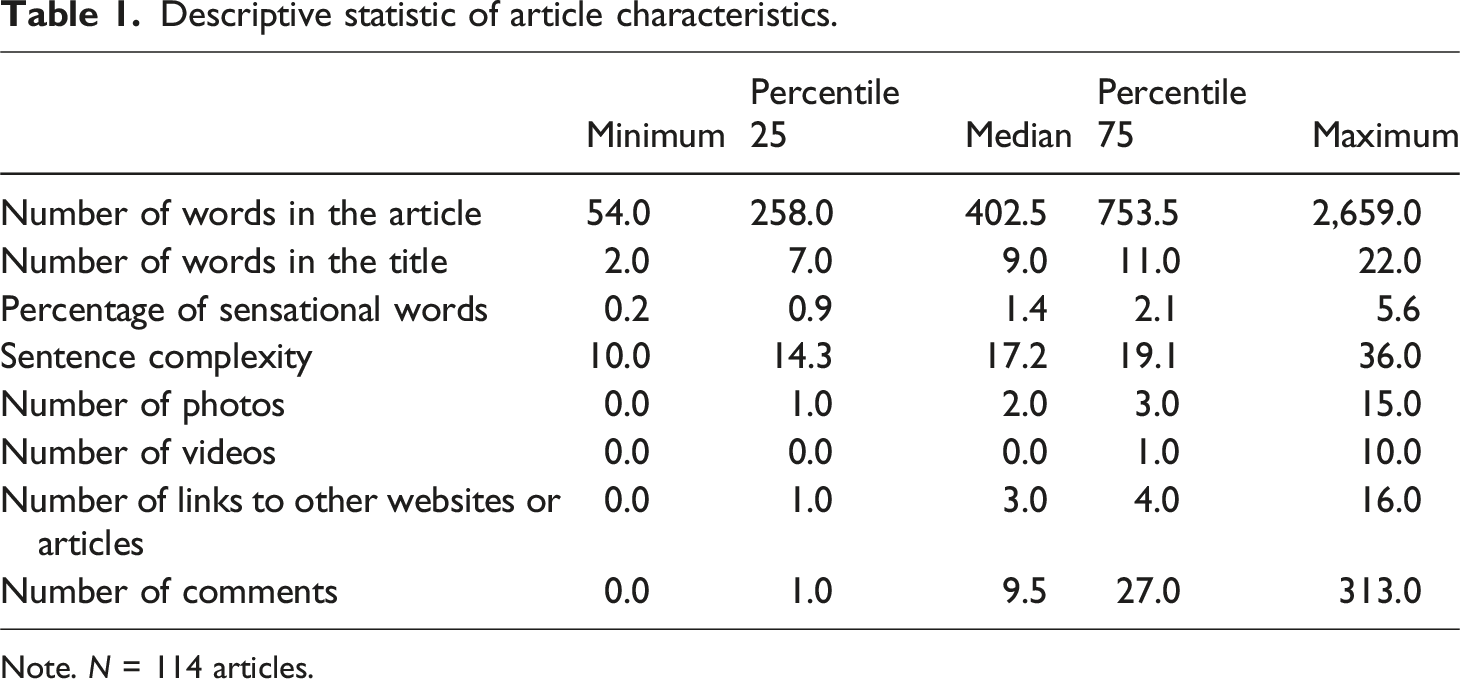
Note. N = 114 articles.
Table 1 highlights key statistics: the median article had 403 words and 9 words in the title, with 1.4% sensational words and an average sentence complexity of 17 words per sentence. Additionally, 94.7% of articles featured at least one photo, 37.7% included at least one video, 83.3% had at least one link to other websites, and 76.3% contained at least one user comment. The articles mainly reported suicide or attempted suicide by a middle-aged person, with most reporting suicide by men (men: 75% of the articles; women: 13%; the article did not report a specific case: 12%). The articles most frequently reported on a suicide attempt or suicide by a famous person (famous: 60% of the articles; not famous: 28%; the article does not focus on a person: 12%), mostly involving musicians, politicians, or athletes.
Analysis of compliance with individual recommendations for reporting on suicide.
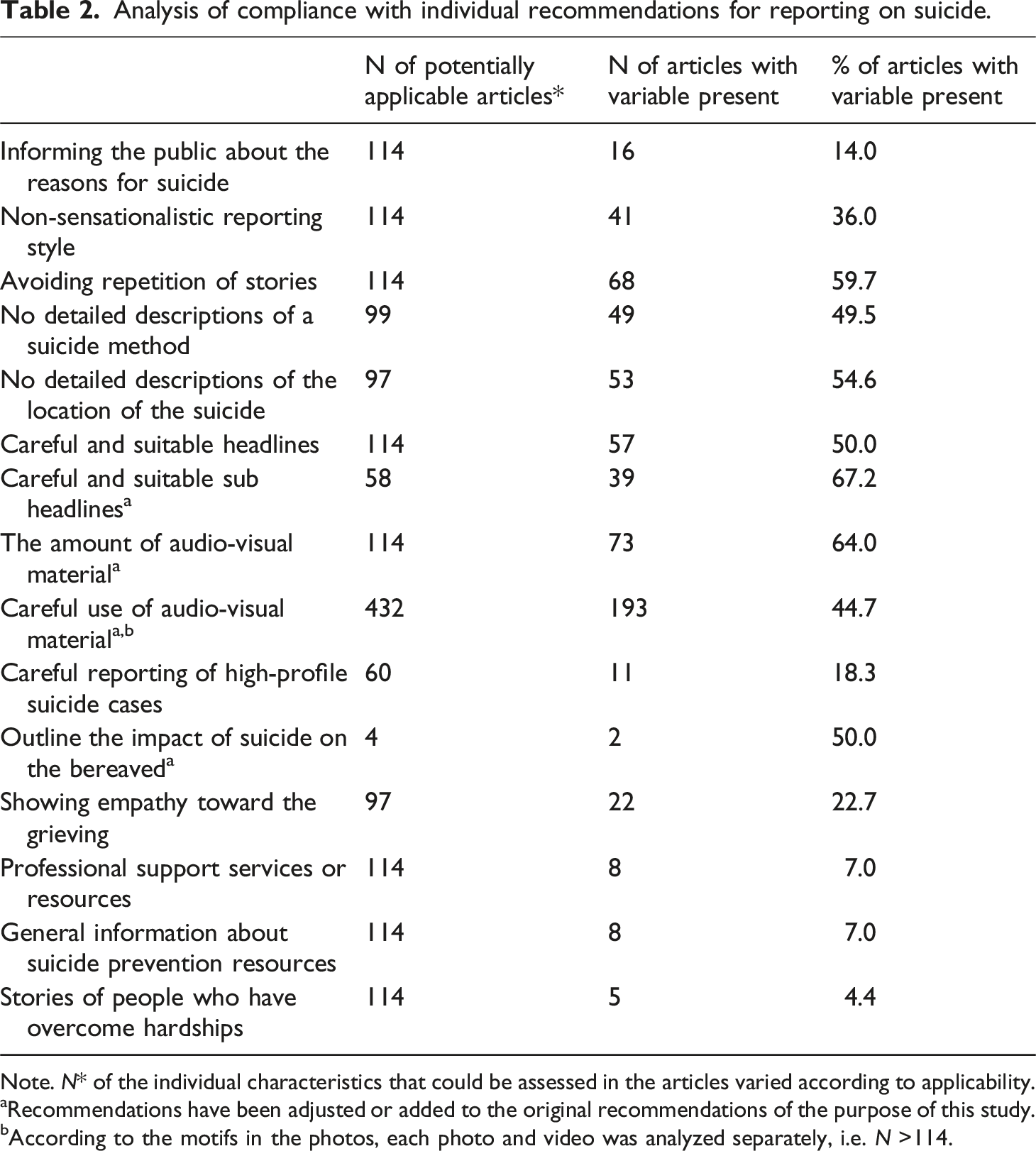
Note. N* of the individual characteristics that could be assessed in the articles varied according to applicability.
aRecommendations have been adjusted or added to the original recommendations of the purpose of this study.
bAccording to the motifs in the photos, each photo and video was analyzed separately, i.e. N >114.
Analysis of the inclusion of harmful characteristics.
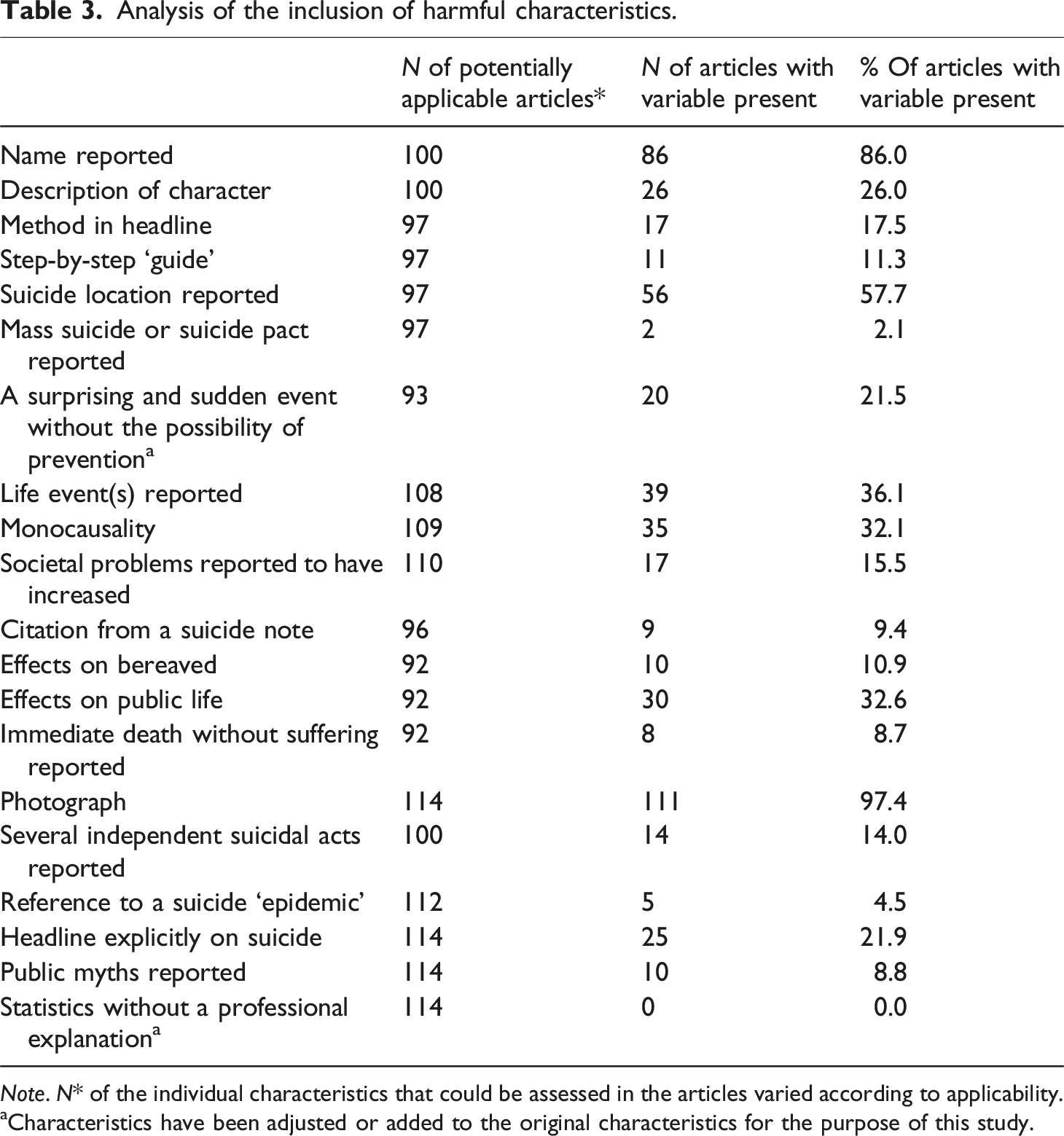
Note. N* of the individual characteristics that could be assessed in the articles varied according to applicability.
aCharacteristics have been adjusted or added to the original characteristics for the purpose of this study.
Analysis of the inclusion of protective characteristics.
Note. N = 114 articles.
In general, most articles were careful about the number of photos and videos (e.g., including one or less; 64%), followed by avoiding detailed descriptions of the suicide location (54%), using a sensitive choice of title (50%) and showing empathy and respect for the bereaved (50%). In contrast, 4% of articles wrote stories of people overcoming difficulties, followed by providing general advice on how to help (7%) and where to get help for mental health problems (7%).
Regarding harmful characteristics, 86% of the articles gave the name of the person who had attempted or died by suicide, and 58% gave or at least mentioned the location of the (attempted) suicide. No article contained statistical information without a corresponding meaningful interpretation, and 2% of the articles mentioned a suicide pact.
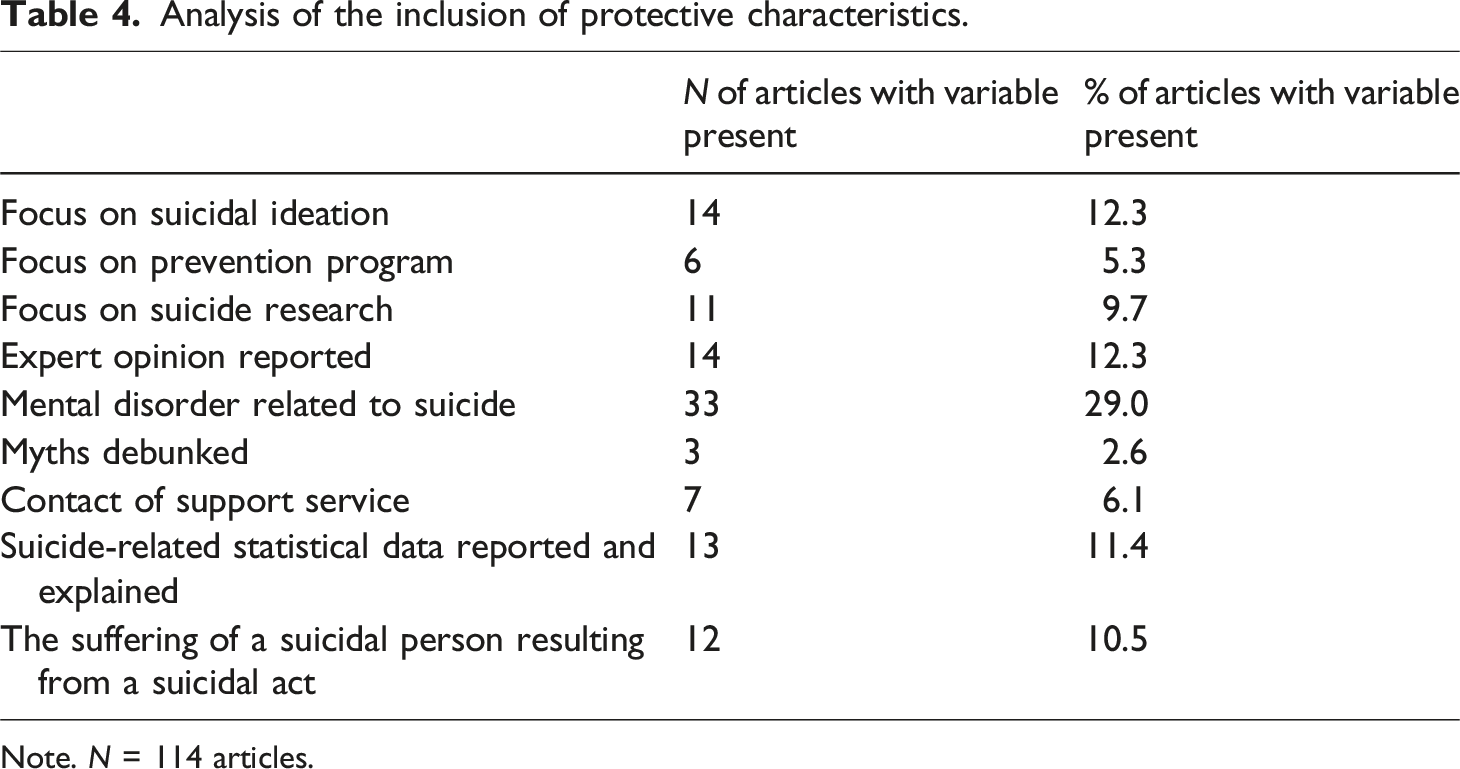
Each of the 114 articles was assessed for protective characteristics. Table 4 shows how many articles included each characteristic and the corresponding percentage. The inclusion of different characteristics varied from 3% (debunking myths) to 29% (indicating a link between mental disorders and suicidality).
To gain better insight into the articles and understand the relationship between characteristics and recommendations, three separate indices, i.e., recommendation index, harmful index, and protective index, were calculated for each article. Each index was calculated by summing the number of items/characteristics met or included in the article and dividing with the number of all possible items/characteristics. A higher number implied that more recommendations, harmful or protective characteristics were met/contained.
Figure 2 shows three indices with their median, minimum, maximum, and quartile values. The data indicate that the median article adhered to 40% of the guidelines, included at least 20% harmful content, and 10% preventive information. Additional analysis reveals that 1.8% of articles did not follow any recommendations. Furthermore, only 54.4% of the articles contained any protective characteristics, while every article included at least one harmful feature. Box Plot of recommendation, harmful, and protective indices showing minimum, maximum, Q1, median (Q2), and Q3 values on a 0 to 1 scale.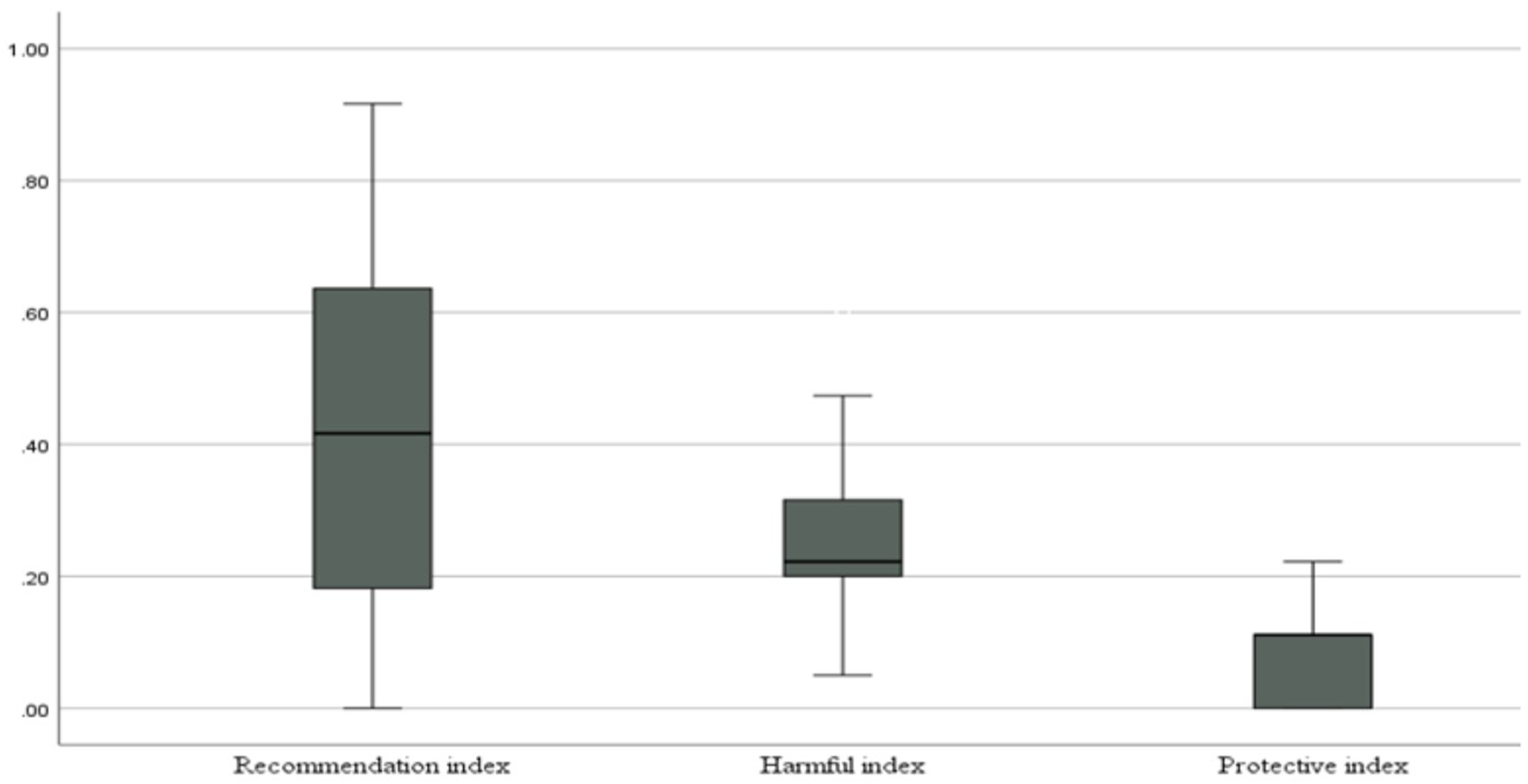
To assess the relationship between the three indices, Spearman’s correlation coefficient was calculated (Figure 3). The harmful and recommendation indices are strongly negatively correlated, while the protective index is only weakly correlated with both. Display of associations between three indices.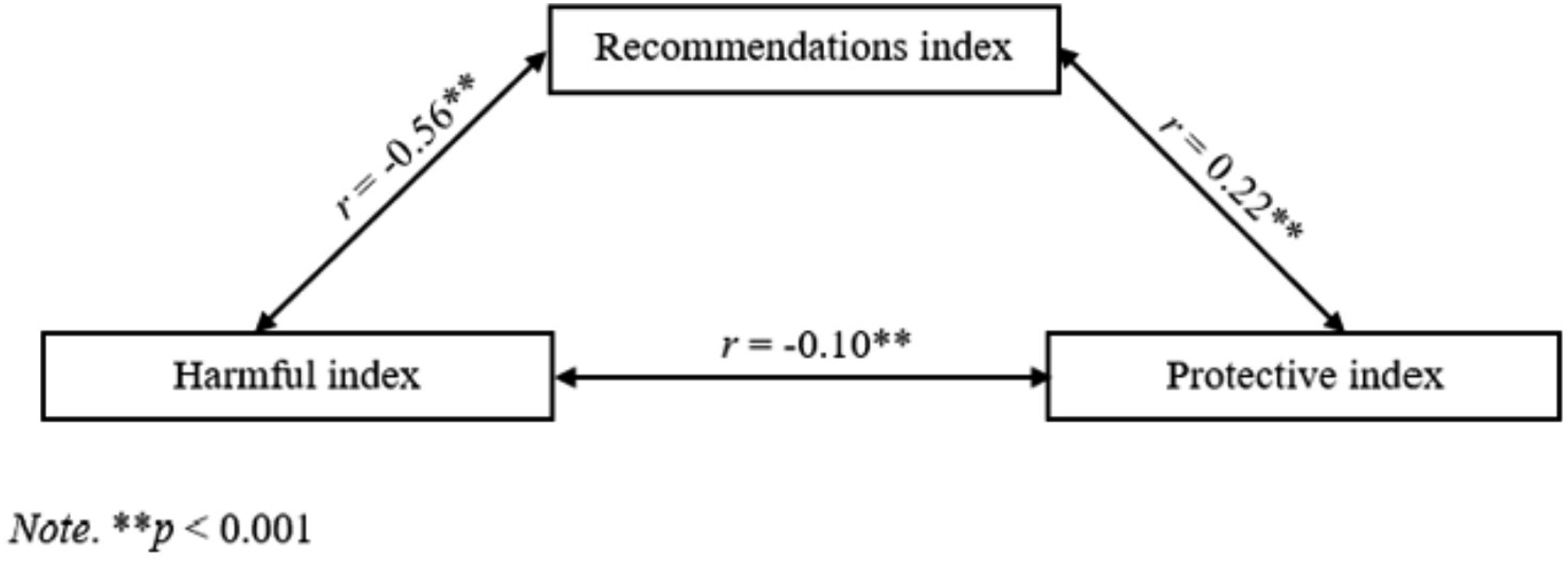
Discussion
This study sought to assess the reporting on suicide in Slovenian online media against recommendations for responsible reporting, harmful and protective characteristics, and their associations. Although it is imperative to evaluate this regularly to support suicide prevention, this is the first study on Slovenian online media.
When considering existing recommendations, there were differences in compliance with the Slovenian recommendations, with at least 8% of recommendations being violated in all articles, with a median of 42% compliance with the recommendations. Although not directly comparable, Utterson et al. (2017) reported 2.2 recommendation violations per article, with 87% of articles violating at least one recommendation. McTernan et al. (2018) reported at least one violation in almost all articles. Regarding specific recommendations, the articles in our study were least likely to publish stories about people overcoming difficulties, general advice for help, and information about support services, while most likely to be cautious about the number of photos, videos, and titles, avoiding detailed descriptions of the location, and show respect to the bereaved. Although Roškar et al. (2017) and the present study examined different media and cannot be directly compared, some parallels can be drawn between the only two Slovenian studies if discussed with caution. Roškar et al. (2017) reported improvements in providing information about support services, suicide prevention resources, and stories of people overcoming their problems when compared with reporting on suicide in Slovenian media before the introduction of the recommendations for responsible reporting (Roškar et al., 2017). While this study and the earlier study (Roškar et al., 2017) reported similar percentages of articles with careful headlines, appropriate audiovisual material, and stories of people with lived experiences overcoming hardship, other characteristics differed. The earlier study found articles to be more informative about the problem of suicide (41.0% vs 14%), less sensationalized (55.0% vs 36.0%), and more cautious in reporting suicide in articles about celebrities (40.0% vs 18.3%). In contrast, our study found fewer articles with detailed descriptions of suicide methods (49.5% vs 79%) and locations (54.6% vs 65.0%). Despite the optimistic results when comparing both studies to baseline observations of the previous Slovenian study, this study, Roškar et al. (2017) and studies from other countries (e.g., Van Leeuwen and Bommelé, 2020) suggest a similar pattern: there is significant room for improvement in adhering to recommendations, starting with the inclusion of preventive information.
When examining the inclusion of harmful and protective characteristics (Niederkrotenthaler et al., 2010) separately, a similar variation of both indices can be observed. In each article, there were at least 10% harmful characteristics, but not necessarily protective characteristics, as these ranged from 0% to 90%. Articles often revealed the deceased’s identity, location details, or simplified reasons for the suicide, potentially increasing the risk of imitation (Phillips, 1974). The present study confirms the discrepancy between the high (er) number of harmful and low (er) number of protective characteristics noted elsewhere (e.g., Marthoenis et al., 2021; Raj et al., 2022). Protective characteristics help prevent suicide by raising awareness and empowering media users, highlighting the need for media to follow guidelines and include protective information (Utterson et al., 2017).
Our study is the first to examine recommendations, and protective and harmful characteristics separately. It shows that adherence to recommendations correlates with a lower index of harmful characteristics, making articles potentially less harmful. However, the correlation between recommendations and protective characteristics is low, indicating that even when following guidelines, articles often lack sufficient protective information. Articles should contain protective characteristics to have a preventive effect, not merely cautiously reporting on suicide. Effective suicide prevention involves actively referring readers to professional help, providing general information about available resources, including expert opinions, debunking myths, highlighting the complexity of suicidal behaviour, and promoting constructive problem-solving strategies. The percentage of this information in the articles of Slovenian online media is still low. Reporting should be changed to provide more protective information that can be beneficial to vulnerable people.
The length of the articles, the complexity of each sentence, the number of audiovisual materials, and the number of comments in this study varied considerably. In the study of Swiss newspapers, 39.1% of the articles contained a picture or photo (Michel et al., 1995), while in our study this was the case for 94.7% of the articles. This is in line with a Slovenian study on print media, where Roškar et al. (2017) reported increased use of inappropriate photographic material after the implementation of the recommendations, presumably due to editors replacing the image with a more inappropriate one or maintaining artistic freedom in photographic material while adhering to the rest of the recommendations. Similar causes may be observed in our study, but further research is needed to confirm them.
Most articles in the present study primarily reported a case of suicide or attempted suicide, although there was variation in the frequency of the coverage of individual topics or cases. A few cases of suicide or attempted suicide were reported in one article, and the three most high-profile cases were reported in 12 to 16 different articles, with a median of three articles per topic. This includes specific cases of death by suicide or general events/topics such as World Suicide Prevention Day. Michel et al. (1995) observed similar varying frequencies of reporting on suicide cases, with the three most frequently reported cases appearing in 6 to 14 articles. Most articles in our study (82%), as well as in the Swiss study (64%; Michel et al., 1995), reported a specific case of suicidal behavior. The majority of these articles reported on suicide rather than attempted suicide, a pattern also observed in previous studies of online and print media (e.g., Marthoenis et al., 2021; Michel et al., 1995; Nisa et al., 2020). Furthermore, the three most publicized cases involved the suicides of three men: two world-known personalities and a politician, known to the public from the former Yugoslavian countries. While the reporting on the two celebrities was similar in frequency and content to other high-profile deaths by suicide, the coverage of the politician’s death was notably different. The politician died by suicide during a publicly streamed event, with every step leading up to his death being recorded and continuously streamed in broadcast media, or represented by clear photos in news articles. This coverage, along with other problematic content such as the lack of information on where to seek help, resulted in the most concerning articles in the present study. The articles regarding this case were predominantly harmful and lacked protective information, differing significantly from the rest of the sample. Thus, caution is advised when interpreting our findings as this case likely skewed our findings, since the coverage was more sensational and frequent due to the individual’s prominence and the livestreamed nature of the event. This hypothesis aligns with previous studies. Markiewitz et al. (2020) found that German journalists tend to cover suicides involving celebrities, those having a significant public impact or involving crime. Similar findings were reported in an Australian sample (Machlin et al., 2013), while a Portuguese study found journalists divided on when to report suicides (Ribeiro and Granado, 2022). Despite some differences in reporting on suicide policies across countries, online media editors in this study generally avoid reporting suicides unless in the public interest (personal communication with VG). Although this study provides valuable insights into suicide reporting, further research is needed to determine whether the results were skewed by the politician’s case, and caution should be exercised when using the results of this study.
In most studies (e.g., Abdulai, 2020; Michel et al., 1995), including ours, the majority of articles reported deaths by suicide in men. This is consistent with national statistics, as there are more deaths by suicide among men in Slovenia and other Western countries (Roškar et al., 2010). Differences in (non)celebrity status were noted, as most articles in our study reported on celebrities or other high-profile suicide cases. In our study, suicide was also discussed in articles that mainly informed about the topic in general. Despite the small number of these articles, this can be crucial for suicide prevention if aiming at raising awareness and providing relevant information, such as the availability of support services (Pirkis et al., 2007). Additionally, in our study, only a few articles reported on people with lived experiences, particularly the hardships and struggles of those who considered or attempted suicide. Despite the importance of highlighting people’s struggles and constructive coping mechanisms for raising awareness about suicide and adopting a holistic approach to suicide prevention that includes professionals as well as those with lived experiences (Maple and Wayland, 2020), this aspect was largely overlooked in articles examined in this study.
One of the newer forms of user feedback is commenting on articles in online media (Weitz, 2013). In our study, the majority of articles allowed user comments, as evidenced by most articles having at least one user comment. This is in line with findings from different fields, as it seems that online media users tend to comment when they are more active in certain online media, have a desire to express themselves publicly (Ziegele et al., 2013), feel connected to the topic (e.g., their social identity), comment on controversial topics or topics that are reported on more frequently, leading media users to be perceived as more knowledgeable (Weber, 2014), comment on articles with a higher number of pictures, photos or a title that includes or mentions the location of the event in the content, and comment on longer articles (Liu et al., 2015). However, further studies are needed to better understand whether this directly applies to articles about suicide.
Utterson et al. (2017) reported that 16% of articles contained links to other articles about suicide, while in our study the majority (83%) did. As these links allow users to access more data and information about suicide or suicidal behavior, this should be addressed in the recommendations and encourage media representatives to provide links to protective and verified websites or articles. On the contrary, exposure to inappropriate material accessed through these links may contribute to an increased risk of suicide (Utterson et al., 2017).
Media reporting on suicide in Slovenia needs to improve, as the average article adheres to only about 40% of the recommendations, leaving many guidelines unaddressed. The most significant problem, according to both Slovenian studies (the present and by Roškar et al. (2017)), is the low percentage of articles that include information about available resources and stories of people with lived experiences. These aspects are crucial, if a vulnerable media user is reading the news, and therefore need to be enhanced. One possibility is to involve journalists in the development of the guidelines and provide additional training for media representatives. The training can be used to discuss the importance of including protective information, such as resources for help. When journalists are part of the process of developing recommendations, the latter tends to be more effective (Bohanna and Wang, 2012). Another option is to monitor suicide reporting and respond to cases of irresponsible reporting (Maloney et al., 2013). While suicidologists in Slovenia attempt to monitor news articles on suicide, it is impossible to find and respond to all of them. However, with updated guidelines for responsible reporting on suicide published by WHO (2023), and updated Slovenian guidelines being in the final stages of revision, Slovenian suicidologists are preparing a national campaign. This campaign, developed in collaboration with a few journalists, aims to further familiarize media professionals with the updated guidelines through workshops and presentations. It provides a crucial opportunity to remind journalists about the importance of responsible suicide reporting.
This study has limitations that should be considered. Our study refers to news reports published by online media with the highest readership in 2017, not to news reporting in Slovenia in general. Our findings have limited generalizability and should be confirmed with a larger sample that includes national and local online media with a broader and smaller readership. There are articles in the sample that report on the suicide of a politician, and appear more problematic than the other articles in the study. Further research is needed to determine whether the results differ significantly when these articles are included or excluded. We also used the list of protective and harmful characteristics from studies conducted more than a decade ago, as we started the study in 2018. However, recent studies have shown that some characteristics are missing from the list or need to be refined. For this reason, the number of protective and harmful characteristics might differ if the list were updated based on more recent evidence. We suggest that future studies address the limitations of this study to provide more in-depth and generalizable findings. A crucial aspect still missing in the field of media reporting on suicide in Slovenia is the lack of research on media reporting and its impact on the public and various suicide-related outcomes. To gain a comprehensive understanding, future studies should also focus on this area.
Conclusion
This study confirms a similar pattern reported elsewhere (e.g., Marthoenis et al., 2021): Differences were observed in both compliance with recommendations and the inclusion of harmful and protective characteristics across articles. Some specific recommendations were followed more frequently than others, while the overall inclusion of protective characteristics was less pronounced.
The study offers the first insight into Slovenian online media reporting of suicide, while complementing the findings on Slovenian print media (Roškar et al., 2017). Both studies confirm a tendency towards more responsible reporting in the media about suicide when compared to findings on Slovenian print media from before the introduction of the recommendations for responsible reporting on suicide. However, it is crucial to improve reporting on suicide by adding more protective characteristics that benefit the individual at risk. Maintaining and strengthening cooperation between media representatives and suicidologists is of great importance. The new media offer new opportunities for reporting on suicide, such as the inclusion of audio-visual material and the possibility for user comments, which only emphasizes the need for cooperation and responsible reporting in all aspects. Existing recommendations should be adapted to and consistent with new media developments. Finally, further research is needed to examine the coverage of suicide in local and national Slovenian online media and to confirm our findings in a broader context. Systematic and up-to-date knowledge is crucial for relevant contributions to the prevention of suicidal behavior.
Footnotes
Acknowledgements
The authors would like to thank their colleague Nina Krohne for her contribution to this article and their colleague Urška Meolic Kotnik for participating in the independent review of the articles.
Declaration of conflicting interests
The author(s) declared no potential conflicts of interest with respect to the research, authorship, and/or publication of this article.
Funding
The author(s) disclosed receipt of the following financial support for the research, authorship, and/or publication of this article: This work was partially supported by Slovenian Research and Innovation Agency under grant J3-3081, and grant MR Gomboc.

Data availability statement
The data supporting the findings of this study are available from the corresponding author, upon reasonable request.