



Abstract
Early childhood development (ECD) practitioners are at core of care and overall well-being for children in ECD centers. Despite their importance, ECD practitioners’ psychosocial well-being is often overlooked in policy and research. While prior studies have documented challenges such as low pay and limited career progression, less attention has been given to the problem of delayed salary payments. This is an often overlooked form of economic insecurity that disproportionately affects women and household breadwinners. This study aimed to explore the interplay between salary payment and ECD practitioners’ work conditions, economic insecurity, and professional recognition. The cross-sectional, nationally representative Thrive by Five Index data collected in 2021 among 2288 ECD practitioners were analyzed. Data were analyzed at the univariate, bivariate, and multivariable levels. Using logistic regression, the outcome of the study was delayed salary payment. The findings showed that being a breadwinner significantly increased the likelihood of delayed salary payment (OR = 1.33, p = .009). Practitioners residing in large households (nine or more members) were also significantly more likely to report delayed salary payments (OR = 2.74, p < .001). Conversely, the presence of workplace support (OR = 0.65, p < .001) and access to special referrals and mentoring significantly reduced the odds of delayed salary payment. This study highlights that delayed salary payment among ECD practitioners is associated with poor working conditions, income insecurity, and lack of professional recognition. A coordinated, intersectoral community of practice involving government departments, ECD centers, and parents is essential. Such collaboration should focus on ensuring equitable access to ECD services and promoting supportive working environments. Importantly, the sector must move toward formalizing employment conditions
Keywords
Introduction
Early childhood development (ECD) practitioners are fundamental in delivering nurturing and care to children in their early years of life. Moreover, ECD practitioners are uniquely positioned to influence children's food choices, early learning, and well-being (Department of Health (DoH), 2016; O’Keeffe et al., 2022). The World Health Organization's (WHO) nurturing care framework emphasizes the need for responsive caregiving to improve ECD outcomes (WHO, 2018). Studies have shown how early care can impact children's cognitive development, psychosocial skills, early learning, and overall health and well-being (Black et al., 2017, 2021; Lo et al., 2017; Richter et al., 2019).
In 2022 there was a function shift of ECD in South Africa, from the Department of Social Development (DSD) to the Department of Basic Education (DBE) (Matlala and Molokwane, 2024). This function shift placed greater emphasis on equitable access to quality ECD, workforce development, coordination, as well as funding and infrastructure (Department of Basic Education (DBE), 2021; Matlala and Molokwane, 2024). Additionally, this function shift was part of the South African government's commitment to prioritize ECD, as was seen with the roll-out of the National Integrated Early Childhood Development (NIECD) Policy in 2015 (Desmond et al., 2019). This policy aligns with the vision of the WHO’s nurturing care framework as it seeks to provide for the child holistically (Biersteker and Dowdall, 2024). Additionally, key to South Africa's National Development Plan (NDP) is to ensure universal access to ECD by 2030 (NDP, 2011).
The ECD sector in South Africa faces continuous inequalities and has largely been neglected in policy until recently. This is because the sector has largely been regarded as a private entity rather than a public asset (SmartStart, 2020; Sello et al., 2024). Among the challenges facing the sector are staff shortages, with over 100,000 new ECD practitioners and assistants needed. Additionally, an estimated 1.24 million children between three and five years of age are not attending ECD centers, and among these children, over 920,000 face severe poverty (SmartStart, 2020). As evidence of the privatization of the ECD sector, only 3% of Early Learning Programs (ELPs) are part of primary school curriculum. Where ECD practitioners are formally employed, the provincial Department of Education is responsible for their remuneration. This includes Grade R practitioners, for whom the White Paper five on ECD as shown in the NIECD (2015) and the DBE outline commitments regarding remuneration Education, Training and Development Practices Sector Education and Training Authority (ETDP SETA), 2024. The issue of salary payments has been contentious in policy discussions. For example, in 2010, ECD centers embedded in schools and offering Grade R operated under school governing bodies (SGBs), with no standardized salary structure for practitioners. Although the 2010 policy framework recommended that ECD practitioners in schools be paid 5000 rand (US$300), this guidance was not consistently implemented (Centre for Early Childhood Development (CEDC), 2022). Following the functional shift of ECD from the DSD to the DBE, ECD centers continued with their primary responsibility of paying practitioners’ salaries, while the DBE provided financial support for registered ECD centers through subsidies (CECD, 2022). In practice, funding for practitioner remuneration often relies heavily on parental fees. At the same time, policy discussions around the large-scale roll-out of universal ECD, including the Human Resource Development Strategy (Department of Basic Education, 2018), have emphasized the need for age-appropriate and system-wide support, such as universal access to quality programs, a capable and well-equipped workforce, improved quality through strong standards and monitoring, adequate and sustainable funding, and enhanced coordination among government departments and stakeholders (Wills and Leach, 2024). The NIECD Policy acknowledges significant systemic challenges that result from fragmented policy and uneven provincial implementation, resulting in obstacles in funding salaries for practitioners (South African Government, 2015).
In South Africa, the majority of ECD practitioners face poor financial and employment conditions. This includes issues such as low wages, informal and insecure employment arrangements, absence of contracts, and lack of employment benefits such as pension funds, paid leave, and Unemployed Insurance Fund (UIF). Additionally, some studies have shown that some ECD centers rely on the fees they charge and on government subsidies for their operations (Aina and Bipath, 2022a; DBE, 2022a; Sello et al., 2024). For ECD centers to be eligible for government subsidies, they need to be fully or conditionally registered. The Thrive by Five Index (TFI) found that only 40% of ECD centers were fully or conditionally registered with the DBE in 2021 (Giese et al., 2022). Additionally, the government subsidies received by ECD centers only covered 27% of their needs (Aina and Bipath, 2022a; DBE, 2022b; Giese et al., 2022; Sello et al., 2024).
On average, ECD centers in South Africa charge 500 rand (US$28) per month for the services rendered. However, findings by Mistry and Wills (2023) have highlighted inconsistency in the timely payment of fees, with many parents stopping paying by October each year and resuming payments in February of the following year. Atmore et al. (2012) highlight that inconsistent parental payment for ECD services is associated with high levels of limited financial resources among them. These challenges act as barriers that prevent caregivers from paying ECD fees on time (Atmore et al., 2012). Additionally, systemic gaps within government departments have contributed to delays in the timely disbursement of subsidies. For example, a study by the Centre for Early Childhood Development (2023) reported that an ECD center responsible for providing services to 120 children did not receive a government subsidy for five months in 2021, making it difficult to pay staff salaries. Such funding inconsistencies have at times forced ECD centers to temporarily shut down due to insufficient resources to cover staff remuneration or to purchase necessities (ETDP SETA, 2024).
Despite the critical role that ECD practitioners play in childcare, many of them face precarious working conditions, particularly in low-resourced communities (Ashley-Cooper, 2021; Atmore et al., 2012). Although South Africa has ratified the United Nations (UN) Sustainable Development Goals (SDGs), the country is still far from achieving the 8.5 target of the SDG 8, which aims to ensure productive employment and equal pay for work (United Nations Development Programme (UNDP), 2021). Although studies have paid attention to the poor working conditions of ECD practitioners, particularly in low- and middle-income contexts, less attention has been given to the issue of delayed salary payments. This is often an overlooked form of economic insecurity which disproportionately affects women that are household breadwinners. There is a need for empirical evidence on wages, working conditions, job security and workforce turnover, to inform fair labor practices, targeted support, and policy design for ECD workforce retention. This study aims to examine the relationship between delayed salary payment and ECD practitioners’ socioeconomic pressures in South Africa.
Methods
Study design and setting
This study used a quantitative, cross-sectional, descriptive design to conduct a secondary analysis of TFI data. The study followed the positivist quantitative research paradigm. This study design was appropriate for identifying associations between personal and professional background characteristics and delayed salary payments. The study is cross-sectional; therefore, it cannot establish any causal relationships. The 2021 TFI was a baseline study and was fostered by a collaboration between First National Bank, Innovation Edge, and the DBE to monitor developmental track trends of children attending ELPs (Giese et al., 2022). The TFI dataset provides the most comprehensive and nationally representative data on ECD centers and practitioners in South Africa. It uniquely captures information on payment delays alongside household composition and socioeconomic characteristics, data not simultaneously available in other national surveys. The TFI dataset allows for quantitative examination of salary payment delays at scale, making it particularly suitable for the objectives of this study.
Setting
The TFI was a nationally representative study in South Africa. Data were collected during the period of the COVID-19 pandemic, between September and November 2021. This index preceded the function shift of the ECD sector from the DSD to the DBE in April 2022. Therefore, findings from the index provided the DBE with important information on the quality of services and children's development outcomes that informed their planning to takeover this new function (Giese et al., 2022).
Sample design
The sampling approach followed was the multi-stage cluster sampling across 1250 ELPs in the country (Wills and Kika-Mistry, 2021). This study restricted the analysis to 2350 ECD practitioners interviewed at baseline (DBE, 2022a).
Measures
Outcome variable
The outcome variable of this study was delayed salary payment, which was based on the question “Are you generally paid on time?” This variable had a binary outcome: 0 = “paid on time,” 1 = “not paid on time.”
Independent variables
This analysis recognizes that multiple factors may be associated with delays in salary payments among ECD practitioners. These factors operate at different levels, including personal situation (household size and breadwinner status), working conditions (job title, years of work experience, and on-site support), and professional recognition (mentoring, recognition, and perceived support).
Data analysis
Stata Version 18 was used for the analysis based on a population of 2350 ECD practitioners, with a 95% confidence level and a 5% margin of error. The analysis was conducted in three stages. First, descriptive statistics were generated using frequency distributions. Second, bivariate associations between the outcome and independent variables were examined using chi-square tests. Third, a multivariable logistic regression model was fit to assess the factors associated with delays in salary payments. Prior to inclusion in the multivariable model, multicollinearity among independent variables was assessed using the Variance Inflation Factor (VIF) (Miles, 2014). None of the variables exhibited multicollinearity, as all VIF values were below the threshold of 5.
Validity and reliability
The validity and reliability of this study were considered in relation to the use of secondary quantitative data obtained from the TFI, which employed a standardized survey instrument and uniform data collection procedures across ECD practitioners in South Africa. Content and face validity are supported by the close alignment between the study's outcome variable (derived from the question “Are you generally paid on time?”) and its focus on payment regularity and socioeconomic pressures. The independent variables—including job title, breadwinner status, household size, education level, years of work experience, and training exposure—reflect theoretically and empirically grounded determinants of employment conditions within the ECD sector, thereby supporting construct validity. Although the study did not utilize composite scales, reliability was strengthened using clearly defined binary and categorical measures, consistent variable coding, and transparent analytical procedures. The standardization of the original data collection process and the unambiguous nature of the response categories enhance the consistency and robustness of the findings.
Ethical considerations
The TFI falls under the purview of the DBE’s routine data collection; therefore, no ethical clearance was required. However, the ethical clearance to conduct this secondary analysis was obtained from the University of Johannesburg’s Faculty of Humanities Research Ethics Committee (ethical clearance number REC-01-882-2024).
Limitations
The study acknowledges the limitation on relying on a single dataset. This study was intended as a secondary analysis; therefore, we could not infer causality due to the cross-sectional nature of the analysis.
Results
Table 1 shows the percentage distribution of the personal and professional background characteristics of the respondents in 2021. A total of 2288 respondents were captured at baseline. Most respondents were practitioners (85.4%), with a smaller proportion of principals or supervisors (14.1%). The majority (65.4%) reported being breadwinners at home, and over half of the respondents lived in households where there were three to five members (54.06%), while 26.53% lived in large households, with six to eight members. In terms of educational attainment, most practitioners had completed matric (the final year of secondary school in South Africa) or a matric equivalent certificate (53.89%), followed by those who did not complete Grade 12 (39.73%). Many of the respondents (32.17%) had six to 10 years of experience working in an ECD, with only a few (6.25%) having over 20 years of experience. Regarding professional development, 60.4% had received National Curriculum Framework (NCF) training, 56.7% had completed the South African National Qualifications Framework (NQF) Level 4 training, and 5.11% were on the DBE learnership. Although 63.9% reported receiving routine on-site support on caring for children, over a third did not. Additionally, under half (48.1%) had received training on supporting children with special needs, and only 24.7% reported referring children with special needs to other professionals or specialists(Figure 1).
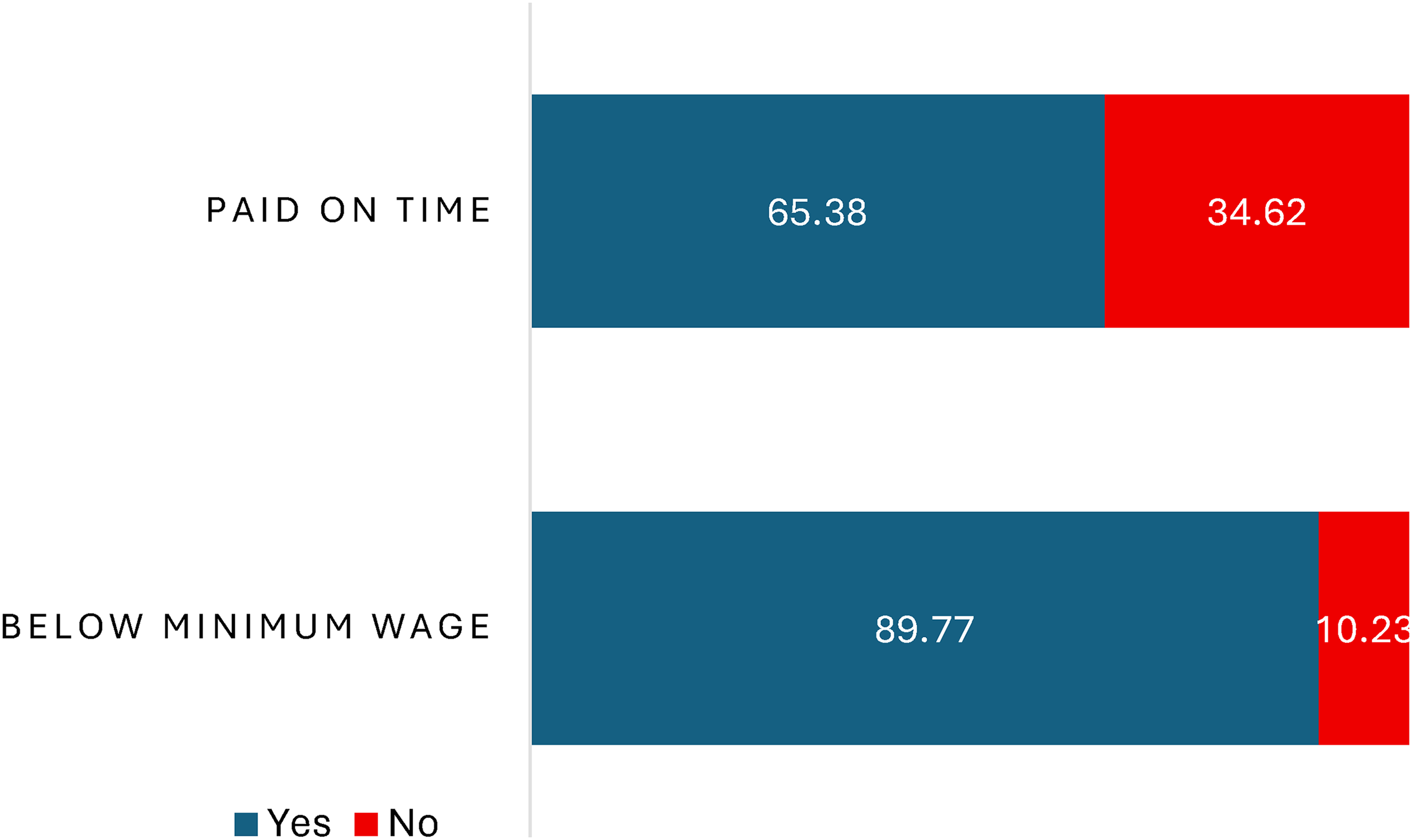
Remuneration and salary payment patterns among ECD practitioners.
Percentage distribution of background characteristics of ECD practitioners.
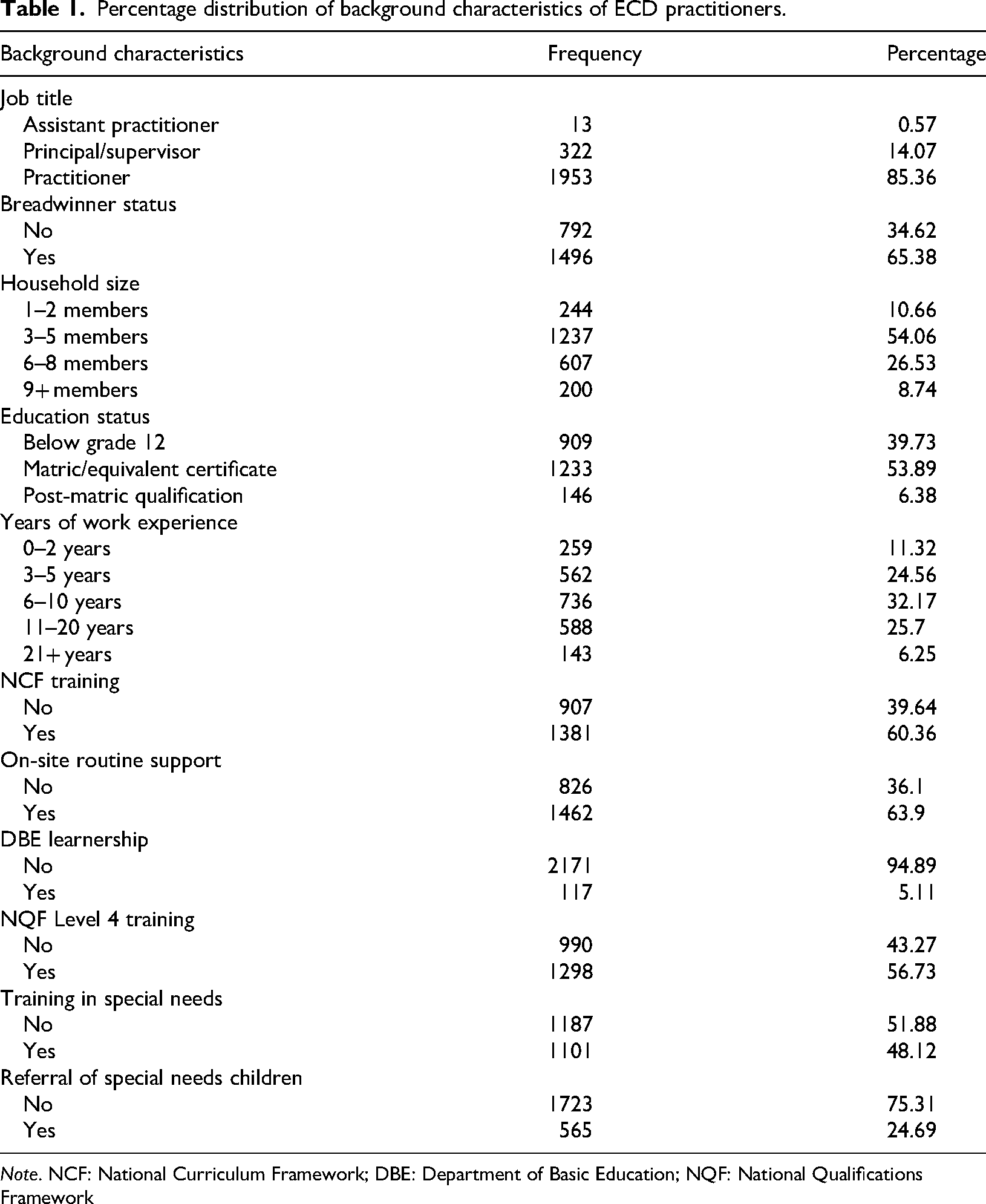
Note. NCF: National Curriculum Framework; DBE: Department of Basic Education; NQF: National Qualifications Framework
Most respondents reported earning a salary below the minimum wage (89.77%). Only 65.38% reported being paid on time, while 34.62% experienced delays in receiving their salaries.
Figure 2 shows a generally high level of perceived support and recognition among ECD practitioners. A substantial majority (91.73%) agreed that they felt supported in their work, and an even higher proportion (92.14%) reported feeling recognized for their contributions. While still a majority, slightly fewer respondents (81.64%) reported receiving mentoring and teaching support.
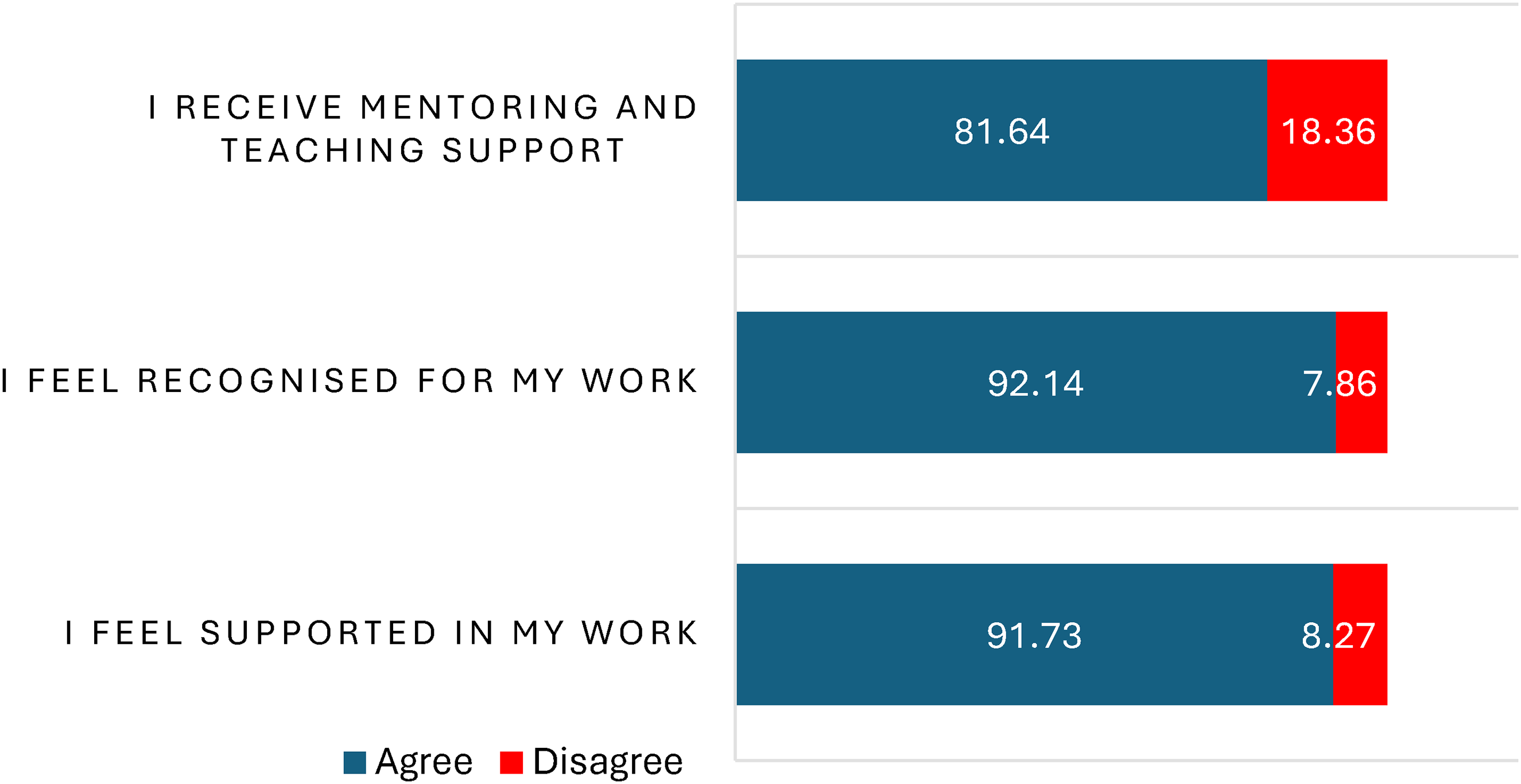
Perceived support and recognition among ECD practitioners.
Table 2 shows the associations between delayed salary payment among ECD practitioners and various background characteristics. Practitioners (68.5%) and assistant practitioners (69.2%) were more likely to report being paid on time than principals/supervisors, who were more likely to report salary delays (53.4%). Breadwinners were less likely to be paid on time (62.8%) compared to non-breadwinners (71.1%). Payment delays increased with household size, as only 40% of those in households of nine or more members were paid on time. With regard to education status, those with post-matric qualifications reported the highest rate of timely salary payments (74.7%), followed by those with below Grade 12 education (69.4%). In contrast, practitioners with a matric or equivalent certificate (61.3%) were the least likely to report timely salary payment and had the highest proportion reporting late payment (38.7%). Practitioners who received regular on-site support were more likely to be paid on time (69.9%) than those who did not (57.4%).
Percentage distribution of ECD practitioners’ delayed salary payments by background characteristics.
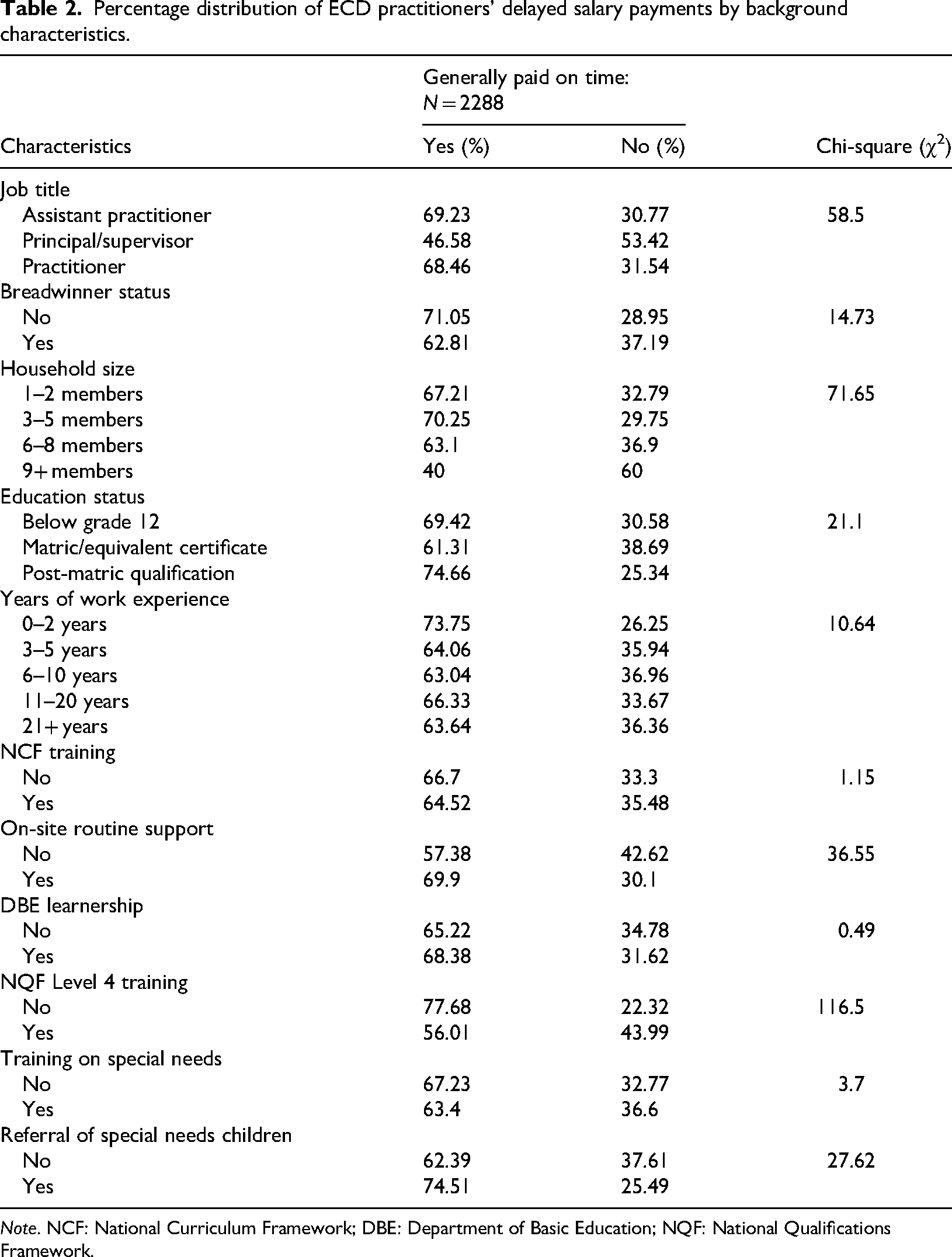
Note. NCF: National Curriculum Framework; DBE: Department of Basic Education; NQF: National Qualifications Framework.
Table 3 shows the results from the multivariable regression analysis, which identified determinants of delayed salary payment among ECD practitioners. ECD practitioners who were breadwinners had 1.33 times higher odds of experiencing delayed salary payments. Household size also played a role, with those in households of three to five members being less likely to experience delayed salary payments (adjusted odds ratio (aOR) = 0.69). However, those in households of nine or more members were significantly more likely to report payment delays (aOR = 2.74). Education level was another important factor, practitioners with matric or equivalent qualifications were more likely to be paid late (aOR = 1.73) compared to those not having achieved Grade 12. Interestingly, holding an NQF Level 4 qualification and receiving training on special needs were both associated with increased odds of delayed salary payment. However, practitioners who referred children with special needs to other professional services were less likely to experience payment delays. Those receiving on-site support had 35% lower odds (aOR = 0.65) of being paid late. Those who did not receive mentoring were 1.68 times more likely to experience delayed salary payments, and those who did not feel supported were 1.80 times more likely to report delayed salary payments.
Factors associated with delayed salary payment (2021).
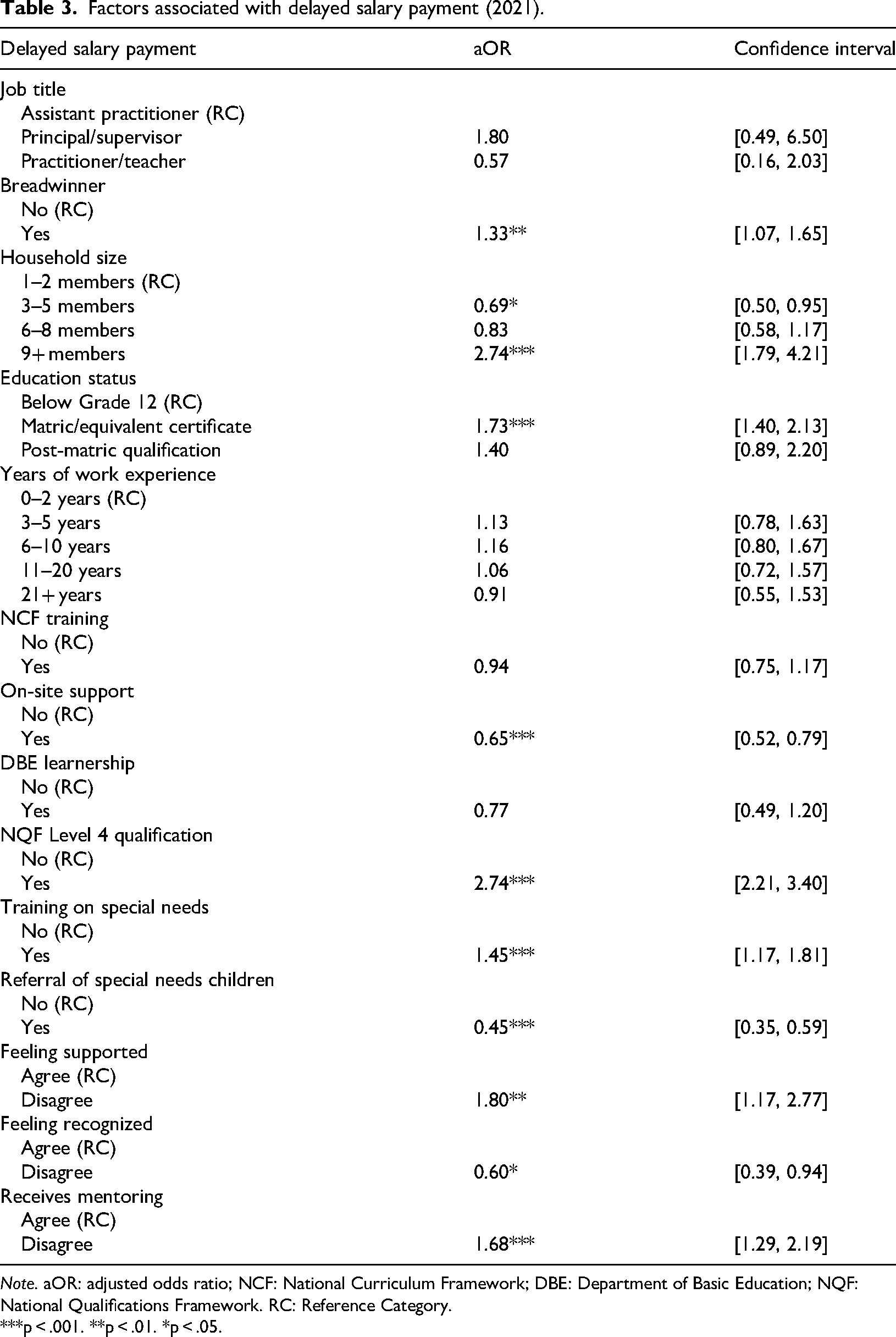
Note. aOR: adjusted odds ratio; NCF: National Curriculum Framework; DBE: Department of Basic Education; NQF: National Qualifications Framework. RC: Reference Category.
***p < .001. **p < .01. *p < .05.
Discussion
The aim of this study was to provide insights into the factors associated with delayed salary payments among caregivers. Given that our study used cross-sectional data, our findings could not establish any causal relationships. Our findings show that 34.62% of ECD practitioners were generally not paid on time. Additionally, 89.77% of the ECD practitioners were paid below the minimum wage of 4989.88 rand (US$277) stipulated by the labor law in South Africa (Employment and Labour, 2025). Studies have shown that the majority of ECD practitioners work in under-resourced centers; thus, they may face precarious working conditions, low wages, job insecurity, and lack of employment benefits (Atmore et al., 2012; Knafo et al., 2019; Zulu et al., 2022). Additionally, ECD practitioners are often not registered for Unemployment Insurance Fund (UIF), which further marginalizes them, particularly when they face income loss or retrenchments (BRIDGE et al., 2020). Furthermore, challenges that ECD practitioners face are systemic issues reflecting broader institutional and policy relevant obstacles beyond the individual practitioner’s circumstances. For example, the partial migration of Grade R into public schools has created uneven funding and employment arrangements across centers, exacerbating payment delays in community-based ECD settings (Matjokana, 2023).
Payment delays can have severe consequences for ECD practitioners’ socioeconomic status. Evidence from a similar study in South Africa indicates that delayed payments are associated with reduced job satisfaction and higher staff turnover (Putcha et al., 2020). Moreover, a study conducted in South Africa revealed that ECD centers frequently faced inadequate staffing levels, resulting in disproportionately high child-to-practitioner ratios due to demands for caring for large groups of children. This scenario was particularly true for low-income communities in rural and peri-urban townships (Zulu et al., 2022). Furthermore, Sello et al. (2024) found this challenge to be partly attributed to the fact that the ECD sector was treated as a private entity rather than a government responsibility (Sello et al., 2024).
Evidence from previous studies has consistently shown that ECD practitioners are the frontline caregivers in ECD centers, particularly in centers located in low-resourced communities (Ayob et al., 2021; O’Keeffe et al., 2022; Smit et al., 2021). Despite their importance, practitioners are consistently faced with structural and systematic factors leading to delayed salary payments. A study by SmartStart (2020) argues that in South Africa there is no population-based planning for the recruitment of ECD practitioners. Additionally, there are limited funding streams that support the ECD sector, with many ECD centers in low-income settings relying on the government subsidy of 24 rand (US$1.39) a child per day. The government's approach to ECD funding has been reactionary, concentrating its efforts on regulating established ECD centers (SmartStart, 2020). Furthermore, none of the government departments are under any obligation to fund ECD centers, even those in the poorest communities, resulting in delays in subsidy disbursement, inconsistent provincial payment schedules, weak accountability mechanisms, and the absence of standardized employment contracts. All these factors contribute to income instability for practitioners (Ayob et al., 2021; O’Keeffe et al., 2022; Smit et al., 2021). This further highlights evidence that ECD centers are treated as private entities.
In South Africa, ECD budget allocations are made by provincial governments and by departments such as the DBE, the Expanded Public Works Program (EPWP), and the National Development Agency (NDA). Government subsidies provided by the DBE are allocated based on a parental means test. In addition, DBE funding for ECD provision in schools is linked to the number of children enrolled in Grade R. In community-based ECD centers, subsidies may be allocated either to support a practitioner's salary or on a per-child basis, depending on the center's school quintile classification (Hall et al., 2017). The EPWP, in turn, provides stipends to individuals participating in learnerships or engaged in work aimed at addressing community needs.
The study findings show that the majority of ECD practitioners were breadwinners (65.38%), who faced significantly higher odds of delayed payment. Studies have continuously showed the gender imbalance in childcare, which disproportionately affects women in relation to the actual physical care and the financial care of children in households (Hatch, 2023; Hatch and Posel, 2018; Hughes et al., 2021). Additionally, childcare work has been highly feminized and remains socially undervalued, prompting researchers to explore the potential role that men could play in enriching early childhood care and education (Brennan, 2020; Organisation for Economic Co-operation and Development (OECD), 2019; Warin, 2019). Furthermore, another study in South Africa found that investing in early childhood care and education can bridge the gender inequality gap through job creation (Kruger and Almeleh, 2024). Other evidence in the country shows that ECD practitioners themselves often come from historically marginalized backgrounds and live in these disadvantaged communities characterized by high unemployment rates, homelessness, and high poverty levels (Knafo et al., 2019). Given that the majority of ECD practitioners are women and often the breadwinners in their households, delayed salary payments not only undermine their economic stability but also have broader implications for their overall family well-being and caregiving responsibilities.
A rapid survey conducted in South Africa in 2020 among 3952 ECD centers showed that the COVID-19 pandemic in the country had adverse consequences, resulting in ECD centers shutting down to curb the acceleration of infections. This made it hard for ECD centers to collect fees from parents, with 99% of operators reporting that caregivers stopped paying for ECD services during the pandemic, which impacted operational costs and salary payments of staff (BRIDGE et al., 2020). ECD centers in low-income settings in South Africa generally do not have formal systems for collecting fees, relying instead on sending reminders to parents. Consequently, delays or non-payment of fees are common. Practitioners have also reported that they are often paid late because parents themselves make late payments (Aina and Bipath, 2022a). In suburban areas, non-payment of fees is less prevalent than in townships, as ECD services are typically not provided if fees are not received. Additionally, suburban centers employ multiple mechanisms to ensure timely payment, such as follow-up calls, messages, emails, and newsletters reminding parents of their obligations. Formal contracts, which serve as legal agreements between parents and the ECD center, are also common, allowing legal action if fees are not paid. In contrast, in township settings, practitioners often accept children whose parents have not paid, understanding the financial constraints many families face. Moreover, formal financial management systems are frequently lacking in these township centers (Aina and Bipath, 2022b). According to a study by the NDA (2016), more than half of community-based ECD centers lacked basic documentation necessary for day-to-day administration, including records such as petty cash books. Furthermore, the study found that only 70% of these centers maintained financial statements, 61% of the centers that charged fees could provide evidence of them, and just 36% had records of staff salary payments (NDA, 2016). ECD practitioners with certain characteristics (e.g. lower seniority or employment in under-resourced centers) were disproportionately affected by these systemic issues (Visser et al., 2021).
Household size did not determine whether practitioners experienced payment delays, but it did shape how these delays were experienced. Practitioners from larger households reported greater financial strain when payments were delayed, reflecting higher dependency burdens and reduced flexibility in managing household needs during periods without income. In contrast, practitioners from households with three to five members were significantly less likely to report severe financial pressure linked to delayed payments, suggesting that smaller household sizes may offer some buffering capacity against the negative financial consequences of delayed income. These findings are consistent with research on the economic pressures experienced by care workers in low-income communities, where high dependency ratios and irregular earnings can entrench cycles of poverty and debt (Hall and Mokomane, 2018; King et al., 2021). Additionally, evidence from South Africa shows how the country has struggled to achieve economic growth, recording a high unemployment rate of 30.1% previous to the COVID-19 pandemic and of 23.3% in the second quarter of 2020 (Köhler, 2023; Matlala and Molokwane, 2024; Statistics South Africa (Stats SA), 2022, 2024). Furthermore, these precarious conditions contribute to practitioners’ unhappiness, fatigue, and stress, with many feeling that their efforts and hard work are not adequately recognized (Zulu et al., 2022).
Our findings showed that the majority of ECD practitioners had an educational attainment of below Grade 12 (37.73%) and of Grade 12 (54%). According to the National Integrated Early Childhood Development Policy, ECD practitioners’ training should be based on upgrading their qualifications to at least NQF Level 4 (South African Government, 2015). Some practitioners have expressed concern about getting further training, particularly because this is supposed to be funded by their already low salary. This caused anxiety among some of them, particularly when it came to the compliance requirements of registration with the DBE (Wood and Esterhuizen, 2024). Additionally, another study found the lack of training and education impacted ECD practitioners’ professional identity (Zulu et al., 2022). Furthermore, this study did not find educational attainment to be a protective factor from delayed salary payments. In fact, ECD practitioners with a matric certificate or NQF Level 4 qualification were more likely to experience delayed salary payments than those with lower qualifications. Although this seems contradictory to the expectation that higher education should reflect higher pay, this finding reflects the operational disconnect between professional development and labor market conditions within the ECD sector. Other studies have found that higher qualifications do not always translate into better employment terms due to uneven funding opportunities in the ECD sector (Ashley-Cooper, 2021; Atmore et al., 2012; Black et al., 2017). Additionally, in South Africa, the ECD practitioners experienced frustration due to the absence of regulatory salary frameworks and limited government investment in the sector.
The association between higher qualifications and delayed pay may indicate that more highly qualified practitioners are often employed in low-resourced ECD centers that rely on fees from parents or government subsidies, which are frequently inconsistent. Furthermore, these delays in salary payments and precarious working conditions contribute to ECD practitioners’ perceptions of themselves as not being “professionals.” Some even described their work as a “curse” that causes stress, a sentiment echoed in similar contexts within South Africa (Zulu et al., 2022). A study in Australia recognized the association between high quality care and caregiver mental well-being, suggesting that chronic stress may affect how caregivers support and care for children (Corr et al., 2017).
Our findings also showed that ECD practitioners who worked in centers that provided on-site support and mentoring were protected from delayed salary payments. These forms of support may reflect broader organizational strengths, including better management, accountability, and closer alignment with government support services, such as receiving timely subsidies. These findings support the view that improving ECD centers’ management and governance can mitigate some of the systemic weaknesses in the sector (Aina and Bipath, 2022c). However, another study argues that individuals working in the ECD sector experience anxiety, fear, and frustration when they do not receive adequate support from government structures (Wood and Esterhuizen, 2024). Furthermore, the absence of emotional and professional support, such as not feeling recognized or supported in the workplace, was strongly associated with delayed salary payment. This reinforces research highlighting the importance of psychosocial well-being, job satisfaction, and practitioner motivation in maintaining the quality and sustainability of early childhood services (Milton et al., 2020; Wood and Esterhuizen, 2024). Additionally, findings from the Global North suggest that supporting the well-being of ECD practitioners leads to staff retention and supports quality child–teacher relationships, which is important for children's learning and development (Eadie et al., 2021).
Another important finding relates to practitioners’ roles in responding to children with special needs. While those who had received training on special needs were more likely to report late payments, those who were responsible for referring children with special needs had significantly lower odds of experiencing late payments. This contrast may indicate that centers with established referral systems are better structured overall, potentially benefiting from stronger partnerships with external non-government organizations and public sector systems (Aina and Bipath, 2022b). These findings also underline the uneven distribution of responsibilities and expectations placed on practitioners in resource-constrained settings. As noted by other studies, without adequate support, childcare practitioners who take on additional roles, such as identifying and supporting children with developmental problems, may become overburdened and underpaid, leading to burnout and high staff turnover due to attrition (Karisa et al., 2022; Mhizha and Nhedzi, 2023; Ng et al., 2023).
Conclusions and recommendations
This study highlights the persistent and underexamined challenge of delayed salary payments among ECD practitioners in South Africa. Drawing on nationally representative data from the TFI, the findings reveal that more than a third of practitioners experience payment delays, with the burden falling disproportionately on those who are breadwinners, reside in large households, and hold formal qualifications such as matric and NQF Level 4. Our findings highlight the precarious nature and inequalities in the employment landscape faced by South African ECD practitioners. They also reveal how economic shocks such as the COVID-19 pandemic result in socioeconomic vulnerability impacting the livelihood of ECD practitioners (Thorogood et al., 2020). Additionally, the organizational capacity of ECD centers and the recognition of practitioners’ care work intersect to shape the experience of delayed salary payments. Although policy reforms such as the National ECD Integrated Policy (South African Government, 2015) and the migration of ECD functions to the DBE hold promise, the current realities suggest that without intentional investment in ECD practitioner well-being, high-quality early learning for all children will remain out of reach. This means that priority must be placed in consistent salary payment, professional development opportunities, and psychosocial support for ECD practitioners. This is particularly important if South Africa is to attain the National Development Goals of 2030 related to universal access to ECD and the UN SDGs 4 (quality education), 5 (gender equality), 8 (decent work and economic growth), and 10 (reduced inequalities) (NDP, 2011; UN, 2019 ). Addressing these gaps will require an integrated approach that align funding, workforce development, and accountability mechanisms across national, provincial, and local levels.
To address the challenges of delayed salary payments and the associated socioeconomic pressures facing ECD practitioners, a multisectoral approach is urgently needed. There is a need for strengthening collaboration between the DBE, government policies, ECD centers, and parents to ensure that practitioners be not only paid on time but be supported holistically in their roles. When ECD practitioners face the stress of delayed or inconsistent payment, particularly those who are breadwinners and responsible for large households, their ability to provide nurturing and attentive care to young children is compromised. Financial instability contributes to fatigue, stress, demotivation, and high turnover, all of which have negative consequences for the quality of care that should be delivered to children. Therefore, timely and fair remuneration must be secured in line with the South African labor law. Importantly, the sector must move toward formalizing employment conditions, securing stable contracts, fair wages, and consistent payments for practitioners. Additionally, the government should treat the ECD sector as a national priority by increasing the budget so salaries in ECD centers in vulnerable communities can be subsidized, particularly in situations where parents cannot pay fees. Our study contributes to the literature by documenting associations between practitioner characteristics and delayed salary payments while drawing attention to the need for future research on systemic drivers and longitudinal effects of delayed salary payments. Timely salary payment of ECD practitioners should be seen as a fundamental pillar of child well-being and educational equity. Integrated interventions that link professional development with improved employment conditions, expand on-site support and mentoring, and enable clear referral systems for special needs children must be prioritized. Such collaboration should focus on ensuring equitable access to ECD services and promoting supportive working environments.
Footnotes
Acknowledgments
The author acknowledges Ms Tania Sani for her valuable knowledge contributions and insights into the Early Childhood Development (ECD) landscape in South Africa, which enriched the development of this manuscript.

Ethical considerations
The Thrive by Five Index data were collected by the Department of Basic Education; therefore, no ethical clearance was required. However, the ethical clearance to conduct this secondary analysis was obtained from the University of Johannesburg, Faculty of Humanities Research Ethics Committee (ethical clearance number REC-01-882-2024).
Consent to participate
This study was a secondary analysis of the Thrive by Five Index data; therefore, no consent was required.
Consent for publication
Permission to access and analyze the data for publication purposes was obtained from the DataFirst repository.
Funding
The authors received no financial support for the research, authorship, and/or publication of this article.
Declaration of conflicting interests
The authors declared no potential conflicts of interest with respect to the research, authorship, and/or publication of this article.