




Abstract
The crux of the coronavirus (COVID-19) crisis in early years education was the sudden closure of schools paired with the shift to emergency remote teaching at short notice, which demanded heavy reliance on digital technology and caused heightened stress among educators. While digital well-being theory suggests that the long-term use of digital technology can both harm and benefit subjective, eudemonic and hedonic well-being, educators’ (digital) well-being has received little attention in prior research. Through semi-structured interviews, this research captured the online teaching experiences of Hong Kong early years educators to explore the implications of prolonged emergency remote teaching on their digital well-being. The findings show that the extensive use of digital technology changed the core nature of teaching, resulting in deteriorating (digital) well-being. The evidence also indicates that sound subjective well-being is vital and can influence eudemonic and hedonic well-being. However, digital technology also presented opportunities for technological savviness during emergency remote teaching. Technological skills, if cultivated in post-pandemic education, can help build robust and flexible pedagogical models that are future-ready if the need for emergency remote teaching arises again.
Introduction
Well-being can be defined as individuals experiencing positive feelings and being able to meet their full potential (Simons and Baldwin, 2021). Teachers’ well-being is critical in early years education as poor teacher well-being (physical and psychological strain) can compromise the quality of education (Henry et al., 2023). For example, teacher engagement has been shown to positively impact the quality of emotional support and classroom organisation, whereas teaching-related stress negatively affects the quality of children’s education (Penttinen et al., 2020). Furthermore, negative emotions (e.g. anger and anxiety) in kindergarten teachers correlate positively with emotional exhaustion and symptoms of illness, and negatively with job satisfaction (Zhang et al., 2022).
Emergency remote teaching (ERT) and educators’ digital well-being
This study explored Hong Kong early years educators’ digital well-being during the coronavirus (COVID-19) crisis. School closures were implemented globally to safeguard physical health, but education systems were unprepared and closures often lasted longer than anticipated (Prihartono et al., 2024). Schools had to implement online teaching at short notice, requiring a high reliance on digital technology, which changed the nature of teaching (Archambault, 2021; Marshall et al., 2020). This sudden shift from face-to-face instruction was characteristic of ERT rather than planned online education. ERT required improvisation and quick solutions to address the pressing circumstances within a narrow preparation window, and the careful design of planned online instruction was often lacking (Hodges et al., 2020). The key aim of ERT was to provide quick, easy-to-set-up, temporary access to learning during an emergency/crisis, with a return to the face-to-face format afterwards (Hodges et al., 2020).
However, the COVID-19 crisis was not short-lived. In Hong Kong, it unfolded in waves, marked by periods of high and low virus transmission rates (from January 2020 until the fifth wave in March 2022). These shifts prompted frequent changes in instructional modes, including ERT, face-to-face instruction and hybrid teaching (i.e. a combination of face-to-face and online teaching; Ou and Moorhouse, 2025). This motivated the current analysis of educators’ digital well-being in teaching children in the early years [and those with special educational needs (SEN)] during the two-year ERT period that required extensive use of digital technology – an aspect that is less explored in teacher well-being research. The focus on early years educators was further inspired by the first author’s background as an early years practitioner and the significance of teaching children at this developmental stage. During the early years (i.e. the first eight years of life), the foundations for future physical, cognitive, language and socio-emotional development are laid (Joshi and Shukla, 2019). However, the COVID-19 crisis created a high-stress situation for early years educators, who were responsible for delivering ERT to children at this critical developmental stage. This shift carried notable implications for educators’ digital well-being.
Previous research has not explored educators’ digital well-being in early years education under the unique conditions of ERT. This study adopts the digital well-being framework (Büchi, 2024) as an alternative lens to explore the impact of digital technology on educators’ digital well-being during ERT. This perspective postulates that individuals’ interactions with digital technology can create harms (challenges) and benefits (opportunities) that impact subjective (psychological) well-being, including social and emotional well-being.
Challenges and opportunities for educators’ digital well-being during ERT
ERT relied heavily on digital technology for early years instruction, which presented educators with unique and unknown pedagogical and technical challenges (Abdul-Majied and Figaro-Henry, 2024). Studies in various countries have also reported compromised well-being among early years educators (including teachers and school leaders) during COVID-19 school closures, such as increased fear, anxiety, stress and depression (e.g. Logan et al., 2021; Ozamiz-Etxebarria et al., 2021). Research suggests a direct link between digital technology use during ERT and educators’ (digital) well-being (Passey, 2021). For example, several studies found that digital technology use resulted in deteriorating well-being (e.g. distress, burnout, emotional exhaustion) due to increased workload and reduced social interactions among kindergarten, primary and SEN teachers (Anderson et al., 2021; Steed and Leech, 2021; Tan et al., 2025). Educators also had limited internet access and connectivity (Shin, 2022), and lacked knowledge and training in using different digital platforms (Seabra et al., 2021; Valadas et al., 2023).
Furthermore, school leaders reported high perceived stress due to work intensification (Lau et al., 2022). ERT heightened leadership responsibilities (e.g. multiple decision-making requirements in responding to the needs of teachers and families), which resulted in deteriorating well-being (i.e. anxiety, loneliness, burnout; Tan et al., 2025). These findings stress the need to explore school leaders’ experiences and well-being as they navigated and supported staff teams in delivering effective ERT. However, studies have also shown that digital technology can present opportunities – for example, the use of digital technology was reported to be beneficial for educators in acquiring sophisticated digital skills. It enabled educators to plan lessons creatively and collaboratively, strengthened their relationships with colleagues, and facilitated problem-solving to increase student engagement (Anderson et al., 2021; Archambault, 2021; Hodges et al., 2020; Ou and Moorhouse, 2025).
Digital well-being theory
According to digital well-being theory (Büchi, 2024), how digital technology impacts subjective well-being (including social and emotional domains) is influenced by micro-level factors, such as personality and situational aspects. Macro-level factors, such as social networks and society, may also influence subjective well-being by encouraging or constraining the use of digital technology (e.g. school-level infrastructure, training, digital technology resources).
Two additional domains of digital well-being that are considered by digital well-being theory are eudemonic and hedonic well-being (Vanden Abeele, 2021). Eudemonic well-being encompasses the challenges individuals face as they endeavour to function positively. It comprises six dimensions: self-acceptance, positive relations with others, environmental mastery, autonomy, purpose in life and personal growth (Ryff et al., 2021). It is promoted when the use of digital technology adds meaning to one’s life and supports the achievement of personal goals (Vanden Abeele, 2021). Hedonic well-being can be described as overall life satisfaction in work, health and relationships (Ryff et al., 2021). The controlled use of digital technology can offer pleasurable and positive hedonic experiences that are difficult to resist (Vanden Abeele, 2021). Guided by this theoretical foundation, this study aimed to explore the effects of the harms (challenges) and benefits (opportunities) of digital technology use in the specific context of ERT on educators’ subjective, eudemonic and hedonic well-being.
Current study
The current study aimed to explore the durable lessons that can be learned from the immense stress of ERT and the prolonged use of digital technology during the COVID-19 crisis – an area that requires further research (Hodges et al., 2020; Prihartono et al., 2024). Reflecting on the impact of digital technology on educators’ digital well-being and quality of life during the COVID-19 crisis can support the formation of resilient education systems to protect educators’ well-being during future large-scale disruptions.1 Such insights can enable societies and education systems to better prepare for the controlled and informed use of digital technology in early years education in future ERT situations (e.g. pandemics, climate-related catastrophes, political unrests; Shek, 2021). Therefore, this study aimed to draw lessons from educators’ experiences of ERT during the COVID-19 crisis to support education departments and schools in embedding pedagogical practices and training in early years education for effective digital technology use (Cook et al., 2023; Nikolopoulou, 2022; Wong et al., 2025), both post-pandemic and in future emergencies.
To address these aims, the current study explored both the detrimental (potentially harmful) effects of extended digital technology use and the opportunities that emerged over time during ERT and two years of disrupted schooling, focusing on educators’ subjective, eudemonic and hedonic well-being. The study also explored the experiences of school leaders, who extensively supported teachers to ensure ERT met the needs of young learners while also managing staff teams and educational provision, with respective implications for their digital well-being. The analysis was guided by two broad research questions to enable in-depth exploration of educators’ ERT experiences using digital technology:
What well-being-related challenges (harms) did the interviewed educators experience during ERT and the prolonged use of digital technology throughout the COVID-19 crisis? What well-being-related opportunities (benefits) did the interviewed educators identify during ERT and extended digital technology use in the COVID-19 crisis?
Methodology
Study design
This study adopted a phenomenological epistemology to explore ERT during the COVID-19 crisis (Williams, 2021). A qualitative research design enabled the authors to gain insights into educators’ lived experiences through in-depth conversations (Denscombe, 2021). The data stemmed from a larger qualitative interview study on the experiences of Hong Kong educators teaching children in the early years and those with SEN during ERT. Previous analyses of this data identified educators’ perspectives on the challenges for SEN children (Jangbarwala and Reichert, 2025). The current analysis examined educators’ digital well-being – an underexplored topic in the literature.
Participants
A sample of educators was selected from private-sector schools in Hong Kong, a sizeable and growing sector in the early educational stages, comprising 20% of primary schools (Census and Statistics Department, 2024). The first author’s professional network across institutions made participant recruitment feasible at private schools during the COVID-19 crisis. The participants were selected using purposive sampling (Berg and Lune, 2017), ensuring that they met the criteria of leadership and/or teaching children in the age range of two to eight years and children with SEN during ERT in the COVID-19 crisis. In order to encourage educators involved in ERT to participate, school principals were provided with information sheets explaining the study’s purpose and how the educators’ participation would contribute to knowledge. In total, 20 educators from four private schools – two kindergartens and two primary schools – were interviewed. Table 1 shows the composition of the participants and their teaching/leadership roles. The participants were assigned pseudonyms comprising letters and numbers to ensure anonymity and differentiate between the groups of educators.
Participants’ demographic information.
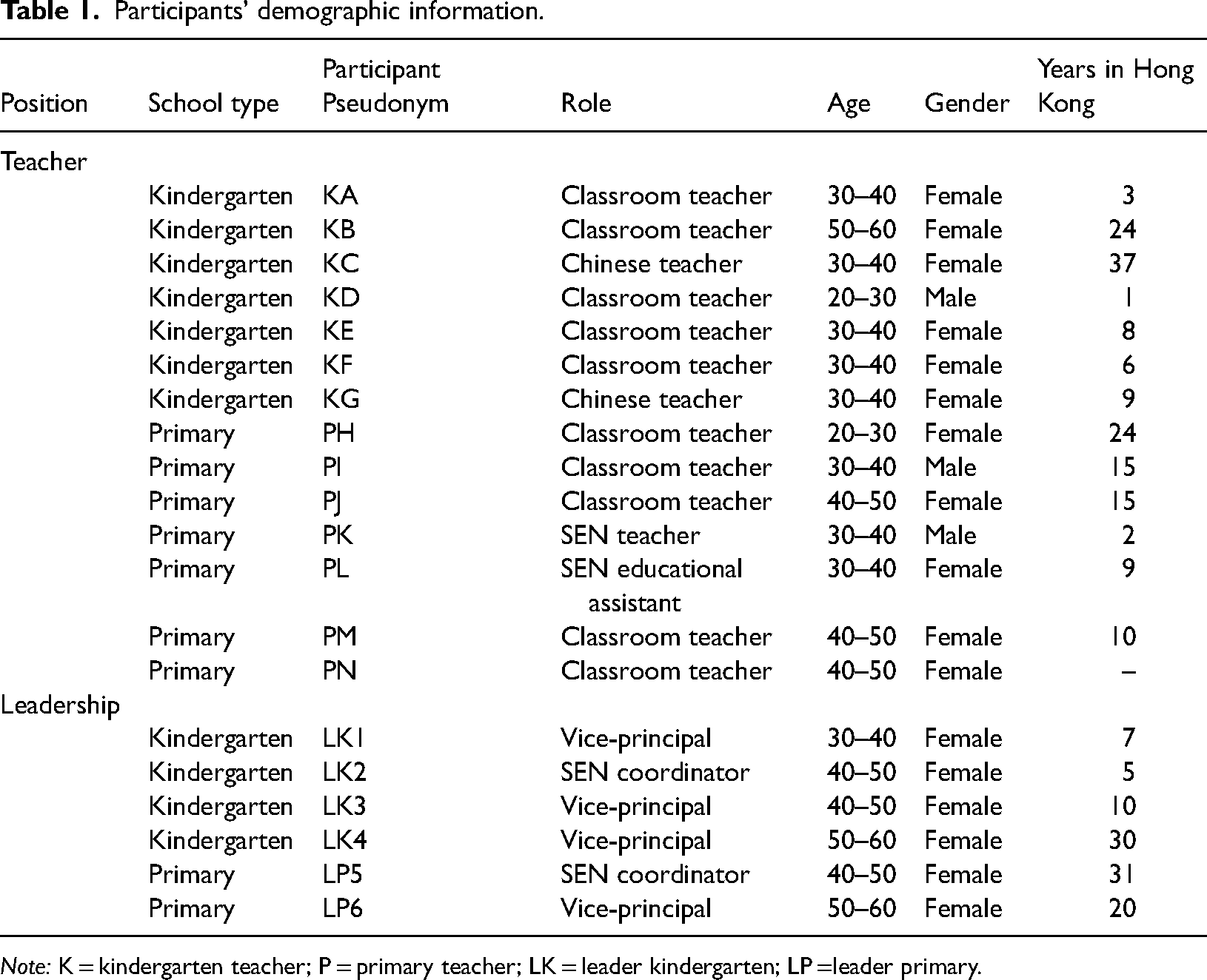
Note: K = kindergarten teacher; P = primary teacher; LK = leader kindergarten; LP =leader primary.
Data generation
Before the data generation, ethical approval was obtained from the Faculty of Education at the University of Hong Kong. Written and verbal informed consent was obtained from each participant before the interviews, assuring confidentiality and anonymity. Two instruments facilitated the data generation. First, a questionnaire was administered to gather the participants’ professional and demographic information and ensure that they met the selection criteria. Second, an interview protocol facilitated semi-structured interviews to explore the educators’ experiences of ERT. Semi-structured interviews were the most suitable for data generation as they enabled the researchers to gain insights into the participants’ lived experiences during ERT (Denscombe, 2021). The interview protocol consisted of open-ended questions, including the following:
What are some of the challenges you have faced during ERT? What are some of the opportunities you have experienced from ERT? How has prolonged ERT affected your socio-emotional well-being?
The first author conducted the interviews via the virtual platform Zoom in March 2022 during the fifth COVID-19 wave in Hong Kong. The interviews lasted from 30 to 60 minutes and were audio-recorded with the participants’ consent.
Data analysis
The data was analysed through thematic analysis (Clarke and Braun, 2017). First, the interview transcripts were generated using Otter.ai and reread with the audio recordings to correct misinterpretations and mistakes. Second, the transcripts were coded using the computer-assisted qualitative data analysis software NVivo. The analysis was guided by a combination of deductive and inductive coding (Creswell, 2018). The deductive coding was driven by digital well-being theory and organised into the domains of subjective, eudemonic and hedonic well-being, with the challenges (harms) and opportunities (benefits) of ERT as the overarching themes. Through the inductive coding, codes related to digital well-being emerged from the data (e.g. Zoom fatigue, sedentary lifestyle, positive outlook). The codes were then clustered into subthemes and themes, which both authors reviewed to ensure accuracy and rigour in reporting the findings. The participants’ quotes were included in the results verbatim and edited for grammatical correctness.
Findings
The findings were organised into two overarching themes based on the two research questions on the challenges (‘harms’) and opportunities (‘benefits’) presented by digital technology use during ERT, with several subthemes. The subthemes generated from the analysis were connected to the subjective, eudemonic and hedonic well-being domains, as suggested by digital well-being theory.
Challenges associated with digital technology use during ERT
The analysis showed that prolonged digital technology use during ERT had implications for educators’ subjective well-being in the social and emotional domains.
Changed nature of teaching: Social well-being
The use of digital technology during ERT represented a departure from traditional face-to-face teaching in early years education, and this changed nature of teaching affected the participants’ social well-being. Nine educators reported feeling disconnected from the community (i.e. colleagues, students and parents) due to the heavy reliance on digital technology during ERT and the school closures. The participants missed their daily face-to-face social interactions with colleagues, since Zoom was limited to structured meetings with few opportunities for spontaneous chat and interactions. They expressed concerns about the limitations of digital technology in maintaining social connections. According to KD: ‘We all have our challenges, personally and professionally, and it’s nice to be able to bounce them off one another, especially when they are the people that are teaching the same age group’. KB added: I don’t really like being at home. I like going to work. I like the whole social thing of being at work – interacting with the children and other adults and sharing ideas and problems. It is part of our daily lives as teachers and I think that we bounce off each other a lot. I miss that, as we don’t get that on Zoom because everybody wants to hurry up and get off Zoom. Let’s get this meeting finished and go.
The participants overwhelmingly reiterated their love for teaching. However, teachers reported feeling most effective and fulfilled in face-to-face classrooms and not in ERT. KD and PK were both relatively new to Hong Kong, with just two years of residence. PK shared: ‘Teachers are losing the energy and the motivation to be the best that they can be and that frightens me because I don’t want to be that teacher. I really, really love my job’. Similarly, KD commented: I love my job. I became a teacher to be with the children, not to look at them through a computer screen, so it definitely takes away a huge part of my job. That’s what I am trained for; that’s where you see the best of me, when I’m in the classroom, and that being taken away is tough and upsetting.
Physical and mental strain: Emotional well-being
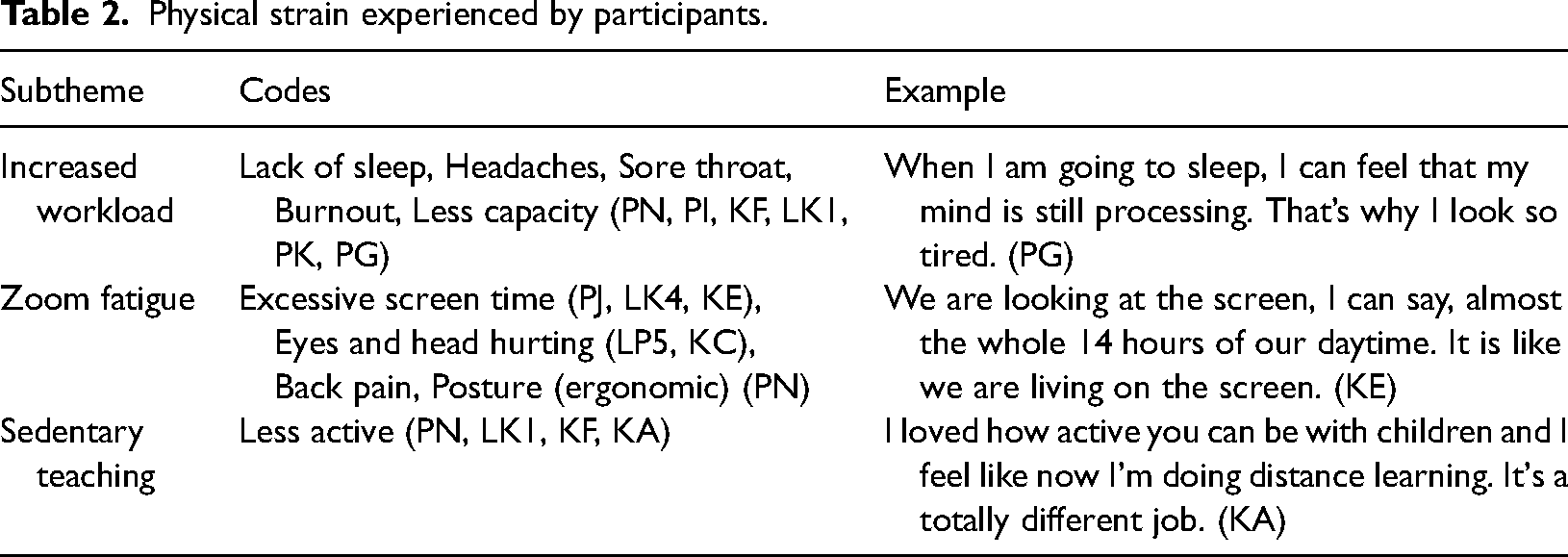
The participants experienced physical and mental strain due to the extensive use of digital technology during ERT, with implications for their emotional well-being. According to nine of the participants, ERT resulted in an increased workload and longer working hours, with excessive administrative and planning tasks. According to KE: ‘It is kind of a cycle that keeps going and it’s not like we finished today and it’s going to end. Every week, we keep doing the same thing again and again’. During ERT educators were required to prepare learning materials for students to use at home; upload instructional videos; review children’s submitted work on online platforms; prepare online timetables; respond to a high volume of emails; and write school reports. The participants also reported physical strain due to Zoom fatigue (and, more generally, excessive screen time) and the sedentary nature of online teaching. Table 2 presents a detailed analysis of the symptoms of physical strain reported by the participants.
Physical strain experienced by participants.
The participants also reported mental strain. For example, KG was Frustrated, so frustrated. I do not have enough patience to talk to my friends. We don’t have enough time. We are so busy, and we don’t talk for very long, even though they are in Hong Kong. Everyone just says, ‘Stay safe’, and that’s all. Teachers are experiencing immense fatigue during online teaching, with their capacity at less than 50%. We can all be doing more, but actually, at the moment, we just need to float above the water [i.e. successfully cope with the challenges of ERT].
Fluctuating modes of educational instruction: Emotional well-being
According to the analysis, the fluctuating modes of educational instruction (back and forth between ERT and face-to-face teaching) during the COVID-19 crisis posed challenges for the participants in coping with the uncertainty and effectively teaching and supporting children's needs (including SEN). These recurrent changes had implications for the participants’ emotional well-being. Their (positive) mindset also emerged in the analysis as a mediating factor in promoting well-being.
The harmful effects of prolonged digital technology use during ERT were evident when schools intermittently resumed face-to-face classes, as teachers struggled to support children’s needs effectively. Two of the participants expressed emotional exhaustion in managing student behaviours upon resuming face-to-face schooling. According to PK, a SEN teacher, SEN children required greater support in regulating their emotions (especially when in the playground) than in face-to-face learning before ERT. Managing the intense behavioural problems of students (and supporting their needs) left PI emotionally drained in face-to-face instruction. Thus, paradoxically, PI preferred teaching online as he experienced less emotional fatigue teaching with digital technology than during intermittent face-to-face teaching. He stressed: ‘I feel burnt out, tired and so exhausted. This obviously leaks into my personal life; literally every single day, there was another fire to put out in my classroom [referring to children’s behavioural issues]’.
According to the school leaders, the fluctuating modes of instruction required staff members to troubleshoot constantly, reducing their motivation for teaching: ‘We’ve got a very professional teaching staff, but you can see that there are times when they’re kind of teetering [unstable] a little bit’ (LP5). Amidst shifting instructional modes, seven educators also reported emotional fluctuations as they tried to cope with the frequent changes. PK highlighted: ‘I am a yo-yo. I am up and down depending on the morning when I wake up’.
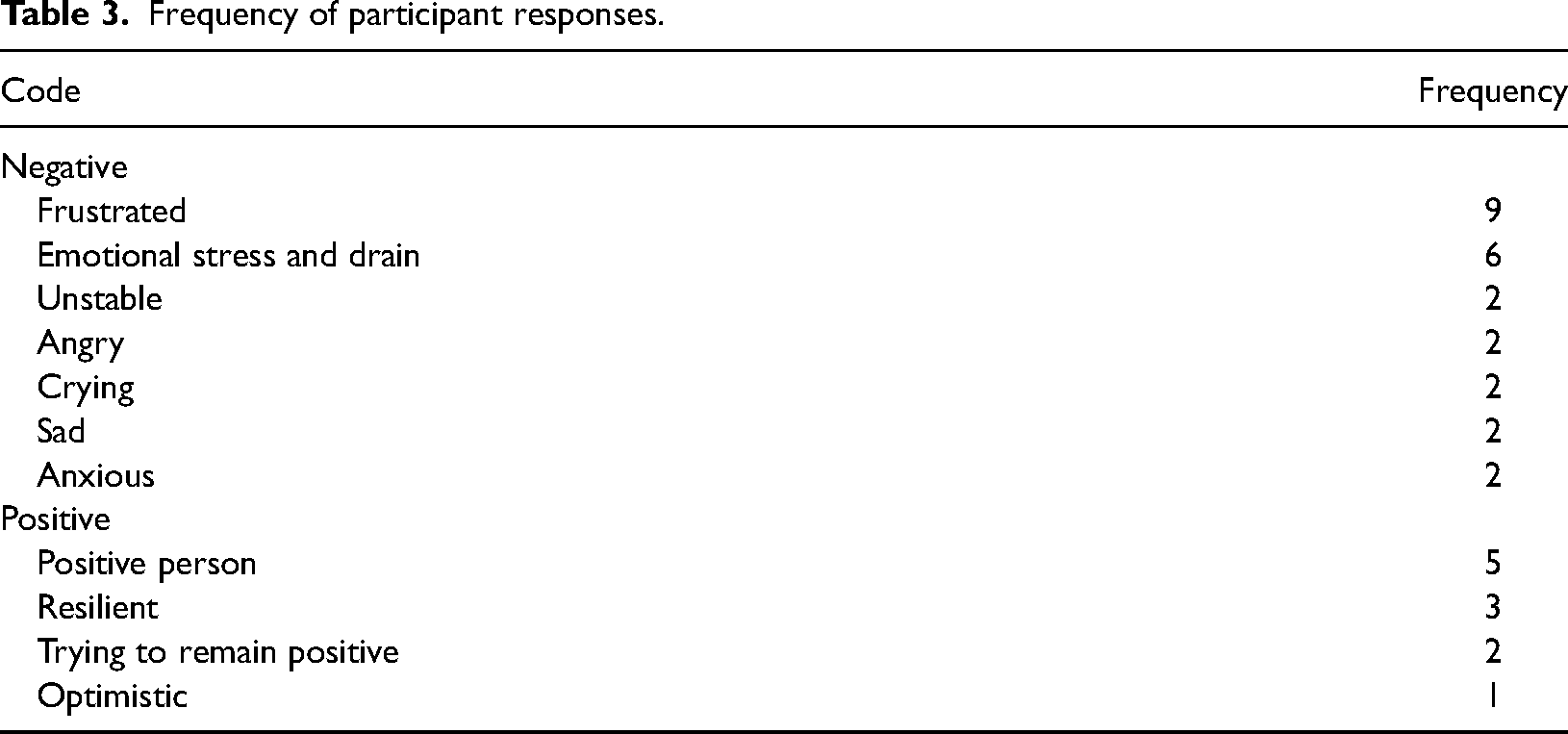
Despite the fluctuations and changes, five participants (KA, KD, PJ, PN, LK2) expressed feeling positive and resilient, taking it one day at a time: ‘My well-being was being resilient. I was being upbeat and just plodding along in a way of just getting on with it, just dealing with everything day to day’ (LK2). Another five participants (LP6, LP5, LK3, KB, PM), all aged 40–60, indicated that the COVID-19 fluctuations had minimal impact on their educational instruction. They expressed positivity and the importance of ‘looking for the good and understanding that everybody’s going through this in the world’ (PM). LP6 shared this positive outlook: ‘I am a pretty resilient person. I think many people are really affected. I don’t think I have been affected by COVID restrictions at all’. KB highlighted similar positive sentiments: I am quite lucky as I am normally a very positive, outward-looking person. It is okay. I am fed up with it now, but I am not going to let it get me down. I would be happy if it stopped, and it needs to stop [referring to the frequent changes].
Frequency of participant responses.
Delivering authentic curricula: Eudemonic well-being
ERT posed challenges for kindergarten and primary school teachers in delivering authentic curricula for young and SEN learners using digital technology, with implications for educators’ eudemonic well-being. The educators’ accounts of authentic curricula explicitly referenced the tenets of inquiry-based instruction from the International Baccalaureate (2025), which promotes student-centred, engaging, relevant and conceptual learning experiences. According to the kindergarten educators, teachers attempted to replicate face-to-face instruction during ERT by incorporating active hands-on elements such as music and movement, exploratory activities and creative videos supplemented by physical activities. However, five teachers still felt that ERT was limited in scope and inadequate for delivering all curriculum areas. KG commented: The virtual is so limited in activities for younger kids. It’s just so frustrating for me sometimes. Mostly, I do Chinese-language lessons. It's good for them to build their oral language. But for the rest of the parts [reading and writing], children are not making any progress.
Similarly, in primary school, children would independently ask questions and find answers through face-to-face inquiry-based teaching. In contrast, in ERT, ‘the whole thing about trying to develop curiosity and spark children, you just can’t do that. It’s really hard’ (PM). PM added that ERT lacked ‘the spontaneous teacher moments’ that young children experience in face-to-face learning and that feed into teachers’ eudemonic well-being. Instead, teachers needed to adapt their teaching, as noted by PJ: ‘We have had to change our style of teaching and learning. We’ve probably had to step away from that really rich, open-ended inquiry into more of traditional teaching’.
Leadership experiences: Eudemonic and subjective well-being
In managing digital technology systems during ERT, the school leaders reported supporting curriculum provision and staff well-being, which added strain to their eudemonic and subjective well-being. The school leaders were concerned and highly involved in ensuring that children’s online education was worthwhile and the curriculum met the needs of all children. At the onset of the pandemic, teachers were unfamiliar with ERT and online systems. Hence, the school leaders needed to motivate teachers to deliver a high-quality, robust curriculum using different digital technology platforms and systems. According to LK4: ‘It was hard to navigate and motivate some staff members at first, because online teaching was new for everybody to navigate’. LP5 added: ‘We had to ensure children have as worthwhile an experience as possible, their educational goals are continuing and that the curriculum is still vigorous’. This support inspired teachers to experiment with creative means to keep the curriculum engaging during ERT while using digital technology. According to LK3: The initial struggle for teachers was crossing the bridge, because you have to do things a little differently. But it was really fun and nice because everyone thought of how to keep the tenets of our curriculum alive in whatever we are doing.
In addition, the school leaders expressed a sense of interconnected well-being among staff, students and parents: I think my well-being has to be good to be able to support the staff's well-being, and the staff’s well-being has to be good to be able to support the children’s well-being, and my well-being also has to be good to support parents’ well-being. (LK2) Different staff members are feeling different levels of worry, anxiety, stress, and it’s so important to make sure that we are available, and sometimes we are stretched. I need two of me to get around to all the things I need to do. It’s so many hours in the day, and always wanting to make sure that everyone’s okay and if there’s anything that we can do to support. (LP6) It takes a lot of energy to be available for everybody. Everyone is stressed with personal, social, emotional and work things. Being that one person who is responsible for all of them, I felt I needed to be there to support everybody, so it can be exhausting. (LK3)
Opportunities associated with digital technology during ERT: Hedonic well-being
Digital skills and tech savviness emerged in the analysis as opportunities offered by digital technology during ERT, with positive implications for educators’ hedonic well-being. Most of the participants agreed that digital technology systems were established and had become familiar to educators by the fifth wave of COVID-19 school closures, making ERT easier than at the start of the crisis. However, at the onset of the crisis, it was harder: ‘Originally, it was a massive race against time to get stuff ready, to get stuff out [referring to online systems and learning] and to keep everyone happy’ (PN). Participants across all four schools shared that their schools provided initial support for teachers to set up online platforms. However, the teachers learned the day-to-day use of digital technology both independently and through collaboration with colleagues, who shared their technology expertise and online resources (e.g. videos, applications).
The ubiquity of digital technology during recurrent ERT led schools and educators to gain expertise in its use. As LP6 highlighted: ‘We are incredibly digital and tech-savvy; we were nowhere near close to being this tech-savvy before’. The participants felt that they were more efficient (due to reduced preparation time) and creative online (e.g. graphics, special effects for videos), thus changing the landscape of experiential-based education: ‘We have really unveiled a completely new side of learning’ (LK3). LK2 added: ‘With Zoom now, we have had a lot of practice. We have definitely got better routines for online learning, know how to engage children a lot better and support the parents’.
LP6 (aged 50–60), referring to herself as ‘old’, initially found digital technology difficult to navigate. However, reflecting on her two years of digital technology use during ERT, she identified personal improvement in her proficiency and shared: ‘Nobody is intimidated by it anymore. It’s made us all so confident. We understand how to use digital technology, and it improves us tremendously’. Some teachers, like PN and her colleague (both aged 40–50), also sought support from younger colleagues (aged 20–30) in using digital technology creatively.
Discussion
This research highlights the experiences of kindergarten and primary school teachers and school leaders during ERT in the COVID-19 crisis, a period marked by the prolonged use of digital technology in delivering early years education. The digital well-being framework (Büchi, 2024) guided the analysis of educators’ experiences of digital technology use during ERT in the domains of (digital) well-being. The findings reveal both harmful (challenges) and beneficial (opportunities) implications for educators’ digital well-being. In addition, the essential role of subjective well-being in supporting eudemonic functioning and hedonic life satisfaction emerged from the analysis. Furthermore, the results offer insights for preparing early years educators for effective digital technology use in post-pandemic teaching and future large-scale disruptions when ERT may be necessary again.
Limitations of ERT in delivering authentic curricula: Implications for digital well-being
As postulated by digital well-being theory, individuals’ interactions with digital technology can have harmful effects on subjective, eudemonic and hedonic well-being (Büchi, 2024; Vanden Abeele, 2021). ERT proved challenging for early years educators in delivering authentic and inquiry-based curricula that would have been student-centred, engaging, relevant and conceptual – all essential for engaging children meaningfully in early years teaching (International Baccalaureate, 2025; Nxumalo et al., 2020; Ramanathan et al., 2022).
The findings reiterate the significance of delivering authentic curricula in early years education that actively involve children. The interviewed educators considered face-to-face teaching essential, particularly for meeting the needs of young learners, including those with SEN. According to educators in this study, meaningful interactions with children in classrooms were the essence of teaching, yet these were absent in ERT, which limited educators’ capacity to teach effectively. The changed nature of teaching imposed by ERT and its fluctuating modes also contributed to diminished subjective, eudemonic and hedonic well-being by reducing educators’ motivation and teaching capacity.
Research underscores that poor teacher well-being can affect pedagogical effectiveness, potentially compromising educational quality and children’s developmental outcomes (Henry et al., 2023; Penttinen et al., 2020). Therefore, consistent poor (digital) well-being can have long-term adverse implications for early years education that must be mitigated. In the following sections, we recommend strategies to support and strengthen educators’ digital well-being, prepare for future large-scale disruptions when ERT may be necessary and build resilient education systems by strengthening the micro and macro factors identified in this analysis.
Protective measures for educators’ digital well-being during future large-scale disruptions
Based on the current findings, protective measures for educators’ digital well-being should be considered in future ERT. Although this study did not directly measure well-being using quantifiable scales, the educators’ reports and analysis suggest that the prolonged use of digital technology during ERT harmed their subjective well-being. Socially, face-to-face interactions with students, colleagues and parents remained irreplaceable, reinforcing their centrality to early years pedagogy and educators’ love for teaching. Emotionally, digital technology imposed physical and mental strain on the teachers and school leaders (Lau et al., 2022; Tan et al., 2025), implying direct links between digital technology use in ERT and deteriorating digital well-being, especially during the COVID-19 crisis (Abdul-Majied and Figaro-Henry, 2024; Anderson et al., 2021; Passey, 2021; Tan et al., 2025).
The analysis further indicates repercussions for eudemonic and hedonic well-being. While educators endeavoured to function positively, they faced heightened challenges and experienced reduced life satisfaction (Ryff et al., 2021). Compromised subjective well-being due to prolonged digital technology use posed further risks to eudemonic and hedonic well-being domains (Vanden Abeele, 2021). In other words, reduced subjective well-being was associated with lower self-acceptance, fewer positive relationships and diminished purpose in teaching – three dimensions of eudemonic well-being (Ryff et al., 2021). Furthermore, prolonged stress from fluctuating and altered teaching formats was linked to physical and mental strain and declining job satisfaction (Zhang et al., 2022). These factors compromised educators’ professional identity and weakened their motivation to teach, with implications for overall life satisfaction (i.e. hedonic well-being). As a result, effective early years teaching and support for young learners and their families was put at risk (Henry et al., 2023; Penttinen et al., 2020).
The repercussions of prolonged digital technology use during the COVID-19 crisis are evident from the analysis, raising an alarm with regard to early years education in future ERT. Considering the tenets of digital well-being theory can help identify protective measures and strategies for future large-scale disruptions when ERT becomes necessary again. Protective measures are dependent on the length and severity of the crisis and need to be reviewed and adjusted based on educators’ interactions with digital technology. During future disruptions, ERT must incorporate measures that reduce educators’ physical and mental strain. To achieve this, ERT instruction can be balanced between synchronous (live teaching) and asynchronous (pre-assigned tasks) teaching to prevent Zoom fatigue among educators.
The future provision of ERT also needs to take into consideration educators’ preferences and expertise in digital technology. Streamlining digital technology with user-friendly and familiar platforms can ease the frustration and workload associated with learning new complex systems. Digital technology must be easy and straightforward so that educators can set up ERT and provide high-quality instruction amidst the changes and disruptions of an ongoing crisis (Hodges et al., 2020). This will ensure that ERT is delivered to the youngest learners while preserving and promoting educators’ (digital) well-being in the midst of a crisis.
Building resilient education systems by strengthening micro and macro factors
From the educators’ accounts of the stress of ERT, durable lessons can be drawn for fostering their digital well-being towards building resilient education systems (Hodges et al., 2020). The interviews revealed that during digital technology use in ERT, micro factors (individual and situational aspects) and macro factors (social networks and society) stipulated by digital well-being theory influenced their subjective well-being (Büchi, 2024). For example, a few of the participants in the 40–60 age range described their mindset (personal outlook) as positive and resilient – an optimistic view that did not emerge among younger participants. This insight reinforces findings that more experienced teachers often have more effective coping mechanisms (Wiegerová et al., 2025). Conversely, the situational aspects of two younger educators who were relatively new to Hong Kong made ERT more difficult as they struggled to establish connections within their school communities. This situation exacerbated their stress levels with prolonged ERT. However, strong social networks (including peer collaboration and leadership support) emerged as vital macro factors in mitigating digital well-being challenges.
In future large-scale disruptions that may require ERT, subjective (and digital) well-being could be strengthened by leveraging these positive micro and macro factors to mitigate the harmful effects of digital technology. Structured mentorship programmes among staff could be implemented to facilitate knowledge-sharing and technological and emotional support. Experienced educators could mentor younger colleagues, fostering resilience and a positive outlook, and younger educators could offer older colleagues technical guidance and support in using digital technology. In addition, education departments and schools should prioritise consistent and stable policy guidance to minimise sudden changes in crisis-related restrictions. School leadership needs to ensure that educators receive empathetic and professional support in navigating the uncertainties of ERT, as demonstrated by the school leaders in this study. In addition, by implementing proactive rather than reactive well-being strategies, schools could adequately support educators’ (digital) well-being during future crises and disruptions. Over the longer term, these proactive strategies could minimise adverse teaching and learning outcomes for children in the early years and help build resilient education systems.
Cultivating digital competence for a robust and flexible pedagogical model in post-pandemic early years education
As highlighted by digital well-being theory, individuals’ interactions with digital technology can also positively contribute to the domains of subjective (Büchi, 2024), hedonic and eudemonic well-being (Vanden Abeele, 2021). According to the educators’ accounts in this study, extensive and recurrent ERT, along with the use of digital technology, enabled them to acquire digital competence. Digital competence involves possessing technical skills and using digital practices, applying digital technology and being motivated to engage with digitalisation (Ilomäki et al., 2016). The interviewed educators developed digital skills through extensive use of digital technology, which contributed positively to their digital well-being. The educators themselves identified the acquisition of creative technology skills as an overriding benefit of prolonged ERT.
Despite the initial challenges in adapting to digital technology during ERT (Abdul-Majied and Figaro-Henry, 2024; Seabra et al., 2021; Shin, 2022), by the fifth COVID-19 wave in Hong Kong, educators had acquired basic and creative digital technology skills (see also Archambault, 2021), expanding their professional adaptability and digital competence. Through the use of digital technology, self-motivation and peer support, educators gradually developed skills and confidence, leading to some beneficial results (Vanden Abeele, 2021). The gains align with key dimensions of eudemonic well-being (Ryff et al., 2021): environmental mastery (acquiring digital technology skills to navigate virtual classroom environments) as well as autonomy and personal growth (individual and collaborative lesson planning using a variety of digital technology systems and applications). If adequately supported and enhanced, these aspects can mitigate some of the harmful effects of digital technology use and foster healthy digital well-being.
Schools and education departments can play a critical role in enhancing these positive experiences by providing personalised training (Wong et al., 2025) to increase early years educators’ proficiency and confidence in using digital technology. Schools are encouraged to implement deliberate strategies for digitalisation and digital technology training to enhance the skills acquired by educators through ERT, rather than leaving their development as a by-product of a crisis. However, learning new technologies and acquiring digital competence can take time – the educators in this study gained familiarity and proficiency in creatively using digital technology over a period of two years of ERT.
Proactive and deliberate policies and school-wide initiatives can also help educators build an overall positive outlook and be future-ready for (a) creative, progressive and efficient ERT and (b) creative pedagogies blended with digital technology in early years education. Intentionally cultivating comprehensive digital competence in educators prepares them for future crises and assists in developing robust, flexible pedagogical models and educational practices that are truly future-proof. Future-proof educational practices that maximise the use of digital technology will promote positive digital well-being, leading to overall positive outcomes for early years education.
Conclusion
This study examined the digital well-being of Hong Kong early years educators during prolonged ERT in the COVID-19 crisis. Drawing on digital well-being theory (Büchi, 2024), both the challenges (harms) and opportunities (benefits) associated with extensive digital technology use during ERT were explored. However, certain limitations of this study need to be acknowledged. For example, the sample was drawn from Hong Kong private schools – a growing sector in early years education (Census and Statistics Department, 2024). These educators had access to the Internet and digital devices, and their experiences may have varied from those of educators at other types of schools serving different socio-economic groups (Wong et al., 2025). Additionally, the study relied on qualitative accounts rather than quantifiable measures of digital well-being. Future research could incorporate mixed-methods approaches to deepen the understanding of educators’ (digital) well-being.
Despite these limitations, the current analysis has helped illuminate the impact of digital technology use during ERT on the subjective, eudemonic and hedonic domains of educators’ digital well-being. The insights underscore the pivotal role of subjective well-being in interactions with digital technology to support eudemonic (positive) functioning and hedonic (overall) life satisfaction. The extensive use of digital technology during those unplanned, urgent, prolonged and recurrent periods of ERT compromised digital well-being.
During future large-scale disruptions and as an ongoing educational ethos, educators’ digital well-being and resilience can be strengthened by embedding the micro and macro factors identified in this study as protective measures in ERT. The cultivation of positive professional climates and other well-being benefits for educators can be achieved by fostering digital competence, encouraging collaboration across educators’ experience levels and promoting shared expertise among educators. In addition, personalised support and targeted training programmes may help promote digital well-being and build educators’ resilience and competence in digital environments. If intentionally cultivated, these skills and shared expertise can create robust and flexible pedagogical models that are future-ready for ERT should the need for it arise. The evidence from this study provides insights for education systems to future-proof educational practices and maximise the use of digital technology towards supporting educators’ positive digital well-being. Implementing these measures will contribute to overall positive outcomes for early years education.
Footnotes
Acknowledgements
Both authors have contributed to this research.

Ethical approval
Ethical approval was obtained from the Faculty of Education, The University of Hong Kong.
Consent to participate
Written and verbal informed consent was obtained from all participants. The data were pseudonymised to protect participants’ identities.
Funding
The authors received no financial support for the research, authorship and/or publication of this article.
Declaration of conflicting interests
The authors declare no potential conflicts of interest regarding the research, authorship and/or publication of this article.
Data availability
The data analysed and reported on in this study is available from the corresponding author upon reasonable request.