




Abstract
Although early childhood programs designed for Indigenous children exist in Canada and elsewhere, there remains a need for program development and implementation to be sustainable, evidence-based, and foundationally grounded in (rather than peripherally inclusive of) Indigenous cultures and languages. Overall, little is known about how to develop sustainable, communitygrounded early childhood programs that address the structural inequities and health disparities that disproportionately impact Indigenous children and families. The purpose of this paper is to describe the development of a community-based prenatal to preschool initiative that centralizes Indigenous knowledge and cultural values. Through this paper, we describe the process of codeveloping the Early Years (EY) program in Maskwacis, Alberta. We provide a description of program partners, summarize existing programs used to shape the EY program model, and outline the program model. Finally, we discuss relevance to other communitybased initiatives across sectors, and learnings that are transferable to other community contexts.
Indigenous (i.e., First Nations, Inuit and Métis) peoples and communities have the knowledge that is needed to improve the health status of their own children, beginning prenatally and during the earliest years of life. Early childhood lays a critical foundation for subsequent growth and development, as well as later health and wellness (Clark et al., 2020). Stable, responsive, nurturing relationships and stimulating environments can provide lifelong benefits in terms of learning, behaviour and health, while poverty, abuse and neglect can weaken the developing brain and result in chronic disease (Liming and Grube, 2018; National Scientific Council, 2004; 2005; Roos et al., 2019; Shonkoff et al., 2009). Against the backdrop of colonialism, investment in quality early childhood intervention is necessary to launch the potential that all children are born with (Halseth and Greenwood, 2019; Kim, 2019; Smylie and Adomako, 2009). In particular, Indigenous children have been removed from their homes, families and communities through historical and ongoing colonial policies and practices such as residential schools, the 1960s scoop and the child welfare system. Disruptions to traditional ways of life, including parenting and childrearing practices, have resulted in devastating health inequities and layers of structural racism towards Indigenous children and families, which must be addressed in early learning programmes and systems of care (Gerlach and McFadden, 2022; McKenzie et al., 2016).
Importantly, nurturing the healthy development of Indigenous children is complex, requiring the weaving together of community-led innovation and scientific research, as well as the fundamental recognition that, although early childhood programmes designed for Indigenous children exist in Canada and elsewhere, there remains a need for programme development and implementation to be sustainable, evidence-based and foundationally grounded in Indigenous cultures and languages, rather than peripherally inclusive of Indigenous perspectives (Greenwood, 2016; Taylor, 2017). Overall, little is known about how to develop sustainable, community-grounded early childhood programmes that address the structural inequities and health disparities that disproportionately impact Indigenous children and families.
The purpose of this paper is to describe the development of a community-based prenatal to preschool initiative that centralizes Indigenous knowledge and cultural values in the context of child well-being. Through this paper, the process of developing the Early Years (EY) programme is described, and the main tenets of the EY programme model are shared. We begin by providing a description of the programme partners. Next, we summarize existing programmes that were used to shape the EY programme model, and subsequently outline the programme model in detail. We end with a discussion of the programme model in terms of key elements, relevance to other community-based initiatives across sectors, and learnings transferable to other community contexts.
Development of early years programming
Identification of the need to focus on early childhood development
For over 10 years, the Martin Family Initiative (MFI) programmes have aimed to strengthen educational outcomes for Indigenous children in elementary and high school. Given the robust body of research linking poor education, health and social outcomes to adverse childhood experiences (e.g., Felitti et al., 1998; Finkelhor, 2020), MFI leadership began to consider the earliest possible point at which child well-being could be addressed. What began to emerge was a deeply hopeful story: that the limitless potential of Indigenous children could be launched by supporting prenatal and early childhood development through leveraging the strengths and wisdom that already exist in their own communities. This narrative also aligned with the Truth and Reconciliation Commission’s (2015) Call to Action #12 ‘We call upon the federal, provincial, territorial, and Aboriginal governments to develop culturally appropriate early childhood education programs for Aboriginal families’ (p. 2) and the United Nations Declaration on the Rights of Indigenous Peoples (UNDRIP; 2008) recognition of the rights of Indigenous families and communities ‘to retain shared responsibility for the upbringing, training, education, and well-being of their children’ (p. 5).
Once the need to focus on early childhood development was identified, a multi-pronged approach to programme development was undertaken. The purpose was not to prove that early childhood programming was important or that it works, but to show that it was possible to build and deliver early childhood programming in a way that is adaptive, culturally responsive and Indigenous-owned.
Embracing Indigenous knowledges and multiple forms of expertise
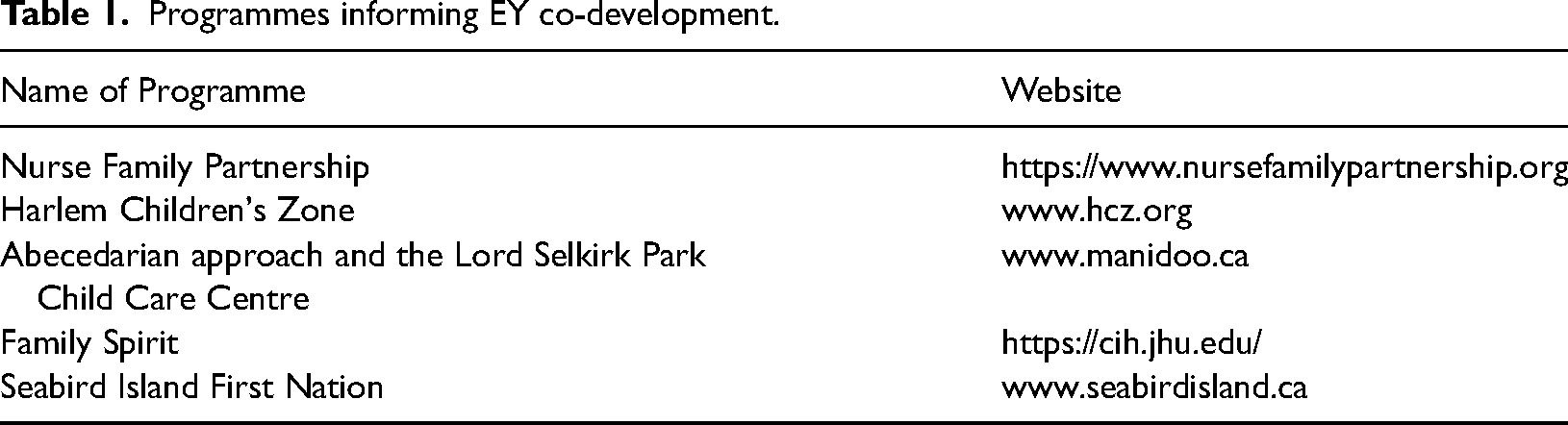
A broad literature and environmental scan revealed that home visitation approaches represented a promising way forward. A scan also made clear that no leading culturally grounded home-visiting and early childhood development programme model existed at a national level for Indigenous children and families in Canada. Therefore, the process of programme development did not begin with one specific model, nor was it driven by a single early childhood expert or subject area. Rather, MFI drew on multiple forms of expertise in Indigenous health, early childhood development and education and Indigenous education. One of the authors (CF) began programme development by exploring available evidence about home visiting and early childhood development, consulting with leading experts in relevant fields, and learning from successful, evidence-based programmes to shape the development of EY programming. Although select programmes provided key insights for development of the EY programme model, not all programmes were drawn on equally or in the same ways; some programmes described below, such as the Nurse Family Partnership, have an extensive literature base while others are community-based innovations. These key programmes are described below in terms of their integration into EY development. In addition, Table 1 lists each of these programmes along with respective websites where additional information on these programmes can be found.
Programmes informing EY co-development.
Nurse Family Partnership
The Nurse Family Partnership was initiated in Colorado in the 1970s to support first-time parents through home visits by a Registered Nurse (Nurse-Family Partnership, 2021). The programme's strong evidence base and resulting popularity have been credited with the rapid growth in the number of home-visiting programmes across North America. In this way, the Nurse Family Partnership provided inspiration for the initial EY as a programme that centres around home visits.
Harlem Children's Zone
The Harlem Children's Zone is a non-profit organization that offers centre-based child and parent programming in Harlem, New York City. Harlem Children's Zone was one of the first initiatives that one of the authors (CF) visited, where she met with and learned from the organization's leadership. Harlem Children's Zone grew directly from community members, and their approach to community-based holistic health and education served as an example for the EY.
Abecedarian approach and the Lord Selkirk Park Child Care Centre
While developing the EY, CF also spent time at the Lord Selkirk Park Child Care Centre, part of the Manidoo Gi Miini Gonaan organization in Winnipeg, Manitoba. The Centre serves the largest social housing complex in the city, with a large Indigenous population, and is the first in Canada to fully implement the Abecedarian approach, which has evolved into a set of teaching and learning strategies for children from birth to age five (Campbell et al., 2002; Koshyk et al., 2021; Stevens et al., 2019). The focus of the Abecedarian approach on language development and play-based learning influenced development of the EY Toolbox cards, described below. Although the structure and content of the EY Toolbox cards have been further developed for cultural relevance, both the Abecedarian learning games and the Toolbox cards feature simple activities that parents can implement with their child to support their development.
Family Spirit
Family Spirit is a culturally appropriate home-visiting programme developed at the Johns Hopkins Center for American Indian Health in Baltimore, Maryland. Family Spirit employs community-based paraprofessionals to visit and support young families through the first three years of their child's life, focusing on parenting and maternal health (Walkup et al., 2009).
CF engaged with the programme by observing Family Spirit training and meeting with the programme's coordinators. The Family Spirit programme provided inspiration for creation and development of the EY curriculum. In line with the Family Spirit programme, EY visits are family-led and respectful of individual families’ living situations, with a balance between covering pre-planned topics and exploring emergent areas for individual families. The EY also drew from the Family Spirit model in employing community-based paraprofessional staff.
Seabird Island First Nation
Seabird Island is a First Nation community in British Columbia, Canada that offers extensive maternal health programming. CF travelled to Seabird Island First Nation several times and spent considerable time learning from the Health Director.
Most relevant to the EY, Seabird Island runs a pre- and postnatal home-visiting programme, the Kwiyo:s or Respected Aunties programme. Kwiyo:s, community-based staff trained as doulas, are paired with pregnant women from the community, providing mentorship and support to parents through the prenatal period up until the child is two or three years old. The community health centre also runs weekly pre- and postnatal circles where families connect with each other and with health professionals. Transportation is provided and parents are provided with a gift to compensate for their time and travel. The community also has strong early childhood education programmes, including the ‘Bear Bus’, which is a retrofitted school bus transformed into a preschool on wheels. Owing to the generous provision of advice, elements of Seabird Island's home visitation, talking circles, the Bear Bus and community-based staff informed and guided EY development. At the time of this paper, the former Seabird Island Health Director continues to serve on the EY External Advisory Committee.
Partnering for the co-development process
After coming to understand the above initiatives and their supporting evidence, MFI came together with Ermineskin Cree Nation leadership, Maskwacis Education Schools Commission and Maskwacis Health Services representatives for discussion. Before describing the co-development process, a brief description of partners is provided below.
The Maskwacis community
The Maskwacis community consists of four First Nations, each led by a separate Chief and Council; these include Ermineskin Cree Nation, Samson Cree Nation, Louis Bull Tribe and Montana First Nation. Maskwacis has a total population of approximately 19,000 people and an annual birth rate of approximately 197 (2019–2021 average). The community is located roughly 100 km south of Edmonton in central Alberta, Canada. Serving all four Nations are a central health organization (Maskwacis Health Services) and education authority (Maskwacis Education Schools Commission), both key partners in the development and implementation of the EY in Maskwacis.
Herein, we describe the development and implementation of the EY as originally piloted in Maskwacis. When the pilot programme launched in 2018, it served only Ermineskin Cree Nation members. Due to interest from the other three Nations, the programme expanded in 2019 to serve all four Nations that make up Maskwacis. At the time of writing, EY programming has been expanded to additional communities across Canada (described more fully below), and programme development and implementation have continued to evolve in unique ways depending on the needs of specific communities. Therefore, programme development and implementation as described in this paper are specific to the Maskwacis EY programme, although programme implementation is uniquely evolving in additional communities with programme expansion.
The Martin Family Initiative
The Martin Family Initiative (MFI) is a non-profit organization in Canada founded on the belief that all Canadians have an obligation to work together to create the highest-quality opportunities for Indigenous children and their families. MFI works hand in hand with Indigenous peoples towards the development of systemic solutions grounded in the lived experiences and cultural contexts of families and their communities. MFI's programmes aim to strengthen Indigenous education across the spectrum of learning: support for parents and young children in their earliest years of life through EY programming, literacy in First Nations elementary schools, entrepreneurship programming at the elementary and high school level, adult financial literacy and mentorship programming for Indigenous students to pursue post-secondary education.
Situating the authors
Each of the authors of the current paper has different relationships to the community and to the EY programme. In particular, authors CF and BK first applied together, in partnership with community, for funds to initiate a pilot of the EY programme. Author CF is of settler background from the traditional territory of the Mi’kmaq people, also known as Nova Scotia. In her role with MFI, CF has been an invited guest to Maskwacis and formed strong relationships in community through the co-development process described herein. Author BK is also of settler background. As a neuroscientist who has worked at the University of Lethbridge for 48 years, much of BK's research has focused on the effects of stress on brain development, which led to discussions with MFI regarding the intersections of colonialism with brain development, in turn leading to the partnership from which the EY programme grew. After the EY programme was launched, author MT was invited to begin helping to guide the research and evaluation of the programme as an Indigenous scholar who had worked with the Maskwacis community for several years prior on other projects. Additional MFI authors include JW, who is the MFI evaluation coordinator and a white, Canadian-born settler living on unceded Anishinaabe Algonquin territory (Ottawa); and JH, who is the EY Director and a settler with a long-standing interest in working with and for Indigenous communities (for example, as a former Director of Policy for Indigenous Services Canada). Authors CF, JW and JH from MFI, although physically located across the country, have each spent years working with, and establishing and maintaining relationships with, EY staff and community members in Maskwacis. In addition, EY staff authors include HD and CR. HD is the Maskwacis EY programme manager and a settler who has worked as a community health nurse in Maskwacis for over two decades. CR, who is Saulteaux, is also a community health nurse and Maskwacis EY Family and Cultural Coordinator who has worked in Maskwacis for the past 16 years. Finally, authors RG, from the University of Alberta, and BF, from the University of Toronto, are both settler scholars who have worked in partnership with communities for decades, and who lent their scientific expertise throughout programme development. Collectively, we hold relationships with community partners that extend beyond grant timelines and that reflect deep and ongoing commitments to uplifting and advocating alongside Indigenous children and families.
Initial steps in the co-development process
Ermineskinleadership had previous involvement with MFI through the Model Schools Literacy Programme and expressed a desire to create programming for their children before school entry. Although Ermineskin was involved in the initial co-development process, the other three Maskwacis Nations expressed interest in the programme approximately a year into the programme's launch and thereafter joined the ongoing co-development process (see Figure 1 for a programme development timeline). Discussions centred around the programmes run by other organizations that MFI had visited across North America, and how these related to community priorities with respect to helping their children thrive. Not surprisingly, priorities were aligned with those that all parents generally have for their children – love, attachment and stimulating environments, for example. The key to building EY programming from the ground up was deeply listening to community perspectives on how these priorities could be addressed. Thus, the co-development process was not prescriptive or modelled after a single programme; this allowed programme principles, priorities and activities to be emergent and grounded in community.
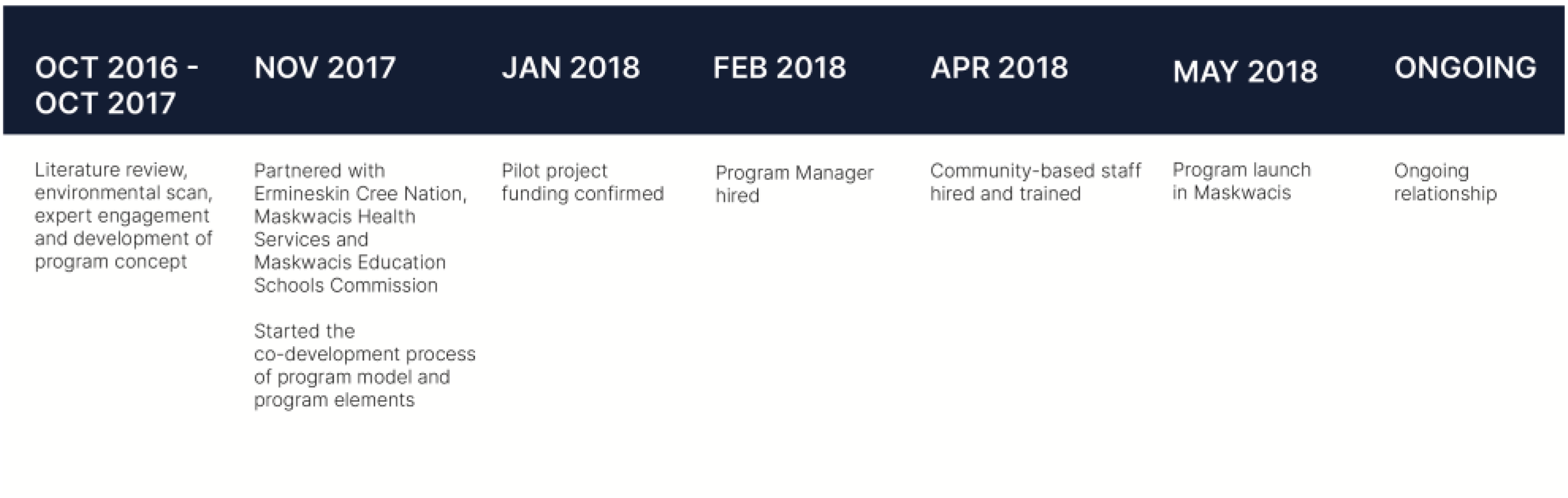
Early Years programme development timeline.
As a result, CF spent a considerable amount of time in the community developing relationships. As relationships grew, so too did the investment of community members in developing and launching the EY, and key representatives from Maskwacis Education Schools Commission, Maskwacis Health Services and Ermineskin Cree Nation leadership came to the table. As part of the programme co-development process, meetings were hosted in the community, and cultural protocols were closely followed (e.g., sharing meals, providing honoraria to Elders and community leadership, modelling agendas after other community meetings). In short, spending time in the community, prioritizing relationship building, following community and cultural meeting protocols, and building the programme from the ground up were key strategies for co-developing a culturally grounded programme model. In addition, the development process was integrally informed by Cree culture and traditions, elements of which are described more fully below.
The EY programme model
EY programming was developed by weaving together community wisdom, guidance and expertise with the tenets of evidence-based, innovative programme models created based on EuroWestern scientific knowledge. EY programming aims to ensure a strong continuum of care beginning prenatally with home visiting, extending through the first two years of a child's life. Support continues after the child's second birthday with centre-based preschool programming, continuing until the child enters early childhood education or Head Start programming. The programme is led by Visitors who are community members, and who are also often parents and/or grandparents. In the sections that follow, we describe the key elements of the EY programme model, including its structure (home visiting, preschool programming and group gatherings), resources (community-based staff, the Understanding the Early Years Course, Toolbox cards, weekly resources, transportation and programme space) and the overall EY approach (programme principles, research and evaluation, and sustainability).
EY programme structure
Home visiting
The Maskwacis EY programme, which begins prenatally, is structured around home visiting (see Figure 2). Beginning when an expectant mother enters the programme, community-based staff, many of whom are mothers themselves, are paired with pregnant mothers and new parents to walk alongside them and their families in a home-based setting. Through weekly home visits and regular check-ins, Visitors focus on establishing consistent, caring relationships with parents and families, and guiding parents and families through their child's first years of life.
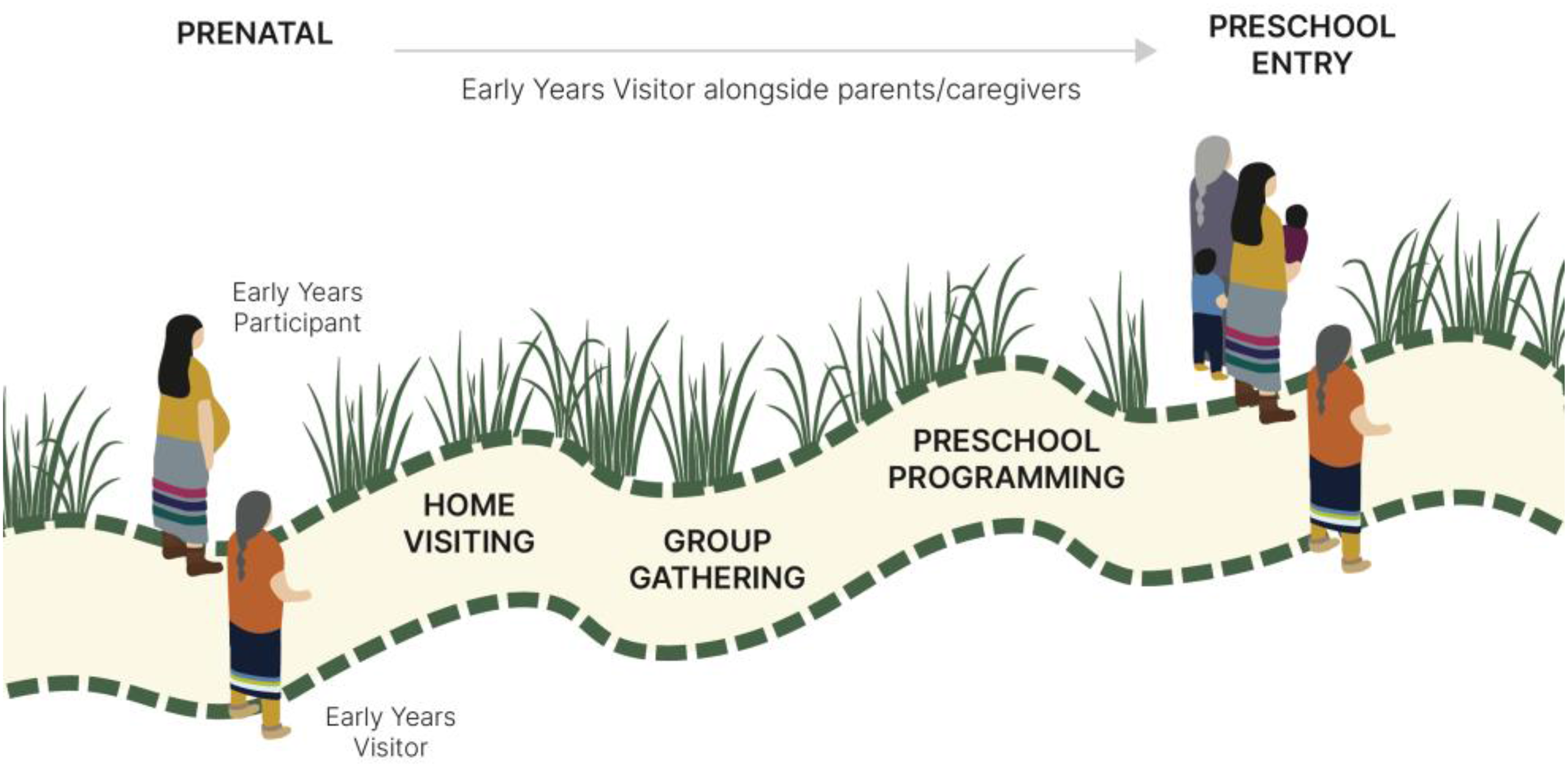
Early Years programme structure.
Preschool programming
Once children reach the age of two, they transition out of home visiting and into centre-based preschool programming, which takes the form of drop-in programming and the Get Ready for Preschool (GRP) programme.
Preschool drop-in programming offers opportunities for parents/caregivers to spend time with their children in the child play space at the EY building, and for children to engage in play-based activities with peers and EY staff. GRP focuses on supporting children as they continue their early learning journeys in preparation for school. While spaces are available in the community at the Head Start centres, they have been historically underutilized. During the eight-week GRP programme, children and their parents/caregivers participate in structured and unstructured activities to explore a variety of parenting strategies as well as developmental skills that will support their child in preschool programmes.
In addition, inspired by the Bear Bus in Seabird Island, the EY developed a ‘Play and Learn Bus’, which is a renovated school bus. Goals of the Play and Learn Bus are to encourage outdoor play, foster engagement in cultural programming including smudging, storytelling and Cree language, bring natural elements into the play space, and extend safe, engaging learning to happen outside of the bus. The Play and Learn Bus is driven throughout Maskwacis so that children can attend early learning programming close to where they live.
Recognizing that quality childcare starts with Early Childhood Educators, the EY also engages with the services currently available in the community such as daycares, preschools and Head Start programmes, to align and enhance services through professional development and mentorship. For example, learning resources developed for the EY are offered to other early childhood professionals in the community. This engagement supports communities to remain current on research-based best practices, strengthen existing skills and collaborate with other programmes.
Group gatherings
Group gatherings evolved as another critical programme element. They began as ‘talking circles’, and the name was changed to reduce expectations that attendees were required to verbally share. Although group gatherings were initially intended to be mostly educational, it was quickly recognized that participants were attending group gatherings primarily for socialization opportunities. In response, the programme began to organize gatherings focused on social and cultural, rather than strictly educational, activities. In addition, meals were always shared at group gatherings to facilitate a sense of community. Moreover, based on participant feedback, cultural activities such as sewing ribbon skirts and beading were added to group gatherings. In addition, an anonymous comments box was made available to participants so that programme staff could demonstrate accountability by making adjustments based on feedback.
Although group gatherings were originally intended for mothers, the invitation was extended to the rest of the family so that partners and all children could attend. Having a dedicated space for group gatherings was important. Once the EY building was secured, participants reported feeling increasingly welcomed into group gatherings and comfortable in the physical space. Transportation to groups was also provided, essential for participants who did not have access to their own vehicle.
EY programme resources
Community-based staff
At the heart of the EY are community-based staff (see Figure 3). In Maskwacis, these include a Programme Manager (Author HD), a Family and Cultural Coordinator (Author CR), a Recruitment Coordinator, a Preschool Coordinator, Visitors and administrative and support staff. All staff are either from the community or have strong relationships with the community and all but three are Indigenous women (two staff members are Indigenous men and one staff member is a non-Indigenous woman who has worked in the community for over 20 years). Of note, the Family and Cultural Coordinator has become essential within the programme, sharing supervisory responsibilities with the Programme Manager, and providing a specific cultural focus: organizing cultural professional development for staff, arranging cultural group gatherings for programme participants and connecting the programme with Elders and Knowledge Keepers.
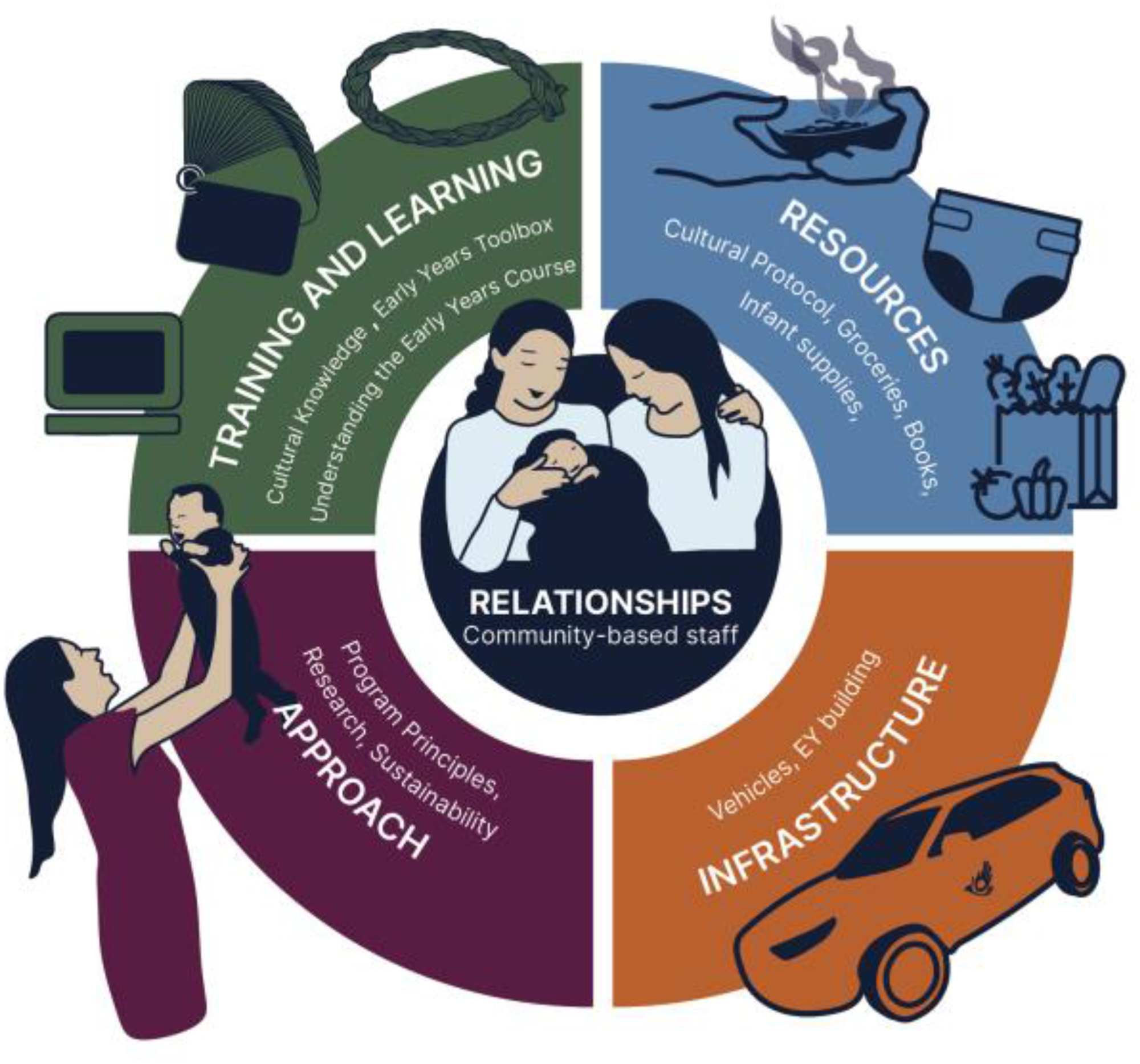
Early Years programme resources and approach.
In addition, Visitors are the key drivers of the programme. They are intentionally selected for their commitment to their community and passion for child and family well-being. Thus, recruitment and hiring focus on experiential knowledge rather than formal education. Each Visitor has a caseload of 10–15 families, allowing for the development of strong relationships between Visitors and families, critical for facilitating programme success.
From its outset, the EY has followed Maskwacis Health Services hiring practices and staff management policies. The EY Programme Manager was selected by Maskwacis Health Services leadership, and a committee was formed to hire the programme's first Visitors; the committee consisted of the EY Programme Manager (from Maskwacis Health Services), the EY Director (from MFI), Maskwacis Health Services Human Resources staff and additional Maskwacis Health Services staff (often the Community Health Manager) who were also community members. This helped to ensure that the programme's first staff members were well suited for their roles and known within their community. The programme invests in staff through training and ongoing professional development tailored to unique community needs and responsive to Visitors’ feedback.
Understanding the Early Years course
All EY staff take the Understanding the Early Years (EY-1) course, a 45-hr training course that weaves together community-based expertise around birth and child-rearing practices with current evidence about early child development. The first iteration of the course was developed in collaboration with Red River College in Manitoba. EY-1 was revised and expanded by Dr. Margo Greenwood, Indigenous scholar and early childhood educator who supports the EY by sitting on the programme's External Advisory Committee. The updated course further facilitates the co-development of course content and centres the voices of community Elders, Knowledge Keepers and other experts throughout delivery, with value placed on the multiplicity and diversity of learners’ knowledge. This encourages learners to draw from their experiences in making meaning of the course and applying content to their specific contexts. For example, while completing the course, many staff comment on ways in which content relates to the children in their own lives. Throughout the course, learners also complete reflection activities that relate course content to their own learning journeys as Visitors and community members.
Toolbox cards
During the earliest days of programme development, a set of draft Abecedarian-inspired cards were initially created; Toolbox cards outline simple, easily understood conversation topics, activities and information about early learning and child development. After seeking feedback on each card for cultural and contextual relevance, modifications were made, and the resulting set of 80 Toolbox cards reflected cultural language and imagery, with enhanced cultural and community relevance. A graphic designer redesigned the original drawings to include integral aspects of Cree culture such as braids on children (which exemplify cultural pride and heritage), ribbon skirts (which, in some interpretations are worn by Indigenous women to reclaim identity, honour our ancestors, and celebrate cultural traditions) and drums (which are considered a sacred instrument by many Cree people). The cultural imagery and language included on Toolbox cards come directly from Maskwacis community members, including Visitors and Elders, who decided on the importance of including these elements on each card. Since the initial development, the set of cards created for families with 0–24-month-old children has grown to 160 cards and a set of 45 cards for 24–48-month-olds has also been created. The Toolbox is revised annually to incorporate the perspectives and feedback of the Indigenous staff using the cards on a daily basis.
Home visits are generally structured around a Toolbox card. Each has a title and contains a key takeaway message written in both English and Cree, as well as a brief summary of the topic presented. Although ideas and suggested conversation prompts are included on each Toolbox card, Visitors present Toolbox cards in their own words in ways that are responsive to each unique family.
Weekly resources: Groceries, books, infant supplies
In recognition of the time parents/caregivers and families commit to the programme, Visitors bring weekly resources to each visit. Weekly packages include grocery items accompanied by a suggested recipe, infant supplies such as diapers or formula, and intentionally selected children's books, approximately half of which are written by Indigenous authors and some of which are written in Cree. Books are intended to support early language, literacy and exposure to traditional language.
Programme vehicles
Vehicles in rural and reserve communities are essential to a home-based service delivery model. While vehicles were initially included in the programme model solely for Visitors to travel to participants’ homes, it was quickly identified that the programme needed to offer transportation to participants as well. Many participants lack access to reliable transportation, which imposes a barrier to accessing services such as prenatal appointments, medical care, EY group gatherings or registering their baby with their band. Through offering transportation, the EY is able to eliminate this barrier and support families to access services, experience healthy pregnancies and be increasingly connected to the community.
EY programme space
Having space dedicated solely to the EY has been essential for programme delivery. The programme started with a small space in Ermineskin but following expansion to all four Nations of Maskwacis, a larger, dedicated space was required. The recently built EY building has office space for Visitors and staff, group gathering space, a preschool playroom, sewing room and full kitchen. The programme has also established satellite offices. As is the case in many small communities, there is no comparable space in Maskwacis for parents and families to come together in a safe and supportive environment to build relationships with other families and support their children's development.
Following the programme's launch, participants and staff identified a need for providing additional support to families for participating in cultural ceremonies. In particular, it was voiced that some families may be unsure of the protocols around engaging in cultural ceremonies or may lack the monetary resources required (e.g., funds for tobacco offerings, Elder honoraria). In response, EY staff engaged with community Elders and Knowledge Keepers to create a cultural building and construct teepees outside the EY building. With ongoing involvement of Elders and Knowledge Keepers, the cultural building facilitates cultural learning and provides space for ceremonies.
Overall EY approach
Programme principles
EY programming was developed around a set of six key principles that emerged from the above-described research and consultation. These include: support and resource families prenatally; put the parent–child relationship first, beginning prenatally; build strong relationships between mothers and other primary caregivers and the Visitor; emphasize language development as a critical priority for young children; address the range of adversities and challenges faced by families; and employ a strength-based approach. These principles are enacted through the key programme elements described above, and are also threaded through the programme's research and evaluation.
Research and evaluation
The EY was initially funded as a pilot project through a Brain Canada Foundation research grant. Leadership of the research aspects of the project have been guided by faculty members from two universities with complementary areas of expertise; author BK is a senior neuroscientist who has investigated the neural mechanisms underlying improvement from adverse perinatal experiences, among other areas, and author MT is a Métis academic with expertise in community-based participatory research and a child psychologist.
Research and evaluation are cornerstones of EY programming, foundational for tracking programme progress and for making adjustments accordingly. Impacts of the programme are being researched with respect to participant and community engagement; supporting healthy pregnancies and maternal wellness; enhancing children's language development and overall school readiness; providing play-based learning opportunities for children; enriching children's pride in identity and culture; and strengthening parenting capacity and family well-being. These goals have evolved since programme inception and are community-defined, along with methods for measuring the achievement of these goals. For example, EY Visitors decided on the specific caregiver self-report tools that have been implemented to measure parental stress (Perceived Stress Scale; Cohen et al., 1983), social supports (Social Provisions Scale; Cutrona and Russell, 1987) and cultural connectedness (Cultural Connectedness Questionnaire; Snowshoe et al., 2015). Visitors also decided, with the researchers, on the process for administering these tools. In particular, Visitors provide hard copies of these three self-report tools to participants every three months. Participants complete the tools by hand, after which Visitors enter them into the EY database and follow up with participants regarding any items of concern (for example, if a participant endorses an item related to high stress). In addition, open-ended items on the Cultural Connectedness Questionnaire are used to inform the content of group gatherings (for example, if participants provide feedback that they would like to learn how to sew moccasins). Overall, outcome measurement involves multiple qualitative and quantitative methods, with health, social services, education and child development data collected for an intervention and comparison group. In addition, the perspectives of EY staff, participants and stakeholders are gathered through surveys and interviews.
Critical to EY evaluation is the EY Impact site, a programme-specific data-collection and case-management tool developed by MFI. The EY Impact database allows EY Visitors to view participants’ profiles, add visit notes, enter parent responses to self-report tools and track deadlines; thus, the tool has been key for both case management and programme evaluation. On a monthly basis, the EY evaluation coordinator from MFI, author JW, extracts reports of programme progress from the EY database (e.g., number of visits, proportion of prenatal participants) and provides these reports to the programme manager, allowing for data to inform programme delivery on an ongoing basis. Reports specific to each of the four Nations are also shared with representatives from each Nation on a monthly basis. In this way, the EY fosters an evaluative culture, where staff and the programme are in a constant state of evolution, and programme decisions and adaptations are reflective of real-time data and lived experiences. This evaluative culture allows for the programme to remain accountable to community members by prompting ongoing reflection regarding programme trends and feedback.
Sustainability and expansion
From the beginning stages of EY development, sustainability has been a top priority. Although the initial pilot project implemented in Ermineskin Cree Nation was funded for a five-year period through Brain Canada Foundation, with funds provided to an academic institution, funds were transferred to Maskwacis Health Services so that the community could hold funds for programme implementation. Due to interest from the other three Nations of Maskwacis, MFI supported all four Nations to successfully apply to Indigenous Services Canada for sustainable federal funding. This funding commitment has established an important precedent by which the programme can be accessed by communities across the country. To date, federal funding has also been secured for EY programming by partners in Yukon and Nunavut.
Discussion
Through this paper, we have described the development and implementation of the Early Years programme in Maskwacis. The programme addresses the root causes of disruptions in traditional family life by supporting Indigenous children, mothers and families to reclaim connections to identity, culture and extended family and community, and by helping families to access the tools they need to nurture their children's healthy development. Through the following discussion, we expand and reflect on key EY programme elements.
Prioritizing relationships
Above all, EY development and implementation have prioritized relationships. Prioritizing strong, trusting relationships is essential to co-creating programming and have been described as ‘the backbone’ of ethical research and engagement (Ball and Janyst, 2008), and an essential ‘building block’ of providing early learning and care to Indigenous families (Greenwood et al., 2018). When beginning programme development, meetings were held in-person and in-community with food; meeting community partners on their terms was an important way for MFI to demonstrate respect and investment. With deeper and more trusting relationships, MFI and community partners were able to collaborate and take risks in a shared effort to develop and evolve programming. Relationships with key community members also facilitated linkages with other community resources that have driven programme development. A focus on relationships between partners, between the EY and other community services, among EY staff, and between EY Visitors and participants have provided opportunities for wrapping services around children and families, avoiding duplication of services and ultimately progressing towards the EY's ultimate goals.
EY staff
Committed EY staff are at the heart of the programme's services. To reduce barriers that many parents face to holding full-time employment, flexible work hours allow staff to begin their work days after dropping their children off at daycare or school. In addition, the programme's commitment to staff professional development has been critical. EY staff regularly communicate their learning and professional development needs to supervisory staff, who demonstrate accountability by listening and addressing these needs. To the extent that the programme invests in supporting and honouring staff needs, staff can in turn provide strong support for participants. Moreover, that EY staff are themselves community members has been a strength of the programme. Visitor–participant relationships are non-hierarchical, with Visitors positioning themselves as walking alongside families on their parenting journeys rather than walking ahead of them. In some cases, participants prefer to be paired with a Visitor whom they know through family or other community connections, and in other cases, participants prefer to be paired with a Visitor who is unfamiliar to them. Either way, families and Visitors make this choice for themselves, resulting in relational dynamics that are a good fit within the context of the programme and community.
Partners
A major contributor to the success of the EY has been the effective governance of community partners, including the education and health organizations in Maskwacis. Community-designed governance models include independent boards with representation from community, including Chiefs and councils, which contributes to stability within the organizations and the ability to plan long-term. Moreover, EY programming is cross-sectoral and holistic, uniquely involving collaboration from health, education and social services. Federal colonial practices and policies have generally limited innovation; by bringing services together, the programme is resisting the silo-ing of health, education and social services towards a shared approach to strengthening families and communities.
MFI's role has continued to evolve in unique and responsive ways. Unlike the model of a traditional research project with funds and activities directed by a post-secondary institution, MFI took a coordinating role, approaching programme development with community organizations as a partner rather than a subject matter expert. Further, rather than aligning with a traditional charitable model of funding a pilot project, MFI has assumed the role of an intermediary with a public policy focus. Recognizing that rich knowledge and expertise already exist in communities, MFI acts as a coordinating body or backbone organization that facilitates conversations, brings momentum and works to catalyse community-based innovations. MFI has also worked to assist communities with identifying priorities, which have been applied without delay. With an understanding of the government and policy landscape, MFI can work within funding systems to push boundaries and assist communities to advocate for sustainable funding.
Community grounding
Strong relationships and partnerships have made it possible for the EY to be meaningfully grounded in community. Typically, representatives from foundations and/or academic institutions approach communities with grant funding, an area to focus on, accompanying deliverables and established programmes that can be adapted (Castleden et al., 2012; Schnarch, 2004). In contrast, EY programming has been built ‘from the ground up’, with awareness of existing evidence around child development, examples of effective programmes and an identification of community priorities that lead programme development and implementation. In addition, programme delivery has been a first priority with research being secondary. Therefore, applying evaluative programme learning in real time has taken precedence, further allowing for community priorities to be reflected. Aligned with a community-led approach, funds for EY implementation are administered by the community. This is in contrast to the conventional, outdated and colonial stipulation that academic institutions must hold research and pilot programme funds because communities lack the capacity to effectively administer funds. Rather, to the extent that communities administer research and pilot programme funding, community capacity and programme sustainability are built.
Responsive supports
Because the EY is universal (i.e., all families can access it), the programme serves families with diverse needs. As a result, a uniform, one-size-fits-all approach is not possible. However, the patchwork system of programmes and services that exist in Indigenous communities across the country is also problematic (Gerlach and McFadden, 2022). Therefore, the programme strives to balance responsivity with a wide continuum of strengths and needs. All participating families have relationships with their Visitors, and the way these relationships take shape depends on families’ existing capacities and needs; for example, the extent to which families require support with transportation and basic supplies varies greatly. This allows for EY programming to address key factors that may lead to the fragmenting of otherwise cohesive families. In particular, systemic factors such as poverty, substandard housing, food insecurity, social isolation and lack of access to practical services, all of which can be tied to the impacts of colonization, residential schools and related trauma, have been identified as driving the overrepresentation of Indigenous children in the child welfare system (Bennett, 2013; Sinha et al., 2013). Thus, the responsive nature of EY supports allows for families to proactively address everyday challenges and stressors in a preventive way, aligning with recent literature highlighting the importance of flexibility in early learning supports for Indigenous families (Freeborn et al., 2023).
Collective impact
In summarizing the development, implementation and contributions of the EY, the collective impact framework developed by Kania and Kramer (2011) is instructive. In particular, collective impact necessitates a shared agenda, where diverse stakeholders agree on the ultimate goals of an initiative. A critical aspect of EY development and implementation has been bringing together health, education and social services sectors to synergistically work towards change that would not be attainable if these sectors were working in isolation. Second, shared measurement systems are a key component of collective impact, and this is mirrored in the EY's Impact database. With capabilities customized to community-level monitoring and evaluation, the database has facilitated regular, community-level reporting and identification of challenges that can be addressed in real time. As the programme expands across the country, all EY sites can track and measure the same outcomes, along with community-specific trends, towards a shared agenda. The database also facilitates tracking research outcomes that have broader relevance, which is assisting the programme to contribute to the early childhood evidence base. Third, collective impact requires mutually reinforcing activities. EY activities have settled into place amongst existing programmes and services within the community. Programme staff have contributed their knowledge regarding existing services with which the EY can work in tandem to support children and families. For example, the EY'S Get Ready for Preschool programme does not replace other community services, but rather prepares children and families for the preschool or Head Start programmes already available in the community with the goal of increasing enrolment and uptake for these existing programmes. Fourth, continuous communication is critical for collective impact to occur. This underscores the value of regular, in-person meetings between MFI and community, particularly during programme development. Regular meetings provided a venue for building trust, fostering understanding of the shared agenda, and generating ideas for ways that the programme could work with other community services in mutually reinforcing ways. Continuous communication also enabled the deep rooting of the programme in community traditions, knowledge and priorities. Fifth and finally, backbone support organizations provide planning and coordination support to community programme implementers, and this is the role that MFI has assumed. By providing support with planning, implementation and programme sustainability while leaving room for Indigenous-led transformation of services, MFI's involvement provides momentum for collective impact.
Conclusion
This paper describes the development and implementation of the Early Years, a community-based initiative that centralizes Indigenous knowledge and cultural values in the context of child well-being. In addition to programme development processes, we have described the EY's multi-pronged approach that is intended to surround children and families with care while uplifting their families and communities. Fuelled by the narrative that children's early development is shaped by malleable factors that require strong, community-grounded supports, the EY is walking alongside Indigenous families to ensure that their children have the beginnings they deserve. Although the EY and its development have involved a unique set of factors, key learnings are transferable to the development of community-grounded programming more generally, with the potential to catalyse Indigenous-led holistic transformation of services.
Footnotes
Funding
This project has been made possible by the Ermineskin Cree Nation, Maskwacis Health Services, Maskwacis Education Schools Commission, the Pathy Family Foundation, the Martin Family Initiative and Brain Canada Foundation through the Canada Brain Research Fund with the financial support of Health Canada.

Author biographies
Melissa Tremblay is an Associate Professor in School and Clinical Child Psychology at the University of Alberta. A citizen of the Métis Nation of Alberta, her research focuses on fostering the health and wellbeing of Indigenous children, youth, and families through community-grounded methods.
Chloe Ferguson is CEO of the Martin Family Initiative (MFI). Prior to this role she led the development of the Early Years program in collaboration with multiple Indigenous community and organizational partners.
Janoah Willsie is a former MFI Evaluation Manager and now works as a policy advisor at Inuit Tapiriit Kanatami in downtown Ottawa.
Heather Downie is the Maskwacis EY program manager and has worked as a community health nurse in Maskwacis for over two decades.
Charlene Rattlesnake is Saulteaux, a community health nurse and Maskwacis EY Family and Cultural Coordinator who has worked in Maskwacis for the past 16 years.
Bryan Kolb is a neuroscientist who has worked at the University of Lethbridge for 48 years. Much of his research has focused on the effects of stress on brain development.
Rebecca Gokiert is a Professor in the School of Public Health, Registered Psychologist, Associate Director of the Community University Partnership of the Study of Children, Youth and Families (CUP), and Director of the Evaluation Capacity Network (ECN).
Barbara Fallon is a Professor of Social Work at the University of Toronto and Canada Research Chair in Child Welfare.
Jessica Hayden is Chief Operating Officer of MFI and has a longstanding interest in working with and for Indigenous communities (for example, as a former Director of Policy for Indigenous Services Canada).
Barbara Fallon is a Professor of Social Work. Her research focuses on the collection and sharing of reliable, valid national and provincial data to provide an evidence-based understanding of the trajectories of children and families in the child welfare system.