




Abstract
This study addresses leadership enactment in the context of early childhood education and care centres in Finland. The study was implemented at a time when the early childhood education and care legislation had changed. The research draws from relational leadership theory to address the following questions: How do leaders, practitioners and parents evaluate and interpret the impacts of changing early childhood education and care legislation in private Finnish centres? And how do these evaluations and interpretations reflect leadership enactment? This study conceptualises leadership as a context-dependent phenomenon constituted by shared meanings and relationships among leaders and other human actors in private centres. In order to achieve a multilevel picture of leadership enactment in private early childhood education and care centres, this study employed a mixed-methods approach. The data was collected through three online surveys and analysed both quantitatively and qualitatively. The findings revealed that private centres form a heterogeneous context for leadership enactment in Finnish early childhood education and care. Compared with practitioners and parents, the leaders were the most positive in their interpretations of the legislative changes. Specifically, the study found a gap between the leaders’ and parents’ evaluations of how the legislative changes had impacted daily praxis. The study calls for further research and tools for developing leadership enactment in private early childhood education and care.
Keywords
Introduction
This study addresses leadership enactment in the rapidly growing private early childhood education and care (ECEC) sector in Finland. In the global context, market mechanisms such as competition, privatisation and accountability have become an important part of producing ECEC services in both liberal and social democratic welfare states (Ball, 2009, 2012; Dýrfjörð and Magnúsdóttir, 2016; Lloyd and Penn, 2014). Marketisation, which also occurs in Finland and other Nordic countries, is a prevalent phenomenon that reflects the neo-liberalist wave sweeping the globe in recent years. Penn (2011), for instance, raised the question of how Nordic countries can maintain high-quality ECEC in the midst of societal changes driven by neo-liberalism and increased marketisation. Moss (2016) pointed out that the marketisation approach makes the quality of services a question of choice. Because marketisation and privatisation have emerged as global considerations in ECEC, it is important to explore the directions taken in various countries.
The concept of marketisation has different meanings depending on time and place. In this study, marketisation refers to government-driven policies that support, enforce and authorise market mechanisms and procedures to provide public services, including privatisation, outsourcing, competition and choice (Brennan et al., 2012; Dýrfjörð and Magnúsdóttir, 2016). Privatisation is understood as one of the procedures of marketisation that enables private agencies to provide ECEC services. Various arguments have been used to justify marketisation and privatisation in education, such as economic and financial necessity, expanding ‘customers’ choices’, enabling the employment of mothers, and supplementing the public sector’s supply of ECEC centres (Blomqvist, 2004; Brennan et al., 2012; Haug, 2014; Penn, 2011).
Studies have pointed out the challenges associated with the availability, affordability, equality and financial issues of private ECEC (Adamson and Brennan, 2014; Dýrfjörð and Magnúsdóttir, 2016; Haug, 2014; Lloyd and Penn, 2014; Penn, 2014). Even though the expansion of private ECEC services is a globally debated issue, research on leadership in private ECEC is scarce. Moreover, there is little empirical research on the perspectives of the people involved in the private ECEC field (Penn, 2011; Riitakorpi et al., 2017).
This study attempts to fill those gaps. Currently, leaders, practitioners and parents are facing major changes in Finnish ECEC, such as changes in legislation and a rapidly growing private field. As previous research has maintained, leadership is crucial in transforming reforms into praxis, managing changes and developing the quality of services (Hujala, 2004; Rodd, 2013). Rather than approaching leadership in terms of the traits or behaviours of individual leaders, this study conceptualises leadership as a context-dependent phenomenon constituted by shared meanings and relationships among leaders and other human actors in private centres (see Male and Palaiologou, 2015; Nivala, 2002).
This study contributes to international ECEC research on leadership enactment in private centres. It provides a multidimensional picture of how macro-level changes are evaluated and interpreted by individuals holding different positions in Finnish private ECEC centres. The following research questions drive this study: How do leaders, practitioners and parents evaluate and interpret the impacts of changing ECEC legislation in Finnish private centres? And how do these evaluations and interpretations reflect leadership enactment?
The changing context of Finnish ECEC
Privatisation in Finnish ECEC
Finnish ECEC consists of early education and day care for children from birth to school age as either part-time or full-day programmes. Both private and municipal ECEC programmes are regulated by the Act on Early Childhood Education, according to which municipalities have the responsibility for ensuring the availability of services for all children below school age. The act delegates the monitoring and guidance of private services to municipal authorities. The neo-liberal trend has challenged the dominance of municipal ECEC services since the 1990s (see Sihto, 2018). For example, the proportion of private ECEC services grew from 2.5% to 16.2% of all ECEC services between 1997 and 2016 (National Institute for Health and Welfare, 2016).
In 2017, there were various types of private centres in 57% of Finnish municipalities (Repo and Vlasov, 2017). The aim of most of these centres is financial profit (for-profit centres). However, some centres owned by various communities are not intended to make a profit (non-profit centres). In addition, municipalities can buy some or all of the services provided by private centres (outsourcing services). Most private centres are independent; however, large national and international chains are increasingly establishing new centres and buying up single centres or small chains.
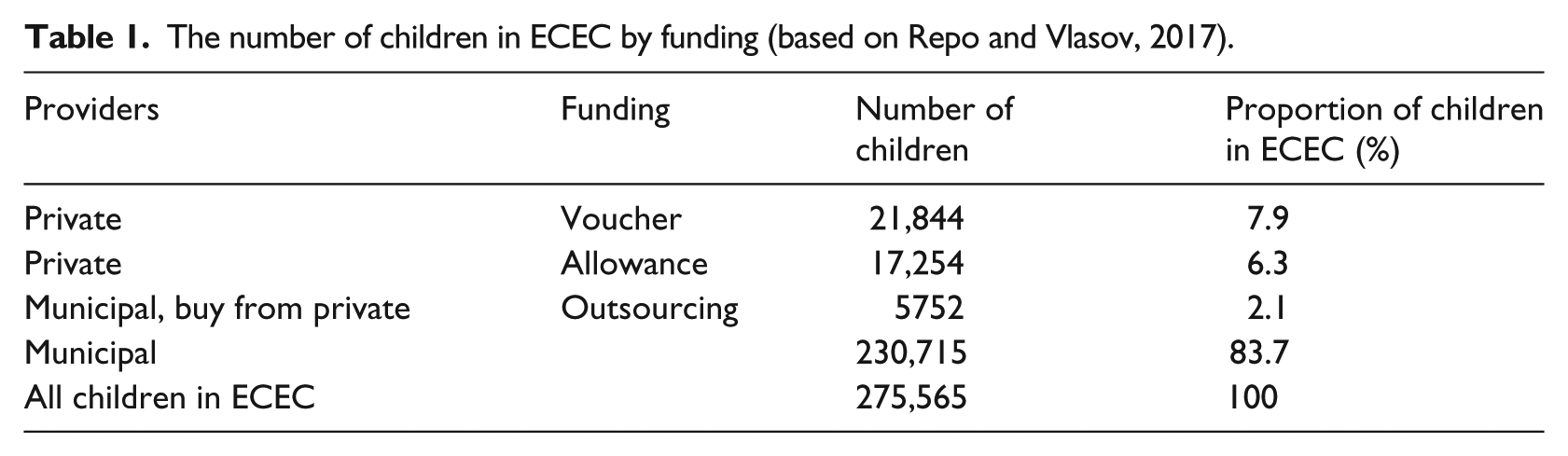
The operations of private ECEC centres are funded by a variety of sources: the state (allowances), municipalities (vouchers) and customers (see Table 1). Hence, Finnish providers of private ECEC work in a quasi-market. Quasi-markets obtain their funding and regulations from public sources, thereby supporting customer choice (LeGrand and Bartlett, 1993; Whitty, 1997). Municipalities choose whether they will operate with vouchers or allowances. The municipalities operating with vouchers define the criteria of the services and list the private centres where the vouchers can be used. The voucher system has significantly affected the growing use of private ECEC services (Viitanen, 2011). In municipalities where vouchers are unavailable, the private services are funded through allowances. Some municipalities pay an additional supplement to families who use private services (see Lahtinen and Selkee, 2014; Riitakorpi et al., 2017). Moreover, parents are charged on a sliding scale depending on income and the form of the service, from zero to approximately 300-500 or more euros per month per child. Due to the subsidies, the parents’ payment can be of the same size in private and municipal centres.
The number of children in ECEC by funding (based on Repo and Vlasov, 2017).
The renewal of Finnish ECEC legislation
Since 1973, the Act on Children’s Day Care has provided the framework for Finnish ECEC programmes. The law contains a double mission: to support parenthood and to provide early educational activities for young children. The initial law gave preference to the children and families who most needed the services for certain educational or social reasons, and it was based on the idea of enabling both parents to work (Onnismaa and Kalliala, 2010). However, reforms in legislation during the 1980s and 1990s made ECEC available for all children below compulsory school age, as a child’s subjective right to ECEC was prescribed by law. The principles and practices of working with parents have changed from supporting parents towards equal partnership (Alasuutari et al., 2014; Karila, 2012).
The law defines the qualifications of leaders, teachers and other practitioners of ECEC. Teachers are required to have either college-level kindergarten-teacher training or a Bachelor’s degree in early childhood education (universities) or social pedagogy (universities of applied sciences). Leaders are required to have teacher training and sufficient work experience (see Act on Qualification Requirements for Social Welfare Professionals 272/2005): The legislation concerning ECEC staff has changed after this study was conducted.
Even though some changes in legislation have been made over the years, many researchers and national groups have called for and prepared the ground for major reforms in Finnish ECEC legislation (e.g. Ministry of Education and Culture, 2012, 2014a, 2014b; Onnismaa and Kalliala, 2010). In recent years, ECEC legislation has been reformed in different phases rather than there being a general overall reform. This study deals with legislative changes that took effect in 2015 and 2016. The main purpose of the 2015 changes was to update ECEC terminology and content, as well as to improve quality. The name of the law was changed from the Act on Children’s Day Care to the Early Childhood Education Act. The new act emphasises the principle of the child’s best interests defined under the United Nations Convention on the Rights of the Child (1989) and the pedagogical function of ECEC programmes. The act also highlights the rights of both children and parents to participate in and influence the planning, implementation and evaluation of ECEC activities. Additionally, a national core curriculum and individual plans for children were prescribed as requirements of ECEC. In 2016, further legislative changes were made, occasioning heated public and political discussion. The main purpose of the 2016 changes was to produce economic savings; the renewed law allowed ECEC providers to change the adult–child ratio from 1:7 to 1:8 in groups of children aged over three. In addition, the child’s subjective right to ECEC was restricted to 20 hours per week. All of the changes in the legislation concerned both municipal and private ECEC services. However, of the 2016 amendments remained optional and were not ratified in every Finnish municipality (Puroila and Kinnunen, 2017).
Theoretical underpinnings
In recent ECEC leadership research, the focus has shifted from individual leaders’ traits and behaviour to the relationships, processes and practices through which leadership is produced and enacted (Crevani et al., 2010; Waniganayake et al., 2017). This article draws on relational leadership theory, which highlights relationships between leaders and other actors and the contexts of these relationships (Uhl-Bien, 2006; see also Eacott, 2015; Wood and Dibben, 2015). Rather than restricting leadership to a static and hierarchical managerial position, relational leadership theory draws attention to social-influence processes through which social order and change are constructed and produced in organisations. Important for social order and change are not only leaders’ actions, but also how different individuals and groups interpret actual and potential events in relation to their values and interests (Uhl-Bien, 2006). Leaders and other actors co-contribute to and co-produce social order and change.
However, it is important to note that, for several reasons, optimal leadership is not necessarily realised in praxis. For instance, leaders or other actors sometimes fail to recognise the need for change or do not accept the direction of the change (see Crevani et al., 2010). Moreover, leaders and other actors may lack a shared understanding of social-influence processes. As Uhl-Bien (2006) noted, networking is crucial for making decisions about whether and how to approach changes to the status quo.
In this study, we use relational leadership theory to conceptualise leadership enactment as a joint enterprise of those who hold leader positions and other actors in the changing context of private centres. Here, change refers to renewed ECEC legislation and how these changes are realised, lived, experienced and debated in Finnish private centres. Based on this theoretical approach, we explore leaders’, practitioners’ and parents’ evaluations and interpretations regarding the changing legislation, and how their evaluations and interpretations reflect leadership enactment.
The study
In order to achieve a multilevel picture of leadership in private ECEC centres, this study employed a mixed-methods approach (Mertens, 2014). As is typical of mixed-methods studies, the study utilised both qualitative and quantitative material and analysis methods ‘for the broad purposes of breadth and depth of understanding and corroboration’ (Johnson et al., 2007: 123). The data was collected as part of a larger project through three online surveys that were distributed to both municipal and private ECEC services. This study focuses on selected parts of the material generated in private ECEC centres.
The content of the surveys was based on renewed legislation, background material provided by the Finnish Ministry of Education and Culture, and previous research literature on ECEC (Puroila and Kinnunen, 2017). The surveys were organised into four sections: (1) background information (e.g. participants’ position in the centre, characteristics of the centre); (2) evaluations and interpretations of the impacts of the 2015 legislative changes; (3) evaluations and interpretations of the impacts of the 2016 legislative changes; and (4) evaluations and interpretations of the overall impacts of the legislative changes. In addition, leaders were asked to report changes in the number of children and practitioners between 2015 and 2016, and to evaluate the economic impacts of the legislative changes. Most of the questions were in the form of statements with five-point Likert scales. In addition, free-text entry spaces and open-ended questions enabled the participants to reflect on how the legislative changes had influenced their daily work (in the case of leaders and practitioners) or their experiences as customers (in the case of parents). The number of questions varied from 30 to 40, according to the participant’s position. The survey was designed such that the participants did not have to answer all the questions, resulting in variations in the number of answers between different questions. All the questions were composed in Finnish, Swedish and English in order to enable participants with different linguistic backgrounds to respond to the survey.
Private ECEC leaders (including entrepreneurs) in all Finnish municipalities received the survey in the autumn of 2016. Six months later, surveys were sent to professionals and parents in a sample of 56 municipalities. The technique of maximum variation sampling was used in order to collect rich data from different municipalities throughout the country. In practice, all 297 Finnish municipalities were first categorised according to their population and geographical location. Thereafter, 56 municipalities were randomly chosen from these categories. Municipal authorities responsible for guiding private ECEC services were asked to distribute links to the survey to all leaders, practitioners and parents in private ECEC centres in their municipality.
The survey responses provided an enormous amount of data that it is not possible to report on in one article. Therefore, four topics that participants evaluated and interpreted in contradictory ways were chosen for discussion in this article – that is, participants’ evaluations and interpretations regarding the impacts of legislative changes on the following:
Availability and affordability of the services;
Content of the services in terms of children’s learning and development;
Parents’ and children’s opportunities to participate and have an influence;
The economy of the centre (leaders only).
The justification for focusing on these topics was that participants’ contradictory interpretations have the potential to provide insights into areas that require development in leadership enactment.
Participants
The participants represented the diversity of Finnish professionals and customers in the private ECEC field (see Table 2).
Number of participants and some background information.
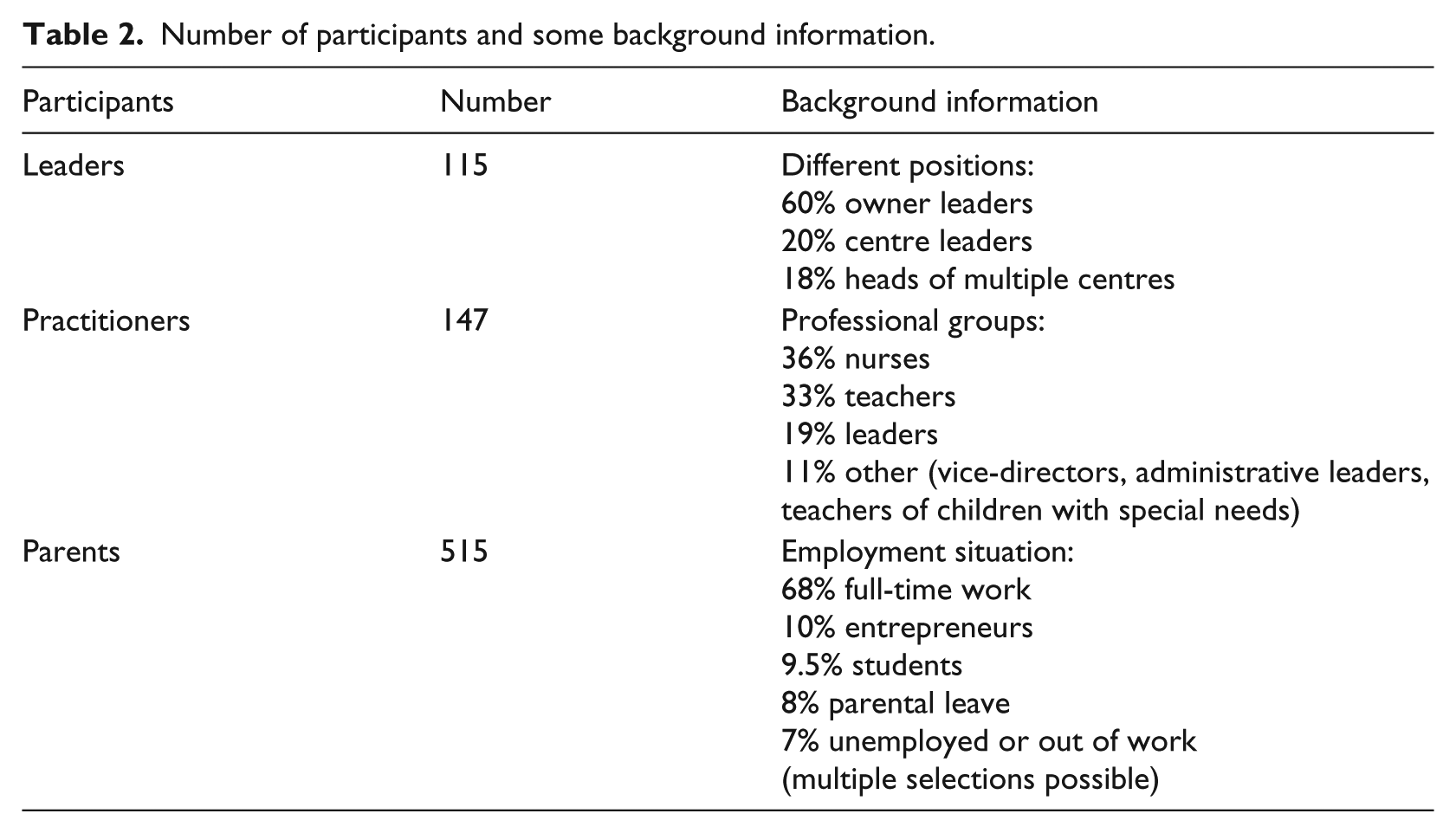
There were respondents from a variety of professional groups (leaders, teachers, nurses and others), and the parents’ employment situations varied. The participants were from both for-profit and non-profit centres. Of the leaders, 61% were from for-profit centres (individual, corporate chains, small chains) and 36% represented non-profit units.
Analysis
Because only a few of the participants used the Swedish or English versions of the survey, the data of different languages was combined to secure the participants’ anonymity. The mixed-methods approach allows for the use of both quantitative and qualitative analysis methods to enrich the findings (Onwuegbuzie and Teddlie, 2003). In the quantitative analysis, the five-point Likert scale was converted to a three-point scale: (1) Agree; (2) Disagree; and (3) Neither agree nor disagree. This was because only a few respondents had chosen the most extreme options (Strongly agree or Strongly disagree). As Krosnick and Presser (2010) note, survey methodology allows the collection of data on a scale with many points and the recoding of it into a scale with fewer points. The quantitative analysis was performed using the statistical package for the social sciences (SPSS) for the measuring of frequencies. Mostly, the frequencies were compared between the participant groups (leaders, practitioners and parents). Cross-tabulations were used to explore the correlations between leaders’ answers and the type of private centre (non-profit or for-profit) and also their leadership position (owner leader, centre leader or head of multiple centres). The open-ended questions were analysed qualitatively, focusing both on the content of the text and the expressions used by the participants to make meaning (see Fairhurst and Uhl-Bien, 2012).
Certain limitations should be taken into account when interpreting the findings of this study. The survey directed at the leaders was conducted earlier than the surveys given to the practitioners and parents. The leaders thus had less experience than the practitioners and parents regarding the impacts of the renewed legislation, which may have caused variations in their evaluations of the changes. Moreover, some of the participants commented that the study was implemented soon after the legislative changes took effect. At this time, the development of new practices was probably incomplete. Therefore, this is a cross-sectional study of a situation that reflects recent legislative changes. Thus, the findings of the study are suggestive and should be supplemented with further research.
Findings
The key findings of the study are presented in four sections. Each section begins by reporting leaders’ evaluations of the impacts of the renewed legislation. Next, the leaders’ evaluations are linked with the practitioners’ and parents’ evaluations to clarify the relationships between the leaders and other participants. The findings are illustrated with direct excerpts from the participants’ responses to the open-ended questions.
Various evaluations of the availability and affordability of private ECEC services
The leaders’ evaluations of how the recent legislative changes had influenced the availability and affordability of private ECEC services varied (Figure 1). Around 40% of the participating leaders belonged to the middle group, who found neither an improvement nor a deterioration in the availability or affordability of services. No significant differences were found between the leaders’ and the practitioners’ evaluations of the availability of private centres. However, the practitioners were more critical than the leaders in their evaluations of the affordability of services. Interestingly, the parents formed the most critical group of participants in their evaluations. More than half of the participating parents maintained that the availability and affordability of services had not improved based on the legislative changes.
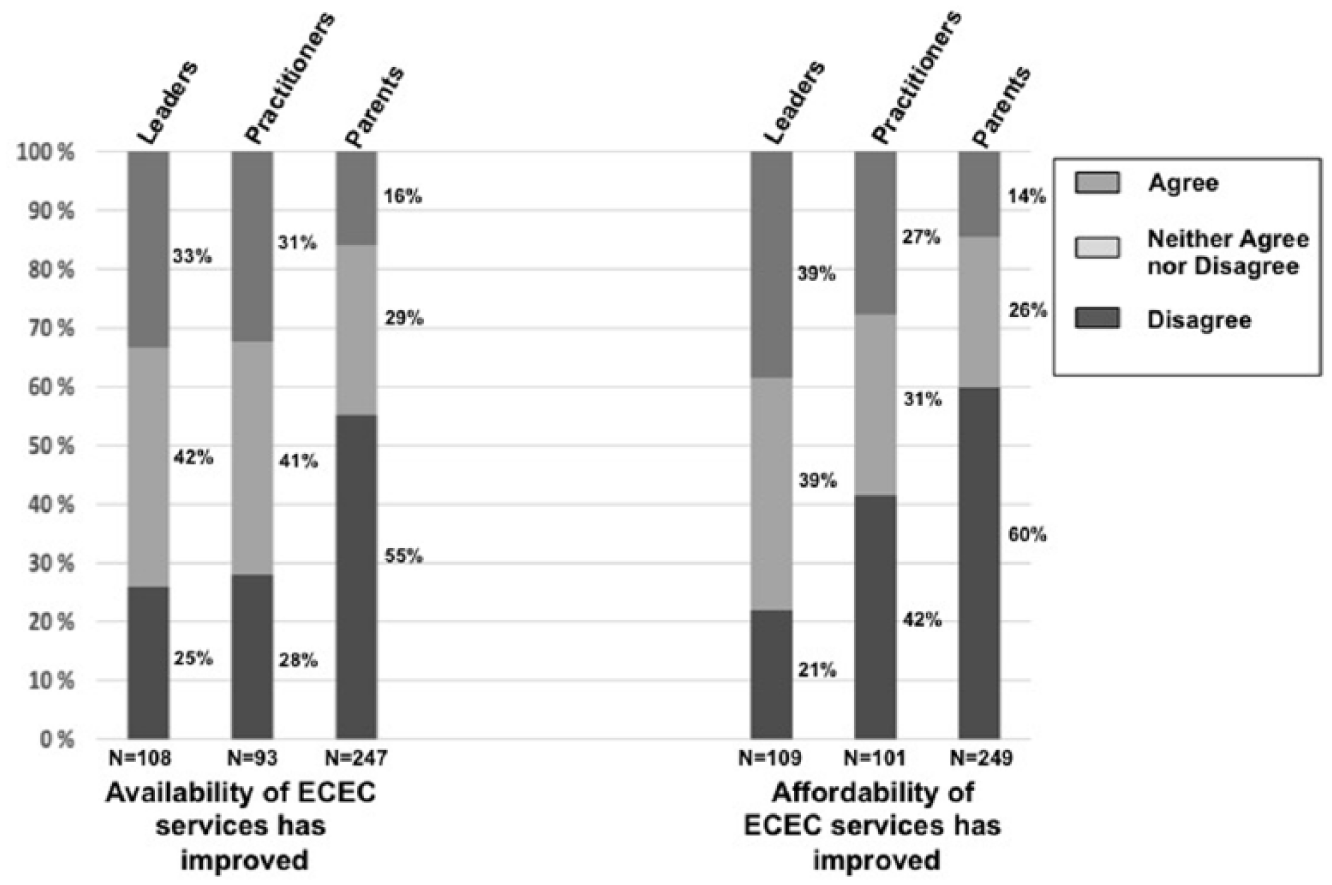
Participants’ evaluations on changes in the availability and affordability of private ECEC centres.
The variations in the leaders’ evaluations can be explained by the legislation itself, as it is open to various interpretations; the act does not specify how municipalities should monitor and regulate private services. Therefore, it seems that different municipalities had different expectations of private centres. For instance, some municipalities stipulated that private centres provide part-time programmes, even though that was not the provider’s preference: Earlier, a centre like us, a small private centre, did not even offer possibilities for part-time ECEC. Now, when it is obligatory, this is what we do, but still our opinion is that the private providers should have the right to decide when and what kind of services they offer. (Leader) In the private sector, hardly any changes have happened; it depends on the municipalities. For example, the status of children with special needs is still poor in X’s private centres. (Practitioner) Now, our centre is obliged to offer part-time programmes also … we immediately took the opportunity. (Parent)
The parents strongly criticised the change in children’s subjective rights from a full day to 20 hours a week of ECEC. On the one hand, parents believed that the changes in legislation had produced inequalities between children and families, because not all children have the same rights to ECEC. On the other hand, the restrictions on children’s rights had caused practical problems for families, such as transporting children from their home to a centre when children from the same family attended different ECEC centres. The parents’ criticisms reflect the public debate concerning the restrictions on children’s subjective right to ECEC: It creates challenges for participation in job and networking events, and the timetable for ECEC services has complicated everyday life … Our firstborn child is involved in a part-time programme in a centre, and we applied for a part-time programme there for our other child as well. City X, however, has restricted the number of children in part-time places in the centre, and we would have to take our second child to a different centre in a different part of the city and, moreover, on different days than our firstborn child. (Parent)
The variation in the leaders’ and other participants’ interpretations shows that leadership in Finnish private centres is enacted in a tension-filled context. On the one hand, municipal policies and decisions provide frameworks within which the autonomy of private ECEC is enabled and restricted. The relationship between municipal guidance and leadership enactment can be characterised as a ‘controlled grassroots autonomy model’ (see Børhaug, 2018: 48), in which municipalities both control and monitor ECEC services and allow providers varying degrees of autonomy to decide on programmes and the content of ECEC. On the other hand, the leaders’ work takes place in the context of the diverse interests and needs of providers, families and practitioners, who might have different views about how to promote a child’s best interests.
Developing pedagogical work in increasingly challenging conditions
The study explored the impacts of the legislative changes on pedagogical work from two viewpoints: the conditions for pedagogical work and the content and diversity of pedagogical activities (Figure 2). The leaders’ evaluations of the conditions (e.g. group sizes or diversity of programmes) for pedagogical work varied. Even though one-third of the leaders were critical in their evaluations of the conditions for pedagogical work, more than half maintained that the content and diversity of pedagogical activities had improved because of the legislative changes. No significant differences were found between the leaders’ and the practitioners’ evaluations. The parents emerged as the most critical participants in their evaluations: more than 70% of parents did not identify any improvements or changes in the content and diversity of the pedagogical activities in the private centres. Some parents criticised the contradictions between the leaders’ rhetoric and the challenging conditions of practitioners’ daily work, thus expressing concerns regarding the quality of ECEC: ‘In the parents’ meeting, the leader speaks with beautiful words, but the circles under the eyes of the staff tell a different story’ (Parent).
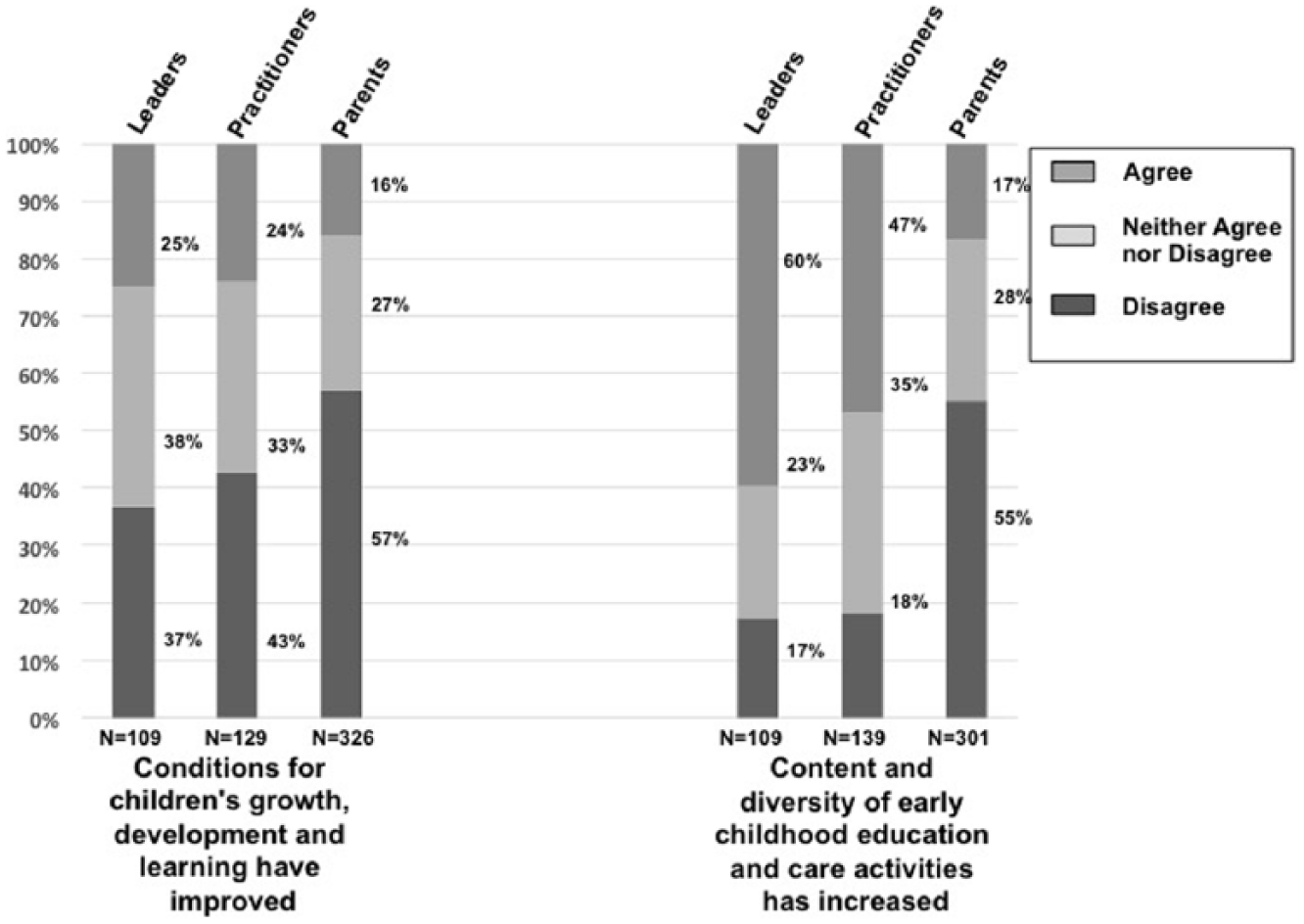
The evaluations on the prerequisites and the content of ECEC.
All of the participating groups contained respondents who were concerned about the adverse conditions for pedagogical work. For example, the participants often referred to the increasing group sizes (due to changes in the child–adult ratio) and fewer opportunities to interact with children individually: The child is tired after a week at the centre; the children and the practitioners are changing all the time … my child is a so-called ‘easy child’ and s/he does not receive any individual attention. Behavioural problems in the group have increased. … When one of the adults is sick, there are no substitutes. (Parent)
In addition, the practitioners reflected on their growing range of duties in private centres, including paperwork and assisting tasks. The non-pedagogical duties assigned to practitioners, such as making breakfast and cleaning tasks, have been recognised in previous studies of Finnish private centres (Riitakorpi et al., 2017): The practitioners’ professional duties should be clarified – what is the duty of a teacher and what goes to a nurse. At the moment, everyone is doing everything, even though the teacher has the pedagogical responsibility. A centre assistant should be obligatory in each house – also in private ones! (Practitioner)
The findings showed that the owner leaders worked closely with children; they either served as teachers or sought out encounters with children in their everyday work. These leaders claimed that the increase in administrative tasks, the pedagogical documentation, the new curriculum and planning daily work were taking time away ‘from the main work’. By the expression ‘the main work’, the leaders referred primarily to working with children. The need to lead the organisational culture, pedagogical leadership and the need to lead change were also recognised by several leaders. However, the leaders found it challenging to enact these leadership activities in the current situation. They used expressions such as ‘I hope’ and ‘hopefully’ when describing the tensions between their vision for the future and the working conditions in private centres. Interestingly, these tensions were addressed not only by owner leaders, but also by centre leaders and heads of chains: ‘I wish that the organisational culture would make it possible, but often old habits are held onto tightly’ (Leader - head of chain).
The gap between leaders’ and parents’ evaluations of changes in children’s and parents’ opportunities for participation
Almost 60% of the leaders and practitioners stated that children’s opportunities to participate and influence daily activities in private centres had improved (Figure 3). However, there was a large gap between the leaders’ and the practitioners’ views compared to the parents’ views. Over 50% of the parents did not see any improvement in their children’s participation at their centres: Children are made more participating individuals; the adults have to learn to change the organisational culture to suit this day and age. (Practitioner) Children participating in planning etc. are things that are not visible for us at home. You only know about the basic matters – playing, eating and sleeping; other issues we do not talk about or they are just beautiful words in parent meetings. (Parent)
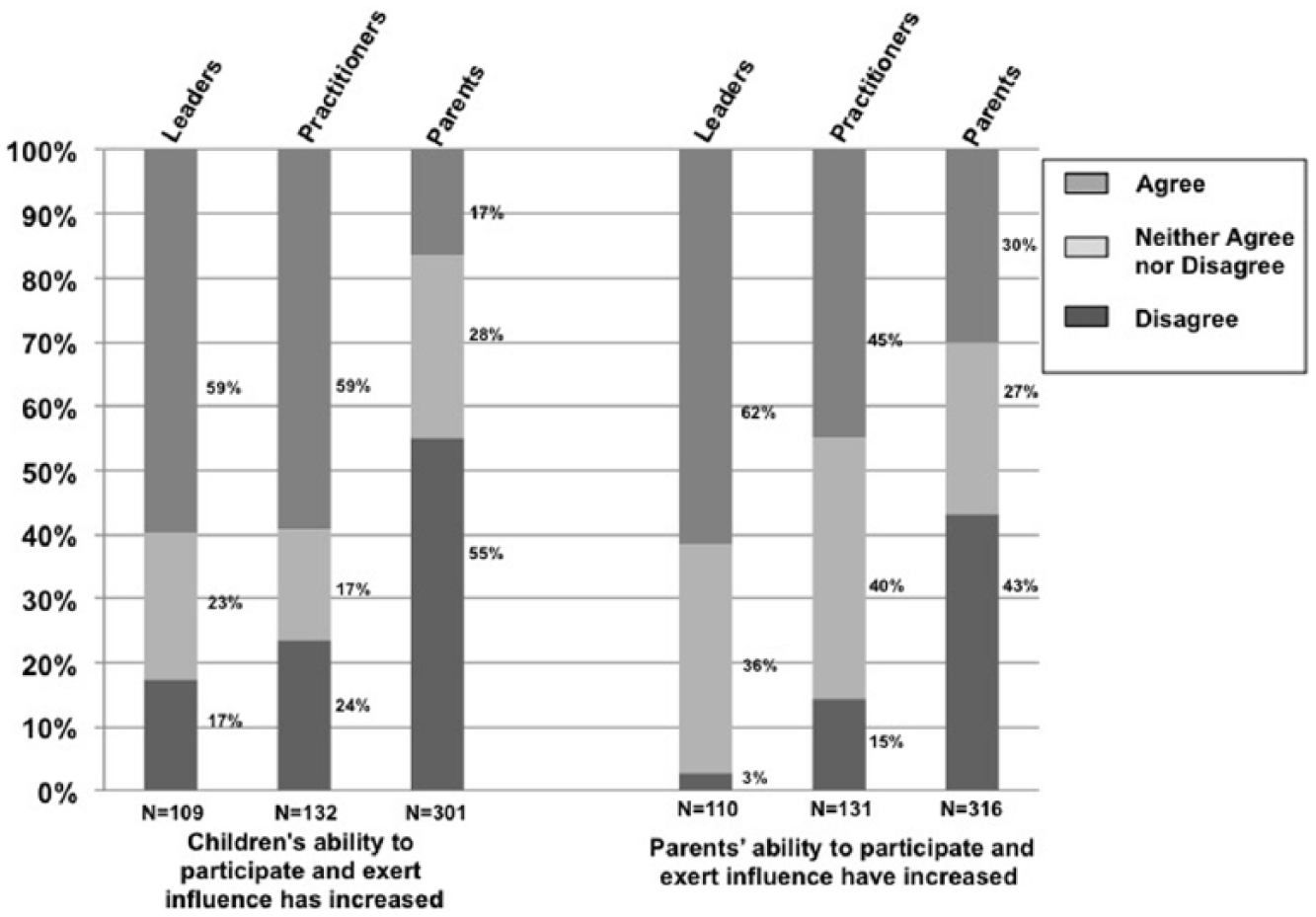
Results of evaluations on participation, exerting influence and cooperation.
This study raised the question of how much parents know about ECEC in general and as it relates to their own child. On what grounds did the parents evaluate their child’s participation? In answers to open-ended questions, the parents reflected on how they received information about their child. They mentioned quite traditional forms of cooperation, such as meetings regarding their child’s individual plan, parent meetings and daily encounters with practitioners when dropping off or picking up their child at the centre (see Kekkonen, 2009). Daily encounters were also identified as important by the practitioners and leaders. However, the parents maintained that daily encounters were perfunctory by nature, involving sparse discussion or sharing of information. The parents reported that they received information about their child’s daily routines but less about their child’s learning, development and well-being. The parents were concerned about whether the practitioners had enough time to interact with their children.
Evaluations of how legislative changes impacted parents’ participation and influence varied between the participant groups. Around 60% of the leaders claimed that parents’ opportunities for participation and influence had increased. Of the practitioners, 45% agreed with this, whereas only 22.5% of the parents found improvements in their participation and influence.
Some of the parents also referred to their satisfaction and trust in the centres. The findings showed that many parents who were satisfied with ECEC before the new legislation maintained that nothing had actually changed or needed to change in their centre: ‘In this centre, the pedagogy and children’s and parents’ participation in planning and evaluating the activities were fine even before the new regulations. Luckily, our children’s centre did not increase the group sizes, although the municipal centres did’ (Parent).
The study revealed that different types of private centres provided different opportunities for relationships between parents, practitioners and leaders. In the context of non-profit centres, parents participated in making decisions as members of the board. Thus, they played a crucial role in leadership enactment; in fact, as board members, some parents had power over those who worked as centre leaders. Parents’ opportunities for participation and influence were more restricted in for-profit centres, where they played the role of customer.
Leaders’ evaluations of the economic impacts of the legislative changes
The 2016 changes in legislation sought to create economic savings by changing the adult–child ratio and restricting children’s right to ECEC depending on their parents’ employment situation. In practice, the latter resulted in the need for part-time programmes for children whose parents were unemployed or at home for other reasons. In this study, the leaders were asked to evaluate how these changes influenced the economy of the centre. It emerged that this was a challenging task, for at least two reasons. First, the survey was implemented shortly after the law came into effect. Second, the leaders’ positions in the organisations varied: not all of the leaders necessarily held positions that enabled them to make financial decisions, because the leaders in chain centres operated under the guidance of their superiors. Therefore, not all of the leaders responded to this question. Among those who did, the evaluation of economic impacts varied. Some leaders stated that the renewed legislation enabled economic improvement; others highlighted the challenges caused by economic instability.
According to the leaders’ evaluations, the largest economic variables concerned the increased need for in-service training, staff expenses, and the varying number of children in part-time and full-time programmes (Figure 4). As the renewed legislation called for the development of pedagogics in ECEC, the need for practitioners’ in-service training had increased. Moreover, the rapid changes in parents’ employment situations seemed to create challenges for the effective use of the centres’ economic resources. It was impossible to change practitioners’ employment to meet the changing number of children in different programmes. Furthermore, some of the leaders maintained that the fierce competition between private providers had negative economic consequences. As the following excerpts show, the financial situation was challenging: Instability, changing the ECEC programmes in the middle of the season, the summertime fees, and the diminished amount of the voucher. (Leader) The 20 hours per week system affected our economic situation. And also the huge increase in private ECEC centres in municipality X in year 2016. (Leader)
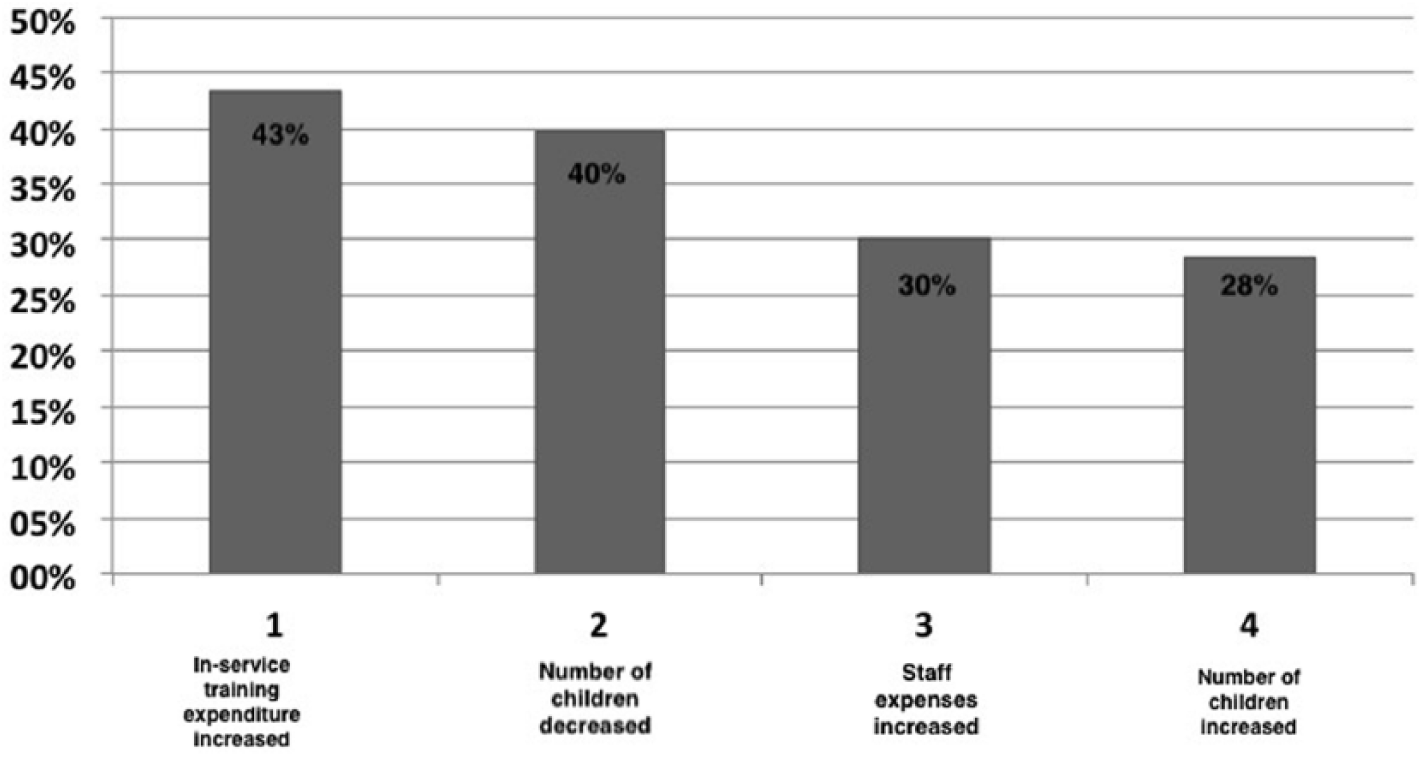
Leaders’ evaluations of the most important reasons for economic changes.
The leaders’ different leadership positions (owner leader, centre leader or head of multiple centres) were most visible when they evaluated and interpreted the economic impacts of the legislative changes. It was the owner leaders who were most capable of analysing the relationships between the centres’ economy, the legislative changes, and municipal expectations and decisions (e.g. variations in the voucher and allowance systems or requirements for different ECEC programmes).
Discussion
Privatisation as a phenomenon is promoted, resisted and debated in many countries around the world. Finland is an example of a society where the relationships between private and public organisations, state and municipal bodies, and national and international institutions are becoming increasingly complex (Puroila and Kinnunen, 2017). This study was implemented at a time when the legislation of Finnish ECEC had recently changed. Drawing on relational leadership theory (Uhl-Bien, 2006), this study focused on leadership enactment in relationships between leaders, practitioners and parents in private centres. Leadership enactment was explored on the basis of leaders’, practitioners’ and parents’ evaluations of the impacts of the renewed legislation. The starting point of this study was that changes in ECEC praxis are constituted by both national-level political decisions and the human actors who promote, enable, enact or resist the changes in educational settings. Although this study was conducted in the Finnish context, it contributes to international ECEC research by providing insights into the tensions and challenges in leadership enactment in private centres. The study emphasises three main points.
First, the study reveals that the private centres form a heterogeneous context for leadership enactment in Finnish ECEC. It emerged that different municipalities and different types of private centres provided different frameworks for leadership enactment and pedagogical work. The study indicated that municipalities espoused various ways of regulating and monitoring private centres. Whereas some municipalities gave private providers the freedom to develop their own policies and programmes, others required private centres to adapt to the municipality’s policies. Moreover, this study showed that leadership enactment varied between different types of private centres. Private centres are related in various ways to profit-making, which has also been discussed in the international research literature (e.g. Campbell-Barr, 2009; Lloyd and Penn, 2014). Whereas generating profit is not a goal of non-profit centres, economic viability plays a crucial role in for-profit centres. This means that for-profit centres are obligated to strike a balance between managing expenses and maintaining high-quality ECEC. In addition, the economic responsibilities of owner leaders, centre leaders and heads of chains proved to be different, as did parents’ opportunities for participating and influencing decision-making. Whereas parents were closely involved in decision-making in non-profit organisations, they were offered more restricted roles in centres belonging to large chains.
Second, the study reveals a considerable gap between the leaders’ and the parents’ evaluations of how the legislative changes impacted the ECEC services and practices in private centres. Although the leaders’ evaluations varied, most of them evaluated the changes either neutrally or positively. A common argument offered by the leaders was that the pedagogical practices and cooperation with parents were already at a good level before the renewed legislation. Thus, these leaders did not recognise any need to change practices. Although some parents were very satisfied with the ECEC in private centres, overall the parents formed the most critical group of participants in every aspect explored in this study. To some extent, the parents’ criticisms can be explained by their dissatisfaction with the restrictions on their children’s rights to ECEC, as well as the increasing group sizes. Another reason might be that the parents were unaware of what was occurring in educational settings at the grass-roots level. Nevertheless, the gap between the leaders’ and the parents’ evaluations challenges professionals to critically examine and reflect on collaboration with parents. It is evident that new forums and forms of cooperation that enable parents’ participation are needed.
Finally, the study calls for further research on leadership enactment in private ECEC settings. For instance, the study raises the question of how leaders cope with the challenge of balancing economic pressures and conditions for quality ECEC that characterises leadership enactment and praxis in private centres. Moreover, the leader’s identity in the midst of various roles and responsibilities in private centres deserves further research. In this study, most of the leaders had a strong commitment to teachers’ work, either as their own responsibility or in terms of promoting pedagogical work in the centre. In contemporary leadership research, the multiplicity of leaders’ roles and specialisations is understood, for instance, according to the concepts of entrepreneurial leadership and pedagogical leadership (Aubrey, 2011; Fonsén, 2014; Waniganayake et al., 2017). Deepening understanding of these concepts would not only improve leadership research, but also provide tools for developing leadership enactment in the private ECEC field.
Footnotes
Acknowledgements
We wish to thank professor Manjula Waniganayake, Macquarie University, Australia and anonymous reviewers for their valuable comments concerning the manuscript of the article.
