




Abstract
Recent scholarship on carceral mobilities critiques conceptualizations of carceral spaces as fixed and stable, and movements within or around sites of confinement as linear and horizontal. According to this critique, criminological studies of imprisonment have typically embraced what Turner and Peters (2017) [‘Rethinking mobility in criminology’, Punishment & Society 19(1), 96–114] term a ‘sedentarist ontology’ by failing to consider the complexities of prisoner mobilities in the lived experiences of the carceral. We draw on qualitative interview data from the Prison Transparency Project, a multiyear study initially across four research sites in Canada focused on former prisoners’ narratives of their carceral experiences, to identify and analyze the multifaceted mobilities that characterize prison life. We focus on three aspects of carceral mobilities: the use of psychotropic medications to produce docility, the coercive (im)mobilities of physical restraints and the ‘prison on wheels’ (i.e., prisoner transport vehicles). Using the concept of ‘kinetic immobility’, in which prisoners’ bodies are immobilized so they can be coercively moved (or not) through space and time, we consider the degree to which the theoretical work on carceral mobilities aligns with lived experiences of incarceration, as narrated by research participants.
Keywords
Introduction
Recent scholarship on carceral mobilities critiques conceptualizations of carceral spaces as fixed and stable, and movements within or around sites of confinement as linear and horizontal (Moran et al., 2012; Turner and Peters, 2017a, 2017b; Armstrong, 2018; Brooks and Best, 2021). According to this critique, criminological studies of imprisonment have typically embraced what Turner and Peters (2017a) term a ‘sedentarist ontology’ by failing to consider the complexities of prisoner mobilities in the lived experiences of incarcerated peoples. There are several reasons why carceral mobilities have been traditionally under accounted for in prison studies. For instance, Mincke and Lemonne (2014: 534) observe that immobilization has been ‘at the very heart of the carceral objective’, with mobility as ‘merely conditional and secondary’. Yet, more recently, the supposed fixity of carceral spaces (Turner and Peters, 2017b) is being challenged and greater attention is being paid to processes of penal subjectification that work to produce carceral subjects with different relationships to (im)mobility (Mincke and Lemonne, 2014: 542).
For Armstrong (2018: 134), the dominance of the prison cell as ‘visualis[ing] imprisonment as a waiting experience defined by immobilisation’ has, consequently, ‘obscure[d] the extent to which imprisonment involves constant circulation, porous borders and unruly time’ (see also Martin and Mitchelson, 2009). Juxtaposing the cell with the corridor, she argues that mobility in prison needs to be considered, including understanding ‘prison as a technology of circulation as much as containment’ (Armstrong, 2018: 135). Similarly, Brooks and Best's (2021: 460) research on prison transfers illuminates the ‘networked circuits’ of the carceral state, demonstrating that prisons should not be viewed as ‘isolated, singular sites’ (see also Gill et al., 2018). Prisoner transfers – and (im)movements of prisoners in and around carceral facilities – ‘make prisons viable’ and thus help reproduce the carceral state (Brooks and Best, 2021). Follis (2015: 945) reminds us that ‘the daily ‘churn’ of admitting, relocating and discharging prisoners is clearly a core facet of everyday penal governance’, one that maintains the power to punish (Follis, 2015: 949; Russell et al., 2022). Khasia's (2019) review of Georgian national policies for transporting prisoners with physical disabilities reveals that in most instances basic standards of safety and humane treatment were not met. In addition to prisoner (and other) mobilities, Gill et al. (2018) identify objects (i.e., material items like prisoners’ possessions) and practices (i.e., penal policies) as additional carceral circuits, thereby further broadening the scope of understanding diverse carceral mobilities.
With notable exceptions (e.g., Moran et al., 2012; Hiemstra, 2016; Haesen et al., 2023; Russell et al., 2022), much of the writing on carceral mobilities is conceptual rather than empirical. Given the dominant imagination of incarceration as a stationary or sedentary experience, it is not surprising that little research has taken up the question of how prisoners move their bodies, or have their bodies moved or rendered immobile, through space and time. 1 Moran et al.'s (2012) empirical study of prisoner mobilities in Russia severs the articulation of mobility as a form of freedom, asserting that critical prison researchers have failed to consider that forced mobility is a form of punishment in motion, an argument placed under the umbrella of carceral geography. Importantly, Moran et al. (2012: 448) highlight the centrality of coercion in relation to prisoner mobility, which they describe as coerced or ‘disciplined’ mobility as it emphasizes ‘the limited autonomy of those who are moved’ in penal settings.
Armstrong's (2018) review essay of the prison cell versus the prison corridor underscores the notion of time by arguing that the conceptual reduction of the prison to the unit of the cell fails to account for other important spaces in the prison like the corridor. In so doing, she juxtaposes the iconic image of the prisoner, locked in cell, immobilized and waiting, 2 with a less recognized aspect of prison life: the range outside of the cell. While the corridor allows for movement, the waiting continues, especially in prisons where these spaces are also used as communal, out of cell congregation spaces where prisoners sit on affixed stools around metal tables engaging in time-passing activities like playing cards or talking. Armstrong (2018) invites us to see the corridor not only as part of the prison assemblage but also as a space that contests the notion of movement as freedom by showing how movement happens while people are locked in time and space even as at various moments in the day, prisoners are ‘free’ to move from cell to corridor and back again.
Carceral geography, as Turner and Peters (2017a) argue, is political. Their research on the convict ship moves the debate forward by asking us to consider vertical movement alongside the kinds of horizontal movement more typically considered in the literature. Specifically, Turner and Peters want us to think through the politics of verticality, a politics that is very apparent on a transport ship as life ‘below’ was barely liveable while life ‘above’ offered some degree of reprieve, including access to fresh air and space to move. Thinking beyond the convict ship, we might also consider this verticality in the language of the prison. Regardless of its location, prisoners sent to segregation talk about being sent to ‘the hole’, conjuring the notion of a place below, while the Canadian risk/need assessment scheme speaks to prisoners cascading up and down security levels such that one may move down from maximum to medium or up from minimum to medium or maximum. The intersection of health, ability and movement is also addressed in the literature. Spaulding et al. (2011) provide an epidemiology of prisoner deaths resulting from accidents during transportation while the Ashley Smith Inquest (discussed below) reveals the dangers of a cessation in prisoner movement. Concerns about the hazards posed by the methods by which prisoners are transported were also raised in the 2017 and 2021 reports of Canada's Correctional Investigator (OCI, 2017, 2021).
Our aim is to take inspiration from these literatures to document and understand three experiences of carceral mobilities that trouble the edificial fixedness of carceral confinement by mobilizing the logics of carceral geography: the use of psychotropic medications to produce docility and compliance, the coercive (im)mobilities of physical restraints and the ‘prison on wheels’ (i.e., prisoner transport vehicles). We explore the ways in which bodily mobilities are restricted within prisons themselves and how these restrictive techniques overlap with the ‘mobile prison’. The mobility of the transport vehicle is thus made possible by the assemblages of (im)mobility instated in the prison. We show that both chemical and physical restraints are technologies of (im)mobility and quotidian features of prison life that shape the lived experiences of incarcerated peoples. These forms of containment – which we call ‘kinetic immobility’ – are rarely considered in the literature despite their pivotal roles in the daily operations of the prison itself and the broader functioning of the penal system writ large.
The three experiences of carceral mobilities discussed herein emerged from the Canadian-based pilot study for the Prison Transparency Project (now an international study comparing Canada, Argentina and Spain 3 ), that aimed to systematically document the conditions of confinement through the accounts of diverse people who were incarcerated within the five-year period preceding the interview. Between 2015 and 2017, over 160 semistructured interviews were conducted in four Canadian cities (Toronto, Montreal, Ottawa and Vancouver). The interviews were audio recorded and transcribed verbatim and the transcripts were thematically analyzed in NVivo. While the issue of prisoner mobilities was not a central focus of the research, it was found to be an important aspect of the lived experience of carcerality in Canada.
Our argument is laid out in four main sections. We first analyze how the use (and misuse) of psychotropic medication in prisons acts as a form of chemical restraint that renders prisoners immobile or with limited mobility. In the second section, we consider the ‘coerced mobilities’ enabled through the practice of shackling prisoners and the physical restraint device known as ‘the Wrap’ which violently immobilizes prisoners to contain their ‘unruly’ or ‘risky’ mobilities. We then turn to prisoner transportation and the ‘mobile prison’ to examine the ways that movement itself operates as a form of carcerality (and punishment) serving multiple functions. We conclude with a discussion of how recognition of these carceral mobilities and others are necessary for challenging their normalization and the underlying carceral logics. Through this work, we aim to raise awareness and spark ongoing discussion about carceral mobilities in Canada and elsewhere and the interrelationships between confinement and mobility.
Enforcing docility (and compliance) through medication: ‘Zombification’ of prisoners
In Discipline and Punish, Foucault (1977) outlines how prisoners are trained to become docile bodies through the deployment of disciplinary power, a subtle and persistent form of power which seeks to reconstitute people into governable subjects. More recent research by Kilty (2008, 2012) describes a different regime of docility facilitated by a heavy reliance on sedating pharmaceuticals, especially Seroquel™, an anti-psychotic intended for use with people experiencing psychosis, schizophrenia or bipolar disorder, but widely used ‘off label’ within Canadian prisons. Due to its sedating and somniculous effects, Seroquel became the preferred drug to prescribe in prisons, especially women's prisons, 4 to tranquilize the prison population. Weightman et al. (2020) describe a similar pattern of prescribing sedating medications not solely to handle the so-called ‘difficult to manage’ incarcerated women but also to control for any potentiality of violence by drugging prisoners to the point of what our participants described as ‘zombification’, regardless of whether such pharmaceutical interventions are medically justified.
Participants interviewed for the Prison Transparency Project were asked if they were given medication they did not want to take or if they felt they were overmedicated (i.e., given too much medication). Several participants pointed to the dispensing of sleeping aids as a common occurrence within Canadian prisons. In particular, and in keeping with Kilty's (2008, 2012) findings, fast-acting Seroquel was given out to prisoners as a sleeping medication, seemingly as a routine part of the incarceration experience, even when the prisoner had not requested medical interventions and often without prisoners being aware of what was being administered.
One participant, Knoxette,
5
was given Seroquel when she was imprisoned. She explained: ‘It was like, I was high. I can stay here and get my drugs’. Yet, she did not like the effects of it, stating: ‘it's not a good feeling when you wake up in the morning, it has drowsiness’. Indeed, several participants were concerned with the effects of taking this drug. Trevor explained: I tried to tell lots of people stop taking the stupid Seroquel, man, it deteriorates your cognitive ability, man. Prolonged use, it kills your brain, you know… [Interviewer: Yeah.] It crushes your fuckin’ brain, the ability to fuckin’ make regular decisions and fuckin’ common, you know, brain functions. [Interviewer: Right.] It eats, it eats at that, it fuckin’ chews that, so that's why they try to pump you with it and fuckin’ fill you with it, so you turn into a fuckin’ drooling retard [sic], you know, that's what they do.
Another participant, Matt, described his experience with Seroquel, noting that the drug was commonly given to prisoners as a sleep aid: ‘Well, it's addictive, um, it can cause restless leg syndrome. And after about two weeks, if the dosage doesn’t go up, it stops working. So, they have to keep raising the dosage. And it's really unpleasant to deal with side effects from it’. Matt reported experiencing ‘restless leg syndrome’ as a side effect, which ‘keeps you awake at night and its extremely uncomfortable’. He further noted the effects of withdrawal, including ‘nausea and dizziness’. Because of Seroquel's addictive properties, Matt told us that he continued to use the drug after he left prison by accessing it through underground drug economies, which had a detrimental effect on his experience of reentry (see Balfour et al., 2018).
The perceived overuse of medication in prison was observed by several of our participants, including John Smith, who noted that ‘[w]hen the nurse came around with the medication, the whole range was there, gettin’ their medication’. The following exchange underscores John Smith's perception of why so many prisoners were prescribed medication:
Yeah. Sleeping pills and somethin’ that make you sleep, right? Yup.
So, do you think… or do you know if they were taking medications before they got into the prison system?
I think a lot of them are given if they wanted to like, Valiums, you know, somethin’ to put you to sleep.
Is it because it's too loud? Or stressful?
Yup. When you’re sleepin’ your time goes faster, right? [laughs]
Yeah. So, were you taking any pills yourself?
Yeah. I was on Valiums. I do Valiums now. I do. Yeah.
The use of sedatives and hypnotics such as Valium and Seroquel is not solely to create a quiet range in the name of sleep, or to help prisoners cope by sleeping away their time. The former prisoners we interviewed also reported witnessing the use of pharmaceuticals to subdue a prisoner who is ‘acting out’. Leah told us: Bug juice
6
you mean? No, they never got me with bug juice, but I witnessed them doing it to another woman. It really bothered me. She ended up committing suicide in jail. She was a slasher. And they use to throw her, and I was in seg[regation] when the medical unit came in and she was freaking, and they went and put a needle in her bum and that calmed her right down and she was sleeping.
There are two important insights we can glean from considering the use of pharmaceuticals as a form of kinetic immobility. First, while medical care cannot lawfully be forced on any prisoner except in circumstances of immediate threat of harm to person or property or loss of life where there is no medical directive, 7 prisoners rarely feel they have a choice in taking these medications. Indeed, prescribed medications typically become part of prisoners’ correctional plans and refusal to cooperate can have detrimental effects on prisoners’ progression out of prison (see Kilty, 2008). Following the insights gained from critical research on risk/need based practices in punishment (Hannah-Moffat, 2001; Kilty, 2008; Moore, 2007; Moore and Hannah-Moffat, 2004), choice in prison is never really a choice, as prisoners who challenge their prescriptions or refuse to take them run the risk of amplified punishment (see also Ben-Moshe, 2020). For example, Craig requested to be placed in segregation due to his level of mental distress and ongoing depression. Craig's request was refused by the warden who suggested sedating medications would make it easier for Craig to manage in general population. When Craig refused the warden's suggestion, he was shackled by three guards in preparation for movement into general population. Even though medications are only meant to be dispensed for medical reasons, the stories told to us by our participants clearly illustrate the merging of psychology, medicine and punishment (Moore, 2007; Kilty and Dej, 2018; Ben-Moshe, 2020), an amalgamation that also weds the power embedded in these three institutions, making forced immobilization using chemical restraint a key tool of prison management.
Second, recalling the literature on mobilities and sedentarism, in documenting the use of chemical restraints we reveal an underrecognized form of control in prisons. We do not suggest that chemical restraints are a new practice. Literature on prisons documents similar practices dating back to at least the 1960s (Caron, 1978; Auerhahn and Leonard, 2000). What is novel here is the recognition that a body need not be touched to be immobilized. In fact, proximity to and interaction with the prisoner are barely required if the prisoner complies with taking the medication. The resulting ‘zombie land’ of a range filled with heavily sedated prisoners is commensurate with creating a space with prisoners whose body chemistry and neural functioning have been altered to limit their movement and activity in the name of security and while lacking medical or therapeutic indication. In effect, prisoners are rendered kinetically immobile through forced alterations of their body chemistry with no medical or clinical justifications.
‘Coerced mobility’ and physical restraints: Shackles and the Wrap
As Stoller (2003: 2263) observes, ‘[t]he prisoner's movement through the geographical space of the prison is intensively controlled by custody policies, routines, economies and spur-of-the-moment decisions’. One of the most common technologies for moving prisoners through space is to immobilize their bodies through shackling. Shackling involves full body chains. The prisoner's ankles are bound together as are their wrists. A chain around the prisoner's waist attaches to both the wrist and ankle cuffs, immobilizing the prisoner to the point where they can only take very small steps, cannot raise their hands higher than chest height, and cannot move their hands more than 10 cm apart. While shackling as a practice predates the prison itself, its contemporary and daily use in the prison is largely unrecognized in the literature with the exception of a small but important body of research speaking to the shackling of pregnant prisoners while birthing (Sichel, 2008; Griggs, 2011) and the normalization of forms of extreme control in Canadian prisons and with women prisoners in particular (Hannah-Moffat and Klassen, 2015; Kilty, 2018).
Almost all the prisoners we interviewed described at least one instance of shackling while in the custody of prison authorities, often as part of being transported, as detailed in the following interview excerpt:
Were you shackled when you moved through the institution?
Oh yeah, they shackled my hands and my feet, especially when I was going to [name of prison], shackled my feet, and to the truck with all the other guys.
So, you were shackled when you were in the truck too?
Shackled… it was cold in there. It was like each time we were travelling to a new institution they would shackle you. I was going from [name of institution], they would say, ‘Are you okay?’ You’d say, ‘I’m good’. Once they brought me there from [name of prison] to [name of prison], they unshackled me right away, we’d walk to our unit, range, whatever.
Likewise, Mao describes her experience in restraints and what she witnessed for others: [T]here was four of us that were transferred. All from the same units. The… van that took us was a lot better than the paddy wagon. It was cushions, so it was, like, you know, but we were in shackles. They put you in shackles and, you know, the whole bits. So… it was cold. [Interviewer: Oh yeah.] It was really cold, and we had to walk quite a distance to get to A&D [Admissions and Discharge] at [name of prison]. But the shackles on you… one of the ladies was pregnant. And they did not even give her, you know, exception from being shackled. She was… eight months? Eight months pregnant, ready to give birth. [I: And it's heavy, right? The shackles?] Oh yeah! It's also, it's not, one of the, it's really, doesn’t give you much room to walk. It's like, yeah. And there were stairs we had to go through with the shackles.
More recently, a physical restraint called ‘the Wrap’ made national headlines in Canada as the Canadian Broadcast Corporation (CBC) aired footage during its nightly televised news program, The National, of an Indigenous youth being restrained by six correctional guards using this device (CBC News, 2023). The Wrap is a full body restraint that binds a prisoner's legs and arms and then secures the prisoner in a forward fold with their hands cuffed behind their backs and a tether running from the neck to the knees, forcing the prisoner to be folded over themselves and making any body movement impossible. Prisoners in the Wrap are often also hooded with ‘spit guards’ or made to wear a helmet (Kilty and Dej, 2018). The use of the Wrap and other devices to physically control prisoners is not new in Canada, and the publicization of this video is reminiscent of egregiously violent uses of force against women prisoners such as Ashley Smith, also made public by the CBC (see Kilty, 2018).
Matthew Michel, the former prisoner featured in the news coverage, claims he was placed in the Wrap at least 50 times while incarcerated as a youth. Despite clear restrictions on using the Wrap for no more than an hour and only on prisoners who are acting out violently and cannot be restrained in any other way, the video footage clearly shows that Michel was doing nothing more than banging on his cell door when the guards decided to enter, tackle him to the ground and force him into the Wrap. For extra measure, the guards place both a spit hood and a helmet with visor over Michel's head and then lay him on a gym mat in the prison hallway where he remained restrained for over three and a half hours. Michel reports that being in the Wrap feels like having your muscles torn off your body. He also describes ongoing PTSD from the repeated use of the Wrap on his body (CBC News, 2023). As we write this, Michel is launching litigation against the province of Saskatchewan for cruel and usual punishment – claiming a violation of his constitutional rights to be protected from state violence under Section 11 of the Canadian Charter of Rights and Freedoms (Barrera et al., 2023). The publicization of the video footage was met with public outcry and accusations that the Wrap – which is permitted in both youth and adult facilities in Saskatchewan and four other provinces – is a torture device and should be totally outlawed (Barrera et al., 2023).
Reflecting on the use of various prisoner management strategies in the context of a prisoner in (mental health) crisis, Murray and Holmes (2015) argue for recognizing the extremity of measures taken against prisoners in the name of ‘treatment’. Moore's (2007) study of Canadian drug treatment courts reveals the clear amplification of power when treatment and punishment are wed, showing that all manner of cruelties that would not be allowed in the name of ‘punishment’ are readily justified as forms of ‘treatment’. While routine, this kind of mistreatment rarely garners public attention and those of us who follow Canadian prisons closely rely on investigative journalism and reports from the Correctional Investigator, as well as informant interviews that we can only safely conduct once people are released, to know what is happening inside prisons. Canadian prison systems are among the least accessible in the world, meaning it is nearly impossible to speak with someone while they are still imprisoned or for the currently incarcerated to alert anyone on the outside that they have been mistreated. The Michel case is unique in that investigative journalists successfully provided Michel with a platform from which he could speak about his experiences in the Wrap. Speaking publicly just over a decade after the Wrap was used on him, Michel stated: ‘I feel mentally fucked up from being placed in the Wrap. You feel helpless, abused, disgusted with yourself’. In the video, Michel can be heard crying and screaming and eventually yells out that he would rather die than be held in such painful and humiliating restraints (CBC News, 2023).
The Michel case shows us the slippage between treatment and punishment that Murray and Holmes (2015) describe (see also Ben-Moshe, 2020). While prison authorities maintain that devices like the Wrap are ‘safe and humane’ and keep a prisoner, and those around the prisoner, safe, especially during a period of emotional and/or psychological volatility, Michel's own words tell us a very different story, highlighting that this form of restraint is specifically painful, dehumanizing and has no ‘therapeutic’ effect. On the contrary, the Wrap and similar forms of restraint are routinely experienced as deeply traumatizing. As Hannah-Moffat and Klassen (2015) and Moore (2007) argue, what is done in a carceral setting in the name of risk management, safety and harm mitigation is often violent, traumatizing and a blatant contravention of the United Nations Standard Minimum Rules for the Treatment of Prisoners (2015) and the Bangkok Rules (2010), both of which Canada is a signatory. Crucially, when restraint is framed as therapeutic, it becomes far harder to argue against its use.
In 2005, Moore and Hannah-Moffat argued that Canadian prisons function under a ‘liberal veil’ which mobilizes ‘rehabilitation speak’ emphasizing empowerment and choice as a means of cloaking the barbaric experiences of those housed inside these institutions. The slippage between punishment and treatment reveals another form of cloaking, the treatment veil. Like the liberal veil, the treatment veil is even more powerful because it creates the illusion that some of the most common forms of violence done to prisoners (i.e., forced sedation, physical restraint, coerced mobility, prolonged segregation, etc.) are compellingly justified in the name of treatment and rehabilitation. After all, if an intervention is being made to ‘help’ someone how can it also be cruel or punitive? This false binary saturates the Canadian penal landscape, ensuring these and other forms of harm and violence will continue if they are labeled ‘therapeutic’ and envisioned as necessary to maintain the good order of the prison. Crucially, even though the use of force against one's person is generally understood as a violent and often traumatizing experience, the violence of immobilization through the Wrap and kinetic immobility through shackling and drugging is dismissed by way of justifications that it is ‘in the best interest’ of the prisoner and the institution (see also Ben-Moshe, 2020). This logic elides the institution and the person as if they had shared interests and goals. Our interviews with recently incarcerated peoples show clearly that the goal of institutional security is almost always contrary to the carceral state's goal of rehabilitating prisoners.
The ‘prison on wheels’: Ghost trains
Another way in which prisoners encounter gross mistreatment in carceral spaces is through the typically coerced mobilities central to transportation. Canada's current Correctional Investigator, Dr Ivan Zinger, offers a window into the pains of physically moving prisoners across landscapes. At a medium security facility in British Columbia I sat scrunched and stooped in the back of a prison transport van, the insert of which is completely outfitted in aluminium and stainless steel hardware. The compartment where shackled prisoners are kept to take them to attend court or medical appointments is totally devoid of any comfort or safety feature, including seatbelts. The experience left me feeling as if personal safety and human dignity did not matter to the designers or operators of such vehicles’. (OCI, 2017: 4; emphasis added)
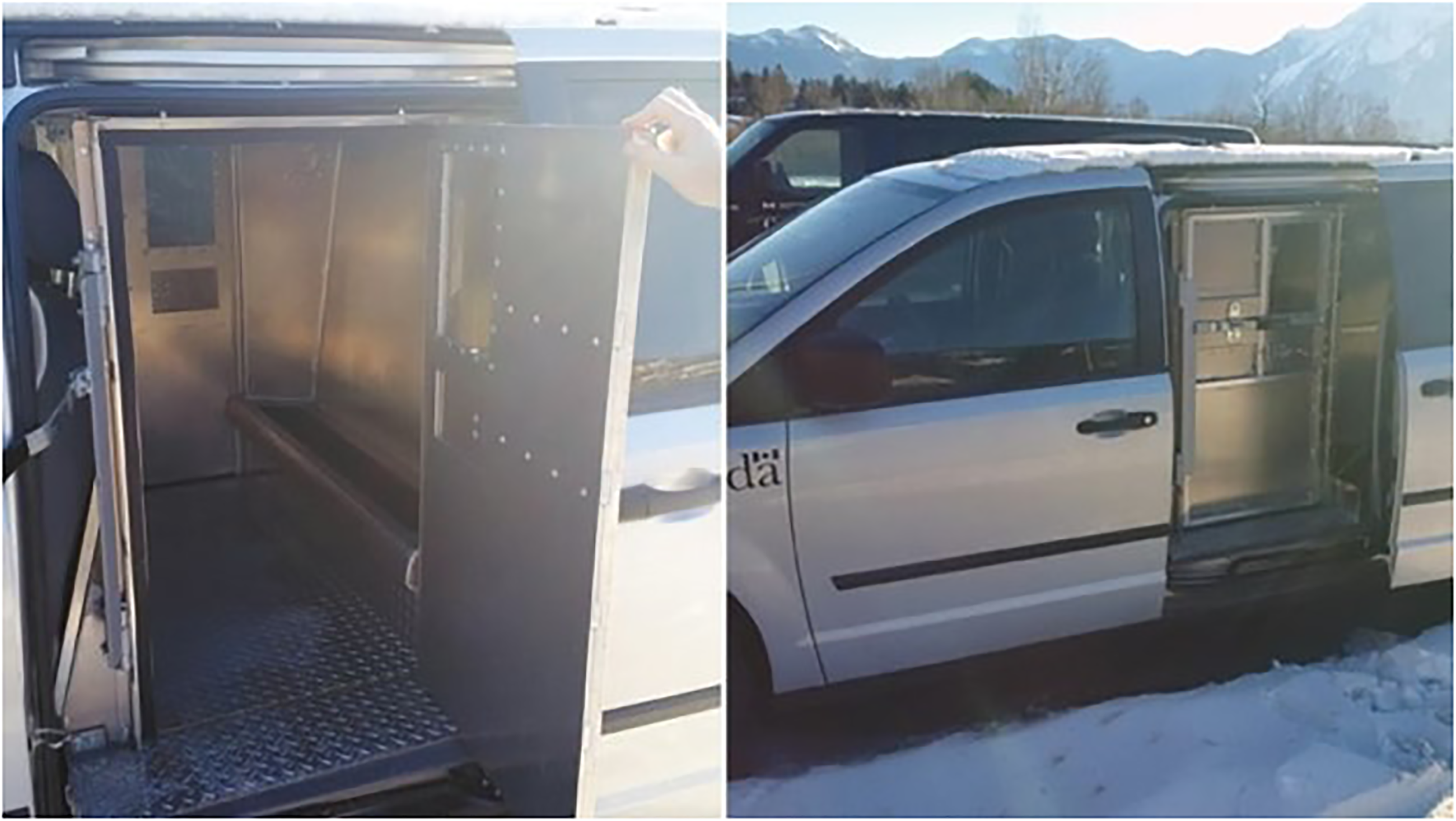
Prisoner transport van (credit: Office of the Correctional Investigator).
Our interviews again bring awareness to kinetic immobility, the common-place practice of placing prisoners in transport vehicles and driving them around, sometimes for short trips to and from court or the hospital, and other times for days on end as a means of dealing with overcrowding. Prisoner transport vehicles are ‘prisons on wheels’ in which prisoners’ physical movement is severely restricted despite being in motion. Beyond the already limited confines of the prison cell, the often coerced mobilities of the prison corridor and the use of chemical and physical forms of immobilization, the transport vehicle uses mobility to physically immobilize, resulting in prisoners occupying physical space no bigger than a bench and typically sharing that space with three other prisoners. Time spent in transport makes physical movement impossible as prisoners are shackled and/or handcuffed. Prisoners cannot stand, lie down, exercise, use the washroom and are typically given nothing to eat or drink. They are not provided with clothing or climate control suitable for the extreme temperatures characteristic of Canada, so hypo- and hyperthermia are valid concerns.
Writing in relation to migration politics, Walters (2015: 473) argues that ‘[v]ehicles matter because they are mobile zones of governance and contestation in their own right’. Vehicles, he observes, ‘are embedded within diverse knowledges and practices that in turn shape experiences of mobility, immobility, capture and flight’ (Walters, 2015: 478). Prisoner transportation in Canada, for example, is governed by a varied set of policies and procedures related to the vehicles (i.e., their design and suitability for transporting people with diverse mobility needs) and those who operate the vehicles and are responsible for the human beings under their care. Yet to date, this crucial aspect of the carceral experience has garnered little attention in the Canadian context.
Russell et al. (2022: 152) use the term ‘carceral churn’ to help understand ‘the production of carceral subjects via the disciplined movement of people through the carceral circuits’ including prisons, transport vehicles and court cells, where they are physically controlled and coercively moved spatially and temporally. Participants spoke of the transport vehicles as tools of sensory deprivation, making them lose their senses of moving in and through space and time. John offers a description of what many prisoners call the ‘ghost train’: It's called a ghost train, I don’t know, if you’re sitting in the city jails, mainly in [major city A], and they’re overcrowded, they’ll come and tell you to pack your things up, you’re going to [small town], [small city], and it's just a ghost train, go all the way around, far enough in between that they can send you to make room. It's called a ghost train, and they suck. You end up sitting in all these little towns, being from [major city A] not only do you have to deal with the guards, you have to deal with the inmates who don’t like you automatically because you’re from [major city A]. There's a lot of meals you go without. Not a very good scene. Sometimes it's okay. But you get in somewhere small like [small town], and they hear you’re from [major city A]. Yeah. Ghost train, I’m not a big fan of that actually.
Amplifying this punishment, as Brooks and Best (2021: 470) observe, the mobility of carcerality, such as in the prisoner transport system where operational needs outweigh prisoner well-being, is also used to undercut the ‘emotional and material worlds’ prisoners build. Prisoners resist moves so that they can stay close to the ‘prison families’ they established while incarcerated, their loved ones who are not incarcerated, and medical and legal professionals and religious or spiritual communities or advisors with whom they have built relationships and who often constitute core support systems. When transportation severs these connections, it troubles the promise of rehabilitation by further isolating prisoners from their support systems, often resulting in long-term, negative consequences for the prisoner's health and well-being as well as their ability to reintegrate upon release (Balfour et al., 2018). As Eife and Kirk (2021: 72) contend, the ‘unpredictability of transport and its often-circuitous nature serve as performances and enactments of authority that reinforce the identity of the prisoner as a subjugated body even before they reach the prison walls’. The typical lack of choice about transfers is thus combined with embodied, affective experiences of punishment enabled through prisoner transportation as kinetic immobility.
In many cases, the former prisoners we spoke with felt that transportation was used as a form of punishment or to hide the prisoner in the vast carceral network across the country, purposefully making it difficult for not only the prisoner to know where they were but also for their families, loved ones and advocates to find them. Writing about migrant detention in the United States, Hiemstra (2016: 57) uses the term ‘chaotic geographies’ to stress the temporal and spatial experiences of ‘frequent yet unpredictable transfers’ on people who are detained and their families. She observes that the ‘disorder and confusion’ produced through chaotic geographies generates certain effects, including obfuscating faults in the system and reducing incarcerated people's abilities to access legal assistance and advocate for themselves, particularly when they (and their families) do not know where they are or how long they will be there. This argument resonates with the Canadian case of Ashley Smith, who was transferred 19 times while in federal custody, often without notifying her mother. 9 Smith's mother would spend days trying to find her daughter in the maze of Canada's federal prison system only to discover that she was to be moved again. Smith was transported on airplanes as well as transport vans; video footage obtained by the CBC of one such air transport shows Smith duct taped to the armrests of her airplane seat, ankles shackled and face hooded, as she cries and begs to know where she is being taken (Kilty, 2018).
Knoxette told us about the physical discomfort of being in transport. She discussed two different transfers, one during the winter in which she was moved wearing prison-issue plastic shoes. Knoxette described the temperature as ‘freezing’, exacerbated by having wet feet and being made to stand outside the transport vehicle while the guards ate their lunch. Conversely, Knoxette was also placed in a transport vehicle during a heatwave in the summer. She described a five-by-five-foot space in the vehicle cut off from the main cab in which the guards sat. The windows did not open and despite asking repeatedly for either fresh air or air conditioning, Knoxette had to endure the stifling heat as the vehicle worked its way through traffic and having to sit in the locked vehicle with no open windows for a half hour while the guards had lunch. The conditions in the vehicle during this 12-h transport were so extreme that Knoxette became ill: ‘I got heat stroke, and I was puking, my stomach was killing me, and they said, ‘suck it up, buttercup’. I said, ‘I have to go to the hospital, I’m dry heaving, I can’t, I’m suffering’. They said, ‘oh, you’re a crackhead, that's what happens’. In addition to the physical discomforts associated with prisoner transport, Knoxette's narrative shows how she is made moveable as an object (Svensson and Svensson, 2006), a ‘crackhead’ whose suffering is legitimated by the prisoner transport system. 10
Daly's (2022) work points to the disciplinary potential of prisoner transportation in terms of scaring (and possibly injuring) prisoners and sending a message about state power. Prisoner transportation occurs in what Daly (2022: 864) calls a ‘liminal space’ (e.g., between prison and court, prison and prison, prison and hospital, etc.) that is largely invisible. Writing about transport vehicles named ‘Black Marias’ in Nigeria, Daly observes that such invisibility allows prisoners to be harmed (or tortured) simply through the vehicle's features (e.g., lack of ventilation, air conditioning, safety features, etc.) and how it is driven (e.g., quickly, erratically, hitting potholes). Haesen et al. (2023) describe how normative ideas about age and ability differentially impact aging and disabled prisoners who are subject to one-size-fits-all transportation policies and practices that are experienced as degrading and excessive. Eife and Kirk (2021: 75) argue that prisoner transport is much more than a ‘logistical task’, but rather constitutes ‘a key moment of subordination and subjugation’.
With the prisoner transport vehicle, immobility is embedded within mobility: even as prisoners are being moved through space and time, their physical movement is limited if not denied completely through their confinement in the vehicle, typically with the addition of handcuffs and/or shackles, and for often uncertain durations. Kinetic immobility through prisoner tranportation must therefore be understood as a central aspect – and paradox – of the lived experience of the carceral and of punishment.
Conclusion
We have described three forms of troubled carceral (im)mobility – the (mis)use of anti-psychotic medications to produce prisoner docility and compliance, the coercive (im)mobilities of physical restraints such as shackling and the Wrap, and the mobile prison enacted through prisoner transportation, all of which underscore the complex and contested ways that prisoner mobilities are governed in Canadian prisons. These forms of (im)mobility are rarely considered in the literature despite their pivotal roles in the daily operations of the prison itself and the broader functioning of the penal system; because they are so common, they become normalized and viewed as ‘non-punitive’. Our analysis points to the importance of understanding carceral spaces as interconnected rather than ‘discrete and compartmentalized’ (Gill et al., 2018: 193) and of taking seriously the range of (im)mobilities – and kinetic immobility – produced through different carceral practices that act upon prisoners’ bodies and subjectivities. The dominant framing of confinement positions carceral spaces as sealed off (Gill et al., 2018), static and fixed (Turner and Peters, 2017b) and prisoners as immobile, which limits appreciation of the people, objects and practices that ‘flow through, within, around and between’ such spaces (Gill et al., 2018: 197). It is likewise necessary to resist the labeling of the carceral spaces and practices discussed herein as simply matters of ‘logistics’ or ‘treatment’ such that they are acknowledged as punitive, harmful and degrading. 11
It is also important to also recognize how different carceral mobilities intersect with existing systemic inequalities in settler colonial prisons, something we could not attend to here. A well-established body of empirical literature, along with journalistic and NGO accounts, has demonstrated that prisoner (im)mobilities are differently experienced and distributed, particularly for Indigenous, racialized and women prisoners as well as prisoners with physical and/or mental health issues (e.g., Hannah-Moffat and Klassen, 2015; Kilty, 2018; Razack, 2014). Thus, in avoiding analytical sedentarism and in recognizing the multifaceted mobilities that characterize prison life, further work should address the prison as a coercive, violent and harmful institution that has a disproportionately brutalizing effect on Indigenous, racialized and women prisoners, especially those with medical needs (Razack, 2014; Chartrand, 2019).
Walters’ (2015: 480) work on vehicles and transportation systems includes the recognition that these are ‘settings for political disagreement’ as ‘expressed through tactics, forms and innovations that take shape under specific material constraints’. In the context of prisoner transport vehicles, we can consider the ‘possibilities for political action’ (Walters, 2015: 482) whereby punishment is resisted and challenged. Transport vehicles ought to be included as spaces where individuals are deprived of liberty (OCI, 2021) and thus punished (Daly, 2022). In so doing, prisoner transportation (including transfers) can be problematized as a key facet of carcerality, thus decentring the prison as the sole locus of punishment and recognizing the carcerality of kinetic immobility. Likewise, the (mis)use of ‘off label’ psychoactive pharmaceuticals is a persistently common yet underrecognized feature of the prison experience in Canada that often has long-term, harmful effects. With such chemical restraints, bodies can be immobilized and controlled through non-physical means. In contrast, shackling and the Wrap are predicated on physically controlling potentially unruly and ‘risky’ mobilities, both to ensure institutional order and as ‘treatment’ for uncooperative prisoners. In line with Walters’ (2015) argument, the widespread use of chemical and physical restraints in Canadian prisons creates possibilities for action and contesting their normalization as permissible – and ‘non-punitive’ – tactics in day-to-day prison life.
Our findings counter the dominant logics of penal institutions like the Correctional Service of Canada that insist Canadian punishment is ‘humane’ and even ‘therapeutic’. The findings also highlight the challenge of bringing about meaningful change when these types of issues (e.g., misuse of psychoactive pharmaceuticals, lack of safety of prison transport vehicles) have long been criticized by prison monitors and advocates of those who are incarcerated yet continue to persist. Our hope with this article is that it contributes to further empirical examinations of carcerality that attend to the multifaceted spaces, temporalities, policies and practices that produce harm but are typically rationalized as mundane, necessary features of carceral operations, with the long-term goal being carceral abolition.
Footnotes
Acknowledgements
The authors wish to thank Jennifer Kilty, our trusted lived experience advisors, Dee Budlakoti and Deeana X, and our anonymous reviewers for their valuable comments. The authors are grateful to our research participants for sharing their insights and experiences, to our co-investigators and research assistants on the first iteration of the Prison Transparency Project, and to Pauline Chung and AJ Beaudette for research assistance work that aided this project.
Funding
The author(s) disclosed receipt of the following financial support for the research, authorship, and/or publication of this article: This work was generously supported by the Social Sciences and Humanities Research Council [grant number 890-2014-0034].
