



Abstract
Since the inception of the 2003 Prison Rape Elimination Act (PREA), its reception has been notably ambivalent among practitioners and scholars. While this policy was promoted as a means of enhancing safety in carceral facilities, some view it as a superfluous inconvenience. Unfortunately, the intended beneficiaries of PREA have been largely excluded from this discourse. The current study addresses this gaping oversight by examining perceptual predictors of safety among those housed across four prisons in a southeastern state. Using survey data collected from more than 1500 incarcerated men, this study examines the relationship between self-reported safety indicators and a variety of policy compliance proxies, facility resource measures, interpersonal relationships between staff and inmates, and other relevant themes. The results of this study reveal that some measures of PREA compliance, specifically investigation efficiency and knowledge of the reporting process, are positively related to the respondent's sense of safety from inmate violence as well as safety from staff violence. Prison resources, staff interactions, exposure to violence, and other notable predictors are also significantly related to safety perceptions. These findings underscore the importance of the quality of PREA implementation in conjunction with resource sufficiency and constructive interactions with staff.
Keywords
PREA overview and prior assessments
The early twenty-first century witnessed an epochal shift in prison reform spurred by public concerns of pervasive sexual abuse in prison facilities (Dumond, 2003), political and media framing of prison rape as a “national social problem” (Jenness and Smyth, 2011: 489), and reliance on an expanding bureaucratic approach to prison reform (Rudes et al., 2021). These public, political, and systemic evolutions drove a concerted demand for action to which legislatures responded with the 2003 Prison Rape Elimination Act (PREA). This policy was implemented with the explicit intent of protecting incarcerated populations from sexual violence and has been referred to as “the most significant law reform project undertaken on U.S. prison issues in the twenty-first century” (Arkles, 2014: 802). Comprehensive in scope, PREA was designed to counter sexual coercion, harassment, and violence in state, private, and federal prisons, detention facilities, work release centers, jails, and other correctional facilities (U.S. Department of Justice, 2023). In furtherance of this agenda, PREA established a national mandate that requires states to adhere to a zero-tolerance response to prison rape, necessitates the collection and analysis of data on incidence rates, and provides funding for the investigation and prosecution of sexual violence in incarceration settings. To ensure compliance, federal funding is withheld from states unable to demonstrate successful implementation.
PREA has been widely extolled with bipartisan support as well as by a variety of coalitions, religious groups, and grassroots organizations (Corlew, 2005; Dumond, 2003; Schuhmann and Wodahl, 2011) for its dedication to confronting and preventing sexual assault against vulnerable populations housed in carceral facilities. The physically restrictive nature of incarceration (Corlew, 2005), political disenfranchisement of those under custodial supervision (Schuhmann and Wodahl, 2011), and historic indifference to their well-being (Human Rights Watch, 2001) have left incarcerated populations with limited recourse to institutionalized acts of violence. As such, the sexual victimization of those in prison is particularly deleterious. The long-term consequences of sexual violence include, but are not limited to, increased revictimization risks, exposure to a variety of sexually transmitted diseases with higher prevalence rates in prisons, interminable negative affective states related to anger, fear, anxiety, depression, and shame, psychological disorders such as post-traumatic stress disorder and/or rape trauma syndrome, and heightened risks of substance abuse and suicide (Corlew, 2005; Dumond, 2003; McGuire, 2005). These harms extend beyond the prison walls as most of those who are incarcerated will eventually be released back into society (McGuire, 2005). Thus, in addition to the humanitarian value of protecting vulnerable incarcerated populations, legislative efforts to reduce prison rape could enhance public safety by reducing the latent harms of prison rape at the community level. Considering the vulnerability of incarcerated persons as well as the severity of these harmful outcomes, effective strategies that abate sexual assault in prisons are worthy endeavors.
Despite PREA's broad appeal and public support, its reception among scholars and practitioners has been somewhat ambivalent. PREA advocates laud the policy as an auspicious effort to protect vulnerable prison populations. Supporters have argued that this policy advances efforts to confront, eradicate, and prevent rape in prison by expanding empirical knowledge on the problem with enhanced data collection and analysis to guide informed decision-making strategies, serving a symbolic function of changing the prison rape narrative to one that is worthy of attention, improving staff responses to known complaints by providing additional funding for training, and increasing accountability by providing additional resources to aid prosecutors in the effective and efficient prosecution of offenders (Corlew, 2005; McGuire, 2005). Though widely acclaimed, it would be inaccurate to imply that PREA has achieved universal approval. Critics have argued that this policy is superfluous due to disputably low estimates of sexual assault prevalence in prisons, ineffective due to existing reform barriers, “toothless” with debatably low-stakes noncompliance consequences, harmful for incarcerated LGBTQ populations who risk involuntary administrative segregation, an administrative burden, and racially motivated to protect growing numbers of incarcerated white men (Arkles, 2014; Eggert, 2018; Medina and Nguyen, 2018). While advocates and critics of PREA tend to agree that prison rape is a vile crime, they seem to reach different conclusions on whether this legislative act functions as an asset capable of eliminating rape.
The efficacy of PREA as a mechanism of rape prevention in carceral facilities is difficult to ascertain. Of the notably few empirical analyses on the topic, prior research has quantitatively examined individual and/or structural predictors of prison violence without explicitly accounting for PREA compliance (Hensley et al., 2003; Listwan et al., 2014; Morash et al., 2012; Wolff et al., 2009), predictors of PREA compliance but not policy efficacy (Thompson et al., 2008), and chronological patterns in reported prevalence using national survey data that are unable to account for unreported crimes (see Smith, 2020). This body of research has unearthed evidence of individual risk factors associated with abuse risks, such as being young, small in stature, poorly educated, a racial minority, a history of mental illness, a history of childhood sexual victimization, and recently entering the prison system (Hensley et al., 2003; Listwan et al., 2014; Morash et al., 2012; Wolff et al., 2009; see also Sutton and Sutton, 2016) as well as structural risk factors, including the safety of the prison environment and attitudes regarding corrections officers (Listwan et al., 2014). However, the research on prevalence estimates is largely inconclusive, ranging from as low as 1% to as high as 41% (as cited by Smith, 2020). Estimating rates of sexual assault victimization among incarcerated populations is complicated by underreporting due to shame and/or fear of retribution, reporting inaccuracies caused by poor definitions of sexual assault, and misinterpretations of coerced sexual activity presumed to be consensual, among other factors (Dumond, 2003; Garland and Wilson, 2012; Human Rights Watch, 2001; McGuire, 2005). The accuracy of this data may be even worse for incarcerated men with prior research finding lower reporting practices among men, possibly due to emasculation concerns (McGuire, 2005). Though less common in the scholarly literature, it is worth noting that some have argued that reported measures of prison rape may be overestimated due to misinterpretations of consensual relationships as assault (Listwan et al., 2014). Thus, the contestable veracity of the data on reported incidences of sexual assault in prison underscores the importance of assessing PREA efficacy beyond changes in reported crimes.
Assessing perceptions of safety among incarcerated persons under custodial supervision serves a vital function of acknowledging the value of their lived experiences, providing an alternative measure of safety capable of reflecting unreported violations more accurately, and exploring the often-overlooked psychological interpretation of safety that exceeds beyond objective threat measures. Perceived safety measures also shed light on potential latent consequences and vicarious harms resulting from exposure to violence (see Neal and Clements, 2010; Rowell-Cunsolo et al., 2014). Furthermore, prioritizing evidence-based strategies that establish a safe environment is a worthy humanitarian goal, irrespective of formal reporting outcomes. Unfortunately, the research on safety perceptions is rather derelict. The few studies analyzing survey data on perceived safety and/or PREA attitudes among justice-involved persons tend to confine the evaluation to staff and/or administrator responses (Hensley et al., 2002; Hensley and Tewsbury, 2005; Moster and Jeglic, 2009; Rudes et al., 2021), data collected before the enactment of PREA (Struckman-Johnson et al., 2013; Tewksbury, 1989), or qualitative themes rather than empirical predictors (Smith and Dunton, 2022). According to the findings from this limited pool of research, wardens appear somewhat open to prison reform policies (Moster and Jeglic, 2009), staff perceive PREA as an administrative barrier (Rudes et al., 2021), incarcerated residents see value in effective risk assessments, better classification strategies, and quality safety programs (Smith and Dunton, 2022; Struckman-Johnson et al., 2013), and some physical attributes are related to fear of sexual assault (Tewksbury, 1989) and awareness of sexual coercion (Worley et al., 2010) in prison. While each of these studies contribute meaningfully to contemporary knowledge of the topic, none empirically assess predictors of perceived safety among prison residents since the inauguration of PREA. As such, conclusive findings on the relationship between perceptions of PREA compliance and prison safety remain elusive.
Current study and hypotheses
This study addresses the aforementioned gap in the scholarly literature by examining the extent to which strategies implemented by state prison facility officials are related to perceptions of the threat of sexual harm among incarcerated men. In doing so, this research contributes to the recognized dearth of empirical research (see Shermer and Sudo, 2017; Smith, 2021) on an important yet ambitious prison reform effort to eradicate sexual assault against vulnerable incarcerated victims by assessing predictors of comprehensive safety perception measures that expand outcome measures beyond fallible reporting records (see Dumond, 2003; Garland and Wilson, 2012; Human Rights Watch, 2001; McGuire, 2005), the results of which may guide evidence-driven policy decisions. In furtherance of this endeavor, this study analyzes survey data on a variety of demographic, case, prison, and perceptual indicators administered to more than 1500 incarcerated men housed across four facilities managed by the Alabama Department of Corrections (ADOC).
Given the paucity of research on perceptions of sexual safety in prisons, this study is somewhat exploratory in nature. Nevertheless, this study draws upon the few extant studies related to this topic to examine the following three hypotheses:
H1: Perceptions of PREA compliance are positively related to perceptions of safety. Given the Prison Rape Elimination Act's explicit goal of countering sexual coercion, harassment, and violence in correctional facilities (Dumond, 2003), stricter PREA adherence measures should be associated with increased perceptions of safety among residents.
H2: Prison resource measures are positively related to perceptions of safety. As Moster and Jeglic (2009) observed, wardens believe that increased supervision, among other factors, is an important means of enhancing residents’ sexual safety. Facilities with sufficient resources, including better staffing and surveillance, may be better equipped to promote safety within the facility.
H3: Exposure to sexual violence decreases perceptions of safety. As, indirect exposure to sexual violence can lead to traumatic stress (Neal and Clements, 2010; Rowell-Cunsolo et al., 2014), it is likely these experiences would decrease perceptions of safety.
Data and methods
Participating facilities
This study examines perceptions of safety within four ADOC facilities. ADOC facilities face many of the same problems as other states including overcrowding, deteriorating facilities, and inadequate staffing, conditions known to exacerbate violence in prisons (Shermer and Sudo, 2017). Unfortunately, Alabama's prisons are not immune to safety breaches, many of which have been well-documented by local and state news outlets (see Cason, 2015; Koplowitz, 2019; Robinson, 2017; and Thornton, 2019). In an effort to curtail acts of violence within its facilities, Alabama has enacted guidelines to promote safety in accordance with PREA's provisions. In furtherance of ADOC strategies to comply with PREA, Alabama state laws (Ala. Code §14-11-30 through §14-11-32), and ADOC Administrative Regulations #318 and #454, data on a variety of factors related to safety and PREA compliance were collected to examine “sexual safety,” defined by ADOC policy 1 as one's capacity to exist in an environment free from sexual abuse and sexual harassment.
The data for this study was collected across four prominent ADOC prisons from May 2018 through July 2018. The facilities included in this study differ in size, date of construction, and reputation but experience the shared safety obstacle of notable overcrowding. As a prison with great notoriety for its dangerous reputation, Elmore Correctional Facility was constructed in 1981 to house roughly 600 individuals but averages more than 1000 people at any given time. Conversely, the facility with the most positive safety reputation characterized by some respondents as a “country club”, Limestone Correctional Facility was functioning at 131.3% capacity with 2137 men housed in the facility designed to hold 1628. Fountain Correctional Facility, which comprises both a traditional prison facility and a work-release component, held 1241 men under custodial supervision in this 831-capacity facility. Likewise, Ventress Correctional Facility was serving 186.6% capacity with 1213 men housed in a facility designed for 650.
Collection overview
Data collection strategies were meticulously orchestrated in a manner intended to balance methodological rigor, prison safety, and participant well-being. As observed by Wakai and colleagues (2009), research access to incarcerated populations is often limited due to several logistical concerns such as schedule interruptions, participant relocation, and Institutional Review Board limitations, among others. In light of these concerns, the research team closely coordinated with ADOC officials to establish an appropriate survey data collection technique suitable for this environment, giving due consideration for privacy, human subjects safety protocol, and the safety of the research team. All participants were informed that no material or monetary compensation would be received for participation in this study and that they would not receive special privileges from correctional officers or other prison staff. They were also informed that they would not be provided leniency toward their sentence or receive special favors from the parole board for their participation. Additionally, all members of the research team entering facilities received required PREA training from ADOC officials and adhered to ADOC Administrative Regulations. 2
Sampling, collection procedures, and survey instrument
The participants in this study were selected randomly from the most current roster at each facility at the time of collection. The research team did not consult with corrections officers at individual facilities about who was selected to participate prior to sample collection but rather coordinated with ADOC Information Technology (IT) Officials who provided a list of 500 randomly selected potential participants to facility administrators a few days prior to site visits. Participants were surveyed in a secure common area of the facility 3 in groups rather than individually to better accommodate the size of the sample and time constraints, though special safety accommodations were made for segregated participants. 4 These survey groups varied in size, depending upon preexisting security protocols in place at each facility. Prior to the survey, all participants were thoroughly briefed 5 and provided with a copy of the informed consent document.
The survey instrument was prepared at a 3rd-grade reading level to enhance accessibility among participants with lower literacy proficiency 6 and was administered via one of two available modalities. Participants could complete the survey on touch-screen tablets using a Qualtrics-based application that uploaded the response to a “cloud-based” storage feature via a Wi-Fi internet connection that updated as the research team left the facility premise or on traditional paper-copies 7 to accommodate technical proficiencies and/or preferences. In addition to information on a variety of subjective safety and PREA compliance measures, the questionnaire collected information on respondent demographic measures (including race, age, sexual orientation, and education), conviction and sentencing factors (including their current correctional facility, time spent in ADOC, time spent in their current facility, type of crime, classification, and whether they agree with their assigned classification), and survey modality information (whether the survey was completed on a tablet or paper), each of which are included in the analysis as control variables. The descriptive statistics for the sample are presented in Table 1.
Descriptive statistics for respondents.
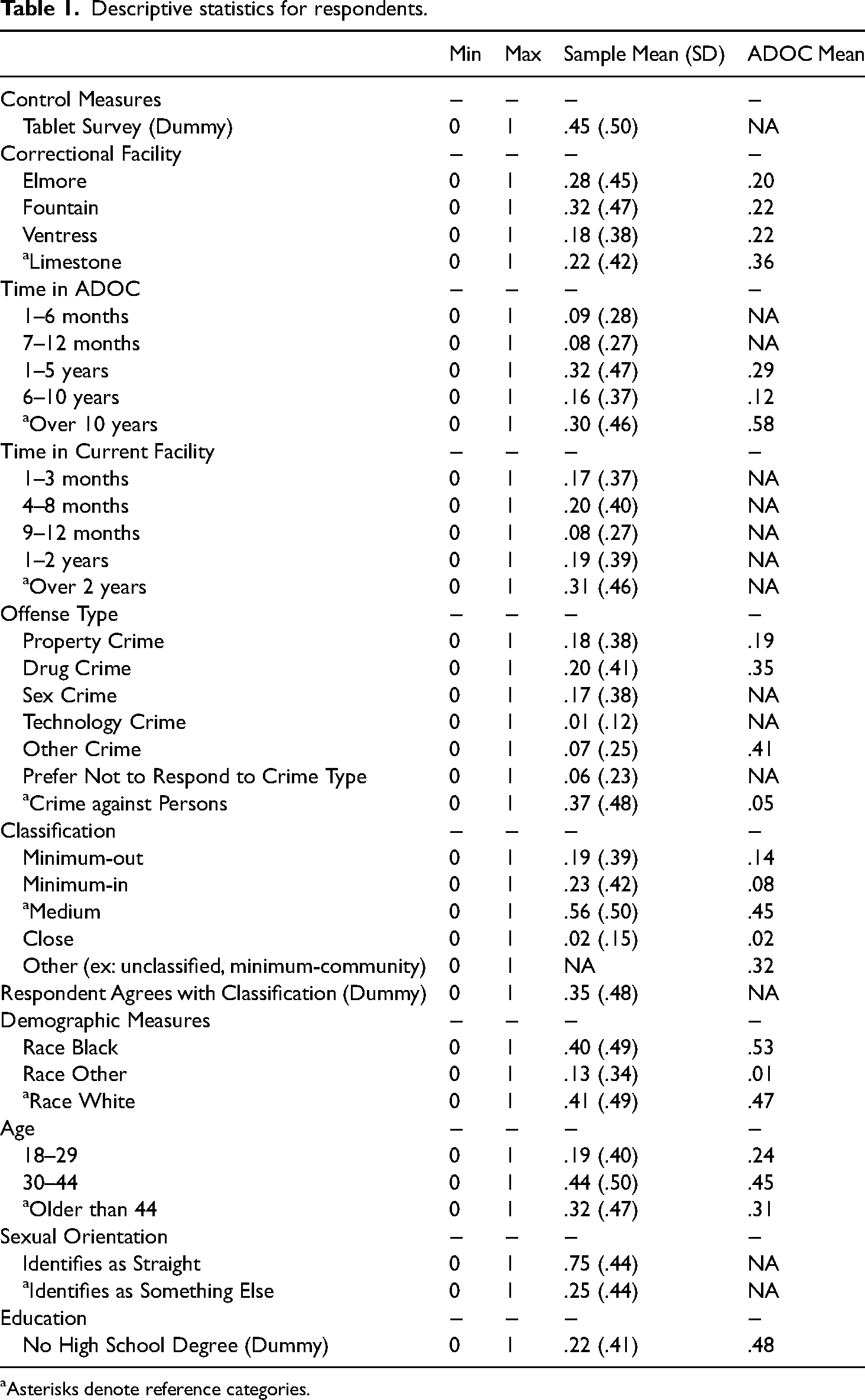
Asterisks denote reference categories.
Dependent measures
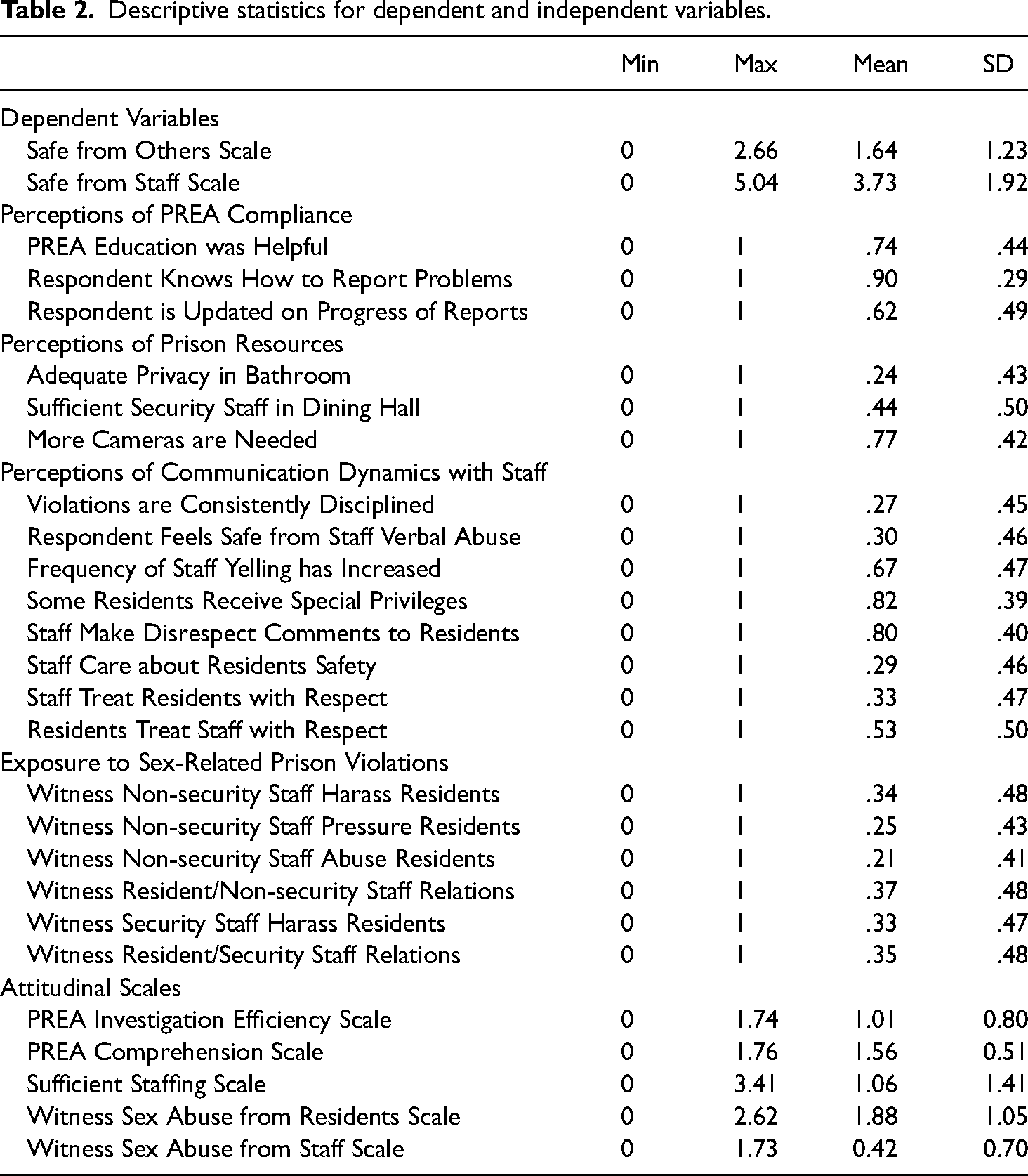
As the purpose of this study is to better understand the relationship between PREA measures and perceptions of safety among incarcerated populations, the dependent variable of interest is perceived safety from sexual abuse. Given the complex, multifaceted nature of the concept of “safety,” the survey included a broad variety of attitudinal measures intended to allow for more precise responses. 8 However, while the variety of perception measures collected in the survey provided beneficial descriptive specificity needed to explore the concept of safety in a multi-dimensional manner, the thematic overlap of these nine safety survey items suffered severely from multicollinearity (VIF > 10). Rather than omitting relevant attitudinal measures, factor extraction techniques 9 were used to reduce the dimensionality of the data while retaining pertinent predictors. The results of the factor analysis, which are discussed in more detail in the “Analytic Procedures” section below, indicated two distinct loadings of the perception of safety measures. Thus, the two dependent measures of this study include a Safety from Other Residents perception scale and a Safety from Staff perception scale (see Appendix A). Descriptive data for these attitudinal measures are presented in Table 2.
Descriptive statistics for dependent and independent variables.
Independent measures
As the ability of a facility to secure a safe environment can be shaped by structural factors, the survey also collected information on a series of items related to respondents’ perceptions of institutional PREA compliance, 10 perceptions of resource sufficiency, 11 perceptions of staff interactions, 12 and observations of violent activity. 13 As anticipated, several of these proxies suffer from multicollinearity (VIF > 10), so factor extraction techniques were once again used to reduce the dimensionality of this data by creating composite measures. Though discussed in greater detail in the “Analytic Procedures” section below, most of the loadings align along logically intuitive dimensions. Thus, relevant independent variables include a Sufficient Staffing perception scale, a Witness Sex Abuse from Others perception scale, a Witness Sex Abuse from Staff perception scale, a PREA Investigation perception scale, and a PREA Comprehension perception scale (see Appendix A). The descriptive data for these attitudinal measures are presented in Table 2.
Analytic procedures
This study examines the relationship between perceptions of PREA compliance and safety among men housed across four ADOC prisons. Principal Components Analyses (PCAs) are used to collapse multidimensional measures into composite measures, 14 and OLS Regression analyses are used to examine individual and structural predictors of safety perceptions.
Factor analysis
A series of PCAs were conducted utilizing an orthogonal varimax rotation. Component retention was considered for those eigenvalues greater than 1 per Kaiser's rule (see Kaiser, 1960), though the results of the scree plot and the percent of explained variability were also evaluated. 15 Seven components were retained upon assessment of the resulting eigenvalues, variance, and scree plot. 16 Component 1 consists of six measures of Perceptions of Safety from Staff and includes items such as “I feel safe from security staff sexual harassment.” Component 2 includes three measures of Perceptions of Safety from Others in Custody and includes items like “I feel safe from inmate 17 sexual harassment.” The third component summarizes four respondent perceptions of Sufficient Staffing Resources and includes items such as “There are enough security staff in the dorms to keep me sexually safe.” Component 4 measures Exposure to Sex Violations committed by other prison residents with items such as “I have seen inmates sexually abuse other inmates.” Component 5 measures Exposure to Staff Sex Violations with items such as “I have seen staff sexually abuse other inmates.” Component 6 includes items related to PREA Efficiency such as “I feel that PREA incident reports are investigated in a timely manner”, and Component 7 includes items related to PREA Knowledge such as “I have been informed of my rights to be free from sexual abuse.”
Factor loadings were used to create seven corresponding composite measures weighted by their respective component values. As a precautionary step, collinearity diagnostics were again examined to ensure that the newly created composite measures, as well as the excluded items with low loading coefficients, did not suffer from collinearity errors. No such issues were observed, with all VIF scores below 2.5. While the factor loadings appear to align along logical themes, a reliability analysis was conducted to examine how well these measures scaled together. The internal consistency of each measure is satisfactory with Cronbach's alpha values ranging from .773 to .944 (see Appendix A for an itemized description of the factor loadings with the corresponding reliability estimates and eigenvalues).
Regression analysis
A series of OLS regression analyses were conducted to examine the predictors of perceived safety. Because perceptions of safety from other incarcerated residents loaded separately from perceptions of safety from staff, these two dependent variables are examined separately. Missing data were omitted from the analysis via listwise deletion. All included variables have been assessed for multicollinearity, and both of the dependent variables were assessed for normality. Reference categories for each categorical variable are noted in Tables 3–4. Discussed first are the effects of institutional and respondent demographic control variables on perceptions of safety from others under custodial supervision. PREA compliance measures, including the PREA scales as well as the independent items that did not load well in the factor analysis, are then introduced in Model 2. Because perceptions of safety and the extent to which the facility can effectively implement PREA procedures may be conditioned by prison resources, Model 3 introduces related measures. Finally, Model 4 examines whether unpleasant staff and resident communications and/or exposure to sexual abuses within the prison exacerbate perceptions of safety beyond the availability of prison resources and PREA compliance. Each of these four models is then replicated for the other dependent variable, perceptions of safety from sexual harm against prison staff.
OLS regression predicting “perceptions of safety from other residents” scale.
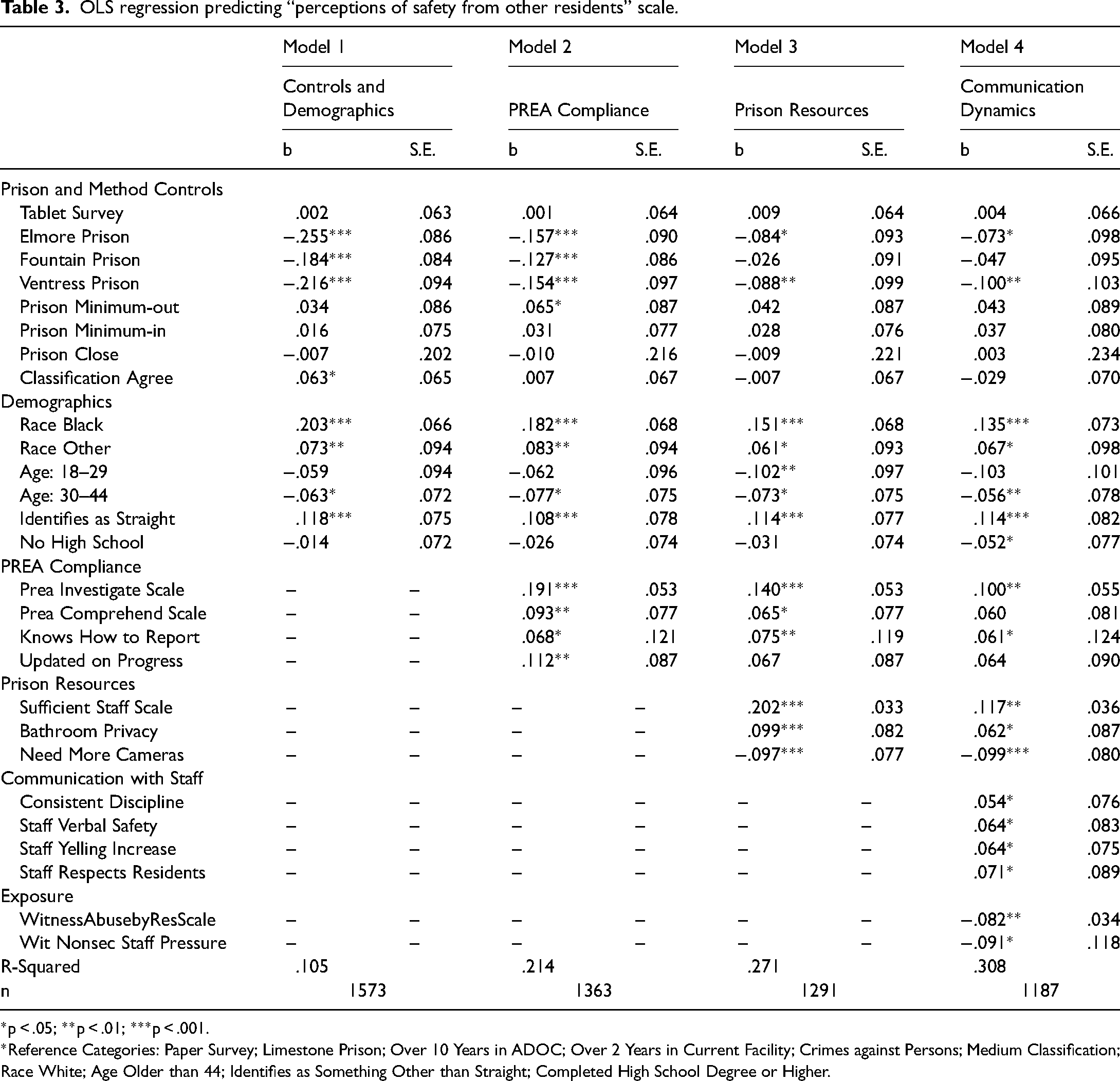
*p < .05; **p < .01; ***p < .001.
*Reference Categories: Paper Survey; Limestone Prison; Over 10 Years in ADOC; Over 2 Years in Current Facility; Crimes against Persons; Medium Classification; Race White; Age Older than 44; Identifies as Something Other than Straight; Completed High School Degree or Higher.
OLS regression predicting “perceptions of safety from staff” scale.
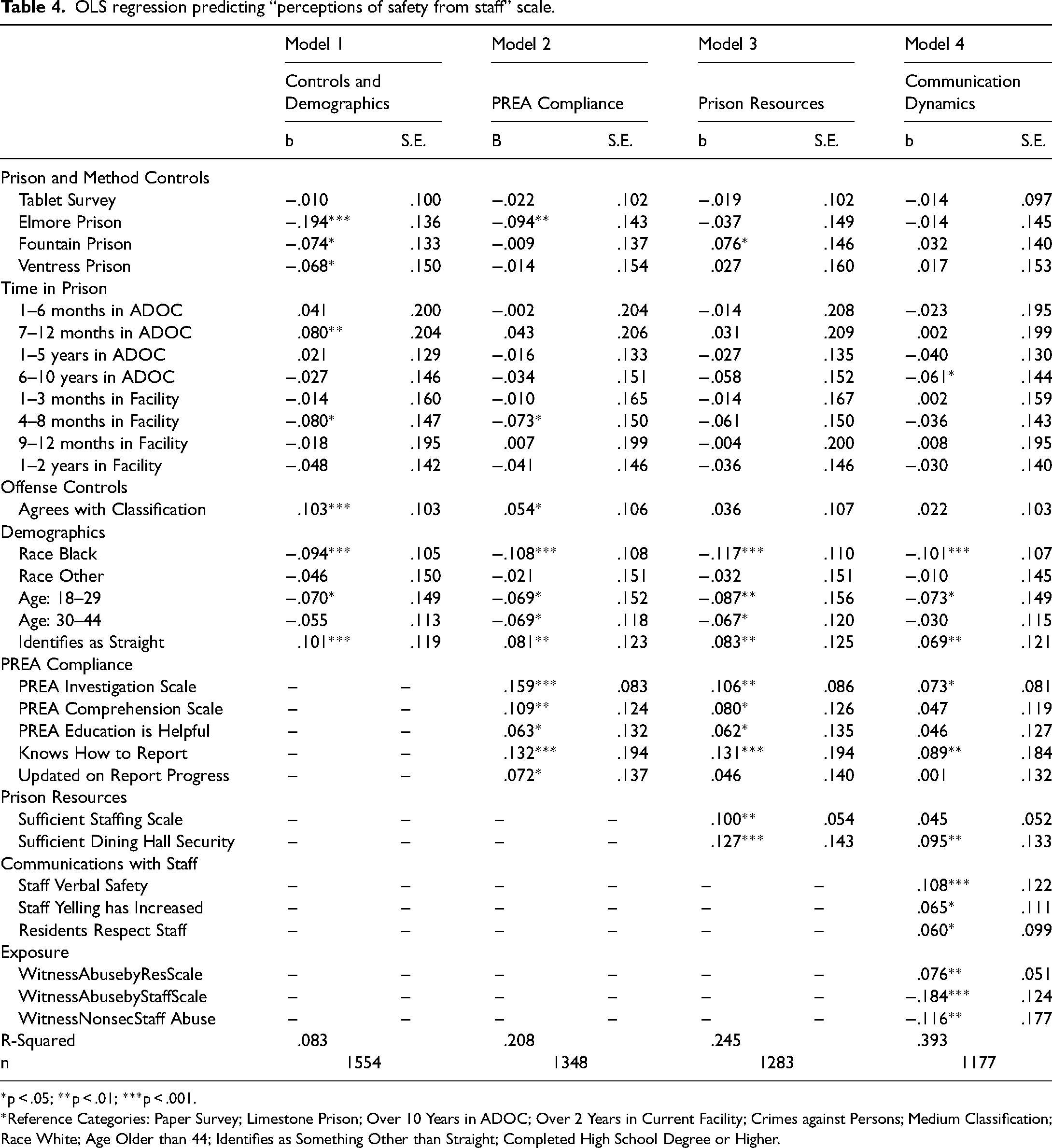
*p < .05; **p < .01; ***p < .001.
*Reference Categories: Paper Survey; Limestone Prison; Over 10 Years in ADOC; Over 2 Years in Current Facility; Crimes against Persons; Medium Classification; Race White; Age Older than 44; Identifies as Something Other than Straight; Completed High School Degree or Higher.
Results
The predictors of perceptions of safety from other residents are displayed in Table 3, with non-significant findings removed from the table and omitted from the description of results for the sake of brevity. 18 The analysis first examines the effects of various control measures and respondent demographic characteristics on safety perceptions in Model 1, explaining less than 11% of the variance in outcome. The effects of several of the control measures are weakly and/or inconsistently related to perceptions of safety from other residents. For example, the facility in which the participant is housed is initially negatively related to perceptions of safety when compared to the reference facility, but the effects of the prison facility are less significant upon introducing prison staffing resources to the model. The Fountain facility no longer differs statistically from Limestone, and the level of significance for the remaining two facilities is much lower: Elmore (p < .05) and Ventress (p < .01). The security level in the facility where the offender has been sentenced is not significant in any of the models in Table 3 with the exception of minimum-out in Model 2, and classification agreement is only significantly related to perceptions of safety in Model 1.
Respondent characteristics and identity measures are significant predictors of safety perceptions. This finding is particularly pronounced for race and sexual identity. Black participants consistently report significantly higher perceptions of safety from other residents compared to their White counterparts. Likewise, heterosexual respondents report significantly higher perceptions of safety from other incarcerated residents compared to those with alternative sexual orientations and/or prefer not to respond. Conversely, those between the ages of 30 to 44 report significantly lower perceptions of safety from other residents compared to older respondents. Though not initially significant, the absence of a high school degree or equivalent is also negatively related to perceived safety in the final model.
The introduction of PREA compliance measures increases the explained variance to 21.4% in Model 2 of Table 3. The PREA investigation scale and the measure of self-reported knowledge of reporting procedures are both positively related to perceptions of safety from other residents. While the effects of the PREA comprehension scale on perceived safety is initially significant, this relationship fails to achieve significance once communications with staff and exposure to abuse are included in Model 4. Likewise, updating residents on the progress of an investigation appears to increase safety perceptions at first glance. However, this relationship is no longer significant once prison resource measures are added in Model 3. Thus, in support of Hypothesis 1, PREA appears to be an important step toward improving perceptions of safety from sexual violations from other residents, but other individual and structural factors are also relevant.
Prison resource measures are introduced in Model 3, and staff-resident communications and exposure to sex violations in prison are added in Model 4, increasing the explained variance to nearly 31%. These findings identify several structural factors significantly related to safety perceptions in a manner that partially supports both Hypotheses 2 and 3. For example, the sufficient staffing scale is positively related to perceptions of safety from other residents, and the belief that the facility needs more cameras to ensure safety is inversely related to perceptions of safety. Adequate privacy in the bathroom is positively related to perceptions of safety, though dining hall staffing is not statistically significant. Some staff and resident communications are also related to perceptions of safety. Specifically, the belief that violations are disciplined consistently, the respondent is safe from staff verbal abuse, and staff treat residents with respect are all positively related to perceived safety. Also, perceptions that staff yelling has increased is positively related to safety. Exposure to sex abuse committed by other incarcerated men and witnessing non-security staff sexually pressure others are negatively related to perceptions of safety from other residents.
Although PREA was promoted as a response to eliminating rape and sexual abuse committed by and against those under custodial supervision, the broad definition of rape proposed under this policy is not explicitly limited to acts committed by residents (Corlew, 2005). Thus, the implementation of these policies may have the secondary benefit of improving perceptions of safety from sexual violations committed by prison staff against residents. As such, Models 1–4 were replicated for the second dependent variable, the perception of safety from sexual violations by staff scale. The results are presented in Table 4, and non-significant findings have been removed from the table and omitted from the description of results for the sake of brevity. 19 Many findings in Table 4 parallel those observed in Table 3, though a few notable differences are evident. Several of the case and respondent characteristics are significantly related to perceptions of safety from staff, though only a little more than 8% of the variance is explained by these factors. Once again, respondents in each prison facility initially report lower perceived levels of safety compared to the reference category of Limestone, though none of the prison facilities achieve statistical significance in the final model. While the amount of time spent in ADOC is rarely and inconsistently related to safety perceptions, incarceration lengths of 4 to 8 months, 7 to 12 months, and 6 to 10 years are intermittently significant in some models. Respondents who agree with their assigned classification report higher perceptions of safety from staff, but this relationship is no longer significant once structural factors are included.
Analogous to perceptions of safety from other residents, the respondent's demographic characteristics and identity measures significantly impact perceptions of safety from staff. As with the previous measure, those who identify as heterosexual or “straight” have significantly higher perceptions of safety compared to respondents with alternative orientations and/or selected the “prefer not to answer” option. While respondents between the ages of 30 to 44 once again report lower perceptions of safety from staff, this relationship is not significant in the final model. However, younger respondents between the ages of 18–29 consistently report significantly lower perceptions of safety from staff across all four models. Race remains an important predictor of safety perceptions, but the relationship is reversed for this dependent variable. While Black respondents report higher perceptions of safety from other residents, they express significantly lower perceptions of safety from staff compared to White respondents across all Table 4 models. Implications of this finding are discussed in the conclusion.
The introduction of PREA compliance measures increases the explained variance to 20.8% in Model 2 of Table 4. The addition of these measures parallels many of the findings corresponding perceptions of safety from other residents. While all five of the PREA measures are initially positively related to perceptions of safety from staff, only the PREA investigation scale and the knowledge of how to report a problem remain significant in the final model of Table 4. These findings suggest PREA policies may improve perceptions of safety from staff harm in a manner that parallels their effect on perceived safety from other residents, providing further support for Hypothesis 1. However, staffing resources may influence the relationship between PREA compliance and perceptions of safety by improving the respondent's perceptions about how these procedures are implemented, so these resource measures were added in Model 3 which increased the explained variance to nearly 25%. As expected, the effects of staffing on perceptions of safety differ notably between safety from other residents and safety from staff, providing mixed support for Hypothesis 2. The sufficient staffing scale is initially significant in Model 3, but is no longer significant when controlling for interactions with staff and exposure to violence. Thus, the relationship between the quantity of staffing may be moderated by the quality of interactions. Additionally, interpretations of sufficient security in the dining area is a significant predictor of perceived safety from staff. Though significant predictors of safety perceptions from other residents, the belief that additional security cameras are needed as well as the belief that there is adequate staffing in the bathroom are unrelated to perceived safety from staff. This could be interpreted as evidence that the respondents are more likely to trust staff to intervene in violations committed by other residents but less inclined to have faith that staff will protect them from other staff. These findings are not unexpected given that perceptions of staff abuse are unlikely to be mitigated by more staff members in the facility.
The effects of staff interactions and exposure to sexual violations are introduced in the final model of Table 4, explaining almost 40% of the variance in perceived safety from staff. The staff and respondent communication predictors of safety from staff nearly mirror the patterns observed when examining safety from other residents, further supporting Hypothesis 3. Again, perceptions of safety from staff verbal abuse and perceptions that staff yelling has increased are positively related to safety perceptions. While the belief that staff treat the residents with respect is positively related to perceptions of safety from other residents in Table 3, the perspective that the residents treat the staff with respect is positively related to perceptions of safety from staff in Table 4. Measures of residents receiving preferential treatment, staff making disrespectful comments, and staff caring about resident safety remain unrelated to perceptions of safety from staff in Table 4, consistent with the observations perceived safety from residents noted in Table 3. The vicarious effects of witnessing abuse have a more profound effect on perceived safety from staff compared to perceived safety from other residents. 20 Specifically, both the “exposure to sexual abuse from staff” scale and the measure of whether the respondent has witnessed non-security staff sexually abuse a resident are inversely related to perceptions of safety from staff. Counter-intuitively, the results of this analysis observed a positive relationship between the “exposure to sexual abuse from other residents” scale and perceptions of safety from staff. This is unexpected and may be the result of comparative decision-making procedures by the respondent. Though speculative, perhaps witnessing incarcerated men commit sex-related violations reduces fear of staff abuse by altering the frame of reference of the respondent so that the staff are less concerning than the residents.
Discussion
The results of these multivariate analyses reveal much about incarcerated residents’ perceptions of sexual threats from other housed individuals as well as staff. Perceptions of safety are shaped by several individual characteristics, safety policies, and structural factors including available resources and the prison environment. Though similarities are evident, the manifestation and direction of predictors of perceived safety differ between threats from residents and threats from staff. Key themes and policy implications are explored below.
Resident characteristics
This study identifies notable demographic variability in safety perceptions among incarcerated men, the results of which proffer empirically derived direction for targeted intervention strategies to enhance safety among at-risk populations. To begin, demographic factors such as age, education, sexual preference, and race are significantly related to perceptions of safety in prison. While some similarities across measures of perceived safety are evident, others differ between perceived violence from staff compared to perceived violence from other incarcerated men; for example, respondents who identify as “straight” report higher safety perceptions across both outcomes. The consistency of the effects of sexual preference on multiple dimensions of perceived safety parallels the profound documented evidence of LGBTQ vulnerability exacerbated by prison culture, hegemonic masculinities, homophobia, gender misclassification, and other factors (Brown and Jenness, 2020; Dumond, 2003; Medina and Nguyen, 2018). While age is also a significant predictor of safety perceptions across both outcomes, younger respondents appear more fearful of staff while middle aged respondents seem more threatened by other residents. The lower sense of safety expressed by younger respondents coincides with documented evidence of higher victimization risks (Corlew, 2005; Dumond, 2003), but it is unclear why this is specific to staff violence. Though speculative, this relationship may be moderated by the age of the perceived threat. Younger incarcerated populations may feel more threatened by older staff who are perceived as disproportionately enacting social control over this age group, while middle aged populations feel less safe among youthful residents perceived as more physically threatening. Interestingly, the relationship between race and safety is the only demographic variable that changes direction across outcomes. Black respondents report significantly higher perceptions of safety from violence against other residents but significantly lower perceptions of safety from staff violence. Though the outcome measures in this study are perceptual indicators of safety rather than objective likelihood of risk, this finding coincides with prior research concluding that people of color are less likely to be victims of sexual and physical aggression from other residents but more likely to be recipients of such harms from staff (Wolff et al., 2008).
Considering the demographic patterns in reported safety perceptions, efforts to enhance prison safety should implement strategic interventions that target high-risk populations and those who report low perceptions of safety. In furtherance of this goal, prison officials may apply for available PREA grants allotted for the enhancement of “approaches to prevention, detection, and responses to incidents of sexual abuse” (National PREA Resource Center, 2023). Awarded grants can be used to thoroughly evaluate available validated risk-assessment instruments to better screen for vulnerable residents and potential aggressors, regularly assess the quality of these tools to account for changes over time as needed, regularly access and review current rigorous research on prison safety and modify procedures as needed, and protect at-risk residents by ensuring properly trained personnel are cautiously consorting assessment outcomes when assigning classifications, housing, work, and other assignments (Corlew, 2005; McGuire, 2005; Medina and Nguyen, 2018). In keeping with PREA standards, administrative segregation should only be used in the absence of viable alternatives due to the empirically established emotional and psychological harms associated with such isolation (Corlew, 2005; Medina and Nguyen, 2018). Instead, those identified as vulnerable may be better served through effective case management strategies and properly trained response teams (Hastings et al., 2015). In addition to identifying and protecting vulnerable populations, the results of this study highlight the importance of staff diversity. Administrative efforts to promote a safer environment should consider actively recruiting applicants from racial minority, LGBTQ, and other poorly represented communities. Representation such as this may increase perceptions of safety from staff by reducing social distance between residents and staff, promote a more inclusive environment by normalizing cultural diversity, and better address the needs of vulnerable populations (see Johnson, 1996).
PREA safety policies
While demographic factors shape safety perceptions, these measures explain only a small portion of the variance in outcomes. PREA compliance also serves an important function in safety enhancement efforts. Specifically, self-reported knowledge of reporting procedures and the belief that PREA investigations are effective are positively related to perceived safety from staff violence as well as safety from resident violence even after controlling for alternative explanations such as staffing resources, quality of communications with staff, and exposure to violations. Thus, prison safety does appear to have been enriched by prison policies enacted to adhere to PREA compliance criteria, state law, and ADOC standards. The positive effects of subjective PREA compliance measures are likely attributable in part to its important symbolic function of expressing that prison rape is “…a serious problem worthy of societal attention and resources” (McGuire, 2005: 79). This reframed narrative endeavors to humanize incarcerated populations, modify potential dismissive responses to sexual assault among correctional staff by requiring prevention and investigation efforts, and end impunity by establishing a zero-tolerance response to sexual abuse (Corlew, 2005). However, a symbolic policy is insufficient when implemented lackadaisically. Therefore, prison officials should not only continue to adhere to PREA, but further prioritize high quality PREA practices.
The observed significance of perceived PREA compliance indicators on safety underscores the importance of visibly demonstrating a comprehensive commitment to prison rape reform. Considering the significant effects of reporting procedure knowledge and investigation quality on perceived safety, safety efforts may be strengthened through quality safety education training programs for residents, investigation training for staff, and vigorous prosecution efforts. Specifically, available PREA grants can be allocated for educational training programs for incarcerated residents that thoroughly explains their right to be free from abuse, clearly outlines reporting procedures, explains techniques for preserving evidence, defines and clarifies types of sexual violence, and acknowledges available safety options for vulnerable populations (Corlew, 2005; McGuire, 2005). Additionally, investigation efficiency can be improved with employee training that educates the appropriate staff on how to recognize sexual assault, thoroughly investigate all complaints in a timely manner, collect physical evidence, interview victims and witnesses, provide appropriate medical and mental health treatment for victims, and compassionately respond to sexual assault incidences (Corlew, 2005; McGuire, 2005). Monetary resources may also support prosecutorial efforts to vigorously investigate, pursue, and punish violations (McGuire, 2005). Finally, investigation efficiency may be enhanced through coordinated efforts between prison staff, prosecutors offices, and victims services (Corlew, 2005; McGuire, 2005).
Structural factors
Though PREA efforts shape perceptions of safety, this worthy goal is also reliant on a variety of structural factors including staffing and resource sufficiency, available privacy, the quality of interactions between staff and residents, and the prevalence of exposure to violence. Specifically, sufficient staffing and privacy are both positively related to perceived safety. The need for more security cameras corresponds to safety concerns of violence from other residents, while sufficient staffing is related to safety concerns of violence from staff. While subjective interpretations of sufficient staff numbers appear to matter, the quality of staff is also of relevance. Interpersonal interactions between staff and incarcerated residents influence safety perceptions, though not in the anticipated direction. While this study found that perceptions of increased staff yelling are positively related to safety perceptions, this relationship may depend on the cause of yelling. As previous research has posited a relationship between perceptions of preventative measures taken by officials and residents’ views of their own safety (Shermer and Sudo, 2017), increased yelling among staff may be interpreted as protective rather than aggressive when used to disrupt or discipline violent acts. In addition to facility resources, perceptions of safety are shaped by the prison environment. Specifically, exposure to acts of sexual violence in prison reduces perceptions of safety from other residents. As acknowledged in previous research, vicarious experiences have harmful consequences for those who witness such acts (see Listwan et al., 2014; Rowell-Cunsolo et al., 2014). As anticipated, exposure to staff abuse decreases perceived safety. However, while witnessing violations committed by other residents decreases perceived safety from other residents as expected, this measure is positively related to perceived safety from staff. Perhaps respondents who have witnessed violent acts committed by other residents are more trusting of staff, especially in incidences in which staff respond appropriately (see Shermer and Sudo, 2017).
Fiscal constraints present a challenge to safety efforts (McGuire, 2005). Budgetary limits preclude expensive sweeping reform, and administrators must invest finite monetary resources strategically. Because facilities are likely to differ in the specific areas most in need of attention (Corlew, 2005), prison officials can benefit from taking advantage of available PREA research funds and coordinating with scholars to assess safety predictors and evaluate policies. Such research, including the current study, serves an important role in highlighting evidence-driven reform. The results of this study indicate that surveillance equipment, sufficient staffing, the quality of staff interactions, and exposure to violence are significantly related to safety perceptions. Though newer facilities are often designed with the intention of establishing clear sight lines, it is not uncommon for older prisons to include “blind spots” that provide opportunities for assault (Corlew, 2005). Therefore, older facilities and/or those with potential blind spots are likely to benefit from using available PREA funds to purchase, install, and monitor surveillance equipment to entirely eradicate blind spots. Like prior research observing a relationship between understaffing and sexual offenses in prison (McGuire, 2005), this study's finding that sufficient staffing increases safety perceptions confirms the importance of staff recruitment. While increasing the number of available staff will likely benefit safety efforts, the significance of staff interactions in this study additionally emphasize the importance of hiring and training quality staff. This will likely require more competitive salaries and employee benefits to recruit and retain strong applicants, an overwhelming set of obstacles currently engulfing the facilities included in this study (Thornton, 2019).
Limitations and future research
While the results of this study address an extensive gap in the scholarly literature paramount to assessing perceptions of PREA efficacy and carceral safety among incarcerated populations, it is not without limitations. The randomized list of participants was provided by the ADOC rather than the research team. Though operationalization differences complicate means comparisons between the current sample and reported ADOC population, a few notable distinctions are evident (see Table 1). For example, Elmore and Fountain respondents appear slightly overrepresented in the sample while Ventress and Limestone were somewhat underrepresented. There are also minor differences in incarceration length and educational attainment. Additionally, while the authors collected data across four large prisons, each of the included facilities is located within the same southeastern state. Although PREA is federal law, states are accorded substantial flexibility in how they choose to implement the mandated criteria (Corlew, 2005). As a result, PREA responses are unlikely to be geographically uniform. Future research should expand this study to include a multistate sample conducive to illuminating potential cross-state variability. Additionally, the all-male sample precluded analyses of differential perceptions across sex and/or gender. As previous research suggests that sexual violence is more pervasive among women in prison (Wolff et al., 2009), future research should explore whether these findings parallel those of incarcerated women. Further research on perceptions of safety among LGBTQ populations in custodial care is also needed. Because this population is at a higher risk of sexual victimization (see Brown and Jenness, 2020; Dumond, 2003; Medina and Nguyen, 2018), empirical data on predictors of their safety perceptions would serve an essential role in protecting this vulnerable population. Finally, further inquiry into the relationship between perceptions of safety and the number of reported sexual assault incidents is warranted. Due to low reporting rates (Dumond, 2003; Garland and Wilson, 2012; McGuire, 2005) and the subjective nature of perceived safety, it is possible that these measures may not be collinear. Future research might benefit from examining whether reductions in known cases are reflected in perceptions of safety.
Conclusion
As one of the first known endeavors to examine predictors of perceived safety among incarcerated men, this research addresses a substantial gap in the scholarly literature and underscores the value of the incarcerated perspective. Furthermore, the disaggregated measure of prison safety acknowledges differential trajectories between perceived staff abuses and perceived abuses from other residents in a manner that enhances the specificity of corresponding policy implications. In doing so, this study highlights the manifestation and predictors of sexual threats from other incarcerated individuals as well as threats from prison staff perceived among respondents under custodial supervision. The empirical findings from this study demonstrate that individual characteristics, policy compliance, and structural factors shape safety perceptions among incarcerated men. Thus, strategic safety enhancement interventions require a multifaceted and comprehensive response that addresses obstacles across each of these levels by effectively identifying and protecting vulnerable populations, training staff on effective investigation techniques, orienting residents on rights and reporting procedures, and using available research to guide decisions on how best to prioritize available funding which may necessitate better staffing and surveillance equipment, depending on the facility. Furthermore, the divergent patterns between perceived safety from other residents and perceived safety from staff signify the importance of integrating a diverse combination of strategies to combat abuses committed by both populations.
While many of the policies outlined above can be addressed with available PREA funds (Corlew, 2005; Dumond, 2003; McGuire, 2005), these strategies are unlikely to eradicate sexual abuse in prisons entirely. Though beyond the scope of this empirical study, the residual problem of prison overcrowding is a severe obstacle to violence prevention efforts in prison settings (Barrett, 2004; McGuire, 2005; Struckman-Johnson et al., 2013). Effective surveillance and efficient incident investigations are not easily achieved when understaffed and overcrowded. To be clear, this is not an endorsement of expanding the prison system to better house the incarcerated population. Conversely, efforts to reduce overcrowding are likely to be best served by reversing legislative policies that lengthen prison sentences, impede early release options, and limit noncustodial options (Barrett, 2004; Struckman-Johnson et al., 2013). Finally, efforts to achieve a safer environment for those under custodial supervision can be strengthened by reframing public discourse on incarcerated populations as deserving of safety, dignity, and protection. Prison rape has been portrayed as humorous, an accepted part of the prison experience, and a merited consequence for morally compromised offenders (Corlew, 2005; Dumond, 2003). Prison reform policies like PREA serve an important symbolic function of rejecting indifference to the plight of this often overlooked population. Humanizing those enveloped within the prison system continues to serve as a vital step in preventing sexual assault and securing a safer environment in carceral facilities in this post-PREA era.
Footnotes
Acknowledgments
We would like to thank the senior leadership and administrators at ADOC, wardens, and corrections officers for their valuable cooperation throughout the data collection process. We would also like to thank Dr Royce Dasinger for his contributions as the project consultant, Dr Thomas Vocino for serving as the project manager, and our valuable research assistants Kelvin Hawkins and Amanda Jordan.
Declaration of conflicting interests
The author(s) declared no potential conflicts of interest with respect to the research, authorship, and/or publication of this article.
Funding
The author(s) disclosed receipt of the following financial support for the research, authorship, and/or publication of this article: The Alabama Department of Corrections (ADOC) was responsible for funding data collection efforts that made this analysis possible.
