



Abstract
From the beginning of its colonial settlement in Kenya, the British administration criminalized Kenyans. Even now, colonial modes of punishment, incarceration, closure, interrogation, curfew, confiscation, separation, displacement, and detention without trial are deeply embedded in the spatial and ideological arrangements of post-colonial Kenya. Initially assumed to herald a rupture from colonial modes of criminalization and punishment, the post-colonial period instead normalized them. Through ethnographic, scholarly, and visual encounters, the paper engages five interconnecting structures that engendered the legacy of a seamless system of control, containment, and punishment evident in the ‘afterlives’ of empire. These are settler colonialism, violence, racism, colonial corporeality, and capitalism. The paper attends to the violence and brutality that endures in the very geographies that were the urban targets of colonial siege and links the carceral practices of settler colonialism and the everyday post-colonial governance of Nairobi’s poor neighbourhoods, encounters with the debris and ruination of empire found in the material and spatial fabric of Mathare. We take up a critical encounter with colonial files to both discern the continuity and lineage of carceral practices and to disrupt the authorial totality and continuity the colonial archive files assembled. The paper includes archival and authored photographs:
Keywords
Early in the Covid-19 prompted lockdown in March 2020, the police killed a thirteen-year-old boy in Mathare, Yasin Moyo, who was on his balcony twenty minutes after the 7 pm night curfew began. Over the next few months, more would be killed and injured as part of the ‘enforcement’ of coronavirus measures in this poor area and across the country, highlighting the extreme nature of containment measures. While, in other more prosperous sections of Nairobi the price for non-adherence to the rules could be a bribe or less, here, as in other poor settlements, the overzealous and violent policing of the lockdown curfew, initially from 7
Curfews, as part of covid restrictions, are authorised under the provisions of the Public Order Ordinance that dates from the British colonial administration of Kenya. Although ostensibly neutral, they are more steadfastly implemented in the historically poor black geographies of Nairobi, the former ‘native city’, echoing the carcerality of the colonial emergency period of the 1950s. Here, we understand carcerality to underpin the logic of settler colonialism, defining and determining criminality and authorising spatial, temporal, and material modes of punishment. The punitive, according to Mbembe, was a founding ethos of colonial sovereignty, wherein the ‘lack of justice of the means, and the lack of the legitimacy of the ends, conspired to allow an arbitrariness and intrinsic unconditionality that may be said to have been the distinctive feature of colonial sovereignty’. Certainly, and as we put forward, the post-colonial Kenyan state has inherited this unconditionality and the regime of impunity that was its corollary (2001: 26).
Within this paper we trace the endurance of the curfew and similar colonial modes of punishment in Kenya, principally in the former ‘native’ areas of Nairobi, and take up a non-linear approach – employing flashbacks between the colonial past and present – to demonstrate how these spaces, and Kenyans broadly, continue to be located across carceral geographies that both materially and through narrative chronicle ongoing modes of colonial punishment. This assemblage of punishment, which includes inordinate surveillance, arbitrary detention, zones of separation, and the most recent iteration of the curfew, we argue, is deeply embedded in the spatial and ideological arrangements of post-colonial Kenya. We centre carcerality as a useful analytical guide from which to theorise enduring colonial injury and harm in Kenya. Heretofore, while there has been important interdisciplinary literature that registers the endurance of colonial affects and effects in Kenya, as but two examples see Wa Thiong’o (1987) and Branch (2011), carcerality, as a vehicle through which to understand ongoing socio-spatial and political relations, has not been extensively considered. In this regard, many critical reflections have established the contiguity of particular spaces with state violence. However, they have not substantially elaborated on the intersecting punitive logics that are imprinted on many Kenyan geographies, and which allow for both the steadfast concomitant implementation of boundaries and the carceral social relations that obtain in such spaces of control – that is, an assemblage of punishment constituted by surveillance, containment, separation, and curfews, as but a few examples, intent on causing injury and harm to particular bodies and minds.
To these ends, we draw on the long-term fieldwork of the authors, a combined period of close to 20 years, as well as the archival record, to highlight the endurance of legacies of empire, through institutionalised re-instantiating practices that enact punishment on historically punishable bodies, via similar and distinct modes and nodes. Archival and authored photographs are inserted throughout the paper to draw attention to the material and spatial effects of carceral practices, to disrupt the linearity and certainty of historical narratives and as visual encounters with lived marginality, in particular, that of the informal settlement of Mathare, in Eastlands, Nairobi. The visual brings immediacy to our apprehension of the tools of carcerality, which include the remnants and ruins of long duree (Stoler, 2013), multiple dispossessions, and the technologies and architectures of the construction of life at the margins.
Our article is organised in two sections – containment and injury and harm – and follows five structures that, taken together, assembled the punitive British colonial settlement of Kenya. The forces of settler colonialism, violence, racism, colonial corporeality, and capitalism engendered a seamless system of control, containment, and punishment evident in the temporality and spatiality of their ‘afterlives’ (Hall, 1996; Hartman, 1997). They are the eliminatory logic inherent to the structure of settler colonialism (Wolfe, 2006); the institutions, structures, and systems that combine to make up violence (Butler, 2020; Mbembe, 2001, 2020); the structure of racism (Fanon, 1970; Wolfe, 2016) that together with the structure of colonial corporeality (Pierce and Rao, 2006) defines and determines the body/corporeality and social/political location of the colonized; and the structure of capitalism (Wa Thiong’o, 1981) that engenders the continuities and discontinuities of the economies of land, extraction, production, and labour. Added to these interconnecting structures is the imperative of modernity to ‘homogenize the nation’ that Mamdani (2020: 14) suggests shapes the post-colonial African polity, and in the process, not only resistance to the order of the state, but also claims to divergent identities and sovereign rights are criminalised and subject to the extreme violence of the state.
Time in the colony and its afterlife is not linear but rather constructed of crossings, reversals, and re-inventions. As an age, suggests Mbembe, the post colony encloses multiple durees made of discontinuities, reversals, inertias, and swings that overlay one another, interpenetrate one another, and envelop one another: an entanglement (2001: 14). Mbembe goes on to pose the question of displacement not simply ‘to signify dislocation, transit’, or the impossibility of centrality, but rather begins from the ‘close relationship between subjectivity and temporality’ (2001: 15). Mbembe's argument, together with the observation by Githuku that a colonial arbitrariness ‘disguised as legality’ entrenched privileges and rights while simultaneously delegitimising, repressing, and extinguishing the aspirations of Africans (2017: 290), is central to our analysis of an almost seamless continuity of the practices, ruptures, and disturbances that punishment brought to Kenyan lives over the past 130 years.
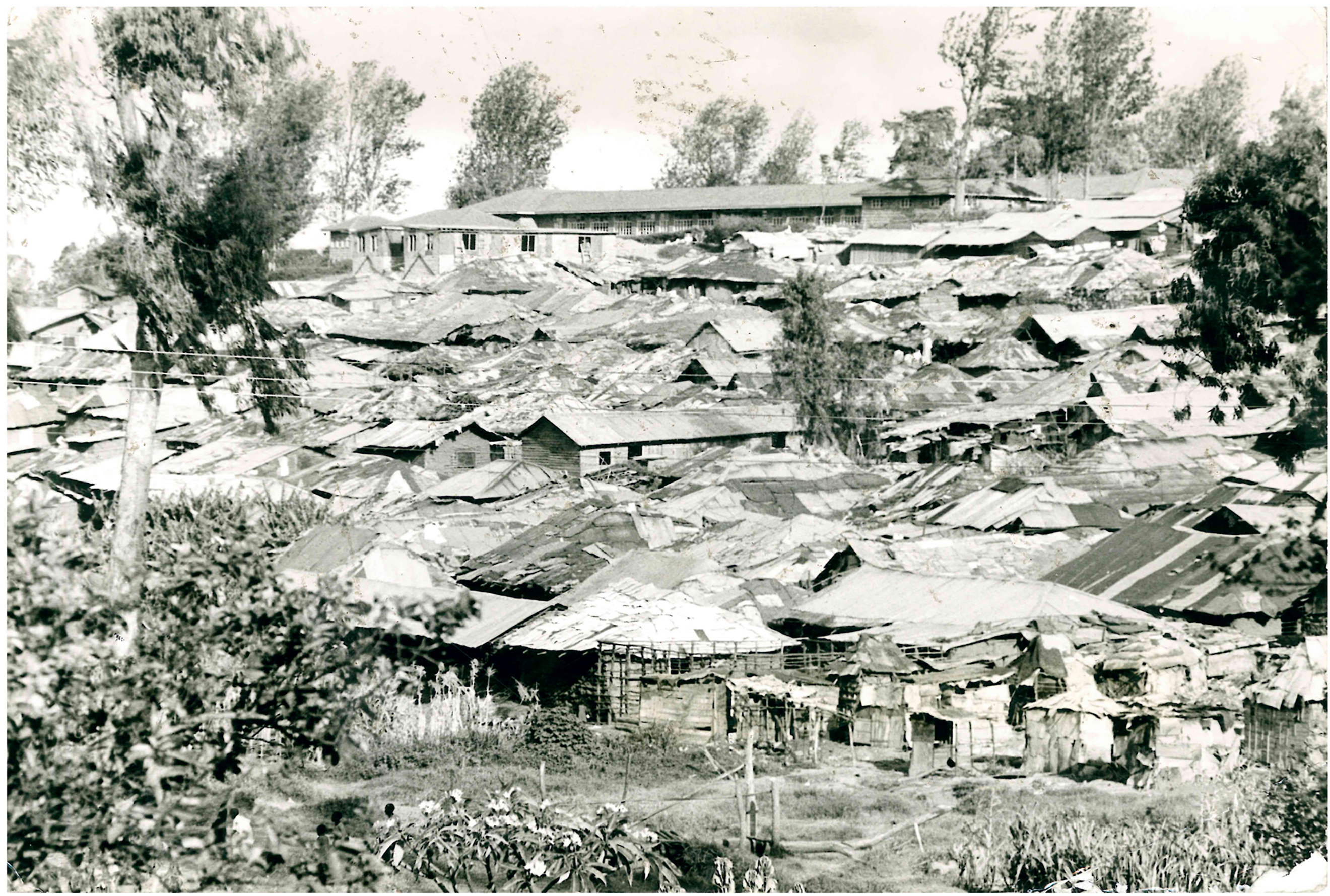
The old Mathare – mud houses and roofs of cardboard (undated). Courtesy: Standard Media Group.
Containment
In Kenya, the British colonial enterprise expanded significantly in 1890 and was hastened by the Berlin Conference of 1884/5. Following this conference, narratives of empty landscapes informed the imperial imperative that would be directed towards making this a ‘white man's country’ (Jackson, 2011). According to Sir Harry Johnston, the Colonial Administrator, ‘the country in question [was] utterly uninhabited for miles and miles, its inhabitants at most “wandering hunters”; so that “with no thought of injustice to any native race for the country” it was rendered “admirably suited for a white man's country” (quoted in Harries, 1984: 19.51; cf. Jackson, 2011). Towards the goal of entrenching a ‘white man's country’, punitive expeditions slaughtered thousands, destroyed tens of thousands of homesteads, burnt villages, and confiscated thousands of cattle, sheep, and goats. The land was encountered as ‘a space which is by definition empty where it is not inhabited by Europeans’ – terra nullius, a land belonging to no-one, empty and unoccupied – ‘the chaos of the savage land needing to be ordered’ (Noyes in Simatei, 2005: 86); ‘waste’, otherwise known ‘as the heart and soul of (Gikuyu) land’ (Wa Thiong’o in Simatei, 2005: 87) needing to be tamed, reshaped in the image of European productivity.
Without a doubt, from the early days of dispossession, the punitive logic of governance of space rendered through an eliminatory logic central to settler colonialism employed the organising grammar of race to secure, obtain, and maintain territory (Wolfe, 2006: 387). British colonial settlement disrupted, fragmented, disturbed, and reassembled ethnic affiliations, land stewardship, elder authority, the agency of generational shifts, and the accommodations between adjoining communities (Anderson, 1993; Ese and Ese, 2020: 144–165).
As settlers expropriated lands for the assemblage of a ‘white man's country’, the colonial administration met challenges to colonial rule, subversion, and perceived ‘lawlessness’ with deportation, exile, and collective punishment (Anderson, 1993; Kanogo, 1987), engendering generational landlessness, internal displacement and multiple and continuous movement across borders and boundaries. At independence, the resulting fragmentations would be carried forward as, in line with the making of post-colonial polities, Kenya embraced a singular unified identity for the emerging nation, at the same time denying recognition of the Mau Mau forest fighters’ contribution to freedom from colonial rule.
Predominantly led by Kikuyu together with Embu and Meru, and located in, but not limited to, the Central Highlands, the Kenya Land and Freedom Army, also known as Mau Mau, led an insurrection against colonial rule throughout the 1950s that would last until independence. The colonial ‘discursive regime’ of race (Hall, 1996: 20–21) framed Kenyan unrest as savagery; by the 1950s, the oathing practices of the Mau Mau rebellion were condemned as bestial. 1 Certainly, it was incomprehensible under the colonial and settler ‘narrative construction’ (Hall, 1996: 25) of ‘the native’, that Kenyan refusal to acquiesce to the colonial order (an order of colonial sovereignty) was a political response to the alienation of land, the control of labour and the imposition of taxes rather than a show of disloyalty (see also Morton 2014: 84/122). From the beginning of colonial rule, Kenyans agitated for land, political representation, labour rights, and the right to organise. Uprisings, protests, dissent, and refusal were met by suppression and violence, including those against removals. This violence was meted on those who, for example, protested for the release of Harry Thuku of the East African Association who was arrested in 1921 as an agitator, those involved in the 1947 women's labour strikes on coffee plantations, the 1947/8 Revolt of the Women (Ese and Ese, 2020: 43; Presley, 1988: 507), and the agitation of progressive Indian labour leaders for workers rights and unions (Wa Thiong’o, 1981: 93), as but a few instances.
Amidst increasing pressure from settlers to respond to what they and the colonial administration framed as the criminality, subversion, lawlessness, and disorder of the Mau Mau rebellion, in October 1952, the colonial government promulgated a State of Emergency – to secure public safety, defend the territory, maintain public order and suppress mutiny, rebellion, and riot. 2 Years of brutal suppression, militarised control, interrogation, incarceration, detention without trial and torture, ‘part of that colonial culture of fear’ (Wa Thiong’o, 1981: 44) followed, to be folded into the colonial state's ‘self-preserving force’ (Silva, 2009: 214). That same ‘self-preserving force’ of the state would bring about, amongst an array of carceral practices, a post-independence Kenyan State of Emergency to suppress, amongst other movements, agitation for secession of the Somali in the Northern Frontier District. Identified as a place of trouble and non-compliance under colonial rule, named shifta or bandits by the new Kenyan government, the interconnected realm of singularity of identity demanded by the building of the new nation came together with the punitive control of resistance.
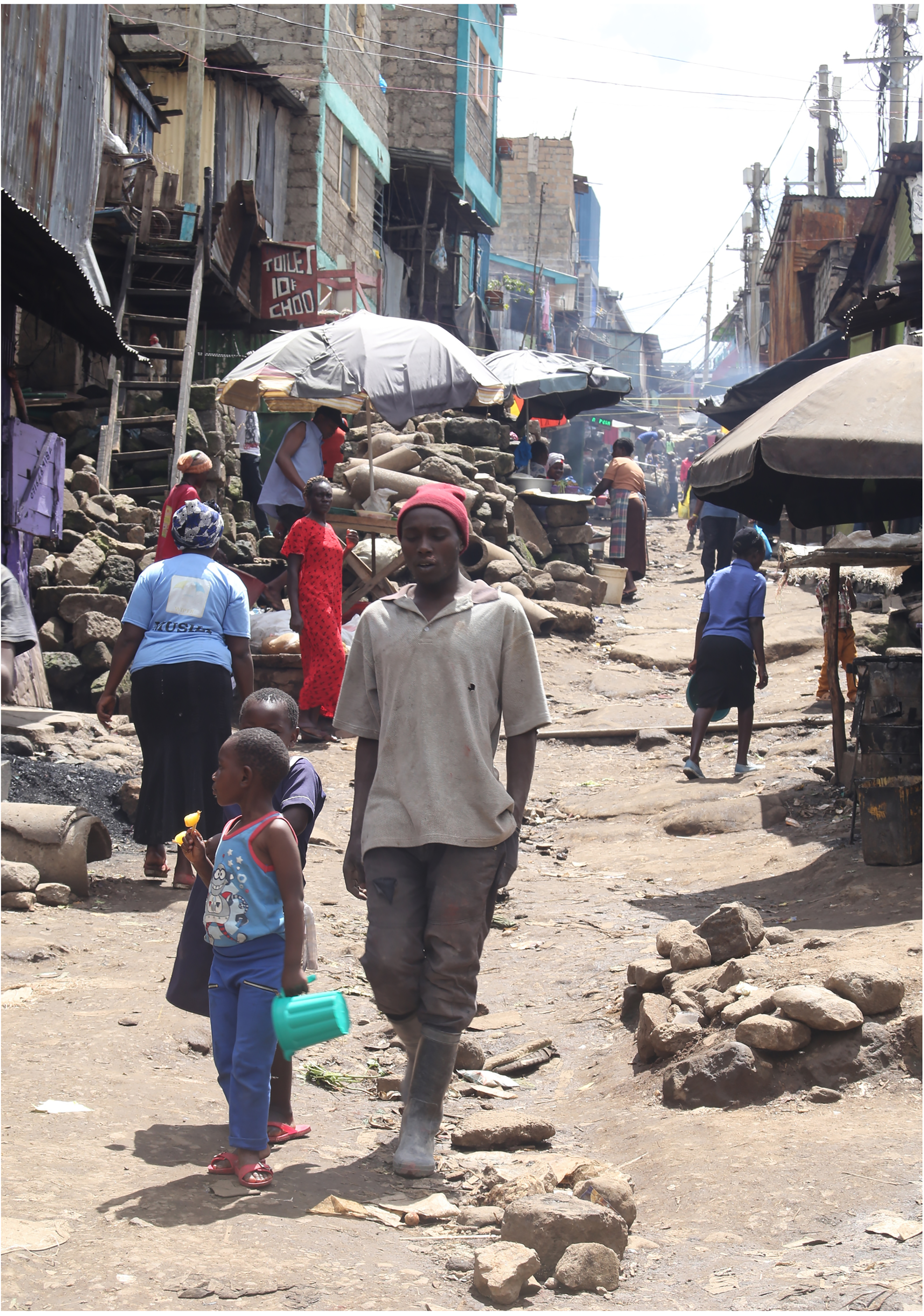
Mathare 2018. © Annie Pfingst 2018.
Alongside re-assembling alienated land (beginning with the 1902 Crown Lands Act), the British colonial administration introduced metropolitan legal codes and constructed prisons and detention camps. Settler colonialism, observes Branch, exhibited an ‘obsession with control’ (2005: 254) that manifested in an imperative to control contamination – an ‘African space filled with deviancy and vice beyond the control of European authorities’ (p. 244), one where whole population groups such as those identified as ‘detribalized’ urban dwellers were assumed to be degenerate and the perpetrators of crime. Those assumed to be ‘trustworthy’ were brought into the colonial administration, including as police and prison staff (p. 264). This colonial construction of politicised ethnic identity and affiliation carried over after independence (Professor Kimani Njogu in Namu, 2017). In but one example, this remains evident in the legacy and patterns of residence in some Nairobi neighbourhoods, and, in particular, in African ‘nuclear family housing’ established during and immediately after the Second World War, in areas such as Ziwani, Mbotela, Kaloleni, and Bahati (1945–1952). Such housing was put up principally for ‘black, Christian, civil servants’, loyalists, predominantly non-Kikuyu, elites, and soldiers back from the Second World War (Ese and Ese, 2020; White, 1990:144). These planned spaces included welfare clubs and sports halls and were to be occupied by 15,000 Africans seen as able to partake in the social activities deemed ‘civic’ by the colonial state (Anderson, 2005: 186–188).
In emptying the land of its inhabitants through removals, the settlement project aimed to create the very conditions of terra nullius – that would, in turn, enable expansive settlement and resource extraction. Those removed from what had been their traditional lands laboured on white farms as squatters. With their homesteads demolished, they became landless. Displacement and later ‘repatriation’ of squatters to overcrowded reserves in the Central Highlands, sent thousands of mainly Kikuyu seeking work, together with women and children, to Nairobi to settle in likewise overcrowded and impoverished conditions (Anderson, 2003: 159–160).
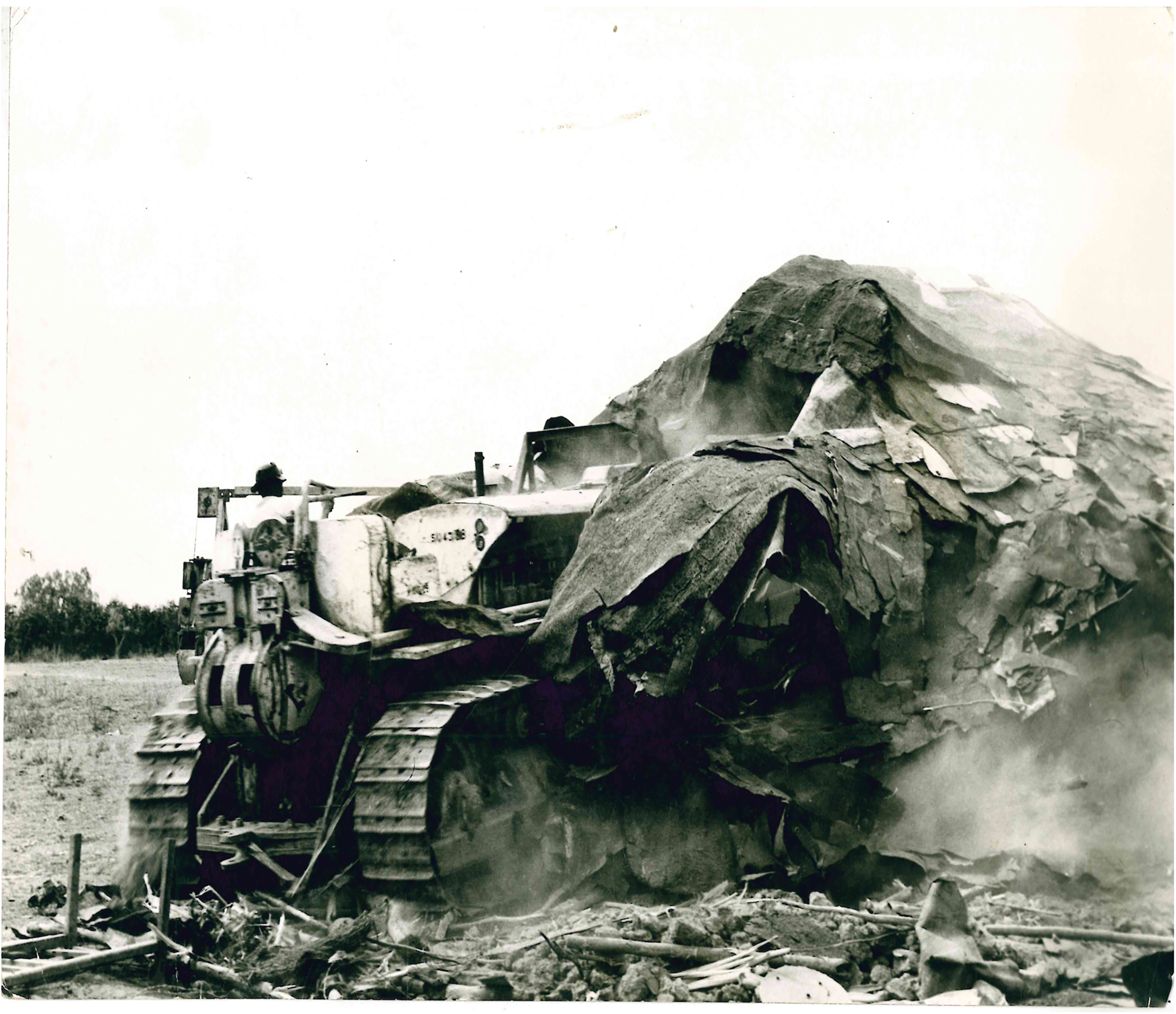
Buru Buru is now non-existent. These bulldozers knocked down the houses. Average time per house, 30 s. They tumbled like a house made of matchsticks. 2 October 1953. Courtesy: Standard Media Group.
The colonial obsession with control manifested in a multitude of ordinances and regulations on movement, place of residence, business and enterprises, the growing of food, collective punishment, and the confiscation of land and property. 3 Passes, permits, permissions and patronage circumscribed daily life: for example, passes controlled the labour supply; a pass was required to enter Mombasa in 1949, and then only to visit relatives and not for work. 4 In addition, as part of Operation Anvil, no Kikuyu, Embu, or Meru were permitted to enter Nairobi. 5 Passbooks and Loyalty Certificates 6 issued on the basis of identity certificates, valid passbooks, and current poll and Kikuyu tax receipts, controlled movement. 7 Curfews, first authorised through the 1901 Preservation of Order by Night Regulations, were implemented for varying periods of time during the State of Emergency, ostensibly, to curtail illegal and subversive activities. 8 The property and assets of those designated as terrorists under the Emergency Regulations were confiscated; the land of those who did not surrender (under the surrender provisions of the Emergency for those in the forests) was forfeited, as was the land of those members of the passive wing convicted of consorting and harbouring. Rights to property were extinguished in perpetuity for those engaged in armed rebellion and acts of terrorism. 9
Trade unions, together with organised labour, played a critical role in the movement against colonial repression, and were influential in the planning and general maintenance of the ‘tempo of terrorist activities’. Evidencing this, the General Secretary of the Transport and Allied Workers Union was arrested for his connection with the Mau Mau. 10 In addition, a cosmopolitan Nairobi was, for a time in the 1940s and 1950s, connected with international liberation and anti-imperialist movements (see McCann, 2019). During this time, the general strike of 1950 (Wa Thiong’o, 1981: 93) followed in the path of the 1912/1914 strikes in Mombasa, the labour protest and political campaigns against colonial rule and for industrial rights, the Nairobi general strike of 1922, the six-thousand-person strike in Mombasa in 1939 (McCann, 2019: 353), and the 1947 mass strike of 15,000 railway workers in Mombasa.
Even with the strict pass laws and surveillance that worked to hinder the residence of Africans in Nairobi in the colonial period, in the form of the infamous kipande, vagrancy ordinances, and curfews, the ‘native city’ persisted. Up until the emergency period, city managers more or less ignored settlements such as Mathare, in the East of the city, because they housed the labour needed for the colonial city (Amutabi, 2012; Anderson, 2005: 182; Chiuri, 1978: 4; Hake, 1977: 36–41; White, 1990; White et al., 1948: 6). As a result, its inhabitants rapidly increased in number in the 1940s and 1950s, but so did its reputation for anti-social activity as it was seen to be populated by undesirables and agitators (Ese and Ese, 2020). These aspersions were not entirely unwarranted: when Eastlands became known as ‘Mau Mau's beating heart’ in Nairobi, Mathare was regarded as one of its most notorious epicentres. And since the Mau Mau ‘menace’ was ‘more intensely fought in the alleyways of Eastlands than in any other part of central Kenya’ (Anderson, 2005: 200; Hake, 1977: 61, 47), Operation Anvil greatly impacted Mathare and its surrounding communities, including Pumwani, Dandora, and Eastleigh. Gitu wa Kahengeri, secretary general of the Mau Mau Veterans Association, confirms the centrality of Mathare for Mau Mau when he states: ‘we had a big camp at Number 10 (the area around the Mathare chief's office today), which to us was equivalent to Camp David in America’ (Gitu wa Kahengeri, quoted in Kihuria, 2013). This legacy continues to shape the narratives about Mathare: of its ungovernable and unlawful occupants, and in turn reproduces the carcerality of the past in the present (Kimari, 2021).
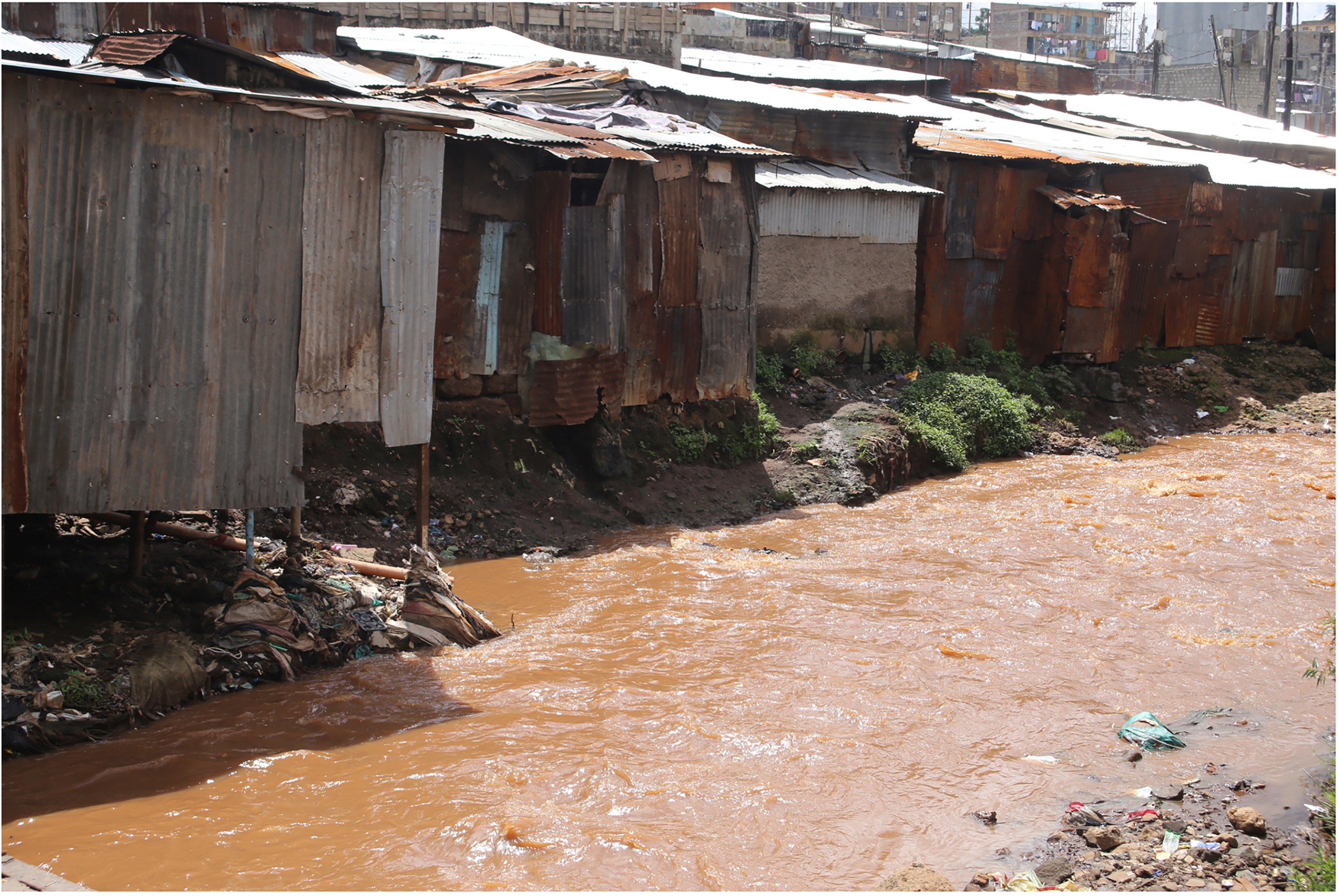
Mathare. © Annie Pfingst 2018.
Notwithstanding the specificities of the militarisation of urban space and actions such as Operation Anvil, its longue durée moments persist and innovate: reproducing afterlife forms of urban violence established less as spectacular and more as mundane. The normalization of police killings and violence in this area since the early 2000s are some of these imperial novelties (see Kenya National Commission on Human Rights [KNCHR], 2008; MSJC, 2017; Price et al., 2016). Punitive events are entrenched though hyper-policing, as evidenced by the sheer number of police posts that contain Mathare: though one of the smallest constituencies in Nairobi, it is surrounded by four police stations (Huruma, Pangani, Muthaiga, and Kariobangi) and an airbase. The extortion, hyper-surveillance, and killings endure and function as borders that contain and separate it from the larger city. These borders are instrumental to the ongoing carcerality and colonial punishment enacted in poor spaces. Because these violences are waged consistently, ostensibly to protect city space and property, they complement abandonment and become part of the regular repertoire of urban governance in poor settlements. Against a backdrop of neglect, these policing spatialities enforce inequality of both service delivery and law that are bound within specific carceral geographies.
Market Clean up 22 February 1954. Courtesy: Standard Media Group.
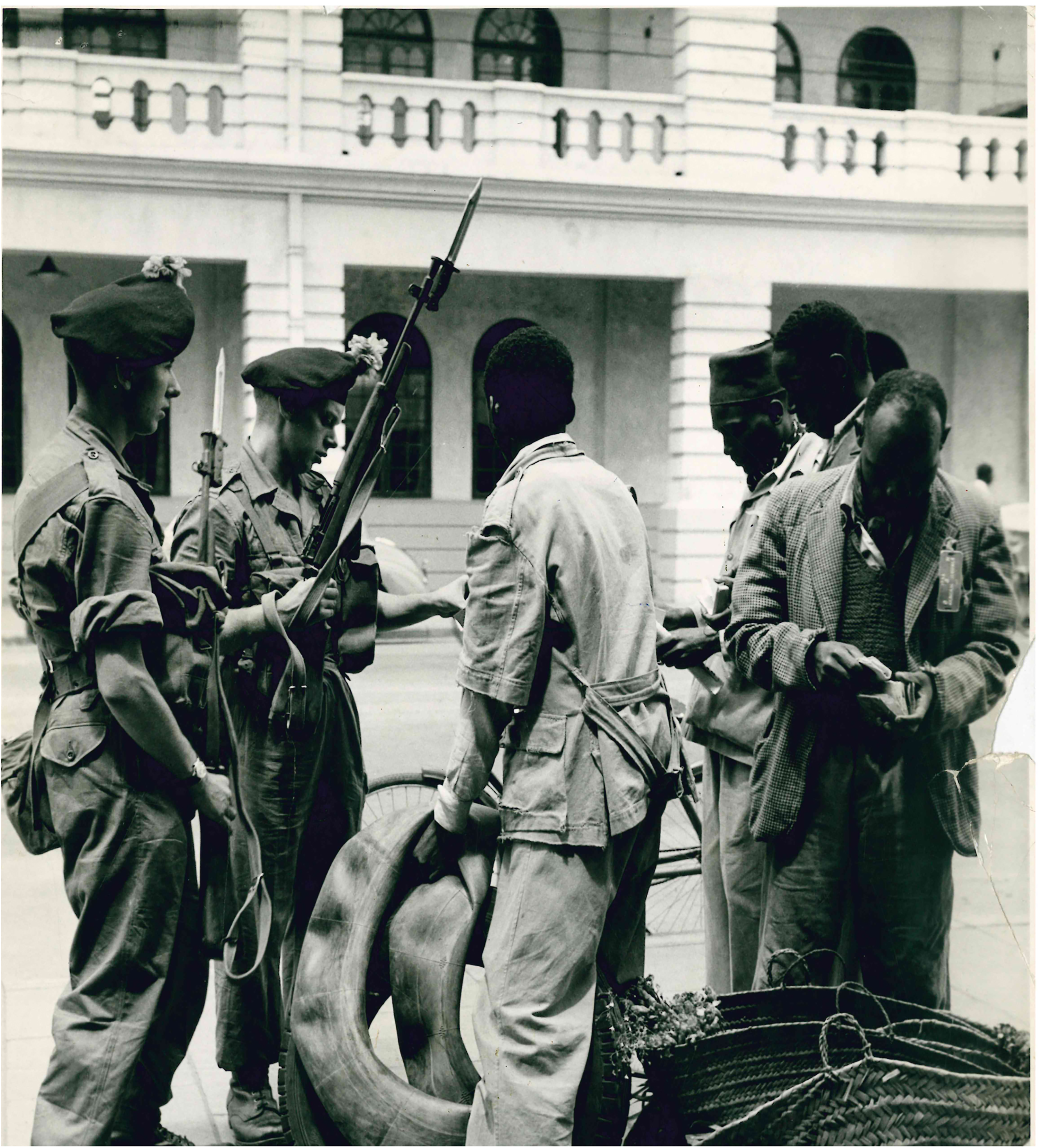
In April 1954, following previous cordon and search operations carried out regularly in Pumwani and Bahati to flush out Mau Mau, Operation Anvil, authorised by the provisions of the State of Emergency, enacted a military cordon around East Nairobi to contain neighbourhoods such as Eastleigh, Mathare, Kariobangi, Dandora, and Bahati. The authorities considered Nairobi a central node in the provision of ‘a convenient and rich source of supply of recruits, arms, ammunition and money’, making available a ‘secure base for the mounting of operations within the city itself, and in the adjoining settled areas’, and providing a focus for ‘the dissemination of Mau Mau doctrines amongst other tribes, particularly the Kamba’. 11 Intended to rid Nairobi of what the colonial administration considered the organisers, and the passive wing – those who supported the forest fighters with food and messaging – of Mau Mau, Operation Anvil arrested some 16,500 suspects (Elkins, 2011: para 23: 17), mostly Kikuyu, Embu, and Meru men for ‘screening’ (a process to extract confession by intensive interrogation) 12 and subsequent detention. The military operation, executed by some 25,000 security force members (Elkins, 2011: para 23: 17) aimed to clear a large part of the Kikuyu adult men from Nairobi, to prevent their return, and to ‘ensure that the safety of Nairobi is not again threatened by the presence in the city of a large population of lawless, rootless, and shiftless persons’. 13 As part of this operation, women and children were forcibly returned to the Kikuyu reserves (Anderson, 2005: 204), while political activists (including the union organiser and communist Markam Singh) were exiled to the Northern Frontier, then designated a closed district.
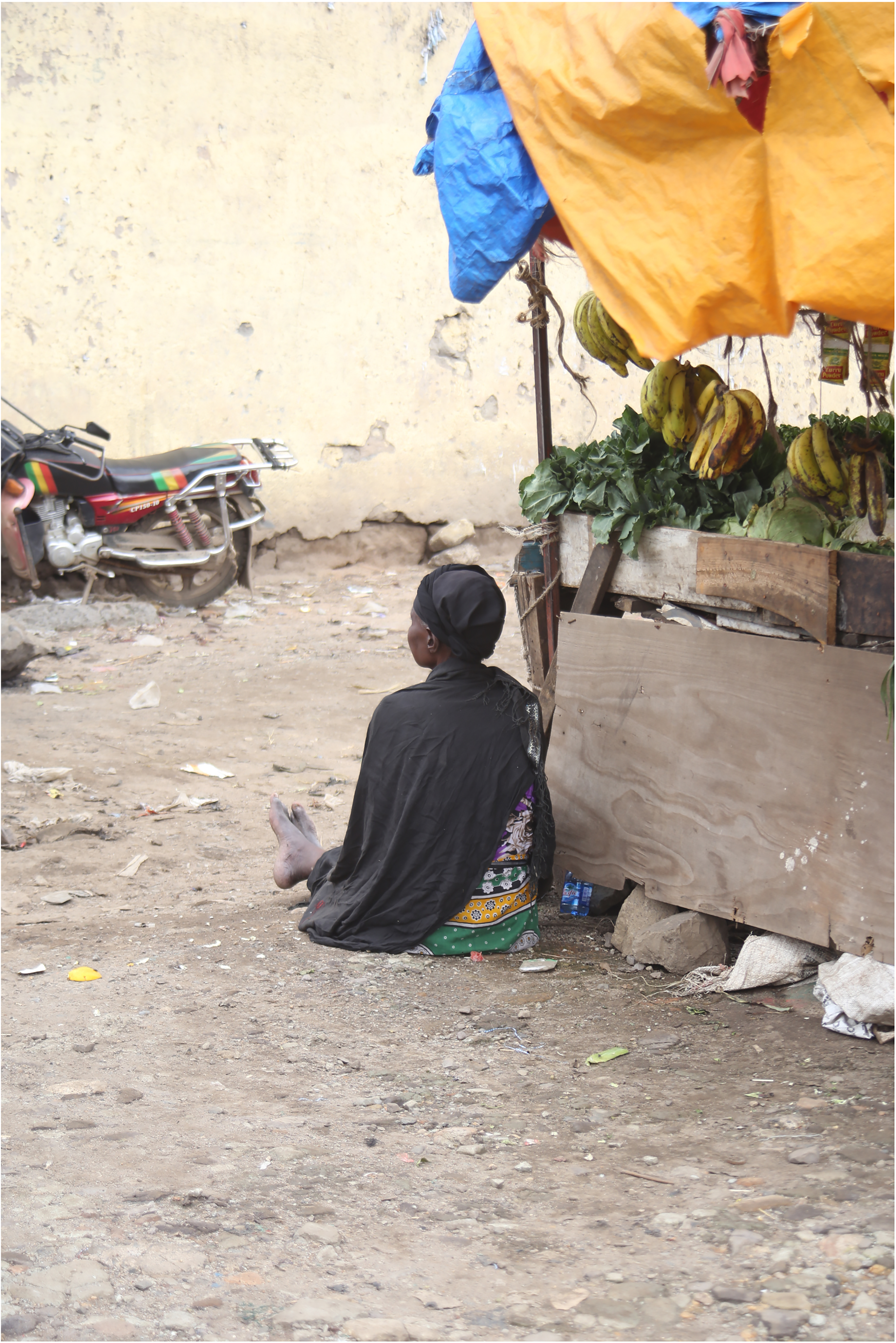
Eastleigh. © Annie Pfingst 2018.
Injury and harm
Everyday contemporary life in Mathare, within and against the environment, weaves in now quotidian practices of transforming afflictions and injustices. One cannot live a life of impending flooding, cholera, insufficient housing, police violence, immiseration, and fire, for example, without repeatedly constituting and reconstituting the self – reflecting and responding to ongoing and potential injury and harm. The genesis of these afflictions is grounded in a violent colonial political economy that spatialises containment and punishment. Certainly, there exists a visceral association between the carceral practices enacted here and a complex interiority; this is a sense of self, an emotional geography, moulded by the way residents live and have been historically pushed to live in this Nairobi quarter.
Both Fanon (1961) and Wa Thiong’o (1987, 1994) register the collective injury from, and the individuated responses to, colonial processes as they attend to the breadth and depth of the wounds that are harboured in and because of formerly colonial situations, and which result in subjectivities of crisis (Mbembe and Roitman, 1995). These ideas of subjectivity, influenced significantly by an enduring institutionalized subordination, or ‘duress’ (see Stoler, 2016), are shared by Jensen who, in discussing coloured identity in apartheid Cape Town, reports that senses of self were heavily framed ‘within overarching structures of domination’ (2008: 195). Theorising the self through these multiple scales and tempos of colonial injury and harm allows us to place the political at the heart of the psychological and the psychological at the heart of these subjugating structures (Del Vecchio-Good et al., 2008: 3). At the same time, and as Hall (2000) argues, subjects do not always respond to the positions (and emotions) that are demanded of them: persistent violence may not always impact psyches/senses of self, both collective and individual, in expected ways. These concerns, notwithstanding, we recognise the dialogical relationship between carceral spaces and the subjects that live in these spaces – not permanent ‘nervous conditions’ (Dangarembga, 1988), but inflections that can create the foundation for both external and internalised injury and harm.
While the structure of settler colonialism constituted a never completed system, so suggests Butler, the institutions, structures, and systems of violence can be apprehended in the ‘light of the conditions of life they destroy’ (2020: 18). In highlighting this, Butler writes: As we think about the prevailing and differential ways that populations are valued and disvalued, protected and abandoned, we come up against forms of power that establish the unequal worth of lives by establishing their unequal grievability … (populations) … are to some degree produced by their common exposure to injury and destruction, the differential ways they are regarded as grievable (and worth sustaining) and ungrievable (already lost and, hence, easy to destroy or to expose to forces of destruction) (p. 17).
We maintain that colonial modes of brutality enacted injury and harm through praxes of violence on Kenyan populations not recognised as grievable. They were, for example, subject to rations and curtailed access to food, displacement, the carceral mapping of space and, during the years of the emergency, demolition of homesteads and villagisation, corporal punishment, screening, interrogation and incarceration, exile and detention without trial, and the executions of capital punishment. These conditions continue to obtain in Mathare, where residents, though within a ‘post colonial’ temporality, endure colonial afterlives: continue to be deprived of basic necessities, live under constant threat of eviction as have no tenure security, and with police violence looming both as real and in the shadows (Kimari, 2020; Van Stapele, 2015).
And when, naturally, in both tempos, resistance to these conditions are launched, this reinforced the ‘ungovernability’ of both ‘native’ and Mathare dwellers. Certainly, the British colonial administration characterised Kenyan acts against dispossession and the violence of the colonial regime as atavistic, beyond civilised behaviour, regarding such violence as emblematic of the savage. Ferreira da Silva, in locating the total violence deployed by the police and the military as a regulating tactic of the arms of the state against the men and women of the favelas of Rio de Janeiro and exacerbated in the current conditions of the pandemic in marginalised communities (Miagusko and da Motta, 2020), maintains that the ‘native’, the subject of settler-colonial displacement, is always already framed as signifying violence (Silva, 2009: 1). Correlatively, the absolute lawlessness of colonial rule, suggests Mbembe, ‘stems from the racial denial of any common bond between the conqueror and the native’ (2003: 24). Further, as an autocracy, wrote Mukherjee about the Indian revolt of 1857, British rule in India had meticulously constructed a monopoly of violence. This was a: [..] dominant power [that] is always uneasy with violence directed against it, since non-reciprocal violence is one of the necessary conditions of its reproduction. The right to violence is, therefore, everywhere a privilege that authority enjoys and refuses to share with those under it: power always insists on violence as its exclusive monopoly (1990: 93).
This enduring determination to maintain ‘violence as its exclusive monopoly’, and the ‘native’ as always signifying violence, reinforces Kenyan carceral geographies of the past and present: containment – through highly securitized material and social borders – and punishment – with violence enacted as penalty should the native or Mathare dweller try and transgress these.
Mathare. © Annie Pfingst 2018.
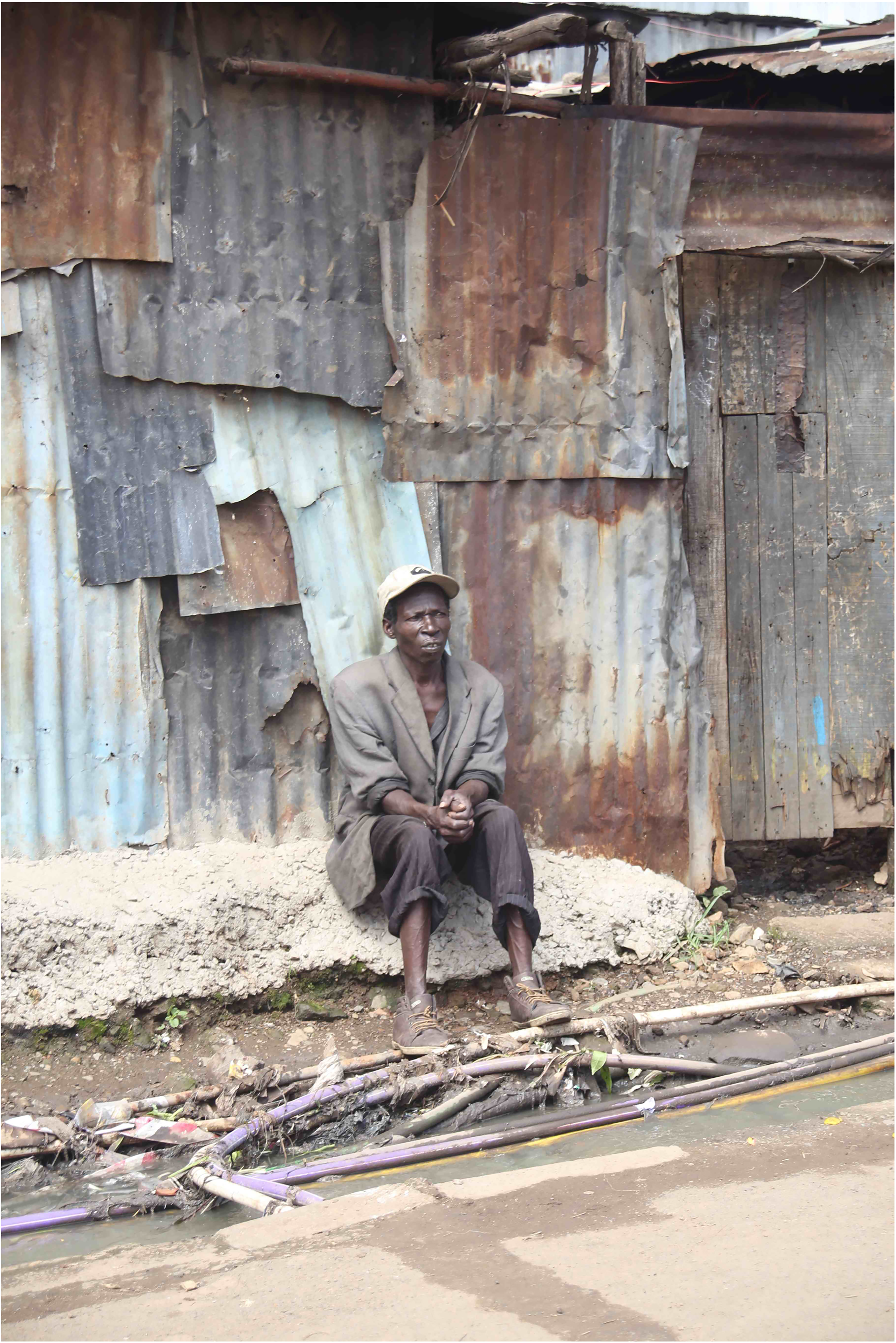
The violence, coercion, and brutality experienced most recently in Nairobi under curfew expose class and states of vulnerability endemic to the post-independence structure of policing (Namu, 2010). Violence as punishment was instrumentalised throughout colonial settlement – as early as the 1890s and into the 1930s settlers used flogging against employees, labour, and squatters for minor infractions and as punitive measures. Colonial corporeality intersected with the racism underpinning settler colonialism to authorise the corporal punishment of ‘rough justice’ against ‘raw natives’ (Anderson, 2011: 496). The post-independence structure of policing, likewise, has its beginnings in colonial rule where punishment ‘was not limited to imprisonment’ but took any number of forms, including fines and confinement, bodily punishment, collective punishment, banishment and displacement, and judicial and non-judicial killings (Bourgeat, 2014: 17, see also Kivoi, 2020, Anderson, 2017). State-sanctioned killings continue to be a daily feature of life for young men in informalized communities, and evidence the worsening trend of militarized violence intent on injury and harm. One interlocutor shared that ‘every ghetto has its killer police officer’ (Happy, personal communication), and these sinister actions, grounded in the enduring territorial stigmatization (Wacquant, 2007) of poor communities and the bodies within them leads to hundreds of dead Kenyans every year (IMLU, 2016; MSJC, 2017). Here, these executions are part of a nexus of grave events, derived from a settler-colonial logic: surveillance, evictions, extortion, harassment, hyper-policing, and even death. It is important to note that the geographies where the most extrajudicial killings occur are the very same locations where the urban fight against Mau Mau took place during the emergency period (Anderson, 2005).
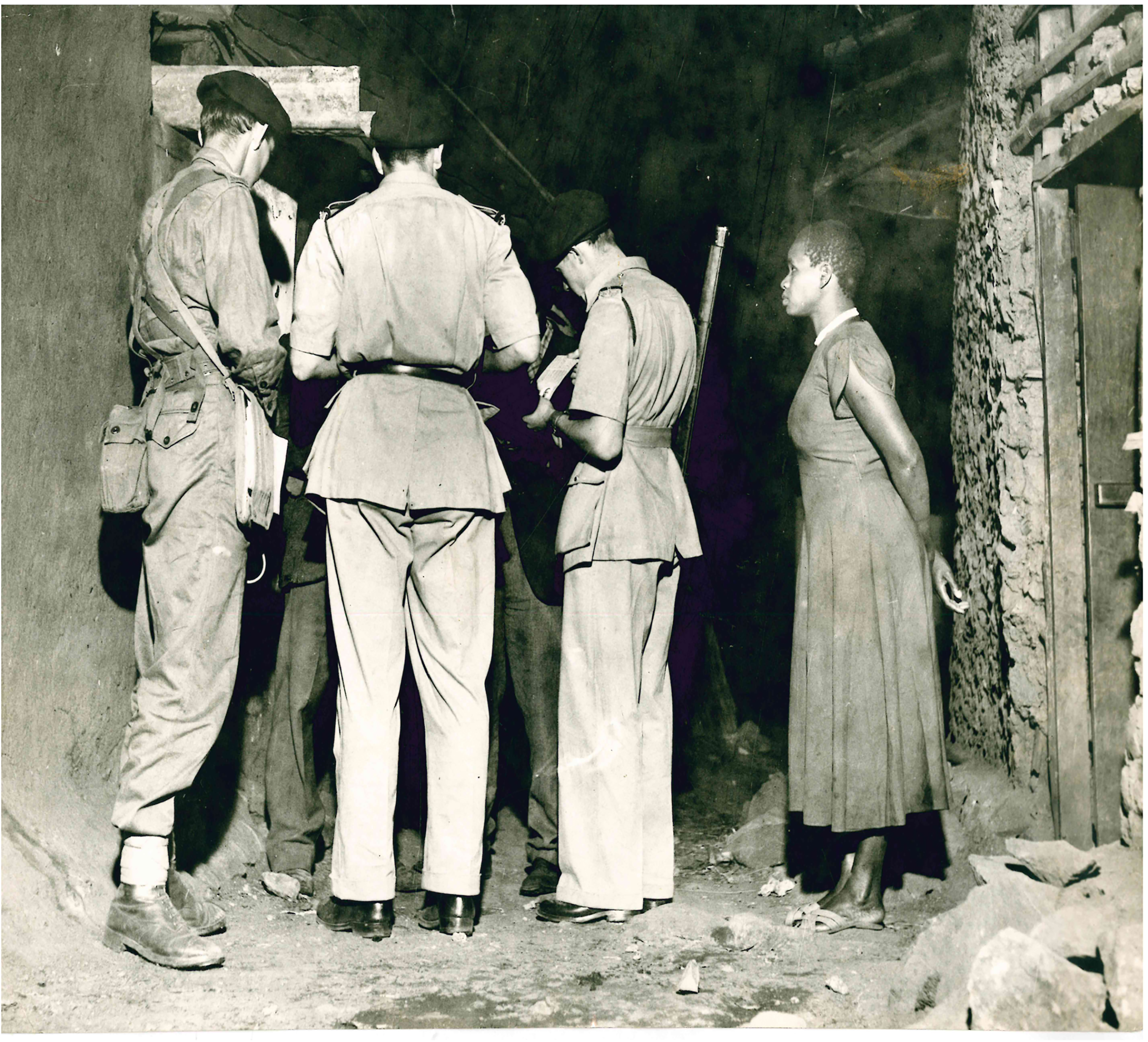
Specifically, in Mathare, consistent contemporary raids, whether, ostensibly, about illegal alcohol or for security reasons, have echoes of Operation Anvil, and broader colonial surveillance and harassment of ‘natives’: the requirement that young poor bodies should have and consistently show an identity document, for example, makes many recall the infamous colonial kipande system, and makes evident the haunting purchase of ‘loyalty certificates’. 14 Furthermore, the use of armed force to disconnect what are considered ‘illegal’ water and electricity connections by the county administration, sustains feelings of enduring siege in Mathare (Kimari, 2020). Ultimately, in this location, as in the colonial period, the police and armed forces function as de-facto urban infrastructure and planners (Kimari, 2020, 2021); certainly, they are the vectors through which the most restrictive carceral borders and punishment are operationalized.
Night Patrol 2.10.53. Courtesy: Standard Media Group.
The punitive logic of the carceral had already increased incarceration and the construction of prisons and detention camps into the 1940s, which would be the model for detention throughout the State of Emergency. Branch has argued that it was the punitive character, including unhealthy conditions, overcrowding, poor diets, and exposure to disease (2005: 264), rather than confinement, which defined imprisonment in Kenya. Under the pressure of settlers, ‘imprisonment … became the context for physical punishments, rather than the punishment itself’ (p. 261). Corporal punishment became endemic in the punitive regime of the 100 or so detention, works and rehabilitation camps, and screening centres that throughout the State of Emergency contained up to 80,000 detainees suspected of Mau Mau affiliation (Anderson, 2012: 702). Violent and brutal physical punishment to coerce forced labour, extract confession, and admission of oathing and membership of Mau Mau, was at first ‘compelling force’ to render compliance. After 1956, it was ‘punitive force’ (Anderson, 2012: 21). Having begun as unregulated, such force became ‘legitimated, regulated and legislated’ by the state's carceral regime of detention camps and screening centres, often resulting in deaths (see also Duffy, 2015; Elkins, 2005). Over time 8000 women were incarcerated at Kamiti detention camp and Gitamayu, where the most ‘hard-core’ were held. Considered unsound of mind by the colonial regime, they were subject to coercive force and violent abuse (Bruce-Lockart, 2014: 593; see also Elkins, 2005). It is important to note that after independence, Kamiti and Manyani (that initially detained political prisoners) continue as high-security prisons.
Anderson argues 15 that such violence was normalised and institutionalised in several phases. The first phase ‘categorised’ a practice of interrogation known as ‘screening’ to identify the enemy. The second phase instituted ‘containment’ in detention camps. A third phase, that of ‘co-option’ saw the ‘institutionalisation of torture as part of a system of control within detention camps through what was termed the “dilution technique”’ (Anderson, 2012: 702). Corporal punishment continued alongside capital punishment. Under the State of Emergency regime, the death sentence applied to offences including murder, possessing arms and ammunition, oathing, furthering terrorism, demanding supplies, consorting, 16 endangering life, and impeding the operations of the security forces. 17 Between October 1952 and August 1959, over 1000 Kenyans were executed by hanging for murder and other emergency offences 18 (see also Anderson, 2005: 6–7). Capital punishment, for a variety of crimes, predated the Emergency executions. Hynd argues that ‘the victims of Kenya's imperial gallows were, at the last, sacrifices to colonial order and the maintenance of its rule’ (2012: 101).
Kikuyu wives queue for their permits which will enable them to be repatriated to their reserves. The permits are issued from Pumwani Memorial Hall, just taken over as a police centre. Courtesy: Standard Media Group.
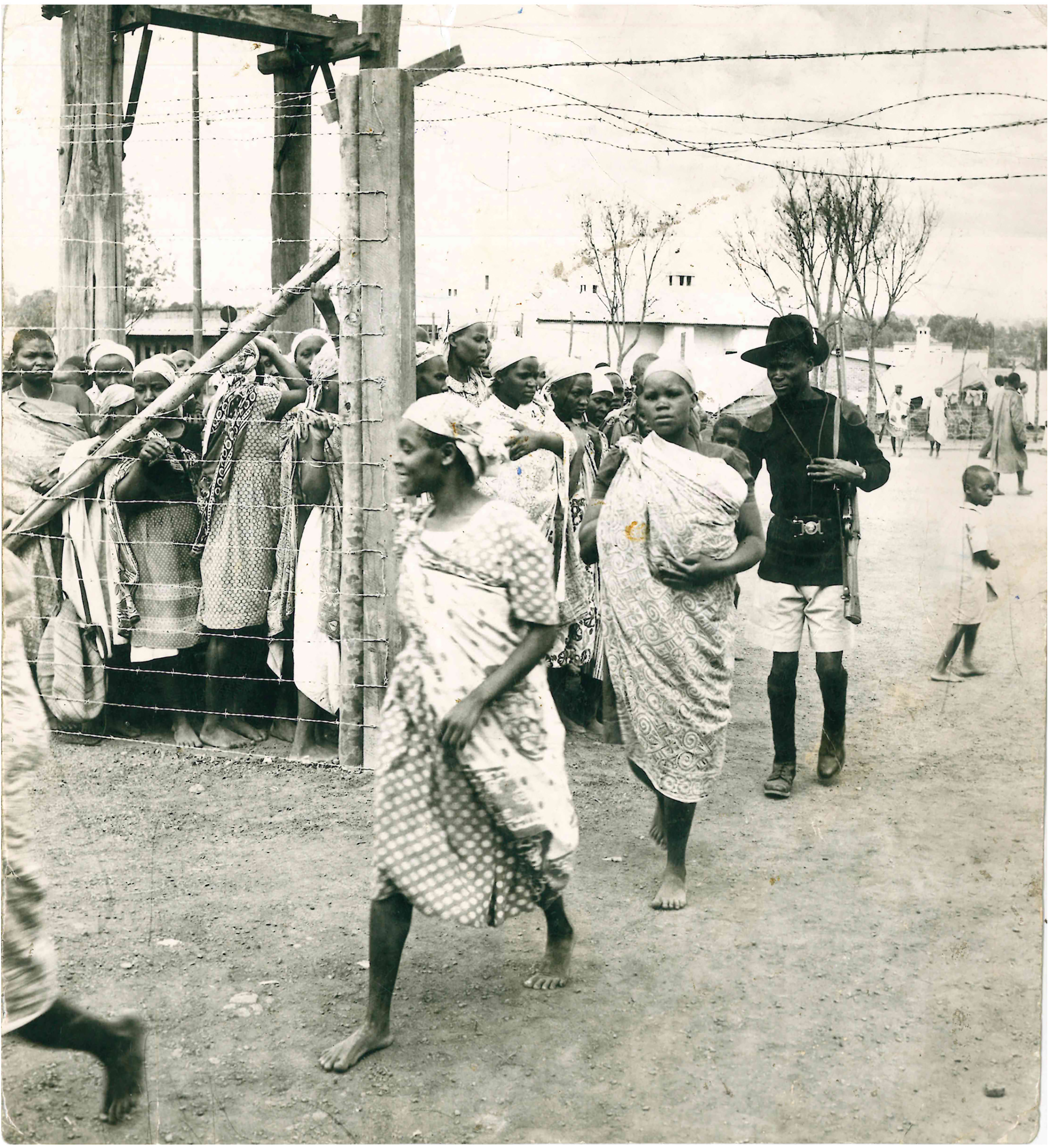
The army, as an integral part of colonial carceral control, provided security, intelligence gathering, interrogation, and screening, and was involved in forced labour, direct military operations (Elkins, 2012: 49–51), and the program of villagisation and collective punishment (Bennett, 2012: para 51/55: 16–17). By the end of 1955, the colonial spatial and military logic of villagisation relocated some one million Kikuyu into 804 fortified, policed, and concentrated villages from their scattered homesteads that were in turn demolished (see Bennett, 2012 para: 51). Modelled on the colonial administration over Malaya, villagisation – the ‘aggregation of populations into villages in rural areas’ – was the result of operational measures for security or of ‘definite punitive operations’ 19 that aimed, in part, to cleanse or ‘purge’ the population of the ‘poison’ of Mau Mau. 20 The policies of an increasingly militarized British colonial administration, argues Bennett, resembled those of an insurgent war characterized by collective punishment, atrocity, and torture (2007: 143; see also 2011).
The brutality and cruelty of the detention and interrogation regime of empire endure in personal injury (Royal Courts of Justice, 2011. Ndiku Mutua et al vs the Foreign and Commonwealth Office, Claimants Statements, London) and through displacement and disruption, material and spatial impoverishment and harm to the collective. Highlighting this, a young man in his late 30s who has grown up in Mathare, and spent a few years in prison, shared with one of the authors: ‘sometimes you have to accept yourself, this is hard, and then people will begin to accept you’. Even against the carcerality of the environment that reproduces cycles of impoverishment, particular life choices, and surveillance that increases the likelihood of being detained in prison, accepting one’s situation is the initial step to recovery from both individual and collective injury. This is not as a form of resignation, but rather a way to apprehend the brutality of conditions, and from such self-acceptance, also of the pain, mobilize for community survival, to dwell in what Ralph refers to as the ‘hidden virtues’ of those considered ‘the troublesome’ (2014: 49), and what Stoler registers as ‘the desperate, indignant, and defiant acts’ that duress can produce (2016: 35).
Mathare. © Annie Pfingst 2018.
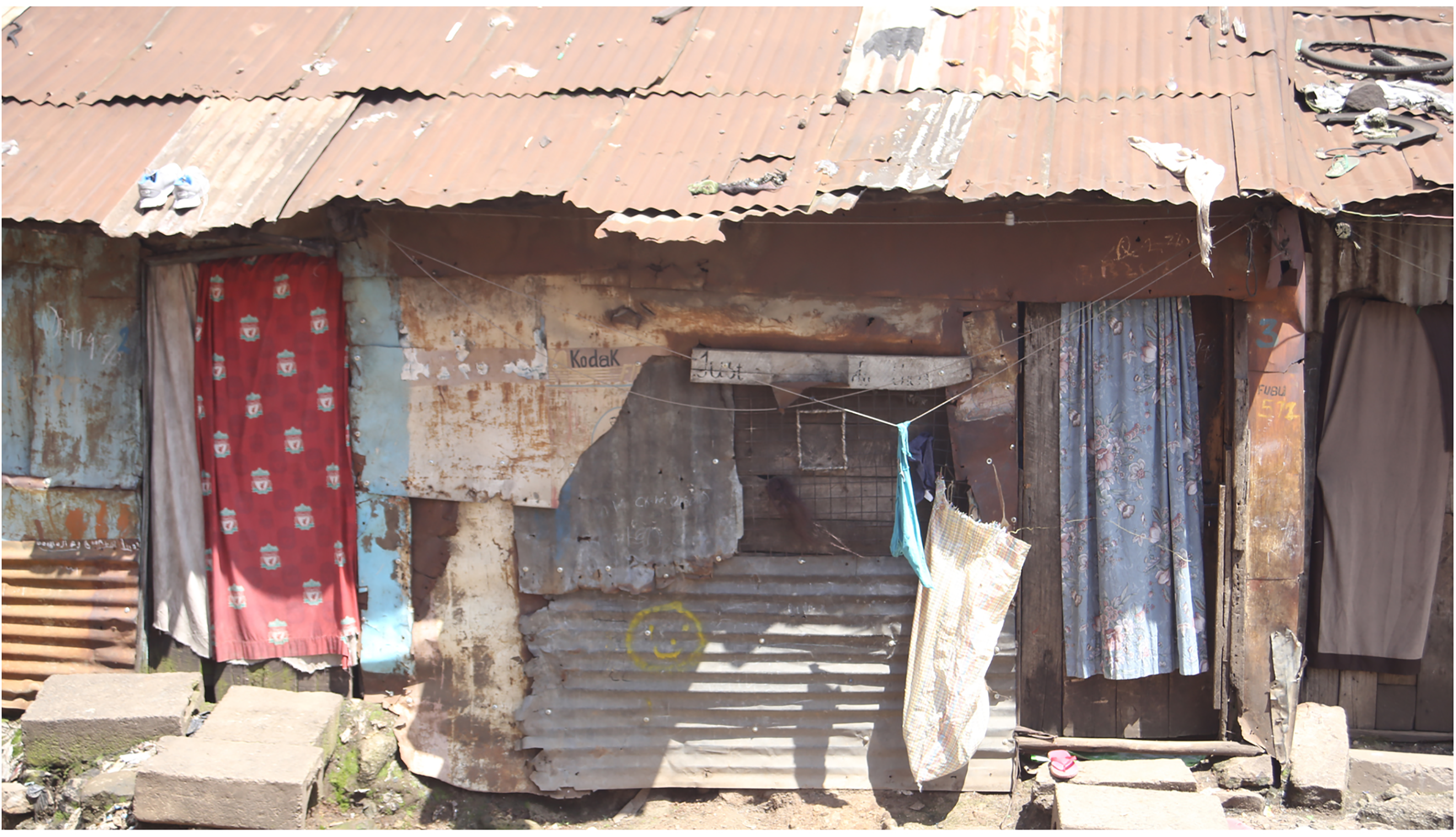
The lives of the ‘troublesome’ and the ‘defiant’ are animated as colonial archive files perform the punitive assemblages of coloniality, 21 together with the weaponised colonial narration of war against agitation and insurgency. Lists of names of executions, capital punishment, detention, transportation, passes, and permits, together with colonial correspondence and directions, and detainee petitions, not only order colonial ‘technologies of rule’, but also, through the process of their construction (Stoler, 2015: 154) illuminate the ‘marrow’ of ‘relations of power’ (Stoler, 2009: 237). These files disrupted by their own accounting, contain, as Mbembe suggests, the ‘resources of (their) own refutation’ (2015). They speak of the presence of those the colonial regime would have disappeared – through the symbiosis of containment and injury and harm – like the bones of those buried in unmarked mass graves scattered across the Kenyan landscape, or in the grounds of Kamiti and Nairobi prisons. Their names disrupt the colonial ‘illusion of totality and continuity’ (Mbembe, 2002: 21) even as they were placed in the colonial record as an ordered reckoning of colonial authority. The spatiality and materiality of colonial violence remain in the sites of mass graves and executions, detention camps, screening centres, and concentrated villages inscribed throughout the Kenyan landscape, and are also present, in more contemporary iterations and avatars, across the poor urban settlements of Nairobi (Pfingst, 2015).
Afterword/conclusion
In considering the final acts of Dedan Kimathi as he faced death by hanging, having been tried and found guilty of possessing a firearm and ammunition in 1956, Githuku posits the British colonial regime constructed:
an oppressive colonial architecture of legal strictures and exploitive policies, from the manacling of individual and collective wills; and from imperial spatial deletion and delimitation constraining the individual field and basis of action and, therefore, African agency (2017: 307).
Throughout the settler-colonial project, and during the State of Emergency, Kenyans negotiated their own moral economy – such as between conservatism and liberalism, between moderates and militants – as they struggled with strategic choices and questions of authority (Lonsdale, 2017: 258–283) to confront the impact and combat the totalising force of the settler-colonial project. Considering the paradigm that located black bodies outside the purview of white men in South Africa, Fanon concluded ‘that Europe has a racist structure’ (1970: 65). Further, the structure of racism, suggests Hall, is racism in the colonial relation (1996: 19) whose afterlives shape the discourse and the materiality and spatiality of carceral assemblages and practices of power and control.
Stoler enjoins us to ‘to think with the ruins of empire … to attend to their re-appropriations and strategies and active positioning within the politics of the present’ (2016: 196). Towards similar objectives, this paper has taken an empirical lens together with a conceptual frame of the structures of containment and injury and harm – constituted by punishment, coercion, repression, and economic domination – to attend to ‘a politics of dislocation and deferral’ emanating from imperial formations (Stoler, 2008: 205). Settler colonialism as a structure not an event (Wolfe, 2006) is evident in the enduring self-preserving force of the lethal violence and lawlessness of the state where necessity becomes a figuring of violence (Silva, 2009: 214). In this, Kenya is not exceptional. The legacy of settler-colonial zones of separation and modes of punishment and subjugation, and ongoing control and containment of those seeking freedoms and rights, land, economic and political futures, are found in Nigeria, South Africa, India, and historic Palestine, as but a few examples. The global exchange of both the hardware and the practices of punishment and population control, of settler colonial modes of militarised policing, are likewise emblematic of the legacies of empire and are exchanges between colonising and colonised geographies. These conditions affirm Hartman's provocation, in reference to the afterlives of slavery, that we inhabit history in the simultaneity of the temporal entanglement of the past, the present, and the future (2018).
Mathare. © Annie Pfingst 2018.
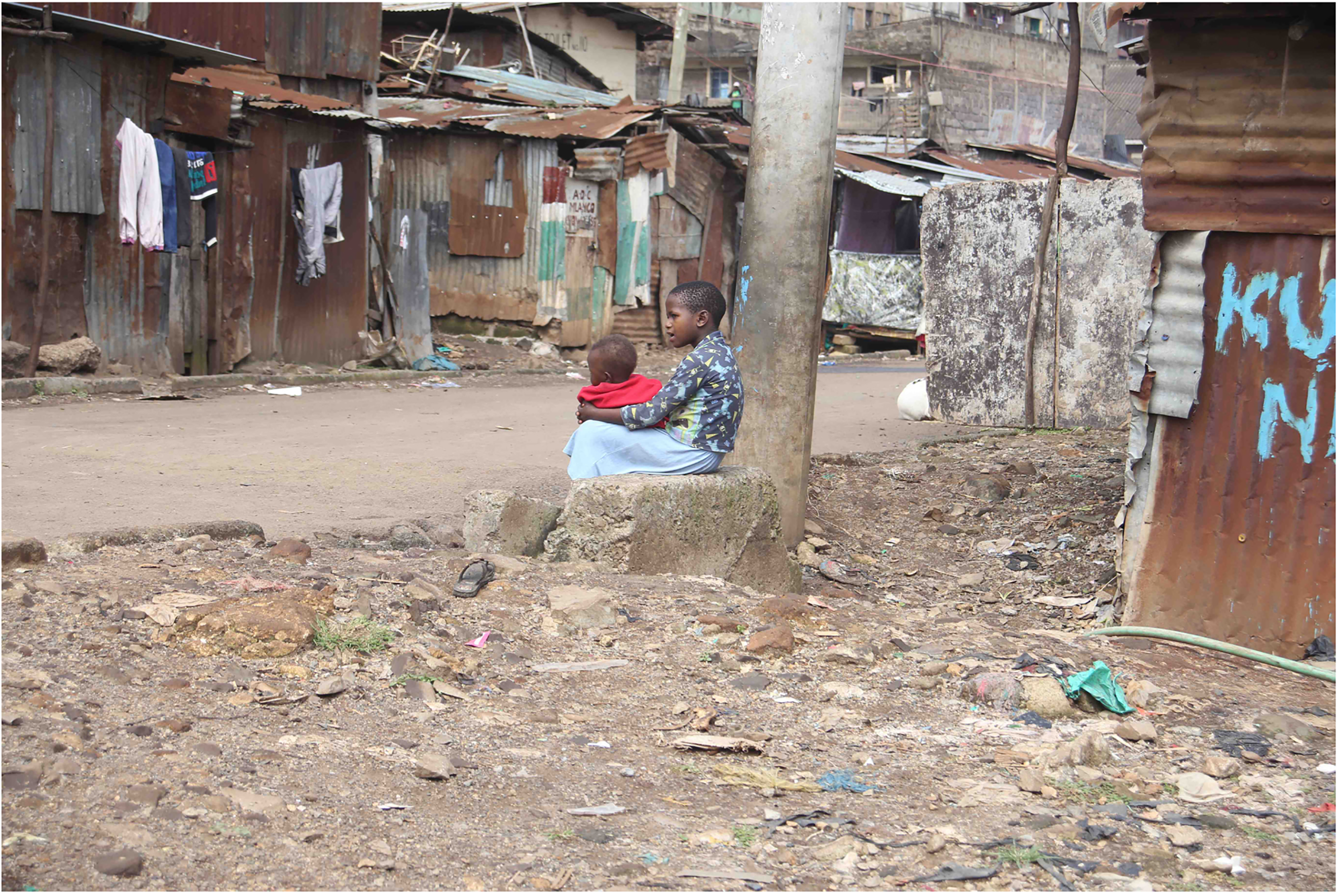
Footnotes
Acknowledgements
We are grateful to the many interlocutors in Mathare and across Kenya who offered their personal lenses into the past and ongoing carcerality across Kenya. Many thanks, as well, to the anonymous reviewers who helped us sharpen our arguments, to Lynsey Black and the convenors of the Special Issue on Legacies of Empire, and to Joost Fontein (Professor of Anthropology, University of Johannesburg) for his advice and support.
Declaration of conflicting interests
The authors declared no potential conflicts of interest with respect to the research, authorship, and/or publication of this article.
Funding
The authors received no financial support for the research, authorship, and/or publication of this article.
