




Abstract
Dating apps employ gamified structures (e.g., swipes, likes, matches) that reshape dating scripts by blending game-like elements into social interactions. This study explores users’ conceptualization of gamification, its impact on experiences, and dating scripts. Thirty-one semi-structured interviews (17 cisgender women, 14 cisgender men) were conducted in Portugal. Participants were current and former users with different sexual orientations and a diverse age range (18–34 years old), and predominantly Portuguese. The thematic analysis presented how users likened their dating app interactions to games, identifying specific gamified features, and describing their adaptation and engagement in strategic practices to enhance appeal. Despite the uniform platform system and rules, traditional gender scripts endure and dictate a binary dynamic where men are seen as initiators and women as selectors. The findings reveal tensions between gamification’s homogenizing effect and enduring socio-cultural scripts, illustrating how platform design affordances and social norms structure dating experiences.
Introduction
Dating apps are services presented through a smartphone application as an alternative, but not exclusive, method of finding connections. They facilitate online interaction by speeding up the process of sifting through potential dating partners, chatting, and potentially meeting someone. Through their design and features, dating apps have transformed and reinterpreted courtship practices among users (Bandinelli and Gandini, 2022).
Many of these apps, namely those with a larger user base (e.g. Tinder, Bumble, and Hinge), employ gamification strategies (Nader, 2024), applying game design to non-game contexts (Deterding et al., 2011), turning browsing through suggested profiles into a quicker, engaging, and entertaining experience (Cerniglia, 2024; Eisingerich et al., 2019). This frames a dating app as a game that can be “endlessly played without a sense of halting or determination” (Mackinnon, 2015, p. 168). While play is frequently defined as a freeing and flexible interaction within a fixed system with rules, mechanisms of operation, and challenges (Salen and Zimmerman, 2004). This contested conception often ignores how play can be exclusionary, coercive, or reflective of pre-existing gendered power dynamics (Gray et al., 2018; Trammell, 2023). Dating apps, therefore, do not pose a new concept of romantic pursuit as a game; rather, they capitalize on pre-existing dynamics. They appropriate this precedent, codifying “mechanisms of operation and challenges” to turn dating into a selective and algorithmic matching process, which re-mediates traditional dating scripting. Within a dating app, play can take the form of navigating gamified features to achieve the user’s goals. Yet, such employed strategies may not be as accessible, fun, or engaging from the users’ perspective, enabling users to either align with traditional dating scripts or develop gamified adaptations.
Therefore, dating apps condition individuals’ pursuit of intimate connections by embedding gamified elements that redefine traditional dating scripts. A dating script refers to a culturally established set of behaviors and expectations that steer how romantic interactions may unfold (Simon and Gagnon, 1986). In Western societies, these scripts often reinforce gender roles within courtship (Cameron and Curry, 2020; Morr Serewicz and Gale, 2008). However, dating apps disrupt these conventions by introducing game-like features that prioritize immediate gratification, efficiency, and the quantification of attraction (Courtois and Timmermans, 2018). This shift raises questions regarding how gamification affects users and the broader implications for the future of dating and relationships.
Albeit issues related to gamification have raised interest and concerns in recent research (Linne, 2020; Nader, 2024), further inquiry is required. Through a qualitative approach, the study was conducted in Portugal, with Portuguese participants (27) and those who have used dating apps within this context (4), to showcase and analyze users’ discourse over their conceptualization and experiences with the gamified features in popular dating apps. Given the predominance of Portuguese participants and the geographical place where the study was conducted, the context requires clarification. Although Portugal has conservative roots that influence attitudes toward marriage, family, and sexuality, it shows a growing social and technological openness, accompanied by the adoption of progressive laws. National data reveals that 43.5% of Portuguese are single, and 41% are married (Instituto Nacional de Estatística, n.d.). Same-sex marriage has been legal since 2010, and the country ranks 15th in the EU on the Gender Equality Index (European Institute for Gender Equality, n.d.). Furthermore, Portugal is a technology-friendly country, being considered an early adopter of different solutions (Ganito, 2016). Altogether, this context provides a unique context to analyze how traditional values interact with new digital forms of intimacy. This research offers actionable information on gamification, enabling the development of a more tailored, adequate, and effective service for users’ benefit.
Dating process, the self, and algorithms: how dating apps redefine connection
In a world with 4.88 billion smartphone users (Gill, 2025), dating apps are one of the many tools a click away. They provide unprecedented access to a diverse array of potential partners, facilitate profile-based matches, and foster interactive communication (Finkel et al., 2012).
Although recent years have seen a decline in the use of dating apps (Sepúlveda, 2024), they remain a relevant technological tool through which users can meet new people, with over 381 million individuals enrolled in dating services worldwide (Dixon, 2024). Despite varied platform designs, they generally follow a similar three-step process: profile creation, matching, and discovery (Markowitz et al., 2018). First, users create a profile, adhering to the platform’s guidelines and policies. This involves self-presentation (Tong et al., 2020), where the user crafts a version of themselves, they deem appealing through images and a concise text, while also indicating the desired type of relationship or person they are looking for. This, sometimes, carefully managed nature of profiles adds complexity to online dating, as it refers to how people present themselves based on how they may be perceived (Goffman, 1990). As a result, self-presentation tends to be goal-driven (Kowalski and Leary, 1990); users craft a profile while balancing their personal goals with how they believe others will find them appealing (Peng, 2020). Subsequently, profiles are algorithmically suggested based on the user’s preferences and app usage (Courtois and Timmermans, 2018). Some apps incorporate the swipe feature, in which individuals indicate interest (by swiping right) or not (by swiping left) in suggested profiles. Swiping functions as a gameplay mechanic that encourages repetitive, quick decisions within a rewarding loop, fostering continuous engagement (Garda and Karhulahti, 2021). The interface presents profiles as a never-ending deck of cards (Nader, 2024), creating anticipation and hope, where each swipe holds the potential “win” in the form of connections (Eisingerich et al., 2019; Garda and Karhulahti, 2021). For non-paying users, there is a daily swipe limit, a rule that structurally modulates user behavior by rationing access to potential matches. Finally, the reward is the match, which is framed as a victory that interrupts the swiping flow and offers a choice between continuing to “play” for immediate gratification (Solovyeva and Laskin, 2022). When a match occurs, and both profiles have demonstrated interest in one another, communication can begin. Initially, through the app chat and usually evolve to other messaging systems (e.g. WhatsApp), since they are part of their daily use.
Moreover, the incorporation of game-like features guides how users forge new relationships (Eisingerich et al., 2019; Linne, 2020), enhancing user engagement and retention as swiping and matching act as point-like systems (e.g. number of likes), favoring more scale over depth, such as the development of meaningful relationships. Features, such as swiping, elicit a reward-like experience, considering that a successful match allows users to interact in conversation, potentially leading to a date, framing this opportunity as the reward (Wright, 2024). As such, dating apps are engineered to keep users engaged, prompting the anticipation of rewards to be more enticing than receiving them (Tyson et al., 2016). Like the psychology behind slot machines, dating apps with infinite swipe or scroll mechanisms leverage human instincts by offering addictive and unpredictable odds of “winning” (Beck, 2021), while time-limited first messages impose pressure. In addition, apps with stronger visual and interactive features, such as dynamic landing pages and rich imagery, increase user engagement by providing an immersive and alluring experience (Sumter et al., 2017).
Strategies built on balancing challenges and attainability, such as the goal of earning a match, reveal dating apps’ gamified nature while sustaining continued user engagement (Li, 2017). While this can turn dating into a playful and competitive activity, how it influences users’ perceptions of dating is a significant concern. Dating apps also enable users to negotiate and rewrite dating scripts. Individuals may resist gamified norms by prioritizing conversations they consider meaningful and selective matching strategies, deviating from the efficiency-driven scripts encouraged by the platforms (Zhou, 2024). Yet, in a system where success is measured through metrics like the number of matches or messages received (Hobbs et al., 2017), users believe they are performing roles and optimizing their profiles to align with the standard of attractiveness and desirability (Peng, 2020).
A theoretical insight into gendered scripts and social expectations
In dating, men and women often find themselves playing roles dictated by preexisting scripts written and rewritten over time in society. In Goffman’s (1990) dramaturgical metaphor, individuals play varied roles within the societal “stage,” a construct governed by social structures. Much like a theatrical performance, their conduct adheres to an underlying script. Interpersonal scripts represent how individuals adapt and modify cultural scenarios to navigate specific social contexts and interactions (Simon and Gagnon, 1986, 1998). This theory bridges the macro-social and micro-individual levels of analysis by examining how broader cultural scenarios are translated into individual practices through scripts (Berger and Luckmann, 1967). Dating scripts are a collection of beliefs, expectations, and practices that have been normalized and associated with the experience of dating (Simon and Gagnon, 1986).
According to scripting theory, a comprehensive framework that connects sociocultural and individual development (Douglas et al., 1977), cultural scenarios guide social behavior by structuring how individuals interpret their roles and actions within various contexts. At the individual level, these scenarios shape personal identities and behaviors, while at the group and societal levels, they influence norms, values, and expectations that govern interactions across diverse social settings (Schutz, 1972). One prevalent dating script in Western cultures follows a heteronormative gendered structure, where men are expected to take on a more active role in initiating interactions, and women are often expected to respond selectively or passively (Hammond, 2025).
The dramaturgical theory elucidates how the interplay of cultural scenarios and interpersonal scripts determines gender dynamics in dating practices. Men are expected to establish first contact through chat messages more often (Sharabi and Dykstra-DeVette, 2019). Indicating that dating apps both reproduce and reshape traditional dating scripts, particularly regarding gender roles, sexual expectations, and relationship initiation (Comunello et al., 2020; Simões et al., 2023). While men are still often expected to initiate contact and pursue sex, and women to seek emotional connection, app design can challenge this norm. For instance, Bumble’s requirement that women message first (Portolan & McAlister, 2024). Nonetheless, users frequently revert to conventional behaviors, resulting in the emergence of hybrid scripts that blend traditional dating norms with hookup culture. The extent of change depends on platform affordances, user intentions, and cultural context (Alba et al., 2023; Comunello et al., 2020; Wu and Liu, 2024).
Studies on same-sex couples reveal both similarities and distinctions. While influenced by traditional scripts, these users often adapt or subvert them, using app features to express authenticity and emotional connection, though heteronormative expectations continue to shape interactions (Comunello et al., 2020; Masullo and Coppola, 2021a, 2021b).
Dating apps turn courtship and intimacy into a playful competition, merging traditional dating scripts with the thrill and unpredictability of the gamified design. Consequently, these apps invite an interactionist perspective to interpret how users co-construct intimacy as a series of micro-interactions where users assign value to the structures that collectively craft new forms of connection. Where swipes replace chance encounters and matches quantify compatibility, dating apps gamify the scripts associated with courtship, altering how connections are formed and navigated (Bandinelli and Gandini, 2022). This raises the question: How do users perceive the impact of gamified features in dating apps on their experiences, and in what ways do these elements affect some traditional dating scripts?
Method
Semi-structured interviews were conducted with current and former users of popular dating apps (e.g. Tinder, Bumble, Badoo, Hinge, and Grindr) to examine how users conceptualize gamification in dating apps, their understanding of its influence on experiences and outcomes, and dating scripts.
The concept of gamification was broken down in the interview script, utilizing previous studies’ findings on its characteristics and definition (Deterding et al., 2011; Mackinnon, 2022; Wright, 2024). The script included open-ended and closed-ended questions to probe emerging topics and ask follow-up information.
While developing the script, five pilot interviews with former dating users helped tailor the questions to the online dating experience. The script was divided into four thematic sections. The initial section focused on users’ experiences with online dating, their dating process, and their understanding of gamification concepts. The second section explored participants’ engagement with perceived gamified features and whether they viewed the apps as game-like or otherwise. The third section focused on how participants consider gamified elements to influence their dating experience, and the impact of these elements. Finally, a set of sociodemographic questions concluded the interview.
Procedure
A network was built through snowball sampling, where each contact referred to others, gradually expanding connections through trusted recommendations. The study was disseminated through word of mouth. Some participants reached out via social media platforms, particularly Instagram, after the leading researcher posted an invitation to participate in the study. The recruitment was open to all gender identities who volunteered. The resulting sample consisted entirely of cisgender individuals incidentally, its size was based on data saturation (Guest et al., 2006) and aligned with the theoretical contributions of gamification strategies. Data saturation was achieved when redundancy in themes emerged, with recurring patterns and perspectives appearing without yielding new findings. Participation required being at least 18 years old and having prior or current dating app experience. The institution’s ethics committee approved the study. After the study’s aims and conditions were explained, participants provided written consent. To ensure participants’ privacy, no personally identifiable information was disclosed in the results, and interview quotes were pseudonymized.
The interviews occurred from December 2023 to February 2024. Fourteen interviews were conducted in person, and 17 via Zoom. Each interview was audio recorded, transcribed verbatim, and analyzed using MaxQda software. A thematic analysis (Braun and Clarke, 2006) was conducted, with themes emerging through inductive and deductive approaches.
The analysis began with a review of the transcribed interviews to establish familiarity with the content and identify initial patterns. These impressions focused on users’ understanding of gamification, as reflected in their discourse, while highlighting recurring aspects and shared experiences across interviews. The data was then systematically coded by identifying meaningful segments and assigning concise labels related to users’ perceptions of gamified elements in online dating and their experiences navigating the system. For example, codes included users’ profile selection and notification management approaches. These codes were later grouped into broader themes based on patterns and connections within the data, interpreting how they interconnected within a larger scope.
The thematic analysis followed an iterative process of coding and refinement. The initial theme, Understanding Gamification, emerged from participants’ analogies between app use and gaming (e.g. “feeling like a game”), an unprompted association. It was refined to Gamification in Dating Apps to reflect both spontaneous associations and identified game mechanics (e.g. reward systems, feedback loops). Substantive codes reflected gendered expectations (e.g. “men should initiate contact”) regarding courtship were prominent and formed the preliminary theme of Gendered Dating Scripts. Through constant comparison and analysis, this evolved into Differences in Dating Scripts to encompass both gender and sexuality-based variations in engagement. The third theme began as Consequences of Gamification, focused on behavioral outcomes, but axial coding showed these were conscious adaptations (e.g. managing notifications and optimizing profiles). Theoretical sampling supported its final designation as Adaptive Gamified Scripts, capturing how users actively reshaped dating norms within platform constraints.
Participants
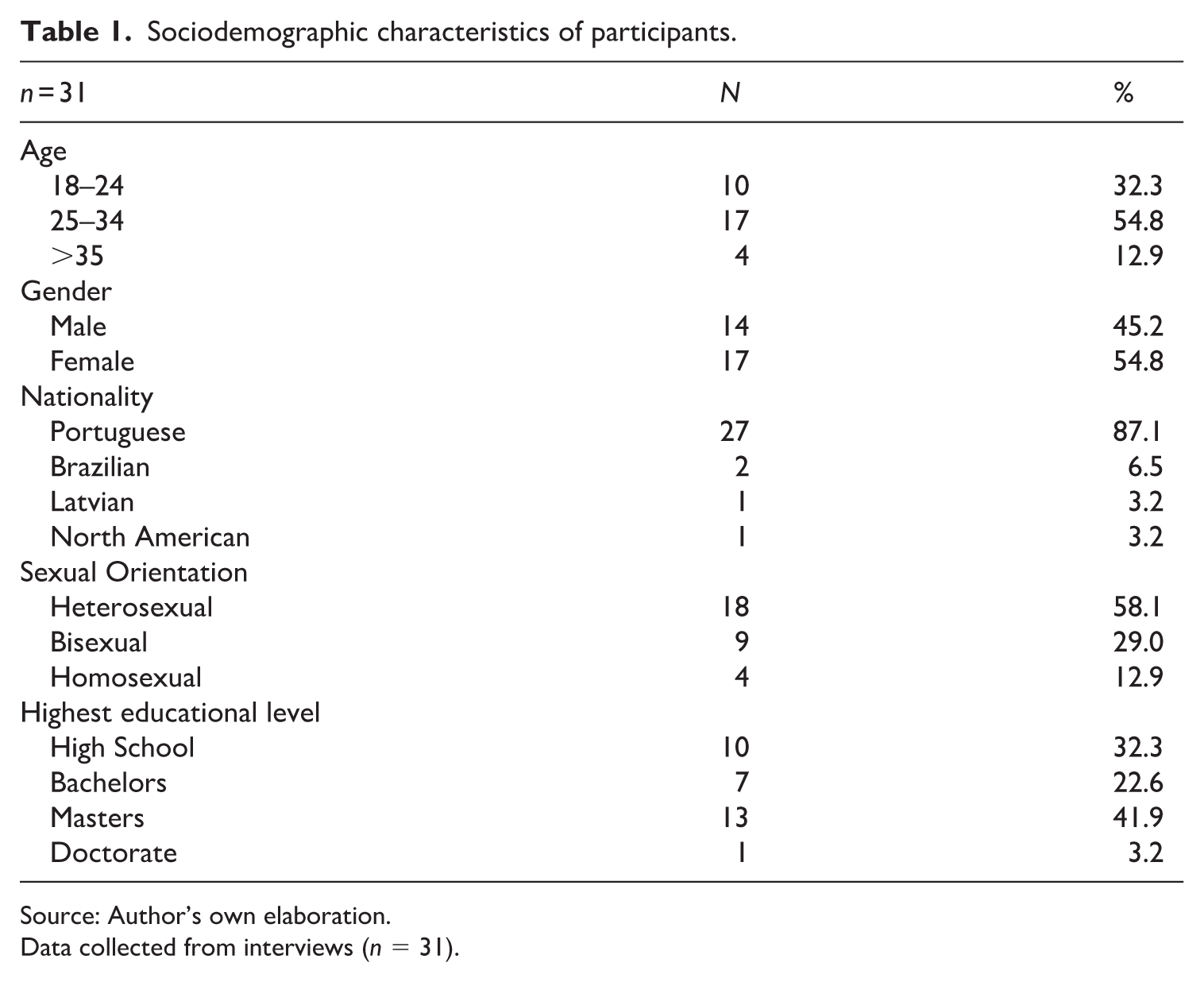
Table 1 resumes the sample’s composition, which predominantly consisted of Portuguese cisgender participants (87.1%), with an age range of 18–39 years, though most (54.8%) were between the ages of 25 and 34. There was a slight discrepancy in gender, with women (54.8%) outnumbering men (45.2%).
Sociodemographic characteristics of participants.
Source: Author’s own elaboration.
Data collected from interviews (n = 31).
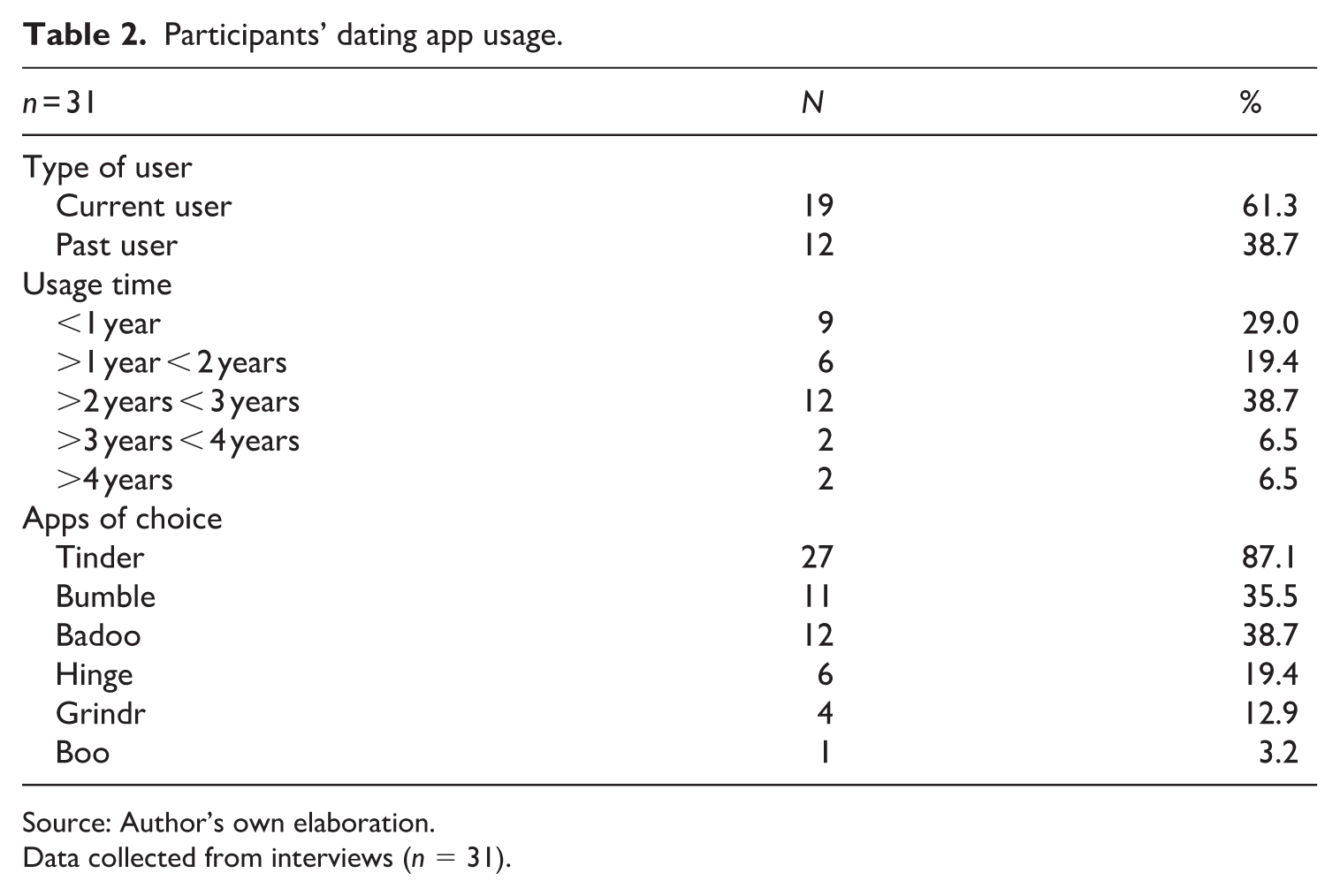
Table 2 illustrates users’ dating app usage. Most participants are current users of dating apps (61.3%). However, experience with dating apps varies, with a few participants having used them for more than 3 years (13%), while the remaining participants fall within the 2–3 years. They reported experience with a diverse range of dating apps, Tinder being the most used (87.1%).
Participants’ dating app usage.
Source: Author’s own elaboration.
Data collected from interviews (n = 31).
Results
The themes emerging from the data analysis included Gamification in Dating Apps, Differences in Dating Scripts, and Adaptive Gamified Scripts.
Gamification in dating apps
All participants (31) linked spontaneously dating apps to games at least once during the interview, with some (14) identifying specific features to be gamified. Their comprehension of gamification differed in depth based on their age, time, and experience using dating apps. Participants recognized profile curation as the first strategic step in the game, where the information provided was seen as determining their outcomes; swiping as playing and part of the game because it was intuitive, and fun, but also recognizing it as an addictive mechanism for selection; matching as sharing similarities to a reward by having accomplished a task or reaching a level, and the presence of notifications corresponding to feedback loops, which keep users updated and a call to action to keep on gaming.
Associated with games, curating profiles were consistently seen as playing their part in a gamified system because it mediates interaction on dating apps, with photograph selection constituting an important part. Participants (30) perceived this as essential because they understood that in a platform saturated with users, they had to find ways to stand out. These same standards were frequently applied when evaluating the profiles of others.
Most participants (22), particularly, associated dating apps such as Tinder and Bumble with games, due to their visual design, interactive interface, and structured selection process. The movement of swiping across a screen was considered an interactive game, making the users feel immersed, losing track of time. For participants, non-paying users (18), this materialized in swiping through profiles until reaching the limit. Virgílio, a 27-year-old Portuguese male, Researcher/Assistant Professor, found it to be an inevitable and tedious task that was part of the game; to have matches, you have to give likes, to give likes, you have to put your finger to work. You have to put hours in, give your time and sweat! Some users (6) of apps with a scrolling feature and not a swipe mechanism to be a means of profile selection equally perceived it as a game feature due to its unpredictability, being intuitive, but also as addictive as swiping. There was little mention (5) of selecting profiles by clicking on the accept or reject icons (e.g. heart, check sign, and cross) on the profile instead of swiping or scrolling.
Participants (8) reflected on their impression of dating apps, comparing them to gambling due to the unpredictable and random nature of achieved results, as well as the “dopamine rush” from receiving likes or being matched. They used the terms “dopamine rush” and “dopamine boost” to describe the reaction to receiving a lot of likes and matches within a day, linking to a moment of excitement, and the constant evaluation of profiles creates a sense of betting on potential matches. One participant even compared gaining a match to a gambling setting, When you match, a bunch of confetti and bright colors show up on screen (. . .) I started feeling like it was a bit like a casino (. . .) it’s something that, in the moment, feels like a betting experience based on likes, because you don’t have much time to decide. (Henriqueta, a 19-year-old Brazilian woman, Receptionist and College Student)
A specific group of individuals (14) with a longer period of usage (⩾ 2 years) and self-identified media literacy, found the app’s algorithm and interface incentivized them to keep swiping, looking through profiles. They expressed the importance of likes and matches as constant reminders of achievement, as if points and rewards symbolized approval and encouragement to remain on the app. Although most participants (28) stated that being successful on a dating app means finding meaningful and authentic connections (Rogério, a 31-year-old Luso-Brazilian man, Engineer), whether romantic or not. Some (15) expressed holding matches as more valuable in meeting someone because they perceived these as levels in a sequential dating process and a step closer to a potential connection. Interestingly, one participant likened this process to a domino effect, You swiped, that’s done, and the match is still missing. After the match, there’s still the first message to be sent or received (. . .) you still have to get a response or reply to the message, and you start to reveal the possibility, the possibility, of being able to meet. This is in the process of generating the conversation to the point of actually being able to meet! (Virgílio, a 27-year-old Portuguese male, Researcher/Assistant Professor)
A disparity between likes received and matches gave users (20) the impression of missed opportunities and occasional disappointment. This experience reveals the duality of reward-based engagement and frustration. In gaming, challenges and obstacles enhance entertainment, motivating players to persist (Aytemiz and Smith, 2020) and overcome. Similarly, dating apps create a space where matches may serve as rewards, and the unpredictable nature of success (e.g. getting matches inconsistently) functions as variable reinforcement. However, just as a game loses appeal if obstacles become insurmountable, dating apps may cause disengagement when user effort fails to produce meaningful connections.
Feedback loops through notifications were also stated (14) as a gamification characteristic. A few participants (7) believed the notifications allowed them to monitor their profile’s performance, as well as serving as a reminder to play. To such an extent that a majority of participants (24) chose to have their notifications off, as they saw them as mechanisms designed to re-engage with the app. These alerts, framed likes, matches, and messages as rewards, successfully created a feedback loop that often enticed users back into the swiping interface, regardless of their initial intent.
In sum, while users had conceptualized gamification differently, they commonly treated the app as a gamified tool for forging new relationships. The design of dating apps, with their reward-based mechanics, emphasizes likes and matches as measures of success, reinforcing a sense of “win” and “loss” within the app.
Differences in dating scripts
The second theme encapsulates participants’ interpretation of how users’ dating experiences are shaped by a set of persistent traditional gendered norms, as well as their sexuality. Differing dating scripts reflected their expectations of practice and the performance of effort, to play a role within the apps to succeed. This was more evident in the act of self-presentation and initiating contact, as examples of dating scripts that operated as the implicit rulebook for the dating app game.
Participants (22) categorized dating apps based on perceived dating social norms and expectations, tailoring their practices accordingly. Heterosexual women (8) performed discretion and selectivity through their profiles, actively opting for a passive and evaluative role, as well as choosing a more conservative curation of their profiles to avoid harassment. When evaluating other profiles, participants (27) paid close attention to the expression of creativity and authenticity, establishing a standard for who they would select or give a like to. Priscilla, a 22-year-old Luso-Venezuelan woman, Translator, and College Student, explained her parameters: If I put effort into my profile, I won’t accept anything less than that effort. I will not swipe right on minimal and half-done profiles. For me, it means the person doesn’t care. Some women (8) expressed a desire to be “wowed” by heterosexual men, whom they perceive have become less invested due to the low-effort, high-volume nature of swiping. As Antonieta, a 32-year-old Portuguese woman and secretary, explained, these apps made them lazy. They are used to swiping away on women without thinking (. . .) they don’t invest so much because they know, (. . .) there will always be a next one.
Notably, female users (15) divulged that heterosexual men must take the first step and drive the conversation forward, even after women sent the opening message. They wanted to see a proactive effort from matches, I couldn’t care less if I sent the first “Hey!” But I want some kind of initiative, I want his interest to be evident! I want him to think of what he’s come to learn about me and make it into a date! It’s not that hard! I hate it when I have to do it all. I feel like I’m mothering a man! (Aurélia, a 22-year-old Latvian woman, and a translator)
According to Aurélia, the supposed empowerment of women-first messaging clashes with the reality of persistent expectations for men to maintain the conversation, express desire, and reciprocity. A notion shared among some heterosexual women (10), who frequently perceived men as initiators while adopting the role of selectors themselves.
For most bisexual women (6), matching with other women is challenging, finding them scarce within the abundance of male profiles, and some (4) found that the initiative was symbolic of intention in the moment, and were unconcerned with who texted first. As Débora, a 24-year-old kindergarten teacher, explained, finding a female match feels like such a miracle, though she noted that most are shy, and it’s hard to know who should text first. It’s awkward (. . .) once the conversation gets going, the commitment escalates quickly, because it is tough to find someone.
A few men (9) and women (5) perceived dating apps as favoring women due to the gender imbalance. Such can be illustrated in Íris’ reasoning: I think we generally get a lot of matches quicker because there are many more men than women on the app (. . .) so when a new one shows up, it sort of strikes more attention (. . .) like, for every girl there must be like 10 guys. (Íris, a 28-year-old Portuguese woman and Biologist)
Women like Íris cited the “scarcity effect.” They still expected men to level up their effort (e.g. well-curated profiles, personalized openers, and engaging conversation), while consolidating heterosexual women as selectors, being judicious with their swiping, evaluating profiles critically.
Regarding dating scripts differences, heterosexual men (13) framed rejection as a “loss” and associated it with the expectation of having to be the initiator. As Bernardino, a Portuguese man and college student, confided, I was tired of always having to go first, suggest topics, be funny, be gentleman, be nice but not too nice. (. . .) I’m tired, tired of the noes and ghosting (. . .) it sucks!
Although a few male participants (6), some heterosexual (4) and homosexual (2) mentioned building their profile with their intentions in mind, as Teófilo, a 38-year-old Brazilian man, administrative director, explains, It’s not enough to say you are looking for something casual, or “just looking.” Most people won’t scroll down to the bio (. . .) when I am feeling frisky I change the pictures, add a few from my gym session, beach pics, a few . . . more artistic ones.
Platform perceptions shaped dating scripts, as homosexual men (4) viewed Grindr for sexual exploration and Tinder for relationships, while heterosexual males (16) saw Tinder for casual encounters and Bumble and Hinge for possible committed relationships. These results show that gender roles and sexual orientation continue to guide the online dating experience as unspoken cues. The entire process, from profile to messaging, is oriented toward securing a date, which is set as a fundamental victory in the gamified sequence. Nonetheless, this sequence does not occur in an isolated environment; it often adopts the societal norms and practices surrounding its use.
Adaptive gamified scripts
Different adaptive approaches to app usage emerged in different stages: self-presentation, swiping, and initiating contact. These strategies were the result of a combination of the game-like nature of dating apps and dating scripts, especially justified by gender. Albeit often intuitively, their experiences on dating apps unfolded according to embedded traditional dating scripts.
All participants (31) reported self-presentation strategies to succeed in the game according to traditional dating scripts. There was a clear consensus among all that photo selection is a crucial aspect, with most (23) opting to showcase their best angles, interests, and outdoor activities (e.g. going out, concerts, and sports) to have a match, understood as a reward. Women focus on being authentic, fun, and interesting, but without revealing too much, like Celestina, a 23-year-old woman and Portuguese statistician, stated, you have to look interesting while being interested. In addition, many female participants (12) constructed their profiles based on the people they wanted to attract. Celestina continued her thoughts, considering that men are simple creatures. They like it simple (. . .) You can be yourself and still show what type of woman you are. However, all the heterosexual women (8) and most of the bisexual women (7) avoided having pictures that could be considered revealing to avoid harassment or to avoid giving the wrong idea, as Amélia, a 22-year-old Portuguese Linguist, stressed.
While heterosexual males (9) attempted to present themselves as approachable in their profile, uploading photos they found women would swipe right on, such as having a picture with a pet or animal, traveling, and reading. As divulged by Orlando, a 27-year-old Portuguese man, Software Developer, though I try to have a nice profile. I noticed a boost once I added a picture with a cat, it’s my roommate’s cat. It became an ongoing topic of conversation.
In their biography and descriptions, the general aim was to be concise and express their preferences and unique traits. Some participants (12) intentionally omit detailed biographies to encourage others to engage in conversation. Overall, the need to create an attractive profile also illustrated how gamified elements, such as visibility metrics and match counts, incentivize users to play within this system. A subset of users (9) exhibited awareness of algorithmic action regarding how it favors conventionally attractive profiles. Noémia, a 28-year-old Portuguese woman and Biologist, explained her grasp of visibility metrics and its connection to success, as the most successful people on the app are the ones with well-rounded profiles. So, filling out everything completely could also be a strategy. Among these users (9), there was a particular analogy of the algorithm as a “card dealer” shuffling the profiles, filtering the interests and tastes of users. Simão compared it to a teaching process, The app learns from your swipes, it notices what you like and adjusts accordingly. Swipe right on too many blondes one day, and suddenly you’ll see more of them waiting for you the next. But if you take a break from the app, it seems to forget your preferences. (Simão, a 27-year-old Portuguese man and former Human Resources Representative)
Even for those who were not fully aware of the algorithmic matching, they found a competitive element instigated by the discrepancy in gender. The scarcity of women on the app introduces a competitive element, where heterosexual men (13), conscious that they are the majority gender, feel compelled to optimize their profiles, increase their swipe volume and visibility to better their match odds. This included migrating to other dating apps to swipe and select more profiles, potentially increasing the number of matches, with the intent of talking to more women. This emulates game design in which men were tasked with quests, perceiving initiation as a challenge, while the women have the power of selection.
Another adaptive gamified script was revealed regarding initiating contact. Heterosexual men (13) understood that they should take the initiative, and women (15) expected this move. Even though the rules of courtship could be subverted, they were maintained in practice by a majority of participants. Dating apps like Bumble attempt to subvert traditional gender scripts by design (e.g. women-first messaging); nevertheless, a dissonance in users’ agency prevailed. Most of the women users (14) considered Bumble’s design and rules a refreshing and empowering change to initiating contact with a match, but their expectations aligned with conventional scripts. For example, Dalila, a 21-year-old North American woman and tattoo artist, explicitly expected men to take more initiative, despite the app’s attempt to invert that dating norm. This suggests gamification adapts to, rather than disrupts, entrenched dynamics, adjusting to pre-existing norms and effectively rewarding traditional dating behavior associated with gender.
Men (8) reported needing creativity to overcome the gender imbalance, they had to level up among themselves. As Maurício shared part of his strategy when it came to messaging, I avoid the typical “Hi. What’s up? Because their chat must be full of those, and it can be dull always following the same line (. . .) I try to point out something I saw in the profile or send a funny GIF to break the ice.” (Maurício, a 26-year-old Portuguese man and financial analyst)
In the messaging phase, users (21) aim to personalize their conversation by commenting on details from the other’s profile or tending to ask questions about shared interests. Strategies for selecting and filtering matches reflect game-like decision-making, where users optimize their interaction by discarding unfulfilling exchanges in favor of more rewarding ones. In addition, heterosexual women (5) also acknowledged perceiving men as the majority gender, and this required them to play more selectively, evaluating the quality of the messages. Men aware of their numerical and competitive disadvantage felt compelled to employ creativity, differentiate themselves from others, and partake in shotgun swiping (indiscriminate selection) to increase match count. The sought-after reward for this performance was a reply, which allowed them to progress to the next level: securing a date.
Users (17) reached the conclusion that, after a while, you follow what works . . . what brings you more matches. Play the system to reach your objectives on the app, the best shared Oscar, a 27-year-old Portuguese man, and a Computer Technician. Aligned with “playing the system,” participants mentioned diverse influence of gamification on dating scripts, which remain deeply gendered. While women like Priscilla curated profiles to filter low-effort matches, men like Maurício refined their opening messages to stand out. It reflects how gamification amplifies traditional scripts, incentivizing the roles of women as selectors and men as pursuers.
Discussion
Courtship has long operated through game-like dynamics, structured by social rules of performance, competition, and reciprocity (Mackinnon, 2022). Dating applications, by embedding playful mechanisms into their design, have intensified this process of ludification (Garda and Karhulahti, 2021; Mackinnon, 2022; Nader, 2024; Wright, 2024). Yet this acceleration occurs within enduring gendered scripts that continue to govern intimacy, adapting to each platform’s affordances and implicit expectations.
Participants collectively described the apps as play systems in which actions such as swiping, scrolling, or matching were symbolic acts within a system of interaction (Goffman, 1967). Likes and matches became signs of reciprocity and desirability, structuring intimacy through competition and reward. Notifications acted as algorithmic prompts to recall and resume play, sustaining anticipation and participation. In this sense, the emotional economy of dating apps reflects the logic of gamified validation, where connection becomes measurable and desire quantifiable.
Gendered expectations shaped how users played the game. Profile curation and selection, conversational initiative, and investment in messaging all mirrored traditional courtship norms (Klinkenberg and Rose, 1994; Simon and Gagnon, 1986). Women were socialized to assess and select; men to initiate and pursue (Comunello et al., 2020). These scripts stemmed from the social contexts in which users had been socialized or currently operated, and consequently from ingrained norms of courtship (Klinkenberg and Rose, 1994; Simon and Gagnon, 1986).). Most participants were long-term Portuguese residents, while the remaining used dating apps within that context. Portugal, despite its progressive laws, remains marked by Catholic tradition and a heteronormative ideology. Values are woven into the collective consciousness, which are expressed through unspoken rules and practices. Traditional dating scripts persisted within dating apps, illustrating how gamification reconfigures but rarely dismantles socialized scripts. The sense of rush reported by participants signals how likes and matches operate as affective rewards, transforming intimacy into a competitive pursuit of recognition (Linne, 2020), which are shared signals of interest co-constructed through repeated interactions that make intimacy a game-like experience (Nader, 2024).
However, the interaction between design and behavior is not homogeneous but mediated by subcultural and contextual factors (Blumer, 1969). The unpredictability embedded in features such as swiping (Nader, 2024; Solovyeva and Laskin, 2022) sustains user engagement while subtly reproducing gendered asymmetries. Heterosexual women reported careful self-presentation, appealing yet restrained, to avoid unwanted attention or misinterpretation. Heterosexual men, aware of competition, saw initiative as an expected, necessary performance, opting to focus on maximizing their swiping. Homosexual and bisexual participants navigated different conventions, where dating apps enabled self-discovery and displays of intentionality, revealing more flexible negotiations of intimacy. Bisexual women frequently engaged heterosexual scripts due to the platform’s gender imbalance. When engaging in lesbian dating scripts, due to the scarcity in potential matches they reported escalating in commitment quickly (Masullo & Coppola, 2021b). In such cases, app affordances and individual goals outweighed traditional scripts, underscoring how platform cultures mediate gendered expression (Bandinelli and Gandini, 2022).
The study, therefore, demonstrates that socially imposed dating norms have a significant impact on how dating applications are perceived, appropriated, and how the unfolding of the “game” occurs. Despite claims of neutrality, providing the same chances to all users, with standardized features that transcend traditional social circles (e.g. family, friends, workplaces, school, neighborhoods), dating apps reproduce performative hierarchies (Comunello et al., 2020; Lamont, 2020). Displaying how gender is not done by a subject that pre-exists the deed but is performatively constituted through the very repetition of normative acts (Butler, 1997). Profiles become stages for impression management, where curated photographs and crafted bios echo traditional displays of desirability. Users perform under algorithmic spotlights, balancing self-presentation and optimization. In which users play as agentic actors who reinterpret the gamified rules and re-adapt scripts to “game” and attempt to “win.”
This negotiation reveals how gamification operates as a technology of gender: a design logic that recasts intimacy as a quantifiable achievement, promoting self-optimization in a pursuit of success measured by likes and matches, propagating consumption (Bandinelli and Gandini, 2022). It transforms dating into a form of digital labor, where users learn to play the system, not only seeking partners but to manage their algorithmic presence for validation. Gamification provides the structure and incentive, while the broader gendered affordances reflect that the use of such platforms is strongly mediated by socio-cultural contexts that determine the direction of engagement. It is in the intersection between the designed game and the pre-existing script that hybrid practices are co-created, resulting in practices that are neither mere reproductions nor full resistance, but ongoing acts of adaptation within algorithmic architectures. This study contributes to understanding digital intimacy as a site where cultural norms are continuously re-engineered through play.
Conclusion
Rooted in interactionism, the results underscore the dynamic process by which individuals create meaning and establish relationships through their social interactions (Blumer, 1969). Users actively interpret the app’s rules, where success is perceived as achieving an authentic connection alongside mastery of performative play, a negotiation between platform design and everyday gendered interaction. Our data suggests that gamification operates as a form of platform governance over intimacy. This pattern illustrates how gamification and reward structures embedded in app design amplify traditional scripts rather than dismantle them. Importantly, these dynamics are not uniform; for instance, gender intersects with other social variables to mediate visibility and vulnerability. Design features identified by participants, variable-ratio feedback loops, scarcity cues, and time-gated messaging, were perceived as intensifying competitive, masculinized pursuit, even as safety tools offered partial counterbalances. Consequently, gender practices adapt to these uneven conditions.
Furthermore, the predominantly Portuguese sample (87.1%) limits cross-cultural applicability, as dating script vary significantly across cultures (Klinkenberg and Rose, 1994; Simon and Gagnon, 1986). Future research should explore demographic variations, app ecosystems, and gamification’s long-term implications on relationships.
Footnotes
Funding
The authors disclosed receipt of the following financial support for the research, authorship, and/or publication of this article: The first author has received financial support from FCT – Fundação para a Ciência e Tecnologia, Portugal, within the scope of a Doctoral research grant (Reference 2023.04241.BD). The second author has received financial support from FCT – Fundação para a Ciência e a Tecnologia, I.P., by project reference 2023.09023.CEECIND/CP2836/CT0022, DOI identifier  .
.