




Abstract
This study examined the use of technology for daily life challenges by older Chinese migrants (n = 18) with very limited English proficiency in Auckland, New Zealand. The aim of this study was to build on the theory of digital agency to understand how older migrants’ use technological tools to combat daily challenges and enhance their well-being. Employing a combination of questionnaires, interviews, and go-alongs, we identified language barriers and limited social mobility as central challenges in older migrants’ daily life, and we identified three types of digital technology that the older migrants engaged with as their daily life digital choices: digital translators for language challenges, digital navigators for social mobility, and digital media platforms for individual leisure to alleviate loneliness and gather information. The older Chinese migrants developed their digital agency to cope with challenges and respond to their daily needs, which also enhanced their social and psychological well-being. We also identified digital disengagement, which can lead to social isolation and impact social well-being. We discuss the difficulties they experienced in using these technological tools and provide recommendations for supporting older migrants to develop the skills needed to use technology in their daily lives.
Introduction
Prior studies on older Chinese migrants in New Zealand and other geographic contexts, such as Australia, Canada and the United States, identified insufficient language ability and limited social mobility as constituting key everyday challenges (Caidi et al., 2020; Guo and Stensland, 2018; Kan et al., 2020; Zhang, 2016). Limited social mobility refers to the fact that older migrants’ autonomous movement in the social environment is often restricted by factors such as limitations in the public transportation system, unfamiliarity with transport routes, and language barriers (Ip et al., 2007; Kan et al., 2020). Barriers in language and social mobility hinder older migrants’ ability to participate in social life, impede access to important social services, and contribute to their social isolation by constraining their daily life routines and hindering their ability to function independently (e.g. Ip et al., 2007; Kemppainen et al., 2023; Liu, 2019; Park et al., 2020; Westcott and Vazquez Maggio, 2015).
Recent studies indicate that information and communication technologies (ICTs) can serve as a valuable coping resource for older immigrants, as they facilitate access to health information and public services (e.g. Kouvonen et al., 2022; Safarov, 2021), enable transnational communication, support transnational caring duties within the family (e.g. Ho and Chiu, 2020; Hunter, 2015), and provide cognitive and emotional stimulus in the user’s leisure time (e.g. Zhang, 2016). A growing proportion of the older generation has experienced technology use in their working lives, and they can benefit from this prior familiarity with technology in their old age. The utilization of ICT in older adults’ daily lives is crucial for coping with life challenges and sustaining physical, psychological, and social well-being (e.g. Cotten et al., 2014; Ekoh et al., 2023; Seifert et al., 2017). However, little is known about how older migrants engage with ICTs to address language and social mobility issues.
In this study, we focus on the challenges in older migrants’ everyday life related to English insufficiency and limited social mobility and investigate older migrants’ agency with respect to their use of technology for daily life activities. Building on Emirbayer and Mische’s (1998) approach, we understand agency as the ability (or willingness) of individuals to adapt to the circumstances of their environment and, in the context of this study, to employ technology and make digital choices to support this adaptation. Two central questions guide our endeavour:
(a) What technological tools do older migrants use for everyday challenges to sustain their well-being?
(b) How does digital agency contribute to their use of technological tools?
Digital agency and older migrants’ daily life use of technology
According to Passey et al. (2018), digital agency refers to an individual’s ability to adapt to the use of digital technology in their social environment; it encompasses digital competence (the ability to safely and effectively navigate the digital world), confidence (the ability to use a variety of popular computer applications and software, the confidence to handle ICT in different contexts and to base one’s choices and actions on informed judgement) and accountability (digital responsibility for oneself and for others regarding one’s digital actions). Digital agency is a set of practices that relates to and arises from the agency that an individual exercises as a learner (Passey et al., 2018). More generally, agency is understood as ‘the capacity of human beings to shape circumstances in which they live’ (Emirbayer and Mische, 1998: 963). In a digital context, agency is concerned with digital choice, action, and making a difference to an individual’s life (Passey et al., 2018). The digital choice people make decides their engagement or disengagement from ICTs (Safarov, 2021). Digital choice is shaped by personal decisions regarding the available technological resources and is influenced by personal preferences and the diverse contexts in which people live; people therefore choose the specific ICTs, digital resources, or digital services suited to their circumstances and needs (Safarov, 2021). While digital agency has been explored in the context of higher education and in particular teacher education (see the systematic review by Siddiq et al., 2024), it is under-researched in the context of migration studies.
In migrant ageing contexts, older migrants can develop their digital agency by cultivating their digital competence, confidence and accountability (Passey et al., 2018). In this sense, older migrants’ digital agency allows them to decide how to utilize the digital resources available to them and make choices concerning the specific types of technology to use (i.e. digital choice), when and where to use them, and decide also when not to use technology, also known as digital engagement and disengagement. Existing studies have investigated the agentic factors of older adults’ use/non-use of technology. These factors include, for example, attitudes towards to the ICTs and Internet (e.g. frustration, fears), privacy concerns, financial issues (Tomczyk et al., 2023), digital literacy and competence (Neves et al., 2013), life stage, social environment, and psychological characteristics (Van Deursen and Helsper, 2015). However, previous studies have also shown that the older population is a highly diverse group, and individuals’ abilities, skills and accumulated life experience with respect to technology will vary considerably (Khvorostianov et al., 2012; Xu and Buckingham, 2024). For instance, Safarov (2021) shows that when accessing digital public services, older migrants’ digital agency, personality and skills (e.g. less open to learn new things, lack of motivation and confidence, habit, language and digital skills) influence their digital engagement and disengagement. Helsper (2009) further attributes emotional demotivation to digital disengagement, such as frustration, fears and privacy concerns. However, an important additional consideration not focused on in Safarov (2021) or Helsper (2009) concerns contextual factors, such as the specific contexts, venues and events where individuals choose to engage (or disengage) with digital technology to cope with daily life challenges.
Foregrounded by previous studies (e.g. Kan et al., 2020; Zhang, 2016) that highlight language barriers and limited social mobility as key challenges in migrant adaptation, and that proposed ICTs as tools to assist older migrants with adaptation (e.g. Ekoh et al., 2023; Khvorostianov et al., 2012), we endeavour to explore the specific digital choices older migrants make to cope with these challenges and the role of digital agency in facilitating this process.
Methods
The data collection methods in this study were designed for a broader project that examines the adaptation of older Chinese migrants to life in Auckland, New Zealand’s main gateway city. In this article, we report specifically on the participants’ use of digital technology as a coping strategy in their daily life.
Participants
The participants in this study all had the same demographic profile with respect to (1) being 60 years or older, (2) having migrated from China (including Hong Kong and Taiwan province), (3) being New Zealand citizens or holders of a permanent residence visa and (4) having little or no English skills (self-rated). 1 We advertised for participants at Chinese community centres and retail areas commonly visited by Chinese migrants. Due to the very specific participant profile, and the ‘hard-to-reach’ nature of this demographic group, we also resorted to chain referral sampling (Penrod et al., 2003); that is, some participants shared our study information with people in their network. We advertised our study at community centres where older Chinese migrants gathered and participated in various activities (e.g. language learning, social events) with the help of gatekeepers. The first author conducted one or more informal initial conversations (lasting around 30 minutes) with individual potential participants to familiarize them with the study. Although the first author has some shared qualities of insiderness with the potential participants (e.g. language, ethnicity, the experiences of residing in China and moving to New Zealand), he also possesses certain outsider qualities (e.g. age, migration status). These initial meetings contributed to alleviating the researcher’s outsiderness.
We succeeded in recruiting 18 participants (males = 6; females = 12) aged between 64 and 82 (M = 71; SD = 4.67). Of these 18, 6 were married couples. All 18 had migrated to New Zealand and settled in Auckland under the family reunion scheme (between 1998 and 2020); that is, they were sponsored by a family member. Their migration was motivated by family reunification (2 with spouses, 16 with adult children). All participants had received at least primary school education. All participants are retired and they have not engaged in formal employment 2 since their arrival. They had resided in New Zealand for between 3 and 25 years (M = 10.94; SD = 5.76) at the time of the data collection. They all identified as ‘speaking little English’ or ‘speaking no English’. Sixteen interviews with participants were conducted by the first author in Mandarin, one in Mandarin and Hokkien, and one in Cantonese. Participants are referred to by pseudonyms (see Table 1). We initially aimed to recruit more participants, and several others showed interest in participating. However, as the research progressed and we engaged with them in initial talks, we realized that recruitment had reached a saturation point by participant 18. At this stage, the issues raised by participants were similar to those already observed, and no new themes or information emerged. This experience accords with Hennink and Kaiser’s (2022) study, which suggests that saturation can typically be reached within a narrow range of nine to 17 interviews.
Participants’ profile and their use of digital tools.
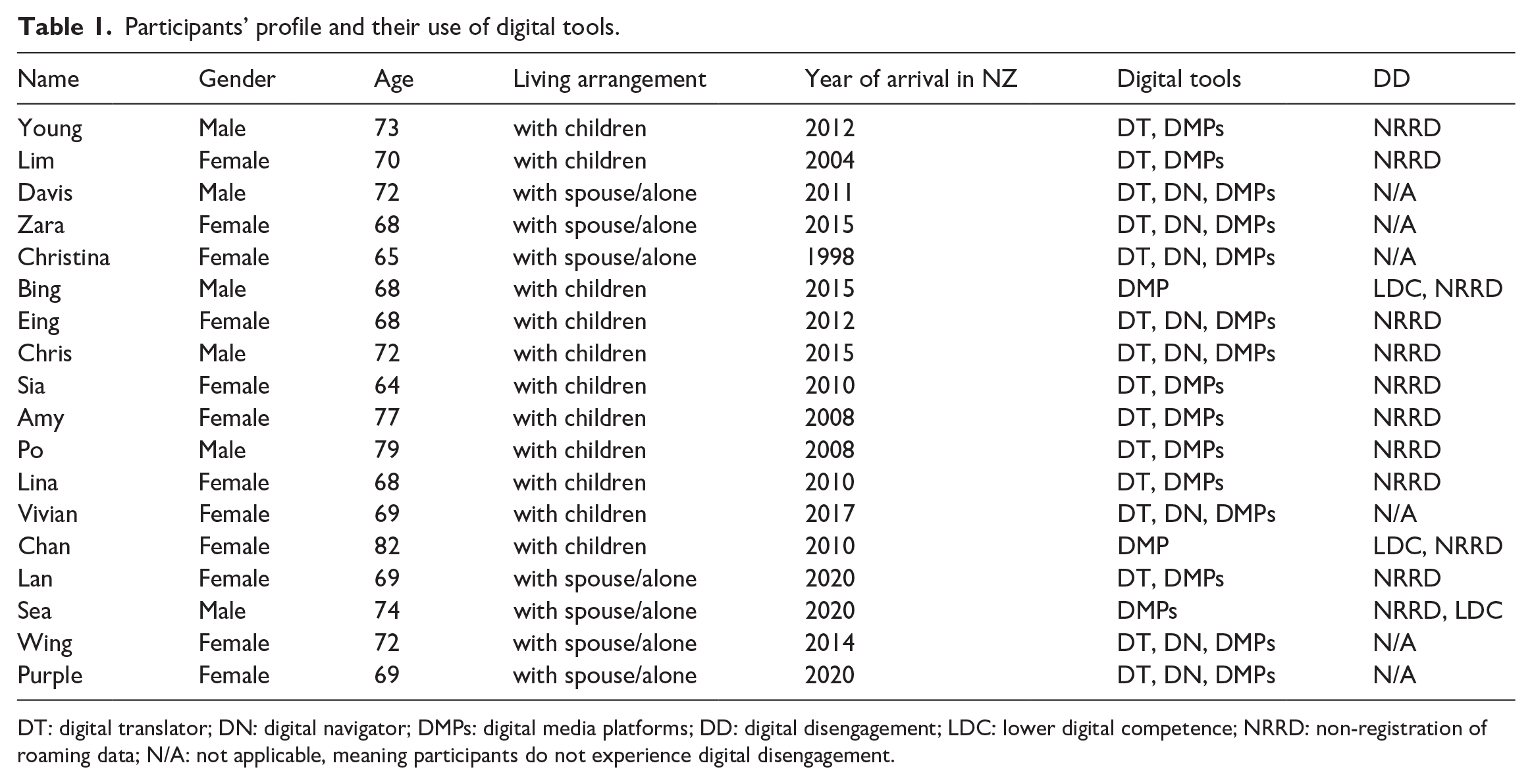
DT: digital translator; DN: digital navigator; DMPs: digital media platforms; DD: digital disengagement; LDC: lower digital competence; NRRD: non-registration of roaming data; N/A: not applicable, meaning participants do not experience digital disengagement.
Data collection and analysis
In order to learn about the challenges experienced by the participants in their daily lives and their use of technology to cope with these challenges, we used three different data collection instruments: (1) a questionnaire (in Chinese) to compile general personal information, (2) two rounds of Fangtan interview and (3) go-alongs. As a Chinese-style narrative interview method, Fangtan engages researchers and participants in a dialogical discussion, and it is similar to an unstructured interview (see Li, 2011). The interview questions generally started with participants’ impressions of their post-migration life, which elicited from all participants both positive aspects and the challenges. Follow-up questions investigated how they coped with the challenges and their digital behaviours (whether engaging or disengaging). The go-along method combines in situ observations of activities in progress with interview-like dialogues to inquire into the participant’s perception of the unfolding event (Carpiano, 2009; Chen and Buckingham, 2025). In studies such as this, it involves the researchers accompanying participants and ‘participat[ing] in patterns of movements’ (Kusenbach, 2018: 2) in their familiar environments. As illustrated in Chen and Buckingham (2024), the go-along method can also be employed as a teaching method to support older migrants undertake daily life tasks independently.
Data collection with each participant entailed four steps. Step 1 involved introducing the project and explaining the content of the consent form in Chinese to each participant. In step 2, all participants completed the aforementioned questionnaire. Step 3 involved two rounds of Fangtan narrative interviews (lasting 30–80 minutes), with a 2-month intervening period. Interview questions focused on participants’ experience of language-related issues and other life challenges in New Zealand and how they overcame the challenges. All participant couples requested that they be interviewed together. In the interview, questions were asked to each spouse individually. When one participant answered the question for their spouse (which rarely happened), we would re-solicit the respective participant’s answer. It emerged that the participant couples held divergent views and experiences and they did not refrain from expressing these.
The final step comprised three go-alongs with each participant (upon their request, three participants Hong, Song, Young, had four go-alongs; in total 57 go-alongs), conducted by the first author to observe how participants function (and their use of technology) while undertaking daily life errands at particular venues. These venues included frequently visited places, such as supermarkets, shops, bus stations, parks, and less commonly visited places, such as government departments, hospitals and pharmacies. The purpose of including both types was to observe how participants function when undertaking familiar errands at known venues, and when adjusting to the challenge of an unfamiliar errand procedure and venue. The data collection lasted from September 2022 to April 2023 (inclusive).
All interviews were audio-recorded and later transcribed. Due to research ethics concerns, the go-alongs were not recorded; instead, the first author took fieldnotes. To verify the researcher’s understanding of what occurred, the first author engaged in brief dialogues with individual participants at certain points of the go-along (typically after he observed the participant used technology), as a form of member checking (following Harvey, 2015).
The analysis of the narrative and go-along interview data comprised two phases. Phase one involved developing the code system using a hybrid approach combining qualitative content analysis and thematic analysis, as outlined by Neuendorf (2019). The analysis was driven by the research questions. The initial coding framework was informed by everyday challenges we identified from previous studies on New Zealand (namely, language barriers and social mobility issues) and older migrants’ technology use from previous studies (e.g. technology for health information). Subsequently, inductive coding occurred in four steps: data familiarization, code development, candidate theme search and candidate theme revision, with these steps often occurring simultaneously and recursively. Specifically, we then familiarized ourselves with the data and developed the themes. During this process, we found that no participants used health information technology, and therefore this code was removed. We identified participants’ frequent use of digital translators for language issues and digital navigators for social mobility issues, which led us to separate the code of ‘technology for daily challenges’ into two themes. We also found evidence that two purposes for using technology overlapped (for transnational communication and leisure) and we collapsed these two codes into one. We also identified (and coded) cases of digital disengagement. In stage 3, an inter-rater reliability check was conducted on a 20% random sample of the data, resulting in a strong level of agreement with a Cohen’s kappa value of 0.885, as defined by McHugh (2012).
Findings
Our initial inquiry was to identify challenges that participants encountered in their daily life. The inclusion of the go-along method introduced a placed-based and kinesthetic experiential focus to the research, which served to extend and verify the questionnaire and interview-based data. The method enabled us to observe older migrants’ daily life use of technology in situ, and to observe their bodily connections with, and reactions to, their environment during the unfolding event. From the compiled data, we learned that participants primarily experienced issues related to language (English) and mobility, according to the interviews, which accords with previous findings (e.g. Kan et al., 2020; Zhang, 2016). A response from a participant when asked about her life here in New Zealand demonstrates a typical perception among participants (see Example 1).
Example 1 There are two things I can’t do when living here, one is English because I don’t know it, and the other is moving around on my own either by bus or by car, because I don’t know the routes and how. [Interview, 13, Nov 2022, Chan]
Such challenges result from changes in the environmental factors (e.g. predominant language used in the host country, physical environment) and their low level of host country language competence. It is noteworthy that language issues can also lead to limited social mobility because participants avoid visiting unfamiliar places that require language interactions or comprehension (e.g. small stores, or stop announcements on bus or train). When they were performing social functioning tasks, such as lodging an application at the government department, banking at an ATM, or even shopping, and making social contact with other people (from different ethnolinguistic backgrounds), as language challenges may impede their task completion and social interaction. Consequently, their social movement is often confined to routine activities (e.g. home to supermarket or community centre). Participants thus experienced negative effects on their psychological and social well-being due to these issues. For example, they perceived a sense of outsiderness, and felt lonely, frustrated, insecure and socially isolated (see for instance, Examples 2 and 3). None of them claimed to feel integrated into their local social environment. These negative states align with findings in previous studies on how language issues and mobility impact older migrants’ well-being as mentioned in the introduction section (e.g. Ekoh et al., 2023).
Example 2 My language issue is the biggest headache and I feel insecure. If you have physiological problems, you can’t call the ambulance because you don’t know the language. I’m really scared of this. It can happen anytime. If no one is around when bad things happen to me, what can I do? I can only wait for death. [Interview, 19 Oct 2022, Vivian] Example 3 Living here, I have no connections with the outside world. I can’t speak English. I can’t go anywhere because I don’t know the roads and directions, and I can only stay at home. I’m isolated. I can’t stand life here. I want to return to China. [Interview, 20 Oct 2022, Sea]
Participants tried to mitigate these challenges through their digital choices and we recorded their specific choice of resource. Table 1 displays the information derived from our data regarding the use of ICTs by the participants. The participants use three technological tools as their coping resources to support their coping strategies: digital translator (users n = 16), digital navigator (n = 8) and digital media platforms (n = 18). Due to differences in their individual digital agency, variation was found in participants’ choice of technology and the frequency of use, and their competence in using it to achieve specific goals. The digital translator was considered user-friendly, and this technology was used by almost all participants; the digital navigator, however, was more challenging and fewer participants used it. Digital media platforms were used by all participants for leisure or online communication. We also found digital disengagement due to lower digital competence and participants’ failure to register for roaming data, which would give them access to use technology during outings.
Most participants (n = 17) used the smartphones that their adult children had bought them. Although their use of mobile phones typically dated from around the 2000s, they had started using smartphones after 2015. Christina is the only participant who had bought a smartphone herself and had begun using it around 2010. This difference can be explained by the fact that she had migrated earlier and had aged in New Zealand. The participants’ technological know-how was mostly acquired from their children or word-of-month (i.e. their ethnic Chinese peer network in New Zealand). In the following sections, we focus on each of the three types of digital tools, and digital disengagement.
Digital translator
Participants used a digital translator when they attempted to solve the English-language-related challenges. The use of digital translators, typically downloaded onto their smartphones (one participant used a language translator device), was common in daily life activities such as shopping, commuting or engaging in interpersonal communication. We identified three functions of these digital translators that participants found the most useful: photo-translation, text translation and simultaneous interpreting. The frequency with which participants used each function varied according to the specific tasks they engaged in.
Photo-translation
Photo-translation was found to be the primary function used to understand written information (confident users n = 16). Due to limited English skills, written texts and signs were particularly challenging, particularly those containing instructional information pertaining to products, procedures, or services, as the vocabulary and syntax were usually quite advanced. The user-friendly operation of digital translators, which involves photographing the text to be translated while the app is open, facilitated an instant translation, and alleviated their immediate language-related difficulties.
The supermarket emerged as the primary venue where participants employed photo-translation, as participants undertook grocery shopping on a regular, often daily, basis. A go-along interview with two participants, Davis and Zara, enabled firsthand observation of how they operate photo-translation in a real-world setting (see Example 4). Figure 1 shows the two participants using the app to understand information on the product label.
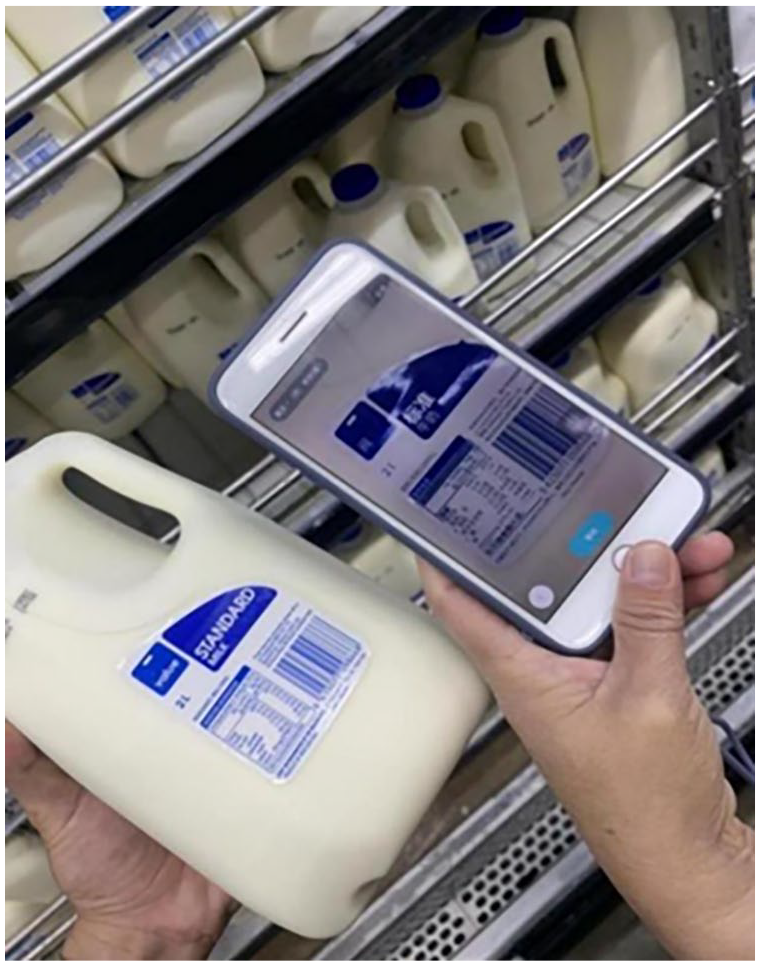
Participants using the photo-translating app.
Example 4 When arriving in Silvia Park [shopping mall], they wanted to do some shopping at Pakn‘save [supermarket]. They wanted to buy bacon but couldn’t read the information on the package, so they turned to me. I asked them how they would understand the information on the package if I weren’t there. They just took their phone out, opened a translation app, and took a picture on the app. The app immediately translated everything. [Go-along note, 6, Dec 2022, Davis & Zara, Venue: Supermarket]
Participants shared their experiences of using photo-translation for diverse purposes. For example, Amy found photo-translation instrumental in understanding her medical reports. In a similar manner, Eing used photo-translation to keep track of societal developments by translating local news, and to aid her English learning by translating textbooks. Chris employed photo-translation to decipher English letters pertaining to local elections. According to the participants, the translation results satisfy momentary information needs and knowledge gaps experienced when undertaking an activity, and its user-friendly nature was particularly appreciated.
Text translating
In this study, text translation refers to the process where participants enter short texts, and the digital translator subsequently translates them into the target language (confident users n = 8). This function of translation allows participants to prepare for a communication event in advance, which was the approach some participants took when anticipating the need to convey complex messages. Participants who frequently utilized this function often planned their visits to venues outside of their daily routine, such as hospitals, barbershops, clinics and government departments. At these venues, the information exchange can involve quite sophisticated language, the communication event is time-constrained and understanding (or misunderstanding) information conveyed during the event can have important consequences. For example, Wing frequently needed to accompany her ailing husband to the hospital. She enters her husband’s medical information, symptoms, and requirements into the digital translator in advance, thereby mitigating or even averting foreseeable communication problems between her husband and medical staff (see Example 5 and Figure 2).
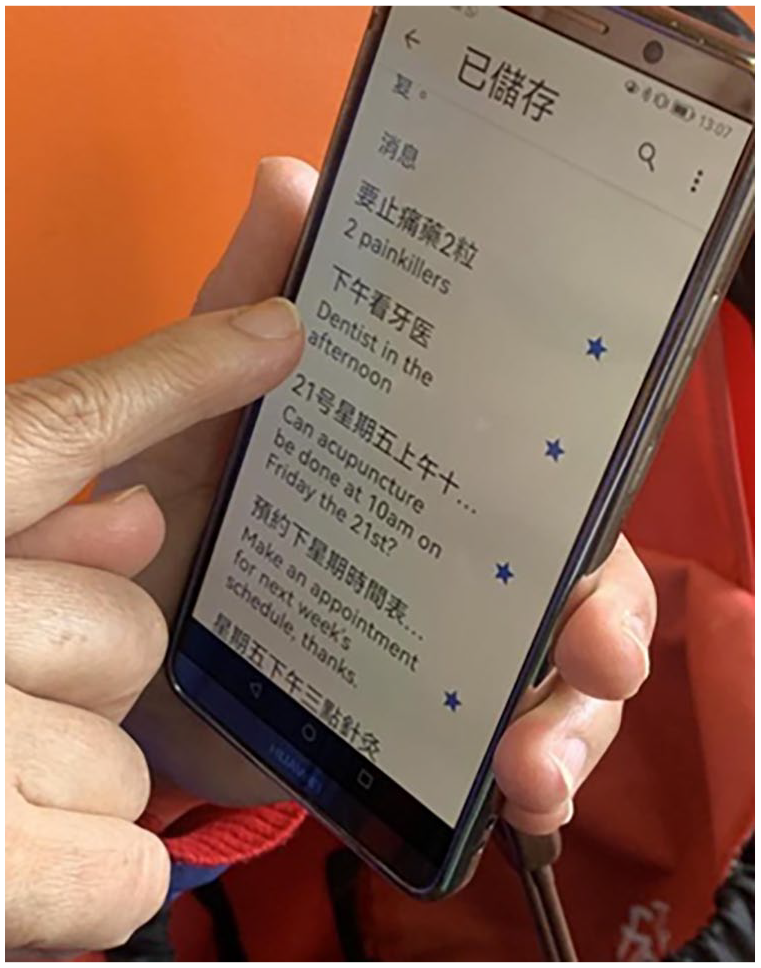
Wing’s text translation examples.
Example 5 When I go to the hospital, I first put the date of birth, symptoms, and other information into the digital translator. I show it to the staff upon their request. From my perspective, the digital translator is better than my husband because he can’t make himself understood with his poor English. So now it is me who helps him communicate with the doctors. [Wing/Interview/22nd Oct 2022]
Two participants, Lan (aged 69) and Sea (aged 74), described their use of text translation at venues they visit less frequently, such as a barbershop, and where communicative exchanges could be challenging. Their previously prepared text enabled them to articulate their needs without relying entirely on spoken language, which they struggle with (see Example 6).
Example 6 So, one day we decided to go to the barbershop for my husband’s haircut. I prepared three questions on the translator. The questions were ‘can we have the haircut?’, ‘can we be training models?’ and ‘is it free?’. I entered the shop, and the receptionist greeted us. I showed him what I had prepared to ask on the translator. He confirmed that the free haircut was offered there. [Lan & Sea/Interview/28 January 2023]
While the advance preparation possible with text translation has clear advantages, it was not always their primary choice. Participants explained that it was not as user-friendly as photo-translating, and the extended screen time needed to prepare texts was experienced as taxing on their eyes and concentration.
Simultaneous interpreting
Simultaneous interpreting involves verbally produced text being simultaneously translated into the target language. This function is typically available in digital translators and is often employed by participants when they encounter language challenges that require real-time verbal communication, especially in unpredictable situations. Davis and Zara, a couple, enjoy exploring the city, and they described their use of this function. Due to their limited English skills, they often encounter unexpected language challenges during their outings, and they find the simultaneous interpreting helpful in these instances. In Example 7, they described communicating with a ticket agent at a tourist attraction using this function.
Example 7 Once, when buying tickets to a tourist attraction, we had difficulties making ourselves understood. We don’t speak English, and the ticket agent doesn’t speak Chinese. Then we took our phones out and opened the translator app. As we spoke, the translator interpreted simultaneously. Then the ticket agent understood what we meant and gave us the tickets. [Davis & Zara Interview/4 October 2022]
In emergency (particularly medical) situations, simultaneous interpreting can be particularly effective. For instance, when Eing’s husband, Bing, experienced a sudden severe stomachache, she was able to communicate his symptoms effectively at the hospital using simultaneous interpreting, enabling the nurse to understand and respond appropriately. The participant Vivian also described a case of using simultaneous interpreting for informal interpersonal communication with her Swiss son-in-law. However, most participants did not use this function to assist with personal relations, believing that spoken communication would be more appropriate. We note that overall fewer participants used this function; some participants found this function complex and difficult to operate, and they did not persist with it (whether because they had lower digital agency or because they didn’t experience high need for this function). In summary, digital translators were found to be vital resources for these participants, and these tools supported different daily life functions (to varying degrees). By enabling these elderly individuals to operate independently, these tools contribute to enhancing the individual’s psychological and social well-being. For example, Vivian experienced a boost in confidence in exploring the city as she became more adept at using digital translators (see example 8).
Example 8 Now that I can operate the digital translators properly, I have become more confident. I can go out and do things without my daughter’s help, such as going to hospital, doing volunteer work, or picking up my medicine at the chemist. I just went to the hospital for a physical check the other day. I used the digital translator, and I had no issues at all. [Vivian Interview/9 February 2023]
Each function appeared to be venue, situation or task-specific. For example, at the supermarket when participants need to read product or sales information, photo-translating was prioritized; in interpersonal communication, however, simultaneous interpreting was a more appropriate choice. Participants were impressed with the extent to which translators could assist with their language challenges. Christina lamented the lack of digital translators when she migrated in the 1990s. Participants gradually started using digital translators following the recommendations of their children or peers, and they regarded the use of digital translators as an indispensable skill in a migrant context. When Sia was asked if she was able to use digital translator, she exclaimed ‘I’m not behind the times at all! I have it on my phone and I can use it’.
Despite the benefits conferred by digital translators, we identified some limitations. First, participants concurred that digital translators also suffer from possible mistranslations. Some participants even commented on certain translations as ‘ridiculous’. Due to polysemy, the translation of some words were rejected or had to be verified. For instance, in Mandarin, 米 can signify both ‘rice’ and ‘metre’; a participant, seeking a 5-m rope, requested a ‘five-rice’ rope, leading to confusion until she sought help from her adult child. In addition, participants noted that communication barriers may persist in more complex scenarios. For instance, two participants had been mistaken for shoplifters at a supermarket and the use of digital translators failed to convey adequately the participants’ explanations. As a result, most participants do not exclusively depend on digital translators, combining their use with non-digitally assisted spoken communication. Finally, an over-dependence on digital translators contributed to some participants losing their motivation to learn English (whether through self-study or formal classes), as they did not perceive the need.
Digital navigator
The digital navigator was identified as a valuable tool for participants who drive and take public transport in daily life, as it enhanced their independence and mobility and provided opportunities to interact with the local community. In New Zealand, people aged 65 years or older are provided with free off-peak travel on bus, rail and ferry services. 3 The participants valued the ability to move around the city, which they described as an elementary life skill. However, the sense of unfamiliarity with the city and public transportation system prevented them from city-wide exploration.
For eight participants, the use of navigational technology supported activities that involved either public transportation or driving. For both forms of transport, the use of the digital navigator gave them confidence to explore routes and be mobile beyond their immediate neighbourhood and even explore new places. The digital navigator gave them the security of not losing their bearings, which was particularly important due to their low level of English skills, their limited levels of energy and stamina (which could soon be depleted if they got lost), and their sensory challenges (sight and hearing). As illustrated in Example 9, Vivian expressed pride in her ability to adapt to technology and remain independent.
Example 9
Some digital navigators (e.g. Apple Map, Google Map) also offer public transport schedules. Participants found this function particularly useful to manage their time and routes, and the clarity regarding the time investment needed gave them confidence in their ability to cope with the excursion. For instance, Wing always planned her departure time (from the house) and return home using this app (see Figure 3), and she carefully considered her ability to be mobile during this time period. Finally, Davis and Zara talked about visiting different places in Auckland for recreation. They reported visiting islands, beaches, forests on their own with the digital navigator, which provided them with directions, times and route options. This couple possibly showed evidence of greater mobility and independence due to the fact that they had the security of undertaking these explorations together.
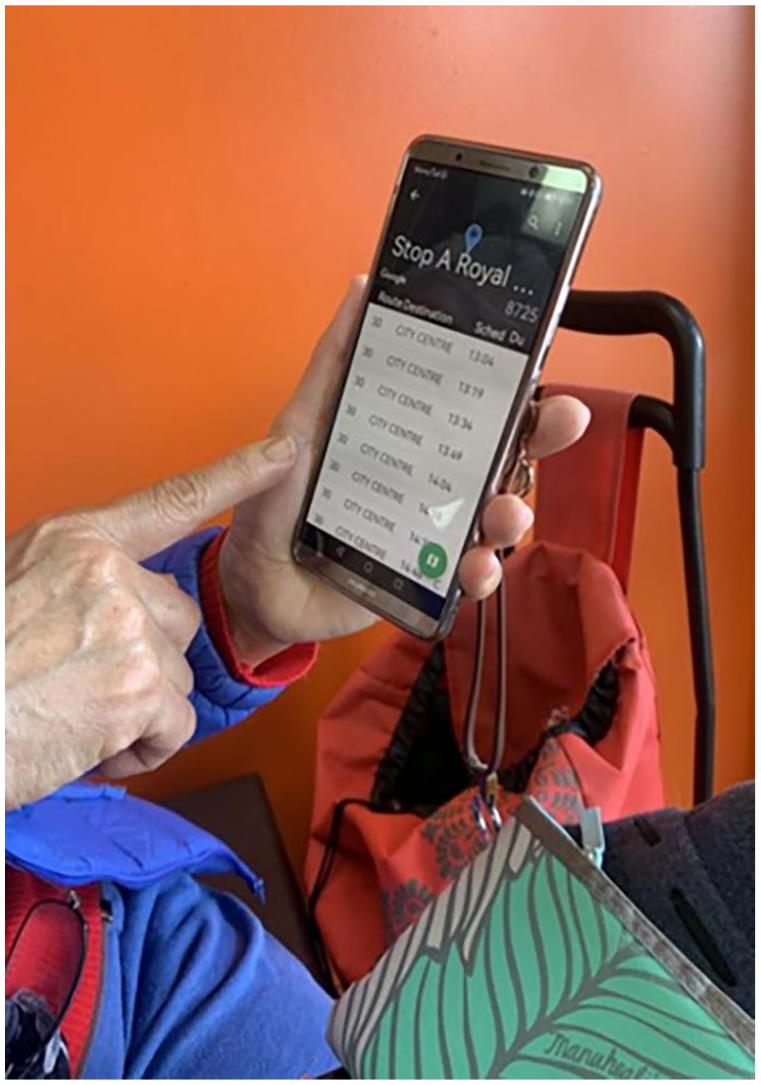
Wing used the digital navigator to check bus schedules.
Nevertheless, not all participants possessed the strong digital agency exhibited by Vivian, Wing, Davis and Zara, who demonstrated a sense of responsibility for their own digital choice and were able to use the chosen technology competently. Some participants found the digital navigator overly sophisticated and were not motivated to learn how to use it; other participants were unaware of it, showing a relatively lower level of digital agency. Chan only moves around her neighbourhood on her own due to her inability to operate the functions on digital navigators. Lan and Sea are unaware of the bus schedule and routes available through the app, and they usually just waited at the bus stop until the buses arrived, without consulting a schedule (regardless of the wait time). During the interview, they were surprised to learn that digital navigators could show directions and present bus schedules.
Digital media platforms
Digital media platforms in this study specifically refer to the platforms where messages, information, news, videos, clips and TV series are presented and exchanged, and it includes satellite TV that has Chinese channels. These platforms are where participants establish or maintain social networks, browse videos or watch TV series that are all in their familiar language. Due to their insufficient English, they do not watch English-language programmes or local TV. The Chinese-language media report on local New Zealand news, which enables them to keep track of events and issues important in their immediate context. Participants watched channels in Mandarin (e.g. TV28, a channel dedicated to the New Zealand Asian communities available in Mandarin Chinese and Cantonese Chinese) on WeChat accounts (specializing in reporting New Zealand news and supermarket information) or online forums in Mandarin Chinese (e.g. Skykiwi.com) instead of the English-language media. For instance, Figure 4 displays advertising by a well-known local supermarket chain that advertises in Chinese on WeChat.
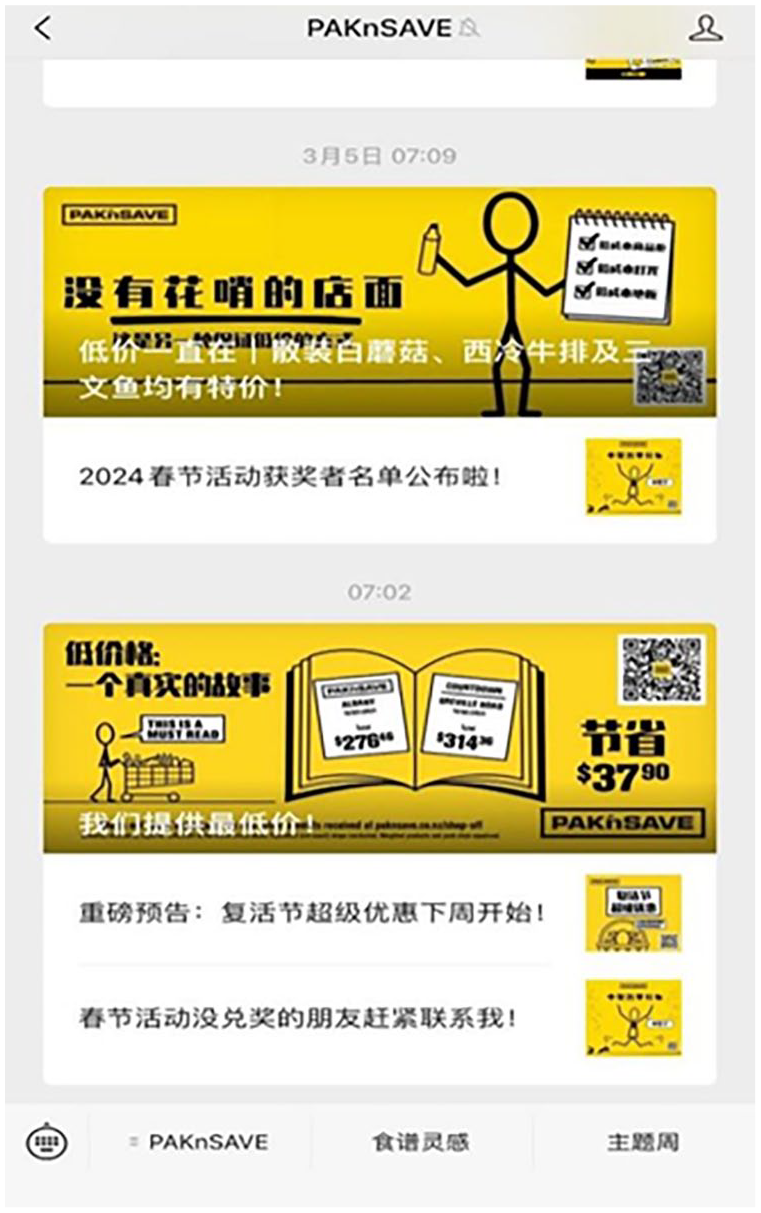
Pakn’Save (a chain-supermarket in New Zealand) on WeChat.
These platforms can also serve as tools for participants not only to maintain transnational networks, but also to establish new social networks and participate in social activities. For example, Purple shared her experiences of volunteering via one of the social media platforms (WeChat) where she met new people and contributed to the community (see Figure 5).
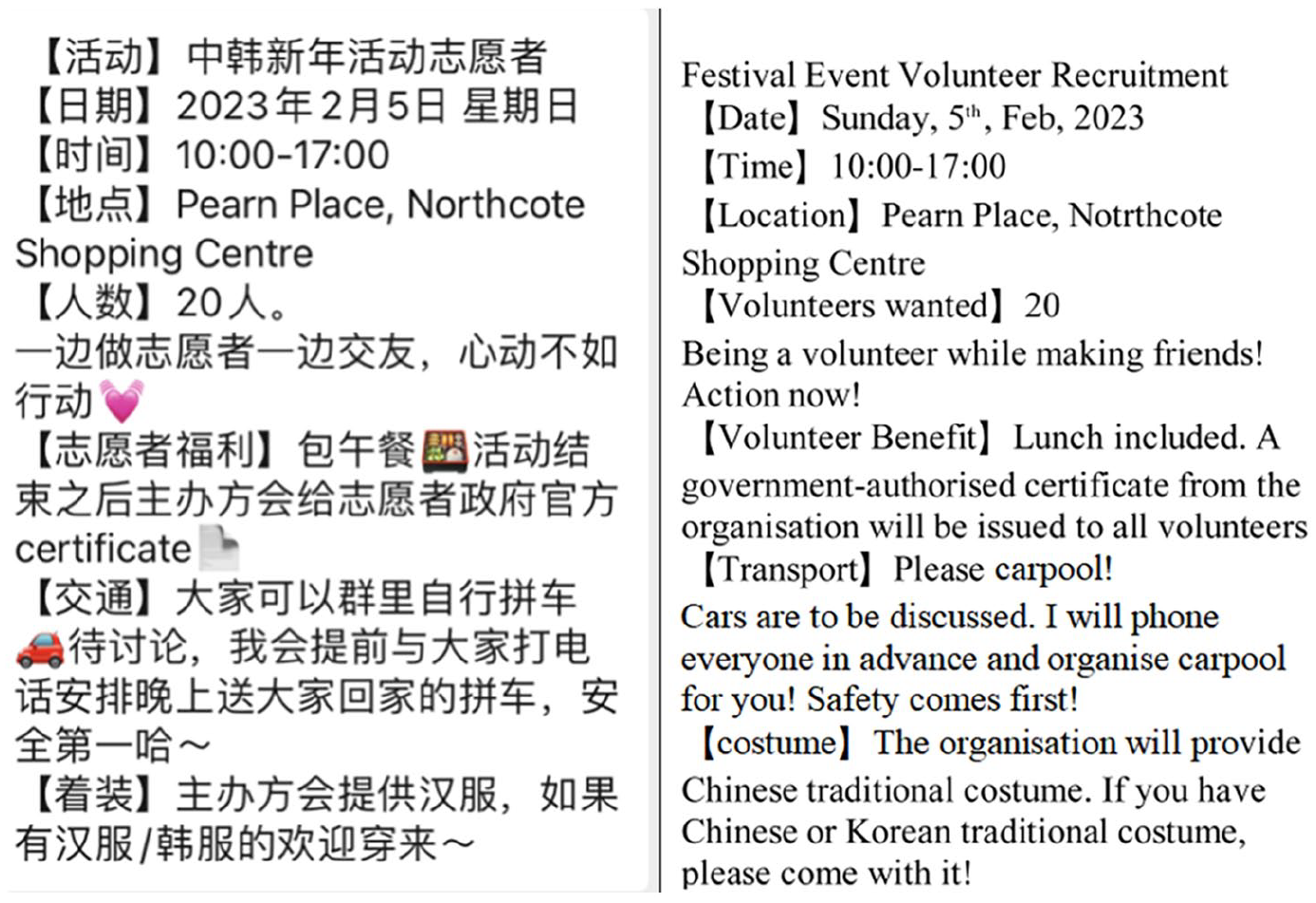
Volunteer recruitment information on a WeChat group and the English translation (provided by Purple).
In addition, we found that participants, especially those with few engagements to occupy their time and who had a limited social network, were more inclined to rely on digital media platforms for entertainment and as a source of information and comfort (i.e. to alleviate feelings of loneliness; to obtain information on local news in New Zealand). The participants appreciated the wide variety of choice on the present media platform. According to Christina, when she migrated in the 1990s, the Mandarin channel on TV and radio had a very limited service, and phone calls to friends overseas were unaffordable. Today, however, she enjoyed the different options available to access information and connect with friends, usually without cost. These advantages were primarily due to the availability of quality Chinese-language media content worldwide and the sophisticated Chinese digital infrastructure (e.g. WeChat) which ethnic Chinese migrants can tap into. Older migrants with a different ethnolinguistic profile may not have these options.
Digital disengagement
In addition to digital engagement, we identified instances of digital disengagement resulting from lower levels of digital competence. The first form of digital disengagement, as described in previous sub-sections, typically involved participants’ inability to adequately take advantage of digital tools for their daily life needs. For example, two participants (Sea and Bing) believed their age and the sophisticated functions of some apps or technological tools prevented their use of digital technology.
The second form of digital disengagement, lower levels of digital accountability, refers to disconnection from the Internet during outings. Such Internet disconnection was motivated by financial considerations, 4 constrained lifestyles, and familial concerns. The interviews and go-alongs revealed that twelve participants disengaged from the Internet when they were out because they did not register for roaming data, despite being fully aware of the benefits offered by digital tools while operating outside the home. Of these, eight participants explained this decision as a cost-saving measure; three believed that their constrained lifestyle (characterized by staying predominantly at home for caregiving work and frequenting a limited number of venues) did not warrant the use of roaming data; finally, one participant was disconnected because his family discouraged his mobility. As a consequence of this deliberate disengagement, these individuals became unreachable when outside their home environment and this posed issues related to digital accountability. In the possible scenario where participants might lose their sense of direction, experience physical difficulties or even experience conflict with others, such disengagement meant they would be unable to rely on digital navigators and digital translators for assistance.
During several go-alongs conducted with some of these 12 participants, it was observed that they had to discontinue their attempts to demonstrate their digital abilities since they lacked access to the Internet because of not registering for roaming data. Some participants (n = 5) believed that digital disengagement interfered with their attempts to cope with their daily life challenges and led to their being more house-bound and experiencing social isolation. We observed that this home-bound digital disengagement was often accompanied by caregiving commitments, which were sometimes quite substantial.
Three participants depicted their lives as revolving around their grandchildren and house chores. For instance, Sia (aged 64) described her daily life as undertaking a series of domestic caregiving tasks and household chores in the multigenerational family home. She described her experience of being disconnected from the Internet when away from home in terms of being unable to access the information she needed, such as translation assistance, and was sometimes unable to complete the planned errand. She lacked confidence in her ability to cope outside the home, while also conceding that her caregiver role meant she did not have the motivation to change her digital disconnection. Young (aged 73) also described his caregiving work as consuming most of his time, and as justifying his constrained lifestyle. He avoided exploring outside the home and avoided addressing language issues in Auckland with the help of digital tools. Zhao (aged 72) explained that his daughter discontinued his roaming data registration with the intention of keeping him at home and encouraging a more confined lifestyle due to her lack of confidence in his ability to operate independently (see Example 10). In this situation, Zhao was unable to exercise digital accountability and he became reliant on his daughter’s assistance with daily life errands.
Example 10 I didn’t register for the roaming data because my daughter fears that once I get connected, I would travel around. She was concerned about this. So, I have to stay at home. [Zhao/Interview/13 October 2022]
The participants who were not registered for roaming data (n = 11) all lived with their adult children. It is possible that the multigenerational co-residence documented here could be associated with the older migrants’ more limited digital agency for the aforementioned reasons. The complex bidirectional pattern of duty of care can be experienced by older migrants as contributing to a loss of control over their autonomy. The reduced need or incentive to explore their social environment impacted negatively on their digital agency.
The majority of participants who employed the Internet during outings lived separately from their children (five out of seven participants), and they tended to be more independent in coping with challenges due to their use of technology. These participants exercised a high level of digital agency in planning a lifestyle that supported their well-being and independence, and digital accountability in the sense that they planned their outings well (using the information available online) in order to prepare themselves for possible challenges during their outings. This is illustrated by two intrepid participants, Davis and Zara, who frequently explored the diverse locales of Auckland, in Example 11.
Example 11 You know we like going round the city to see different views. The roaming data is one of the most important things we would never consider leaving out. You can save on anything except this. We absolutely need to be connected when we are out. I think hi-tech is tremendously helpful and convenient for our life! [Davis & Zara/Interview/6 December 2022]
It was evident that some couple participants typically function as a social unit when leaving the home (Bing & Eing, Lan & Sea, Amy & Po, Davis & Zara). This companionship contributed to an experience of collective digital agency and led to jointly devised digital strategies, or strategy sharing. As digital skills and confidence were not always evenly distributed between the individuals in each couple, one individual can appear to exercise greater digital agency. This meant that the individual with weaker skills was able to rely on their partner when faced with language- or information-related challenges when operating outside the home. This was the case of Bing, Sea, and Po, who had low digital literacy and agency (as described earlier in 4.4). In this study, only one couple, Zara and Davis, appeared to possess comparable digital engagement, and this facilitated the joint approach to addressing challenges and to planning daily life activities that we observed.
Towards a comparison of digital agency among participants
Through our observations and interviews we confirmed that all participants were able to use digital tools for daily life purposes. Participants with higher digital agency tended to employ more tools and address more challenges which contributed to their sense of autonomy and independence. We identified three intersecting social factors which appeared to shape older migrants’ digital agency.
First, digital agency appeared to possess a gendered dimension, as females in this study tended to display higher digital agency, including in cases where they operated as a couple with their spouse. Second, the living arrangement appeared to be a contributing factor to observed differences in digital agency. Participants living with their (adult) children were prone to digital disengagement and used fewer tools, while those with separate living arrangements tended to use more tools and were more digitally engaged. As we previously explained, this disengagement usually intersected with the participant’s stronger focus on household caregiving work. We noted one case where the participant experienced his disengagement (outside the home) as a form of familial control. We identified an exception to this, however, where the older individual (Vivian in Example 9) was able to conserve her autonomy and experience digital agency as a form of self-empowerment. Third, digital confidence – developed through successful and repeated digital problem-solving – emerged as a key enabler of agency. Participants who actively engaged with digital tools (and experienced this engagement in a positive manner) were more motivated to continue doing so, whereas those with low competence tended to withdraw from digital practices and public life, resulting in a downward cycle of disengagement. Other factors, such as age-related limitations and length of residence, may also have contributed to the differences we observed between our participants, but our relatively small sample size prevents us from positing tentative conclusions in this regard.
Discussion and conclusion
This study explored how digital agency guided individuals’ specific digital choice to cope with daily life challenges (in this context, language issues and limited social mobility) in migrant ageing settings. We achieved this goal by examining people’s differentiated use of different types and functions of ICTs and the causes of digital disengagement. The findings contribute to our understanding of how digital resources and digital agency can empower older migrants’ digital choice to address the daily challenges related to language and social mobility. Empowered by these technologies, older Chinese migrants cultivate a stronger sense of independence, in the sense that they ‘developed a sense of managing and controlling their own lives without burdening their adult children’ (Zhang, 2016: 10). The study also contributes to the understanding of digital disengagement as multifaceted and not only the result of a personal mind-set or skill-related challenge (e.g. low digital literacy), as previous research suggests (e.g. Safarov, 2021), but as also shaped by social factors (e.g. family intervention). This disengagement in the migrant ageing context may lead to social isolation.
Similar to Zhang’s (2016) study on older Chinese migrants in Auckland, older migrants with low proficiency in the host country language were found to perceive themselves as more capable of tackling daily life language issues with the help of digital translators (despite the occasional unreliable translation). Digital navigators help older migrants explore the city and plan their errands or excursions. As Zhou and Cai (2002) describe, the technologies help older migrants ‘navigate unknown and foreign territories’ (p. 435). By facilitating the preparablity of these tasks and reducing the unknown elements, the older migrants are more likely to perceive the tasks as manageable and achievable. The use of Chinese-language social media not only serves as a sanity saver, but also as an important platform to acquire information about the host country (Zhang, 2016), foster participants’ transnational sense of community (Li et al., 2014), make social contacts and establish a sense of local community, forms of technology use referred to as digital place-making (Halegoua and Polson, 2021; Li and Alencar, 2023).
Most participants were able to exercise their digital agency through their control over and adaption to the technological tools (i.e. choose which tool to use in different occasions; choose whether or not to use the technology), and learning to use digital technology to assist with their daily life social functioning and leisure (Ferrari and Punie, 2013; Passey et al., 2018). However, we also observed that the participants were not a homogeneous group regarding their level of digital agency (some present stronger digital agency while some present weaker agency), as also seen in Xu and Buckingham’s (2024) study on older Chinese migrants’ use of digital technology for online language learning. Participants with stronger digital agency are more confident, competent and accountable in the use of technology. Participants with weaker digital agency may experience digital disengagement and social isolation. Previous studies show digital disengagement is closely associated with age-related limitations (e.g. failing stamina and cognition) and technological design, two common issues in older people’s barriers to digital engagement (e.g. Gatto and Tak, 2008; Sun et al., 2020). In addition, our study reveals that co-living arrangements and spousal assistance may contribute to digital disengagement among older adults. This appears to stem from participants’ dependence on adult children and the demands of caregiving responsibilities, as well as the tendency to operate as a social unit with their spouse. Gender also emerged as a relevant factor in shaping participants’ digital agency, as female participants tended to display higher agency. This finding contrasts with Friemel’s (2016) earlier study on the use of technology among Swiss seniors, although the author conceded that the higher use of technology by men was associated socioeconomic factors, such as education and income. In this study, the higher digital agency observed among women may be explained by their strong desire for autonomy in this migrant context, and their prominent role within the spousal relationship. We found no clear evidence of age influencing digital agency, although this may be due to the limited sample size.
Digital disengagement also became apparent during outings (i.e. disconnection from the Internet) and was motivated primarily by financial concerns, which Tomczyk et al. (2023) also found to be a major reason for older adults’ digital disengagement. Our findings demonstrate that such digital disengagement is likely to contribute to social isolation. However, we also found that digital engagement can be a double-edged sword, as it not only facilitates, encourages and supports older adults’ well-being, but also can contribute to isolation (Hill et al., 2015), as the convenience of digital media platforms for entertainment and information can mean that individuals are less inclined to socialize outside the home (Wilson-Nash and Tinson, 2022). The best way to minimize social isolation remains the maintenance of in-person social contact (Gauthier et al., 2022).
We acknowledge several limitations in this study. First, our focus was primarily on how digital agency can help address daily life challenges, particularly language issues and limited social mobility. However, older migrants, as a vulnerable demographic, may face additional stressors that could also be alleviated by digital resources. For example, digital coping for dementia, as described by Van Leersum et al. (2023), is one such area. Future research could explore how digital resources help with other migration-related stressors, such as limited social support or discrimination. Second, this study did not investigate (and did not observe) how participants use Artificial Intelligence (AI) to cope with challenges. As AI becomes increasingly integrated into daily life, examining how older migrants utilize AI as a digital resource to assist in their lives is a valuable area for further research. Future studies could also explore how AI can be used to support older migrants in navigating life’s challenges. Third, we recognize the advantages experienced by the Chinese migrant community due to the availability of quality (primarily Chinese language) digital resources (e.g. WeChat). Other ageing migrant communities may not have easy access to comparable resources and their experience of navigating the challenges of daily life in a migrant context is likely to be different. Finally, we acknowledge the potential importance of factors that we were unable to consider in this study, such as length of residence, age, education and economic status, in understanding older migrants’ digital agency.
In conclusion, we wish to underscore three practical implications for education providers, app developers, public sector institutions, and for the older migrants themselves. First, since digital literacy supports older migrants’ settlement experience, education providers could consider integrating digital literacy skills into language course curricula (or offer separate digital skill-based courses). Although an important charity organization that focuses on the elderly has launched Digital Literacy Training for older Asian migrants from China, Japan, and Korea (https://www.ageconcernauckland.org.nz/what-we-do/asian-services/), according to the feedback from the participants in this study, it is not widely known. Second, the participants appreciated ease-of-use technologies and functions. Since the complicated design of technological tools can discourage older adults’ use of technology (Gatto and Tak, 2008; Wilson-Nash and Tinson, 2022), app developers could consider designing more senior-friendly functions to enable full use of the apps, such as an easy mode. Finally, some participants disengaged from technological tools due to considerations of cost. The provision of a limited free allowance of roaming data for eligible individuals (e.g. people aged over 65) on a monthly basis would help avoid this. Such movements can encourage them to engage more in social life and increase their mobility, thereby alleviating social isolation.
Footnotes
Funding
The author(s) disclosed receipt of the following financial support for the research, authorship, and/or publication of this article: This paper is supported by the funding Yingqiu Chen received from the China Scholarship Council (CSC NO. 202009350026).
Ethical approval
We obtained ethics approval for this study (UAHPEC22854). All participants provided informed written consent.
