



Abstract
The authenticity of political candidates has become a decisive factor in their evaluation by the public. In response, political candidates employ self-presentation techniques to appear genuine to constituents, and social media provides politicians with new tools to perform authenticity. Yet, we still know little about how politicians construct authentic images and how their gender and modes of self-presentation influence perceived authenticity. In this study, we examine how politicians’ gender (male vs female) and modes of self-presentation (text-only, image-only, and text–image combined) affect perceived political authenticity. Results from a 2 × 3 online survey experiment in Germany (N = 1,485) show that gender alone does not explain differences in perceived political authenticity when self-presentation is held consistently. Furthermore, we do not find significant effects for different self-presentation modes in social media. Additional analyses reveal that physical attractiveness is the primary factor for higher authenticity ratings in our sample.
Introduction
Individual politicians play an important role in the outcome of contemporary elections (Gattermann and De Vreese, 2017). Due to the increasing personalization of politics, individual politicians, and their personal characteristics gain importance as evaluative criteria for citizens at the expense of political issues and groups (Balmas et al., 2014). This trend can be observed in more personalized political systems, such as in the United States, and even in parliamentary democracies, where declining party affiliations contribute to the increased relevance of individual political candidates (Valgarðsson et al., 2020).
One specific character trait that has gained significant attention in recent elections is authenticity (Ceccobelli and Di Gregorio, 2022; Enli and Rosenberg, 2018; Lacatus and Meibauer, 2022). Hence, the news media has linked the electoral success of politicians to the authenticity of the winning candidates. Many voters considered politicians such as Donald Trump (the United States), Victor Orbán (Hungary), and Sanna Marin (Finland) to be particularly authentic (Hivert, 2022; Shane, 2018; Szebeni and Salojärvi, 2022). At the same time, political observers draw on the lack of personal authenticity as a cause for the failure of individual candidates. The case of Hillary Clinton has often been mentioned as an example in the literature, and her alleged lack of authenticity has been discussed among scholars and linked to her failed candidacy (Hahl et al., 2018; Parry-Giles, 2014; Pillow et al., 2018).
Whether politicians are perceived as more authentic by citizens has often been mentioned to explain their electoral performance and candidate evaluations (Kenny et al., 2021; Zulli and Towner, 2021). Preliminary surveys show that perceived political authenticity affects citizens’ voting decisions, supporting the assumed relevance of political authenticity in contemporary political communication (Luebke and Engelmann, 2023; Stiers et al., 2021). Consequently, a particular interest of political communication research is to understand what makes politicians appear more authentic to the electorate. Therefore, this study empirically investigates citizens’ perceptions of politicians’ authenticity and seeks to shed more light on drivers of perceived authenticity. Previous research in this field has largely focused on political attitudes, showing that citizens perceive politicians as more authentic, the more they identify with the candidates’ parties (Brewer et al., 2014). However, other influencing factors beyond political attitudes are discussed in the literature, on which we have fewer empirical studies. This applies in particular to the role of politicians’ gender and self-presentation for their perceived authenticity. Previous research on perceived authenticity suggests that the visual performed authenticity of politicians on social media positively affects different outcomes (electability, vote likelihood, and candidate evaluation) but differs depending on politicians’ gender (Zulli and Towner, 2021). Therefore, our study aims to further elaborate both aspects.
The few extant studies on gender and authenticity have arrived at different empirical results depending on the country context. For example, studies from the United States observe particular challenges for the perception of authenticity among female politicians (Hahl et al., 2018; Pillow et al., 2018), whereas research from Norway shows that female politicians were perceived as more authentic than male candidates (Enli and Rosenberg, 2018). The literature also considers the effects of candidates’ self-presentation on their perceived authenticity. Luebke (2021), for example, sees perceived authenticity as the result of politicians’ performed authenticity and the news media’s mediated authenticity. Social media is an ideal platform for politicians to present themselves as authentic (Enli and Skogerbø, 2013), allowing them greater independence from journalistic gatekeepers and optimizing their self-presentation by using the textual and visual equipment provided by the platforms (Shane, 2018; Steffan, 2020). This approach might be useful, especially for female politicians, who are often portrayed in biased and stereotypical ways by traditional news media (Van der Pas and Aaldering, 2020). However, previous research has not investigated how politicians’ multimodal (i.e. textual and visual) self-presentation in social media affects citizens’ perceived authenticity concerning different candidates.
To address these research gaps, this study examines how candidate features (i.e. gender) and their self-presentation (i.e. modality of social media posts) influence perceived authenticity, resulting in at least two significant contributions to our understanding of political authenticity. First, it adds to the debate about gender bias in politics by providing empirical findings on the influence of candidates’ gender on perceived authenticity. Second, it analyzes visuals’ and texts’ isolated and combined effects, which may help politicians create more authentic images.
The article is structured as follows: First, we conceptualize perceived political authenticity as a multidimensional concept, demonstrate its relevance in social media, and discuss its relationship with gender and the modality of self-representation. Second, we derive hypotheses from these considerations, which we test empirically in a large online survey experiment in Germany (N = 1,485). Finally, we discuss the implications of the findings, the study’s limitations, and suggestions for future research.
Political authenticity in social media
The authenticity of political candidates has become a key concept in contemporary politics. The perception of politicians as authentic plays a significant role in citizens’ voting decisions (Kenny et al., 2021; Stiers et al., 2021). It is conceptualized as an essential constituent of candidate images and is expected to be positively associated with other candidate image variables, such as competence, credibility, or attractiveness (Louden and McCauliff, 2004). Communication scholars define political authenticity as a multidimensional social construct that describes the degree to which politicians appear as being and remaining true to themselves (Luebke, 2021). Accordingly, authenticity is not a quality of specific politicians but the result of “a symbolic, mediated, interactional, and highly contested process by which political candidates attempt to ‘make real’ a vision of their selves [. . .] within the public sphere” (Parry-Giles, 2001: 214). This notion suggests that it is not decisive whether politicians really present their true inner selves to others but whether they come across as authentic. In line with this reasoning, this study focuses on perceived political authenticity, which is defined as “a subjective assessment by citizens whether politicians appear as true to themselves” (Luebke and Engelmann, 2023: 3). These perceptions of politicians’ authenticity are formed from information from the media, such as politicians’ self-presentation and the media’s construction of authenticity, and based on different dimensions (Luebke and Engelmann, 2023). Luebke (2021) proposes the following four dimensions to illustrate how citizens evaluate politicians’ authenticity: consistency, intimacy, ordinariness, and immediacy. Thus, politicians are considered authentic when they appear to hold consistent standpoints across time and situations (consistency), seem to allow insights into their private life (intimacy), appear approachable and down-to-earth (ordinariness), and give the impression to not be influenced by others but to say what they think (immediacy, Luebke, 2021). Recent studies have relied on these dimensions to measure authenticity as political performance and found that both male and female politicians rely heavily on the dimension of consistency and ordinariness to create authentic images on social media (Sonnevend and Steiert, 2022; Szebeni and Salojärvi, 2022).
In recent years, social media platforms have provided new means for politicians to perform authenticity (Enli and Skogerbø, 2013), allowing politicians to bypass traditional gatekeepers, such as the news media, and manage the impressions that citizens form of them (Haßler et al., 2023; Kreiss et al., 2018). Furthermore, the use of social media not only signals candidates’ approachability (Dumitrica, 2014) but also provides them with an environment for a more personalized, direct, and spontaneous exchange with citizens to promote a sense of authenticity (Lee et al., 2020; Shane, 2018). This association has been supported by research showing that exposure to political accounts and the option to “follow” politicians on social media increases the perceived authenticity of politicians in general (Luebke and Engelmann, 2022). Since previous studies have shown that female politicians receive more negative news coverage than their male counterparts (Van der Pas and Aaldering, 2020), social media may be a particularly valuable means to perform authenticity for female candidates.
Nevertheless, the extent to which individual candidates and their self-presentation on social media are perceived as authentic among citizens is very audience-specific (Hahl et al., 2018), and the relevant literature suggests distinguishing two influences on perceived political authenticity (Luebke, 2021). These influences include external information such as candidate characteristics and their self-presentation, and internal information such as citizens’ characteristics and attitudes. Prior research has been mainly concerned with the impact of citizens’ internal information on perceived authenticity, revealing partisanship as the main predictor of authenticity ratings across national samples (Hahl et al., 2018; Luebke and Engelmann, 2022; Pillow et al., 2018). The more citizens identify with a candidate’s party, the more they perceive them as authentic. The influence of external information has received less attention in the literature. Therefore, this article investigates whether the gender of politicians and the modality of their self-presentation in social media influence citizens’ authenticity ratings for politicians.
Perceived political authenticity and gender
The political communication literature suggests that politicians’ gender plays an important role in the perception and attribution of authenticity. According to Parry-Giles (2014), citizens often base their authenticity ratings on idealized notions of authentic womanhood and manhood. Furthermore, it is assumed that “female candidates have particular challenges in being regarded as authentic” (Hahl et al., 2018: 15). More specifically, female candidates are said to be perceived as less authentic than male candidates since “political leaders have traditionally been male, and thus, the expectations of voters will relate to this stereotype of a male political leader” (Enli and Rosenberg, 2018: 7). Liu et al. (2015) take a similar line, stating that women are less likely to be accepted as authentic leaders. In line with this reasoning, several scholars refer to the example of Hillary Clinton, who was depicted and perceived as an inauthentic politician in the public eye (Parry-Giles, 2001, 2014; Theye and Melling, 2018).
However, there has been little empirical research on the relationship between authenticity and gender. A study by Hahl et al. (2018) investigating the authenticity of Donald Trump and Hillary Clinton shows that Trump was perceived as more authentic among his supporters than Clinton among her voters. In contrast, a comparison of authenticity ratings among three male (Biden, Buttigieg, Sanders) and one female candidate (Warren) from the Democratic Party reveals that respondents did not attribute authenticity exclusively to male candidates, as Warren was perceived as the second most authentic after Sanders (Kenny et al., 2021). Finally, research by Enli and Rosenberg (2018) reveals that Norwegian respondents perceived female candidates as more authentic than male politicians. Among the 12 rated politicians, the two candidates rated as most authentic were women.
Overall, previous empirical studies provide mixed findings on differences in perceived political authenticity for politicians of a different gender. Since these studies do not control for differences in the candidates’ political communication, we do not know whether these differences in perceived authenticity for different politicians result from citizens’ biased perceptions or differences in the candidates’ self-presentation. Therefore, we ask the following:
RQ1. To what extent does the perceived political authenticity for the same social media performances differ between male and female politicians across participants?
Although we do not find a general trend in the global evaluation of the authenticity of candidates of different genders, the two studies from the United States show that citizens’ gender influences their perceptions of politicians. For example, Kenny et al. (2021) note that the female politician Warren was rated more authentic by female citizens than male citizens, while there was no gendered relationship for any of the male politicians. Similarly, Hahl et al. (2018) find that perceptions of Trump did not differ between male and female citizens, whereas Clinton was perceived as less authentic among male citizens than among female citizens. Consequently, we derive the following hypotheses, which, unlike RQ1, additionally account for the gender of the participants:
H1a. Male participants perceive male candidates’ performances to be more authentic than performances by female politicians.
H1b. Female participants perceive female candidates’ performances to be more authentic than performances by male politicians.
Finally, experimental research by Zulli and Towner (2021) has shown that the effects of politicians’ visual authenticity on social media differ for male and female politicians. Thus, we will also consider possible interactions between politicians’ gender and the modality of their self-presentation.
Perceived political authenticity and modality
Another aspect influencing citizens’ perceived political authenticity is politicians’ self-presentation, which refers to how politicians attempt to create and claim a desired image in social interactions. In a more recent twist, social media provides politicians with a fully multimodal environment to present themselves as authentic (Shane, 2018). Politicians use these platforms to communicate directly with citizens by posting text-only tweets, images on Facebook, and Instagram stories combining visuals and audio, often accompanied by superimposed text. Consequently, citizens are increasingly exposed to multimodal information about politicians.
Although political communication researchers have recently acknowledged the importance of multimodality (Boomgaarden et al., 2016; Powell et al., 2015), studies on politicians’ self-presentation in social media focus either on text or visuals (Jackson and Lilleker, 2011; Steffan, 2020), not both. Therefore, we know little about the effects of textual, visual, and multimodal (textual and visual) information on candidate evaluations. While unimodal studies provide important insights into the communication strategies of politicians, they neglect how visuals and text are usually processed simultaneously by citizens and differ significantly. It is often argued that visuals are superior to texts because they grab more attention (Garcia and Stark, 1991), are more credible (Messaris and Abraham, 2001), are processed faster (Barry, 1997), and are better recalled (Newhagen and Reeves, 1992). Moreover, visuals may affect how citizens evaluate politicians (Barrett and Barrington, 2005; Lindholm et al., 2021) and make voting decisions (Olivola and Todorov, 2010; Rosenberg et al., 1986).
Findings from several previous studies suggest a picture superiority effect in political communication research. For example, Barrett and Barrington (2005) demonstrate that a favorable visual representation of a politician may influence voting intentions and the politician’s evaluation even when voters gain more contextual information. Similarly, Powell et al. (2015) find that visuals may have a stronger effect on the audience than textual information. Recent studies indicate that this also holds for politicians’ perceived political authenticity. Luebke and Engelmann (2022) conclude that “citizens with a higher proportion of visual journalistic media exposure seem to perceive candidates to be more down-to-earth than those with a balanced or rather text-based media diet” (p. 6). Since visual content shows politicians’ actions and facial expressions, they provide more cues to judge political authenticity and thus may have a more decisive influence than textual content (Enli and Rosenberg, 2018; Starke et al., 2020). Therefore, we hypothesize that:
H2. Visuals have a stronger influence on perceived political authenticity than text.
Even though visuals may powerfully shape citizens’ impressions of politicians, they are usually accompanied by text. Scholars should therefore consider the combined effect of visual and textual information on perceived political authenticity. According to the cue summation theory (Severin, 1967), it can be assumed that the multimodal combination of visuals and text is superior to visual-only or text-only conditions due to the blend of information. Indeed, communication researchers argue that the combined visual and verbal presentation of TV news may improve viewers’ learning and enhance memory—at least when the modalities match (Graber, 1996; Lang, 1995). Citizens with more consistent information about specific politicians may perceive them as more authentic. When citizens are exposed to more consistent information about politicians, they may interpret them as cues to know what politicians are actually like (Luebke, 2021). Thus, we derive the following hypothesis:
H3. Perceived political authenticity is stronger in the text-image combination than in the text-only and image-only conditions.
Method
Participants and procedure
To answer the research question and test our hypotheses, we conducted a survey experiment with a 2 (candidate gender: male vs female) × 3 (modality of the tweet: text-only vs image-only vs text and image combined) between-subjects factorial design with German online users in October 2022. The participants were recruited through an online access panel by the professional survey company Bilendi & respondi and received a financial incentive. To ensure that the sample reflects the German adult population above 18 in its basic demographics, we used a quota procedure for age, gender, and education (Appendix 1). After data preparation (Appendix 2), 1,485 cases (age: M = 45.6, SD = 15.3, range = 18–74; 52.8% female) remained for the analyses.
Participants were randomly assigned to one of six conditions (see the section “Stimuli”). The distribution of gender (Female conditions: 51.1% female participants; Male conditions: 53.9% female participants) and age (Female conditions: M = 45.4, SD = 15.4; Male conditions: M = 45.9, SD = 15.2) in the sample was similar across conditions. Participants first reported their socio-demographics and were then exposed to a set of three social media posts published by the same social media profile. In each of the three conditions, participants had to spend at least 10 seconds viewing the posts, ensuring they had enough time to process the stimuli (Powell et al., 2015). Participants were then asked to evaluate their perceived authenticity of the one politician, rate candidate image items, and answer questions about their attitudes and socio-demographics. The full questionnaire was pretested with a convenience sample (N = 15), and the wording of all items used in the survey is reported in the Supplemental material (Appendix 3).
The first manipulation in the design was the gender of the political candidate. We randomized whether participants were exposed to female or male politicians’ posts. The profiles differed in the name of the candidates (Christina Müller vs Christian Müller) and the profile images employed, whereas the content and the number of likes and retweets between the conditions remained consistent. The second factor in the experiment was the modality of the posts. We randomized whether participants were exposed to three posts with either only text (text-only condition), only images (image-only condition), or with a combination of text and images (text–image combination condition). The images used in the image-only and combined text–image conditions were aligned with the text and contained cues for each authenticity dimension.
Stimuli
The social media posts were presented in a basic Twitter (now X) page template. Although Twitter was originally a text-based platform, it has evolved into a multimodal social media platform where tweets with text–image combinations are commonly used (Mooseder et al., 2023). Each participant was exposed to a set of three social media posts published by the same Twitter profile (see Figure 1), and the tweets were created with an open-source tweet generator (https://www.tweetgen.com/). The profile names and the tweet texts were fictitious but inspired by tweets commonly sent by political candidates during campaigns. However, we used the images of two real politicians who regularly present themselves as authentic candidates on their social media profiles. We used images of the Czech Prime Minister Petr Fiala for the male candidate profile and images of the former Prime Minister of New Zealand, Jacinda Ardern, for the female candidate profile. The two politicians were unknown to most participants in the German sample. Fiala was recognized by 1.5% of the participants in the male conditions (n = 12), whereas Ardern was recognized by 4% of participants in the female conditions (n = 32). To control for influences due to familiarity with the politicians (e.g. knowledge about their party affiliation), we excluded responses from participants who recognized (or at least thought they recognized) the politicians or their political affiliation (Brewer et al., 2014). Using real politicians’ images aimed to increase the external validity of the findings. The alternative use of stock images of fake politicians was considered problematic, especially in research on political authenticity and the search for candidates’ true selves. Thus, the images of the two politicians used in the experiment were either published by the candidates on social media or similar to images from their profiles. At the end of the survey, participants were debriefed about the identity of politicians portrayed in the tweets, asked to offer feedback, and thanked for their time.
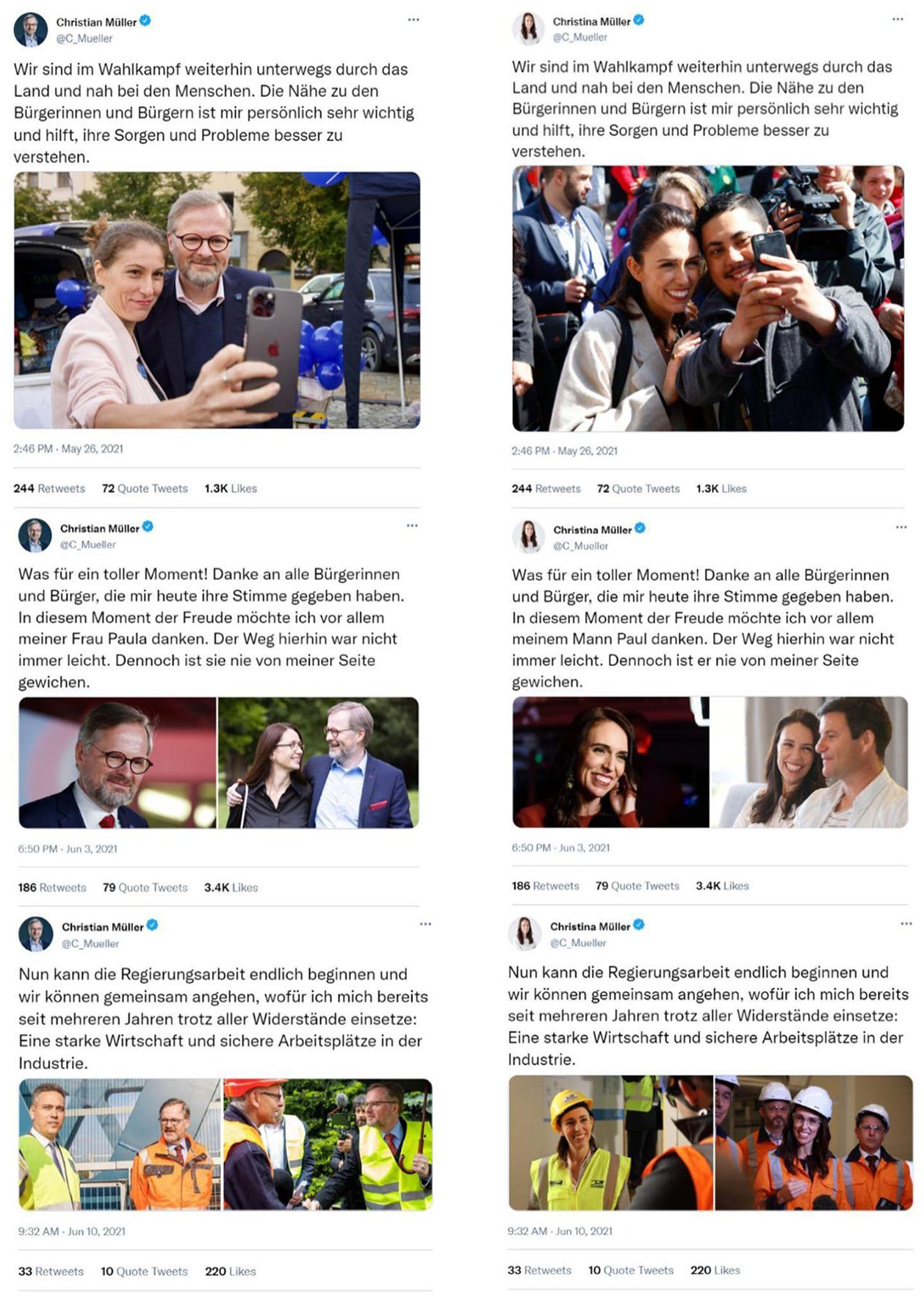
Stimulus materials for male and female candidates—text–image combination condition.
The tweets created for the experiment aimed to reflect candidates’ performed authenticity in social media and were therefore designed in line with the theoretical dimensions of political authenticity from the literature: consistency, intimacy, ordinariness, and immediacy (Luebke, 2021). In the first tweet, the politicians present themselves as down-to-earth candidates who care about citizens’ concerns and are close to the average voter during their campaign (ordinariness). In the second tweet, the politicians show themselves as emotionally touched over winning an election and thank their spouses for their support (immediacy and intimacy). Finally, in the third tweet, the candidates demonstrate their consistent political stances, describing their commitment to a political issue they have been following for years (consistency).
A plethora of studies has shown that structural features such as camera angle (low, eye-level, high) and shot length (extreme close-up, close-up, medium shot, long shot) may affect citizens’ evaluations of politicians (Grabe and Bucy, 2009; Mutz, 2007). Thus, we selected photos for the image-only and text–image conditions in which both candidates were portrayed from the same perspective. Example stimuli can be seen in Figure 1. An English translation of the social media posts with texts can be found in the Supplemental material (Appendix 4).
Manipulation checks
Manipulation checks with a large convenience sample (N = 200) conducted before the main survey confirmed significant differences in participants’ perceived authenticity between the authenticity conditions used in the main survey and control conditions created for the manipulation check. These results (Table 1) demonstrate that all three stimuli create higher perceived authenticity among participants than similar control tweets with fewer authenticity cues (Appendix 4). We also find that a large majority of participants from the pretest identified the correct modality (i.e. text, image, text–image) of the tweets (91.6%, n = 141) and the correct gender (male, female) of the politicians (98.2%, n = 160). Hence, the stimuli provide a valid basis to investigate the effects of exposure to politicians’ performed political authenticity on social media.
Manipulation check.
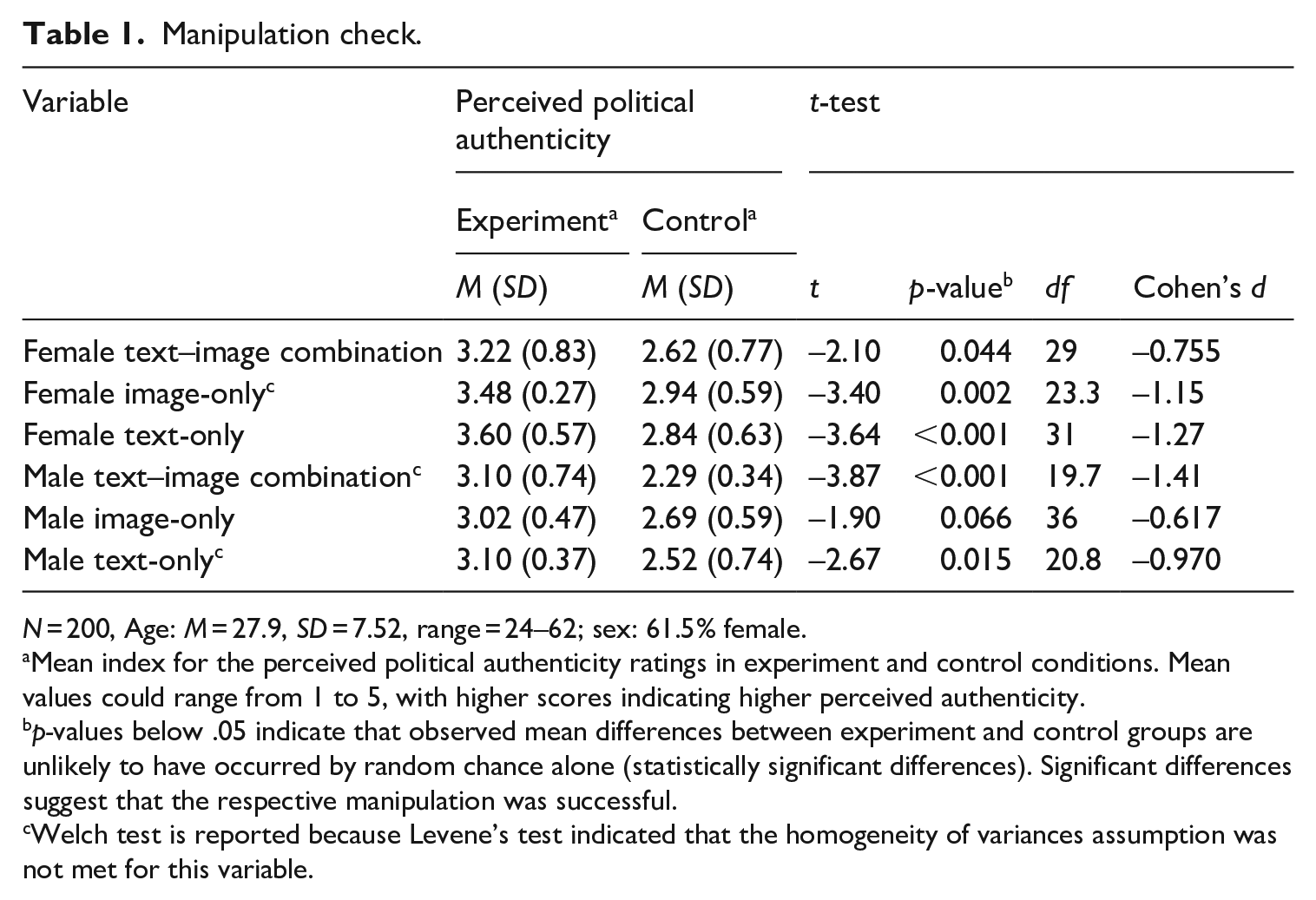
N = 200, Age: M = 27.9, SD = 7.52, range = 24–62; sex: 61.5% female.
Mean index for the perceived political authenticity ratings in experiment and control conditions. Mean values could range from 1 to 5, with higher scores indicating higher perceived authenticity.
p-values below .05 indicate that observed mean differences between experiment and control groups are unlikely to have occurred by random chance alone (statistically significant differences). Significant differences suggest that the respective manipulation was successful.
Welch test is reported because Levene’s test indicated that the homogeneity of variances assumption was not met for this variable.
Measures
Authenticity ratings for the two politicians were measured using the Perceived Political Authenticity (P-PA) Scale. The P-PA Scale represents three out of the four dimensions of P-PA and has been revealed as more accurate in measuring perceived authenticity than single items (Luebke and Engelmann, 2023). This 12-item scale has been proposed as a robust and valid measure for authenticity perceptions and includes four items for each of the three concept dimensions—ordinariness, consistency, and immediacy, which were answered on a 5-point scale (1 = completely disagree, 5 = completely agree; M = 3.01, SD = 0.82, α = .94). We also included semantic differentials to measure other candidate image variables on a 7-point scale, including ratings such as candidates’ credibility, attractiveness, or qualifications (Kaid, 2004). This approach revealed that both politicians were perceived as similarly attractive (1 = unattractive, 7 = attractive; female candidate: M = 4.92, SD = 1.50; male candidate: M = 4.31, SD = 1.62). One measure was included to control the perceived ideology of the two politicians. Participants rated the politicians’ political ideology on a scale from 1 (left) to 10 (right; female candidate: M = 4.85, SD = 2.03; male candidate: M = 5.24, SD = 1.9).
We also included an item asking participants about the importance of political authenticity for their voting decisions (1 = not important, 5 = very important; M = 4.18, SD = 1.00), as perceptions of authenticity may be influenced by whether political authenticity is a relevant factor for participants. To control for stereotypical attitudes toward men and women, we used the eight-item Gender Role Stereotypes Scale (GRSS) proposed by Mills et al. (2012; male stereotypes: M = 3.50, SD = 0.51, α = .77; female stereotypes: M = 3.25, SD = 0.37, α = .70). We also measured participants’ political interest (M = 3.34, SD = 1.11) and internal efficacy (M = 3.32, SD = 0.99, α = .69). Finally, we measured participants’ political Twitter use in the last week (0 = 0 days, 7 = 7 days; M = 2.27, SD = 2.64) to control for influences due to their familiarity with social media content (see Appendix 3).
Results
Effects of gender and modality
All statistical analyses were performed using R Version 4.1.1 (Packages: tidycomm, stats, sjPlot). RQ1 asked about possible differences in perceived political authenticity for male and female politicians using the same self-representation on social media. When collapsing across the gender conditions (Table 2), we do not find significant mean differences in perceived authenticity for the female (M = 3.13, SD = 0.80) and the male candidate (M = 3.06, SD = 0.83).
Perceived political authenticity—means and standard deviations for male and female politicians.
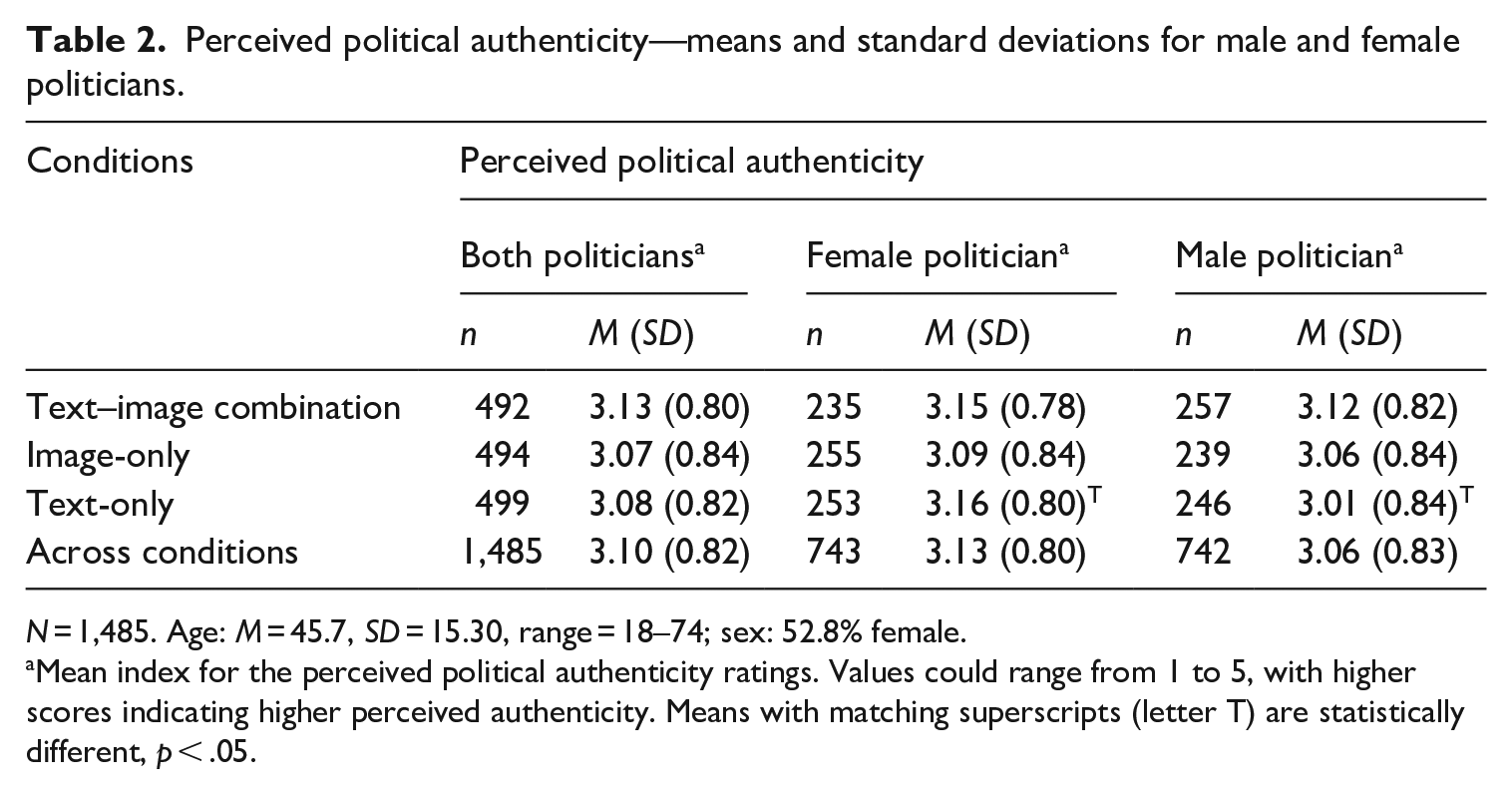
N = 1,485. Age: M = 45.7, SD = 15.30, range = 18–74; sex: 52.8% female.
Mean index for the perceived political authenticity ratings. Values could range from 1 to 5, with higher scores indicating higher perceived authenticity. Means with matching superscripts (letter T) are statistically different, p < .05.
A two-way ANOVA was calculated to examine mean differences between the conditions for P-PA with candidate gender and tweet modality as between-subjects factors. The results show no significant effect for candidates’ gender (Table 3).
ANOVA results without attractiveness variable.
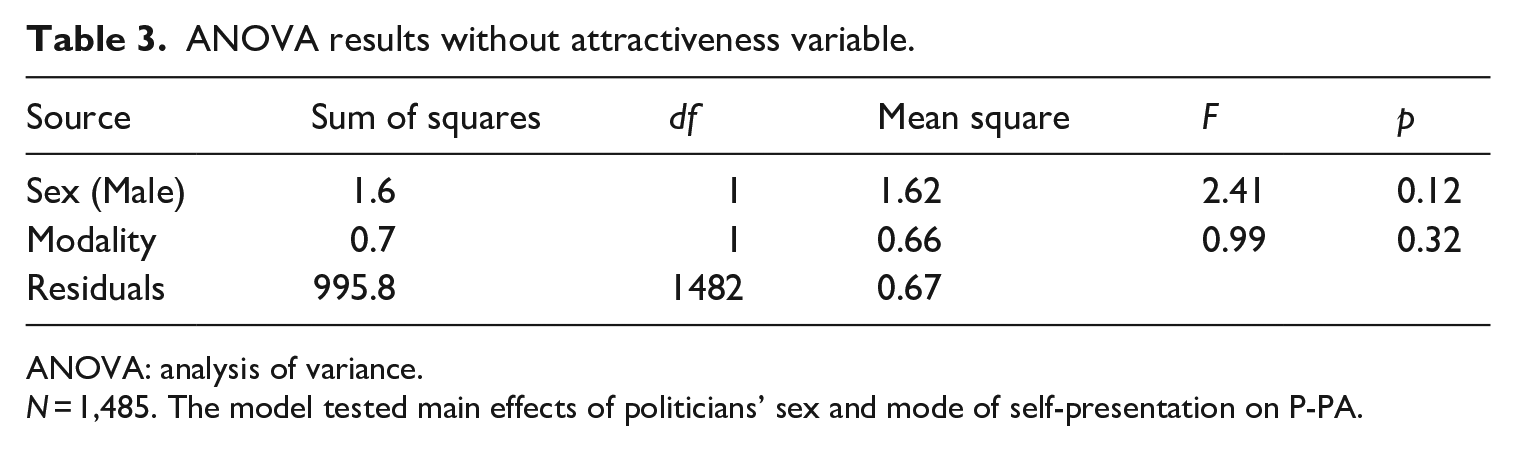
ANOVA: analysis of variance.
N = 1,485. The model tested main effects of politicians’ sex and mode of self-presentation on P-PA.
Empirical research on determinants of perceived political authenticity suggests a relationship between politicians’ gender and those of beholders. Consequently, H1a and H1b assumed an influence of participants’ gender on authenticity ratings and expected that male and female citizens each perceive candidates of the same gender as more authentic. Comparing the perceived authenticity ratings of male and female participants separately (Table 4), we find that the female politician is perceived as slightly more authentic than the male politician by both male (M = 3.10, SD = 0.82) and female participants (M = 3.17, SD = 0.79) than the male politician by men (M = 2.99, SD = 0.81) and women (M = 3.14, SD = 0.85). However, these differences are minimal and only statistically significant for the male politician. Therefore, H1a and H1b are not supported.
Perceived political authenticity—means and standard deviations for male and female participants.
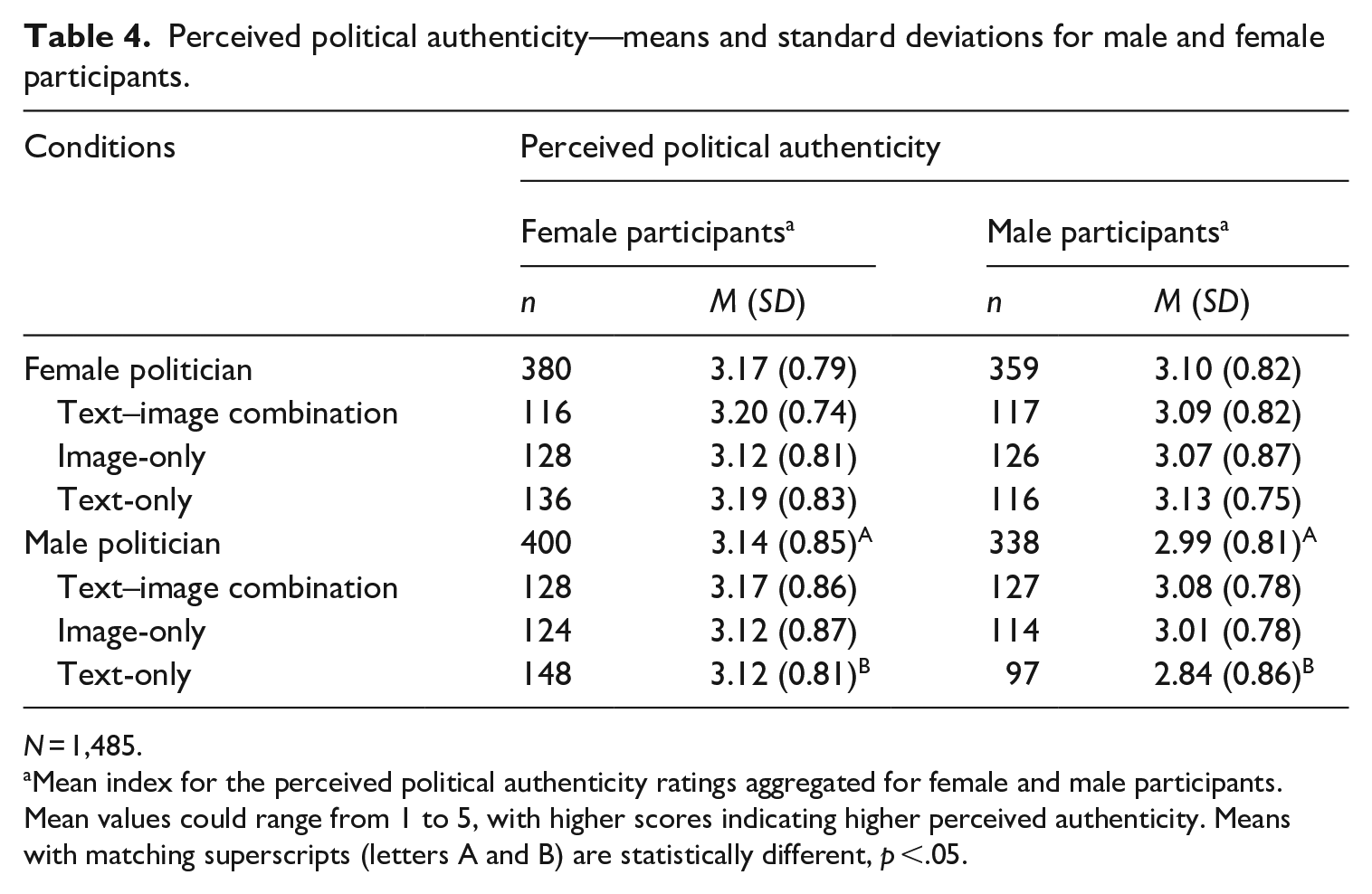
N = 1,485.
Mean index for the perceived political authenticity ratings aggregated for female and male participants. Mean values could range from 1 to 5, with higher scores indicating higher perceived authenticity. Means with matching superscripts (letters A and B) are statistically different, p <.05.
The second and third hypotheses assumed influences of the modality of candidates’ self-presentation on P-PA. In line with the picture superiority effect, H2 postulated a stronger influence of visuals on P-PA than text. Based on the reasoning in the authenticity literature that more consistent information contributes to impressions of authenticity, H3 assumed that perceived authenticity is highest in the text–image combination condition. However, results from the ANOVA show that the modality conditions do not significantly influence P-PA (Table 3). The authenticity ratings between the text-only (M = 3.08, SD = 0.82), the image-only (M = 3.07, SD = 0.84), and the text–image combined conditions (M = 3.13, SD = 0.80) do not differ significantly (Table 2). Thus, neither the use of visuals nor the consistent combination of text and image increase the perceived authenticity ratings for the two politicians. Consequently, H2 and H3 are not supported. We ran an additional ANOVA to test the potential impact of the interaction effect between gender and modality. However, we did not find any significant interaction effect.
Additional analyses
Our analyses reveal that politicians’ gender and the modality of their self-presentation on social media have no significant influence on perceived political authenticity. Nevertheless, we find that the participants in our sample differ in their authenticity ratings. Hence, we also investigated the influence of socio-demographic variables, political attitudes, candidate ratings, and Twitter exposure on perceived authenticity (Table 5).
OLS regression results for perceived political authenticity.
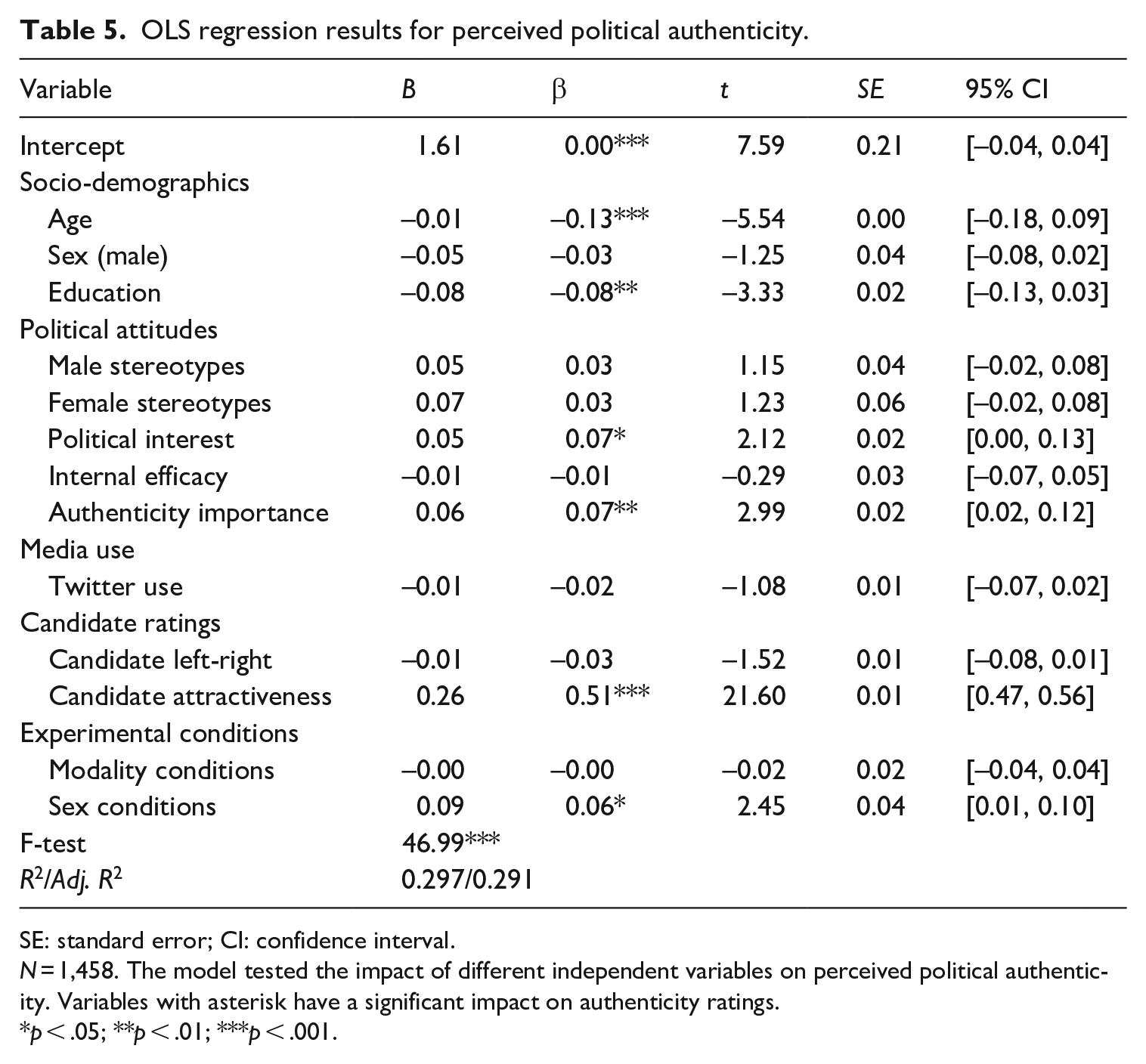
SE: standard error; CI: confidence interval.
N = 1,458. The model tested the impact of different independent variables on perceived political authenticity. Variables with asterisk have a significant impact on authenticity ratings.
p < .05; **p < .01; ***p < .001.
An ordinary least-squares linear regression model exhibits small negative effects for the socio-demographic variables age (β = –.13, p < .001) and education (β = –.08, p < .01), suggesting that younger participants and those with less formal education tend to perceive the candidates as more authentic. Minimal but significant effects were also found for the individual importance of authenticity and the participants’ interest in politics. The more participants consider authenticity as a relevant trait of politicians (β = .07, p < .01), and the higher their interest in politics (β = .07, p < .05), the stronger the perceived political authenticity. Whether participants regularly use Twitter for political information (β = –.02, p = .29) did not influence perceived political authenticity. Similarly, we do not find influences of gender stereotypes held by participants on perceived authenticity.
Notably, the analysis exhibits a strong effect of candidates’ physical attractiveness on P-PA. While ratings of the politicians’ alleged political ideology have no impact, authenticity ratings for candidates are strongly related to their physical attractiveness (β = .51, p < .001). Thus, the more participants perceive politicians as attractive, the stronger their perceived authenticity of these candidates. Consequently, when we control for the attractiveness ratings for the two politicians in the ANOVA, we find only a significant positive effect of male gender on perceived authenticity (Table 6). However, the effect size is very small, indicating no substantial gender effect in our study, F(1, 1481) = 7.39, p < .01, η2 = .005.
ANOVA results with attractiveness variable.
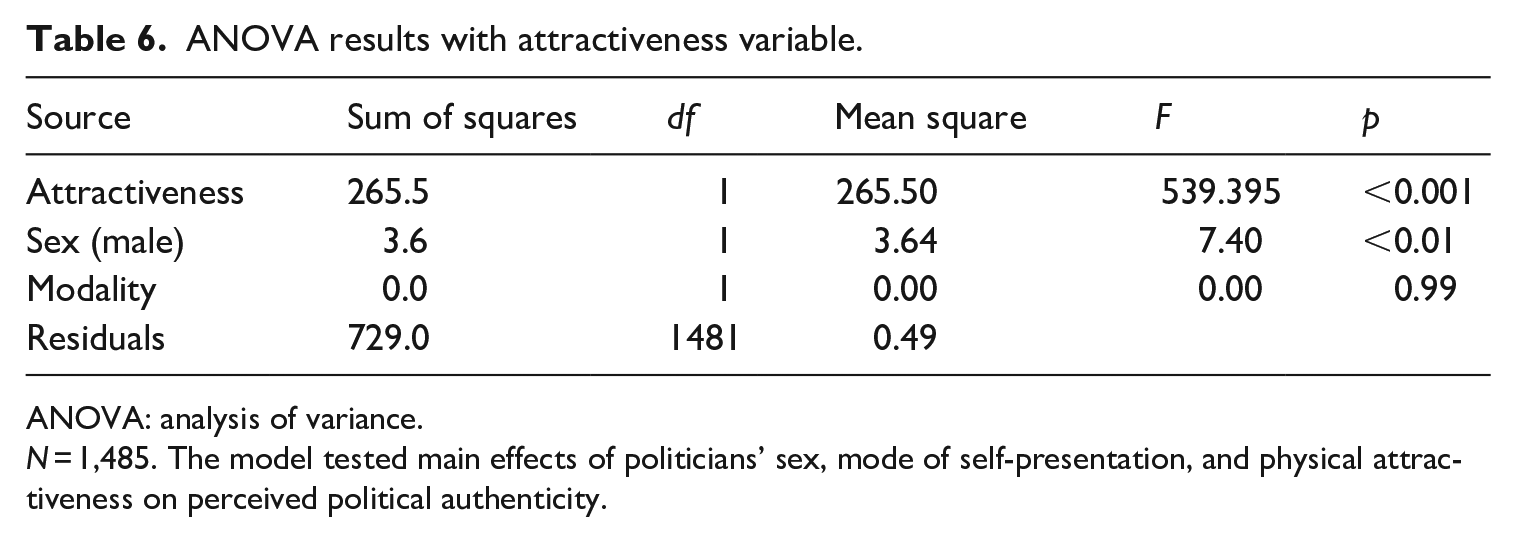
ANOVA: analysis of variance.
N = 1,485. The model tested main effects of politicians’ sex, mode of self-presentation, and physical attractiveness on perceived political authenticity.
Discussion
Performing the role of an authentic politician is a crucial rationale of contemporary political communication (Lacatus and Meibauer, 2022), and the literature on authenticity has highlighted the relevance of candidate gender for the performance and perception of authenticity (Kenny et al., 2021). Previous empirical research provides initial findings on the relationship between candidate gender and perceived authenticity, suggesting that female politicians face challenges in the public’s perception of them as authentic compared to male candidates. For example, surveys from the United States indicate that women were perceived as less authentic in their roles as politicians than men (Hahl et al., 2018; Kenny et al., 2021). However, while these studies compared citizens’ ratings of male and female politicians, they did not account for potential differences in politicians’ self-presentation. Our study addressed this problem by comparing male and female politicians’ perceived authenticity of the same performance.
Our online survey experiment reveals that politicians’ gender alone does not explain differences in perceived authenticity. Unlike previous survey studies that find differences in the perceptions of authenticity between real male and female politicians, our experiment finds no gender effect on the authenticity ratings. Results from our study also show that participants’ gender rarely influences their perceived authenticity of different candidates. While previous survey studies on politicians’ perceived authenticity in the United States also suggest an influence by citizen gender, this relationship is not evident in our study. Thus, gender differences in previous studies may result from an interaction between gender and specific self-presentation strategies. While we used the same self-representation for male and female candidates in our study, communication research has shown that politicians’ self-representation in social media differs between male and female candidates (e.g. McGregor et al., 2017). The strategic stereotype theory by Fridkin and Kenney (2014) connects differences in candidates’ self-presentation with gender stereotypes. Thus, politicians are said to capitalize on stereotypes when they serve their self-presentation goals and avoid those that may harm their performances (Fridkin and Kenney, 2014). Hence, differences in perceived authenticity probably result from candidates’ gender-specific self-representation.
Given that today’s digital media environment is increasingly multimodal, the study also tested the influence of the modality of self-presentation in social media on perceived political authenticity. More specifically, we examined the effects of text-only, image-only, and combined text-image tweets on perceived political authenticity. Drawing on the literature in psychology and previous studies, we acknowledged differences between visuals and text in attracting attention, credibility, information processing, and recall. We also assumed that visuals are superior to text in the context of perceived political authenticity. In contrast to earlier findings that have demonstrated that visuals have a stronger impact on voters’ evaluations of political candidates’ character traits (Barrett and Barrington, 2005; Grabe and Bucy, 2009), and voters’ ratings of political authenticity in particular (Luebke and Engelmann, 2022), however, no evidence of a picture superiority effect in our study was detected. When presented alone, visuals do not have a stronger influence on perceived political authenticity than text, which applies to both male and female politicians.
Regarding the levels of P-PA, whether politicians use a text-only tweet or post an image of them is not decisive. While this result contradicts our expectations, it reflects those of recent studies in multimodal political communication research (Boomgaarden et al., 2016; Nagel et al., 2012) and questions visual dominance—at least in the context of political authenticity research. Since politicians’ social media posts are increasingly multimodal, including visuals and text, we also tested the combined effect of both modalities on perceived political authenticity. Following the cue summation theory, we hypothesized that the levels of P-PA increase when citizens have more congruent visual and textual information that allows them to draw inferences about a politician’s real personality as separate from their public persona.
Contrary to expectations, this study did not find a significant difference between the text-image, text-only, and image-only conditions. One possible interpretation of these results may be that only a few tweets by a politician at a particular time may not be sufficient to cause significant differences in perceived authenticity. Especially when citizens are unfamiliar with a politician and cannot apply often used heuristics for evaluation, such as party affiliation, they may need more information or impressions over a longer period to assess whether they think politicians are true to themselves. Therefore, they apply shortcuts other than the modality of self-presentation and gender, such as candidate attractiveness, to arrive at a candidate evaluation.
Limitations and conclusion
This study has some limitations that should be addressed in future research. First, we investigated the perceived authenticity of different candidates using fictitious social media posts in the experiment. Although the profile images and photos presented in the image-only and combined text–image conditions were taken from real politicians to increase external validity, the two politicians’ identities and the text content of the social media posts were not real. Even though both politicians were heads of government in their countries at the time of the study, they were unknown to most of our German participants. Since we included only ratings from participants who did not recognize the politicians, ratings were only based on the information contained in the posts. Thus, participants were given little information to judge whether they perceive politicians as authentic, especially in the image-only condition. Particularly when dealing with a complex phenomenon like authenticity, it is important to acknowledge this as a limitation of the study. Future research should investigate whether findings differ when participants are given more information about politicians or when real politicians are evaluated. However, in the latter case, citizens’ previous experiences with politicians and their political predispositions will likely influence the ratings (e.g. Brewer et al., 2014).
Second, the study compared the perceived authenticity ratings only for one male and one female politician. Although the two politicians in the experiment were, on average, rated as similarly attractive and associated with a similar political ideology, the characteristics of these two candidates (e.g. their age) may have influenced the ratings. Therefore, future work could use more than two politicians and adjust their features (e.g. age, party affiliation, attractiveness) to reduce the influence of individual candidate characteristics and test the robustness of our exploratory findings.
Third, the study used social media posts based on Twitter formatting constraints. However, these posts still contained the essential characteristics of posts from different social media platforms. The use of tweets allowed us to test the influence of textual, visual, and multimodal social media posts, which are common on social media platforms. However, there may still be other effects when posts from more visual platforms such as Instagram are used. Future research should apply the design to other platforms with different social and technological affordances (Bossetta, 2018).
Fourth, our findings are based on an online quota experiment conducted among the German adult population and, therefore, may be limited to this population. Thus, specifics of the national context and its political culture (e.g. the level of gender equality) may explain why the assumptions derived from the international literature are not confirmed in our sample (Enli and Rosenberg, 2018).
Despite these limitations, our study contributes to the literature on authenticity in politics and advances our understanding of perceived political authenticity. It shows that politicians’ gender alone does not explain differences in citizens’ perceived political authenticity when they encounter unfamiliar candidates and identical self-representation on social media. Differences in P-PA between male and female politicians may thus result from interactions between candidates’ gender and their specific gendered self-presentation.
Our results suggest that the modality of the tweets alone is also not a decisive factor for authenticity ratings. Instead, candidates’ authenticity in the experiment is primarily influenced by candidate attractiveness. This observation may be partly related to the fact that we studied unknown politicians, leaving participants unable to use other cues for evaluation, such as candidates’ party affiliation. Nevertheless, our study provides arguments for a stronger focus on the relationship between attractiveness and authenticity, a topic that has received little scholarly attention to date.
Finally, the study has implications for the practice of political communication. For politicians and their campaign teams, the results suggest that neither gender nor the modality of self-presentation alone appears decisive for interpreting whether candidates present their authentic selves. This finding leaves us with the assumption that presenting concrete political ideas and convictions can also lead to political authenticity. The fact that the female politician was not perceived as less authentic in our study also supports the optimistic assumption that social media platforms are useful for countering the disadvantages for female politicians caused by biased reporting in traditional media.
Supplemental Material
sj-docx-1-nms-10.1177_14614448231208920 – Supplemental material for Pathway to authenticity?: The influence of politicians’ gender and multimodal self-presentation in social media on perceived authenticity
Supplemental material, sj-docx-1-nms-10.1177_14614448231208920 for Pathway to authenticity? The influence of politicians’ gender and multimodal self-presentation in social media on perceived authenticity by Simon M Luebke and Dennis Steffan in New Media & Society
Footnotes
Authors’ note
We declare that all authors have agreed on the submission and that the article is not currently considered for publication by any other print or electronic journal.
Funding
The author(s) received no financial support for the research, authorship, and/or publication of this article.

Supplemental material
Supplemental material for this article is available online.
Author biographies
References
Supplementary Material
Please find the following supplemental material available below.
For Open Access articles published under a Creative Commons License, all supplemental material carries the same license as the article it is associated with.
For non-Open Access articles published, all supplemental material carries a non-exclusive license, and permission requests for re-use of supplemental material or any part of supplemental material shall be sent directly to the copyright owner as specified in the copyright notice associated with the article.
