




Abstract
In this methodological article, I introduce a qualitative research method, called the visual focus group (VFG), which incorporates a collective drawing task within the structure of a focus group. The VFG was specifically developed to support engaged research about how activists conceptualize the political role of technology, by stimulating participants to reflect on their unspoken assumptions about digital technologies. After reviewing the relevant literature on focus groups and graphic elicitation techniques, the article presents two types of VFGs: diagnostic and speculative. While diagnostic VFGs are primarily a research tool meant to enable researchers to assess how people envision technology, speculative VFGs encourage participants to imagine better digital technologies. I describe the structure of both types of VFGs and offer examples of their outputs; I then discuss the limitations of this method and propose other research topics for which it might be used.
When large protests broke out in Budapest, Hungary in October 2014, images of demonstrators lifting their illuminated cell phones to the sky appeared everywhere on international and Hungarian media (see Lyman, 2014). The demonstrations were organized to protest against the Hungarian government’s proposed tax on internet consumption, which would have taxed users based on their internet traffic (Ferrari, 2019a). The use of cell phones as a symbol of the demonstrations, the slogans, the media interviews with the organizers: everything about these protests pointed to the existence of deep-seated political beliefs about digital technologies that the protests had made salient.
And yet, when I later interviewed the organizers of these protests, I encountered the difficulty of getting them to talk about their day-to-day practices concerning technology. Of course, they used social media. Of course, the internet was crucial for their movements. Of course, they thought internet freedom was important. But they did not see the point of talking about it. It was a sequence of polite answers, delivered with a bored tone. Someone even rolled their eyes. However, when I tried to instead ask these activists what they thought was wrong with the internet tax, they revealed glimpses of what the internet actually meant for them: for them as individuals, but also as leftist activists and Hungarians. The proposed tax was a moment of rupture, an extraordinary event through which activists were forced to reexamine the ordinary, to reconsider their assumptions about digital technologies: how they, for instance, associated the internet with freedom, rationality, and the future (Ferrari, 2019a). In proposing her ethnographic approach, Star (1999) famously argued that infrastructure only becomes visible, and thus understandable by people, when it breaks down. The internet tax functioned as such a moment of breakdown, leading Hungarians to interrogate the meaning of the internet in their life.
But how to replicate these conversations about the meaning of the internet with activists who had not experienced a similar moment of rupture or breakdown? In order to keep having these discussions about the political meaning of digital technologies with activists in different countries, I began to develop a methodological approach that could interrogate the commonsensical, taken-for-granted aspects of technology, stimulate reflexivity in the research participants, and create conversations between researcher and participants about the meaning of everyday technologies and their symbolic power. To uncover these unspoken assumptions about technology, I created an innovative research method: the visual focus group (VFG). The visual focus group incorporates a collective drawing task within the traditional structure of a focus group. Such collective drawing task is meant to engender productive conversations between researcher and participants about the intangible assumptions surrounding technology, which can be made explicit through drawing. Such a creative approach supports activists’ reflexive engagement with their own unspoken attitudes toward technology.
The VFG builds on the methodological work on graphic elicitation techniques (e.g. Bagnoli, 2009; Gieseking, 2013). However, while graphic elicitation techniques are typically employed within the context of individual interviews, my methodological innovation rests on the use of the creative tasks within a group context, which to my knowledge has not been implemented before. The advantage of embedding the creative task within a group setting is that of fostering collective conversations among participants as how to best approach the task itself, as well as to invite participants to compare their own individual approaches and reflect on their practices within their activist community. In so doing, VFGs allow researchers and participants to take stock of how shared and/or differing meanings are constructed at the individual and collective level. VFGs not only support reflexive conversations, they also result in rich and multilayered data, in the form of drawings, which are truly collectively generated.
In this article, I situate the VFGs in the literature on both focus groups and graphic elicitation techniques. I then describe two different types of VFGs that I have employed in my research on activists and digital technologies: diagnostic VFGs, which are primarily a research tool meant to enable researchers to assess how people envision technology, and speculative VFGs, which are geared toward encouraging participants to imagine better digital technologies. After describing these two types of VFGs, I discuss the limitations of these methods as both a research and an activist tool, and I offer some ethical reflections. In closing, I discuss how the VFGs can be used for research and activist purposes beyond the topic of digital technology.
Integrating drawings into focus groups
Focus groups: traditional approach
The focus group is a flexible method that has been applied in contexts as diverse as feminist participatory action research (Kamberelis and Dimitriadis, 2013) and industry-led marketing research. This method brings together a group of participants for a conversation facilitated by a moderator on the basis of a protocol (Lunt and Livingstone, 1996). While the discussion is clearly the main component, focus groups can also include other elements, including questionnaires, experimental stimuli, the viewing of media content (Delli Carpini and Williams, 1994). We can trace at least two different histories of this method: on one hand, its employment since the 1940s as a complement to quantitative analysis, as a method that could reproduce processes of opinion formation in a semi-controlled environment (Morgan, 1997), suitable for administrative research (Merton, 1987), public opinion studies (Delli Carpini and Williams, 1994), and industry uses in the domain of marketing (Lee, 2010); on the other hand, as a full-fledged qualitative method with the ability to empower research participants and minimize the role of the researcher, suitable for research on and with marginalized groups of different kinds (Kamberelis and Dimitriadis, 2013; Madriz, 1998). Although incorporating methodological insights from both of these histories, it is this second trajectory that more directly influences the development of the VFG, given its intent to facilitate political conversations among activists.
Reflecting on the renewed attention to the focus group in Communication Studies, especially because of the rise of audience research, Lunt and Livingstone (1996) argued that the focus group is useful in revealing the socially situated nature of communication; they highlighted this method’s ability to create discussions that showcase participants’ meaning-making processes and to generate diversity and difference (Lunt and Livingstone, 1996: 96). Rather than merely a convenient way of collecting multiple opinions at the same time, the focus group is instead a method that recognizes that opinions do not emerge in a vacuum and that collective social processes are at the heart of how individuals come to make up their minds in a certain way. But further, the focus group can also be deployed to even more explicitly foreground collective experiences, which might not only encourage individuals to express themselves more freely and honestly, but also create group solidarities that can empower individuals (Kamberelis and Dimitriadis, 2013; Madriz, 1998). Madriz (1998: 116), for instance, theorized focus groups as a form of collective testimony that enables women to disclose and validate each other’s experiences; she employed this method to foreground Latina women’s narratives and narrow the gap between herself, as the researcher, and the research participants.
It is thus not surprising that the study of social movements would also turn to focus groups. Kamberelis and Dimitriadis (2013) even place activism as one of the core facets of focus groups; by interpreting consciousness-raising groups of second-wave and third-wave feminists as focus groups, they underscore the transformative potential of this method, meant to give women a space to articulate their identity and their grievances and to build collective solidarity. But the focus group has also been useful for those more concerned with activism as an object of study. Focus groups might be especially suited for the study of social movements, because they allow the researcher to reproduce the kinds of more casual, collective conversations that characterize social movement activity (Della Porta, 2005). Della Porta (2005), for instance, employed focus groups to study implicit and embedded “organizational values” among activist groups in the Italian global justice movement. She recommended focus groups as a way to uncover “both convergences and differences, agreement and disagreement” (Della Porta, 2014: 305), which she found particularly useful to examine group norms, collective identities, and decision-making mechanisms. In fact, she argued that focus groups can stimulate the self-reflexivity of activists by asking them to reflect upon the accepted norms and foundations of their activism (Della Porta, 2005), thus helping to uncover processes and beliefs that might otherwise go undetected, even by activists themselves. It is this particular strength of the focus group that drove me to this method, while searching for a tool that could allow me to stimulate activists to reflexively examine their unspoken assumptions about technology.
The potential of graphic elicitation methods
While relying on a focus group setting, I turned to a different set of methodological traditions to incorporate drawings into my research process. The VFG builds on graphic elicitation methods, which have been developed within psychology, education, critical geography, information studies, health, and systems theory (e.g. Checkland, 2000; Copeland and Agosto, 2012; Hicks and Lloyd, 2018; Jackson Foster et al., 2018; Jung, 2014; Umoquit et al., 2011; Wilson and Milne, 2016). Graphic elicitation refers to a broad range of techniques which employ visual outputs, such as maps, diagrams, or drawings, which are created by research participants or by researchers (Hicks and Lloyd, 2018); these techniques are typically used to foster participants’ reflexivity and/or aid in information recall (Copeland and Agosto, 2012). Graphic elicitation is usually employed in the context of individual, in-depth interviews (for a group version, see Jackson Foster et al., 2018).
The VFGs are inspired by a specific type of participatory graphic elicitation, called mental mapping, which is rooted in the discipline of geography and finds its origins in Lynch (1960); this method is meant to elicit the production, on part of the research participant, of a “representation of an individual or group’s cognitive map, hand sketched and/or computer-assisted” (Gieseking, 2013: 712). In using mental mapping in the course of individual interviews, Gieseking (2013) allowed people to create and revise their maps and explain what they represent; they functioned both as independent sources of data, but also as prompts that helped the interviewees remember events. Recently, mapping techniques have also been employed to map the media practices of activists, especially in terms of their reliance on different types of media in their daily activist work (Ceccobelli and Mattoni, 2018).
The work on graphic elicitation opens an avenue for experimentation that allows participation and critical reflection on part of the researched. The use of creative tasks seems a particularly suitable way of investigating things we are not really good at communicating with words and that “may include elements considered preverbal, affect-laden, metaphoric, and/or relational” (Katsiaficas et al., 2011: 123). In fact, Bagnoli (2009) argued that “a creative task may encourage thinking in non-standard ways, avoiding the clichés and ‘ready made’ answers which could be easily replied” (p. 566). Furthermore, graphic elicitation might be particularly promising to facilitate research with populations who are culturally and linguistically diverse and/or are hard to reach, such as refugees (Hicks and Lloyd, 2018).
Bringing collective drawing into focus groups
For my research, turning to graphic elicitation promised a way to encourage activists to reflexively explore their deeply held beliefs and visions about technology. Yet, in contrast to most of the literature on graphic elicitation techniques and drawing-based methods, I chose to incorporate drawing tasks within the collective setting of the focus group. It is not unusual for researchers to ask focus group participants to take part in some kind of activity, such as writing down their thoughts or engaging with visual media (Lunt and Livingstone, 1996); however, these activities are usually meant as a way to structure individual participation or to collect specific types of individual data.
What I envisioned for VFGs was a truly collective process of graphic elicitation; for me this meant not just asking participants to produce individual drawings within a group setting (see Jackson Foster et al., 2018; Stevenson, 2016), but rather to collaborate on creating collective drawings. To my knowledge, this is the first time that graphic elicitation methods are purposefully deployed to support collective drawing and discussion. In its simplest description, then, I envision the VFG as a focus group that incorporates a collective drawing task, which supports a discussion about individual and collective opinions, beliefs, and attitudes about digital technology. The VFG brings together the strength of focus groups in generating collective discussions that foreground the lived experiences of participants and their meaning-making processes, with the ability of graphic elicitation techniques to stimulate participants’ reflexivity and encourage the examination of taken-for-granted aspects.
I now turn to describing two different types of VFGs: diagnostic and speculative. While diagnostic and speculative VFGs share the same ethos, they have different functions. I primarily envision diagnostic VFGs as a qualitative research method that helps researchers understand how activists conceptualize their relationship to digital technologies. In contrast, building on the activist tradition of focus groups (see Kamberelis and Dimitriadis, 2013), the speculative VFG is intended to stimulate participants—be they activists, developers, policy advocates, or members of the general public—to critique existing digital technologies and to imagine how they can be repaired, rebuilt, or transformed.
The diagnostic VFG
The purpose of a diagnostic VFG is to facilitate an in-depth group discussion about participants’ relationship to internet technologies. In this section, I build on my experience conducting diagnostic VFGs with young (ages 18–29) Italian social movement activists, as well as (separate) pilot diagnostic VFGs with older (ages 32–40) Italian activists and undergraduate students in a private university in the Mid-Atlantic region of the United States. At the core of the diagnostic VFG is a collective drawing task, where participants are asked to agree on and to produce a single group drawing that represents how they see the internet. In my VFGs with activists, which investigated the technological imaginaries of these social movements (Ferrari, 2019b), participants were tasked with collectively drawing what they thought the internet was like. The process of collectively agreeing on a picture of the internet helped to uncover some of the unspoken assumptions about digital technologies that participants held, thus allowing them to reflect on these assumptions together. This is the main aim of the diagnostic VFG: leveraging the peculiarity of the drawing task to encourage a detailed discussion that addresses ideas and values that participants do not necessarily reflect upon in their daily life. The diagnostic VFG is thus primarily a research tool, which allows researchers to stimulate participants’ reflexivity and assess—diagnose—their ideas about the internet. This section illustrates the design of the diagnostic VFGs and presents a snapshot of their outcomes.
Design
The diagnostic VFGs are designed as a structured group discussion guided by a moderator. In contrast to traditional focus groups, where the ideal number of participants is between 6 and 12 (Lunt and Livingstone, 1996), this method is more effective with a reduced number of participants, six or fewer, due to the complexity of the collective drawing task. VFGs are also slightly longer than traditional focus groups: they should not be allotted less than 90 minutes, to give participants enough time to thoroughly discuss the topic at hand. With the consent of the participants, the VFGs should be either audio or video recorded to allow for the joint analysis of drawings and discussions.
The diagnostic VFGs are structured in three stages. In the first stage, after participants have given their informed consent, they are asked to anonymously fill out a questionnaire (see Supplemental Material). The questionnaire contains a few demographic questions, a battery of questions about participants’ technological habits, and five Likert-type-scale items that ask participants’ opinions about more political aspects of the internet (as can be seen in Table 1). The purpose of the battery of questions about technological habits was to encourage respondents to reflect on their daily interaction with digital technologies: how much time they spend online, what sort of devices they employ, and what kinds of websites they use and why. As can be seen in Table 1, the five close-ended questions at the end are meant to get participants to think about how they feel about the internet. However, the way in which these questions have been purposefully devised—with responses ranging from “strongly disagree” to “strongly agree”—is intended to engender a reflexive reaction in the respondents, rather than a straightforward answer. For instance, one of the questions asked participant whether they agreed or disagreed with the statement that “the internet works in a democratic way”; the question was worded in this way to nudge participants toward discussing what the concept of democracy might mean in the context of the internet. And exactly as intended, participants questioned the wording of these items and expressed skepticism toward the possibility of providing a clear answer to them. Some participants criticized the (limited) available choices, and sought to qualify their answers with “it depends,” “but what if?” and so on. Some reported that they felt they should pick “neutral” as an answer. Others asked if they could write comments next to their answers and then proceeded to do so.
Close-ended questions posed in the anonymous questionnaire distributed in the diagnostic VFGs.
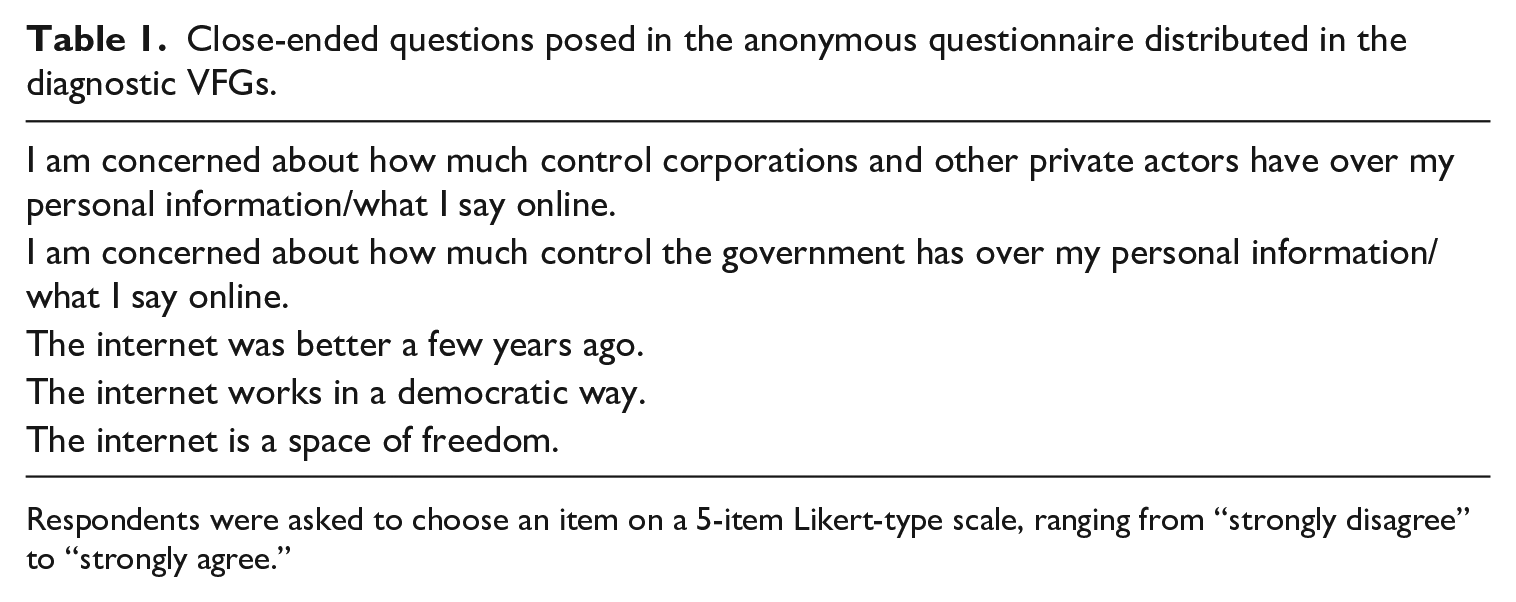
Respondents were asked to choose an item on a 5-item Likert-type scale, ranging from “strongly disagree” to “strongly agree.”
These “trick” questions thus accomplished their purpose: steering participants toward discussing how complicated digital technologies are and how they might hold multiple and contradictory opinions about them.
Stage 2 of the diagnostic VFG capitalizes on participants’ reflexivity, directly asking them to discuss the limitations of the questionnaire for a few minutes. This discussion stage typically introduced themes that would then resurface in the third stage of the session, the collective drawing.
Stage 3, the collective drawing stage, took the bulk of the time of the VFGs. Participants were asked to collectively draw what they thought the internet was like. They were not given any additional instructions, but they were reminded that the only requirement for the drawing was that, in the end, they should all agree with it: it should be representative of what they thought as a group. They were supplied with pencils, pens, markers, scrap paper, and a big piece of paper (70 × 100 cm). In the VFGs conducted so far, participants autonomously self-organized to find common ground and deliberate different options. Before agreeing on a collective drawing participants chose to make individual drawings; these drawings were used as doodles that clarified their thinking but were also shown to other participants to explain what the participant wanted to say, as can be seen in Figure 1; some participants also sketched others’ ideas as they emerged from the group discussion. Furthermore, although not mandated, in all VFGs participants autonomously decided to agree on a preparatory collective drawing and then transferred it to the larger piece of paper.
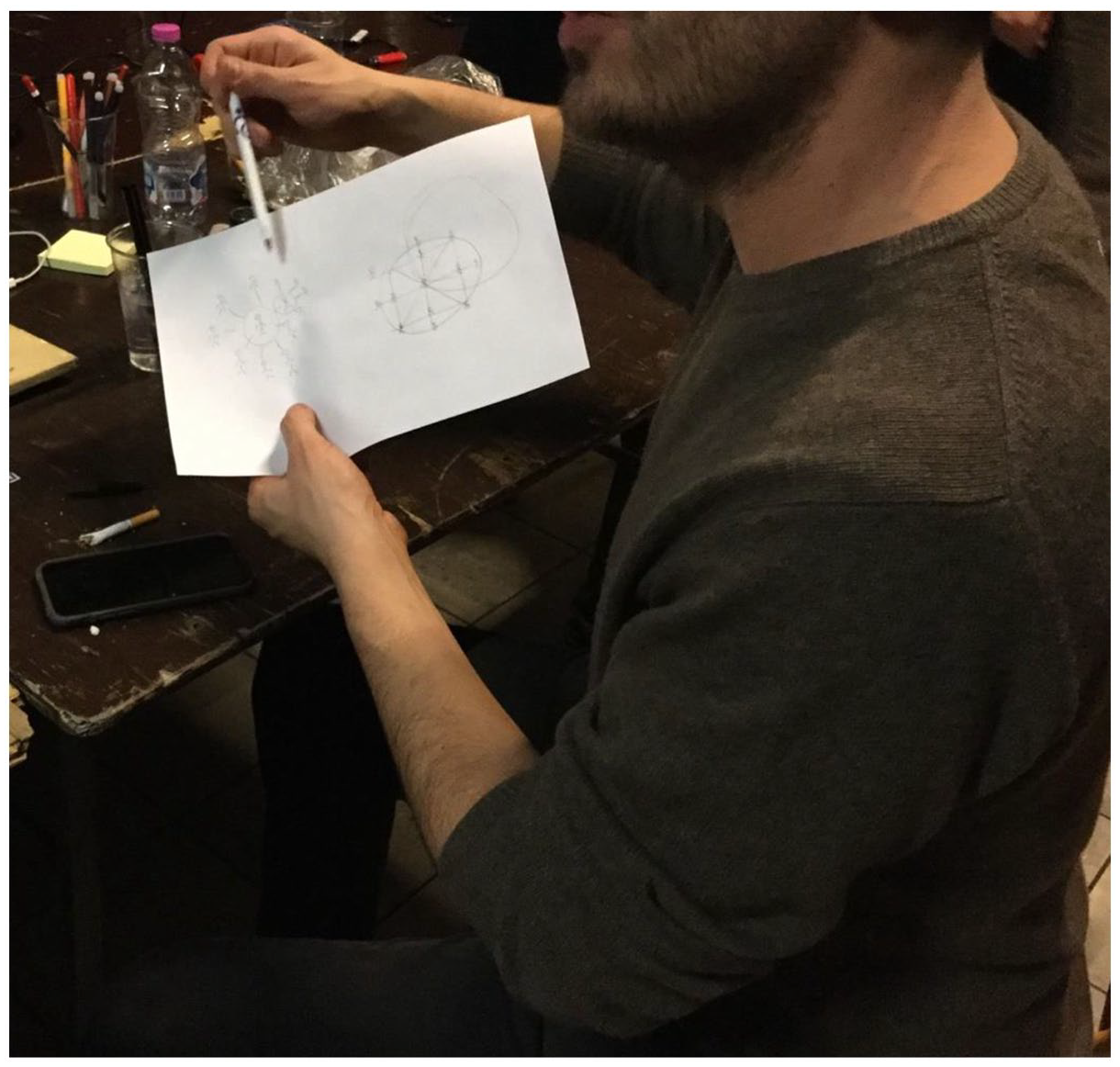
Participant using his drawing to support his explanation. Image reproduced with the consent of the participant.
After the completion of the collective drawing, participants were debriefed: given the unusual nature of the collective drawing task, they often asked about its rationale; they were also typically curious about what others that had taken part in different VFGs had drawn.
Outcomes
The diagnostic VFGs conducted in the context of my research on activists’ technological imaginaries (Ferrari, 2019b) were highly successful. The VFGs encouraged a collective, yet reflexive and detailed-oriented discussion; all groups successfully converged on final drawings (not pictured here, see Ferrari, 2019b) within the given timeframe (roughly 90 minutes). The collective discussions provided a number of intermediate drawing attempts, both individual and collective, as well as an in-depth discussion of activists’ attitudes and beliefs about technology. The level of detail in the discussion was remarkable; it not only provided the opportunity to see activists’ imaginaries unfold, but also touched upon fundamental debates in the scholarly literature in lay terms, including discussions of structure versus agency, the applicability of Marxist theories to the internet, and the relationship between power and truth. Such discussions were supported by sketches.
Figures 2 and 3 display the final collective drawings generated by the participants in the two pilot diagnostic VFGs that I conducted in 2018. Figure 2 was produced by a VFG with a convenience sample of six Italian activists (ages 32–40) in January 2018. This pilot stimulated a long and intense conversation, during which the participants considered a number of possible options and found themselves discussing in detail the difficulties they were facing in trying to represent the internet.
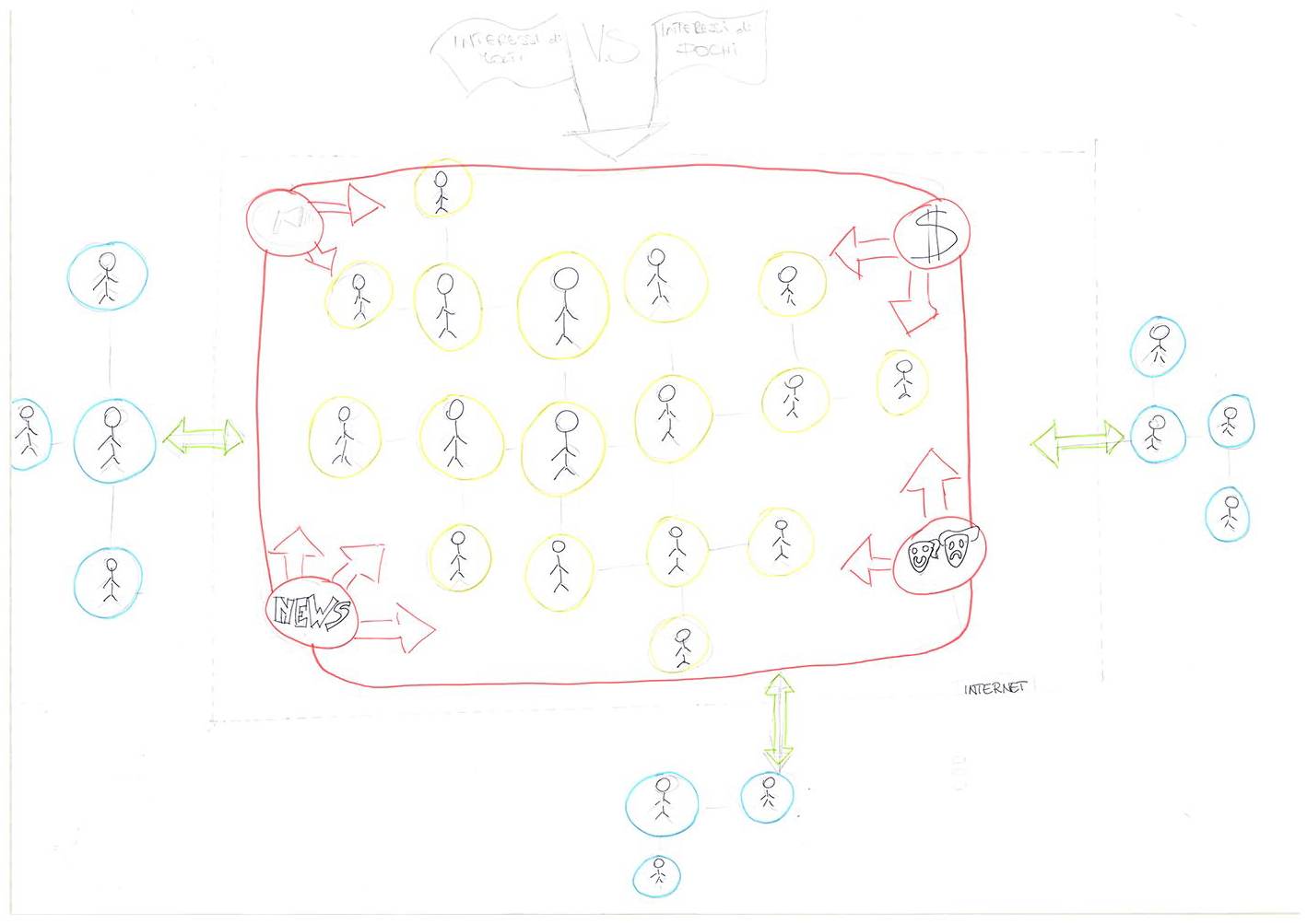
Final drawing, older Italian activists.
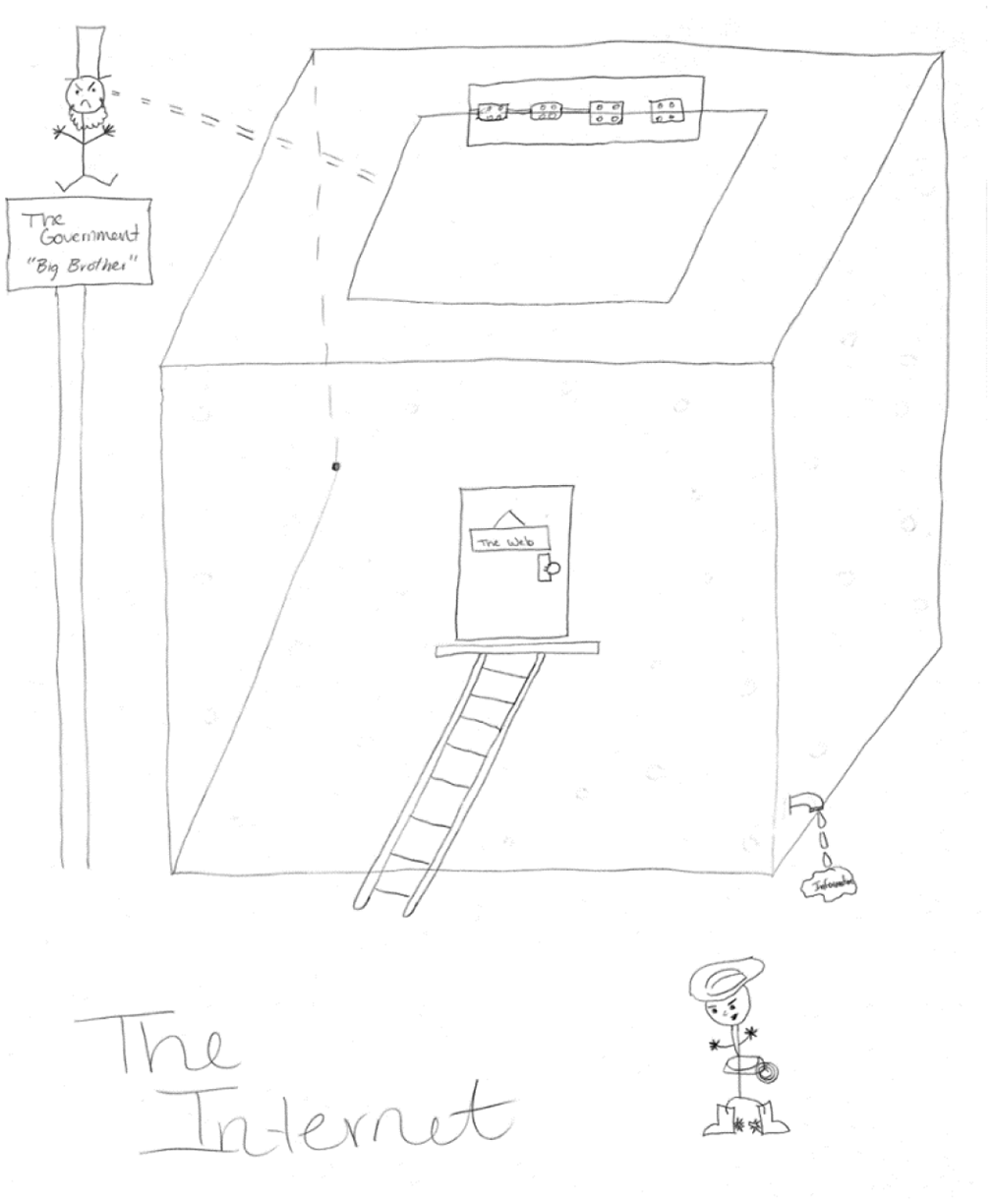
Final drawing, US undergraduate students.
For instance, these participants took a long time before deciding how they could accurately draw one of the aspects of the internet they most wanted to communicate: the fact that “powers” of different kind can shape what happens online. The representation they converged on is at the top of the drawing, where they drew two flags: one is labeled “interests of the many,” the other “interests of the few.” There is a “vs.” between the flags, which indicates that this is a confrontation between the “interests of the many” and “of the few,” which then influences how the internet works (there is an arrow that links this confrontation to the internet, represented within a red border). Although the interviewees were not entirely satisfied with how they drew these “powers,” the conversation they had was fascinating, because it addressed both the existence of economic, political, and cultural powers that influence the internet, but also the inability to exactly pin down how these powers work.
Figure 3 shows the final drawing produced in a VFG conducted with a convenience sample of undergraduate students at a private university in the Mid-Atlantic region of the United States, in Summer 2018. Students participated to receive extra credit.
These students first asked each other: “Can we leave [the drawing] completely blank? Because the internet is what you make of it. If you want to use it for social justice you can; if you want to use it to advertise your new shoes, you can” (P1). But then they discussed how it was more of a “blank box,” which they ended up drawing, because “there are limits that you can’t go outside of, but it is what you make of it” (P2). Furthermore, they represented the access to this internet-box as distant from the ground, to stress the fact that there are barriers to entry; they added a ladder to show the way in. Like the older Italian activists, these younger participants also struggled with representing power. For instance, they asked, “Wouldn’t it make more sense to have like some entity here, that has access to the top of the box and can see everything? Like from a skylight?” (P3). They settled for drawing a puppet of Uncle Sam to represent the government of the United States, which can see what happens inside the internet-box through a trap door.
In terms of analyzing VFG data, because my research focused on activists’ collective technological imaginaries, I began the analysis with the collective drawings and the process that led to them (individual sketches and transcripts of the discussions; Ferrari, 2019b); I then moved to the individual interviews that were also part of that project. I used a combination of thematic (Braun and Clarke, 2006) and open (Corbin and Strauss, 2008) coding, constantly comparing visual and textual data.
Both the pilot VFGs and the two VFGs conducted for my research on the technological imaginaries of social movements (Ferrari, 2019b) showed that the VFG can support engaged, in-depth and political discussions about the internet. The VFG was intelligible and meaningful for younger and older Italian activists, as well as young US-based students. While the method was designed explicitly to engage social movements in discussing their relationship to the internet, the pilot with the college students showed that it can also be deployed for non-activist audiences.
The speculative VFG
Diagnostic VFGs are primarily a research tool directed at examining how participants relate to a specific topic—for instance, to gauge how activists think about the contemporary internet and to assess their critiques of it. However, VFGs can also be adapted to take on a more “speculative” role, thus guiding people toward imagining how they would like something to be. In my work, this has meant encouraging participants to imagine how the internet could be better. In addition to academic research, I envision the speculative version of the VFG as a tool for improving policy-making by allowing different actors to meaningfully provide their input. In particular, the speculative VFG seems suited to encourage discussions among different stakeholders, across different levels of expertise, and even across language competencies. The act of drawing facilitates an in-depth conversation and reduces the use of jargon (which is difficult to draw!). In this section, I show how I employed speculative VFGs to facilitate discussions among different stakeholders at the intersection of technology and policy. I conducted speculative VFGs at two international conferences which took place in 2019 and brought together activists, technologists, and policy advocates: the internet Freedom Festival (IFF) in Valencia, Spain and the Our Networks conference in Toronto, Canada; I also ran a pilot speculative VFG with graduate students from a private university in the Mid-Atlantic region of the United States. The speculative VFG seems a particularly useful tool to overcome the barriers that often come into play in discussions that involve people with different levels of knowledge about technology and policy.
Design
The structure of the speculative VFG is more flexible than that of the diagnostic VFG. It can accommodate larger numbers of participants and can be shortened to 45–60 minutes if needed. Recording the discussion might not be necessary or even advisable in the speculative version; foregoing recording affords greater privacy to participants—which might be crucial if involving different stakeholders is the goal. However, it might be worth tasking the moderator or, even better, a dedicated note-taker, to keep track of the discussion, to better understand, and to contextualize the drawings.
The speculative VFG is composed of two drawing tasks and a wrap-up discussion. First, participants are asked to draw (on a provided piece of paper, with markers and/or pencils) what they think the internet is like at the moment. After everyone has completed this task, participants are encouraged to share what they drew. Second, the participants are asked to form small groups, which should be composed, if possible, by people who have not previously worked together. The small groups are then tasked to draw, together, what they would like the internet to be in the future. The groups are instructed to discuss with their group members how they can collectively imagine, and then represent, an internet that brings together all their ideas and hopes. After the drawings are completed, each group shows their work to the rest of the VFG participants and explains the thinking behind it. Finally, participants are debriefed and provide feedback on the VFG. It is advisable to provide participants with a handout that explains the structure of the VFG and of the two drawing tasks (see Supplemental Material).
In contrast to the diagnostic version, which requires a single collective drawing, the speculative VFGs explicitly include both individual and group drawings. This design choice was motivated by the idea that participants might find it daunting to jump straight into speculative drawing in a group, especially without knowing the other group participants. I thus opted to include individual drawings, with the idea that they would give participants a helpful starting point for their group drawing.
Since the design of the speculative VFG does not include a systematic recording of participants’ discussions, it is important to encourage participants to share their individual and group drawings at the end of the focus groups. In lieu of a traditional informed consent protocol, in my speculative VFGs participants were informed that they could provide me with their drawings if they wished to help with the development of the method, and that these drawings would be analyzed and possibly displayed in academic settings (see Supplemental Material). I also stipulated that participants could request to have their drawings removed from my collection at a later stage. Participants were provided with my contact information. Finally, I did not collect any personal data on the participants. However, I asked those interested in sharing their drawings with me to annotate them with their age and their “constituency” (e.g. activist, policy advocates, technology developers). In the course of the two workshops conducted in 2019, all of the participants elected to share their drawings with me: this resulted in a total of 24 individual drawings and 6 group drawings. In addition, I collected seven individual drawings and three group drawings from the pilot speculative VFG held with graduate students.
Outcomes
Participants confirmed that the speculative VFG was successful in its main goal: getting them to appreciate the different ways in which people conceptualize the internet and to push away from a mere focus on the technical aspects of communication technologies. Participants also reported that having to choose what to draw was an effective way to highlight people’s different priorities, in a more fruitful way compared to compiling a written list. Participants also offered suggestions to improve the VFG, chiefly by ensuring that people included in the different groups come from different backgrounds and/or represent different stakeholders.
The individual drawings produced by the participants showed a variety of visions of the current state of the internet. If you compare Figure 4, drawn by a developer, and Figure 5(a) and (b), drawn by a designer and a researcher respectively, you can clearly see how a more technical view of the internet (produced by the developer) coexists with more human-centric images that address the concentration of power on the internet (Figure 5(a)) and the different behaviors that drive internet traffic (Figure 5(b)). This distinction between tech-centric and human-centric drawings was a key feature of the individual drawings.
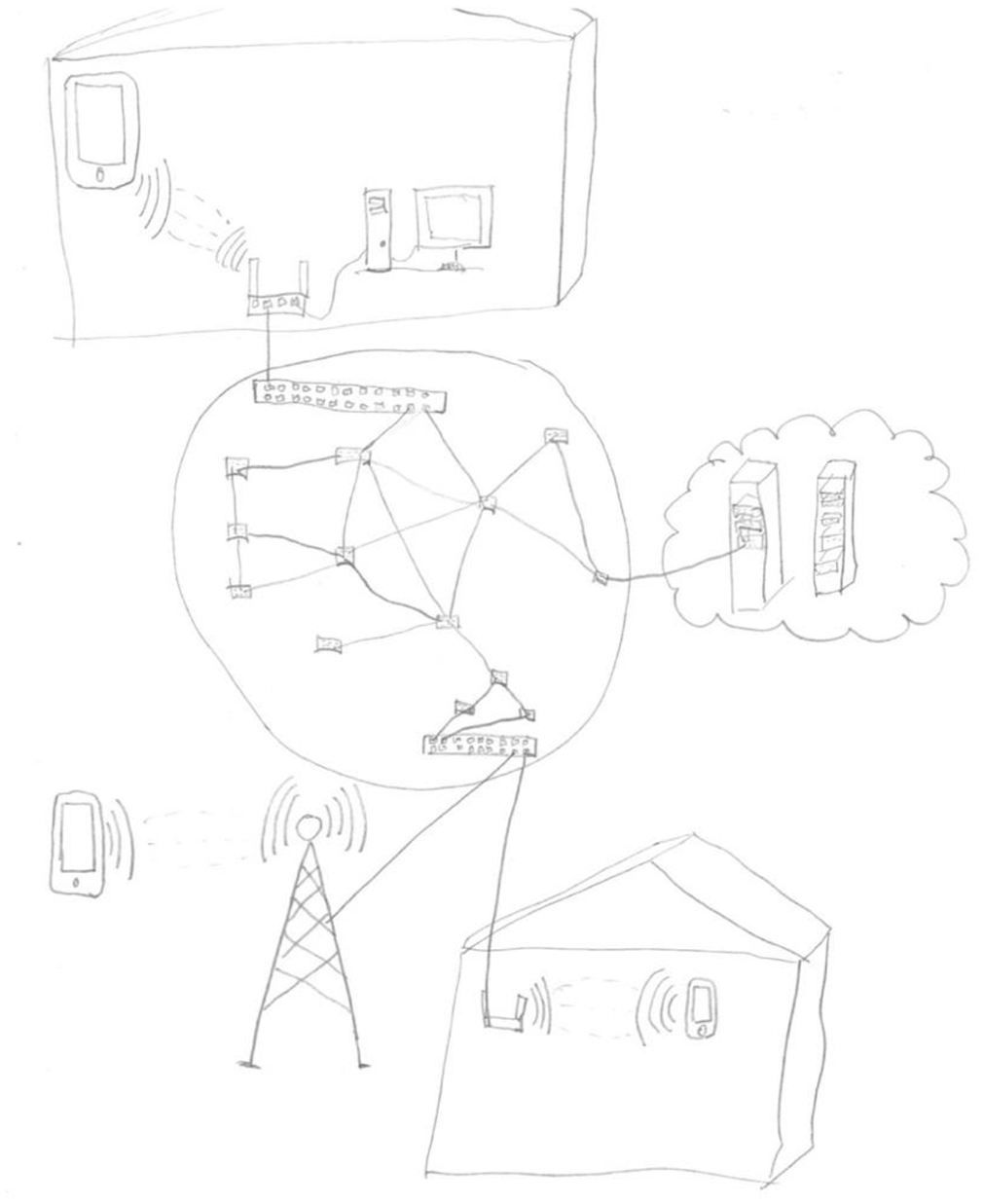
Individual drawing, technical focus.
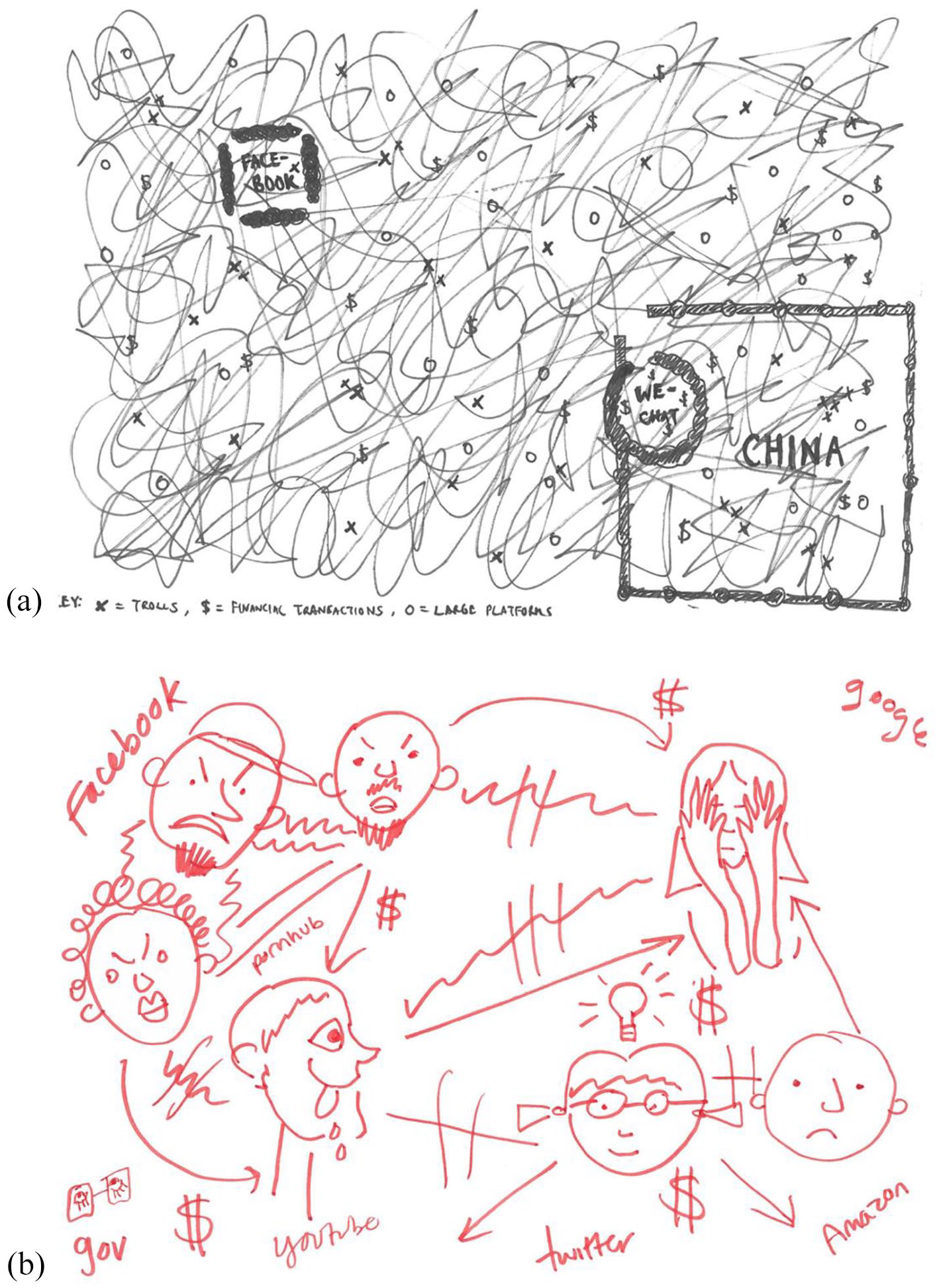
Individual drawings, social focus. (a) individual drawing, designer, 35 years old. (b) individual drawing, researcher, 31 years old.
However, the group drawings produced by participants, such as those displayed in Figures 6 and 7, do not imagine better internet from a technical perspective: rather, they center people’s experiences of the internet and how to improve them. For instance, participants wrote down the values they would like a better internet to embody (see Figure 6): “collaborative, free, open, safe, empowering, self-determined.”
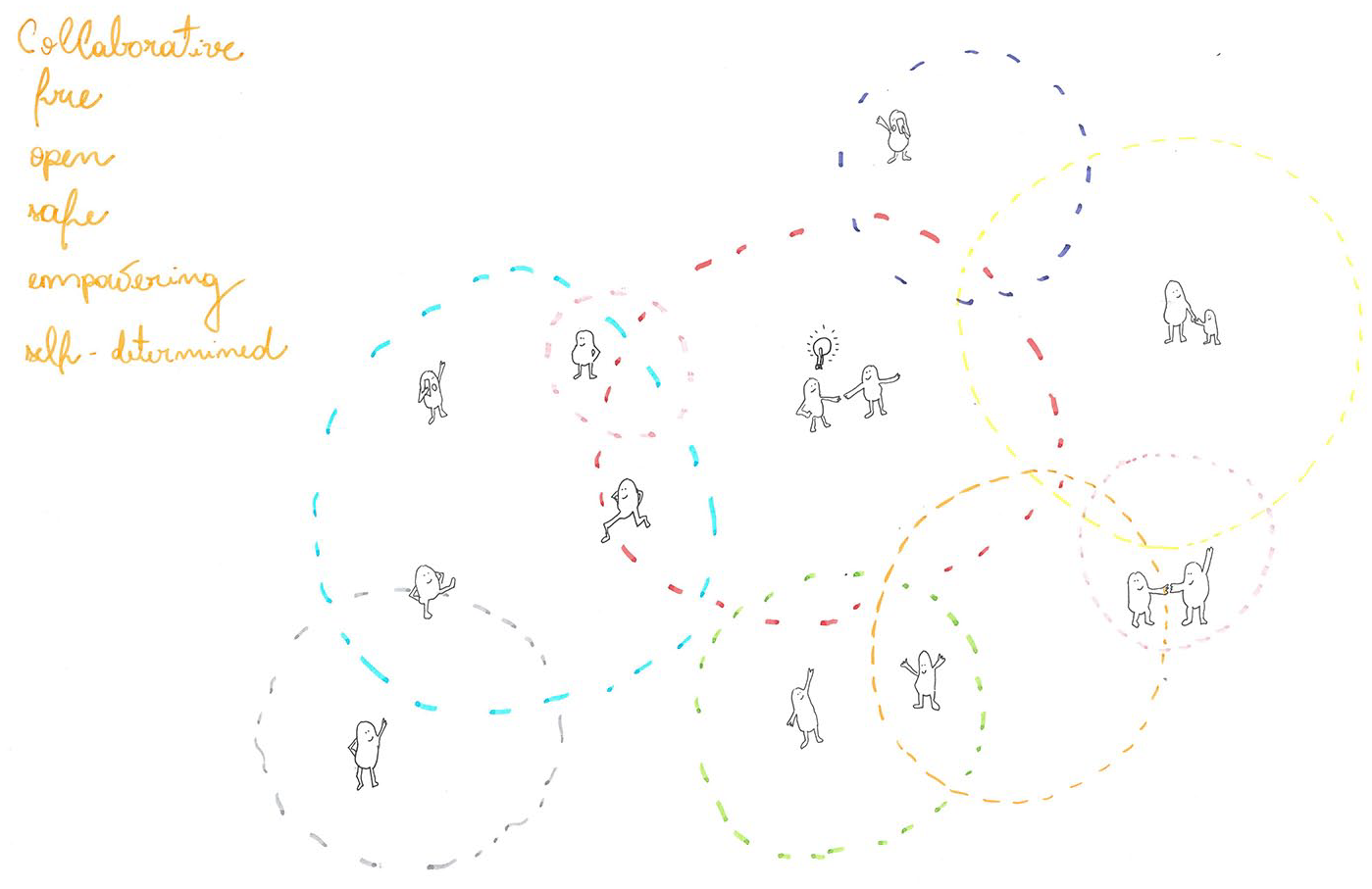
Group drawing, internet Freedom Festival.
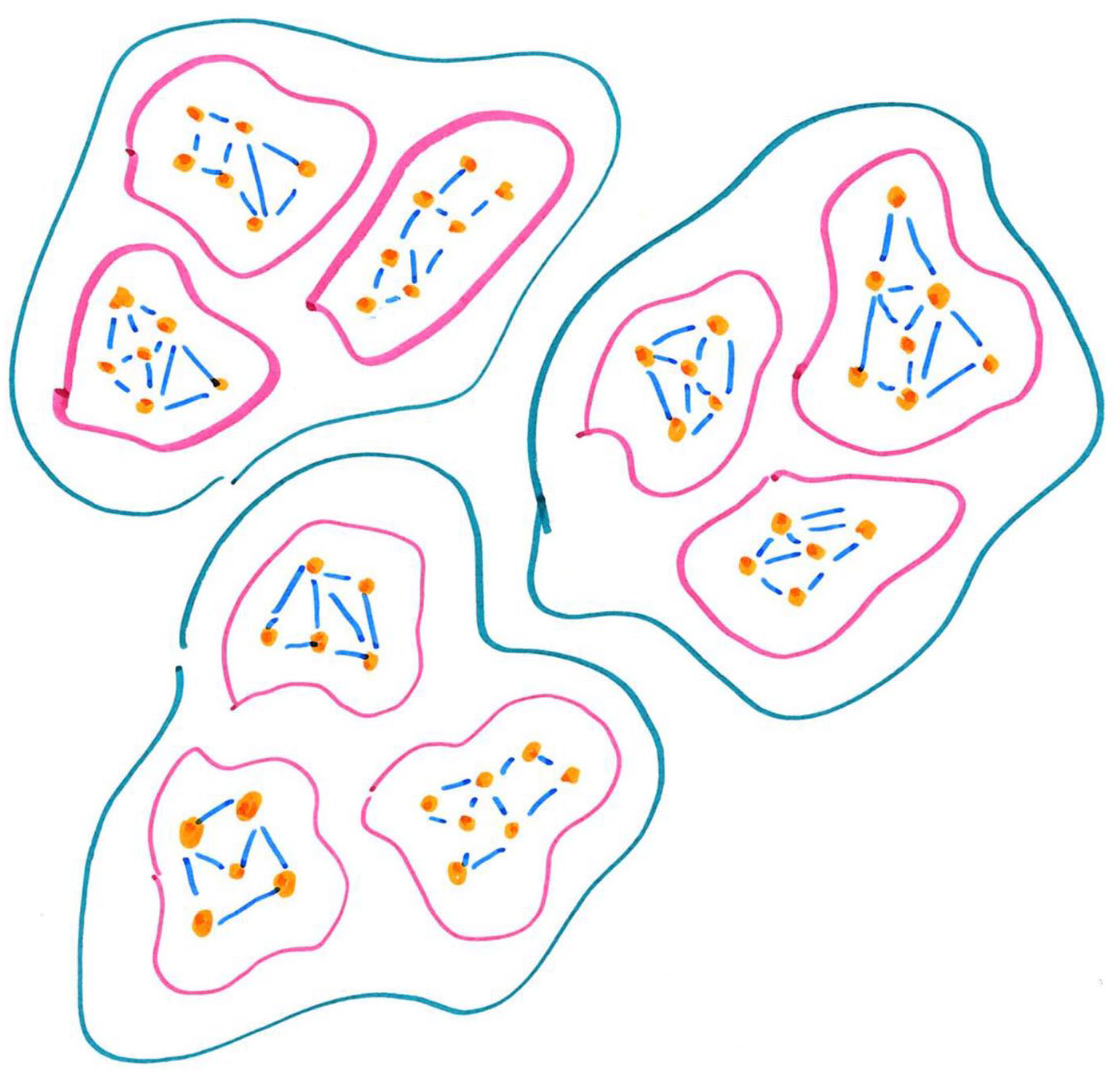
Group drawing, Our Networks conference.
The drawing displayed in Figure 7 represents a better internet as a system of cells; participants converged on the image of a cell structure to account for horizontal interactions, which allow both the exchange of information within and across permeable membranes (an osmosis of sorts) and a multiplication of ideas (equivalent to a process of cellular division).
The ability to support a transition from technical drawings of the internet to imagined internets that focus on values and human interactions is one of the biggest contributions of the speculative VFG. This has happened in all the speculative VFGs that I conducted: no matter how tech-centered the individual drawings, the group drawings were instead geared toward imagining better internets based on people’s experiences of digital technology. In other words, the speculative VFG is successful in steering conversations on a terrain where different kinds of experiences can be integrated, and technical expertise is not necessarily the backbone of the discussions. This type of workshop can thus support engaged conversations in which different stakeholders are compelled to take others’ perspectives and knowledges into account. This is particularly useful for discussions about technology, which are very often dominated by technically (or legally) knowledgeable actors, and thus remain inaccessible to other interested, but less knowledgeable parties. In contrast, through the speculative VFG, personal experiences, rights-based perspectives, and activist positions can all be integrated in the discussion of what a better internet would look like (see Haimson et al., 2020, for another similar use of speculative drawing).
Limitations and ethical considerations
The VFGs present the limitations that characterize focus groups in general and those that pertain to the use of drawing as an elicitation method. First, both traditional and visual focus groups are always at risk of being co-opted by one or more dominant participants, who might speak more or more frequently compared to other participants or otherwise attempt to dominate the process. This can be mitigated by an attentive and inclusive facilitation put in place by the moderator of the focus groups. Having been the moderator in all of the VFGs I have organized, I can however attest that the task is not easy: sometimes, it is difficult to counterbalance the dynamics that already exist within the groups that we are working with; sometimes, it is tempting to let dominant speakers speak at length if they are speaking eloquently and can give us “good quotes.” Having examined the transcripts of the diagnostic VFGs I conducted for my research on Italian activists, I do not believe that the conversations in either group were dominated by specific individuals, even though specific individuals might have spoken for longer periods of time. In my facilitation, I stressed that drawings needed to represent everyone, and I witnessed a general search for consensus in all the VFGs I conducted; however, it would be appropriate for the moderator to intervene should some participants’ voices be excluded from the collective drawing. The dominance of certain participants might be exacerbated in the speculative VFG, in which participants discuss in groups that do not have an assigned moderator and in which the researcher does not intervene directly. It might thus be helpful to provide additional guidance to structure the conversation in a way that is inclusive of all voices. In addition, participants could be given the option to write down their reflections on the process at the end of the VFG, providing them with the space to comment on the power dynamics within the group 1 ; while this would not modify the existing group drawing, it could still help the analysis by providing new elements. Researchers’ fieldnotes might also help in this respect.
The nature of the drawing task creates two additional limitations. First, some participants might be intimidated by the drawing task and/or concerned that their drawing skills might not be good enough, as Jackson Foster and et al. (2018) also highlight. While this aspect can be mitigated by emphasizing the fact that the quality of the drawing does not really matter for the research (I often told participants that their drawings were not meant for a museum), of greater concern is the fact that the ability to draw might be considered gendered: women might be seen as more capable of drawing or more willing to draw. In both of the diagnostic VFGs conducted with Italian activists (but not in the pilot conducted with US undergraduates), women ended up doing the majority of the final drawing itself, even if men provided intermediate sketches. While in these two Italian VFGs this division of labor did not necessarily have an impact on the discussion, the gendered connotations of drawing should be taken into account. Second, as many research practices of the academy, drawing is a task that might be difficult for participants with different types of disabilities. While being able to draw is not a necessary precondition to participating in the diagnostic version of the VFGs (someone else in the group could draw), a possible corrective in the speculative version (which includes individual drawing) would be to offer a facilitator to participants that might need someone to draw with them or for them.
There are two ethical recommendations that I would like to offer to anyone who might think of adopting the VFG in the future. First, the structure of the VFGs can provide a good deal of privacy to the participants, who can choose what to disclose. It is thus important that, in documenting the creation of the drawings, researchers focus on acquiring pictures of the drawings, but not of the participants; furthermore, drawings should not be associated with the names of the individuals that created them. In general, in my documentation of the visual focus groups, I have not photographed the participants, only the drawings or the drawing process (i.e. I have pictures of arms and hands that draw, but not of participants’ faces or other identifiable features). Second, to better reflect the ethos of the VFGs, it is important that drawings, whether individual or collective, are not analyzed in isolation from the discursive context that generated them. Just like quotes from an interview, they need to be presented and analyzed within the context in which participants offered them; the drawings mean certain things to the participants, and they should not be artificially twisted to support researchers’ chosen arguments. In this article, I have offered explanations of the meaning of the group drawings which emerged from conversations I have either recorded (Figures 1 and 2, diagnostic VFGs) or taken notes on (Figure 6, speculative VFG). I have not attempted to account for the meaning of the other drawings, which emerged from discussions I did not capture or witness. The drawings generated by the VFGs are not self-explanatory; they are situated in a specific discursive context. I thus recommend that drawings collected in the VFGs be presented alongside participant quotes or a summary of the discussion that accompanied the drawing.
Moving forward
This article presented the VFG as a participatory, creative, qualitative method, which makes two contributions: first, it helps researchers foster collective and reflexive conversations among participants, especially about topics that can be difficult to talk about, for instance, because they are taken for granted; second, it generates rich, deep, multilayered, and truly collective data, because they emerge from a process that supports a truly collective engagement with the topic.
In its diagnostic version, the method was originally developed in order to investigate how social movement activists conceptualize their relationship to the digital technologies, they use in their daily life. Such a creative approach was needed in order to get to the deeply held and rarely expressed attitudes and beliefs about digital technology that research participant seemed to hold but found too trivial to express. The diagnostic VFG was intended to explore these seemingly taken-for-granted ideas, which participants can be encouraged to make explicit if confronted with an appropriately designed method. The collective drawing task at the heart of the VFG offered precisely this: it created an open and reflexive discursive context which afforded the participants the opportunity to explore each other’s thoughts in a detailed way.
The speculative version of the VFG was designed and deployed to be a tool that can facilitate deep and engaged conversation not just about the current state of the internet, but also encourage participants to collectively chart alternative visions of what the internet could be. The speculative VFG seems particularly useful as a way to foster meaningful discussions among different stakeholders with different types of knowledge—such as internet users, activists, policy advocates, and tech developers. Because of the peculiar nature of the group drawing task, the speculative VFG offers a way to de-center technological expertise and recognize non-technical knowledge as equally valid in defining what technology should look like.
While I have proposed both diagnostic and speculative VFGs as tools to be applied to either assess people’s visions of technology or imagine alternative and better technologies, the VFG could be used to explore other topics that are as complex as our relationship to the internet. In particular, I envision the diagnostic VFG as a useful research method for researchers in the social sciences who are tasked with empirically exploring people’s opinions and beliefs about “big” concepts, such as democracy, inequality, and (in)justice. For instance, the diagnostic VFG could be used by political scientists to task participants with drawing the electoral process, thus assessing how they see its functioning (and its problems). Similarly, the VFG could help Media and Communication scholars assess how people make sense of the mass media or of pressing topics such as misinformation. Similarly, the speculative VFG can be applied in other domains where there are significant knowledge gaps between policy makers and users/constituents, for instance, housing policy, welfare reform, and healthcare. In all these domains, diagnostic and speculative VFGs can be powerful, flexible, and creative tools to foster engaged and reflexive conversations among researchers and participants, while facilitating the exchange of knowledge between individuals with different interests and experiences.
Supplemental Material
sj-pdf-1-nms-10.1177_14614448221136082 – Supplemental material for Visual focus groups: Stimulating reflexive conversations with collective drawing
Supplemental material, sj-pdf-1-nms-10.1177_14614448221136082 for Visual focus groups: Stimulating reflexive conversations with collective drawing by Elisabetta Ferrari in New Media & Society
Footnotes
Acknowledgements
The author warmly thanks all the participants of the visual focus groups and is particularly indebted to the friends and colleagues who took part in the pilot discussions and provided crucial feedback. Laura Schwartz-Henderson was instrumental in the organization of the workshop held at the internet Freedom Festival and the author thanks her for her help. Colleagues at the Digital Studies Institute at the University of Michigan offered support and feedback, for which the author is grateful. The author is also particularly thankful to María Celeste Wagner, who provided generous and insightful comments on a draft of this article. Lastly, the author wishes to thank the anonymous reviewers for their detailed and constructive reviews.
Funding
The author(s) disclosed receipt of the following financial support for the research, authorship, and/or publication of this article: This work was supported by a Dissertation Award from the Waterhouse Family Institute for the Study of Communication and Society (WFI), Villanova University, USA.

Supplemental material
Supplemental material for this article is available online.
Notes
Author biography
References
Supplementary Material
Please find the following supplemental material available below.
For Open Access articles published under a Creative Commons License, all supplemental material carries the same license as the article it is associated with.
For non-Open Access articles published, all supplemental material carries a non-exclusive license, and permission requests for re-use of supplemental material or any part of supplemental material shall be sent directly to the copyright owner as specified in the copyright notice associated with the article.
