




Abstract
Gang literature increasingly reflects the importance of social media in gang lifestyle, as gang members adopt new communicative practices. Yet, because of the multifaceted nature of online gang activity and the diversity of methodologies employed, a general overview of research outcomes is not easily achieved. This article seeks to remedy this by analysing academic studies of gang use of social media. A systematic literature review was conducted in Scopus and Google Scholar databases, which led to the identification of 73 publications. We then undertook a content analysis of each publication using an exhaustive evaluation model, comprising 20 variables and 71 categories. A bibliometric analysis was also performed to determine the structural characteristics of the research community that generates these publications. Our results point to an emerging universe of publications with different themes, methods, samples and ethical protocols. The challenges, risks and recommendations for future social media research with youth street groups are identified.
Keywords
Introduction
The Internet and social media are transforming social relations and the way in which people, especially the young, interact. For example, urban gangs of problematic youths, living in marginal neighbourhoods, have adopted these new communicative practices as part of their everyday experiences (Décary-Hétu and Morselli, 2011; Moule et al., 2014; Peterson and Densley, 2017; Pyrooz et al., 2015).
Gangs with a presence on the earliest social networking sites (e.g. MySpace) continue to engage with the latest networking services and seem likely to maintain their presence on newly emerging communication platforms. In this global, digital age, as in the world offline, this online universe can offer gang members a space in which they can construct their digital identity and where street culture emerges (Urbanik et al., 2020). Unlike the traditional media, digital platforms offer these gangs or ‘youth street groups’ a place for cultural construction via self-representations and their online practices (Fernández-Planells et al., 2020). This gang presence on social media sites – referred to by scholars as ‘Internet banging’ (Patton et al., 2013) or ‘cyberbanging’ (Morselli and Décary-Hétu, 2013) – serves, among other uses, to promote gang affiliation and glorify gang life, to display power and achieve notoriety by threatening or reporting participation in criminal acts, to create a shared information network and even to support criminal activities (Patton et al., 2013; Pawelz and Elvers, 2018).
Indeed, many scholars have focused their attention on criminal activities in an attempt to expose a relationship between gangs’ use of social media and violence and find that gang members are using social platforms to sell drugs, threaten and harass individuals, post violent videos and download illegal music (Moule et al., 2014; Patton et al., 2013, 2014; Pyrooz et al., 2015). However, despite evidence that the online behaviour of gang members may result in criminal acts, other studies draw a series of different conclusions. For instance, Morselli and Décary-Hétu (2013: 165) report that gang presence in social media appears to be more closely linked to individual displays than it is to group awareness, and that the use of social media is ‘more likely to diffuse the non-criminal features of the group and the problems that they were facing from what they displayed as overzealous law-enforcement’. Nevertheless, as the authors go on to highlight, whereas street gangs are not proactively using the Internet to recruit members, social media are, however, ‘creating a new venue for people who share or are sensitive to the values underlying street gang lifestyle to come together’ (Morselli and Décary-Hétu, 2013: 166).
A gang, according to Thrasher’s ([1927] 2013: 57) now classical definition, can be considered ‘an interstitial group originally formed spontaneously, and then integrated through conflict’. This definition goes on to indicate that gangs, as forms of sociability, are characterized by a behaviour that is guided by face-to-face encounters, fighting, urban spatial movement as a unit, conflicts with other agents and the planning of gang actions. Today, almost a century later, this definition can be considered to retain much of its validity if we accept, however, that gangs are no longer primarily local, face-to-face, male, juvenile or criminal groups and have acquired a transnational, virtual, transgender, transgenerational and leisure face (Feixa et al., 2019). More recently, the Eurogang Programme of Research proposed a more consensual definition that has been widely employed in gang research: ‘A street gang is any durable, street-oriented youth group whose involvement in illegal activity is part of its identity group’ (Esbensen and Maxson, 2012: 3). However, finding a definition on which all social actors can agree remains challenging, and indeed, scholars adopt different approaches in their efforts to offer a conceptualization of gangs. As a result, terms and meanings may vary according to geographic locations and subcultural traditions (Esbensen et al., 2001). Nevertheless, the evolution of the conceptualization of gangs and the advent of the Internet point to the need to explore further the methodological framework employed and to provide an updated definition that can serve those scholars studying the social media footprints left by a specific gang. An examination of the use and of the meaning of this use of social media in the construction of the lifestyle of youth street groups should provide scholars with a better understanding of those gangs that have a social media presence (a possible reflection of the digital divide) and of the dangers criminal actors face when using social media (Trottier, 2014), allowing us to distinguish between ‘traditionalists’, who consciously abstain from using social media, and ‘digitalists’, who fully engage with them (Whittaker et al., 2020). In short, as Urbanik and Roks (2020) recommend, gang researchers should pay increased attention to the online presence and interactions of gang members.
Studies, to date, which have examined the online behaviour of gangs are characterized by different, although not mutually exclusive, methodological approaches. Urbanik et al. (2020) forward a categorization of this literature based not only on the methods used, but also on how the topic is approached, that is, studies (1) in which gang members are asked about their social media or Internet use; (2) that interpret the meaning of online artefacts or ethnography at a distance; and (3) that analyse gang members’ online activities via an interpretation of their online artefacts. Here, adapting Urbanik et al.’s (2020) and Pyrooz and Moule’s (2019) recent categorizations, we propose a classification centred on three methodological approaches: first, studies using the classical techniques of the social sciences such as interviews, observation, focus groups and surveys to gather data directly from gangs and gang members (Campana and Varese, 2018; Moule et al., 2014; Pawelz and Elvers, 2018; Sela-Shayovitz, 2012; Storrod and Densley, 2017; Urbanik and Haggerty, 2018); second, studies analysing gangs via their social media artefacts using netnography, social network analysis (SNA), content analysis, machine learning and similar techniques to extract data directly from online sources (Balasuriya et al., 2016b; Décary-Hétu and Morselli, 2011; Morselli and Décary-Hétu, 2013; Patton et al., 2018; Stuart, 2019; Wijeratne et al., 2015; Womer and Bunker, 2010); and, third, studies analysing gangs via publications, based essentially on systematic literature reviews (O’Connor, 2013; Patton et al., 2014; Peterson and Densley, 2017).
Within this last approach – centred on literature reviews – two distinct lines of research have been developed. Thus, we find reviews that have concerned themselves, first, with publications that focus on gangs and their social media use (Fredette and Guaga, 2013; Lauger et al., 2019; Patton et al., 2013, 2014; Peterson and Densley, 2017), with a particular interest in social media as a vector for youth violence, and, second, with publications that focus on how gang use of social media modifies police work and criminal prosecutions (Behrman, 2015; Frank et al., 2011; O’Connor, 2013).
Here, we seek to develop a third line of research, the objective of which is to analyse academic studies of gangs and social media by combining two complementary techniques. First, we conduct a systematic literature review based on content analysis (qualitative approach), with the aim of identifying and describing the main features examined by this specific research community (topics, methods, gangs and media, privacy issues, etc.) and disseminated through formal publications. Second, we undertake a descriptive statistical analysis using bibliometric techniques (quantitative approach), a structural-level analysis that aims to contextualize the characteristics of the research community (community size and geolocation, principal authors, main communication venues used, etc.) that generates the corpus of documents analysed.
Social media behaviour changes rapidly with the emergence of new social networking sites and new generations of users. In response to this, this study seeks to provide an updated literature review and to include the latest studies published examining new trends in social media use among gang members. Moreover, we also seek to identify methodological publications that develop research protocols for studying gangs online.
To do so, we set ourselves the following specific objectives:
To determine the specific parameters, dimensions and variables employed in the research protocols of studies of gang use of social media.
To reveal the structural characteristics of the research community publishing on this topic (i.e. the most productive and cited authors, co-authorship patterns, highly cited documents, document sources and specific topics covered).
Method
The first step involved identifying, in as comprehensive a fashion as possible, the academic literature on gangs and social media. To do so, we created a list of topic-related terms, which we divided in two sections: on the one hand, those related to gang research (e.g. ‘online youth street groups’, ‘youth street groups’, ‘street gangs’, ‘gangs’), and, on the other hand, those related to social media (‘social media’, ‘social network analysis’, ‘social network’, ‘Facebook’, ‘YouTube’, etc.). These terms were extracted from the titles, abstracts and keywords of a selected set of publications on the topic.
Finally, a total of 16 terms (seven related to ‘gangs’ and nine to ‘social media’) were selected, and a complex search query combining all these terms was built. Later, this query was submitted to Scopus. The search query syntax is as follows: TITLE-ABS-KEY (‘online youth street groups’ OR ‘gangs’ OR ‘cyberbanging’ OR ‘Internet banging’ OR ‘youth street groups’ OR ‘street gangs’ OR ‘cyberband’) AND TITLE-ABS-KEY (‘social media’ OR ‘social network analysis’ OR ‘youtube’ OR ‘instagram’ OR ‘twitter’ OR ‘facebook’ OR ‘social network*’ OR ‘social web’ OR ‘web 2.0’)
The suitability of Scopus as a principal search system for undertaking systematic reviews has recently been demonstrated (Gusenbauer and Haddaway, 2020); however, we opted to adapt our complex query and submit it to Google Scholar too, given the potential lack of coverage provided by Scopus in the disciplines of the social sciences. In practice, the two databases are found to complement each other. Thus, while Scopus is a selective database (elitist approach, mainly including journal articles in English) that offers the possibility of extracting bibliographic data automatically, Google Scholar is a comprehensive database that includes a higher number of sources (covering all document types and languages). Unfortunately, no automatic export features are available (Delgado López-Cózar et al., 2019; Martín-Martín et al., 2018).
At the end of this process, a total of 251 unique documents were retrieved. However, a significant number of publications were deemed not be pertinent to our study as they did not specifically undertake examinations of gangs and social media. Indeed, while the inclusion of the term ‘social network analysis’ identified references using this specific technique, they were definitely not related to social networking sites. Therefore, a manual review was subsequently undertaken to exclude all non-relevant documents and those documents that could not be accessed online. In addition, only publications in English were considered. Eventually, a total of 73 references were selected (see Supplemental Annex I). Although all the publications contain the key word ‘gangs’, the fact that authors may have approached their studies from different conceptualizations of this key word means that different phenomena are likely to have been examined in this literature.
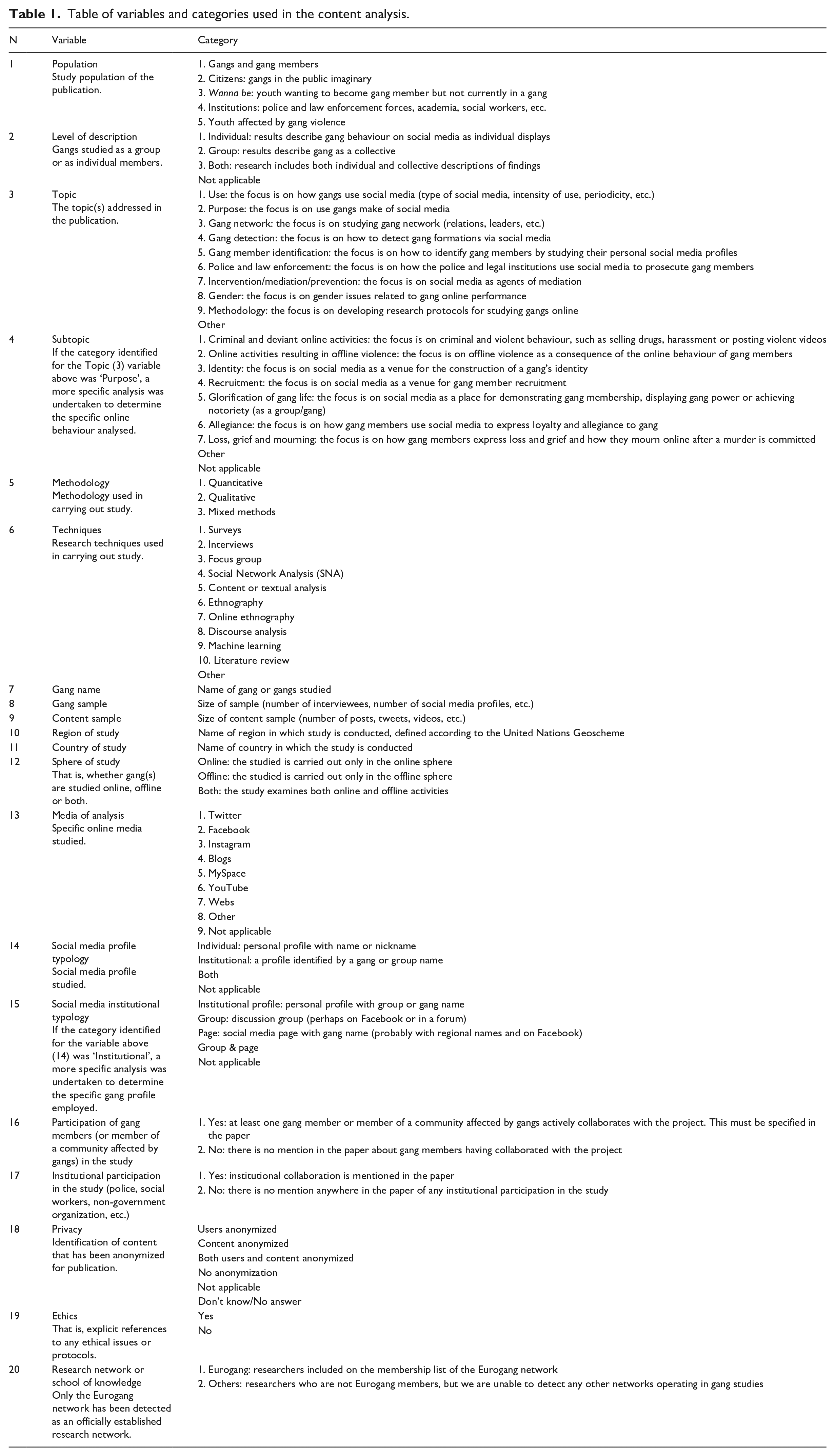
The second step involved a qualitative/quantitative content analysis of the 73 selected references. To do so, we created an evaluation model comprising a set of variables and categories, covering a comprehensive number of dimensions related to the research designs of the studies. The categories were defined by taking an inductive approach: while some categories formed part of the analysis from the outset (Stage 1: Initial set of categories), others were included iteratively as we analysed the literature (Stage 2: Category refinement based on evidence). After the categories had been agreed to by all the authors of this article, a total of 20 variables and 71 categories were obtained (Table 1). Finally, each of the 73 publications was then analysed by the first author of this publication using the evaluation model. Categories were not mutually exclusive, and each publication could be included in more than one category.
Table of variables and categories used in the content analysis.
The third step involved undertaking a bibliometric analysis of the academic literature. Bibliometrics has long been used to characterize research communities as part of the so-called ‘science of science’ (Fortunato et al., 2018). The structural properties of these communities, such as the size of the community, the epistemological and methodological training of their members, the place – country, university, department – where their members work, their dynamism in publishing research results, their co-authorship and citation patterns, and the venues used to disseminate their findings, determine the academic literature produced, and, hence, the knowledge disseminated, which is the corpus of documents used in content analysis.
To do this, only that literature indexed in Scopus database was considered. A total of 42 documents were retrieved from Scopus (see Supplemental Annex II). A CSV file format was employed, including not only bibliographic information for each of the references, but also all citation data.
All records were extracted and exported to VOSviewer and the following bibliometric indicators were obtained: authorship, sources of publication, countries, organizations, most cited documents, most cited authors, and most used keywords and title and abstract terms. The following bibliographic networks could then be generated: co-authorship (at the individual, organization and country level) and term co-occurrences.
All references were retrieved on 14 November 2019. The content analysis was performed in December 2019. All citation data were taken as of 1 February 2020.
Results
Content analysis
Population under study and topics addressed
As expected, the literature examining gangs and social media focuses mainly on gangs as their primary object of study (63 of the 73 publications), with gangs being typically considered as a group or collective (55) rather than as individuals (8). To a lesser degree, the literature focuses on such institutions as the police, law enforcement agencies, academia and social workers (9), followed by citizens’ imaginaries of gangs (3), young people living in neighbourhoods with high rates of exposure to gang activity (1) and young people wanting to join a gang but not being a gang member (1).
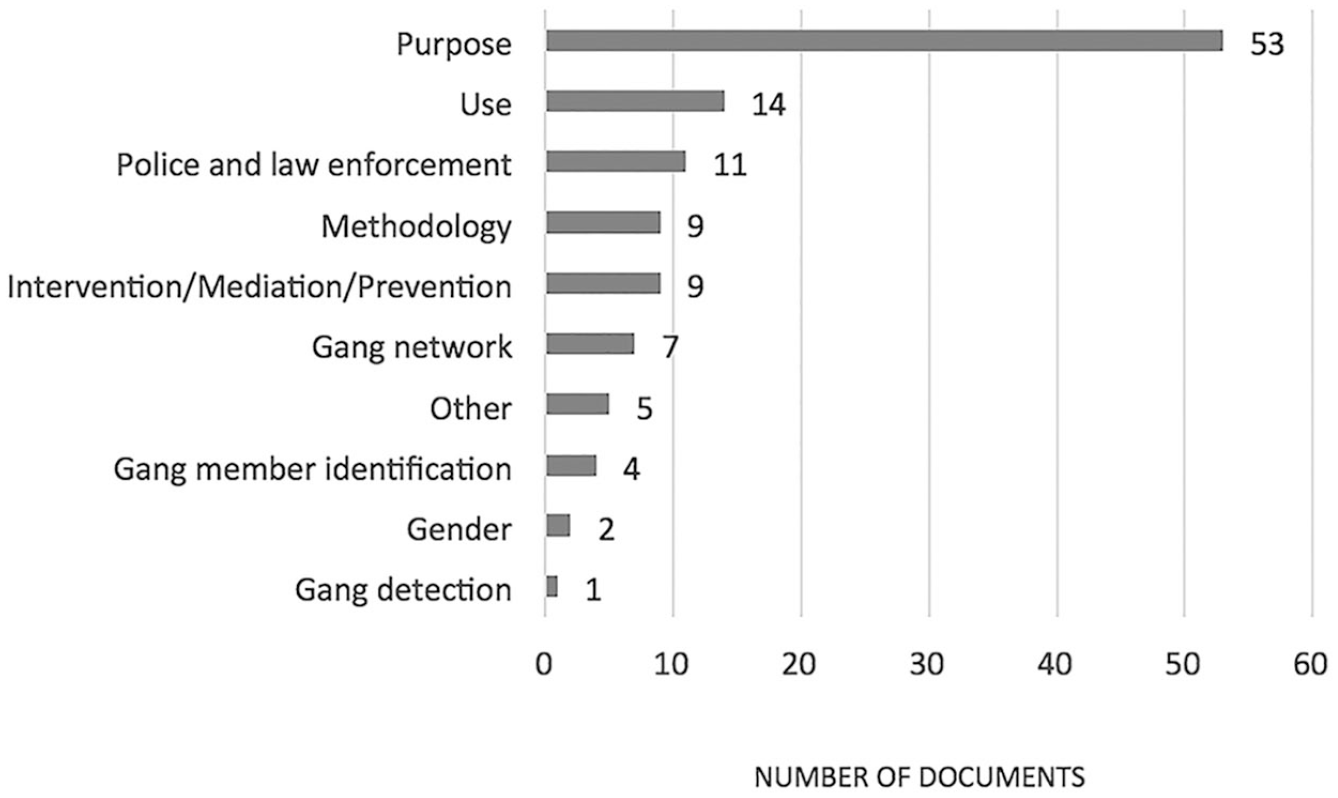
A range of different topics (Figure 1) are detected in the literature about gangs and social media, among which the use that gangs make of social media (i.e. ‘Purpose’) stands out (53). Among these 53 publications, the activities with which scholars are chiefly concerned are the criminal and deviant online activities of gang members (31) and the links between their social media use and offline violence in communities with high rates of exposure to gang activity (14). Indeed, several of the publications consider social media a catalyst for actual gang-related violence in the streets and, consequently, their discussion sections typically reflect on the potential of studying social media as a means to predicting future acts of violence.
The topics addressed in the literature.
The other studies whose main topic was categorized as ‘Purpose’ concern themselves with the use of social media as a venue for the construction of a gang’s identity (12), for expressing grief and for mourning (12), for glorifying gang life (7), and for recruiting new members (6), although most studies reject the idea that social media is intentionally used for attracting new members.
Other topics detected in the literature about gangs and social media include the former’s actual social media use (14), that is, which social media gang members use and with what intensity. The potential use that the police and law enforcement forces might make of social media has also generated interest (11), with some studies pointing to the possible benefits while others expressing their concerns. Behrman (2015), for example, not only describes the opportunities afforded by social media and surveillance cameras for targeting gangs and enhancing gang databases; he also discusses the constitutionality of heightened surveillance methods and of technology-based evidence in the courtroom and on the streets.
A further research topic identified in the publications includes the development of research protocols and methods for studying gangs online. While some of these studies take a decidedly academic approach, others seek to develop tools for helping police departments and law enforcement agencies identify gang members using their social media profiles (4) and detect gangs (1), usually by employing machine learning techniques. For example, Balasuriya (2016a, 2016b) and Wijeratne et al. (2015) test specific tools and methods for early detection of gang members using the information the members themselves provide in their social media profiles.
Some scholars have also studied the network of a specific gang (7) by tracing the relations established and identifying opinion leaders, and by targeting communities, locations and groups (including rival gangs). A few studies (9) also address the challenges and opportunities of social media as agents for social intervention and mediation. Typically, this topic is raised for discussion, being identified as an important issue for future exploration rather than the study’s main focus. Finally, gender studies remain an understudied topic in this field (2).
Methods used and study samples
Qualitative approaches predominate among studies of gangs on social media (40 publications), followed by mixed (23) and quantitative methods (10). Among the qualitative techniques, qualitative content analysis and textual analysis are the most frequently employed here, followed by interviews and qualitative literature reviews (Figure 2). Among the quantitative methods, machine learning is the most frequently used technique, followed by surveys and SNA.
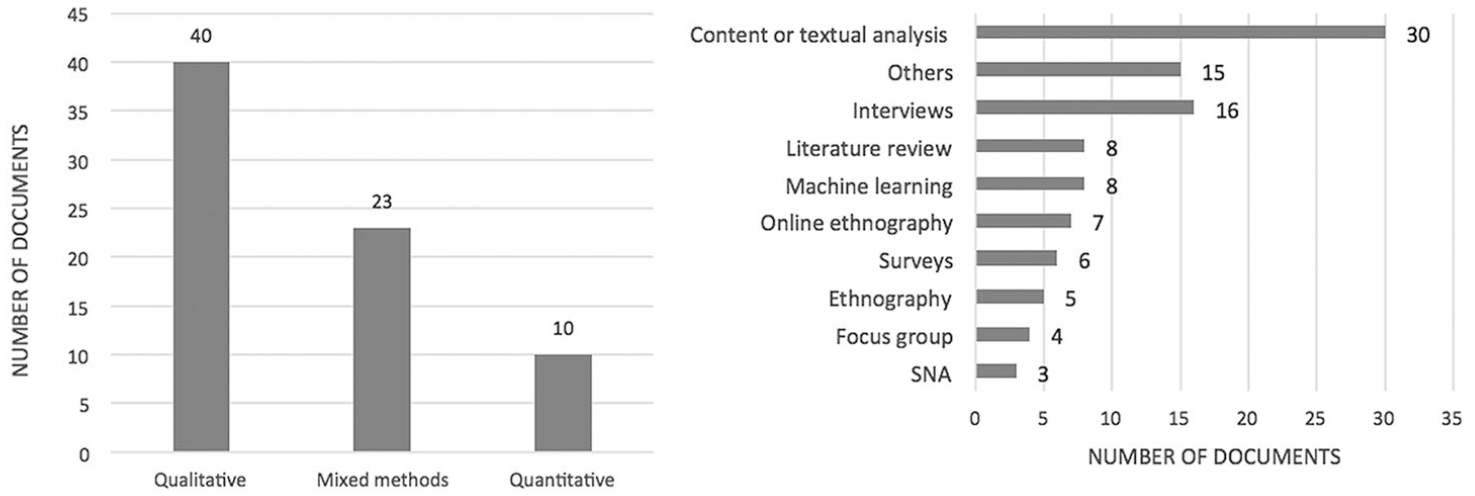
Methods (left) and techniques (right) applied in the literature about gangs and social media.
We also categorized the following characteristics of the samples used in the studies: (1) country(ies) of study, that is, where the fieldwork was conducted; (2) name of gang(s) studied; (3) sphere of study; (4) specific media examined; (5) type of social media profile and (6) sample size.
First, and in line with the results presented in the “Bibliometric analysis” section highlighting the leadership of the United States in this field of the literature, the United States is the country in which most fieldwork has been conducted (43), followed by Canada (8), the United Kingdom (8), Israel (2) and Mexico, Sweden, Belgium, the Netherlands, Denmark, Trinidad and Tobago and Australia (1).
Second, many publications do not in fact specify the name of gang(s) under study, preferring to reference the city, the community (African American, Latino, etc.) or the particular gang family (e.g. bikers) with which they are associated. However, when a gang is mentioned, we find a prevalence of African American and Latino gang names, including Black Disciples, Tooka, Gangster Disciples, Los Zetas, 18th Street, Almighty Vice Lord Nation and Bad Boys. Here, some of the literature tagged under gang studies includes studies of Latino and Chinese criminal organizations, including the Gulf Cartel, the Sinaloa Cartel, the Beltrán Leyva Organization, the Caballeros Templarios, La Familia Michoacana, Big Circle Boys and Triad. A very small number of publications focus on gangs characterized by their political ideas, such as the radical right-wing, or on those associated with protest movements, such as the English riots. Finally, a few compare social media practices of gangs and those of terrorists.
Third, as expected, the literature is based mainly on online research (48), followed by research that combines both online and offline study of gangs (25). No publication undertakes an exclusively offline study of gangs.
Fourth, among the publications retrieved here, the most frequently studied media platform was Twitter (32) followed by Facebook (12), YouTube (11), Instagram (2), MySpace (2), blogs (1) and the web (1) (Figure 3). However, 25 publications are not accounted for as they did not focus their attention on one specific site (i.e. the studies based on surveys, interviews, and literature reviews).
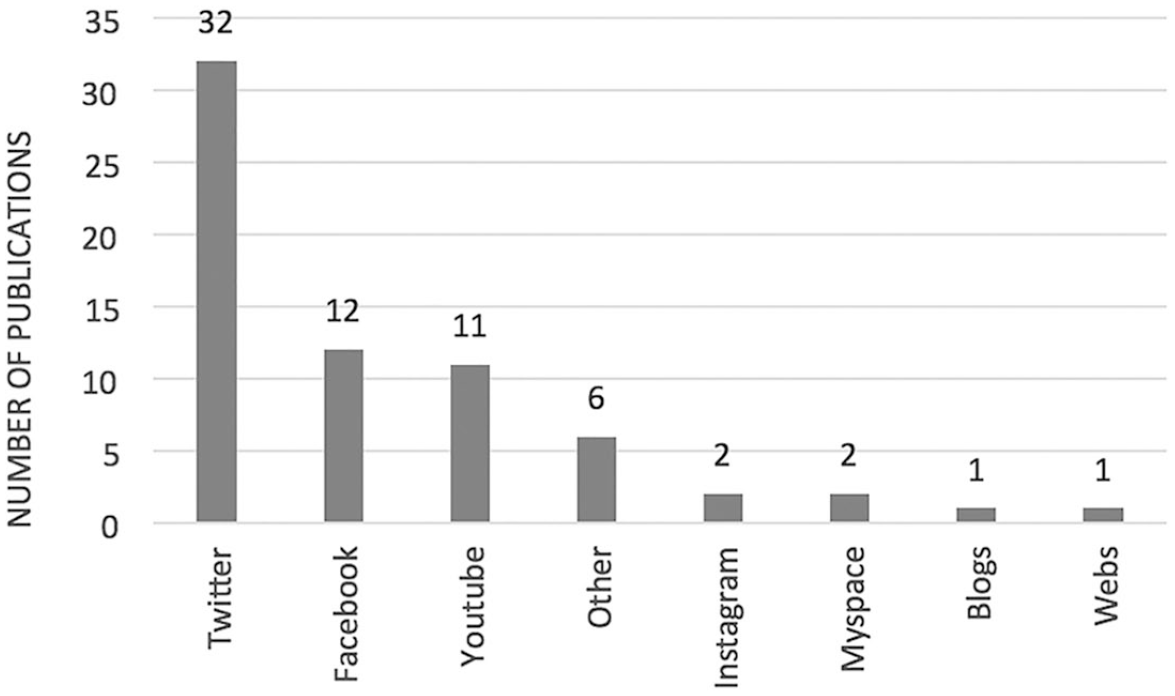
Media sites analysed by the literature.
Fifth, we were also interested in gangs’ online profiles, that is, whether they were predominantly individual or institutional. Most publications describe individual profiles (25), followed by combined personal and institutional profiles (7) and those describing only institutional profiles (3). In the case of institutional profiles, scholars studied both groups and pages – typically, on Facebook. Note that when the publication was based on a survey, interviews, literature reviews or otherwise not specified, this analysis did not apply (38).
Sixth, the number of gang members studied and the size of the content under analysis can vary greatly, ranging from just one or a few users to a much larger sample – for example, in the case of machine learning, 821,412 tweets have been recorded from 400 gang member profiles and 7,238,758 tweets from non-gang member profiles, or in the case of a survey, 585 respondents, including 418 current and former gang members.
Ethical issues and gang members and institutional participation
Concerns regarding the ethics of social media studies and the privacy of participants have been manifest, especially when dealing with vulnerable groups such as youth street groups. Here, 18 of the publications expressly discuss the ethical issues associated with their research, while 55 express no such concerns. The SAFElab research initiative has developed a set of ethical guidelines for working with vulnerable groups to prevent any potential harm to the communities from which they obtain their social media data. 1 We should stress, however, that the fact that these other studies did not explicitly mention any ethical concerns does not necessarily imply that their authors did not adhere to ethical and methodological protocols when undertaking their work.
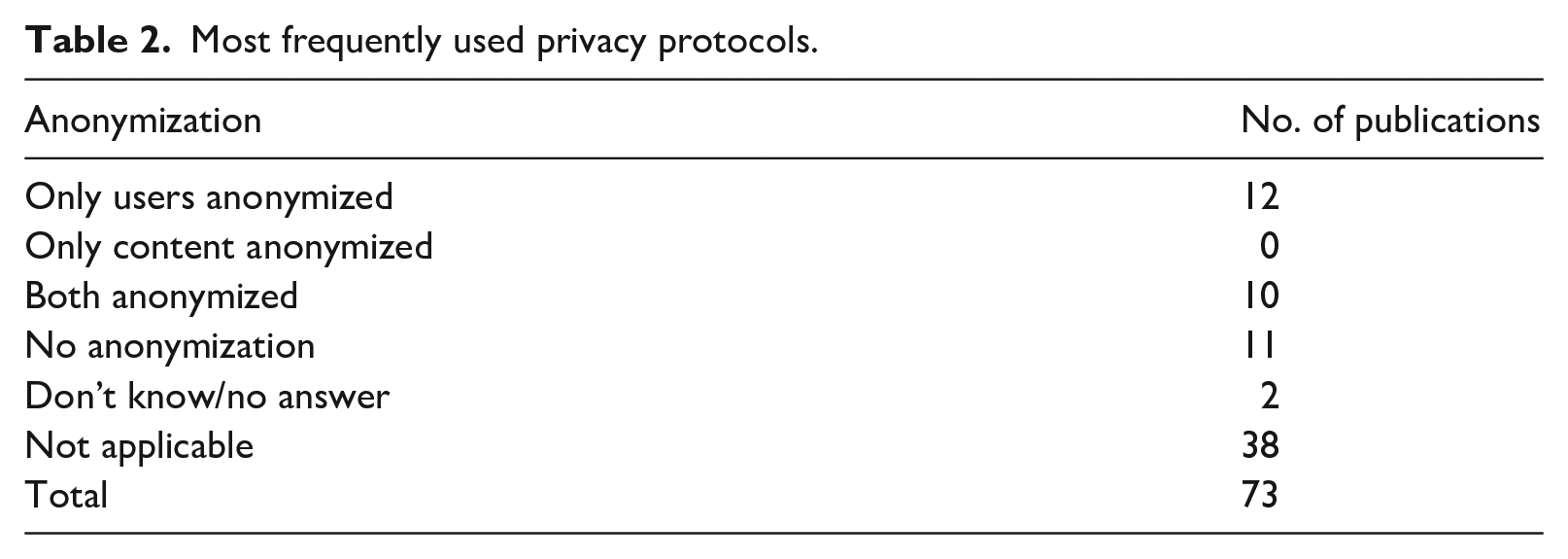
Anonymity is one formula for protecting the vulnerable, but the analysis shows that there are more publications that fail to anonymize or only partially anonymize participants – that is., only the user is anonymized – than publications in which both users and their content are anonymized (Table 2). Despite these results, there is a trend towards the increasing use of privacy protocols over time in these publications.
Most frequently used privacy protocols.
The active participation of gang members in the research process is another formula for addressing the ethical concerns of working with vulnerable groups. However, according to our analysis, only 6 of the 73 publications included in their research team a gang member or youth from a neighbourhood affected by a gang.
Institutional participation is another variable of analysis in this study, but we detect that institutions are even less involved in the research process than gang members, with just three publications explicitly acknowledging their participation.
Bibliometric analysis
The bibliographic corpus obtained from Scopus contains 42 documents. The earliest publication dates from 2009 and compares Sunni extremist (jihadis) and Mexican American street gang member (cholos) use of YouTube (Weisburd, 2009). This publication date points to a significant delay in the emergence of this line of research, especially if we consider that the first social networking site (SixDegrees) was created in 1997 and YouTube itself was launched in 2005 (Edosomwan et al., 2011).
The set of 42 publications comprises 31 journal articles, three book chapters, seven conference papers, and two reviews and has been penned by a total of 93 authors, among which Patton (Columbia University) stands out as being the most productive (and most cited) author with 13 publications (Table 3). Eschmann is the author with the highest impact if citation data are normalized by productivity (33 citations per publication on average).
Authors: number of publications, citations received, citations per publication, and total link strength.
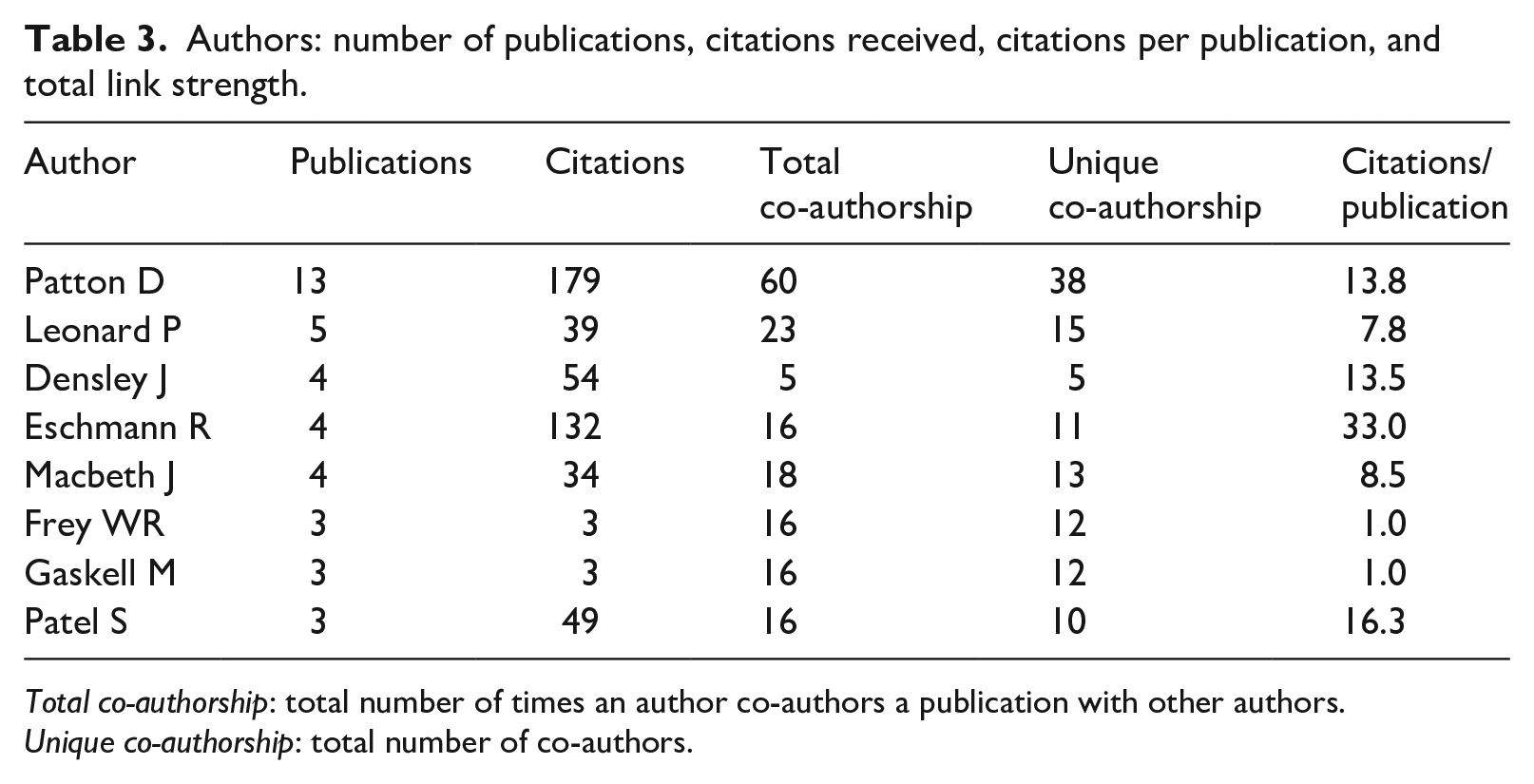
Total co-authorship: total number of times an author co-authors a publication with other authors.
Unique co-authorship: total number of co-authors.
Desmond Patton has established an extensive network of co-authors (up to 38 authors), his most frequent co-authors being Leonard (5 publications), MacBeth and Eschmann (4 publications each), and Frey, Gaskell and Patel (3 publications each). Patton is also involved in sub co-author networks with all these frequent co-authors (Figure 4).
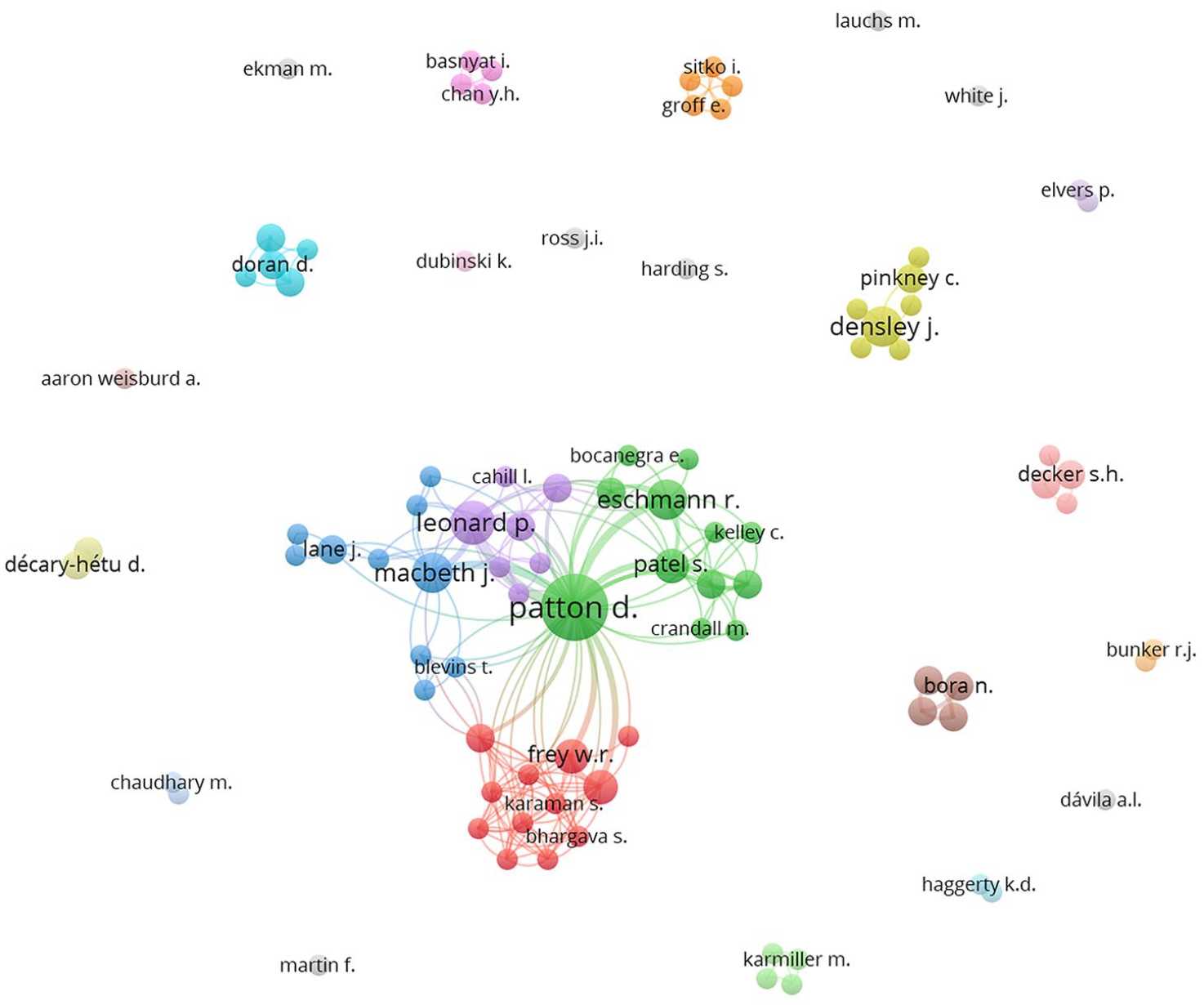
General co-authorship network.
Table 4 shows the publications with the greatest number of citations received according to Scopus. In addition, the number of citations from Google Scholar, Web of Science and Dimensions are also shown. The correlation (Spearman) between these four databases is strong and significant: Rs (Scopus– Google Scholar) = .98; Rs (Scopus–Web of Science) = .99; Rs (Scopus–Dimensions) = .99, which indicates the robustness of these findings.
Most cited documents according to Scopus, Google Scholar, Web of Science* and Dimensions.
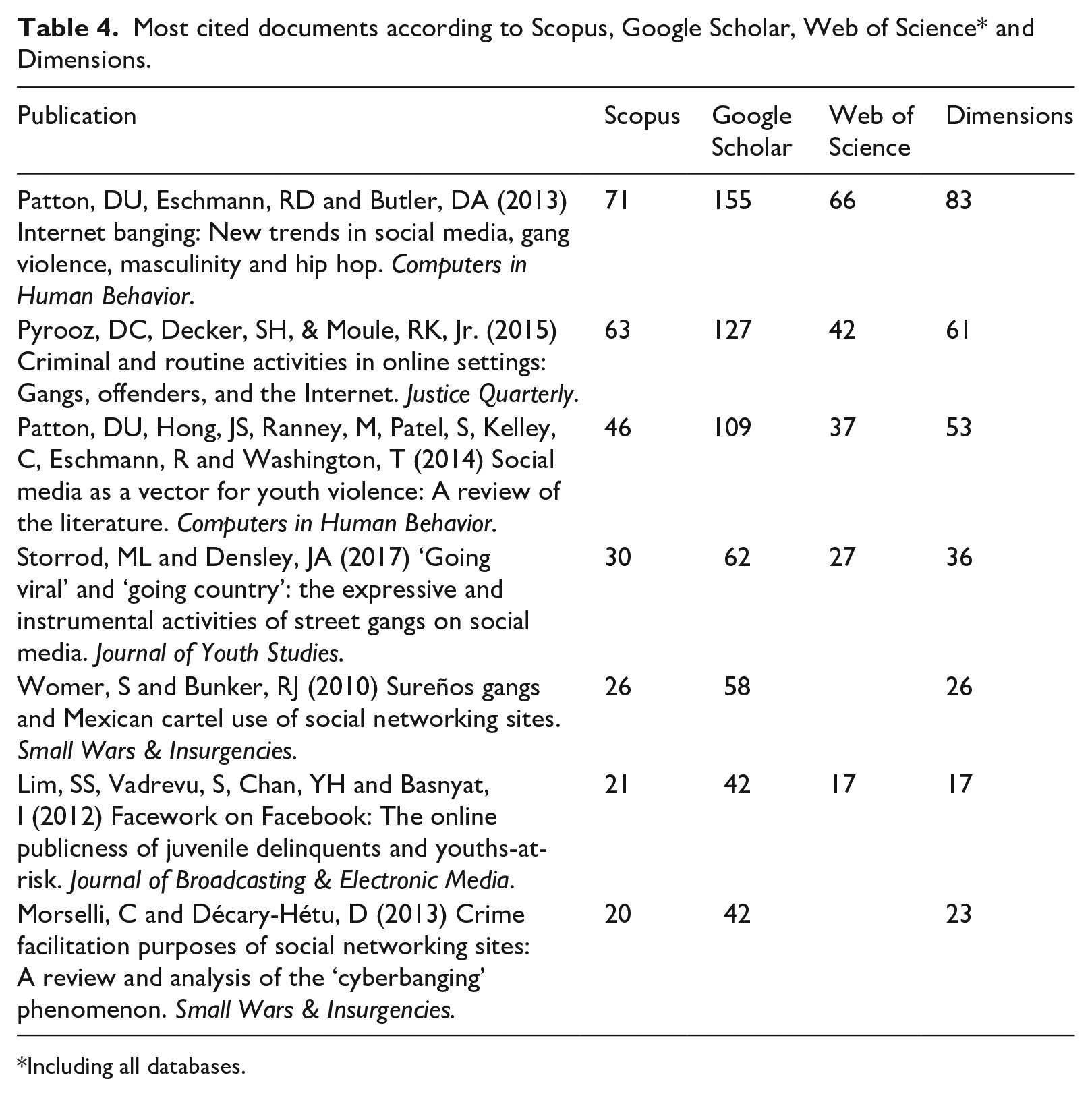
Including all databases.
According to Scopus, only seven publications receive at least 20 citations. The article titled ‘Internet banging: New trends in social media, gang violence, masculinity and hip hop’ by Patton et al. (2013) emerges as the most cited publication (71 citations). The co-citation map of documents (Figure 5) highlights the specific contribution of this article as the network’s central node (cited by 22 publications in the bibliographic corpus analysed here), followed by Patton et al. (2014) and Pyrooz et al. (2015).
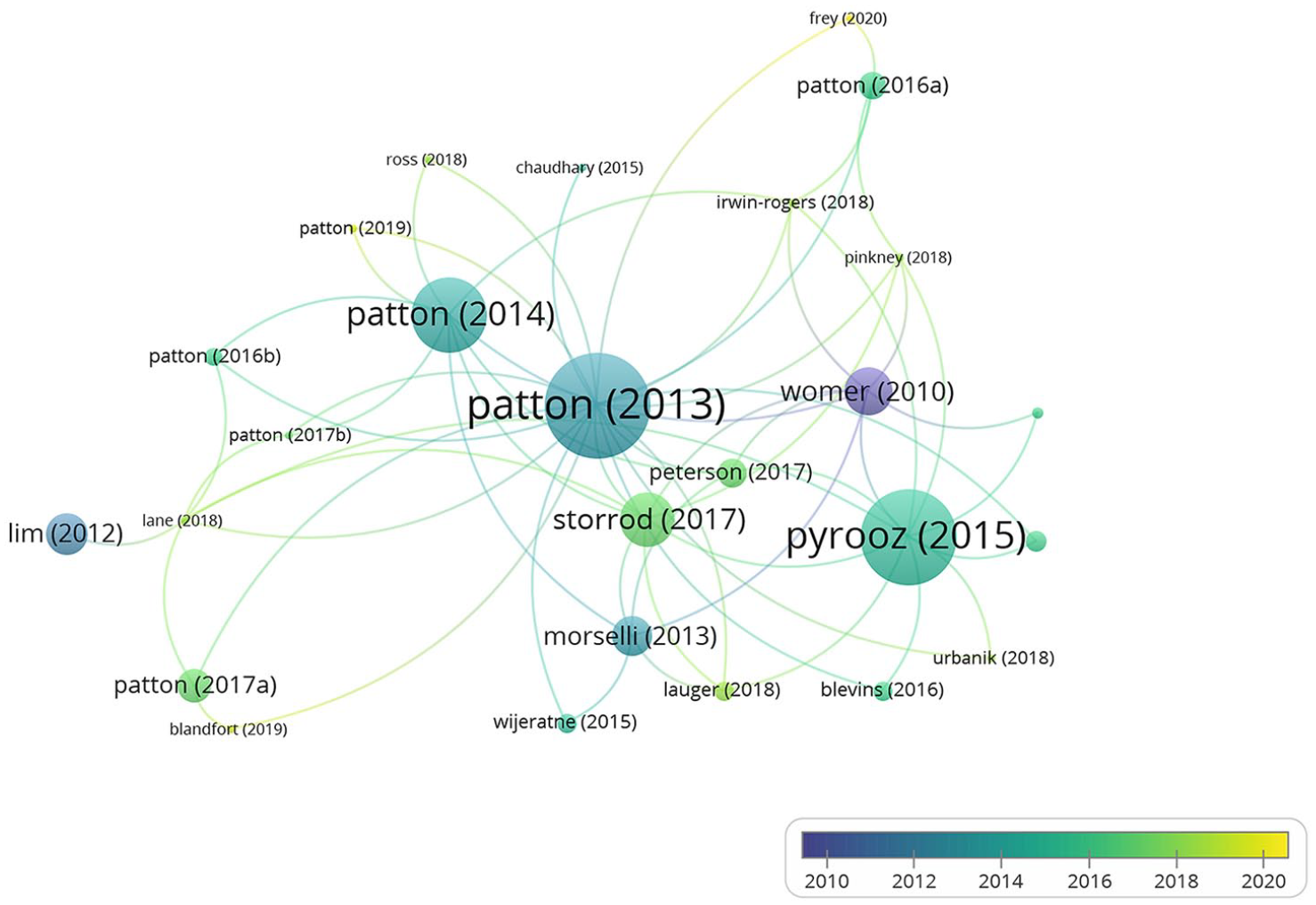
General co-citation network.
The United States is the clear leader in the field, accounting for 69% of publication output (29 publications have at least one author affiliated to a US institution), followed by the United Kingdom (4), Australia (3) and Canada (3). Likewise, this predominance of English-speaking countries accounts for gangs studied and their locations (predominantly the United States and, within that country, mainly Chicago). The US leadership is further substantiated by the leading institutions to which authors are affiliated. Thus, Columbia University (14 publications), University of Chicago (5) and University of Michigan (4) are the institutions with the highest numbers of publications.
The specific centres to which the authors are affiliated within their institutions (namely, Schools, Departments, Faculties, etc.) provide descriptive information as to the epistemological approach to the object of study. Here, we can identify three core elements:
Social Work. This stands out as being the disciplinary core of the research front as epitomized by the School of Social Work at Columbia University. In addition to this, other Schools of Social Work (e.g. University of Michigan, Wayne State University and University of Connecticut) have a presence, as does the School of Social Service Administration (University of Chicago).
Criminology. This discipline has a significant presence via a number of university centres working in this field, albeit in a highly dispersed fashion – that is, many institutions but producing few publications each. They include the School of Law Enforcement and Criminal Justice (Metropolitan State University), School of Criminology and Criminal Justice (Arizona State University), School of Criminal Justice (University of Baltimore), Institute of Criminology (The Hebrew University of Jerusalem), École de criminologie (Université de Montréal), Department of Criminology (University of Illinois), Department of Criminal Justice (Temple University), Centre for Applied Criminology (Birmingham City University), and College of Criminal Justice (Sam Houston State University).
Technology. Finally, Communication Studies, Computer Sciences and Information Sciences have contributed to the line of research. Contributions have been made by the Departments of Communication (Rutgers University and University of Melbourne), Department of Computer Science (Columbia University), Information Sciences Institute (University of Southern California), School of Information (University of Michigan), School of Information Technology and Systems Management (Salzburg University of Applied Sciences).
There is a surprising dearth of studies published by centres working in such areas as Communication, Anthropology and Sociology, fields that have traditionally been linked to the object of study.
Otherwise, the terms employed by authors in the titles and abstracts to their publications potentially reflect topics of interest, methods employed, information sources and context. Here, we have detected and extracted a total of 1196 terms. ‘Social medium’ (26), ‘gang’ (19) and ‘violence’ (13) are the most frequently used. In the case of specific social media platforms, ‘Twitter’ (10) and ‘Facebook’ (8) are the most frequently employed; however, a greater number of references appear in closely related terms – for example, Twitter indirectly appears in ‘tweet’ (8), ‘crime tweet’ (1), ‘Detroit gang members’ tweet’ (1), ‘fake tweet’ (1), ‘public tweet’ (1), ‘gang-affiliated user tweet’ (1), and ‘tweet classification task’ (1).
The network created using term co-occurrences (Figure 6) shows that Twitter and Facebook occupy different clusters. Thus, while Twitter seems to be closely related to research on such topics as violence, youth and crime, Facebook seems to be more closely related to research on topics of membership, groups and online identity.
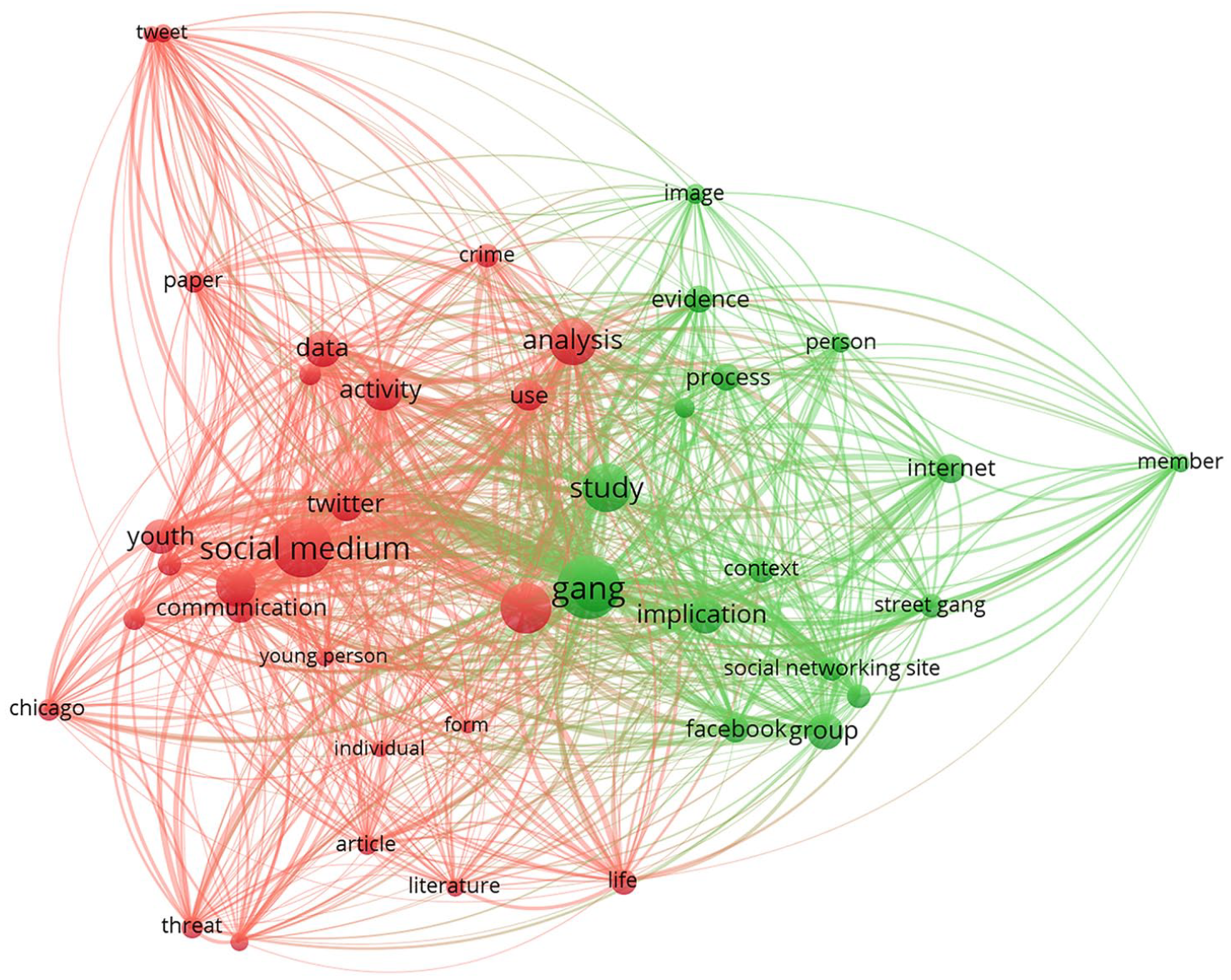
Title and abstract term co-occurrence network: cluster map co-occurrence threshold: 5 times.
Discussion and conclusions: challenges, risks and recommendations for future gang-related social media research
The study presented here provides for the first time a systematic overview of publications examining the nexus of gangs and social media. Its main contribution lies in the way it combines qualitative (content analysis) and quantitative (bibliometric analysis) approaches to characterize the extant literature in this field. The content analysis has allowed us to determine the populations studied, the specific topics addressed, the methodologies deployed, the gangs studied, the regions of study, the samples used, the media analysed, the degree of gang member participation and the ethical issues addressed in the research protocols of studies of gang use of the social media. We have also created an evaluation model comprising a set of variables and categories that, in turn, cover a comprehensive number of dimensions related to the research designs of the studies analysed. The findings obtained should be of interest to gang scholars and contribute to furthering knowledge in the research area by clearly identifying the current state of the art and the future challenges that researchers face.
At the same time, the bibliometric analysis has revealed the basic structural characteristics of the research community publishing on this topic, by detecting the most productive and cited authors, co-authorship patterns, highly cited documents, and the specific topics addressed. Our results indicate that the academic literature on Gangs and Social Media emerged strongly in the years after 2016 and that the corpus of documents is shaped by a small number of high-impact authors. This last fact may have introduced a bias as regards gangs studied (African American and Latino), location of the studies (United States), methods used (content analysis) and the social networking sites examined (Twitter), a set of characteristics that was also detected in the previous systematic review of the literature.
The Gangs and Social Media research community is small in terms of the number of scholars conducting research in this field worldwide, reflecting the high degree of specialization of the topic. The studies carried out are high in quality and published in prestigious journals. Typically, the research combines qualitative and quantitative methods, including field research, and addresses social issues of a sensitive nature. However, the relatively small worldwide production limits its citation-based impact. Our study shows that most of the work has been undertaken by authors affiliated to the departments of Social Work, Criminology and Technology in a small number of universities around the world. This fact is a strong determinant of the journals and the academic venues where these studies are generally disseminated. Establishing a specialized journal on the topic of gangs and social media would enhance the work of the academic community.
Having said that, we should acknowledge that our bibliometric analysis was restricted to publications indexed in Scopus, while our content analysis was restricted to publications in the English language. Hence, our study is inherently biased towards English publications.
Our analysis of existing publications has allowed us to identify several challenges that future studies of the use youth street groups make of social media will have to face.
Differentiating between personal and group behaviour in social media
Despite the fact that the data used by researchers are mainly extracted from personal social media profiles, gangs tend to be studied at the group level. This approach, nevertheless, is consistent with earlier definitions of gangs, from Thrasher’s ([1927] 2013: 57) definition to more recent definitions, such as that provided by Klein (1971) and that offered by the Eurogang Network (Esbensen and Maxson, 2012). As is evident, a gang is typically treated as an analytical frame for group status, where the focus is on collective behaviour and group engagement, and the personal experience tends to be forgotten. Yet, as this approach often results in the criminalization of the entire youth street group, future research could usefully integrate personal experience and individual behaviour and, in this way, seek to differentiate between the classic gangs engaged in criminal activities although not solely made up of young people – such as the maras in El Salvador; youth subcultures centred on leisure and economic activities – such as the vatos locos on the Mexican-US border; and a variety of hybrid groups that combine both strategies – such as the bandas latinas in Spain (Feixa et al., 2019).
Expanding coverage of topics and communities
The literature review shows that research to date in this field is primarily interested in how gangs use social media and what they actually do online, with a particular focus on the relationship between violence on- and offline. While the literature focuses on criminal organizations, less attention has been given to other kinds of gang sociability. As discussed, few studies (9) have addressed the challenges and opportunities of social media as agents for social intervention and mediation; however, these areas have been identified as important issues for future exploration. A more considered discussion is also needed of the potential of social media as a tool for mediation and positive social intervention, albeit that some of these publications do begin to explore some of these questions (Blandfort et al., 2019; Frey, 2018; Lane et al., 2018; Stuart, 2019; Stuart et al., 2020). Similarly, the potential of social media as a tool for the construction of gang identity, specifically to counter the portrayals of gangs offered by the traditional media (in TV series, on the news, etc.), has yet to attract much research interest. It is here that researchers might usefully seek to both integrate and emphasize the role of social media for empowering the creative and agency capacities of members of youth street groups. Future research should also seek to explore those questions that are currently emerging from gang and youth studies, including gender and lesbian, gay, bisexual, transgender and queer or questioning (LGBTQ+) issues, but which have yet to receive much attention in the literature dedicated specifically to gangs and their use of social media. Finally, as recent studies have highlighted (Urbanik and Roks, 2020; Urbanik et al., 2020), future research needs to instigate a comparative approach, not only of territories but also of age and gender groups, which would, in turn, allow scholars to study how problematic youth is being affected by the digital divide (Whittaker et al., 2020).
Selecting, reclassifying and interpreting data
Our review shows that some studies are interested in developing tools and protocols that can facilitate the identification and prosecution of gang members. Indeed, social media is seen by some as a venue for the early detection of gang members in collaboration with police departments, law enforcement authorities and social workers (Balasuriya, 2016a; Wijeratne et al., 2015). Yet, is it possible to detect gang members solely by recourse to their social media information? According to Balasuriya (2016a: iv), gang member social media profiles can be identified automatically, thanks to ‘differences in the language, profile and cover images, YouTube links, and emoji shared on Twitter by gang members compared to the rest of the Twitter population’. However, such a claim is called into question by some members of the academic community and, indeed, some scholars warn against automatic targeting based on social media content. Social media data have not been generated for the purposes of urban research (Martí et al., 2019); therefore, as Martí et al. (2019) point out, their retrieval, validation, selection, filtering and interpretation can be challenging, especially as researchers have to work with huge amounts of data which necessitates the use of certain automatization processes. As Frey (2018) points out, the emergence of machine learning studies and the automatic processing of social media information have given rise to a new problem when working with sensitive cases such as youth citizens living in neighbourhoods affected by crime, violence and income inequality: namely, the challenge to overcome the typically racialized bias of automatic interpretations of data obtained from social media that can lead to the criminalization and labelling of vulnerable youth.
Accessing online social media data
Most of the publications reviewed here limit their study of social media to Twitter. However, we need to consider whether Twitter is the most frequently used platform by gangs or whether it is simply the most data accessible networking service. The risk is that studies might be focusing too much attention on these more accessible networks, whereas gang online activity may be more concentrated elsewhere. For example, studies such as those undertaken by Sela-Shayovitz (2012) and Moule et al. (2014) based on surveys, focus groups and interviews need to be updated to determine the online behaviour of the new generation of gangs. The use of social media needs to be investigated not only through big data and virtual ethnography but also through face-to-face interviews and participant observation, an approach being adopted by a number of researchers in their current work. Indeed, if current trends among youth in general are anything to go on, potential youth gang members are more likely to be using Instagram and Tik Tok than Twitter. Data access is one of the greatest challenges researchers have to face when studying gangs on social media, even more so given the recent emergence of computer and machine learning techniques in contrast to the use of more qualitative approaches. Moreover, social media allows public and private posts which, in turn, adds new variables to take into consideration when studying social media. On the one hand, behaviour can be modified according to the audience, some posts can be shown when information is public, and others can be kept private for a restricted audience only. On the other hand, ethical issues arise when private data are accessed. As McKenna et al. (2017: 91) highlight, the distinction between the public and the private sphere can become blurred in online environments. This makes data access an issue that all social media studies will have to tackle in the future.
In parallel with the debate concerning access to private and public data and data interpretation, concerns about the ethics of social media studies and the privacy of participants from vulnerable groups emerge in relation to the analysis of these data. Few studies to date have concerned themselves with the ethical issues that arise when publishing their data and, consequently, the anonymity of those investigated is often not preserved. Recently, scholars have taken great strides in this respect (Frey et al., 2018; Urbanik et al., 2020; Urbanik and Roks, 2020); however, the academic community, institutions and gang members need to agree on a more consensual social media research protocol for working with vulnerable youth in order to address concerns about privacy, anonymity and data surveillance in the research process, from the initial design to data dissemination. Here, as Urbanik et al. (2020) point out, university ethics committees and Institutional Review Boards that govern social media research need to be better equipped in order to give ethical advice to scholars. We suggest that a useful strategy for gang scholars could involve their engaging in active dialogue with other disciplines facing similar challenges in their use of social media, such as media studies, social movement studies and data science studies.
Obtaining research consent and involving gang members in the social media research process
As detected, few studies focusing on social media and gangs actually involve the population under study as part of their research team. However, wherever possible, research should seek to harness gang member involvement, given that, on the one hand, it would enhance qualitative interpretations of social media artefacts (videos, text posts, emoji, and so on) and, on the other hand, gang members might usefully benefit from their participation in the research. Active involvement in the research process could also help participants acquire a better understanding of what social media research consent might imply. Special attention should be paid to ‘online disinhibition’ as participants may well forget that a research consent form has been authorized and that all their online performance is being monitored and analysed (McCuddy and Esbensen, 2020; Urbanik et al., 2020). Finally, including social workers and institutions, and not only problematic youth, could also benefit the whole research process.
Identifying theoretical and practical implications
The introduction of analyses of the use of social media in gang studies seems likely to have an impact on gang definitions and the work of urban ethnographers. This is already evident in recent efforts to update the classic definition of gangs (see Melde and Weerman, 2020) and in the studies of gang research communities (such as the last Eurogang meetings). The study of the relationship between gangs and social media could have major theoretical implications because it could make visible the transformation of the nature and organization of gangs as social networks in the digital age, with a presence in a variety of geographical and cultural environments. This, in turn, could change the ways all actors in the field – including, the police, social workers, criminal justice forces, the mass media and even researchers – approach, combat, suppress and redirect gang activities. Each of these agents currently employs social media in order to be in contact with gang members and, as such, they all are part of the ‘network corner society’ (the modern version of the classical ‘street corner society’). What we are interested in discovering is not only how the behaviour of gang members changes with the use of social media, but how this modifies their interactions with the whole of society.
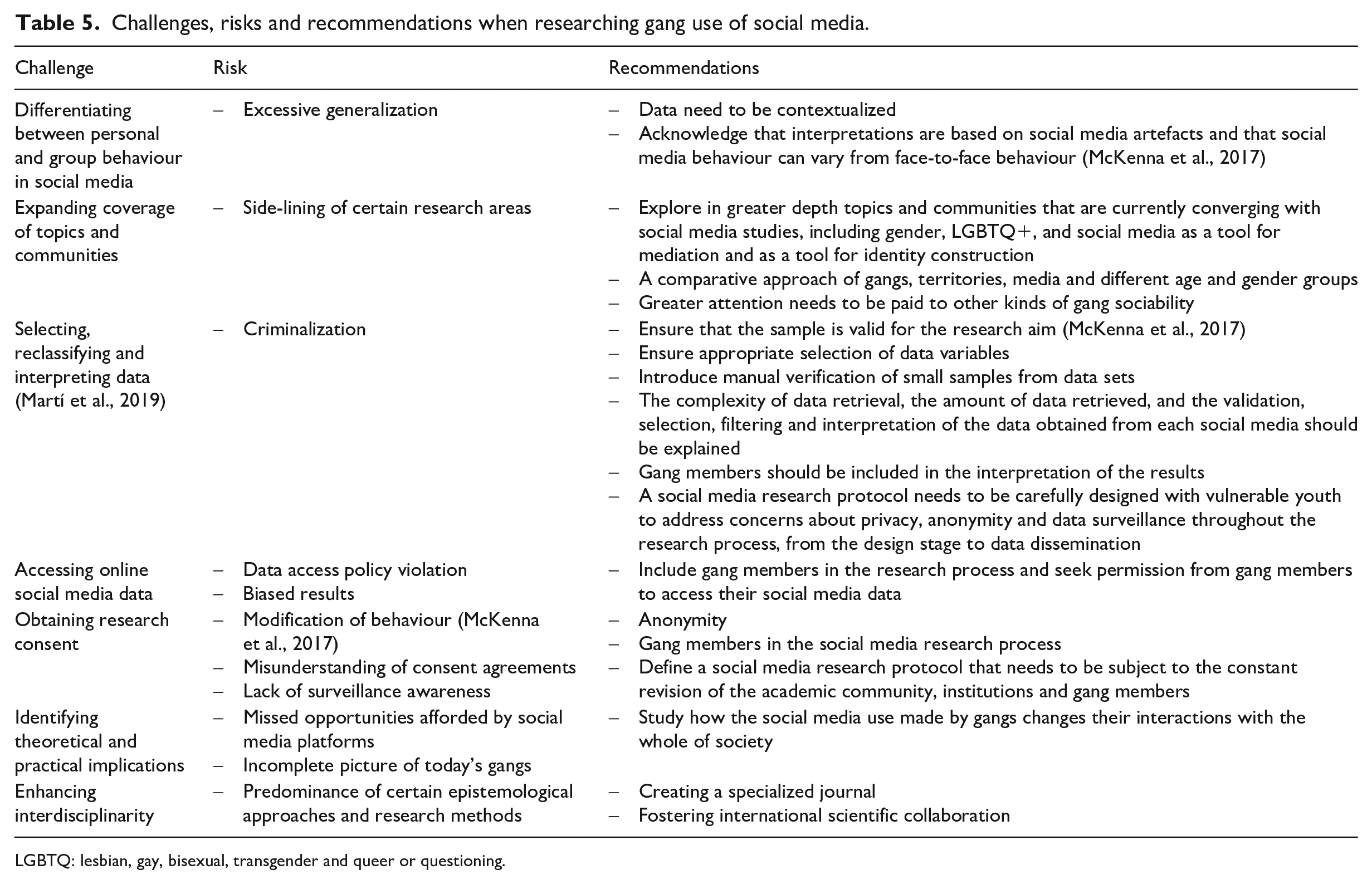
Table 5 summarizes the above challenges, highlighting the risks they entail and making recommendations to address them.
Challenges, risks and recommendations when researching gang use of social media.
LGBTQ: lesbian, gay, bisexual, transgender and queer or questioning.
Social media allow gang members to communicate publicly and privately, to perform online as a group or as an individual, to link the physical and the virtual realms and to create transnational connections and identities (Feixa et al., 2019; Fernández-Planells et al., 2020) that shape both time and space. Future research that can encompass these transnational, intergenerational, intergeneric and transmedia approaches is the challenge that awaits scholars interested in social media practices of 21st-century gangs.
Supplemental Material
sj-pdf-1-nms-10.1177_1461444821994490 – Supplemental material for Gangs and social media: A systematic literature review and an identification of future challenges, risks and recommendations
Supplemental material, sj-pdf-1-nms-10.1177_1461444821994490 for Gangs and social media: A systematic literature review and an identification of future challenges, risks and recommendations by Ariadna Fernández-Planells, Enrique Orduña-Malea and Carles Feixa Pàmpols in New Media & Society
Supplemental Material
sj-xlsx-2-nms-10.1177_1461444821994490 – Supplemental material for Gangs and social media: A systematic literature review and an identification of future challenges, risks and recommendations
Supplemental material, sj-xlsx-2-nms-10.1177_1461444821994490 for Gangs and social media: A systematic literature review and an identification of future challenges, risks and recommendations by Ariadna Fernández-Planells, Enrique Orduña-Malea and Carles Feixa Pàmpols in New Media & Society
Footnotes
Authors’ Note
I confirm that this work is original and has not been published elsewhere nor is it currently under consideration for publication elsewhere. I also confirm that all the authors have agreed to the submission.
Funding
The author(s) disclosed receipt of the following financial support for the research, authorship, and/or publication of this article: This work was supported by the European Research Council (ERC) under the European Union’s HORIZON 2020 research and innovation programme under Grant Agreement No. 742705.

Supplemental material
Supplemental material for this article is available online.
Notes
Author biographies
References
Supplementary Material
Please find the following supplemental material available below.
For Open Access articles published under a Creative Commons License, all supplemental material carries the same license as the article it is associated with.
For non-Open Access articles published, all supplemental material carries a non-exclusive license, and permission requests for re-use of supplemental material or any part of supplemental material shall be sent directly to the copyright owner as specified in the copyright notice associated with the article.
