




Abstract
This study promotes the news repertoire framework as an analytical approach best suited for studying news engagement on social media (SM), considering its multifaceted nature. To demonstrate the theoretical benefits of this proposal, the study seeks to (1) identify user profiles based on SM news viewing and sharing, and news consumption on other platforms; (2) determine profile predictors; and (3) evaluate their possible outcomes. A panel study (N = 1786) demonstrated the emergence of identifiable profiles, attributed to differences in SM use and political interest. In addition, profiles embodied different effects on political participation over time. A second study (N = 86) was conducted thereafter, in which users’ Facebook news feed use was analyzed to determine differences in news supply according to profiles. Findings that could not have been achieved using the more common unidimensional news consumption methods are discussed in light of new theoretical gains provided by the repertoire approach.
The past decade was characterized by the rise of social media (SM) as a major source of news (Mitchell et al., 2018). As the phenomenon took hold, it attracted lively scholarly interest, yielding a growing corpus of academic literature. Research primarily sought to characterize users who consume news on SM, addressing their motivations and exploring the effects of such behavior (Choi, 2016a; Kalogeropoulos et al., 2017; Kumpel et al., 2015).
There is a lack of attention within contemporary research on news consumption of this type as part of a broader news repertoire (Edgerly, 2015; Ksiazek et al., 2010; Yuan, 2011). Supporters of the news repertoire framework contend that news consumption should not be understood as unidimensional behavior, but rather as patterns of behaviors—a mosaic created as consumers mix platforms and content. This approach is particularly beneficial in addressing networked surroundings, especially SM platforms. SM users do not simply consume news: they engage with it. As news consumption on SM is a multidimensional behavior that can take many forms (Choi, 2016b), the current study investigates the interactions among news behaviors on SM alongside the consumption of news on other platforms, with the following threefold purpose: first, to identify and validate different news engagement profiles, then to characterize profiles and examine the factors that predict each, and finally to investigate whether users ascribed to different profiles differ in their levels of political knowledge and participation over time (Edgerly, 2015).
The investigation was based on two complementary studies: 1 (1) An online four-wave panel study, conducted during the April 2019 Israeli elections (N = 1786) to identify news engagement profiles and their long-term effects; (2) Theoretical validation was accomplished by conducting a laboratory-based study documenting Facebook browsing among a student sample (N = 86) to determine whether users ascribed to different profiles receive different news content to their feed and engage with it differently.
Together, the two studies provide a highly comprehensive analysis of news repertoires, which benefits from the unique advantages of the different methodical tools employed.
News engagement on social media
News engagement on SM differs dramatically from other types of news consumption, partly because it can take many forms, some more active than others (Choi, 2016a; Ha et al., 2018). This realization has challenged scholars to reflect on the connections among these forms of behaviors. In this context, two principal approaches are available in current literature.
The first approach conceptualizes these behaviors as facets of a single construct—news use on SM (e.g. Lu et al., 2016). However, this approach does not align with a major distinction stipulated in the literature, differentiating between news viewing and news sharing (Choi, 2016b). News viewing takes place when a user reads a news story in his or her feed originating with other network members (users, publishers, etc.), whereas news sharing constitutes a user’s distribution of news stories to others. Indeed, findings suggest that sharing news and reading news have different roots and outcomes (Beam et al., 2016). For example, Choi (2016c) found gender differences only in the case of news viewing. By contrast, only news sharing was associated with political participation (Choi, 2016a). These findings undermine the notion that news use is a single type of behavior.
The second approach acknowledges that viewing and sharing differ, suggesting that viewing news is a precursor to sharing news (Choi, 2016b; Weeks and Holbert, 2013). Indeed, Weeks and Holbert (2013) demonstrate that although distinct, the two behaviors are strongly related. Such an approach might imply that those who receive are most likely to share. This conceptualization, however, might also be challenged in two related respects: first, as in the case of many other network-related phenomena, a power law distribution applies, wherein the number of people who read news is far greater than the number of those who share it (Ha et al., 2018; Oeldorf-Hirsch, 2018). In the United States, for example, 54% of SM subscribers reported receiving news but only 25–30% said they shared it (Kalogeropoulos et al., 2017; Mitchell et al., 2018; Weeks and Holbert, 2013). Second, scholars are conflicted to a certain degree regarding the level of news engagement among users. On one hand, research describes active, engaged users with a keen interest in politics and current events, who exhibit high news consumption (e.g. Gil de Zúñiga et al., 2017a), and are likely to receive and share news. On the other hand, there is also a passive type of exposure, wherein users rely on others to cater to their news needs (Gil de Zúñiga et al., 2017a), but are unlikely to engage in news distribution. This distinction between passive and active use conforms with dominant perspectives of news viewing as a type of “information acquisition, or collection, [that] is more passive and requires a lower commitment, while sharing information, or donating, requires active and more motivated participation” (Beam et al., 2016: 216). The findings thus show that a clearer distinction is required to differentiate between those who receive news only and those who share it as well.
To accommodate contemporary findings, the current study offers a more nuanced approach that takes the two behaviors into account, alongside other types of news use, to create user profiles. Thus, the theoretical approach suggested relies on the concept of news repertoires (Ksiazek et al., 2010; Yuan, 2011).
News repertoires
News repertoires derive from the more general theoretical framework of media repertoires (Hasebrink and Popp, 2006; Webster and Ksiazek, 2012), according to which scholars should study “how media users combine different media contacts into a comprehensive pattern of exposure” (Hasebrink and Popp, 2006: 369), rather than focusing on an individual platform or pitting platforms against one another (Molyneux, 2019).
Past research on media repertoires focused on selection of platforms, types of content, and consumer motivation, mostly characterizing different patterns of media use in an exploratory, bottom-up fashion (Molyneux, 2019). Various types of exploratory clustering methods were employed, yielding a considerable range of profiles across studies (Kim, 2016). Fewer studies have tried to identify the characteristics of each media repertoire user (Edgerly, 2015; Ksiazek et al., 2010; Taneja et al., 2012) or the results of such characterization (Edgerly et al., 2018; Lee and Yang, 2014). The current study seeks to build on existing research and implement its logic in the realm of SM news engagement. It does not follow the pattern of previous news repertoire studies by concentrating on genres or platforms, but rather centers on SM news engagement, acknowledging that such behavior should be reconstructed against the background of other news consumption behaviors. Accordingly, the study favors a clustering approach that will allow for the emergence of interactions among SM news sharing, SM news viewing, and news consumption on other platforms. The selection of these aspects as dimensions for news repertoires was prompted by two research corpuses: the prevailing conceptualization of SM news engagement reviewed above (e.g. Choi, 2016b) and news repertoire studies examining news consumption on websites, TV, radio, and print media (e.g. Hasebrink and Popp, 2006). 2
Identification of profiles is not enough, however. For an authentic evaluation of the theoretical and empirical gains of the suggested framework, it should be clarified that profiles are linked differentially to predictive factors and results according to the various possible outcomes. Accordingly, determination of profile predictors and evaluation of outcomes will constitute the study’s second and third objectives.
Rethinking SM news engagement using the news repertoire framework
As noted above, media repertoire studies do not offer firm hypotheses about profile types, instead opting for an exploratory approach, justified by the extensive changes in media environment, wherein use patterns are reshaped within only a few short years. Nevertheless, the accumulated literature on the behaviors considered here (SM news sharing, SM news viewing, and news consumption on other platforms) can be used to pinpoint more specific research questions.
Sorting possible profiles
The general research question advanced here is as follows:
RQ1. What types of news engagement repertoires are identifiable?
This question can be broken down farther. First and foremost, past empirical studies already hint at one distinction: some people do not engage with news on SM at all (Mitchell et al., 2018). There is also a positive correlation between news consumption on other platforms and news use on SM (Choi, 2016c; Kalogeropoulos et al., 2017), suggesting that people who do not engage with news on SM simply do not consume news at all (Ksiazek et al., 2010). Nevertheless, surveys also point to age differences in use of SM for news (Edgerly et al., 2018), suggesting that older consumers may still prefer more traditional news sources. The advantage of the media repertoire approach is its granular analysis, which goes beyond simple correlations and allows for greater differentiation, leading to the following research question:
RQ1a. What type of profile characterizes people who do not engage with news on SM?
Second, as indicated earlier, findings concerning viewing that emerged from the literature distinguish between news viewers who share news and those who do not. This distinction may help reconcile different theoretical outlooks with regard to SM news viewing. While those who share (and receive) are described in the literature as avid, politically involved news consumers (Choi, 2016c; Kalogeropoulos et al., 2017), viewing news on SM also has a more passive side (Hyun and Kim, 2015). Viewing empowers other members of the network to act as gatekeepers or curators in place of news professionals (Thorson and Wells, 2015). Indeed, the passive news-finds-me approach, in which people “don’t need to actively seek news because they will be exposed to news and remain well-informed through their peers and social networks,” was negatively linked to traditional news consumption, but positively linked to news consumption on SM (Gil de Zúñiga et al., 2017b). Hence, I ask:
RQ1b. What type of profile characterizes people who view news on SM?
Factors related to news engagement profiles
Some media repertoire studies went beyond identifying profiles, linking them with other user characteristics (Edgerly, 2015; Hasebrink and Popp, 2006; Taneja et al., 2012). Based on their findings and those of other studies concerning news consumption, it is safe to assume that different profiles will have different demographics. Another important indicator related to media repertoires and to news consumption on SM and other platforms is political interest, which increases consumption and—to a certain degree—sharing as well (Kim, 2016). Finally, the news-finds-me approach could also be of relevance here (Gil de Zúñiga et al., 2017b). As indicated, his attitude contributed differentially to news exposure offline and on SM, possibly dictating different preferences across platforms and yielding different profiles accordingly.
RQ2. What are the characteristics associated with each type of news engagement repertoire in terms of demographics, political interest, and the news-finds-me approach?
The study’s third aim is to determine whether different profiles also exert different effects on political behavior. To examine this issue, I focus on two known products of news consumption that were studied thoroughly with regard to both traditional media and SM: political participation and political knowledge. Both participation and knowledge are considered “at least to a certain extent . . . essential for the proper functioning of a democracy” (Leonhard et al., 2020). As for participation, representative democracy is founded on the idea that citizens will express their preferences actively. One preliminary step for participation is accrual of information that often originates in the media. Broadly speaking, news consumption and news sharing were associated with higher levels of political participation (Choi, 2016a; Ksiazek et al., 2010; Molyneux, 2019), although questions were raised inquiring whether the different platforms and different genres contribute equally to participation (for review, see Molyneux, 2019). Considering these differences, some scholars have called for a more nuanced approach that differentiates between news consumption behaviors (Choi, 2016a; Edgerly et al., 2018). For example, Edgerly (2015) demonstrated that different news repertoires contribute differently to political participation. News Omnivores with high news consumption participated the most, whereas news Avoiders participated the least. Her most interesting finding demonstrates that there is hardly any difference in participation between youth consuming traditional news and those preferring the curated kind (via SM and aggregators). The current study follows Edgerly (2015), as well as others, questioning participation differentials as a continuation of the theoretical outlook review above with regard to level of SM news users’ political involvement (Choi, 2016c; Hyun and Kim, 2015; Kalogeropoulos et al., 2017) and may further support distinction among profiles.
Insofar as political knowledge is concerned, one basic tenet of democracy declares that the public must be informed about public affairs so that it may fulfill its role in collective decision making (Leonhard et al., 2020). While news media were considered the principal channel through which citizens may acquire political information, the complex media environment that has developed over the past few decades produced a puzzling picture (Leonhard et al., 2020). In the context of political knowledge as well, it was found that different types of news use do not exert an equal effect on levels of knowledge (Beam et al., 2016; Lee and Yang, 2014). Of particular interest in this context are findings regarding inconsistency in the documented effects of learning from SM, in which both positive and negative effects were stipulated (Cacciatore et al., 2018; Leonhard et al., 2020). Given the current state of research, applying a news repertoire approach may prove beneficial, as different engagement profiles may also impact differentially with extent of political knowledge.
RQ3a. Do people with low news consumption profiles participate less and demonstrate lower levels of political knowledge than those with higher profiles of this type (if any)?
RQ3b. Is there a difference in participation level and political knowledge between people with profiles characterized by preference for news consumption via social media and those with profiles oriented toward more traditional news sources (if any)?
Study 1: News engagement profiles based on an online panel study
Data from a four-wave panel survey conducted during the April 2019 Israel national elections were collected among a sample of Israeli Jewish voters over a period of 2.5 months, with approximately 3 weeks between waves. 3
Sample
Data were gathered by iPanel, a survey company specializing in Internet-based research. iPanel recruits its large panel of participants via the Internet through sponsored links on Google, Facebook, and other popular sites. Participants are asked to take part in periodic surveys in exchange for incentives (gift certificates). The panel reserve comprises more than 40,000 participants, with the average panelist responding to 1.2 surveys per month (no minimum is required).
For the present study, a sample of 1786 panelists was assembled that was representative of the overall Israeli population with regard to age, gender, and geographic stratification. 4 The first wave of data collection took place between January 28 and February 8, 2019.
Participants’ demographics roughly matched census figures for age (five age groups: 23% between 18 and 29, 25% between 30 and 39, 26% between 40 and 49, 17% between 50 and 59, and 9% over 60), income (on a 5-point scale: 33% below average, 33% average income, 34% above average), education (on a 6-point scale from 1 [elementary school only] to 6 [MA or PhD]; 43% held academic degrees—the same rate found in OECD data reports regarding Israel), and gender (51% women); ultra-Orthodox Jews were underrepresented (4%, 5 compared with 8.2% in the general population and 7% in random-digitally dialed [RDD] samples). The last wave began 1 day after the election, extending from April 11 to April 16. I recorded a 38.5% attrition rate (N = 1100) associated with age, t(1784) = 1.9, p = .053, and education, t(1784) = 3.4, p < .001; participants who completed all waves were older and more educated. No differences were detected between resampled and non-resampled participants regarding all other variables. As the current analysis relies on SM behavior, participants with no SM account (42) were not subjected to further analysis.
Measures
News consumption, political interest, news-finds-me, and perceived importance of news sources were introduced once in the first wave of data collection (W1). Political participation was measured in the first (W1) and the last (W4) waves. SM news consumption and knowledge of political current events were measured in all waves.
News consumption online and offline
Participants were asked to indicate the extent to which they were exposed to a list of 12 news outlets, including radio stations, newspapers, news sites and television news shows. Response categories varied between 1 (not exposed at all) and 5 (exposed regularly).
News on SM
News on SM was based on items taken from the work of Choi (2016b). Participants were asked how many times over the past week they had participated in activities relating to news on SM, with response categories varying between 1 (never) and 5 (several times a day). Scales included four items on news viewing (Cronbach’s α = .733; W1: M = 3.1, SD = 1.1; W2: M = 3.0, SD = 1.1; W3: M = 2.7, SD = 1.1; W4: M = 2.9, SD = 1.1) and four on news sharing (Cronbach’s α = .76, W1: M = 1.7, SD = 0.85; W2: M = 1.6, SD = 0.87; W3: M = 1.5, SD = 0.79; W4: M = 1.6, SD = 0.87).
Political interest
Political interest was measured using five items (Cronbach’s α = .81): “Political issues are personally important to me”; “I’m confident about my political opinions”; “I have a lot of knowledge when it comes to politics”; “I usually do not change my opinions when it comes to politics”; and “I have a great interest in politics,” with responses ranging from 1 (not at all) to 5 (very much; M = 3.5, SD = 0.72).
News-finds-me
News-finds-me (taken from the work of Gil de Zúñiga et al., 2017b) consists of four statements (e.g. “I rely on my friends to tell me what’s important when news happens,” “I can be well informed even when I don’t actively follow the news,”), with responses ranging from 1 (strongly disagree) to 5 (strongly agree; M = 2.6, SD = 0.76, Cronbach’s α = .61).
Importance of news sources
Importance of news sources was ranked by participants—as a validation measure for possible profiles—by responding to the following statement:
People obtain news information from all kinds of sources. Please rank the following source list in order of importance to you: Face to face conversations, friends on social media, news links on social media, news websites, TV, radio and print media.
Political participation
Political participation was measured according to responses to seven questions, in which participants were asked to report whether or not they had accomplished any of the following in the previous 3 months: volunteering for a political campaign, trying to persuade people to vote for their party, signing a political petition, taking part in political demonstrations, emailing a politician, joining political Facebook or WhatsApp groups, or attending a political party home circle meeting. These items were averaged on a scale ranging from 0 to 1 (M = 0.21, SD = 0.21, Cronbach’s α = .62).
Political knowledge
Two types were measured, each according to a brief, three-item quiz. (1) General political knowledge (introduced in the first wave only): participants were asked about their familiarity with political facts, such as the name of the Speaker of the Knesset (Parliament), receiving 1 point for each correct answer. These questions were then averaged on a scale ranging from 0 (no correct answers) to 3 (all answers correct; M = 2.0, SD = 0.89). (2) Current events: using the same scale, participants were asked three questions about political events that happened during the previous week (M = 1.9, SD = 1.1). This scale was introduced in all waves, each time with regard to the previous week’s events (Loevinger’s H = .53).
Covariates
All covariates were introduced once in the first wave of data collection.
Number of SM accounts
Participants were asked to report whether they have accounts on the following platforms: Instagram (51%), Telegram or Twitter (30%), Facebook (86%), and WhatsApp (92%; total: M = 2.6, SD = 1.1).
SM use
I asked participants to report the number of hours a day they spend on SM platforms (M = 2.1, SD = 0.61) and the number of ties they maintained (M = 681, SD = 909).
Statistical analysis
Analysis was conducted in several stages. Clustering models were employed to address RQ1. First, as in other media repertoire studies (Kim, 2016), factor analysis was carried out using 12 news consumption items. It revealed a two-factor solution: online (Cronbach’s α = .63, M = 2.8, SD = 0.86) and offline news consumption (Cronbach’s α = .72, M = 3.0, SD = 0.94). Following Ksiazek et al. (2010), latent class analysis (LCA) was then carried out to identify profiles that share similar media repertoires (using Latent Gold, Vermunt and Magidson, 2005), with reference to a model based on online and offline news consumption, as well as SM news viewing and sharing. This method was chosen because it offers goodness-of-fit statistics that assess the preferred number of clusters (Bayesian information criterion [BIC] and L2). Next, a multinomial regression suiting a nominal dependent variable with more than two categories was applied to predict profile (RQ2). Finally, a linear regression model was used to determine whether clusters predict differences in level of political knowledge and political participation (RQ3). For authentic assessment of the repertoire approach’s benefits, the results obtained using this type of analysis should be compared with those derived according to the alternative approach—relying on news consumption indicators. Accordingly, a second set of regressions was calculated, using the original news engagement variables. To the best of my knowledge, this comparison, which may yield a significant analytical contribution by applying more rigorous criteria to repertoire framework testing, has not been attempted previously.
Results
Clustering
Classifying people according to distinct media engagement profiles first requires confirmation that such behavior is stable over time. Therefore, correlations of SM news viewing and sharing news across waves were assessed. Pearson’s R correlations were high, ranging between .54 and .73 for sharing and .54 and .75 for viewing (refer full table in Supplemental Appendix 1).
Using LCA, participants were classified according to their reported behavior regarding four indicators: online and offline news consumption, and SM news sharing and viewing. Models with two through six clusters were estimated. To select the preferred model, I looked for smaller BIC fit statistics and a decline in the likelihood ratio chi-square statistic L2 relative to the one-cluster model (Magidson and Vermunt, 2004). These criteria indicated that a four-profile solution was preferable (see Table 1), delineating the following profiles: (1) Avoiders, with relatively low overall news consumption; (2) Omnivores, who acquire news on SM and from online and offline outlets; (3) SM News Consumers, who get most of their news from SM, with little exposure to other outlets; and (4) Sharers, who consume and share news (see Table 2 and Supplemental Appendices for post hoc profile comparisons).
LCA fit statistics for media repertoire profiles.
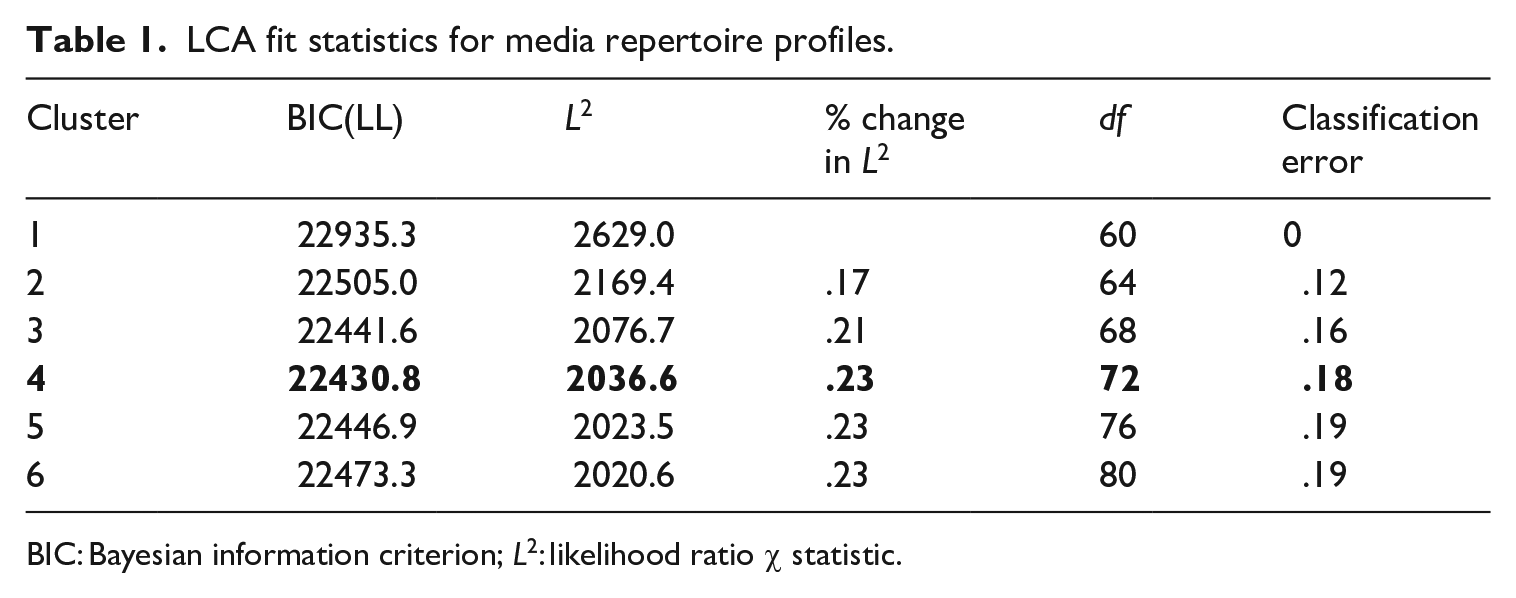
BIC: Bayesian information criterion; L2: likelihood ratio χ statistic.
Means of news use variables, by cluster.
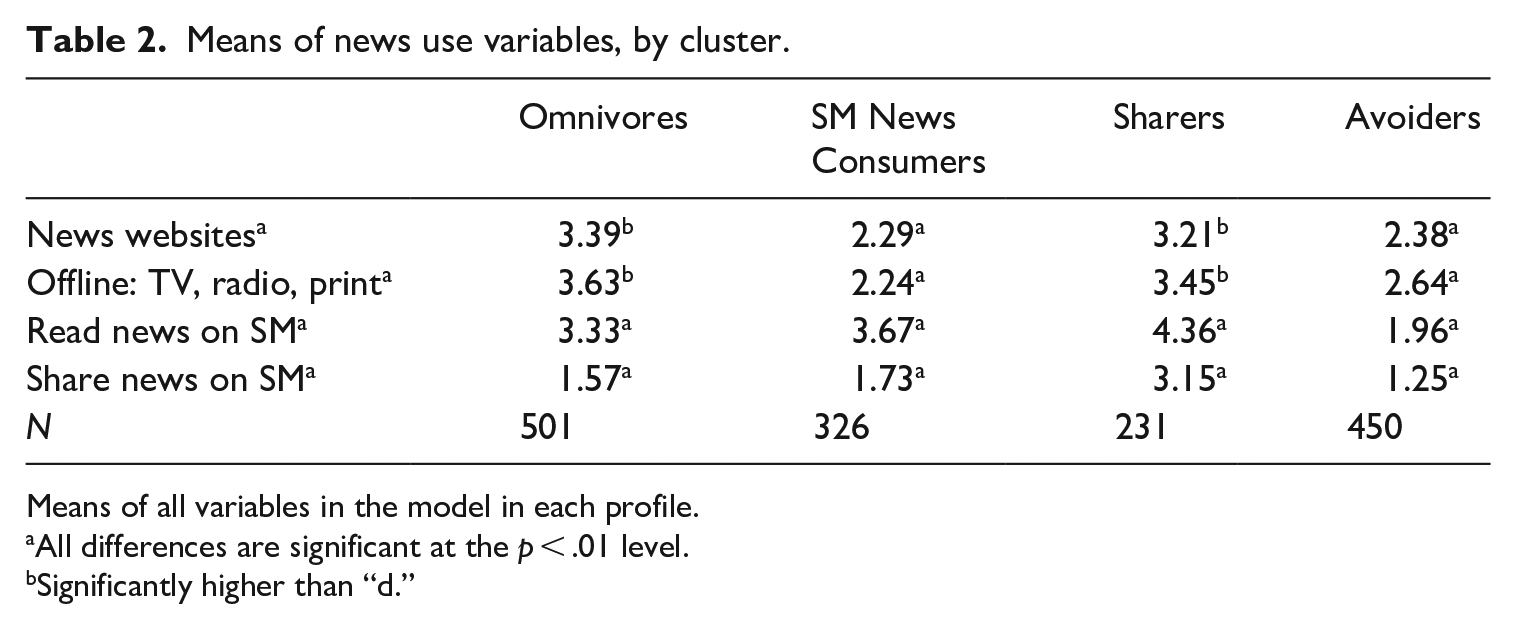
Means of all variables in the model in each profile.
All differences are significant at the p < .01 level.
Significantly higher than “d.”
To validate the clusters, the attributed importance of different news sources was compared across profiles. As shown in Figure 1, SM News Consumers valued links, face-to-face and SM communication, assigning less importance to legacy media sources; Avoiders have opposite preferences, according high importance to TV and radio; Sharers rely on SM and to a certain degree also on TV and websites; while Omnivores who consume news across platforms, value news from all legacy media (all differences are significant with p < .01, apart from the difference in the ranking of news websites [p = .096] and print media [p = .095]—see complete analysis of variance [ANOVA] table in Supplemental Appendix 1). Thus, findings pertaining to RQ1a suggest that people who do not consume news on SM generally consume very little news altogether, 6 while with respect to RQ1b, the results suggest a clear distinction between people who view and share news on SM and those who consume news exclusively through SM.
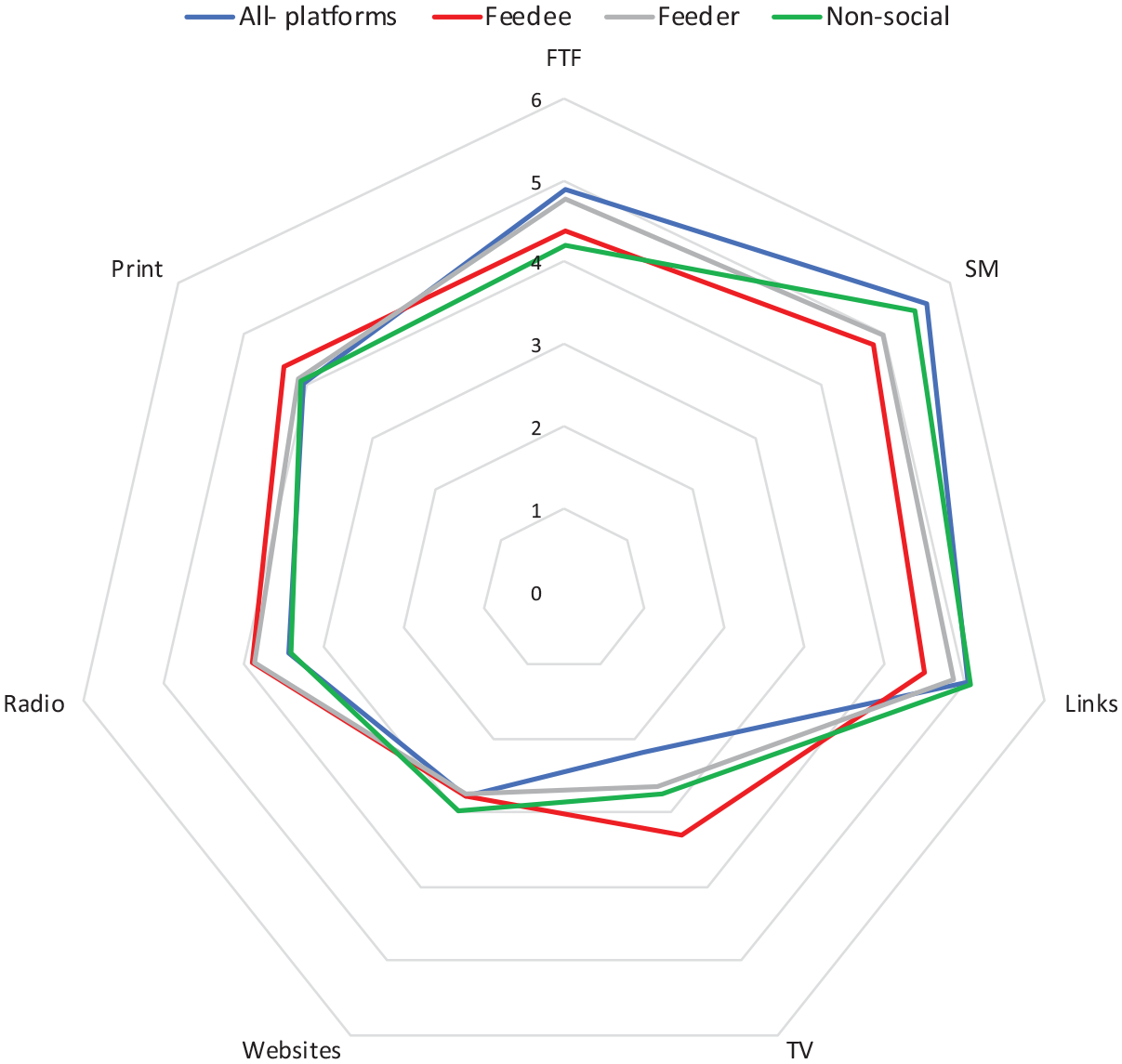
Relative importance of different news sources according to profile.
Differences among profiles
I then sought to determine the qualitative differences, if any, among the four profiles, inquiring whether news engagement profiles are significantly associated with other indicators. For this purpose, I applied multinomial regression, which evaluates a complete model, assessing its quality, ascertaining whether predictors are generally significant (see Table 4 of Supplemental Appendix 1—Cox and Snell pseudo R2 = .22), and providing specific comparisons among subgroups (similar to the contrast or post hoc test in ANOVA). Table 3 presents the selected comparisons in which Omnivore profiles serve as a baseline for comparison. 7
Multinomial regression predicting profiles.
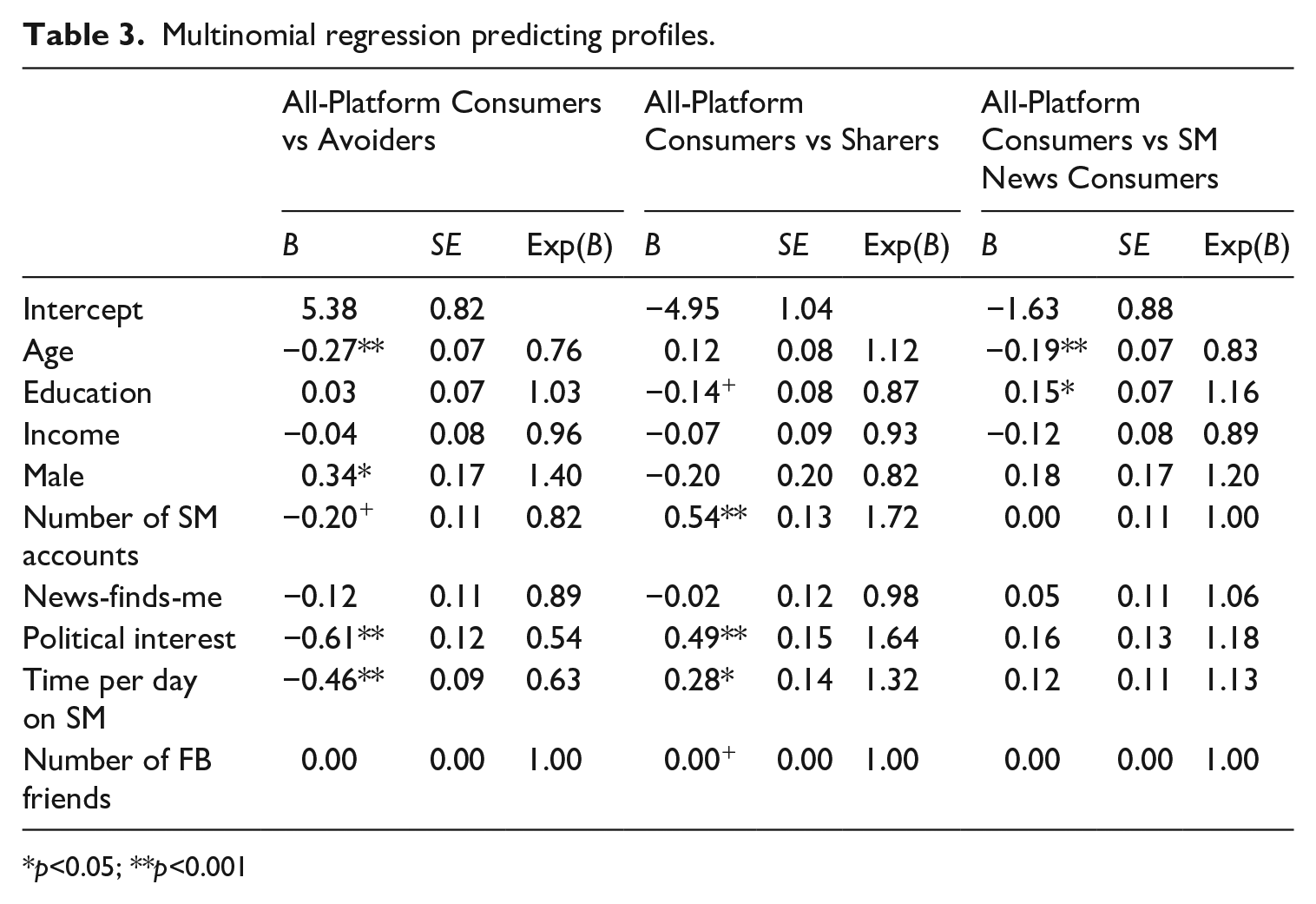
p<0.05; **p<0.001
Avoiders are younger, with little political interest and less SM activity. Sharers displayed greater interest in politics and more SM activity. Their network is also slightly larger (yet the difference is not significant). Finally, individuals who read news primarily on SM (SM News Consumers) are younger. 8 The news-finds-me category had no significant effect on profiles. Moreover, in contrast to past findings (Gil de Zúñiga et al., 2017b), it did not correlate significantly with any of the other news consumption measurements in this study (online, offline, and SM). Apparently, this null finding is characteristic of the sample rather than that of the analytical approach adopted.
Predicting differences in knowledge levels and political participation
The last stage of analysis tested two known upshots of news engagement: political knowledge and participation. Building on panel data, temporal relations may be assessed, in which the contribution of news engagement predicts changes in participation and knowledge. It is significant to note that no profile characterized by traditional media consumption emerged from the data, obviating the need for the examination of RQ3a.
No significant difference was found in knowledge levels after controlling for all variables (see full table in Supplemental Appendix 1), nor was there a change in the level of political knowledge during the campaign (see Figure 2). The same results are obtained after replacing news engagement profiles with the original variables: online and offline news consumption and SM news engagement. Apparently, one analytical approach does not emerge as preferable to the other.
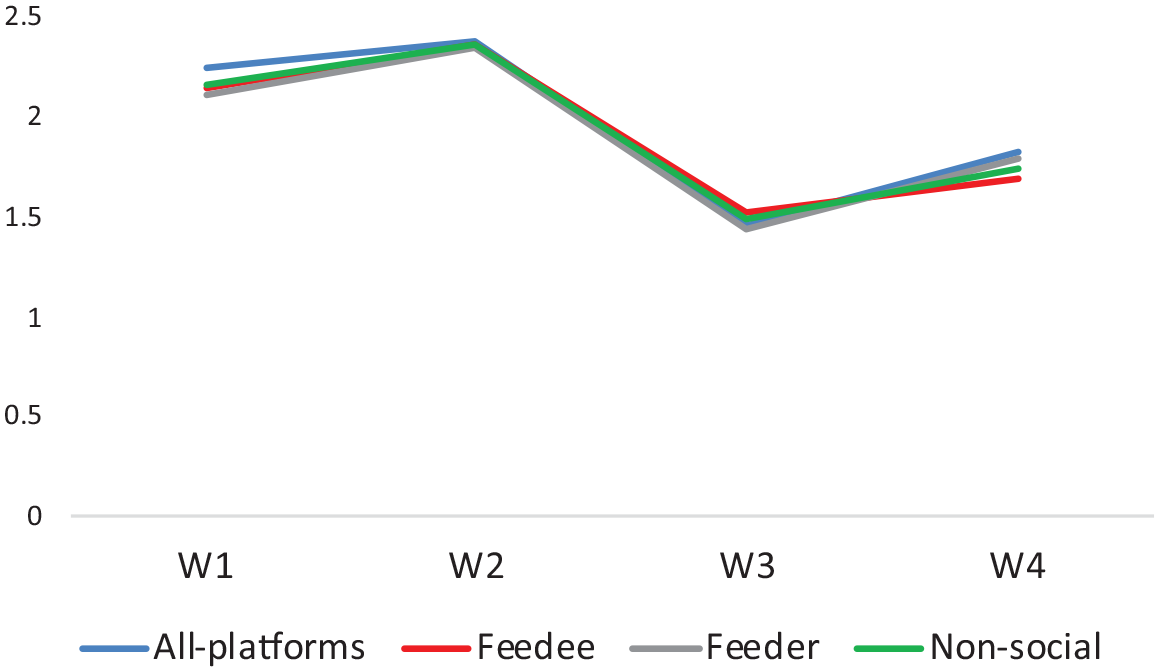
Changes in level of current event knowledge across waves, according to news engagement profile.
A significant difference was observed regarding change in participation. Here, Avoiders and SM News Consumers displayed a lower increase in participation than did Sharers and Omnivores (see Table 4). This finding suggests that high news consumption did promote participation (as per RQ3a). By contrast, when conducting the same analysis with the original variables, only news sharing had a positive significant effect. Hence, using the current approach did offer a more granular understanding than could be obtained otherwise, as it captured the differences between consuming news from one platform only (i.e. legacy vs social) and from a multi-platform repertoire.
Predicting change in political participation.
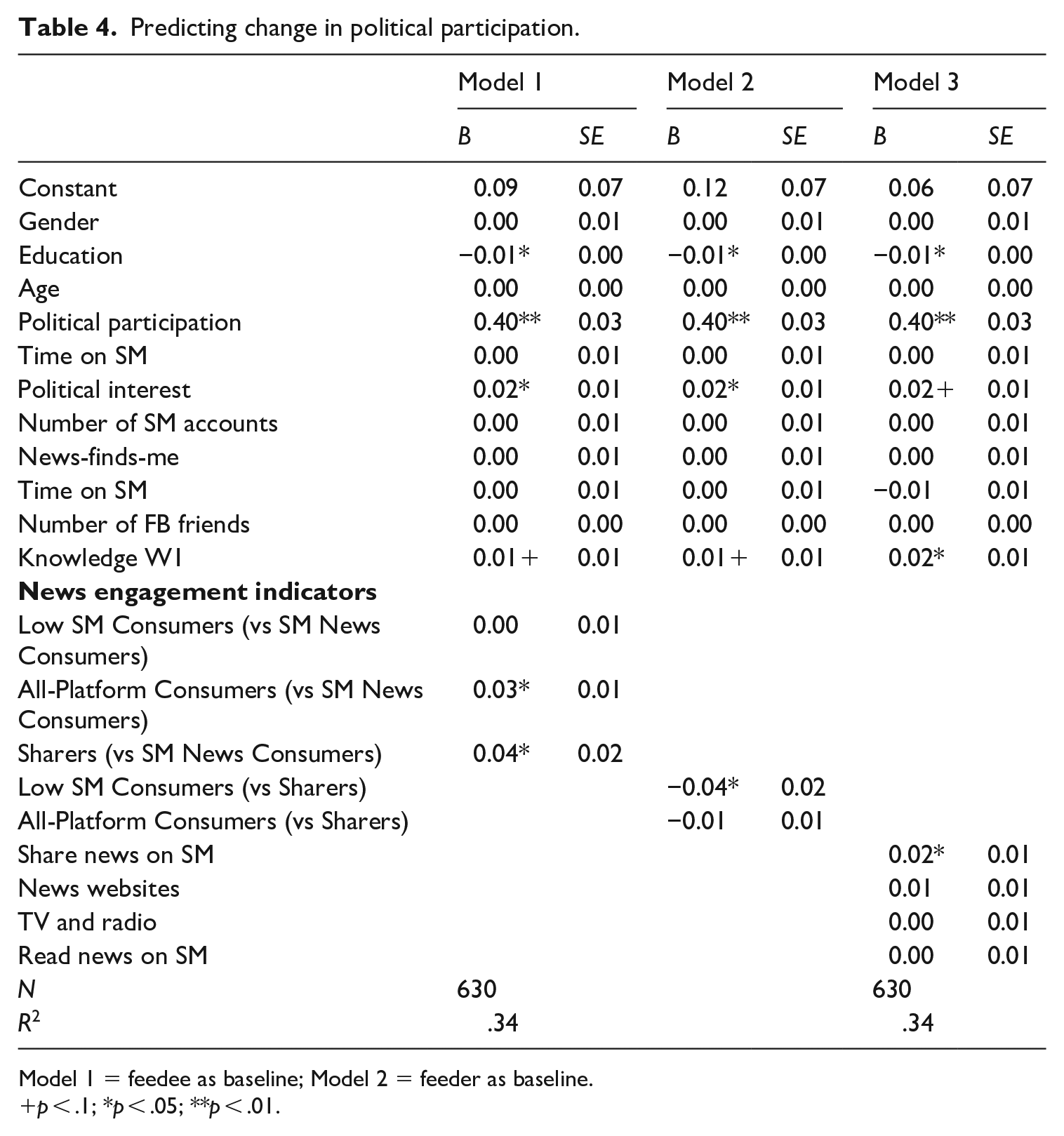
Model 1 = feedee as baseline; Model 2 = feeder as baseline.
p < .1; *p < .05; **p < .01.
Study 2: Difference in news feed according to profiles
As noted above, the overarching aim of this study is to examine news engagement in SM via the framework of news repertoires. The first study examined the profiles characterizing news engagement, and their precursors and upshots. The second study validated this line of inquiry, primarily seeking to test whether different profiles (as assessed using common practices in news repertoire research) are also characterized by different news feeds. SM affordances differ dramatically from those of traditional media. Specifically, unlike conventional news media, SM offers news by pushing rather than pulling. Furthermore, content is personalized, curated by users and algorithms (Thorson and Wells, 2015). This modus operandi suggests that feed content should reflect users’ repertoires, as expressed in active customization (selecting or removing content) and algorithmic classification determined by their online behavior and networks (Thorson et al., 2019). Consequently, Facebook feed examination may be perceived as a unique opportunity to assess the merits of the news repertoire framework: if a repertoire reflects a variety of preferences, it should yield a concomitant variety of feeds. Yet the importance of demonstrating feed variety goes beyond validating the repertoire framework. Given the reciprocal nature of news feed algorithms, differences in feed content may perpetuate and even gravitate future exposure toward news content and the respective consequent behaviors.
In keeping with the relevant literature, I focused on three common characteristics of news repertoires: frequency of exposure to news (Leonhard et al., 2020), differentiation between hard and soft news (Kim, 2016), and source diversity—the number of outlets to which one is exposed (Haim et al., 2018). In alignment with past studies, as well as with the findings of Study 1, it is suggested that profiles characterized by high news consumption will receive more news items—and especially more hard news—to their feed. That is, if SM curation processes adapt to user preferences, then the feed content of those identified as avid news consumers should reflect this interest.
RQ4a. Do Omnivores and Sharers receive more news posts and more hard news than Avoiders and SM News Consumers?
This distinction becomes more ambiguous insofar as source diversity is concerned. There is evidence that some repertoires are more diverse than others (Edgerly, 2015). If so, such preferences should also be observable in SM feeds, but past studies found no clear indication that algorithmic curation influences source diversity (Ha et al., 2018). The emergence of diversity differences thus remains an open question:
RQ4b. Does news feed content differ among profiles in terms of number of news sources?
Finally, social curation is a distinct characteristic of SM feeds: the behaviors of human agents in one’s network (sharing news, liking news, etc.) shape one’s feed (Thorson and Wells, 2015). This affordance was assumed to increase news exposure even among those who are less drawn to news (Thorson et al., 2019). While “news junkies” may receive more news directly from news organizations because they intentionally marked their posts as preferred content, those less attentive to news may still receive news referrals from friends. Hence, I inquire:
RQ4c. Do Omnivores and Sharers differ from Avoiders and SM News Consumers in terms of social curation?
Method
Feed personalization may prove to be a methodical obstacle. The constantly changing nature of news feeds renders it difficult for users to delineate the precise composition of their SM repertoires in a manner similar to the one applied in classic studies (i.e. media outlet lists). To overcome this impediment, the present study analyzes the actual content of Facebook news feeds, comparing them according to profiles. Facebook was singled out because of its remarkably dominant position in Israel.
The study comprised three parts. In the first, participants were asked to answer a short survey providing basic information about their SM use. The second invited participants to the laboratory to browse their Facebook accounts freely for as long as they liked. This stage comprised three sessions to ensure that participants were familiarized with its purpose and reduce possible external influences (e.g. social desirability, anxiety) over time, average browsing duration: 527 seconds, SD = 790, with no significant differences found among sessions; F(2, 223) = 1.05, p = .38. While in the laboratory, participants’ eye movements were tracked as they browsed. Unobtrusive measurement of use behavior was designed to address recent criticism of self-report measures. Comparisons of SM behavior in the laboratory (viewing and sharing news) to self-reports on the same behavior help validate the latter. A screen video was produced for each session and subsequently coded, enabling measurement of users’ feeds and reactions to their content. At the last stage, participants filled out a second questionnaire that included media engagement variables.
Sample
The convenience sample comprised students at a large Israeli university, invited to participate by recruiters throughout the campus. Participants were paid NIS 100 (about US$28) for their time, whether or not they completed the entire session. Of the 106 students who began participating, 88 completed the study (age: M = 24.5, SD = 2.93, 74% female). 9
Measures
Self-reported measures of news engagement were identical to those obtained in Study 1 (news consumption online: Cronbach’s α = .67, M = 3.3, SD = 0.98; offline: Cronbach’s α = .63, M = 3.5, SD = 1.01; viewing on SM: Cronbach’s α = .62, M = 3.6, SD = 0.97; and sharing: Cronbach’s α = .71, M = 2.2, SD = 0.67).
Users’ behavior
All sessions were coded twice, each time by different coders. 10
Viewing
I used eye tracking to measure attention to news stories (Vraga et al., 2016). An SMI RED250 mobile eye tracker (250 Hz) was used to measure eye movement; the study was configured and mouse clicks recorded with SMI Experiment Suite™ 360° software and eye movement behavior analyzed with SMI BeGaze software. The eye-tracking session began with two standard 9-point calibrations, followed by the stimuli.
Eye-tracking data allowed me to measure the length of time that the participant fixated on a given section of the screen. I defined posts as read when participants fixed their eyes on them and their eye movement showed they were reading them. I calculated the percentage of news posts that each participant read (M = 52%, SD = 22%). 11
Reaction to post
Each news post was coded according to whether the participant liked, commented on, and/or shared the post. On average, participants reacted to one post on their feed (M = 1.0), whereas some did not react to any and others reacted to as many as 13 (SD = 2.0). I then calculated the percentage of posts to which participants reacted (M = 7%, SD = 12%). Significantly, all but two reacted to content in their feed (news or otherwise) at least once while in the laboratory, demonstrating that observation induced no apparent hesitation.
Feed content
Number of media organization posts per second
The total number of posts created by media organizations, even those bearing content other than news, came to 1799, originating in 183 distinct SM accounts belonging to 153 organizations. To create an indicator of the relative quantity of such content in users’ feeds, I calculated the average number of media organization posts per second of browsing (M = 0.04 per second, SD = 0.04, range = 0–20). This means that on average, users were exposed to four posts per minute.
Percentage of hard news posts
I also calculated the percentage of hard news posts (politics, economics, foreign affairs, social issues, etc.) out of all media organization posts (M = 21%, SD = 14%, range: 14–73%).
Diversity of sources
The names of the news organizations behind each post were coded. Source variance was then determined by calculating each organization’s share of the total number of posts, 12 with a higher score suggesting greater diversity, that is, a score of 1 (maximum) means that each media organization appeared once in the user’s feed (M = 0.57, SD = 0.21, range = 0.05–1).
Social and journalistic curation (referrals)
The type of SM account that shared the content was coded as follows: media organization (66%), other user (29%), or other type (political or public figures, social organizations, etc.: 5%). The last category was not subjected to further analysis because of its negligible percentage. I then calculated the percentage of referrals by other users for each participant (M = 36%, SD = 27%, range: 0–50%).
Statistical analysis
Based on the same variables, a confirmatory cluster analysis was used to define news engagement profiles. Then, an ANOVA was conducted to compare the clusters, followed by contrasts and post hoc Tukey’s tests for pair comparisons. All analyses were repeated using political interest and gender as controls (as age and education were fixed in the sample). The results reported remained valid even after accounting for these controls.
Results
Validating self-reporters: engagement with news according to clusters
Following the same method used in Study 1, four clusters were created. Self-reports were validated by examining differences in behavior observed in the laboratory. 13 Here, validation is only partial as it gauges SM behavior, but does not include indirect measures of news consumption on other platforms.
Viewing news posts
As shown in Figure 3, some difference was noted regarding reading, with lower scores observed among Avoiders, F(3, 74) = 4.9, p < .01; contrast between Avoiders and all other groups: t(1, 74) = 3.6, p < .01.
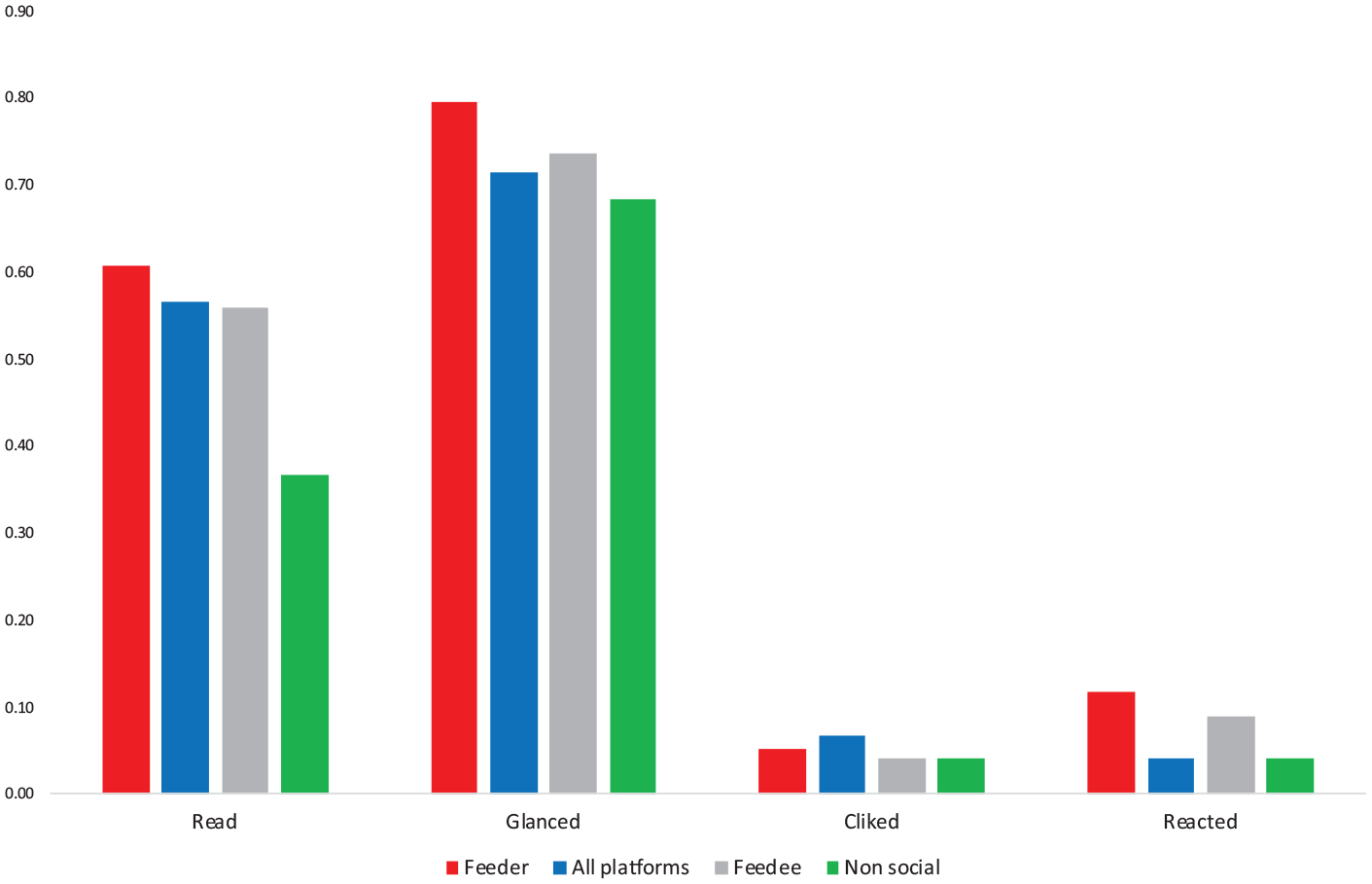
Engagement with posts in feed, by cluster.
Reacting to posts
Sharers tended to react more than other types of users, F(3, 74) = 2.3, p < .5; contrast between Sharers and all other groups: t(1, 74) = 2.4, p < .05.
Feed analysis: supply according to profiles
There were significant differences in almost all characteristics of the participants’ feeds (see Figure 4). Sharers and Omnivores had more media organization posts and more hard news than did SM News Consumers and Avoiders, answering RQ4a in the affirmative, F(3, 76) = 4.0, p < .01, and F(3, 76) = 3.5, p < .05, respectively. As for RQ4b, Sharers and Omnivores had the highest number of sources in their feeds (12 and 9.5, respectively, compared with 6 for Avoiders), but this was partly the result of their having greater overall numbers of posts. When diversity is calculated as a ratio, F(3, 76) = 3.4, p < .05, Social News Consumers and Avoiders actually have more diverse feeds, possibly because they had a higher percentage of news items that were shared by other users in their network, F(3, 76) = 3.6, p < .05; relying on others to curate one’s feed might indeed increase diversity (RQ4c).
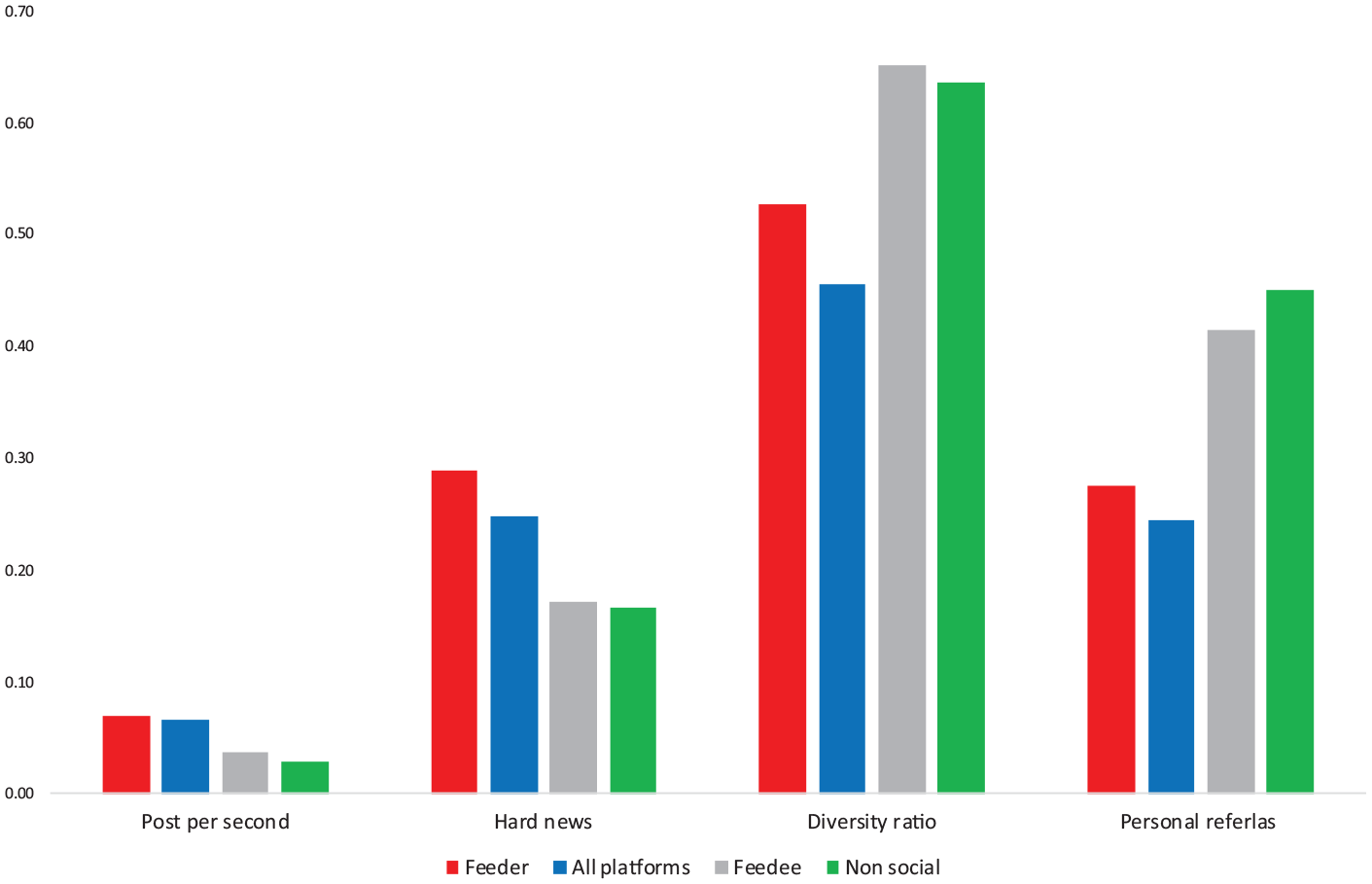
Feed characteristics, by cluster.
Discussion
News engagement on SM is a complex phenomenon that dramatically changes the ways in which scholars grasp news consumption. To unpack such complexity, this study promotes the news repertoire framework approach (Kim, 2016; Ksiazek et al., 2010; Yuan, 2011), maintaining that the study of behavioral patterns will enhance understanding of their implications.
Relying on diverse data, first, the findings demonstrate that unique profiles of engagement—attributed to differences in demographics, political interest, and general SM use—are identifiable and may be replicated across samples to a certain extent. Second, SM curation (Thorson et al., 2019; Thorson and Wells, 2015) deciphers users’ preferences and translates them into different news feeds, dramatically altering their news supplies. Finally, users ascribed to different profiles also demonstrate different levels of political participation over time, although they did not differ in political knowledge.
The study bears two principal contributions: first, the findings demonstrate the advantage of the analytical approach. While past studies were mostly preoccupied with identifying profiles and only a few went farther and linked repertoires to other factors (Edgerly, 2015; Ksiazek et al., 2010; Molyneux, 2019), the present study offers one of the most comprehensive analyses available. It not only relies on different methods (Taneja et al., 2012), and observes profile differences extensively, but also draws a comparison between the more common conceptualization of news engagement and the repertoire approach, thereby demonstrating the theoretical predictions that can only be achieved using the latter method and helping to determine formal evaluation sets for further research. Second, the findings aid in clarifying the conflicts discussed in current literature regarding SM news engagement. Reconstructing engagement from a news repertoire point of view highlighted interactions between news viewing and news sharing. Scholarly understanding of news sharing, a more esoteric behavior, had less to gain from this approach. The findings here conform with past studies in suggesting that sharing is mostly accomplished by more avid and politically involved SM users and that it is linked to political participation (Choi, 2016a; Kalogeropoulos et al., 2017; Kumpel et al., 2015; Weeks and Holbert, 2013). Nevertheless, the present analysis did advance theoretical understanding regarding SM news viewing. Apparently, one key distinction to be sought concerns whether SM news viewing is accomplished as a substitute for news consumption or as an additional form thereof (Müller et al., 2016). Users who obtain their news on SM vary; those who rely only on SM are less politically involved and their feeds consequently contain less news content. Thus, by simply asking people if they read news on SM, scholars risk masking a more complex form of behavior.
The same is true regarding users who do not engage with news on SM at all. It was found that those who do not consume news on SM display lower consumption overall. Taken together, the findings demonstrate the importance of a nuanced understanding of low-level news consumers. 14 This population segment is of specific interest, particularly because of the assumption that on SM, less engaged users might still be exposed to news (Heiss and Matthes, 2019). Nevertheless, as Thorson et al. (2019) noted, “incidental exposure approaches should also be nuanced when applied to algorithmically curated social media platforms” (p. 12). Indeed, in accordance with Thorson et al. (2019), feed analysis indicated that those who are less engaged with news also do not attract news on SM. Hence, SM displayed no obvious equalizing effects (Heiss and Matthes, 2019).
No study is without its caveats. As in similar SM studies, I restricted the research population to SM users, as only such users are capable of responding to questions concerning sharing and viewing news. Obviously, non-users’ repertoires might be significantly different from those of users. Moreover, the sample was not recruited randomly but rather by an online panel. As such, it cannot be called representative and thus may exert an adverse effect on the research’s external validity. The same is true regarding the panel data collection circumstances: elections. Campaign periods are marked by higher political activity on SM, which may have an impact on the findings. Another limitation on external validity stems from the focus on Facebook in the second case study. Although Facebook is far more dominant than other platforms, the difference in affordances and algorithmic curation restricted the ability to draw meaningful insights regarding the supply of news on other platforms. Finally, two null findings deserve further investigation: no significant effects were documented concerning news-finds-me or political knowledge. The null results obtained regarding more traditional measures of news consumption in both cases suggest that the phenomenon may be attributed to the study’s design (e.g. the short scale used to measure knowledge) or sample, rather than its analytical approach. Resolution of these issues requires further research.
Supplemental Material
sj-pdf-1-nms-10.1177_1461444820961349 – Supplemental material for Understanding news engagement on social media: A media repertoire approach
Supplemental material, sj-pdf-1-nms-10.1177_1461444820961349 for Understanding news engagement on social media: A media repertoire approach by Shira Dvir-Gvirsman in New Media & Society
Supplemental Material
sj-pdf-2-nms-10.1177_1461444820961349 – Supplemental material for Understanding news engagement on social media: A media repertoire approach
Supplemental material, sj-pdf-2-nms-10.1177_1461444820961349 for Understanding news engagement on social media: A media repertoire approach by Shira Dvir-Gvirsman in New Media & Society
Footnotes
Funding
The authors disclosed receipt of the following financial support for the research, authorship, and/or publication of this article: This research was founded by ERC grant no. 680009 and ISF no. 2315/18.

Supplemental material
Supplemental material for this article is available online.
Notes
Author biography
References
Supplementary Material
Please find the following supplemental material available below.
For Open Access articles published under a Creative Commons License, all supplemental material carries the same license as the article it is associated with.
For non-Open Access articles published, all supplemental material carries a non-exclusive license, and permission requests for re-use of supplemental material or any part of supplemental material shall be sent directly to the copyright owner as specified in the copyright notice associated with the article.
