



Abstract
Eudaimonic entertainment, which motivates a reflection on topics such as virtue or meaning, has many benefits, such as fostering wellbeing and inspiring prosocial behavior. Yet, it may also have a darker side when Islamic extremists use accordant elements in online propaganda. So far, this “dark inspiration” has attracted little scholarly interest. The current article fills this gap via a mixed-methods case study of an Islamic extremist influencer on Instagram. The study combined a qualitative content analysis of the account’s postings from 2016 to 2018 (n = 301 posts), with a hierarchical cluster analysis and digital data on aggregated user response to these posts. I found four types of post, ranging from calls for conservativism to calls for violent jihad. Different eudaimonic cues were used in all four types. Likes and comments varied as a function of type, with the violence promoting posts motivating the largest number of user responses.
Keywords
Terrorists inspire their followers; they don’t merely persuade them. Understanding the creative sources of this inspiration is vital if counter-narrative is to succeed in presenting an alternative to the propaganda of violent extremist groups. (Glazzard, 2017: 1)
Research in entertainment media has consolidated evidence for two processes of entertainment experiences, which are as follows: a hedonic process related to emotions of suspense, pleasure, or fun and a eudaimonic one associated with moral or meaningful media content and triggering feelings of elevation, appreciation, and inspiration (Oliver and Bartsch, 2010; Oliver et al., 2018; Tamborini et al., 2011; Vorderer et al., 2004; Wirth et al., 2012). So far, the latter type of entertainment experiences has been studied mostly from the viewpoint of positive psychology, and numerous positive effects have been shown; such effects include an increase in wellbeing and prosocial behavior after consuming accordant media entertainment (e.g. Bailey and Wojdynski, 2015; Bartsch et al., 2018) or daily doses of inspirational lessons about the human condition and human relationships (Rieger and Klimmt, 2019).
Eudaimonic responses can also result from the consumption of violent media. Grizzard et al. (2017) demonstrated that the exposure to graphic violence in news stories about the self-declared “Islamic state” (IS/ISIS) fostered moral emotions among the audience. These moral emotions then increased eudaimonic and prosocial intentions (i.e. the intention to engage in prosocial behavior and to search for meaning in life). At the same time, graphic violence also increased desire for military interventions, indicating that not all eudaimonic effects were peaceful.
This “dark” side of eudaimonic entertainment is also apparent in the context of extremist and terrorist propaganda itself. Content analytical work shows that, during its peak influence, the self-declared “Islamic state” relied heavily on utopic narratives to recruit its foreign fighters (Winter, 2018) and terrorists across the ideological spectrum frame their mission in moral terms (Hahn et al., 2019). Furthermore, radicalization research suggests that the search for significance and meaning in life are crucial factors in individual radicalization processes (Kruglanski, 2009; Kruglanski et al., 2013). The current article argues that this “eudaimonic” side of extremist propaganda deserves more attention. As O’Shaughnessy (2012) wrote, “The best propaganda is disguised as entertainment” (p. 34). This is as true for modern online media as it was for the prosperity of cinematography during World War II.
Extremist propaganda is easy to find in online media. About half of adolescents in Germany report pre-experiences with extremist content, especially from right-wing (44%) and religious extremists (33%; Reinemann et al., 2019). Although prior research found mostly negative responses to extremist propaganda, the rejection tends to be lower for entertaining content (Baines et al., 2010; Rieger et al., 2013). Supporting the idea that meaningful entertainment may be especially attractive, propaganda videos with a high storytelling quality (operationalized through dramatic, personal content) have been found to foster processes of identification with and attraction to extremist groups (Frischlich et al., 2018).
Although the previous studies indicate that meaningful entertainment may provide a valuable lens for studying extremist online propaganda, research combining these strains is sparse (for an exception using the lens of narrative persuasion, see Braddock, 2015), and systematic investigations of meaningful cues in extremist online content are lacking. The current mixed-methods study provides a first step in filling in this gap by inspecting the dark side of inspiration using a combination of qualitative content analysis, quantitative cluster analysis, and digital traces.
Theoretical background: eudaimonic entertainment
Media entertainment research has provided mounting evidence for two-process models of entertainment experiences (Oliver and Raney, 2011; Tamborini et al., 2011; Vorderer et al., 2004). Drawing from Aristoteles (Knebel, 1838), one process is usually described as hedonic and the other as eudaimonic entertainment. Hedonic entertainment results from the consumption of “light” entertainment (Hofer, 2015) and is associated with emotions of pleasure, suspense, or fun. Such hedonic entertainment has been studied, for instance, in the area of mood management theory (Zillmann, 1988).
Eudaimonic entertainment is a more complex process (e.g. Vorderer et al., 2004; Wirth et al., 2012), associated with “serious” content (Hofer, 2015) and transmitting values (Rieger et al., 2018), morality (Tamborini, 2011), and meaning (Oliver and Hartmann, 2010), thereby satisfying intrinsic needs (Rieger et al., 2014; Tamborini et al., 2010). Such entertainment is associated with mixed emotions, such as being moved (Landmann et al., 2019), nostalgia (Wulf et al., 2018), as well as the self-transcending emotions of appreciation and elevation (Oliver et al., 2018).
Eudaimonic media are often characterized by topics related to the “human condition” (Pyszczynski et al., 2009) or the human need for coping with the inevitable facts of life. For instance, Oliver and Hartmann (2010) found that prominent themes in meaningful media described human endurance in light of struggles (e.g. war, poverty, oppression), human virtues (e.g. mercy, honesty, or generosity), and human connection, as well as the fragility and variability of human life. More recently, Dale et al. (2017) found that YouTube videos using the tag “inspirational” transmitted similar topics, prominently fostering hope and celebrating the beauty of nature, as well as the excellence of other human beings. Similar topics have also been found in meaningful Instagram content. In a content analysis of “inspiring” posts, Rieger and Klimmt (2019) found that the themes of moral virtue, human connection, and human tragedy, as well as nature and art/architecture, were especially prevalent.
Eudaimonic media content can foster self-transcending emotions and inspire human behavior for the sake of others. After watching meaningful entertainment, recipients report higher intentions for prosocial behavior (Bailey and Wojdynski, 2015; Bartsch et al., 2018) and are motivated to follow the mediums’ example (Oliver et al., 2012). This also includes the motivation to “spread the word”: Inspiring news articles are especially likely to be shared by users (Ji et al., 2018). Recent theorizing has even suggested that self-transcending emotions form a unique type of meaningful media experiences that “consider and promote concepts beyond the self, nature, or the universe” (Oliver et al., 2018: 383).
So far, this inspirational, self-transcending force of meaningful media has been examined mainly in the context of positive media content. For instance, Janicke and Oliver (2015) found that American students who recalled a meaningful movie (usually one filled with drama, love, and kindness) reported more elevation, which fostered motivation to love humanity mediated via the connectedness to a higher power, close others, and one’s family. It has even been suggested that self-transcending eudaimonic media “may point to subjective experiences of meaningfulness that reflect universality and inspire healing by cultivating desires to overcome intergroup hostility” (Oliver et al., 2018: 383).
Besides such prosocial content, violent media content can also stimulate eudaimonic responses. For instance, Bartsch and Mares (2014) found that graphic violence usually decreases viewing interest but did not reduce viewing interest when a movie was meaningful. Furthermore, graphic violence itself can spur meaning making. Bartsch et al. (2016) found that the consumption of violent media can provoke reflections about meaning, morality, and authenticity. Consistent with this notion, Grizzard et al. (2017) found that consuming a graphical version of a news story about executions by the self-declared “Islamic state” increased levels of anger and disgust which in turn predicted larger levels of moral sensitivity and eudaimonic motivations.
Connecting extremist propaganda and eudaimonic entertainment
Violent content is a typical element of extremist propaganda. Herein, I understand propaganda as the “strategic attempt to manipulate emotions and cognitions for fostering behavior in the sense of an ideology” (Rieger et al., 2020). Propaganda transports a clear black-and-white worldview, fueling intergroup conflicts by advocating a very narrow form of social connectedness—the connectedness to the sharply defined in-group while promoting hatred, derogation, and sometimes even violence against all others. Such a sharp “ingroup love” and “outgroup hate” distinction (Brewer and Carporael, 2006; Weisel and Böhm, 2015) is also typical for Islamic extremists.
Islamic extremist propaganda in online media
Especially since the global rise (and decay) of the self-declared “Islamic state,” global concerns about the role of Islamic extremist propaganda in inspiring these attacks have witnessed a new high. For the current article, I understand extremism as the combination of radical attitudes, aiming at a radical transformation of society, while accepting violence as legitimate mean to provoke these transformations. Islamic extremism, accordingly, refers to those extremist strains, where extremism is justified by a narrow, fundamentalist interpretation of Islam. Very broadly spoken (see Stern and Berger, 2016 for a more nuanced picture), Islamic extremists promote the violent form of Jihad 1 (sometimes referred to as “lesser Jihad”), against apostate Muslims (all those who do not share their worldview) and infidels (mostly Jews and/or “crusaders”). They promote violence as the only defense against an alleged “global war” against the community of believers and a historically duty for all Muslims (Ebner, 2017).
Islamic extremist propaganda entails numerous elements which can be considered eudaimonic or meaningful. Descriptions range from videos praising and appreciating martyr’s accomplishments or depicting human suffering (Finsnes, 2010), over typical visual elements known from eudaimonic memes (Rieger and Klimmt, 2018) such as water and waterfalls to “evoke notions of purity” (see Kennedy-Boudali, 2006: 16) and flowers to “evoke a sense of both martyrdom and paradise” (p. 20).
It is noteworthy that the dominant response by extremism-distant audiences to extremist propaganda is best characterized as different shades of rejection (Rieger et al., 2013). Especially, explicit violence (e.g. the content targeted by most regulatory attempts) triggers higher cognitive defenses than covert manipulation attempts do (Connelly et al., 2016; Reinemann et al., 2019). At the same time, entertaining material produced with a high-quality and transmitting dramatic and convincing “stories” seems to increase interest (Cottee and Cunliffe, 2020) and foster identification with extremist protagonists and the attraction to extremist groups (Frischlich et al., 2018). Literature reviews accordingly indicate that online propaganda can sometimes serve as a catalyst in radicalization processes (Meleagrou-Hitchens and Kaderbhai, 2017).
Dramatic, artful content, as typically associated with eudaimonic entertainment, is a constant part of Islamic extremists’ online strategy, ranging from Al-Qaeda’s propaganda magazine Inspire to “ISIS’” advanced propaganda strategies. In a content analysis of Islamic extremist videos produced between 2007 and 2010, Rieger et al. (2013) identified Hollywood-like “movie clips” as one prototypical format. Five years later, Winter (2018) showed that “ISIS” propaganda channels at the time of the self-declared caliphates’ major flourishing were filled with narratives of utopia, including “inspirational” topics of justice, nature, and religious life. Although these themes were less frequent in the “ISIS” output in 2017 after the so-called caliphate lost more and more ground, inspirational content remained a constant part of their strategy.
The current study
Eudaimonic entertainment in Islamic extremist propaganda on Instagram
One platform that is popular among young media users and a well-known provider of meaningful content (Rieger and Klimmt, 2019) is the picture-based social network Instagram. Most Americans aged 18 to 24 years use the network on a daily basis. Especially among younger audiences, Instagram is gaining followers and becoming a relevant venue for political information (Newman et al., 2019; Vom Orde and Durner, 2019).
Thus, it is not surprising that the platform is also an attractive target for extremists and propagandists (Albright, 2017; Hofmann and Ipsen, 2018). The latest report from the German organization “Jugendmedienschutz” (JMS), which aims at protecting youth, argues that visual propaganda plays a crucial role for the online dissemination of extremist ideologies, and their main function is to visualize core elements of the ideology and to draw the recipient into a symbolic world. The iconography creates meaning, fosters collective identity, and “works even beyond complex debates. Images and symbols can help to anchor myths and worldviews” (Own translation, Hofmann and Ipsen, 2018: 2).
Although initial reports on Instagram have been published about right-wing extremists (Ismay, 2018; Völlinger, 2018), governmental propaganda (Kohn, 2017), and foreign disinformation attempts (Albright, 2017: 1), research on Islamic extremist propaganda on Instagram has gained little academic interest so far. The current study fills this gap and sheds light on the abyss of eudaimonic entertainment by answering the following research questions (RQs):
RQ1. Do Islamic extremists use eudaimonic entertainment in their Instagram propaganda?
RQ2. How is eudaimonic entertainment interwoven with extremist messages?
RQ3. How do users respond to this kind of material?
Methods
I answered my RQs via an exploratory mixed-methods case study that combines a qualitative content analysis (Mayring, 2010; Mayring and Fenzl, 2014) of all Instagram posts by a theoretically selected Islamic extremist influencer with a hierarchical cluster analysis of identifying overarching types of extremist propaganda and a statistical examination of all aggregated user responses to the posts (likes and number of comments) provided by the social media monitoring tool CrowdTangle.
Case selection
For identifying relevant content, I used the term “Kuffar” (which translates to “the infidels”) in different spellings as the seed term. Although being a religious term, the expression is frequently used by Islamic extremist propaganda to denote intergroup barriers and derogate out-group members. At the time of data collection (November 2018), the anonymous search engine DuckDuckGo identified 3012 posts using the term on Instagram.
Case selection was driven by the following criteria: I was interested in Western-oriented account (i.e. most of the posts being in English or German) and public influencers (i.e. more than 10,000 followers 2 ) that explicitly promoted violence in the name of radical interpretations of Islam. The selected account fulfilled these criteria in an optimal manner. The account operates under a pseudonym that clearly refers to the Islamic tradition and has an account picture referring to desert traditions. 3 The account started posting in 2016 and was still active during data collection in December 2018. During that time, the account had posted 301 times and gained 22,000 followers.
Coding instrument
I developed the coding instrument by drawing from the literature on Islamic extremist propaganda and relying on prior work on inspirational cues in Instagram posts (Rieger and Klimmt, 2018). I refined the theoretically deducted categories using a sample of 250 Instagram posts from five unrelated Islamic extremist accounts also posting in English but reaching smaller audiences and based on an initial round of coding of 50 posts by two independent coders and a prior coding of the posts in an independent student course at a mid-sized German university.
Each single post, including its visual and textual elements, as well as the proprietor text and hashtags accompanying the post, served as coding unit. To capture the implicit meaning emerging from the combination of the elements, I coded besides the explicitly entailed elements the implicit interpretations emerging from the combination of these elements, as well as the implications of certain statements. For instance, a post stating that all humans are made of mud and semen and asking why one should pledge obedience to mud and semen instead of following only religious laws may seem innocuous at first sight, but it implies the rejection of all human-made law, classifying the post as anti-democratic.
The coding instrument entailed seven categories with several subcategories. 4 The first category, basic description, asked for the style of the post (i.e. text, image, meme, or video). The second, religion, entailed categories referring to religious figures (e.g. Allah, Shaitan, or the prophet), symbols (e.g. the Quran), or concepts (e.g. monotheism [Dīn or Tauhīd]) or the contrast between this “mortal world” (“dunya” or “duniya”) and the immortal afterlife (e.g. paradise, Janna, or hell, Jannaham). Although religious elements are a part of the eudaimonic, self-transcending media experience (Dale et al., 2017), they were coded separately to account for the religious framing of the propaganda. Scholars have repeatedly argued that Islamic extremist propaganda is characterized by a “Lego-like” usage of fitting elements without deeper understanding of Islam (Kiefer et al., 2017); thus, I coded for a variety of popular “lego-bricks” (e.g. claiming something is “halal,” allowed vs “haram,” forbidden).
The third section entailed categories tracing eudaimonic and inspirational elements. Drawing from Dale et al. (2017, 2020), our category system allows for describing expressions of typical self-transcending emotions of awe, gratitude, and hope (Dale et al., 2017), as well as the coding of typical elicitors of these. In more detail, we coded for the appreciation of beauty and excellence (including references to nature, vastness, architecture, art, and the appreciation of others’ accomplishments and performance); elicitors of gratitude, such as depictions of moral virtue/inner beauty (i.e. kindness, compassion, or helpfulness) and hope (i.e. humans birth and new life or stories about human persistence when overcoming obstacles). Furthermore, we coded for aspects related to the human condition, namely human connection with close others (derived from Ji et al., 2018) and drama or tragedy (see Rieger and Klimmt, 2018).
The fourth category, propaganda, derived heavily from Merten’s (2000) description of propaganda structures. Here, we coded whether rules for adequate behaviors were provided either explicitly (e.g. one post said, “Don’t fall for someone who doesn’t fall down in prayer for Allah”) or implicitly (e.g. one post argued, “Hijab forces a man to look at a woman with respect rather than as an object,” suggesting that wearing the hijab is recommended). We also coded whether the posts reduced freedom of choice by suggesting that there were no alternatives to a certain requested behavior and whether positive or negative sanctions were announced.
The fifth category, violence and extremism, coded the derogation of democracy (i.e. by claiming that the human-made laws do not apply) and glorification of violence, for instance, using hashtags like #callforjihad or #jihadophobia.
The sixth category, audience, allowed for coding whether the recipient was directly addressed (e.g. “Be the Muslim you want to meet”) or whether certain social groups were mentioned. Social groups were further distinguished into the following: (a) the religious in-group (indicated, for instance, using generic personal pronouns such as “we” or “our” or by referring explicitly to the community of believers, the “Ummah”) and (b) different out-groups, namely the infidels (the “Kuffar” or specific Western countries, such as the United States), and the apostate, moderates, or otherwise “wrong” Muslims.
Drawing from descriptions of modern propaganda as a bridge to adolescents lifeworld (e.g. Hofmann and Ipsen, 2018), the last category, Western lifestyle, detailed whether prominent secular figures (e.g. soccer players, musicians, etc.) or politicians (e.g. at the time, politicians like Angela Merkel, Donald Trump, or Vladimir Putin) were mentioned, or whether political institutions and more general aspects of capitalism, leisure time activities, or gender roles were addressed.
The coding instrument allowed for multiple content categories being assigned to one post. A translated and anonymized version of the coding instrument can be found in the supplementary material.
Results
Data analysis
Posts were coded using Excel, and quantitative analysis was done via R (version 3.5.1; R Core Team, 2018), all analysis scripts are available via the open science framework (https://osf.io/h2wde/). Intercoder reliability was established based on coding 10% of the material after the categorization system had been established and disagreements on the first 15% of posts had been resolved in a coding conference. As some of the categories seldom appeared, I used Gwet’s (2008) AC1 reliability coefficient. AC1 has been suggested as an alternative measurement for such skewed data and avoids both the overly pessimistic estimates of Cohen’s κ (the “Kappa paradoxon”; see Gwet, 2008) and the overly optimistic estimates of percent agreement (for a comprehensive overview, see Lacy et al., 2015). All AC1 values were ⩾ .74, indicating good intercoder reliability.
Eudaimonic entertainment in Islamic extremist propaganda
Most posts were memes (82.06%), while less than one-fifth (17.28%) contained only text and two were visual only. Most categories were assigned to at least one post. Only the category “political institutions (e.g., court or the parliament)” was never used.
An initial inspection of the 15 most frequently assigned codes (see Figure 1) showed that the communication strategy was highly personal, often addressing the recipient directly and frequently emphasizing the religious in-group. Typical structural elements of propaganda were also frequent: 27.24% of the posts claimed that there would be no alternative to a certain way of feeling, thinking, or behaving, while 27.57% of the posts threatened negative consequences for those leaving the “right path.”
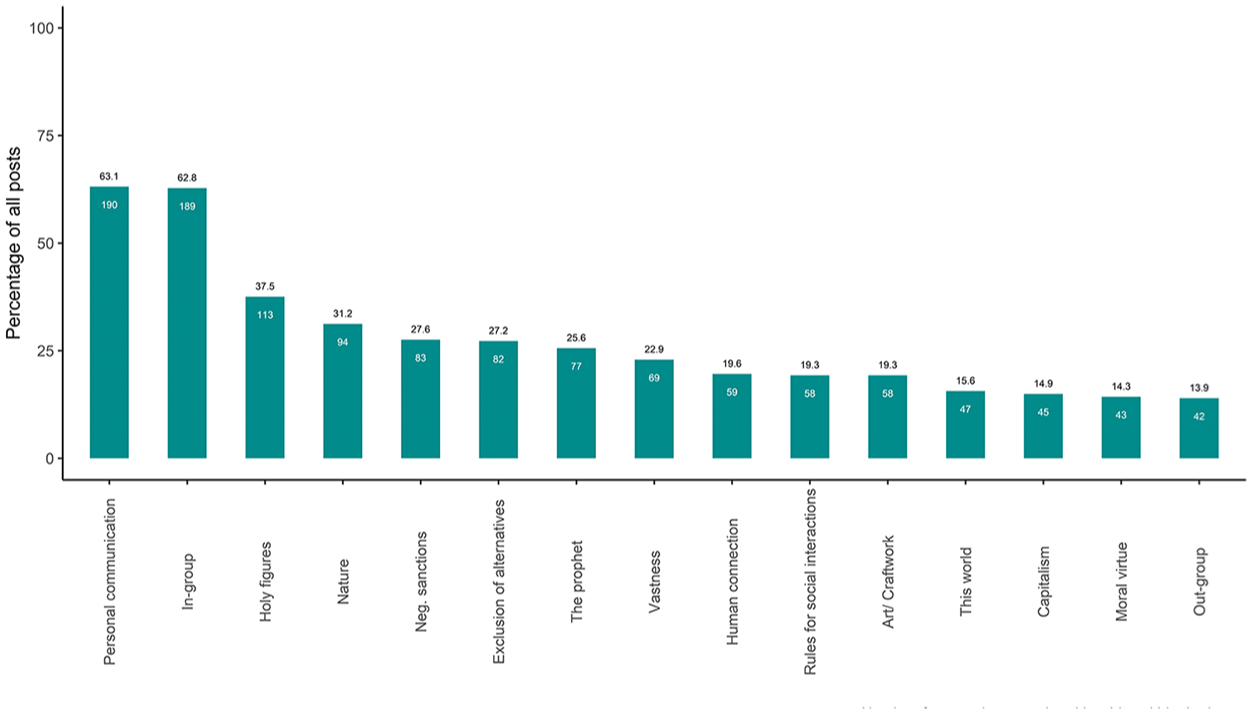
Most frequently coded content analytical categories. Absolute frequencies are printed in white within the bars, relative frequencies in black above the bars.
Addressing RQ1, various elements of eudaimonic entertainment were among the most prominent features in the examined propaganda. Especially, depictions of nature, vastness, and art and craftwork were used frequently, typically by including accordant visual elements. References to intimate relationships and human connections, as well as moral virtue, were also among the dominant topics. Not surprisingly for a religiously framed account, religious topics like references to religious figures, namely Allah and Shaitaan, and discussions of the exemplar of Prophet Mohammed, appeared frequently. Other posts discussed the inevitable finiteness of life, more precisely, the superficial pleasures and requests of the mortal world, which were often framed in opposition to an idealized and infinite afterlife.
Eudaimonic entertainment and the promotion of violence
To address RQ2 and explore the relationship between inspirational content and the propagandist’s purpose in more detail, I employed a three-step procedure. First, hierarchical cluster analysis identified post-types representative for the accounts’ overall propaganda strategy. Second, robust statistics tested the relationships between these types and aggregated user responses. Finally, a hierarchical regression analysis highlighted post-characteristics predicting the differences observed in the aggregated user responses.
Propaganda types
Hierarchical cluster analysis aims at identifying subgroups of cases (or, as in this study: posts) representing the entire sample by being similar to other cases in the same cluster and different to cases assigned to other clusters (Field, 2017). I used all content variables that were coded in more than 1% of the posts (corresponding to all categories assigned to more than three posts). This selection already showed that some categories were rare: sports and prominent figures were mentioned in less than three posts, as were the more “Western” eudaimonic themes (Rieger et al., 2018) of individual performance, gifts, and the obtaining of institutionalized knowledge (e.g. schools).
Different cluster algorithms tend to produce different solutions, as such, the appropriate algorithm needs to be selected in advance based on data structure and research interest. If more than one algorithm fits the studies’ needs, different algorithms should be compared with find the optimal solution (Kaufman and Rousseeuw, 2009). In the current study, the binary data structure, the imbalance of present versus absent content analytical codes and the attempt to find a cluster solution with homogenous sizes of clusters all implied hierarchical clustering as optimal approach. Following the recommendations by Kaufman and Rousseeuw (2009), I used a Gower-dissimilarity matrix as input and compared two suitable hierarchical clustering algorithms: divisive clustering (“Diana”), which starts from one large cluster and then splits into smaller clusters; and agglomerative clustering (“Agnes”), which starts with small clusters and aggregates them to larger ones.
The final algorithm was chosen based on three criteria: (a) a visual inspection of elbow plots, which indicate similarity within the clusters, and silhouette plots, which indicate distinctiveness between clusters; (b) inner-cluster homogeneity as indicated by average distance among observations; and (c) a comparable number of cases per cluster
Interpreted jointly, the plots and the average distance values for the divisive clustering (see Figure 2) suggested a five-cluster solution. However, number of cases per cluster varied substantially. For the agglomerative clustering, the suggestions by the plots were less obvious but, taken together, the plots suggested a four-cluster solution. This four-cluster solution was also supported by the average distance value and let to a homogenous assignment of cases to clusters. Hence, the four-cluster solution was used to characterize the types of posts.
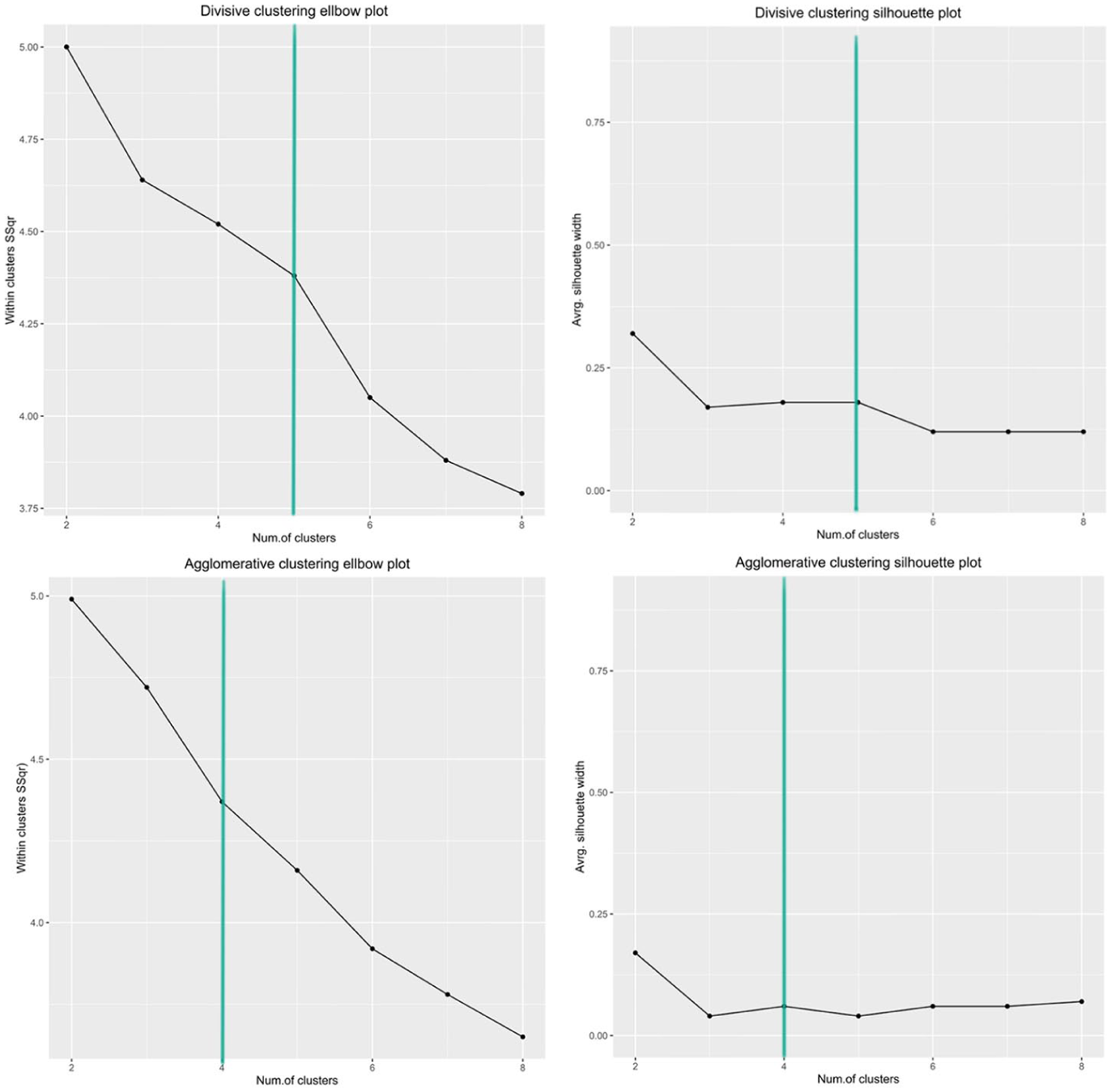
Elbow and silhouette plots used to identify the optimal number of clusters. The elbow plot displays the homogeneity within clusters (i.e. the total within-cluster sum of squares, SSqr) depending on the numbers of clusters. The knee or elbow point(s) indicate the optimal number of clusters. The silhouette plot displays the distance between cases in one cluster and those in another clusters. The values range from −1 to + 1 with + 1 indicating optimal cluster distinction and −1 indicating that the cases might have been assigned to the wrong cluster. The maximum indicates the optimal cluster solution. Optimal cluster solutions based on both plots of either algorithm are indicated by vertical lines.
Cluster 1, “conservative,” entailed nearly half of the posts (n = 134, 44.5%). The posts in this cluster used a personal, in-group-oriented communication style. They propagated an ultraconservative worldview, often by referring to the example of the prophet and threatening with negative consequences for those deviating from their ancestors’ path by falling for the superficial pleasures of a Western capitalist lifestyle. Posts in this cluster used relatively few eudaimonic elements, although some aesthetic images of art and craftwork were found.
Cluster 2, “romance,” entailed nearly a third of the posts (n = 94, 31.2%). The posts in this cluster referred seldomly to religious or political elements. Instead, they addressed mostly social relationships, gender roles, and rules for social interaction. The romantic atmosphere were accompanied by a range of eudaimonic elements related to the appreciation of beauty and excellence, particularly images of nature and vastness.
Cluster 3, “radical guidance,” entailed only about one-eighth of the posts (n = 47, 15.6%). The posts in this cluster entailed various religious references and provided clear instructions for social interactions and correct praying routines. Correct behavior was promised to lead to positive sanctions, whereas all deviances were threatened with negative consequences. Recipients were reminded that life was fleeting, wherefore they should engage follow the prophets’ path constantly. A small share of posts also glorified violence—particularly as a defensive need to protect the community of believers. Most posts used eudaimonic elements inspiring the appreciation of beauty and excellence.
Cluster 4, “violence incitement” entailed the smallest share of posts (n = 26, 8.6%). The posts in this cluster were characterized by open anti-democratic statements and the glorifications of a violent jihad, for instance, by referring to the Israel–Palestine conflict. The violent message was combined with a number of typical eudaimonic themes, ranging from spiritual elements like angels, over the stated appreciation for former warriors and their moral virtue, up to depictions of human drama as violence justification. Furthermore, aesthetic images of nature, vastness, and impressive architecture were used to illustrate the violent calls. Figure 3 visualizes the distribution of categories across clusters, a table with the relative frequencies of content analytical categories per cluster is provided in the supplementary material.
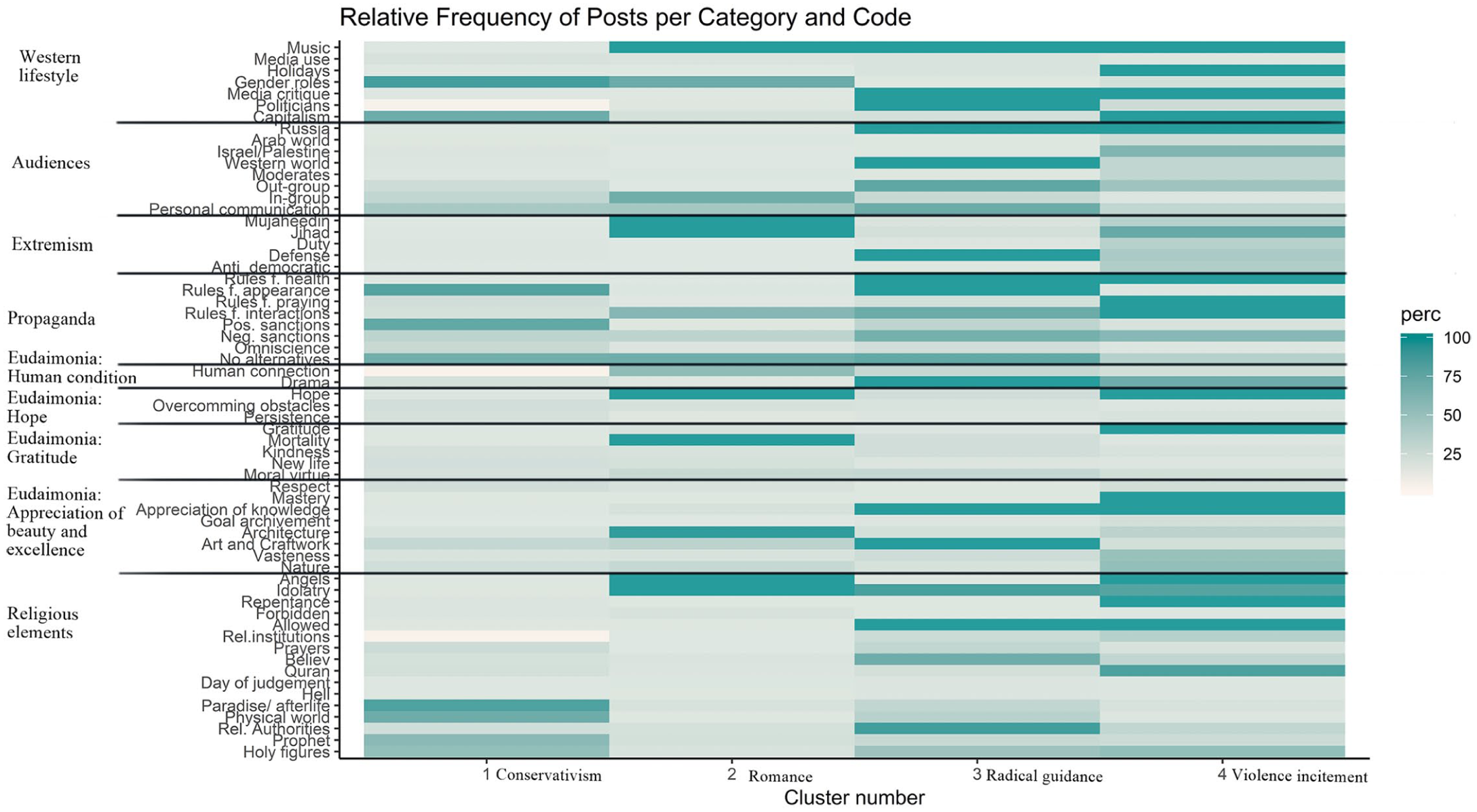
Relative share of content analytical categories per cluster. Superordinate categories are indicated by horizontal lines.
Users’ response to the different propaganda types
In the next step, we examined whether users responded differentially to posts depending on cluster membership. To this end, we crawled the likes and comments for all posts using the social media monitoring tool CrowdTangle (www.crowdtangle.com). Among other things, CrowdTangle tracks public content on Instagram, automatically monitoring all content by accounts with more than 75,000 followers, as well as allowing users to create own observation lists or inspect other accounts if they are public. For each public post, CrowdTangle provides access to aggregated data about the number of likes and comments. A preliminary inspection of aggregated likes and comments showed that both distributions were heavily skewed; as such, we used robust statistical tests for our analysis.
A Kruskal–Wallis test indicated significant differences in the numbers of likes per cluster, χ2(3) = 30, p < .001. A follow-up pairwise comparison using Wilcoxon’s rank sum test and a Bonferroni-adjusted α-level, showed that cluster 2 (“romance,” Md = 33, range 3–1147) attracted less likes than the other three clusters. Cluster 4 (“violence incitement,” Md = 450, range 16–886) attracted on average the most likes, differing statistically significant from all other clusters. Clusters 1 (“conservativism,” Md = 71, range 5–1185) and 3 (“radical guidance,” Md = 144, range 5–1087) did not differ significantly from each other. A similar pattern was found for the number of comments, χ2(3) = 20, p < .001. Cluster 2 (“romance,” Md = 0, range 0–31) was less likely to motivate comments than cluster 3 (“radical guidance,” Md = 3, range 0–50) or cluster 4 (“violence incitement,” Md = 5, range 0–25). Cluster 4 (“violence incitement”) attracted the most comments, significantly more than clusters 1 (“conservativism”) and 2 (“romance”), although only marginally more than cluster 3 (“radical guidance”). Cluster 1 (“conservativism”) did not differ significantly from clusters 2 or 3 (see Figure 4).
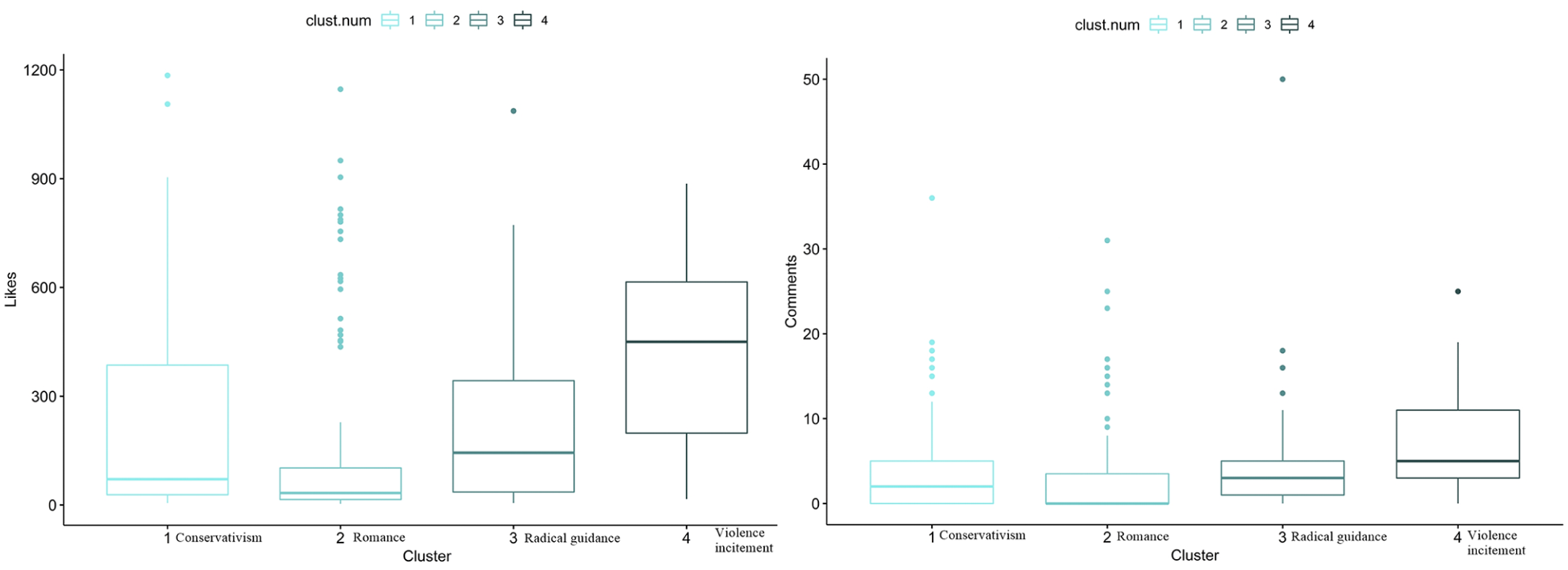
Aggregated user responses by cluster membership.
Predicting user responses
To provide a comprehensive description of the posts’ characteristics, I computed index variables representing each of the superordinate categories from the category system in the next step. The first index summarized all religious elements, the next ones addressed different aspects of eudaimonia, namely the appreciation of beauty and excellence, gratitude, and hope, as well as human tragedy and connectedness. The last indices summarized all propaganda, extremist, audiences, respectively Western lifestyle elements. Table 1 summarizes the descriptives per cluster and indicates statistically significant differences between clusters.
Robust descriptives for indices per cluster.
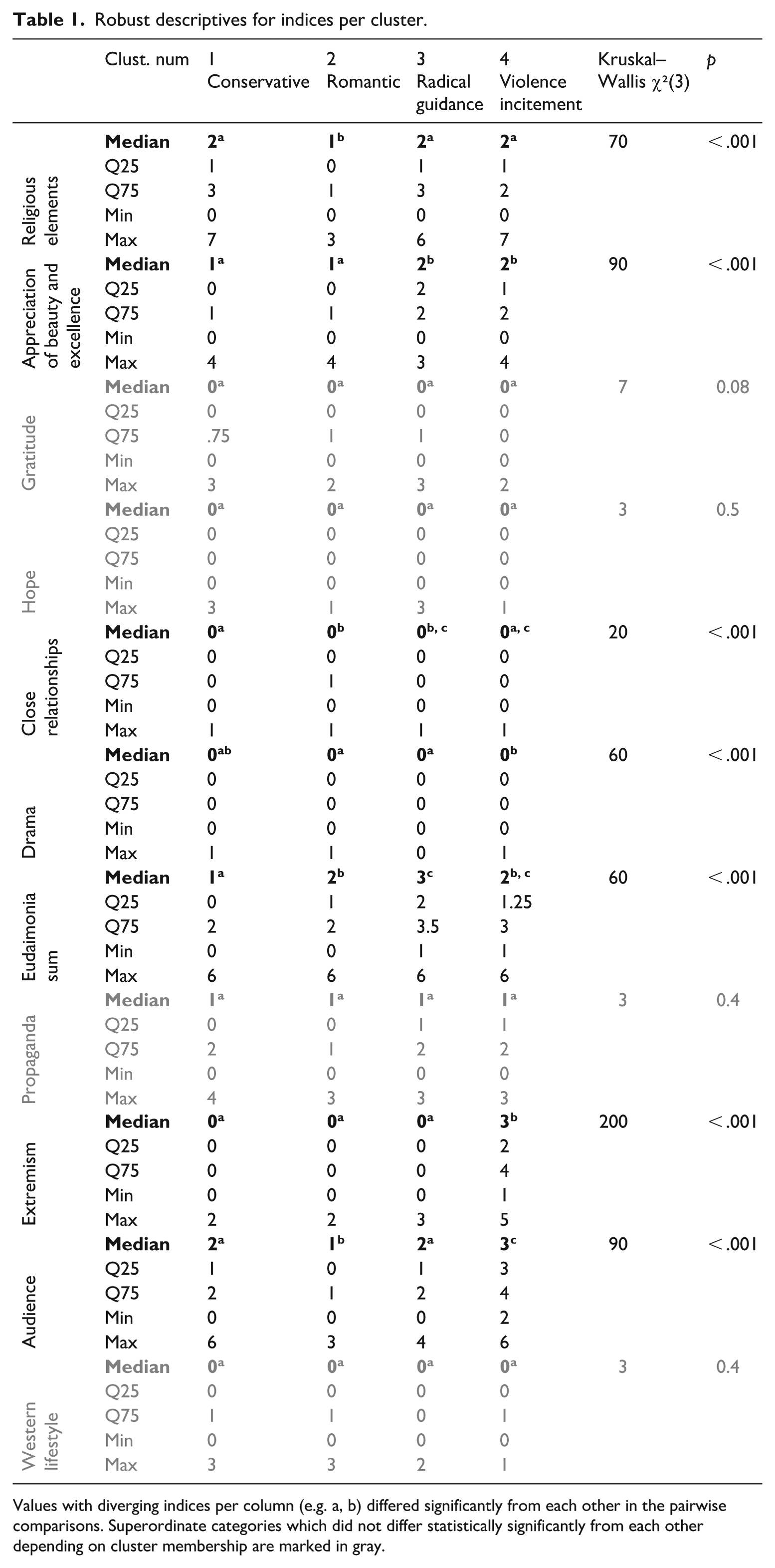
Values with diverging indices per column (e.g. a, b) differed significantly from each other in the pairwise comparisons. Superordinate categories which did not differ statistically significantly from each other depending on cluster membership are marked in gray.
To explore the relationship between post-characteristics and users’ responses, I calculated hierarchical regression analyses using likes and comments as criterion and the indices as predictors. Religious elements were entered in block 1, eudaimonic elements in block 2, propaganda characteristics in block 3, extremism in block 4, audiences in block 5, and Western lifestyle elements in block 6.
The number of likes was predicted significantly by all blocks. Together, the indices accounted for 17% of the variance. Inspecting the last model showed that the advocation of extremism, the size of audiences addressed, and the connection to users’ lifeworld (i.e. Western lifestyle references) statistically significantly predicted more likes. When all dimensions were considered, eudaimonic elements did not predict more likes.
For number of comments, religious elements and propaganda dimensions did not contribute to variance explanation. All other blocks reached significance, jointly explaining 14% of the variance. Inspecting the last block showed that extremism (though only marginally statistically significant here), audience, and Western lifestyle again predicted larger levels of user engagement. Furthermore, comments were associated with eudaimonic references to human connectedness. All other predictors failed to reach statistical significance (see Table 2).
Regression analyses for aggregated user engagement.
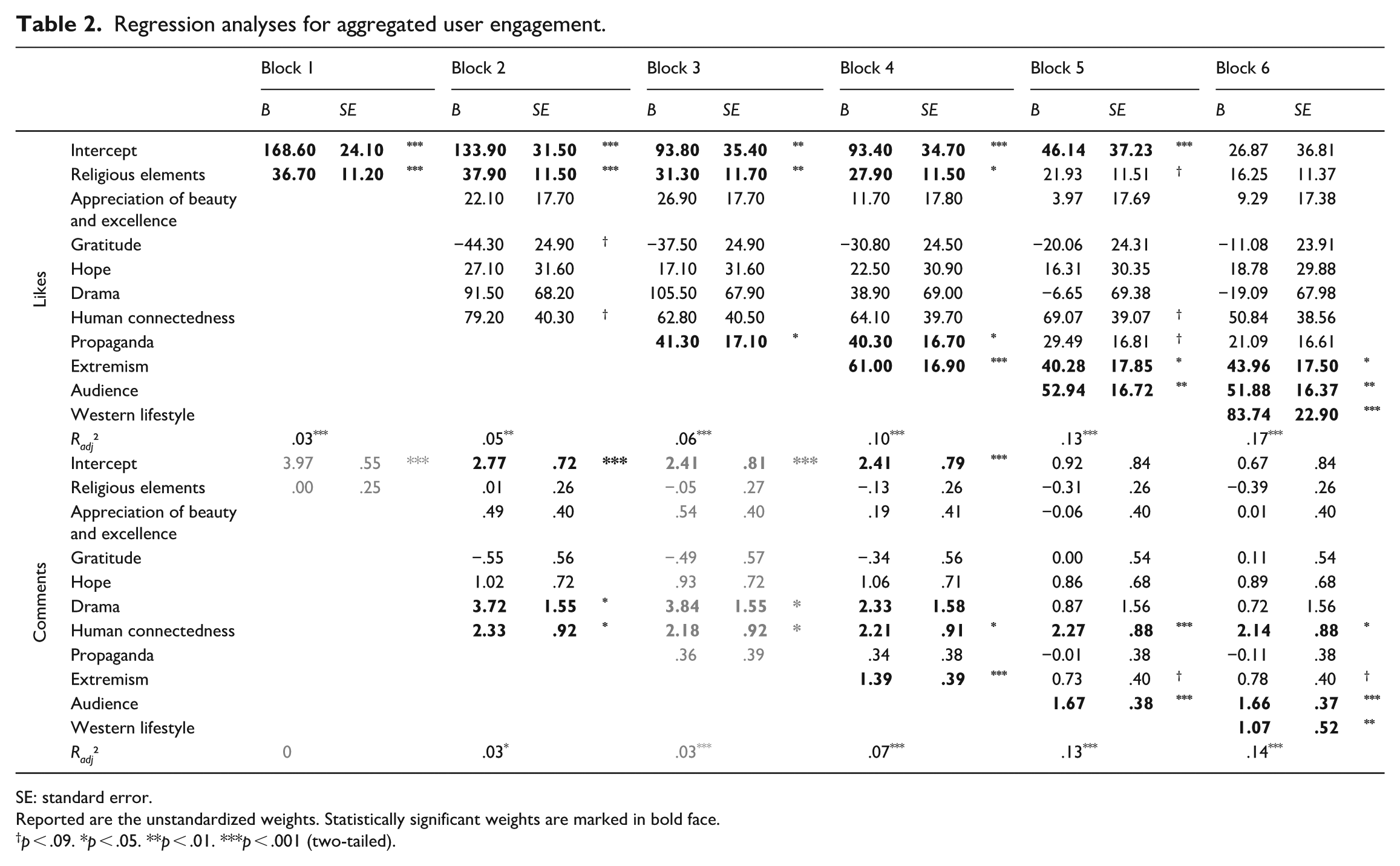
SE: standard error.
Reported are the unstandardized weights. Statistically significant weights are marked in bold face.
p < .09. *p < .05. **p < .01. ***p < .001 (two-tailed).
Discussion
Eudaimonic entertainment has traditionally been associated with moral or meaningful media content; feelings of elevation, appreciation, and inspiration; and positive outcomes like prosocial behavior. The current article used a mixed-methods approach to show that eudaimonic elements also have a darker side in the context of Islamic extremist propaganda. Using a mixed-methods design for examining the posts of an Islamic extremist influencer on Instagram and user reactions to these posts, the current study provides the first insights into this dark side of eudaimonia.
The results of a qualitative content analysis showed that eudaimonic elements were among the most often employed propaganda strategies, illustrating that eudaimonic entertainment indeed has a darker side in the context of Islamic extremist propaganda (RQ1). Although our case study approach does not allow us to gauge the overall difference between extremists’ as compared with other types of influencers’ (e.g. lifestyle bloggers) use of eudaimonic elements, the relative frequency of different types of eudaimonic entertainment are different from those reported in prior research on general eudaimonic Instagram content (Rieger and Klimmt, 2018). Meanwhile general eudaimonic entertainment has been found to be especially generated by topics of moral beauty (i.e. nearly half of the posts in the study by Rieger and Klimmt (2018) expressed gratitude) and addressing the human condition per se (see also Rieger and Klimmt, 2019); the Islamic extremist Instagram posts referred very seldom to gratitude (only 4% of the posts, see Table A in the supplementary material) but instead referred more often to the beauty and vastness of nature—aesthetic elements usually used to transport “general positive feelings, tranquility, and recovery-related messages” in eudaimonic Instagram memes (Rieger and Klimmt, 2018). Noteworthy, our distribution resembles closely the relative share of elicitors within inspirational Facebook posts described by Dale et al. (2020), suggesting that exploring platform effects on eudaimonic content posted by different types of influencers is a fruitful venue for future research.
It should be noted that close relationships, especially between a husband and wife, were a frequent topic in both general and extremist’s Instagram content, whereby the latter often contrasted “true” Islamic love with Western infidelity. The search for a “true Islamic romance” has been described as a relevant motivation during radicalization stages (Kiefer et al., 2017), especially among females 5 (Musial, 2016). Indeed, romantic posts were one of the four types of posts identified in this study, the other three types ranging from promoting a conservative lifestyle over providing radical guidance across different life topics up to open calls for violent jihad.
To answer RQ2, eudaimonic elements were present in all the clusters; however, the concrete use differed depending on cluster membership. Posts in the “conservative” cluster 1 entailed overall less eudaimonic elements than posts in the other clusters. Furthermore, elements inspiring the appreciation of beauty and excellence were more frequent in the explicitly radical clusters 3 (“radical guidance”) and 4 (“violence incitement”), whereas elements related to the human condition (although over all seldom) were more frequent in the seemingly innocuous posts in clusters 1 (“conservativism”) and 2 (“romance”).
Combining our hand-coded material with user responses crawled from Instagram showed that users responded differentially to the posts depending on cluster membership. Especially, the violence inciting posts in cluster 4 triggered the most user engagement. Hierarchical regression analyses exploring the relationship between post-characteristics and these different user responses in more detail showed that the higher level of engagement was indeed predicted best by the posts’ levels of extremism, the number of audiences addressed (i.e. whether the posts did not only engage in a personal communication style but also referred to larger social groups and/or different out-groups), and the connection to recipients lifeworld (i.e. typical elements of a Western lifestyle). Eudaimonic elements contributed little to explaining users’ likes when all other aspects were controlled for, although references to human connections predicted larger numbers of comments. As such, our findings differ from prior studies on user responses to eudaimonic content which found a preference for sharing “good” news (Ji et al., 2018) and a larger role of positive eudaimonic content in users’ general online media diet (Rieger and Klimmt, 2019).
In sum, our findings provide a dissonant tone in the overall positive chorus describing eudaimonic entertainment (Oliver et al., 2018). Eudaimonic self-transcendence and the promotion of connectedness with others is context dependent and also plays a role in hostile intergroup narratives. Although the engaging effects of eudaimonic elements per se were low in this study, prior research (Bartsch and Mares, 2014) demonstrated that violent content triggers less rejection when imbued with meaning. Furthermore, graphic violence itself can spur meaning making. Bartsch et al. (2016) found that the consumption of violent media can provoke reflections about meaning, morality, and authenticity. In a related vein, Grizzard et al. (2017) found that consuming a graphical versus non-graphical version of a news story about executions by the self-declared “Islamic state” increased levels of anger and disgust in the audience which in turn predicted larger levels of moral sensitivity and eudaimonic motivations.
As such, the employing of eudaimonic elements by Islamic extremists most likely smoothens the repulsive effect of the posts’ violent message on extremism-distant audiences (Rieger et al., 2013)—although the strong association with extremism promotion and users’ response suggest that the account studied here attracts an already convinced audience.
Beyond their theoretical implications, our results also provide starting points for extremism prevention. The last years have witnessed an increased interest in the so-called counter-narratives, stories, and videos that tackle extremist ideologies directly online (e.g. Braddock and Horgan, 2015). Although the effects of this strategy, especially among deeply convinced audiences, may be quite limited (Van Eerten et al., 2017), recent research has shown that dramatic personal stories, which are typically found in eudaimonic entertainment, increase audience attraction to anti-extremist groups and their identification with democratic protagonists (Frischlich et al., 2018). Our results show that extremists use eudaimonic cues in social media and suggest that providing non-extremist material offering these gratifications is needed to match audience demands. Research on the radicalizing effects of social ostracism (Pfundmair, 2019), and the engaging role of human connectedness (though not romance per se) observed in this study, underlines the need for a targeted prevention strategy addressing all three elements of violent radicalization described by Webber and Kruglanski (2017): the needs of the audience, the narratives of the propaganda, and the networks allowing for action.
Limitations and directions for future research
Like all studies, our research had several limitations that need to be considered when evaluating the generalizability of the results. First, we presented the results of a case study, which are primarily valid for the investigated case; this is a general limitation of case studies. However, as we developed our coding system using an unrelated set of accounts, we think that the observed patterns are not restricted to the described case, but the generalizability of our findings needs to be confirmed in future research. In a related vein, we focused only on Islamic extremism. Prior research found comparable strategies (Rieger et al., 2013) and effects of Islamic extremist and right-wing extremist propaganda (Rieger et al., 2020), including a reliance on the same overarching narratives (Ebner, 2017), suggesting that inspecting eudaimonic entertainment in this context may also provide valuable insights. Finally, although the data showed that posts characteristics were able to predict aggregated user comments, these findings cannot be interpreted in a causal manner due to the explorative, correlational nature of our data. Future confirmatory work, for instance, testing the effects of eudaimonic versus non-eudaimonic extremist propaganda on recipients’ sharing intentions, is necessary to explore the causal chains underlying the observed relations in more detail.
Conclusion
Our study provided a first glimpse into the dark side of eudaimonic entertainment, showing how Islamic extremists on Instagram use eudaimonic gratifications to fuel intergroup violence. As stated in the initial quotation by Glazzard (2017: 1), terrorists indeed try to inspire their followers. Using a eudaimonic entertainment lens can help us understand how.
Supplemental Material
Dark_Inspiration_-_Supplementary_codebook_2019_08_24 – Supplemental material for #Dark inspiration: Eudaimonic entertainment in extremist Instagram posts
Supplemental material, Dark_Inspiration_-_Supplementary_codebook_2019_08_24 for #Dark inspiration: Eudaimonic entertainment in extremist Instagram posts by Lena Frischlich in New Media & Society
Supplemental Material
Table_A_supplementary – Supplemental material for #Dark inspiration: Eudaimonic entertainment in extremist Instagram posts
Supplemental material, Table_A_supplementary for #Dark inspiration: Eudaimonic entertainment in extremist Instagram posts by Lena Frischlich in New Media & Society
Footnotes
Acknowledgements
The author would like to thank Johanna Klapproth for the assistance during the coding procedure.
Declaration of conflicting interests
The author(s) declared the following potential conflicts of interest with respect to the research, authorship, and/or publication of this article: Data for this manuscript were partially provided to the author by CrowdTangle as part of Facebook transparency initiative. Besides data access, the author has not gained financial support by Facebook nor has the content of this manuscript been influenced by Facebook or CrowdTangle.
Funding
The author(s) disclosed receipt of the following financial support for the research, authorship, and/ or publication of this article: This research was supported by the Digital Society research program funded by the Ministry of Culture and Science of the German State of North Rhine-Westphalia under the grant number 005-1709-001.

Supplemental material
Supplemental material for this article is available online.
Notes
Author biography
References
Supplementary Material
Please find the following supplemental material available below.
For Open Access articles published under a Creative Commons License, all supplemental material carries the same license as the article it is associated with.
For non-Open Access articles published, all supplemental material carries a non-exclusive license, and permission requests for re-use of supplemental material or any part of supplemental material shall be sent directly to the copyright owner as specified in the copyright notice associated with the article.
