




Abstract
Group-based body disposal in homicide cases is a largely unstudied area despite there being substantial research examining group-based homicide. This article provides a base for this type of offending using an Australian sample of homicide cases in which victims’ remains are moved from the murder scene. The results of this study found some previously unstudied behaviours in the field of homicide such as the presence of temporary storage sites for remains, and the use of multiple disposal sites for dismembered remains and other items relating to the murder. This study provides a base for future research into the phenomenon of group-based body disposal as a specific area of study.
Introduction
Group-based body disposal is a largely unstudied area despite there being a field of research that examines the phenomenon of group-based homicides. Group dynamics impact the way individuals behave and ultimately the kinds of decision that are made, and in many cases practicality dictates that a group will be necessary for, or better at, a task than an individual (e.g., constructing a building). Factors such as leadership, authority, obedience, conformity and dissonance in directing the actions of groups result in specific differences in criminal behaviour (Carsten and Uhl-bien, 2013; Nilsson, 2022; Patacchini and Zenou, 2012; Waasdorp et al., 2013). This may also be applied to the task of body disposal. For example, in cases in which there is a clear primary offender (the person who commits the murder), there may be a natural authority over accomplices in the group that leads to one player dictating actions. This may result in distinct differences in the body-disposal behaviours of groups compared with individuals.
Body-disposal patterns can be explained using crimes pattern theory, a synthesis of rational choice, routine activity and the geometry of crime (Brantingham and Brantingham, 1993, 2016; Cohen and Felson, 1979; Cornish and Clarke, 2008). In essence, individuals develop a suitable knowledge of locations through their day-to-day activities in moving between activity spaces such as workplaces, shopping centres and recreational areas. Through movement between these activity spaces, knowledge is formed either of other locations directly along these pathways or of other spaces around them that may not even have been visited (awareness spaces). Temporal and physical interactions between individuals and the environment lead to patterns of behaviour that can be used to study and predict crime (Brantingham and Brantingham, 1993, 2016). An individual’s knowledge of the environment may be used to plan for body disposal or at least be recalled by an offender once the need to dispose of remains arises. Therefore, past movements become relevant to this activity. The complexity of this environmental knowledge and its application to a disposal task may increase significantly when a group is involved who have differing levels of knowledge of suitable locations.
Research into group problem-solving and decision-making has suggested that groups show greater variation in outcomes from their decisions than individuals, although not necessarily more successful outcomes (Aramovich and Larson, 2013; Blanchard et al., 2020; Sloman et al., 2021). In cases in which there is uncertainty, problems are complex and successful outcomes cannot be measured accurately, groups may bring a diversity of skills and knowledge to the problem that individuals do not possess (Aramovich and Larson, 2013). In the case of body disposal, this task arguably has uncertainty, is complex and has no measure of success for the group at the time of disposal (will the remains be located?). In addition, diversity in group members’ knowledge and skills, such as knowledge of forensics, police search tactics and practical skills in excavation, may alter the success of the disposal task. To complicate decisions made by groups further, hierarchies also impact how individuals behave. Authority figures can illicit obedience from others (Caspar and Pech, 2024; Götz et al., 2023; Milgram, 1974; Passani and Morselli, 2009), ultimately stifling a collaborative problem-solving environment. This may result in a different set of outcomes than would be found in a more collaborative group. These factors are not present in a body-disposal task conducted by an individual and justify the need to examine group body disposal as a specific area of investigation.
Research concerning group-based homicide has found that group offenders tend to be younger than solo offenders, with juveniles being the most likely to offend in groups (Clark, 1995; Bell and Vandiver, 2016; Khachatryan et al., 2016; Roscoe et al., 2012). Further, group offenders are more likely to have a history of criminal offending, be significantly younger than their victims and be more likely to have strangers as victims (Clark, 1995; Juodis et al., 2009). Those who murder in groups are also more likely to dispose of victim’s remains than those who do not murder in groups (Park and Cho, 2019; Lee and Park, 2019). Although this research does not examine specific disposal behaviour, it does indicate that there are core differences between solo and group offending that may impact decisions relating to body disposal.
The literature on body-disposal patterns has examined several factors including premeditation, emotion, mental illness, age, temporal and environmental factors (Lee and Park, 2019; Sea and Beauregard, 2018; Snook et al., 2005; Whitehead et al., 2024). Sea and Beauregard (2018), in a study of 54 Korean body-disposal cases, touched on the topic of group body disposal and found that one-fifth of cases involving a victim who was an acquaintance and just under half of stranger homicides were perpetrated by a group (two or more people). A further Korean study examining the transportation of victims’ remains found that transporting remains was three times more likely when a group was involved; in cases in which transportation occurred, the mean age of offenders was 31.8 years, significantly lower than the mean age of those who did not transport remains (Lee and Park, 2019). However, other factors commonly examined in this area of research, such as distance from the murder site to disposal site, disposal methods or specific details of the deposition site, were not discussed in terms of the body-disposal behaviour of groups.
Research examining solo offenders and body disposal is more common (Lee and Park, 2019; Ploeg et al., 2024; Snook et al., 2005; Whitehead et al., 2024). Whitehead et al. (2024) conducted an analysis of 147 body-disposal cases from Queensland, Australia examining a range of factors such as age, the relationship between the offender and victim, method of murder, the general direction travelled in relation to the murder scene and the geographical features found in Queensland, and victim-disposal distances. It was found that most offenders and victims were male, acquaintances’ remains were most likely to be removed from the murder scene, blunt trauma was the main cause of death, and the distance between the murder scene and the disposal site ranged from 100 m to 730 km, with most victims disposed of within 15 km of the murder scene. Although other studies have found that disposal behaviours can vary based on the motivation of offenders (sexual homicide, serial killers, premeditated versus impulsive, etc.; Chapman et al., 2022; Sea and Beauregard, 2018; Snook et al., 2005), there is limited reference to some of the general geographic variables that may impact disposal behaviour. It has been suggested by Chapman et al. (2022) that there is a need to examine differences such as these and their impact on hiding behaviour and detection.
The types of location chosen to dispose of remains and how remains are transported have also been studied, ranging from the general to the specific (Sea and Beauregard, 2018; Snook et al., 2005; Whitehead et al., 2024), with offenders tending to prefer forested areas for the disposal of remains and to transport remains using a vehicle. Within specific locations, offenders tend to dump remains in the open, often covering them in various forms of substrate (leaves, twigs, etc.); offenders may also use existing depressions, or water such as lakes and rivers (Sea and Beauregard, 2018; Snook et al., 2005; Whitehead et al., 2024). These methods of disposal are often discussed in conjunction with other behaviours such as dismemberment, burning and the chemical treatment of remains (Sea and Beauregard, 2018). However, there is a distinct difference between these actions. Although both are disposal behaviours, one is location focused (linked to the features of the deposition site), whereas the other is focused on the remains in preparation for deposition. Therefore, there is a need to examine these behaviours as separate entities for analysis.
Closely linked to differences in disposal location and the treatment of remains is the number of disposal sites used by offenders. In cases in which remains are dismembered there may be multiple disposal sites, such as in the murder of Brendan Bernard in Victoria, Australia, which involved three offenders who dismembered his remains and disposed of the head, torso and hands in a bin and skip, with the remaining body parts disposed of in the Maribyrnong River (R v Spaliaras and Ors, 2017). No research has examined the number of deposition sites that are used or the nature of disposal at each site that might provide additional locations for investigators to search and provide a greater understanding of the decision-making process in certain cases. For example, an offender may dismember the victim after removing their clothing and personal effects, such as jewellery, and then dispose of the dismembered remains at various locations and the personal effects at another.
The goal of this research is to establish a group-specific description of body-disposal behaviour in an Australian context as a way of promoting further research into this specific crime. It is not the goal of this article to examine group dynamics, or motivations, but rather to describe the demographics of the people involved in group body disposals and the way in which remains are treated and disposed of. As such, the questions being asked in this article are: who are group-based offenders and how do they dispose of victims’ remains?
Method
Sample
Data were collected from legal documents such as sentencing reports and appeal documents from the Australasian Legal Information Institute and LexisNexis, and media reports using online searches. Considering that media reports may be sensationalised, these were used only to fill in gaps that may have been present in some legal documents. For example, more-accurate information regarding the location of the murder and the deposition site were often found in media articles, which sometimes contained specific addresses and images. Cases were selected that contained the following elements: (a) charges of murder or manslaughter were laid and a conviction was reached, (b) the victim's remains were moved, (c) the acts were conducted in Australia, (d) two or more offenders were involved in the disposal of the victim's remains, and (e) the victim's remains or part of their remains was found. Cases involving sexual homicide were excluded because of the specific nature of this offending (mutilation of remains is often for the purpose of gratification rather than body disposal) using the Federal Bureau of Investigation’s criterion of identifying sexual homicides (Ressler et al., 1988). In total, 36 cases were identified for use in this study with offences committed between 1988 and 2020.
Measures
Demographic data of age and gender were collected for offenders and victims. Offender demographics also included education level (year 11 or below, year 12, trade certificate/Technical and Further Education (TAFE), undergraduate degree, postgraduate degree), employment history (full time, part time/casual, unemployed, student, retired), and number of violent/non-violent offences. The relationship between victim and offender was recorded as married, de facto, ex-partner, girl/boyfriend, friend, acquaintance, work colleague, parent, child, foster child/adopted, other family member and stranger.
Offenders were separated into primary offenders and accomplices. In most cases this was a simple task because there was a clear offender who committed the murder, and the accomplice merely assisted in the disposal. Therefore, in most cases, primary offenders were defined as those who were convicted of the offence of murder or manslaughter. In cases in which multiple offenders were charged with the same offence, an offender was deemed to be the primary offender if they initiated the offence, i.e. organised the group to action.
Remoteness was gauged using the Accessibility/Remoteness Index of Australia Plus, a measure that links postcodes to remoteness and was created by the Australian Centre for Housing Research at the University of Adelaide (for full details of this measure see https://www.abs.gov.au). Distance from the murder site to the deposition site was gauged using addresses and general locations, as stated in court documents, and using Google Maps to generate the Euclidian distance between these points.
The purpose of disposal sites was categorised as disposal of: remains, victim's personal effects/items, offender's items, murder weapon and temporary storage for remains. Temporary storage sites were defined as any site aside from the murder site where remains were placed and left for a period before being moved to the final disposal site. A distinction was made by the researcher in terms of type of disposal and treatment of remains in terms of location-based actions that occur when depositing remains such as burial, placed in the open, etc. (type of disposal) compared with actions conducted upon the remains, physically altering them (treatment of remains). For example, remains dismembered by the perpetrator for ease of transportation or to disguise the identity of the victim would be classed as ‘treatment of remains’ (dismembered) and the dismembered body parts being buried at the deposition site would be classed as ‘type of disposal’ (burial). Type of disposal was therefore categorised as water, burial, covered in leaves and twigs, placed in an existing depression, dumped/placed in the open; treatment of remains was categorised as undamaged, dismembered, burned and chemical treatment.
Results
Primary offender and victim characteristics
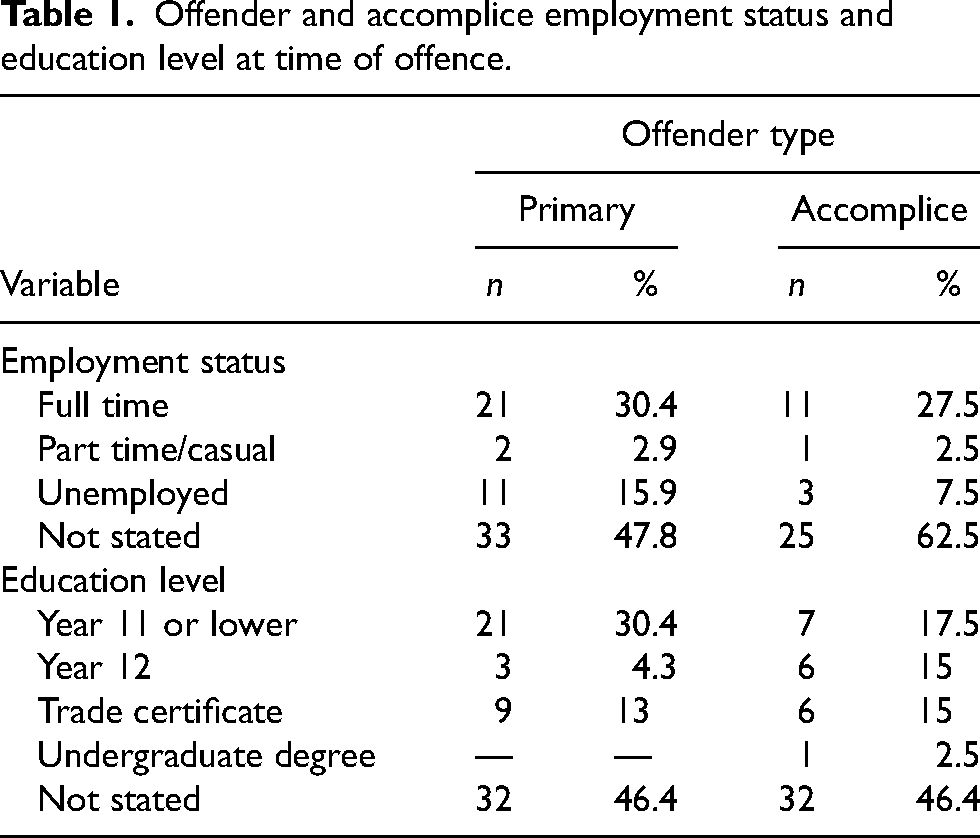
Although the number of female offenders in groups was higher than found in previous research into homicide, this was still within the realms of the norm with 77.1% of primary offenders being male (27) and 22.9% being female (8). The mean age for a primary offender was 32.26 years (SD = 8.78), with the youngest being 21 and the oldest 62; 31.74 years for males (SD = 9.14, range: 21–62) and 34 years for females (SD = 7.71, range: 22–47). Twenty primary offenders (55.6%) had a criminal history with a mean of 0.77 violent offences (SD = 1.48) and 4.83 non-violent offences (SD = 11.89). Males had lower rates of offending, with a mean of 0.48 violent offences (SD = 1.31) and 4.26 non-violent offences (SD = 12.15), compared with females, with a mean of 1.5 violent offences (SD = 1.76) and 6.17 non-violent offences (SD = 12.72). Of those primary offenders whose education and employment status were given in the data, the majority were in full-time employment and had achieved year 11 or lower at school (Table 1).
Offender and accomplice employment status and education level at time of offence.
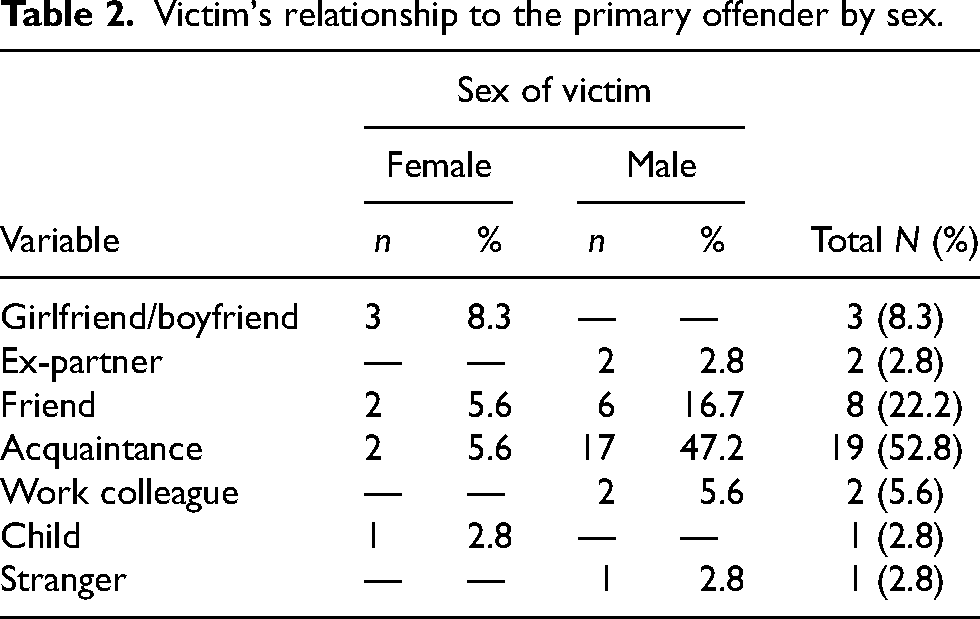
There were 36 victims in total: 28 male (77.8%) and 8 female (22.2%). Victims were of a similar age to offenders with a mean of 34.8 years (SD = 11.49, range: 6–56); a mean of 34.38 years for males (SD = 11.32, range: 7–56) and a mean of 36.75 years for females (SD = 13.29, range: 6–50). No data were available regarding the education level or employment status of victims. The majority of male victims were acquainted with their offenders, whereas female victims tended to have no particular pattern of relationship with their offender (Table 2).
Victim's relationship to the primary offender by sex.
Accomplices
Forty-one offenders could be classified as an accomplice (not the primary offender). Accomplices had a mean age of 31.46 years (SD = 10.67) with the youngest being 17 and the oldest 67. Of the accomplices, 38 were male (92.7%) and 3 were female (7.3%). The mean number of offenders in each group was 2.39 (SD = 0.77), with most groups containing two offenders (n = 25, 69.4%), followed by three offenders (n = 10, 27.8%); in one case there were six offenders (2.8%). Sixteen of the accomplices had a prior criminal record with M = 0.42 violent offences (SD = 0.92) and M = 9.73 non-violent offences (SD =28.74). Further, most accomplices were in full-time employment at the time of the offence and their education level varied, with a fairly even distribution across year 11 or lower, year 12 and trade certificate attainment (Table 1).
Murder and disposal locations
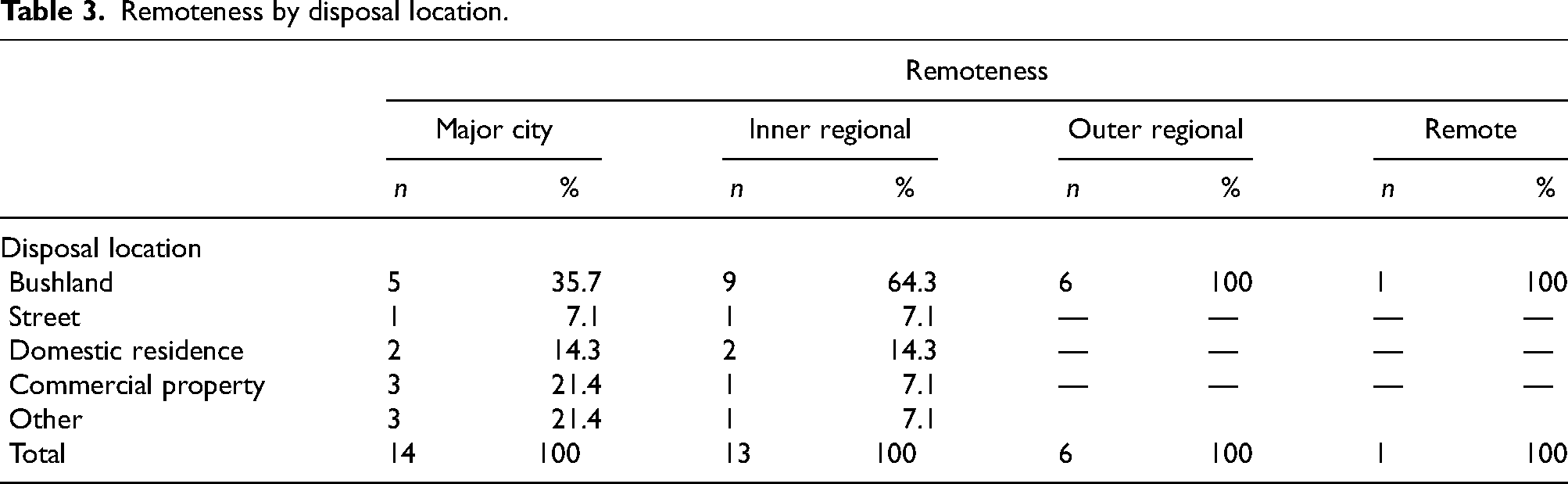
When examining the remoteness of disposal locations, it must be noted that indications of remoteness are not related to the distance between the murder site and the disposal site. A murder occurring in a major city and ending in the disposal of remains in a major city only refers to the remoteness of the location. Each event may have occurred in different major cities. Overall, 21 (63.6%) murders were committed in a major city, 10 (30.3%) in an inner regional area and 2 (6.1%) in an outer regional area. Of the murders committed in a major city, in 13 (61.9%) cases the victim's remains were disposed of in a major city, and in 8 cases (38.1%) victim's remains were disposed of in an inner regional area. Of murders committed in an inner regional area, one (10%) was disposed of in a major city, five (50%) in an inner regional area, three (30%) in an outer regional area and one (10%) in a remote area. Of murders committed in an outer regional area, two (100%) were disposed of in an outer regional area. Further, disposal locations varied depending on remoteness with the preferred location for using bushland to dispose of remains increasing with the level of remoteness (Table 3).
Remoteness by disposal location.
The mean distance between the murder scene and the deposition site was 57.18 km (SD = 785.85) with a minimum distance of 0.01 km (10 m) and a maximum of 306 km. Most groups used a personal vehicle to dispose of remains (n = 30, 83.3%), followed by disposal on foot or manually carrying remains (n = 3, 8.3%), taxi (n = 1, 2.8%) and boat (n = 1, 2.8%), with one case not stated. The mean time from the murder to disposal of the remains was 30.63 h (SD = 57.95) with a minimum of 1 h and a maximum of 240 h.
Site purpose
When analysing the case file for this study it was found that in many cases there were multiple deposition sites. In cases in which there was dismemberment, this could result in remains being disposed of in several locations. Further, cases also involved the deposition of the victim's personal effects (clothing, etc.) and the murder weapon. Overall, the mean number of sites used to dispose of remains or evidence was 1.61 (SD = 0. 87). This reflects 22 (61.6%) cases using only one site, 7 (19.4%) using two sites, 6 (16.7%) using three sites and 1 case (2.8%) using four sites. Of the 14 cases in which offenders used more than one site to dispose of evidence, 3 (21.4%) involved disposing of remains in multiple locations, 3 (21.4%) disposed of a weapon separate from the remains, 4 (28.6%) disposed of the victim's personal effects separate from their remains, 2 (14.3%) were used to dispose of the offender's personal effects and 9 (64.3%) used a site for temporary storage before moving remains to a final deposition site (moved remains from the murder scene). Temporarily stored remains were stored for a mean of 52 h (SD = 75.12), with the shortest storage time being 6 h and the longest 240 h. Of the nine cases in which offenders used temporary storage, six were used simply to hold remains away from the murder scene and three used the site to treat remains before permanent disposal.
Disposal methods and treatment of remains
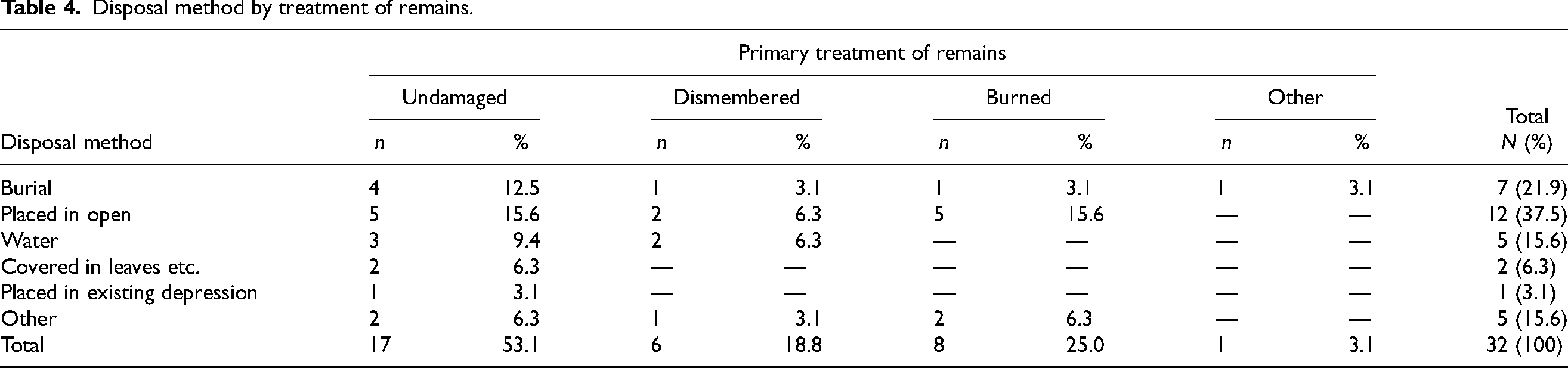
Most groups chose to use some form of coverage when disposing of the victim's remains (water, covered in leaves and twigs, etc.) with the largest proportion using a burial. However, 37.5% chose to place the victim's remains in the open without any coverage at all. Further, in more than half of cases, groups chose not to treat the victim's remains, meaning that no burning, dismemberment, chemical treatment (the use of corrosives or other substances to degrade remains) or other forms of degrading remains were used (Table 4). The most common primary treatment of remains was burning, followed by dismemberment. Only four cases involved multiple methods of treating remains, with two cases involving burning after dismemberment, one case involving dismemberment followed by burning, and then chemical treatment, and one case involving burning, followed by partial dismemberment and then chemical treatment.
Disposal method by treatment of remains.
Time to detection
The mean time from deposition to detection was 289.32 days (SD = 654). However, 50% of remains were located within 21–22 days. The shortest time to detection was 1 day and the longest was 3315 days (approximately 9 years) (Figure 1). When examining the treatment of remains and its impact on time to detection, the data were divided into two groups, those who treated remains and those who did not. In cases in which remains were not treated, the mean time to detection was 446.75 days (SD = 868.92) and for those remains that were treated prior to disposal, the time to detection was 92.77 days (SD = 190.54). An independent samples t-test was conducted to determine whether this difference was significant. The assumption of equal variances was breached and could not be rectified; therefore, a more conservative degree of freedom was applied. The difference between treated and untreated remains (M = 210.70, SE = 112.82) was found to be non-significant, t(15.34) = 1.868, p = .081; however, it did result in a medium-sized effect, d = 0.65. When examining the frequency of cases based on treated and untreated remains, and the time to detection in 30-day intervals, the detection rates for both were similar in the first 30 days. However, cases in which remains were not detected for more than 600 days were more likely to be those in which remains were untreated (Figure 2).
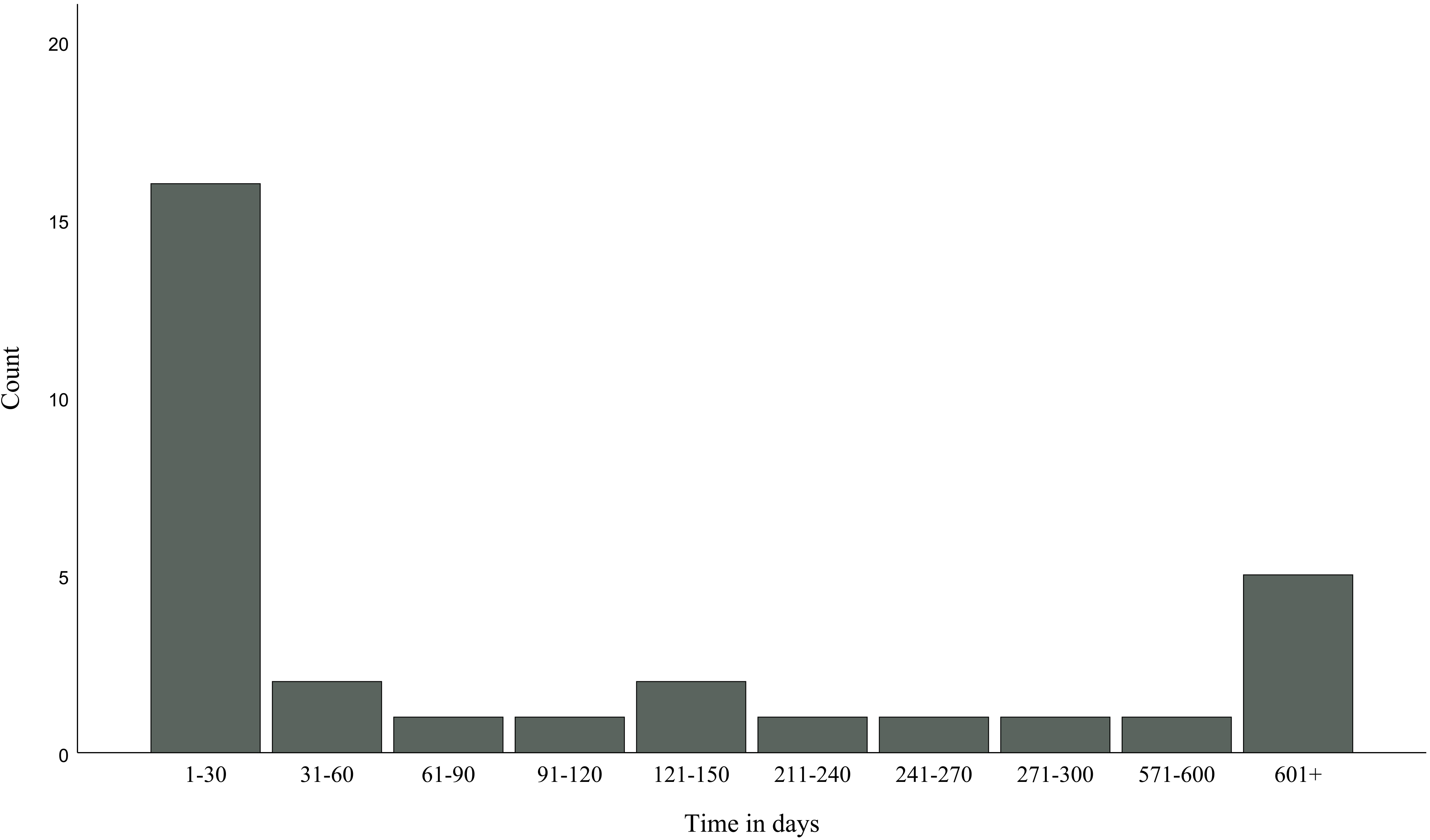
Time from deposition to detection.
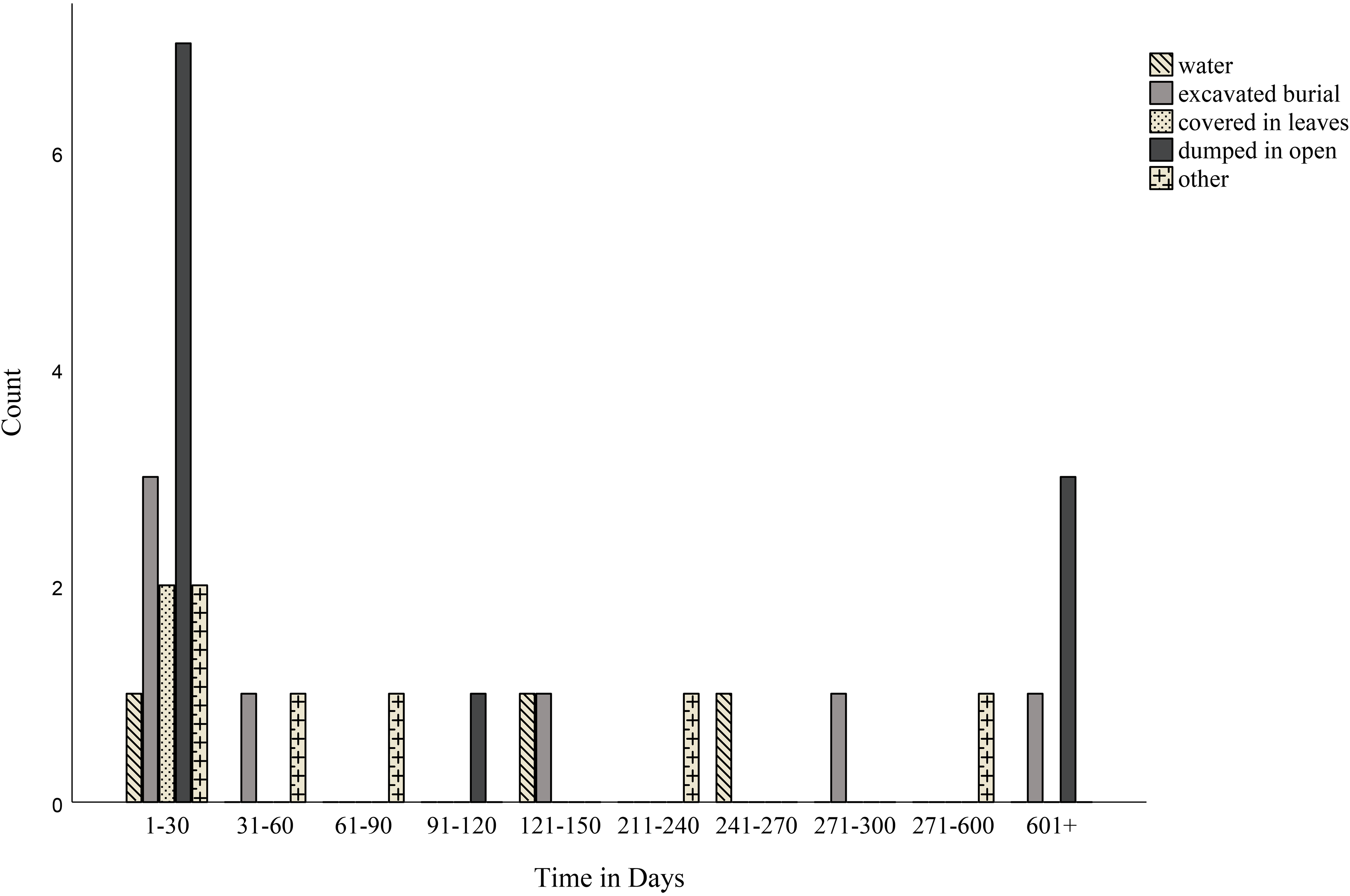
Disposal method and time to detection.
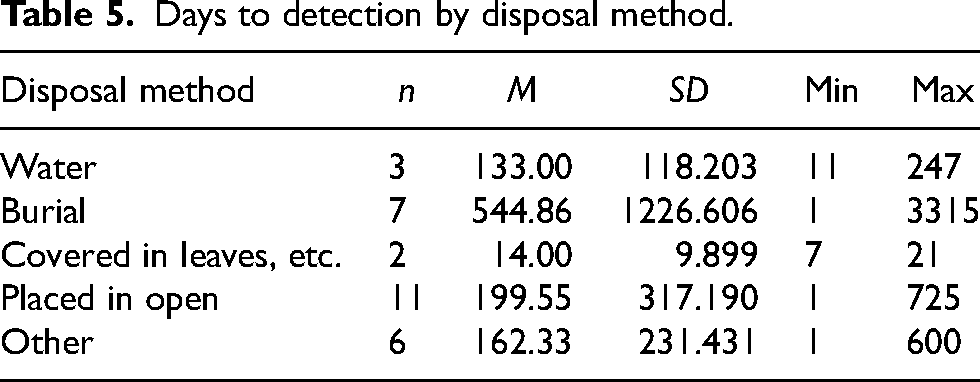
When examining the disposal method and time to detection, burials had the longest average time between disposal and detection, whereas remains that are covered in leaves and twigs had the least time to detection (Table 5). It must be noted that the range of days to detection for burials was large with the longest period being approximately 9 years and the shortest 1 day. When the time to detection is divided into 30-day periods, remains that are dumped in the open are most likely to be detected in the first 30 days, followed by burials, remains covered in leaves, and lastly remains disposed of in water (Figure 3). However, remains dumped in the open were also most likely to exceed 600 days until detection, suggesting that if remains are not found early on, there may be an extended period until detection.
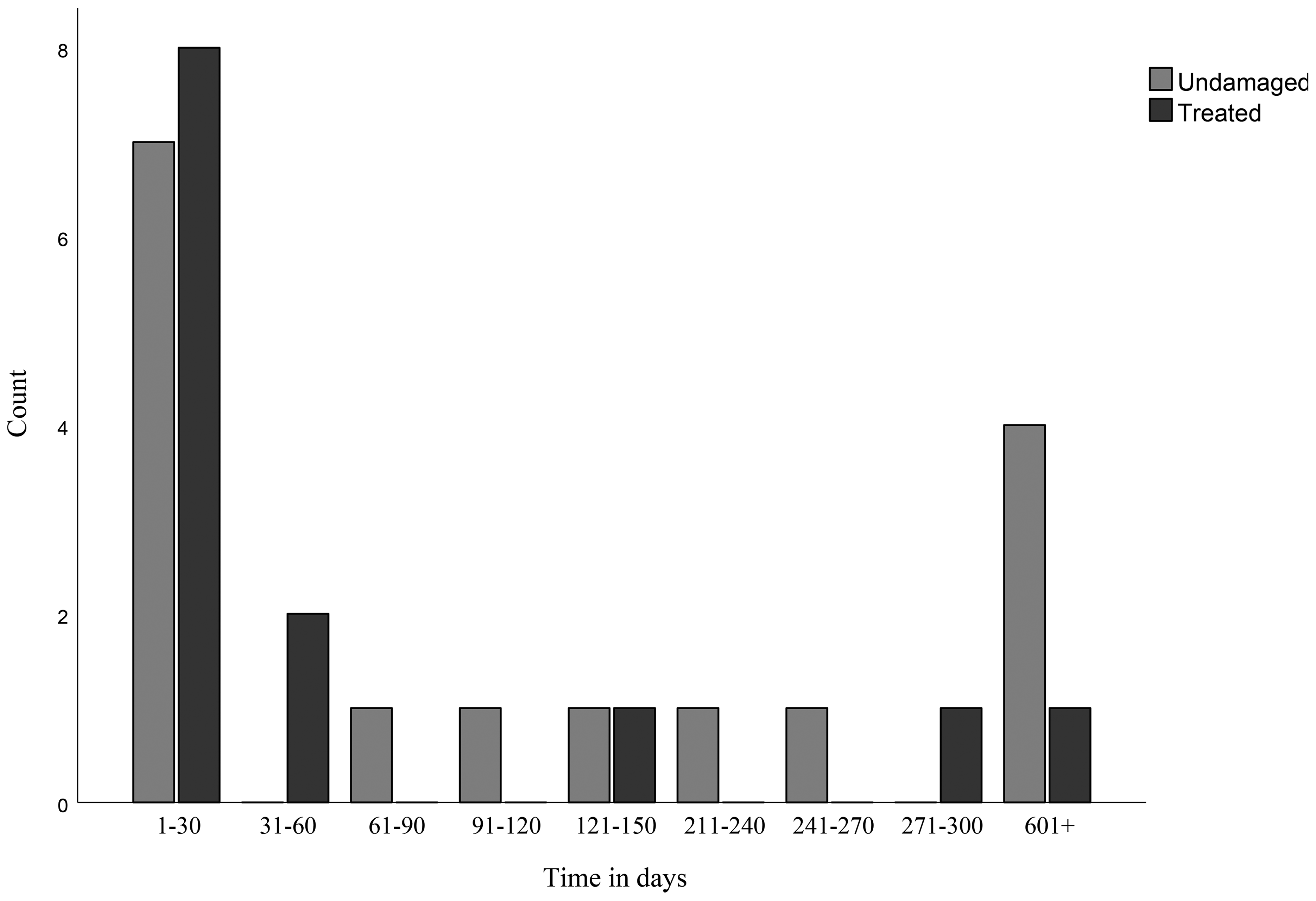
Treatment of remains and time to detection.
Days to detection by disposal method.
Discussion
Studying group-based offending is essential given the impact that group dynamics have on behaviour (Aramovich and Larson, 2013; Blanchard et al., 2020; Caspar and Pech, 2024; Götz et al., 2023; Milgram, 1974; Passani and Morselli 2009; Sloman et al., 2021). To date, no research has conducted a detailed analysis of group-based body-disposal behaviour, with previous research touching on only limited aspects. This article presents some of the key descriptors and behaviours of offenders who have been involved in a group-based body-disposal task. Contrary to previous research into group-based offending, the average age of both a primary offender and accomplice is early 30s. In the specific case of homicide, this is an interesting finding because group-based homicide tends to involve offenders who are young, in many cases adolescents (Khachatryan et al., 2016). However, this was not the case when compared with solo offenders who disposed of remains, with the age of an offender also being in the early 30s (Lee and Park, 2019). Although it cannot be determined in this article, it is possible that this difference in age reflects a difference in motivation. Perpetrators of homicide tend to be more impulsive than other types of offenders (Armiya’u et al., 2020; Hanlon et al., 2013; Felson and Massoglia, 2011); however, when murder includes disposal of a body, it can be reflective of a planned murder (Lee and Park, 2019; Pecino-Latorre et al., 2020; Ploeg et al., 2024). This is consistent with age-related motivations, with younger group offenders in general being more likely to murder impulsively, and this possibly explains offenders vacating the scene without disposing of the remains. Older offenders may be more likely to murder with intent and in turn have a pre-existing plan around how to deal with the victim’s remains. In cases in which an older offender murders impulsively, it may be that they have pre-existing knowledge or plans that are put into action as the need arises; i.e. implicit planning (Ward and Hudson, 2000).
Victims tended to be older than their offenders, which is consistent with previous research. However, when examining gender, and the relationships between victim and offender, it was found that male victims tend to be acquaintances of their offenders, whereas no pattern appeared with females. Regarding male offenders, this differs from the findings of Sea and Beauregard (2018), who found that half of group body-disposal cases involved a stranger victim. This difference may be due to types of offending, with strangers being more likely to be victims of gang-related crime and murdered purely by association with a rival gang, compared with drug-related crime where acquaintances may be customers or associates of organised crime groups who are murdered because of some breach of agreement.
In relation to female victims, the absence of ex-partners and spouses as offenders differs from current data on homicide, with 82% of female homicide victims being murdered by an intimate partner (United Nations Office on Drugs and Crime, 2019). This may be reflective of the individual nature of domestic relationships and the likelihood that another party would be involved in the murder or body disposal. If a husband kills his wife, it is unlikely that there is someone they could call upon to assist with the disposal of remains compared with circumstances in which the victim is an acquaintance. This is also the case with those present during the murder, who are likely to have a close personal relationship with the victim and the perpetrator.
The remoteness of the disposal site in relation to the murder site demonstrated that offenders tended to dispose of remains in circumstances similar to those where the murder occurred. It is logical that most murders would occur in a major city, simply because of population, but it is surprising that more remains were not moved from a major city to a regional or remote location where there are fewer people who might detect the act of disposal, or the remains. This fits with the concept of satisficing (Simon, 1990); offenders may look for the first site that adequately suits their needs, rather than seek the best possible site for disposal. In a major city there are many options that might be suitable for body disposal, such as tracts of bushland, lakes, rivers or parkland. Further, offenders are most familiar with potential sites that they have encountered during their routine activities conducted in the city in which they reside. This was reflected by the number of homicides and disposal in commercial properties such as industrial sites (workplaces) and the tendency for offenders who murdered in more remote locations to favour bushland.
Groups favoured simple disposal methods such as placing remains in the open, in water or covering remains with leaves and twigs, with the majority of remains being undamaged. This is not indicative of a complex decision-making process that might be expected in a group setting. Instead, this is more consistent with an unplanned activity, where the murder has occurred because of an impulsive or unexpected act and rapid choices need to be made. However, when looking at the time to detection, more cases of simple disposal tended to remain undetected for 600 days or more, compared with other disposal methods. Interpretations of disposal methods and the time to detection should be interpreted cautiously as an analysis of successful evasion of detection. Although previous research has examined the time from death to detection in terms of disposal methods, it has not involved timeframes of this length (Chapman et al., 2022; Real and Beauregard, 2019). Operational decisions taken by investigators relating to allocation of resources for searches vary on a range of factors unrelated to search difficulty (Regoeczi et al., 2008).
A novel aspect of this article is the broader examination of disposal behaviour in terms of the disposal site. In many cases, offenders used multiple sites for disposing of dismembered remains, victim’s personal effects, the murder weapon and/or their own personal effects. This is an important factor because it indicates differences in decision-making. The choice to use multiple sites versus a single site has been studied in animal and human populations, such as hiding resources from competitors (Dally et al., 2005; Gálvez et al., 2009; Wilke et al., 2015), much of which can be applied to body disposal. A distributed method of hiding, using multiple sites, increases the likelihood of a cache being located, but provides the benefit of minimising loss if one site is detected (Gálvez et al., 2009). Alternatively, hiding everything in one location reduces the likelihood of the cache being detected, but if it is detected, everything is lost. Offenders may use multiple sites as a way of separating key evidence and increasing the difficulty of identifying remains or items linked to the offence. Essentially, the probability of finding a very small deposition site such as a victim's hands, key evidence for identification, should be much lower than finding a deposition site with complete remains. This also applies to the disposal of other key evidence such as the murder weapon or the offender's and victim's effects.
Another novel finding was the presence of temporary storage of remains. Although detailed analysis of the purpose of a temporary storage site is outside the scope of this article, it is a previously unstudied behaviour that warrants analysis in future research. Most temporary storage sites were used to hold the victim's remains for a period before disposal. It is unclear what temporary storage achieved but it may have been a way of quickly removing the key evidence from the murder scene and allowing additional time to locate a suitable deposition site. Three of the cases used the temporary site to treat the remains before disposal. The logical explanation for this behaviour is that the murder scene may not be suitable for undertaking actions such as dismemberment because of a lack of suitable resources (cutting tools, etc.) and that the process may take some time, so might require a site that is unlikely to result in detection while in action.
Implications for practice
This research provides a base for investigators providing insight into who group-based offenders are and how they conduct body disposals. The identification of temporary disposal sites offers investigators another source of forensic evidence to assist in piecing together the actions of offenders and adding to the pool of evidence when building a case. Further, homicide offenders who dispose of remains tend to be older than those that do not, suggesting that their motivations may differ from those of younger offenders and indicates a level of planning. This further serves investigators in understanding offenders in these cases. Finally, the novel approach of separating disposal behaviour from treatment of remains offers a new way of conceptualising how offenders deal with remains and expands on previous research into these phenomena.
Limitations and future research
The main limitation of this research is the small sample size. Although 36 cases is a substantial sample for a crime of such rare occurrence, it does not allow for a complex analysis given the number of variables presented. Further, given the similarities in terms of age and gender distributions in this study compared with those found in other studies containing larger samples of individual body-disposal cases, there is an indication that this study contains a representative sample of group-based body-disposal offenders. Future research could involve a larger sample size, perhaps using cases from other jurisdictions with similar cultural and geographic circumstances.
The choice to use case summaries, sentencing documents and media reports to analyse these types of cases limits the level of detail that is provided for analysis. However, it must be noted that summaries of relevant forensic reports are found in these documents, further courts aim to establish the facts of the case in an objective assessment of the evidence that may not be found in other sources of information such as police reports. Further, sentencing documents clearly delineate between what are established facts and what have been determined as probable courses of action taken by the offenders. Future research might consider using coroner's reports in addition to the documents sourced in this research; however, this may further reduce the sample for analysis.
Finally, there is a need to examine the inner workings of groups in these cases. Factors that could not be addressed with the data were the level of offending experience and forensic knowledge contained in the group, which may impact the amount and quality of planning and decision-making in the disposal process. Further, the number of resources available to the offenders such as access to equipment and chemicals to treat and dispose of remains could not be determined from the available data. Also the presence of group-based body disposal raises questions around how these groups form to carry out such acts, and what dynamics occur in the decision-making process. Future research should focus on unpacking these topics to assist in generating knowledge to inform police investigators.
Footnotes
Declaration of conflicting interests
The author declared no potential conflicts of interest with respect to the research, authorship, and/or publication of this article.
Funding
The author disclosed receipt of the following financial support for the research, authorship, and/or publication of this article: Dr Nathan Ryan is the recipient of an Office of National Intelligence National Intelligence Postdoctoral Grant (project number NIPG-2023-008) funded by the Australian Government.
Ethics statement
This article does not contain any studies with human participants or animals performed by any of the authors.
