




Abstract
Despite facing extraordinary emotional demands, limited research has been conducted on homicide investigators in England and Wales. This qualitative study explores the unique challenges experienced, focusing on well-being and coping strategies. Five detective sergeants participated in semi-structured interviews, with results highlighting influences on well-being. Both positive and negative themes emerged, including intrinsic motivations, emotional preparedness and operational stress. Discussions around the diverse coping strategies employed by homicide investigators emphasised the importance of developing tailored support programmes to address the multifaceted challenges they face. Expanding on this research, encompassing a larger and more representative sample of homicide investigators, is encouraged for deepening our knowledge and allowing for evidence-based support to be employed for these dedicated professionals.
Introduction
Homicide investigators are the ones to bear the weight and responsibility of dealing with some of the most heinous crimes. Investigating homicide falls under the department of Major Crimes (Innes, 2012), which encompasses various offences, including but not limited to: missing persons, where it is believed they have been murdered; rapes, where the suspect is unknown; and suspicious deaths. Investigators dedicate substantial time to meticulous data collection, compiling detailed reports, analysing evidence and conducting multiples rounds of interviews (Van Patten and Burke, 2001). Beyond the procedural aspect, confronting graphic scenes and navigating the emotional trauma of victims’ families and witnesses presents significant psychological challenges. Investigators operate in an environment heavily charged with human tragedy, demanding remarkable resilience and emotionally intelligent interactions. Although the general public might perceive police work, homicide in particular, as ‘glamorous and exciting’, Huey and Broll (2015) suggest that individuals in the line of work do not.
Research examining the effects of well-being on homicide investigators remains notably scarce. Within this limited body of research, the focus often revolves around comparing the impact of child and adult homicides (Roach et al., 2017). Despite the comparative nature, understanding the well-being of homicide investigators as a whole remains relevant, because it ultimately pertains to their primary duties in handling homicide cases. The job demands–resources (JD-R) model (Bakker and Demerouti, 2007), and the conservation of resources (COR) theory (Hobfoll, 1989) provide complementary perspectives that can be applied to the understanding of the well-being of homicide investigators via a holistic approach. The JD-R model suggests that high job demands, such as exposure to trauma, deplete personal resources and can lead to burnout. However, suitable job resources, such as colleague support, can be a buffer to the negative effects. The COR theory suggests that individuals aim to protect and preserve their own resources. For the investigators, personal resources are at risk, causing negative impacts to occur when these are threatened, requiring coping strategies to conserve, or if needed, replenish them.
Operational stress is a key factor impacting the well-being of homicide investigators. Lazarus and Folkman's (1984) transactional model of stress and coping defines operational stress as a complex interaction between the individual and their environment, in which the demands of the situation are perceived to exceed said individuals available coping resources, thus jeopardising their well-being. For homicide investigators, operational stress is almost inevitable because of the nature of their work; exposure to traumatic events – both first- and second-hand, handling graphic crime scenes, as well as the rooted pressure to solve the complex cases (Cronje and Vilakazi, 2020).
This operational stress can manifest in specific forms, such as secondary traumatic stress (STS), and post-traumatic stress disorder (PTSD), both of which have been documented among police personnel exposed to death (Kuch et al., 1995). Studies have shown that a concerning percentage of these individuals meet the criteria for PTSD, indicating the severe impact on their mental health. For example, Martin et al. (1986) found that 26% of their participants experienced PTSD symptoms, whereas MacEachern et al. (2019) reported that 51% experienced STS to a certain degree. Specific symptoms of STS can include feeling upset by reminders of work, emotional numbness, trouble sleeping and increased irritability (Bourke and Craun, 2014). Cartwright and Roach (2022) further discussed these manifestations. They highlighted how their participants reported experiencing heightened emotional reactions, intrusive thoughts and a notable impact of the intense pressure to solve their cases, demonstrating the significant emotional distress that can be experienced by homicide investigators.
The nature of a career in homicide investigation can have a negative impact on detectives’ social well-being. Cartwright and Roach (2022) noted how their participants reported heightened emotional reactions and case pressure, and how they often strain personal relationships, struggling to separate work and home life. The long and unpredictable hours additionally hinder their ability to engage in social activities, creating a sense of isolation, especially from loved ones (Roach et al., 2017).
It is important to acknowledge that the impact of investigative work on the well-being of individual investigators varies significantly from person to person. Disturbing content or traumatic experiences will have a differential impact on individuals and not necessarily traumatise everyone in the same way. Furthermore, the basis and details of an investigation will never be the same, meaning not all detectives are exposed to the same content. Homicide investigator well-being manifests complexly. It is apparent that support and coping mechanisms will vary depending on personal experiences and level of emotional resilience.
This highlights the multifaceted impact of their work on homicide investigators’ well-being, from emotional to social, covering operational stress, mental health and disruption to their social lives. The severity of these impacts varies, underscoring the need for deeply understood coping strategies to promote the emotional resilience needed in this field.
As addressed previously, the transactional model of stress and coping, developed by Lazarus and Folkman (1984), provides a framework for an understanding of the role of coping mechanisms. Emphasising the interplay between the individual and their environment, this model highlights that emotional and behavioural responses are shaped by the cognitive appraisal of a situation. According to this model, coping mechanisms can be classified into two wider categories: problem-focused coping, which involves taking action to address to source of the stress – the work itself; and emotion-focused coping, which aims to regulate the emotional responses to a situation.
Detachment has been widely recognised as an emotion-focused coping strategy used by detectives, encompassing subtypes such as denial and avoidance. These strategies, which stem from desensitisation, have been frequently researched. Gumani (2017) suggests that these detachment-based approaches are often employed unconsciously, potentially as a result of prolonged exposure to distressing material. This notion is further echoed by Van Patten and Burke (2001), although they argue that that detachment can also be a learned and conscious strategy. In this conscious application, investigators may trivialise the importance of deceased bodies, thus distancing themselves from the emotional impact and prioritising the cognitive demands of the task. Furthermore, Cartwright and Roach (2022) identified the use of avoidance coping strategies, including detachment, among investigators. Although these emotion-focused coping mechanisms may provide immediate relief and promote objectivity, Mrevlje (2017) cautions that they can lead to unfavourable long-term consequences, such as burnout or depression. However, it is important to recognise how it could be beneficial in managing immediate emotions during challenging situations.
Research on alcohol use among police officers presents a complex picture. Although some research, such as Naimi et al. (2003) and Rees and Smith (2008), suggests a slightly higher prevalence of binge drinking (defined by Lannoy et al. (2021) as ‘a pattern of episodic alcohol use characterised by strong alcohol intake during a short period’) among police personnel, others like Lindsay (2008) report no significant difference. Despite the inconsistencies in prevalence, some research suggests that a significant portion of police officers use alcohol as a coping mechanism for the stress encountered in their line of work. Sibisi et al. (2022) found alcohol to be a primary emotion-focused coping mechanism. However, it is crucial to consider the type of alcohol use. Responsible social drinking, within recommended guidelines, can be part of healthy emotional processing and social interaction (Barry and Goodson, 2010). However, abusive alcohol use, exceeding limits and leading to negative consequences, can exacerbate existing problems and ultimately hinder an officer's ability to cope effectively (Windle and Windle, 2015).
Research points towards a variety of healthier coping mechanisms that offer long-term benefits for those faced with occupational stress. Waters et al. (1982) highlight the importance of building a dependable support network of family, friends and colleagues who offer understanding and validation. In addition, honing communication skills allows for effective expression of thoughts and feelings, aiding in stress reduction. Although Craun et al. (2014) recognise the initial relief provided by social support, they suggest greater long-term success in managing stress symptoms through proactive resilience-building.
Research suggests that incorporating regular exercise into their routine can be a useful tool for managing the nature of officers’ work and its impact on their well-being. Craun et al. (2014) discuss the correlation between STS scores and exercise; it was found that there was a positive correlation between higher levels of activity and lower STS scores. Given the extensive body of research demonstrating the stress-reducing benefits of exercise from a broader point of view (Jackson, 2013; Qiao and Huang, 2022), this outcome is unsurprising. By building resilience and fostering healthy coping mechanisms, exercise can empower detectives to navigate the challenges of their profession with greater emotional well-being.
Detectives may use a range of coping strategies to address the emotional demands of their work, from detachment and alcohol use to practices such as support networks and exercise. Understanding these and their potential benefits and longer-term impacts is crucial for promoting well-being within this profession.
Although training and guidelines provide thorough instruction on the technical elements of investigations, the unique emotional toll experienced by homicide investigators, and the coping mechanisms they require, have received less attention. This study aims to focus on this gap, addressing the need to understand the emotional well-being and coping strategies in relation to this.
Despite their crucial role, resources such as the Murder Investigation Manual (ACPO, 2006) offer no guidance on managing the emotional and cognitive toll of these investigations. This is concerning, considering studies reveal how stress-induced biases can lead to erroneous decision-making and investigative failure (Rossmo, 2008), as well as how well-being burnout-induced cognitive decline hinders information processing and accurate decision-making, essential skills for police work (Ramirez-Baena et al., 2019).
Based on an understanding of their experiences and coping mechanisms, the development of evidence-based tailored support becomes possible. This could lead to improvements in both the emotional well-being of investigators and the effectiveness of investigations, ultimately contributing to the fulfilment of the legal process and enhancing their emotional preparedness for future investigations.
Method
Participants were recruited using convenience sampling. They were recruited from a police force within England. Access to these individuals was through a gatekeeper – the head of Major Crimes, dependant on their operational availability. It should be noted that gatekeeper permission was not a substitute for the participants’ individual consent, and it was made clear that participation was voluntary.
Owing to operational availability and time constraints, five investigators participated in this study. This represents just under half of the total workforce in this specialised role. This limited pool underscores the value of each participant's contribution and highlights the comprehensiveness of our findings within the context of this specific unit. To qualify as participants, individuals were required to actively occupy the position of detective sergeant in the receiver role at the time of the interview and possess practical experience in handling homicide cases. No additional exclusions were considered within these specified criteria.
After obtaining approval from the gatekeeper, a study advertisement was sent to said gatekeeper, who subsequently shared it with individuals meeting the criteria and having operational availability. Online interviews were then scheduled with respondents who expressed an interest in participating. The interviews were conducted on Microsoft Teams, and verbal consent was gathered. The use of Teams made it easier for the participants to take part in the research; however, it did limit the researchers’ ability to observe factors such as body language. The use of semi-structured interviews was chosen to allow for in-depth exploration of the investigators’ emotional well-being and coping strategies in relation to this. Transcripts for analysis were generated from audio-recordings of these interviews, each comprising ten open-ended questions. Some questions were accompanied by follow-up prompts, designed to encourage participants to provide additional details or elaborate further on specific points. The questions covered the homicide lead investigator's role, experience, motivations, emotional preparation, well-being impact, positive aspects, peer support, coping differences based on experience and preferred resources. The questions were formulated with the intention of minimising the potential for causing distress. Each interview lasted around 20–30 minutes.
Prior to the interviews, the participants were made aware of their right to withdraw, and how this could happen at any point during the interview. After the interviews concluded, a reminder was provided about their ongoing right to withdraw, extending until a week after the interview.
Thematic analysis (Braun and Clarke, 2006) was chosen as the analysis method. It was suitable for this study because it facilitates a comprehensive exploration of the diverse and open-ended responses from homicide lead investigators, allowing for the identification of patterns and themes across various aspects of their experiences, thoughts and coping strategies. This analysis technique consists of six steps.
Before initiating the procedural steps, verbatim transcriptions of the audio-recordings were completed. This allowed for the beginning phase of thematic analysis to commence. This involved becoming familiar with the data by reading all transcripts multiple times in a thorough manner. Next, codes were generated by identifying features, patterns or phrases present throughout the entire data set, ensuring that the exact words of the participants were quoted to accurately represent their thoughts and experiences. Subsequently, themes were derived based on shared patterns or meanings, then reviewed and refined. Following this, they were named.
Prior to starting data collection, the study was given ethical approval by the university's ethics panel. To avoid any perceived pressure on participants selected for operational availability, a non-coercive approach was implemented. Among those with operational availability, a study advert was sent, granting them the autonomy to decide whether to participate. It was also explicitly conveyed that their choice not to participate or to withdraw from the study would not negatively impact their relationship with their line manager or affect their professional connections.
Attention had also been directed towards potential psychological impacts on participants stemming from their past experiences in homicide investigations. Recognising the potential for discomfort or distress, an informed consent process was implemented. Each participant was required to verbally provide their informed consent, signifying their full comprehension of the study's objectives, potential risks and benefits. To minimise the risk of psychological distress, participants were explicitly informed before the start of the interview that the discussion would focus solely on their feelings and coping mechanisms rather than specific cases. It was emphasised that the intention was not to delve into case details. Participants were assured of their right to withdraw from the study at any point during the interviews without any consequences, and up until one week following. In addition, they were told they could request a break at any point.
Moreover, participants were equipped with information and contact details about available support services including police-specific ones, ensuring that they were aware of resources that could assist them in coping with any emotional challenges that may have arisen during or after the interviews. This proactive approach aimed to prioritise the well-being and comfort of the participants throughout the research process.
Results
Five transcripts were used in the final data analysis. The lengths of interviews ranged from 17 to 27 minutes. Demographic information was collected at the outset of the interviews (Table 1). Of the five participants, three were male and two were female. Participants had variable amounts of experience in terms of how many homicide cases they had been involved in as well as the number they had been the officer in charge/officer in the case (OIC).
Participant demographic information.
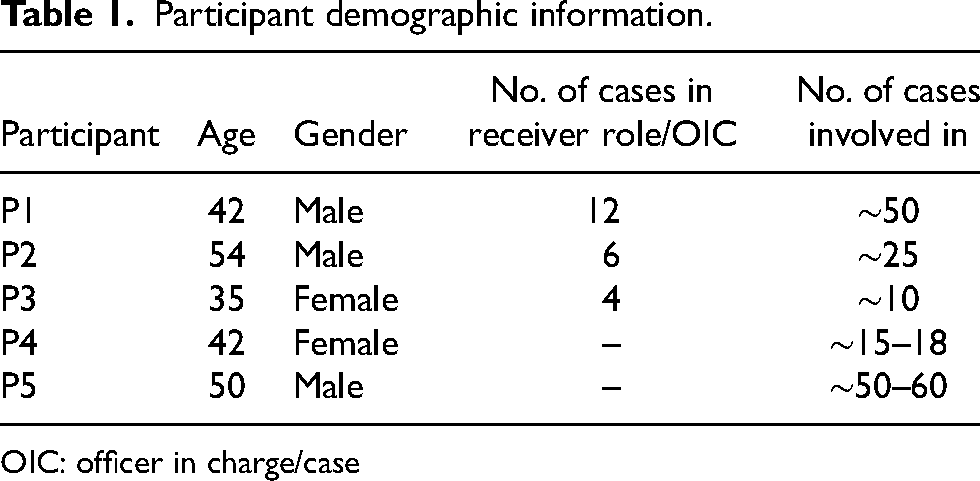
OIC: officer in charge/case
Themes and subthemes.
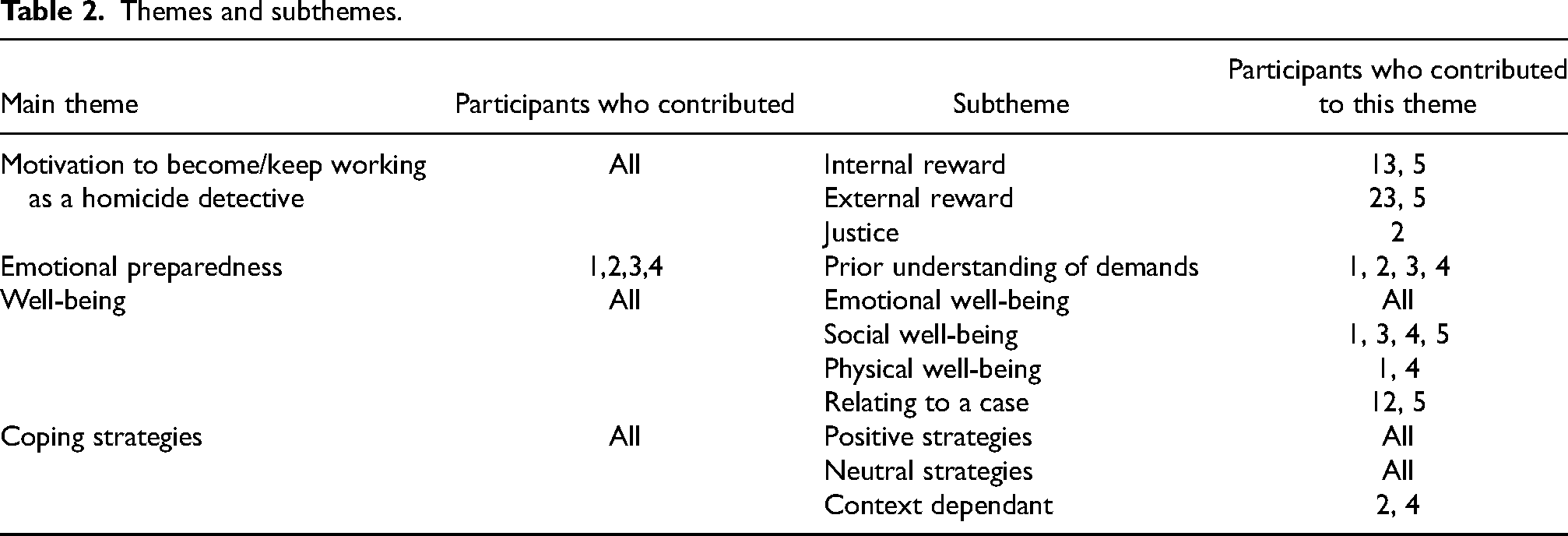
Table 2 provides the main themes and subthemes from the analysis.
Motivation to become/keep working as a homicide detective
Internal reward
Fulfilment stemming from the work itself was a strong motivational factor in the detectives; positive sentiments were consistently expressed, finding it enjoyable and valuable. Participant 5 used phrases such as ‘huge job satisfaction’ and ‘you don’t do this job for eight years unless you enjoy it’, highlighting this perspective. In addition, the knowledge that their efforts contribute to the safety of the public appeared to further enhance their personal experience; ‘Obviously I get satisfaction from the results at court’ (participant 4). It is satisfying that you’re locking up people that are really dangerous and shouldn’t be walking the streets. (Participant 4)
Beyond job satisfaction, the interest in investigating homicides emerged as another motivator, being described as ‘the most interesting crime to solve’ (participant 1). Stemming from the complexity and unique nature ranging between investigations, they offer intellectual challenge. Participant 4 describes themselves as being someone who ‘likes to put a jigsaw together’, which is what being a detective is ‘in essence really’. This is echoed by the quote ‘you get time to investigate things properly’ (participant 5), suggesting there is less time pressure compared with other investigative roles.
External reward
For some, an extrinsic motivator was the recognition associated with the job. Participant 2 described working in the Major Crimes Unit and investigating homicides as the ‘pinnacle of being a detective’, whereas participant 5 mirrored this sentiment, viewing it as the ‘upper echelons of being a detective’. The pursuit of justice emerged as a compelling driving force, encompassing not only individual victims, but also the wider community. Some of the detectives demonstrated a strong commitment to supporting those affected by the crime, striving to ‘get justice for the family’ (participant 2). […] that's why we do the job, is to try to assist the wider sort of family. (Participant 2)
Following this, a desire to contribute to a more just society is highlighted by both participant 5, saying ‘You know that you’re doing something for the greater good’, and participant 2 who ‘wanted to kind of give something back and […] look after the people’.
Emotional preparedness
Several of the participants expressed concern over insufficient exposure to the types of potentially traumatic material frequently experienced in the Major Crimes Unit as putting detectives more at risk of having their well-being impacted by the work. Participant 4 felt this way, describing their perceived trend in which ‘detectives are becoming detectives a lot younger’ and as a result ‘their exposure to things isn’t as high’. This participant viewed them as not seeming ‘robust enough’ to deal with the work. Participant 2 also viewed this exposure as being helpful for dealing with the harsh content experienced in the Major Crimes Unit; ‘the resilience that you’ve developed or not developed would assist you coming in, coming into Major Crime’.
Again, the lack of experience was viewed to be paired with potential underestimation of the intensity brought by the nature of the work. Participant 4 spoke of concerns in which newer detectives ‘don’t always understand the demand on the hours and things like that’. However, not all participants held this view. Participant 2 contrasted it completely, saying that ‘most of them come in with their eyes open’. Another stated a more obvious assumption; ‘you don’t come to Major Crimes, and you don’t investigate homicide because it's easy and straightforward’.
Well-being
Emotional well-being
All participants noted an impact on their emotional well-being as a result of their job and its contents. The majority discussed feelings of a constant pressure, described as ‘a steady trickle’ (participant 1), in relation to factors such as ‘get[ting] the result’ (participant 4) and ‘putting all of that together in a in a case summary for people that […]have studied law for 40 years’ (participant 3). Participant 2 suggests that its ‘working pressures that affects [detectives] more than the than the subject matter on a larger scale’.
Several long-term impacts arose from the interviews. It is evident that the work content lingers; participant 5 stated this clearly by saying ‘there's certain jobs that can stick with you’, whereas another participant stated that ‘Theres clearly batshit locked away in my brain’ (participant 2). One participant shared an anecdote about a former long-term member of the Major Crimes Unit who ‘didn’t realise how much work was actually impacting him until he stopped’ (participant 4). As a person, I probably changed. I’m less sensitive or I hide my emotions more than maybe I used to do. (Participant 2)
Participant 1 spoke about desensitisation, both within themselves and others, acknowledging that there is a potential of becoming ‘desensitised to that sort of trauma’. Similarly, for a small number of long-term detectives, the participant pointed towards the possibility that they became ‘completely desensitised’ and ‘just don’t care anymore’. In contrast to this, over half of the detectives frequently mentioned the consuming and emotionally draining nature of the work. Participant 4 states that the work is ‘emotionally draining’, as well as participant 2 speaking of their well-being impacts, saying ‘some of it is clearly emotional fatigue’. I personally just find it all consuming and it literally just takes over. (Participant 3)
Further negative emotions were associated with the job. In terms of subject matter, participant 3 describes it as ‘evoke[ing] that emotional reaction’, while dealing with the family causes the detective to ‘feel their grief’. Participant 2 emphasised the loneliness the job can bring, bringing it up twice: ‘the Sergeant Role could be quite lonely’, ‘often working on your own late into the into the night and that could be quite a lonely place at times’. Despite this, positives were spoken about. Enjoyment of the work was a prominent factor: ‘I enjoy my work’ (participant 5) and ‘I do also really enjoy it’ (participant 4). Participant 1 went as far as saying they have ‘not been happier’ from a combination of the ‘style of working, interesting work’ and ‘flexibility to manage my home life’. [I]t's more just down to individuals […] everyone's got their own emotions and how they cope. (Participant 5)
Social well-being
Many of the detectives spoke about the time-consuming nature of the job and the impacts on relationships. Participant 5 voiced how ‘the hours can be horrific’, and this was echoed by participant 1 ‘the long hours’ and participant 3, who explained that they are ‘not at home very much’. The extent of the hours was spoken about by two participants: ‘that's six months you are every single day you know 12/13/14/15 however long it is hours a day working on that investigation’ (participant 3) and ‘It's not unusual to work 16-h days’ (participant 5).
Participant 4 spoke of how these hours have ‘impacted [their] personal… I’ve had to cancel things or, you know, other half isn’t happy about I’m not home’. Similarly, participant 5 said ‘plans can go out the window depending on the timing of when a when a job drops’. Participant 3 acknowledged that they go through periods where they have to ‘sacrifice’ being at home, but that it causes them to ‘appreciate the people [they’re] around, [their] friends and family’. Participant 1 appears to have a different experience, saying ‘the accessibility of flexibility of hours that we work, it's been really beneficial for my home life’.
Relating to a case
Cases with a personal twist in them appear to strike a chord in many. Participant 1 expressed this, saying ‘I’ve got a young family, so you know you. When you’re dealing with the death of an infant and then you’ve got your own children… When you get home, it gives you a momentary pause for thought’. Explaining the effect on well-being, participant 2 said ‘I think it tends to be more situational for people […] I think that the things that affect… that cause the effect of things may have a personal ring to them’.
Coping strategies
Positive strategies
All participants spoke of using healthy coping strategies. Several highlighted the use and importance of exercise for managing the emotional demand of the job. Participant 5 describes the long-standing use of exercise: ‘I’ve always been quite keen on exercise. So that's always played a role’, and expressed the value of fitting it in, saying ‘If I ever get an opportunity to get some exercise between the long hours, then I’ll make a point, even if it's just going for a late-night walk’. This participant acknowledged the impact it has on their emotional and physical well-being, that the exercise ‘gets your endorphins up’ and ‘makes it an easier and easier to get some sleep’. Participant 2 also expressed how exercise helps them to ‘reset’ and be ‘ready to go again’.
All spoke of the significance of colleague support in navigating the emotional challenges of the job. The value of informal interactions was emphasised, such as having ‘a chat with the boss’ or ‘going for coffee’ (participant 2). These conversations were describes as being a ‘pressure valve release’, a way of ‘processing it’ (participant 2) and being a ‘de-stressor’ (participant 3). Participant 4 spoke of the importance of having a more formal communication with colleagues, being able to ‘have that police chat with them, debrief sort of jobs’. It's definitely a benefit to have people who know have been what I’d say in the trenches with you, who know what you’re going through. (Participant 5)
Some spoke of appreciating having an experienced colleague who can offer guidance and support, participant 3 explained this, saying ‘he's done Major Crimes for a long, long time. So, he's always a bit of a de-stressor and just to talk things through’.
Family and friends were spoken about as another means for grounding and support. The sense of normalcy provided by those outside the police force was valued, with participant 4 saying ‘I love hearing that the worst part of their day was something not being on the Sainsburys shop floor […] it just gives me that normality of oh not everyone's trying to go about killing each other’. Participants 2 and 4 both spoke of having a ‘core group of mates that have nothing to do with the police’ who are good for talking about ‘anything else’ (participant 2) other than work. Beyond offering a break from the impacts of the work, ‘having that stability back in your personal life is massive’. The friends and family that are non-police are just… You know that that's what I find is the best coping for me, really. (Participant 4)
Some work welfare support was praised, such as the ‘welfare dog’ who ‘is a quite effective barrier breaking down mechanism’ (participant 2). However, participant 2 noted the potential drawbacks of structured debriefs, stating, ‘we utilise people from welfare to come in and talk … all that's doing is just really living, bringing it all back up again’ and does not ‘think that works for the majority of people’. It was mentioned how in recent years the view on well-being has shifted and is ‘much more considered and supported than it may be used to be’ (participant 2).
Defensive strategies
All participants spoke of strategies that protect them mentally from the negative emotional impacts of the work. Becoming desensitised was spoken of by most of the detectives, which many suggest that it ‘happened subconsciously’ (participant 2). Participant 5 stated, ‘You become a little bit desensitised… the more jobs that you deal with it just becomes… you become hardened to it’. This resonated with others, who mentioned becoming ‘used to it’ (participant 2), and how ‘you can get a bit immune to perhaps all that. What's the word… desensitised to that sort of trauma’ (participant 1). In addition, the presence of ‘a dark sense of humour’ (participant 2) highlights the complex way of navigating the emotional challenge of the job, blurring the lines between healthy coping and potentially problematic emotional numbing.
Participants hinted at avoidance as a coping strategy, with participant 4 stating, ‘I do not watch the news’, as well as participant 3: ‘I don’t watch like the news when there's a job on because I think there's, you know, dealing with enough bad stuff’, effectively distancing themselves from exposure to job-related trauma. This distancing extended to interactions, as participant 2 mentioned ‘trying to be as unemotional as possible’, and participant 1 acknowledged ‘avoiding speaking to the families as much as possible’.
Context dependent
Alcohol use was briefly spoken about, helping the participants to ‘relax’ (participant 4) and ‘switch off’ (participant 2). Participant 2 acknowledged that ‘alcohol is a, it's a big factor’ in maintaining their well-being and among other detectives, but summarised it by saying ‘coping mechanisms and stuff – I think we’re all different’.
Discussion
This study sought to illuminate the unique experiences of homicide investigators in terms of their well-being; a group facing extraordinary emotional demands for which specific research and tailored support remain scarce. The results provide qualitative insight into both well-being and coping strategies, which resonate with the broader theoretical frameworks discussed previously. The investigators consistently expressed how their work environment can trigger operational stress, with the intensity of their emotional reactions and the coping strategies employed shaped by their individual perceptions, aligning with the perspective of the transactional model of stress and coping (Lazarus and Folkman, 1984). Likewise, concepts of the JD-R model (Bakker and Demerouti, 2007) and the COR theory (Hobfoll, 1989) are observable.
A thorough analysis of the transcribe data identified four main themes: motivation to become/keep working as a detective (in homicide), emotional preparedness, well-being and coping strategies. Within motivations, strong themes of internal reward were present. The findings point towards deep intrinsic motivators, highlighting the importance of acknowledging these within their work environment to foster sustained engagement and a sense of purpose. Although external rewards, such as recognition, were mentioned, they seem to play a secondary role to the personal satisfaction gained. Participants derived significant satisfaction from solving complex cases successfully, and believed that as a result, their actions contribute to a safer society. Another source of motivation was proved to be the intellectual stimulation provided by the investigations and their intricate and detailed nature. The drive of seeking justice for both victims and their families fuels the work, aligning with the desire to give back to their community. Intrinsic motivations can play a significant role in investigator well-being. Feeling fulfilled by the work and having a strong sense of purpose can be a protective factor against burnout and contribute to the development of healthier coping strategies.
The second identified main theme highlights a key debate surrounding the ‘ideal’ level of prior experience for homicide investigators and the implications for emotional preparedness. A dominant concern among some participants, underscoring the transactional model of stress and coping (Lazarus and Folkman, 1984), appeared to centre on the perception of newer detectives entering the Major Crimes Unit with an insufficient exposure to troubling or traumatic material, potentially resulting in a lack of the required degree of desensitisation to cope with the emotional impact effectively, and therefore hindering their ability to judge the demands of the job and formulate adequate coping strategies (Lazarus and Folkman, 1984). This also aligns with the COR theory (Hobfoll, 1989), the notion of pre-exposure helping to build the required resilience in particular. Many of the participants suggested that a gradual exposure helped them to gain internal emotional resources to draw upon when confronting the demands of the work. This finding was conflicted by some of the other participants responses, suggesting a complexity to not only personal experiences, but the view of other newer additions to the force. Some held the view that new investigators were aware of the emotional challenges, even if not experiencing them first hand prior. As per the transactional model, it is indicated that multiple factors play a role in how well individuals can be emotionally prepared, regardless of prior exposure, such as the individual differences in personality, as well as life experiences and appraisal style.
The dominant themes of the investigators feeling under constant pressure and the lingering emotional impact of specific cases strongly align with the transactional model’s (Lazarus and Folkman, 1984) concept of operational stress, in which the job demands are exceeding their available resources. Many of the participants suggested that their working environment exceeded their available internal resources, resulting in unwanted impacts. Consistent exposure to traumatic content contributing to the feelings of emotional fatigue reported strongly align with the JD-R model (Bakker and Demerouti, 2007), in which their jobs demands are depleting their personal resources.
The reported changes in emotional sensitivity among some participants highlight concerns about both the potential for becoming an unhealthy level of desensitised, or contrastingly having excessive emotional vulnerability. Although some of the participants felt that emotionally hardening themselves was necessary in their line of work, others discussed feelings of being overwhelmed and consumed by the emotional demands that come with the job. The observed duality in the responses display the complexity of well-being among detectives. Both ends of the spectrum in terms of emotional sensitivity carry significant risks. Overly desensitised detectives carry the risk of losing essential qualities, such as compassion and empathy, which may in turn contribute to compromised relationships and a sense of disconnect from their work. By contrast, excessive emotional vulnerability comes with challenges, including mental fatigue (Mrevlje, 2017). Despite this, when on a healthy level, both can be beneficial, depending on the individual and their specific needs. These findings acknowledge the unique challenges and call for tailored support that considers a full spectrum of emotional sensitivity.
The strain on relationships as a result of long hours and unpredictable work schedules highlights the depletion of social resources, a concept explained in the COR theory (Hobfoll, 1989), and this in turn may negatively impact on the investigator’s social well-being. Conserving this vital resource is often out of the investigator's hands, with new cases occurring spontaneously. This was the view of the majority of participants, although one contrasted this, suggesting that their work–life balance was a positive they experienced in their role. Again, this displays the individual differences and perspectives shown consistently throughout. Despite some positive feedback, the presence of loneliness indicates a need for further enhancement of support systems to cater to the emotional needs of the workforce. A pattern of the detectives experiencing this loneliness also experiencing emotional fatigue aligns with the findings of Waters et al. (1982), clearly showing the essential role of social connection for maintaining a positive well-being.
The obvious and consistent differences in how the participants experienced the impacts of work as a homicide detective raise a key point: the impact of the profession is exceptionally individual and diverse.
The results also note a theme of coping strategies, identifying many forms. Support systems, both from colleagues and personal networks, are shown to be vital for managing impacts on the investigator’s well-being, aligning with the prior research by Waters et al. (1982). This finding underscores the COR theory's (Hobfoll, 1989) recognition of social connection being a key resource for restoring personal resources drained by work-related stressors. Notably, some, although not all, of the participants identified shortcomings in existing formal welfare support, suggesting that there is a need for the development of more comprehensive support options by the force to better meet the diverse needs of its personnel. The variation in response suggests that individual perception plays a key role – a key concept of the transactional model of stress and coping. The effectiveness of the available support hinges on the investigator’s evaluation of its relevance to their unique needs, and results in some seeking support from alternative resources within informal networks instead.
The participants’ endorsement of exercise echoes extensive research highlighting its vast proactive benefits (Craun et al., 2014; Jackson, 2013; Qiao and Huang, 2022). Their descriptions of exercise resulting in improved mood, helping to reduce stress and improving sleep quality demonstrate its effectiveness as a multifaceted strategy. Within the perspective of the transactional model (Lazarus and Folkman, 1984), exercise directly addresses the emotional toll from the operational stress experienced, and through the lens of the COR theory (Hobfoll, 1989), it builds resources and resilience needed to cope with ongoing demands. However, the demanding nature of their work, may make it challenging to find consistent time to exercise. Despite this, having the force encourage exercise as a core component contributing to the upkeep of individual’s well-being, both as part of the formal welfare support and also in their personal lives, is supported by these findings.
The reports of desensitisation, an emotion-focused coping strategy going by the transactional models (Lazarus and Folkman, 1984) concepts, require careful consideration. Although a degree of desensitisation can be viewed as a practical necessity, there is a risk of it becoming excessive to the point of emotional numbing, which may be cause for concern; participants appeared to be conscious of the threat to their personal emotional resources. Despite this awareness, with a limited bank of coping strategies available, investigators face an increased risk of resource depletion, leaving them potentially vulnerable to unfavourable consequences of excessive desensitisation, such as burnout (Mrevlje, 2017). Although the transactional model contributes to an understanding of how homicide investigators initially assess stressors, it fails to help explain the long-term impacts of coping mechanisms such as desensitisation. On the contrary, the COR theory (Hobfoll, 1989) provides a more comprehensive view here, with its focus on resource depletion being able to be applied in the context of homicide investigators’ coping strategies and a longer-term picture of the impacts. An important point on desensitisation is that detecting when it moves from being adaptive to problematic is key. By offering information and training on healthy emotional processing, the force could equip investigators with tools to not only to recognise when their desensitisation is becoming problematic, but also to better manage it as an emotional tool. This increased awareness could help to improve their overall resilience, with clearer assessments of situations.
Alcohol use was also commented on. Aligning with Sibisi et al. (2022) and how alcohol use has been described as an emotion-focused coping mechanism, some participants described it as being used to ‘relax’ and ‘switch off’. Although it may provide relief temporarily, being referred to as a ‘big factor’ by one participant highlights the potential concerns associated with alcohol use. As outlined in the Introduction, the distinction between responsible use and potential abuse must be taken into consideration. Consumption patterns often being unseen by outsiders makes it difficult to assess whether the use is based on a harmful reliance (Windle and Windle, 2015), or whether it aligns with healthy use (Barry and Goodson, 2010). This suggests that an openness to proactive education and resources on identifying problematic alcohol use could promote accessing support to those who may need it, as well as facilitating early intervention.
The findings reinforce the argument for a diverse range of support systems. Recognising the variation in experiences as well as the individual emotional responses of homicide detectives emphasises the limitations of ‘one-size-fits-all’ approaches. Considerations should be made for implementing a wide range of resources. By cultivating an environment in which seeking support is normalised and building on a range of healthy and proactive coping skills is encouraged, the workplace is likely to see multiple improvements in the homicide investigators: heightened resilience, in some cases leading to improved performance within the role, and ultimately greater well-being, both short and long term.
Although the findings of this study are valuable, it is crucial to consider some key limitations before drawing definitive conclusions. It is important to acknowledge that the researcher has a family member in the police force. Although this relationship is unlikely to have significantly impacted the participants’ honesty and openness, it is essential to consider potential biases. The research achieved the largest sample size possible within its time frame and operational constraints; however, this sample size remained relatively small and was acquired through a non-random convenience method. In addition, the findings offer limited insight into the experiences of those who did not volunteer to participate; these individuals may possess different coping strategies or perspectives on well-being within their roles. These factors limit the generalisability of the findings to the broader population of homicide investigators.
Future research should expand the scope of this study by investigating the impacts of coping strategies and well-being within a significantly larger and more representative sample of homicide investigators across England and Wales. This sample should reflect the demographic diversity of the investigator population, including factors such as age, gender, experience level, ethnicity and geographical location. Collaboration with police forces representing diverse demographics is crucial for capturing a wider range of perspectives and experiences. In addition, a longitudinal study design would enable researchers to examine potential cumulative effects on individuals over time, providing insights beyond those obtainable through retrospective reflections alone, which may be influenced by desensitisation or avoidance mechanisms.
Conclusion
Although this was a non-representative sample, and its results are not necessarily generalisable, it nevertheless showed insights and themes worthy of further exploratory research and analysis with a larger sample across multiple forces. This study unveiled a deeper understanding of the coping strategies used by the homicide detectives, emotional preparedness, and the ways in which both these and the job impact on their well-being. The findings on well-being revealed a deeper understanding on top of the existing limited body of research, whereas the findings on coping strategies supported previous literature while allowing for a deeper understanding into the participants’ own perspectives and experiences.
Footnotes
Declaration of conflicting interests
The authors declared no potential conflicts of interest with respect to the research, authorship, and/or publication of this article.
Funding
The authors received no financial support for the research, authorship, and/or publication of this article.
