



Abstract
Whereas existing literature has pointed to a connection between policing and adverse mental health outcomes, it primarily focuses on Black populations within the context of disproportionate police contact and the policing of racially minoritised communities. We conducted a rapid evidence assessment of the literature examining the association between policing and mental health, encompassing individuals of all races, ages and countries, with a focus on investigating the effect of police activity on people's mental health. We include situations in which police are both the proximate cause of (poor) mental health and those in which police are interacting with people who already have poor mental health. A total of 92 studies exploring the impact of police activity on the mental well-being of the policed were included. Overall, the evidence underscores a connection between police encounters and negative mental health repercussions. Quantitative investigations substantiate this correlation, while qualitative studies offer insights into the experiences of individuals who have directly experienced or been privy to accounts of what they often perceive as unjust policing practices. Implications and directions for future research are discussed.
Keywords
Introduction
Police–public encounters in the United Kingdom (UK) and globally involve complex interactions that often have profound and lasting psychological impacts on individuals and communities. Recent research has indicated that the mental health consequences of these interactions may not be limited to those who have direct contact with police, but permeate broader communities and contributing to a collective sense of insecurity or distress (Jindal et al. 2022; McLeod et al. 2020). Moreover, police are frequently now the first responders for people in mental health crisis, tasked with handling situations requiring mental health expertise, despite potential gaps in their preparedness (College of Policing, 2015; HMICFRS, 2018; Kane et al. 2020). This shift raises critical questions about the potential psychological repercussions for those involved.
A growing awareness and concern about mental health in the context of policing is reflected in current policy debates, media coverage and public discourse (HMICFRS, 2018; Home Office, 2023a). These discussions often highlight cases in which policing methods have had negative, and less often positive, impacts on the mental health of individuals and communities. Despite this increased attention, there remain significant gaps in understanding and evidence-based insight into how different policing practices affect mental health outcomes.
Although there is substantial evidence connecting police conduct to factors like cooperation, legal compliance and participating in socially beneficial activities (Bolger and Walters, 2019; Tyler, 2011; Walters and Bolger, 2019), the nature of the correlation between police activities and broader aspects of community welfare, particularly mental health, is less well understood. Although existing research has pointed to a connection between policing and adverse mental health outcomes, it primarily focuses on Black populations within the context of disproportionate police contact and the policing of racially minoritised communities, most often in the United States (US) (Jindal et al. 2022; McLeod et al. 2020). As the links between policing and mental health move up policy and other agendas, there is a need for more comprehensive research into how policing might influence the psychological and emotional well-being of individuals and communities.
This article aims to provide an overview of the empirical evidence linking policing with mental health outcomes. Our rapid evidence assessment (REA) focuses specifically on how police interactions, whether officers are responders in mental health scenarios or in some other scenario, influence mental well-being. We have reviewed a wide range of studies to offer a narrative summary that not only synthesises existing research, but also identifies gaps and suggests directions for future inquiry. Through this assessment, we seek to enrich current understandings of how police can shape the mental health of the communities they serve and guide policy and practice in addressing these critical issues.
We proceed with a discussion of policing and its role in shaping the mental health of the policed. We then detail the search strategy for this REA, discuss the findings from the review and provide directions for future research.
Policing and the mental health of the policed
Police activity often disproportionately targets marginalised populations, particularly those experiencing mental health crises (Singleton et al., 1998). In the UK, austerity-driven cuts to health services have positioned the police as the primary responders – the ‘service of first resort’ – to incidents involving mental health distress. Currently, police are estimated to spend up to 40% of their time addressing mental health issues (College of Policing, 2015; HMICFRS, 2018; Kane et al., 2020). This significant engagement raises critical questions about the impact of police interactions on the mental well-being of those affected.
Individuals with mental health issues are notably overrepresented within the criminal justice system (CJS), appearing disproportionately from arrest through to incarceration and subsequent reintegration into the community (Charette et al., 2014; Fazel et al., 2016). The recurrence of mental health problems contributes to a higher likelihood of re-offending, underscoring a cyclical challenge within the CJS (Chang et al., 2015). In response to this problem, recent initiatives (for example, the ‘Right Care, Right Person’ model; Home Office, 2023b) aim to improve police interactions with mentally ill individuals, reduce unnecessary arrests and decrease reliance on Section 136 detentions under the Mental Health Act, which often inappropriately criminalises mental health conditions (Lamb et al., 2002).
However, despite extensive interactions between the police and individuals with mental health problems, significant gaps remain in our understanding of how these engagements affect mental health outcomes. Do they exacerbate the individuals’ conditions, or can they also provide relief in certain contexts? Literature suggests a troubling link between police encounters and worsened mental health outcomes, particularly in communities of colour in the US, where interactions might include anything from routine stops to exposure to police violence (Jindal et al. 2022; McLeod et al. 2020).
In a systematic review, McLeod et al. (2020) explored the potential impacts of police encounters on the mental health of Black Americans. The scope of police interactions examined in this review was broad, encompassing a range of experiences from the use of force during arrests to routine stops, searches, witnessing police killings and encounters within the judicial system. The mental health outcomes considered in these studies were also diverse, including but not limited to, experiences of psychosis, psychological distress, depression, post-traumatic stress disorder (PTSD), anxiety and even suicidal thoughts and attempts. Among the 11 studies scrutinised, a majority (6) revealed statistically meaningful links between police interactions and various mental health issues. Notably, the prevalence rate of adverse mental health conditions in individuals who had prior interactions with the police was nearly double that among those without such experiences. In a subsequent systematic review, Jindal et al. (2022) explored the literature to assess the link between police exposure and various health outcomes in Black youth aged 26 years or younger. This review incorporated 16 quantitative studies, involving a total of 19,493 participants. The findings from these studies consistently indicated a correlation between encounters with police and a range of negative outcomes, including detrimental mental health effects, increased sexual risk behaviours and substance use. In addition, the review included 13 qualitative studies, encompassing 461 participants. These studies not only supported and provided context to the quantitative data, but also brought to light additional health concerns, such as a heightened sense of fear for personal safety or feelings of hopelessness.
In the US, then, interactions with police are linked to a range of adverse mental health outcomes among Black individuals. Our research aims to explore these dynamics further by conducting a REA that covers a broader demographic, extending beyond the specific context of U.S. policing. This REA seeks to investigate the effects of police activity on mental health across diverse populations and settings. It encompasses individuals of all races, ages and nationalities, covering situations in which police are both the proximate cause of (poor) mental health and in which police are interacting with people who already have poor mental health.
Rapid evidence assessment
It is important to acknowledge at the outset that an REA is no substitute for a systematic review or meta-analysis. Although an REA shares many of the same features as a systematic review (e.g. transparent search criteria, strict inclusion/exclusion criteria), it is not as extensive or exhaustive as a systematic review and there is more room for bias. For example, an REA can be carried out within a much shorter time frame and there is less focus on the overall quality of the source material. Further, unlike a meta-analysis, it is not possible to draw conclusions about overall effect sizes from an REA. However, an REA allows for the inclusion of a broader diversity of sources compared with a systematic review or meta-analysis, enhancing the comprehensiveness of the evidence base.
The aim of this article is to take stock of the evidence base and to provide a narrative summary of the findings from which a systematic review and meta-analysis could follow. The main research question is: What evidence is there that exposure to police activity can affect the public's mental well-being, considering situations in which police are both the proximate cause of (poor) mental health and police are interacting with people who already have poor mental health? Both personal and vicarious 1 contact with police is considered.
Method
The search strategy used in this study involved keyword searches of seven relevant electronic databases, including dissertation databases. 2 Literature searches were first conducted on 1 June 2023 and updated on 1 October 2023. Search terms were modelled around the two key areas of interest: policing and mental health (see Table 1 for search terms). We chose these seven electronic databases, including dissertation databases, because they provide comprehensive coverage of law enforcement and health-related topics. This selection ensured access to a wide range of studies on both policing and mental health. The search terms we used were specifically designed to focus on these key areas, allowing us to gather relevant research that explores the relationship between police activity and mental health outcomes effectively.
Search terms for rapid evidence assessment.
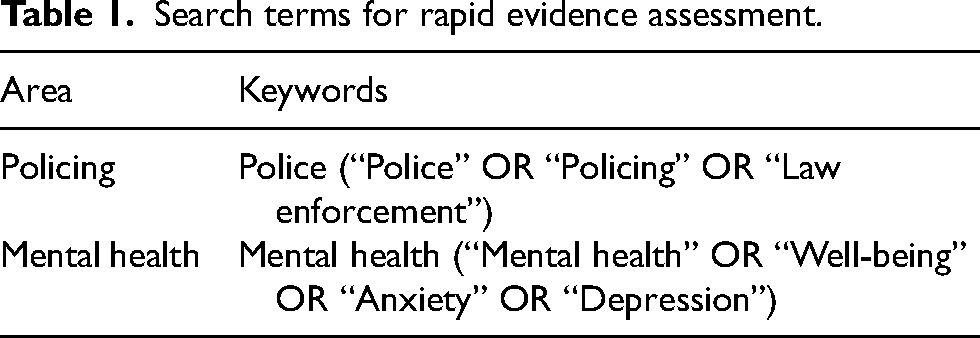
Records identified through the database searches were then sifted to identify relevant studies. In selecting the studies, the following inclusion criteria were used:
the study must report the findings of a quantitative or a qualitative empirical research project exploring the relationship between police activity and community mental health; be available in English; have been published from the year 2000 onwards.
In our review, we adopted a broad definition of community mental health to encompass a wide range of psychological, emotional and social well-being indicators. This approach allowed us to capture diverse themes and patterns in mental health outcomes. We limited our study to research published from 2000 onwards to ensure that our data reflected the most current practices, policies and societal attitudes in policing and mental health. This time frame captures significant developments in both fields, including changes in mental health care provision and policing tactics, which are crucial for understanding their current interplay and impacts. Focusing on this period also helps align our research with recent methodological advances in the study of these topics.
EPPI-Reviewer 6 software
3
was used for all information management in this REA. Studies were first screened on title and abstract to remove any that were ineligible, based on the above inclusion criteria. Full-text screening was then conducted, and the inclusion criteria were again applied to exclude ineligible studies. During the full-text screening, each study's reference list was also screened to identify any relevant studies that did not appear in the database search. These studies were then screened, and the inclusion criteria applied. The screening process and final studies included are shown in Figure 1. Data extraction was then conducted on the studies included in the review (N = 92). Data extraction codes encompassed several key coding categories, including:
General information: this category involved capturing details such as the research type (quantitative or qualitative), the number of participants or data points (e.g. calls for service), and demographic information such as age, gender, and race of participants where applicable. In addition, the geographical context where the study was conducted was recorded. Aim and research design. This category focused on characterising the study's overarching aim and research design, encompassing descriptors like descriptive, cross-sectional, experimental, longitudinal, randomised controlled trial/evaluation and systematic review. Policing and mental health measures. When pertinent, specific details about the measures used to assess both policing and mental health were documented, alongside any other relevant measures employed within the study. Analytical approach. This category captured information regarding the methodology and analytical techniques employed in the research. Findings on the policing–mental health relationship. Lastly, data extraction included a section dedicated to findings that elucidated the relationship between policing activities and mental health outcomes.
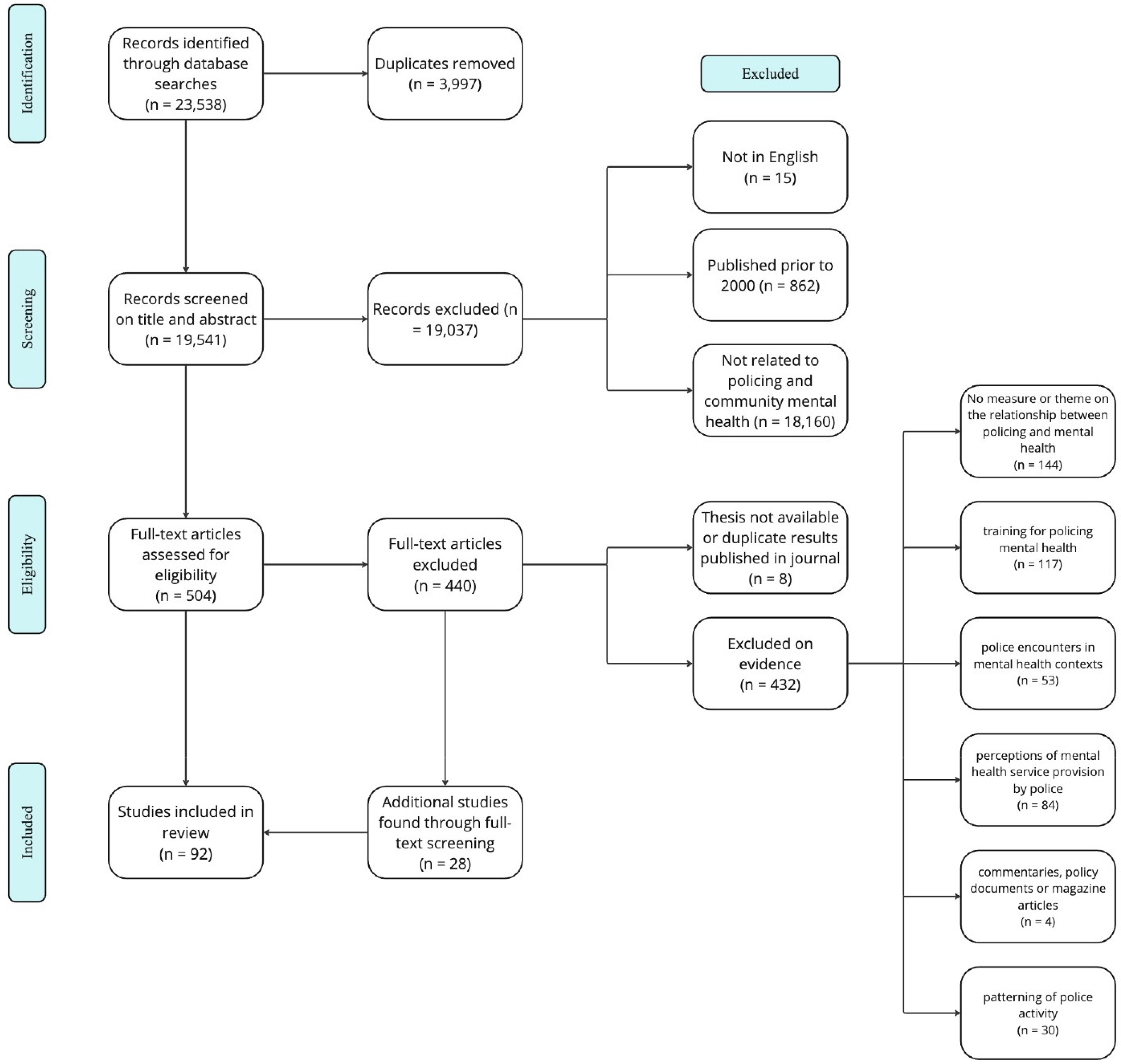
Rapid evidence assessment screening process.
Results: the impact of police activity on public mental well-being
A total of 92 studies were included (18 qualitative, 72 quantitative and 2 mixed methods; see Supplementary Appendix available online for descriptive information about each, along with a summary of the main findings related to the research question). In what follows we explore the evidence regarding whether police activity contributes to heightened or diminished perceptions of mental well-being among those who directly interact with police, as well as those who experience vicarious police contact.
The quantitative studies include data from 163,311 participants aged 9–59 years, spanning a diverse range of ethnic backgrounds, including but not limited to Black and White, and encompassing both male and female participants. The studies were predominantly from the US (n = 83, 90%), with others coming from the UK (n = 3, 3%), Europe (all European countries; n = 1, 1%), France (n = 1, 1%), The Netherlands (n = 2; 2%) and one each from Australia (1%) and Ghana (1%).
Research designs
The body of research analysed consists predominantly of quantitative studies, with the majority being cross-sectional in design (58%), exploring the relationship between police activity and mental health indicators such as anxiety, depression and stress. Some 15% of the studies employed longitudinal designs, with various national cohort data sets being utilised to investigate the effects of police contact on mental health over time. A single quasi-experimental study examined the impact of police killings on the mental health of African American adults, while two studies used data from randomised control trials to assess pre- and post-intervention effects on mental health. Furthermore, three systematic reviews were included, with focuses varying from the association of police exposure with health outcomes in Black youth, to mental health outcomes among Black Americans, to long-term effects after pre-arrest diversions. Qualitative research made up 19% of the studies, reporting mainly on interviews with vulnerable groups, and to a lesser extent, including focus groups, participant observations and analysis of coroner reports. More details on the research designs are given in the Supplementary Appendix (available online).
Measurement of key constructs
Mental health
Quantitative and qualitative studies operationalised mental health broadly to include psychological distress (including stress, depression, anxiety, emotional distress and trauma; n = 54, 59%), sleep quality (n = 3, 3.4%), police-related mental health (n = 5, 6%), suicide/self-harm (n = 6, 7%), cardiovascular and physical health (n = 4, 5%), general mental health and well-being (n = 13, 14%) and risky behaviours (n = 7, 8%). Although not all these measures directly quantify ‘mental health’ (including aspects such as cardiovascular and physical health, mortality and risky behaviours), inclusion of these studies in our REA is justified owing to either these measures being deemed behavioural and physiological effects of stress or their significant association with mental health, to the extent that they could be considered indirect indicators of it. Mental health was treated as an outcome variable (where quantifiable) or key construct (in the case of qualitative studies) in all studies.
Policing
The operationalisation of policing across studies encompassed both direct and indirect forms of police exposure, utilising quantitative, qualitative and mixed-method approaches. Direct exposure (quantitative studies n = 61, 65%; qualitative studies n = 10, 11%; mixed method studies n = 1, 1%) included police presence, anticipation of contact and actual encounters, which ranged from general interactions to specific incidents of misconduct, abuse and involvement in the CJS. This category also considered the broader social impacts of policing, such as displacement and the effects on quality of life. Indirect exposure (quantitative studies n = 11, 12%; qualitative studies n = 8, 9%; mixed method studies n = 2, 2%) was defined by experiences that involved witnessing or hearing about police actions, including stops, use of force, violence, police killings and the indirect impact of police interactions on close individuals. These experiences extended to perceptions of police and the strategies individuals adopt to minimise or navigate police encounters. The studies collectively provide a nuanced view of the multifaceted nature of police exposure, incorporating both the physical presence of police and the psychological and community-wide effects of policing practices. Further details of these themes are available in the online Supplementary Materials.
Analytical approaches
The analytical methods employed across the reviewed studies were generally appropriate and rigorous in addressing their respective research questions and objectives. For the 57 studies using regression-based approaches, comprehensive models were developed, including multiple control variables such as socio-demographics, criminal history, risky behaviours and mental health status. The 14 longitudinal studies, with 11 using nationally representative samples, applied rigorous controls at baseline. Similarly, the two studies using data from randomised controlled trials maintained these rigorous standards. In the qualitative studies, data from interviews, focus groups and observations underwent detailed thematic analysis by multiple coders, along with grounded theory methods to ensure depth and reliability in findings. The three systematic reviews employed different analytical methods tailored to their objectives. One review combined meta-analysis for quantitative data and thematic analysis for qualitative studies, achieving an integrative synthesis that addressed both quantitative and qualitative aspects, including disparities. The other two reviews utilised narrative synthesis to explore long-term outcomes after pre-arrest diversion and the impact of police interactions on mental health outcomes among Black Americans, respectively. More comprehensive details on these analytical approaches and methodologies are outlined in the online Supplementary Appendix.
Relationship between policing and mental health
This section provides a narrative summary of the findings, specifically focusing on the relationship between policing and mental health, shedding light on the often distressing and enduring consequences of police exposure. The quantitative findings are presented first. The 18 qualitative studies are discussed separately at the end of this section. Unless otherwise specified, it should be presumed that the individual studies cited as examples below are based in the US.
Quantitative synthesis
The studies presented here quantify the link between policing and mental health outcomes (n = 74). Most quantitative studies (n = 72, 97%) indicated a negative association between exposure to policing and mental health.
Our analysis of the identified studies delves into the multifaceted impact of policing on the mental well-being of the public, taking account of diverse scenarios. The evidence indicates that police activity can shape individuals’ mental health in complex and nuanced ways, both when police are positioned as a response to mental illness and in situations in which they might be perceived as a primary cause of mental distress. We structure the narrative below across two key dimensions: the negative impact of exposure to policing and the positive impact of exposure to policing. The findings are organised based on the mental health measure included in the study.
Negative impact of exposure to policing on mental health
Direct negative impact
Some 64 studies focused on the direct negative impact of policing on mental health. Personal contact with police encompassed a wide range of experiences, from mere co-presence with police to actual interactions with police officers of escalating levels of import and consequence. A range of adverse consequences are associated with this kind of police activity. Police interactions, even when intended to address mental health crises, have been found to result in psychological distress, general mental ill-health and, in some instances, suicidal tendencies or self-harm. Research underscores that, in certain cases, police activity can be the primary cause of mental distress. Police-induced mental ill-health, the physiological effects of stress from these encounters, manifests in sleep disturbances and physical health issues, and in behavioural effects of stress, including risky behaviours.
Psychological distress
Psychological distress was the most common measure of mental health included in studies (n = 48, 67%): exposure to policing was associated with stress, depression, anxiety, emotional distress and trauma. Collectively, these studies consistently conclude that police encounters – predominately police stops – are associated with a range of adverse mental health outcomes, including anxiety, depression, traumatic stress and psychological distress, among both youth (Baćak and Nowotny, 2020; Del Toro et al., 2019; Del Toro and Wang, 2022, 2023; Gearhart et al., 2022, 2023; AN Jackson et al., 2020; DB Jackson et al., 2019; Jahn et al., 2021; Turney, 2022) and adults (Alang et al., 2021, 2022; Del Toro et al., 2022; Dennison and Finkeldey, 2021; DeVylder et al., 2017a; Geller et al., 2014; Hirschtick et al., 2019; Turney, 2021).
In examining the psychological distress associated with police encounters, our review incorporated a methodologically diverse set of studies that reveal significant insights into how policing impacts mental health.
Studies highlighted how interactions with police affect youth. For instance, Baćak and Nowotny (2020) utilised cross-sectional data to analyse the effects of police stops on depression among young adults. Their findings indicate that Black young adults experience a persistent impact on their mental health from police stops, even when controlling for criminal behaviour and justice system contact. Similarly, AN Jackson et al. (2020) and DB Jackson et al. (2019) employed cross-sectional designs to explore the frequency of police stops and their association with emotional distress among youth. Both studies highlighted that youth stopped by police experience higher levels of emotional distress and subsequent psychological difficulties. Jahn et al. (2021) employed a longitudinal design to analyse the impact of police stops on adolescent depression. Their study found that youth who were stopped at least twice in the previous six months displayed higher average depression scores compared to those who were not stopped. Similarly, Del Toro et al. (2019, 2022) focused on the long-term psychological effects of police stops on adolescents using longitudinal survey data. Their research uncovered that police stops significantly increase psychological distress over time.
Studies also explored the relationship between police encounters and psychological distress in adults. For example, Hirschtick et al. (2019) employed a cross-sectional analysis to examine the relationship between lifetime police stops and current PTSD symptoms among adults. They found a strong association, whereby an increased likelihood of PTSD symptoms was noted with more police stops, even after adjusting for demographic and socioeconomic factors, history of homelessness, prior PTSD diagnosis and neighbourhood crime rates. Alang et al. (2021) analysed the psychological impact of negative encounters with the police on mood and anxiety symptoms. Utilising a cross-sectional survey methodology, the authors found that these encounters significantly increase depression and anxiety. Alang et al. (2022) extended their previous research by specifically focusing on the experiences of police brutality and its impact on mental health. Over half of the study participants reported experiencing police brutality, which correlated strongly with increased symptoms of depression and anxiety. DeVylder et al. (2017a) employed cross-sectional survey data to assess the prevalence of various forms of police victimisation (physical victimisation, physical victimisation with a weapon, sexual victimisation, psychological victimisation and neglect) and their impact on mental health. The study found high rates of psychological and physical violence by police. Notably, nearly all forms of police victimisation were associated with increased levels of psychological distress and depression, as demonstrated through linear regression models that adjusted for multiple demographic and contextual factors.
General mental ill-health
Policing was also associated with general measures of mental health in seven studies (10%) (e.g. responses to statements such as ‘good for my mental health’ to gauge the potential influence of factors like police presence on mental health, or hospitalisation in individual studies, or synthesis of mental health measures as presented in the systematic review studies). Although the quality of research here needs improvement, 4 research findings collectively highlight a robust connection between police encounters and detrimental mental health outcomes, particularly among Black Americans (as reported in the review by McLeod et al., 2020) and particularly Black youth in the US (as reported in the review by Jindal et al., 2022).
The McLeod et al. (2020) systematic review, for example, concludes that individuals with prior police interactions exhibit nearly twice the prevalence of poor mental health as those without such interactions. This review extensively examines a wide spectrum of police interactions, ranging from the use of force during arrests to routine stops, searches, witnessing police killings and judicial encounters. The mental health outcomes assessed in these studies were varied, encompassing experiences of psychosis, psychological distress, depression, PTSD, anxiety and even suicidal thoughts and attempts, highlighting the profound and diverse impacts of police encounters on mental health.
Suicide/self-harm
Suicide and self-harm in the context of police encounters was explored by four studies (6%). For example, DB Jackson et al. (2021a) investigated the impact of police stops on self-harm and suicide attempts among adolescents in the UK. Specifically, the authors employed a longitudinal design examining whether youths who have experienced police stops by the age of 14 years exhibit significantly higher rates of self-harm and attempted suicide by the age of 17. It is, however, important to note that the study did not record police stops occurring between the ages of 14 and 17. Their study revealed that adolescents who had been stopped and questioned by the police at age 14 reported higher rates of self-harm and significantly elevated odds of attempted suicide at age 17. The effects were largely consistent across various aspects of police stops and the findings held true even after controlling for relevant covariates, such as age, gender and race (also see Ahuja et al., 2021; DeVylder et al., 2017b, 2018; DB Jackson et al., 2021a).
Sleep quality
The impact of police encounters on sleep quality was reported by three studies (4%). For instance, DB Jackson and Testa (2022) explored the cross-sectional association between police stops and sleep problems among a large, representative sample of adolescents in the UK. Their findings indicate that youth–police contact is linked to various sleep issues, including shorter sleep duration and frequent awakenings. This relationship was further supported by DB Jackson et al. (2020a), highlighting the adverse impact of such interactions on adolescent sleep patterns in the US. In this earlier study, DB Jackson et al. (2020a) explored the cross-sectional association between police stops and sleep behaviours among a large, representative sample of adolescents in the US.
Cardiovascular and physical health
Four studies (6%) linked policing to cardiovascular and physical health outcomes. For example, exploring the connection between policing and physical health, the study by Allgood et al. (2023), using data from the U.S. National Longitudinal Study of Adolescent to Adult Health, demonstrated that the relationship between police encounters and cardiovascular disease (CVD) risk varied by race and sex. The study found that more frequent police encounters were associated with higher CVD risk among Black men but did not exhibit the same pattern among other groups. Moreover, Theall et al. (2022) discovered that neighbourhoods with higher rates of police encounters had higher prevalence rates of smoking, physical inactivity and poor physical health, underscoring potential health disparities associated with policing practices. Theall et al. (2022) based their analysis on secondary publicly available cross-sectional survey data.
Risky behaviours
Six studies (8%) related policing experiences with risky behaviours; three of which utilised longitudinal study designs (Green et al., 2019; Lopes et al., 2012; Phillips et al., 2018), a methodological strength that goes some way to addressing the concern of reverse causality. For example, in their 2019 study, Green and colleagues explored the link between early police interactions and later substance use among a cohort of urban African Americans in Australia, initially assessed in childhood, and subsequently followed into midlife. Their findings revealed that encounters with police at age 16 were significantly correlated with substance use at the same age for both genders. Moreover, these early encounters with police also predicted a higher likelihood of arrests by age 32, which were subsequently linked to ongoing substance use problems by age 42. This study underscores the enduring impact of early police interactions on substance use patterns into adulthood (also see Wiehe et al., 2010).
Vicarious impact
Encounters with police extend beyond direct personal interactions, including instances in which individuals hear about or witness various forms of policing, and 13 studies focused on the indirect negative impact of policing on mental health. 5
Anticipation of potential police encounters (n = 5)
Studies linked the anticipation of potential police encounters with depression and anxiety. For example, FM Jackson and colleagues’ studies revealed how the anticipation of negative encounters between Black youth and pregnant African American women (FM Jackson et al., 2017) and the police is correlated with depressive symptoms (also see Alang et al., 2022; DB Jackson et al., 2022; Motley et al., 2023; Rhodes, 2021).
Specifically, in their 2022 study, Webb and colleagues conducted research among African American students aged 14–18 in the US, utilising a questionnaire to evaluate the mental health effects of anticipatory stress related to racially motivated police brutality. The findings revealed that youth who experienced both direct and indirect anticipatory stress from police brutality exhibited significantly higher levels of anxiety, depression and PTSD. In addition, these students showed reduced levels of hope compared with their peers who did not experience such anticipatory stress. The FM Jackson et al. (2017) study assessed mostly low-income pregnant African American women residing in metropolitan Atlanta during their first and second trimesters by asking them to complete a questionnaire. Using bivariate analysis and logistic regression, researchers explored the relationship between anticipated negative encounters with police involving African American youth and antenatal depressive symptoms. The study uncovered a significant association between the anticipation of negative police encounters and the presence of antenatal depressive symptoms among the participants.
Police contact experienced by close associates (n = 3)
Studies investigated how individuals are indirectly affected by the police contact experienced by close associates, exploring ripple effects on mental well-being. For example, DB Jackson and Turney (2021) utilised data from the Fragile Families and Child Wellbeing Study, which comprises a sample of urban, at-risk youth and their families across the US to explore the relationship between youth encounters with police and sleep problems experienced by their mothers. The authors highlighted that mothers with children who have experienced police stops are more than twice as likely to report sleep difficulties related to depression and anxiety compared with their counterparts. Notably, specific features of these police stops, such as intrusiveness, trauma, and stigma, consistently emerged as significant predictors of maternal sleep difficulties (also see Turney, 2021, 2023).
Exposure to police violence (n = 5)
Studies delved into the psychological consequences of exposure to police violence. For example, Bor et al. (2018) carried out a population-based, quasi-experimental study that merged novel data on police killings with individual-level data from the nationally representative 2013–2015 U.S. Behavioural Risk Factor Surveillance System. This approach was used to assess the causal impact of police killings of unarmed Black Americans on the self-reported mental health of other Black American adults across the general U.S. population. The authors identified a correlation between exposure to police killings of unarmed Black Americans and poor mental health days. Each additional police killing of an unarmed Black American in their state of residence was associated with a noteworthy increase in poor mental health days among Black American respondents. This impact was particularly pronounced in the 1–2 months following exposure to such incidents. These mental health repercussions were not observed among White respondents and were exclusively linked to police killings of unarmed Black Americans (killings of unarmed White Americans or armed Black Americans did not have any effect) (also see Beauliere, 2022; McLeroy and Wang, 2023; Motley et al., 2020; Talbert, 2023).
The positive impact of exposure to policing on mental health
Despite the negative aspects described above there are specific forms of policing – community policing, police crisis assistance programmes (PCAP), police presence in schools, pre-arrest diversion programmes and procedurally just policing – that offer a more positive influence on mental health. Two studies, one employing a mixed-methods approach (Bonkiewicz et al., 2014) and the other relying on quantitative analysis (Hevi et al., 2022), have reported instances in which policing has had only a positive impact on mental well-being. Six studies (Abelson, 2022; Altamirano, 2018; Bird and Shemilt, 2019; Gaines, 2007; Gearhart et al., 2023; Pentek and Eisenberg, 2018) noted some of the positive effects of policing on mental health in addition to negative impacts (see above).
Community policing
The study by Hevi et al. (2022) found that experiences with community policing were positively linked to increased public trust in the police, greater psychological safety among individuals and improved overall community well-being in Ghana. The study surveyed 474 community members and structural equation modelling was utilised to examine the relationships and effects along the hypothesised pathways.
Police crisis assistance programmes
Bonkiewicz et al. (2014) conducted a mixed-methods evaluation of the effect of a policing intervention known as a PCAP on individuals experiencing mental health crises. The authors employed propensity score matching to analyse data from a group of 739 individuals who went through a mental health crisis that involved police intervention. Findings showed that PCAP consumers, in the aftermath of a police-abated mental health crisis, exhibited noteworthy improvements in their mental well-being. These individuals generated fewer future mental health crisis-related calls for service, evidenced a reduction in the likelihood of being arrested, and a decreased likelihood of being taken into emergency protective custody.
Police presence in schools
The inclusion of police in school settings fosters an increased perception of safety among students, as demonstrated by Pentek and Eisenberg (2018), who observed that the presence of school resource officers or police officers was linked to a heightened sense of security (also see Abelson, 2022). The authors used a large school-based sample (N = 126,868) to test associations between the awareness of presence and perceptions of school resource officers and school safety, among other variables. Nevertheless, the efficacy of school-based law enforcement strategies in reducing crime, enhancing perceptions of safety and bolstering learning outcomes in primary and secondary schools remains a matter of debate. Contrary findings suggest such approaches may inadvertently lead to more exclusionary discipline for students or greater entanglement with the CJS. For a comprehensive review of these complex dynamics, refer to Fisher et al. (2023).
Pre-arrest diversion programmes
Pre-arrest diversion programmes may have positive impacts on well-being. Although the available evidence on the effectiveness of pre-arrest diversion programmes in enhancing subsequent mental health outcomes and reducing the risk of re-offending is somewhat scarce and confined to just two eligible studies conducted across four locations in the US, there have been some encouraging findings, as elucidated in Bird and Shemilt's (2019) review. An evaluation of ten studies that considered cost data indicated that these programmes might provide overall cost savings. Despite these promising financial benefits, the review advises caution because of the mixed evidence regarding the programmes’ ability to improve mental health outcomes or reduce recidivism.
Procedurally just policing
Procedurally just policing, characterised by fairness and justice in interactions, serves as a protective factor against potential adverse effects on mental health during police encounters. Specifically, the longitudinal study by Gearhart et al. (2023) indicated that the way officers communicate verbally significantly influences post-incident post-traumatic stress symptoms among young individuals, with procedural justice serving as a protective factor against potential adverse effects of police interactions (also see Altamirano, 2018; Gaines, 2007).
The pathways from police contact to mental health outcomes
In addition to quantifying the influence of policing on psychological distress, the included studies yield a range of further noteworthy findings. These shed light on the potential factors that might influence the pathways from police contact to mental health outcomes.
First, they point to increased anxiety and depression symptoms over time, underscoring the long-term impact of such police contact on mental well-being (e.g. DB Jackson et al., 2021a). Second, findings from US-based studies reveal that negative mental health consequences are significantly exacerbated among Black and Latinx individuals, underscoring the disproportionate impact of such experiences and highlighting that policing disproportionately affects minorities, thus, among other things, perpetuating disparities in mental health. Racial disparities in policing can lead to unequal treatment, discrimination and a heightened sense of threat among racial and ethnic minorities. These stressors can contribute to mental health issues, making race a significant factor in understanding the outcomes of police contacts. Seven studies (Alang et al., 2021, 2022; Baćak and Nowotny, 2020; Beauliere, 2022; Bor et al., 2018; Jahn et al., 2021; Turney, 2023) suggest that race acts as a moderator, significantly altering the strength or direction of the relationship between police activity and mental health outcomes. For example, the Alang et al. (2021) analysis of the psychological impact of negative encounters with the police on mood and anxiety symptoms indicated that these encounters particularly affected Black and Latinx individuals more than White individuals. Moreover, the Baćak and Nowotny (2020) study findings indicated that Black young adults experience a persistent impact on their mental health from police stops, even when controlling for criminal behaviour and justice system contact. This contrasts with White young adults, where the impact appears more transient and closely tied to self-reported criminal behaviour.
Third, findings suggest that the intensity of mental health symptoms is influenced by the stigma attached to police–citizen encounters (DB Jackson et al., 2021b; McLeroy and Wang, 2023), the intrusiveness of encounters (Geller et al., 2014; DB Jackson et al., 2020b, 2021b), and individuals’ perceptions of police fairness (Gearhart et al., 2022, 2023; Geller et al., 2014; Hevi et al., 2022; DB Jackson et al., 2020b; McLeroy and Wang, 2023). For example, the DB Jackson et al. (2019) study highlighted that the intrusiveness of police stops and the context, such as being stopped at school, significantly predict worse mental health outcomes. Moreover, the study by DB Jackson and Testa (2022) found that the negative impact of policing on mental well-being is more pronounced with more intrusive encounters among youth.
Fourth, individual characteristics, such as self-control, have been found to play a role in the mental health impact of police stops. Lower self-control has been linked to both more frequent and more distressing police stops (DB Jackson et al., 2020b). For example, the study by AN Jackson et al. (2020) identifies low self-control as a factor increasing the likelihood of being stopped, with those stopped experiencing higher levels of procedural injustice and emotional distress, which then contributes to subsequent psychological difficulties.
Moreover, several studies indicate that psychological distress acts as a mediator in the relationship between police stops and various outcomes, such as delinquent behaviour and school disengagement (DB Jackson et al., 2021a). For example, research by Del Toro et al. (2019, 2022) emphasises the role of psychological distress as a mediator between police stops and subsequent negative behavioural outcomes. This suggests that the negative mental health consequences of police stops are partly driven by the psychological distress experienced during and after these encounters. In addition, as already noted, studies have also pointed to other adverse outcomes of police contact, such as risky behaviours (Green et al., 2019; Lopes et al., 2012; Phillips et al., 2018; Wiehe et al., 2010). Risky behaviours, although typically considered outcomes of police interactions, rather than mediators or moderators of the relationship between policing and mental health, may still have a bearing on the complex relationship between policing and mental health. Risky behaviours may serve as a bridge between police contact and reduced mental well-being, because they emerge as outcomes of the encounter but also contribute to its mental health repercussions.
However, open communication about police contact, including procedural justice during police interactions and discussions within a therapeutic setting (Gearhart et al., 2023), has been highlighted as a potential mitigating factor that can reduce anxiety and enhance the mental well-being of citizens.
Qualitative synthesis
Qualitative insights into the lived experiences of those affected by policing practices add depth to the evidence base (n = 18). Qualitative synthesis resulted in the identification of descriptive themes, which were grouped into analytic themes and were organised within five mental health categories, including emotional and psychological distress, mental health crisis and mortality, community trauma and violence, coping and resilience, and vicarious impact. 6 The studies presented here provide qualitative insights into the lived experiences of those who have been subjected to, or have heard about or witnessed, what participants often deemed unjust policing practices.
Emotional and psychological distress
Thirteen studies (72%) explored policing – comprising the descriptive themes of attitudes towards police (Garcia et al., 2015), negative interactions and encounters with police (Brunson and Weitzer, 2009; Fox-Williams, 2019; Kendrick et al., 2007; Nordberg et al., 2018; Rengifo and McCallin, 2017), police violence (Campbell and Valera, 2020; Davis et al., 2020; Lee and Robinson, 2019), unjustified police action (stereotyping, discrimination, and victimisation by police; Brunson and Miller, 2006; Brunson and Weitzer, 2009; Graham, 2014; Nordberg et al., 2018; Smith et al., 2007) – and emotional and psychological distress, comprising the descriptive themes of internal emotions (depression, helplessness, anxiety, hopelessness, stress, withdrawal, hypervigilance) (Brunson and Miller, 2006; Brunson and Weitzer, 2009; Campbell and Valera, 2020; Davis et al., 2020; Fox-Williams, 2019; Garcia et al., 2015; Graham, 2014; Kendrick et al., 2007; Lee and Robinson, 2019; Nordberg et al., 2018; Smith et al., 2007) and external emotions (humiliation, fear, frustration, shock, anger, disappointment, resentment) (Brunson and Miller, 2006; Brunson and Weitzer, 2009; Campbell and Valera, 2020; Davis et al., 2020; Lee and Robinson, 2019; Nordberg et al., 2018; Smith et al., 2007). For example, in the study conducted by Davis et al. (2020), employing in-depth interviews, an investigation was undertaken to examine the adverse health consequences stemming from instances of violence perpetrated by police on gay, bisexual and other men who engage in same-sex relationships in El Salvador. Among the identified mental health consequences, participants frequently reported experiencing profound emotional distress, characterised by feelings of humiliation, fear, depression and a pervasive sense of helplessness (also see Kendrick et al., 2007).
Mental health crisis and mortality
Three studies (17%) explored themes of police interactions and mental health crisis (Baker and Pillinger, 2020) and mortality (deaths of people with serious mental disorders during contact with CJS; Crissman, 2019; McLeroy and Wang, 2023). For example, Baker and Pillinger (2020) focused on bereaved family members of individuals who died after police contact. Through semi-structured interviews, the study considered the factors leading to these deaths and how families perceived the role of police actions. This approach unveiled the profound mental health consequences experienced by families grappling with the loss of their loved ones because of interactions with police.
Community trauma and violence
Ten studies (6%) explored community trauma and violence (Brunson and Miller, 2006; Brunson and Weitzer, 2009; Campbell and Valera, 2020; Fox-Williams, 2019; Graham, 2014; Lee and Robinson, 2019; Nordberg et al., 2018; Smith et al., 2007; Staggers-Hakim, 2016; Wilson et al., 2023). For example, in Brunson and Weitzer's (2009) study, Black respondents expressed feelings of hopelessness, believing that police officers viewed them primarily as symbolic assailants even during lawful activities. Young men described being routinely treated as suspects regardless of their involvement in delinquency and reported instances of police violence (also see Smith et al., 2007).
Coping and resilience
Thirteen studies (72%) explored themes of coping and resilience, including risk mitigation strategies in identity negotiation (Brunson and Weitzer, 2009; Fox-Williams, 2019; Garcia et al., 2015; Graham, 2014; Smith et al., 2007; Staggers-Hakim, 2016), hopelessness and coping mechanisms (Brunson and Miller, 2006; Brunson and Weitzer, 2009), emotional resonance with negative police encounters and self-policing behaviours (Brunson and Miller; Brunson and Weitzer, 2009; Campbell and Valera, 2020; Fox-Williams, 2019; Kendrick et al., 2007; McLeroy and Wang, 2023; Smith et al., 2007; Staggers-Hakim, 2016), institutional mistrust and vulnerability (Garcia et al., 2015), and normalisation of negative police encounters and acceptance of police injustice (Brunson and Miller, 2006; Brunson and Weitzer, 2009; Campbell and Valera, 2020; Fox-Williams, 2019; Kendrick et al., 2007; Lee and Robinson, 2019; Nordberg et al., 2018; Rengifo and McCallin, 2017; Smith et al., 2007). For example, using semi-structured group and individual interviews, Fox-Williams (2019) explored the strategies that Black youth employ or subscribe to for managing police contact. The authors elucidated three primary categories of strategies adopted by these youth when navigating encounters with police: avoidance (deliberate avoidance of such situations while being mindful of their physical presence), management (practices of deference to authority while simultaneously asserting one's legal rights) and symbolic resistance (acts of resistance conveyed through symbolism and gestures).
Vicarious impact
Eight studies (44%) examined vicarious impact (the negative impact of policing beyond direct personal interactions), comprising themes of collateral consequences from publicised police violence (Brunson and Miller, 2006; Brunson and Weitzer, 2009; Campbell and Valera, 2020; Fox-Williams, 2019; Lee and Robinson, 2019; Nordberg et al., 2018; Smith et al., 2007) and family as emotional anchors (Brunson and Miller, 2006; Brunson and Weitzer, 2009; Campbell and Valera, 2020; Fox-Williams, 2019; Nordberg et al., 2018). Participants reflected on how police encounters shape individuals’ communication with loved ones, evoke guilt for instilling fear in their families, and generate anxiety regarding their family's safety, highlighting the complex emotional dynamics within families affected by such encounters. For example, Staggers-Hakim (2016) found that in the wake of nationally publicised cases of police violence, young Black males experienced a range of profound emotions and thoughts. These included an underlying fear of police, a heightened need for vigilance, a deep-seated desire to return home safely, a stark awareness that such incidents could transpire within their own communities and a chilling acknowledgement that they, too, could become victims of such tragic events (also see Wilson et al., 2023).
Discussion
Taking all of the above together, there is evidence that exposure to police activity can (a) make people feel more mentally ill than they already do, and (b) be the primary cause of mental illness. The negative impact of policing on mental health encompasses adverse consequences such as psychological distress, general mental ill-health and, in some cases, even suicidal tendencies or self-harm. This impact extends beyond direct interactions and includes the anticipation of potential police encounters, contact experienced by close associates and exposure to police violence, leading to heightened stress and anxiety. In specific instances, police activity can be identified as the primary cause of mental distress, evidenced by police-induced mental ill-health and physiological effects like sleep disturbances and physical health issues. Despite these negative aspects, there are specific forms of policing that can offer a more positive influence on mental health. Community policing, for example, is associated with higher levels of public trust in the police, an increased sense of psychological safety, and an overall enhancement in community well-being. PCAPs and procedurally just policing are shown to reduce the likelihood of arrest and contribute to the mental well-being of individuals in crisis.
Diverse methodologies and universal findings
Research in this area is diverse, offering a number of different perspectives on the subject. This review has thus included a methodologically varied set of studies. The majority utilised cross-sectional data, but one study employed a quasi-experimental approach, 14 used longitudinal survey designs and two incorporated data from randomised control trials. The studies also cover a wide demographic spectrum, including participants of all ages, both sexes and diverse racial backgrounds such as Black and White individuals. Geographically, although the studies originate predominantly from the US, there is some international representation. This includes contributions from the UK, Europe, and one study each from Australia and Africa. It is therefore important to acknowledge the varied policing jurisdictions and cultural contexts of the studies reviewed. Despite the majority being based in the US, nine studies were conducted in countries with policing styles and historical relationships between the public and police that differ significantly from the U.S. model, such as the UK, Australia and parts of Europe and Africa. Notwithstanding these differences, the review reveals a strikingly consistent relationship between policing and mental health across these diverse contexts.
Furthermore, the studies featured in this review adopt a broad and inclusive operationalisation of mental health and policing. This wide-ranging approach, although presenting challenges in terms of direct comparability, offers useful insights. It highlights the multifaceted nature of police activities and their varying impacts on mental health. The spectrum of police exposure spans from direct encounters (such as the anticipation of interacting with them, and various forms of actual police contact) to indirect experiences (such as witnessing or hearing about police actions). The influence of these police exposures is observed across a diverse array of mental health outcomes. These include psychological distress (encompassing for example, stress, depression and anxiety), sleep quality, tendencies towards suicide or self-harm, cardiovascular and physical health issues, overall mental health and well-being as well as risky behaviours. If nothing else, all this underscores the complex and far-reaching implications of policing on mental health.
The mechanisms through which police encounters might influence mental health outcomes
Although it therefore appears that there is a link between police activity and the mental health of the policed, the studies included in this REA revealed less about how police encounters might influence mental health. To strengthen the discussion around the relationship between police activity and mental health outcomes, it is essential to delve deeper into the specific factors mediating and moderating this relationship as identified by a handful of studies included in this REA. Self-control and mental distress were highlighted as mediators that directly influence the dynamics between police interactions and mental health outcomes. This suggests that individuals' ability to regulate their emotions and behaviour during police encounters can significantly impact their psychological well-being post-interaction.
Race was identified as a moderating factor that may alter the intensity or trajectory of the relationship between police activities and mental health outcomes. For instance, studies suggested that racial minority groups often report higher levels of psychological distress following police encounters, which may be attributable to perceived or actual experiences of racial profiling or discrimination. This underscores the importance of considering racial dynamics when examining the impacts of policing on mental health. Furthermore, intrinsic elements of police encounters, such as procedural fairness and stigma, were also found to play significant roles. For example, if individuals perceive their treatment by police as fair and respectful, they are likely to experience less stress and anxiety than those who perceive their treatment as unfair or discriminatory. Similarly, the stigma associated with being targeted or treated as a suspect can exacerbate feelings of alienation and distress, thereby worsening mental health outcomes.
The multifaceted nature of these interactions suggests that the impact of police encounters on mental health is complex and influenced by a variety of individual and situational factors. One possibility is, of course, that exposure to and entry into the CJS is harmful to people's well-being; for example, because of the stress it causes. Yet, variation in mental health outcomes might also depend on how people characterise or evaluate their encounters with the police (Alang et al., 2021): how individuals evaluate their experiences with police might matter as much for health and well-being as their mere exposure to police activity.
Future research should focus on dissecting these factors more thoroughly to understand how they contribute to the overall mental health of those policed. Specifically, exploring the ‘how’ aspect – how police activities affect mental health – could reveal critical insights into the mechanisms at play, offering a more comprehensive understanding of this important issue. This focus could not only elucidate the pathways through which police activities impact mental health but also guide interventions aimed at mitigating the negative psychological impacts of policing.
Recommendations to improve mental health outcomes in policing
The ‘Right Care, Right Person’ initiative (Home Office, 2023b), implemented by the Metropolitan Police in 2023, aims to ensure that health-related calls are managed by the appropriate agencies, rather than defaulting to the police as first responders. although this is the right approach in theory, in practice, police officers will still inevitably encounter individuals in mental health crises. In addition, a central finding of the review is that interactions with the police can contribute to poor mental health outcomes. The findings of this REA have implications for policy in the realms of policing and public health in this regard. Key recommendations might include the advancement of police officer training and education with a focus on mental health awareness and empathy, the integration of mental health professionals within policing to ensure sensitive and informed responses to crises, and the promotion of community policing approaches to strengthen trust and cooperation between officers and the communities they serve. In addition, the establishment of PCAP rooted in the principles of procedurally just policing, along with improved accessibility to mental health services facilitated by collaboration between police and community organisations, are vital.
Advanced police officer training
It seems essential to develop and mandate comprehensive training programmes for police officers that emphasise mental health awareness, crisis intervention techniques and empathy. This training should include scenario-based simulations that cover a wide range of mental health crises, focusing on de-escalation techniques and effective communication strategies to reduce the likelihood of confrontations.
Integration of mental health professionals
Policing strategies should do more to incorporate mental health professionals through co-responder models in which clinicians accompany officers on calls involving individuals in mental health crises (see e.g. Blais et al., 2020; Lancaster, 2016). This integration can provide immediate, expert assessment and intervention, reducing the burden on officers and improving outcomes for those in distress. Partnerships with local mental health organisations should also be strengthened to improve accessibility to mental health services. These collaborations can facilitate the development of referral systems that allow police to direct individuals to appropriate support services rather than through the CJS. In addition, shared training sessions between police and community mental health workers can enhance understanding and cooperation.
Community policing approaches
Enhancing community policing initiatives that involve regular interaction between police and community members can help build mutual trust and understanding. Programmes like community workshops, mental health first aid training for residents and regular open forums with police can foster a collaborative environment for addressing community-specific issues.
Police crisis assistance programmes
We recommend the establishment of PCAPs (see e.g. Bonkiewicz et al., 2014) that operate on the principles of procedural justice. These programmes should focus on fairness in processes and transparency in decision-making, ensuring that individuals feel respected and heard during interactions with police. Training for these programmes should be rigorous, involving both police and community members to address local concerns effectively.
The implementation of these recommendations might face challenges such as funding constraints, resistance to change within police departments and varying levels of mental health resources across communities. To address these barriers, it is crucial to secure funding through government grants or partnerships with private organisations. Engaging with police unions and leadership early in the process can help in overcoming resistance by emphasising the benefits of these changes in reducing workplace stress and improving community relations. Ensuring equitable distribution of resources requires active collaboration with local governments to prioritise mental health as a critical aspect of community well-being.
These strategies, if backed by ongoing research and data collection, have the potential to create a more effective, compassionate and community-aligned model of policing that acknowledges and addresses the dynamic relationships between policing and public mental health. Equally, it would seem incontrovertible at this point to note that there are many situations in which police are simply not the appropriate service response to many of the issues they find themselves dealing with, including but not limited to people in mental health crises, and that any attempt to reform or improve policing in these types of areas must include better funding for other agencies better suited to these kinds of tasks.
Limitations
It is important to acknowledge the limitations to the review method used in this study. Although REAs share several characteristics with systematic reviews, such as transparent search criteria and stringent inclusion/exclusion guidelines, REAs naturally allow for greater potential bias. As a result, the findings of this review should be interpreted with caution. Future attempts at synthesising the research base need either to be more encompassing (i.e. not just focused on police brutality in the US), or to focus on particular issues not already covered in the findings presented here. In addition, if the data permit, a meta-analysis would be beneficial to empirically establish the relationship between policing and mental health across diverse races, ages and countries. This would supplement existing systematic reviews, such as those by McLeod et al. (2020) and Jindal et al. (2022), which focus predominantly on Black populations and the disproportionate impact of police contact on racially minoritised communities. Another limitation is the scarcity of studies capable of estimating causal relationships, leaving us uncertain about the direction of causality, even if we assume it is likely bidirectional.
Conclusion
This REA sought to take stock of the existing evidence on the relationship between policing and mental health, aiming to provide a narrative overview of the relevant literature. The review's findings indicate a notable correlation between police exposure and adverse mental health outcomes. These findings are characterised by their methodological diversity, extensive demographic and geographic coverage, and a broad operationalisation of policing and mental health. Overall, there is a discernible connection between police activities and the mental health of those with whom they interact.
However, our review has underscored several critical gaps in the literature, particularly regarding the specific mechanisms through which police encounters influence mental health. These gaps highlight the need for focused research efforts to explore and define these causal pathways, thereby deepening our understanding of the complex dynamics between policing and mental health. Such investigations are crucial for developing targeted interventions that could mitigate the adverse mental health impacts identified.
To advance this field, we recommend four actionable research directions. First, investigating causal mechanisms. Studies should aim to dissect the specific processes and interactions during police encounters that lead to varied mental health outcomes. This involves longitudinal studies that can capture the before- and after-effects of policing on mental health over time. Second, developing and evaluating interventions. There is a significant need for research into interventions that police departments can implement to lessen the negative mental health impacts of their interactions with the public. This could include training programmes focused on de-escalation, mental health awareness and culturally sensitive practices that are rigorously tested for effectiveness. Third, exploring intersectional dimensions. Future studies should also examine how different demographic factors – such as race, gender, socioeconomic status and geographical location – interact with police practices to affect mental health outcomes. This research would help to illuminate the nuanced ways in which diverse populations experience policing differently and guide the creation of more equitable policing policies. Fourth, cross-cultural comparisons. Given the international scope of our review, comparative studies between different policing models around the world and their impacts on mental health could provide valuable insights into effective practices and policies that could be adapted across different contexts.
By addressing these areas, future research could provide actionable insights that not only fill the existing gaps in our knowledge, but also contribute to the development of more just and effective policing strategies. This concerted effort will help to alleviate the broader social and psychological burdens associated with policing, fostering a healthier interaction between police and the communities they serve.
Supplemental Material
sj-docx-1-psm-10.1177_14613557241296238 - Supplemental material for Policing and mental health: A rapid evidence assessment of the effect of police activity on people's mental health
Supplemental material, sj-docx-1-psm-10.1177_14613557241296238 for Policing and mental health: A rapid evidence assessment of the effect of police activity on people's mental health by Arabella Kyprianides and Ben Bradford in International Journal of Police Science & Management
Footnotes
Declaration of conflicting interests
The authors declared no potential conflicts of interest with respect to the research, authorship, and/or publication of this article.
Funding
This research was supported by the ESRC ES/X003434/1.
Economic and Social Research Council (grant number ES/X003434/1).

Supplemental material
Supplemental material for this article is available online.
Notes
Author biographies
References
Supplementary Material
Please find the following supplemental material available below.
For Open Access articles published under a Creative Commons License, all supplemental material carries the same license as the article it is associated with.
For non-Open Access articles published, all supplemental material carries a non-exclusive license, and permission requests for re-use of supplemental material or any part of supplemental material shall be sent directly to the copyright owner as specified in the copyright notice associated with the article.
