




Abstract
Policewomen can be significantly impacted by stress, resulting in mental health challenges. Although numerous studies have explored experiences among women in policing, few have focused on the stress that can accompany these experiences and their impacts. We conducted a scoping review of stress among policewomen to explore and summarize the current breadth of research in this area and identify potential knowledge gaps and opportunities for further study. Ten databases were searched to identify relevant literature. Manual searches of reference lists and book chapters were also completed. Twenty-five peer-reviewed articles, one book chapter, one thesis, and one dissertation were included in the current review. An inductive thematic analysis was completed, and six categories relating to policewomen's workplace stress experiences and their impacts were identified. The categories included gendered institutions, gender identity and gendered roles in policing, sexual harassment and discriminatory experiences, organizational relationships between gender, career progression and promotion, policewomen and parenting, organizational change, and stressors and associated health effects for women police officers. Although the experiences were thoroughly described, their connection to stress and the effects on mental health were not. Robust research into the overall impacts of workplace stress on policewomen's mental health is needed, including exploring generative mechanisms capable of producing the stress experiences and resulting mental health challenges to develop appropriate policies, practices, and interventions.
Canadian police officers are at higher risk of suffering stress and subsequent mental health problems compared with the general population because of the unique stressors they face as officers (Bastarache, 2020; Bullock and Garland, 2018; Carleton et al., 2018; Canadian Centre for Addiction and Mental Health [CAMH], 2018). Broadly, stress is defined as a physical and psychological response to external stimuli producing strain (Violanti et al., 2017), and this strain can negatively impact individual functioning. Research has distinguished two substantial workplace stress sources for both men and women officers: operational and organizational stress (Bikos, 2020; CAMH, 2018; McCreary et al., 2017; Shane, 2020; Violanti et al., 2017). According to CAMH (2018: 3), “[o]perational stress is commonly understood to mean the stress and trauma that police officers encounter in the course of their work”, such as murder scenes, domestic and sexual assaults, fatal collision scenes, suicides, and violence (Bishopp et al., 2018; CAMH, 2018; Shane, 2020; Violanti et al., 2017). Additional operational stressors include, but are not limited to, environmental uncertainty, risk of being injured while working, shift work (McCreary et al., 2017; Shane, 2020; Violanti et al., 2017), sleep deprivation (Bishopp et al., 2018), court-time, outside employment (Shane, 2020); public scrutiny (Bishopp et al., 2018; McCreary et al., 2017), overtime, and occupation-related health issues (McCreary et al., 2017; Violanti et al., 2017). Organizational stress is defined as the organizational characteristics and internal behavior of colleagues and employees that produce stress (Violanti et al., 2017; Shane, 2020). Factors include ineffectual leadership (CAMH, 2018; McCreary et al., 2017; Noblet et al., 2009), challenging promotion and tenure procedures (CAMH, 2018; McCreary et al., 2017; Shane, 2020), staffing shortages (CAMH, 2018; McCreary et al., 2017), inadequate resources (CAMH, 2018), and organizational culture (CAMH, 2018; McCreary et al., 2017).
Studies have found that compared with operational stressors, organizational stressors have more significant negative impacts on police officers, specifically the organizational culture (Bikos, 2020; Bishopp et al., 2018; CAMH, 2018; McCreary et al., 2017; Shane, 2020; Violanti et al., 2017). The organizational culture tends to adopt the unwritten norm of silence (e.g., not disclosing internal police problems, mental health issues) in fear of reprisal and retaliation (e.g., bullying, harassment, discrimination, career-related issues) (Bell and Eski, 2016; Bishopp et al., 2018; CAMH, 2018; Magnus, 2017). This norm of silence serves to work against the application of written policies. Bikos (2020) noted that these norms privilege masculinity, promoting the ideal masculine norm. Officers who do not embrace and perform these masculine norms face stigmatization, discrimination, harassment, and bullying, which CAMH (2018: 4) stated “can lead to anxiety, depression, PTSD and other mental health problems in police”, as well as career-related issues. Aside from Bikos (2020) and CAMH (2018), none of the above authors identified harassment, bullying, or discrimination as stressors capable of adversely impacting officers’ health.
Policewomen's experiences
Policewomen's gendered experiences of stress and their impact on mental health have previously been overlooked in consideration of the broader aspects of overall police mental health (Bishopp et al., 2018; CAMH, 2018; McCreary et al., 2017; Noblet et al., 2009; Shane, 2020; Violanti et al., 2017). Statistics Canada (2024) shows that the number of women sworn police officers has risen substantially since 1986. In 2024, women accounted for 23% of sworn members in Canada. In England and Wales, policewomen represented 32.4% of police officers as of 31 March 2021 (GOV.UK, 2022). This percentage is lower in the United States, where women comprised 12% of police officers in 2021 (30×30 Initiative, 2024).
Globally, the rates of stress and mental health issues among policewomen remain uncertain. Research suggests that potential sources of stress for policewomen include gender bias (Angehrn et al., 2021; Ricciardelli et al., 2018), sexual harassment and discrimination (Angehrn et al., 2021; Hartley et al., 2014; Ricciardelli et al., 2018). In a Canadian context, Angehrn and colleagues (2021: 1) noted that women employed in “municipal or provincial police organizations appeared to be 1.66 times more likely than their men colleagues to screen positive for a mental disorder and report elevated symptoms of various mental disorders relative to men”. In addition, Angehrn and colleagues (2021) indicated that policewomen reported gender-specific organizational stress experiences, such as gender bias, criticism, sexual harassment, and discrimination. The scoping review aims to illuminate literature concerning the experiences of policewomen, particularly those experiences that may be viewed as organizational stressors, and their effects on mental health. This is especially relevant because the number of women in law enforcement continues to rise.
Methods
This scoping review is part of a larger Master's thesis study and is informed by a thorough literature review. The study focused on exploring the experiences of stress among cis-women police officers in connection with their employment (Bourassa Rabichuk, 2021). The scoping review was completed using the Preferred Reporting Items for Systematic Reviews and Meta-Analyses extension for Scoping Reviews (PRISMA-ScR) Checklist, as outlined by Tricco et al. (2018). The completed checklist for the current study is included in the online supplementary materials.
Inclusion criteria
The authors meticulously reviewed a wide range of published materials, including research studies, a book chapter, a thesis, and a dissertation, all centered on the experiences of policewomen. They conducted thorough searches through online libraries, manual reference section searches, and the Canadian Institute for Public Safety Research and Treatment (CIPSRT) website. The authors identified critical gaps in the existing literature on policewomen's experiences. Although most studies did not explicitly consider women's experiences in the context of stress, the lead author delved into potential links to stress. Studies published in languages other than English were excluded, and the deliberate use of the terms “woman/women” aimed to emphasize the importance of considering gender identity in understanding experiences, stress, and mental health outcomes.
Search strategy
To obtain research related to possible stressors among policewomen and potential mental health impacts, the lead author utilized the University of Manitoba online library and conducted manual online searches of numerous databases, including Web of Science, PsychInfo, PsychArticles, ProQuest PAIS Index, EBSCOhost, Ageline, Google Scholar, CINAHL, and CIPSRT. These databases were chosen because they contain scholarly and peer-reviewed articles that uphold high research standards. The lead author manually reviewed reference lists within the selected literature. In addition, an unpublished dissertation and master's thesis were included. The inclusion of such sources (gray literature, unpublished literature) can provide valuable data and be used to support findings within peer-reviewed articles, as long as a thorough and transparent critique is provided. Search items and keywords included police, law enforcement, police officer* 1 , police personnel, police authority, authority, distress, stress, psychological distress, psychological stress, workplace stress, psychological reactance, mental stress, mental distress, mental health, operational stress, operational stress injury, organizational stress, occupational stress, female, women/woman, gender*, sources of police stress, gender differences, female/woman attitudes, and human females.
The lead author began the search by carefully examining articles published within the past ten years, and then focusing on the past five years to ensure inclusion of the most recent literature. Articles were categorized by topic, and the latest policing demographics in Canada were obtained from Statistics Canada (2024). Emphasizing the most current literature is vital because of the rapidly evolving nature of gender issues within policing over the past decade. As demographics, policies, technologies, and perspectives on gender and mental health continue to evolve, it is essential that our understanding of these changes progresses accordingly.
Study selection, data collection, and analysis
The lead author developed the search strategy, conducted database title/abstract screening, the subsequent complete records screening, and created a data summary table to extract all relevant data. The information selected from each study included author(s), primary research focus/research question(s), hypotheses, engagement (sampling and recruitment), data collection, data analysis, findings, and critique (developed by the lead author). The second and third authors reviewed the data chart, and the lead author made revisions based on their feedback.
Results
An initial literature search on policewomen produced 37 results, with only 4 meeting the inclusion criteria. One was excluded because of the English language restriction. The lead author completed a manual search of existing literature she possessed relating to police stress, which she obtained during the coursework portion of her master's program (no search record available). She identified 81 articles and 1 dissertation. From this overall search strategy, 21 peer-reviewed articles, 1 master's thesis study, 1 PhD dissertation study, and 1 book chapter met the inclusion criteria. A subsequent search some months later yielded two additional articles for inclusion. The search for relevant literature covered the period from January 2010 to August 2021. A recent search (May 2024) of the CIPSRT database produced two more articles. In total, this scoping review included 25 articles, 1 book chapter, 1 thesis, and 1 dissertation (Figure 1).
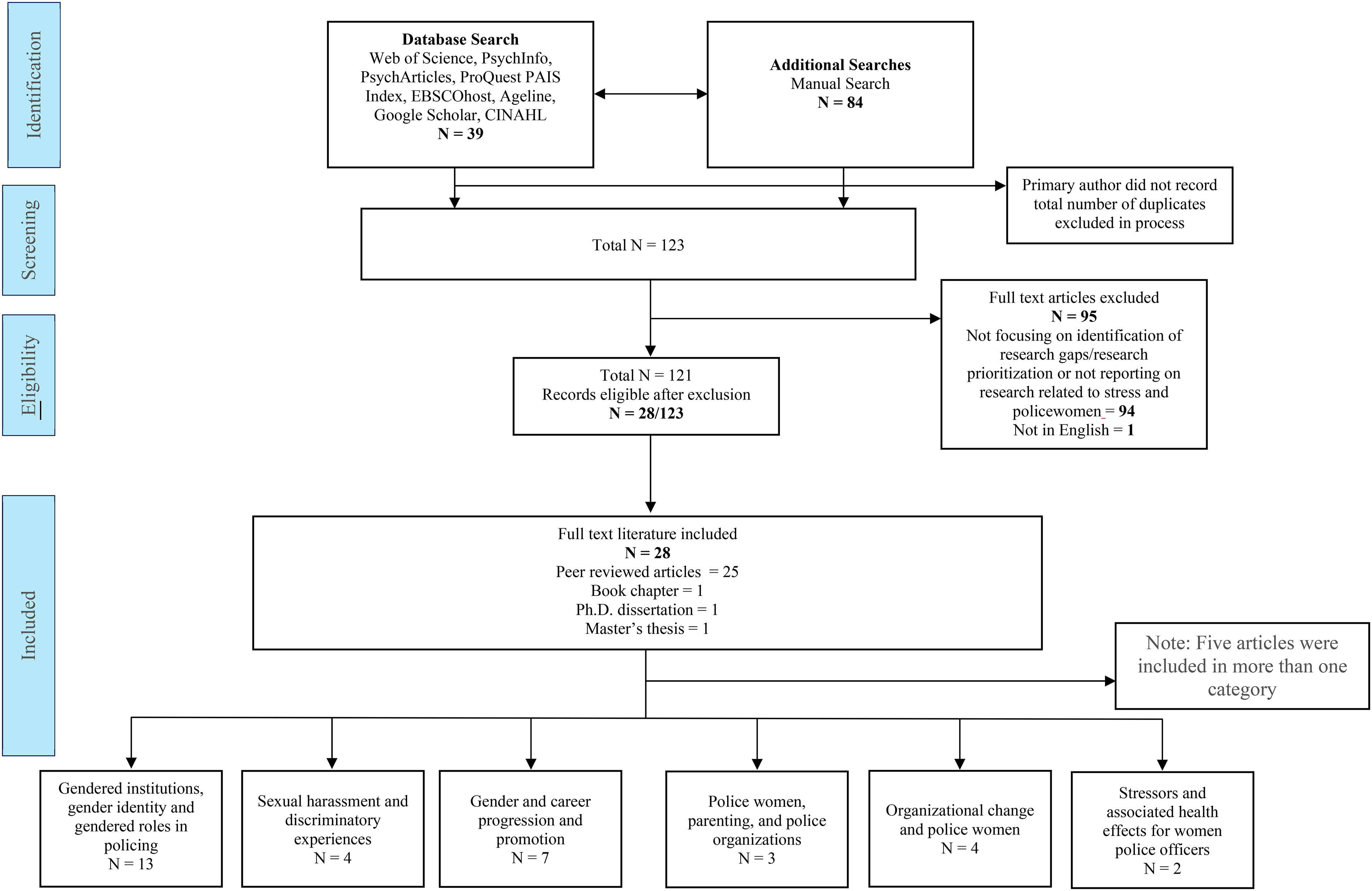
PRISMA flow diagram for the current scoping review.
The search strategy revealed studies in the following categories relating to policewomen and potential stressors as determined by the lead author. These include gendered institutions, gender identity and gendered roles in policing (Angehrn et al., 2021; Bikos, 2016; T Brown et al., 2020; Cunningham and Ramshaw, 2020; Haake, 2018; Kingshott, 2013; Kringen, 2014; Kurtz and Upton, 2018; Morash and Haarr, 2012; Murray, 2021; O’Connor Shelley et al., 2011; Silvestri et al., 2013; Swan, 2016); sexual harassment and discriminatory experiences of policewomen (Angehrn et al., 2021; J Brown et al., 2019; Lonsway et al., 2013; Murray, 2021); organizational relationships between gender, career progression, and promotion (Alcocer Guajardo, 2016; Angehrn et al., 2021; Boag-Munroe, 2017; Charlesworth and Robertson, 2012; Magnus, 2017; O’Connor Shelley et al., 2011; Shjarback and Todak, 2019); policewomen and parenting (Angehrn et al., 2021; Langan et al., 2017; Schulze, 2010); organizational change (J Brown and Silvestri, 2019; Schuck, 2014; Silvestri, 2018; Ward and Prenzler, 2016); and stressors and associated health effects for policewomen (Angehrn et al., 2022; Hartley et al., 2014).
Gendered institutions, gender identity, and gender roles in policing
The ability of women to perform policing tasks, both physically and emotionally, has been debated within policing organizations (T Brown et al., 2020; Hartley et al., 2014; Magnus, 2017; Morash and Haarr, 2012; O’Connor Shelley et al., 2011; Schuck, 2014). Hartley and colleagues (2014) highlighted this as a significant source of stress for policewomen. Kringen (2014) and Angehrn et al. (2021) identified hegemonic masculinity (the pervasive belief in overt masculinity) as a requirement for the profession, and a factor that may hinder women's integration into police organizations. T Brown and colleagues (2020) highlighted that policewomen are often perceived as lacking the masculine traits associated with the ideal policeman, leading to differences in treatment. This can result in policewomen being overlooked for roles requiring physical strength (e.g., tactical and canine units) and being placed in roles traditionally considered to require “feminine” attributes, such as compassion, care, and empathy (child abuse and family violence units). Angehrn and colleagues (2021) reported similar findings but found that some men colleagues value these gender differences, indicating that feminine qualities can make women better officers and occupational partners by bringing balance to their work and partnerships.
Police culture tends to view policewomen as weak or different, creating an environment where they constantly feel the need to prove themselves to fit in and gain acceptance (T Brown et al., 2020; Haake, 2018; Hartley et al., 2014; Kingshott, 2013; Magnus, 2017; O’Connor Shelley et al., 2011). Bikos (2016) found that policewomen in her study conformed to expected masculine behavior, even though they criticized it. Aligning with their men counterparts and avoiding actions contrary to the status quo, such as reporting misconduct, led to greater career success for policewomen (Bikos, 2016; Magnus, 2017). The dominant masculine culture within policing leads to a lack of acceptance of women and differential treatment compared with men (Angehrn et al., 2021; T Brown et al., 2020; Hartley et al., 2014; O’Connor Shelley et al., 2011). This lack of acceptance is evident in actions such as inadequate backup for policewomen and the disproportionate assignment of gendered tasks, such as administrative and non-emergency work (Angehrn et al., 2021; Bikos, 2016; Haake, 2018; Hartley et al., 2014; Murray, 2021; O’Connor Shelley et al., 2011) and that which requires “emotional labour” or “interpersonal relations” (Schuck, 2014). Assignments include child abuse investigations, intimate partner violence investigations, community relations (Haake, 2018; Hartley et al., 2014), and victim support (Angehrn et al., 2021). Women experienced decreased opportunities to acquire the breadth of experiences required for career advancement because tasks were often assigned based on gendered assumptions and stereotypes (Hartley et al., 2014; O’Connor Shelley et al., 2011). Examples included inaccessibility to specialty units such as the canine and special weapons and tactical units (Bikos, 2016; Haake, 2018). As a result of this exclusion, women were underrepresented in these types of units compared with their men coworkers, leading to limited opportunities for participation to gain experience compared with men.
The assignment of work based on gender also perpetuates stereotypes and biases, such as the belief that women are better suited for certain roles and that men are more suitable for leadership positions (Haake, 2018). In a qualitative study of 28 Swedish police leaders (17 men, 11 women), Haake (2018) found that men often attributed the higher promotion rates of men to individual skill levels, whereas women attributed it to the internal dynamics and culture within the police organization. These biases can lead to increased stress levels for women police officers. While Haake's (2018) study has potential limitations, such as its transferability to other contexts and the representativeness of the sample, the rich data contributes to the existing literature on the experiences of women in law enforcement.
Policewomen and identity
In her 2016 qualitative study, Bikos explored the impact of masculine police culture on the identities of Canadian policewomen. She discovered that the 15 respondents experienced a “bifurcated consciousness”, feeling a division between their actual experiences and the masculine view they were expected to adopt as officers. This led to conflicting feelings as the masculine perspective and organizational values overshadowed and devalued the women's experiences. Bikos also found that both single and partnered mothers struggled to reconcile their roles as police officers and mothers, often experiencing conflicting identities. The study confirmed that labeling, stigmatization, and the devaluation of women within police culture persist, as supported by O’Connor Shelley, and colleagues in 2011. Although Bikos's study made significant contributions to the literature by capturing women's voices and experiences, it lacked diversity within the sample, such as variations in race, ethnicity, sexual orientation, and rank. This limitation decreases the transferability of the findings to all women police officers and highlights the need for future research to consider and include diversity.
Police narratives, identity, and performance
In a 2018 study, Kurtz and Upton conducted ethnographic research involving 28 officers from 3 police departments in the Midwest United States. Their findings revealed the significant influence of police narratives and storytelling in perpetuating hypermasculinity and misogyny within policing institutions. The findings in this study align with those of other reputable studies (Alcocer Guajardo, 2016; Angehrn et al., 2021; Bikos, 2016; Boag-Munroe, 2017; Brown et al., 2020, 2019; Cunningham and Ramshaw, 2020; Haake, 2018; Kingshott, 2013; Kringen, 2014; Kurtz and Upton, 2018; Lonsway et al., 2013; Magnus, 2017; Morash and Haarr, 2012; Murray, 2021; O’Connor Shelley et al., 2011; Shjarback and Todak, 2019; Schuck, 2014; Silvestri, 2018; Silvestri et al., 2013; Swan, 2016), thus bolstering the credibility of this research. Haake (2017) highlighted the importance of narratives and discourse in creating positions of inclusion for men and exclusion for women relating to the cultural norms established within policing organizations. As a result, socialization through various means can lead to the oppression of policewomen within policing organizations (Bikos, 2016).
Bikos (2016) conducted a comprehensive study of women's socialization within police culture and its influence on their self-perception and interactions. She observed that women police officers often face a complex situation, being both oppressed and oppressors because of their dual roles as women and law enforcers. This can lead to experiences of harassment, bullying, stereotyping, and labeling. Magnus (2017) highlighted several studies (Agocs et al., 2015; Graue et al., 2016; Spasic et al., 2015; Swan, 2016; Yu, 2015) indicating that women in law enforcement may feel pressured to suppress their feminine qualities in order to fit into the predominantly masculine environment. However, Schuck's quantitative study (2014), which involved 897 participants, including 192 women and 672 men, revealed that women in law enforcement were actually less likely than their men counterparts to adopt hypermasculine attitudes as part of their identity.
In a study conducted by Murray (2021), both men and women police officers from Canada were interviewed to gain insights into their perspectives on gender differences and bias. The findings revealed that men officers tended to deny gender-based differences and bias, whereas women officers identified these disparities and employed adaptive approaches to challenge gender discrimination. Several adaptive strategies used by women officers included selecting work roles that allow for balancing care work at home, addressing sexism using the paramilitary structure, and forming a supportive community with other women. Angehrn and associates (2021, 2022) echoed the importance of community and a supportive social network for policewomen; however, differing from Murray, they found that both men and women were aware of gender bias and differences.
In a qualitative study of policewomen, Morash and Haarr (2012) found that all 21 women respondents selected a mix of feminine and masculine characteristics to describe themselves in connection with their role as officers (e.g., compassionate, empathetic, determined, loyal, strong, confident). The study revealed that traditional gender stereotypes did not dictate their behavior, because their gender performance was context-dependent. This study confirmed Moore's (1999) findings that occupational identity holds more significance than gender identity for women policing in Israel. Differing from Moore (1999), Morash and Haarr's found that women tended to devalue certain masculine attributes (e.g., aggression, physical strength) while emphasizing traits commonly associated with women (e.g., communication and interpersonal skills). This finding was supported by Angehrn and associates (2021). Contextual factors, such as geographic and physical location, organizational differences (e.g., structural and cultural), and individual differences between participants within each study sample may account for this difference. Regardless of contextual differences, the discord between role and gender identity can negatively impact women officers’ stress levels and mental health (Hartley et al., 2014).
Gender identity and job satisfaction
In her 2016 quantitative study, Swan examined the impact of gender identity on job satisfaction among policewomen in the United States. The findings indicated that policewomen with a more masculine gender identity reported lower job satisfaction compared with those who identified as androgynous. The study also shed light on how these women managed their gender expression in the workplace, balancing their gender performance between masculine and feminine traits to meet the demands of their workplace. Despite this finding, she noted that policewomen still have a long way to go before receiving full acceptance and integration into masculine police institutions; however, she did not provide details on how this could be achieved or offer a timeline. The study's lack of diversity in its sample, with 89% white women and a failure to include women in lower-rank roles, presents an opportunity for future research to address these gaps in the literature.
Sexual harassment and discriminatory experiences of policewomen
In their book chapter entitled, “Stressors and associated health effects for women police officers”, Hartley and colleagues (2014) discussed sexual harassment and sexual discrimination as potential stressors for female police officers. However, they did not provide clear definitions for these terms. Similar findings were reported by Somvadee and Morash (2008), Deschamps et al. (2003), Greene and del Carmen (2002), Liberman et al. (2002), Morash et al. (2006), and Thompson et al. (2006). Angehrn and colleagues (2021) conducted a qualitative exploration of the experiences of policemen (N = 8) and women (N = 9). The women highlighted gender-based discrimination and sexual harassment as being salient within their respective police organizations. The authors suggested that the responsibility for addressing sexism seems to rest solely on policewomen, rather than on men to prevent sexism. The women detailed encountering different types of sexual harassment, such as sexual jokes, receiving pornographic material, and inappropriate messages. They also recounted incidents of sexual assault, which the authors did not classify as such.
In their qualitative study of policewomen (N = 9) in a populous Southern US region, T Brown and associates (2020) identified two categories of sexualized behavior: sexual teasing and sexual harassment. They did not provide a specific definition for either category, but they explained that sexual harassment was more overt than sexual teasing, could occur both physically and verbally, and typically originated from individuals in positions of power. The researchers noted that sexually harassing behavior was often downplayed through the minimization of less severe forms of sexual harassment, particularly when it involved individuals of similar rank and behaviors that were not seen as derogatory by the participants, although these researchers provided no examples of what was considered sexual teasing. Similar to Murray (2021), T Brown and colleagues (2020) found that policewomen used neutralizing strategies such as engaging in sexual teasing and banter with colleagues to gain acceptance and cope. However, these strategies, rather than challenging gender inequality, were found to reinforce and maintain gendered stereotypes and oppressive systems within policing organizations.
In a study on sexual harassment in US law enforcement, Lonsway and her team (2013) found that 93.8% of female participants (N = 679, women = 69) had experienced behaviors outlined in the Sexual Experiences Questionnaire (SEQ). The SEQ was revised for this study and included unwanted sexual attention (sexual comments or inappropriate touching), quid pro quo sexual harassment (submission to unwanted sexual propositions resulting in reward for compliance or punishment for refusal), and gender harassment (telling dirty jokes or disparaging comments about women). The research highlighted that 74% of women experienced unwanted sexual attention, 15.2% experienced quid pro quo sexual harassment, and 91.3% experienced gender harassment. For the qualitative portion of the study, women participants (N = 531) described their experiences with the SEQ behaviors through narrative responses. Gender harassment was reported as the most common experience (91.3%), including incidents like being subjected to dirty jokes, displays of pornography, and derogatory and discriminatory statements toward women. Respondents also reported being insulted, harassed, and discriminated against “based on their gender or sexual orientation”. Unwanted sexual attention was the second most common behavior experienced (74%), followed by quid pro quo sexual harassment (15.2%).
In 2019, J Brown and colleagues studied the impact of police organizational culture on senior-ranking policewomen's discriminatory experiences in England and Wales. They found that 34% experienced unwanted comments or jokes, 6% faced unwanted physical contact, and 11% were subject to unwanted sexual propositioning. This study also brought to the forefront other discriminatory behaviors such as gender-based comments, unequal promotion opportunities, stereotypical gender tasking, and bullying by more senior individuals. The findings of this study echo the concerning results of O’Connor Shelley and associates’ (2011: 355) literature review on sexual harassment within policing organizations. The study emphasized that policewomen endure significant “control, exclusion, and stress due to sexual harassment from individual officers and an organizational subculture that tolerates, endorses, and/or ignores and denies such behaviors”. The impact of sexual harassment, discrimination, and exclusion can significantly impede the career progression of women officers (Angehrn et al., 2021; Bikos, 2016; J Brown et al., 2019; Cunningham and Ramshaw, 2020; Hartley et al., 2014; Kingshott, 2013; Lonsway et al., 2013; Magnus, 2017; Silvestri, 2018). Moreover, the fear of intimidation, retribution, and reprisal, including stalled career progression, can dissuade officers from reporting incidents of discrimination and harassment (Angehrn et al., 2021; Magnus, 2017), regardless of gender (Magnus, 2017).
Gender, career progression, promotion, and retention
Bikos (2016) cited barriers to promotion and a lack of inclusive workplace policies that consider the needs of women with children as a primary source of frustration for policewomen. Numerous researchers cited barriers to promotion, such as a lack of opportunity for policewomen to gain experience, including receiving mentoring (Boag-Munroe, 2017; Hartley et al., 2014; Magnus, 2017; O’Connor Shelley et al., 2011; Swan, 2016), which in turn provides a direct benefit to policemen who receive mentoring and increases men's opportunities for promotion (O’Connor Shelley et al., 2011). Researchers noted gendered expectations (Angehrn et al., 2021; Boag-Munroe, 2017; Charlesworth and Robertson, 2012; Haake, 2017), cultural stereotypes (Charlesworth and Robertson, 2012; Haake, 2017), covert bias (Angehrn et al., 2021) and discrimination (Angehrn et al., 2021; Magnus, 2017; Shjarback and Todak, 2019) as additional barriers for women in policing.
Alcocer Guajardo (2016), Shjarback and Todak (2019), and Swan (2016) have highlighted a concerning trend: the lack of significant increase in the presence of policewomen in leadership roles over time. In their comprehensive quantitative study, Shjarback and Todak (2019) found that promotion in policing is rare for both genders, but even rarer for policewomen. Surprisingly, they also discovered that policing organizations with higher levels of professionalism (e.g., accreditation, community policing initiatives) were more likely to have to have women in leadership positions. Despite this factor, overall, studies have found that policewomen have fewer advancement opportunities and are often hesitant to pursue such opportunities when presented (Alcocer Guajardo, 2016; J Brown et al., 2019; Swan, 2016).
Promotion feasibility
Researchers have identified several barriers to women's opportunities and advancement. These include family commitments (Schulze, 2010; Shjarback and Todak, 2019; Swan, 2016) and a lack of family-responsive policies (Boag-Munroe, 2017; Schulze, 2010), such as inflexible working hours (Charlesworth and Robertson, 2012; Magnus, 2017; Shjarback and Todak, 2019). Kingshott (2013) and O’Connor Shelley et al. (2011) also found issues with retaining pregnant and child-rearing women officers because of insufficient policies around pregnancy, family leave, and flexible work schedules. Boag-Munroe (2017) highlighted that some policewomen may find career progression unattainable despite their ambitions because of barriers. She also pointed out that lower-rank expectations and aspirations could hinder gender equity across all ranks. Although Boag-Munroe's study had a large sample size (N = 21,490), it had limitations, such as questions about its applicability to contexts beyond England and Wales due to unique societal and contextual factors (e.g., politics, overarching societal norms); lack of diversity in the sample (5% identified as racialized); a low overall response rate potentially leading to selection bias; lack of explanation of revealed differences; and not addressing lateral progression to specialist roles.
The study by Guajardo (2016) analyzed the growth of policewomen in supervisory and high-level positions within the New York City Police Department from 2000 to 2013 using specific demographic employment data. The findings revealed that policewomen faced challenges in advancing through the ranks, attributed to factors such as annual attrition rates, limited new positions, a shortage of female applicants, and the male-dominated culture within the department. Comparison with existing literature showed a decrease in women's representation among officers during this period, highlighting a significant disparity compared to other policing organizations in the United States.
Retention
In their 2012 study, Charlesworth and Robertson highlighted the critical role of part-time work in retaining policewomen. They conducted a case study review of a discrimination complaint brought by an Australian police detective seeking part-time work, revealing significant resistance within the Victoria Police. This resistance took the form of limiting access to part-time work, institutional barriers stemming from rigid organizational structures and policies, and cultural barriers driven by stereotypes about the value and commitment of part-time workers. The researchers contended that this resistance constitutes a covert form of gender-based discrimination, perpetuating societal expectations that women should primarily serve as caregivers. Charlesworth and Robertson emphasized the need for further research into part-time work and its intersection with gender to inform and influence policing organizations and policies on a broader scale across different contexts.
In a study conducted in England and Wales, Cunningham and Ramshaw (2020) examined the experiences of 23 policewomen with over 40 years of practice. They discovered that during periods of unrest, riots, or threats, policewomen were able to take on new career experiences and roles, such as the canine unit, investigative unit, and vice. This opportunity arose because their men counterparts were occupied dealing with the immediate threats, allowing the policewomen to step into different roles. The study highlights that the current organizational structure within the police force acts as a significant barrier for policewomen, impacting their potential for advancement. The researchers emphasize the need for greater attention to be given to police organizational structures, policies, and protocols to address this issue.
Policewomen and parenting
Although numerous studies mentioned the issue of family–work balance challenges caused by a lack of inclusive policy toward the needs of policewomen who are pregnant or parents (Angehrn et al., 2021; Bikos, 2016; Charlesworth and Robertson, 2012; Hartley et al., 2014; Magnus, 2017; O’Connor Shelley et al., 2011), few made this their primary focus (Langan et al., 2017; Schulze, 2010). Other studies identified this as a significant stressor for many policewomen (Angehrn et al., 2021; Hartley et al., 2014; Magnus, 2017). Policewomen are found to resign at a higher rate than policemen, especially during the childbearing and early parenting years within Australian policing organizations, as noted by Charlesworth and Robertson (2012) and Langan et al. (2017). Furthermore, work–family tensions have been linked to increased stress levels, absenteeism, turnover, reduced productivity, job satisfaction, and organizational commitment (Angehrn et al., 2021; Swan, 2016).
Angehrn and associates (2021), Hartley and colleagues (2014), Magnus (2017), and O’Connor Shelley and colleagues (2011) illuminated the organizational barriers that impact policewomen's decision-making around starting and caring for a family. These barriers include the lack of part-time work and inflexible hours, forcing some women to delay or forgo having children in order to progress in their careers. They noted that some women either postpone or forgo having children to meet work scheduling demands and advance in their careers, whereas others sacrifice their career progression to have a family. Magnus (2017) conducted a qualitative multiple case study of seven policewomen working in Alberta police agencies and revealed that policewomen with families were often perceived as a burden or unsuitable for policing because of childcare and family obligations, facing increased discrimination because of the intersecting social locations of police officer, woman, and mother. Angehrn and associates (2021) also supported this finding. By contrast, some women from Bikos’ (2016) study reported experiencing greater flexibility with schedule accommodations because they had secured their place with the dominant group.
Langan and team (2017) and Schulze (2010) examined the intersection of the roles of policewomen and mothers. This led to inconsistent accommodations across different law enforcement agencies, with pregnancy and childbirth leave often falling under illness and disability policies, effectively labeling these women as disabled. Despite limitations in Schulze's (2010) study, such as a small sample size and overlooking other social factors (e.g., race, ethnicity), the findings could be instrumental in shaping future policies to address gender-specific needs.
In their 2017 qualitative study, Langan and colleagues delved into the experiences of 16 Canadian police mothers as they navigated pregnancy, maternity leave, and returning to work. The study uncovered significant disparities faced by these women, all of whom were white and from similar socioeconomic backgrounds. These challenges included the need to exert more effort than their male counterparts to gain acceptance, facing negative reactions to their pregnancies, and encountering demotion and reassignment during maternity leave (also noted by Angehrn et al., 2021). Moreover, upon returning to work, these women grappled with the informal expectation of having to prove themselves all over again. The study underscored the urgency for future research to focus on the retention of policewomen and the overall effectiveness and sustainability of police organizations. In addition, the authors emphasized the critical importance of police leaders comprehending and valuing the experiences of policewomen, as well as challenging the prevailing masculine culture to drive organizational change. Although the study's lack of diversity in its sample was a limitation, the authors highlighted the imperative of including diversity, such as race and class, in future studies to capture the multifaceted needs of women in policing.
Angehrn and colleagues (2021) made the intriguing discovery that male officers also encountered challenges in juggling work and family responsibilities, particularly because of the absence of inclusive parental and family leave policies. In organizations with such policies, some men participants faced bias and stereotyping, and were actively discouraged from utilizing this benefit. This finding underscores the widespread impact of masculine culture, which not only limits opportunities for women but also imposes constraints on men.
Organizational change
Police organizational change is an arduous task, given the deeply entrenched masculine police culture. Masculine police culture encompasses a shared set of norms, beliefs, and values within policing that embraces traditional gender roles associated with masculinity and femininity. Traits traditionally associated with masculinity, such as toughness, loyalty, bravery, courage, and a sense of being a protector, are strongly emphasized within policing organizations (McCartney and Parent, 2015). Those who deviate from traditional gender roles and do not conform to expected characteristics may encounter discrimination and oppression.
Schuck (2014) pointed out the potential importance of gender diversity in bringing about organizational change and fostering a new culture. However, J Brown and Silvestri's (2019) examination of current police organization trends in England and Wales revealed that despite an increase in the numbers of female police officers, including those in senior positions, certain policing practices, such as community policing and efforts to address sexual harassment and discrimination, have actually prevented the weakening of the traditional masculine police culture. Instead, they have led to a decrease in the representation of male officers. This suggests that the push for gender equality within policing may inadvertently reinforce the perception that women officers are taking jobs from hardworking men, perpetuating traditional notions of masculinity and gender roles.
In their 2016 study, Ward and Prenzler investigated five police agencies from around the world that demonstrated above-average gender equity in their recruitment and employment of officers. Using a case study approach and drawing on existing quantitative data, the researchers identified several initiatives that could help improve women's representation within policing organizations, such as the support of top management support, setting numeric targets, establishing support networks, and monitoring progress. The study highlighted the critical importance of buy-in and support from top levels within policing organizations in achieving gender equity goals. In addition, the researchers emphasized the potential influence of broader government agendas and external stakeholder support groups in achieving greater gender equity.
Unfortunately, owing to resource constraints, the study was unable to investigate all factors that may have contributed to high performance in gender equity, such as department demographics, history, and leadership. Nonetheless, the researchers stressed the need to explore success stories and research related to successful initiatives to identify factors that promote women's equity in policing.
Overall, the study's implications suggest that examining problematic practices, policies, and experiences, as well as studying effective ones, can reveal opportunities for organizational improvement.
Silvestri (2018) introduced a groundbreaking solution to combat gender discrimination in police leadership. In her article “Disrupting the ‘heroic’ male within policing: A case for direct entry”, she highlighted how traditional masculine ideals in police leadership have disadvantaged women officers. Silvestri's historical analysis of senior officer selection in England and Wales, dating back to the 1910s, emphasized the need for change, culminating in the promising Direct Entry scheme introduced in the 2000s. She emphasized the scheme's potential to bring about positive organizational and cultural change, while acknowledging the need for further evaluation of its impact.
Silvestri (2018: 309) proposed the implementation of Direct Entry for senior officers in England and Wales as a tool to disrupt “the gendered order within policing”. Although this suggestion aims to increase the representation of policewomen in higher ranks, it has limitations. Recruiting women for Direct Entry without prior demonstration of credibility, commitment, and competence in an officer role may further marginalize these individuals. This is because the structural procedures and organizational culture that create gender inequities would remain intact and unchallenged (Silvestri, 2018; Silvestri et al., 2013). As Haake (2017: 250) emphasized, “[a]chieving gender equality is about undoing or redoing gender…in a way that breaks our gender-stereotyped thoughts and actions and helps reduce gender-biased attitudes and behaviours”.
Psychological health and policewomen
In their 2014 analysis, Hartley and colleagues made a compelling case for further research into the impact of stress on policewomen's psychological health. Their emphasis on the scarcity of research in this area underscored the urgent need for more a comprehensive investigation into the unique stressors faced by policewomen and the resulting psychological effects. Angehrn and colleagues (2021) identified broader connections between policewomen's experience of workplace stress and overall mental health (e.g., failing to report negative or adverse experiences because of fear of retaliation and the distressing process of reporting). Similarly, Angehrn and her team (2022) reported on sex differences in mental disorder symptoms among police officers. They shed light on the elevated rates of mental disorder symptoms among policewomen, particularly in comparison with men. Their findings highlighted the critical importance of addressing risk factors such as sleep quality and the lack of social support for policewomen. Despite police work stress not significantly mediating the relationship between sex and mental disorder symptoms, it is evident that women and men officers may have distinct experiences of work-related stressors regardless of sharing the same occupation. There is the need for “a scale that accounts for gender and sex differences [that] may better reflect the challenges faced by women police officers and the possible impact of such challenges on mental health” (Angehrn et al., 2022: 14).
Discussion
Although a wide array of topics have been researched, ranging from police mental health to officer experiences of workplace stress to discrete topics involving women in policing, few have pointedly explored how policewomen experience psychological stressors in connection with their employment as officers. Further, only Angehrn and colleagues (2022) have explored the broader connection of workplace stress to policewomen's mental health, albeit in the context of sex differences. Currently, no peer-reviewed studies have explored the generative mechanisms capable of producing the experiences (Danermark et al., 2005; Edwards et al., 2014; Kjørstad and Solem, 2018). Masculine police cultures that tolerate, support, and perpetuate gender inequality, misogyny, and the sexualization of and sexual violence against women are rooted in patriarchy—a mechanism capable of producing these experiences (Bourassa Rabichuk, 2021). It is vital to acknowledge that the experiences of policewomen are diverse, not uniform, and this realization has far-reaching implications for crafting support programs that transcend the conventional one-size-fits-all approach based solely on gender or role. Moreover, failure to recognize gender assumes that the needs of all are the same and that organizational policies and interventions to treat the outcomes of workplace stress will be effective across individuals with differing gender identities (cis-women, cis-men, transgender, and gender non-conforming, non-binary). This underscores the need for policies that recognize the unique needs of policewomen and gender-diverse officers and could drive transformative changes within organizations.
Understanding the unique stressors of policewomen can more broadly illuminate their experiences in policing and help us understand better the implications of their experiences. These understandings can form the evidentiary basis for policy and management practices to limit and reduce policewomen's stressors and subsequent adverse mental health outcomes. This scoping review provides a solid rationale for the integration of both anti-oppressive and gendered lenses when designing, implementing, and evaluating organizational changes to ensure that the needs of policewomen are accurately represented and included (Bourassa Rabichuk, 2021). Such inclusion may help mitigate oppressive aspects of policing and practices and prevent harm from occurring where possible. Relevant policy areas may include workplace mental health policy, respectful workplace policy, disciplinary procedures that detail specific and meaningful consequences based on the severity of the behavior, return to work policy, sick leave and family leave policies, and other family-related policies around child care and job-sharing opportunities. Increasing awareness and knowledge about all of these issues is also essential. For example, helping policemen understand the impact of workplace sexual harassment on the mental health of policewomen may decrease instances of workplace harassment. In addition, holding perpetrators of sexual harassment and sexual assault accountable for their actions may also decrease such abhorrent behaviors.
Further to this, there is a misclassification of sexual assault as sexual harassment (Angehrn et al., 2021; T Brown et al., 2020; Lonsway et al., 2013). This misclassification diminishes the gravity of these potentially traumatic experiences, which should be viewed as criminal offenses. Viewing sexual assaults, in which inappropriate sexual touching is included, as sexual harassment and handling these as employment issues rather than criminal offenses is highly problematic. Researchers and police policy and procedures must acknowledge this critical distinction because it is essential in disrupting the normalizing of inappropriate and unwanted touching and other sexual acts perpetrated by policemen against policewomen. In addition, the financial cost of seeking justice against colleagues perpetrating gender-based discrimination, harassment, and physical or sexual assault, and by extension their respective police organizations, has been entirely overlooked in the literature.
Transformative organizational change
According to Guard (personal communication, 2021), history suggests that workers are more likely to succeed in making positive changes in their workplace when they act as union members. It is very difficult for individual workers or informal groups to bring about meaningful workplace changes. Being union members theoretically protects workers who voice criticism of their workplace and employer from retaliation, making it the most effective platform for driving transformative change. Although the literature has suggested that collective bargaining agreements negotiated by unions provide many workplace protections and insurance benefits supporting members (Hagedorn et al., 2016; Zoorob, 2018), it remains uncertain how change through police unions is possible because of the interaction of masculine police culture and the perpetuation of patriarchal ideals that extend to most police unions, given the policing membership themselves elects police union representative. In addition, discriminatory training and promotion selection processes and leave policies disadvantage women in terms of skill development and pay levels, issues for which they may or may not receive union support depending on their union's stance toward such issues. As Yates (20199: 103) submitted, “union organizing practices are deeply gender-biased, often reflecting the segmented and differentiated conditions under which women engage in the labour market”.
The presence of women in policing associations presents a distinct opportunity to not only provide support and guidance in a secure environment, but also to drive change through unconventional methods. This could involve establishing unionized associations where policewomen members contribute union dues. These dues would help sustain the association, fund various educational and mentoring programs, and offer financial assistance to policewomen pursuing justice. The formal establishment of women's policing associations serves as a platform through which change can potentially be achieved.
To foster a respectful workplace, it is crucial to define clearly and address problematic behaviors. Policies must explicitly state the consequences for those involved in such behaviors. Given the existence of gender-based discrimination, sexual harassment and sexual violence in policing institutions, it is vital to establish independent investigative oversight bodies. These bodies should manage confidential reporting processes for internal complaints, and have the authority to investigate and impose penalties. Mediation and unofficial methods should be prohibited in cases of discrimination, harassment, sexual harassment, and victimization by colleagues. Subjecting victims to face their perpetrators may perpetuate victimization, lead to potential reprisals from colleagues and supervisors, and minimize their experiences. Conversely, if victims choose not to participate in mediation when it is offered as an option, they may face negative consequences, such as being excluded or seen as untrustworthy. In cases of officers perpetrating criminal offenses, individuals should not permitted to retire until the investigation is concluded and, if found guilty, should be promptly dismissed.
Policing organizations must urgently address gender disparities to foster a positive policing culture and retain policewomen. Failing to address these systemic issues and hold police organizations accountable will only perpetuate the current situation and may lead to more lawsuits (Bastarache, 2020). When policemen perpetrate criminal offenses against policewomen and policewomen report it, these incidents must not be treated as mere employment issues subject to the standard grievance reporting process. It is crucial to establish appropriate reporting and complaint processing mechanisms to prevent further victimization of policewomen. Evaluation of policy changes and programs is essential to ensure their effectiveness. Without such measures, police organizations are merely paying lip service to the cause of equality and safe work environments for women, rather than making genuine efforts to overhaul the existing patriarchal systems (Bourassa Rabichuk, 2021).
Future research
The existing research emphasizes the importance of including more policewomen in future studies, particularly women in senior positions within policing organizations (J Brown et al., 2019), those from racially diverse backgrounds (Swan, 2016), smaller policing organizations (Hartley et al., 2014) and various policing contexts (O’Connor Shelley et al., 2011). Researchers are urged to explore the intersectionality of gender, race, ethnicity, sexual orientation, and sexual identity to reveal the complex power relations and mechanisms (Silvestri, 2018). In addition, there is a need to delve into policy issues within policing organizations relating to policewomen (Kringen, 2014; O’Connor Shelley et al., 2011) to disseminate these studies in trade magazines and academic journals to reach practitioners and decision-makers in policing organizations for meaningful change (Kringen, 2014).
To gain a comprehensive understanding of how to optimize women's participation in policing, further research is essential (Ward and Prenzler, 2016). This research should delve into factors such as work schedules (Alcocer Guajardo, 2016; Magnus, 2017), return to work, maternity (Magnus, 2017) and paternity leave policies, and organizational considerations like hiring, retention, and promotion (Alcocer Guajardo, 2016). Guajardo should have elaborated on how these organizational factors could be considered from a policy or practice perspective. In addition, exploring policewomen's attitudes toward career aspirations and how these attitudes are shaped and compared is crucial for developing effective policies and practices within police organizations (Boag-Munroe, 2017).
The existing literature on policewomen lacks a clear definition of “female” and “woman” in each study that does not conflate sex and gender or exclude transgender women. This distinction is critical for understanding the historical and current experiences of each group of police officers and the development of adequate policies and interventions. It is essential to include qualitative studies to expose differences among policing organizations and capture personal experiences not covered in quantitative studies (Boag-Munroe, 2017; Shjarback and Todak, 2019; Swan, 2016). Ward and Prenzler (2016) emphasized the need for and importance of exploring success stories and identifying factors that aid in women's equity in policing. Future studies should explore policewomen's successes to uncover mechanisms that support women in policing (e.g. delineating the factors that support women's success in policing organizations as defined by those women). Such studies could be contrasted against barriers these women face and provide an opportunity for organizational structural improvements. Further studies are needed to explore policewomen's experiences of workplace stress and its implications for mental health to enhance the existing literature.
Existing studies should be replicated internationally to understand better policewomen's experiences across international contexts. Mixed methods approaches and qualitative studies could be undertaken because they can provide a rich, in-depth exploration of the human experience and the context in which these experiences occur (Patton, 2015). When used to study women in policing, greater understanding could be achieved and influence wide-scale improvements for women. Equally as vital, these approaches must be incorporated because they give voice to the participants, grounding the findings in and allowing for a more nuanced understanding of their experience.
Limitations
Although this scoping review provided an overview of recent literature (2010–2022) relating to the broad topic of workplace stress experiences of women in policing, some gray literature may have been missed. Peer-reviewed articles may exist in non-English databases but were omitted because the authors’ primary language is English. Further, some relevant studies may not have been identified because scoping reviews are not intended to be exhaustive (Boydell et al., 2012; Cameron et al., 2008; Levac et al., 2009).
Another limitation relates to variation within the group of studies reviewed, which hail from different countries, and the women being of different ranks, lengths of service and duties. These contextual factors are significant in discerning the stress exposure and mitigating or exacerbating effects of that context. The body of research is currently too small to analyze cross-national differences. Furthermore, there was little focus on the influence of national cultural or sociopolitical context in these studies. Additional research exploring the similarities and differences of policewomen in different and diverse geographical, political, and cultural contexts is warranted to unearth a more nuanced understanding across diverse geographical locations. Although qualitative approaches and cross-sectional studies are generally viewed as weaker designs, including such studies is vital to achieving depth and avoiding mono-method bias (Campbell and Fiske, 1959) and is helpful in triangulating findings or suggesting alternate explanations. When combined with quantitative results, these approaches provide valuable data and findings that can paint a clearer picture of the study topic.
Conclusion
In conducting this review, our objective was to delve into the experiences of policewomen and the stressors they potentially encounter. We strongly assert that further examination and expansion of the concept of workplace stress, particularly organizational stress, within the context of policewomen's experiences is imperative. Our aim is to ignite discourse and inspire additional theoretical and empirical research. Acknowledging the existence of gender-specific disparities in workplace stressors among police officers should drive changes in policies, procedures, treatment interventions, and the mental health and wellbeing of both policewomen and policemen.
Footnotes
Author contributions
Susan Bourassa Rabichuk conceptualized the project. Material preparation, data collection and analysis were performed by Susan Bourassa Rabichuk and reviewed by Linzi Williamson and Sid Frankel. Susan Bourassa Rabichuk wrote the first draft of the manuscript, and all authors commented on previous versions. All authors read and approved the final manuscript.
Availability of data and material
Available upon request.
Declaration of conflicting interests
The authors declared no potential conflicts of interest with respect to the research, authorship, and/or publication of this article.
Funding
The authors received no financial support for the research, authorship, and/or publication of this article.
