



Abstract
This study, based on the five-factor model (FFM) of personality, aimed to identify personality traits associated with the most optimal special weapons and tactics (SWAT) team member. SWAT teams are tasked with pre-empting and responding to terrorist threats, conducting hostage rescue operations, and managing situations that exceed the capabilities of conventional law enforcement agencies. The study sought to provide a deeper understanding of how personality traits function within the high-stakes context of these teams. It involved 159 male SWAT officers in active service within the Swedish Police Authority. A work analysis instrument, the Personality Job Profiler (PJP), was administered to these officers, who served as subject matter experts (SMEs) in a comprehensive personality work analysis. Specifically, the study addressed two research questions: How can an optimal SWAT police officer personality profile be operationalized when translated to the FFM of personality? What is the association between this optimal SWAT profile and the ratings of ten Diagnostic and Statistical Manual of Mental Disorders personality disorder profiles, based on the FFM of personality? The findings suggest that successful SWAT officers should exhibit low neuroticism and high conscientiousness, specifically featuring low vulnerability and high levels of competence, dutifulness, and self-discipline. Notably, the SWAT profile differs significantly from personality disorders, such as borderline, schizotypal, dependent, and avoidant, when operationalized with the FFM of personality. These results have significant implications for developing predictors for the selection process and can enhance the selection procedures for future SWAT members. This may also prompt further studies on criteria-related validity using various personality assessment methods.
Keywords
Introduction
Nations around the world maintain tactical intervention units to counteract and mitigate especially dangerous criminal activities. These units often go by different names depending on their specific focus and geographical context. A military special operation force is typically engaged in international military operations, whereas a special intervention unit is any law enforcement unit that belongs to a Member State in the European Atlas Network and specializes in controlling crisis situations. Swedish counterterrorism intervention units are special intervention units that can be deployed anywhere in Sweden. By contrast, special weapons and tactics (SWAT) units are police units that typically focus on regional incidents (Alvaro, 2000; Bechky and Okhuysen, 2011; Hunt, 2020; Mannix, 2005; Raux et al., 2019; Roberts, 1988).
This study focuses on SWAT teams. SWAT teams have a mandate to pre-empt and respond to terrorist threats, conduct hostage rescue operations, and manage situations that exceed the capacity of conventional law enforcement agencies. Therefore, identifying and hiring high-performing SWAT officers is essential for police organizations to tackle their missions. Among many variables examined as predictors of job performance among SWAT members, personality is a psychological construct that has interested SWAT researchers (Super, 1995; Young et al., 2018). The current study aims to identify personality traits associated with the optimally successful SWAT team member. From a theoretical perspective, this study aims to provide a deeper understanding of how personality traits operate within the high-stakes context of SWAT teams. By exploring the most important personality traits that may contribute to effective performance in SWAT teams, it can potentially contribute to the development of a valid and accurate selection process for future SWAT team members. Therefore, our findings may have implications for enhancing the effectiveness and efficiency of SWAT team operations and tactical intervention units.
SWAT
SWAT teams are specialized units within law enforcement agencies trained to tackle high-risk situations such as hostage situations, barricaded suspects, high-risk arrests, and active shooter incidents (IACP, 2011; IACP and NTOA, 2013). SWAT teams operate in physically or mentally tense situations where the outcomes of their actions, even in exercise, can have serious ramifications. These teams originated in the 1960s in response to several high-profile incidents, including the 1966 University of Texas shooting and the 1965 Watts Riots (Horne, 1995; Ponder, 2018). The first SWAT team was formed by the Los Angeles Police Department in 1967 to manage riot control or violent confrontations with criminals. SWAT teams increased in the 1980s and 1990s during the ‘war on drugs’. Tackling terrorist attacks, such as the Munich 1972 attack at the Olympic Games, was the stimulus to start European SWAT teams (Katz, 1998). However, the European units are utilized today against severe crimes and in situations in which special skills are required; for example, forcing doors and in hostage situations. American SWAT teams were initially designed to deal with criminals, and confronting terrorists was a new challenge for them. Today, American and European SWAT teams are similar in terms of equipment, tactics, scope, and skill.
Selection to a SWAT team is highly competitive and often requires additional training and testing (IACP, 2011; IACP and NTOA, 2013; NTOA, 2013). To become a full team member, SWAT officers undergo extensive training in firearms, tactics, physical conditioning, and teamwork. Given the extreme consequences of a mistake, it is essential to look at people's cognitive/physical abilities, personalities, and skills to identify who tends to do well in a SWAT team. It seems likely that some people will do better than others in these kinds of situations. The multiple-hurdle selection process for Swedish SWAT officers extends over a year. Applicants are evaluated against the job profile associated with the position through various stages. This evaluation includes psychological and physical assessments, as well as a medical examination. The assessment process may be terminated if the applicant does not match the job profile. In the final stage, the applicant undergoes several work sample tests before the final decision is made.
The five-factor model of personality
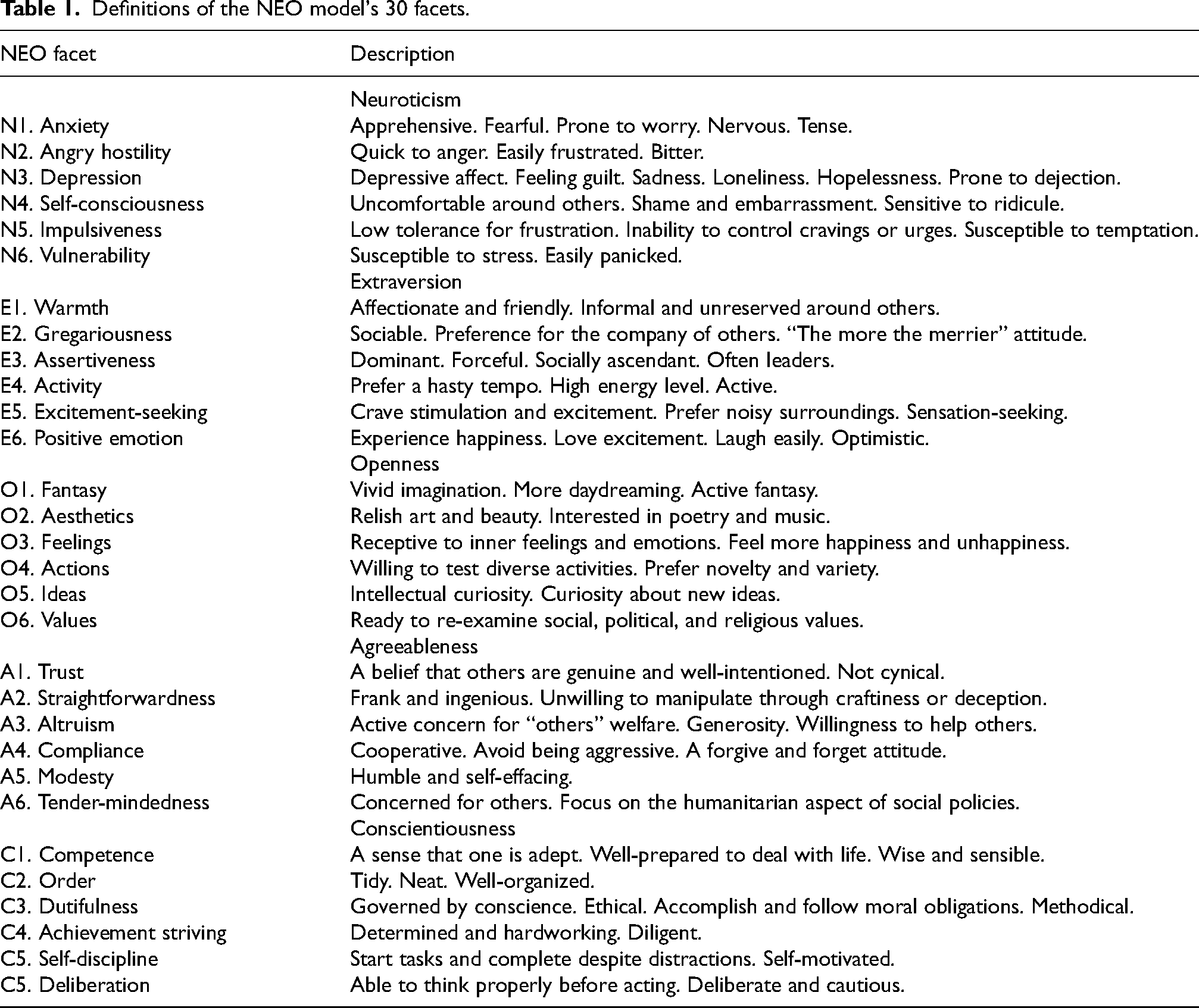
Personality is defined as stable patterns of thinking, feeling, and behaving consistently and characteristically in different situations and over time (Allport and Odbert, 1936; Digman, 1990.) Since the 1930s, researchers have developed various personality theories based on traits and attempted to create a comprehensive model for describing personality. In the late 1960s and 1970s, personality research and the view of individual differences faced widespread and strong criticism. Many researchers argued that human behaviors and thoughts are influenced solely by the situation (Mischel, 1968). Personality research started to recover during the 1980s when Costa and McCrae (1985) developed the NEO model of personality. The convergence between Costa and McCrae's (1985) research, the lexical approach, and other self-rating approaches provided new evidence for the relevance of Tupes and Christal's (1961) five broad factors—neuroticism, extraversion, openness for experience, agreeableness, and conscientiousness (Costa and McCrae, 1985; Tupes and Christal, 1992). Goldberg (1981) was the first to use the term “big five” when describing these factors to emphasize the abstraction and broadness of each trait and avoid giving the impression that personality could be reduced to only five traits (Goldberg, 1981). Costa and McCrae (1985) suggested that each factor in the five-factor model (FFM) has six underlying facets. The definition of each factor is presented in Table 1, along with behavioral descriptions for high scorers on each facet (Källmen et al., 2011; Källmen et al., 2016; McCrae et al., 2005).
Definitions of the NEO model's 30 facets.
There is an ongoing debate among researchers regarding the effectiveness of personality testing in the selection process, mainly because of its relatively low predictive validity (Morgeson et al., 2007). However, several meta-analyses have consistently shown that conscientiousness and emotional stability predict job performance well across various jobs (Barrick, 2005; Barrick and Mount, 1991; Barrick et al., 2001; Chiaburu et al., 2011; Hurtz and Donovan, 2000; Salgado, 1997, 2003; Sackett et al., 2022). The willingness to follow the rules and exert effort (high conscientiousness) and the capacity to allocate resources to accomplish tasks (high emotional stability) have been suggested as “will do” components; that is, motivational components generalizable across jobs and tasks (Barrick, 2005). The remaining personality traits seem to predict success in specific occupations and for specific tasks. For example, agreeableness predicts high performance in jobs involving teamwork, in which collaboration plays an essential role (Wilmot and Ones, 2022). In addition, extraversion predicts performance in jobs requiring considerable interaction with others (such as sales and management) but is negatively correlated with performance in jobs that require extensive safety (Wilmot et al., 2019).
In a general description of a person, each character can encompass both advantageous and disadvantageous traits. Extreme high or low levels of several FFM factors can be described both positively and negatively, serving as assets, burdens, or vulnerabilities. For example, an individual may be described as unsympathetic and domineering, yet excel in a professional role that demands tough decision-making and leadership.
Most research on the relationship between personality and behavior at work predominantly focuses on linear connections, but there have been arguments for curvilinear relationships between personality and job performance (Moscoso and Salgado, 2004). Moreover, there is empirical support for a U-shaped relationship, as seen in the case of neuroticism and task performance (Le et al., 2011).
The FFM and special forces
Suitable physical (Thomas et al., 2019) and cognitive abilities (Beal, 2010) are essential requirements to work in a special intervention unit such as a military special operation force or a police SWAT team. Beyond these abilities, personality emerged as an intriguing psychological construct that can influence work performance (Garbarino et al., 2012; Skoglund et al., 2020). Personality traits that facilitate diligence, self-motivation, exceptional effort, attention to detail, and concentration could potentially become strengths in a SWAT team. Conversely, inclinations toward anxiety, anger, and irritability could, at the very least, pose a burden for a SWAT team member. Remarkably, these strengths and burdens can manifest within the same individual. However, personnel selection focuses on the differences between individuals.
Although there is limited research specifically examining personality in SWAT team members, studies have identified differences among various groups of individuals working in military and police forces that operate in high-stake contexts. These contexts encompass situations or environments in which law enforcement personnel face significant risks, challenges, and potential consequences. For example, Skoglund et al. (2020) found that personnel with officer ranks in Norwegian special operation forces were more extroverted than specialists. They also found no differences in FFM personality trait scores between different groups of military special operators. Working operators, when compared with applicants for basic officer training, were found to be less extroverted, less agreeable, and to a certain extent more emotionally stable.
In addition, Tedeholm et al. (2021) compared the personality profiles of Swedish counterterrorism intervention unit police officers (CTIU) and the general Swedish population using the FFM. Their findings at the factor level revealed that CTIU police officers had lower neuroticism, and higher extraversion and conscientiousness. At the facet level, CTIU police officers exhibited lower levels of vulnerability, angry hostility, and anxiety, as well as higher levels of excitement-seeking, positive emotions, and activity, compared with the general Swedish population.
Huijzer et al. (2022) have summarized the existing research on personality differences among high-stakes context groups and different control groups. They note that high-stakes context workers tend to score higher on conscientiousness and lower on neuroticism compared with control groups. However, differences in other personality traits are less consistent. This suggests there may not be a single personality trait that exclusively enables individuals to excel in high-stakes contexts (Huijzer et al., 2022). Furthermore, Bech et al. (2021) found that the applicants for the special operation forces in Denmark were more conscientious and agreeable than a group of university students. They also experienced minor personality changes during the training program, becoming more extroverted and emotionally stable.
Grubb et al. (2015) examined the traits of United Kingdom (UK) police hostage negotiators. The study involved negotiators from UK police forces, 118 non-negotiator police officers, and 203 university students. Participants completed the Big Five Inventory (John et al., 1991), among other assessments. The study affirms the existence of a police personality/profile but does not strongly support a distinct hostage negotiator personality/profile.
In addition, Garbarino et al. (2012) tested the overarching hypothesis that different personality profiles would be present among various police officer groups. A cluster analysis of Big Five scores among 289 “Reparto Mobile” unit members uncovered two distinct profiles. Approximately two-thirds of the participants had profiles similar to those of the general population, but with higher emotional stability and self-deceptive enhancement. By contrast, the remaining one-third exhibited elevated scores across all personality domains, lower levels of depression, anxiety, professional exhaustion, and increased organizational resilience.
Maladaptive traits
FFM describes normal personality, whereas several models in the clinical field describe maladaptive traits. One such model is the Diagnostic and Statistical Manual of Mental Disorders (DSM; American Psychiatric Association, 2000, 2013) used in psychiatry to diagnose personality disorders. The DSM suggests personality disorders are clinical syndromes distinct from normal personalities, such as the FFM of personality. However, researchers have increasingly noted the limitations of this dichotomized model. One limitation of the dichotomous approach is that it categorizes personality disorders into distinct diagnostic categories, which oversimplifies the complex nature of personality functioning. The specific diagnostic criteria and cutoffs used in the dichotomous model have also been criticized for their limited empirical basis (Clark, 2005; Krueger et al., 2005; Livesley, 2003; Trull and Durrett, 2005; Watson, 2005; Widiger and Samuel, 2005). Instead, an alternative dimensional model of personality disorder has been suggested (Livesley, 2003; Shedler and Westen, 2004; Widiger and Costa, 2002).
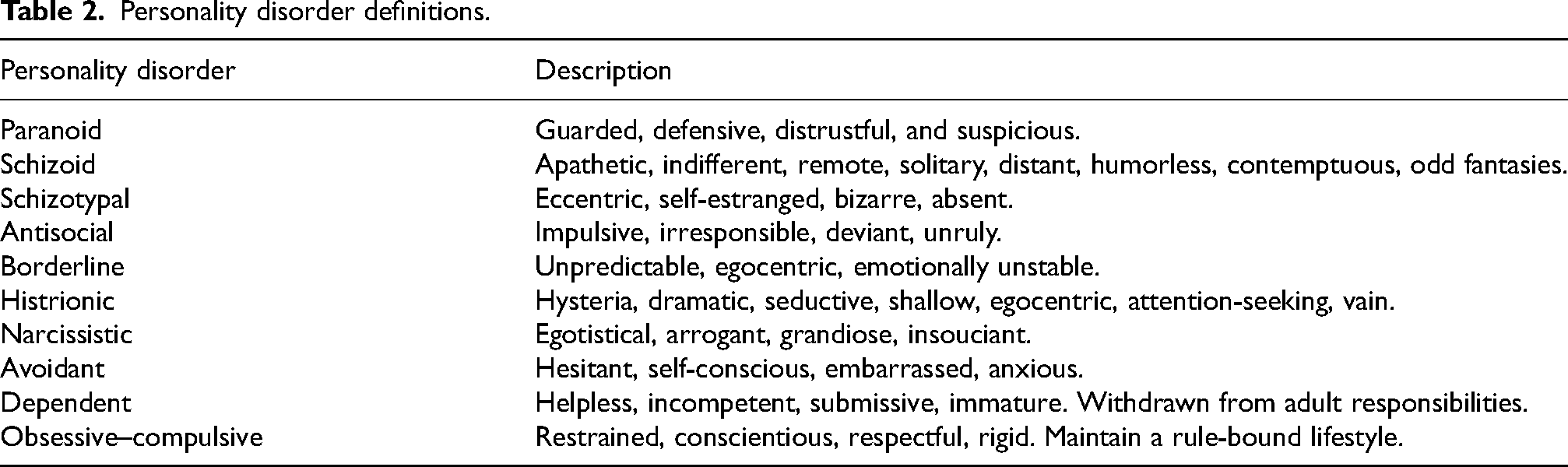
Widiger et al. (1994) and Widiger and Costa (2002) proposed an adaptation of the DSM fourth edition (DSM-IV-TR) personality disorders into the above-described FFM with 30 facets (Widiger and Costa, 2002; Widiger et al., 1994). This is operationalized by assessing whether each personality disorder presented in Table 2 would be expected to have either a high, low, or neutral standing on each of the 30 FFM facets (Costa and McCrae, 1985). For example, antisocial personality disorder could be characterized by low levels of the facets deliberation and dutifulness in the factor of conscientiousness. Furthermore, it would exhibit low levels of compliance and straightforwardness, which are facets of agreeableness, and high levels of temper and impulsivity, which are facets of neuroticism.
Personality disorder definitions.
In this study, we employ the abovementioned alternative models of personality disorder, together with the FFM of personality, to examine the relationship between the optimal SWAT profile based on the 30 facets of the FFM. This approach enables the results to be interpreted not only from a normal personality (FFM) perspective, but also from a maladaptive standpoint. The advantage of analyzing two models, both using the same FFM personality model as input, is that personality assessment within the police force has traditionally been used to screen out candidates (Garbarino et al., 2012). Psychologists have employed various personality models and instruments for this purpose, assessing traits such as antisocial tendencies (Huijzer et al., 2022), which would be unfitting for a career in law enforcement. The overlap between the DSM and FFM may allow for the use of a single personality model (FFM) for both screening out and screening in SWAT police officers. To our knowledge, this study is the first to use this approach in police research, despite its utilization in other fields. Wille et al. (2013) conducted a 15-year study, focusing on college alumni and examining maladaptive personality traits based on the FFM. These traits remained relatively stable over time. Borderline, schizotypal, and avoidant traits were associated with poorer career outcomes, whereas antisocial and narcissistic traits were linked to higher career success. The study results indicate that these maladaptive traits, when analyzed using the FFM, have predictive value for career outcomes in addition to general personality traits. This offers insights for researchers to explore new combinations of personality facets using the FFM.
The current study
Given the limited research on the significance of personality in determining the optimal job personality profile for SWAT members, this study helps identify personality profiles that are suitable for working in a SWAT team, as assessed by experienced operators. The findings can serve as a foundation for selecting appropriate assessment techniques—such as interviews, psychological testing, work sample tests, and references—to effectively measure these specific characteristics.
Method
Participants
The Swedish SWAT team is a regional asset of the Swedish Police Authority. Sweden has one National Police Authority with several SWAT teams allocated over the country. All Swedish SWAT teams (seven regions) are represented in the study cohort.
Data came from the Swedish Police Authority, which conducted a quality investigation project and collected anonymized data for work analysis. The research group subsequently accessed this anonymized data after the Swedish police completed their quality investigation. The ethics review authority had no ethical objections to the research project (Dnr 2022-04049-01, Swedish Ethical Review Authority). The study consisted of 159 (male) SWAT police officers in active service in the Swedish Police Authority in 2021.
The duties of the SWAT police in Sweden involve intervening in particularly complex and dangerous situations. The sections possess incident command capability, negotiation resources, and operational capacity. They engage in problem-oriented and intelligence-led operations against serious crime. It is common for these sections to perform escorts with high threat levels and to undertake rescue missions. The response teams are flexible in their approach, and their methods are continuously evolving. The sections adapt to the requirements of the mission and the mission provider. SWAT operators work in civilian clothes and in uniform depending on the assignment. In Sweden, a SWAT officer is trained to perform high-risk operations that fall outside the purview of regular officers, including managing hostage situations, counterterrorism efforts, and confronting heavily armed criminals. These officers are equipped with specialized weapons, tactics, and body armor to effectively handle critical situations.
The ages of the subject matter experts (SMEs) ranged between 28 and 55 years (M = 39.91; SD = 5.29). Tenure ranged between 4 and 23 years (M = 7.80; SD = 7.16).
Measurement
Personality job profiler
The PJP was developed as part of a larger project focused on creating tools for work analysis and collecting data on personality traits from both observations and self-reports. These traits are based on the 30 facets of the NEO model (Costa and McCrae, 1985) from an observer's perspective. In addition to personality, knowledge, skills, and abilities were mapped for all roles within the Swedish police force. The development process involved a collaborative team consisting of test developers, psychometricians, and linguists, who possessed extensive expertise in test development and specialized knowledge in personality measurement. The primary objective of the project was to define each factor and facet and establish four different levels for each of them. To collect qualitative feedback on the content and comprehensibility of the descriptions, testing was conducted with various groups, including combat pilots, prosecutors, corporate lawyers, salespeople, and entrepreneurs. Adjustments were made to the wording of the personality descriptions based on the feedback received, in order to enhance differentiation between the various facets.
Procedure
To answer the research questions, working police officers were surveyed by administering the PJP through a digital questionnaire. The officers were urged to respond to the survey as quickly as possible. The instructions of the PJP read, “when you answer this survey, think about an optimal SWAT member”. The instrument has 30 items based on the 30 FFM facets and is rated on a five-point Likert scale, in which −2 = very low level, −1 = low level, 0 = neither, 1 = high level, and 2 = very high level. A written description of low and high scores in PJP was available at the endpoint of each facet. An example is the excitement-seeking facet (E3), in which a low score was described as “Prefer and feel best about predictability, and prefer to avoid the unknown and exciting”. Furthermore, a high score was described as “Highly excitement-seeking and prefer the unpredictable, and avoid the familiar and predictable”. The 159 SMEs rated all 30 facets, and the mean value for each facet represented the consensus scoring. Thus, the data collection resulted in 30 mean values and standard deviations that made up the proposed personality profile.
We assessed the psychometric properties of the PJP by administering it to total 569 police officers, which included 159 SWAT officers who served as SMEs in an overall work analysis. The results of the confirmatory factor analysis indicated a reasonably good fit for the FFM, using the six facets for each factor as indicators, with acceptable values for the root mean square error of approximation (RMSEA = .054), the comparative fit index (CFI = .72) and the standardized root mean square residual (SRMR = .07). All factor loadings were statistically significant. Internal consistency reliability was assessed at the factor level, resulting in the following total Omega (Ω) coefficients (Revelle, 2023; Zinbarg et al., 2005): Neuroticism (Ω =.83), Extraversion (Ω =.73), Openness (Ω =.68), Agreeableness (Ω =.50), and Conscientiousness (Ω =.72).
To estimate the interrater reliability of the 159 raters for the 30 facets, we calculated a generalizability coefficient: Eρ². Eρ² was determined by calculating the ratio of the universe score variance to itself plus the relative error variance (Cronbach et al., 1972). Eρ² assesses the degree to which the relative position of the facets is of interest. Eρ² is an analog of the measurement error in classical test theory (Lord and Novak, 1968) and the relative intraclass coefficient for random average ratings (ten Hove et al., 2022), which is appropriate in this case when measurements are used for relative comparisons.
The reliability of the resulting profile was high (Eρ2 =.99). The high reliability was naturally affected by the high number of raters (N = 159). To obtain a nuanced picture, the reliability were estimated for different numbers of raters. This showed that Eρ2 needed around 100 raters to get a reliability >.75. The conclusion was that the high reliability was not due to a lack of random error but rather to the high number of raters in this study. The high reliability indicated that we could proceed with the analysis to investigate the research questions.
Personality disorder
To operationalize the DSM personality disorder (Table 2) according to the FFM of personality, the results from a meta-analysis were used (Samuel and Widiger, 2008). Table 3 in Samuel and Widiger (2008) presents the independent mean effect size (correlations) for each personality disorder and FFM facet relationship. The results specify the relation between each of the 30 facets and the ten personality disorders.
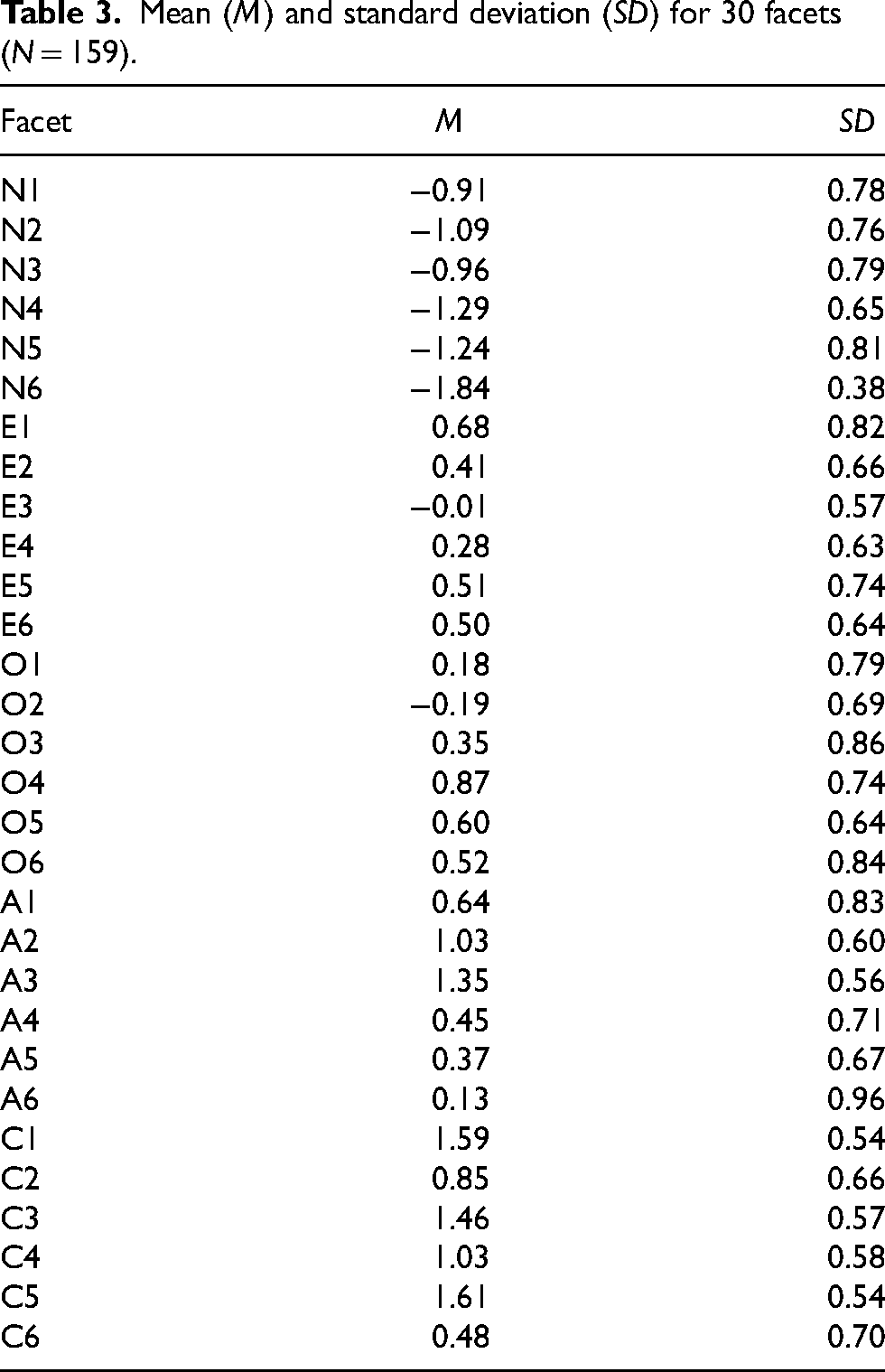
Mean (M) and standard deviation (SD) for 30 facets (N = 159).
Analyses
The mean (M) and standard deviation (SD) for each facet in PJP was computed to answer Research Question 1, which was about an optimal SWAT team member personality profile. Elevation refers to the mean score across all variables in the profile and scatter is the variability or standard deviation among the scores in the personality profile. Because the PJP results could not be compared with a normal group in terms of means and standard deviations, interpretation of the results was based on ranking the means to determine relatively high and low levels on each facet, and ranking the standard deviations for each facet to assess variability.
Research Question 2 was about shape similarity, and although a myriad of different coefficients (Cronbach and Gleser, 1953; Furr, 2010) have been suggested to investigate associations between personality profiles, we relied on Furr's recommendation to keep it as clear and simple as possible. Therefore, we used the Pearson correlation coefficient to describe the association between the optimal SWAT personality profile and each personality disorder profile, considering facets as rows and personality disorders as columns. The results were also conceptualized with a principal component analysis and plotted against two components.
Analyses were performed in R (R Core Team, 2021) using RStudio (RStudio Team, 2020) with package psych (Revelle, 2023) to answer the research questions. The package gtheory (Moore, 2016) was used to compute Eρ2 and the package lavaan (Rosseel, 2012) was used to compute the CFA analysis.
Results
Research Question 1
High and low levels of facets are the descriptions of what was judged to be characteristic and typical for individuals who could work and succeed as a SWAT police officer. If a facet had a midlevel (around 0 on our scale)—for example, anxiety (N1)—it should be interpreted as not probably a desired characteristic trait of a SWAT police officer, at least not concerning other facets. The standard deviation is a measure of each facet's variation. A high variation meant that several SMEs assessed the facet differently, and a low variation implied that the raters agreed on the level of a facet.
The M and SD values for the 30 facets are presented in Table 3. The highest levels were found within the conscientiousness factor, where the facets C1 (M = 1.59), C3 (M = 1.46), and C5 (M = 1.61) distinguished a rated successful SWAT police officer from a less optimal one.
The lowest levels of the facets were obtained for N6 (M= −1.84) within the neuroticism factor and within agreeableness, A3 (M = 1.35) had a high level.
The highest variation (SD) was within the following facets: E1 (SD = 0.82), A1 (SD = 0.83), O6 (SD = 0.84), O3 (SD = 0.86), and A6 (SD = 0.96). The facets with the lowest variation were N6 (SD = 0.38), C5 (SD = 0.54), C1 (SD = 0.54), A3 (SD = 0.56), and C3 (SD = 0.57).
Research Question 2
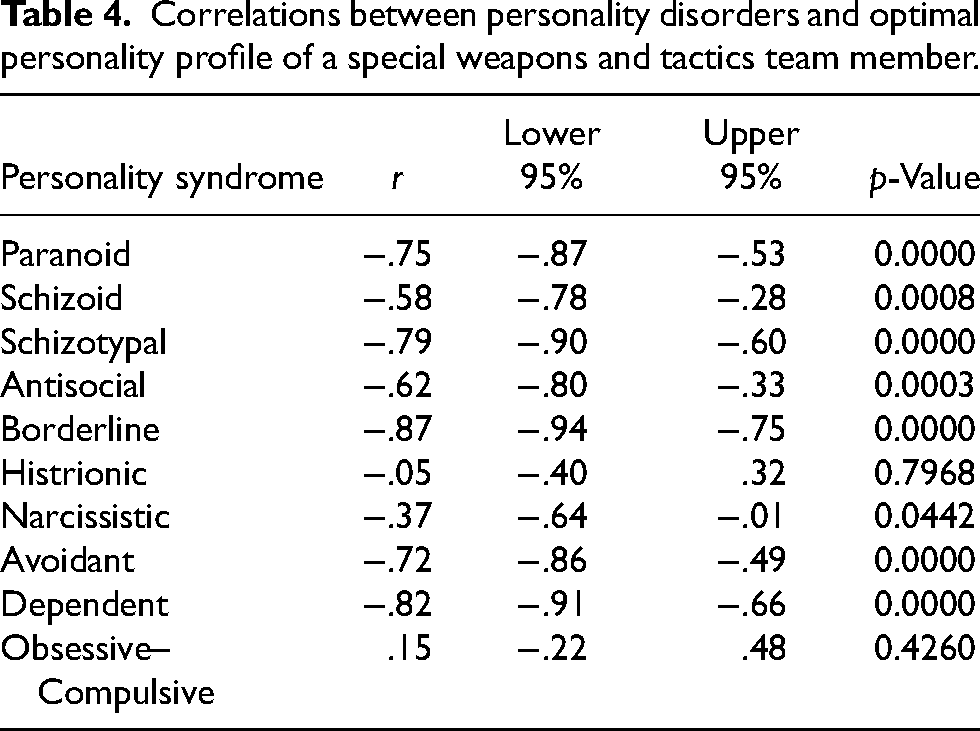
An average profile of 30 facets of FFM was calculated based on the mean values in Table 3. Table 4 shows the correlation between DSM personality profiles and the SWAT profile. Considering facets as rows, the SWAT profile and each personality disorder as columns, the results consistently showed negative correlations between personality disorders and the SWAT profile, where particularly high negative correlations (or dissimilarity) were shown between the SWAT profile and borderline (r = −.87), schizotypal (r = −.79), dependent (r = −.82), and avoidant (r = −.72) personality disorders described with the 30 personality facets. The results are conceptualized in Figure 1, where a principal component analysis identifies the first two factors (eigenvalues, 3.33 and 2.30, respectively). All profiles were plotted using the Promax (Gorsuch, 1970) rotated components. The result can be summarized by the fact that the profile for SWAT was characterized as being far from the profiles that described personality disorders. Only two personality disorder profiles did not show a significant association with the SWAT profile: obsessive–compulsive (r = −.22) and histrionic (r = .05) disorders.
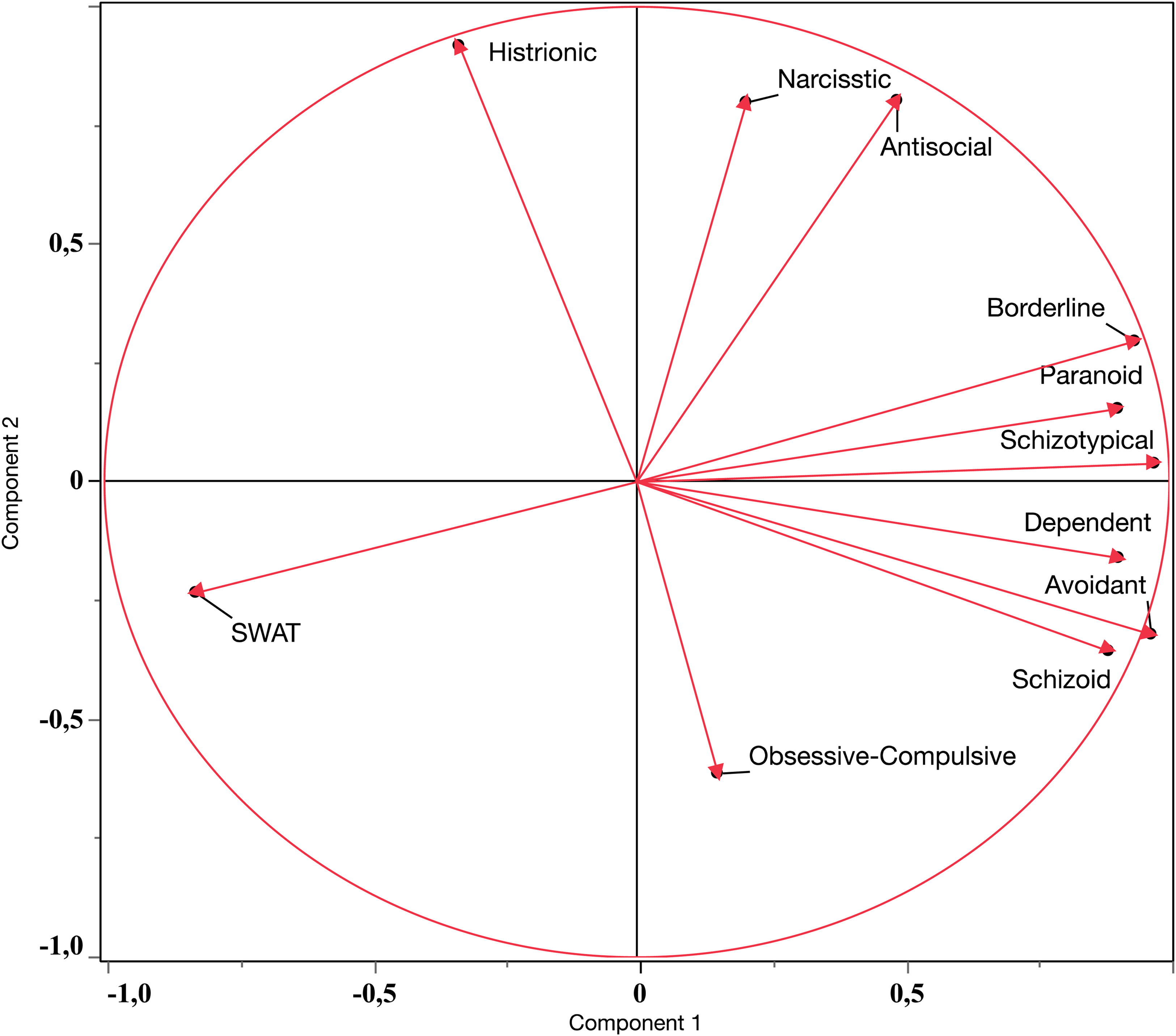
Factor plot of the first two components illustrating the association between special weapons and tactics personality profile and the Diagnostic and Statistical Manual of Mental Disorders personality disorder profiles based on the 30 facets of the five-factor model of personality.
Correlations between personality disorders and optimal personality profile of a special weapons and tactics team member.
Discussion
The objective of this study was to identify the personality traits associated with the most optimal SWAT team members. In a theoretical context, this study aimed to provide a deeper understanding of how personality traits function in high-stakes situations. The profiling results revealed that the optimal personality characteristics for a SWAT team member from the SMEs’ perspective include a low level of neuroticism and a high level of conscientiousness. A low level of neuroticism indicates the ability to remain calm and composed even in situations that demand great preparedness and pose a danger to the individual. Low levels of neuroticism are associated with reduced stress-related negative affect (Leger et al., 2016). Given that the responsibilities of the SWAT police in Sweden include stepping in during highly intricate and perilous circumstances, it is understandable that a minimal tendency toward neuroticism is preferred.
A SWAT member with a high level of conscientiousness is considered sensible and thorough when carrying out tasks and projects. SWAT members are motivated and efficient in their work and place great importance on maintaining a sense of competence. Barrick et al. (2001) suggested that conscientiousness is the trait-oriented motivational variable that could partly explain the relationship between personality and job performance.
The results of this study indicate that the facets N4 (self-consciousness) and N5 (impulsiveness) should be at low levels in SWAT officers. In addition, they must have high levels of C5 (self-discipline) and C1 (competence). This suggests that SWAT officers should possess strong self-confidence, have a high level of trust in their own abilities, feel secure and comfortable, and exude confidence. They should easily maintain their composure in stressful situations and remain calm during emergencies, while also demonstrating the ability to complete tasks effortlessly and handle distractions without problems. In addition, it is beneficial for them to exhibit a very orderly, well-organized, structured, and methodical approach.
The data support the notion that low neuroticism and high conscientiousness are crucial characteristics of an optimal SWAT officer. In addition, most facets within these factors displayed relatively low variation compared with facets in other factors, which means that SMEs at the group level were quite close in their assessments.
This finding aligns with the overall summary of existing research on personality differences among high-stakes context groups and control groups (Rolland et al., 1998; Skoglund et al., 2020; Sørlie et al., 2020; Tedeholm et al., 2021). Specifically, it supports the notion that individuals in high-stakes contexts, such as SWAT teams, tend to exhibit higher levels of conscientiousness and lower levels of neuroticism compared with individuals in control groups (Huijzer et al., 2022).
These findings are also consistent with several meta-analyses that have consistently shown the predictive power of conscientiousness and emotional stability for job performance across various occupations (Barrick and Mount, 1991; Barrick et al., 2001; Hurtz and Donovan, 2000; Salgado, 1997, 2003). The willingness to follow rules and exert effort (high conscientiousness) and the capacity to allocate resources to accomplish tasks (high emotional stability) have been suggested as essential components that are applicable to various jobs and tasks (Barrick and Mount, 2005).
The study has the advantage of examining facet-level nuances in a more detailed manner. However, a drawback is that it does not allow for any claims about the absolute level, because it only ranks the importance of different facets. The next step in the research could be to investigate the boundaries for various police groups. Although neuroticism and conscientiousness factors appear to be generalizable to different groups, there may be different patterns of facets within these two factors that are important for success as a police officer. In addition, different police groups may have varying levels of facets.
Our results also show that SWAT team members should have a relatively high level of extraversion—not as extreme as in the neuroticism factor, but rather closer to the midpoint of the facet scales. The meta-analysis by Wilmot et al. (2019) found support for extraversion being an important consideration in human capital, because it can predict motivation, well-being, and job performance. However, our results showed that there was one facet (E3, assertiveness) where a “good enough” level seemed to be optimal. This means that neither being too dominant nor wanting to take a prominent role in a group was considered ideal for an optimal SWAT police member.
The average level of openness was above the midpoint of the scale for most of the facets, with the highest facet being O4 (actions). Based on these findings, it can be concluded that individuals suitable for working in a SWAT team should demonstrate a willingness to engage in varied work and a desire to be pioneers of new tasks. These traits can be highly valuable, especially considering the extensive training that SWAT officers undergo on the job. In addition, Chiaburu et al. (2011) identified a positive relationship between openness and organizational citizenship behavior, while Berry et al. (2007) uncovered a negative correlation between openness and counterproductive work behavior in their meta-analysis. These findings suggest that examining the trait of openness may be important in the context of SWAT team members.
The highest level within agreeableness is A4 (compliance), indicating that individuals are assumed to be cooperative, considerate of the well-being of others, not unfavorable toward their team members, and always working for the best interests of the group. This result also aligns with the findings of a recent meta-analysis by Wilmot and Ones (2022) which demonstrated a positive relationship between agreeableness and investment in teamworking. Agreeableness was also found to be associated with aspirations for self-directed growth and motivation to cultivate and maintain positive relationships with others across various life domains, including work.
In recent years, there has been extensive research on the connection between the new alternative model for diagnosing personality disorders and the FFM. To further investigate the suggested personality profile, the profile was compared with 10 personality disorders based on the 30 facets. The findings revealed an overall negative relationship between the desired traits of a “perfect” SWAT police member and personality disorders. Specifically, borderline and dependent personality disorders exhibited dissimilarity (negative correlation) with the desired profile. In other words, ideal candidates should not demonstrate tendencies to oscillate between perceiving co-workers as either perfect or useless. In addition, they should not struggle with controlling their anger and temper. Furthermore, individuals should not overly rely on the support of a boss or co-worker to carry out their job responsibilities. They should also possess the ability to confidently voice their opinions and stand up for themselves if they believe something is wrong.
Practical implications
The results of this study have significant implications for two crucial steps in hiring: work analysis and the development of predictors for the selection process. The findings clearly indicate that two factors, low neuroticism and high conscientiousness, are important for becoming a good SWAT police officer. These predictors can be utilized to formulate interview questions that assess these traits during the selection process or to create a validated personality test that measures these factors, specifically around the facets of N4 (self-consciousness), N5 (impulsiveness), C5 (self-discipline), and C1 (competence).
Another application of these results would be to integrate personality screening into the assessment of applicants for SWAT training, especially considering that many of these applicants are already employed as police officers. In this screening process, input from both colleagues and immediate supervisors can provide valuable insights, because long-term observation of an individual's personality is likely the most reliable method for evaluating critical factors (Foster et al., 2022; Oh et al., 2011). In addition, these findings can be combined with other essential characteristics required for effective SWAT teams, including physical skills. Physical abilities are key attributes for tactical intervention units. These include elevated levels of aerobic and anaerobic endurance, strength, reaction speed, and coordination abilities (Eisinger, 2006; Thomas et al., 2019).
In the context of selection practices, the results of this study can have significant implications. First, combinations of personality traits can be interpreted as both positive qualities and as less-favorable traits, serving as criteria for both exclusion (e.g., a high score on borderline traits) and inclusion (e.g., low scores on certain traits like N4 and N6). Wille et al. (2013) proposed use of the compound technique, which involves combining facets from different factors in the FFM, as a straightforward way for assessors to consider information from multiple traits simultaneously.
Another approach could be to use less-favorable traits for the later development of SWAT officers. For instance, one could opt to exclude individuals with high levels of undesirable facets from the selection process, whereas those with only slightly elevated values on the same facets could undergo training during their education.
Furthermore, it is worth exploring the potential use of other personality traits and state-like variables outside the FFM of personality, such as psychological capital, including hope, self-efficacy, resilience, and optimism (Luthans et al., 2007). Psychological capital has been found to have a positive impact on team performance (Jiao et al., 2022). Psychological capital, which has been found to be trainable, may be of interest for future studies related to SWAT teams.
Limitations
This study aims to systematically examine the feasibility of involving SMEs in mapping the personality structure of an optimal SWAT police officer. A total of 159 SMEs participated in the study. It is important to note that the validity of the profile identified in this study can be questioned because of several factors. Because this is the first study of its kind and focuses on a specific type of SWAT team in a particular country, the generalizability of the findings may be limited. In addition, the large number of assessors involved in the study may potentially inflate the reliability of the profile.
Another limitation is the tool we used to collect data, the PJP. It cannot be ruled out that certain aspects of the results may be influenced by unreliability in certain items (descriptions of different facets). It is possible that the results could have appeared differently had a different instrument been used in the study. Therefore, future studies should validate the utility of this instrument before drawing hasty conclusions.
Another weakness of this study is that all the results rely on self-reported data. The rationale is that these police officers are experts in understanding what it takes to become a good SWAT officer, but the results should be validated with other types of experts, such as work analysis professionals, and observations of behavior in real-life situations.
However, it is worth noting that the developed profile demonstrates a reasonable association with personality disorders described within the same model of personality. This suggests content validity and provides support for the relevance of the profile.
Nevertheless, it is crucial for future studies to validate these findings using different sets of raters, including those from different countries. Another approach would be to involve different types of SMEs, such as experts who are not employed as police officers. This would provide additional perspectives and enhance the robustness of the results.
Conclusion
This study sheds light on the specific personality traits exhibited by current SWAT officers and identifies a clear personality profile for the optimal SWAT police officer. Despite the limitations mentioned above, the profile demonstrates content validity through its reasonable associations with assumed personality disorder profiles. By implementing these findings in a systematic and standardized manner, the selection process for future SWAT police officers can be enhanced, ensuring the recruitment of capable individuals for this demanding and essential police service.
Footnotes
Acknowledgements
We would like to thank all 159 police officers who participated in this study.
Declaration of conflicting interests
The authors declared no potential conflicts of interest with respect to the research, authorship, and/or publication of this article.
Funding
The author(s) disclosed receipt of the following financial supportforthe research, authorship, and/or publication of this article: This project was partly supported by the King's Foundation With the People for the Fatherland (www.kungafonden.se). The funder had no involvement in the study design.
