



Abstract
On average, more than 200 child sex offences were recorded by UK police every day in 2020, and investigations for offences including rape, online grooming and sexual assault against children in the United Kingdom (UK) increased by 57% from 2014/15 to 2019/20. The interview process is central to information gathering, but empirical research regarding the obtention of information through child sexual abuse (CSA) suspect interviewing is still limited. The current study analyses 45 hours of interviews with CSA suspects focusing on behaviours consistent (and inconsistent) with motivational interviewing (MI) using the Observing Rapport-Based Interpersonal Techniques coding manual. In line with previous research demonstrating the efficacy of MI with terrorist suspects, this article focuses on the same four key interviewer skills identified in the therapeutic literature (reflective listening, summarising, rolling with resistance and developing discrepancies). It looks at their effects on information yield (information of intelligence value) and suspect engagement. Results revealed that the four MI-consistent behaviours increased information gain. Also, approaches antithetical to MI (including assumptive questioning, judgemental summaries, fighting resistance and accusatory challenges) had a significant negative impact on suspect engagement and, by extension, reduced yield – potentially by creating suspect reactance (where the individual is motivated to regain a freedom they feel is being threatened). Hence, MI approaches are efficacious for information-gathering efforts, and using an approach antithetical to the spirit of motivational interviewing (like pressuring, confronting and judging) with CSA suspects will always make things worse.
On average, more than 200 child sex offences were recorded by UK police every day in 2020, and investigations for offences including rape, online grooming and sexual assault against children in the United Kingdom (UK) increased by 57% from 2014/15 to 2019/20 (NSPCC, 2020). However, sexual abuse is hidden from view in most cases and is often undetected. As such, estimations suggest that 1 in 20 children in the UK have been sexually abused (NSPCC, 2021) and that there are between 550,000 and 850,000 individuals posing varying degrees of sexual risk to children (with a central estimate of 700,000) (NCA, 2021). Previous review studies of global estimates pointed to 12% prevalence rates (Stoltenborgh et al., 2011) and following the recent increase of online activity these numbers are likely to be much higher today. Despite this, and the notable evidence-based improvements that have taken place in past years, empirical research regarding the use of interviewing to obtain information from child sexual abuse (CSA) suspects is still limited.
Interviews with individuals suspected of CSA pose challenges. There is often limited independent or corroborative evidence in such cases (Benneworth, 2007), and sexual offending is linked with unique psychological processes including cognitive distortions (Senker et al., 2020) and increased feelings of shame, guilt or remorse (Gudjonsson, 2006). Furthermore, the perceived social condemnation of these crimes increases the likelihood of the perpetrator denying their involvement (Quinn et al., 2004).
Gudjonsson (2006) in his empirical review suggests that child sex offenders are often balancing a strong internal need to confess (due to levels of guilt), with a reluctance to do so (due to feelings of shame). Accordingly, CSA suspect interviewing needs to focus on overcoming these feelings of shame, employing a sensitive approach to understand the offender's perspective and emotional needs. Thus, it is suggested that establishing rapport, understanding the suspect's perspective and avoiding a judgemental stance might have success with this offender population (Gudjonsson, 2003, 2006).
Interviewing suspects is central in informing criminal investigations, gathering material and supporting the prosecution case (College of Policing, 2022). In the UK, these standards are defined by the 1984 Police and Criminal Evidence Act and the 1991 Planning and Preparation, Engage and Explain, Account, Closure, and Evaluation framework. Research in recent years suggests that rapport-building approaches to interviewing are more useful for eliciting information than assumptive questioning, judgemental summaries, fighting resistance and accusatory challenges (LJ Alison et al., 2013; Holmberg and Christianson, 2002; Pounds, 2019; Surmon-Böhr et al., 2020). However, rapport is an elusive concept that remains ‘underdefined and under researched within an interrogation context [and] one should look to domains where it is well established’ (LJ Alison et al., 2013: 412). One such domain is the counselling arena, where more than half a century of research on interpersonal dynamics in clinical and therapeutic approaches can be applied to investigative interviewing. Rapport-building approaches have been found to facilitate the engagement of individuals who are ambivalent about cooperation in several contexts, including health care (Kornhaber et al., 2016), parenting support programmes (Moran et al., 2004), correctional treatment programmes (McMurran, 2009) and psychological support for juvenile convicts (Ushkov and Mironova, 2019). As such, establishing rapport is considered one of the key elements in most investigative interview protocols (Read et al., 2009).
Our definition of rapport here might be more precisely described as a model of interviewer rapport-based behaviours. We are not commenting on the mindset of, or even necessarily impact on, the suspect, but on the values, beliefs, mindset and behaviours intentionally adopted by the interviewer. Said approaches might be expected, or at least hypothesised, to make any interaction smoother and more productive. Thus, our definitional system loads more on the interviewer than the suspect, and we are examining the impact of an interviewer's deliberately adopted rapport-based behavioural repertoire (including values, interpersonal behaviours and general approach). Importantly, interviewers should directly and overtly acknowledge that the suspect has choice in what they say or do not say. It is incumbent on interviewers to adjust their interpersonal behaviours in a prosocial and adaptive way to make these choices easier (and never harder) for the suspect. Critically, rapport is not befriending or sympathising, agreeing with the suspect or condoning their behaviours, but a working engagement based on dignity, respect and unconditional positive regard. In summary, our definition of ‘rapport’ includes only observable behaviours on the part of the interviewer that suggest a degree of emotional self-regulation, objectivity and compassionate, adaptive responses to the individual in front of them.
Although there are differences between therapeutic engagement and police interviewing, they also have much in common; both seek to establish an empathic, respectful and non-judgemental atmosphere (i.e. ‘search for the truth’), and to maintain a versatile strategy that provides direction without becoming inflexible (Ackerman and Hilsenroth, 2003). Introduced by William Miller in 1983 to help people with alcohol problems change their drinking behaviour (Miller and Rollnick, 2013), motivational interviewing (MI) is an evidence-based intervention used in clinical settings. It is defined as, ‘a collaborative, person centred form of guiding to elicit and strengthen motivation for change’ (Miller and Rollnick, 2009: 137). MI is client-centred, using clients’ own knowledge and expertise about themselves (Tudor, 2008), and goal-directive, because therapists target clients’ ambivalence about behavioural change (Miller and Rollnick, 2013).
Suspect interviewing
The Observing Rapport-Based Interpersonal Techniques (ORBIT; see LJ Alison et al., 2013) coding tool has been used to analyse video interviews with terrorist suspects. Within the suspect-interviewing context, E Alison et al. (2022) defines rapport in terms of the values, beliefs, mindset and behaviours intentionally adopted by the interviewer. Officers should display objective, non-judgemental questioning, honesty and the absence of deceit, persuasion or manipulation. ORBIT, based on analysis of real-life interviews with a range of suspects, has revealed that MI is positively associated with increases in prosocial ‘adaptive’ interpersonal behaviour from suspects, increased information gain (LJ Alison et al., 2013; Surmon-Böhr et al., 2020) and a decrease in passive, verbal and no-comment counter-interrogation tactics (L Alison et al., 2014). By contrast, interviewer behaviour that is antithetical to MI (‘MI inconsistent’) has a profoundly negative impact on detainee engagement and subsequent interview yield (Surmon-Böhr et al., 2020). Further, as highlighted in the therapeutic literature, attempts on the interviewer's part to persuade the suspect to change or to reveal information likely leads to reactance, whereby the individual will shut down and become defensive, attempting to regain a freedom that is being threatened (Brehm, 1966; Miller and Rollnick, 2013). Instead, interviewers who emphasise the suspect's freedom of choice are more likely to diminish defensiveness and facilitate information gathering.
Focusing on investigative interviews with sexual offence victims, Kim et al. (2020: 166) found that humanistic approaches like MI ‘positively influence adaptive interactions between interviewer and victim while simultaneously reducing maladaptive ones, the consequence of which is an increase in yield’. The MI-based humanistic approach to interviewing may also prove useful in the context of CSA interviews, increase information gathered, and therefore help to secure reliable convictions and protect victims. Self-reports by convicted sex offenders support this assumption, though the specific mechanisms by which this humane approach were successful have not been formally identified (Kebbell et al., 2008, 2010).
Critically, an MI approach does not involve deploying a set of tactical tricks, but focuses on the spirit, or atmosphere, created in the interaction. Adopting an accepting, empathic approach that honours the client's (or suspect's) autonomy is key (Miller and Rollnick, 2013). Drawn from the therapeutic literature, four key skills characteristic of an MI style have demonstrated success in interviews with terrorist suspects (Surmon-Böhr et al., 2020). These are: (a) reflective listening, (b) summarising, (c) rolling with resistance and (d) developing discrepancies (Miller and Rollnick, 2002).
‘Reflective listening’ means that the interviewer grasps ‘what it is the sender is feeling or what his message means. Then he puts his understanding into his own words (code) and feeds it back for the sender's verification’ (Gordon, 1970: 50). Within a law-enforcement setting, the interviewer can understand what the suspect is saying with a clear description of what they mean, checking with the suspect for clarification (e.g. ‘So, you said that while you contacted her first you felt that her responses meant that she wanted to continue chatting.’).
‘Summarising’ is defined as pulling together ‘highlights of a complex story told by the client, perhaps over several preceding turns, in a succinct restatement’ (Barton Laws et al., 2018: 33). This refers to the interviewer's ability to work through several pieces of information within an account, in a way that simplifies and clarifies the key message when presented back to the suspect (e.g. ‘I understand that you have various devices and hard-drives, and you’re not sure what is saved on all of them, or who you have really communicated with during some of your late-night chat sessions. But what I gather from you is that nobody else has access to those devices other than you.’).
‘Rolling with resistance’ refers to the strategy whereby ‘when a client argues, the counsellor explores the client's views, changes topics, or does anything other than argue back’ (Wagner and Sanchez, 2002: 293). It has been metaphorically likened to dancing with a client, as opposed to engaging in a wrestling match by constantly challenging resistant statements (Westra and Aviram, 2013). This can be described as the interviewer's ability to use the information suspects provide without shutting them down and working it into further conversation with the goal of exploring the statement further (e.g. ‘You have repeatedly said that she posts images of her and her friends on the beach in a bikini on social media. And that she did not complain about you commenting on them at first, clearly loving the attention. Do you think she was posting them wanting to get explicit comments or for other reasons?’).
Finally, based on Festinger's (1957) concept of cognitive dissonance, the interviewer seeks to develop discrepancies between what the suspect values and desires, on the one hand, and the current behaviours that are inhibiting him, or are inconsistent with, on the other hand. In the context of investigative interviewing, the concept can be extended to discrepancies between the suspect's account and the available evidence (LJ Alison et al., 2013). Because the experience of dissonance is uncomfortable, individuals are expected to be motivated to reduce this tension by seeking resolution to such discrepancies and re-establishing consistency. Hence, it is expected that individuals without discrepancies, and no knowledge of the offence, would not feel this tension and internal pressure. Thus, within an investigative interviewing context, developing discrepancies is the interviewer's ability to present two different pieces of information, often relating to what the suspect said and/or did, in a manner that illustrates the discrepancy between their values/desires and their behaviours (e.g. ‘You say that you are not attracted to teenage girls and only like women your age. But at the same time, we have several messages you sent to teenage females asking them to meet for sex.’).
Recent research applying the ORBIT coding framework to CSA suspects based on real-world interviews looked at the effects of motivational interviewing on adaptive (promoting communication) and maladaptive (hampering communication) behaviours of both interviewers and suspects, and then the (indirect) resultant effects on interview yield (E Alison et al., 2022). It found research support for the use of a rapport-based, empathic, and interpersonally competent approach to interviewing CSA suspects. Further, recently Giles et al. (2021) conducted an economic evaluation of rapport-based approaches with CSA offenders. They found that training in adaptive and MI approaches could contribute to cost savings between £19 million and £78 million (annual unit costs) increasing to between £238 million and £639 million (lifetime costs) for online CSA across England and Wales; and between £157 million and £639 million (annual unit costs) increasing to between £2 billion and £8 billion (lifetime costs) for all CSA interviewing.
The current study
Building on previous research that demonstrates both the efficacy of an MI-based approach when interviewing terrorist suspects, and of an adaptive approach with CSA suspects, this article examines whether there is any support for the use of MI principles in investigative interviews with CSA suspects. It focuses on the four key skills identified above.
We hypothesise that the use of behaviours consistent with MI will be associated with increased suspect engagement and information yield (H1). Conversely, we predict that MI-inconsistent behaviours will be associated with a decrease in these variables (H2) (see Figure 1 for the hypothesised structural model).
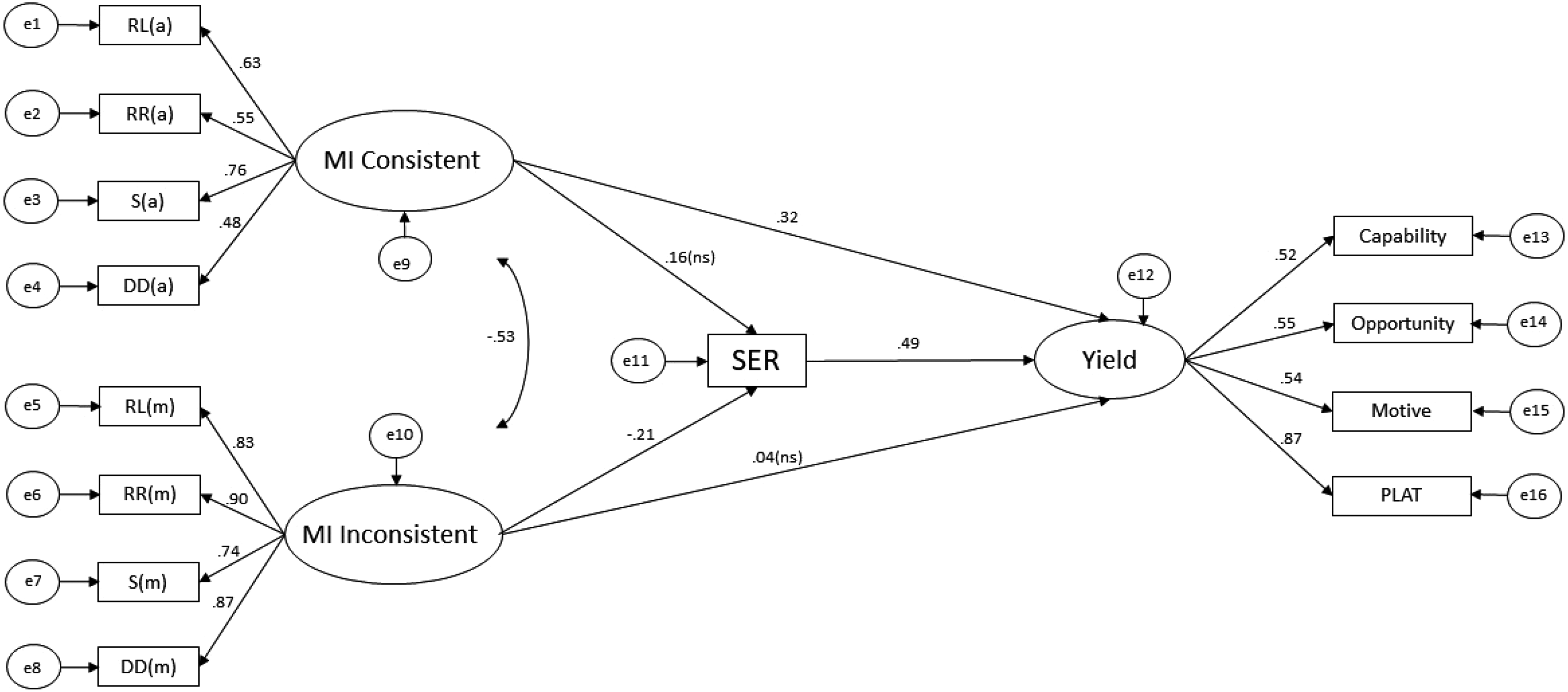
Hypothesised structural model. Note. Standardised parameter estimates (β) are presented and are statistically significant at p < .025 unless otherwise stated (ns). CON: consistent with motivational interviewing; INCON: inconsistent with motivational interviewing.
Methods
Data set
The data set included audio- and video-recordings of 35 police interviews of 25 suspects of CSA offences (with all cases leading to a conviction). Suspects included non-contact (i.e. online only) offenders (n = 17), contact (i.e. offline only) offenders (n = 2) and dual offenders (i.e. people who offended both online and offline) (n = 6). Non-contact offences included possessing, making, taking and/or distributing indecent images of children, whereas contact offences included rape, assault by penetration and sexual assault.
All suspects were interviewed by two interviewers throughout the investigation. As in LJ Alison et al. (2013), although the focus of observations was on the primary interviewer, the supporting interviewer was also coded if his or her contribution to the interview was greater than 5 minutes within the segment – this occurred in 33 (19%). Adapted from the original 45-minute coding periods, reflective of the average length of audiotapes used in UK policing interviewing, the revised coding framework focuses on 15-minute periods. This is a result of several coding and analysis reviews, providing a more detailed and granular capture of interview interactions.
All had undergone advanced interviewer training (Tier 3 – as set out in the UK College of Policing's Authorised Professional Practice) as part of the National Investigative Interview Strategy, and none had received any training inputs on the ORBIT framework. The total number of 15-minute interview segments analysed was 172. The number of segments for each suspect ranged from 2 to 20 (M = 7.30; SD = 4.67). This represented almost 45 hours of footage and the largest sample of CSA suspect interviews to date.
Cases were provided by the UK’s National Crime Agency (NCA) and were selected for the current study when they met the following criteria: they were convicted, closed cases (offenders had been convicted and had no appeals pending); convictions had taken place between 2016 and 2019; and the interview sequence was available in full. Therefore, the current sample represents a subset of 40% of the original material made available.
A Data Protection Impact Assessment was established in relation to the selection of cases, data recording and storage, the full anonymity of the offenders and interviewers, and the dissemination and reporting of the data more widely.
Interview coding
The manual developed by L Alison et al. (2010) was used to code the behaviour of the participants in the interview. Interviewer behaviour was coded using Motivational Interviewing of Suspects: Assessment of Skills (MISAS) and suspect behaviour was coded into: (a) Suspect Engagement Rating (SER; referred to as detainee engagement rating in Surmon-Böhr et al., 2020), and (b) IYA (Interview Yield Assessment; information revealed in the suspect interaction of evidential significance or intelligence value – pertaining to capability, opportunity, motive and PLAT descriptions, i.e. people, locations, actions and times). The two coders first agreed on specific segments from a variety of clips, ensuring consistency in coding. Then, the overall ‘atmosphere’ of the 15-minute segments was scored, not individual behavioural utterances. Inter-rater reliability (IRR) analysis was used to compare the scoring from the two coders. Table 1 presents a summary of each of the elements contained within ORBIT. Further details can be found in LJ Alison et al. (2013) and Surmon-Böhr et al. (2020).
ORBIT codes and descriptions (adapted from Alison et al., 2010 and Surmon-Böhr et al., 2020).
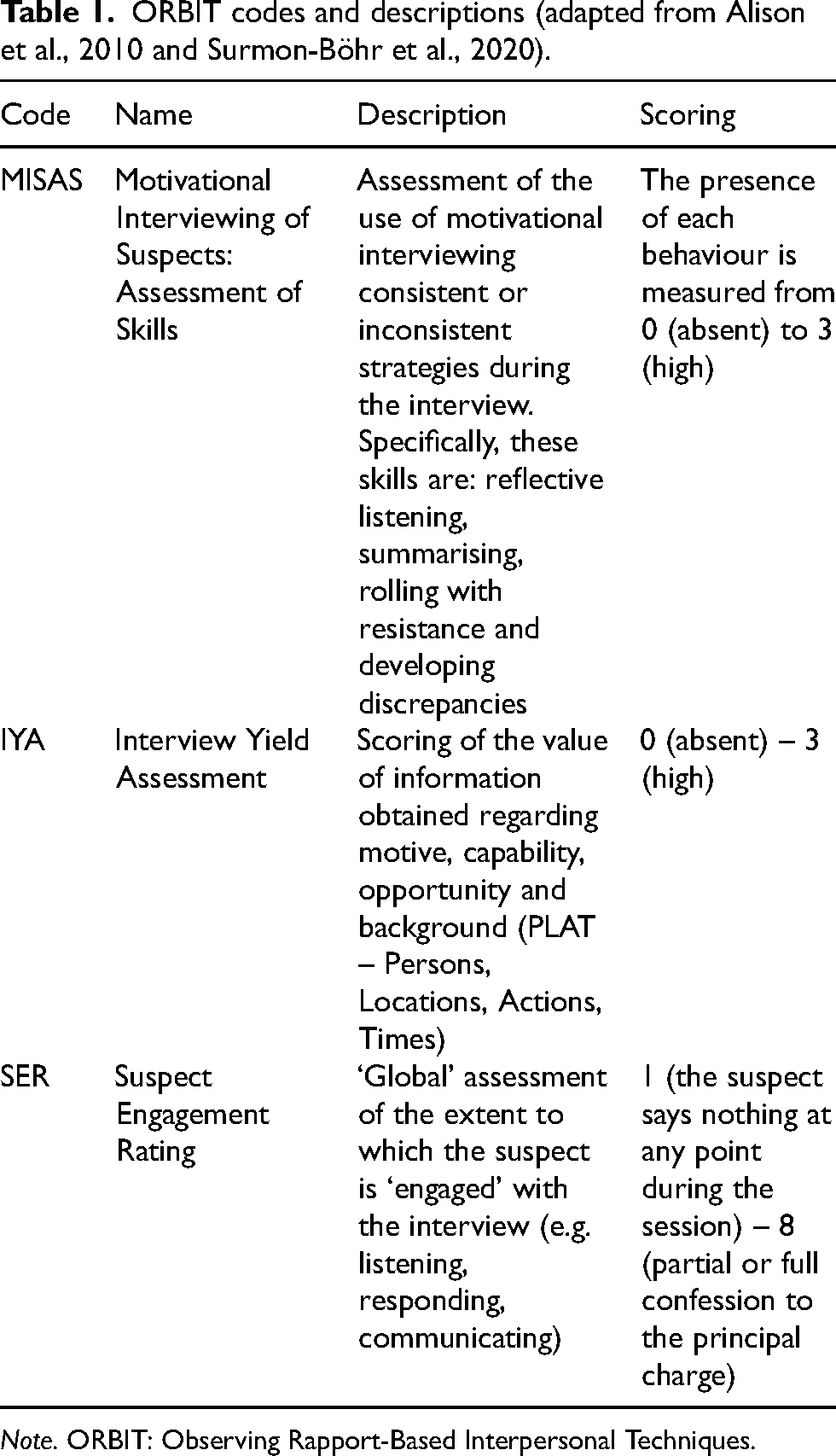
Note. ORBIT: Observing Rapport-Based Interpersonal Techniques.
Expanding on the MI factors, we identified two versions of behaviours, either consistent (CON) (reflective listening, summarising, rolling with resistance and developing discrepancies) or inconsistent (INCON) ones (assumptive questioning, judgemental summaries, fighting resistance and accusatory challenges). This allowed us to consider what positive and negative impact each of those items had on interview yield and overall engagement.
Intercoder agreement
Prior to working on the formal policing data, the two experienced coders conducted several hours of training and reviews of non-classified policing interviews with similar offenders. They used a subset of 12 interviews, which made up 36 comparable segments, to check that IRR was adequate for all variables used in the study.
Cohen's kappa (κ) was used to measure inter-rater agreement because Cohen's (1960) assumptions were met: the units are independent; the categories of the scale are independent, mutually exclusive and exhaustive; and the judges operate independently. Different categories have been suggested for the kappa statistic, although most authors use variations of Landis and Koch's (1977) classification into poor (<0), slight (0–0.20), fair (0.21–0.40), moderate (0.41–0.60), substantial (0.61–0.80) and almost perfect (>0.80), even when these authors acknowledge that ‘these categories are clearly arbitrary’ (Landis and Koch, 1977: 165). To provide a conservative measure, we calculated confidence intervals (CI) for kappa, and the classification was made with the lower bounds of the intervals instead of with the estimates themselves (Tractenberg et al., 2010). In addition, bearing in mind the high sensitivity of kappa values to issues like sample size and the uneven distribution of answers in some items (Von Eye and Mun, 2005), percentage agreements were also calculated.
Table 2 summarises the intercoder agreement indices, based on a larger IRR sample. The larger sample included further interviewer and suspect behaviours (E Alison et al., 2022). These include: (a) adaptive (promoting conversation) and maladaptive (impeding communication) behaviours for the first interviewer, second interviewer and suspect; and (b) further MI skills (acceptance, empathy, evocation, adaptation and providing autonomy) not analysed in this article. From this larger sample, kappa values for 77 (of the 85) coding categories of the framework indicated moderate to almost perfect agreement between coders. As mentioned above, these codes were calculated by rating the overall ‘atmosphere’ of the 15-minute segments, not individual behavioural utterances, and percentage agreements below reflect the similarity between the two coder scores. These scores were deemed acceptable, although it should be noted there were five instances of fair agreement (0.21–0.40) and three scores that could not be calculated because the variable was a constant for at least one of the coders. This may have affected the results. Of note, re-analysis of the IRR using dichotomous categories (presence or absence of behaviours) rather than scales (0–3 or 1–8) found 95.8% of percentage agreements improved to above 80% (the remaining two at 78%) and all kappa scores were moderate to almost perfect. This may indicate that small differences in interpretation of behaviour (e.g. mild to moderate) may make it more difficult to apply subtler coding to both the eight categories highlighted, and those with lower percentage agreement scores.
Intercoder agreement.
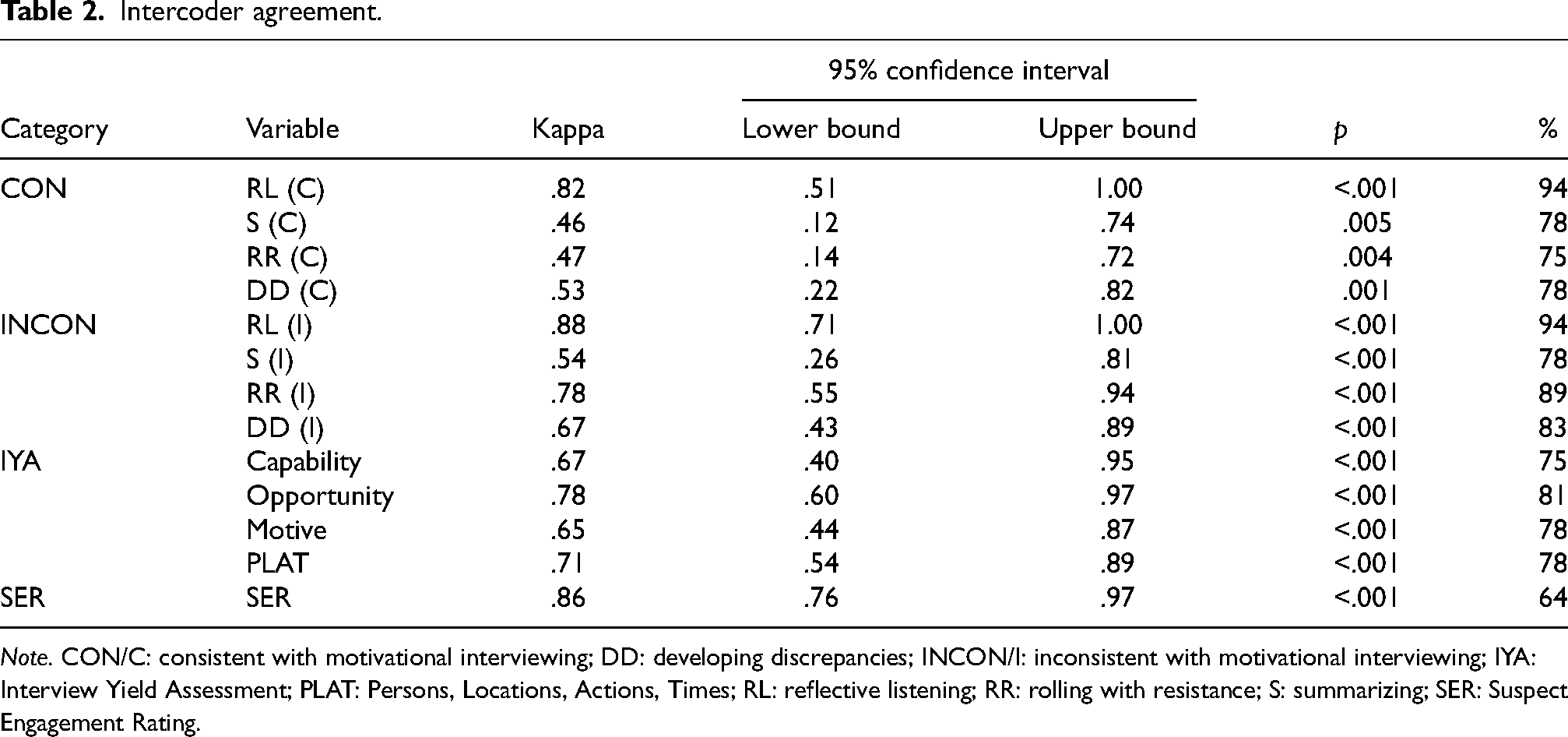
Note. CON/C: consistent with motivational interviewing; DD: developing discrepancies; INCON/I: inconsistent with motivational interviewing; IYA: Interview Yield Assessment; PLAT: Persons, Locations, Actions, Times; RL: reflective listening; RR: rolling with resistance; S: summarizing; SER: Suspect Engagement Rating.
Data analysis
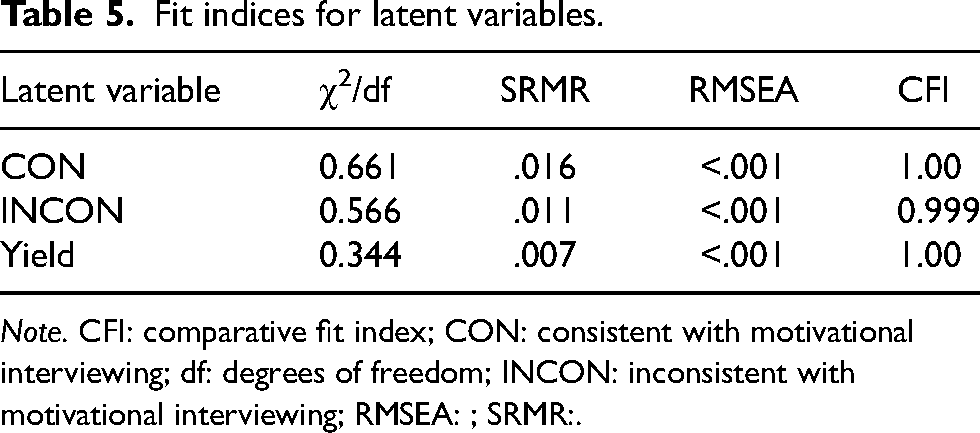
SPSS version 27 and MPLUS version 8 were utilised for data analyses. Because the data were nested (repeated measurements within the same subject) this necessitated using a multilevel structural equation model to account for the lack of independence of observations. We controlled for this by using the unique subject identifier code as a random intercept in all the subsequent models. We report the within-cases model here (controlling for the subject) but not the pure between-subject model because the power would not be sufficient to draw robust inferences in the latter case. Owing to the measures from the ORBIT framework being largely ordinal with few response categories, data were fitted using a diagonally weighted least squares estimator (Li, 2016a, 2016b). Several fit indices were produced to test the measurement and structural models. A normed chi-squared (χ2/df) absolute fit index was computed; values between 1 and 2 are indicative of a good fit and between 2 and 3 an acceptable model fit (Carmines and McIver, 1981). The standardised root mean residual (SRMR) absolute fit index was also computed, with values under 0.08 being good fit (Hu and Bentler, 1999). The comparative fit index (CFI) baseline comparison was computed; fit was deemed good at >0.95 (Hu and Bentler, 1999). Finally, the root mean square error of approximation (RMSEA) parsimony adjusted measure is reported with values <0.06 being good fit and values >0.06 but <0.08 being acceptable (Browne and Cudeck, 1992; Hu and Bentler, 1999).
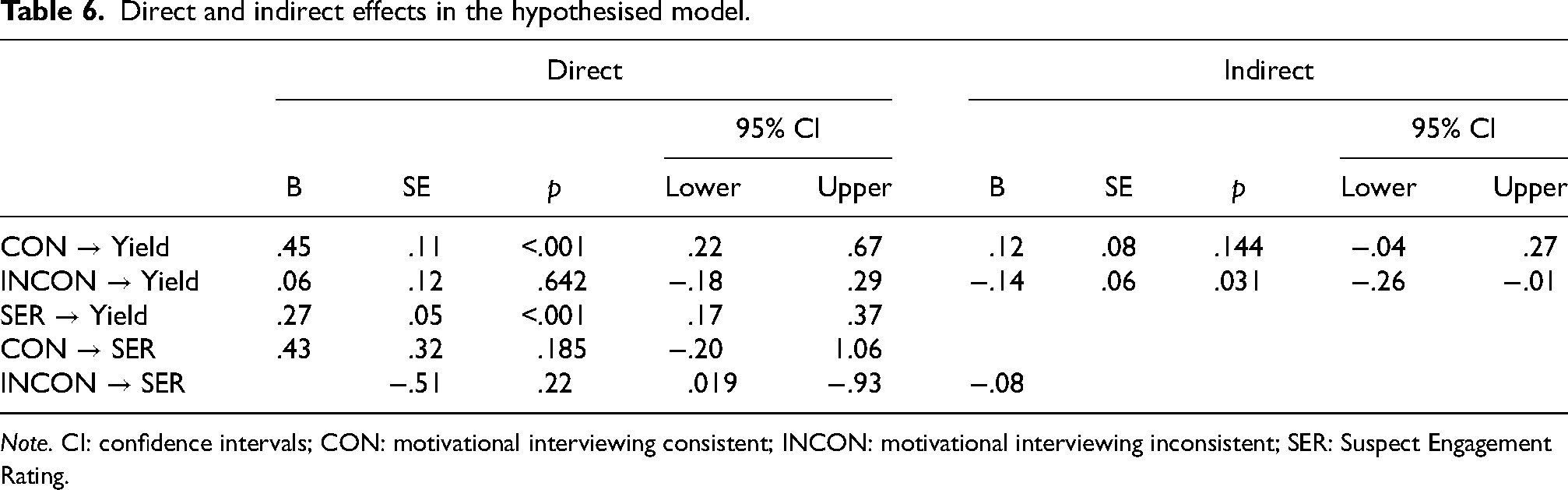
Unstandardised regression coefficients and their standard errors are reported when describing predictive relationships within the model, as well as indirect effects, along with 95% CI and associated p values.
Ethics
Owing to the material being both sensitive and confidential, in addition to obtaining ethical approval from University of Liverpool's Research Ethics Committee, a strict memorandum of understanding was agreed between the NCA’s Threat Leadership Command and the research team. Policing interviews in the UK are the property of the police services or NCA that conducted the interviews, so consent to use them for research was sought centrally from the NCA. Further, all researchers involved in the coding of data were vetted prior to gaining access to the material and were attached to the NCA due to the nature and sensitivity of the work. To ensure confidentiality, no identifiable information was recorded at any time while coding, and the material resulted in an anonymised data file.
Results
Descriptive statistics
Descriptive statistics for ordinal variables are shown in Table 3.
Descriptive statistics for all measures.
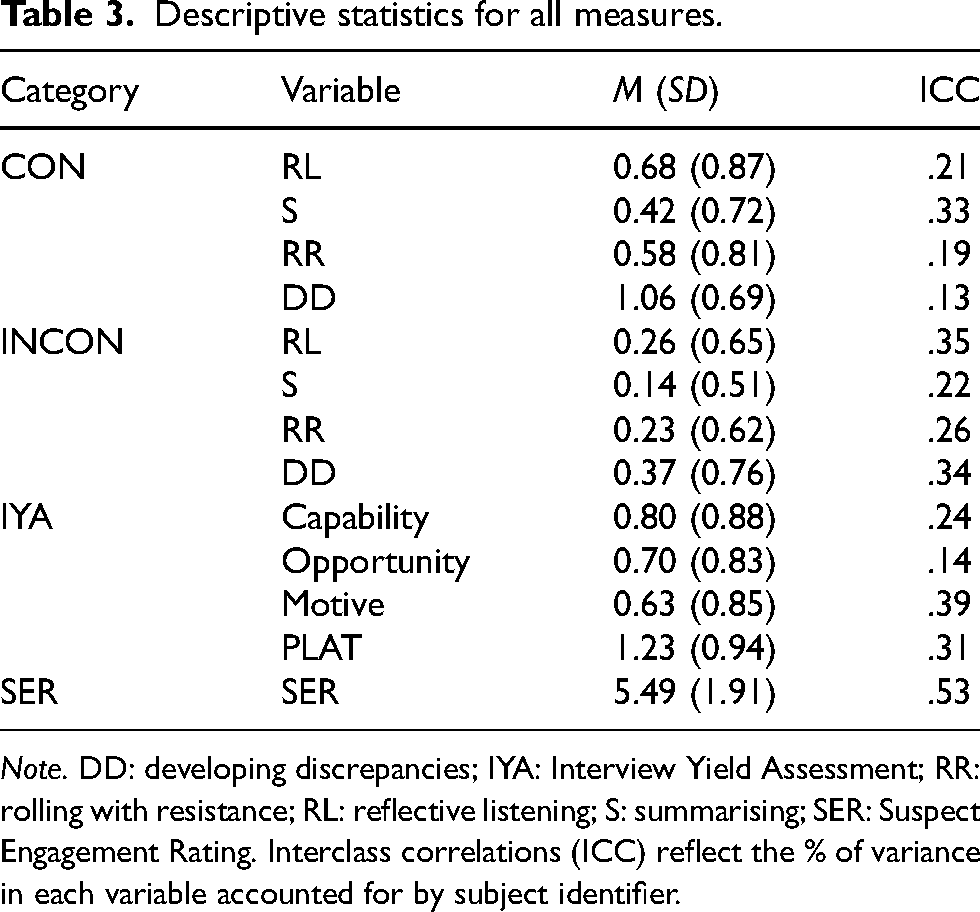
Note. DD: developing discrepancies; IYA: Interview Yield Assessment; RR: rolling with resistance; RL: reflective listening; S: summarising; SER: Suspect Engagement Rating. Interclass correlations (ICC) reflect the % of variance in each variable accounted for by subject identifier.
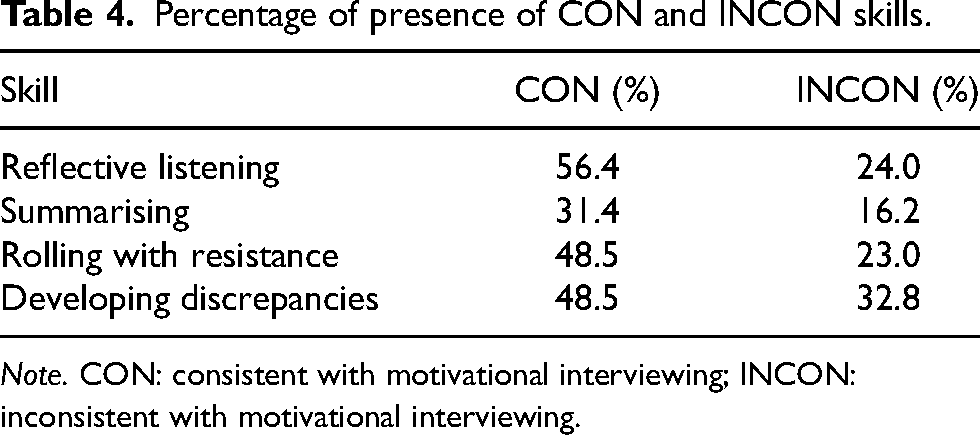
Table 4 shows the percentage of presence of each of the CON and INCON skills. Percentages for CON skills were all higher than for INCON skills.
Percentage of presence of CON and INCON skills.
Note. CON: consistent with motivational interviewing; INCON: inconsistent with motivational interviewing.
Confirmatory factor analysis of latent variables
Confirmatory factor analysis was used to test the construct validity of the latent variables created for CON, INCON and Yield. As can be seen in Table 5, all fit indices were good and factor loadings were all highly significant for the three latent variables (p < .001).
Fit indices for latent variables.
Note. CFI: comparative fit index; CON: consistent with motivational interviewing; df: degrees of freedom; INCON: inconsistent with motivational interviewing; RMSEA: ; SRMR:.
Structural model
The dependent variable for the hypothesised structural model was Yield. The hypothesised structural model investigated the direct effect of CON and INCON on Yield, and quantified the indirect effects these variables had on Yield through SER. The structural model was a good fit to the data on all indices, χ2/df = 0.94, SRMR = .058, RMSEA = .001, CFI = .997.
Associations between variables
As can be seen in Table 6, SER was positively associated with interview yield. CON skills were also associated with improved yield, although INCON behaviours were not. While INCON behaviours did not have a significant direct association with yield, they did have a significant negative association with SER, and the indirect effect of INCON on yield was significant. CON behaviour was not directly associated with SER.
Direct and indirect effects in the hypothesised model.
Note. CI: confidence intervals; CON: motivational interviewing consistent; INCON: motivational interviewing inconsistent; SER: Suspect Engagement Rating.
Discussion
This study analysed almost 45 hours of interviews with convicted CSA suspects, focusing on behaviours consistent (and inconsistent) with MI. As hypothesised, the four MI-consistent behaviours identified (reflective listening, summarising, rolling with resistance and developing discrepancies) increased interview yield (defined as information of intelligence value), and suspect engagement was significantly associated with increased yield. Owing to this association, MI-inconsistent behaviours had a significant negative impact on suspect engagement and, by extension, reduced yield. Hence, antithetical approaches including assumptive questioning (poor reflective listening), judgemental summaries (poor summarising), fighting resistance (maladaptive rolling with resistance) and accusatory challenges (poor use of developing discrepancies) had an adverse impact on interviewing CSA suspects and should be avoided.
Results highlight that a MI-consistent approach did not directly improve suspect engagement but generated information of intelligence value (regarding the motive, capability, opportunity and background of the offender and offence). These results suggest that although a suspect may not appear to be interacting or cooperating with the interviewer, the information the suspect reveals is useful. Indeed, previous research analysing interviews with high-value (terrorist) detainees found that suspects contemplated engagement rather than the often-held assumption that it is in their best interests to remain silent (Surmon-Böhr et al., 2020). Interviewers must not assume that a suspect's apparent disinterest or disengagement means the interview is derailing; the suspect is likely considering their options, and information can still be gathered. Above all, these results highlight that resorting to techniques antithetical to MI will only worsen outcomes. MI-inconsistent behaviours had a direct impact on reducing suspect engagement, and indirectly reduced information gathered. As found in both the therapeutic and investigative interviewing literature, these approaches likely cause reactance, whereby the suspect feels their freedom threatened, becomes defensive and shuts down (Brehm, 1966). Thus, individuals are more inclined to avail themselves of the right to silence, whereas, previously, they may have considered their right to speak (Surmon-Böhr et al., 2020).
These findings sit in line with previous research on investigative interviewing with high-value (terrorist) detainees (LJ Alison et al., 2013; Surmon-Böhr et al., 2020). The four key skills identified contributed to a macrolevel approach consistent with the spirit of MI, whereby interviews are non-judgemental, empathic and accepting. Such an approach fosters an atmosphere conducive to communication and encourages engagement. This style is consistent with the central goal enshrined in law-enforcement interviews in the UK (and other European countries) of collecting information neutrally and searching for truth. Further, it again highlights that although MI-consistent behaviours may not always improve engagement, MI-inconsistent ones likely remove a suspect's ambivalence on whether to speak, ossifying his reluctance to engage and divulge information. Thus, as LJ Alison et al. (2013) write, it is not always possible to improve engagement, but it is always possible to make it worse. Although a suspect may be committed to not engaging, the use of MI-consistent behaviours will not further entrench such a position, whereas MI-inconsistent ones likely will.
Further, recent research by E Alison et al. (2022) shows that interviewers adopting an MI approach with CSA suspects are more likely to use prosocial adaptive behaviours and less likely to use maladaptive behaviours. Interviewers adopting adaptive behaviours are found to promote communication and information gathering, whereas those employing maladaptive approaches (e.g. attacking, punitive or sarcastic behaviours) will further ossify a suspect's commitment to negative patterns of relating. Hence, adopting an MI approach promotes a non-judgemental, empathic interview approach, while also ensuring interviewers adopt the most appropriate adaptive behaviours. Taken together, interviewers will further information-gathering success.
In the interview room, officers must remain cognisant that suspects are likely experiencing reactance in response to a perceived loss of freedom (Brehm, 1966; Miller and Rollnick, 2013). Suspects have been arrested, held in custody and are then having to be interviewed. Further, these individuals are then presented with evidence of their offence in the form of forensic evidence, electronic logs or victim/witness statements, likely increasing feelings of shame, resistance and denial. Because controlling interviewer behaviours can further suspect reactance, especially when challenging suspects with evidence contrary to their own narrative, officers must be careful to avoid techniques and language that builds the illusion of limiting choice (Place and Meloy, 2018). The difficulty of applying a humane approach in these cases should not be underestimated. Research drawing on questionnaires shows that police officers feel more emotionally involved in cases with child victims (Oxburgh et al., 2013), present more negative attitudes toward child sex offenders compared with other criminals (Holmberg and Christianson, 2002) and reveal higher levels of stress when interviewing them (Soukara et al., 2002). The impact of these emotional components has also been reflected in recent studies of police interviewers’ experiences and their self-reported interview strategies (Magnusson et al., 2021). Therefore, interviewing CSA suspects may prove especially difficult for interviewers who, owing to the nature of the accusations and evidence in front of them, may want to control the situation and push the suspect to confess. In such situations, interviewing officers must remain aware that it is not their job to convince suspects what is in their best interests or to make them acknowledge the errors of their actions. Ultimately, it is the individual's choice whether to speak or not, and even gentle persuasion can push a suspect not to speak.
It is worth noting that the developing discrepancies approach was a better fit for the model with CSA suspects than terrorist detainees. Surmon-Böhr et al. (2020) found that even when interviewers developed discrepancies between a terrorist detainee's accounts and evidence in a non-judgemental manner, individuals were more likely to disengage and exercise their right to silence. Conversely, putting evidence before CSA suspects appeared to work well (see Table 4), and increased information gathered. Although these individuals tended to minimise the evidence put to them and claimed either to have forgotten or have a lack of knowledge and understanding of the technology, an MI approach to developing discrepancies meant suspects still engaged in the interview. This is in line with therapeutic literature that highlights that such an approach is vital for encouraging behavioural change (Westra and Aviram, 2013). Although the goal of the interview should not be achieving fundamental behavioural change in the suspects’ values, it should be utilised to highlight discrepancies in their believes and their actions, drawing on the impact on themselves, victims and others impacted by the suspect's actions. Therefore, developing discrepancies in an investigative setting with CSA suspects can be used to challenge the individual while remaining non-judgemental.
Future research might look to also explore qualitative data on the interviewer–suspect interaction. Oxburgh et al. (2012) analysed transcripts from real-life interviews with suspected CSA offenders, finding the amount of relevant information obtained to be a function of the appropriateness or inappropriateness of the questions rather than the use of empathy by police officers. It is worth noting, however, that Oxburgh et al. (2012) write that analysing questions on a purely literal level might miss non-verbal behaviours or the tone of questioning, both important components of empathy (Barrett-Lennard, 1981) – but something that could be achieved when using audio or video-recorded data. Exploring both together would allow for an understanding of the use of MI-consistent (and MI-inconsistent) behaviours; the subtle, nuanced non-verbal interactions that occur in the interview; and the effects of the questions asked. After all, empathy alone will not produce information in the interview booth. LJ Alison et al. (2013) found it is the interplay of the behavioural interaction and the MI atmosphere created. An exploration of qualitative insights alongside the statistical analysis may be an interesting area to look at using interview recordings.
It should be noted that the IRR analysis returned five scores with ‘fair’ agreement and three were not calculated because the variable was a constant for at least one of the coders. This may have influenced the results. However, dichotomous coding of behaviours (presence or absence rather than scaled intensities 0–3 or 1–8) improved scores significantly, with all kappa scores in the highest ranges (15.2% – ‘moderate’; 47.8% – ‘substantial’; and 37% – ‘almost perfect’). This may suggest that small differences in interpretation of behaviour (e.g. mild to moderate) may make it more difficult to apply subtler coding to some behaviours. Hence, although lower IRR scores may have affected these results, it is a disparity on the judgement of the intensity of interviewer and suspect behaviours, and very rarely the presence (or absence) of these interaction styles.
Implications
In line with previous research with terrorist detainees (Surmon-Böhr et al., 2020), the current study provides further empirical support for an MI approach to interviewing CSA suspects. As such, research looking at the application of this interviewing style to other offender populations is warranted, and we predict similar results would be found.
Crucially, this article also sits in tandem with research evaluating the economic benefits of adaptive and MI interviewing. Giles et al. (2021) found in their review that the estimated cost savings are between £157 million and £639 million for all CSA, increasing to between £2 billion and £8 billion when accounting for averted lifetime costs on victims. Thus, the benefits of treating CSA suspects fairly and with respect are twofold: increased information-gathering success and cost savings for law enforcement nationally. Considering these advantages, this research might be used to inform training in a rapport-based, MI approach to suspect interviews. Therapeutic research suggests that whereas therapists from other counselling backgrounds can learn MI-consistent behaviours, it is considerably harder for them to remove MI-inconsistent ones from their repertoire (e.g. directing, persuading, confronting; Miller and Mount, 2001). Hence, in line with Surmon-Böhr et al.'s (2020) suggestion, training should first focus on identifying and removing MI-inconsistent behaviours, then look to develop MI-consistent ones.
Conclusion
Following research that demonstrated the success of an MI style with terrorist suspects (Surmon-Böhr et al., 2020), this study finds that the same approach with CSA suspects produced information of intelligence value. Thus, interviewers should remain cognisant that although a suspect may not appear to be interacting or cooperating, the information the suspect reveals is useful. Critically, as emphasised in the therapeutic literature, it is the macrolevel spirit of MI (a non-judgemental and empathic approach) that is important. Interviewers employing a set of tactical tricks antithetical to MI (assumptive questioning, judgemental summaries, fighting resistance and accusatory challenges) will reduce suspect engagement and information-gathering success. Hence, to echo LJ Alison et al.'s (2013) assertion, although MI approaches will not always produce information with especially resistant CSA suspects committed to not talking, techniques inconsistent with the spirit of MI (like pressuring, confronting and judging) will always make things worse.
Footnotes
Declaration of conflicting interests
The author(s) declared no potential conflicts of interest with respect to the research, authorship, and/or publication of this article.
Funding
The author(s) disclosed receipt of the following financial support for the research, authorship, and/or publication of this article: This research was supported and funded by the UK's National Crime Agency (NCA) and the UK's Home Office.
