




Abstract
In this investigation, the nonlinear low-frequency ion-acoustic waves (IAWs) are examined in a fully relativistic, partially degenerate plasma in the presence of electron trapping in dense astrophysical environments such as white dwarfs. Using the reductive perturbation technique, the Korteweg-de Vries (KdV) equation is derived, and a generalized Wronskian technique is applied to obtain finite- and infinite-amplitude solutions. In addition, both the non-relativistic and ultra-relativistic limits are investigated. The impact of a finite electron temperature on the nonlinearity and dispersion coefficients is reported. Also, the effect of the non-relativistic, ultra-relativistic, and completely relativistic regimes on the soliton profile is examined and compared with each other. In this novel study, we discuss that the degenerate gas’s specific heat is responsible for our system’s anomalous behavior. The robust interaction of solitons with periodic singularities (known in the literature as positons) reveals their ability to maintain structural integrity, which also indirectly confirms the integrability of the KdV equation. The present findings are a step forward in enhancing our understanding of wave dynamics in dense physical environments and could pave the way for interesting practical applications in the future.
Introduction
The study of plasmas spans two major regimes: non-relativistic and relativistic plasmas. When particle densities are extremely high, but their velocities remain significantly below the speed of light, as commonly found in the outer layers of white dwarfs and certain laboratory conditions where quantum effects are significant yet thermal energies are low enough, the system is studied under the non-relativistic limit. As the kinetic energy of the particles approaches or exceeds their rest mass energy (m0c2), relativistic corrections to their dynamics and statistics must be considered. At low temperatures, when the number density of the system is of the order
The relativistic degenerate plasma is found in the cores of more massive white dwarfs close to the Chandrasekhar limit, 12 and in neutron stars where densities are so high that the relativistic effects of particle velocities (approaching or at the speed of light) become significant. These studies are crucial for understanding the dense environments of astrophysical objects such as white dwarf stars, which contain highly ionized elements such as helium, carbon, and oxygen and have extremely high number densities. In 1934, S. Chandrasekhar, 13 numerically integrated the equations of hydrostatic equilibrium using the first relativistic equation of state and demonstrated that beyond a certain limiting mass—the Chandrasekhar mass—it was impossible for a white dwarf to remain in hydrostatic equilibrium. 14 Following these foundational discoveries, white dwarfs became a field of intensive theoretical and observational study, with significant research focused on their internal relativistic electron plasma.
Most studies have focused on solving various integrals involved in numerical calculations of the relativistic Fermi-Dirac function. Although many older studies are now outdated due to advancements in computers and algorithms, they remain occasionally useful. Notable contributions were made by Tooper (1969), 15 Eggleton et al. (1973), 16 Bludman and van Ripper (1977), 17 Wandel and Yahill (1979), 18 Pichon (1989), 19 and S.I. Blinnikov. 20 Two key approximations are: (i) temperature corrections to the completely degenerate case and (ii) the ultra-relativistic nondegenerate regime. Research papers have also explored nonlinear static screening in ultra-relativistic electron-positron plasmas, 21 resulting in a generalized nonlinear Poisson’s equation. This research compared the results with traditional Debye and Coulomb screening, discussing the formation of bound structures and the implications of electrostatic fluctuations, 22 which lead to more frequent and intense wave breaking.
In relativistic plasmas, the heightened effective mass of the electrons also enhances susceptibility to modulational instability, intensifying the breakdown of wave uniformity and the emergence of complex wave patterns. 23 Recently, a paper by Masood et al. 24 provided a comprehensive overview of research on trapping in quantum plasmas over the past decade. Subsequently, Shohaib et al. 25 have thoroughly examined both non-relativistic and ultra-relativistic limits and noted that propagation vectors are crucial in the interaction of ion-acoustic solitary waves (IASWs), leading to the formation of composite structures at interaction points. Moreover, numerous recent research have been undertaken on the diverse nonlinear phenomena occurring in relativistic and ultra-relativistic plasmas, including investigating the propagation of (non)linear kinetic Alfven acoustic waves at relativistic and ultra-relativistic Fermi energies, incorporating small temperature corrections. 26 The cylindrical ion-acoustic solitons in a dense plasma, considering electron trapping and the influences of a quantizing magnetic field alongside the smearing impacts of the Fermi distribution function, were examined utilizing the Bäcklund transformation. 27
The concept of adiabatic trapping as a nonlinear phenomenon at the microscopic level was first introduced by Gurevich, 28 who noted that it leads to a 3/2 power nonlinearity, deviating from the usual quadratic nonlinearity observed without trapping. Adiabatic trapping in plasma refers to the confinement of charged particles within potential wells that oscillate without significant energy exchange with their environment, maintaining their adiabatic invariants. 29 This phenomenon significantly influences plasma dynamics, including the stabilization of waves and the formation of localized structures, by modifying the distribution and behavior of trapped particles. 30 Subsequent studies explored how trapping affects the propagation of ion-acoustic solitons, utilizing both Maxwellian31,32 and non-Maxwellian distribution functions.33,34 A comprehensive study explored the impact of trapping on vortex development 35 in a classical plasma, utilizing a modified Hasegawa–Mima equation 36 derived by considering the bounce frequencies of particles at varying depths of potential wells. This work complements several studies on electron trapping in a relativistic quantum plasma. 30 Research by Shah et al. has further examined trapping in quantum plasmas, investigating the formation of solitary structures in fully and partially degenerate plasmas. 37 Jovanovich and Fedele studied the nonlinear effects in plasma regimes on a slow time scale, characterized by overlapping electron wavefunctions, large-amplitude Langmuir pump waves, and temperatures exceeding Fermi levels. 38 The authors found that electron trapping on closed orbits is significantly influenced by classical nonlinear ponderomotive effects and quantum super-diffusion, inspiring our current research into the effects of trapping in relativistic degenerate plasma and the formation of solitary structures.
Multisoliton solutions are crucial in various scientific fields due to their complex interactions and nonlinear effects, leading to intricate dynamical behavior. 39 Multisoliton solutions have been extensively studied with special reference to nonlinear optics, 40 plasma physics,41,42 and condensed matter physics. 43 Over the past decade, multi-soliton solutions to nonlinear partial differential equations (NLPDEs), such as the cylindrical Korteweg-de Vries (cKdV), 44 modified KdV (mKdV), 45 Kadomtsev–Petviashvili (KP), 46 modified KP (mKP), 46 and Zakharov–Kuznetsov (ZK) equations, 47 have been explored using techniques like the Hirota Bilinear method, 48 Bäcklund Transformation, 49 and Inverse Scattering technique. 50 Although the Wronskian and Generalized Wronskian techniques have provided various solutions, their applications from a plasma perspective are relatively less studied. Our previous research investigated rational solutions of the KdV equation in the long wavelength limit and its interaction with a solitonic structure. 51 Here, we employ a Generalized Wronskian method to obtain solutions with both positive and negative eigenvalues and their interactions.
The Wronskian method, first developed by Nimmo and Freeman,52,53 is an efficient technique to derive diverse solutions for NLPDEs, such as solitons, rational solutions, 54 breathers, lumps, 55 negatons, positons, 56 and complexitons. 57 This method utilizes the Wronskian determinant of exponential terms, governed by conditions known as the Lax pair, to identify solution types and construct associated eigenvalue matrices, with enhancements such as the lower triangular Toeplitz matrix (LTTM) introduced by Sirianunpiboon et al. 58 for further solution diversity. These conditions were later modified by Matveev, 59 who suggested a generalized framework to obtain these solutions and provided a bridge connecting the Wronskian with a Generalized Wronskian determinant matrix.
It is imperative to note that, unlike soliton solutions, these solutions are not finite-amplitude structures except for the first-order negaton solution. Note that rational solutions, positons, and higher-order negatons are singular solutions that exhibit a varying number of poles of different orders of the solution, depending on their denominator. The rational solutions previously investigated were algebraic and corresponded to zero eigenvalues in their corresponding LTTM, leading to a standing and isolated singularity for the rational solution of the first-order and one or more moving singularities for rational solutions of the higher-order. 51 However, in this case, when the eigenvalue is nonzero, the involvement of sine and cosine functions in the solutions, particularly in the denominators, is responsible for the recurrent, oscillating, and traveling singularities in our system.
Multi-fluid plasma model for IAWs for trapping in a relativistically degenerate plasma with finite electron temperature
Ion dynamics
For the description of IAWs, we have implemented a two-fluid theory in which the ions are inertial, whereas the electrons are taken to be inertialess because of their tenuous mass. Furthermore, ions are treated classically, while electrons are considered quantum mechanical due to their small mass.
60
Our model is about one-dimensional propagation and, therefore, will concentrate on the longitudinal dynamics rather than the transverse electromagnetic effects. The complete set of normalized fluid equations for our plasma model is

The space coordinates are normalized by
Electron dynamics
In order to determine the number density of massless relativistically degenerate electrons, we employ the Landau and Lifshitz approach for adiabatic electron capture in which the electrons are divided into two categories, that is, free and trapped.60,61 The expression for the relativistic energy is

In the fully relativistic regime, the Fermi energy ϵ
Fe
is taken as

Here, T
R
is normalized as T/μ. By expanding equation (3), we get the final expression for the normalized number density
60
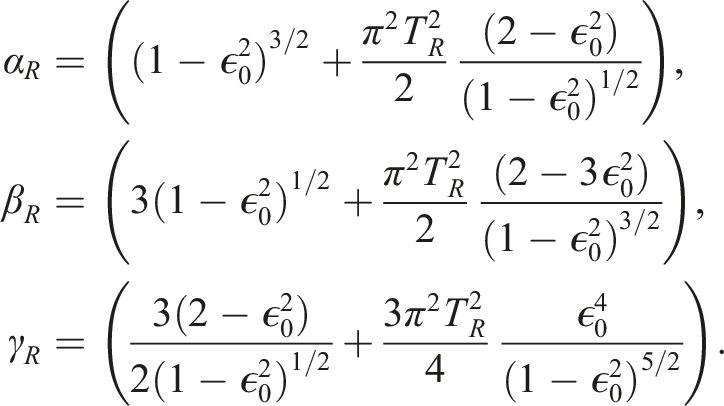
for the electrons in completely relativistic regime as follows:

In this model, relativistic effects are expressed through the parameter ϵ0 = m0c2/μ, in which μ is the sum of ϵ Fe and the rest mass energy (m0c2). Since ϵ Fe depends on the electron background number density N0, therefore, the relativistic effects primarily depend on the number density.
Limiting cases
Upon examination of the relationship between Fermi energy and the rest of the mass energy within the plasma environment, 60 we consider two limiting cases.
Non-relativistic case
In the first case, the Fermi energy of the system is much smaller than the rest of the mass energy (ϵ
Fe
≪ m0c2), the Fermi energy is defined as

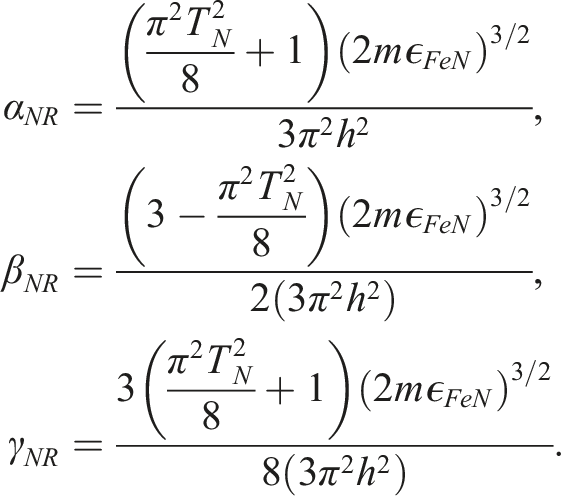
Ultra-relativistic case
In the second case, the converse happens and the Fermi energy of the system is significantly greater than the rest mass energy (ϵ
Fe
≫ m0c2) and defined as ϵ
FeU
= p
Fe
c. In additionT
U
, the temperature of the system under ultra-relativistic conditions is normalized to T/ϵ
FeU
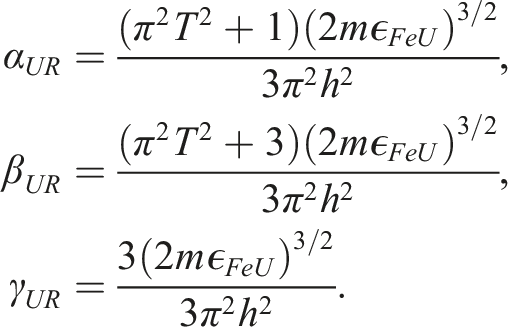
. In the ultra-relativistic limit, the expression for the number density of electrons reads as follows

Nonlinear analysis
To illustrate the evolution of small yet finite amplitude disturbances in nonlinear IAWs, we introduce stretched temporal and spatial coordinates τ and ξ, respectively
62
which are given here as under


The governing equations can be transformed into a hierarchy of equations in different orders of ϵ, which measures the strength of perturbation. Each order can then be solved sequentially, beginning with the lowest order, which often represents linear theory, progressing to higher orders that capture increasingly complex nonlinear behavior. By incorporating the coordinate stretching and the expansions above into system (1), we obtain the lowest order terms in ϵ as follows

By solving the above mentioned equations for the lowest order of ϵ, and by considering electron trapping in the completely relativistic regime in a partially degenerate plasma, we derive the following dispersion relation for IAWs

The second lowest order in ϵ yields the following set of equations

In the completely relativistic regime, simultaneously solving the second lowest order ϵ equations yields a third-order nonlinear dispersive partial differential equation, commonly referred to as the KdV equation, whose form is given as follows


For the limiting cases, the coefficients A
R
and B
R
are modified by using the number densities for the specific cases defined in equations (5) and (6). To analytically analyze the KdV equation, we have simplified the process by applying the following transformation





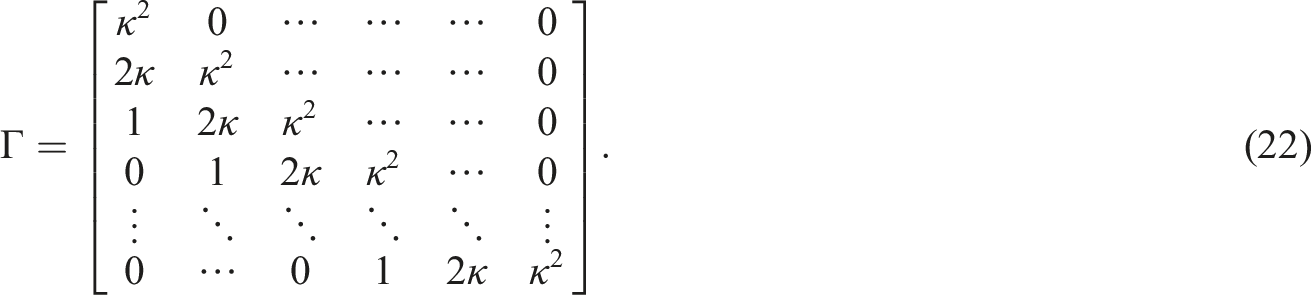
The corresponding coefficient matrix Γ is of the form of the LTTM which is as follows

The constant factor in equation (16) does not affect the final solution to the KdV equation. Thus, we can conclude that the solutions obtained through the Wronskian in ref. 54 are fundamentally the same as those derived here through the generalized Wronskian technique.
64
The Wronskian solutions can be obtained by applying the long wavelength limit to these solutions. Therefore, we write

If the above solution satisfies the KdV equation and meets the conditions specified in equation (18), we can obtain different solutions of the KdV equation and their interaction. 56 These solutions, while generally distinct from solitons, will exhibit some similar properties.
Positons, negatons, and interaction solutions of the KdV equation
We present solutions of the KdV equation that have not been reported in the plasma literature and are indeed the mainstay of this paper. Using the generalized Wronskian approach, Matveev
59
introduced two distinct classes of solutions. Solutions characterized by positive eigenvalues were termed positons.
65
Employing these positive eigenvalues to solve the coupled linear differential equation (18), the Wronskian entities ϕ in f = W(ϕ, ∂
κ
ϕ) for the positon solutions are specified as follows:

The associated eigenvalue matrix for positons64,65 is defined as follows:
The two lowest-order solutions w.r.t second equation in system equation (21) are as follows


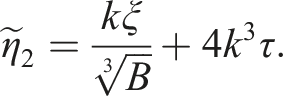
The solutions containing the cosine function defined in the second equation in system equation (21) can be obtained similarly. Other solutions derived from the generalized Wronskian possess negative eigenvalues and are thus termed negatons.59,64 By assigning a negative eigenvalue α = −κ2 < 0, where κ is a real number given in the first equation in system equation (18), and by solving the corresponding coupled LDEs (18), we can define two generalized Wronskian entities as follows:

Likewise, the coefficient matrix for the negaton solutions
56
reads as follows:
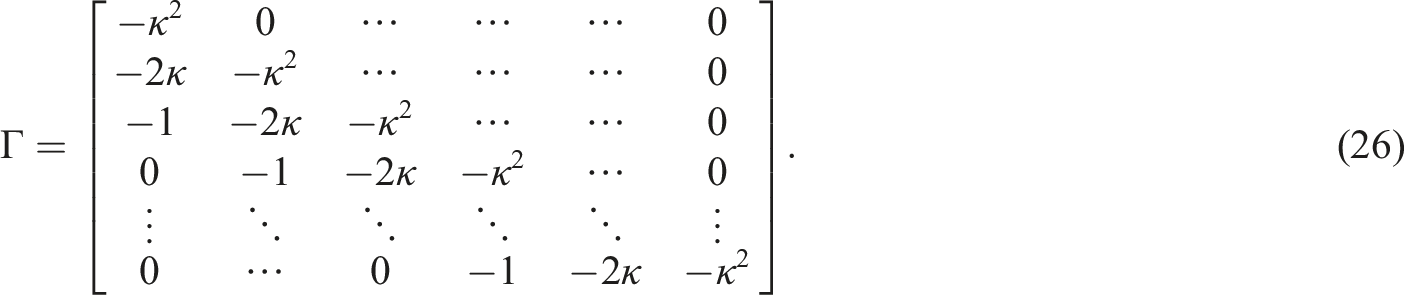
The two lowest-order negaton solutions are as follows,


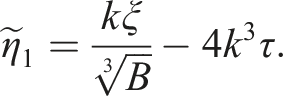
Using the Wronskian formalism, we can explore how positons, characterized by their specific properties and eigenvalues, coexist and interact dynamically with solitons within the same system, thereby enhancing our understanding of complex wave phenomena in nonlinear systems. Consequently, we derive interaction solutions
56
that combine first and second-order positons with a soliton (1-negaton) solution and are outlined as

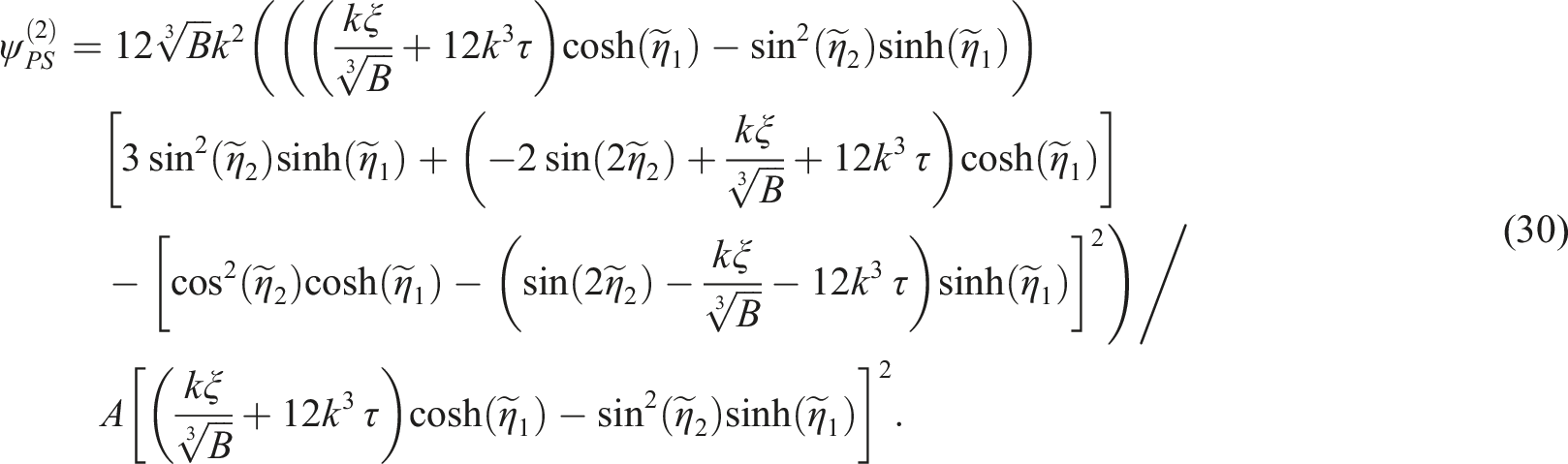
All the aforementioned solutions involve poles in their denominators, and due to the presence of cosine and sine functions, these poles are recurrent. Consequently, we have observed repeated and oscillating singularities in our solutions, except for solution (24). The solution, which does not exhibit a pole, is a finite amplitude solitary structure known as the 1-negaton solution.
Results and discussions
In this section, we explore the interaction solutions for the nonlinear propagation of IAWs considering adiabatic trapping of inertialess relativistically degenerate electrons and the smearing effects of the Fermi step function. Given that quantum plasma conditions typically prevail in dense stellar environments such as white dwarfs and neutron stars, we have chosen number densities (N0) in the range of 1026 − 1032 cm−3. The system is assumed to be cold i.e., T ≪ T
Fe
and non-interacting, that is, the Fermi energy (ϵ
Fe
) ≫ the Coulomb energy The effect of electron temperature on Fermi step function. The red and blue dotted curve shows the deviation of Fermi step function in non-relativistic regime with ϵ
Fe
= O[10]−7 and relativistic (ultra and completely) regime with ϵ
Fe
= O[10]−6, respectively.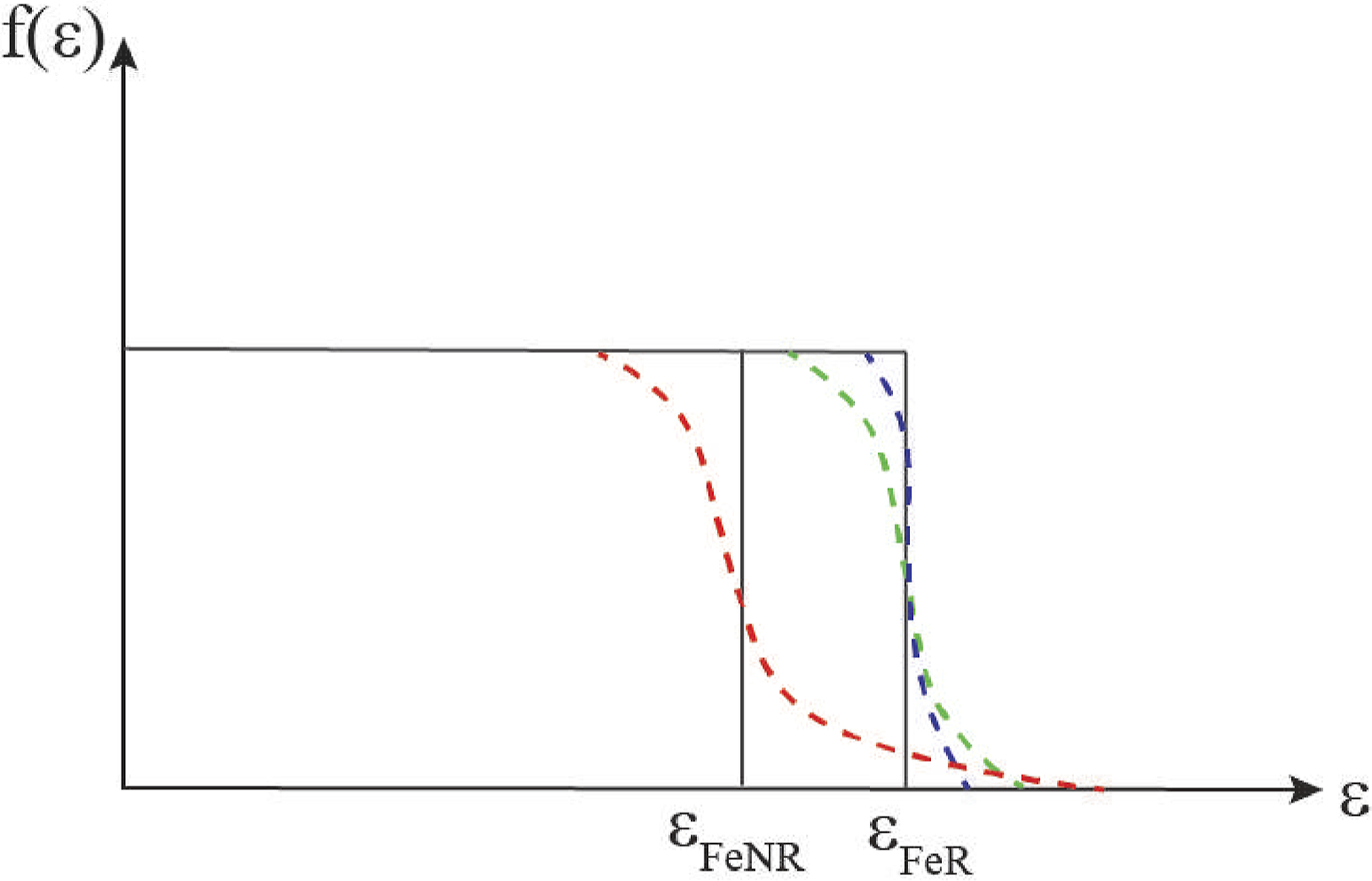
Figure 2 shows the first-order negaton solution (24), graphically representing a soliton-type solution. Figure 2(a) compares its amplitude in non-relativistic, ultra-relativistic, and completely relativistic regimes. In the non-relativistic regime, the soliton amplitude is higher than in the ultra- and completely relativistic regimes, suggesting that the soliton propagates faster in the non-relativistic setting. We have also observed that, despite statistical behavior, the response of our system does not depend solely on the number density. If it did, the greatest amplitude would be for the ultra-relativistic case and decrease with decreasing number density. However, the wave amplitude combines dispersive and nonlinear effects, with coefficients involving Fermi energies, temperature, and rest-mass contributions in the respective cases. We have deduced that the main reason for this anomalous behavior of our system is somehow related to the specific heat of the system in different regimes. As specific heat refers to the amount of heat required to raise the temperature of a system by a unit temperature, the higher the specific heat, the more energy is required to raise the temperature of the electrons, resulting in lower-amplitude ion-acoustic waves. From the expression C
v
= mπ2NT ∗ (c2/(μ2 − m2c4)) derived by Landau and Liftshitz (ref. 32) for the partially relativistic degenerate Fermi gas in the low-temperature limit, we have reduced this expression for the non-relativistic and ultra-relativistic regimes by using the conditions for our limiting cases given in section 2.3 and obtained the numerical values of specific heat for our system as follows: O[10−12] for the non-relativistic case, O[104] for the ultra-relativistic case, and O[105] for the completely relativistic case. This indicates that specific heat is lowest for the non-relativistic case, moderate for the ultra-relativistic case, and greatest for the completely relativistic case. The difference in their specific heat values is consistent with the differences observed in the amplitudes. The first-order negaton solution and its comparison (a) in various relativistic limits (b) for different temperatures in non-relativistic case.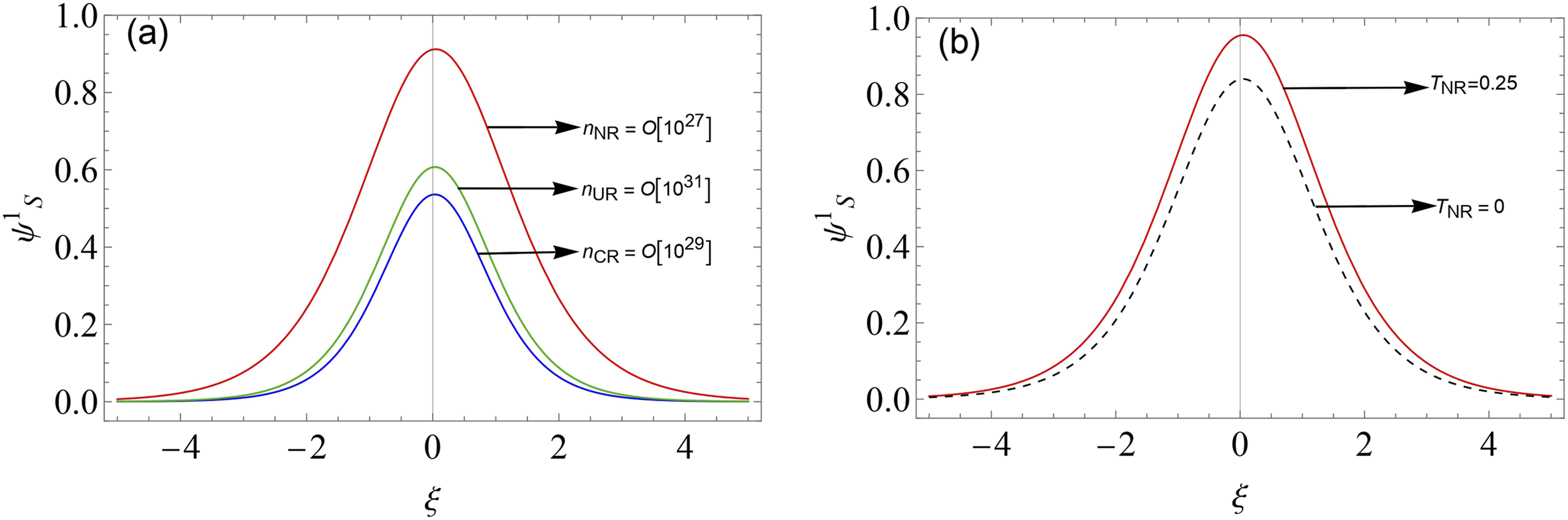
Moreover, Figure 2(b) compares the first-order negaton solution amplitude with and without the influence of temperature for the non-relativistic case. It is observed that a significant increase in amplitude occurs in the presence of temperature in the non-relativistic case, aligning with our findings on the dispersion coefficient, which will be discussed later in Figure 6. Note that the enhancement in the amplitude of the ion acoustic negaton is owing to the increase in the restoring force, which comes about due to the rise in the finite electron temperature. In Figure 3, an interaction solution of the KdV equation is discussed; it involves a first-order negaton solution and a second-order positon solution, manifesting as an oscillating singular solution. Figure 3(a) captures a snapshot at τ = −10, showing the soliton approaching the oscillating singularity from the left while the singularity travels to the right at a comparatively higher speed. At τ = −0.2, there is a head-on collision between the soliton and the oscillating singularity. The soliton appears to merge with the singularity during the interaction, as depicted in Figure 3(b). However, as they pass each other, as shown in Figure 3(c), the soliton continues to move to the left, retaining its shape, amplitude, and all associated characteristics. Similarly, the oscillating singularity also maintains its trajectory and behavior. The interaction solution between a second-order Positon and first-order negaton solution (a) at τ = −10 (b) at τ = 0.2 and (c) at τ = 10.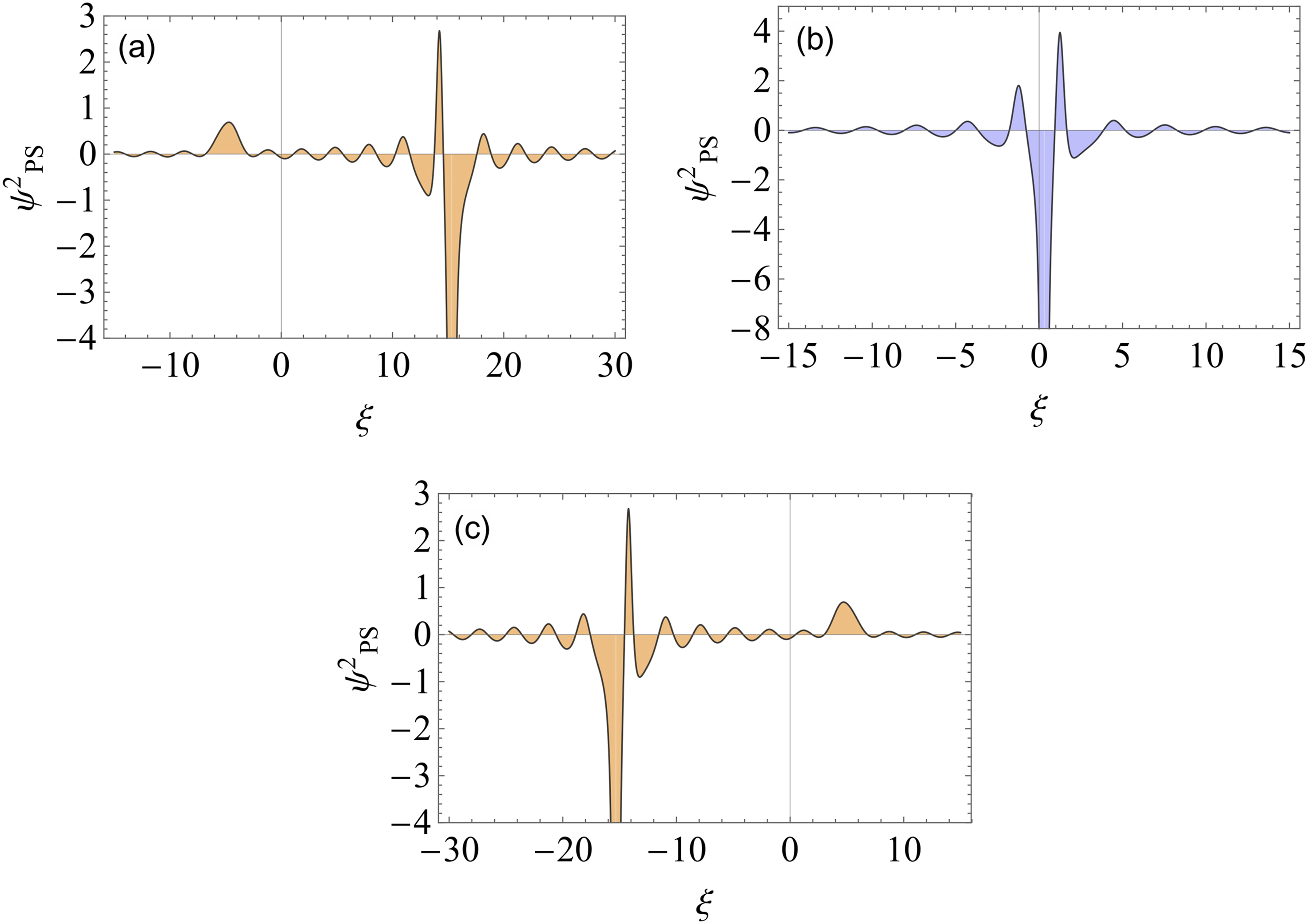
Figure 4(a) compares the interaction solution amplitude across non-relativistic, ultra-relativistic, and completely relativistic regimes. It is observed that the amplitude is highest in the non-relativistic regime and lowest in the completely relativistic regime, consistent with the results of the first-order negaton solution. Furthermore, a similar trend is observed in Figure 4(b) with temperature variation, where the amplitude increases as the system’s temperature rises for the completely relativistic case. Note that the higher the amplitude, the higher the velocity of the ion-acoustic soliton or the first-order negaton solution, and therefore its interaction with the oscillating singularity is fastest for the non-relativistic case, intermediate for the ultra-smooth case, and slowest for the completely relativistic case. The interaction solution between a second-order positon and first-order negaton solution and its comparison (a) in various relativistic limits (b) for different temperatures.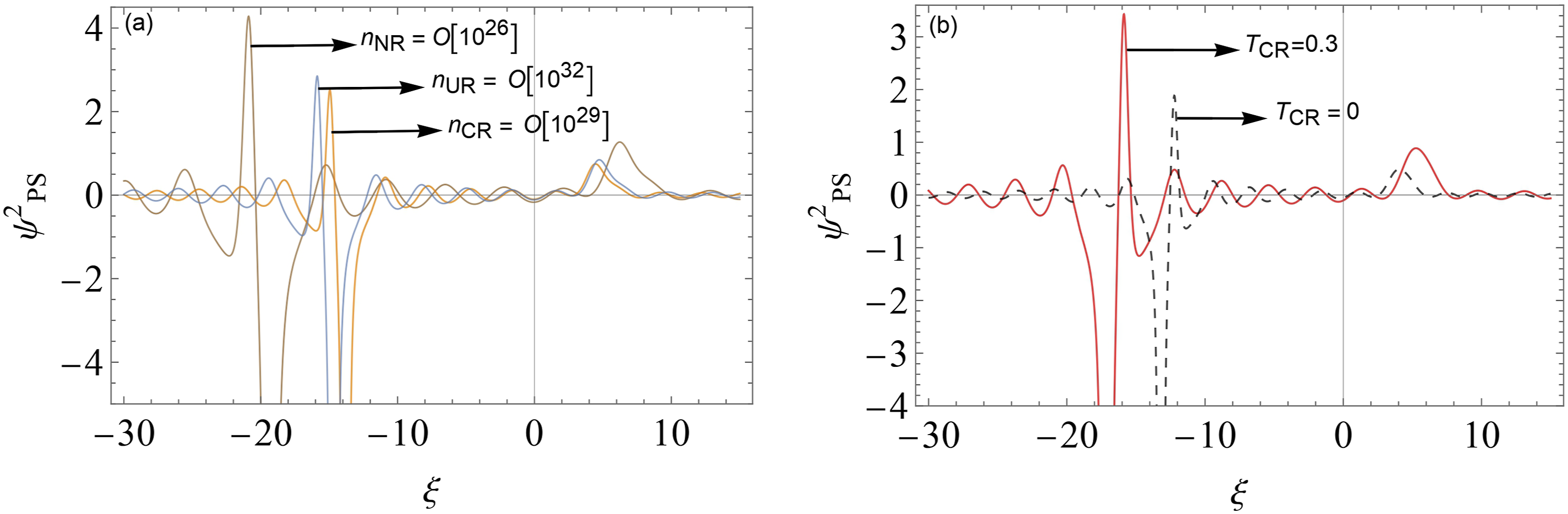
Figure 5 displays the contour plot of the interaction solution between a second-order positon and a first-order negaton solution over the time interval −10 ≤ τ ≤ 10. The yellow color shows the traveling first-order negaton solution, and the empty regions indicate the presence of singularities, which, in our case, correspond to the positon solution. The interaction region is the central region where both the amplitude and structure of the solutions appear to be different. From the plot, we can clearly infer that this interaction solution is elastic, and after the interaction, both the negaton and the positon retain their amplitude and shape and continue to move in opposite directions. Contour plot of the interaction solution between a second-order positon and first-order negaton solution.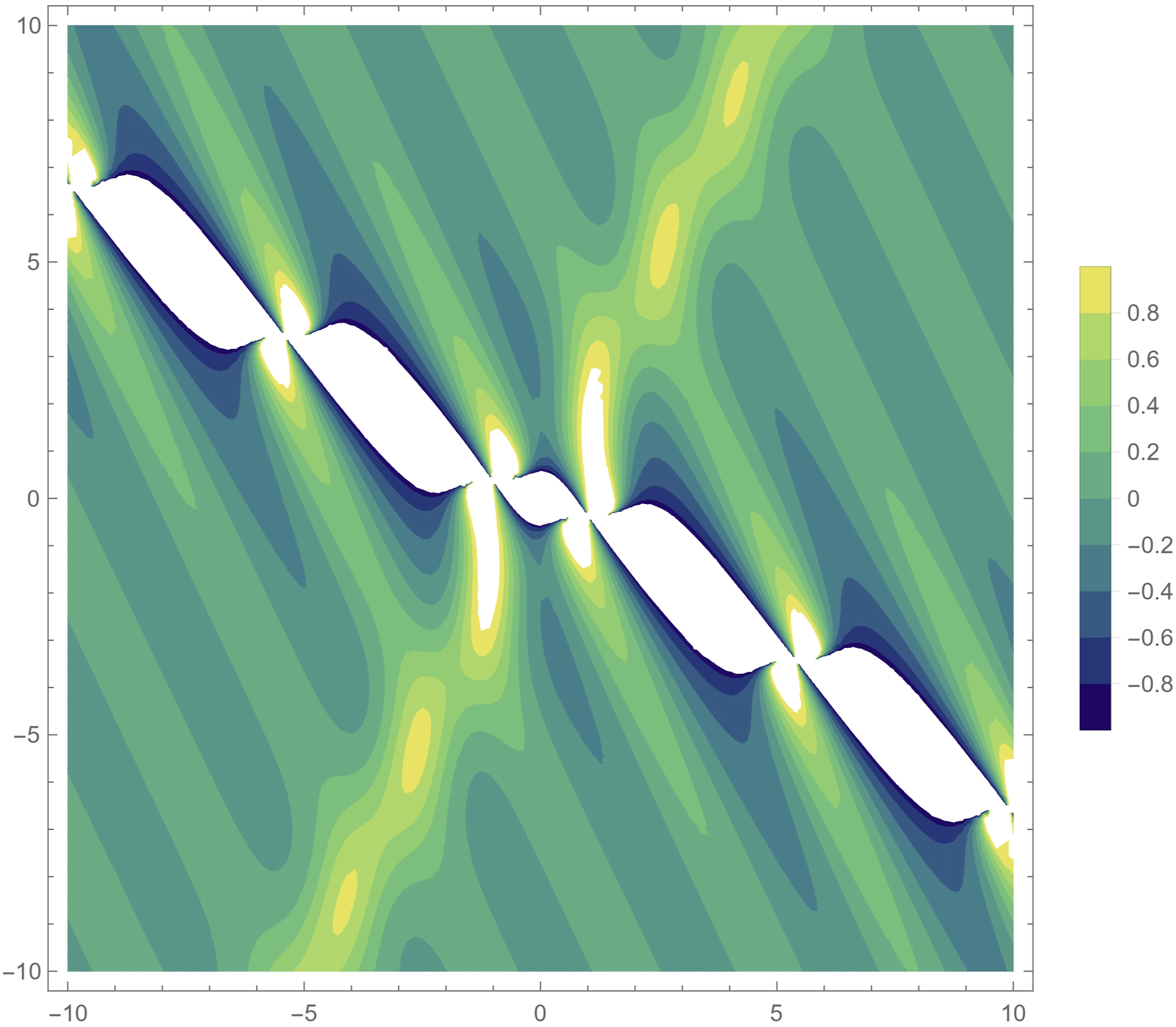
The KdV equation derived in this study features the nonlinearity coefficient A and the dispersive coefficient B, which encapsulate all relevant information about the model. Thus, it is essential to examine how these coefficients are affected by the parameters T and number densities N0. We will now elucidate the effects of the nonlinearity and dispersive coefficients. Figure 6 illustrates the trend of the nonlinearity coefficient in relation to normalized temperature T for the non-relativistic, ultra-relativistic and relativistic cases. We have observed that at T = 0K, the effect of the nonlinearity coefficient is maximum in the completely relativistic regime, where both the Fermi energy and the rest mass of electrons are significant. The nonlinearity coefficient is minimum in the non-relativistic regime, whereas its value is between the former two for the ultra-relativistic case, where the rest of the mass-term contribution vanishes. Our analysis shows that this behavior is primarily due to the difference in the values of Fermi energies for all of these cases. Additionally, as the temperature increases, the nonlinearity in the system decreases, with the fall being most prominent in the completely relativistic case. Variation of nonlinearity coefficient w.r.t., T for different number densities.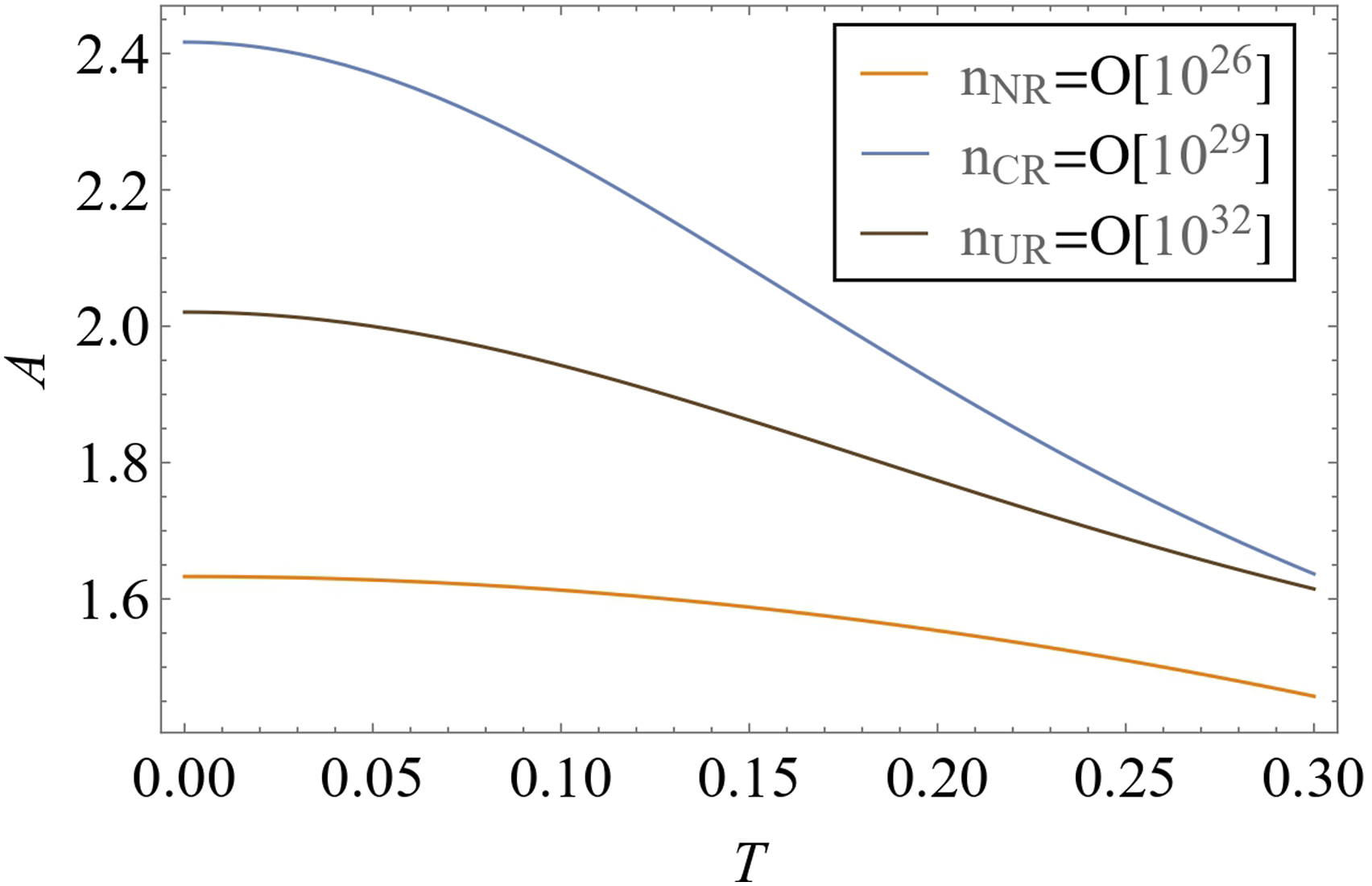
Figure 7 illustrates the variation of the dispersive coefficient with respect to the normalized temperature T. It is observed that the dispersive effect is more pronounced in the non-relativistic case. This occurs because, under non-relativistic conditions, the number density is comparatively lower, increasing the number of accessible states. As the temperature rises, electrons can easily jump into higher-energy states, spreading the wave energy across a range of velocities. Conversely, in relativistic cases, the increase in the number density of electrons reduces the number of accessible quantum states, which may suppress some dispersive behavior. In the ultra-relativistic case, the contribution of the rest mass term vanishes, leading to higher electron velocities, increased mobility, and enhanced dispersion effects compared to those in the relativistic case. Additionally, we observe that the overall dispersion trend increases as T rises. Variation of dispersion coefficient w.r.t., to T for different number densities.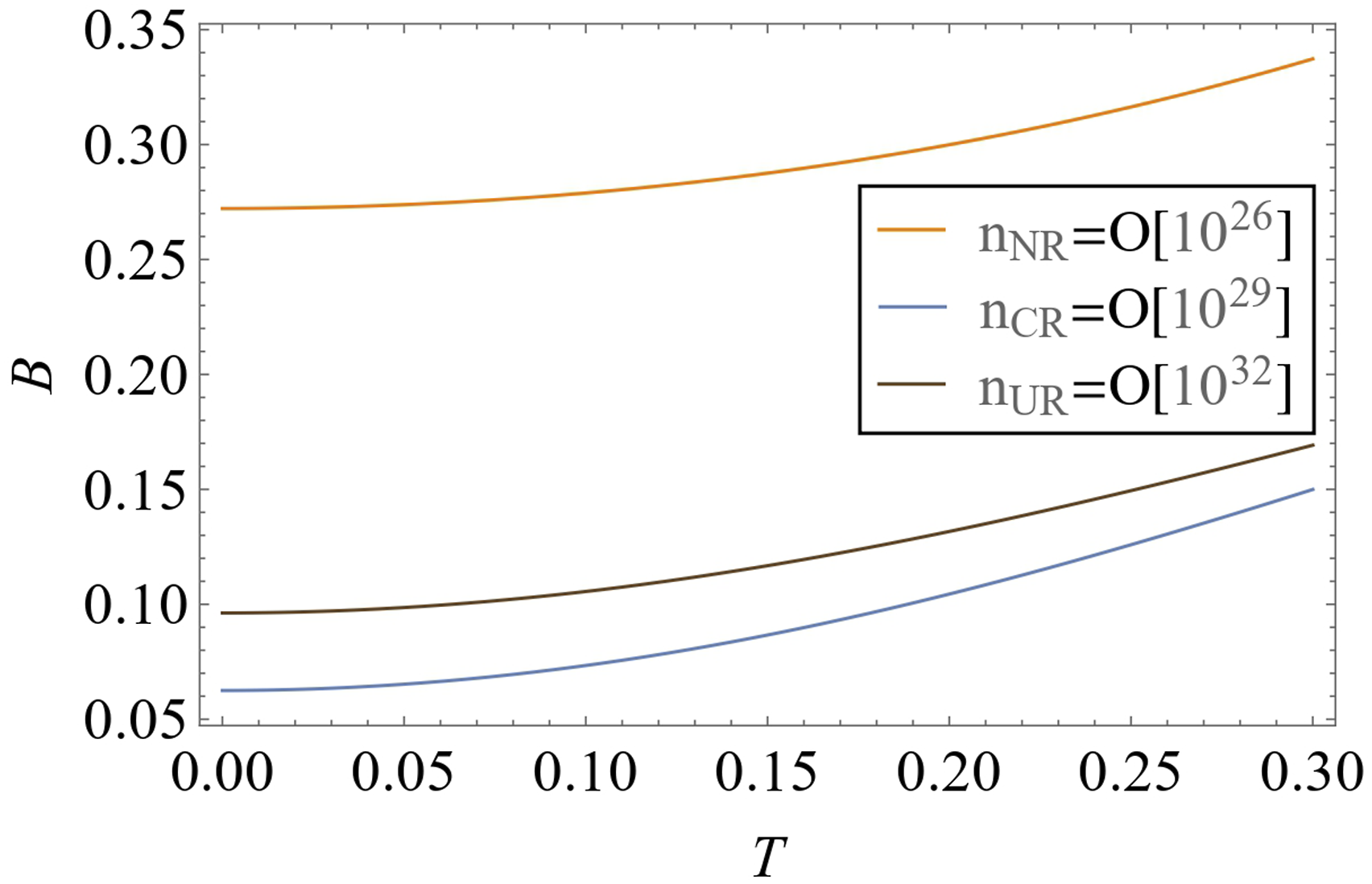
These interactions demonstrate a unique nonlinear phenomenon in which solitons pass through oscillating infinite-amplitude structures and emerge unaltered. This highlights the robust nature of the structure of the negaton, which is essentially due to the integrable nature of the KdV equation.
Conclusion
In conclusion, our investigation has focused on investigating the nonlinear ion-acoustic waves (IAWs) in the presence of electron trapping across non-relativistic, completely relativistic, and ultra-relativistic regimes. Utilizing the small-amplitude approximation, we have derived the planar Korteweg-de Vries (KdV) equation from the fluid equations of the proposed model. After that, and for the first time in plasma physics to the best of our knowledge, a Generalized Wronskian technique has been employed to obtain both finite and infinite amplitude solutions of the KdV equation. We have mentioned a connection between Generalized Wronskian solutions and those obtained under the long wavelength limit, that is, the rational solutions. The impact of finite electron temperature (FET) on the structure of the ion-acoustic first-order negaton solution or the soliton and its interaction with an oscillating singularity across all the relativistic regimes has been investigated. Also, we have reported that the first-order negaton solution of the KdV equation varies across different relativistic regimes. It has been observed that solitons exhibit higher amplitudes and faster propagation in the non-relativistic regime than in other cases, primarily because of the specific heat. Specifically, specific heat has been found to be lowest in the non-relativistic case, moderate in the ultra-relativistic case, and greatest in the completely relativistic case, aligning with the observed differences in soliton amplitudes. We have also reported the interaction of the 1-soliton solution with recurrent singularities. Our findings demonstrate that, despite their finite amplitude, solitons navigate through periodic singular solutions robustly, confirming the integrability of the KdV equation. Moreover, we have analyzed the behavior of the interaction solution across various relativistic regimes and temperature settings, observing a trend similar to that of the first-order negaton solution. It has also been shown that the increase in the finite electron temperature across all the relativistic regimes enhances the amplitude of the soliton, which happens due to the rise in the restoring force that comes from the inertialess electrons. Also, it has been found that the fastest interaction of the first-order negaton or the ion-acoustic soliton with the oscillating singularity occurs for the non-relativistic case, intermediate for the ultra, while the slowest interaction happens for the completely relativistic case. Although we have studied the interaction of the first-order negaton solution and its interaction with special reference to plasma physics, understanding such interactions is vital for comprehending wave dynamics across a broad spectrum of physical scenarios. These range from terrestrial phenomena such as shallow-water waves to astrophysical contexts. We hope that our study will trigger interest in the plasma community to study such interactions in both laboratory and space plasmas.
Future work: Recently, fractional calculus has been instrumental in providing explanations for many nonlinear phenomena that arise and propagate in many physical, engineering, chemical, and other systems.67–72 Numerous studies have been undertaken on the analysis of fractional KdV-type equations to elucidate the behavior of nonlinear phenomena characterized by this family. However, most of the previous research has focused on investigating planar solitons characterized by this family in their fractional representations. However, it is well-known that as the initial solutions or conditions of this family in their fractional form become increasingly complex, it becomes challenging to derive analytical approximations that accurately represent these occurrences. Consequently, the Tantawy technique,73–77 a contemporary method, can be utilized to address numerous issues encountered by researchers in deriving approximations for various fractional evolutionary wave equations, irrespective of the complexity of the initial solutions or conditions. This technique can be employed to solve the following fractional KdV equation and investigate the impact of fractionality on the behavior of all nonlinear phenomena examined in this paper, including the first-order negaton, positons, ion-acoustic soliton, and cnoidal waves.

Footnotes
Acknowledgments
The authors express their gratitude to Princess Nourah bint Abdulrahman University Researchers Supporting Project number (PNURSP2025R28), Princess Nourah bint Abdulrahman University, Riyadh, Saudi Arabia.

Authors contributions
All authors contributed equally and approved the final version of the current manuscript.
Funding
The author(s) disclosed receipt of the following financial support for the research, authorship, and/or publication of this article: The authors express their gratitude to Princess Nourah Bint Abdulrahman University Researchers Supporting Project number (PNURSP2025R28), Princess Nourah Bint Abdulrahman University, Riyadh, Saudi Arabia. This study is supported via funding from Prince Sattam bin Abdulaziz University project number (PSAU/2025/R/1446).
Declaration of conflicting interests
The author(s) declared no potential conflicts of interest with respect to the research, authorship, and/or publication of this article.
Use of Artificial Intelligence (AI) tools declaration
The authors declare they have not used AI tools in the creation of this article.
Data Availability Statement
The authors confirm that the data supporting the findings of this study are available within the article.